



Abstract
This study examines the transition of Meige (Méi Gě, 梅葛) – an orally transmitted folk epic style of the Yi community in Chuxiong Prefecture, Yunnan Province, Southwest China – from ‘communicative memory’ to ‘cultural memory’. Applying Erll and Rigney’s mediation and remediation of memory to the case of Meige, this study considers how Meige in China has been transformed since the 1950s into cultural memory, preserved in durable, materialised forms through three mediations: textual canonisation, stage performances, and circulated mass media. This study also identifies key stakeholders in the (re)mediation of Meige and explores how they determine when and how to perform or abandon certain aspects of memories. I propose a multi-faceted memory framework involving the way Meige is remembered through the power dynamics of stakeholders involved in memory transmission. In this way, this study sheds light on how oral folk epics are remembered in the context of contemporary socio-cultural values and contributes to understanding the selective nature of mediation in representing Meige in Chinese society.
Keywords
Introduction
With the institutionalisation of the Convention for the Safeguarding of the Intangible Cultural Heritage in 2003 (UNESCO Convention), intangible cultural heritage (ICH) became a new focal point in global heritage discourse. Since then, many countries have promoted this new form of ‘intangible’ culture. China, for instance, ratified the Convention in 2004 and has since adapted it to domestic discourses and practices. Among the 10 ICH categories
1
developed by China in recent decades, folk literature (which includes epics as a subcategory) is a particularly important one that is preserved as a cultural resource within the national heritage industry. This is especially the case for borderland regions populated by ethnic-minority groups. Many Chinese epic traditions have been extensively documented (Zhang et al., 2015), including the northern/western ‘heroic epics’ (Yīngxióng Shǐshī,
This study focuses on Meige (Méi Gě,
Sustaining both the tangible and intangible cultures of ethnic-minority communities is particularly important in the context of China’s transformations since the Mao era, where heritage discourse is used to develop ethnic minorities within the state’s broader nation-building agenda (Zhu and Maags, 2020). Jing (1996) and Mueggler (2001, 2017) highlighted the memory-making function of ritual practices in rural China, which reflect broader social and political transformations. Specifically, Jing (1996) focused on the transmission of memory embedded in rituals centred on Dachuan’s Confucian temple in Gansu Province. Describing this temple as a ‘social history of memory’ (Jing, 1996: 12, drawing on Burke, 1989: 100), he analysed how folk ritual sites embody the social changes of their time across generations. Mueggler (2001, 2017) meanwhile, explored the intangible ritual practices of Yi communities in rural Southwest China by examining the transformation of funeral rites and ceremonies. He considered how these religious practices have been reinterpreted in response to changing abilities to perform them within the shifting context of Yi society after 1949.
Meige’s memory-making process can therefore be understood as rooted in the evolution of its representation and related social changes. Studying it can improve our understanding of how ethnic minorities’ cultural identity is preserved in contemporary China. McLaren (2022: 215) proposed two layers of ‘memory making’ in folk epics: (1) the ‘singer’s concentrated toil in ‘remembering’ (composing) the song or folk epic and past memories the song transmits’, and (2) singers drawing ‘on a range of memory frameworks that implicitly involved notions of time passing and space crossing’. The first layer concerns the ways memories and historical narratives are conveyed and constructed through folk epics. This has been widely studied in the context of the Homeric epics (Minchin, 2012; Ready, 2019), long-narrative epic poems (e.g. Yi and Miao ethnic groups, cited in (Bender et al., 2019, 2006) and Han epic traditions (McLaren 2022). The second layer functions as a mediated framework; however, there is a lack of analysis of how this framework transmits memories through various mediation forms, highlighting their function and impact over time.
To address this gap in the literature, this study draws on cultural memory theory (Assmann, 1995; Erll, 2011; Erll and Rigney, 2009; van Dijck, 2007) and its application to the sustainable (re)mediated remembrance of Meige across multiple media contexts. I treat Meige as a memory ‘site’ (Nora, 1989), examining the two dimensions across vertical and horizontal relationships: Vertically, I consider how Meige transitioned from communicative memory to cultural memory through three forms of mediation: textualised canonisation, stage performance, and digitalised dissemination via social media. Horizontally, I consider the evolution of Meige within the Yi community since the establishment of the People’s Republic of China (PRC). Here, I highlight the socio-political changes and technological forces that shaped three specific forms of Meige mediation in three distinct periods. The first period is the early PRC and Maoist era (1949–1978). During this time, the local government and scholars in Yunnan collected, compiled, and translated (into Mandarin) surviving orally transmitted Meige from the Yi community to create a textualised canon that could be widely circulated beyond the Yi community and preserved as a standardised form of folk literature for future generations. The second period marks the slow resurgence of Meige since China’s adoption of a new open-door policy (1978) and the introduction of economic reforms by the post-Mao leadership. Meige began to recover from the disruption of the Cultural Revolution, and traditional religious knowledge and practices saw a gradual revival, benefitting from increased economic activity and educational reforms. The third period began in 2008, when China’s central government recognised Meige as ICH. Local governments subsequently prioritised Meige art and performance practices, as they aligned well with national ICH policies. This promoted the incorporation of Meige into the local cultural industry and into tourism. More recently, social media has enabled rural Yi communities to disseminate Meige digitally, expanding its cultural reach and audience engagement. Notably, mediation and memory-transmission processes are closely linked with the endeavours of key stakeholders, including Yi villagers (mostly Meige bearers), Yi elites (mostly cultural activists), the local cultural industry, and the government.
Research on Yi culture has mainly focused on literature, linguistics, music, or performance. Su (2022) studied the musical aspects of Meige while Bender (2012) and Bradley (2009) investigated Yi literature and script among the Nuosu-Yi subgroups of Liangshan in southern Sichuan Province. Going beyond those studies, this study considers a distinct Yi subgroup living in Chuxiong, central Yunnan Province, and treats the Meige of the Chuxiong Yi as a unique combination of literary and musical elements, embodying the dual nature of textual and audiovisual-performative presentation. Moreover, Meige provides a valuable case for studying the social transformation of the Chuxiong Yi in the PRC. As a traditional cultural expression that is only circulated within the Chuxiong Yi community, Meige encapsulates elements of ritual, religious belief, identity, and affection, reflecting the broad historical trajectory of the Chuxiong Yi, from feudal society to integration into the PRC. In addition, the sustainability of Meige sparks discourse on whether the ‘ambiguous’ aspects of memory transmission, such as religious practices or gauged ‘superstition’ embedded in Meige, should be abandoned or adapted to align with the contemporary valorisation of ICH under government expectations and agendas. By revealing the obstacles to memory transmission embodied in Meige as a mnemonic practice rooted in ritual, this study offers a critical understanding of the tension between preserving the authenticity of rituals and adapting to social transformation.
Memory, (re)mediation, and the dynamic reconfiguration of Meige
Distinguishing between communicative and cultural memory (Assmann, 1995) is fundamental to understanding folk epics’ mode of communication. According to Assmann (1995), communicative memory consists of individuals’ informal historical experiences and emerges through everyday interaction. It generally spans 80–100 years, covering a temporal horizon of three or four generations that shifts over time. Cultural memories, meanwhile, are formal ceremonial commemorations such as festivals and other established collective events involving traditional symbolic encoding and staging. Meige exemplifies how these two forms of memory coexist today. In Yi families, Meige is passed down orally from elders. However, Meige’s communicative memory has declined because of changes in the Yi’s lifestyle, the ageing of practitioners, and the influence of mass media. This led to the institutionalised and materialised means of preserving the cultural memory of these traditions, compensating for the diminishing role of communicative memory.
The formation of cultural memory cannot be separated from the ‘medium’. There is a close connection between media and memory (Erll, 2011; Erll and Rigney 2009; Hoskins, 2011). Erll and Rigney (2009: 111) noted, ‘Over the last decade, ‘collective memory’ has emerged as a useful umbrella term to describe the complex ways in which societies remember their past using a variety of media’. Similarly, Hoskins (2011: 19) remarked that a ‘glut of media is also a glut of memory’. However, the connection between media and memory is not static, as media itself is constantly evolving. This ongoing evolution influences how cultural memory is represented and preserved over time. As Bolter and Grusin (1999) argued in Remediation: Understanding New Media, new digital media refashion and recontextualise older forms of media through the process of remediation. Erll and Rigney’s (2009) analysis of the mediation, remediation, and dynamics of cultural memory has bearing on the impact of media on preserving, reconstructing and disseminating collective memory. In their framework, cultural memory is continuously rewritten and redefined through representation across different media, characterising media as tools that carry memory and form memory content. Erll and Rigney (2009) also emphasise the selective nature of memory formation through media, suggesting that mediation is not a neutral process but one of active selection, where certain elements are remembered and emphasised while others are forgotten or abandoned.
This research adopts Erll and Rigney’s (2009) model of mediation and remediation to address its objectives. Specifically, I argue that Meige represents evolving cultural memories that transition from oral traditions to different forms of media, are recontextualised over time, and are mediated and remediated across different platforms and cultural contexts. This framework demonstrates that Meige’s significance lies in its ability to demonstrate the ongoing process of memory formation, making it a valuable case study for understanding how cultural memories endure and adapt to changing societal and technological landscapes. Drawing on Erll and Rigney (2009), the case of Meige illustrates how mediation functions as a critical process for conveying and transforming Meige memories, adapting memories into different formats, creating new meanings and contexts, and underscoring how stakeholders’ power dynamics shape this transformation. On that basis, the following research questions are formulated:
RQ1: What mediated forms facilitate the transformation of Meige from communicative to cultural memory?
RQ2: How do key stakeholders influence the mediation and transmission of memory in determining when and how certain aspects of memories are performed or abandoned?
RQ3: What are the decision-making processes behind Meige’s forms of mediation?
Below, I first introduce the methods adapted for this study. Then, I examine Meige’s transition from communicative to cultural memory and discuss stakeholders and their power dynamics in shaping this transformation. Mediation’s effect on cultural memory is then explored. For each mediation, I examine stakeholders’ roles in Meige’s memory transmission and identify memory aspects that are either emphasised or downplayed. I examine the formation of memory facets using a framework that reveals the interactive aspects of Meige across time and mediation. In this way, I aim to understand how folk epics continue to resonate in present-day China as a dynamic, evolving form of cultural expression.
Methods
This study’s qualitative approach combines archival research, virtual ethnographic observation, and fieldwork to investigate how Meige transformed from communicative to cultural memory. I examined textual Meige records chronologically. Virtual ethnographic observation entailed digitally watching and analysing Meige stage performances. This included social media posts on WeChat channels by Yi folk musicians and cultural activists, short videos of musical practices and Meige performances by Meige bearers on social media platforms such as Kwai and Douyin (TikTok in China), and television programmes broadcast by Chinese Central Television (CCTV)—in particular, The Chinese Intangible Cultural Heritage (
Ethnographic fieldwork was conducted in June 2024 in Mayou village (Figure 1), Yao’an County, Chuxiong Yi Autonomous Prefecture, Yunnan. Mayou, located 25 km from the county centre, is known as the ‘Hometown of Meige’. It is a predominantly Yi village with a population of 2,223, many of whom are Meige folk musicians or amateur practitioners. During the fieldwork, I visited a Meige studio, attended Meige transmission classes with 13 Yi children, and conducted informal interviews with 10 Meige bearers (mostly Yi villagers) and cultural activists. In these interviews, we discussed the challenges associated with the internal transmission and external dissemination of Meige and their understanding of Meige content adapted or abandoned during its mediation. In Kunming, the provincial capital of Yunnan Province, I also consulted a Yi linguistics expert to interpret the differences between archaic and contemporary standardised Yi scripts as well as changes in meaning that have occurred over time.
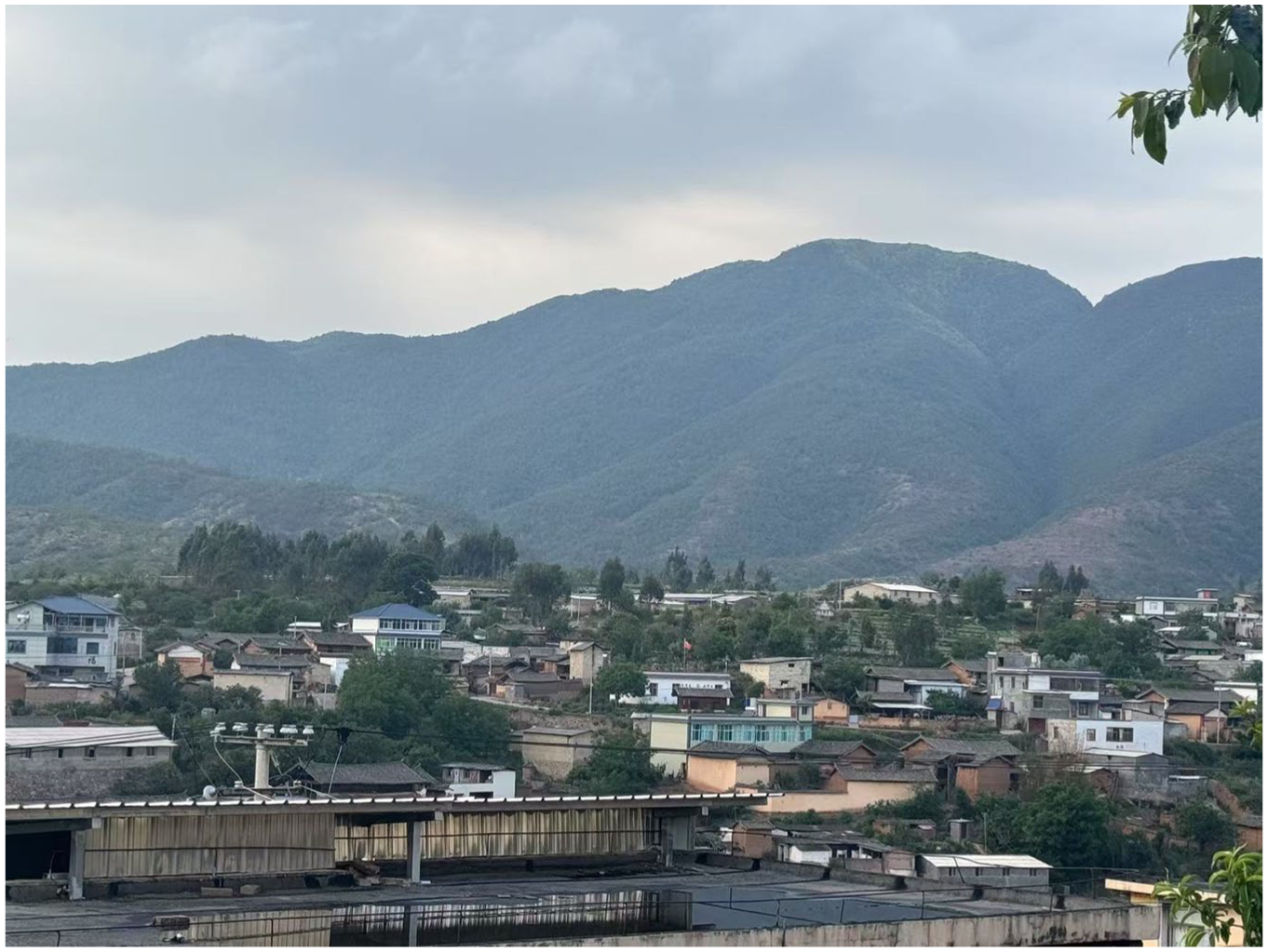
Panoramic view of Mayou village. Source: Photo taken by author during fieldwork in June 2024.
Mediating Meige into textual canonisation: literal and imaginative memory
Textualisation accommodates literary pieces containing traditional oral elements with rich cultural significance, thereby enabling traditional expression in written language and preserving oral and colloquial art forms. When orally transmitted folk epics are textualised (Honko, 2000), elements considered ‘classic’ are preserved through canonisation, often centring on ‘things that are worth repeating’ (Kärjä, 2006: 5). Canonisation reinforces and spreads cultural memory, helps communities reconstruct/maintain their identities (Assmann, 1995), and confirms cultural standards and practices. It also helps establish aesthetic standards and transform cultural values into aesthetic expression (Bohlman, 1988).
Written Meige manuscripts are regarded as a tradition ‘invented’ (Hobsbawm, 1983) by the ruling class in the Yi’s former slave-based society. The aristocracy and ritual specialists (Bimo 3 ) were literate and documented Meige in handwritten Yi scripts. However, these manuscripts circulated exclusively among the ruling class. Ordinary Yi people could not access the written forms of Meige since most were unable to understand Yi scripts (interview with Yi linguist Li Xingfu, fieldwork, June 2024). Later, the founding of the PRC socially transformed Yi communities and their slave-based structure into a form of autonomous administration under centralised control. The PRC government broke the Yi ruling class’s monopoly over shaping cultural narratives and interpreting historical traditions, thus stemming the decline of Meige and facilitating its collection into widely accessible versions.
During the early PRC period, governments (national and local) played a dominant role in protecting domestic heritage and promoting the rescue of folk culture and literature in ethnic-minority regions. The central government initiated an ethnic categorisation process (mínzú shíbié,
Divided into ‘Creation’, ‘Making Things’, ‘Marriage and Love Songs’, and ‘Funerals’, the 1958 Meige Epics reflects the rich imagination, mythological content, and cosmological views and history of the Yi’s ancestors. The Yi view the ‘Tiger’ (the source of all things) and ‘Maiden Flower’ (the tree that gave rise to their ancestors) as totems, expressing these symbols through song. The canonised Meige, often presenting elements that appear supernatural, encapsulates the Yi people’s wisdom and cosmology, particularly regarding human origins and their deep connection with nature (Bender, 2016). It portrays the Yi as both subjects and mediums of nature’s stories, combines narratives of the Yi’s origins and life cycles, and reflects an ethnic history and life encyclopaedia that recounts daily practices and survival. The Yi’s recorded adaptation and resistance shape their ‘memory of survival’. This memory is perpetuated through canons embodying their cosmology, their symbiosis with nature, and the genesis of social order.
The publication of the 1958 Meige Epics marked the formation and dissemination of a canonical memory of Meige within and beyond the Chuxiong Yi community – even during the stagnation of Meige under the Cultural Revolution. Following China’s ‘reform and opening up’ of the late 1970s, the government signalled encouragement for diverse cultural expression and heritage work. Local Yi elites and folk scholars in Yunnan contributed to Meige’s slow resurgence by resuming the compilation and enrichment of Meige texts, which led to the publication of several collections. In 1989, Li Shizhong collected and compiled Mayou village’s The Creation Song – Old Man Meige, Jiang Rongwen collected Dragonfly Meige in 1993, and Yang Fuwang translated the Mayou Meige monograph. Shao (2014) Revisiting Meige enriched the cultural interpretation of Meige. In recent editions, Yi folk musician Guo Xiaowei’s Meige anthology of 2018 expanded and reinterpreted the themes of the Meige Epics.
In an interview for this research, Guo Xiaowei noted that since Meige became recognised as ICH in 2008, there has been a rising trend of safeguarding it at the institutional level. This government-led initiative motivated Yi people to contribute to expanding Meige in new compilations. The version of Meige published in 2018 reflected a dramatic transformation in terms of literary depth, textual extent, and multilingual presentation (Figure 2): Originally a short booklet of only 10,000 words, it has now expanded into a 520,000-character epic, reflecting the cumulative contributions of Yi scholars. This process inevitably required imaginative engagement as the original Meige texts are remarkably concise yet rich in meaning. In expanding these texts, we have skilfully interwoven elements of creative interpretation, incorporated contemporary cultural practices, and presented the textual content in multiple languages, including Yi scripts, Han Chinese scripts, and IPA
4
. (interview with Guo Xiaowei)
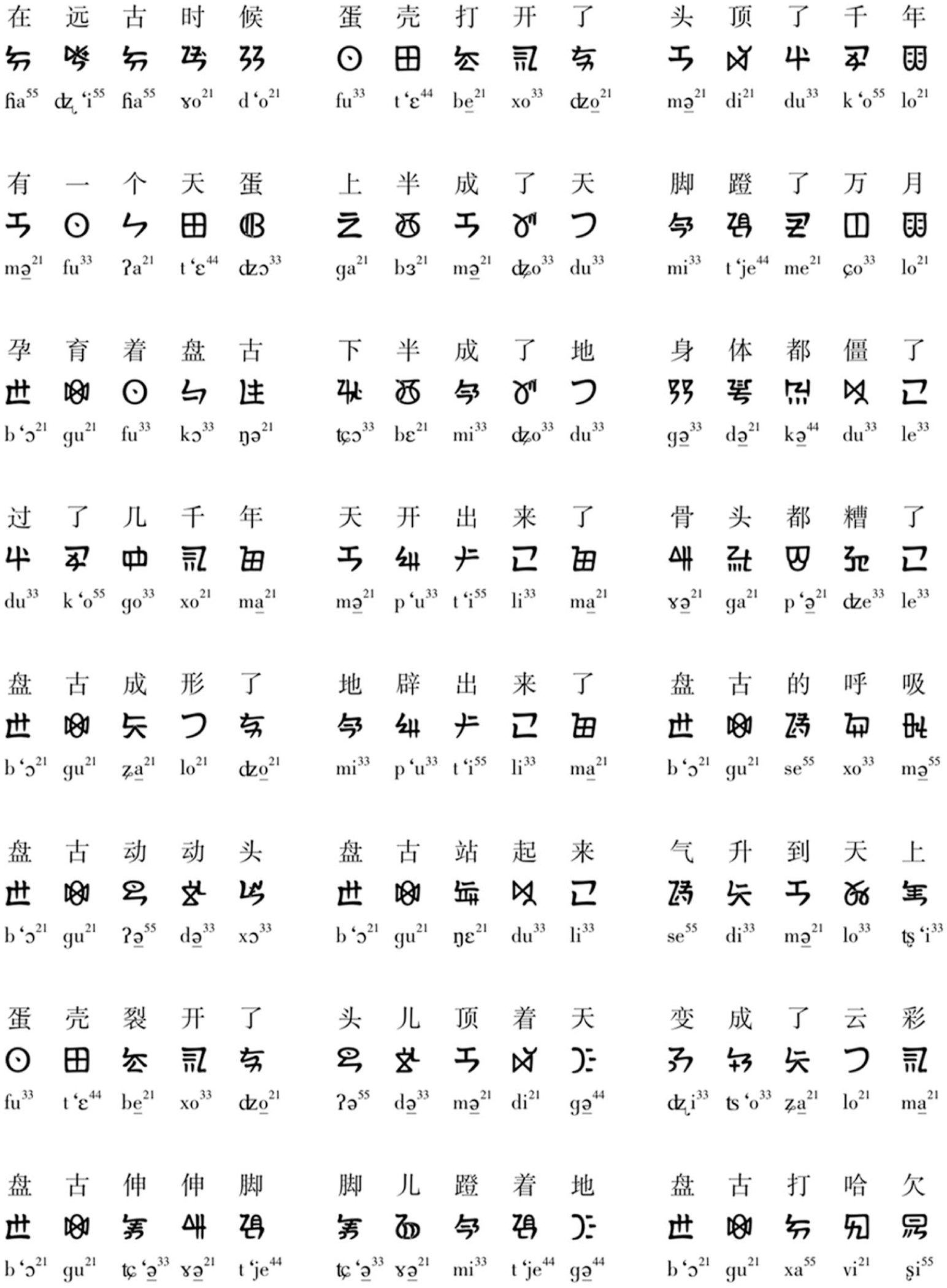
Content of the Meige epic re-edited by Guo in 2018. Source: Photo by the author; Guo shared the newly edited Meige with the author.
With subsequent expansions, Meige underwent extensive editing and transitioned from an oral tradition into a story-driven epic, reinforcing its significance in heritage discourse. As a result, Meige gradually detached from the oral performance communities and cultural contexts it originally circulated in. No longer embedded in rural Yi society, the translated Meige has transformed from a communal tradition into a literary text primarily targeting Han Chinese readers. Consequently, for Chinese-speaking general readers, Meige is received not as a scientific ethnographic document but as a piece of literature.
(Re)mediating Meige from stage performances to mass media: performative and musical memories
The Cultural Revolution interrupted Meige’s transmission, as singing Meige was regarded as superstitious and discouraged. This repression marginalised Meige folk singers, leaving only a few ritual practitioners – mainly elderly Yi individuals – capable of performing Meige (Huang, 2014). Following the reform and opening up, Meige-related performance became a Yunnan cultural commodity that catered to the demands of tourism. Furthermore, after Meige was added to China’s national ICH list in 2008, the local government encouraged singing and performing Meige, making it more accessible to tourists.
Different from the textual canonisations representing the first layer of Meige’s mediation, stage performances remediate the canonised Meige into a richer, more interactive form of engagement that entertains while also serving as a traditional rite and mode of communication. Performative and musical memories of Meige encompass not only staged performances on ritualised occasions, such as Yi traditional festivals and tourism-related ceremonies, but also daily musical practices, including courtship duets and amateur song troupes.
Stage performances often involve Meige bearers who leverage its epic nature through sung excerpts from the creation epics, illustrating Yi ancestors’ history and wisdom. They also include audience-favoured content such as Meige love songs and children’s songs. Performers re-create a meaningful past by singing and dancing, incorporating traditional elements such as the gourd flute and left-foot dance to enhance entertainment value and visual appeal. These stage performance methods remediate Meige’s textual content by adapting and incorporating musical elements. However, their short duration compromises authenticity. Regarding adaptations, one interviewee noted, For instance, narratives that can be effectively conveyed within a 5–8-minute performance or universally appealing themes, such as love songs or stories about children, tend to resonate more with the audience. As programme producers and performers, we carefully consider the content suitable for stage adaptation. (interview with Yi cultural activist 1 in Mayou village, fieldwork, June 2024)
The content gatekeepers of Meige stage performance are often Yi cultural elites who are educated, have a foundation in literature and music, and possess organisational skills. These qualities allow them to oversee the performance and transmission of Meige within the framework of policies related to ICH preservation and rural poverty alleviation. Their involvement ensures that performances maintain a balance between artistic authenticity, audience engagement, and alignment with broader cultural and political narratives.
Guo Xiaowei established a local ICH preservation NGO called ‘Meige Studio’ (Meige Fang,
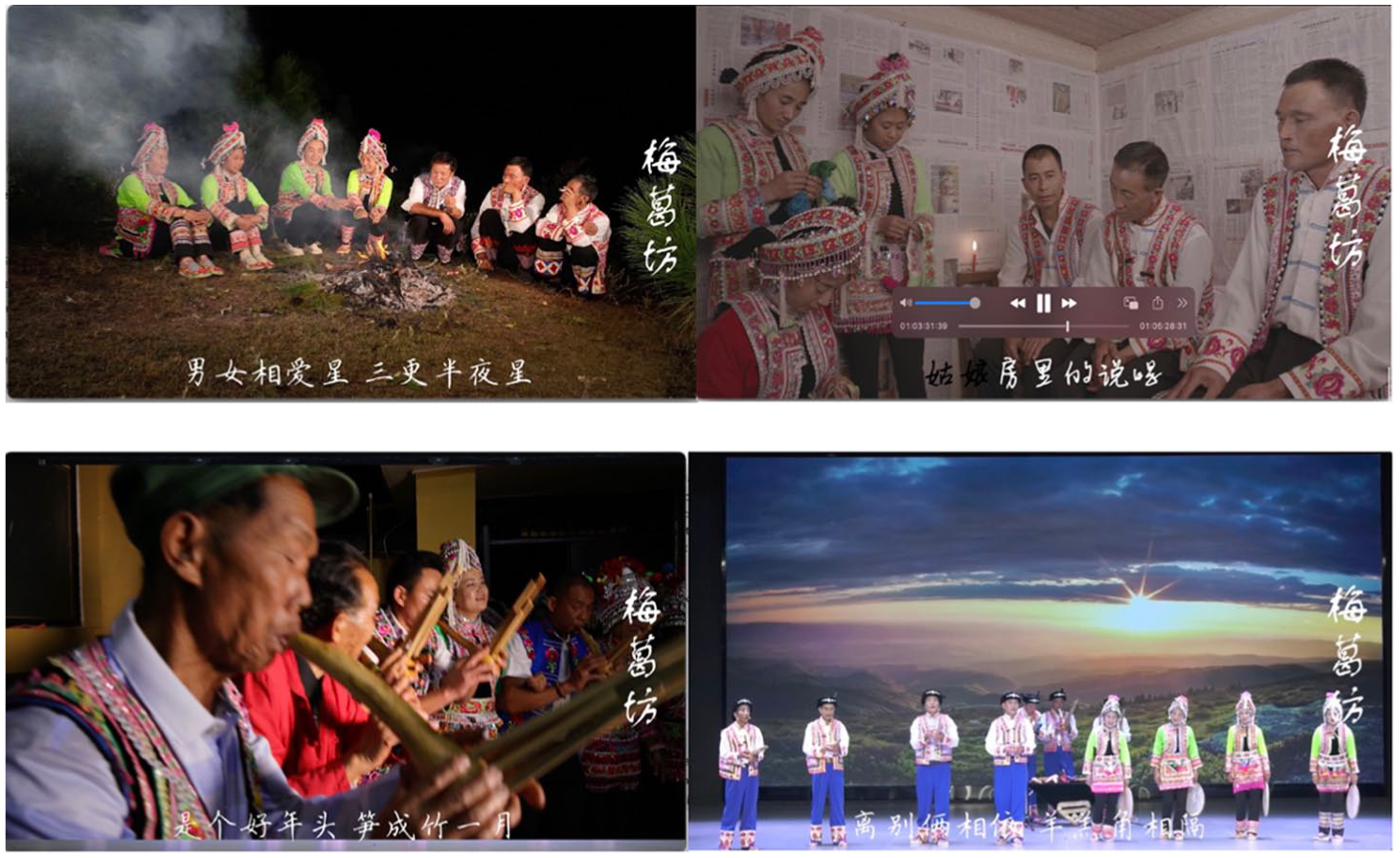
‘Meige Love Song’ music video, produced by Meige Studio, based on Meige content. This video interweaves scenes of villagers singing Meige tunes. All actors were Yi residents in Mayou village. Source: Screenshots from ‘Meige Love Song’ video (produced by Meige Studio). Photo produced by author.
By filming these videos, Meige Studio accumulated several standardised stage samples. Taking advantage of favourable national policies, performances have transcended the boundaries of village entertainment or Yi rituals and transitioned to more prominent platforms. Under policies on rural revitalisation and ICH preservation, Meige gained significance showcasing ethnic-minority culture and local specialisations in rural Yunnan. For instance, between 2022 and 2024, Meige was frequently featured on the CCTV programme The Chinese Intangible Cultural Heritage, which boosted its reach. Highlights included a group of Mayou-based Yi children and folk musicians who performed a Meige song, ‘Carving a Wooden Trough’ (Figure 4).
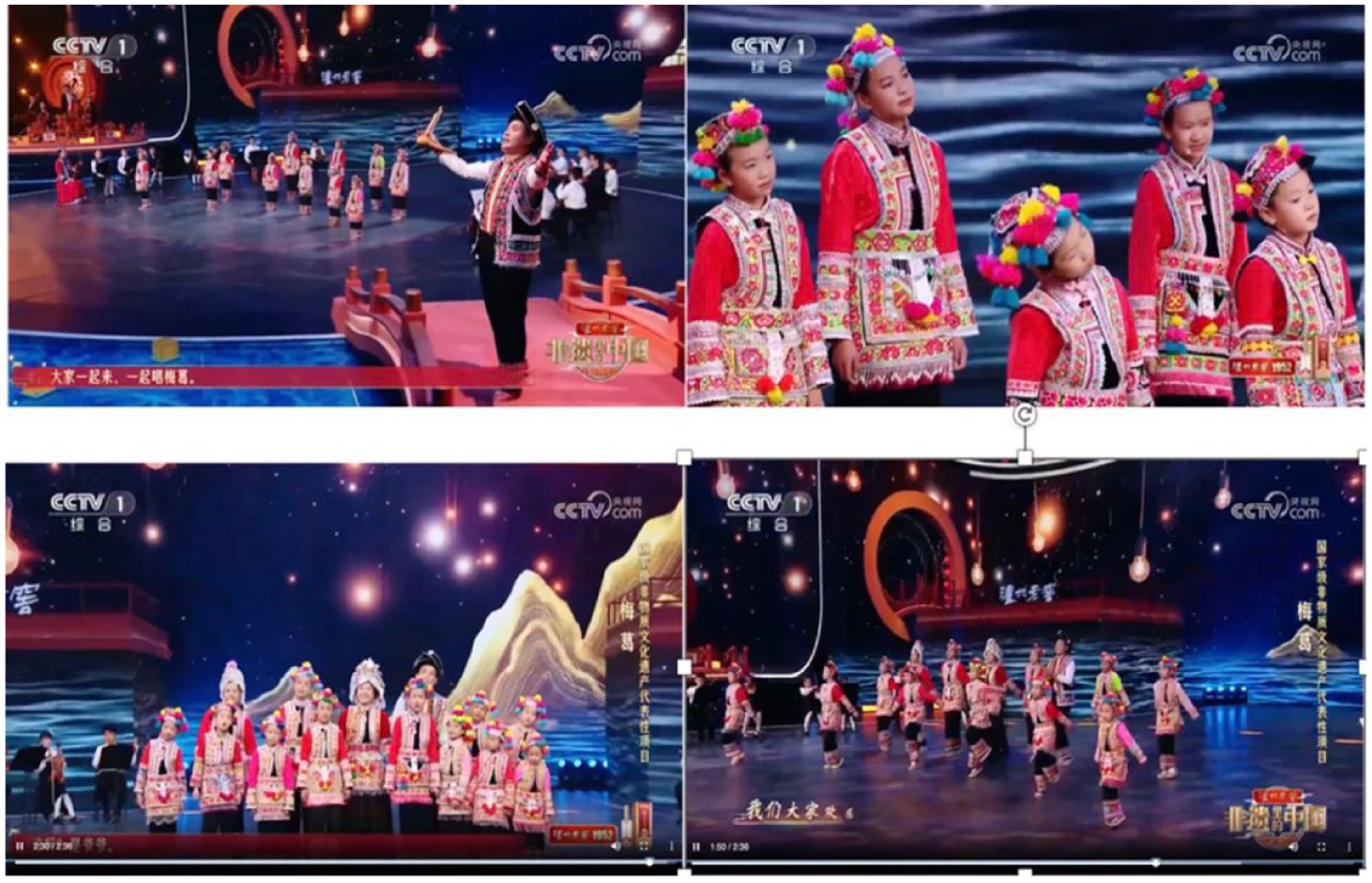
Mayou villagers performing Meige on The Chinese Intangible Cultural Heritage. Source: Screenshots from a video by CCTV’s programme The Chinese Intangible Cultural Heritage, https://www.youtube.com/watch?v=p6zvZAR7CaM. Photo produced by author.
Through its staged presentations from grassroots to the national level, Meige’s memory transmission reflects a selective, curated approach to content. Themes are largely fixed, focusing on epic songs, love duets, and children’s performances. These are well-suited for stage presentations but often overlook engagement with the everyday lives of ordinary Yi people. This previous lack of integrated everyday media exchanges has gradually changed thanks to digital technology and social media, fostering grassroots-empowered communication while expanding avenues for performance expression.
By June 2023, China had 1.079 billion Internet users, including a short video user base of 94.8% (China Internet Network Information Centre (CNNIC), 2023). Regionally, Internet-enabled media platforms have been extended to Yunnan’s rural and peripheral regions and have greatly influenced Mayou village. According to the Internet Development Report of Yunnan Province (2023), Yunnan’s Internet penetration rate has reached 68.8%. Short videos are the most popular, with an average annual penetration rate of 94.4%. These trends were corroborated by fieldwork in 2024. In Mayou village, WeChat is the predominant platform for instant messaging, and most Yi villagers use the short video–sharing apps Douyin (TikTok) and Kuaishou (Kwai). Yi villagers like these platforms because they can record and share their daily musical practices (author’s 2024 fieldwork in Yunnan).
The data and field observations demonstrate that digital methods have significantly broadened grassroots Yi villagers’ access to information and expanded their horizons. Social media empowers them to become curators of their own culture by creating audio recordings, exchanging materials, and interacting within cultural networks. Figure 5 depicts a tourism initiative called ‘Chuxiong Yao’an Third Rural ‘Village Gala’’, aimed at digitally empowering cultural tourism revitalisation and improving ‘rural cultural tourism’. Amateur videos feature costumes and dances on stage, accompanied by an introduction to the origins of hosts wearing traditional dress.
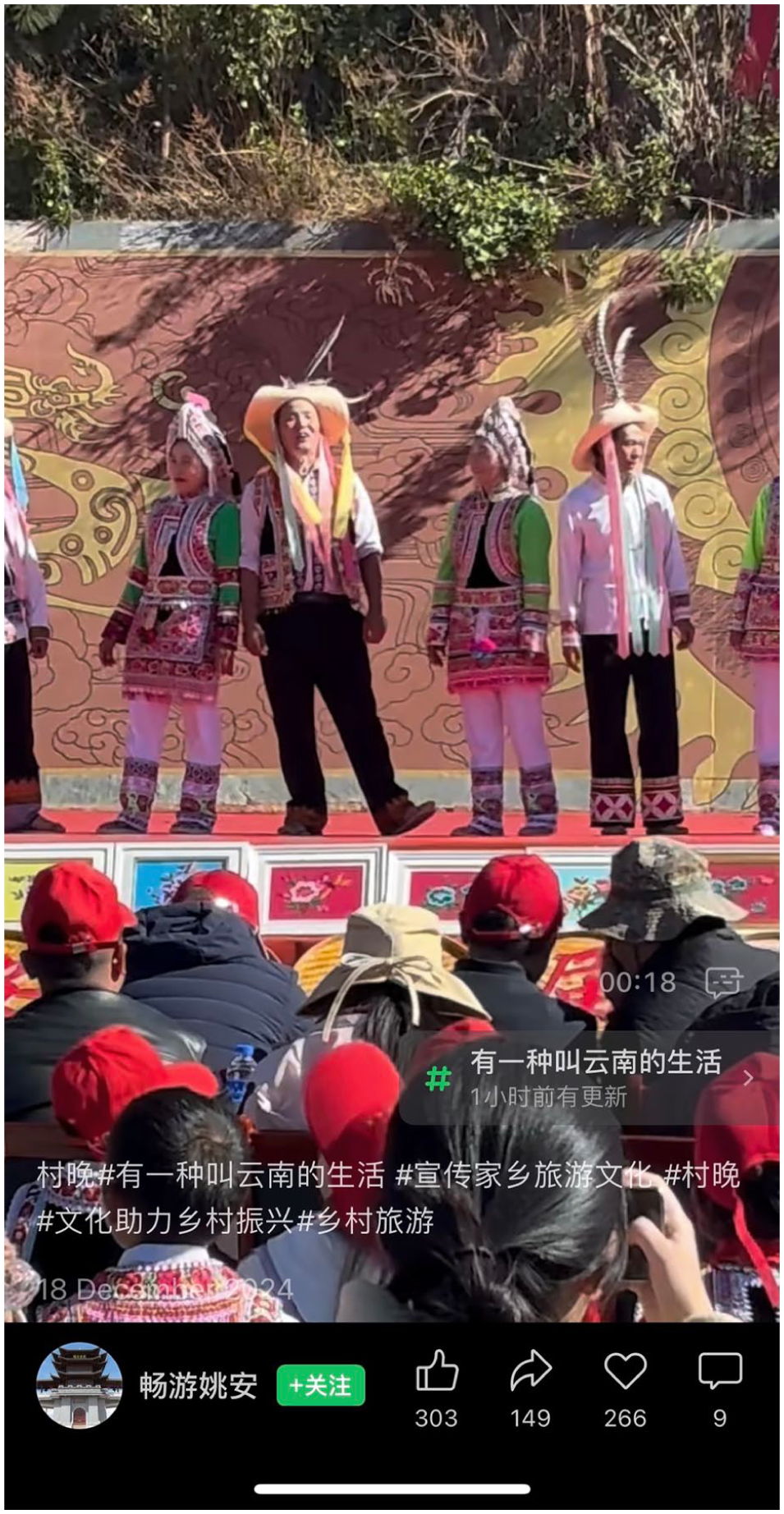
2024 Chuxiong Yao’an Third Rural ‘Village Gala’ #A Lifestyle Known as Yunnan #Promoting Hometown Tourism Culture #Village Gala #Culture Empowering Rural Revitalisation #Rural Tourism (translation of text). Changyou,
The commercial aspects of Meige production and promotion are handled by local folk scholars and advocates of traditional culture. During fieldwork, I observed that cultural activists and traditional music bearers cooperated with well-funded audiovisual production companies that use professional photographers and video production teams to record indigenous performances and post them on social media (Figure 6).
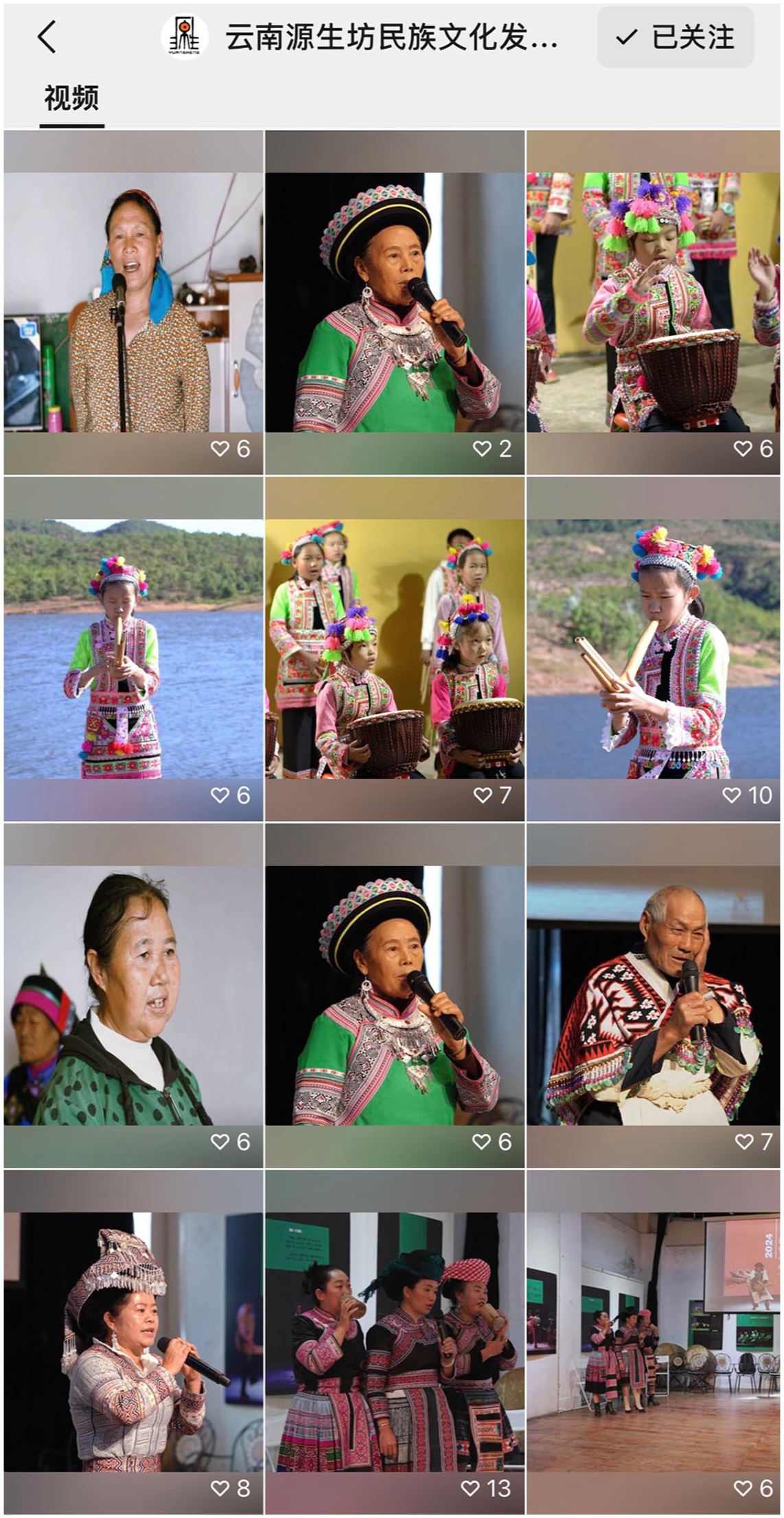
Shared videos of ethnic folk music in Yunnan produced by a Yunnan-based audiovisual production company called Yuanshengfang. Source: The screenshot is sourced from the WeChat video channel Yuanshengfang. The channel is free to follow and open to the public. Photo produced by author.
The empirical fieldwork cases reveal that the routes for disseminating performative Meige have expanded, transitioning from fixed, on-site stage performances to a multi-dimensional, widely participatory remediation of Meige. Social media in particular has empowered Yi people to share and comment on Meige, overcoming the previous top-down model dominated by state authorities and Yi elites. However, Meige stage performances are more fragmented than the textualised versions, and the characteristics of social media, such as rapid content dissemination, further diffuse, compress, or fragment Meige content into smaller, more digestible segments. Thus, present-day Meige stage performances serve as an efficient, visually appealing way to disseminate Meige to broader audiences; they are, however, influenced by state agendas (e.g. tourism promotion) and the personal desire for online exposure. The essence of Meige might be partially preserved, but the richness and complexity of its cultural heritage may be lost when adapting it for contemporary consumption.
Meige improvisation and religious rituals: unexploited and ambiguous memory
The two main forms of mediated Meige – textualisation and stage performance – do not comprehensively reflect its full scope. Much remains unexploited or unexplored. Performed Meige can be musically and lyrically spontaneous, introducing an element of randomness into each segment’s performance: Each part of Meige content is virtually inexhaustible. As a melodic structure, performers can freely improvise and adapt the lyrics. This means that, fundamentally, its content is limitless. If one knows the melody, different content can be created spontaneously. There is no fixed pattern or template; its content is boundless. (interview with Yi cultural activist 2 in Mayou village, fieldwork, June 2024)
Meige’s expansive, dynamic, and improvisatory nature means a great deal of it remains untapped, particularly regarding mundane aspects such as daily routines, which are less likely to be featured in textualised or staged forms. These undeveloped aspects of Meige may include scenes either too intricate or too commonplace for formalised media. This affirms Meige’s inexhaustibility in terms of generating new interpretations and expressions.
Meanwhile, certain aspects of Meige that involve religious rituals remain inaccessible to tourists. Such rituals can pertain to death and funerary rites, communal exorcism, and deity worship. These practices in Yi communities are manifestations of cultural ‘symbols’ (Turner, 1967) that reinforce social ties and kinship, provide individual prestige, and maintain social stability. Most Meige performances, however, have undergone adaptations that gradually diminished the original religious essence. This can be attributed to cultural shifts and fewer religious people in the Yi community. Regarding this decline, Yi linguist Li Xingfu noted that the complexity of rituals and the difficulty of understanding archaic Yi scripts and pronunciation have constrained the transmission of religious practices: The modern Chuxiong-dialect Yi language has undergone standardisation reforms in both writing and pronunciation, making it impossible to fully restore the ritual Meige performance used in religious ceremonies before 1949. The remaining elder Bimos have gradually passed away. Certain aspects of religious customs, such as ceremonial attire, ritual instruments, and the recitation of scriptures for salvation, have become living fossils of their era. (interview with Li Xingfu in Kunming, fieldwork, June 2024)
A Yi villager mentioned that all ethnic Yi sacrificial rituals require the involvement of ritual specialists, called Bimos. It was believed that these specialists could use the power of spirits to help Yi people in various aspects of their lives. Bimos would typically make a living by performing religious rites at family events such as births, funerals, and marriages. During the Cultural Revolution, Bimos were persecuted or discouraged from practising their religion. They were not allowed to train new practitioners, and religious texts were destroyed. As a result, traditional means of transferring religious knowledge were disrupted, and religious practices, beliefs, and interpretations were altered or lost.
In situations such as mourning for the deceased, whether it be an older person passing away or a child dying prematurely, it is customary to invite ritual specialists to the home. These specialists lament while reciting lyrics we cannot understand, yet these chants are integral to the ritual. We adhere to these ancient practices, passed down through generations, even though we do not precisely know the meaning of what is being recited. (interview with Yi villager 1 in Mayou village, fieldwork, June 2024)
External factors, such as official regulations regarding religious practices, have further shaped the survival and adaptation of Meige. Since Meige is designated as a national ICH, its commodification is expected to align with official ICH value standards. Yi villagers verified that certain aspects of Meige have been eliminated because they were deemed incompatible with current value standards: Privately, we know the cultural values of these religious traditions, but at the same time, we recognise certain aspects of Meige performances need to evolve with the times. These include practices such as divination and fortune-telling, [the marginalisation of] women in ritual contexts, and supernatural worship practices involving ghosts and deities. (interview with Yi villager 2 in Mayou village, fieldwork, June 2024)
Interestingly, Yi villagers themselves have self-evaluations of the themes embodied in Meige and advocate for its oral transmission within villages: Performances that embody joy and positivity should indeed be encouraged and widely accepted. However, elements related to funerals or supernatural themes – often referred to as ‘sadness Meige’ – are generally considered inappropriate for public display. I don’t want to refer them as ‘dross’, ‘backward’, or undesirable aspects, as these are inevitable parts of life that everyone would face [such as] funerals or moments of grief. . .. Privately, we still sing Meige at funerals, but in a simplified form that can no longer fully restore the original and authentic Meige performances once led by the Bimos. (interview with Yi villager 3 in Mayou village, fieldwork, June 2024)
These quotations highlight the Yi community’s internal self-assessment regarding the content of Meige. Yi members acknowledge that Meige content is evolving and that certain content is misaligned with official ICH discourse. At the same time, they note that these elements – whether joyful or recognised as ‘sadness Meige’ – are rooted in their everyday life. While the removal of religious performances from the public presentation of Meige changes its ‘authenticity’, it does not entirely alter Yi people’s traditions. Yi members continue to observe simplified ‘sadness’ practices privately and preserve many cultural elements of Meige that are considered appropriate for the present social context.
It is also evident that Yi villagers hold contradictory attitudes towards the memory transmission of Meige. The fieldwork disclosed that Yi villagers privately harbour religious beliefs and practices while acknowledging that they have been reshaped and influenced by the government. This reflects the ambiguous stance of Meige bearers in the heritage-transmission process. Liu (2023: 66) described this process as ‘religious ambiguity’, referring to ‘the government’s simultaneous prohibition and tolerance of popular religious expressions and the uncertain, indefinite, and ambiguous attitudes of local communities towards the supernatural within the ICH movement’. In the context of Meige transmission, I propose the term ‘ambiguous memory’ to refer to the ambiguity and contradiction present in Meige transmission, particularly concerning the portions of Meige that remain intentionally placed in constraints. I argue that the ‘ambiguous memory’ embedded in Meige transmission is a paradoxical dynamic in which the memory of religious traditions is officially sanctioned and informally maintained. It reflects the complex interaction between authentic cultural heritage, religious modernisation, and official modifications. Notably, the repressed or abandoned aspects of Meige’s religious practices are not necessarily unacceptable to a broader audience (beyond Yi communities). Rather, there are limits on what the audience or tourist is permitted to know, see, and experience. While retaining cultural significance in private, religious practices are often marginalised or excluded from public representations of Meige, contributing to a selective cultural memory that prioritises certain aspects while sidelining others.
A framework for remembering Meige
Based on my ethnographic observation and fieldwork, I argue that Meige has continually evolved and represented different memory threads, reflecting the characteristics of mediation and the outcomes of social choices. This study focuses on the traits of mediation – from informal, fragmented oral traditions to books to stage performances to digitally mediated forms. These evolving forms of mediation accommodate Meige content for specific aspects of memory and adaptation. Regarding social choices – ranging from selected textual content and preferred aspects of performances under contemporary influences to undeveloped or ambiguous content – this study reflects the complex interaction of stakeholders in making decisions under shifting dynamics. Table 1 summarises the mediations, stakeholders, and specific aspects of memory transmission over time, based on empirical analyses and cases related to the shift of Meige from communicative to cultural memory. This table responds to the vertical and horizontal dimensions introduced earlier.
Summarised mediations, stakeholders, and specific aspects of memory transmission of Meige.
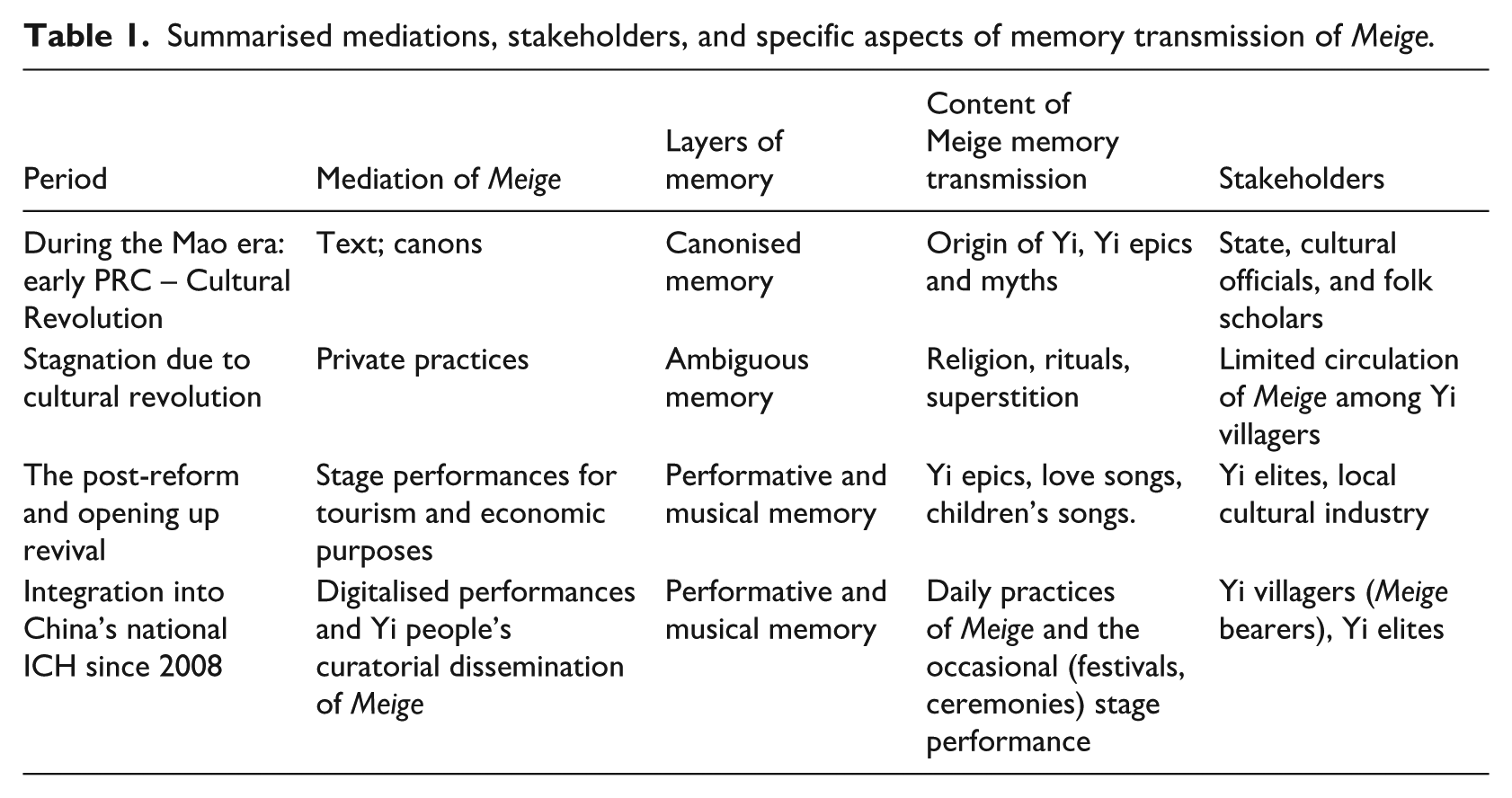
Regarding dimensions such as canonised memory, performative and musical memory, unexploited memory, and ambiguous memory, I conceptualise a comprehensive framework that maps them out. Erll and Rigney (2009) posit that mediation is a process of active selection; I likewise argue that the mode of remembering Meige transmitted from communicative to cultural memory is a selection process. The mediated content of Meige in the Chinese context is accompanied by choices and adjustments in the social landscape. Faced with obscurity, the content that aligns with and amplifies social norms is retained and represented, playing a significant role in shaping public perceptions of cultural revival, including Meige. The elements brought onto the stage or consciously abandoned became part of the ebb and flow of how Meige culture is remembered and revived.
The proposed selective process of remembering Meige reveals the interaction and overlaps between the Meige memory layers, demonstrating their interrelatedness (Figure 7).
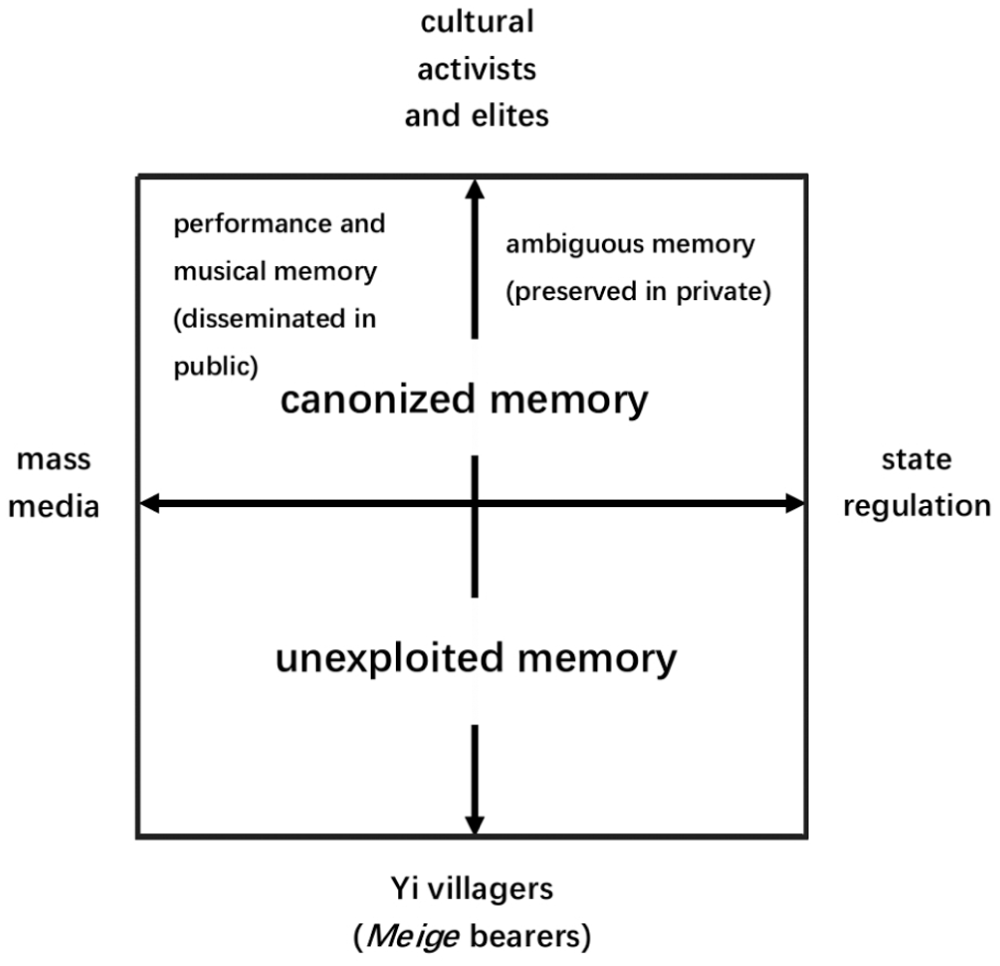
Multi-faceted memory framework of Meige. Source: the author.
The memories in each layer are dynamic and fluid. Just as the memory of Meige constantly evolves, how it is remembered, interpreted, and represented evolves as well. The boundaries between these different types of memory are continually reshaped by cultural, social, and political forces. According to my analysis, Meige is continually (re)mediated and disseminated, involving ongoing selection and evolution. Each act of mediation imposes new interpretations and priorities, altering the cultural memory that might not fully align with Meige’s original significance. This evolution reflects broader dynamics in cultural memory; content that gets preserved is shaped by contemporary cultural values, practices, and community needs. The result is a version of Meige that, while retaining some core elements, is inevitably influenced by cultural adaptation.
I argue that the selection of Meige content is not determined by a single entity but is the result of collective interaction and power dynamics among various stakeholders in the process of memory transmission. These stakeholders – including national and local governments, the cultural industry, Yi elites (cultural activists), and grassroots Yi villagers – collaboratively shape the themes and formats of Meige performances through negotiation and adaptation. However, such collaboration does not imply an equal distribution of power, significance, or discursive authority among all stakeholders. In terms of power negotiation, the central government plays the dominant role in shaping the trajectory of ICH (Su, 2019). Local governments, acting as both intermediaries and implementers of central directives, draft or revise regional regulations to align with national ICH campaigns. The canonisation of Meige could be seen as a state-sponsored cultural project initiated by national and provincial governments, as well as cultural committees. During the transmission from canonised Meige to stage performance, Yi elites have remained key intermediaries in interpreting and implementing government directives in local Yi communities, mobilising resources and integrating voluntary, autonomous performances into professional Meige performances. Their ability to interpret policies, leverage their expertise in literature and music, and utilise bilingual skills enables them to bridge national policies with community-driven cultural preservation efforts. The incorporation of the cultural industry has commercialised and expanded the avenues for heritage preservation and memory transmission, allowing Meige to be professionally staged and commodified as a form of cultural production embedded within local tourism. Social media has democratised cultural representation, increasing grassroots participation in promoting and preserving Meige and elevating the role of grassroots Yi villagers to further evolve Meige from an on-site, pre-prepared format into a more authentic, spontaneous expression of everyday Meige practice. These stakeholders’ collaboration indicates that Meige’s memory transmission is not unidirectional; rather, it is a dynamic, reciprocal process involving policy guidance, elite initiatives, and grassroots participation. The sustainability of Meige’s transmission relies on mutually reinforcing relationships among these stakeholders, ensuring its continued evolution within contemporary society.
In additional to stakeholders’ role in (re)mediating and constructing the cultural memory of Meige, this study also emphasises the role of technology preserving and representing cultural memory, highlighting the dynamic interplay between what is remembered and what is forgotten and how cultural heritage is continually reshaped in the public consciousness. Media technologies have disrupted the traditional top-down knowledge barriers and power structures of memory transmission. Digital platforms and media technologies have enabled access to cultural heritage, empowering ordinary people to actively participate in the preservation and transmission of Meige.
Conclusion
This study focuses on the role of the ‘medium’ in configuring the content and cultural dynamics of Meige and examines how Meige has evolved from its original mode of oral transmission through various phases of (re)mediation into cultural memory – a process facilitated by textualisation, stage performances, and mass media. I conclude that Meige’s (re)mediation processes are content-selection acts, shaping the multiple facets of Meige that are restored and remembered in contemporary society. I propose, therefore, a multi-faceted memory framework in which Meige, as a dynamic ‘site’ (Nora, 1989), embodies both retained and abandoned memories shaped by shifting socio-cultural values and digital media technology. The retained memories are articulated and circulated through canonised forms of Meige and its stage performances. Many themes remain underexplored, with the potential to be transformed into sustainable and materialised forms. By contrast, ambiguous memories embodied in religious practices are more likely to be intentionally diminished or adapted to contemporary social contexts.
The power dynamics reflected in the retained and discarded memories of Meige can be attributed to the interactive contributions of official and grassroots efforts, with four stakeholders identified. Among them, the government serves as the central actor within a hierarchical structure, creating a heritage ecosystem and implementing top-down preservation efforts. Fluctuations in the practice and transmission of Meige are directly or indirectly shaped by heritage-related policies and schemes proposed by various levels of government. The other three stakeholders – cultural activists, Meige bearers, and the local cultural industry – all participate in the preservation and transmission of Meige through their respective modes of engagement.
This study offers a valuable empirical case that depicts the survival and transformation of a traditional minority ICH in China as it navigates various memory-transmission modes. I propose a multi-faceted Meige memory framework that encapsulates the different aspects of Meige cultural memory and provides a method for analysing broader shifts in Chinese oral traditions. By examining the pathways, methods, and circumstances involved in revising folk epics in contemporary China, this study hopes to inspire further comparative studies of and reflections on the transmission of these traditions and their evolving forms of cultural expression in different linguistic and national contexts.
This research could be expanded in the following ways. First, there is a need for a deeper exploration of the collaborative mechanisms among the various stakeholders involved in sustaining the cultural memory of ICH. How do different levels of government – especially central and local authorities – coordinate their governance processes (see Su, 2019 for Chinese officials’ perspectives on ICH)? Further, what roles do elites play in shaping government–scholar networks in the safeguarding of ICH (Maags and Holbig, 2016). Second, future research could consider the question of subjectivity in cultural memory, with a focus on the Yi cultural activists and grassroots bearers who are involved in the transmission and reproduction of Meige. The agency of these grassroots individuals in navigating challenges and constraints in memory transmission, along with the strategies they adopt to sustain cultural continuity, reveals the often-overlooked yet pivotal role of local actors in shaping the future of cultural heritage.
Footnotes
Acknowledgements
I would like to express my sincere gratitude to all participants involved in this study. I also wish to acknowledge the support of the ECura project team. Special thanks go to Dr Junjie Su for recommending relevant literature during the revision stage. I am also grateful to the journal’s editors, Prof. Andrew Hoskins and Dr Andrea Hajek, as well as the two anonymous reviewers, for their insightful comments and suggestions.

Funding
The author disclosed receipt of the following financial support for the research, authorship, and/or publication of this article: This work was funded by the European Research Council (ERC, ECura, ERC-2021-STG, 101039864) and the Research Program for Newly Recruited Young Faculty of Minzu University of China (Grant No. 2025XJJS008).
Declaration of conflicting interests
The author declared no potential conflicts of interest with respect to the research, authorship, and/or publication of this article.