




Abstract
The digital age has profoundly transformed Holocaust remembrance through the influence of digital archives, connectivity, and emerging technologies. This research investigates the transformation of personal memories into connective memory shaped by online social platforms, Internet search tools, and artificial intelligence. It employs an analysis of digital memory platforms and conducts interviews centered on a specific case study examining the memory patterns of a Holocaust survivor. The increasing reliance on algorithmic mediation raises concerns about the potential distortion and manipulation of historical narratives. This study highlights the need for human agency in memory construction and the challenges of technologically mediated memory. It suggests that collaborative efforts involving scholars, survivors, and community members should continue to play a central role in developing technological tools for remembrance. The implications extend beyond Holocaust memory, informing discussions on the digitization, preservation, and ethical dissemination of technologically mediated historical knowledge in the twenty-first century.
Keywords
Introduction
Remembering, preserving, and transmitting the memory of the Holocaust is a pressing challenge as survivors and eyewitnesses grow older and eventually pass. Emerging technologies have been used to reshape the way we remember and engage with this chapter in history, giving birth to what Hoskins (2018b) has termed “connective memory.” This study explores the evolving nature of Holocaust memory, focusing on the mediating role of current technologies, along with the challenges and opportunities they present. It explores the influence of the digital era and its technological mediation on the production, preservation, and distribution of Holocaust memory. It also suggests broader implications for memory studies and the collective recall of historical events.
This research is driven by the question of how individuals engage with mediated holocaust memories. To explore this question, it begins with a literature review and analysis of the digital mediation of Holocaust memory across various platforms. This initial step provides the necessary context for understanding the digital landscape in which individuals encounter and interact with the Holocaust’s memories. Following the review, it then conducts an analysis centered on a single case study. This approach allows us to examine how individuals navigate, interpret, and engage with diverse digital representations of Holocaust memory. In this way, the exploration of individual engagement is grounded in a thorough understanding of the digital ecosystem of Holocaust memory. It then examines the impact of these changes and looks ahead to the challenges and opportunities arising from the technological mediation of Holocaust memory.
This article situates the case study within the framework of personal family search, drawing on Hirsch’s (2012) concept of “postmemory” to illuminate the affective and intergenerational dimensions of engaging with traumatic pasts through media technologies. Postmemory refers to the relationship that the next generation has with the traumatic experiences of the previous generation, mediated through stories, images, and behaviors. What is the impact of technological mediation on postmemory as an individual’s journey into the past and the emotional resonance of discovering and reconstructing family histories?
This article focuses on the story of the deceased Holocaust survivor Hanna Kugler, whose memories have been preserved and made accessible through institutional, digital, and connective platforms. This article traces the journey of Hanna’s memories from material to digital and connective forms. By analyzing this journey, this article aims to bridge the gap in understanding how technological mediation shapes preservation, accessibility, and engagement with Holocaust memory in the digital age.
This study makes three key contributions to the understanding of digitization’s transformation of the mediated past. First, by focusing on the personal family search framework and the emotional and affective dimensions of engaging with traumatic pasts through digital technologies, this study provides a novel perspective on the role of digital media in shaping individual and collective memories. Second, by integrating theoretical insights from media and memory studies (Ekelund, 2023), such as Hoskins’ (2011) concept of connective memory and Smit’s (2020) analysis of connective memory work, it offers a nuanced and conceptually rich analysis of the specific technologies and algorithms involved in the mediation of Holocaust memory. Finally, by examining the ethical implications of these technologies and algorithms through the lens of a specific case study, this study contributes to ongoing debates on the politics and ethics of digital Holocaust memory practices, addressing what Hoskins (2018a) calls the “precarity of memory” in the digital age.
From collective to mediated memory
French sociologist Maurice Halbwachs (1992) coined the term “collective memory” (p. 168–171) to explain how individual memory is influenced by collective social memory. Halbwachs pointed out that it is impossible to separate internal (personal) and external (collective) memories. Following, Landsberg (2004) expanded this idea by coining the term “prosthetic memory.” Landsberg claimed that, through tangible objects, individuals can sense and physically experience past events that are not their own or those of their reference groups. For example, the Holocaust Museum in Washington, DC, enables even visitors who are not members of groups with a collective memory of the Holocaust to experience this “prosthetic” memory. Therefore, she suggested that prosthetic memory can “transfer” memories and influence existing behaviors and perceptions. It is due to the construction and mediation through material means and memory enterprises such as museums that it is possible to collectively understand personal memory through the experience of “memory sites.”
José Van Dijck (2007) partially adopted Landsberg’s view but emphasized the importance of looking from the opposite direction, by exploring not only how external, prosthetic memory constructs internal, personal memory, but how public and personal memory simultaneously shape each other. Van Dijck claimed that memories are not only contained internally in our minds or externally in our culture, but that they are connected in a complex network. The social construction of memory by media or objects results in a “mediated” memory, which is not only found in our minds, external objects, or in technology but also in the relations between them (Belk, 2013: 477; Van Dijck, 2007).
Throughout history, humans have used external objects to preserve their memory for long periods of time. Some readers may recall burying a “time capsule” in their backyard during childhood. A small box in which a variety of objects worth remembering were stored: documents, albums, letters, pictures, notes, diaries, and audio and video tapes. In memory research, these small boxes serve as repositories of memory aids, which store knowledge and experiences to facilitate the creation of future memories. Van Dijck (2007) described them as “mediated memories” (pp. 1–3), echoing earlier perceptions of these memory aids simply as “media,” which is merely an extension of our ability to perceive. Photographs and televisions are examples of visual extensions, whereas radios and turntables are examples of auditory extensions (McLuhan and Fiore, 1967). Memory media enables long-term access to memory by allowing recollection at a later time. The process of accessing memory through media can remediate memory, even for individuals who have no firsthand experience. Accordingly, it is clear that memory and perception are closely connected and mediated by the media; therefore, an extension of perceptual abilities is an extension of memory abilities (Van Dijck, 2007: 15–16).
Material memory objects can change, disappear, or be lost. Unlike material objects, which are designed to faithfully reproduce memory, human memory functions differently—it filters, shapes, forgets, and censors information (Atkinson and Barker, 2021). Van Dijck (2007: 152) boldly claimed that its main purpose is to create an environment in which individuals can function at their best.
The use of material objects for memory expansion has been a central part of humanity’s “war on oblivion” throughout history, utilizing technologies and media that have evolved over time. With the use of literature, personal diaries, photo and video cameras, written documentation, and constant surveillance by technology platforms, details of our daily lives have been meticulously preserved. This is our very own personal “Funes the Memorious,” who never forgets, ever. Borges (2000) described Funes as follows: “I am afraid he was not too gifted to think. To think means to forget differences, to generalize, to undress. In Funes’ world there were only details, almost immediate (p. 108).” Borges’s story revealed that an excess of information resulting from disabling the filters that we apply to forget, reduce, and focus on memories can significantly impair our ability to comprehend, draw conclusions, make decisions, and live autonomously in society. Human memory is not a neutral or indifferent document of events, but an active response to them. French philosopher Michel De Certeau (1984) argued “that memory answers more than it records” (p. 87) as the individual constantly seeks to revive the past and understand it to guide their current activities.
Objects that preserve collective memory can convert human experience into memories and act as a means of preserving personal and interpersonal continuity. Paradoxically, the digital accuracy and lack of temporal narratives that characterize it can sometimes impair continuity and change a person’s relationship with their memories. Next, this study seeks to identify the effect of technological memory mediation, its impact on how we, as humans, remember the Holocaust, and how these changes might affect commemoration for future generations.
Technological mediation of memory
Technology is neither new nor is its use for more adapted human behavior. French philosopher Bernard Stiegler (1998: 152–153) considered technological tools as a human prosthetic. Unlike the common medical use of the term “prosthesis,” its purpose is not to repair or complete what needs to be repaired, but to increase human capabilities in new ways. Stiegler (1998) viewed the dependence of humans on these prosthetic devices to be a continuation of evolution and termed it “epiphylogenesis” (p. 135). Stiegler’s concept of epiphylogenesis offers a radical reconceptualization of the relationship between humans, technology, and memory. It posits that human evolution is fundamentally intertwined with technological development, suggesting that our cognitive processes, including memory, are profoundly shaped by our technological prostheses. Although Stiegler’s concept of epiphylogenesis offers valuable insights into the co-evolution of humans and technology, it may not fully capture the complexities of technological memory mediation. As Pinchevski (2019) argues, media technologies do not merely extend human memory capacities but can also interrupt and reconfigure collective remembrance. Pinchevski’s concept of interruption highlights how moments of disruption in media discourse can create openings for alternative and marginalized voices to emerge. In the context of Holocaust remembrance, this implies that digital technologies are not merely tools for preserving memory but active agents in shaping how we remember and engage with the past. This understanding informs our analysis of how different digital platforms mediate and transform Holocaust memory. This concept can illuminate how digital technologies, such as online archives and social media platforms, have the potential to facilitate the emergence of new narratives and perspectives on Hanna Kugler’s story, challenge dominant interpretations, and foster a more polyphonic understanding of her memory.
Examining the technological mediation of memory through the lens of Bruno Latour’s (1994, 2005) Actor-Network Theory offers a different perspective. According to Latour, memory, as part of human agency, is not simply a cognitive process but is inherently entangled within complex networks of actors, human and non-human, and their relationships. Latour’s Actor-Network Theory emphasizes the agency and influence of human as well as non-human actors, such as digital devices or social media platforms, and positioning technologies as key actors in the network of memory, co-constructing, and reconfiguring our collective remembrance. Latour’s theory highlights the intricate interplay between human cognition, social practices, and technological artifacts that mediate memory. Importantly, technology mediates not only our actions but also our perception of ourselves and the world around us (Ihde, 2009). An example of such a mechanism for perceptional mediation is the use of metaphors (Hutton, 2022; Lakoff and Johnson, 2003).
Technologies, algorithms, and big data
McAfee and Brynjolfsson (2017) identified big data, networking, algorithms, and cloud technologies as the major technological forces of change. They and others (Kelly, 2016; Schwab, 2017) emphasized that the combination of vast amounts of data, interconnected networks, sophisticated algorithms, and scalability of cloud computing are driving innovation, transforming industries, and enabling new possibilities in various domains. The ease, convenience, and availability of retrieval culminate in phenomena highlighted by the transition to the digital age: the proliferation of the Internet and the multitude of domains occupied by it (Turkle, 2011: 28; Ward, 2013). The increasing externalization and digitization of memory means that it is no longer stored in tangible objects (Negroponte, 1996). This allows, and almost compels, a quick “sharing” of memory and decisions with other actors (Agger, 2015; Bar-Gil, 2020). While this article focuses on the role of digital technologies in mediating Holocaust memory, we must acknowledge the materiality of these technologies and the infrastructure that supports them. As Parikka (2018) argued in their work on “medianatures,” digital media are not immaterial or purely virtual but are deeply entangled with the material world.
Technological mediation of Holocaust memory: from personal to material to mediated and connective memory
Technological advancements have played a crucial role in the mediation of Holocaust memory, transforming the way we engage with historical events. Digital platforms and archives have facilitated access to vast amounts of information, testimonies, and archival materials, making them widely available to researchers, educators, and the public.
While Stiegler’s concept of epiphylogenesis offers valuable insights into the co-evolution of humans and technology, Hoskins (2011) argued that the digital age has fundamentally altered how memory is constructed and shared. Hoskins (2011) introduces the concept of “connective memory” as a “sensitizing tool” to illustrate memory in the digital era as the result of “the moment of connection” (p. 278). This shift challenges traditional notions of individual and collective memory, instead emphasizing the dynamic connectivity between people, media, and technologies. As Hoskins (2011) states, “Connectivity transforms memory as being radically strung out via a continuous present and past” (p. 272).
The role of technology in shaping Holocaust memory raises important questions regarding the balance between human agency and automated processes. While technology can facilitate the discovery of new information and enhance memory engagement, an overreliance on technology might limit the diversity of perspectives, perpetuate biases, affect the authenticity of memory experiences, and even devalue Holocaust memory (García-Gavilanes et al., 2017; Heersmink, 2017; UNESCO, 2022). Thus, the increasing involvement of technology in memory mediation requires critical examination and ethical consideration. However, the notion of connective memory as proposed by Hoskins (2011) may oversimplify the role of human agency in digital memory practices. As Smit (2020) demonstrates in his study of the “Justice for Mike Brown” Facebook page, while digital platforms enable new forms of memory work, human actors still play crucial roles as “connective leaders” in shaping these memory narratives. This study seeks to build on this insight by examining how individuals actively navigate and curate personal digital Holocaust memories rather than being passive recipients of algorithmically mediated content.
The memory of the Holocaust has undergone significant evolution, influenced by historical context and societal factors. Initially, personal memories were the primary mode of preserving the holocaust experience. Survivors settle in their respective countries of immigration and engage in a frantic search for surviving family members and friends (Bernhardt, 2020).
The establishment of institutions played a crucial role in shaping Holocaust memory. For example, Yad Vashem and the US Holocaust Memorial Museum have digitized and opened access to their databases, allowing the public to explore their extensive collections of names, testimonies, and historical records (Hogenson, 2011; Tureb and Wagrell, 2020).
Yad Vashem, founded in Israel, aimed to gather and preserve material related to Jewish people who perished, fought against the Nazis, and destroyed communities (Yad Vashem Law, 1953). One significant initiative was the collection of Pages of Testimony, which commenced in the 1950s. These testimonies not only served as a means of gathering information but also to commemorate the victims and honor their memories. Survivors and their families can submit personal accounts, photographs, and names of victims, contributing to the material memory of the Holocaust (Bernhardt, 2020).
Since the 1990s, the advent of digital technology and the Internet has transformed Holocaust memory into digitally mediated memory. The digitization of archives and the development of online platforms have allowed for broader access to and dissemination of Holocaust-related information and testimonies. The transition from material to mediated memory has expanded the possibilities of engaging with Holocaust history beyond physical locations and limited archival access. With the growth of digital archives and the accumulation of vast amounts of data, algorithms have become instrumental in organizing and retrieving information. These algorithms analyze and connect data from various sources, such as audio and video testimonies, photographs, and historical records, thereby allowing for more efficient indexing and retrieval. Through the use of sophisticated algorithms, individuals can discover new connections, uncover previously unknown information, and engage in different perspectives on holocaust history (Kansteiner, 2017).
However, the increasing reliance on algorithms in the mediation of Holocaust memory raises significant concerns. Algorithms are designed to prioritize certain content, filter information, and shape the user experience (Fisher and Mehozay, 2019). This algorithmic curation can impact the accessibility and visibility of specific narratives, potentially marginalizing lesser-known stories or reinforcing dominant narratives. Moreover, algorithms are not neutral but reflect the biases and values of their creators. This raises concerns about the potential manipulation and distortion of Holocaust memories (Ben-David, 2020). While algorithms undoubtedly play a significant role in mediating access to digital memories, we must be cautious about overstating their deterministic power. As Kansteiner (2017) argues, the impact of digital technologies on Holocaust memory is not uniform or predetermined but rather shaped by complex interactions between technological affordances, cultural contexts, and individual agency. Websites dedicated to Holocaust-related content serve as repositories for survivor testimonies and educational resources, fostering a global community committed to remembering. Virtual reality technology has been found to enhance empathy and understanding of the Holocaust through immersive experiences (Mulders, 2023; Walden, 2022). Social media platforms, such as X (formerly Twitter) and Facebook, play crucial roles in fostering collective memory, encouraging dialog, and amplifying survivor narratives (Lundrigan, 2020; Neiger et al., 2023). The most famous example is @Eva.Stories: Using Instagram to tell the story of the 13-year-old Hungarian Jewish girl Eva Heyman, a series of 70 video clips reimagine her life in the digital age as if she had access to a smartphone during the Holocaust (Berenson and Ezra, 2023). Mobile applications have also been explored as tools to engage younger generations in Holocaust commemoration (Manca, 2021). In addition, digital storytelling incorporating multimedia elements, such as photos, videos, and personal narratives, enhances the affective dimension of holocaust remembrance (Dekel, 2013), a phenomenon that is aggravated during the COVID-19 period (Ebbrecht-Hartmann, 2021). Sophisticated artificial intelligence technologies, such as facial recognition algorithms and large language models, aim to uncover unknown connections and extract valuable information by analyzing millions of records (Lebovic, 2024; Reuters, 2020). These transitions are summarized in Illustration 1.
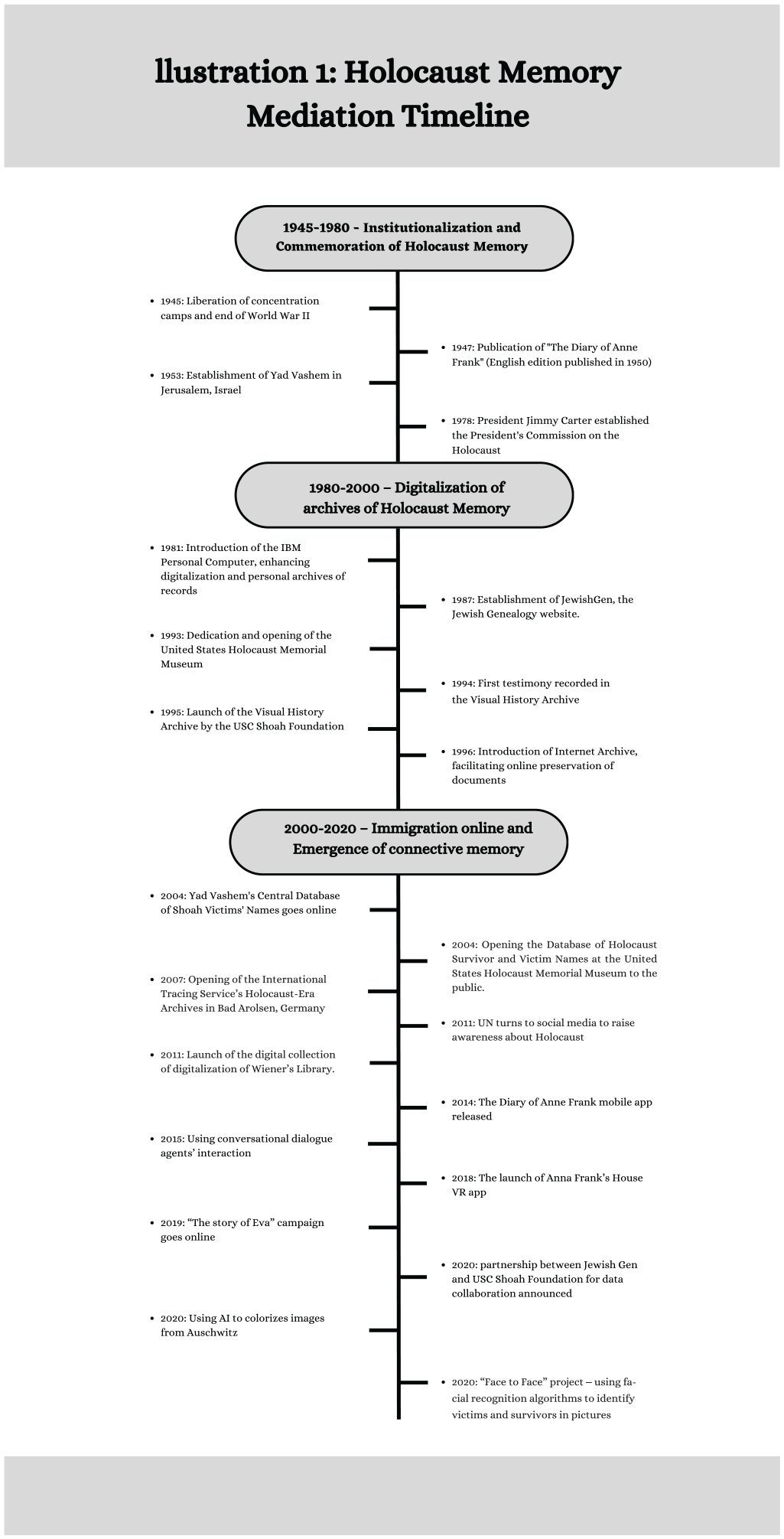
Holocaust memory mediation timeline.
In conclusion, technology has significantly mediated Holocaust memory, from the transition to digital archives, and the use of algorithms to expand online platforms and connective memory. The evolution of Holocaust memory from personal to material to mediated and connective highlights the impact of technology on how we remember and engage with historical events.
While existing research has explored the impact of digitization on Holocaust memory (Hoskins, 2018b; Kansteiner, 2017), there is a need for empirically grounded and theoretically informed studies that examine the specific technologies and algorithms involved in the mediation of individual and family memories. This study aims to address this gap by providing an in-depth case study of memory mediation through various digital platforms and archives. Hence, I seek to answer the following questions:
RQ1: How has the Holocaust memory evolved from material, collective, digital, and connective memory, as illustrated by the case study of Hanna Kugler’s story?
RQ2: In what ways do digital technologies such as online archives, social media, and artificial intelligence shape the preservation, dissemination, and engagement of Holocaust memory?
RQ3: How does the concept of connective memory help us understand the role of human agency and algorithmic mediation in shaping Holocaust memory in the digital age?
RQ4: What are the ethical implications and challenges of technological mediation on authenticity, accessibility, and future commemoration of holocaust memory?
RQ5: How can the case study of Hanna Kugler’s story elucidate the transformative potential and limitations of digital technologies in facilitating intergenerational connections and fostering empathetic engagement with traumatic pasts?
Methodology
The methodological approach is informed by Hoskins’ (2011) concept of “interactional trajectories,” which emphasizes how “experiences [are] being extended as individuals/groups encounter and interact with objects, interfaces and others, which in an ongoing fashion shape remembering interactively in the present” (p. 277). This concept guides our analysis of how Holocaust memory is shaped by interactions with various digital platforms and interfaces. In addition, it draws on Smit’s (2020) approach to studying connective memory work, which emphasizes the need to examine both the content of digital memory and the practices through which it is produced and shared.
The methodology integrates two complementary approaches: a comprehensive analysis of digital platforms mediating Holocaust memory and in-depth interviews focused on a single case study. This integrated approach, inspired by Smit’s (2020) examination of connective memory work, allows us to trace the journey of one Holocaust survivor’s memory across various digital platforms while also exploring how individuals engage with and interpret these mediated memories. As Smit (2020) notes, “connective memory work is never strictly personal or collective, being simultaneously the result of the personalized experience of social media and shared discontent in everyday life” (p. 96). This methodology allows to trace the journey of one Holocaust survivor’s memory across various digital platforms while also exploring how individuals engage with and interpret these mediated memories. This approach offers a unique opportunity to examine both the macro-level dynamics of digital memory mediation and the micro-level processes of individual memory engagement and interpretation.
Theoretical framework and methodological approach
This study is grounded in a cross-media theoretical framework that draws on Hoskins’s (2011) concept of connective memory and Van Dijck (2011, 2013) culture of connectivity. Hoskins (2011) argues that in the digital age, memory should be understood as “the moment of connection” rather than a property of specific entities (p. 278). Van Dijck (2011) extends this idea, emphasizing that “any memorizing activity takes place in the current flow of contacts between people and machines and cannot be the result of either an individual or collective reminiscence (p. 404).”
The strength of the methodology lies in its ability to provide a comprehensive, multilayered understanding of Holocaust memory in the digital age. By focusing on a single case study across multiple platforms, we can trace how Holocaust memory is transformed and remediated in the digital ecosystem. Simultaneously, interviews offer grounded insights into how individuals navigate and create meaning from diverse digital representations (Alpi and Evans, 2019; Rashid et al., 2019). This dual focus allows us to bridge the gap between media analysis and user experience, offering a more nuanced understanding of how holocaust memory is constructed, transmitted, and received in the digital age.
This case study allows for an in-depth exploration of a specific individual’s experience and its broader scope. The case selected was the memory of one Holocaust survivor, Hanna Kugler, whose “memories” have been preserved and made accessible through various institutional, digital, and connective platforms. Case selection illuminates the impact of technological mediation on holocaust memory. It traces Hanna Kugler’s memory across various digital platforms and archives, including Yad Vashem’s Central Database of Shoah Victims’ Names, the USC Shoah Foundation’s Visual History Archive, and other sites (see Appendix 1 and Figures). It takes into consideration the role-specific algorithms and technologies involved in these platforms, such as optical character recognition (OCR) software, machine translation tools, and recommendation systems, in shaping the accessibility and discoverability of her story.
Data collection
Multiple data sources were used to comprehensively understand personal memories. The primary data sources included the following:
Interviews
Eight in-depth interviews were conducted with participants selected using purposive sampling, specifically targeting family members of Hanna Kugler who have engaged with her story through media, including digital technologies and platforms. This allowed them to explore their memories, experiences, and perspectives related to the personal story and perspective on her memory. 1 The interviews took place in 2019-2020. During the interviews, written personal narratives shared by the participants were gathered to gain a more nuanced understanding of their lived experiences and memory formation over time.
The interviews focused on their personal experiences and emotions as they engaged with her story through various media technologies. The questions explored their motivation to conduct family searches, the challenges they encountered, and the emotional impact of discovering new information about Hanna’s life. The themes that emerged from these interviews included a sense of connection and continuity fostered through digital technologies, the collaborative nature of the family search process, and the transformative power of personal discovery. These themes provide a rich context for understanding how digital technologies shape individual journeys into the past and the intergenerational transmission of memory.
Archival materials
This included personal documents, photographs, letters, and diaries, which were collected and analyzed to enrich the research.
Data analysis
I used a qualitative approach to identify themes, patterns, and meanings. Thematic analysis was employed to systematically organize and analyze the interview transcripts, archival materials, and personal narratives (Braun and Clarke, 2006). The analysis involved iterative reading, coding, and categorization to identify recurring themes and develop a comprehensive narrative using Latour’s (2005) ANT analysis of technological mediation. Themes were cross-referenced from the interviews with patterns identified in the media analysis to explore how personal experiences align with or diverge from mediated representations of the Holocaust. This integrated analysis enabled us to examine how digital media both shape and are shaped by users’ engagement with Holocaust memories.
Reflexivity and researcher positionality
This case was based on the researcher’s family history. The researchers’ positionality and potential biases were acknowledged and addressed throughout the research process. As recommended in the literature (Levitt et al., 2017; Tong et al., 2007), reflexivity was integrated by maintaining a reflexive journal to document and reflect upon the researcher’s thoughts, assumptions, and potential influences on data collection and analysis. This ensured transparency and mitigated potential biases in the interpretation of the findings.
Ethical considerations
Informed consent was obtained from all participants before conducting the interviews and using their personal materials. Interviewee names were anonymized to ensure confidentiality and ethical guidelines regarding research with participants were followed (Levitt et al., 2017; Tong et al., 2007). All archival materials attached to this article were used with permission from their legal guardians.
Methodological limitations
The findings of this study are specific to selected case participants and cannot be directly generalized to the entire population. The reliance on self-reported memory and retrospective accounts may introduce memory bias and limitations. In addition, the availability and accessibility of archival materials may affect the comprehensiveness of data. A larger section on the limitations of the research and suggestions for future research are included in the discussion section. However, despite these limitations, this single case study provides a rich, in-depth exploration of the transformative impact of digital technologies on Holocaust memory, offering valuable insights into the complex interplay between personal experiences, familial connections, and the mediation of historical narratives, which can inform broader discussions and practices related to digitization, algorithmic mediation, and preservation of traumatic pasts.
Unveiling the tapestry of personal Holocaust history: tracing the shifting dimensions of memory
The findings revealed a complex interplay between personal engagement with Holocaust memory and its digital mediation. This section is structured around key themes that emerged from both our interviews and media analysis, demonstrating how individual experiences intersect with, and sometimes challenge, dominant narratives presented on digital platforms.
After Hannah, a Holocaust survivor, passed away, a handwritten note (in Yiddish called a “tsetalleh”) was found hidden amid grocery lists and personal contact lists in her notebook (see Figure 1). This note provides us with a comprehensive account of Hannah’s remarkable journey of survival during World War II, documenting her experiences until she emigrated to Israel after the war. This document became the catalyst for a profound research journey undertaken by her family (for the complete list of places and events mentioned in the original note and their corresponding connective memory fingerprints, see the Appendix 1).
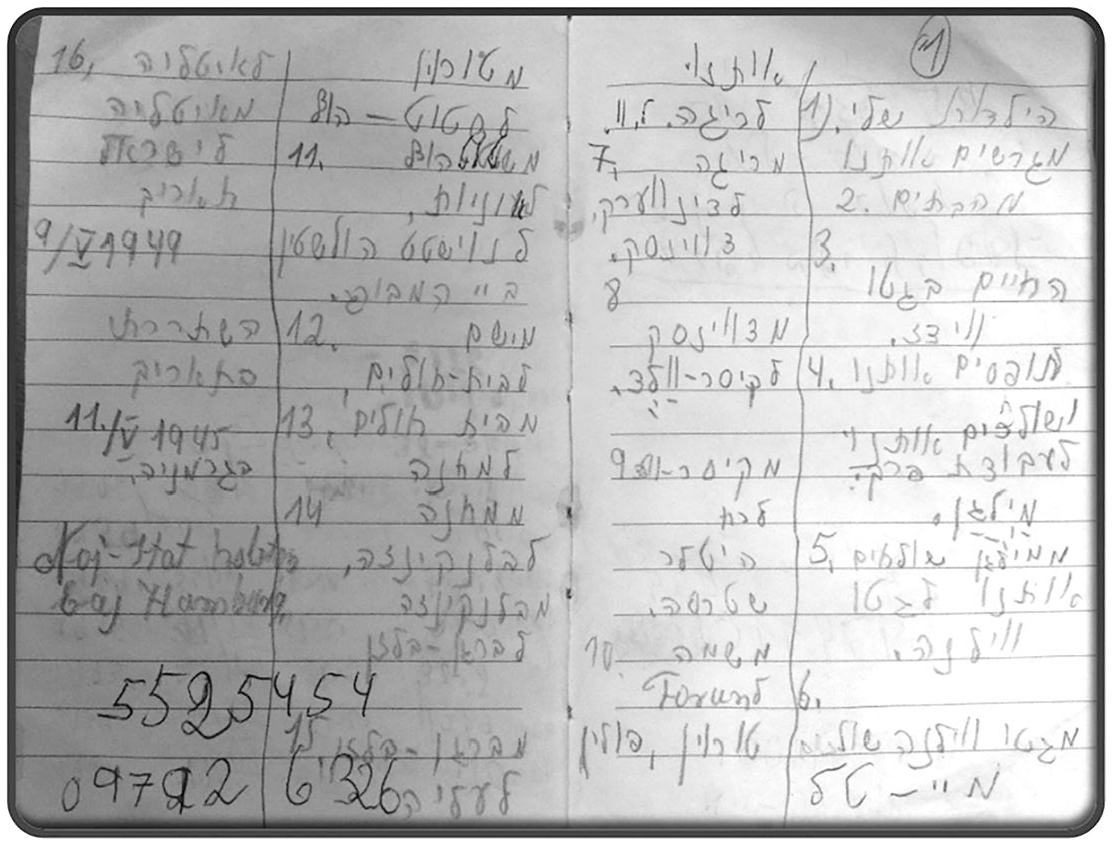
Hannah’s notebook.
In a way, this article reflects on that journey, unearthing, and preserving her memory as an example of the shift from material to digital and connective memory. It focuses less on how her biological memory changed into material memory (the note) and more on how the Holocaust’s memory gradually became institutionalized and commemorated, digitized, and connected, providing support for her family’s history and memories. Her material and personal memory artifacts have resurfaced digitally as part of a collective memory reservoir, appearing not only in memorials and museums that offer collective memory forms, but also in algorithmically mediated online archives that contain texts and images that have been published online, linked to, edited, and curated. Some of them allowed her family to “experience” them for the first time after her death.
From personal to collective institutional memory
One “Page of Testimony” that details the deaths of her family members and was kept at Yad Vashem, was the first piece of archival information regarding her documented history to be discovered (see Figure 2). It is important to note that the collection of the Pages of Testimony, which began in the mid-1950s, was not seen as a way to gather information, but as a means of commemoration. As stated in Martyrs’ and Heroes Remembrance (Yad Vashem Law, 1953): The task of Yad Vashem is to gather in the homeland, material regarding all those members of the Jewish people who laid down their lives, who fought and rebelled against the Nazi enemy and his collaborators, and to perpetuate their memory and that of the communities, organizations, and institutions which were destroyed because they were Jewish.
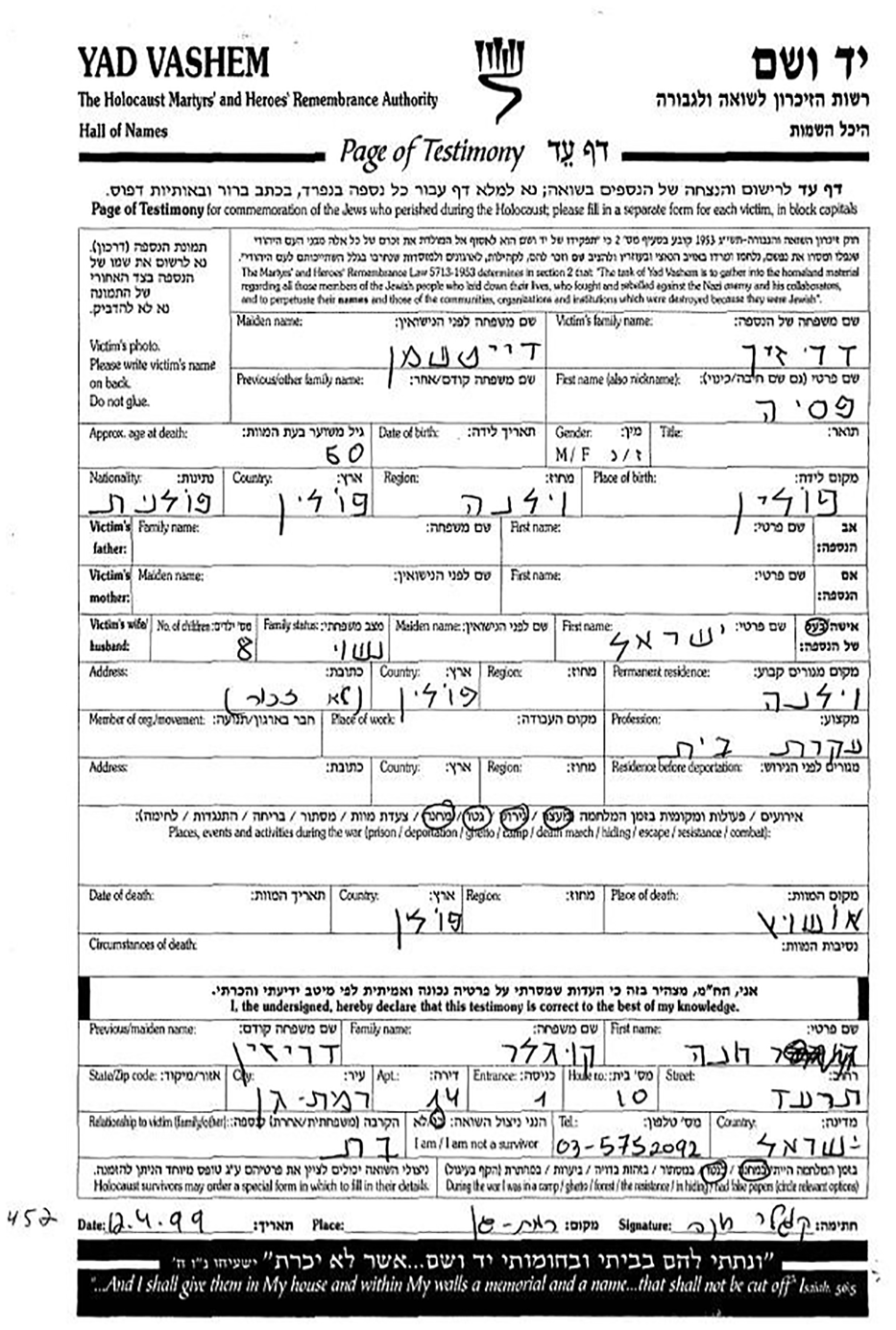
First page of the testimony.
This endeavor was accompanied by listening to a daily radio broadcast in Israel, the Search for Relatives Program (“Hamador Lehipus Krovim”), to connect with living relatives (Bernhardt, 2020).
From material to digital memory
However, with advances in technology, the transition to digital memory has unfolded. Yad Vashem, by digitizing its archives, enabled greater accessibility to information and expanded the scope of memory exploration. An extensive database of names and fates became available online in 2004, 2 allowing the discovery of multiple testimonies by Hanna Kugler.
The digitization of Yad Vashem and other archives and integrations into online genealogical databases, such as JewishGen, was made possible through the use of OCR software and manual indexing by volunteers. These technologies and the labor behind them were essential in making rare resources accessible to a wider audience and, in our case, enabling Hanna’s family to uncover new details about her life.
Once testimonies were indexed and merged (Tolokonsky, 2019), the family discovered that Hanna had given two testimonies more than 30 years apart, as can be seen in the victims’ databases (see Figures 2 and 3). This digitized archive points to another important aspect of change in memory: the difference in the perception of timelines, our perception of time is broken, and we see objects simultaneously in a database (Lee, 2020).
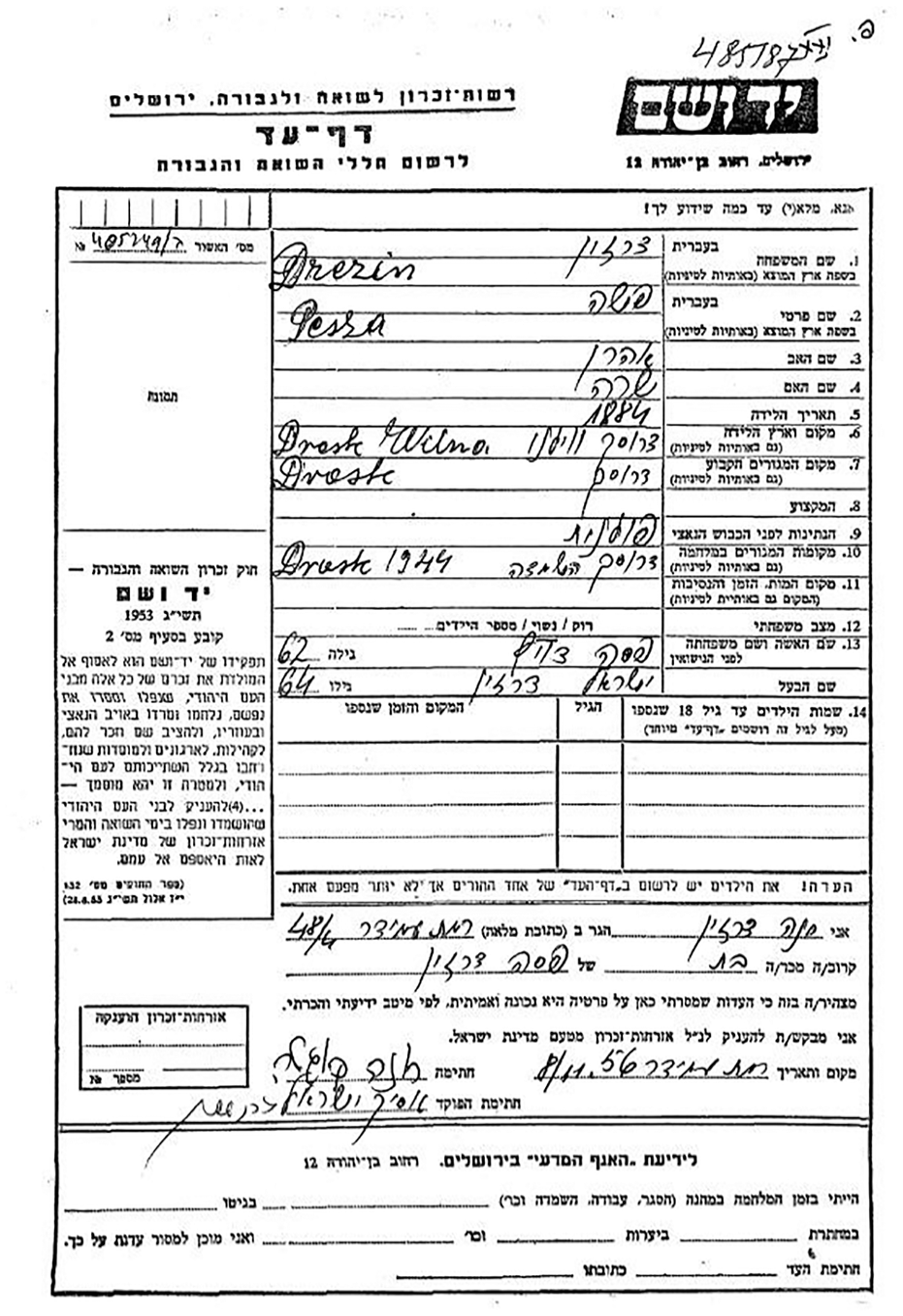
Second page of the testimony.
Connective memory: the impact of accessibility, search engine optimization, and free access on memory discoveries
The digitalization of Holocaust memory has facilitated a remarkable shift in accessibility and the ability to make new memory discoveries. Through search engine optimization and the increased availability of digital archives, previously unknown pieces of memory became accessible. Algorithms and sophisticated search algorithms surfaced additional sources of archival memory, 3 such as a scanned file in Russian listing individuals from her hometown who were murdered by the Nazis (see Figure 4).
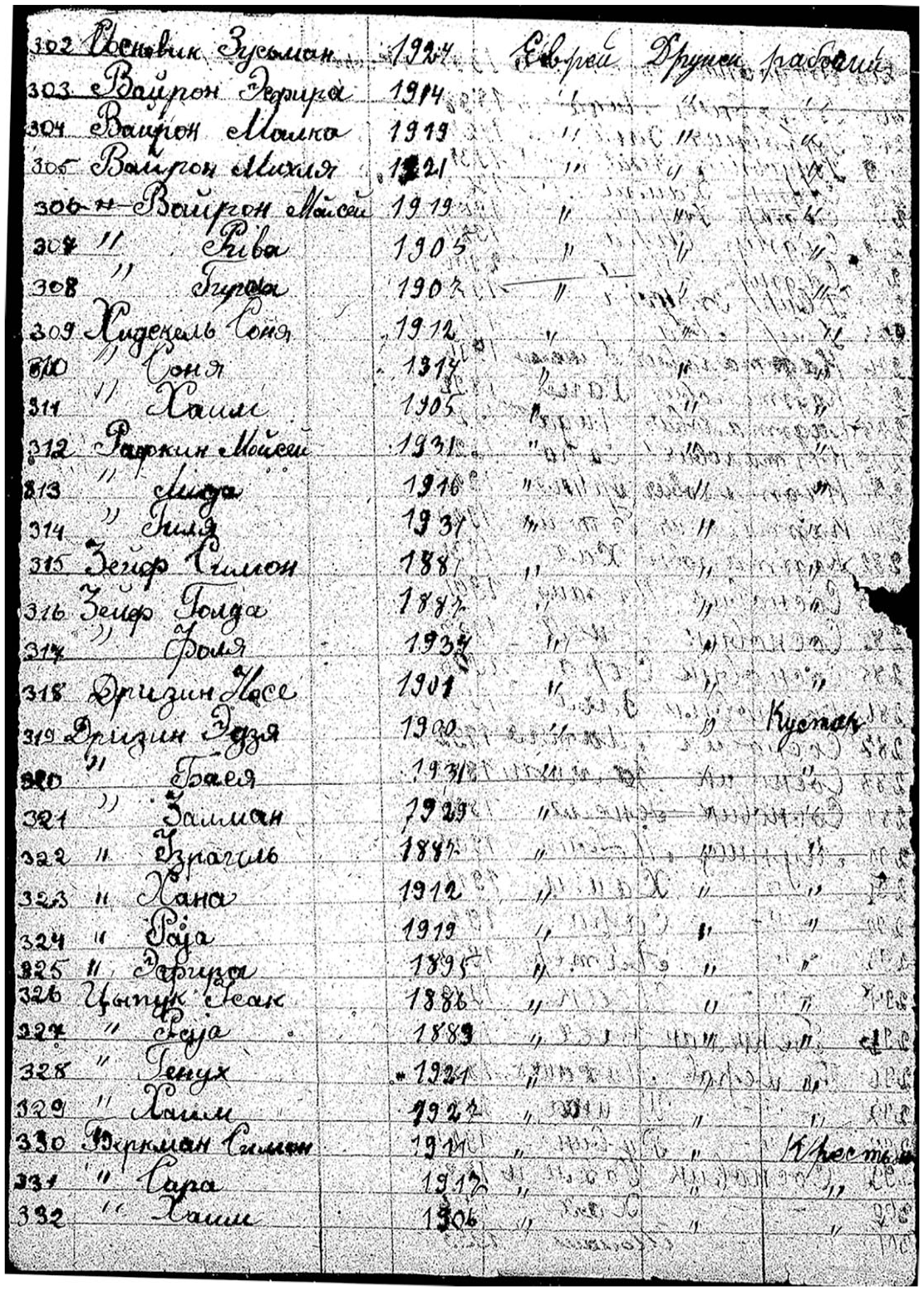
The list of murdered victims from the city of Drujsk is automatically linked by the Yad Vashem algorithm.
These digital platforms and their algorithms are powerful tools for expanding the boundaries of memory exploration. Previously, the family did not know that this archive existed, nor did they speak or read Russian, but the algorithms connected them with this piece of archival memory. It was only through the development and deployment of AI algorithms for OCR and machine translation that this connection was possible.
Other algorithmic connections to archives and databases were made using the ‘Jewish Gen’ 4 Jewish genealogy website and search engines used the affordances of new technologies to enhance its capability (see Figure 5).
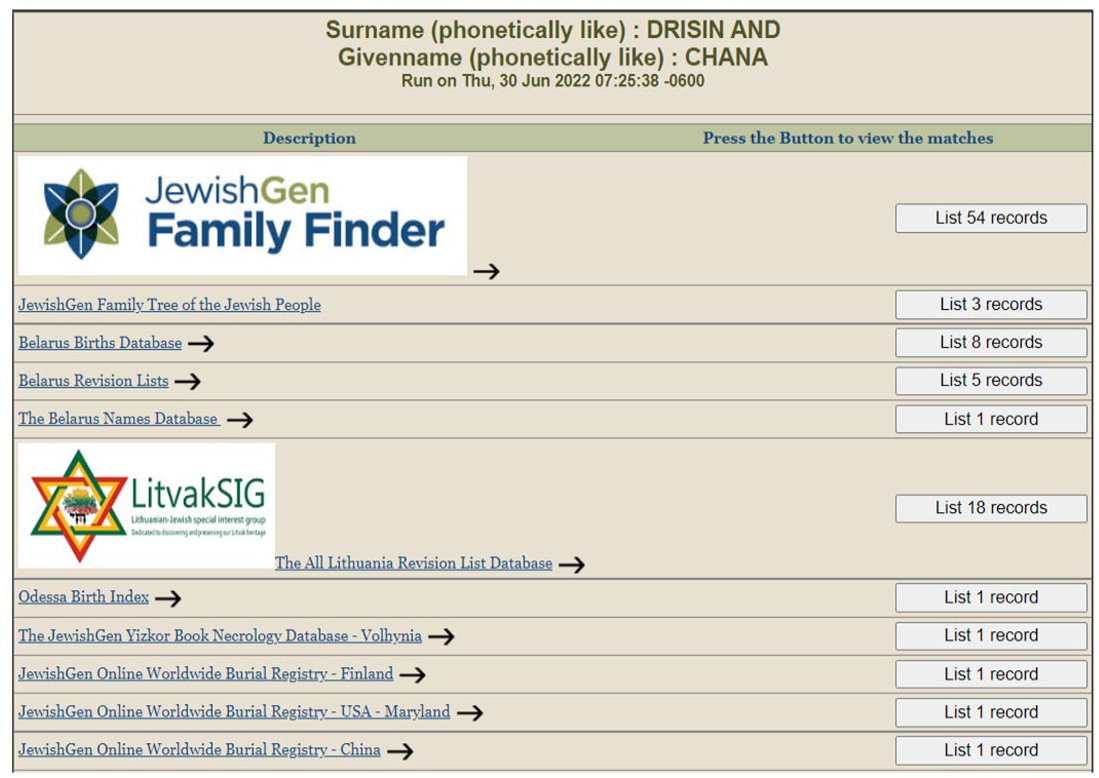
Screenshot of connected archives search from the Jewishgen.org website. Each line is a search in records found in a different database.
In addition, improved open access and search engine optimization have expanded the options for memory exploration. The digitization of memorial books, such as the Druya memorial book (Neustadt, 1973), which was written in 1973 but remained unknown to the family until 2018, when it was indexed and uploaded to an online archive linked to other archives, made previously unknown stories from the province of Druya accessible. 5 It also includes a personal account of Hanna’s parents’ execution, which was unknown to her children (the second generation, as defined in the Holocaust memory literature).
Wikipedia has also been used as a connective memory tool. Corresponding with the literature, it was used as a repository of collective memory; commemoration through memory forming and sharing activities plays a crucial role in the collective memory processes involved and illustrates the transition to connective memory (Ferron and Massa, 2014: 22). Some of the Wikipedia pages visited to trace the locations and paths described in the original note included more than 50 different editors, resulting in a variety of articles and talk pages. These pages were used by the editors to create a novel memory, connecting archives, historical facts, photos, and other sources in constant debates and ever-changing articles, shaping the connective memories of Holocaust events. The intensity of the desire displayed by users to participate in the creation of information is a surprising yet documented phenomenon (Castells, 2010; Shirky, 2011) that calls into question the motivations of its participants (Schwarz, 2021). Some studies have suggested that this may also reflect editorial efforts to promote preferred versions of events (Mykola, 2017). In addition, memory mediation mechanisms used on digital platforms also affect the global mode of oblivion, which occurs when memory is out of reach or unavailable through the memory retrieval services offered, for example, by Google, or if it is not cataloged or appears in the wrong context (Schwarz, 2014).
The human role in connective memory
While non-human actors (Latour, 2005) can affect shared memory, they are still limited in their ability to “create” memories in a way that is suitable for human consumption. As algorithms are developed, an increasing amount of information can be analyzed, making it possible to draw conclusions from vast databases within shared memory. This benefits both connective memory and the ability to create and influence it (Tolokonsky, 2019).
In relation to the case study, it is interesting to note that the names and details of both testimonies she gave more than 30 years apart are almost identical, but we, as human beings, had to check the database to validate the fact that they were referring to the same people. This also correlates with the role of human labor in connective memory machines (Crawford, 2021; Selwyn, 2019) (see Figure 6).
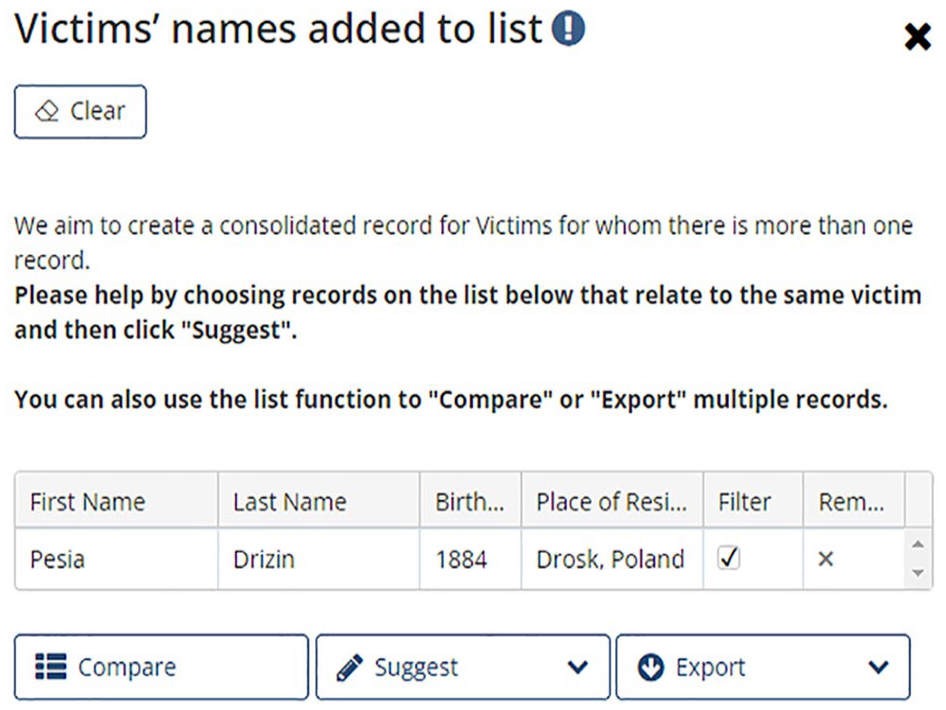
Screenshot of consolidation suggestion at the Yad Vashem archive.
Validation and emotional response through consensual validation in connective memory
People’s motivations to participate in the generation of connective memory can be explained through De Certeau’s (1984) understanding of human aspiration to be understood. An interesting effect of connective memory is the profound emotional impact of consensual validation. American psychiatrist Harry Stark Sullivan (1950) suggested that every human experience needs to go through a “consensual validation,” which requires a social conception that includes language and culture in order to be meaningful to oneself. It requires abandoning the private, autistic language, as Sullivan refers to it, and converting it into a common, consensual, social language (Bromberg, 1980; Sullivan, 1950: 210–220).
The connectivity and interactivity of digital platforms have allowed for the consensual validation of personal memories through various documents, official testimonies, and corroborating details. Instances such as the inclusion of photographs and detailed descriptions of events such as death marches during camp evacuations and transitioning ghettos provided a legitimate “stamp” of validation and belonging for the events, connecting them to collective memory. Connective memory platforms, such as Wikipedia, play a vital role in fostering consensual validation and emotional resonance among users. In the illustrated case, the value of validation was experienced and described time and again, as descriptions of locations and events that were only briefly mentioned were documented and elaborated.
Looking ahead: challenges and opportunities
As we reflect on the transformative impact of technology on the evolution of Holocaust memory, it is essential to consider the challenges and opportunities ahead.
Although technology has played a crucial role in preserving and expanding access to Holocaust memory, it is critical to balance technological advancements with reliable preservation. As algorithms increasingly mediate memory, we risk losing grounded subjective experiences as a source of memory. It is imperative to consider the implications of algorithmic mediation, as they might impact the authenticity and integrity of Holocaust memories. One example is the project “Auschwitz in color,” which uses algorithms to colorize historical black-and-white photographs taken at the concentration camp Auschwitz (Auschwitz Untold in Color, 2020; Gal, 2020). Colorizing Auschwitz photographs aims to bring a new level of visual engagement and realism to images, allowing viewers to connect with historical events at a more accessible level. However, this mediation and alteration of historical records raises ethical questions and potential risks. The responsible use of AI algorithms, which can generate fake memories and representations (Bar-Gil, 2023; Galanter, 2016), is essential for avoiding distortion and manipulation of historical narratives (UNESCO, 2022). Balancing technological advancements and ethical guidelines to ensure that Holocaust memory is preserved with accuracy, integrity, and respect will be a key effort in the following years.
We also need to recognize that, while technologies offer new possibilities, human agency remains indispensable to memory construction. The active engagement of individuals in exploring and shaping memories ensures that the complexities, nuances, and narratives of Holocaust survivors and their families are preserved. The human element, including personal testimonies, storytelling, and intergenerational dialogue, enriches collective memory and contributes to a more holistic understanding of the Holocaust. These can be augmented by mediating technologies, but not replaced, constructed, or altered. By honoring and amplifying memories, we can ensure that the memory of the Holocaust remains deeply personal and resonates with future generations. Thus, it is essential to continue recording and preserving testimonies, supporting survivor communities, and promoting intergenerational dialogue.
Opportunities also arise to enhance the immersive nature of Holocaust memories. Immersive technologies, such as virtual reality and augmented reality, have the potential to create powerful and empathetic experiences that foster a deeper understanding of the Holocaust. By simulating historical environments, these technologies can connect individuals to past events, enabling them to witness and empathize with the experiences of those affected by the Holocaust (Mulders, 2023). Advanced AI technologies, such as facial recognition and LLMs, have also been harnessed to unlock new possibilities in Holocaust memory and research. The World Holocaust Remembrance Center, Yad Vashem, has embarked on innovative projects to uncover previously unknown connections and insights within its existing archive. By employing facial recognition algorithms, the project “Face-to-Face” aims to identify individuals in photographs, bringing new insights into the stories of those captured in these historical images (Reuters, 2020). Simultaneously, LLMs are used to analyze and extract names, places, and relationships from millions of records in Yad Vashem’s archive, some of which have never been manually reviewed due to limited human resources (Lebovic, 2024). These AI applications foster a more interconnected and accessible understanding of the Holocaust archives, supporting the memories and experiences of survivors and victims that are preserved and shared with future generations.
The case study of Kugler’s memory raises additional ethical questions regarding the role of digital technologies in mediating Holocaust memory. Platforms such as Yad Vashem’s Central Database and the USC Shoah Foundation’s Visual History Archive have made an unprecedented amount of survivor testimony accessible to the public, raising concerns about the potential for misuse, decontextualization, and commodification of these sensitive materials. The algorithmic curation and recommendation systems employed by these platforms may also prioritize certain narratives over others, shaping public perceptions of the Holocaust in ways that are not always transparent or accountable.
I suggest that only by addressing these challenges and embracing the opportunities presented by technological advancements, immersive experiences, and the intersection of memory and contemporary ethical and social lessons can we ensure that the memory of the Holocaust continues to serve as a powerful moral and educational memory, testament to the resilience of the human spirit, and call for action against hatred and intolerance. To maintain it as a reliable memory, collaborative efforts involving scholars, survivors, and community members should continue to play a central role in technological tool development. By combining technological tools with human expertise and lived experience, we can ensure that the memory of the Holocaust remains accurate, nuanced, and reflective of diverse perspectives.
Discussion
The case study of Hanna Kugler’s memory, explored through the lens of personal family search, illustrates the powerful role of digital technologies in facilitating the intergenerational transmission of memory and the emotional resonance of engaging with traumatic pasts (Pinchevski, 2019). The themes that emerged from the interviews with Hanna’s relatives, including a sense of connection, collaboration, and personal transformation, reflect the dynamics of postmemory described by Hirsch (2012). The digital tools and platforms involved in the family search, ranging from online archives to social media, serve as mediators of this postmemorial engagement, enabling the next generation to construct a meaningful relationship with Hanna’s story and integrate it into their sense of identity and belonging. By foregrounding the affective and familial dimensions of Hanna’s case, this article offers a more nuanced understanding of the impact of technology on individual journeys into the past and the ways in which digital media shapes the transmission of memory across generations.
This study further sheds light on the evolving nature of technological mediation in Holocaust memory. The findings contribute to the existing knowledge in the field by providing insights into the changing aspects of memory, challenges posed by technological advancements, and opportunities they present to engage new generations.
Hanna’s case highlights the impact of algorithms on memory mediation and its implications. Algorithms can enhance accessibility and engagement by curating personalized content and facilitating the optimization of knowledge discovery (Jacobsen, 2020; Kearns and Roth, 2020). However, some concerns exist regarding the potential distortion and manipulation of historical narratives and the loss of human agency in memory construction. One example of debate surrounding technological mediation is the ongoing discussion about colorizing Holocaust images, where the use of colorization can evoke a more immediate emotional connection but also raises questions about the preservation of historical authenticity (Gal, 2020).
This study also illuminates the personal story of memory and its journey from material to digital and connective memory as a real-life memory construction description. Free and easy access to digital archives has enabled democratized memory discoveries, allowing individuals to uncover and validate their personal narratives. Consensual validation in connective memory also provides a sense of validation and emotional impact through the collective affirmation of shared experiences (Bromberg, 1980). These combined findings deepen our understanding of individual experiences in the broader context of Holocaust memory.
Limitation and future research
The integrated approach employed in this study, combining cross-media analysis with a focus on a single case study and in-depth interviews, has been effective in uncovering the complex dynamics of Holocaust memories in the digital age. This methodology enables tracing the “memory journey” of a single narrative across multiple platforms while also examining how individuals engage with and interpret these mediated memories. This approach contributes to memory studies by offering a model for examining the interplay between digital mediation and individual memory practices.
This study has some limitations. This research relies on a single-case study approach, which limits the generalizability of the findings (Dion, 2002; Eisenhardt, 1989). Future research should incorporate multiple case studies and consider quantitative approaches to capture a broader range of experiences and perspectives. In addition, this study primarily focuses on the technological mediation of memory in retrospect and does not examine the emerging experiences and perspectives of different generations. Future studies could adopt a multigenerational comparison to explore how memory and its mediation differ across generations. Further, comparative studies could be conducted to explore how holocaust memory is mediated and experienced in different cultural and national contexts. Longitudinal studies could track the evolving nature of Holocaust memory over an extended period by examining the impact of emerging technologies and the changing dynamics of collective remembrance. Interdisciplinary collaborations among historians, sociologists, psychologists, and experts in digital technologies could enhance our understanding of the complex relationship between memory and technology. Moreover, future research should explore the ethical implications associated with the technological mediation of Holocaust memory. This involves examining issues such as the potential distortion or manipulation of historical narratives, the responsibility of memory institutions in curating digital archives, and the ethical use of personal memories in the digital realm.
Conclusion
This article explores the evolution of the Holocaust memory and the role of technology in its mediation. It illustrates how digital technologies are transforming the ways in which individuals and families engage with traumatic pasts, using the case study of Hanna Kugler’s Holocaust memory to illuminate the complex interplay between technology, human agency, and the construction of historical–familial–personal narratives. This study underscores the importance of critically engaging with technology in the context of the Holocaust memory to harness the opportunities offered by technology to promote a multifaceted understanding of the Holocaust and preserve its memory for future generations.
The implications of this study extend beyond Holocaust memory. They raise broader questions about the mediation of important historical events and the ethical considerations of technology in shaping collective-connective memory cultural heritage, public discourse, and social justice, informing discussions and practices related to the digitization, preservation, and ethical dissemination of historical knowledge in the twenty-first century. It is crucial to ensure that technological advancements do not overshadow the authenticity and integrity of historical events, but rather enhance our understanding and engagement with the past. The power to shape memory lies in our hands, and it is our responsibility to ensure that technology serves as a tool that facilitates our individual and collective memory.
Footnotes
Appendix
List of places and events mentioned in the original note and their connective memory fingerprints.
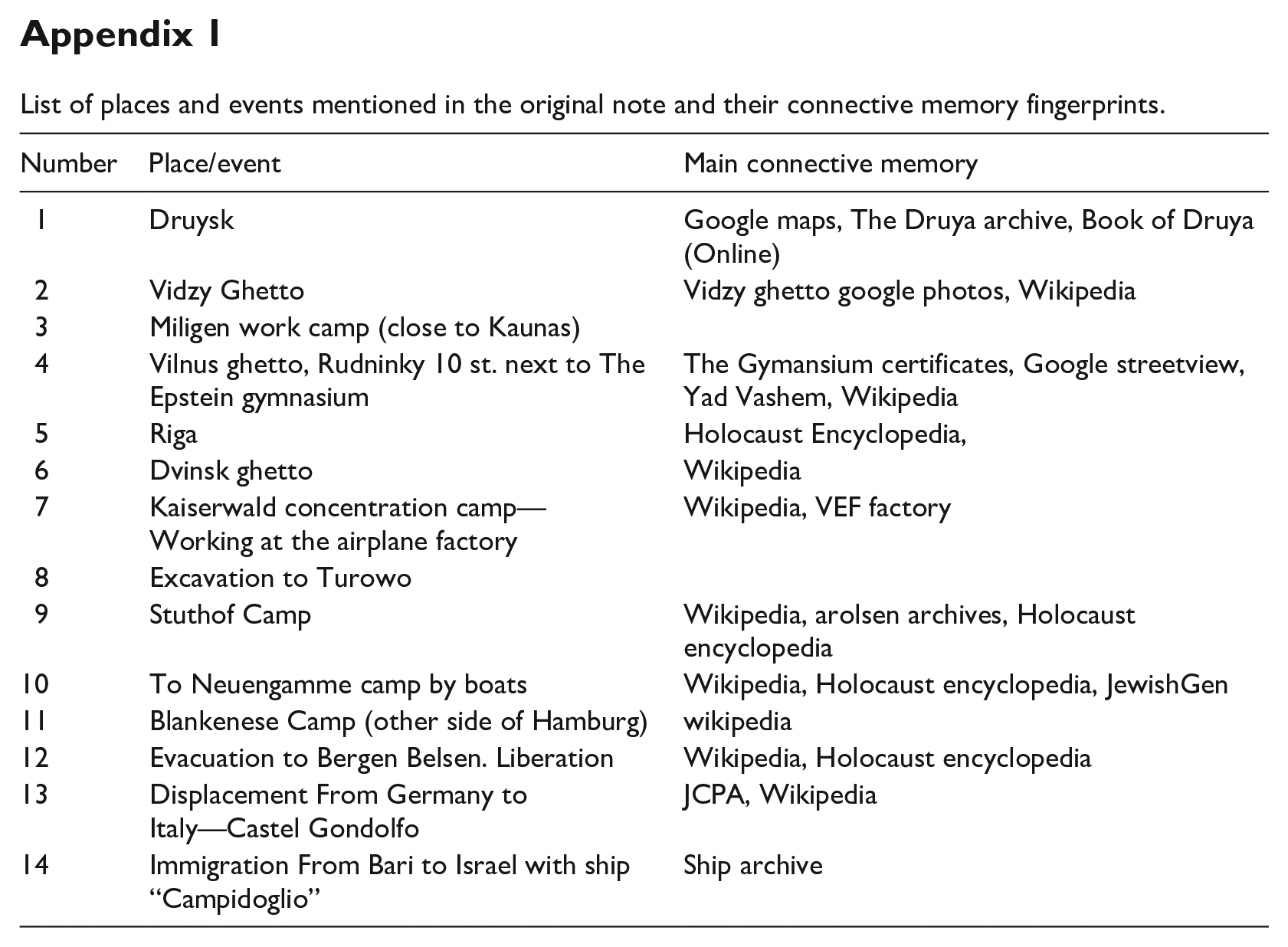
| Number | Place/event | Main connective memory |
|---|---|---|
| 1 | Druysk | Google maps, The Druya archive, Book of Druya (Online) |
| 2 | Vidzy Ghetto | Vidzy ghetto google photos, Wikipedia |
| 3 | Miligen work camp (close to Kaunas) | |
| 4 | Vilnus ghetto, Rudninky 10 st. next to The Epstein gymnasium | The Gymansium certificates, Google streetview, Yad Vashem, Wikipedia |
| 5 | Riga | Holocaust Encyclopedia, |
| 6 | Dvinsk ghetto | Wikipedia |
| 7 | Kaiserwald concentration camp—Working at the airplane factory | Wikipedia, VEF factory |
| 8 | Excavation to Turowo | |
| 9 | Stuthof Camp | Wikipedia, arolsen archives, Holocaust encyclopedia |
| 10 | To Neuengamme camp by boats | Wikipedia, Holocaust encyclopedia, JewishGen |
| 11 | Blankenese Camp (other side of Hamburg) | wikipedia |
| 12 | Evacuation to Bergen Belsen. Liberation | Wikipedia, Holocaust encyclopedia |
| 13 | Displacement From Germany to Italy—Castel Gondolfo | JCPA, Wikipedia |
| 14 | Immigration From Bari to Israel with ship “Campidoglio” | Ship archive |
Funding
The author(s) received no financial support for the research, authorship, and/or publication of this article.
