




Abstract
In memory studies, museums and memorials have been actively employed in constructing and reinterpreting the social memories of nation-states and sub-groups within national populations. As such, scholarly debates have often focused on the roles of social and political elites in creating national remembrance. This article provides an alternative theoretical and empirical lens that focuses on China’s local memory practices and initiatives within the context of private museums and their dynamic interaction with the state. It examines how grassroots communities in Yan’an use private museum space to commemorate, interpret and negotiate local histories promoted by political elites. While local governments actively promote official sites of memory in Yan’an as the roots of Chinese communism for patriotic education, the private museum offers an alternative form of public space for social gatherings and memory transmission. Instead of promoting a grand narrative of the founding of the nation, the private museum focuses on local folk culture and the representation of the everyday landscape in response to rapid social change. Such forms of local commemoration are not driven by radical social movements that challenge the dominant historical narrative of ruling elites. Instead, they provide spaces for local communities to safely negotiate, communicate and sometimes compromise within and through official constraints. The findings contribute to our understanding of memory politics and its roles in shaping the state-society relationships of modern China.
Introduction
Recent scholarship in memory studies has highlighted the crucial role of museums and memorials in shaping national remembrance, revealing the influence of social and political elites in crafting ‘official’ memories (Berger and Tekin, 2018; Dickinson et al., 2010). Concurrently, there has been a notable increase in the significance attributed to local memory and local remembering, particularly in relation to community memory practices, oral history and private museums (Kent, 2011; Pitcher, 2006; Zhu, 2019). While both make significant contributions to memory studies, it is crucial to examine the dynamic intersection between the national and local memory, along with their implications for society.
Unlike Western societies, China presents a distinctive landscape of memory politics as a socialist single-party state. Its ruling elites have consistently ascribed significance to the past, employing it as a potent symbol of authority. Despite China’s authoritarian governance, the construction of collective memories is far from being a homogenised and fixed process; instead, it is influenced by ever-shifting political and economic agendas as well as the divergent perspectives of local communities. As historical events are transformed into narratives within sites of memory, certain aspects of the past may be overlooked or suppressed, while others are selectively privileged for political purposes (Denton, 2014; Mitter, 2020; Qian, 2009). These transformative processes often give rise to conflicts and contestations among different stakeholders engaged in the performance of collective memory (Zhu, 2020).
To enrich the ongoing critical discourse on memory politics, this article examines China’s local memory practices and initiatives within the realm of private museums and their dynamic interaction with the state. Local initiatives play a pivotal role in shaping the constantly evolving memory politics of contemporary China. These local memory works inform our interpretations and selective appreciation of the everyday life experience of the past in the present through place-based activities. They act as a driving force, compelling individuals and local societies to actively engage with material remnants, bestowing upon them profound meaning and significance.
Through ethnographic fieldwork and qualitative interviews, this study centres on the case of local remembering in Yan’an and the utilisation of the Folk Museum as a private museum space to commemorate, interpret and negotiate local histories in response to rapid social change. While Yan’an has been an official focal point for promoting China’s communist memory, actively endorsing sites of memory for nation-building and patriotic education, a local collector has cultivated his private collection over the past decades, transforming it into a private museum. Diverging from official museums that propagate grand national narratives of official memory, the private museum focuses on local heritage and the representation of everyday landscapes. The Folk Museum also functions as an alternative public arena for cultivating local community ties by hosting social gatherings, official visits, and study camps. However, these local commemorative practices do not emerge from radical social movements that challenge dominant historical narratives dictated by ruling elites. Instead, they provide space for local communities to engage in negotiation, communication and occasional compromise within the confines of official constraints. By examining these local private museum initiatives, this study contributes to our understanding of memory politics and its role in shaping state-society relationships in modern China.
This article commences with an exploration of memory politics in China, focusing on the emergence of official and private museums. After providing a brief overview of the social and political regional context of Yan’an, the subsequent section explores the development of the Folk Museum as a private museum. Through private collections, selling objects to official museums and organising cultural activities for various local communities, the private museum has evolved into a public space fostering community building and forging close connections with official museums. The discussion section focuses on the motivations and commemorative mechanisms in the private museum, and the dynamics between these initiatives and official memory institutions. In the concluding section, the article reflects on the broader contribution of this study beyond its geographical scope, particularly in deepening our understanding of memory politics and exploring whether a distinctive mode of local remembering aligns with or differs from Western notions of civil society.
The empirical research supporting this research was gathered over three fieldwork visits to Yan’an (August 2017, July 2018, December 2023), during which I conducted qualitative and semi-structured interviews with a range of stakeholders, including the Folk Museum curator, museum staff, visitors, local community members engaged in museum activities and officials from the cultural department overseeing local museums. 1 In addition, I undertook in-depth qualitative interviews with the collector to gain deeper insights into the motivations behind his local memory practices and the relationship between the collector’s life story and the museum’s development. My research was further enriched through active participation in various cultural activities and the collection of visual data from the exhibitions in the Folk Museum. By incorporating these diverse sources of information, this research aims to provide a comprehensive and nuanced analysis of the Folk Museum and its relationship with official memory institutions in Yan’an.
Memory and museum politics in China
While considerable discussion has shed light on how political actors employ, interpret and revise national, public and collective memory to serve their current interests and ideological agendas, recent debates have raised questions about the focus on the official ideologies of nation formation (Gutman and Wüstenberg, 2023). Instead, memory is situated in the ‘space between an imposed ideology and the possibility of an alternative way of understanding experience’ (Radstone, 2000: 18). As a result, the ‘politics of memory’ extends beyond the legitimisation of political regimes and becomes embedded in the negotiation of narratives within society (Hodgkin and Radstone, 2003). Both official and unofficial actors often present competing versions of the past to commemorate or reconcile problematic historical events (Vinitzky-Seroussi and Teeger, 2010).
By broadening the scope beyond the national and supra-national levels, the approach to locality allows for a more critical examination of how the past is collected and re-narrated by local initiatives and movements (Kennedy and Radstone, 2013). Yet, locality is not static; rather, it constitutes a dynamic contact zone that involves a multitude of values and interests from all involved parties through processes of negotiation and contestation. The intersection between local, national and transnational memory work often occurs within the realm of museums, where different community groups and the state come together, engage in dialogue and, at times, negotiate the multiple meanings of historical narratives. Some local communities reject official sites of memory and instead construct their own by establishing local museums or street art. Others utilise official sites to conduct their memory practices. They may use the space within official museums to celebrate the history of their families or communities, aligning their narratives with the overarching national discourse. These local memory works enable the reinterpretation and negotiation of official narratives (Kidron, 2015; Winter, 2010).
China presents a distinct landscape of memory and museum politics, particularly within its socialist context and the single-party state. Since the People’s Republic of China (PRC) was established by the Chinese Communist Party in 1949, the country has developed as an authoritarian state where the state and local governments exert dominant control over public domains and collective resources. The Chinese Party-State exercises its power by actively shaping and disseminating ideology encompassing the narration, interpretation and construction of collective memory (Wang, 2008). To foster a sense of shared history, culture and national identity among its people, the government employs various memory instruments as tools of political power in nation-building. These instruments include school history textbooks, patriotic songs and films, propaganda on social media platforms and official museums and exhibitions (Wang, 2008; Zhu, 2022). Through deliberate construction, these memory instruments seek to establish a cohesive national connection and foster homogeneity, constructing a unified imaginary of the nation’s origins (Zhu and Maags, 2020).
Unlike some former socialist countries in Eastern Europe that have chosen to view their communist heritage as an ‘unwanted past’ (Light, 2000), China has taken a different approach in its transformation into a post-socialist country. To sustain its identity, the Chinese state continues to commemorate its revolutionary past, considering it the foundation of the Party’s roots (Denton, 2014; Ho, 2018). This has given rise to a nationwide movement to honour the revolutionary heritage and preserve associated memories (Zhang, 2020: 42).
The role of museums and memorial sites in remembering and representing the revolutionary past is deeply intertwined with politics, resulting in a highly politicised landscape of memory in China (Denton, 2014). In line with the political directives of the Communist Party, the Chinese government exerts control over all aspects of museum production, including funding, staff training, content regulation, architectural design and curation (Varutti, 2014). Moreover, museums have served as effective platforms for public education, often emphasising patriotism and nationalism (Wang, 2008). The act of visiting these museums to remember the past is not only performative and political but also participatory in nature. By visiting these museums, Chinese citizens evoke a collective identity closely intertwined with a shared past and homeland (Zhu and Maags, 2020).
Since 1978, China has undergone a profound transformation, transitioning to a market economy and deeply integrating into global economic and political power structures. While the power and influence of the ‘official’ realm in China have expanded over time, there has also been a resurgence of the local sphere. This period has allowed for greater individual autonomy and activities independent of the party-state through which individuals strive to pursue personal aspirations and business privatisation (Rofel, 2007; Yan, 2009; Zhang and Ong, 2008). While local remembrance has been a long-standing tradition across different periods in China, the increasing privatisation and individualisation of the country have opened more avenues for individuals to participate through the collection of personal histories. Chinese people utilise various channels to commemorate local history from their own perspectives, including oral history, documentaries, movies, personal memories and private collections. These local memory practices diverge from official channels of memory-making as they are driven by individual and occasionally collective interests, responding to the profound societal changes taking place.
Among the various practices of local remembering, the establishment of private museums, including community-based museums, has emerged as a prominent form of local memory practice across China. Since the implementation of the State Council’s regulations on the ‘Registration of Private Non-business Institutes’ in 1998, numerous private collectors in China have taken the initiative to establish and officially register private museums (Song, 2008). These museums serve as platforms for curating and exhibiting collections that encompass a wide range of items, including antiquities, fine arts and vernacular heritage objects (Vickers, 2007). For instance, Jianchuan Museum, located in Sichuan province, is one of the largest private museums in China. Established and curated by the collector Fan Jianchuan, the museum records and displays the modern history of China, particularly focusing on painful events such as wars and earthquakes (Denton, 2019; Zhang, 2020). Instead of resisting or confronting the national narrative of historical memory, Fan Jianchuan uses his extensive collection to explore these challenging themes, incorporating local stories from related victims’ families, veterans, and survivors (Denton, 2019). As Zhang (2020) notes, citing Fan’s words, the museum intends to showcase the ‘missing’ parts of China that official narratives have overlooked. However, the interpretation of local stories and objects still aligns with state ideological interests, offering patriotic sentiments to the public in service to the nation.
Despite being privately owned, the contents of private museums such as the Jianchuan Museum are subject to endorsement and approval by the state, ensuring alignment with its values. As a result, private museums often do not directly challenge the official narrative of state memory. However, they contribute to the memory landscape by developing alternative narratives that complement and complicate official memories, mainly through active engagement with vernacular and everyday memory practices (Zhang, 2020). This interplay between official and private museums adds depth and complexity to China’s multifaceted memory landscape.
The diverse forms of local memory work taking place in private museums reflect the dynamic nature of memory politics in China, showcasing that the boundaries between public and private are not static but are often blurred and mutually interlaced. In this way, these private museums become spaces of mediation where different interests and values are negotiated and mingled (Zhang, 2020). To fully comprehend the social and political implications of these local memory practices and their impact on the state-society relationship, it is crucial to examine the specific social and political contexts within which they unfold.
Research context: remembering revolution in Yan’an
Situated in the northern part of Shaanxi Province on the south-central Loess Plateau, Yan’an holds immense significance in the official memory of Chinese communism. It served as the epicentre of a 13-year experimental reform conducted by the Communist Party from 1935 to 1948. These 13 years laid the groundwork for establishing the People’s Republic of China in 1949 (Selden, 1995). Following the country’s profound societal transformation, radical revolutionary ideology assumed a central role as the primary national identity. It served as a powerful political tool employed by the Communist Party to solidify the legitimacy of their government in the face of perceived national ‘common foes’ (Henderson, 2007: 249). The design of revolutionary sites and museums in Yan’an aims to educate and mobilise individuals to actively engage in the revolutionary cause (Denton, 2012; Ho, 2018).
In recent times, the local governments in Yan’an have actively embraced the national initiative to utilise museums and memorials to perpetuate the narrative of Yan’an as a ‘revolutionary holy land’, especially focusing on its 13-year history of the founding leaders of the Communist Party (Esherick, 2022). This commitment is demonstrated by the recent approval of the ‘Demonstration and Protection of Revolutionary Relics in Yan’an’ plan by the State Administration of Cultural Heritage in 2021. Under this plan, the Yan’an government aims to transform the city into a museum cluster, incorporating over 30 museums and 445 information centres based on original revolutionary sites. The establishment of such a museum cluster serves the purpose of attracting visitors from across the country to actively participate in commemorating the nation’s origins and the historical heritage of the Chinese Communist Party.
While the local government has prioritised promoting red tourism and commemorating the national revolutionary past, there has been notable neglect of the longitudinal narrative of local heritage and folk culture. For the 2 million residents of Yan’an, the history and traditions of Shaanbei (northern Shaanxi) are indispensable to their everyday lives and are intimately intertwined with their daily practices. Some of the local community’s folk culture, such as regional folk dance, singing and revolutionary arts, have been incorporated and used in the official representation of local history; other folk cultures, such as agriculture, food, and everyday life, have been neglected. Accordingly, in recent decades, local communities in Yan’an have taken an interest in collecting and preserving local history that extends beyond the national memory of the revolution in the 1930s and 1940s. Instead, they focus on celebrating and commemorating their rich local heritage through collecting artefacts and organising community cultural activities. However, as the local government prioritises resources to develop revolutionary memory to align with central national narratives, it is not easy for local collectors to mobilise resources for private museums. As a result, very few private museums exist in the Yan’an area.
Located in Yanjiawan village, Anzhai District, just a 30-minute drive from Yan’an city, the Folk Museum stands as a prime example of a privately owned and non-profit institution dedicated to curating the vernacular heritage of the region. The museum’s origins can be traced back to Mr Zhou, the curator and founder, who initially housed the collection in his two-story house. 2 The collected items predominantly represent the folk culture of the Northern Shaanxi region, with a particular focus on the everyday memory landscape of the revolutionary era. Beyond its role as a museum, this private institution also serves as a community centre, bringing together local communities to gather, celebrate and commemorate local history.
Private collections, collective memories
Mr Zhou was born and raised in the Yan’an countryside and has an exceptional affinity for rural life in Shaanxi. He has cultivated a specific and keen interest in painting since childhood, with a special focus on the Northern Shaanxi folklife. He expressed an early passion for drawing patterns, agricultural tools, folk artwork and various folkloric artefacts that were characteristic of the northern Shaanxi style. This laid a solid foundation of ambition for his future collection. He started working in Ganquan County, a suburb of Yan’an City in 1986. Then he moved to work in Yan’an Civil Administration Office in 1995 before becoming the director of the Ganquan County Funeral Hall in 2001. As a public servant, Zhou’s constantly changing job has allowed him to travel to different parts of Shaanxi province and purchase antiques from rural areas. During his business trips, he frequently visited villages to search for antiques, with a particular focus on acquiring soon-to-disappear folkloric artefacts.
Amid the rapid urbanisation and modernisation that characterised the late 1990s and early 2000s, many Chinese, Zhou included, found themselves grappling with a profound sense of longing and nostalgia for the rural way of life of China. This period witnessed the gradual disappearance of even the most commonplace objects once integral to a rural existence. Accordingly, Zhou harboured a deep fascination for collecting artefacts from the rural regions of Northern Shaanxi, particularly those associated with agricultural tools and handicrafts. He aimed to acquire objects absent from his collection to highlight the continuity of Shaanxi culture. He felt that collecting was like assembling a book; if the book was incomplete, his story would not be fully told.
It was during this period that Zhou’s interest in ceramic art blossomed, leading him to amass an extensive collection comprising over 70,000 artefacts. These treasures, which encompass a diverse range of materials such as stoneware, pottery, jade, porcelain, bronze, wood, gold and silver, as well as calligraphy and painting, are part of Zhou’s collection. The assortment includes materials associated with various trades, crafts, rituals, festivals, performance arts and everyday life practices. He described his ambitious yet challenging history of private collection, The early days were very challenging as I used my basic salary for investment. Very few people, like me, can persist. I am reluctant to sell any of these items and I treat each of them as treasure. But if I don’t sell, there is no money in hand.
Zhou, as a native of Yan’an, also holds a profound sense of responsibility for the collections associated with the 13 years of Chinese Communist history in Yan’an. Since the 1980s, he has been actively acquiring and preserving these everyday artefacts, and, for him, this is not only a means of preservation but also a significant contribution to the commemoration of the revolutionary past and a tangible connection to Yan’an’s history. He expressed, The objects I acquired served as profound witnesses to the history of Northern Shaanxi. These tarnished old playthings are concrete objects that reflect how the common folks of the northern Shaanxi region produce and consume goods, and create traditional handicrafts. They pertain to the real Northern Shaanxi lives and livelihood; through them, one will know and understand the Northern Shaanxi region. They are valuable not only for historical research but also for curatorial and aesthetic purposes. . . . They represented an invaluable cultural heritage, transmitting and preserving the ways in which people worked and lived throughout the region’s past.
Drawing upon the fond memories of his youth spent in the countryside, Zhou embarked on a transformative journey, transitioning from a mere collector of artefacts to a passionate curator. His aspiration was to create exhibitions that would enable a broader audience to glimpse and experience the essence of the past and recognise the importance of preserving one’s roots.
Museum building
In 2001, Zhou realised that his collection had grown to an overwhelming extent. He intended to transform his backyard into the Folk Museum, but required significant financial support. In early 2010, he sold over 200 artefacts to museums in Shaanxi Province and Beijing to secure the necessary funding and had accumulated over 2 million Chinese Yuan. Some of his collection was displayed in a local military museum, while other pieces were utilised in the Yan’an Spirit Education Centre (yanan jingshen xuexi zhongxin) in Beijing. Both sites required many cultural artefacts from the period to recreate the revolutionary culture. With the funds secured, he acquired a spacious courtyard spanning over 800 square metres and constructed a two-storey house primarily dedicated to serving as the display area for his collection.
This house now stands as the Folk Museum, focused on preserving the memories of the revolution and rural folklife of the region. At the museum’s entrance, a reception room welcomes guests for tea. Within this room, the walls are adorned with photographs capturing moments of Zhou’s interactions with local celebrities and officials. In addition, the reception room showcases calligraphy and paintings gifted by local artists, symbolising the recognition and support the museum has garnered from the local community. The museum consists of six exhibition rooms, each devoted to a theme derived from the curator’s collection. The curator underscores the importance of narrating the stories of ordinary people with meticulous attention to detail. The overarching goal is to establish a space where individuals of different ages can visit and rediscover their life memories.
As an illustration, one room highlights the textual heritage of rural life, featuring items such as letters, notebooks, ancient manuscripts, land deeds, financial instruments and tax stamps. It also includes art woodcuts sourced from the Lu Xun Art Institute, vintage school textbooks translated from the Soviet Union, and visually compelling paintings portraying influential figures, most notably Chairman Mao. In a separate room, an assortment of toys and household items from the rural region in the revolutionary era is exhibited. This collection features boxes of matches produced by the match factory established by the Chairman in Yan’an, a series of embroidered shoes and tiger-head shoes, mahjong cards, kitchenware, old driving licences, and china dolls (see Figure 1).
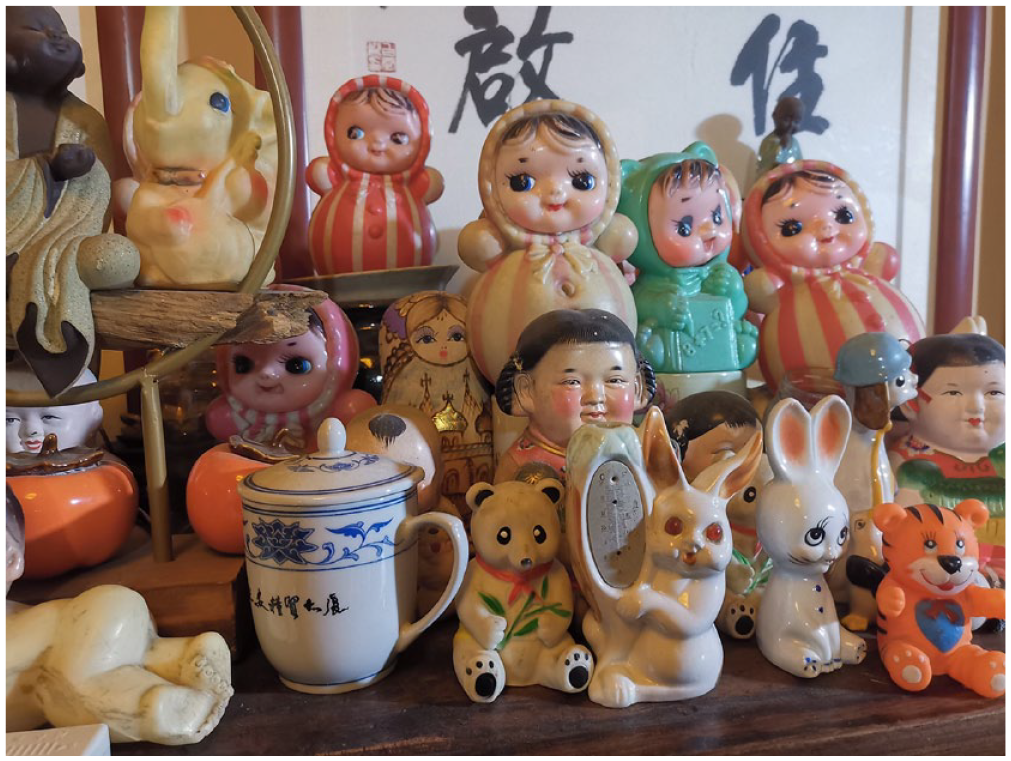
The folk museum’s doll collection.
On the second floor of the museum, there is a display of agricultural tools and electrical appliances. Among the agricultural tools are scales and weights, rice measures, and tools for cultivating land and husking grain. The electrical appliance section features a diverse collection from the Republic of China period, including radios, clocks, fans, speakers, televisions imported from the Soviet Union and a special type of radio that was installed in each rural house during the revolutionary era (See Figure 2). The Communist government, during the 1950s, used these radios to transmit official propaganda messages to farmers’ homes and were often referred to as ‘shouting to the end’.
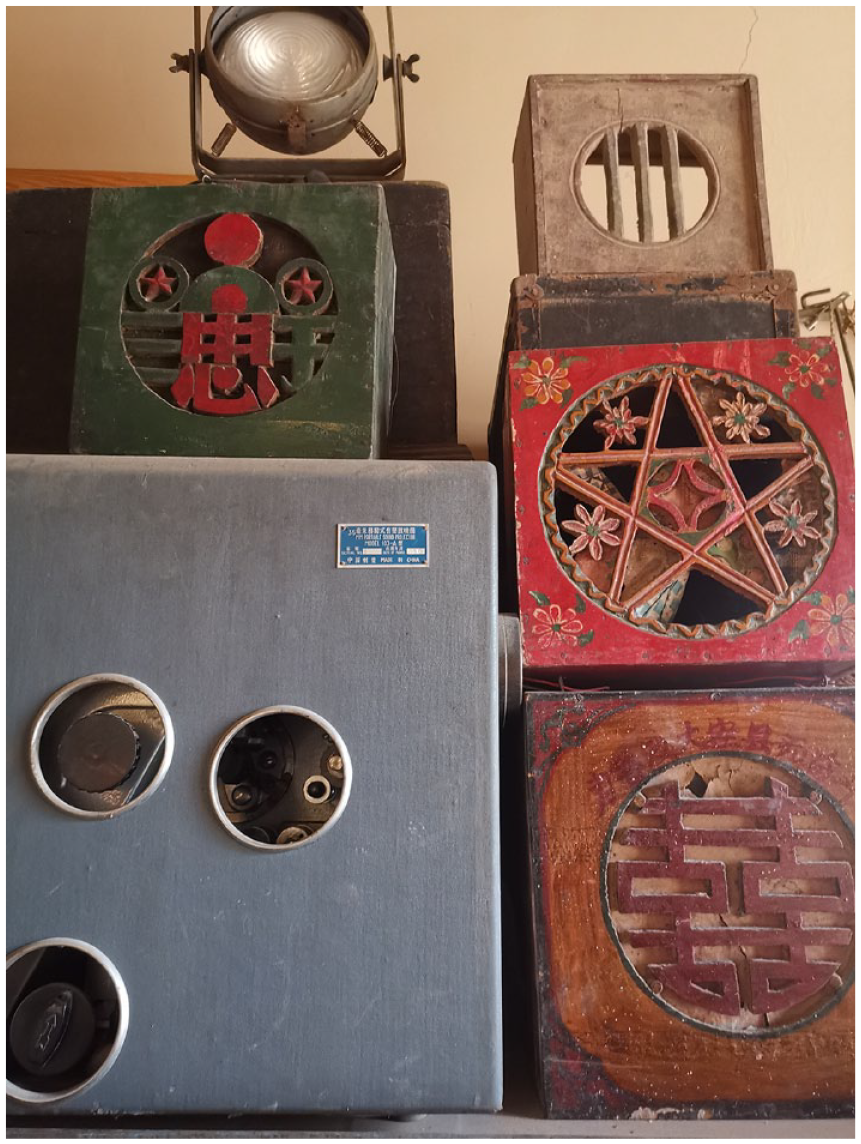
The exhibition of electrical appliances during the revolutionary era.
In another display room, a diverse collection of folk musical instruments from the region is showcased. The instruments include the suona (Chinese double-reeded horn), sanxian (three-stringed lute) and waist drum, with the earliest being a drum from the early Qing dynasty. Unlike other revolutionary museums that exclusively integrate waist drums into official narratives for revolutionary memories, these musical instruments present a more extensive and varied musical landscape of the region. This extends beyond the military culture that has traditionally been the primary focus of official museums in Yan’an.
Due to the sheer volume of items and limited space, the display of Zhou’s collection lacks the symmetrical curation seen in conventional museums, characterised by orderly narratives and guided information. In contrast to traditional museum practices, which often emphasise individual items within a category and explore the revolutionary narratives surrounding them, he prioritises showcasing the practical usage of items in everyday life: Why could the great leader stay in Yan’an for thirteen years? Without the support of the common people, and the logistical support of the people’s daily necessities, such as food and sanitation, how could they succeed? They are all human beings. The great leader is also a human being; he needs to wash his face, light a fire, cook, and eat. . . . So the whole story must be told from the beginning to the end, just like writing a book. It needs an introduction and a conclusion; you can’t cut off the beginning and the end.
Zhou’s dedication to connecting his private museum with mainstream history is accompanied by a conscious distinction he maintains between the two realms. While China’s official museums predominantly focus on reconstructing the history of the revolution, often relying on narratives and advanced technologies such as miniature sculptures and multimedia, Zhou’s collection emphasises the everyday life stories of ordinary people of the Shaanxi region. This deliberate approach allows him to shed light on the often overlooked experiences of the everyday individuals who shaped local memory.
He further explains his vision for the museum: The museum’s exhibits showcase a wide array of objects that reflect the daily lives of local farmers. Schoolbags, teapots, portraits of Mao Zedong, and other mundane items symbolise the everydayness experienced by individuals during that time. . . . By highlighting these everyday necessities, my museum creates a sense of intimacy, allowing visitors to connect with the memories of ordinary people in that era.
While some official museums in Yan’an have incorporated folk songs, dances, and handicrafts from the region into their official narratives, this exhibition goes beyond personal belongings. It displays the tools of production, traditions and craftsmanship specific to the Northern Shaanxi region (see Figure 3). In response to an enquiry about the specific method of object display, Zhou explained that his museum is not a history museum but rather a space dedicated to everyday life: Folklore is a living culture and should not only be displayed behind glass windows. My place is an original reenactment of the folklore. It should resemble a visit to a village house from Shaanxi – minimal text and explanations. I would like to showcase the natural and authentic village life.
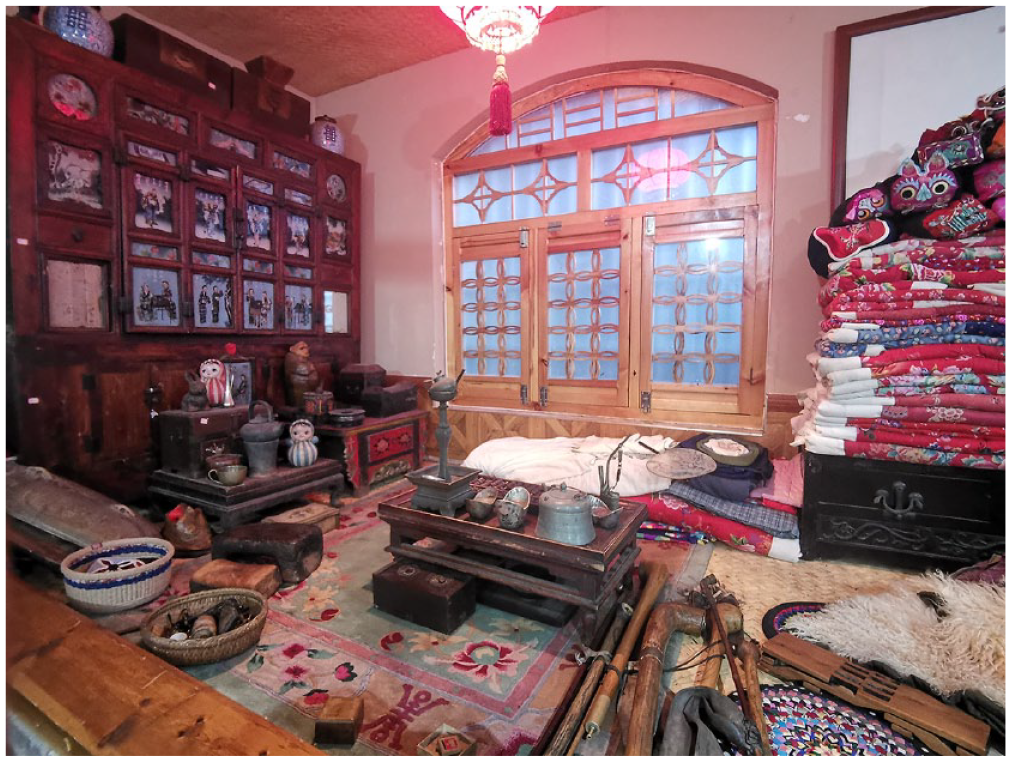
The exhibit showcasing folk culture from the North Shaanxi region.
By showcasing these artefacts, the museum creates a panoramic depiction of local folk culture that has undergone significant evolution over the past 70 years since the founding of the People’s Republic of China. This exhibition serves as a testament to the transformation of everyday rural life influenced by social, economic and technological changes.
Interaction with official memory
Since the 2000s, the northern Shaanxi region, particularly Yan’an, has witnessed the establishment of a significant number of sites of memory with a staggering 445 revolutionary sites, 23 national cultural relic protection units and 13 national-patriotic education bases (Yanan Daily, 2024). These official sites of memory have become focal points of attention and have received considerable support and resources. The proliferation of official museums and memorials has generated an increased desire for objects and artefacts linked to this historical period. These public institutions rely on acquiring artefacts from private collectors like Zhou to obtain material evidence for their historical narratives. For example, the narrative presented by local red museums requires the portrayal of peasant life in Yan’an. Artefacts from the 1930s in the Yan’an region play a crucial role, including farmers’ clothing, agricultural tools, propaganda pamphlets, newspapers and posters intertwined with revolutionary memory. By acquiring various relevant items from Zhou’s collection, these museums can construct the official memory of the revolutionary era in Yan’an during the 1930s and 1940s. Consequently, several official museums have approached him to acquire pieces from his collection; his private museum has become an important source of red artefacts for local public museums. In this way, Zhou’s museum serves as a crucial supplier of artefacts, ensuring that public museums have access to tangible objects that support their historical interpretations and storytelling.
The relationship between Zhou’s museum, local official museums and the government has also faced challenges. Zhou consistently adheres to his own perspective, emphasising the significance of the everyday folk culture of the region. Yet official museums often disapprove of his exhibition methods, feeling that they do not sufficiently highlight the official revolutionary narrative. This conflicting stance reflects his desire to avoid becoming a fully official museum. In his ideal model, the government provides financial support while granting him complete autonomy in curating the design of the folk culture exhibition. Realising his ideal design proved difficult due to resource constraints, as the local government emphasised the development of revolutionary history as the main historical discourse. This contrasts with other regions where folklore has been officially recognised as intangible cultural heritage and is financially supported for development. While the Yan’an local government expresses a need for objects from his collection, they do not intend to officially acknowledge his name in association with these museums.
Despite these challenges and difficulties, he perseveres in engaging with the local government, especially within cultural sectors. The sale of artefacts to official museums has emerged as a primary source of funding for Zhou’s museum, enabling him to sustain and expand his collection. His interactions with the local government also garner cultural capital, allowing him to establish local networks and gain political recognition. As his private museum attains local renown, numerous local and provincial officials have visited the place. Proud of these interactions, he often captures the moments through photographs, prominently displayed in the museum’s reception area. By aligning with the official discourse surrounding ‘red heritage’ and employing strategies to gain political recognition from government officials, Zhou strategically intertwines his personal passion for collecting with the broader narrative of official memory promoted by the government.
Performing local memory: from social gathering to public space
The Folk Museum also serves as a vital space for fostering connections with the local communities. In recent years, Zhou has dedicated himself to creating a community centre that promotes regional culture in northern Shaanxi. The museum’s exhibitions provide a backdrop for this platform, and the diverse activities it hosts have successfully drawn the local community who come together to exchange ideas and engage in meaningful conversations.
Zhou’s museum has gained prominence among local intellectuals, inspiring them to engage in artistic pursuits such as painting and calligraphy. Many of these artworks are generously gifted to the museum, further enriching its collection. In addition, the museum has become a venue for scholars to host tea talks in the reception room, fostering discussions on Yan’an culture. The attendees of these gatherings are predominantly Yan’an locals who deeply value the cultural heritage of Northern Shaanxi. They belong to the same generation that experienced China’s red history, sharing collective memories and a common identity as intellectuals. Through their exchanges, a sense of unity emerges, evident in the frequent use of the pronoun ‘we’. This pronoun reflects the shared experiences, mutual historical recognition and the resonance of collective memory generated through their interactions. According to Mr Cao, a Shaanxi historian and one of the key participants in the gathering, gaining a comprehensive understanding of the revolutionary culture in Yan’an City requires delving into the cultural traditions of Shaanxi. Merely visiting red memorials and exhibition halls to learn about the thirteen years of red history is insufficient. It is crucial to explore the history of the land, the lives of the people, and the interconnectedness of everyday life in Northern Shaanxi, as these factors shape the revolutionary culture in the region.
Scholars like Mr Cao note that public museums primarily focus on the grand historical narrative of the founding of the People’s Republic of China. In contrast, Zhou’s private museum plays a unique role in blending Shaanxi folklore with red memories, providing a space where locals can exchange their own memories, experiences and viewpoints, allowing for a more nuanced understanding of the region’s history and culture.
Since 2019, Zhou has constructed an additional room designated as a working library in the courtyard. In this space, he has amassed a substantial collection of diverse versions of local gazetteers, historical newspapers, and publications on Shaanxi’s history and heritage. His aspiration for this working library is to draw scholars from across the country, inviting them to stay overnight, immerse themselves in Shaanxi folk culture, and engage in the study and exchange of local knowledge. In addition, the Folk Museum regularly organises cultural events that showcase regional folk dance performances and group singing, particularly during holidays and festivals. As the focal point of the local cultural network, Zhou frequently extends invitations to local storytellers, singers, folk musicians, and dancers, encouraging their active participation in these events.
Given the museum’s collection of various costumes from the Republic of China, guests often wear traditional Northern Shaanxi outfits while singing revolutionary songs. The museum’s unique focus on intertwining red memories with local heritage resonates with a personal sense of connection and belonging. Local memories are not merely evoked but are actively performed during these cultural events, with the museum’s design, attire, and setting all contributing to the sense of belonging and the performative nature of cultural identity. As one of the participants commented, The revolutionary era holds great significance for us as the youth of that time. It was a period in which we worked and shared a strong sense of faith in our country. We experienced both hardships and moments of immense happiness. Those years have become a part of history, one that cannot be fully captured through television or museums alone. . . . Here, when I put on the costume and begin to sing the songs of that era, the memories come rushing back, and it feels like we are transported back in time. The sights, sounds, and emotions of that period are revived within us. It is a powerful experience that allows us to reconnect with our past and relive the moments that shaped our lives.
This comment reflects the performative role of the material collection and the museum for those visitors engaged in collective memory-making. Moreover, Zhou has established a collaborative partnership with several local universities, adopting the Folk Museum as an internship and education centre. By involving students in the museum’s day-to-day operations, it provides them with an educational experience beyond traditional textbooks. Zhou acknowledged that many university students may not have encountered such objects before, as they are typically not part of daily life experiences in urban settings. He believes that by visiting his museum, they can ‘travel back in time’ to better understand the local culture and the hardships faced by their parents and grandparents. To facilitate this aim, the museum has welcomed students from Yan’an and Xi’an for the periods ranging from 3 days to 1 week to study the history and cultural significance of these objects. They documented their findings by collecting information, taking photos and organising the items into various categories. One student from Xi’an recorded, ‘This experience was far more interesting than learning from the textbooks at the university, as these are things rarely seen in the city’. In expressing his motivation for organising these cultural activities, Zhou emphasised the importance of ensuring that the younger generation becomes acquainted with these significant local memories.
Collectively, these scholarly discussions, folk activities, and study tours contribute to the co-construction of the museum as a performative space for the local community. This approach highlights the dynamic and participatory nature of historical interpretation. It reinforces that local memory is not solely disseminated from authoritative sources but is also shaped by individuals’ lived experiences.
Discussion
The case of the Folk Museum shows how local communities in Yan’an utilise private museum spaces to commemorate, interpret and negotiate local histories that may diverge from the narratives promoted by political elites. While local governments actively support official memory sites in Yan’an as the birthplace of Chinese communism for patriotic education, the private museum in Yan’an serves as an alternative form of public space, facilitating social gatherings and the performance of local memories.
To better understand the significance of the private museum within the broader landscape of official memory institutions related to communist heritage, the discussion will revolve around the following three interconnected issues: (1) the motivations driving private collection practices, (2) the memory techniques employed in the curation process and (3) the consequences and implications of these practices for the state-local relationship.
Motivations
In line with the political objectives of the central state, the local government in Yan’an has strategically utilised official museums and memorials to construct a collective national memory centred around the foundation of the Communist Party. However, local communities in the region often perceive the national history presented in these official sites of memory as insufficient. In the rapidly evolving society of Yan’an, there is a strong yearning for Milieux de mémoire that resonates with local communities’ own cultural and social experiences. Private museums play a crucial role in providing a valuable space where individuals can actively share and exchange their personal pasts – a collective memory shaped by their lived experiences.
In stark contrast to the predetermined and top-down approach of official memory construction, curator and collector Zhou’s initial impetus originates from his personal interest in objects, a nostalgic yearning for rural life as a response to the rapid transformations in his immediate surroundings and subsequent interactions with state and local communities. Such motivation is evident in his consistent collection of the artefacts of rural life throughout his childhood and adulthood and the transformation of this collection into a private museum.
Zhou’s motivations also evolved through the practices of private collection and museum building. While early collecting activities were mainly based on personal interests and hobbies, the growing collection compelled him to develop an integrated and continuous understanding of folk culture and local memories of the region through the collection. As the museum has grown and the financial burden of maintaining and expanding the collection has increased, he gradually began to acquire local social, economic, and political support and incorporate his private museum into official narratives of memories and museum building. These mixed motivations are evident in his negotiations with the local government and official museums, his frequent hosting of official events at the museum, and showcasing official visit photos as part of the museum display. While Zhou strives to gain local political recognition and expand his social networks, he also aims to maintain autonomy in developing his private museum to remain focused on local folklore.
Cultural techniques of memory work
In the context of national communist history, official narratives have predominantly originated from central organisations, allowing limited flexibility for local official museums to modify or diverge from these narratives. They use material evidence to reinforce official narratives of the past, employing specific cultural practices to engage the masses in patriotic education. In contrast to traditional official museums, the Folk Museum provides an immersive experience that breathes life into ‘red memories’. Rather than prioritising grand national narratives, this private museum focuses on everyday objects and local folk arts, allowing visitors to engage with the performance of everyday life.
As showcased in the museum, Zhou employs several memory techniques to achieve these goals. The museum does not present a neatly curated story; instead, it offers a comprehensive collection from his lifelong accumulation, encompassing various aspects of village life, including agriculture, documentaries, electronics and toys. The display of objects does not create a distance from visitors; instead, people can touch, read and play with the displays. This close, intimate interaction with the objects allows individuals to evoke their own memories, especially for people from that generation. Unlike official museums, where visitors are often passive recipients of information and are asked to learn about the official narrative of curated national memories, this private museum allows participants to actively engage, study, exchange and entertain. In the moments when they handle agricultural tools, don rural outfits from the Republic era and sing folk songs from Shaanxi, they immerse themselves as villagers of the region. Furthermore, as evidenced by his active organisation of various cultural activities at his museum in the past years, Zhou has transformed the Folk Museum beyond a private museum. The social events for officials and local celebrities, the working library on local history, and field schools for students all contribute to making the museum a multifunctional cultural centre for community building, networking and social exchange.
Consequences: private museum as public space
Consequently, the Folk Museum has emerged as a vibrant public space where cultural practices flourish, encompassing intellectual exchanges and folk activities. Here, the idea of public space unfolds into two meanings. First, the museum as a public space allows local communities to shape and perform their identities through collecting and participating in various memory practices. While participants in the museum’s public space may not explicitly express their motivations, dialogical interactions and collective performances contribute to the ongoing local memory work of the community. Second, the meaning of public space also lies in its ongoing interaction and negotiation with the local government and their official narrative of revolutionary memories in Yan’an.
While the private museum’s collection contributes to the official museum building of the region, it also provides an alternative narrative of local memory work that transcends the official revolutionary account. In this case, the idea of ‘alternative’ signifies distinct content and stories of local history, emphasising the folk culture of the Shaanxi region, with a particular focus on rural everyday life – different from the centre of the official narrative that focuses on revolutionary history. It also implies different curating and displaying methods. In contrast to the usual top-down approach curated by historians and heritage experts, the private museum curated by Mr Zhou offers a vast landscape of local culture. Allowing visitors to touch, feel, dress up and reenact, the museum evokes cultural memories, especially resonating with those who have grown up in the region.
In modern Western societies, citizens, including intellectuals, find solace in the idea of civil society as a realm of ‘independent associational activity, free from state interference’ (Perry and Fuller, 1991: 663). Within this context, various forms of counter-memory provide local communities with a ‘weapon of the weak’ (Scott, 1985) to challenge the prevailing status quo, interrogate dominant ideologies and assert their agency in shaping historical narratives (Gutman, 2017; Young, 1999). However, the alternative mechanisms of memory-making in this study do not align with the Western idea of civil society that seeks to challenge official state narratives through activism. As evidenced by the museum’s interactions with local governments in the past decade, the Folk Museum does not oppose the official narrative, but acts as a complement to the official version of history. Nonetheless, sites such as the Folk Museum serve as dynamic, multidirectional public spheres wherein local communities engage in negotiation, communication and, on occasion, compromise, all within the confines delineated by official institutions.
Conclusion
In our contemporary world, the influences of globalisation, democratisation and the media boom have converged to shape what Pierre Nora (1989) referred to as a ‘memory-based society’. This societal transformation has been accompanied by the gradual disappearance of milieux de mémoire, those environments that were once intrinsic to fostering collective memory. This article contributes to understanding the dynamic interaction between local and national remembering by examining China’s local memory politics through the lens of a private museum and its interaction with local communities and the state in Yan’an. By shifting the focus from national ‘sites of memory’ utilised by political elites to create a sense of national belonging, this study sheds light on local private museums as alternative forms of memory-making and representation.
The study offers two significant contributions to the scholarly discussion on memory politics. First, the findings provide a nuanced understanding of the interdependent and mutually influential nature of official and local memories in China. By examining the relationship between local and official forms of memory-making through private museums, valuable insights are gained into memory politics and their impact on the dynamics between the state and society in modern China. While national remembering shapes local memory narratives through educational systems and propaganda, local memories, in turn, intersect and contribute to official memories through active engagement in memory practices. This reveals a simultaneous process of the ‘state intervention in society’ and ‘societal assumption of state authority’, where the state and society are interconnected in shaping memory dynamics (Huang, 1993: 219; Zhu, 2020). The dynamic interplay between national and local memories positions local museums at the intersection of recognition, identity politics and contestation in economic, political and cultural domains (Witcomb and Mauldon, 1996). This understanding of local memories challenges the notion of discrete mechanisms of power between the state and society and instead emphasises their mutually connected continuum (Kennedy and Radstone, 2013).
Second, the study contributes to the broader discussion on counter-memory (Foucault, 1980) and emerging literature on memory activism (Gutman and Wüstenberg, 2023). While counter-memory often appears as a form of civil activism challenging the state, this study illustrates that local remembering does not necessarily oppose the official narrative. Instead, it presents alternative narratives of local memory work that can negotiate, complement, and sometimes contribute to national remembering. Rather than conceptualising such memory work through Western notions of civil society and the public sphere, it is necessary to examine this relation through a more dynamic, interactive and multidirectional framework that highlights the continuous interaction and transformation of the state and local society itself (Fulda et al., 2012). The case of the Folk Museum, particularly their dynamic interaction with local communities, demonstrates that amid the emergence of mass sites of memory, they can recreate a milieux de mémoire (memory environment) that focuses on the daily life forms of memory practices.
Future studies can adopt a comparative lens to explore various political systems in different regions of the world, shedding light on the dynamic landscape of memory-making and reflecting the complex relationship between memory, power and society. Such comparative analyses will further contribute to our understanding of the intricate dynamics involved in memory politics.
Footnotes
Acknowledgements
The author expresses his sincere gratitude to the special issue editors, Rosanne Kennedy, Lia Kent and Shameem Black, for their invaluable support and insightful comments that greatly contributed to shaping this paper. He appreciates the external reviewers for their thorough review, significantly contributing to the manuscript’s development. Special thanks to the local museum curators and cultural practitioners in Yan’an for their support in data collection, as well as the excellent research assistance provided by Yuxin Zhang, Xiaochun Ma and Brittany Burgess.
Funding
The author disclosed receipt of the following financial support for the research, authorship, and/or publication of this article: This research was conducted in the context of the research project ‘Local Remembering and National Forgetting’ funded by the Australian Research Council (DP230100344).
