




Abstract
This article discusses barriers to the citizen practices of Russian lesbian, gay, bisexual and transgender activists in the memory politics of Russian sexual citizenship. Based on memories of activism, as told in interviews with Russian lesbian, gay, bisexual and transgender activists, we focus on how these memories play a role in their national and transnational struggles for sexual rights and recognition, and how intersectional inequalities may create barriers to their queer and memory space-making practices. The interviews were conducted in 2021 (before the war between Russia and Ukraine, which started in 2022) and focus on the period between 2010 and 2020. Our findings highlight how intersectional inequalities of power influence Russian sexual citizenship and queer (memory) space-making, both at home and abroad. Theoretically, the results reveal the need to situate Russian lesbian, gay, bisexual and transgender activism in time, place and space in research on narratives of progress and social change in studies of queer global politics and transnational solidarities.
In Russia, queer sexuality is cast as a Western and European degeneracy, with official political narratives presenting lesbian, gay, bisexual and transgender (LGBT) rights as foreign, immoral and dangerous interference by external actors attempting to destroy Russian national values (Edenborg, 2020, 2023; Khlusova, 2017; Suchland, 2018). 1 These narratives effectively exclude LGBT people from the national imaginary, reinforcing LGBT marginalisation, intersectional inequalities and injustices. Simultaneously, Russian LGBT activists are making ongoing efforts to resist such exclusionary versions of Russian national citizenship and identity. This includes efforts to produce counternarratives about their past and present lives in their struggle for a better future (Buyantueva, 2022; Healey, 2018).
Russia’s increasingly repressive and hostile sociopolitical environment makes international cooperation with LGBT activists from other countries, including Western European human rights and LGBT organisations, more and more important for Russian LGBT struggles (Buyantueva, 2022). There are, however, legal constraints on transnational cooperation, such as the Foreign Agent Law of 2012, 2 which requires independent groups in Russia to register as ‘foreign agents’ if they receive funding from foreign sources and engage in ‘political activity’ (Bill no. 121-FZ). In addition, Russian LGBT activists could potentially face other barriers relating to the citizen practices or ‘acts of citizenship’ (Isin, 2009; Isin and Nyers, 2014) of Russian and foreign LGBT activists in transnational relations.
The aim of this article is to discuss the barriers facing citizen practices of Russian LGBT activists in the national and transnational memory politics of Russian sexual citizenship (Richardson, 2017). Based on interviews with Russian LGBT activists, we ask three research questions. First, a question about barriers to the travelling of memories of LGBT lives and mobilisations in Russian memory activism. We ask what the LGBT activists whom we interviewed remember of LGBT mobilisations in Russia, and how they mobilise these memories in their struggles for rights and recognition. Second, a question about barriers to the travelling of memories of Russian LGBT lives and mobilisations in transnational memory activism. We ask how (if at all) narratives of memories of Russian LGBT lives and mobilisations travel across time, place and space and, according to Russian LGBT activists, are (re)interpreted, (re)formulated and/or dismissed by European activists in the few transnational relations they have with European counterparts. Third, a question about intersectional inequalities in national and transnational memory activism and politics. Davison (2023) recently pointed out that issues over queer space might often be less a matter of identifying memory activism in queer space than the necessary use of memory activism to create that space in the first place. In light of this, we ask how intersectional inequalities can explain the answers to questions 1 and 2 and may create barriers to the queer space-making practices of Russian LGBT activists.
To answer these questions, we undertook a narrative analysis of the personal narratives of memories of activism as told in interviews with Russian LGBT activists. The interviews were conducted in 2021, before the war between Russia and Ukraine, which started in 2022. During our interviews, we focused on the period between 2010 and 2020. We hope that our study will enable future comparative studies of the transnational memory politics of sexual citizenship in Russia, and how the situatedness of Russian LGBT activism changed before, during and (hopefully soon) after the Russia–Ukraine war. Importantly, even before the Russian invasion of Ukraine, it was becoming increasingly difficult to do fieldwork in Russia, especially on the topic of LGBT activism. We would thus like to emphasise the importance of our focus on the perspective of actors who are not often heard or listened to. In section ‘Methodology and sample’, we elaborate upon the motivation for choosing the period 2010–2020, and in section ‘Memories of LGBT lives and mobilisations in Russia’, we relate this to previous periods of LGBT activism in Russia.
Theoretically, we engage with issues of time, space, place and agency in the memory politics of sexual citizenship (Kubik and Bernhard, 2014; Mälksoo, 2023; Wüstenberg, 2020). Memory politics includes memory activism, because this activism works outside of state channels to achieve political change (Gutman and Wüstenberg, 2022: 2, 2023; Rigney, 2018). We challenge a Western-centric perspective of progressive linear time in such politics because this does not enable us to consider the situatedness of Russian LGBT activism. We argue instead for the need to investigate how specific (counter)narratives about LGBT issues perform in different contexts of time, place and space (Kondakov, 2023; Kulpa and Mizielinska, 2011; Puar, 2007; Rao, 2020), and how intersectional inequalities in (and beyond) Russia influence queer space-making for sexual citizenship (Davison, 2023).
The results of our study show that Russian activists encounter different types of barriers when engaging with memories of LGBT lives and mobilisations in the constitution of their collective identity as a social group. Relatedly, we find that memories of Russian LGBT lives and activism do not always travel well to LGBT activists in Western Europe. This highlights the complexities of intersections of unequal power relations in national and transnational memory politics of sexual citizenship. Theoretically, the results contribute to thinking in the research field of memory politics and memory activism and recently emerging research on queer memory politics and activism (Gutman and Wüstenberg, 2023; Mälksoo, 2023). They provoke questions about the different uses of temporality, space and place in narratives of progress and social change in studies of queer global politics and transnational solidarities. In the following, we start (sections ‘Sexual citizenship, memory politics and activism’ and ‘Methodology and Sample’) by defining the key notions and approaches for our study and further explaining our research design. This is followed (sections ‘Memories of LGBT lives and mobilisations in Russia’ to ‘Intersectionality and queer space-making’) by our analysis of the interviews.
Sexual citizenship, memory politics and activism
Russian LGBT activists engage in activism against the backdrop of both national and global contentions around the nature of sexual orientation and gender identity (SOGI), the family and human rights. Citizenship is a contested term which, broadly speaking, captures the relationship between individuals and social and political communities. Sexual citizenship encompasses understandings of how sexuality, as an equally contested term, and citizenship relate to each other. It addresses the access to rights that are granted or denied to different social groups based on (but not limited to) their rights of sexual expression and identity (Richardson, 2017).
We define memory politics as power struggles over narratives about memories of events and people in the past. These occur between different agents located at various levels of analysis. It involves memory politics that extend across or beyond borders (Kubik and Bernhard, 2014; Mälksoo, 2023; Wüstenberg, 2020). Memory politics relating to Russian sexual citizenship includes actors such as the Russian state and Russian and foreign LGBT activists. The ways in which these actors use memories and their political aims differ in power struggles over Russian sexual citizenship that can be recognised between the Russian state and activists but, as previously stated, inequalities in power between Russian (and foreign) activists also matter for the conditions under which Russian LGBT activists work.
In this article, we discuss memory activism (Gutman and Wüstenberg, 2023; Rigney, 2018) in the context of memory politics of sexual citizenship in Russia (Mälksoo, 2023; Richardson, 2017). Following Isin (2009; Isin and Nyers, 2014), we understand the activism and agency of Russian LGBT activists in such politics as citizen practices or ‘acts of citizenship’ which can work at different scales, including a transnational scale. Examining memories of LGBT lives and mobilisations includes focusing on the inequalities in power that accompany these memories, which can be recognised in the narratives of everyday practices of the Russian LGBT activists whom we interviewed for this study.
Berenskötter (2023: 18) argues that analysts in the study of memory politics are concerned with how memory is embedded in social narratives and often focus on how the state as a political unit has great structural power to build and maintain a collective identity among its citizens. However, states can also undermine nation-building projects (Berenskötter, 2023). Russia’s contemporary project of ‘traditional values’ and the Kremlin-promoted heteropatriarchal definition of Russian community and national identity relates to efforts to control gendered and sexualised bodies. These strategies by Russian political and religious elites play a significant role in (re)defining the contested meaning of who belongs to the nation and who does not (Dunajeva, 2022; Edenborg, 2020, 2023; Kondakov, 2019, 2023; Yuval-Davis, 2011). However, there are many collective memories within, across and above states, including the collective memories of LGBT activists in Russian society (Berenskötter, 2023: 18).
It is important to note here that there are power struggles, and thus politics, related to the ability of memories to meaningfully represent an experience or event as a memory that holds an important place in the constitution of the collective identity of a social group (Berenskötter, 2023: 19). There are inequalities in power within social groups and between differently positioned LGBT activists, in Russia and elsewhere, which can influence the practices of these activists in (transnational) forms of solidarity. In other words, participation in relations that are supposedly based on ideals of solidarity may produce exclusionary assumptions about the experiences of others (Çağatay et al., 2022; Koobak and Marling, 2014; Liinason, 2021; Tlostanova, 2012).
In this study, we endeavour to show the importance of considering how activists seeking strategies to resist the meanings of Russian national identity and citizenship provided by the Russian state engage with memories of LGBT lives and mobilisations in their struggles to obtain recognition and rights. Simultaneously, we ask how such memories are addressed at the transnational level among LGBT activists within the wider context of complex relations between post-socialist Russia and Central and Eastern Europe, and the ways in which Russia and Western Europe are polarised into their respective formal political narratives (Edenborg, 2023; Shirinian, 2021). Strategies of resistance and survival can presumably be more ambiguous than the social polarisation between ‘us’ (loyal to the government) and ‘them’ (critical of the government) in Russia would lead us to believe (Dunajeva, 2022).
We are interested in how memories of Russian LGBT lives and mobilisations play a role in the (few) encounters between Russian LGBT activists with Western European-based national and international LGBT organisations. A common trait among LGBT scholars, and LGBT organisations such as the International Lesbian, Gay, Bisexual, Trans and Intersex Association (ILGA), when thinking about queerness globally is to reproduce linear narratives of time that assign progress to the imagined ‘West’ and backwardness to the ‘East’ (Puar, 2007; Rao, 2020). Kulpa and Mizielinska (2011) created the concept of geo-temporalities to critique such an understanding of progress. They propose that Eastern European sexual citizenship consists of a set of spin-offs, U-turns and circling around against the background of linear development of the ‘West’. A progressivist timeline still informs such analyses because a concept of the future is required in order to register certain legal developments as either progressive or setbacks, as either linear or U-turns (Kondakov, 2023; Kulpa and Mizielinska, 2011). Rather than focusing on different versions of progressivist linear time in transnational queer solidarity, we address issues of time, space and place in the memory politics of Russian LGBT activists in their encounters at the transnational level.
We understand memory activism as a sub-field of memory politics. Using Rigney’s (2018) memory and activism nexus, we seek to explore the interplay between memory activism, the memory of activism and memory in activism as it plays out at the local–national scale. We first focus on Russian LGBT activists’ recollections of local LGBT organising and their reflections upon the national LGBT movement’s own historical–contextual continuities and struggles. Then, our discussion expands to a transnational scale and considers our participants’ recollections of their engagement with European actors and organisations, focusing on their motivations for and understandings of the possibilities for transnational cooperation.
Gutman and Wüstenberg (2022) define memory activists as ‘…. actors (individual or collective), who engage in the strategic commemoration of the past to achieve or prevent change in public memory by working outside state channels’ (p. 2). The activists we interviewed sometimes used their memories of LGBT lives and mobilisations to achieve change in Russian public memory, but they also recognised various barriers to doing so. In addition, in our interviews, we asked them if and how memories of LGBT lives and mobilisations had travelled to Europe and influenced the cooperation with their European partners (Erll, 2011). This means that we are interested in both the travelling of memories and the agency of Russian LGBT activists in (transnational) memory politics – their latent or exercised power to create or prevent change for better or worse. We investigate this agency against a background of the agency of the European LGBT activists whom they have met and that of the politics of belonging (Yuval-Davis, 2011) of Russian politicians.
Several researchers of transnational solidarity have pointed out the importance of reflecting upon how participation in relations that are supposed to be based on ideals of solidarity may produce exclusionary assumptions about the experiences of others (Farmer, 2020; Featherstone, 2012; Mohanty, 2002). This is perhaps particularly sensitive in transnational contexts, such as this study (Çağatay et al., 2022; Koobak and Marling, 2014; Liinason, 2021; Tlostanova, 2012). Sometimes, actors such as states or non-governmental organisations (NGOs) motivate their LGBT mobilisations and policies with homonationalist ideas by favourably associating nationalism with LGBT communities and rights (Kehl, 2020; Puar, 2007; Suchland, 2018). This raises issues of intersectional inequalities in transnational relations and the need to situate the struggles over sexual rights on which we focus in this study within both Russian and European ethno-national, racialised and colonial projects (Buyantueva and Shevtsova, 2019; Kehl, 2020; Koobak and Marling, 2014; Suchland, 2018; Tlostanova et al., 2019).
The notion of ‘intersectionality’ is helpful here because it captures the insight that social categories of gender and sexuality relate to categories of race, class and nationality (Crenshaw, 1991). These social categories do not operate as unitary, mutually exclusive entities, but rather as reciprocally constructing phenomena that are part of each other’s histories and representations (Crenshaw, 1991; Hill Collins, 2015). Exclusionary practices of citizenship and politics of belonging, such as those relating to Russian ‘traditional values’, can be the result of, as well as reinforce, intersectional inequalities (Yuval-Davis, 2011). We argue that it is also important in the context of Russian queer space-making and Russian–European LGBT activist relations to acknowledge that there exist complex intersections of inequalities.
Methodology and sample
We focus on the period between 2010 and 2020 because it saw an increase in anti-LGBT, hetero-nationalist and anti-feminist policies and mobilisations in Russia, Europe and the world, combined with an increase in illiberal policies (Çağatay et al., 2022; Paternotte and Kuhar, 2018). In Russia, the rise of anti-gender and homophobic political sentiment can be traced back to the 2000s, after President Vladimir Putin came to power (Healey, 2018; Kon, 2009). This followed a decade of democratic reforms and the relative freedom for LGBT expression that accompanied the ‘sexual revolution’ of the 1990s, a period which also saw the burgeoning of national LGBT and feminist organisations (Buyantueva, 2022; Healey, 2018). After 2000, however, President Putin’s conservative-nationalist politics attempted to set clear limits to queer visibility through a range of discursive and legislative restrictions. By the mid-2010s, state-sponsored homophobia became both explicit and official as part of this conservative turn (Khlusova, 2017; Kondakov, 2019). In section ‘Memories of LGBT lives and mobilisations in Russia’, we further address these measures of political homophobia, including the adoption of the now infamous ‘gay propaganda’ law by the Russian Duma in 2013 (Kondakov, 2019; Russian Federation: Federal Law No. 135-FZ, 2013), and their impact on mobilising Russian LGBT activism.
To answer our research questions, we investigate personal narratives about memories of activism in interviews with Russian LGBT activists. Stories are performed differently in different social contexts (Russia/Europe; the early post-Soviet period of the 1990s, the period 2010–2020 or thereafter); thus, context matters. The result can be multiple and changing storylines. This emphasises the importance of a focus on interpersonal relations (between, for example, Russian and European activists), as well as considering broader political, social and cultural contexts. Narratives in the social domain are also products of a process of repetition and variation, and can be created top-down (by Russian or European politicians) or bottom-up (by Russian or European LGBT activists) (Shenhav, 2015: 17–19). Social narratives are narratives that are embraced by a group, such as Russian nationals or Russian LGBT activists, and, in one way or another, tell us something about that group (Shenhav, 2015).
We used semi-structured conversational interviews. This helps us to ‘gain insight into the individual and collective visions, imaginings, hopes, expectations, critiques of the present and [past] and projections of the future on which the possibility of collective action rests and through which social movements form, endure, or disband’ (Blee and Taylor, 2002: 95). Throughout our recruitment process, we adopted a purposeful sampling approach, which involves identifying and selecting individuals based on their knowledgeability about or experience of a phenomenon of interest (Robinson, 2014). The specific selection criteria for participants were that they (a) were based in Russia; (b) are or have been actively involved in Russian LGBT activism between 2010–2020 (individually or as part of an LGBT-related organisation/advocacy group); and (c) were older than 18 years in 2010. Following Bernard (2002), we also considered the importance of the availability and willingness of our interviewees to participate, bearing in mind that, in the current political climate in Russia, there may be certain risks involved in participating (see the Foreign Agent Law). To minimise safety risks for our interviewees, all interviews were thus conducted online and under conditions of anonymity.
In total, we conducted interviews with eight activists. All were conducted in Russian, online and in a one-to-one conversation. They took place between April and May 2021 and lasted 30–90 minutes. The activists represented different LGBT-related organisations and advocacy groups in Russia (the exact names of these organisations are kept confidential to protect our participants). The targeted organisations range in size, scope of engagement (national, regional or inter-regional, with some having established links with international NGOs) and purpose, and include social and support groups, LGBT-focused cultural organisations, NGOs campaigning for the legal rights of LGBT people and groups focused on promoting LGBT health. Locations were less varied, however, with four recruited participants based in Saint Petersburg and four in Moscow. Consequently, we acknowledge that the interviews are only representative of a small sample of activists from these large metropolitan areas and cannot be generalised to all LGBT activist communities in the Russian Federation.
As for gender and sexual identity, most of the participants identified as lesbian, gay, bisexual or transgender. One activist identified as heterosexual who supported LGBT rights (see Table 1).
Participants’ LGBT identity.
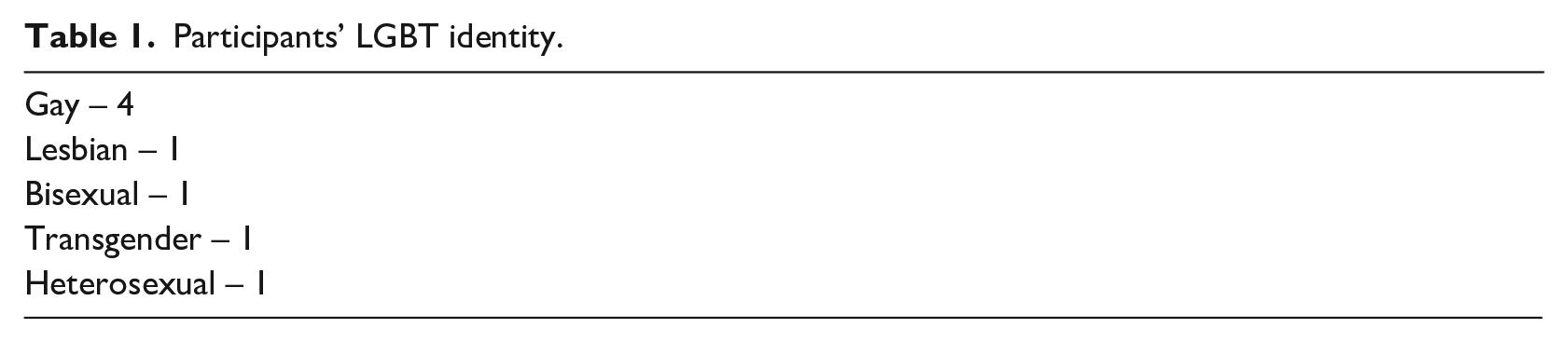
Table 2 provides an indication of the age of interviewees when they first became engaged in LGBT activism, demonstrating that most of our interviewees were relatively young.
Age when interviewees began participating in LGBT activism.

Our positionality as researchers should also be acknowledged. The interviews were conducted by Author 2, who is a female native Russian speaker living in Western Europe and an LGBT ally, after which they were analysed together with Author 1, who is a female non-Russian speaker living in Western Europe, and also an LGBT ally. Being originally from Russia, Author 2 possesses insider knowledge of the Russian sociopolitical context, which was helpful in establishing rapport with the interviewed activists and in ensuring the integrity of the data analysis. Author 2’s gender identity and vocal support for LGBT rights were also crucial in bridging potential cultural differences and avoiding being seen as an outsider by the oppressed group. Simultaneously, we recognise Author 1’s position as an outsider to the Russian community as potentially enhancing the data analysis process, allowing us to interrogate the data from multiple perspectives.
Memories of LGBT lives and mobilisations in Russia
Let us continue by answering our first research question, about barriers to the travelling of memories of LGBT lives and mobilisations in Russian memory activism. Rigney (2018: 372) describes the nexus between memory and activism as the interplay between memory activism, memory in activism and the memory of activism. By memory activism, she means how actors attempt to produce cultural memory and steer future remembrance (Rigney, 2018). Russian LGBT activists engage in memory activism when they produce counterhegemonic narratives of Russian LGBT pasts as the basis for claiming political legitimacy and rights for Russian LGBT communities in the present. This includes, for example, an increasing focus on exposing the harm done to LGBT people under the Soviet regime in contemporary queer space-making:
Commemorative activities are becoming increasingly important to us. For example, we give tours around some historical LGBT sites. This work is more around memory and remembrance. Laying flowers to the victims of the Gulag and other political repressions (…) to remind them that LGBT people were also subjected to harsh political repression during Soviet times. (P7, 26 May 2021)
Memory in activism, meanwhile, is about how the cultural memory of earlier social struggles and mobilisations informs new movements in the present (Rigney, 2018). Activists can use memories of activism to construct a common identity as a social group. The quote below, for example, speaks of efforts to commemorate events and individuals who took part in protests during the 2010s with the aim of creating queer space:
These things that trace this connection are very important for forming an understanding of a community (…) For example, Roman Melnik, who passed away – an LGBT activist and photographer who recorded many LGBT events and protests during the 2010s, so (…) around 200 thousand roubles were collected for his [cancer] treatment (…) And I wrote about this, not to brag… It just seemed important to me to convey the experience of support and present a role model (…) and this is also about memory. We are trying to create our history, not artificially, but when circumstances develop in a certain way, we believe that it’s very important to use it, creating role models to build an understanding that a community of support does exist. (P7, 26 May 2021)
Finally, the memory of activism concerns how earlier mobilisations for social change are culturally recollected (Rigney, 2018). In other words, it can capture the hegemonic narrative of Russian national identity and the position of gender, sexuality, race and class in this narrative, as well as narrative struggles about the memories of mobilisations of Russian LGBT activists.
Most of our participants began their involvement in LGBT activism between the late 2000s and early 2010s. When asked about their memories of LGBT lives and activism before that period, the interviewees recalled ‘increasing visibility for LGBT people’ (P3, 7 May 2021) and ‘the growth of the LGBT community in Russia’ (P8, 30 May 2021) during the early and mid-2000s. As our participants pointed out, during that period, LGBT identities and representation began to emerge in media and popular culture, and a few significant LGBT organisations and support groups were established in 2005 and 2006 (including LGBT Russian Network, Moscow Pride, GayRussia.ru), along with venues and bars catering to the LGBT community in several cities across Russia. In addition, the significant expansion of the Internet was acknowledged as a major factor in bringing members of the community together.
At the same time, our interviewees highlighted the mid-1990s and early 2000s in Russia as a period characterised by low levels of publicly visible LGBT rights activism and protest activity. Some interviewees explained this as due to the lack of commonly defined objectives and the ‘inward’ focus of strategy among then-existing LGBT groups. Others attributed it to the overall low levels of civil activity and political engagement in Russian society at the time:
It seems that the focus [of activism] was for some time … at least initially … all about internal community. This was more important. Some didn’t want to go ‘public’, and then with [Moscow] Pride and Alekseev,
3
there were quite a lot of disagreements if this was what was needed. (P8, 30 May 2021) I wasn’t actively involved [in activism] then (…) I think many of us were quite apathetic, politically speaking (…) the term activist, for example, still feels strange to me sometimes. (P1, 13 April 2021)
In contrast to the above examples, in our interviews, the narratives of memories of Russian LGBT activism post-2010 (Rigney’s memories of activism) are largely framed by the perception of intensified opposition between the LGBT movement in Russia and the Russian state. Three specific events were recalled as crucial in this respect, aligned retrospectively in our participants’ narratives as prefigurations of the current repressive political climate.
First, the memory of the brutality, trials and prison sentences imposed upon participants in the so-called ‘Bolotnaya Movement’ – a series of massive protests in Moscow that began in December 2011, prompted by Putin’s decision to run for president for the third time (Erpyleva and Kulayev, 2012). The overlapping of different civil causes and the cross movement of mobilisations are noteworthy in relation to this event. The Bolotnaya movement was positioned by the involved activists in a similar frame as the banning of Pride because it combined the abuse of civil liberties and the denial of the rights to freedom of expression and freedom of assembly. Anti-Putin sentiments were thus combined here with queer space-making.
Second, there is the institution in 2012 of a 100-year ban on Pride events in Moscow (‘Gay parades banned in Moscow for 100 years’, 2012). This is understood as part of a state narrative aiming to effectively set limits to queer visibility and disempower LGBT activists from publicly campaigning for their civic inclusion (Healey, 2018).
Finally, the introduction of the ‘gay propaganda law’ in 2013 banning ‘the propaganda of non-traditional sexual relations to minors’ (Russian Federation: Federal Law No. 135-FZ, 2013) was a pivotal moment which, for these activists, exemplified the final shift towards homophobic, conservative sexual politics in Putin’s Russia. It invoked moments of grievance for the activists, who emphasised it as an event that accelerated the process of demonisation of sexual minorities in Russia and established anti-gay rhetoric as the norm in the public sphere.
Notably, the ‘gay propaganda’ legislation was also invoked as a key point of reference for the mobilisation of the national pro-sexual-rights movement. According to the activists, it marked the movement’s mobilisation of resources of visibility, solidarity and domestic allies:
(…) passing of homophobic laws – this became for the LGBT community, which at that moment was already beginning to take shape, a huge challenge that mobilised people (…) At first, there were only a few people attending public events. Then, in May 2012, you can see a lot of photographs where there is a whole column of rainbow flags, posters. And I remember very well that one of the activists and I discussed our tactics (…), and we agreed that (…) if we’re not given the opportunity to attend our separate marches, rallies, demonstrations – like Gay Pride or the Equality March – then we’ll go to other big ones and participate in them fully supporting a common, but also our own, agenda. (P4, 3 May 2021)
This interview highlights the greater degree of visibility that pro-LGBT demonstrations enjoyed in Russia post-2012 when compared with earlier periods during the 1990s and early 2000s (Çağatay et al., 2022; Healey, 2018; Kondakov, 2019), leaving a trail of new archives of trauma and resistance in both online and print media.
However, the memory of violent homophobic repression and suffering that followed the adoption of the ‘anti-gay’ laws in 2013 is also understood to be already losing its potency among younger generations of activists:
In (…) the absence of the first generations, a new generation appears, which no longer remembers that repression, those actions and defeatist moods that seemed to have happened quite recently, even in 2014–2016. (P6, 14 May 2021)
Like previous quotes in this section, this quote illustrates the complex nexus between memory and activism and how the interplay between its different aspects indicates barriers within queer space-making for sexual citizenship. The interviews emphasise narrative struggles in the public sphere between politicians who formulate policies excluding LGBT communities from Russian national identity and post-Soviet nation-building on one hand, and counternarratives by LGBT activists who demand to be included on the other. This quote also exemplifies barriers to the persistence of memories of activism over time, and how LGBT activists from different generations have varied interpretations of the mobilisations of the late 2010s in relation to events and mobilisations that took place only a few years earlier – not to mention longer ago. Thus, it illustrates the problems Russian LGBT activists face in constituting themselves as ‘remembering collectives’ (Healey, 2018).
Memories of Russian LGBT lives and mobilisations abroad
Given the constraints to Russian queer space-making described above, we may wonder how (if at all) narratives of memories of Russian LGBT lives and mobilisations travel across time, place and space, and what happens to these memories in the few transnational relations that Russian LGBT activists have with European counterparts. Astrid Erll (2011: 11–12) suggests that the ‘travelling’ of memories across territorial and social borders can best be understood as the continuous wandering of carriers, media, content, forms and practices of memory and their ongoing transformations through time and space and across social, linguistic and political borders.
Generally, our informants’ narratives indicate the increasing focus on building transnational connections of solidarity and activism, despite the legal barriers to cooperation with foreign actors. This included applying for transnational funding to promote Russian activism, participating in conferences and events, and collaborating with international actors, such as journalists, diplomats and representatives of international NGOs (INGOs), with the aim of highlighting local campaigns and drawing international attention to local state repression. However, importantly, Russian LGBT activists also emphasised a broad range of barriers to the transnational travelling of memories of Russian LGBT lives and mobilisations.
The central barrier concerned a lack of awareness of the Russian context among European actors, including European ‘memoryless’ assumptions about the development of Russia’s homophobic discourses:
Some [EU actors] are well-oriented, especially human rights activists, but the majority live in their own realities and don’t understand the general situation in Russia, the context of our struggles. (P7, 26 May 2021) Every day we have a new ban, another one (…) This is all very difficult to understand in Europe because everything is developing very rapidly in our country, it’s often impossible to convey. The fear is growing. (P8, 30 May 2021)
Thus, our informants emphasised that, apart from some activists, there is a general lack of recognition among European LGBT actors of the complexity of the repressive historical, political and material circumstances under which LGBT activism in Russia has developed and continues to operate. There is also a perceived lack of awareness of how anti-LGBT political sentiment in Russia has intensified with the adoption of anti-gay propaganda laws and Putin’s increasing anti-Western rhetoric and the constraints this places on Russian LGBT activists’ local and transnational advocacy work:
They don’t understand what it is at all. It seems to me it’s unclear to them what propaganda is. When we say – they [the Russian authorities] say this is all imported from Europe, some propagandists have brought it, in general, in my opinion, they [European partners] don’t understand what we mean (…) don’t understand what’s going on at all. (P1, 13 April 2021)
Another example concerns the effects of the abovementioned ‘Foreign Agent Law’ (2012) on transnational funding and relations. Our interviewees noted that, under this legislation, the visibility that transnational relations bring can be largely counterproductive for LGBT activists in Russia. It can become a successful avenue for the harassment of activists by local authorities, including local NGOs receiving staggering fines, being subjected to countless audits, or even facing prosecution. It was also suggested that being marked as ‘foreign’ has negative socio-cultural effects, potentially heightening hostility towards local LGBT communities and activists and reinforcing discourses that LGBT identities are a Western deviance. Yet, as our participants emphasised, the complexity of this context and the culture of fear that it perpetuates is rarely considered in European approaches to transnational advocacy:
Unfortunately, the European context doesn’t allow them to even presuppose that people can be afraid to participate in Zoom meetings, for example, because they fear becoming foreign agents and being prosecuted. (P1, 13 April 2021)
This comment highlights the dilemma that the political visibility that would make Russian LGBT activists subjects of Western solidarity and recognition is the very visibility that can be utilised by the Russian state to inflict violence upon them. At the same time, INGOs and donors were described as lacking a thorough understanding of this complexity. As our participants pointed out, when Russian LGBT activists adopt small-scale, informal or peripheral initiatives that are not deemed ‘loud’ or ‘impactful’ enough and/or as not addressing themselves exclusively to LGBT people who are ‘out’, then they tend to remain overlooked by European organisations and donors: ‘Because, well, basically, they give money and, probably, they will call those who are more assertive, who speak loudly about themselves’ (P1, 13 April 2021). This highlights the importance of stressing the ambivalence of visibility, because the effects that the public appearance of previously invisible bodies can have upon public debates about sexual citizenship differ for marginalised subjects living under authoritarian regimes (Russian LGBT activists) and relatively less marginalised actors living in democracies (Western European LGBT activists) (Ayoub, 2016; Buyantueva and Shevtsova, 2019; Edenborg, 2020).
A related problem highlighted by Russian LGBT activists pertains to how, in encounters with European activists, they had been perceived as representatives of Russia and its hetero-nationalist agenda. This meant that they were often viewed as ‘homophobic’ and regressive in their political views, even when they were activists and self-professed anti-Putin progressives. Such homo-nationalism by European activists silences and excludes Russian LGBT voices from narratives about those who struggle for sexual rights (Healey, 2018; Kulpa and Mizielinska, 2011; Puar, 2007). It thus creates a barrier to the reception of memories of Russian LGBT struggles in transnational encounters. As one interviewee described it:
(…) Russians are seen as enemies (…) Unfortunately, this enemy image makes us vulnerable (…) I was in Holland, we say we’re from Russia – they answer, ‘so you support Putin?’ This is just a story about the fact that we’re not accepted, even though we’re fighting, that we want this whole situation to change…but when we go to Europe, we already have a stamp that we supposedly support the regime. No! This is not true. (P1, 13 April 2021)
Overall, Russian LGBT activists identified ambiguities in practices of solidarity in their encounters with European counterparts. Although some memories had travelled to some European activists, many individual and institutional actors had not managed to form these into successful representation, leaving tensions between the national and transnational levels of analysis (Wüstenberg, 2019).
We conclude that narratives of memories adhering to Western assumptions about struggles for sexual citizenship, such as those relating to memories from activists who are ‘out’ and visible, travel better than those that do not. Memories of the barriers to LGBT lives and mobilisations in Russia do not travel well. This lack of recognition leads to delimitations in the agency of Russian LGBT activists in queer national and transnational (memory) space-making on sexual citizenship.
Intersectionality and queer space-making
Memory scholars have pointed out that inequalities of power can influence which memories can and cannot travel, and which memories can and cannot receive hegemonic status in societies (De Cesari and Rigney, 2014; Erll, 2011; Gutman et al., 2010). The agencies of Russian and European LGBT activists and Russian politicians are not identical. Separating these is important for our understanding of the narrative struggles about Russian sexual citizenship and the opportunities for Russian LGBT actors to create social and political change (Wüstenberg, 2020). There are intersectional inequalities in power relating to notions of gender, sexuality, nationality and class between Russian LGBT activists and Russian politicians, as well as between Russian and European LGBT activists.
The agency of Russian politicians relies on their power to prevent social change and reproduce heteronormativity in society. Despite claims of compliance with international human rights treaty obligations, Russian politicians insert language about ‘traditional values’ into both national legislation (such as the ‘gay propaganda’ law) and international agreements (such as Resolution A/HRC/RES/16/3, adopted by the United Nations General Assembly on 8 April 2011) to ensure that these are heteronormative. Inequalities in power relating to gender and sexuality intersect here, and opposition to LGBT people is part of the core of Russian identity and nation-building in the narratives of these politicians (Chaney, 2018; Dunajeva, 2022).
We can compare this with the agency of Russian and European LGBT activists and their separate and combined power (or lack thereof) to counter the narratives of Russian politicians. Russian LGBT activists can do this by producing alternative narratives about their own pasts, as well as narratives about LGBT lives in Europe and about LGBT rights as human rights. In turn, the existing inequalities between Russian and European LGBT activists can often exacerbate barriers to the transnational travelling of memories of Russian LGBT lives and mobilisations.
First, there are socio-economic inequalities. Participation in transnational activism presupposes international mobility, access to networks and the possession of material assets (Çağatay et al., 2022). Our participants stressed that most Russian LGBT activists (especially from minority organisations) remain resource-poor and lack the material and financial means of many Western activists. Consequently, transnational spaces and gatherings continue to be largely inaccessible to Russian activists, for whom the cost of travel and participation is just too high. This intersectional inequality of gender, sexuality and class produces a barrier to transnational travel (including of memories), which can be difficult to cross and is said, in the quote below, to be rarely acknowledged by European actors:
There’s no understanding (…) for example, I went to Helsinki for Pride with the local organisation SETA (…) they told me – buy tickets, book a seat, and we’ll compensate you later. At that time, I had, roughly speaking, 2000 roubles in my pocket and a loan (…) And the fact that there’s simply no means of production (…) there’s no understanding of that. No understanding that ultimately, for the most part, activists are marginalised in Russia. Many lose their jobs and are unemployed… (P7, 26 May 2021)
A second barrier arises out of linguistic in/proficiency. Transnational LGBT activism has come to require skills in English and an understanding of the professional jargon used by foreign-based institutions and funders (Ayoub, 2016; Çağatay et al., 2022). In practice, this means that only elite, middle-class and well-educated Russian LGBT citizens are able to speak and share their experiences in the transnational activist arena.
In turn, the memories of multiply marginalised LGBT actors in Russia – notably trans activists – do not travel well, and they remain largely invisible in transnational LGBT activism. This pushes such forms of resistance further into the margins. In our interviews with actors from trans rights organisations, they emphasised intersectional inequalities of class, gender and sexuality as presenting significant barriers to recognition, including their lack of linguistic and material resources:
I would like ILGA to begin, probably, more often to refer to our space, realising that, unfortunately, we speak the [English] language very poorly, and this creates a huge barrier. A barrier not only in terms of communication (…) But also, in terms of understanding the context for both them and for us (…) We trans people in Russia (…) we’re often not hired to work or get fired. Some are just extremely poor and take microloans and then end up [screwed], many are homeless. … And that there can be some difficulties with housing, or even with food, it’s very difficult for us to explain. (P1, 13 April 2021)
Conclusion
LGBT issues are a terrain of conflict, in Russia as elsewhere. The theoretical literature on time and temporality in global queer politics is often produced in the global North, and LGBT issues can function, for scholars and activists alike, as a stand-in for modernity or backwardness, imperialism or anti-imperialism. However, we need to investigate how specific narratives about queer issues perform in different contexts of time, place and space (Kulpa and Mizielinska, 2011; Puar, 2007; Rao, 2020). Reducing this to a Western-centric understanding of progressive linear time is unfortunate because it does not consider the agency of actors such as the interviewees in this study. Russia is usually considered to hold a position somewhere between Western modernity and Oriental backwardness (Çağatay et al., 2022; Kulpa and Mizielinska, 2011).
By some accounts, the interests of queer and LGBTQ+ scholars in the topic of memory can be traced back at least to the 1980s and 1990s (Anzaldúa, 1987; Berlant and Warner, 1998; Foucault, 1978), and the HIV/AIDS crisis is generally understood to have accelerated this interest (Dunn, 2021). The depth of concern about memory among LGBTQ scholars and activists is shown in this study in our sources, which are not only to interviews with activists, but notably to scholars who are more focused on Central and Eastern European experiences than those suggested above. This work is written by authors from the region or in regional languages. Our findings suggest that studies of queer global politics and transnational solidarity could benefit from digging deeper into the memory activism of Russian LGBT activists and scholars. Relatedly, memory studies scholars could pay more attention to gender and sexuality. Feminist, queer and decolonising approaches can all provide useful tools for memory scholars (Gutman and Wüstenberg, 2023). Examples from controversial contemporary cases, such as in this study about Russian LGBT activism, are good starting points for theorising the complexities of memory politics and activism.
Footnotes
Funding
The author(s) received no financial support for the research, authorship and/or publication of this article.
