



Abstract
Harbin is the capital of Heilongjiang Province and China’s northernmost metropolis. The modern city of Harbin was founded by the Russians in 1898 and colonised by Russia and Japan during the first half of its 120-year history. After the Second World War, the post-colonial Harbin had to deal with its Russian and Japanese colonial pasts and their architectural remains. While the city initially tried to forget its colonial pasts by demolishing the colonial-era buildings, in recent decades, Harbin is re-remembering those pasts through the presentation and (re)interpretation of its colonial built heritage. It is noteworthy that the local government has approached Harbin’s Russian and Japanese colonial heritages in very different ways, and public opinion has polarised on the issue of colonisation regarding the city’s Russian and Japanese colonial pasts. Using archival analysis, observation and semi-structured interviews, this paper investigates the evolution of Harbin’s urban memory of the colonial pasts from both official and popular perspectives. It is argued that the different approaches to Russian and Japanese colonial heritages have historical reasons in cultural, economic and political terms and serve to achieve a common goal in the present, that is to construct a distinct and consistent identity for the city’s future. Further, post-colonial identity constructed in this way is questioned as it still does not overcome the self–other dichotomy that features in colonisation.
To decolonise and reconstruct a national identity for their people, many post-colonial cities, regardless of their locations in the world, have erased and/or marginalised the built environments from their colonial pasts (e.g., see Leung, 2009; Western, 1985; Youn, 2014). At least during the decolonisation period, those colonial remains were typically considered to ‘resist incorporation into the national imaginary’ (Meskell, 2002: 558). Given that people in an ongoing decolonisation process may generally perceive colonial pasts as negative and unfavourable, such urban erasure and marginalisation are understandable since ‘architecture and city places [. . .] are mnemonic codes that awaken recall’ (Boyer, 1994: 322). Erasing these memories and reminders of unpleasant pasts would seem to make current people feel more relieved and comfortable and, therefore, would be more in the current interests of a society (Ashworth, 2008). Indeed, collective amnesia is as much a part of collective identity construction as collective remembrance.
In recent decades, however, colonial-era structures, buildings and precincts have been increasingly seen and studied as a cultural heritage of post-colonial cities. While some are considered to be ‘negative heritage’ (Meskell, 2002; Rico, 2008) or ‘difficult heritage’ (Huang and Lee, 2019; Knudsen, 2011), some others are regarded as heritage in a more benign or even positive sense, since the colonial pasts they represent have become really ‘past, dead and safe’ (Urry and Larsen, 2011: 140). As regards the latter, scholars have observed the phenomenon of romanticising the colonial past for tourism promotion and commodifying colonial heritage as a tourist attraction around the world (e.g., see Bissell, 2005; Jørgensen, 2019). The politics of collective memory ‘circumscribes the acceptable’ and ‘defines such key ingredients as pride, shame, fear, revenge, and comfort’ for a large number of people in the related groups (Markovits and Reich, 1997: 9), thus having a real impact on which approach they adopt to deal with a certain past and its remains. As Carr (2014) rightly pointed out, ‘to turn something into heritage is an active choice, a decision about what is of value and what a community is happy to embrace as a part of its identity’ (p. 12). By re-remembering colonial pasts and identifying colonial heritage, the post-colonial cities have their new historical identities conceived and promoted, in order to meet their present and future needs.
Heritage and memory of China’s post-colonial cities: knowledge, gaps and questions
The colonial heritage phenomenon has also been observed in mainland China. On the one hand, in post-colonial cities such as Shanghai, Xiamen and Tianjin, which were formerly colonised mainly by Western countries, colonial heritage has been made and managed in a seemingly nostalgic way. Regarding the colonial legacy as a valuable asset for city branding, those cities have been conserving, refurbishing and even newly constructing Western-style buildings for exotic and/or romantic consumerism (Law and Veldpaus, 2017; Zhang, 2018). Bissell (2005) contended that such ‘colonial nostalgia’ is not some desire for the restoration of colonialism but rather involves the longing for something that has gone and cannot be restored – it critically frames the present. To some commentators, this ‘something’ for the post-colonial cities in China is cosmopolitanism, modernity and prosperity (Law, 2020; Law and Qin, 2018; Pan, 2005; Zhang, 2021). On the other hand, the colonial heritage strategy adopted by those post-colonial cities that were formerly colonised by Japan is strongly influenced by the central government’s national humiliation discourse, which particularly underlines China’s past conflicts and wars with Japan (Wang, 2012). In other words, the Japanese colonial heritage in China is mainly regarded as a negative/difficult heritage – it is deployed as a reminder of China’s victimisation, thereby reinforcing the patriotism of Chinese people. Examples of this include the former Manchukuo cities such as Changchun and Dalian, where some of the colonial-era buildings such as the former prison and state council have been turned into museums exhibiting Japanese atrocities, while some others are preserved as landmarks, with plaques on them clearly stating their role as reminders of the national humiliation (Huang and Lee, 2020: Chapter 4; Koga, 2016: Chapter 3).
Occasionally, more moderate and reconciliatory internationalist discourses on universal values, such as those on human rights and peace, are also adopted through official or unofficial channels to facilitate the handling of the Japan-related memory and heritage in China (e.g., see Bofulin, 2017; Xu and Fine, 2010). It is evident from the case study by Bofulin (2017), however, that in the Chinese context, interpretations of Japanese colonial pasts and relevant heritage making that deviate too much from the conventional national humiliation and victimisation discourses can cause public anger. Bofulin investigated what is dubbed ‘memorial drama (碑剧)’ 1 in the context of Fangzheng County, a former Japanese colonial settlement in today’s Heilongjiang Province. In 2011, the Fangzheng county government erected inside the Chinese–Japanese Friendship Garden a memorial, which consists of two walls dedicated to the dead Japanese colonial settlers and the deceased Chinese foster parents of Japanese war orphans, respectively, as a gesture of reconciliation. The former wall was met with swift and nation-wide criticism and even a violent attack, resulting in the local government, under enormous pressure, quickly demolishing it. Alternative voices in the otherwise strictly controlled Japan-related heritage making do exist in China but are highly sensitive not only to the authorities at different levels but also to the general Chinese populace. In this regard, it is understandable that China’s Japanese colonial past and heritage seem to be largely approached in the ‘conventional’ way that is similar to the country’s non-colonial Japan-related others and have, therefore, not attracted special interest from researchers. Where Japan-related memory and heritage in China are concerned, researchers frequently turn to better-known (non-colonial) cities such as Nanjing (e.g., see Fogel, 2007; Zhu, 2022).
It can be seen from the existing English-language literature that research on the memory and heritage of China’s post-colonial cities focuses on cities that were formerly colonised predominantly by Western counties. Such research has long been concentrating on a few well-known cities, for example, the special administrative regions of Hong Kong and Macau (e.g., see Chaplain, 2002; Chau et al., 2021; Gallagher, 2021; Lu, 2009; Wong, 2013; Zhang et al., 2022) and certain mainland megacities such as Shanghai and Tianjin (e.g., see González Martínez, 2021; Gravari-Barbas et al., 2021; Ifversen and Pozzi, 2020; Pan, 2005; Pozzi, 2021; Zhang, 2018; Zhang et al., 2014). In contrast, Japan, despite being a major colonial power in China, is nevertheless under-represented. Only a handful of scholarly publications are dedicated to the post-colonial heritage issue of former Manchukuo (e.g., see Bofulin, 2017; Huang and Lee, 2020: Chapter 4; Koga, 2016), an extensive Japanese colony located in Northeast China. In addition to this imbalance of research focus, the attitudes and approaches to the colonial pasts related to the West and Japan in the China of today have frequently been regarded as disparate things and studied separately in different case studies. China’s different post-colonial phenomena have been individually investigated in the light of present needs and future goals, but the underlying historical reasons that sustain them were seldom discussed from a comparative perspective. Interpretations and uses of colonial pasts in China have often been seen as something controlled by the ruling/intellectual elite, with ordinary people’s views under-presented.
To fill the gaps, this paper critically reviews the manifold and intricate post-colonial phenomena in China through an analysis of Harbin. Having been historically colonised by both the West (i.e. Russia) 2 and Japan, Harbin provides a complex but representative context for a comprehensive understanding of China’s post-colonial cities in the present day. It illustrates typical and substantive ways of dealing with the colonial past and colonial heritage. The Harbin of today, in both official and unofficial terms, reflects opposing attitudes and adopts seemingly conflicting approaches to its Russian and Japanese colonial pasts and their heritages, in line with the overall post-colonial phenomena in China. Accordingly, this paper examines the evolution of Harbin’s urban memory of its colonial pasts, informed by three research questions. Is long-term co-existence of different and even opposing attitudes and approaches to colonial past/heritage possible in a post-colonial city in China? If yes, what makes it possible? How, and to what extent, do the different attitudes and approaches contribute to the urban identity in a consistent fashion? The case study of Harbin develops knowledge about contemporary China’s diverse attitudes and approaches to colonial pasts with a balanced focus on both the Western colonisation and the Japanese colonisation in history and features a comparative perspective. Paying special attention to the interaction between official and popular perceptions, this study identifies an autocatalytic evolution of post-colonial collective memory with official and popular attitudes generally reinforcing each other. It is argued that different perceptions of colonial past/heritage can indeed co-exist in a city for a long period, and such co-existence is not only reasonable in terms of collective memory formation and evolution but can also be fruitful in terms of collective identity construction.
Methodology
This qualitative research, being part of a larger project, was conducted using archival analysis, observation and semi-structured interviews. As regards the interviews, the sample set consists of fifteen local inhabitants (LI), three heritage professionals (HP) and two government officials (GO). They were interviewed in 2020/2021 via video calls or phone calls. Interviewees in the local inhabitant group were selected according to gender, birth year, educational attainment and district of residence in a balanced manner. Their birth year ranges from 1931 to 2001, with people born in each decade (i.e. 1930s, 1940s, . . ., 2000s) represented. The interviewees’ educational attainment ranges from junior middle school graduate to doctoral degree and includes all the major possibilities lying in between in the Chinese context. 3 Their districts of residence cover all four districts of Harbin’s old town (namely Nangang, Daoli, Daowai and Xiangfang) and also include relatively remote districts such as Pingfang and new town districts such as Songbei. Interviewees in the heritage professional group were selected among people working in built-heritage-related fields. The three heritage professionals that were interviewed work in heritage tourism, heritage protection and heritage education, respectively. The two government officials being interviewed work in the housing and urban–rural development department and the cultural heritage department, respectively. These are the two major government departments in charge of built heritage in China. Interviewees were recruited based on the author’s long-established personal and professional networks in Harbin. 4 In addition, snowball sampling was adopted as a complementary sampling technique to recruit local inhabitants of certain qualities, in order to achieve a more balanced sample set and minimise selection bias.
Interview questions for local inhabitants are divided into three parts. The first part entails the interviewees’ personal/collective memories of Harbin’s colonial pasts and decolonisation; the second part focuses on the interviewees’ views about the city’s built heritage with colonial backgrounds in general; the third part invites the interviewees to comment on several specific Japanese/Russian colonial heritage sites. Questions for heritage professionals and government officials were individually designed according to the researcher’s prior knowledge of each interviewee’s role and experience, which are typically divided into two parts: the first part focuses on their built-heritage-related works and the second on their personal opinions about Harbin’s colonial pasts as well as its current uses of those. The interview data are presented as a primary source to show typical and authentic popular, professional and official narratives, views and thoughts regarding the Russian and Japanese colonial pasts and heritages of Harbin.
A brief history of Harbin
Under the terms of the 1896 Li–Lobanov Treaty and the 1898 Pavlov Agreement between Tsarist Russia and Qing China, Russia was allowed to build two railways in Northeast China: the Chinese Eastern Railway (CER) which cuts across Manchuria from west to east and links the Trans-Baikal Railway to Vladivostok and a southern extension of the CER which reaches the port city of Dalian. A ‘CER Zone’ was in turn designated. The CER Zone, a large territory expanded upon the land for the railway construction, was under extraterritorial jurisdiction and thus effectively acted as a Russian colony (Clausen and Thøgersen, 1995: 25; Moustafine, 2002; Rykachev, 1910, as cited in Bakich, 2000; Wolff, 1999). An area around the junction of the two railways served as the central part of this Zone. It accommodated the Russian administration of the railways and constituted a significant portion of the later-formed Harbin City. The remaining part of Harbin – its Chinese ghetto called ‘Fujiadian’ – was then ruled separately by Binjiang Guandao, a Qing Chinese local government that was formed only in 1906 (Haerbin Shi Difangzhi Bianzuan Weiyuanhui, 1998: 32; Zhan et al., 1985: 68). In 1907, following Russia’s defeat in the Russo-Japanese War, Harbin ceased to be a migration destination exclusively for the Russians but became a treaty port opened to all foreigners, despite the fact that the Russians still played the leading role in running the city. The construction of the CER and its accompanying industrialisation and commercialisation spurred the development of Harbin and helped the area to transform rapidly from small villages into a cosmopolitan metropolis. By the late 1920s, Harbin had boomed to be the largest commercial and logistics hub in Northeast China.
For Harbin, the 1920s period is obscure in terms of political control. Russia’s continuing defeats and losses in the First World War eventually triggered the 1917 Russian Revolution and the consequent fall of the House of Romanov. Despite its resultant official reversion of Harbin to China, the Chinese rule in the city was ‘a changeable patchwork of regional authorities rather than a centralized state bureaucracy’ (Carter, 2002: 79). This was due, in fact, to the ending of the Qing dynasty in 1912 with regional power, in turn, devolving to local warlords. Moreover, the White Russian community did not completely give up their power until the Self-Administrative Council (自治公议会) was finally dissolved in 1926 (Haerbin Ketizu, 2007: 39; Hu, 2009), and the Soviet Union emerged as a new player in Harbin. Such a perplexing jurisdictional puzzle did not remain long as Japan occupied the city just a few years later. From 1932 to 1945, Harbin was colonised and ruled solely by Japan as a part of the puppet state Manchukuo under the 1932 Japan–Manchukuo Protocol. The surrender of Japan was announced on 15 August 1945, bringing the hostilities of the Second World War to a close. Five days later, Harbin was taken by the Soviet Army. The city was occupied by the Soviet Union for eight months. Then it was returned to China and became, in April 1946, the first large city governed by the Communist Party of China (CPC).
Demolished buildings, organised amnesia
For a long time after the founding of the People’s Republic of China (PRC), Harbin has, like many other post-colonial cities, engaged in the demolition of its colonial-era built environments to make way for new landmarks of New China: most of its finest Russian- and Japanese-era buildings were demolished in that decolonisation process.
Among the Russian-built buildings that were demolished, the most renowned are the old Harbin Railway Station and St. Nicholas Cathedral (Figure 1). The old station was built in the then-fashionable Art Nouveau style. It was completed and opened to the public in 1904, being the first railway station building in China. In 1960, that building was pulled down, despite the fact that its structure was still in very good condition and was, in fact, too strong for the then demolition techniques: Interviewee LI-1, an elder man born in 1940, recalled that ‘even the tank was useless against it’; and Interviewee LI-2, a retired railwayman who was born in 1931, recounted that ‘at last, they blasted that building with explosives’. The Cathedral, which was the landmark at the centre of the Russian Harbin, was demolished by the Red Guards during the Cultural Revolution. Interviewee LI-1 clearly remembered his last sight of St. Nicholas Cathedral on 18 August 1966. That day, he passed by the cathedral on his way to the railway station, as he was going to Beijing for a Revolutionary Tour (串连):
I saw there was a group of people around the cathedral preparing for the demolition. They were placing ladders against the building and doing other things . . . The building was still there then. When I came back [from Beijing], it was gone!
Interviewee LI-3 was a seven-year-old girl among the large crowd of onlookers when St. Nicholas Cathedral was demolished five days later, on 23 August. The witness recounted what she remembered:
There were loads of people! The Red Guards used loudspeakers [to chant]: ‘Completely smash the feudal, capitalist and revisionist legal systems (砸碎封资修)!’ Dear me! After the demolition, they put on site three red flags with the slogan ‘Sailing the Seas Depends on the Helmsman (大海航行靠舵手)’.
5
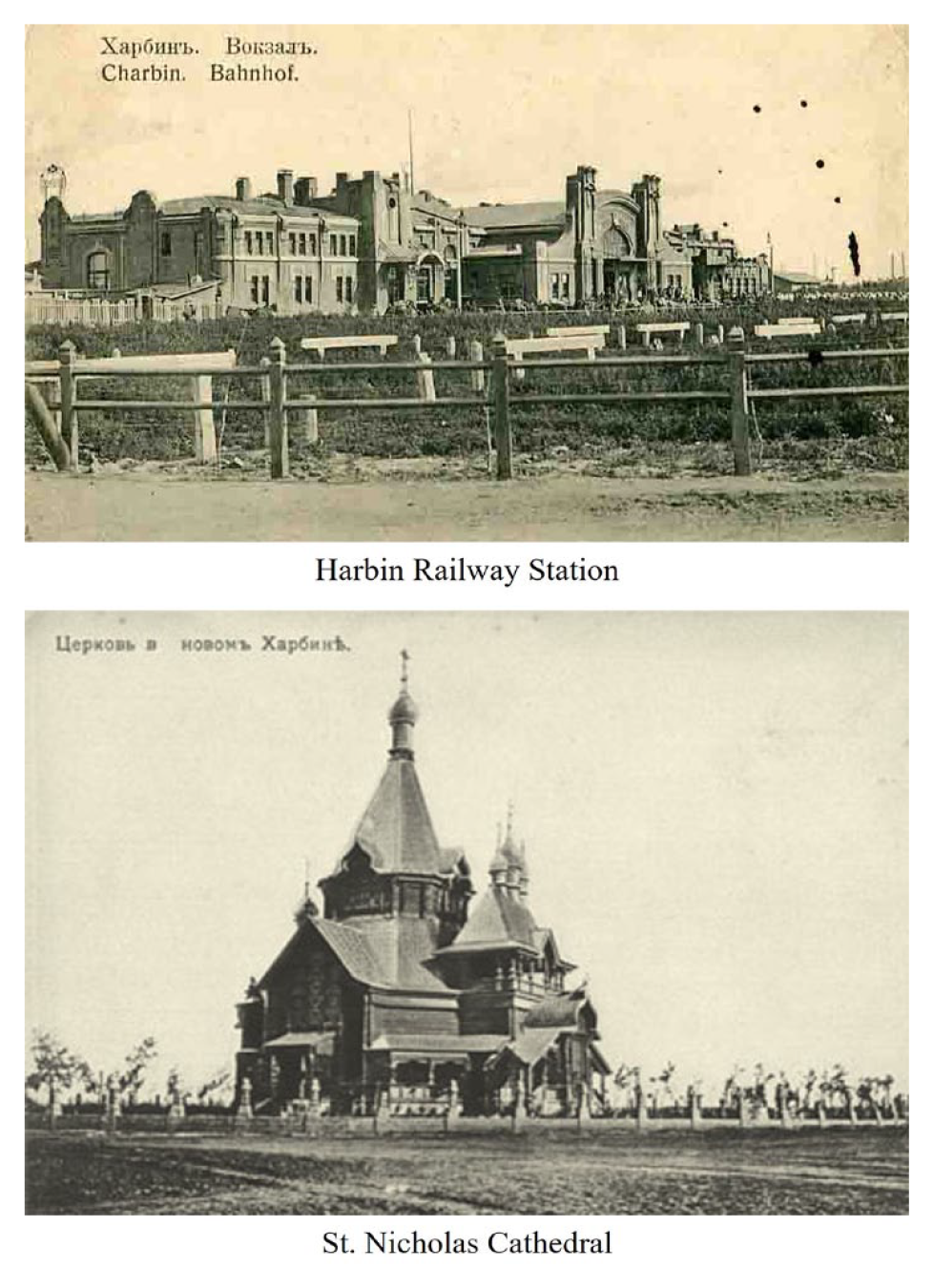
The demolished Russian-built buildings.
Many other magnificent churches, such as the Holy Annunciation Church and the Male Monastery of Our Lady of Kazan, were also demolished in the second half of the twentieth century.
As regards the Japanese-built buildings, the most important one is perhaps the religious Harbin Shrine (Figure 2) which was built from 1935 to 1942. This Japanese traditional building was located in the city centre and was very close to St. Nicholas Cathedral. The shrine was demolished immediately after the Japanese surrendered in 1945, only three years after the building’s completion. Comparatively, the Japanese Monument to Loyal Spirits (忠灵塔) (Figure 3), another significant site to the Japanese colonisers in Harbin, had gone through a rather roundabout decolonisation process. The monument tower was completed in 1936 to commemorate the Japanese soldiers who died during the Mukden Incident (Barclay, 2020; Yokoyama, 2014). After Manchukuo ceased, the monument had been adaptively reused as a parachute tower by the post-colonial Chinese government since 1957 (Liu, 1989), echoing what Macdonald (2009) observed as the ‘profanation’ strategy for dealing with difficult heritage: ‘doing ordinary things that did not “give recognition” to there being anything special about the site’ (p. 88). In this way, the difficult Japanese colonial past was covertly marginalised and downplayed. Nevertheless, the monument was eventually erased from the socialist China’s land in 1993.
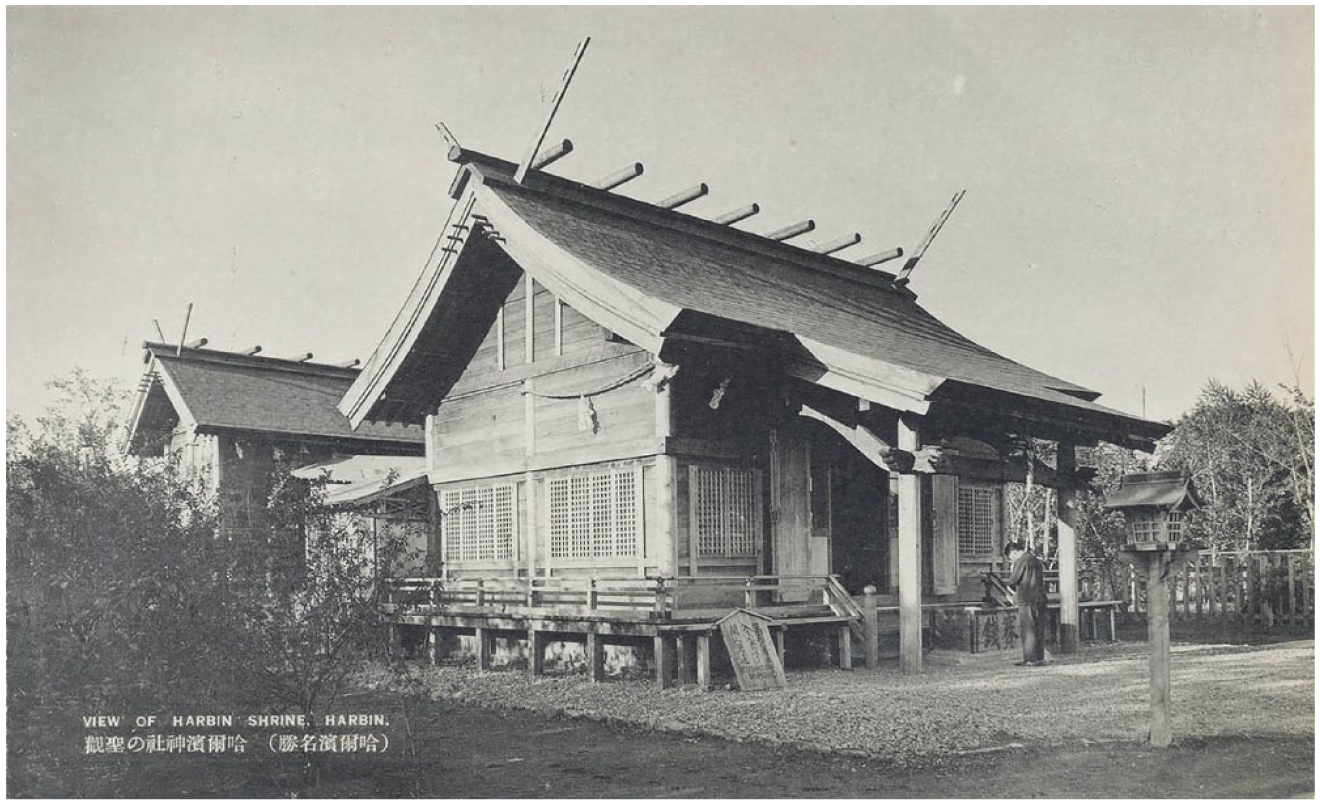
Harbin Shrine.
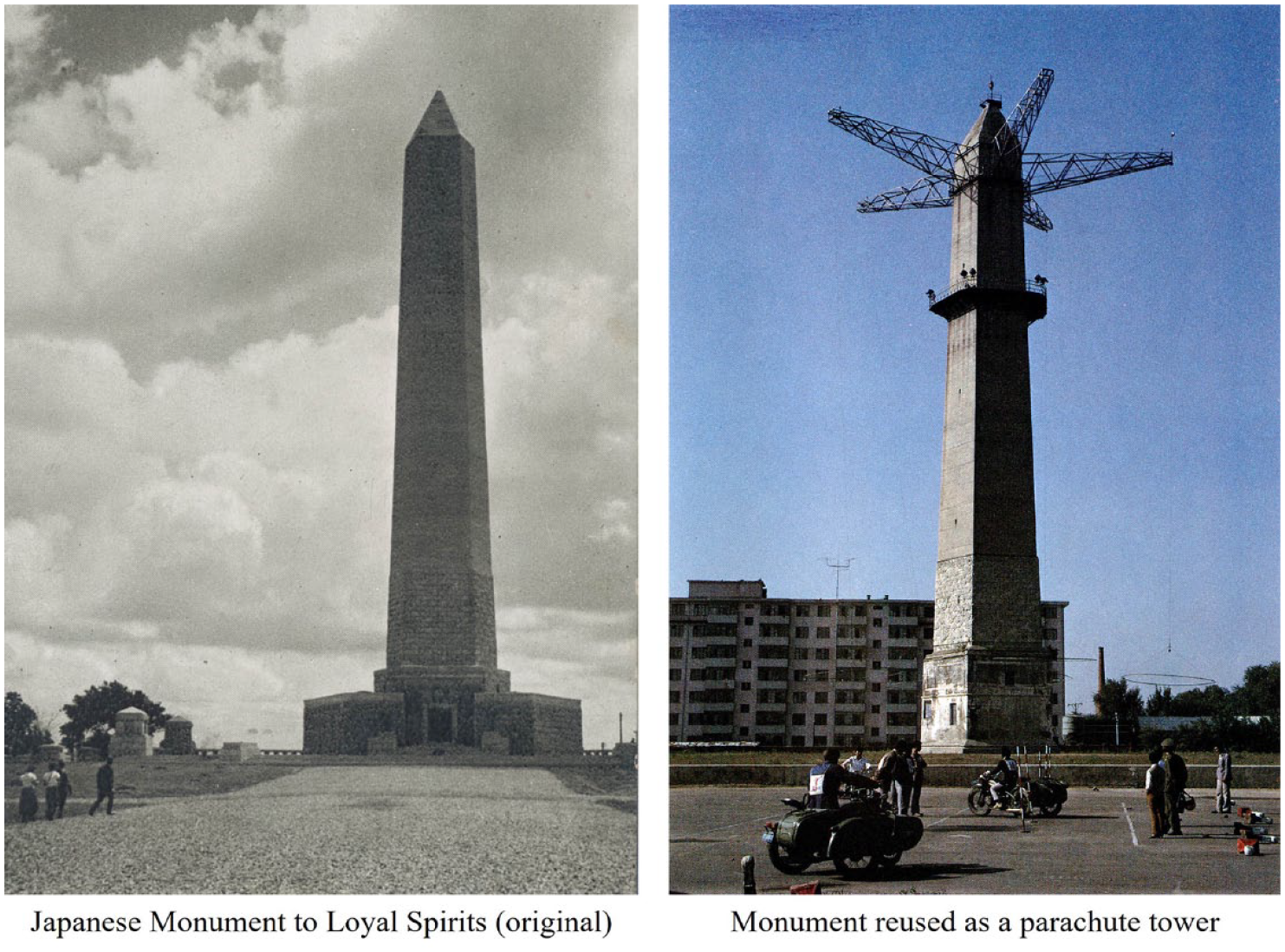
Japanese Monument to Loyal Spirits.
Colonial memories were disappearing in Harbin along with the demolished colonial-era built environment, and the disruption to oral history made the situation even worse. In the early decades of the PRC, especially during the Cultural Revolution from 1966 to 1976, talking about the colonial pasts was thought to be improper and risky as this may lead to an accusation of advocating ‘the old society’ and the following persecution. As Interviewee LI-3 pointed out, the absence of education about Harbin’s culture in school during the Cultural Revolution and the elder people’s silence on the city’s colonial pasts finally led to collective amnesia among the later generations:
We didn’t learn anything about Harbin’s culture at school. There was no oral history: people dared not tell those stories! [. . .] That was the Cultural Revolution era, people only talked about the ‘red’ stuff. They dared not talk about the reality of the society. Some dared not say, some dared but were not able to say [due to their lacking education].
When Harbin finally rid itself in the mid-1990s of the heavily politicised tone which had characterised previous writing on its colonial pasts (Gamsa, 2010), a vacuum in urban memory had already been created and could not easily be filled.
Re-remembering the colonial pasts
In the 1990s, Harbin started to re-evaluate its narratives and architectural remains that relate to the colonial pasts. Although the colonial pasts were still a taboo subject to some extent, their physical remains were no longer something needing to be suppressed. Rather, they were increasingly seen as a resource that should be explored for the city’s future maintenance and development. The once purposefully neglected colonial-era structures and buildings, in turn, escaped demolition. Instead, they were valued and conserved as cultural heritage and were, in many cases, restored and renovated for city branding, tourism marketing and patriotic education. Furthermore, some demolished colonial-era buildings were reconstructed or replicated for various reasons, and new memorial halls were built to commemorate events in the colonial periods. The current uses of colonial heritage in Harbin reflect contemporary China’s manifold problems, expectations and strategies concerning its colonial pasts.
‘Nostalgia’ for the Russian past
In 1997, the Russian-founded Central Avenue (中央大街), a historic street that is the same age as Harbin, was renovated and transformed into China’s first pedestrian street. Concurrently, the Russian-built Byzantine-style St. Sophia Cathedral was restored and granted landmark status. These two projects marked the local government’s initial attempts at re-valuing and using Harbin’s Russian colonial past and turning the city’s Russian-era built settings into tourist attractions. In the context of Harbin being deindustrialised and severely impoverished due to the privatisation of state-owned enterprises during the Chinese economic reform period, these attempts were considered necessary for the city’s economic survival, given that tourism can generate revenue and provide employment opportunities for a large number of laid-off workers (Koga, 2008: 228). Both projects turned out to be so highly successful that the local people of Harbin today still see Central Avenue and St. Sophia Cathedral as prominent places that represent their city. This is manifested by the fact that these two sites were most frequently mentioned by the interviewees in the local inhabitant group. The view of Interviewee LI-4, who was born in 1992, is representative of the younger-generation Harbin locals: ‘In terms of architecture, we know that Central Avenue and St. Sophia Cathedral are unique to Harbin and are famous tourist attractions since we were children. This is a deep-rooted notion. We were not formally educated about this’.
Another deep-rooted notion of Harbin locals is that the city is known as the ‘Oriental Little Paris (东方小巴黎)’. This term was freely used by many local inhabitants during their interviews. For example, Interviewee LI-3 linked the term to Harbin’s ‘foreign flavour (洋气)’ and attributed the fact that Harbin is ‘permeated by foreign culture, lifestyle, and . . . everything’ to the influence of the Western settlers in the 1920s that lasts till today. Interviewee LI-5, a young lady born in 1991, thought that Harbin the ‘Oriental Little Paris’ offers Chinese people who do not have the necessary resources to travel abroad a chance of experiencing a Western city at home: ‘When they come to Harbin and see these [Western-style] buildings, they may have the feeling of being abroad’. Although this long-standing appellation is widely known by Harbin locals, its origin is still an unsettled question.
There are mainly three explanations as to why the city is known as the ‘Oriental Little Paris’. The first and best-accepted explanation is that Harbin has diverse buildings in various Western architectural styles, which makes the city look like European cities such as Paris (e.g., see Song et al., 2008; Zhang and Xu, 2019). This view was also expressed by some interviewees such as Interviewee LI-2. The second explanation is history related: as the White Russians fled from Russia after the October Revolution, many of them went to Paris, while many others went to Harbin; for the latter, Harbin was the ‘Oriental Paris’. The third is that people in Harbin yearn for the prosperity and romance of Paris and, therefore, coined the term as a means of city promotion. In contrast to its uncertain origin, the appellation’s significance since the late 1990s is certain: It has been highly publicised along with the initial promotion of Russian colonial heritage sites. ‘Oriental Little Paris’ is nowadays a most popular term among Harbin locals, despite the local writer A-Cheng (1995) once observed that this historical appellation of Harbin is ‘withering away’ (p. 116). Other terms that were frequently used by the local interviewees to describe the character of Harbin include ‘Oriental Moscow (东方莫斯科)’, ‘foreign flavour’ and ‘European style’. In Harbin, the Russian-era architectural remains are, by common consent, beautiful and, in the Chinese context, unique. The local inhabitants are generally proud that these Western-style buildings, streets and precincts make Harbin a very special city in China.
In 2020, two decades after Central Avenue’s initial transformation, a total of 1.7 billion yuan (approximately US$240 million then) was invested in the renovation and upgrade of this 120-year-old historic street, aiming to promote the ‘European-style street in China’ (Qiang, 2020). A total of 43 Western-style historic buildings on Central Avenue and its side streets were repainted and repaired following extensive consultations between the local government and experts from a wide range of disciplines and fields including architecture, history and tourism. The ambition was to ‘recreate the historical appearance and atmosphere of the street’ and make the precinct ‘an international city’s living room (国际化城市会客厅)’ (Qiang, 2020). It is worth noting that the centrepiece of Central Avenue, an impressive Baroque building completed in 1918 which was originally the office building of Matsuura Foreign Firm (松浦洋行) and had been reused for a long time for other purposes such as Xinhua Bookstore and Harbin Tourist Service Centre, was renamed ‘Matsuura Foreign Firm’ and re-opened as a Western-style restaurant targeting tourists (Figure 4). On the façade of the refurbished building, the new slogans read ‘Matsuura Western Food 1918 (松浦西餐1918)’ and ‘tasting Matsuura, reminiscing about the past century (品松浦, 忆百年)’, which explicitly express a nostalgia, at least ostensibly, for the Russian colonial past.
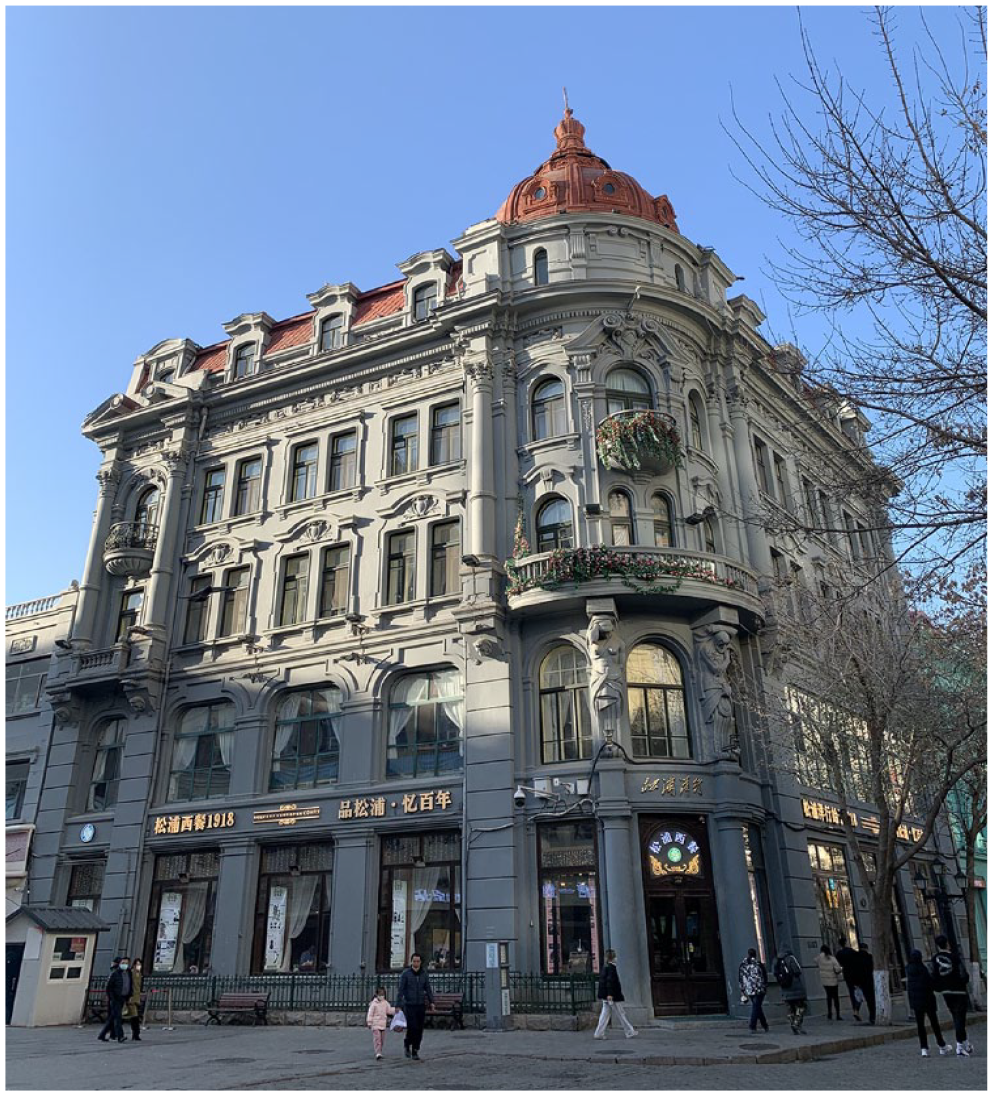
Matsuura Foreign Firm.
As Law (2020) observed in some other Chinese cities, ‘the manufacture of historical branding has very real and/or tangible effects on the material urban environments and landscapes’ (p. 233), which go beyond the conservation of pre-existing historic buildings and sites. Enjoying the big success in renovating and marketing the Russian-era heritage sites for the economic and cultural redevelopment of the city, Harbin is increasingly enthusiastic about advertising its Western characteristic by showcasing its Russian colonial past. Both the demolished Russian-built St. Nicholas Cathedral and Harbin Railway Station have been reconstructed: the construction of an accurate replica of the cathedral – as a part of the themed resort Volga Manor – was completed in 2009, and an adapted replica of the first-generation railway station was constructed on-site and fully opened to the public in 2018, to replace the second-generation modernist station building which was designed by Chinese architects (see also: Zhang, 2021). Even some new constructions are designed in classical Western styles to harmonise with the ‘European ambience’ of the city. An example is the construction of the Harbin Metro, which started in 2008 and is still in progress – all the underground stations are decked out with European-style decorations.
Interviewee LI-6, who has been living in Harbin for over 60 years, recognised such ‘Europeanisation’ as a rather recent phenomenon: ‘Nowadays anything built in Harbin has got an appearance imitating the European [architectural] styles. [. . .] The balustrades and bus stations in the city all seem to copy the European ones. For example, those green balustrades and pavilions’. She regarded producing European-style buildings and structures as a means of reinforcing the ‘Oriental Little Paris’ brand of Harbin and ensuring a unique urban character that distinguishes the city from other Chinese cities. Harbin’s historical branding based on its Russian colonial past is apparently effective. Interviewee HP-1, the manager of a local travel agency, mentioned that the top five culture-related tourist destinations of their guided tours in Harbin are currently Sun Island, Central Avenue, the CER Bridge, Volga Manor and St. Sophia Cathedral, which are all connected to the city’s Russian past.
Humiliated by the Japanese past
While local people generally spoke about the Russian-era heritage buildings with great familiarity, most of them could not recall heritage sites that were built by the Japanese, except the relics of the Japanese Imperial Army Unit 731. Interviewee LI-7, born in Harbin in 1962, is a well-educated civil servant. Although he has been frequently walking around the city because of his job and daily life, he did not really know ‘which building is from the Manchukuo period’ and thought that ‘there are not many Japanese buildings [in Harbin] now’; younger local people such as Interviewee LI-8, who was born in 1995 and works as a PhD researcher in civil engineering, asked back with laughter: ‘Are there any Japanese buildings left in Harbin?’ He guessed that the Japanese did not build much during their colonisation, because he had ‘the impression that all the [foreign-style] buildings were built by the Russians, and that Japan only brought hurt, suffering and harm’. Such views are even shared by high-ranking government officials such as Interviewee GO-1, the former deputy director-general of Harbin Urban and Rural Planning Bureau who was in charge until 2018. Interviewee GO-1 expressed his personal feeling that ‘Japan left almost nothing [to Harbin]. There are only a few things [left] which we can easily do a quick count. Not many . . . It [i.e. Japan] mainly plundered [from China] and didn’t leave many things indeed’. Nevertheless, Interviewee LI-8 raised doubts about his own view after pondering on the relevant history: ‘As far as I can remember, it seems that the Japanese at that time regarded Northeast China as a part of Japan, in which case they might indeed have built some buildings’.
Under the Russian rule, Harbin was once described in a news article as:
The roads are awful, and the sidewalks torture. Masses of filth and deep pools of liquid mud cover alike carriageway [sic.] and sidewalks. No attempt is made to improve in this direction, drains and roads having been forgotten in the haste of composition (The Sydney Morning Herald, 1904: 11).
In contrast, there are various references to the urban environment of Harbin improving greatly under the Japanese administration, with the city benefitting from the long-term effects of the Japanese construction achievements in terms of architecture, urban planning and infrastructure (Denison and Ren, 2016: 82, 85; Hillier and Fu, 2021). However, those former achievements are seldom mentioned today. The existing Japanese-era buildings in Harbin (Figure 5), though mostly listed as heritage sites by local authorities, are generally in use for mundane public or commercial purposes such as hospitals, theatres, bookstores and telecommunication service stores. Being frequently seen and visited by the local people as a part of their day-to-day lives, the Japanese-era buildings are inconspicuously integrated into the contemporary Harbin city. This can be seen as yet another example of the application of the ‘profanation’ strategy to the Japanese colonial heritage. Interviewee HP-2 is an amateur architectural photographer and a local cultural heritage activist. He reflected on this issue, saying,
I have the feeling that both the civil society and the government are, subconsciously, unwilling to mention the Japanese era. But it seems that people are willing to talk about the Russian era . . . perhaps because it’s a relatively remote past. Or maybe Russia is a milder bully [compared with Japan]? But I don’t know why [there is a difference in perceiving the two colonial pasts].
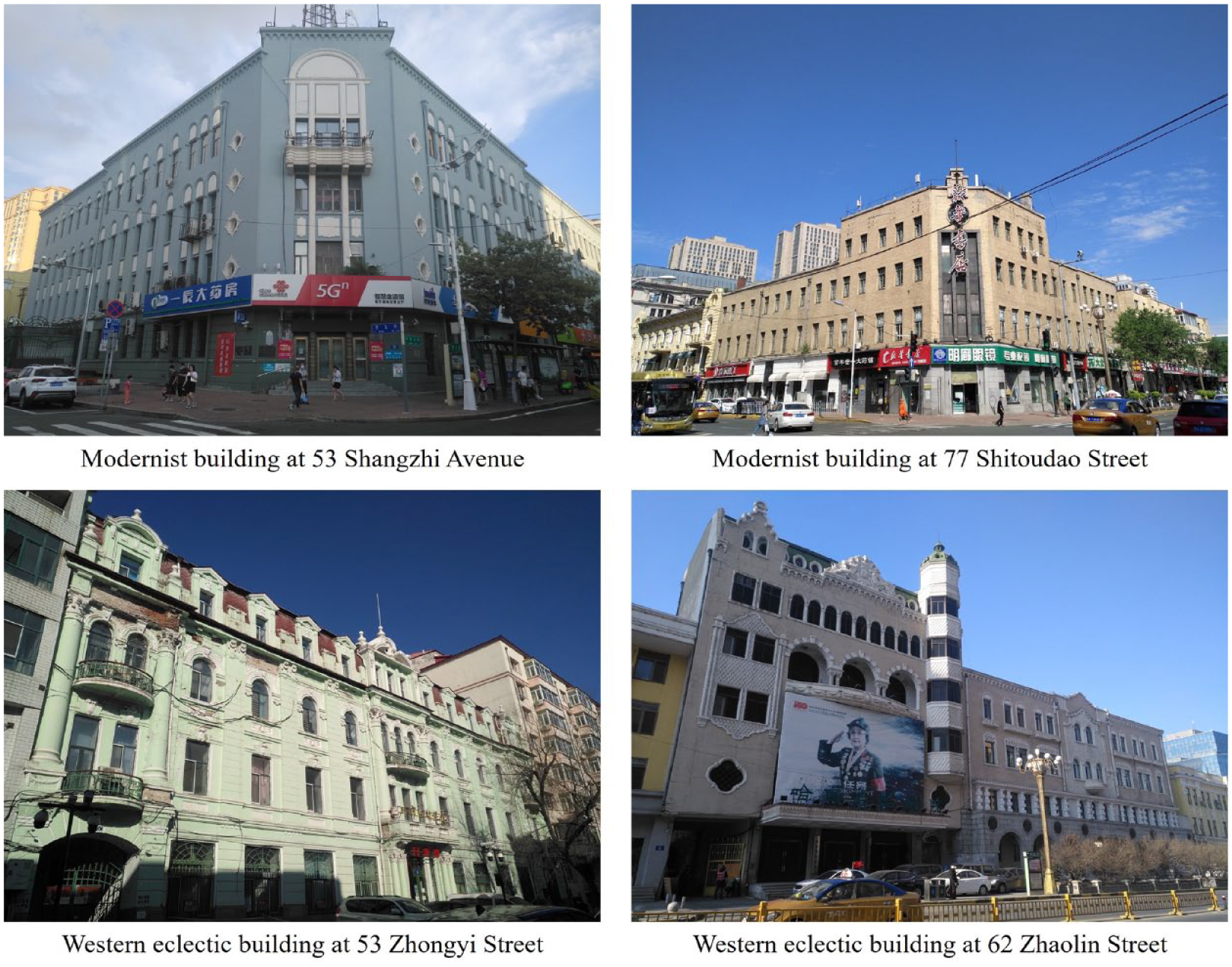
Examples of listed Japanese-era buildings.
Although amnesia permeates Harbin when it comes to the Japanese-built buildings, local people frequently expressed their feelings of being humiliated by the Japanese colonisation and regarded the Japanese-built heritage – if it does exist – as ‘evidence of the Japanese invasion of China’ (Interviewee LI-9). Interviewee LI-7 regarded the built heritage from the Manchukuo period as ‘an objective existence’ which ‘demonstrates that the Japanese invaded China at that time’: ‘How do we know they invaded? We see their buildings in Harbin’. Such opinions echoed the official colonial heritage strategy. Interviewee GO-2, the deputy director of the Cultural Heritage Conservation and Archaeology Division at the Department of Culture and Tourism of Heilongjiang Province, explained that in the official heritage management practice, ‘Heritage buildings are not categorised into Russian colonial heritage or Japanese colonial heritage. However, most of the buildings related to the Japanese Army are the heritage of the “evidence of crime” type’. In this context, it is not surprising that the former site of the Unit 731 camp is nowadays the best-known Japanese heritage site.
Unit 731, or Ishii Unit, was a covert biological and chemical warfare research and development unit of the Imperial Japanese Army that undertook lethal human experimentation during the Second Sino-Japanese War. The construction of its headquarters in Harbin’s suburban district of Pingfang started in 1936 and was completed in 1940, though Ishii Unit moved into this camp in 1938 before its completion. In 1945, days before the surrender of Japan, the Unit 731 personnel started to retreat and blasted their camp, as instructed by their superiors, into ruins (Figure 6). In March 1950, only a few months after the announcement of the PRC’s founding, the Health Department of the PRC Northeast Region People’s Government promulgated a notice to conserve three Japanese military sites in Northeast China. These sites, all relating to the Japanese biological and chemical warfare research, include the former site of the Unit 731 camp in Pingfang District (hereafter ‘Pingfang site’). However, the historic Pingfang site experienced vandalism, and the ruins were further dismantled during the social movements of the Great Leap Forward (1958–1960) and the Cultural Revolution.
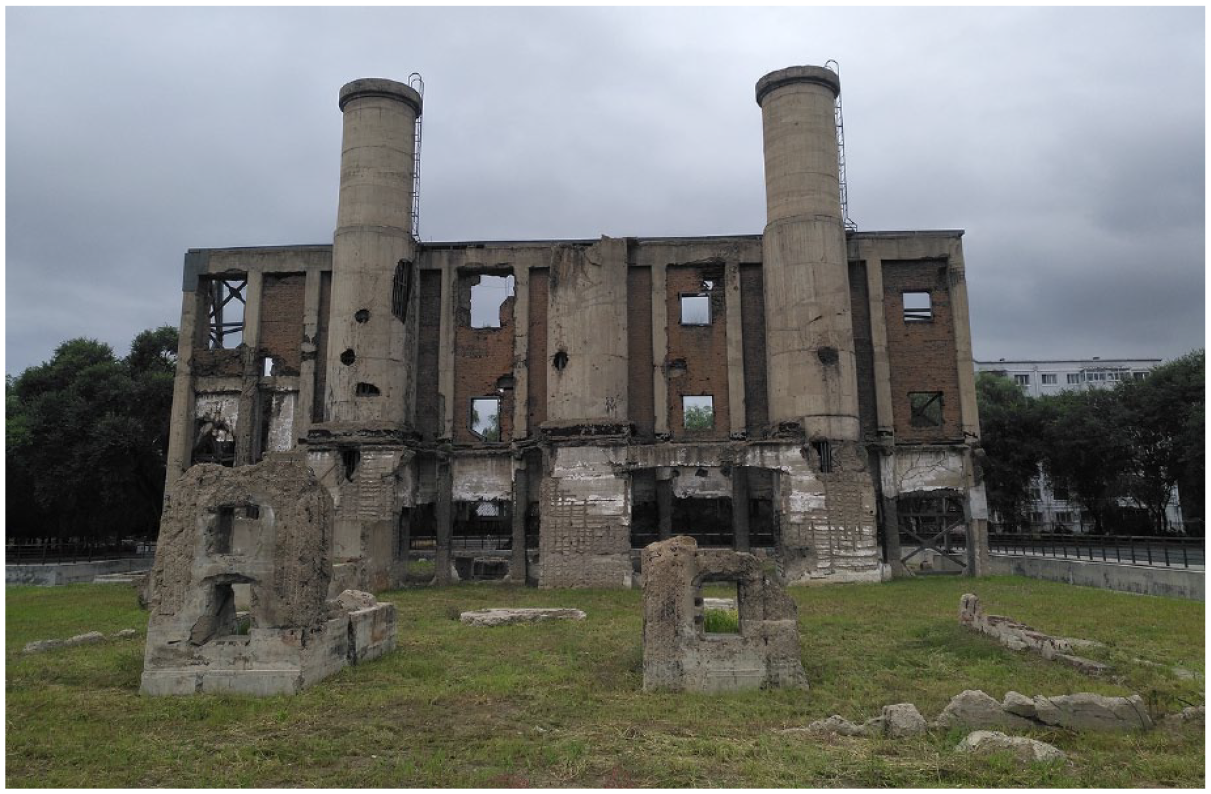
Part of the Unit 731 ruins.
The conservation and management of the site officially resumed only in 1982. The Pingfang site has since then been successively included in the lists of ‘Historical and Cultural Site’ protected at the provincial level (1983) and national level (2006), the list of National Defence Education Base (国防教育基地) (2012) and the Chinese World Cultural Heritage Tentative List (2012). In 2013, the statutory conservation plan of Unit 731 former sites was completed. Under the plan, there are six Unit 731-related historic sites, among which the Pingfang site is the largest, most important and best-known. The objective of the conservation plan is to effectively conserve and appropriately use the relics, so as to present their historical values and magnify their social effects. The sites were planned to disclose the crimes against humanity of the Japanese militaristic germ warfare during the Second World War, to commemorate the victims of the lethal biological experimentation, to help with patriotic education, to constitute the Red Tourism system of Harbin and to promote peace internationally (Shaanxi Provincial Conservation Engineering Institute of Monuments & Sites, 2013: 15).
In addition to the protection and conservation of the relics, an exhibition of Unit 731’s war crimes at the Pingfang site opened to the public on 15 August 1985. That day was the 40th anniversary of the Chinese victory against Japanese aggression. On the same date 10 years later, a newly built exhibition hall to the east of the heritage site opened in commemoration of the 50th anniversary. In 2015, a second-generation exhibition hall was completed and opened, again, on the anniversary day of 15 August. Interviewee GO-1 expounded that the central government invested in the new exhibition hall and attached great importance to this ‘national project’: The project was launched to commemorate the ‘70th Anniversary of the Victory of the World Anti-Fascist War’ and, at that time, also to respond to the Japanese disavowal of the Nanjing Massacre and to confront the ‘Japanophiles in China’. The exhibition hall offers an authorised presentation of the Japanese war crimes to both domestic and international audiences. It showcases China’s ‘official memory’ of the Japanese colonial past and passes on the official message of ‘never forget’. Despite a top-down project led by the central government, its presentation and interpretation have enjoyed widespread popular support.
Interviewee LI-10 just graduated from university when he was interviewed. As a representative of the youngest-generation highly educated people in China, he underlined the importance of the relics of Unit 731 as a witness to history and emphasised the essentiality of their conservation:
Nowadays some Japanese people disavow such things [i.e. war crimes such as lethal human experimentation and biological warfare] . . . or they may acknowledge the fact but don’t know how serious the situation was at that time. The relics are evidence of the crimes.
Interviewee LI-11, an older lady who was born in 1957 and had visited the Pingfang site in her 20s, found the place ‘gloomy and horrible’: ‘I felt that the Chinese people were so weak that we were conquered and bullied by Japan which is such a small country. I felt angry’. Many local people dare not even visit the place because they heard that those who visited it found it frightening and creepy or were even warned not to go: ‘I know someone who did visit [the exhibition hall] and said, “don’t visit that place, I had [obscenity] nightmares for several nights after the visit!”’ (Interviewee LI-3). As indicated by the interviews with, for example Interviewee LI-3 (born in 1959, female), Interviewee LI-12 (born in 1973, female) and Interviewee LI-13 (born in 1987, female), this is true for Harbin locals of all ages, and the issue was raised especially by female interviewees. However, even these people may feel it necessary to conserve and publicise the Unit 731 heritage. For example, Interviewee LI-13 thought that the relics of Unit 731 ‘must be preserved’ because they have ‘historical value and educational significance’: ‘the former site of [the] Unit 731 [camp] is a warning sign to us’ and helps the school students to ‘know the history of [Japanese] invasion’.
Unlike the largely positive public perception of the Russian colonial heritage, local people’s attitudes towards the Japanese colonial past are generally negative. Those of older generations frequently expressed their resentment against the Japanese, or at least the Japanese during the Manchukuo colonial period, by using certain terms to mention them. For example, Interviewees LI-2 and LI-3 called the Japanese ‘Japanese Devils (日本鬼子)’, while Interviewee LI-11, Interviewee LI-14 (born in 1947) and Interviewee LI-15 (born in 1948) deployed the derogatory term ‘small Japan (小日本)’ to refer to the country. It is noteworthy that a stele named ‘Peace Monument for Apology and Nonbelligerency’ was erected in a corner of the Unit 731 heritage site in 2011. The monument was initiated by ABC Planning Committee (ABC企画委員会), a Japanese non-governmental organisation campaigning against atomic (A), biological (B) and chemical (C) warfares, as a gesture of goodwill to Chinese people. Its inscriptions in Chinese and Japanese stress the war crimes committed by Unit 731 and convey an unofficial apology and promise from Japan: ‘We, as citizens of the perpetrator state, sincerely apologise to the victims [. . .]. Here we pledge that we will never commit such crimes again’. Adopting an internationalist discourse on peace and ‘never again’, the monument seems to indicate a primary goal of reconciliation. In effect, it also reinforces China’s official victimisation discourse and the idea that Japan must be held accountable for its past atrocities.
Reasons for the different attitudes
Considering both Russian and Japanese colonial periods are in essence about colonisation, it is significant that Harbin, a city colonised by these two colonial powers in history, remembers, interprets and uses its colonial pasts related to Russia and Japan very differently. Harbin today utilises its Russian colonial remains in cultural and economic terms: The Russian colonial heritage is mobilised as a means of city branding and marketing, in order to attract tourists and investments. The Japanese colonial heritage, on the other hand, is dealt with in a politically oriented way and is mainly used as material for patriotic education and advocacy of pacifism. The different perceptions of the Russian and the Japanese colonial pasts can be seen as a result of the differences in the start, course and aftermath of colonisation.
Differences in the start of colonisation
The Russian colonisation of Harbin started with a series of unequal treaties. Though Dmitriĭ Khorvat, a Russian lieutenant general, was appointed as the manager of the CER and had effective control of the CER Zone, and Imperial Russia did use military force and violence during its colonisation, most notably in 1900 during the Boxer Rebellion (Zatsepine, 2013), officially it is the CER company that represented Russia and ruled Harbin. The most obvious difference between the CER Zone and any Chinese settlement is illustrated by the Western culture permeating the Zone, such as Western architecture, religion, art and cuisine. Thus, the Chinese people in Harbin regard the Russian colonisation as mostly a cultural and economic issue and consider its impact from cultural and economic perspectives. Some local intellectuals even think, in this context, that the CER Zone should not be categorised as a colony given its relatively weak political dimension. They argued that the city was never colonised by Russia because China still ‘legally’ maintained sovereignty over the CER Zone – even though it did not really exercise its jurisdiction (Li, 2015; Ma, 2018). Interviewee HP-3, a professor in architecture at a prestigious university in Harbin, contended that Harbin is not a typical colony in political terms, and its built heritage should not be described with the Western term ‘colonial heritage’:
In architectural history, we do not underline the colonial factors because the architectural development of Harbin does not really relate to any colonial factor. We can only say that the railways were built, and the various cultures, ballet, symphony, and foreign people including architects and businessmen came along with the railways. The land was opened for business and performances, accepted diverse cultures, and became an international metropolis.
Such a shared position, which denies Harbin’s formerly being a Russian colony and its Russian-era built environment’s being colonial heritage, effectively legitimises and justifies the city’s present cultural and economic use of its Western-style architecture. However, it is not necessarily tenable. Törnquist-Plewa and Yurchuk (2019) pointed out that ‘one of the fundamental premises of colonization is that the imperialist tries to instill in the territory of the colonized culture a conviction of the superiority of its own culture and ideology (world view)’ (p. 701), and Harbin obviously fits this description.
This also sheds light on why the Japanese colonisation is rarely scrutinised by the Chinese from a cultural perspective: A wide range of elements of Japanese culture, such as its language, architecture, garden design and cuisine, originated in China. Even though most of those ideas and products from China were later ‘Japanised’, Chinese people consider Japanese culture as based on Chinese culture and thus have a sense of cultural superiority themselves. Other than Western culture, Chinese people are very likely to overlook things that represent Japanese culture because they are simply too similar to the Chinese ones. In that case, it is almost impossible for the Japanese colonisers to colonise a Chinese city in most cultural dimensions. Admittedly, Japan has its original and distinctive religion of Shinto, which was typologised by Pye (1989) as an ‘adjusted primal religion’ and is often alleged to be Japan’s indigenous religion (Breen and Teeuwen, 2010; e.g., see Ono, 1962). 6 Shinto is a polytheistic religion based on the belief in and worship of Kami. 7 It is highly inclusive and has absorbed elements of many other religions and cultures throughout its course (Hardacre, 2017). Despite the fact that religion is a most important contributor to cultural transmission, the Shinto religion did not help with Japan’s culturally colonising Harbin. Unlike the situation in the then-Japanese colonies of Taiwan and Korea, coercive policies of cultural assimilation such as the policy of kōminka (i.e. Japanisation) were not enacted in Manchukuo. Therefore, Shinto shrines in Manchukuo did not serve the Japanisation purpose of ‘religious reform’ (Hardacre, 2017: 432). Although the Japanese did construct the Harbin Shrine during that period, they did not expect the city’s non-Japanese people to convert to Shinto at all. In contrast to the Russian Eastern Orthodox Church, the Japanese Shinto has neither a doctrine nor the convention of sending people like missionaries to teach others about this religion. It is not surprising, therefore, that Japan was not able to culturally influence Harbin in terms of religion as Russia did.
Given that the Japanese army occupied Harbin with explicit military force and then directly ruled the city, the Japanese colonisation is understandably classified by the Chinese as a political issue and interpreted, following the official discourse about national humiliation, as a humiliation to Harbin and, more broadly, China.
Differences in the course of colonisation
As regards the colonisers’ roles during the colonial periods, it is undeniable that the Russians had made a great contribution to Harbin’s founding and early development. The Japanese, in contrast, occupied Harbin when the city was already established and prosperous. Nowadays, it is widely thought that Russia built and left the city to China, while Japan took and returned the city to China. The opinion of Interviewee HP-1, who has collected much information about Harbin’s cultural heritage due to his focus on heritage tourism, is representative. He attributed Harbin’s initial ‘rapid economic growth and cultural development’ to the CER: ‘After several decades’ building, [Harbin] became a well-known city in Asia and even in the world. I suppose Harbin could not achieve this without the CER’. When it comes to the Japanese colonisation, he contended that ‘the influence of the Manchukuo period is much smaller’ in comparison with that of the CER Zone period. Such an impression is indeed not a surprise, especially considering the obvious Russian/Western appearance and atmosphere of the present Harbin. Historically, this status quo can be attributed, to a certain extent, to the fact that Japan itself had been industrialised and Westernised by the 1930s.
Admittedly, the Imperial Crown style, a Japanese Western eclectic architectural style that aimed to represent distinctively Japanese architecture, emerged in the late 1920s and 1930s. It had been popular in Japan and some of its former colonies, such as Manchuria, until the end of the Second World War. This style, being a reaction against modernism in the context of Japan’s ‘increased anxiety about the impact of the West on Japanese culture’ (Reynolds, 2012: 408), is identified by Japanese traditional tiled roofing on modern reinforced concrete buildings and can feature a centrally elevated structure with a pyramidal dome. Imperial Crown buildings did become pervasive in some Manchurian cities such as the then Manchukuo’s capital city Hsinking (now Changchun), but not in its ‘brilliant city’ (Mohri, 2016: 17) Harbin. Some Japanese scholars noted that, after the 1920s and especially during the Manchukuo period, the Russian-planned and -built Harbin was seen by the Japanese as an international entertainment city that provides exotic and erotic experiences. At that time, Harbin, with its European urban character and atmosphere, was a tourist destination for the Japanese, where they could enjoy the unusual nightlife in red-light districts that featured beautiful Russian women (Komeie, 2018; Mohri, 2016). Such distorted ‘Western’ experience gave the Japanese tourists/visitors mixed feelings about Europe: They admired Europe but at the same time had a sense of superiority over Europe (Komeie, 2018). In that context, it is not surprising that the Japanese retained Harbin’s European cityscape and did not change it radically to a distinctively Japanese one during their occupation. Or rather, it is very likely that the Japanese consciously kept the Western atmosphere of the city and avoided explicit cultural intervention in Harbin. This, again, leads naturally to the contemporary non-cultural interpretation of Harbin’s Japanese colonial past.
Moreover, as previously mentioned, in history, some of Imperial Japan’s most notorious war crimes were carried out in Harbin: The biological and chemical warfare researches and lethal human experiments conducted by the Japanese Unit 731 were so terrifying and shocking that these events are now understood as traumatic experience not only for Harbin but also for all China. This undoubtedly has a significant adverse effect on Harbin’s overall social attitude to the Japanese occupation.
Differences in the aftermath of colonisation
The two former colonial powers’ relationships with Harbin and with China more broadly in the aftermath of colonisation also affected the Chinese perceptions of the colonial pasts. The then Soviet Union had a strong influence on the CPC and the Party’s establishment of the PRC. What is more, its ‘156 Key Projects’ programme in the 1950s made the industrial development of post-colonial China, including Harbin, closely connected to a helpful Russia. Despite acknowledging the ‘disputes between Russia and China from time to time’, Interviewee HP-1 highlighted the two countries’ long friendship in history and thought that Harbin’s becoming ‘a nationally important city of heavy industry’ ‘owes much to the Russians’: ‘Especially in the early years of the PRC, the then Soviet Union helped China a lot. This is evident in Harbin as the city received a dozen [Soviet Union’s] aid projects [i.e. 13 of the 156 Key Projects]’. In the 1990s, Harbin local government started to promote the deindustrialised city’s exotic and aesthetic Russian colonial remains to attract tourists, which enabled its impoverished citizens to profit from the emerging tourism industry. At that time, tourism based on the Western-style cultural heritage was something the creaking economy badly needed. Locals thus generated even more positive feelings about the Russian colonisation.
In contrast, the relationship between China and Japan has generally been fraught with political tensions throughout the decades. The official narrative of China being victimised by Japan in history certainly has a strong influence on ordinary Chinese people’s views, yet ‘without a broad social consensus, exertion of political influence would be impossible’ (Xu, 2016: 56). In Harbin, the more recent collective memory is also a contributing factor. For example, the recurrent epidemic outbreaks in the early years of the PRC, which were repercussions of Unit 731’s biological warfare research, are still in living memory. Interviewee LI-12 claimed that her family is ‘a victim of the Japanese biological warfare’ and recounted her grandparents’ death:
My grandparents died when my father was only a child. Japan is to blame for their death. [. . .] They [i.e. the Japanese] spread diseases such as typhoid, bubonic plague and malaria. Both of my grandparents were infected and then died.
Victimisation is, in this sense, not only a statement made by the authorities but also a reality remembered and shared among the populace.
Post-colonial identity: present and future
The differences between the Russian and Japanese colonisations of Harbin lead to the diametrically opposed answers to the very same question of how the city perceives its colonial pasts: Harbin today sees an autocatalytic evolution of its colonial memories involving a gradual polarisation of collective memories of both the Russian and the Japanese colonial pasts, where official and popular attitudes generally coincide and reinforce each other. Nevertheless, ‘historical consciousness is always framed toward present and future’ (Leggewie and Meyer, 2005: 353, as cited in Birkner and Donk, 2020: 372). The inconsistent memories of and opposite attitudes towards the Russian and the Japanese colonial pasts are mobilised to construct a consistent identity of the post-colonial Harbin.
On the one hand, it was a real blow to the pride of Harbin local government and ordinary people alike that the city lost its long-standing identity as a national industrial hub with the sudden and seemingly incomprehensible deindustrialisation since the 1990s. As a result, both the local government and the citizens are keen to restore the city to its former glory and construct a new collective identity. This is not only evident in the interviews but can also be observed in recent urban projects, official documents and scholarly publications (e.g., see Gao, 2018; Harbin Development and Reform Commission, 2021; Qiang, 2020; Zhang, 2021). In that context, the seeming nostalgia for the Russian colonial past is, like that in China’s other post-colonial cities such as Shanghai, nostalgia for that once prosperous, unique and important cosmopolitan city (Law, 2020; Pan, 2005). On the other hand, displaying difficult heritage in commemoration of victims is a practice that has widespread global currency (Macdonald, 2009: 7). As Lowenthal (2015) commented with exactly the example of China’s victimisation discourse, ‘stressing past misery has its benefits’ (p. 131). Admittedly, suffering and grief impose duties, require a common effort and, in turn, unite people more than joy and triumphs do (Renan, 2018 [1882]: 261). In Harbin, the commemoration of the victims of Japanese colonisation also successfully achieved identical local interpretations. The feeling of humiliation caused by the Japanese colonial past reinforces Harbin’s identity as Chinese. A combination of these two parts is exactly what Harbin once was and hopes to be in the future: a prosperous international city in China.
The presentation and (re)interpretation of Harbin’s colonial pasts have shown considerable potential to strengthen the city’s memorability and establish its identity for the present and the future. Nevertheless, the common decision of local authorities and the broader society to refer to (or not refer to) certain (dark/bright) sides of a particular colonial past leads to selective collective memory and collective amnesia in the city. The resultant gradual fragmentation of Harbin’s theoretically comprehensive and solid history reflects the negotiation and competition between internationalism and nationalism in the construction of a post-colonial identity of the city. This observation leads to some elemental questions that are still awaiting answers: What will be the ultimate result of the identity construction of a post-colonial city? Can such cities overcome the self–other dichotomy, reconcile the different and even conflicting approaches to colonial pasts and achieve an essentially new identity that is ‘neither the one nor the other’ (Bhabha, 2004 [1994]: 37)?
Footnotes
Funding
The author disclosed receipt of the following financial support for the research, authorship and/or publication of this article: This research was supported by China Scholarship Council (grant number 201806260266).
