




Abstract
What happens when the memory duty—the idea that remembrance leads to prevention, redemption, and recognition—intersects with a contentious past of violence between “intimate enemies”? This article turns to the microhistory of a small highland town that became a scenery of both collaboration and resistance during the insurgency of the Maoist rebels of Shining Path in Peru (1980–2000) to answer this question. An analysis of the (post-)conflict strategies deployed by the villagers reveals processes of both appropriation and contestation of the memory duty. On the one hand, the heroic narrative of resistance against Shining Path that dominates public remembrance in Sacsamarca serves to demand recognition by the Peruvian state for the community’s role in opposing the Maoist revolutionaries. On the other, putting emphasis on resistance enables the villagers to downplay their initial support for Shining Path, a necessary precondition for claiming reparations and citizenship as well as for maintaining a tense coexistence between community members.
Introduction
You won’t find the truth here. From the 100% of what happened here, maybe we will tell you 50%. Because here we killed each other, among cousins, among brothers. There are many secrets in Sacsamarca.
1
This article starts from the premise that the “duty to remember” is a central tenet of transitional justice (TJ) mechanisms—including truth commissions, reparation programs, and institutional reform—that are being implemented in (post-)conflict and post-dictatorial societies all around the world in order to come to terms with a violent past (see, for example, Andrieu, 2010; Huyssen, 2015; Jelin, 2010). The idea of a duty to remember is based on at least three underlying assumptions. The first is that if the past is not remembered, it will repeat itself. Closely related to this is the idea that the legacies of mass-violence can serve as a learning process for the future. In Latin America, this assumption became firmly established through the narrative of the “Nunca Más” report of the Argentinian Truth Commission CONADEP (Jelin, 2010; Montaño and Crenzel, 2015). The second assumption is that remembering can have a liberating potential (see, for example, Teitel, 2002: 109–111). According to this reasoning, memory can release survivors from the weight of the past, thereby leading to a catharsis of the mind (Huyssen, 2009). The third assumption is that memory is an essential step in recognizing the suffering of victims of human rights violations, which is often connected to the conviction that remembering is a moral duty of society toward these victims (Blustein, 2015: 75; Huyssen, 2015: 34). The beneficial properties assigned to memory—prevention, redemption, and recognition—are verbalized in TJ processes all over the world in slogans such as “Revealing is healing” (South Africa), “Never again” (Argentina, Brazil), or “So it does not repeat” (Peru).
The main question of this article is the following: what happens when the memory duty collides with a contentious past of intimate violence? I aim to answer this question by writing a microhistory (Ginzburg, 1993) of the small highland town of Sacsamarca, in the region of Ayacucho, Peru. This village was located in the epicenter of violence during the internal armed conflict between the Maoist insurgent movement Shining Path, civil self-defense committees, and the Peruvian state forces between 1980 and 2000. According to the final report of the Peruvian Truth and Reconciliation Commission (Comisión de la Verdad y la Reconciliación, CVR), the internal armed conflict left 69,280 Peruvians killed or disappeared. The CVR established that Shining Path was responsible for 54% of the casualties and the state forces for 37% (CVR, 2003). In Sacsamarca, Shining Path’s revolutionary struggle got interwoven with pre-existing power imbalances and slumbering conflicts over land and resources. Despite the initial sympathy for and collaboration with Shining Path, as time passed, (part of) the community turned to resistance and succeeded in overthrowing the regime of the local “popular committee” by killing its two leaders in February 1983. This popular committee, appointed a few months earlier by the regional Shining Path commander “Omar” to replace the existing village authorities, consisted entirely of community members. What began as a revolutionary struggle, escalated into a war between “intimate enemies,” as Kimberly Theidon (2013) describes the complex dynamic of implication and victimization that characterizes (post-)conflict communities in Ayacucho. When Shining Path took revenge for the killings by attacking Sacsamarca on 21 May 1983, it came to a battle won by the villagers. The events in Sacsamarca had a ripple effect throughout the region and meant the beginning of the end of Shining Path’s control over the area. Every year on 21 May, Sacsamarca commemorates this victory and celebrates a memory of “rebellion and peace.” 2 Nevertheless, this public narrative is entangled with silences and secrets, resulting in a complex web of strategies of dealing with the past.
Despite its predominance in studies on and practices of dealing with the past, the duty to remember has been increasingly questioned in the field of memory studies (see, for example, David, 2020). This case-study on Sacsamarca situates itself within the debate on forms of silence and forgetting as strategies of dealing with the past, which are the unavoidable mirror-image of TJ’s concern with truth-telling and remembrance. In the past decade, a growing body of literature has emerged that investigates silence and forgetting as “enabling” processes which should be considered as one of many possible forms of dealing with the past rather than inherently opposed to remembrance (Eastmond and Mannergren Selimovic, 2012; Mannergren Selimovic, 2018). This article’s endeavor is to contribute to scholarship on the potentially constructive features of silence and, more precisely, to gain a better understanding of the agency that is behind the (in)direct choice of survivors to contest TJ’s memory duty and develop alternative ways of dealing with the past.
In what follows, I will investigate the strategies deployed by the villagers of Sacsamarca to face the legacies of the internal armed conflict. Conceptualizing the villagers’ multiple ways of dealing with the past in the present as “strategies” allows me to highlight the fact that “silence is more than a passive voice” (Del Pino, 2017: 20) and to consider memory as a form of action or labor (Jelin, 2003; Rothberg, 2019: 3). These strategies reflect several processes of both appropriation and contestation of the duty to remember, resulting in a complex interplay between revealing and concealing memories of the past which I aim to shed light on. Therefore, I will first turn to the CVR’s process of truth-finding to demonstrate how it was met with silence and suspicion on the part of the Sacsamarquinos. Then, I will look into processes of public remembrance in Sacsamarca, which are dominated by a heroic narrative of resistance against Shining Path. On the one hand, this narrative serves to demand recognition by the Peruvian state for the community’s role in opposing the Maoist revolutionaries. On the other, putting emphasis on resistance enables the villagers to downplay their initial collaboration with Shining Path and to show their “clean hands,” a necessary precondition for claiming reparations. Subsequently, I will address the open secrets that are entangled with this public memory and that revolve around the intimate nature of the violence. In this section, I argue that a closer analysis of the events of February 1983 points to an understanding of the rebellion as an internal struggle between supporters of Shining Path rather than a struggle against Shining Path. Moreover, the pressure of the state forces on the Sacsamarquinos to demonstrate which side they were on should not be underestimated as an incentive for the killings. Finally, I will investigate the role of concealment first as a strategy of coexistence between (former) intimate enemies, and second as a strategy of claiming citizenship within the Peruvian nation.
Before turning to the analysis of the Sacsamarquinos’ strategies of dealing with the past and the ways in which they appropriate and contest the memory duty, I will briefly outline my methodology, introduce the existing scholarly debates which this article aims to contribute to, and describe the historical background against which it unfolds.
Methodology and sources
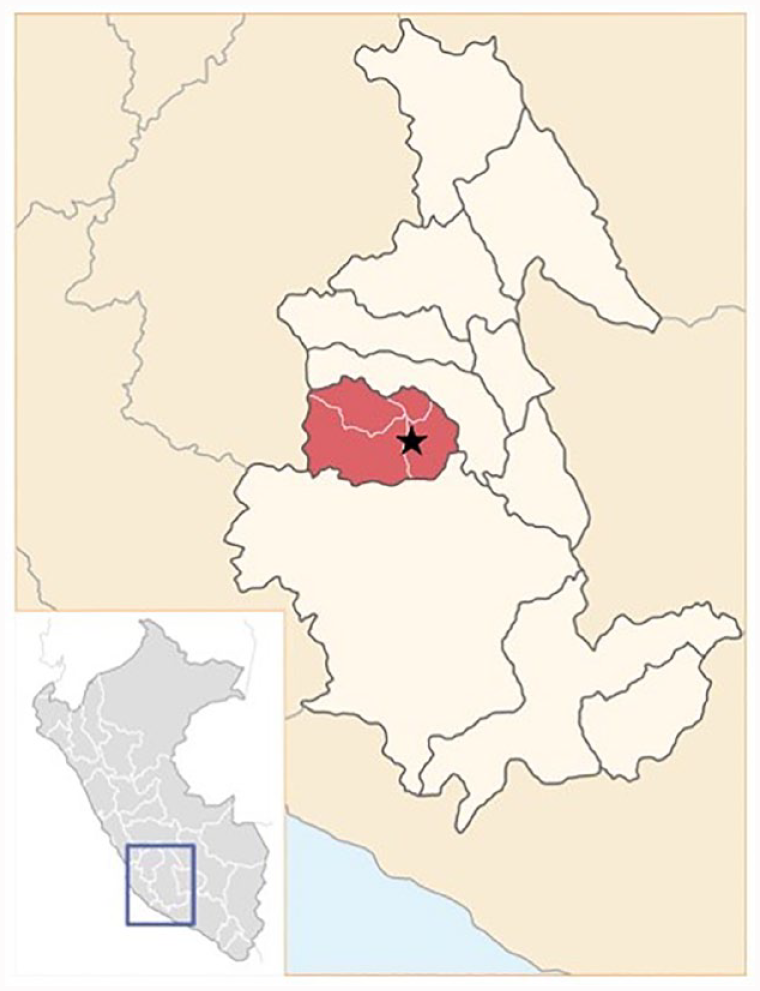
Sacsamarca is located in the basin of the Qaracha river in the province of Huanca Sancos, Ayacucho. The district counts 1313 inhabitants according to the national census of 2017, and consists of the town of Sacsamarca and four smaller hamlets (anexos): Asca, Colcabamba, Putaccasa, and Pallcca. Its vast highlands are situated between 2850 and 4800 m above mean sea level. Like nearly all rural districts in Ayacucho, Sacsamarca knows high poverty levels: the average monthly income per capita lies around €35 and 40% of the population suffers from chronic malnutrition (Espinoza Portocarrero, 2018).
This article is based on field research conducted in 2012, 2014, 2015, and 2017 during 10 visits to Sacsamarca which each lasted between 2 and 10 days. I conducted these trips either together with members of the Peruvian Forensic Anthropology Team (Equipo Peruano de Antropología Forense, EPAF), together with Gabriela Zamora Castellares (historian of the Universidad Nacional San Cristobal de Huamanga, UNSCH) acting as a research collaborator, or alone. The collected data consist of semi-structured interviews with 33 Sacsamarquinos, several of whom were interviewed up to three times. I recruited the interviewees in first instance through contact with the representative of the local victims’ association and the communal and municipal authorities, and subsequently through snowball sampling. At least five of the interviewees were directly involved in planning and executing the events of February 1983, while two indicated to be direct witnesses of the killings. Thirteen of the research participants were women; seven (six male and one female) were (ex-)authorities representing either the traditional peasant community board or the municipal government. Five interviews were conducted in Quechua with Gabriela Zamora acting as a translator, the others were conducted in Spanish. Nine interviewees did not give permission to record the conversation, in that case, notes were taken. I complemented the interviews with informal conversations with additional villagers and participant observation during a wide range of communal activities. The data were analyzed through open coding using qualitative data analysis software. In addition to informed consent given by the interviewees, I was granted permission to conduct the research by the community assembly. Furthermore, I consulted the testimonies given by Sacsamarquinos to the CVR. Of the 33 villagers who testified, only 14 gave permission for public consultation in the Centro de Información para la Memoria Colectiva y los Derechos Humanos in Lima. Of these 14, only three were registered by the mobile team of the CVR in Sacsamarca in July 2002; the remainder were given to either mobile teams or offices of the CVR in Huanca Sancos, Huancayo, Carapo, Ayacucho, Cayara, and Ica. Two of the 14 testimonies were given by persons that I also interviewed; only three, however, relate to the events of 1982–1983. Interviews and other primary sources cited in this article are further clarified in the notes; I translated all original quotations from Spanish to English. For privacy reasons, all names of interviewees are pseudonyms.
Contesting the duty to remember
For a long time, mechanisms of silence and forgetting were mainly associated with denial and erasure by both scholars and activists concerned with victims’ rights in contexts of impunity (Kent, 2016: 31). Directly linked to this, perpetrators and “implicated subjects” (Rothberg, 2019) were predominantly seen as the sole advocates of these very mechanisms. The subjects of silence or forgetting were accordingly typically considered to be the “subaltern,” the disempowered, women and victims of sexual violence, the disappeared; that is, those who do not speak out or are assumed not to have the capacity to do so. On the nexus between trauma and memory discourse, which directly connects the act of speaking out with the psychological process of working through, the victims’ refusal to speak out would in the first place be pathologized as a symptom of post-traumatic stress disorder (PTSD; “not being ready yet to talk about it”; Yezer, 2008: 280). There is, however, a lot more to say about the dynamics of silence, especially when we put victims’ political agency center-stage. In her analysis of the “labors of memory” taking place in the Latin American post-Cold War context, Elizabeth Jelin (2003) was one of the first scholars to emphasize the political significance of silence. For the Peruvian case, Del Pino (2017), Yezer (2008), Theidon (2013), and González (2011) have investigated the interaction between what is publicly known and what is kept secret, between the visible and the invisible in rural (post-)conflict communities in Ayacucho. This article is inspired by their work. Unlike theirs, however, my field research postdates the mandate of the CVR. While there was still a well-founded fear of Shining Path in the 1990s, and of vengeance and prosecution during the mandate of the CVR in the early 2000s, I arrived at a less turbulent point in time. Narratives and strategies of remembrance immediately after the war fundamentally differed from those that I encountered more than 30 years after the conflict began and more than a decade after the CVR visited Sacsamarca (Del Pino, 2017: 47). In order to take into account the mechanisms that precede and follow war, I look at the violence that characterized the internal armed conflict as a process rather than an outcome, as Kalyvas (2006: 6) proposes. When referring to the aftermath of the internal armed conflict, I therefore use the term “(post-)conflict” to allude to the ongoing character of structural violence, in the form of racism and socio-economic exclusion, and to the social conflict that it provokes. 3
While I situate this article in the abovementioned branch of empirical research on (post-)conflict memory processes, I will not use the terms “silence” or “forgetting” to describe strategies that contest the memory duty in Sacsamarca. “Forgetting,” while mostly used in a metaphorical sense, implies a cognitive process of not remembering anymore what happened, which definitely is not the case here. “Silence,” in turn, whether in the literal sense of “not speaking out” about the past or metaphorically referring to “the unsaid,” would equally be unsatisfactory as a concept to describe what is at stake in Sacsamarca. As we will see, what we find instead is a memory of resistance entangled with open secrets, which are (in)directly being concealed for certain outsiders. I share González (2011) fascination for secrecy and prefer the use of the terms “open secret” and “concealment” to describe the particular strategies of dealing with the past in Sacsamarca. González (2011) uses the term “public secrecy” to refer to “that which is known but can’t be articulated” (p. 8) and argues that it constitutes a mode of truth-telling produced in the tension between concealment and revelation, hereby ironically solidifying contentious memories. Del Pino (2017: 46), in turn, speaks of a “shared secret” (secreto compartido) when talking about the restorative potential of silences in the context of (post-)conflict coexistence, while Stanley Cohen (2001) refers to an open secret as something that is “known by all, but knowingly not known” (p. 138). These existing conceptualizations enable me to think of an “open secret” as a fact known by all within a delineated community, but kept secret to certain outsiders, as well as to understand “concealment” as the process of hiding certain aspects of the truth, while deliberately revealing others. At the same time, I recognize that both open secrets and processes of concealment are, of course, often closely related to or can generate silences. My analysis furthermore shares Del Pino’s (2017: 18) interest in the entanglement of “intracommunal dynamics” with “the pattern of public remembrance” that characterizes memory and victimhood in many rural communities in Ayacucho.
Department of Ayacucho, province of Huanca Sancos, district of Sacsamarca.
From collaboration to resistance
Several factors contribute to a better understanding of Shining Path’s early presence in the area of Sacsamarca and the population’s initial positive reception of the movement. First of all, education played a key role in the diffusion of Shining Path’s revolutionary ideas in the Ayacucho department, as party leader Abimael Guzmán was a philosophy professor at the UNSCH. By the 1970s, Shining Path militants had infiltrated the teaching staff of the secondary school Los Andes in the nearby province capital of Huanca Sancos, and the school quickly became a hub for communist propaganda. 4 The movement’s ideas on redistribution thrived well in a context characterized by socio-economic inequality. As Don Mauricio, one of the leaders of the rebellion, stated, “They attracted us as milk attracts flies. We fell for their slogans, their words.” 5 “Popular schools” were installed locally to prepare the rural population for the armed struggle. In order to gain peasants’ support, Shining Path targeted local elites and authorities who they thought prevented the installation of the revolutionary regime. The beginning of the armed struggle furthermore coincided with climatological and agricultural crisis that threatened the peasants’ subsistence and caused a significant increase in cattle theft and conflicts over borders. The militants used this to their advantage and drew on conflicts over land and cattle to sow discord in and among communities (Espinoza Portocarrero, 2018: 5).
In September 1982, a Shining Path militia arrived to Sacsamarca and assembled the population on the main square for the entire day, while preaching the revolution. Don Victor, a villager who would later participate in the battle against Shining Path, recalls,
Four armed persons appeared on the main square [. . .] and they began to gather the people. “Ladies and gentlemen, come closer, we want to talk to you,” and well, as it was a novelty, the people approached without a problem. “We are communists. What is the central government doing? The capitalists are ruling and the poor have nothing. We are going to fight for you!” All the people said that it was alright and that they could go ahead.
6
A few weeks later, the communal authorities were forced to abandon their posts. Walter Huaccachi was appointed as political commander and Jelacio Llacsa as military commander. Together with some 30 other villagers—mostly young men from the village—they made up the popular committee which would govern the “liberated” Sacsamarca. 7 It is unclear to what extent Huaccachi and Llacsa were forced by the regional Shining Path leaders to take up these roles or actually sympathized with the party. Despite of the fact that he was a licenciado, someone who has completed military service, I found little information on Llacsa. Don Julio, who participated in the rebellion, described him as “dangerous,” but most interviewees did not elaborate much on his role. 8 Walter Huaccachi figures as the central leader in the narrative, and most testimonies confirm that he “was with the party” (andaba con el partido). Huaccachi was part of the economic elite of the village, as he belonged to one of the richest families of cattle-breeders. At the time of the events, he was about 30 years old and had spent some time studying agronomy at the UNSCH. According to the in-depth study of the CVR, he was considered “a respected leader of the community.” Most likely, Walter established his first contacts with Shining Path during his time at the university. Upon his return to the village, he was eager to work as a teacher, but to his frustration, he was denied a position and consequently dedicated himself to cattle-breeding and trade.
The new regime of the popular committee was extremely repressive. Villagers were barely allowed to leave the community to work on their lands or herd cattle. Those accused of betraying the revolution were judged during “popular trials,” and sentenced to corporal punishment or execution. 9 While preaching redistribution, the members of the popular committee kept the best resources for their personal enrichment and allowed themselves all kinds of privileges and excesses. Several testimonies recount, for example, how the leaders picked out young girls as their sex slaves. 10 The popular trial most explicitly engraved in the village’s collective memory is the last one: the 28-year-old teacher Teodoro Fernández Huamaní was judged after publicly criticizing the popular committee, and executed in front of the church on 6 February 1983. 11 It is not clear whether the teacher had initially supported the popular committee, but the way in which his protest is recounted by Don Pablo, one of the leaders of the rebellion, suggests that Teodoro considered himself as part of the new leadership and denounced the aggressive methods of Shining Path rather than rejecting their revolutionary ideas per se:
Why did they execute the teacher?
Simply because he said: “We are depriving the people a lot [mucho estamos privando a la gente]. Why do you do this? The people will get tired of this. It might turn against [you/us] [puede venir en contra].” 12
The words of the teacher, as cited by Don Pablo, would turn out to be prophetic. The executions mark the point where the narrative turns from collaboration to resistance, but several motivations can be identified for the villagers’ gradual shift in position. The CVR’s in-depth report mentions four generic reasons: Shining Path’s attack against the rural economy, the discrepancy between ideology and practice, the use of terror, and the entanglement of the governance of the popular committee with existing conflicts. An additional immediate cause for the rebellion, mentioned by several interviewees, is an ultimatum issued to the villagers by a general of the army to rebel against the popular committee or be massacred. Don Daniel, a former authority who participated in the rebellion, even mentions this threat as the principal cause of the so-called rebellion
13
:
The cause of our rebellion was the threat of the general, who was determined to destroy esa política [Shining Path] [. . .]. He gave twenty days. [. . .] The general gave us this warning and if we would not organize this rebellion, this village, Sacsamarca, Huanca Sancos and Lucanamarca would totally disappear. [. . .] We rebelled foremost because of the threat by the general, if not we maybe would have died, if that [the threat] wouldn’t have happened, we wouldn’t have revolted against all these abuses.
14
In any case, it was in the days after the execution of the teacher that a conspiracy against the popular committee took shape during secret meetings in the highlands, attended by a group of approximately 20 villagers. They decided to strike during the carnival celebrations on 15 February, 15 when the leaders would be drunk and inattentive. According to Don Francisco (one of the leaders of the rebellion), Don Julio, and Don Daniel (both participants in the rebellion), the plan was to capture the leaders and not to kill them. 16 When it came to the crunch that night, however, Walter Huaccachi and Jelacio Llacsa were both surprised in their sleep and stabbed and stoned to death. According to the in-depth report of the CVR, the villagers stated that they decided to kill the leaders instead of capturing them because there were no government authorities in Sacsamarca to which they could have handed them over.
The rebellion unleashed a chain of violence against (presumed members of) Shining Path in the region, perpetrated by state forces and civilians. On 20th February, the villagers of Huanca Sancos lynched comrade “Victor” and other local leaders (González Huarcaya, 2002: 45). A few days later, the anti-terror police—the so—called Sinchis—executed three men in Sacsamarca on the suspicion of belonging to Shining Path; Huaccachi’s father-in-law being one of them. 17 On 25 February, the leaders of the popular committee of Colcabamba, a hamlet of Sacsamarca, were killed by Sacsamarquinos. 18 Two of the eight victims were Huaccachi’s brother- and sister-in-law. 19 On 22 March, the villagers of neighboring Lucanamarca killed the leader of their local popular committee by stoning and burning him in front of the church. 20
The response of Shining Path against the wave of resistance was severe. On 3 April, they besieged and raided Lucanamarca, slaughtering 67 villagers. 21 Sacsamarca was next in line to be repaid. In the early morning of 21 May, 400–500 Shining Path recruits arrived to the highlands of Tambobamba, in the surroundings of Sacsamarca. Victor Auccasi, a farmer living in the highlands, escaped the approaching militias and ran downtown to warn the villagers by ringing the bells of the church tower. Together with three policemen who happened to be around, the villagers decided to confront the militias who, except for their two leaders, fought with no more than bladed arms. Ten villagers and an unknown number of recruits lost their lives in the battle, which eventually turned in favor of the Sacsamarquinos. 22 The two militia leaders were killed on the spot by the villagers, while 20–30 Shining Path recruits were taken as prisoners and executed 3 days later by order of the police. 23 The villagers buried the corpses in a mass grave close to the village, where they remain until today. 24
The rebellion and the battle marked the end of Sacsamarca’s coexistence with Shining Path, but the villagers now had to endure the presence of the state forces. A police station was installed and an agreement established that the population would provide food and wood in exchange for protection.
25
The mistrust and disdain of the Sinchis toward the population nevertheless resulted in horrific abuses, including plundering, torture, and rape.
26
As Don Alonso, direct witness of the events of February and May 1983, recalled:
The people were virtually worth nothing for the state, and that is most regrettable. We were totally unprotected, that was the reason why they came, and then they came, and they did whatever they wanted with the mothers, the ladies, the girls! It was a violation of human rights, as much sexual as everything else.
27
During a general assembly in 1984, the community decided that they would no longer provide the police with food. Testimonies contradict each other on when the police station was abandoned: in 1990, 1992, or 1994. 28 Between 1981 and 1994, at least 107 villagers of the district of Sacsamarca lost their lives as a result of violence perpetrated by Shining Path, the state forces, or their own neighbors. 29
Silence and suspicion
Knowing the course of the events of the civil war in Sacsamarca, it already becomes clear that the CVR’s quest of truth-finding would not be self-evident in this community. If the arrival of Shining Path opened a pandora’s box of micro conflicts and vengeances, as is stated by the CVR itself, then the process of truth-finding necessarily risked the re-opening of this box. In general, it seems that not a lot of Sacsamarquinos were eager to give their testimony to the CVR, and even less so in relation to the events of 1982 and 1983. One interviewee suggested that the villagers came to an internal agreement not to testify about certain events, such as the killing of the leaders of the popular committee, during a general assembly held before the arrival of the testimonial team of the CVR.
30
The in-depth research team of the CVR (2002) states that it encountered “distrust, fear, resentment and envy” upon its arrival to the province of Huanca Sancos, and in particular in Sacsamarca:
In Sacsamarca, in comparison to the other communities, we encountered mayor difficulties in accessing the population. [. . .] they did not want to talk to us, stating that they had no time and that they had not been present in those years of violence.
General distrust and fear for reprisals were indeed often mentioned by interviewees as a reason for not testifying at all. As Doña Suyana, whose husband was disappeared by Shining Path, stated,
An expert of the Truth Commission came to investigate. [. . .] But the majority was afraid, they did not want to testify. We were afraid. “Maybe this group is coming with lies, why are we going to inform them?,” that’s what we said. Others were scared.
31
This climate of fear demonstrates that, although the armed conflict had already calmed down for several years, the villagers had their reasons to believe that the circle of violence and vengeance could be sparked again, especially in a context of close proximity between (former) enemies. In addition, some feared that the investigations of the CVR would lead to prosecutions. During my research in the village, this was made explicit especially by villagers involved in the events of February 1983. For example, at the end of our conversation, Don Mauricio wanted to make sure that my questions did not serve any legal purposes:
Lately, people are getting uncomfortable. On the basis of the report [of the CVR] they start to analyze, and they start saying: “No, but you told me this, and that . . .,” and then the judicial investigation begins, and one compromises oneself, I would not want that, señorita Eva.
32
The investigators of the CVR were clearly aware of the fact that they were being confronted with a pact of silence that served to maintain a fragile (post-)conflict coexistence:
The great distrust to talk about the period of the political violence and the fear for reprisals makes us think that we are in a community where victims and perpetrators from both sides live together. This has provoked important changes in the community and although in the formal discourse they talk about reconciliation, the conflicts and resentments are still very present.
33
The investigators moreover reflected on their position as potential disturbers of this tense coexistence:
The resentment is so strong [. . .], they recognize their enemies and yet they live together in the same village. The coexistence is complex; in this case all the conflicts, grudges and accusations are so present in the everyday that we don’t have to believe that we disturb the “equilibrium” of the community because this is a fictitious equilibrium in which they try to believe, but nevertheless, it stands out in all its dimensions in front of the presence of strangers, like us.
34
The investigatory team’s hypothesis that the escalation of the violence was the result of a “war between peasants,” shaped by pre-existing conflicts and power struggles, gained importance throughout the CVR’s research process, in the sense that these local dynamics played a much bigger role in the violence than they had initially expected. 35 Instead of the straightforward “truth” about victims and perpetrators the CVR’s investigators came to establish, they were confronted with a community inhabited by intimate enemies balancing their (post-)conflict identities between victimization, implication, and resistance. This fluidity and obscurity of (post-)conflict roles which challenges the binary opposition between victims and perpetrators has been described by holocaust survivor Primo Levi (1988) as the “grey zone” (p. 27) between victimization and collaboration. Similarly, in his account of the Rwandan genocide, Mahmood Mamdani (2001) looks at postcolonial politics to analyze how “victims became killers” (p. 15). While there was still some room in the CVR’s in-depth report for this fluidity of roles, the reparation program that followed from its recommendations rests upon strictly delineated categories of victimhood and violation to distinguish beneficiaries. The promise for reparations thus created an additional incentive for the Sacsamarquinos to shift their identity on the axis between heroism and victimization, as I will further explain below.
From reconciliation to resistance
Notwithstanding the fact that the investigations of the CVR were surrounded by silence, suspicion, and secrecy, the truth-finding process generated a space which was appropriated by the Sacsamarquinos to publicly commemorate and give meaning to the past through a narrative of resistance against Shining Path. The person of Orlando Janampa, a young Sacsamarquino who fled to Ica in 1984 after Shining Path killed his father, played a prominent role in this regard. Janampa worked as a volunteer with the local teams of the CVR and got inspired by the commission’s truth-finding mission to set up the “First tribute of recognition to the victims of the political violence” on 21 May 2003, on the 20th anniversary of Sacsamarca’s confrontation with Shining Path. Janampa describes his motivation to organize the commemoration as follows:
The symbolic recognition proposed by the CVR seemed interesting to me. Therefore, I internalized these ideas, thought a lot and reflected. My motivation grew stronger that this was the only way to talk about the topic of the political violence, as a way of approaching one another among Sacsamarquinos.
36
Using the CVR’s final report as a legitimation, Janampa succeeded in convincing the municipal authorities of the importance of installing a new tradition and setting up a commemoration day in his hometown, an initiative which was supported by the CVR’s regional office in Ayacucho, several non-governmental organizations (NGOs) and regional victims’ associations (Caro, 2014: 184). The program of the first edition included a Catholic mass, a reenactment of the battle against Shining Path, and a pilgrimage to the cemetery in honor of the killed and disappeared victims. The goal of the commemoration, according to Janampa, was to
[. . .] obtain a real pardon and internal reconciliation in Sacsamarca, as we are brothers and we will be heirs of one single history, we are part of one single family.
37
Despite its reconciliatory aims, the initiative immediately sparked a conflict over who could be subject of the tribute. While the commemoration was set up to include all the victims of the period between 1980 and 2000, some villagers had aspired the commemoration to be exclusively dedicated to the heroes and martyrs of 21 May. Among other things, Janampa was accused of honoring those villagers who had pertained to Shining Path by including them into the universe of victims. The mayor at that time—one of the leaders of the rebellion of February 1983—refused to support the organization of the next edition of the commemoration in 2004. Nevertheless, Janampa persisted and realized the second edition with the support of the CVR and several NGOs.
38
The 4-day event was attended by, among others, representatives from the national Ombudsman office and a press team of the national television program Sin Rodeos. The reinforcement of Sacsamarca’s heroic narrative became the central aim of the second edition of the commemoration. As Caro (2014) explains, the purpose was to
[. . .] build stronger consensus about the heroic meaning of May 21 for the community and about the shared memory of the residents of Sacsamarca who died, whether they had died while opposing Shining Path or had belonged to or been perceived as close to the insurgent cause. (p. 185)
The commemoration’s initial narrative of a pathway to reconciliation between intimate enemies thus gradually shifted to a narrative of heroism directed mainly to an external audience of NGO and state representatives. However, due to the persisting conflict between Janampa and the mayor, no commemoration was organized in 2005 and 2006 (Caro, 2014: 189). The tribute was revived by the newly elected mayor in 2007, shortly after President Alan García had launched the collective reparation program for communities affected by the wartime violence. The mayor saw the commemoration as an opportunity to emphasize Sacsamarca’s contribution to the defeat of Shining Path and enhance the village’s opportunity to benefit from the program. In contrast to the previous editions, the 2007 commemoration was entirely organized by the municipal authorities and Janampa was not involved (Caro, 2014: 190). By the time I conducted research in Sacsamarca in 2015, there was little enthusiasm to organize the commemoration. Eventually, after some quarrels between the municipal authorities and members of the victims’ association, the commemoration did take place on 21 May and was relatively well-attended by the villagers. However, no external state or NGO representatives were invited. Notably, during the mass, Llacsa’s and Huaccachi’s names were mentioned among the list of victims to be honored.
39
While in subsequent years, the commemoration seemed destined to die out, it surprisingly took new turns in 2018 under the auspices of congresswoman Tania Pariona, member of the progressive party Frente Amplio (currently Nuevo Perú). Having lived through the war during her youth in Ayacucho herself, Pariona puts victims’ interests high on her political agenda. In June 2018, Pariona presented a bill in congress containing two articles; the first one proposing the recognition of Sacsamarca as “cradle of rebellion against terrorism in function of national pacification” and the second ordering the institutionalization of 15 February as a day of tribute to the villagers of Sacsamarca.
40
The Peruvian Ombudsman Office explicitly expressed itself in favor of the law, framing it as part of the symbolic reparation plan.
41
The revision of the proposal by the Commission of Justice and Human Rights of the congress concludes that the proposal constitutes
[. . .] a legal contribution in line with the recognition of the courageous behavior as a response of the most vulnerable citizens in the face of terrorism, who with their sacrifice gave us a free future, they gave us an example of patriotism so that all Peruvians can become aware of this example, and in this way contribute to the mechanism of memory in function of national pacification, as well as to a permanent national commitment to the strengthening of democratic institutions.
42
Sacsamarca’s trajectory of public remembrance has thus been characterized by varying levels of intensity depending on the initiative and support of both insiders and outsiders. Notwithstanding this heterogeneity, two aspects can be highlighted to better understand the significance of the commemoration and its dominant narrative. The first one concerns the way in which the narrative of the commemoration represents the agency of the peasantry in relation to the Peruvian state. In a meeting with the authorities and representatives of the victims’ association, the mayor stated that Sacsamarca wanted “to commemorate, but not victimize.”
43
By putting an active narrative of resistance center-stage, the Sacsamarquinos aim to highlight their deliberate choice to stand up against the injustices caused by the presence of Shining Path. Therefore, as Caro (2014: 185) confirms, they also prefer to identify the dead of the war as martyrs rather than victims. The heroism of the Sacsamarquinos is furthermore framed by several interviewees in a longer history of Sacsamarca as a “rebellious village” that dates back until 1936 when Sacsamarca was the first community in the valley to struggle for and obtain legal recognition as a peasant community. Through commemoration, Sacsamarca wants to conquer its well-deserved place in the history of the Peruvian nation. As Don Mauricio explains the importance of the ceremony:
[. . .] we Peruvians always remember the battle of Arica, the battle of Tarapacá, July 28th, 1821, independence . . .. Why would we forget? That is our communal sense, the patriotism, because that is how Peru has made history. [. . .] Obviously not you yourself, but your forefathers, they died. In a similar way, Sacsamarca stood up, to die or to live, in defense of its interests, in defense of its people, in defense of its children and women, of its mothers and wives. Several have died and why forget that?
44
This attempt to inscribe a narrative of peasant resistance against Shining Path into the history of the internal armed conflict is by no means self-evident. González (2011) points out how the Left for a long time failed to recognize the existence of violent peasant resistance to Shining Path (p. 184). While the Fujimori government (1990–2000) systematically glorified the merit of the state forces in defeating Shining Path, the Sacsamarquinos succeeded in “highlighting the community’s role and thus downplaying the emphasis on the military and the Fujimori regime as the sole heroes” (Caro, 2014: 188).
Second, the narrative of resistance marks a before and after in Sacsamarca’s history of the internal armed conflict. The killing of the leaders during the rebellion and the final defeat of Shining Path through the battle seem to mark a rupture, an act of distancing the village from its initial involvement in the revolution and transforming Sacsamarca from a hotspot of collaboration into one of resistance. While in reality some villagers collaborated, some resisted and many switched roles over time, these individual decisions are now represented as collective and homogeneous. As Doña Veronica, whose husband was killed by the military, depicted the situation during our conversation:
[. . .] at first the entire population was compromised, then they all rebelled.
45
Emphasizing the resistance allows the villagers to demonstrate that they were on “the right side” of history. Hereby, they do not only present themselves as defenders of the Peruvian nation, they also justify their entitlement to reparations. This entitlement is guided by the “clean hands doctrine” declaring that “those persons who have been injured or killed during armed confrontations and who at that moment belonged to a subversive terrorist organization cannot be considered victims” (CVR, 2003: 149). In practice, this has resulted in the exclusion of anyone associated from afar with Shining Path from the reparation program (LaPlante, 2007). In function of these two aims, recognition and reparation, the villagers seem to shift their identity on the axis between heroism and victimization, depending on the audience. While, as stated earlier, they present themselves foremost as heroes when claiming their position in relation to the state, this does not prevent them from appropriating a victim identity, for example, when claiming reparations or demanding the exhumation of clandestine burial sites. This fluidity also becomes visible in the shifting meanings of the commemoration ceremony: from obtaining reconciliation between all the victims of the war, to paying tribute to a specific selection of heroes and martyrs, to claiming reparations and recognition.
The appropriation of these shifting meanings between victimhood and heroism can be best understood as a mutual process between the villagers and the outsiders who were involved in the commemorative practices, including NGOs, politicians, and representatives of state institutions. By supporting and encouraging the villagers’ commemorative practices, these outsiders reinforced the heroic narrative and, in some cases, started reproducing it. The design of the law that strives for the official recognition of Sacsamarca’s courageous resistance against Shining Path demonstrates how these outsiders in turn appropriated the heroic narrative in function of TJ’s general aims of obtaining truth, justice, and reparation. In other words, by strategically deploying the public narrative of resistance against Shining Path, the villagers eventually succeeded in backgrounding the narrative of violence between intimate enemies provided in the final report of the CVR, as well as the narrative of victimization extended through the reparation program.
Open secrets
Sacsamarca’s heroic narrative is, however, entangled with open secrets. These open secrets are facts that are known within the community but concealed to certain outsiders. Depending on the context, the audience, and the purpose, these facts can be openly talked about or not, partially revealed, or downplayed in favor of another narrative plot. In the case of Sacsamarca, the public heroic narrative serves as a curtain that gradually opens or closes, and behind which certain aspects of the violent past are put to rest by the keepers of its memory when they consider it convenient. These open secrets do not necessarily have a fixed character: they are fluid and serve varying purposes. The common thread linking Sacsamarca’s open secrets is, however, the villagers’ involvement with Shining Path and the intimate nature of the violence resulting from it.
To better understand the origins of this intimate violence, it is necessary to take a look at certain power struggles that predated the conflict and escalated through the emergence of Shining Path, be it through collaboration with or resistance against the new rulers of the popular committee. To begin with, conflicts over agricultural resources caused ongoing tensions between Sacsamarca and its neighboring communities, but also within the community itself. As socio-economic inequalities between the elite and the rest of the population were less pronounced than in surrounding communities, literacy functioned as a way to stand out and control over both economic and intellectual resources became a gateway to power. Sacsamarca in particular was dominated by an elite of teachers, who not seldom abused their privilege to further enrich themselves, for example, by asking quota from students and their families in the form of food. The gradual process of social mobility that was set in motion by the availability of education at Los Andes in some cases generated tensions between an old and new generation of teachers. The emergence of Shining Path intersects with this generational shift that also traversed the personal aspirations of Walter Huaccachi, who wanted to become a teacher in his hometown after his studies at the UNSCH but was denied a position by the teachers with more seniority. 46
Huaccachi’s story, however, is not that of a poor man fighting the elite and running into the boundaries of social mobility. His family had been one of the three leading ayllus or moieties since Sacsamarca’s foundation by Spanish colonizers in 1574. Which role did these local elites play in the emergence of Shining Path and its ideology? How did they relate to the ideas of redistribution and social justice? The general explanation of the war as a struggle of the poor peasant mass against a rich minority proves unsatisfactory to explain micro-level processes of violence. The position of the local elites can in this case only be understood when looking at how they related to other groups in society. Huaccachi may have been nothing more than a poor highland peasant in the eyes of the middle-class in Lima, but to his fellow-villagers he was a man of power. However, the local elite may have been wealthier than their poorer fellows, but they still had a lot to fight for. What we see in Sacsamarca is that most of the members who were involved with the popular committee, like Huaccachi, had been leading figures in the community before or came from families who had played key roles in local and regional politics and community organization for a long time. The appeal of Shining Path to the elites has several possible explanations, resulting in different personal motivations to join or support the new regime. In the first place, through their greater access to education, members of the elite were among the first to get in touch with the ideas of Shining Path at the UNSCH and many of them undoubtedly joined or supported Shining Path out of ideological conviction. The in-depth report of the CVR furthermore suggests a more pragmatic motivation in the case of Huaccachi, namely that he would have joined Shining Path to protect the interests of his family and prevent its properties from being expropriated or redistributed among the population. In general, the fear to lose privileges is a plausible motivation for the elite to ally with a newly emerging power. In any case, as mentioned earlier, it is not really a secret that Shining Path initially appealed to the Sacsamarquinos. Notably, several (if not most) of the men who would lead the rebellion initially also collaborated with or supported Shining Path. 47 How, then, did this initial support turn into resistance so quickly?
First of all, the emergence of Shining Path challenged and disrupted the existing intracommunal (power) relations and created new alliances. As Don Victor puts it, “There was division, everyone wanted to be the boss.”
48
On the micro-scale of a community with a tight network of social relations, these new alliances turned family members and former friends into intimate enemies. Shining Path’s focus on redistribution of land and cattle furthermore paved the way for the escalation of long existing conflicts over these resources. Second, the abusive behavior of the new leaders of the popular committee and their use of extreme violence played a key role in how things got out of hand. The most recurring motivation for the rebellion mentioned by research participants in this respect is that “they started killing” (empezaron a matar) instead of punishing, but also that the new leaders did not practice what they preached, as they enriched themselves instead of redistributing resources to the poor:
They robbed all the sheep in the highlands, they ate it, they were like that. They robbed everything, they robbed like four houses. [. . .] During nighttime they took all the good stuff, and they only gave the useless things to the poor. They handed out the useless stuff! Is that politics?
49
Walter Huaccachi was prosperous, so because he was prosperous, he also was a lettered teacher. [. . .] So the community said: “This guy cannot be our leader because he has economic ambitions.” So, they started to organize, and they killed him. [. . .] They told him: “Although you are a nobody, you are appropriating the things of your father, defending the interests of your family so that Shining Path cannot affect them. That is why you entered; you don’t defend Shining Path!”
50
Taking into account that the leaders of the rebellion (at least initially) also sympathized with the ideas of Shining Path, the argument that the local popular committee did not implement the ideology correctly seems to point primarily to an internal struggle between supporters of Shining Path rather than to a struggle against Shining Path. In other words, the so-called rebellion was directed against the local popular committee, but not necessarily against Shining Path’s revolutionary struggle per se.
Another factor that needs to be considered to understand the quick escalation of violence between intimate enemies is the presence of the state forces and their severe repression against (presumed members of) Shining Path. Since Sacsamarca was marked as a “red zone” infiltrated by revolutionary insurgents, the villagers had to demonstrate which side they were on—hence, the aforementioned ultimatum of the general. In addition to killing Huacchachi and Llacsa, the Sacsamarquinos killed Huaccachi’s brother- and sister-in-law and denounced his father-in-law to the military, after which he was executed. According to some interviewees, Huaccachi’s father-in-law was falsely accused of supporting Shining Path in order to prevent him from taking revenge for Walter’s death. 51 In general, denouncing fellow-villagers to the military in order to settle conflicts or to save one’s own skin became a strategy which contributed to the cycle of violence and vengeance. In particular the external pressure of the state forces on the Sacsamarquinos to demonstrate their loyalty to the nation is mostly downplayed in the public narrative, but should not be underestimated.
Today, the consequences of the intimate violence live on in the form of feelings of resentment, bitterness, or fear. Don Mauricio expressed his “fury” about the fact that some former members of the popular committee take up political functions in the municipal board or work as teachers. 52 In the wake of the 2015 commemoration ceremony, Don Pablo stated that he felt “bitter” because some villagers were representing themselves as “innocents, fighters, while in fact they were traitors.” He also stated that he could not talk freely because he still feared reprisals. 53 Some of Huaccachi’s direct family members, in their turn, still live in the village and are constantly confronted with the killers of their close relatives. Their silence is one of many which resounds behind the public narrative of resistance.
Concealment, coexistence, and citizenship
Sacsamarca’s history of intimate violence and its heroic memory of resistance are hence separated by processes of concealment which have varying degrees of intensity depending on the context in which they take place and the purposes they serve. The agents of these processes of concealment are, in the first place, the villagers themselves: the narrative of resistance emerges through “the virtuous silence of those who want to keep a communal secret safe” (Augé, 2004: 89). The dynamics between concealment and revelation are not only determined by the way in which the villagers seek to relate themselves to outsiders, but also by relations of power and interdependency between villagers. These relations, which were often already characterized by conflict before the arrival of Shining Path, are now in many cases burdened with feelings of resentment, revenge, bitterness, and fear as a consequence of the wartime violence. Sacsamarca is, in other words, a (post-)conflict community where former intimate enemies cross each other’s path on a daily basis. The reparation program’s attempt to construct delineated (post-)conflict identities alongside clear-cut categories of victims and perpetrators collides with this complex reality and generates tensions, not seldomly resulting in mutual accusations concerning false declarations or wrongful claims of victimhood. Doña Barbara, whose husband was murdered during the war, accuses the families of Shining Path members of unjustly receiving reparations:
There were those who collaborated [with Shining Path]. Now, oh God, they even receive reparations! They are the first to declare themselves afectados [victims] and the first to receive. The wife of the terrorist leader has received [reparations]!
54
Commemorating the past through a narrative of resistance which conceals the intimate nature of the violence can hence also be seen as a pragmatic strategy to maintain a tense coexistence between these former intimate enemies. For villagers living together in a subsistence economy characterized by a high degree of interdependence between both people and places, this coexistence is a necessity for survival. Susanne Buckley-Zistel (2006) identifies similar processes in post-genocide Rwanda under the term “chosen amnesia.” Paul Connerton (2008) speaks in this respect of “forgetting that is constitutive in the formation of a new identity”: newly shared memories can replace old ones “that serve no practicable purpose in the management of one’s current identity and ongoing purposes” (p. 62). Or, as Marc Augé (2004) puts it, a rebeginning through oblivion “aspires to find the future again by forgetting the past” (p. 57). When asked how villagers manage to live together, Don Mauricio stated,
We can’t be estranged for the rest of our lives. Who doesn’t make mistakes? Maybe involuntarily, or voluntarily, maybe forced, obliged. By understanding all of this we managed to forgive each other. Yet this will only be erased when we die, that’s how it is.
55
Strengthening this coexistence by promoting reconciliation between Sacsamarquinos was Janampa’s initial motivation to set up the commemoration ceremony. The conflicts and negotiations over who could be the legitimate subject of the subsequent editions of the commemoration are an example of how the relations between the villagers influence the dynamics between concealment and revelation.
Finally, the pursuit of recognition as defenders of the Peruvian nation is one the main motivations behind the villagers’ processes of concealment. Their claim represents the demand of a historically marginalized population group for full citizenship. This fits the CVR’s idea of reconciliation between the Peruvian state and its citizens, which was formulated as one of the main desirable outcomes of the TJ process. Despite the villagers’ success in emphasizing their heroic narrative of resistance, they still feel that the government falls short in recognizing their merits. They mostly link this feeling of abandonment by the government to ongoing processes of structural violence in the form of poverty and socio-economic exclusion: despite their heroism and suffering during the conflict, they are still facing the same difficult living conditions. While the reparation program that resulted from the CVR has failed to fulfill the expectation of improving these conditions in the perception of most of its beneficiaries, some villagers believe that the recognition of a past in which Sacsamarca appeared as the “cradle of the pacification” will lead to an increased investment in development projects by government institutions or (inter)national NGOs. The villagers’ strategies of concealment are thus not only a way of dealing with the past; they are also a way of denouncing present injustices and raising expectations for the future.
Conclusion: the microhistory of a struggle for survival and inclusion
This article examined the intersection of the memory duty as a central component of TJ’s international paradigm of dealing with the past with a contentious history of intimate violence. While being aware of the limitations of my endeavor as an outsider to understand the most intimate lived experiences of violence and its aftermath, I believe that the analysis of strategies of dealing with the past in Sacsamarca sheds some light on the relation between memory, victimhood, and citizenship in (post-)conflict Peru, and possibly beyond.
“Memory and oblivion stand together” (Augé, 2004: 89), as two pillars underpinning the narrative of the past, and studying strategies of concealment and secrecy contributes to a more diverse understanding of (post-)conflict remembrance. An analysis of these strategies as deployed by the Sacsamarquinos shows how survivors in rural (post-)conflict communities characterized by a tense coexistence both contest and appropriate the memory duty and its underlying promises of prevention, redemption, and recognition. Importantly, these processes of contestation and appropriation do not emerge in a void, but are shaped by the villagers’ internal relations with each other, as well as their external relations with governmental and non-governmental actors involved in the TJ process. To begin with, the idea of finding redemption through truth-telling was not particularly appealing to the villagers: they were not eager to testify to the CVR. Instead, the Sacsamarquinos appropriated the space created by the CVR’s truth-finding process to create a heroic narrative in which their resistance against Shining Path takes center-stage. This narrative was channeled through the commemorative practices that emerged in line with the CVR’s activity, and allows the villagers to shift their identity on the axis between victimhood and heroism in function of claims for recognition and reparation. The central tenet of these claims, which are both past- and future-oriented, is the pursuit of full citizenship: recognition of equality, protection by the state, and inclusion into the nation. In a context where socio-economic inequality plays an important role in defining patterns of victimization, becoming a citizen is a necessary prerequisite for prevention of future violence. More than “transitional,” the Sacsamarquinos’ claims are transformative.
Almost two decades after the CVR presented its final report, Peru is far from having achieved a broadly shared consensus about its violent past. The “savior’s memory” (memoria salvadora) inherited from Fujimori’s dictatorial regime entails a denial of any responsibility of the state forces in the escalation of the internal armed conflict, and a demonization of the “terrorists” of Shining Path. The CVR’s narrative of reconciliation as “the beginning of a process of re-establishment and re-foundation of the fundamental bonds among Peruvians” (CVR, 2003: 13) highlighted the broken social contract between the Peruvian state and the country’s most marginalized and remote population groups; while the implementation of the reparation program created a story about victimhood and violation from which ex-Shining Path militants are excluded. All of these applications of the duty to remember in the Peruvian context—ranging from a framing of all peasants as terrorists to an understanding of all peasants as victims—have left little room for stories in which victimhood, collaboration, and resistance are closely entangled and simultaneously embodied by their protagonists. A demonization of Shining Path obscures the social and political processes underpinning the internal armed conflict; while the language of victimhood is insufficient to understand peasants’ reactions to and participation in civil war violence. This observation should not lead to the conclusion, however, that we have to abandon the language of victimhood at all. As Agüero (2015) states, “fear and despair are part of the agency that must be recovered” (p. 101). In a context where state forces present nationals with the choice to kill or be killed before deserving protection, inclusion, and citizenship, the language of victimhood is still indispensable. At best, this is a politicized and historicized language that understands wartime agency against the backdrop of long-term processes of structural violence that come on top of—and often formed the breeding ground for—the human rights violations addressed through TJ policies.
What stories can be told about the past depends heavily on who gets to be a protagonist. By writing a microhistory of a small Andean village, I attempted to demonstrate that the Sacsamarquinos were not the subject of a coincidental outbreak of violence. They are the protagonists of a struggle for survival and inclusion which reaches far beyond the time frames of the internal armed conflict.
Footnotes
Acknowledgements
The author’s gratitude goes to the villagers of Sacsamarca for welcoming her to their lands and homes; to Gabriela Zamora, Percy Rojas, Gisela Ortiz, and Alicia Noa for their expertise, support, and friendship; to Berber Bevernage, Mijke de Waardt, Jemima García-Godos, Stef Craps, Pia Falschebner, Carlotta Rudolph, and the anonymous reviewers for their engaging comments and corrections.
Funding
The author disclosed receipt of the following financial support for the research, authorship, and/or publication of this article: The research for this article was made possible with the financial support of the Research Foundation Flanders and the Special Research Fund of Ghent University.
