




Abstract
This article explores how emotions are practised within retrospective Facebook groups and how these practices are shaped by the logics of the interface. Theoretical inspiration is drawn from Ahmed’s discussions on emotions and mood work and the study is based on netnographic fieldwork involving six retrospective Facebook groups. Overall, a positive emotional relationship with the past is practised and the analysis illustrates that three interrelated mood works are found in the groups; fascination, nostalgia and knowledge desire. The analysis of these indicate that Facebook’s interface directs the members towards fragmented interactions which produces a memory culture that is more focused on brief and general, rather than elaborate and specific, accounts of the past. I conclude by discussing how the emotional practices within the retrospective Facebook groups creates a double-edged sword; at the same time as they offer a sense of positive emotional belonging for likeminded members, they also risk producing simplified notions of the past that feeds into retrotopian tendencies of the present.
Every hour of the day users turn to Facebook to write posts about the past, share memories and photos, to comment on and react to other members’ posts. They produce not only narratives and memories that otherwise would not see the light of day but also emotional relationships with the past and with each other. The number of Facebook groups focused on particular perspectives on the past – what I call ‘retrospective Facebook groups’ – is immense. We live in a time characterised by retrospection (Bauman, 2017) and individuals interested in the past seem to turn more and more towards using social networking sites (SNS) such as Facebook to connect with each other and produce their own digital memory spaces (e.g. Davalos et al., 2015; Gregory, 2015; Kaun and Stiernstedt, 2014). History and memory practices, through which connections between the past, the present and the future are produced and explored, can be understood as an affective space and a practice of emotions. In the humanities and social sciences, we have seen a growing interest in emotions and affect, a trend sometimes labelled ‘the affective turn’ (Clough and Halley, 2007). Emotions and affect have also become recurring topics of interest in the field of memory studies (e.g. Rigney, 2018). This interest, however, has been dominated by a focus on what we might call ‘dark pasts’, trauma and grieving (Rigney, 2018; Sindbæk Andersen and Ortner, 2019). This has impacted not only which memories have been investigated, but also how emotions have been explored in this context. As Ann Rigney emphasises, ‘the traumatic paradigm of memory’ has affected memory studies in such a way that we have very sophisticated tools for exploring memories of violence and suffering, but we lack the same sophistication when it comes to capturing ‘the transmission of positivity’ (Rigney, 2018: 370). As this article will demonstrate, the retrospective Facebook groups build on producing positive emotional relationships towards the past – using heart emojis when posting a photo of an old building, clicking the like or love button in reaction to other members’ posts about their childhood playground, or sometimes by simply stating ‘Oh, how much I love this song’ when sharing a song, the members of the Facebook groups mainly produce a ‘feel good’ culture. In this article, I seek to explore these digital transmissions of positivity further.
Researchers in the field of memory studies have turned their attention to the digital revolution and how this has affected contemporary memory culture (Garde-Hansen et al., 2009; Hoskins, 2017a), as well as to emotions and affect in online settings (e.g. Garde-Hansen and Gorton, 2013). Andrew Hoskins (2017b) argues that the recent digital revolution has not only sparked a memory boom but also shaped a ‘new memory ecology’, that is, that we have seen the end of a collective memory culture and instead have entered an era of memory of the multitude. Hoskins thereby argues that individuals are no longer mere spectators of an already assembled memory culture but rather (online) participators and actors that share and shape memories. The intention of this article, then, is to investigate what role emotions play – what do emotions do? – in the participatory digital memory culture that are produced within retrospective Facebook groups.
Facebook is a platform that has been hailed for its democratic potential, a potential that has often been reinforced by the public discourse of CEO Mark Zuckerberg (Hoffmann et al., 2018). However, Facebook is a continually changing platform that has become less user-oriented and more focused on advertising and marketing development (Helmond et al., 2019). In recent years, Facebook has been discussed as ‘antisocial’ and ‘undemocratic’ by media scholars such as Siva Vaidhyanathan (2018) who argue that the platform undermines social trust and fosters doubts about science and respectable journalism. Empirical explorations of retrospection, memory and nostalgia on Facebook remains rare (c.f. Niemeyer and Keightley, 2020). However, previous research has indicated that while Facebook promotes the production and sharing of memories, the platform’s digital interface not only shape the ways in which members interact, but also how memories are produced and shared (Garde-Hansen, 2009; Kaun and Stiernstedt, 2014; Van Dijk, 2017). Furthermore, studies have illustrated that there is an intrinsic relationship between memory and nostalgia on Facebook (Davalos et al., 2015; Robards et al., 2018), that Facebook offer an opportunity to progressively engage with the past, present and the future (e.g. Kalinina and Menke, 2016), but that it also has opened up for an online nostalgia business, offering commodified memory triggers (Niemeyer and Keightley, 2020). In a sense, then, Facebook has become a technological factor that have made ‘pastness’ a valuable and marketable mode, to paraphrase Paul Grainge (2000:33). Thusly, the interface that opens up the possibility of engaging with the past in new ways, is not as open and neutral as it might appear to be. In actuality, it seems to promote certain nostalgic memory work. How, then, is the practice of emotions affected by this? I pay specific attention to this question by exploring how Facebook promote, constrain and frame the practice of emotions within the retrospective Facebook groups.
A theoretical approach towards emotions
Theoretically, the article draws inspiration from Sara Ahmed’s (2004) discussion on the sociality of emotions. This means that emotions are understood as social and cultural practices, rather than psychological states and the inner-life of individuals. Instead of asking what emotions are, Ahmed proposes that the question in focus should be ‘What do emotions do?’ (2004: 4). With this question, she brings the effect, not the cause, of emotions into light and argues for a study into how emotions circulate and thus shape social settings. Analytically, this gives us a performative understanding of emotions.
Developing on these thoughts, Ahmed (2014) discusses mood and mood work as theoretical concepts that can be used to explore how some situations and settings bring out certain emotional responses. She argues that moods, in contrast to emotions, linger and stick around: a mood becomes ‘an affective lens, affecting how we are affected’ (2014: 14). One can be ‘in the mood’ or ‘not in the mood’, with the latter implying that you become a social obstacle. This leads us to what Ahmed (2014: 19) calls ‘mood work’ – how individuals attune themselves to the social setting. To be ‘in the mood’ is thus to have an appropriate emotional response and practice the appropriate set of emotions. With this performative understanding of emotions and the concepts of mood and mood work, Ahmed provides a perspective that enables us to explore how emotions are practised, how this practice has an effect on and ‘moves’ the surfaces and boundaries of the particular social setting, and furthermore, how this affects the ways in which individuals have to attune themselves to become in the mood.
This understanding of emotions as cultural practices leads our thinking towards ideas of belonging and togetherness. In recent years, this theoretical and analytical attention has been directed at nostalgia (May, 2017) as well as online culture (Döveling et al., 2018; Ferreday, 2009; Garde-Hansen and Gorton, 2013; Lagerkvist, 2014) have discussed how digital affect cultures can be understood as a cultural practice of emotions. They argue that digital affect cultures are formed in particular discursive spaces where specific emotions resonate. Emotions thus become a practice through which individuals can align themselves with ‘similar others’ and foster a sense of belonging (2018: 4). Hereby, I understand belonging as mood work – labour to become attuned to. The tendency to connect with similar others using social media has also been discussed in terms of homophily (De Choudhury, 2011; Papacharissi, 2014; Rosenbusch et al., 2019). Homophily concerns the phenomenon of flocking on SNSs, i.e. that emotionally similar users flock together. This has contributed to critical investigations on how people connect and interact online, as it brings our attention to how sameness and being similar is tied to normative aspects. Connecting this to Ahmed’s (2012) discussion on power means that mood work is very much a labour to become attuned to in relation to sets of norms and normative practices producing boundaries and exclusions. Here it is also important to take note of how Facebook’s digital interface shapes and directs the norms and boundaries of its members’ mood work. Thusly, in the article I analyse emotions as practices that take place in a particular setting with an interest in studying how these emotions produce moods to which individuals can attune themselves, how mood work affect the memory practices that are carried out, and how these practices are shaped by the digital setting.
Method and empirical sources
The article is based on netnographic fieldwork in which I followed the interactive flow of posts, comments and discussions in six retrospective Facebook groups for a year. In practice, this meant I logged into these groups on a regular basis – to read and make fieldnotes on the types of posts, comments and discussions that took place. With these notes, I have been able to conduct a qualitative analysis returning to relevant posts for more thorough investigations, thus enabling both a general grasp of the groups studied and an in-depth exploration of specific interactions.
There are several ethnographic approaches to the exploration of online culture, emanating from seminal studies by for example Anette Markham (1998), Christine Hine (2000) and Daniel Miller and Don Slater (2000). Although these approaches inspired the fieldwork, ‘netnography’, as defined and elaborated by Robert Kozinets (1997, 2015) were chosen as the primary methodological point of departure as it offers an in-depth discussion and a systematic approach to the collection of online data. As in all ethnographic studies, there is an ongoing debate among netnographers on whether the researcher should participate in the (online) interactions or if they should be more of an observer (Kozinets, 2015: Chapter 8). In this study, where I did not want to affect the flow of interactions between the group members, I have been a mere observer. To acknowledge my presence and inform about the project I made one post in each group and encouraged the group members to ask questions if they had any. The response I got was unequivocally positive. Following Kozinets’ recommendations (2015: 153), these posts were preceded by the approval of the group administrators. The study of people’s online interactions raises several ethical questions (Kozinets, 2015). One of these concerns whether the members regard their groups and interactions as public or private. Of the six groups in this study, four are ‘closed’, meaning only members can view the posts. The remaining two are ‘public’, which enables anyone on Facebook to read the posts and discussions. However, members of these groups may still regard them as private and intimate settings. Given that the groups chosen have thousands of members, it is impossible to know whether they regard the information they share as public or private. Therefore, all personal information, as well as the names of the groups themselves, have been anonymised.
Of the six Facebook groups, two can be labelled as local history groups as they are dedicated to the past of two midsized Swedish cities. In these groups, photos of places and buildings from the cities’ past, of people who have lived in these cities, as well as archival findings and extracts from local newspapers are recurring, thus producing interactions between groups members focused on remembering the past of this particular place. Two of the groups are concerned with remembering specific decades, in this case the 1970s and the 1980s and 1990s. Here, members repeatedly post and discuss music videos, short clips from movies and TV-series, popular culture memorabilia, quizzes, as well as photos of themselves from this particular decade. The remaining two groups focus on the past in a more general sense. One of these is concerned with the history of Sweden and Europe – discussing everything from French castles to Swedish politicians during the 1980s. The other group is focused on historic sites all over the world, from battle grounds to cathedrals to hiking trails. In this group members discuss their own journeys to historic sites, sites they wish to visit, and the history connected to these sites. The six groups thus all use Swedish as the language of communication and most importantly reflect a wide variety of retrospective Facebook groups. This provides the study with an analytical width. To make a qualitative exploration of the groups possible, and at the same time select groups large enough to have a substantial flow of interactions, the groups chosen have 1000 to 15,000 members and produce at least 10 posts per day. This meant that I went through roughly twothousand posts during the fieldwork, out of which I have returned to approximately twohoundred for more qualitative analysis. In this process of analysis, I identified three dominant moods which I explore in detail below.
Based on my fieldwork, the members who are active in the group interactions are almost solely white. It is difficult to distinguish their position in terms of profession and class, however, with regards to age and sex, the groups’ members are diverse. The groups include both young and old, both women and men, but with a clear predominance towards men above the age of 50. These men are also most active in producing posts.
The analysis is divided into three sections – each referring to dominant mood works found while fieldworking in the groups. First, I turn my attention to how the members seek to produce a mystique and a mood of fascination towards the past. Thereafter, I analyse how a mood of nostalgia, which is by far the most recurring of emotions in the retrospective groups, is practised in fragmented form and discuss how this affects the interaction between the group members. Following that, I study a much less common mood – knowledge desire – and discuss how this mood work is at odds with the logic of Facebook’s interface. In the conclusion, I discuss these mood works, how they are affected by the logics of the interface, and how this shapes the retrospective groups’ memory practices and their relationships towards the past.
A mood of fascination
When reacting to a post on Facebook, a member can respond either by writing a comment – which many do – or by clicking a reaction button – which the majority of those who react do. The default reaction is ‘like’. But users can also select: ‘Love’, ‘Haha’, ‘Wow’, ‘Sad’ and ‘Angry’.
The pre-configured emoji reactions correlate well with the affective spectrum produced in the retrospective Facebook groups. Thus, there are a wide range of emotions being performed within these groups, however, the absolute majority of reactions (and interactions) lean towards ‘liking’, ‘loving’ or ‘wowing’. Emotions of sadness and grief were more common than expressions of anger and hatred. However, they were still less common than the manifestations of positivity and did not play a large role in the moods produced in the groups.
As mentioned, previous research has suggested that Facebook’s interface can not be regarded as neutral or liberating but rather as controlling and even enslaving (Garde-Hansen, 2009: 136). In the words of José Van Dijk (2017: 152), ‘media interfaces are never neutral carriers of content but actively coconstitute the meanings and dynamics of commemorative culture’. Hereby, it could be argued that Facebook actually promotes certain emotions. In particular, due to the default ‘like’ button and the absence of a ‘dislike’ button, the interface encourages an emotional practice that is primarily positive (e.g. Waterloo et al., 2018). Megan Boler and Elizabeth Davis (2018) have discussed Facebook in terms of ‘a culture of likes’ which means that Facebook produces a networked subjectivity where individuals seek a sense of esteem and belonging. My overall findings support this argument, however describing these particular groups as producing a culture of likes would only partially be true.
One of the main observations during my netnographic fieldwork was that the group members tried to produce a mystique, a curiosity and a fascination for the past. More often than not, this endeavour was apparent in the comments. Comments such as ‘Thrilling!’, ‘Such an exciting place’, ‘Mighty!’, ‘Very powerful’ and ‘Mysterious’ were all recurring. They reflect a culture in which members try to move and touch each other affectively. Reading these comments, they not only spell out an emotional response but also tries to produce a certain kind of mood among other members. A couple of examples from one of the general history groups illustrate this point. In the comments to a post on an ancient Swedish mountain cave, one member wrote, ‘This mountain cave has also served as a hiding place for bank robbers until they were found’. 1 Emphasising a connection between a cave, hiding place and bank robbers on the run, this comment unsurprisingly produced comments of its own, such as ‘Wonderfully exciting!’. In the same group, I found a post about a car cemetery, i.e. a place in the woods where hundreds of old cars have been left. This received several comments from members who had visited the place, such as, ‘it certainly felt like being in an alternate reality’. 2 Another post concerning another cemetery where a past Swedish king is buried received several comments along the lines of ‘It is a special feeling as you approach the great King’s sarcophagus’. 3 These, as well as comments in the other groups, all stress that the past, memories of the past, or places and objects that have a connection with the past are affectively felt, they are ‘special’, ‘fascinating’ and ‘intriguing’. It is clear that the past – and memories thereof – is produced to be not only likeable but also emotionally moving.
Furthermore, this mood work became apparent in how the majority of posts produced in the groups were based on a certain type of photographs. Members of Facebook groups who are consistently active in producing posts get rewarded by the interface with ‘badges’. One of these badges, and the one most common in the groups I studied, was ‘Visual storyteller’ which a member ‘earns by consistently sharing images or videos that people value’. 4 Building this system of rewards into the platform, Facebook trigger the visualisation of stories. Thus, the interface directs the retrospective groups’ memory practices towards a visual relationship with the past. In order to successfully move each other, members’ therefore consistently post both old photos found in archives, old photo albums or old shoe boxes, as well as new ones, depicting for example historical monuments, old railway stations, churches or castles. The photos are of varying quality not only in regard to the sharpness of the photo and the colour accuracy (bear in mind that many of the photos are in black and white) – but also in how productive they are in shaping the mood of the groups. Here it seems to come down to the aesthetic quality of the photo. While fieldworking, I found that the photos that I myself found to be most appealing, such as Figures 1 and 2, often had significantly more comments and reactions than others.
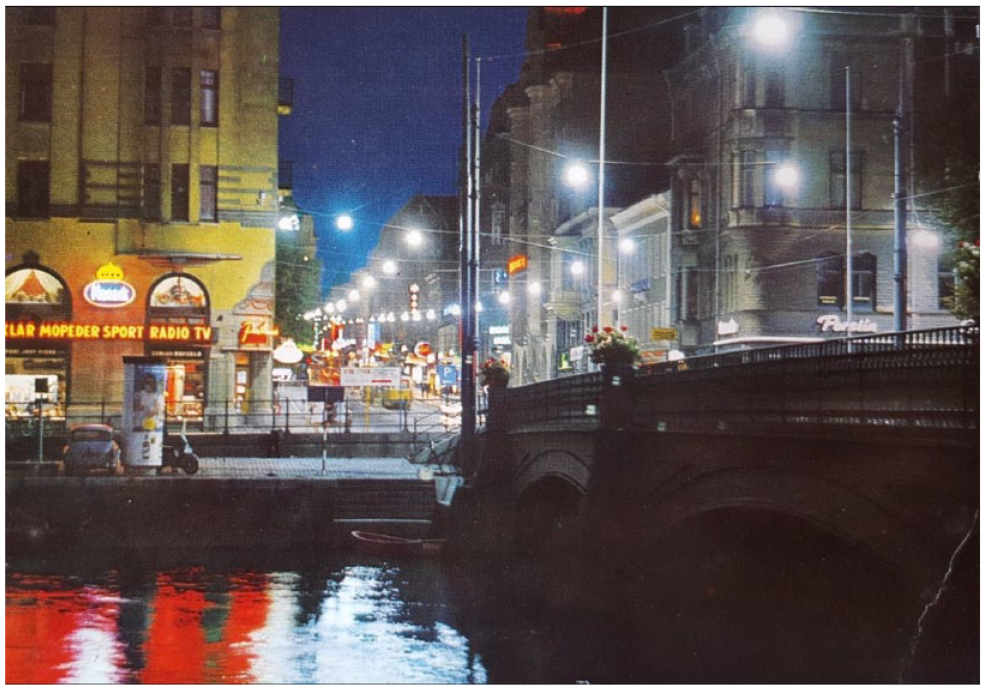
Posted 17/9 2019 in Local History Group 1.
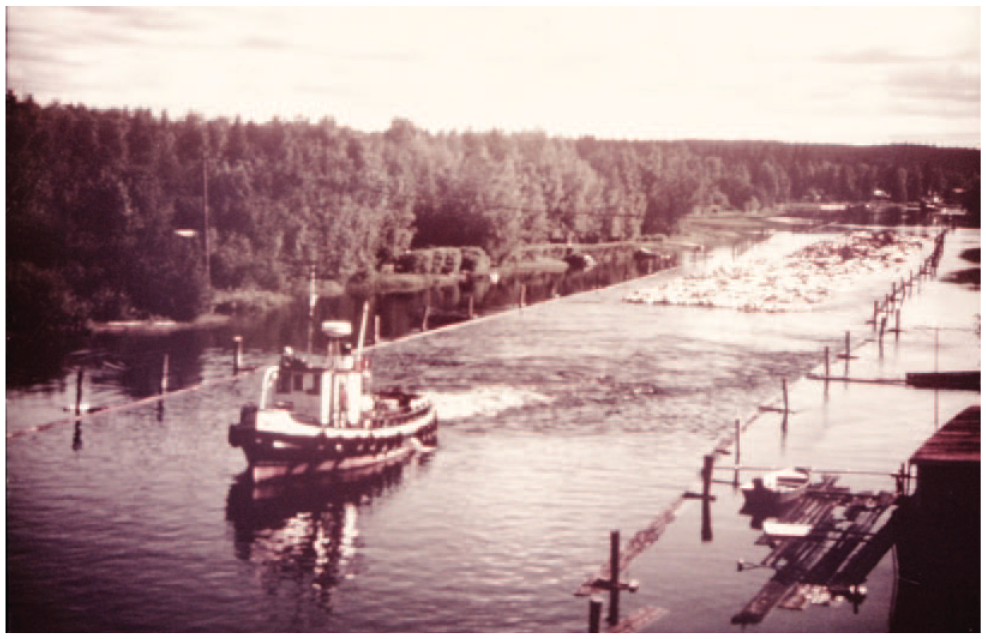
Posted 5/5 2019 in Local History Group 2.
Clearly, then, it was not just me who found these photos aesthetically pleasing. The photos seemed to create a lure and a fascination with the past, thereby putting other members in the mood. As a result, these posts received more reactions and comments than others.
In a study exploring a Facebook group focused on the history of Australian city Perth, Jenny Gregory (2015) illustrates that there is a craving for beautiful images depicting the past onto which individuals can attach their nostalgia and personal memories. Based on this, I would argue that photos not only have the potential of producing emotional reactions towards the past, they also hold the potential to become emotional canvases onto which other members can paint their own experiences and memories. Hence, the aesthetic qualities of photos become integral as ‘beautiful’ images are more ‘likable’ and can thereby produce a collective lure and fascination towards this past. However, this is not only due to the aesthetic qualities of the photos but also to how open they are as emotional canvases. In Figures 1 and 2 we see two quite different photos from two different groups. The first is a colour photo from the 1960s depicting the centre of a midsized Swedish city with a bridge and some neon flash lights. The second sepia coloured photo is from 1977 and in a sense looks like it is older than the previous one. It depicts a boat on a river with an extensive forrest in the background. Albeit their differences, the photos share some similarities; they both include rivers, both photos are taken ‘from a distance’ and neither of them include visible people. Rather than picturing human action, they portray the past in the form of stillness and sceneries.
Also common among the photos posted in the groups were images of old family members or friends, old photos of the member themselves, or of classmates or teammates posing together for the camera. However, these (such as Figure 3 below) received far fewer comments and reactions. The particular photo below was liked 22 times. This can be contrasted with 157 likes and wows for Figure 2 which was shared in the same group, and 414 likes and wows for Figure 1. These portraits and photos of people thus seemed to move the other group members less and create less of an emotional effect. This highlights another important aspect that needs to be considered when trying to understand how this culture of wow is practised.
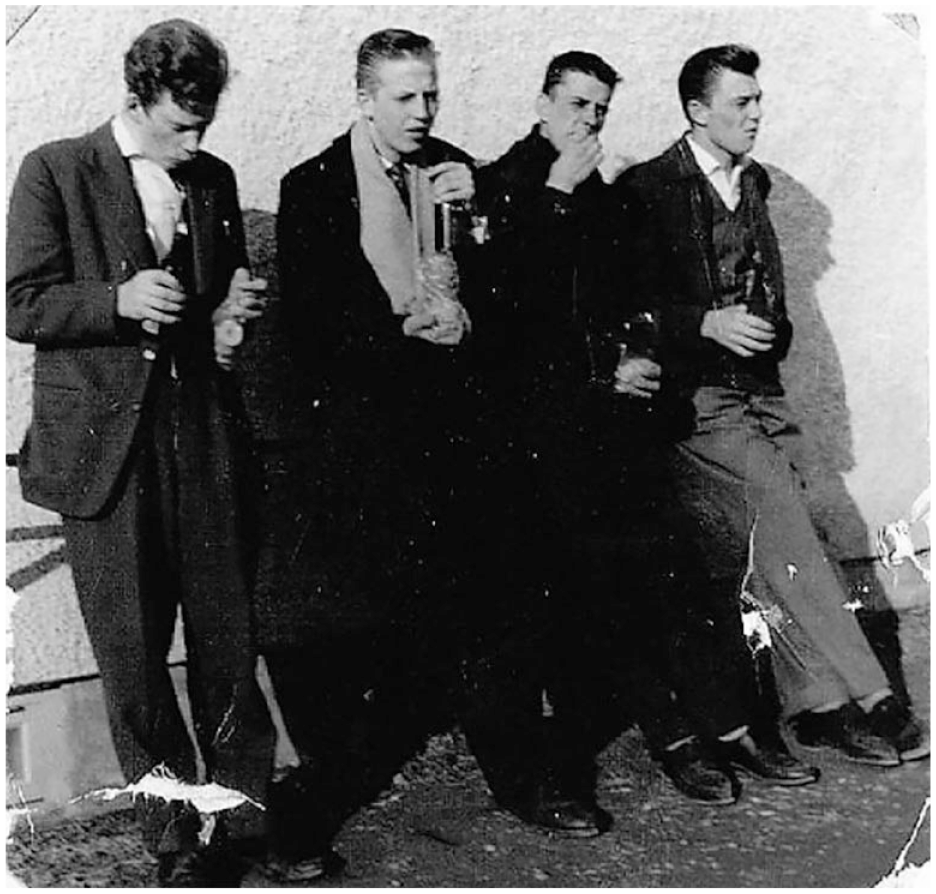
Posted 3/4 2019 in Local History Group 2.
As these photos depict people, rather than distant sceneries, they portray individual and personal aspects of human lives of the past. In a sense then, they are already inhabited and therefore less open as emotional canvases – as a result, fewer of the other members react to and comment on these photos. In particular, distance seems to be the key. Other photos posted in the groups also depict people – children ice-skating on a frozen lake, timbermen working, or people lining up to buy sweets (Figure 4) – seem to be more effective in creating a lure and fascination towards the past. At least they, generally, receive large amounts of likes, wows and comments. These photos share similarities with the sceneric photos discussed above as they are taken from a distance. Thus, they also produce an emotional experience of the past as something distant, special and ‘other’. To reword one of the quotes above from the groups: the past is certainly supposed to feel like an alternate reality.
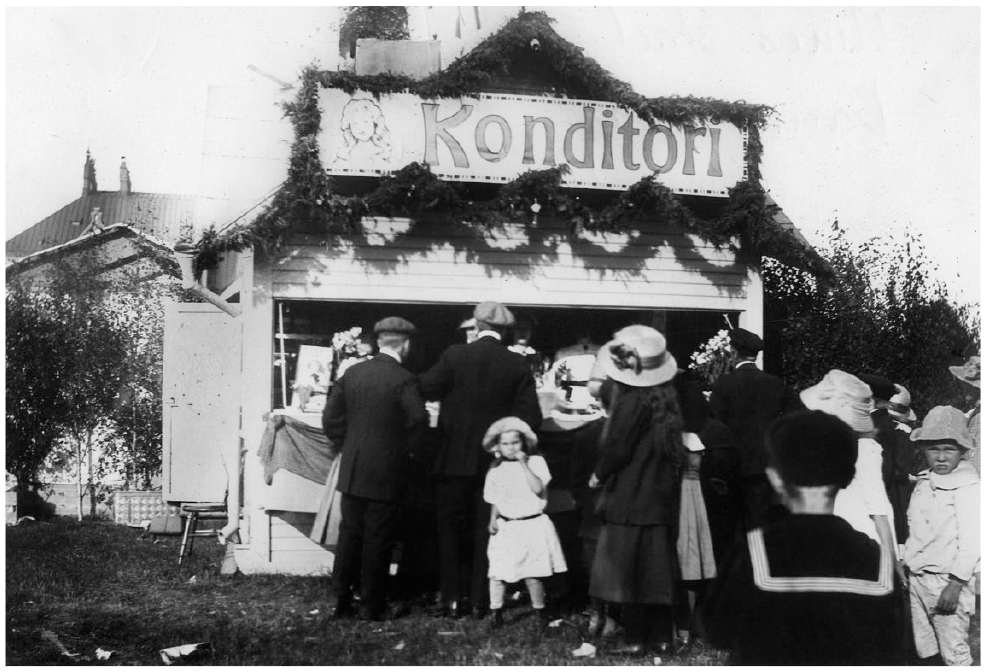
Posted 21/9 2019 in Local History Group 1.
Hereby, I would argue that, rather than ‘a culture of likes’, it would be more appropriate to talk about the retrospective Facebook groups as producing ‘a culture of wow’ and a mood of fascination. Since the past is produced as an exotic other, it is not only supposed to be felt, it also becomes disassociated from the present, or rather, the past becomes a foreign country, to paraphrase David Lowenthal (2015). Here, it is important to stress that in many ways it is Facebook’s interface that promotes this relationship towards the past as it encourages and even rewards not only the consistent production of posts and photos, but also a consistent production of stuff that other members value. This is something I will to elaborate on below.
Fragments of nostalgia
Within this mood of fascination, bittersweet expressions of nostalgia were by far the most common. Sometimes a member explicitly stressed that ‘Oh, I feel so nostalgic when I hear this song’ and other times by posting a GIF of an animated cat seeing a burst of heart shaped bubbles in response to a post. 5 The centrality of nostalgia was not a surprise, as some of the group descriptions explicitly state that they are meant to be digital habitats for those who feel nostalgic about specific parts of the past. Niemeyer have also connected the ‘nostalgia boom’ with ‘the increasing uses of social media’ (2014: 2).
Recent research has moved towards a more complex view on nostalgia, viewing it as a performative engagement with the past, present and future-relationship, in potentially both progressive and regressive ways (Kalinina, 2016; Keightley and Pickering, 2006; Niemeyer, 2014). Nostalgia can also be both a personal and a collective emotion (Kalinina, 2016). Looking at the retrospective Facebook groups, nostalgia seems to be practised in both personal and collective ways. First of all, it is clear that expressions of nostalgia were produced with the intent and expectation of receiving reactions from other group members. Some posts were even written in a form of call-and-response format. One example is a post with a YouTube clip of British punk band the Clash performing live, along with the question, ‘Who saw the Clash in 77?’. This post received many comments where other group members wrote about when and where they had seen the Clash play live in the late seventies. 6 Another example is a post with a picture of a penholder in the shape of a hedgehog: ‘Do you remember this funny penholder? Did you have one yourself?’. To this, other group members responded by sharing pictures of their own penholders or short comments about their fond memories of these objects. 7 Collectively sharing individual subjective memories in this format means that personal and collective nostalgia intermingle and are impossible to differentiate in the group interactions. Furthermore, these posts, and the reaction to them, can be compared to Facebook posts produced by online nostalgia businesses such as DoYouRemember.com. Studying this, Niemeyer and Keightley stress: ‘[t]he question ’do you remember?’ is a way to pre-frame the comments and therefore the contours of the potential nostalgic community’. They also illustrate that most users respond by simply replying yes or no (2020: 1650). The retrospective groups in my study seem to adopt the same rhetorical strategy and this has the same pre-framing effect on the interactions since the response to these posts generally are very short – which I will get back to.
The call-and-response posts were often successful in producing reactions – albeit brief – from other group members. Other posts where members expressed their nostalgia in more detail, did oftentimes not get as many reactions from other members. In those cases, it happened that the member who had written the post wrote a comment of his or her own along the lines of, ‘I thought more members here would appreciate this’ or ‘Still none of the others in the photo who has responded to this. They should all be here [in this group]’. 8 The members of the retrospective groups thus seem to expect and strive for a digital affect culture in which the past is not only meant to be felt, these emotions are also supposed to be shared. The call-and-response posts therefore become a successful strategy, not least in relation to what Boler and Davis (2018) call ‘affective feedback loops’. They argue that there is a mechanism in Facebook (and other SNSs) where the content a user produces goes into the digital interface which is supposed to return desired content back to the user: ‘Affective feedback loops build on desire for recognition and reward’, they write. ‘One returns to Facebook arguably less for the updates from “friends” and more to satisfy such desires as the insatiable craving for esteem created through an affective feedback loop within a “culture of likes” ’ (2018: 84). I would argue that the ways in which nostalgia is expressed in the retrospective Facebook groups uses and (re)produces this mechanism of affective feedback loops. The following is but one of many examples: on September 24th, 2019, a member of one of the local history groups posted a photo of a nursery institution, with a couple of women in nurse uniforms walking with baby strollers in front of it. The post also included a short description stating that this was a picture of the south walk just by the nursery institute, thus it was not written in the call-and-response format but was still a short invitation for other members to react. And the post soon got many reactions. The first member who commented wrote, ‘Did my internship there in the fifties’. This was followed by, ‘Went there circa 1958’, ‘I did my internship there 1966 ’, ‘This was my first nursery. I was there from 3 months [of age]’, ‘I was also there’, ‘I went there in the early fifties’, ‘My dad was probably there between 1906–1908’ and so on. Only one of the comments produced some kind of discussion – a mom and a son discussing how long the son went to the nursery and that the son was only allowed to wear the clothes provided by the nursery institute, not his own. On their own, these individual comments are mere fragments of personal memories and connections to a specific subject, like carvings in a tree that state ‘I was here’. As such, they do not do anything – they do not move anyone. However, when these fragments are put together – collectively stacked upon each other – they produce a specific kind of nostalgic mood (Grainge, 2000) – a sense of belonging and togetherness. This post and the subsequent comments, then, provide us with an example of how nostalgia is produced within the retrospective groups in the form of an affective feedback loop. Expressions of nostalgia are therefore not private or personal tasks in this setting – even when the individual posts and comments touch on the subjective experiences of the individual – but rather build on receiving a collective response. And this response seem to build on the fragmented and brief character of the nostalgic interactions.
Davalos et al. (2015) build on two quantitative studies when arguing that nostalgic posts on Facebook are more reflective and more emotional in comparison with what they call ‘general posts’. They also argue that nostalgic posts are deeper and more elaborate, as these often discuss and compare the past in relation to the present. My study of nostalgic interactions within the retrospective groups, however, suggest the opposite. Rather than producing deep and elaborate reflections about the past and present, they are arguably better described as fragmentary. The fragmented character of the interactions and the mechanisms of affective feedback loops constrain the possibility of more elaborate and reflexive collective engagements. Thus, to be in the mood of nostalgia, members engage with the past in a less personal, specific and detailed way. Instead, interactions are more fragmented and general.
Although not as explicititly as the aforementioned visual rewards (badges), Facebook’s interface can still be said to manoeuvre its users towards these fragmented interactions. In Garde-Hansen’s (2009) discussion of Facebook as a form of digital archive, she argues that Facebook’s interface is designed as a spatial montage which creates ‘a spatial narrative’ that is different from typical historical narratives. The interface thereby promotes a sharing of memories that is not coherent in a linear narrative form – instead it can seem disjointed and complex. Garde-Hansen (2009) contends that, as a digital archive, Facebook become ‘intensely personal rather than collective and connective’ (p. 143). Building on Garde-Hansen’s discussion, Kaun and Stiernstedt argue that Facebook’s algorithms limits the possibilities for creating an actual understanding and engagement with the content produced: ‘The personalised flow annihilates the collective and simultaneous experience and meaning production’, they write (2014: 1165). This is connected to what they call: ‘social media time’ which is that Facebook relies on a ‘newness principle’ that foster immediacy and a constant flow of new content. Hence, Facebook undermines the potential of profound interactions and enduring narrative exchanges (Kaun and Stiernstedt, 2014). The fragmented nostalgic interactions within the retrospective groups can therefore be understood as an adjustment to the limitations produced by the digital platform. By abstracting the individual and subjective elements of their nostalgia, members not only fragmentarize their memories and experiences, they also make it possible to produce a mood of collective nostalgia and belonging within the interface to which they can attune themselves.
A desire for knowledge
In direct connection with the mood of fascination, and often practised in conjunction with the mood of nostalgia, I also found examples of another mood work within the groups: a mood of knowledge desire. Particularly in the local history groups, members frequently share old photos and ask questions such as, ‘Does anyone remember the name of the store in the corner of the picture?’ or ‘Which year can this photo have been taken?’. These questions are most often tied to personal (or family) memories, but they are still less about the fragmented form of nostalgia. Instead, they ask for more elaborate interactions, and a different affective atmosphere; they encourage other members to engage with the past in the form of a collective memory work.
In this mood work, the members’ use of language changes. It becomes less centred on the subjective perspective of the members, and takes on a more neutral and seemingly objective character. An example can be taken from one of the local history groups. The post shows a photo (Figure 5) of a building located by a river streaming through the city. The description reads:
[The] mansion at [the river] was first used as a place for summer pleasure by [person’s name]. (Located near [a present factory]). In the early 19th century, the property was bought by [person’s name] and [person’s name]. In 1829, a new house was built on the foundation of the older building dating from the 18th century, called [name]. [. . .] The house was renovated in 1878 and 1986. In recent years, the building has been used as an office and residential building.
9
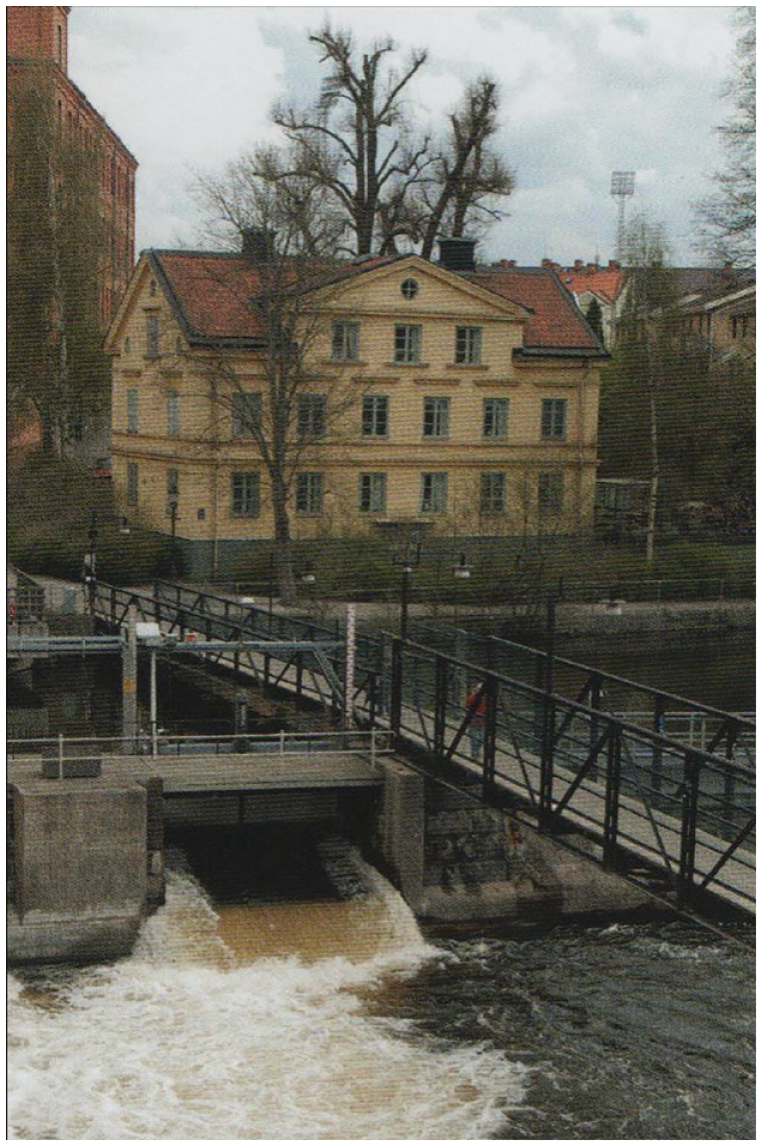
Posted 14/4 2019 in Local History Group 1.
The post is filled with information, and rather than being written from a subjective perspective, it is voiced as objective and neutral. The member writing the post is simply stating facts that she seems to find interesting and important. Compared to the previously discussed posts, these interactions are less general and fragmentary. Instead they are longer, more elaborate and full of details. Other members take to the comments to emphasise that they find this piece of information “interesting”, rather than “beautiful” and “fascinating”. Recurringly, they share relevant memories about this particular past and sometimes they inform that they themselves are working on locating more information on the subject, by, for example, planning a visit to the local archive. The key here is that they inform, they share information and have the ambition of producing knowledge. These interactions connect with the overall fascination for the past produced in the groups. However, the fascination takes a different direction. Rather than attempting to produce a mystique towards the past, the past becomes an object of knowledge, something to disentangle and know more about. Members who enter into these interactions express enthusiasm as well as determination and oftentimes also certainty – most obviously indicated by the neutral and objective tone. Thus, the emotional practice and mood work in these interactions become directed towards an attitude of knowledge desire.
As such, it takes longer to read these posts and their comments, and thusly it takes more of an effort for members to be in the mood of knowledge desire. This might be part of the answer to why these types of posts are outnumbered and also why they receive much less feedback in the form of reactions and comments from other members. Another part of the answer is that the mood work is dependent on the logic of Facebook’s interface (Garde-Hansen, 2009), and its fostering of immediacy (Kaun and Stiernstedt, 2014). Facebook promotes members and posts that produce a large number of reactions, not only by awarding them badges, but also by keeping them further up in the flow of interactions and thereby making them more visible. The interface thereby also makes the less liked and commented posts less visible. This represses and constrains mood work that practices a desire for knowledge, and instead directs the group members towards interactions that produce a mystique and a more fragmentary relationship towards the past. Furthermore, this can be connected to the concept of homophily (e.g. De Choudhury, 2011) and the phenomenon of flocking on SNSs. Although the very existence of retrospective Facebook groups based on commemorating particular aspects of the past can be seen as examples of homophilia, the ways in which the interface shapes the norms and boundaries of the group interactions clearly directs the members towards even more homophilic interactions.
Conclusion
Using Ahmed’s theory on emotions and mood work and studying six retrospective Facebook groups, this article set out to explore transmissions of positive emotions within digital memory culture, as well as to critically analyse how the frameworks of the digital platform promote, constrain and frame these practices. All in all, the analysis has illustrated that three mood works are dominant in the groups; fascination, nostalgia and knowledge desire. The mood of fascination can be considered as the overall mood work through which members can attune themselves with each other. The past is here produced as something distant and oftentimes exotic. Hereby, the retrospective groups practice a memory culture that should not merely be described as ‘a culture of likes’ (Boler and Davis, 2018) but as a culture of wows and fascination. For the members to attune themselves with this mood means that the past is not only supposed to be remembered; the memories shared are also supposed to evoke emotions of fascination. This prevailing mood means that negative and averse relationships towards the past is seemingly absent altogether. Being positive towards the particular pasts that are in focus in the groups becomes normative, thus excluding more negative and critically minded memory work.
In direct connection with the mood of fascination, a mood of nostalgia is produced. Members express a bittersweet longing for the past, and more importantly, they phrase these nostalgic expressions so that they call for a response from other group members to share the same nostalgia. The analysis has also indicated that in doing so, members share their memories of the past as less subjective and specific and instead as more general and fragmentary. These characteristics of the nostalgic mood means that the past becomes seemingly more accessible, and that it is easy for the members to align themselves with similar others. In contrast to Davalos et al. (2015), who found that nostalgic posts on Facebook are deeper and more elaborate than regular posts, my study indicates the opposite, at least in the context of group level interactions. Still, I also found more elaborate and detailed interactions in the groups. Although outnumbered by the fragmentary nostalgic interactions, they seemed to strive less for nostalgia while still sharing the overall fascination towards the past. Rather than being written from a subjective and affective point of position, these interactions adopt a more neutral and objective language, expressing emotions of determination and certainty, as well as enthusiasm. This produces a mood of knowledge desire in which attunement becomes a task of expressing interest in and information on the past. Thus, the relationship towards the past is still positive, however, the past becomes an object of knowledge.
The fact that the mood of knowledge desire is clearly less prevalent in the retrospective groups could be explained by it taking more effort for members to attune themselves and become in the mood of knowledge desire, compared to the mood of nostalgia. But more to the point would be to explain it in relation to the logics of the interface that Facebook provides its groups with. As Facebook is designed with mechanisms of affective feedback loops (Boler and Davis, 2018) and with algorithmic logics that promote immediacy and personalised flows (Garde-Hansen, 2009), it thereby undermines enduring critical interactions (Kaun and Stiernstedt, 2014). In the context of this article, this means that the mood of knowledge desire is at odds with the logic of the interface, since it builds on slower, more detailed and more specific explorations of the past. Thusly, one could also argue that the fragmented interactions of nostalgia is a strategy to comply with the rules of the interface, since the fragmented and general, rather than the coherent and specific, is promoted, made more visible and also rewarded by the platform. Emotional interactions and mood work within the retrospective Facebook groups hereby risk being shaped into a solely regressive form of nostalgia (Keightley and Pickering, 2006). The fragmented characteristics of the majority of interactions means that homophilic tendencies can become stronger, as sameness in the form of practicing a positive emotional relationship towards specific aspects of the past is so easily and readily found and expressed. Consequently, the normative aspects of this homogeneity also becomes stronger, possibly excluding other emotional practices and mood works in relation to these pasts. This means that the past inevitably becomes produced in rather reductive and simplistic ways, which affects how associations between the past, the present and the future is made. Thusly, while offering history interested individuals and groups a platform to interact on, the ways in which Facebook’s interface direct and shape these interactions can feed into retrotopian tendencies of the present where simplified notions of a past that might never have existed also become utopian visions (Bauman, 2017). However, for us to understand how the interface and algorithms affects the ways in which individual members of retrospective Facebook groups, as well as other retrospective social media communities, remember and experience themselves in relation to the past, present and future, qualitative research that not only investigates the interactions within the digital frameworks – as this article has done – but also takes into account how these digital practices are tied to practices and emotions that take place outside the digital is needed.
Footnotes
Funding
The author(s) disclosed receipt of the following financial support for the research, authorship, and/or publication of this article: The research for this article was conducted within a post-doc project funded by the Crafoord foundation.
