




Abstract
Social media is now central to contemporary conflicts, serving as a site of strategic communication, a stage for securitizing performances, and a repository for potential evidence later mobilized in allegations of war crimes. This article revisits the Israeli Defense Forces’ (IDF) digital strategy during the 2014 Gaza War (Operation Protective Edge), a formative moment in the institutionalization of multi-platform military communication. Bridging securitization theory with digital media scholarship, the article argues that social media platforms operated as functional actors: infrastructures that shape visibility, structure circulation, and extend the transnational reach of state-led security narratives. Using a mixed-methods approach, the study analyzes 1,718 tweets, 359 Facebook posts, and 182 YouTube videos published on the IDF’s English-language accounts between June and September 2014. The analysis shows how the IDF institutionalized social media as part of its security practice, adapting threat constructions and justifications for military action to platform-specific communicative logics of circulation and visibility. By conceptualizing 2014 as a critical juncture in digital strategy, the article clarifies how early experiments in digital securitization helped consolidate communicative practices that have since become normalized and intensified in later Gaza wars.
Introduction
Social media has reshaped how wars are communicated, justified and remembered. By enabling direct communication between state actors and mass publics, it has created new and more accessible spaces for public debate while providing powerful tools for strategic messaging and propaganda (Banham, 2013: 609, 612). Digital platforms have thus become central arenas in which narratives are articulated, legitimacy is constructed and contested, and transnational audiences are addressed and mobilized.
Within the Israeli–Palestinian context, social media use has intensified over the past decade among state and non-state actors. The Israel Defense Forces (IDF) established an official social media presence in the late 2000s (Merrin, 2019: 112), and the 2012 Gaza war was dubbed the “First Twitter War,” as both Hamas and the IDF extended the confrontation into the digital sphere to influence international audiences (Zeitzoff, 2018: 4, 10). The 2014 Gaza War – Operation Protective Edge (OPE) – marked a critical juncture in this trajectory. While not the first instance of online engagement, it was the first major military operation in which the IDF systematically coordinated multiple platforms (Facebook, Twitter, and YouTube) as part of its routine communication practices. Through them, the IDF sought to frame Hamas as an existential threat, respond to international scrutiny, and project its narratives transnationally. OPE also functioned as a “participatory war,” with civilians in Gaza documenting destruction and casualties in real time, producing imagery that circulated widely and shaped the visibility of the war (Merrin, 2019: 201).
This article examines the IDF’s digital communication strategy during OPE, focusing on how social media platforms structured the circulation and transnational reach of the securitization of Hamas. Drawing on the concept of functional actors in Securitization Theory (ST) (Buzan et al., 1998: 36) – actors that affect security dynamics without being either the securitizing actor or the referent object – we argue that social media platforms operate as non-neutral socio-technical infrastructures that condition visibility, organize circulation, and shape the performative presentation of securitizing narratives beyond domestic political arenas.
Employing a mixed-methods approach, the study analyzes 1,718 tweets, 359 Facebook posts, and 182 YouTube videos published on the IDF’s English-language accounts between 7 June and 26 September 2014. This period covers three phases: (i) the month preceding hostilities, tracing threat identification; (ii) the war itself, examining emergency measures; and (iii) the post-war month, observing post-hoc legitimation (Buzan et al., 1998: 26, 33). Corpus-level social media metrics map patterns of circulation and visibility, while qualitative coding of text, visual and affective frames analyze securitizing narratives. Together, these methods strengthen the empirical grounding of ST, which has often been criticized for remaining conceptually rich but methodologically under-specified (Baele and Jalea, 2023: 379).
The analysis shows that, by 2014, the IDF had institutionalized multi-platform social media communication as a key security practice, reinforcing the securitization of Hamas and framing war as a legitimate exceptional measure within a broader macro-securitization environment. Examining OPE as a critical juncture clarifies patterns later observed in subsequent wars in Gaza: the routinization of militarized online communication, the prominence of visual and emotional content in justifying extreme actions, and the dual role of social media platforms as channels that extend the circulation of state narratives and as archives of potential legal evidence. Against this backdrop, the article situates social media as functional actors in securitization before turning to the 2014 case to trace how the IDF’s digital strategy constructed threat narratives and justified emergency action.
Constructing security in an evolving media landscape
Securitization theory (ST), as developed by the Copenhagen School (CS) in the 1990s, offers a framework for analyzing how political issues are constructed as existential threats that justify extraordinary measures beyond the realm of “normal politics” (Buzan et al., 1998). At its core lies the securitizing move: a discursive process through which a securitizing actor articulates a threat to a referent object and invokes the necessity of emergency action (pp.24–29). The framework distinguishes between securitizing actors, referent objects, and functional actors – entities that shape security dynamics without themselves articulating the securitizing claim (p.36).
In its original formulation, securitization is not reducible to a single utterance but unfolds through recognizable elements of security grammar, institutional authority, and contextual plausibility. It involves a process that moves from threat identification to the justification of exceptional measures and, ultimately, to the suspension or reconfiguration of established political rules (pp.25, 33). As Taureck (2006: 54) observes, security does not possess an objective meaning but “obtains the meaning that the securitizing actor attaches to it,” emphasizing the constructed and relational character of security claims.
Subsequent scholarship has refined this model by highlighting the iterative and context-dependent nature of securitization. Stritzel (2007, 2014) conceptualizes securitization as unfolding across multiple communicative sites, where claims, warnings, demands, and supporting evidence are continuously (re)articulated and (re)contextualized. This perspective shifts attention away from singular speech acts towards broader communicative practices embedded in institutional and media environments. Importantly, securitization is enacted not only through verbal statements, but through a range of discursive and symbolic resources adapted to specific communicative settings.
Building on this insight, critical securitization scholars have emphasized the importance of multimodal communication. Balzacq (2005, 2011) argues that securitizing practices rely on contextual cues, affective registers, and symbolic devices that resonate within particular social and political contexts. Hansen (2011) demonstrates how images can function as securitizing elements by condensing threat narratives and eliciting affective responses that complement or substitute verbal articulation. Williams (2003) highlights the evidentiary role of visual artefacts in stabilizing threat constructions and making exceptional measures appear necessary.
These developments are particularly salient in contemporary digital media environments, where platforms privilege short-form, visual, and emotionally charged content. Securitization in such contexts is increasingly enacted through the circulation of images, videos, infographics, and affect-laden narratives that structure how threats are represented and made visible (Massari, 2021). Rather than altering the core logic of securitization theory, this shift underscores the need to attend to the communicative and material infrastructures through which securitizing moves are articulated and circulated.
Within ST, the role of functional actors has remained comparatively under-theorized. Although the CS acknowledges their existence, it offers limited guidance on how functional actors shape securitization processes or how their influence should be analytically assessed (Buzan et al., 1998: 36). This ambiguity becomes particularly evident in media-saturated political environments, where communication infrastructures play a central role in structuring the visibility and circulation of security narratives. As McDonald (2008) and O’Reilly (2008) note, mass media frequently operate as functional actors by shaping the conditions under which security claims are articulated and disseminated, without themselves constituting securitizing actors. Floyd’s (2021) reformulation clarifies these distinctions by analytically separating securitizing actors, audiences, and functional actors: functional actors are entities that enable, support, or constrain securitizing moves on behalf of others, rather than accepting or rejecting securitization for themselves.
This distinction is particularly useful in digital communication environments, where platforms neither articulate security claims nor can be equated with audiences. Instead, we argue they operate as non-neutral infrastructures that condition the circulation, prominence, and persistence of securitizing narratives. Approached in this way, ST can account for the infrastructural conditions under which security narratives gain visibility and durability in contemporary conflicts, without attributing intentionality or autonomous agency to platforms themselves.
Social media platforms as functional actors
The role of media in conflict has long been debated, particularly regarding their capacity to (de-)escalate violence. From the Rwandan genocide to the Balkan wars, media have functioned as instruments of propaganda, mobilization, and legitimation (Price and Thompson, 2002). As Anat First (1997) observes, societies often rely heavily on media during periods of conflict, a dependence that can render publics vulnerable to manipulation. At the same time, media have also been conceptualized as potential “peace ambassadors,” capable of amplifying moderate voices and supporting reconciliation (Thompson, 2002: 42). This ambivalence underscores why media – whether traditional or digital – are analytically relevant as functional actors within processes of securitization and desecuritization.
The rise of digital platforms has intensified scholarly attention to the relationship between media, warfare, and political mobilization. While early conflicts such as Kosovo (1999) and Iraq (2003) unfolded largely outside online environments, moments like the Abu Ghraib scandal (2004) revealed how user-generated content could disrupt official military narratives (Merrin, 2019: 111). With the expansion of Web 2.0 and mobile connectivity, the production and circulation of wartime information became increasingly decentralized, weakening the state’s monopoly over conflict communication. Early optimism portrayed digital media as participatory spaces capable of democratizing political engagement (Chadwick, 2011; Coleman and Norris, 2005), a view seemingly reinforced by the Arab Spring. Subsequent research, however, has shown that digital media more often amplify pre-existing political dynamics rather than transform them, echoing Wolfsfeld et al.’s (2013) observation that “politics come first.”
In contemporary conflicts, digital platforms have further disrupted centralized control over wartime narratives, producing what Merrin (2019: 195–196) terms “full spectrum access,” in which states, armed groups, civilians, journalists, and international audiences simultaneously generate and circulate representations of violence. This participatory media ecology blurs the boundaries between combatants and civilians, with non-state actors increasingly acting as witnesses and documentarians within information struggles, as illustrated by the Syrian conflict (p.206). Scholars have also highlighted the fragmenting effects of digitally mediated conflict communication. Merrin and Hoskins (2024) describe contemporary warfare as “sharded,” characterized by algorithmically curated and personalized feeds that distribute conflict narratives unevenly across segmented audiences, privileging visual and emotionally charged content while fostering partial and polarized understandings of events.
These dynamics underscore the non-neutrality of digital media infrastructures. While early research emphasized user agency in producing and preserving digital records, more recent scholarship stresses how platform architectures – through moderation practices, recommendation systems, and archiving mechanisms – condition what content becomes visible, searchable, or accessible over time (Makhortykh, 2023). Rather than determining political outcomes, platforms structure the informational environments in which conflict narratives are articulated and contested.
From a securitization perspective, these insights resonate with the concept of functional actors as entities that influence security processes without acting as securitizing agents or referent objects (Buzan et al., 1998: 36). Approached in this way, social media platforms can be understood as non-neutral infrastructures that condition the visibility, circulation, and temporal persistence of securitizing moves articulated by state actors.
Situating these debates historically is crucial. By 2014, platforms such as Facebook, Twitter, and YouTube already relied on algorithmic systems that curated content and personalized exposure, notably through mechanisms such as Facebook’s News Feed (DeVito, 2017). These systems shaped attention and visibility primarily as structural features rather than as autonomous political actors. In this context, digital platforms functioned as channels through which state-led security communication could be internationalized and routinized.
During the 2014 Gaza War, social media provided the conditions under which the IDF’s securitization of Hamas circulated transnationally through coordinated, multi-platform communication. Earlier episodes, such as the 2012 Gaza conflict described as the “First Twitter War” (Zeitzoff, 2018: 10), had already demonstrated the capacity of digital media to internationalize struggles over legitimacy. OPE marked a critical juncture in this trajectory, as the IDF institutionalized social media within its organizational communication routine. Examining the 2014 Gaza War allows us to capture the moment at which digital platforms became embedded in these routines, shaping how securitizing narratives were produced, circulated and rendered visible, in ways that remain relevant to contemporary conflicts.
Israel and securitization theory
Despite Israel’s centrality to the study of protracted conflict, its engagement within ST has long remained limited. One reason lies in the apparent tension between Israel’s political context and a core assumption of early ST: the distinction between “normal politics” and moments of exception. In Israel, security logics are deeply institutionalized and embedded in everyday political life, rendering exceptionality less episodic and more structural. As Siniver (2012) observes, early scholarship on Israeli security was dominated by rationalist and materialist approaches focused on strategic behavior and external threats, making Israel a less intuitive case for the discourse-oriented analyses originally associated with ST.
Subsequent scholarship has nevertheless demonstrated the analytical value of applying ST to the Israeli case. Lupovici (2014) conceptualizes securitization in Israel as normalized, emphasizing how security discourse permeates routine political practices rather than emerging only through extraordinary moves. Muñoz (2012) similarly highlights the entanglement between securitization and Jewish national identity, showing how security narratives operate within domestic political competition. Abulof’s (2014) notion of “deep securitization” further advances this line of analysis by capturing how existential concerns – most notably demographic and identity-related anxieties – cut across multiple sectors of securitization – military, political, economic, societal, and environmental (Buzan et al., 1998: 7) – even as the military sector remains dominant. Together, these contributions underscore securitization as a constitutive feature of governance rather than an exceptional departure from it.
Other contributions foreground the centrality of identity and legitimacy in Israeli securitization processes. Olesker (2014) shows how Israel’s Jewish character functions simultaneously as a referent object and as a normative framework shaping democratic practices, with the securitization of Palestinian citizens illustrating how identity-based concerns structure political inclusion and exclusion.
At the same time, these studies also expose the conceptual challenges of applying ST in contexts of “chronic insecurity”. Where securitization is routinized, the analytical focus shifts away from whether issues become securitized toward how securitizing practices are articulated, justified, and sustained over time. This has prompted greater emphasis on audiences as constitutive elements of securitization dynamics, while desecuritization has received comparatively less attention. Benzen Coşkun (2008, 2009) demonstrates how overlapping securitization discourses constrain reconciliation, even as limited openings emerged through civil society initiatives and peace education.
More recent work has further expanded ST’s analytical reach in the Israeli context. Del Sarto (2021) situates Israeli securitization practices within broader Middle Eastern patterns of minority governance, while Wertman and Kaunert (2023) provide the first book-length application of ST to Israel, integrating legal dimensions and insights from political psychology to refine understandings of audiences and legitimation processes. Collectively, these contributions reinforce Israel’s significance as a site for both applying and advancing securitization theory.
The Israeli case nonetheless presents a persistent analytical puzzle. Israel operates as a procedural democracy in which public legitimation remains formally central, yet under conditions of permanent emergency. Türkoğlu and Elitsoy (2024) capture this tension by describing Israel as a polity marked by continuous exceptionalism, while Navot (2018) refers to “emergency as a state of mind,” produced through the normalization of threat. This context generates publics that are simultaneously positioned as critical interlocutors and structurally predisposed to security-oriented framings. Vuori’s (2008) insight that securitization operates differently across political systems is therefore particularly salient. Israel defies a simple democracy–autocracy dichotomy: the “special politics” of securitization are continuously woven into the routines of “normal politics,” requiring ongoing discursive performance to sustain legitimacy. Vuori’s concept of post hoc securitization is especially relevant here. Rather than enabling new exceptional measures, this logic retrospectively justifies actions already undertaken by reasserting acute threats, thereby normalizing prior practices and reproducing perceptions of vulnerability (p.85).
This article builds on these insights while addressing two gaps. First, it responds to calls to examine discrete securitizing moves within routinized security environments by examining how the IDF framed Hamas as an existential threat during the 2014 Gaza War. Second, it extends securitization analysis into the digital realm, conceptualizing social media as an infrastructural environment through which securitizing practices are mediated, amplified, and projected beyond domestic settings into transnational communicative spaces.
The 2014 Gaza War: Operation Protective Edge
Operation Protective Edge (OPE) constitutes a pivotal case for examining securitization under conditions of digital mediation. By 2014, social media platforms had become fully integrated into the IDF’s official communication infrastructure, marking a qualitative shift from earlier conflicts. Whereas in 2012 digital tools were employed in a more ad hoc manner, OPE unfolded in a context where Facebook, Twitter, and YouTube were systematically incorporated into military communication routines. This institutionalization signaled a broader transformation: digital platforms were no longer auxiliary instruments but embedded components of the routine performance of security politics. Examining OPE therefore allows for an analysis of how securitizing narratives were articulated and circulated within a platformized communicative environment.
The relevance of public legitimation in wartime is particularly pronounced in democratic and hybrid political systems. As Banham (2013: 1) observes, warfare places heightened emphasis on the public articulation of state action, especially where legitimacy is not assumed but must be continuously reproduced. Israel, frequently described as an “ethno-democracy” (Jones and Murphy, 2002), exemplifies this condition. Security discourse is deeply normalized, yet political and military actions remain embedded in justificatory practices. From a securitization perspective, OPE reflects what Abulof (2014) conceptualizes as “deep securitization,” in which existential threat narratives are persistently invoked across political life. Rather than constituting a singular moment of exception, the war unfolded within an already securitized context, with digital communication functioning as one of the sites through which security rationales were reiterated and stabilized.
This process did not occur in a communicative vacuum. As Buzan et al. (1998) and Vuori (2008) note, securitization entails ongoing performances of legitimacy, even where emergency logics are normalized. In the Israeli case, this tension between routinization and performance was increasingly mediated through digital platforms. Social media provided infrastructures through which security claims could be articulated in real time, visualized, and projected beyond domestic publics into transnational communicative circuits.
OPE also marked a moment of intensified contestation in the digital information environment. Compared to earlier escalations, both state and non-state actors significantly expanded their online presence (Zeitzoff, 2018), while civilians circulated images and narratives from the battlefield, increasing global visibility and interpretive plurality. Merrin (2019) characterizes this as a “participatory war,” in which legitimacy claims are continuously challenged and rearticulated across networked platforms. Within this setting, the IDF adapted its communication practices to the logics of platformization (Massa and Anzera, 2023), privileging formats aligned with the affordances of immediacy, visual salience, and rapid circulation.
These developments were underpinned by institutional learning that predated the war. Since establishing official Facebook, Twitter, and YouTube accounts in 2011, the IDF had been developing a digital communication strategy oriented toward real-time dissemination and transnational reach (Hoffman, 2012; Stein and Kuntsman, 2015). Statements by senior spokespersons during and after this period indicate that social media were understood as channels for addressing diasporic publics, foreign officials, and international observers, thereby extending the spatial scope of security communication beyond the national arena (Pick, 2019; Ungerleider, 2012). By 2014, these practices had coalesced into a relatively stable institutional framework for digital military communication.
While the IDF sought to control narratives and produce visually compelling content, digital platforms shaped the conditions of dissemination, enabling ongoing contestation in which official messaging circulated alongside Palestinian counter-narratives, rendering the war legible as a shareable online event.
Our analysis focuses on the IDF’s English-language Facebook, Twitter, and YouTube accounts from 7 June to 26 September 2014, covering one month before and after hostilities, to provide context for escalation and aftermath, and the active combat phase (8 July–26 August). Focusing on English-language content allows us to examine how securitizing narratives were articulated and circulated toward international audiences, particularly Jewish diasporas and pro-Israel groups.
This focus foregrounds the transnational character of digital securitization and the challenges of engaging multiple, heterogeneous audiences, where communicative effects are uneven and contested, rather than uniform or cumulative (Stritzel, 2014: 60)
Methodologically, the study adopts a mixed-method approach combining quantitative and qualitative analysis. While securitization theory offers a robust conceptual framework, its empirical application remains underdeveloped, with relatively few studies conducting systematic empirical analyses (Baele and Jalea, 2023: 379). Quantitative analysis traces patterns in security-related communication across 1,718 tweets, 359 Facebook posts, and 182 YouTube videos, while qualitative coding examines meaning, context, and framing practices. Combining these methods enables a systematic examination of how securitizing moves were articulated in the IDF’s digital communication during OPE and contributes to strengthening the empirical foundations of securitization research in digital contexts.
Background to the 2014 Gaza War: The trigger event
Tensions leading to Israel’s 2014 military intervention in Gaza began in mid-June following the kidnapping of three Israeli teenagers in the West Bank. Israel blamed Hamas, launching raids and arrests, though Hamas initially denied responsibility. The discovery of the teenagers’ bodies on 30 June intensified calls for retribution. Hamas escalated rocket fire, framing its actions as defending Palestinians against Israeli operations. Violence escalated further on 2 July, when a Palestinian teenager was abducted and burned alive by Israeli extremists in a revenge killing, prompting additional rocket launches. Israeli officials used the kidnappings to underscore Hamas’s intransigence, while Hamas formally claiming responsibility only at the end of August (BBC News, 2014a).
By early July, the escalation was framed in Israel as intolerable. On 8 July, the government launched OPE, officially justified as a response to “constant rocket fire” from Hamas (ABC News, 2014). This build-up illustrates how cycles of attack and reprisal were narrativized, with both sides portraying themselves as under existential threat and framing escalating measures as necessary for survival.
Applying securitization theory to the IDF’s social media strategy
Security speech analysis
Table 1 outlines the core units of analysis for examining state-led securitization during OPE. Drawing on the CS framework, social media platforms are conceptualized as functional actors that mediate securitizing moves by conditioning visibility and circulation across multiple platformed communicative environments.
CS units of analysis.
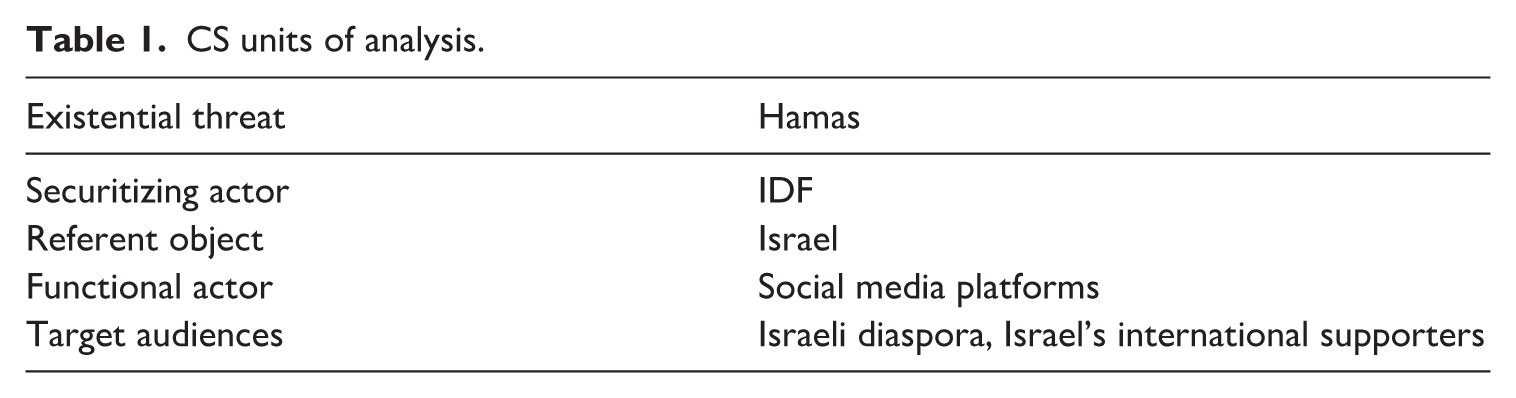
We conducted a qualitative, theory-driven analysis of IDF content published on Facebook, Twitter, and YouTube between 7 June and 26 September 2014. The analysis is structured around the three analytical steps commonly associated with securitization processes: (a) the articulation of an existential threat; (b) the invocation of emergency action; and (c) the reconfiguration of relations through references to exceptional or extraordinary measures (Buzan et al., 1998: 26).
Coding followed a deductive logic grounded in the concept of security grammar. This involved identifying recurrent lexical markers (such as references to “Hamas,” “terrorism,” “threat,” and “defense”), alongside narrative structures and affective cues signalling urgency, danger, and exceptionality. Visual materials – including images, videos, and infographics – were analyzed in parallel for their role in reinforcing securitizing moves, with particular attention to visual framing, emotional appeals, and symbolic representations associated with threat construction and military necessity.
Analytical categories were refined iteratively in dialogue with ST, ensuring consistency across heterogeneous formats while maintaining a coherent theoretical lens. This approach enables the systematic examination of how securitizing moves were articulated across platforms, without presupposing audience acceptance or communicative effectiveness.
Identification of the existential threat
The first stage of securitization spans 7 June to 7 July 2014, encompassing the abduction of three Israeli teenagers and the escalation of Hamas rocket fire prior to OPE. These events were articulated in IDF communication as evidence of an existential threat, providing discursive groundwork for the justification of exceptional measures. As Israel’s official military institution, the IDF functioned as the securitizing actor, with its entrenched position across military, political, and social spheres reinforcing its authority to define and frame threats (Sheffer and Barak, 2013: 5).
Even before the kidnappings, Gaza and Hamas were already embedded within established threats narratives. Israel’s major military operations in Gaza in 2008 and 2012, together with Hamas’s emergence in the late 1980s, had constructed it as an existential adversary (Wertman, 2025). These earlier securitizations created a discursive environment in which new crises could be framed through familiar registers of danger. On 9 June 2014, for instance, the IDF tweeted: “#Gaza is arming, we must always stand ready to face threats . . .” (@IDF, 2014a), reiterating preparedness against a persistent menace.
The abduction of the three teenagers intensified this framing. Facebook posts blurred the line between combatants and civilians, linking ordinary Palestinian activities to terrorism. On 11 June, the IDF claimed a Palestinian football player had ties to Hamas under the caption “When terrorism and sports mix” (Figure 1). The following day, another post condemned rocket fire targeting the Eshkol Regional Council as “endangering the lives of thousands of Israeli civilians” (Figure 2). These narratives reinforced Hamas as a direct threat to civilian life and positioned the Israeli state as under immediate danger.
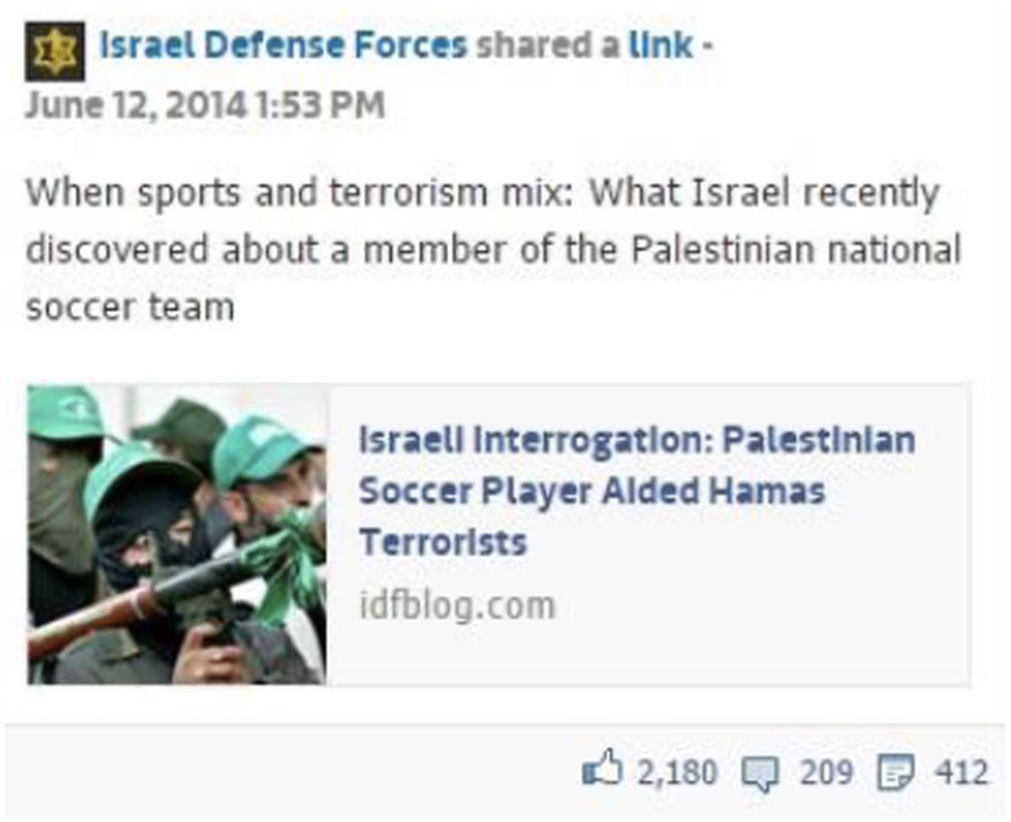
IDF post on Facebook-12 June 2014.
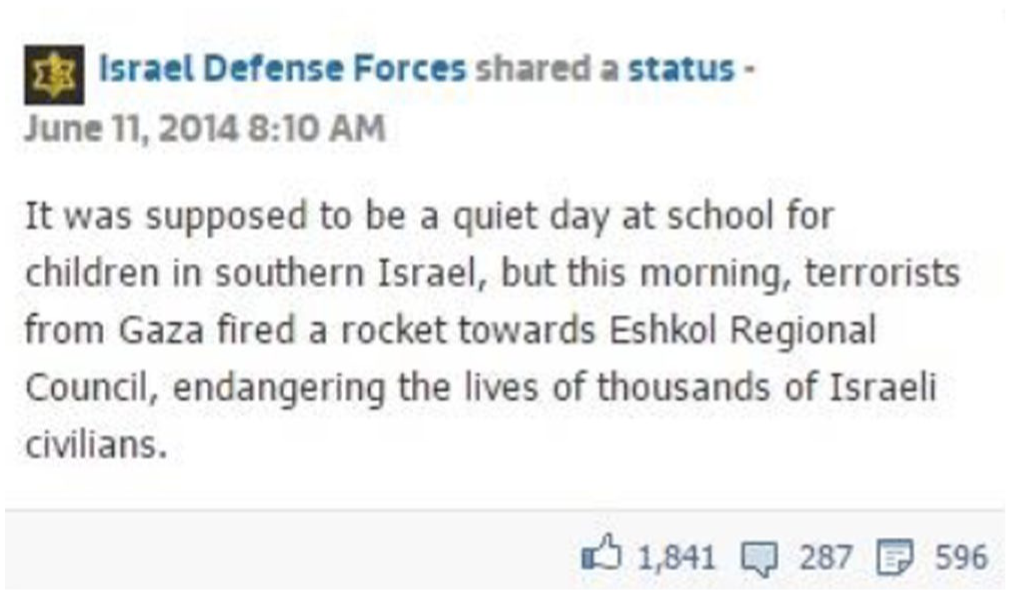
IDF post on Facebook – 11 June 2014.
Following the confirmation of the teenagers’ deaths at the end of June, the visual register of IDF communication became more visceral and explicitly affective. One widely circulated post depicted Palestinians “dressing as terrorists” and “depicting Jews as rats” (Figure 3), reinforcing an “us versus them” binary through processes of dehumanization. Another graphic labeled Hamas “TERRORISTS” with the caption “what if it were you” (Figure 4). Such imagery framed terrorism not merely as a tactic but as an inherent trait of a collective enemy, exemplifying how representations of the “terrorist other” function to delegitimize adversaries and render extraordinary responses intelligible (Jackson, 2005; Moghadam et al., 2014)
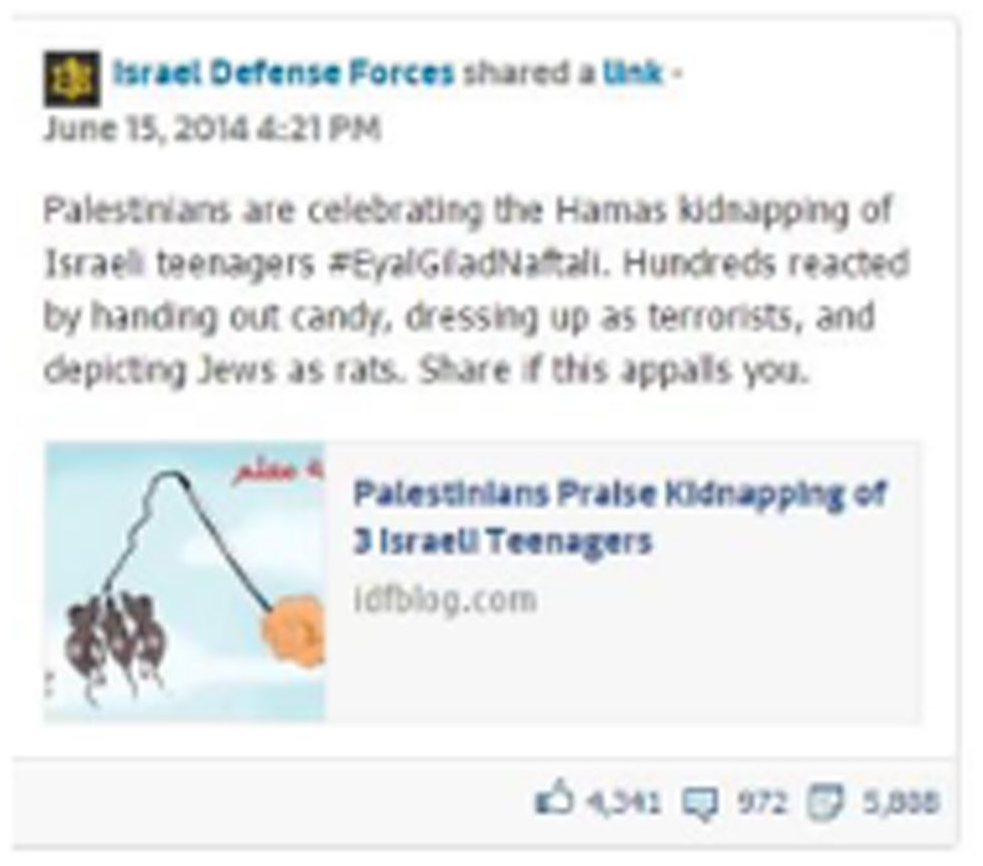
IDF Post on Facebook, 15 June 2014.
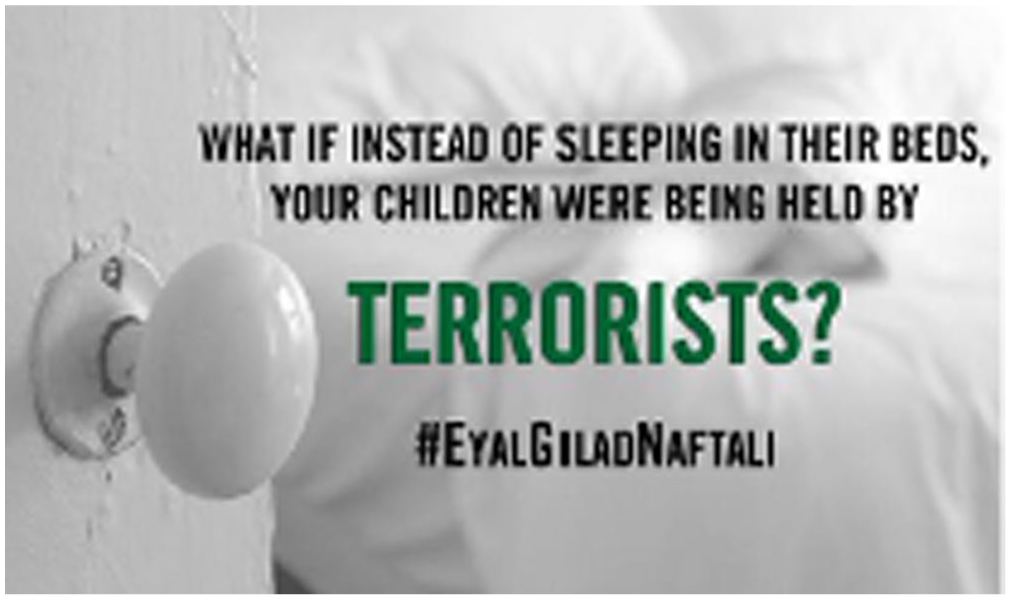
Image posted by the IDF on Facebook.
In the days following the discovery of the bodies, the IDF increasingly foregrounded rocket fire from Gaza. Between 1 and 7 July, 11 of 13 Facebooks posts emphasized Hamas’s military threat, frequently deploying statistics and infographics to underscore danger and urgency. This escalation marked the culmination of the first securitization stage, with the kidnappings framed as evidence of Hamas’s brutality and rocket attacks presented as proof of its ongoing existential menace. Together, these narratives set the stage for emergency action through OPE, which unfolded through sustained air strikes (8 July–17 July) and a ground invasion (17 July–5 August).
Emergency action – OPE
Israel launched OPE on 8 July 2014 with air strikes in response to Hamas rocket fire, followed by a ground offensive on 17 July targeting tunnels and military infrastructure (BBC News, 2014b). Securitization thus progressed from threat identification to the enactment of exceptional measures. Alongside military operations, the IDF mobilized its digital communication apparatus to frame the offensive as a defensive and necessary response to an acute security threat.
Building on earlier conflicts, particularly in 2008 and 2012, the IDF relied on established visual formats for narrating military action online. Aerial videos featuring colored markers highlighting targets – previously used during Operation Cast Lead – were redeployed during OPE (Stein and Kuntsman, 2015: 27). The most viewed 2014 YouTube video combined aerial and long-distance ground perspectives to depict “Hamas terrorists being neutralized” while attempting to infiltrate Israeli territory (Figure 5). These visuals framed the offensive as precise, controlled, and justified, reinforcing the presentation of military force as legitimate and proportionate.
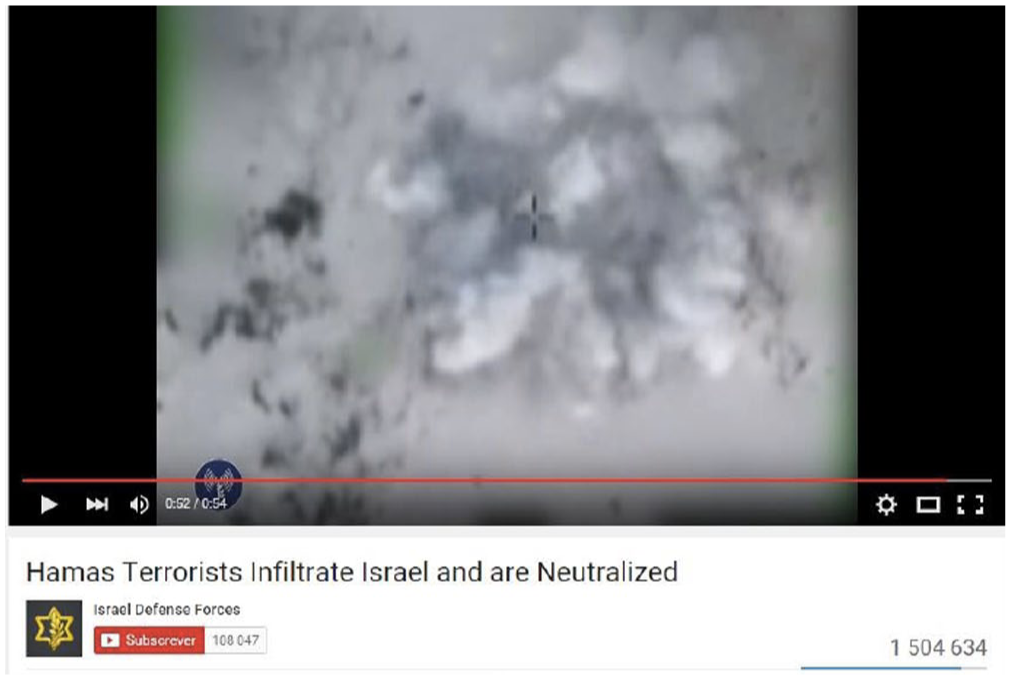
Still of IDF YouTube video.
Similar framing appeared on Twitter and Facebook. On 8 July, the IDF tweeted: “Hamas’ strategy is simple: Use civilians as human shields. Fire rockets from residential areas. Store weapons in mosques. Hide in hospitals” (@IDF, 2014c). Five days later it reiterated: “#Hamas deliberately and systematically uses men, women and children as human shields” (@IDF, 2014b). Through these claims, responsibility for civilian harm was discursively shifted onto Hamas, positioning escalation as unavoidable. Infographics and posts further contrasted Israeli civilians seeking shelter with depictions of Hamas allegedly embedding military infrastructure in schools, mosques, and hospitals (Figures 6 and 7).
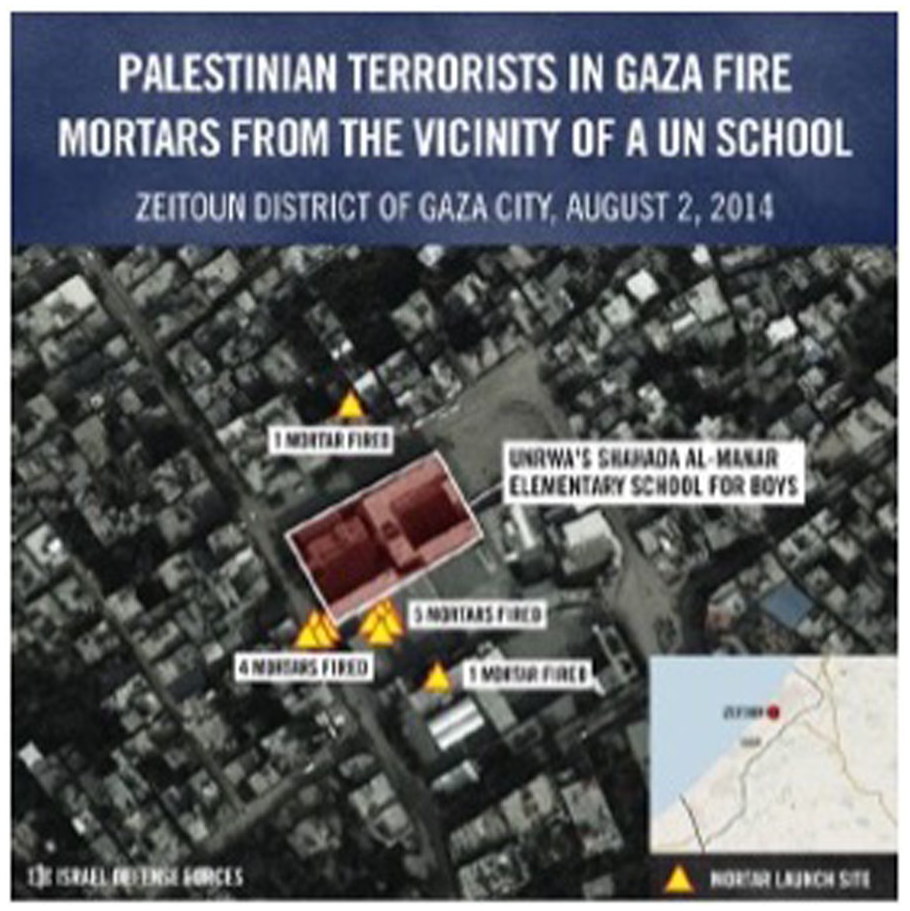
Palestinian terrorists in Gaza fire mortars from the vicinity of a UN school.
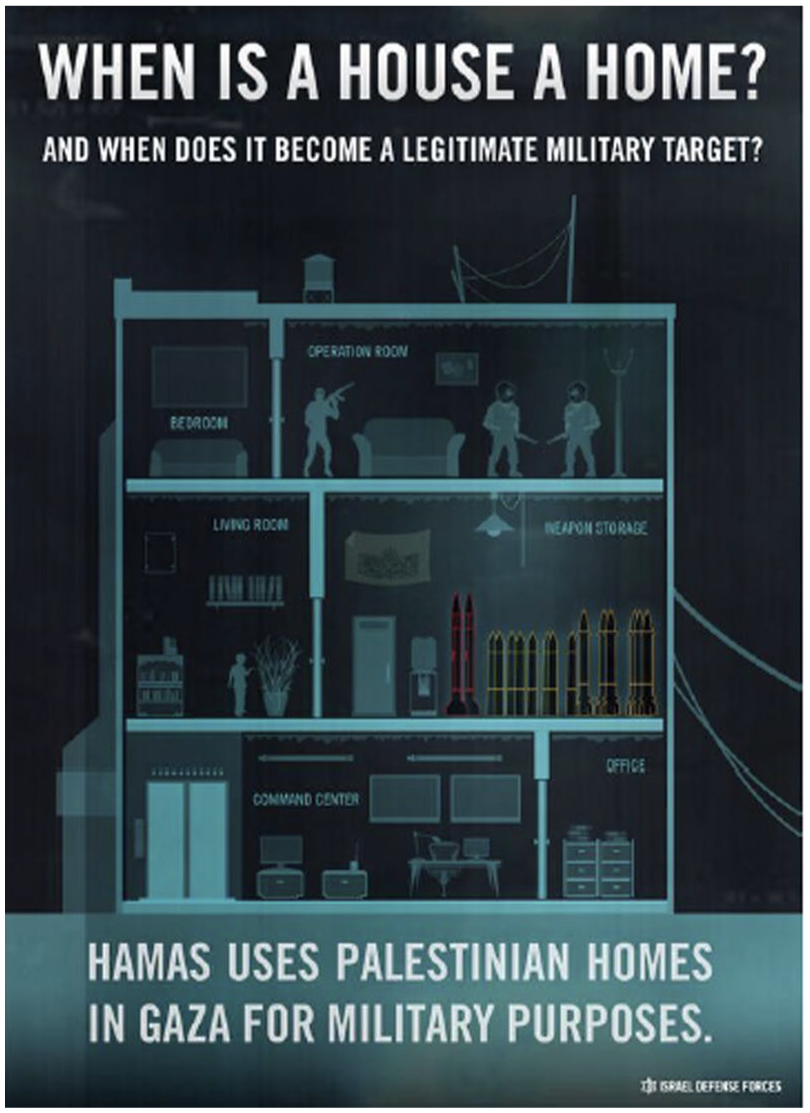
When is a house a home?
Effects on inter-units after breaking free of rules
Although the military campaign formally ended on 26 August 2014 (IDF, 2017), communication surrounding Hamas remained securitized in the post-ceasefire period. The persistence of threat framing, combined with the perceived fragility of the ceasefire (BBC News, 2014b), sustained a security discourse in which exceptional measures continued to appear intelligible. Within the CS framework, “effects on inter-units after breaking free of rules” (Buzan et al., 1998: 26) refer to the structural consequences that follow the authorization of emergency action, when normal political constraints are relaxed or suspended and extraordinary practices are rendered permissible. Rather than signaling a return to “normal politics,” this phase captures how securitization reshapes relationships between key units in the security constellation.
In the context of OPE, these effects are observable across several inter-unit relationships articulated through the IDF’s social media narratives. First, the relationship between Israel and Hamas continued to be framed through a persistent logic of existential threat, positioning Hamas as an enduring danger beyond the cessation of hostilities. Second, representations increasingly blurred distinctions between civilians and combatants, mediating the relationship between Israel and the Palestinian population through visual and textual cues that associated civilian spaces with militant activity. Third, Israel’s relationship with international actors was frequently depicted as marked by misunderstanding or selective condemnation, with external criticism protrayed as insufficiently attentive to Israeli security concerns. Finally, communication addressed transnational publics, particularly diasporic and pro-Israel groups, positioning them as relevant interlocutors within the broader security discourse.
These inter-unit effects unfolded against a backdrop of mounting international criticism. While the IDF’s social media presence expanded significantly during OPE, increased visibility coincided with growing external scrutiny. The United Nations accused both Israel and Hamas of war crimes, attributing the majority of civilian casualties in Gaza to Israeli actions, including strikes on the Gaza Power Plant and UN-administered sites (Beaumont, 2014; Burke, 2014). Israel rejected claims that most casualties were civilians (Booth, 2014). The attack on a UN school was condemned by the United States, with Secretary-General Ban Ki-moon describing it as a “criminal act” (UN News Centre, 2014). Several European states, including the UK and France, denounced the shelling of civilian sites, while a number of Latin American countries temporarily suspended diplomatic relations with Israel in protest (Blake, 2014; Crivelente, 2014). These reactions illustrate that securitization did not operate within a uniformly receptive international setting, but was articulated amid contestation and critique.
Within this context, the IDF’s post-ceasefire communication relied heavily on visual and emotional messaging designed for transnational circulation. The widely shared video What does 15 seconds mean to you? (Figure 8), for instance, juxtaposed Israelis seeking shelter from rocket fire with globally recognizable landmarks, such as the Taj Mahal, London, and Paris, imagined under attack. Rather than introducing new security claims, the video translated existing threat narratives into visual analogies intended to render Israeli insecurity intelligible across spatial and political contexts (Massa and Anzera, 2023).
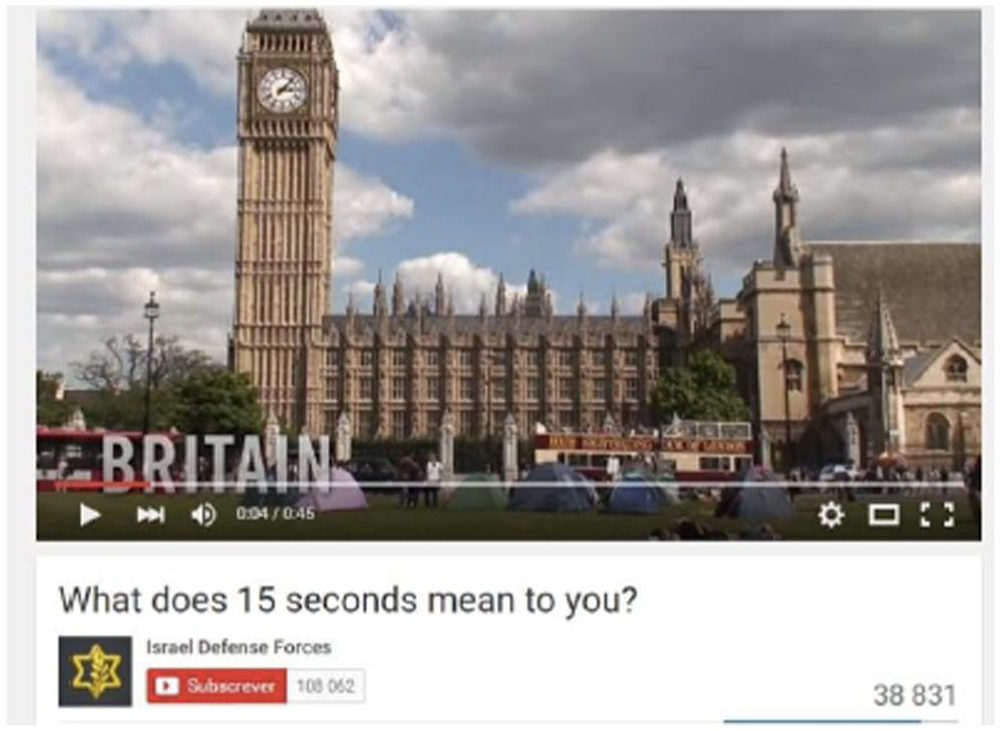
What does 15 seconds mean to you? Still of IDF YouTube video - 25 July 2014.
Elements of what Vuori (2008) conceptualizes as post-hoc securitization are also evident in the IDF’s communication following the ceasefire. Through infographics and posts disseminated after August 2014, the IDF retrospectively framed military actions undertaken during OPE as necessary responses to an acute and ongoing threat. These narratives emphasized outcomes such as the destruction of Hamas tunnels, the degradation of its arsenal, and the killing of identified militants, concluding that Israel was now “safer” as a result (Figure 9). Similar dynamics are visible in tweets published in September 2014, reiterating claims that Hamas used civilian buildings and school compounds for military purposes (@IDF, 2014d). Such representations sought to reaffirm the necessity of exceptional measures by retrospectively aligning past actions with the logic of security.
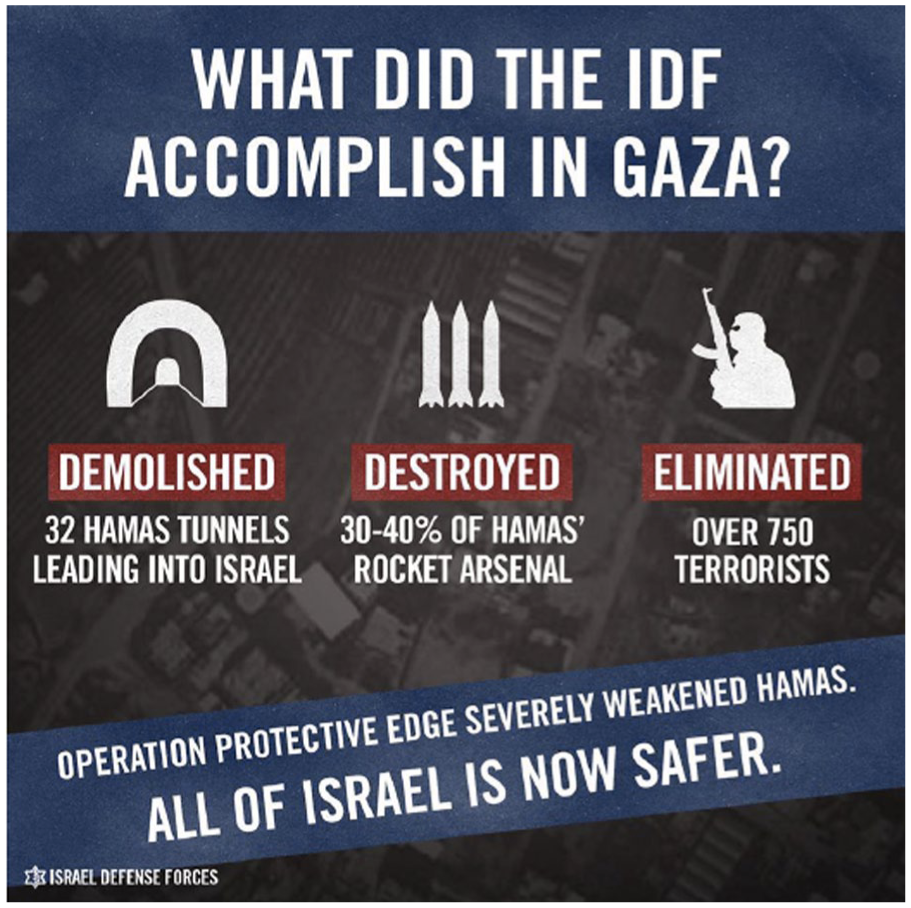
What did the IDF accomplish in Gaza?
Together, these post-ceasefire narratives illustrate how securitization persisted beyond the immediate battlefield, reshaping inter-unit relations and sustaining a condition of prolonged exceptionality. Rather than signaling closure, this phase illustrates how securitization can stabilize emergency logics over time – a dynamic identified in the Israeli context by Abulof (2014) and Lupovici (2014). In this sense, social media functioned not only as a site for articulating security claims during conflict, but also as an infrastructure through which the effects of securitization were extended and normalized over time.
Framing securitization
The quantitative analysis enabled an assessment of the IDF’s social media reach during OPE. Posts on Facebook, Twitter, and YouTube were categorized using ST terminology and mapped onto the intervention timeline. Between 7 June and 26 September 2014, the volume of IDF social media publications closely mirrored the progression of the military operation (See Annex Table 1). Table 2 presents the distribution of posts across ST categories.
Number of contents by theme and date.
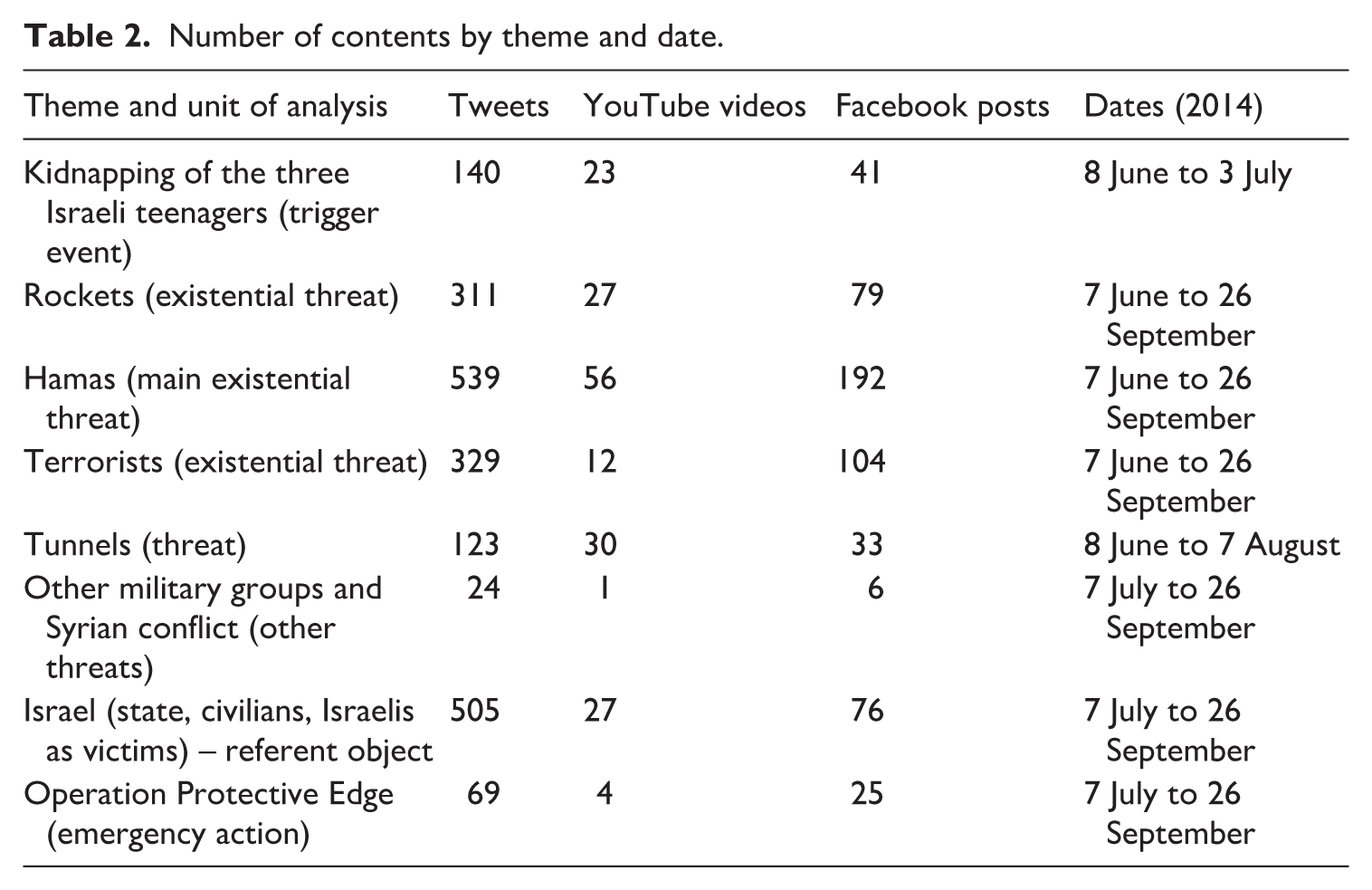
The pattern reveals a clear alignment between the timing of IDF social media activity and the securitization sequence identified in the qualitative analysis. Posting activity increased sharply following the “trigger event” – the kidnapping of three Israeli teenagers – corresponding to the identification of an “existential threat.” Output peaked during OPE (8 July–26 August), reflecting the intensification of communicative efforts accompanying the justification and enactment of exceptional measures. This trajectory mirrors the three steps of securitization and the grammar of security described by the CS framework (Buzan et al., 1998: 33).
Across platforms, Hamas was consistently foregrounded as Israel’s primary security threat, particularly through references to rocket attacks, tunnels, and terrorism. Compared with other regional actors mentioned in IDF communication, such as Hezbollah or developments in Syria, Hamas occupied a central and sustained position within security-related framing during this period.
During OPE, the IDF maintained a highly active social media presence, posting 231 times on Facebook, issuing 1,187 tweets, and uploading 141 YouTube videos.
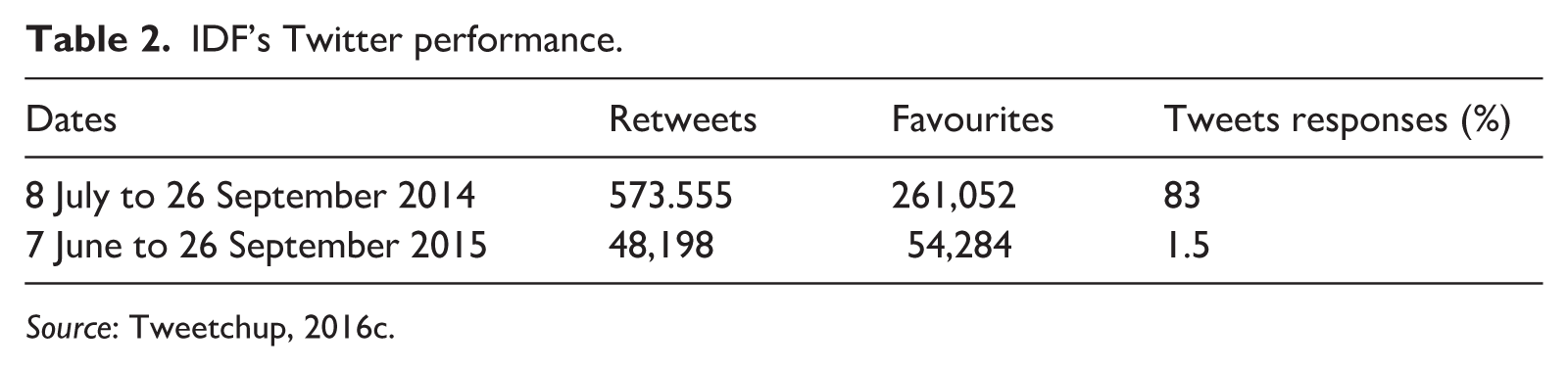
Performance indicators underscore the exceptional nature of this period. The IDF’s Facebook followers rose from 518,745 on 7 June 2014 to 1,457,580 by 26 September – a 181 percent increase during OPE (Fan Page Karma, 2016a). 1 Interactions such as likes, comments, and shares also surged beyond 2013 levels, a year without major conflict. 2 Twitter activity mirrored this pattern: monthly tweets jumped from 24 in October 2011 to 500 during Operation Pillar of Defense (November 2012), peaking at 939 during OPE 3 in July 2014. Between July and August, the IDF tweeted 1,288 times, dropping to 106 in September and remaining below 250 monthly through 2016. Compared to 2014, tweet volume and engagement in 2015 were significantly lower, with the IDF replying to fewer messages than during OPE 4 – highlighting the correlation between military escalation and digital communication intensity. 5
YouTube followed the same conflict-driven logic. 6 The IDF’s channel grew from 32,330 subscribers in July 2010 to 70,490 at the start of the period, reaching 102,740 by September 2014. During OPE, subscribers rose from 45,810 to 60,500 while video views 7 nearly 17 million – from 39.44 to 56.33 million – far exceeding the 10.8 million increase in 2012 and the modest 2.6 million growth in 2013 (Social Blade, 2016a).
These metrics are reported as descriptive indicators of communication intensity and visibility rather than as evidence of audience reception, frame acceptance, or the effectiveness of securitizing moves, which cannot be inferred from these platform analytics alone. Activity levels declined sharply following the ceasefire, returning to substantially lower levels in subsequent months. This pattern indicates that digital communication intensity was closely synchronized with military escalation, rather than reflecting routine or continuous engagement.
Taken together, these patterns demonstrate that 2014 constituted an exceptional moment in the institutionalization of the IDF’s digital communication strategy. Rather than measuring audience reception or influence, the quantitative data illustrate how social media was mobilized as a communicative infrastructure aligned with the sequencing of securitizing moves. In this sense, platforms functioned as functional actors by enabling the scaled production and circulation of securitizing frames during periods of heightened military activity, alongside other institutional and media actors within Israel’s broader security environment.
Conclusion
This article examined the role of social media in the securitization of Hamas during Israel’s 2014 Operation Protective Edge. Digital platforms expanded the reach, visibility, and transnational circulation of security narratives, shaping the conditions under which securitization unfolded. Focusing on the IDF’s English-language communication across Facebook, Twitter, and YouTube, it showed how digital platforms functioned as non-neutral infrastructures through which securitizing narratives were articulated, circulated, and sustained. Rather than acting as autonomous agents or audiences, platforms conditioned the visibility, sequencing, and multimodal expression of security claims, shaping the communicative environment in which securitization unfolded. Empirically, the analysis traced how securitization progressed across three stages: the identification of Hamas as an existential threat, the justification and enactment of emergency measures, and the persistence of securitized framing after the ceasefire. Across these stages, IDF communication consistently framed Hamas as an enduring danger, blurred distinctions between civilians and combatants through visual and textual cues, and articulated Israel’s security claims within a contested international context. Post-ceasefire communication further illustrated elements of post hoc securitization, retrospectively aligning military actions with the logic of necessity and security (Vuori, 2008).
By situating these findings within Israel’s broader condition of routinized insecurity, the article confirms the analytical value of ST in settings of chronic conflict and where exceptionality is normalized rather than episodic. Importantly, the 2014 case captures the moment at which social media became embedded within the IDF’s communication routines, illustrating how securitizing practices adapt to the communicative and format-specific features of platformized media environments without altering their underlying logic. In this sense, OPE represents a formative instance of digital securitization, in which visuality, immediacy, and circulation became integral to the performance of security politics.
These discourses would resurface in later escalations, particularly after Hamas’s 7 October 2023 attacks. Statements such as Likud MP Nissim Vaturi’s claim that “every child born in Gaza is already a terrorist” 8 illustrate the expansion of threat construction from Hamas to Palestinian identity more broadly. Discourses that dehumanize Palestinians and blur the distinction between civilians and combatants – already present in 2014 – were redeployed with greater intensity, becoming central reference points in allegations of genocide (Law for Palestine, 2024). Palestinian citizens also acted as citizen journalists, documenting violence and contesting Israeli claims – a pattern observed both in 2014 and after 7 October 2023 (Kelly, 2025). While not examined empirically in this study, these dynamics highlight the ambivalent and contested character of digital securitization, in which dominant security narratives coexist with counter-narratives and contestation.
This study also has clear limitations. It does not assess audience reception, belief formation, or the effectiveness of securitizing moves, nor does it examine Hebrew-language communication or traditional media coverage directed at domestic publics. The analysis instead focuses on the production and articulation of securitizing narratives, in line with the conceptual scope of ST and the available data. Future research could address these issues. Finally, the findings point to broader implications for the study of securitization in digital contexts. As social media platforms increasingly structure political communication through algorithmic systems and visual affordances, attention to their infrastructural role becomes essential for understanding how security narratives are stabilized and reproduced over time. Future research should continue to examine how platformized media environments condition securitization processes across different conflicts and political systems, refining securitization theory for an era in which security politics are increasingly enacted through digital communication.
Footnotes
Appendix
IDF’s Twitter performance.
| Dates | Retweets | Favourites | Tweets responses (%) |
|---|---|---|---|
| 8 July to 26 September 2014 | 573.555 | 261,052 | 83 |
| 7 June to 26 September 2015 | 48,198 | 54,284 | 1.5 |
Source: Tweetchup, 2016c.

Funding
The authors received no financial support for the research, authorship, and publication of this article.
Declaration of conflicting interests
The authors declared no potential conflicts of interest with respect to the research, authorship, and publication of this article.
Notes
Author biographies
Address: University of Coimbra Faculty of Economics, Coimbra District 3004-512, Portugal. [ email: