



Abstract
Since October 2016, Cameroon has been involved in a violent conflict known as the Anglophone Crisis. This study examines the impact of the hashtag #MyAnglophoneCrisisStory on Twitter in capturing and amplifying the stories of people affected by the crisis. Using R, the authors extracted and analyzed tweets using this hashtag that were posted between 21 October 2020 and 3 November 2020. Only tweets posted in English and French languages were included. To understand the content of the tweets, the authors inductively coded and manually analyzed a total of 1064 tweets, replies, and comments. A categorical analysis revealed the presence of three different types of tweets: ‘Story’, ‘Response to Story’, and ‘Awareness and Advocacy’. The ‘Story’ category had four distinct themes: (1) Senseless Loss of Life: Shot and Killed; (2) The Disappeared: Lost and Kidnapped; (3) On the Move/Elusive Safety: Escape, Displacement; and (4) Prevention and Trauma, Mental Health, and Post Traumatic Stress Disorder. This study supports the concept that even short tweets can have a significant impact and signals the need for more attention and research on this overlooked conflict. Future work can involve the use of more advanced analysis tools to conduct a more thorough examination of tweets.
Introduction
Cameroon is a bilingual Central African country on the Gulf of Guinea. Although it is culturally and linguistically diverse, French and English are the official languages as a result of colonization (Djomo, 2009). Only two of the country’s 10 regions are English speaking, leaving Anglophones feeling marginalized (Julius Ngoh, 2001) and assimilated (Nkengasong, 2012). For several years, some groups in Southern Cameroon (Anglophone Cameroon) have advocated for independence but have been denied the right (Ebai, 2009). Feelings of marginalization in both the legal and educational system in Anglophone Cameroon have led to the recent violent conflict that began in October 2016 in Cameroon’s two Anglophone regions (North West and South West) (Ezemenaka and Ekumaoko, 2021).
What first started with requests by lawyers and teachers for the respect of English language rights (Nfobin, 2019; Nganji and Cockburn, 2019) deteriorated into a violent conflict with daily casualties (United Nations Office for the Coordination of Humanitarian Affairs, 2021; Willis et al., 2020). Several non-state armed groups fought government forces in the Anglophone regions, resulting in deaths, including of citizens not involved in the conflict. Some Anglophone Cameroonians in the diaspora play critical roles in the armed struggle, strategizing and controlling non-state armed groups from abroad. A way of drawing attention to the crisis has been through social media. Social media platforms such as Facebook (CT Nounkeu, 2020), Twitter, WhatsApp, and YouTube are being used to influence the public narratives about the crisis. Social media is increasingly being used in crisis and conflicts as smartphones become more widely available (Akhgar et al., 2013; Miettinen et al., 2015; Reuter et al., 2020).
The conflict has resulted in thousands of deaths, increased poverty and migration, and countless other hardships (Human Rights Watch, 2020; International Crisis Group, 2020). Although Anglophone Cameroonians had been leaving their country for opportunities elsewhere prior to the current conflict (Alpes, 2014), the conflict has exacerbated their desire to migrate. Hundreds of thousands of people have been displaced, either internally in Cameroon or as refugees in other countries (United Nations Office for the Coordination of Humanitarian Affairs, 2021). This displacement has resulted in several challenges, including health and economic consequences.
Cameroon’s government has failed to acknowledge and resolve the issues (Yvan, 2018), prompting citizens and advocates to attempt to draw attention to the crisis in a variety of ways. One of the strategies has been using social media platforms such as Twitter (Nganji and Cockburn, 2019) and Facebook (C Nounkeu, 2020). In 2020, 29.7 percent of Cameroon's total population (approximately 7.8 million people), were estimated to be internet users, with 3.7 million people active on social media. Specifically, it is estimated that 3.8 percent of the active social media users were on Twitter in Cameroon (Funwie, 2020; StatCounter Global Stats, 2020). Despite Cameroon's small number of Twitter users, these social media platforms offer advantages in providing global access and can serve as a forum for discussions about the crisis with local and international communities (Nganji and Cockburn, 2019; Lee et al., 2021).
Research on social media in conflict and crisis situations
Tweeting has become a daily activity for millions worldwide and is now widely used in crises and conflicts. Several studies on Twitter use in conflicts such as Israel–Palestine and Afghanistan have been published, while there are fewer publications on conflicts such as in Kashmir, Burundi, and Cameroon.
In 2007, Hagar used ‘crisis informatics’ (Reuter et al., 2020) to capture this new field of study. Crisis informatics examine social media through broad and complex social systems focusing on how social media is used by a diverse range of users including governments, organizations, and ordinary people. Reuter et al. (2018) provide an excellent overview of social media research frameworks that can be applied to conflict situations.
About #MyAnglophoneCrisisStory
On 21 October 2020, the Cameroon opinion web platform PoiseSocial created the hashtag #MyAnglophoneCrisisStory to encourage Cameroonians to ‘tell your story’ about the Anglophone crisis (https://twitter.com/PoiseSocial/status/1318948145687154689). This hashtag is an example of how social media platforms such as Twitter are being used to quickly convey broad concepts and mobilize global influencers.
This article examines the impact of using the hashtag #MyAnglophoneCrisisStory. We investigated how Twitter was being used to raise international awareness about the violence in Cameroon, using short storytelling analysis as a lens to examine the use of tweets.
The questions addressed were:
What types of tweets were being posted using the hashtag #MyAnglo-phoneCrisisStory?
What kinds of stories did people share?
How does Twitter provide evidence into how the Cameroon Anglophone Crisis is impacting communities?
Methods
Data collection
All the Twitter data used in this study are publicly available on Twitter (www.twitter.com). We extracted tweets including the hashtag #MyAnglophoneCrisisStory using R, a statistical programming software (R Core Team, 2016). The R package rtweet and the Twitter Premium 30-Days application programming interface (API) were used to conduct the extraction. No additional search tools were used. The use of rtweet allowed us to avoid any potential biases that could have arisen if data was collected using the conventional search tools on www.twitter.com, as Twitter was recently discovered to produce biased search results influenced by user-specific characteristics such as location and search history (Kulshrestha et al., 2017). Only English and French language tweets were included in the analyses.
Data collection is difficult in armed political conflicts due to factors including researcher insecurity, regional instability, and limited resources. Therefore, we utilized unconventional data sources, such as social media in our work. Since previous research has successfully used Twitter to analyse conflicts (Al-Agha and Abu-Dahrooj, 2019), including the Anglophone Crisis (Nganji and Cockburn, 2019; Lee et al., 2021), we used Twitter to extract data for our study.
Given the focus on a unique population and the exploratory nature of our work, we used a single case approach (Gustafsson, 2017). Our findings can then be used to further investigate the complexities and consequences of conflicts involving human rights, social, political, and health factors.
Data analysis
Following extraction, we quantified the frequency of Twitter updates (including general tweets, replies, quote tweets 1 retweets, mentions and likes) using #MyAnglophoneCrisisStory per one-hour intervals to select an appropriate timeframe of tweets for content analysis. To investigate popular trends within the data, we identified frequently used hashtags and emojis in tweets using the hashtag #MyAnglophoneCrisisStory. All quantitative analyses were run on our extracted dataset using R.
To explore the Twitter contents using the hashtag #MyAnglophoneCrisisStory, we then performed categorical and thematic analyses of general tweets, replies, quote tweets, and mentions within our data via manual content inspection and coding using NVivo, a qualitative data analysis software.
Content analysis allows for systematic and replicable identification of valid deductions and conclusions from relevant text (Chew and Eysenbach, 2010; Krippendorff, 2018). Thematic analyses, however, identify key patterns in a qualitative dataset. Advantages of thematic analyses include their flexibility, capacity to summarize and identify key features of a dataset, and ability to discern unexpected inferences (Braun and Clarke, 2006). To conduct content and thematic analyses, we used NVivo to systematically code our data set. All Twitter data was maintained in a Microsoft Excel file.
First, we performed a categorical analysis to identify common types of tweets that were posted. The tweets, replies, and comments were interpreted and assigned to representative descriptive terms that we described as ‘codes’ to generate an inductive code list. Relevant codes were then merged, and distinct categories of tweet types were determined.
As we sought to explore the stories and how they were discussed on Twitter, we identified primary stories with the hashtag #MyAnglophoneCrisisStory. Manual identification of the primary stories allowed us to inspect the contents of each post and exclude any unrelated tweets.
We then identified common themes within the primary stories. According to Braun and Clarke (2006: 82), ‘a theme captures something important about the data in relation to the research question and represents some level of patterned response or meaning within the data set’. Using Braun and Clarke’s suggested process, we performed a thematic analysis of tweets describing the stories. Each story was manually inspected and inductively coded. The codes were then collated into representative themes, gathering all data relevant to each theme. Stories were then categorized appropriately into the identified themes and each theme was named and defined. The themes were identified through a collective analysis of the story codes, which were then grouped together based on common themes. Only stories described within tweets were included in this analysis.
We then further reviewed and confirmed the applicability of the common themes in relation to the coded extracts (Level 1) and the entire data set (Level 2), generating a thematic ‘map’ which allows for the organization of the tweets into intricate themes. This ongoing analysis allowed us to distill the meaning of each theme, consider how the categories and themes fit together, and construct an overall narrative of what we had learned from the analysis of the hashtag #MyAnglophoneCrisisStory.
Results
Data collection
As described in the methods, tweets with the hashtag #MyAnglophoneCrisisStory were extracted from Twitter using R, a statistical programming software (Table 1).
Sample table of the Twitter data extraction.
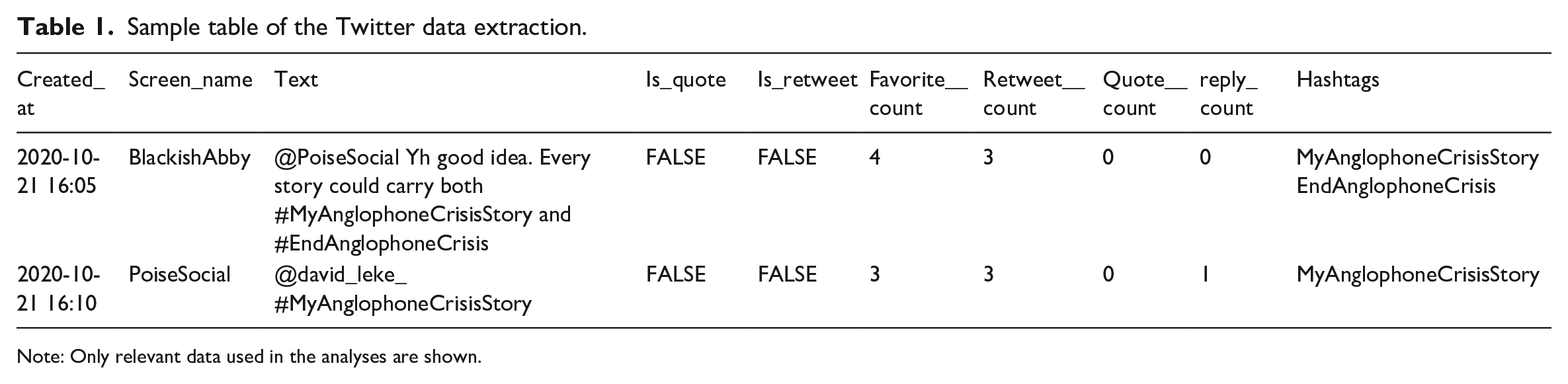
Note: Only relevant data used in the analyses are shown.
Twitter utilization
Temporal metrics
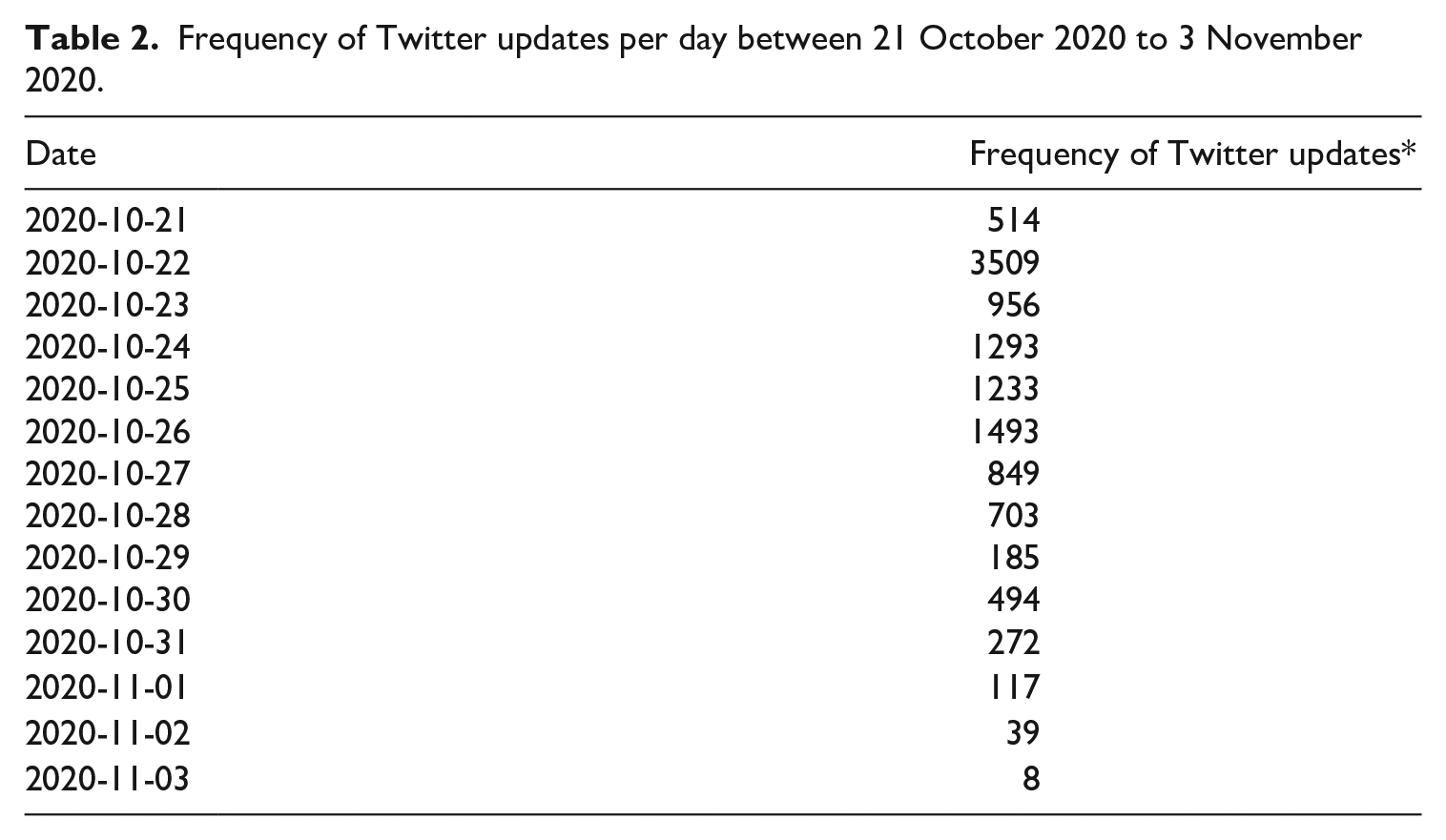
To conduct a timely analysis of only the relevant posts about the crisis, we analyzed the frequency of Twitter updates (including general tweets, replies, quote tweets, retweets, mentions, and likes) using the hashtag #MyAnglophoneCrisisStory starting from 21 October 2020 and going up to 6 November 2020. The frequency of Twitter updates progressively increased from 21 October 2020 then declined around 3 November 2020 (see Figure 1 and Table 2). Therefore, we decided to use the timeframe of 21 October 2020 to 3 November 2020 to conduct further analyses of tweets including the hashtag #MyAnglophoneCrisisStory.
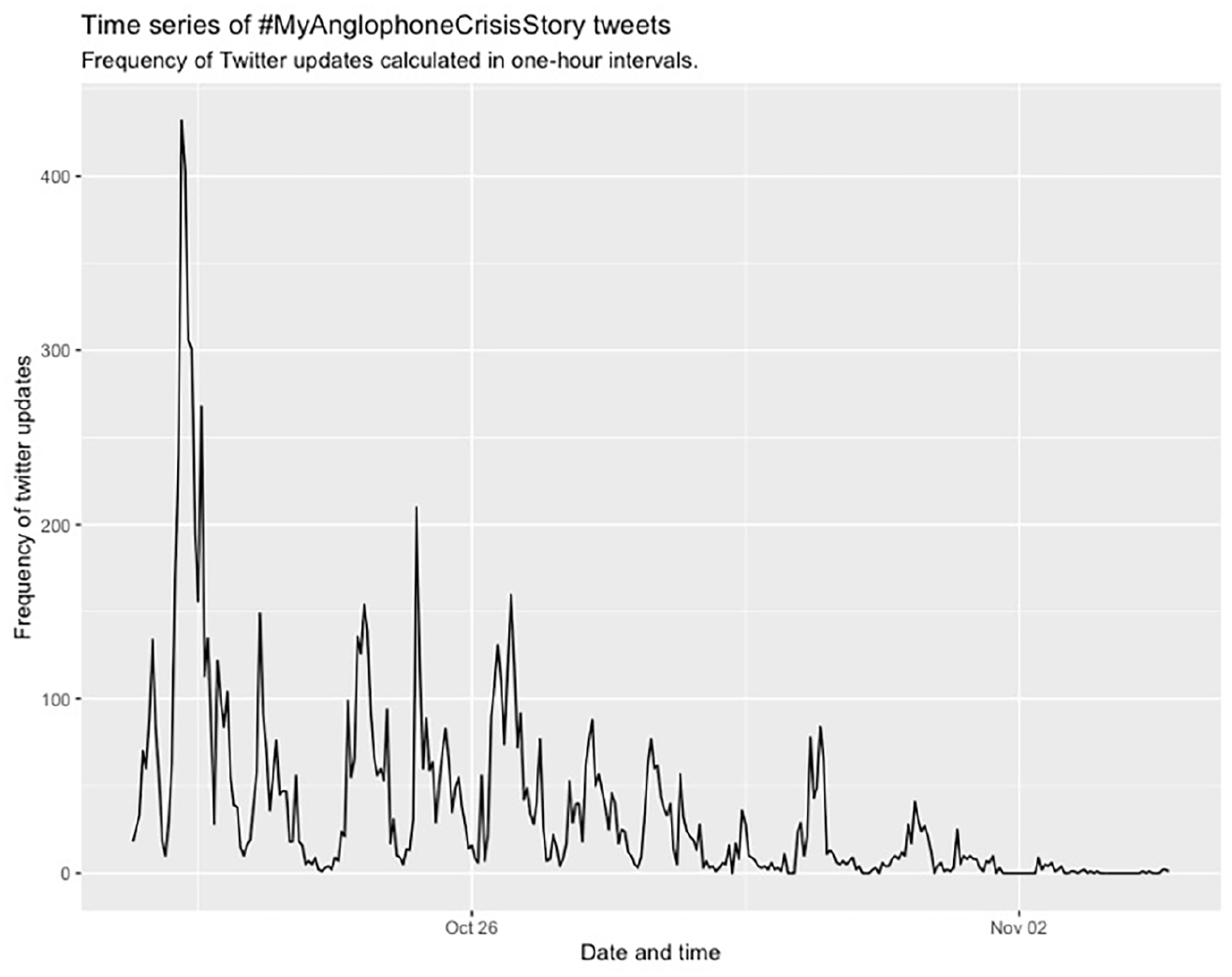
Frequency of Twitter updates including the hashtag #MyAnglophoneCrisisStory from 21 October 2020 to 3 November 2020.
Frequency of Twitter updates per day between 21 October 2020 to 3 November 2020.
Functional metrics
To determine the most highly publicized and followed tweets in our dataset, we identified the most retweeted and liked tweets using the hashtag #MyAnglophoneCrisisStory. The most retweeted tweet was also determined to be the most liked tweet, accumulating a total of 851 retweets and 810 likes (see Figure 2).
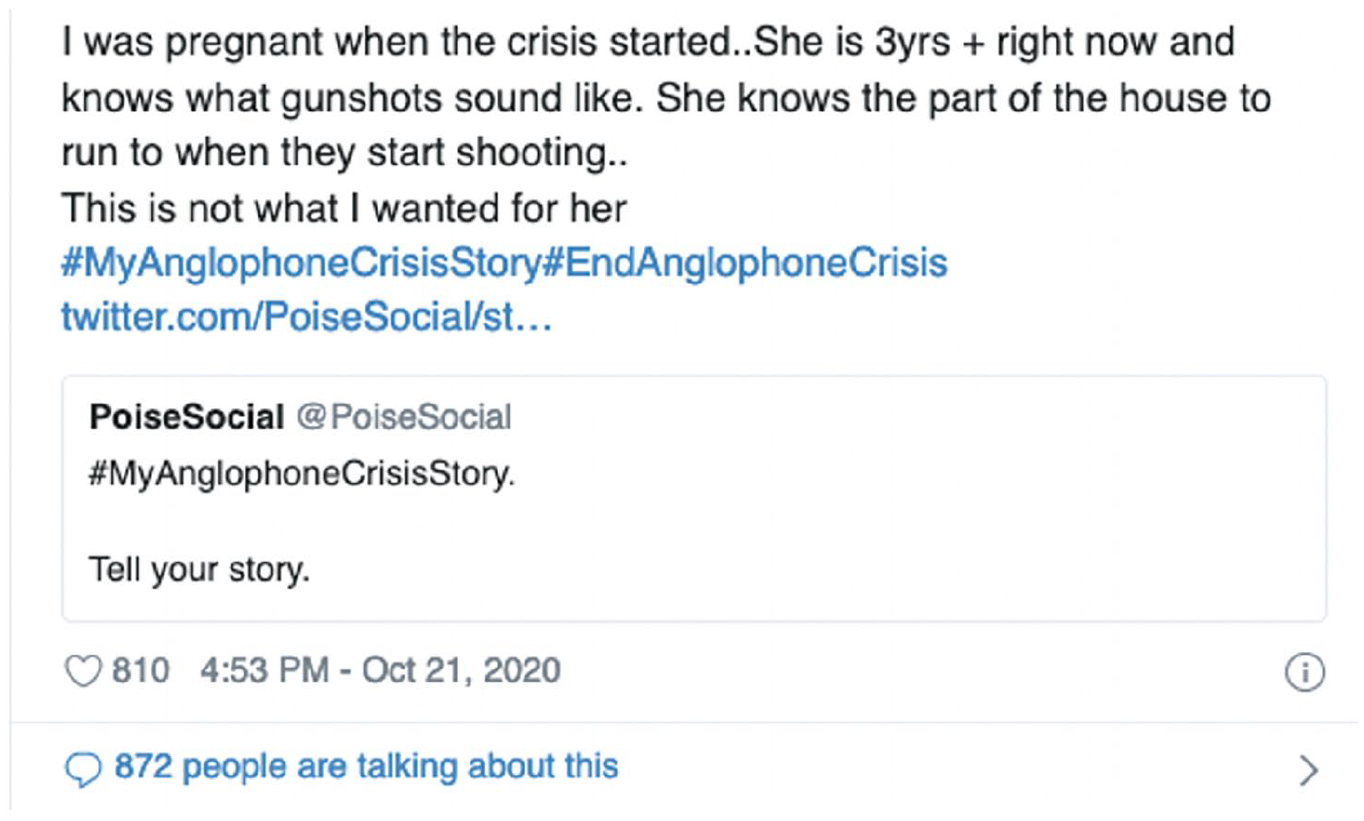
The most liked and retweeted tweet using the hashtag #MyAnglophoneCrisisStory from 21 October 2020 to 3 November 2020.
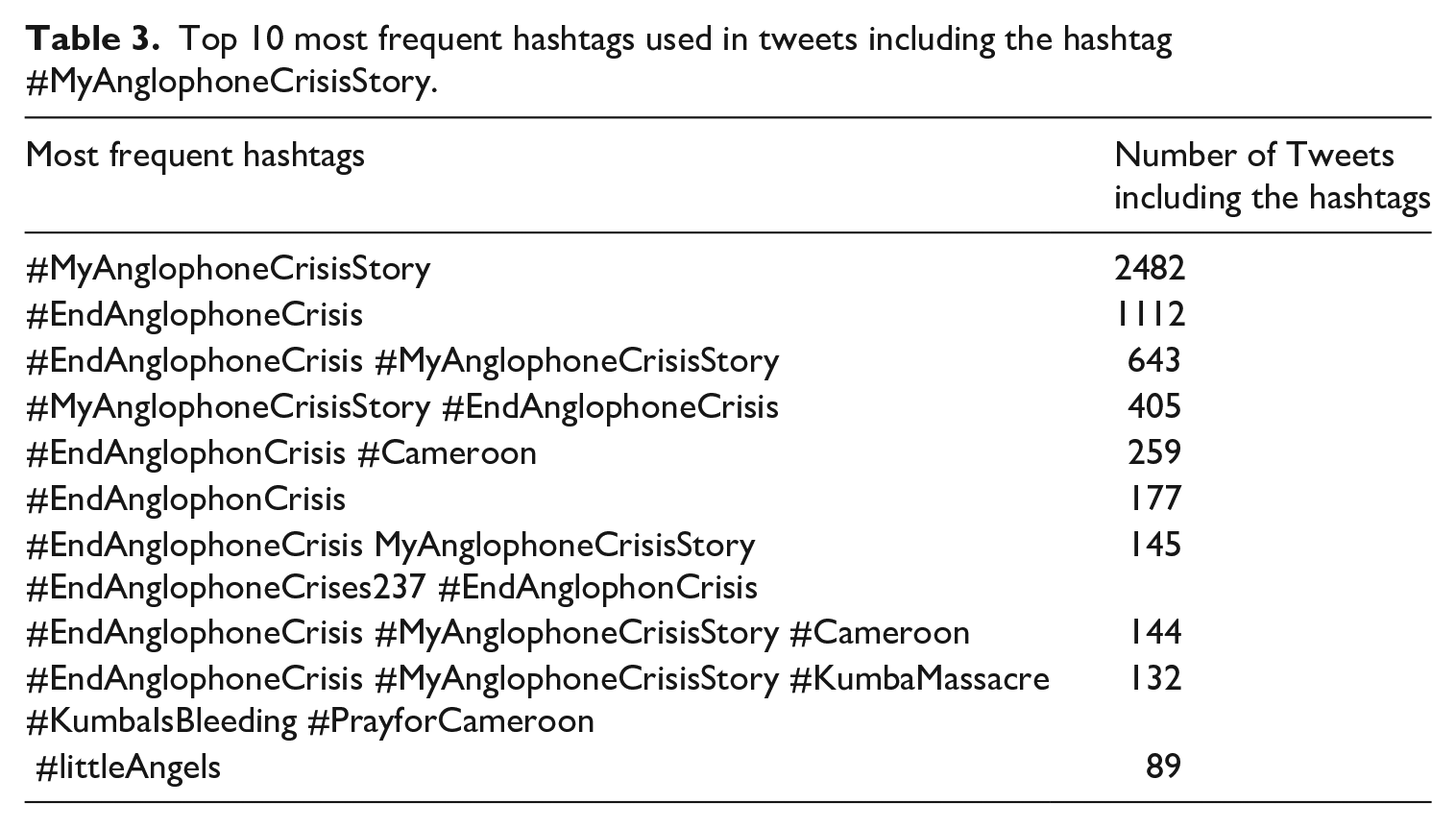
To identify commonly used symbols and words that allow precise content groupings within tweets, the most frequently used hashtags (Table 3) and emojis (Table 4) were identified and quantified. The most frequent hashtag included in tweets with the hashtag #MyAnglophoneCrisisStory was the hashtag #EndAnglophoneCrisis. Notably, eight out of the ten most frequently used hashtags included either the hashtags #EndAnglophoneCrisis or #EndAnglophonCrisis (see Table 3).
Top 10 most frequent hashtags used in tweets including the hashtag #MyAnglophoneCrisisStory.
Top 5 emojis used in Tweets including the hashtag #MyAnglophoneCrisisStory.
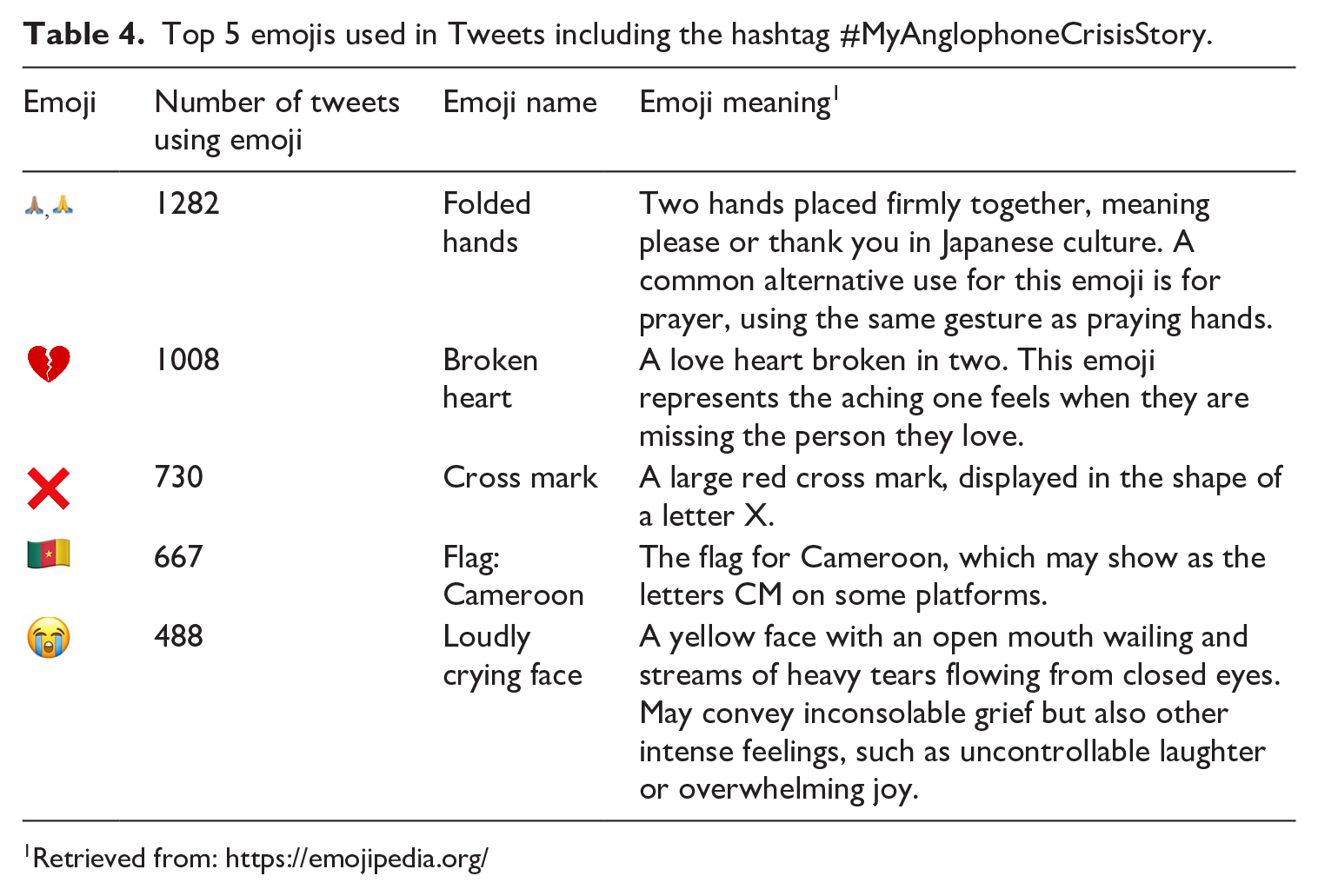
Retrieved from: https://emojipedia.org/
Emojis were also frequently included in the tweets using the hashtag #MyAnglophoneCrisisStory. The most frequently used emoji was the ‘Folded Hands’ and was included in 1282 tweets (Table 4).
Qualitative analysis
Categorical analysis: Identification of types of tweets
In total, we analyzed 901 English and 165 French tweets. Three common types of tweets were prominent, and each tweet was categorized into one of the following: ‘Story’, ‘Response to Story’ or Awareness and Advocacy’ (Table 5). In terms of unique English tweets, we identified a total of 47 ‘Stories’, 123 ‘Response to Story’ tweets and 179 ‘Awareness and Advocacy’ tweets. Within the French tweets, we identified 11 ‘Stories’, 49 ‘Response to Story’ tweets and 66 ‘Awareness and Advocacy’ tweets that were unique. ‘Stories’ encapsulated narratives that recounted individuals’ experiences of how the impacts of the crisis had negatively affected their lives, usually the user’s own experiences. ‘Response to Story’ tweets described acknowledgements and reactions of other users in response to ‘Stories’. ‘Awareness and Advocacy’ tweets sought to promote awareness about the negative impacts of the crisis. These tweets encouraged and attempted to garner the attention of several popular users on Twitter, in the hope of generating an online social movement. Many tweets under this category aimed to raise awareness of #MyAnglophoneCrisisStory by calling on media organizations to promote the hashtag, asking them to retweet their tweet and encouraging users to promote the hashtag #MyAnglophoneCrisisStory (see Table 5 and Figure 3). Some users tweeted the same tweet multiple times with each tweet targeting the attention of a wide range of audiences. For instance, the most repetitive tweet – reposted by multiple users for a total of 401 times – asked users to view other tweets with the hashtag #MyAnglophoneCrisisStory and they often tagged different users in their tweets (Figure 3).
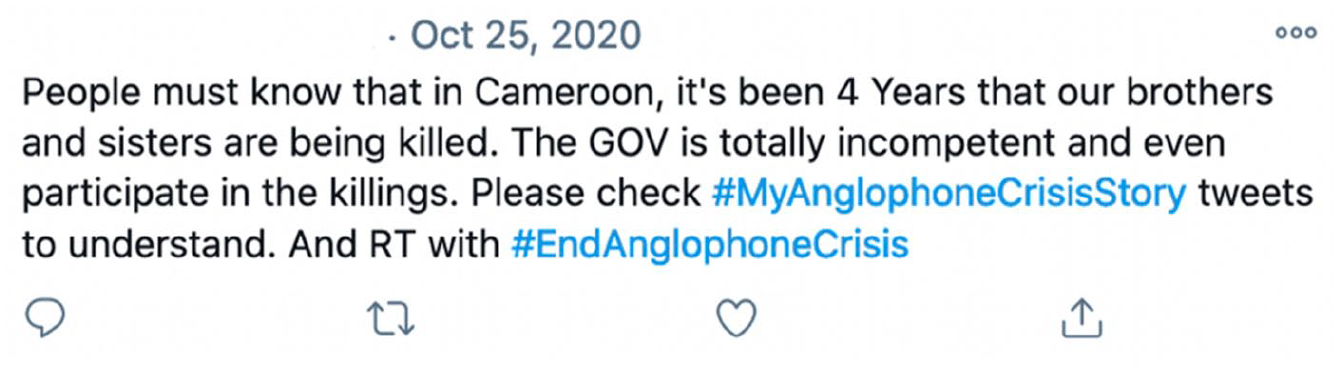
The most frequently reposted ‘Advocacy and Awareness’ tweet.
Common types of tweets posted with the hashtag #MyAnglohoneCrisisStory.
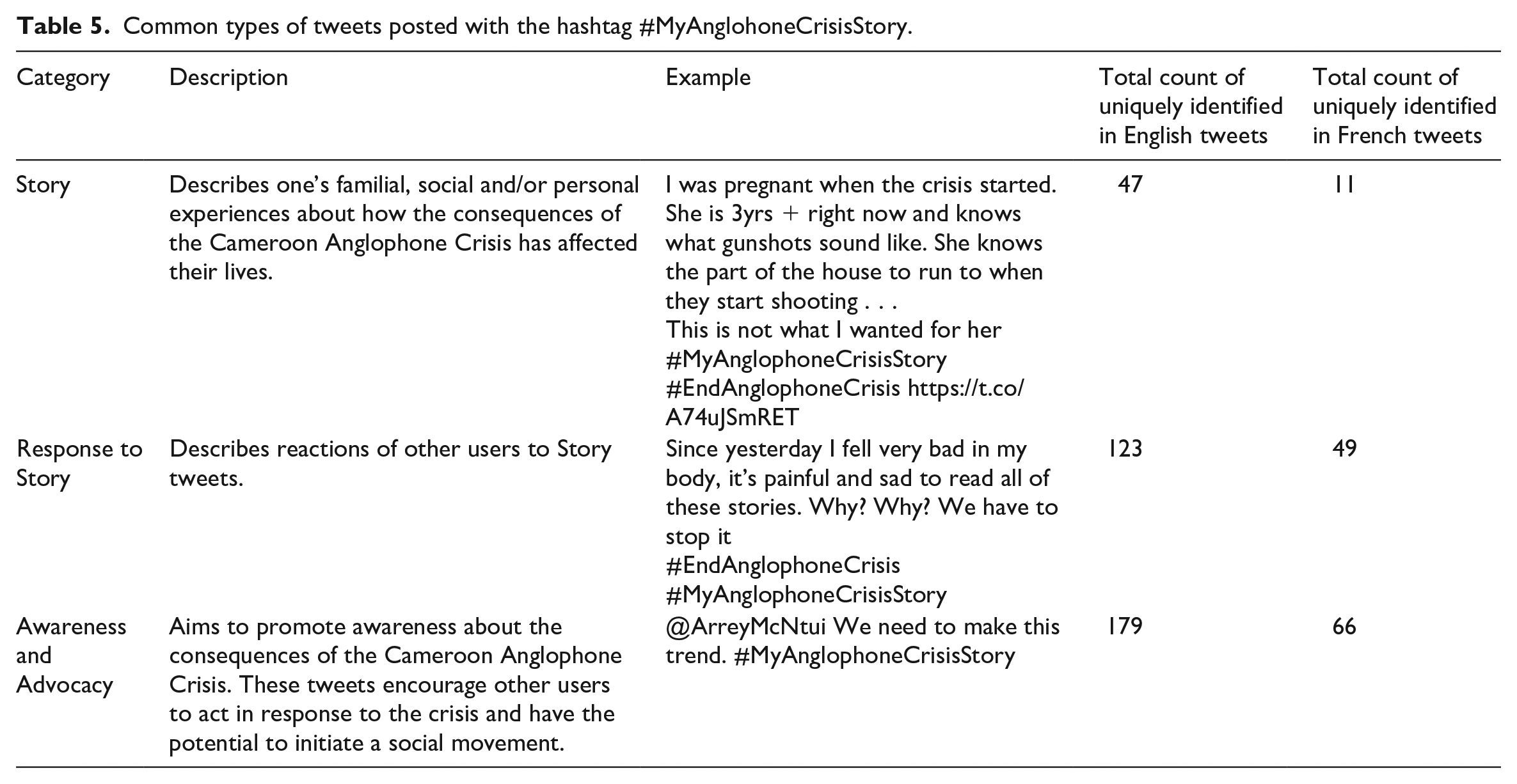
Both the English and French tweets were mostly ‘Awareness and Advocacy’ tweets which sought to draw the attention of other individuals and expose the consequences of the crisis in the Anglophone regions. Several tweets also attempted to drive attention towards ‘Stories’ to encourage awareness of the tragedies occurring in the Anglophone regions.
Many users who tweeted or retweeted using this hashtag were saddened by what was occurring because of the war, and angry at the government’s unwillingness to resolve the crisis. These findings are supported by the most used emojis found in the tweets, such as the ‘Folded Hands’ and ‘Broken Heart’ emojis (Table 4).
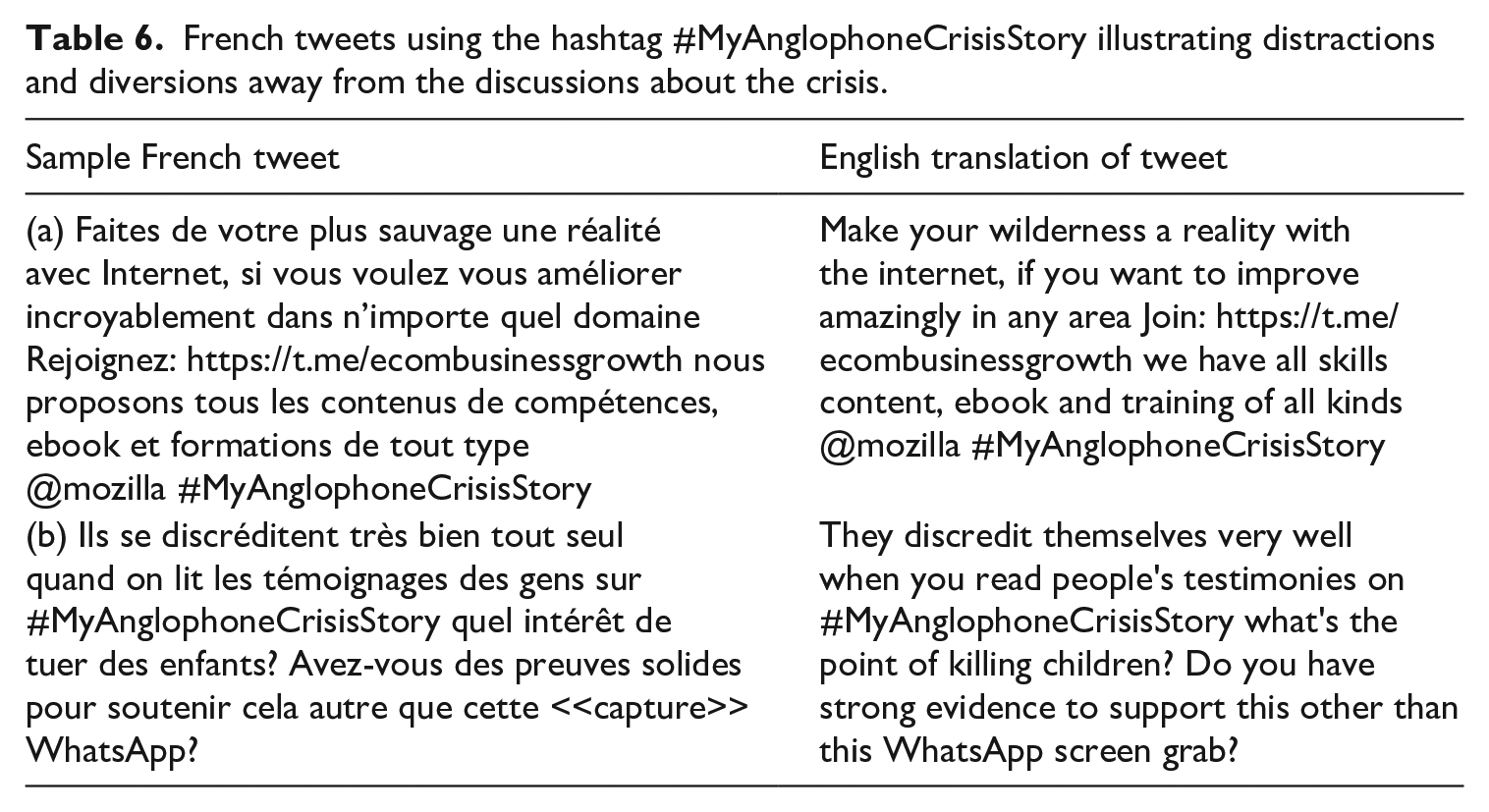
Although most French tweets sought to raise awareness about the plight of Anglophones affected by the crisis, there were a few that were primarily distracting and had nothing to do with the crisis. One, for example, appeared to be an advertisement aimed at driving traffic to a telegram website where they likely hoped to have people join the group, despite using the hashtag #MyAnglophoneCrisisStory (Table 6a). Some French tweets also indicated that some people did not believe the stories being told. Table 6b, for example, depicts a sample French tweet that requests proof from those telling their stories.
French tweets using the hashtag #MyAnglophoneCrisisStory illustrating distractions and diversions away from the discussions about the crisis.
Thematic analysis: Identification of common themes within story tweets
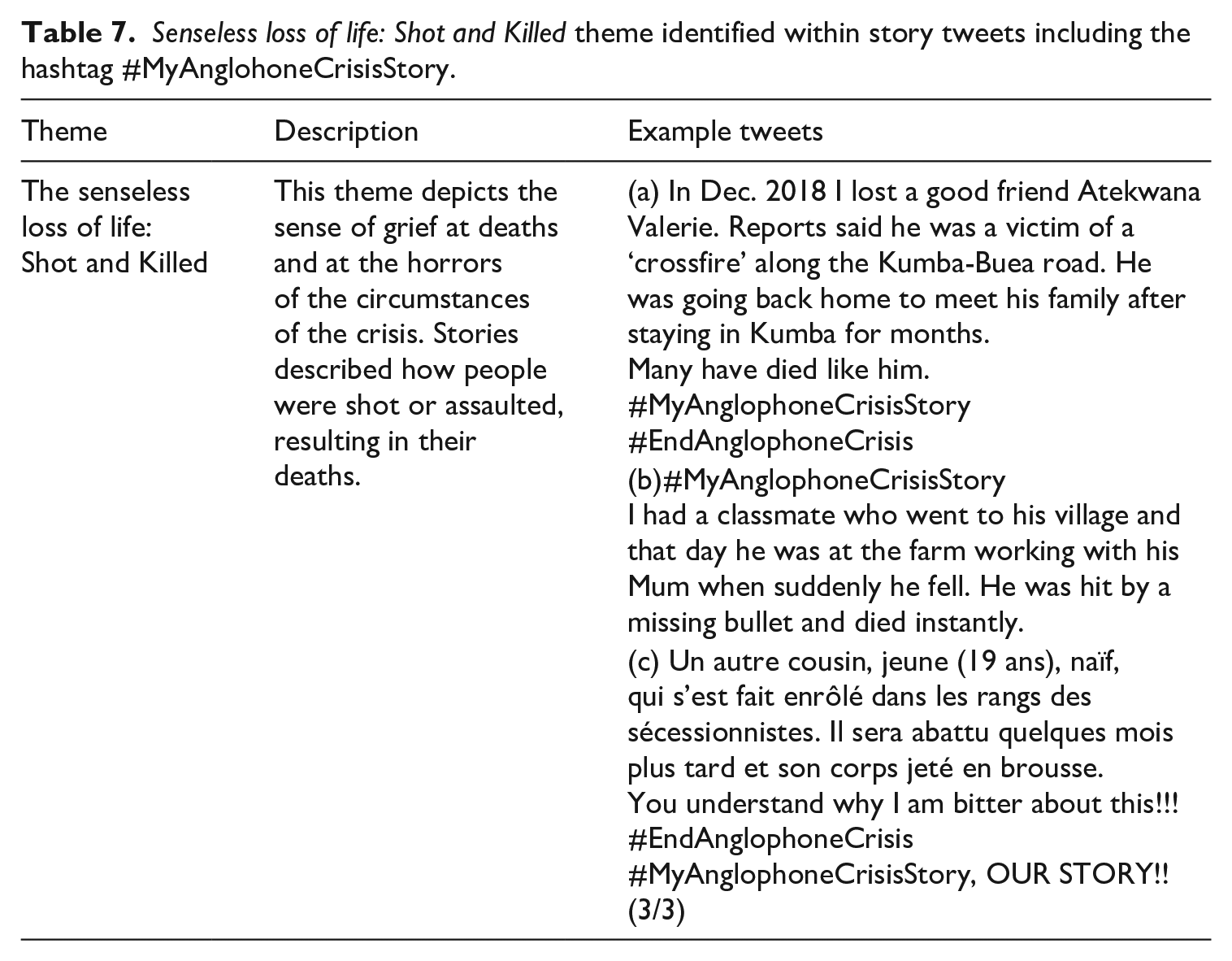
A total of 73 ‘Story’ tweets were identified which consisted of 58 distinct ‘Stories’. The authors read these repeatedly and collaborated to create an inductive (new) code list. Following, the codes and their meanings were discussed. The collation of an inductive code list allowed for the identification of four key themes – Shot and Killed; Lost and Kidnapped; Escape, Displacement and Prevention; Trauma, Mental Health, and PTSD – that were prominent in the stories (see Table 7).
Senseless loss of life: Shot and Killed theme identified within story tweets including the hashtag #MyAnglohoneCrisisStory.
Theme 1 – Senseless loss of life: Shot and Killed
This theme depicts the sense of grief at the deaths and the horrors of the circumstances of the crisis. Stories categorized under this theme described how people were shot or assaulted, resulting in their deaths. Several stories described individuals being killed innocently because they were unintentionally involved in dangerous situations or they lived in an area of conflict. The stories’ settings were described as both public (such as streets, roads, and schools) and private (such as people’s homes). The people affected by the tweets ranged from family members to strangers. Common actions described within these stories were about ‘stray bullets’, cuts and puncture wounds, caught in the ‘crossfire’, and citizens not understanding French commands given by soldiers. In sharing these stories, people emphasized that it is important that each death that has occurred due to the crisis must be recognized and documented, and each person who has suffered the casualty must be honored and remembered (Table 7).
Theme 2 – The disappeared: Lost and Kidnapped
This theme recounted stories of people who had gone missing or been kidnapped. Stories described kidnapped people being held captive for days, weeks, or months, subjected to torture and/or amputation before being released. Family members, schoolchildren, and strangers were among those reported as kidnapped or missing. Some held captive were released after a ransom was paid, while others had ‘disappeared’ at the time of posting and had not yet been found (Table 8).
The disappeared: Lost and Kidnapped theme identified within story tweets including the hashtag #MyAnglohoneCrisisStory.
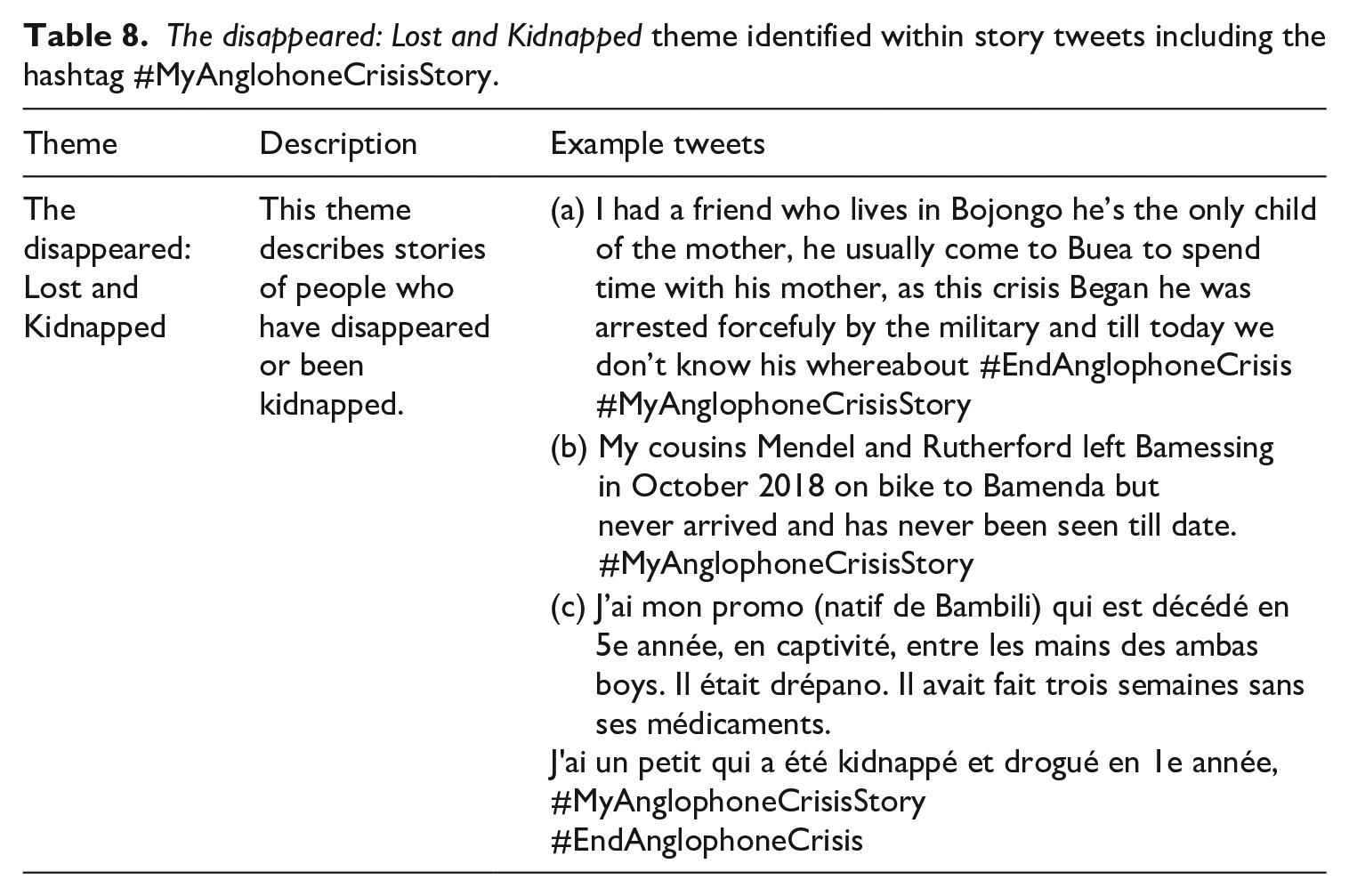
Several stories also reflected people expressing unresolved feelings about missing family and friends. Many people expressed their frustrations and sorrow at having little to no knowledge of their lost family or friend’s current location, circumstances, and safety. As a result, there was no resolution to their search and ongoing concerns (Table 8).
Some stories described the impacts on children, as the kidnapping of children going to school was often described. The long-lasting nature of the atrocities were also described as people expressed experiences of emotional and physical pain, grief, loss of family and feelings of being broken and helplessness (Table 8).
Theme 3 – On the Move/Elusive Safety: Escape, Displacement, and Prevention
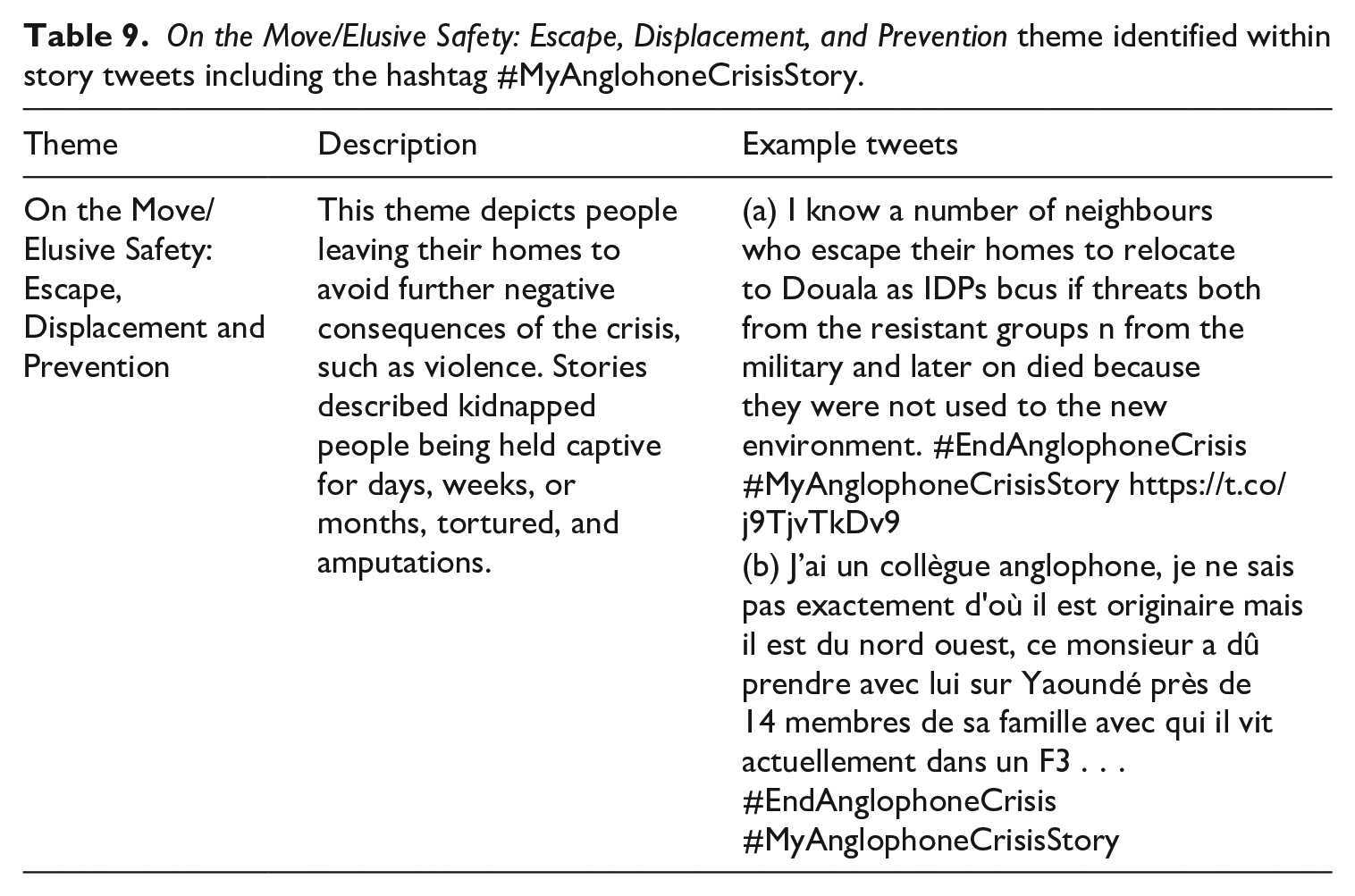
This theme depicts people fleeing their homes and moving to other locations to avoid violence as a preventative measure. Many stories described the effects on families, such as parents separating from and relocating their children for safety. As internally displaced people were dislodged and looking for safe places to live, such homes were depicted as ‘refugee camps’. As a result, many children were left in the care of relatives or strangers, causing long-term parental separation. Several reports stated that homes were destroyed, forcing people to relocate. Some users described the struggle of failing to thrive in a new environment. Some stories also discussed rape and other violent assaults that people faced while fleeing for safety (Table 9).
On the Move/Elusive Safety: Escape, Displacement, and Prevention theme identified within story tweets including the hashtag #MyAnglohoneCrisisStory.
Theme 4 – Trauma, Mental Health, and PTSD
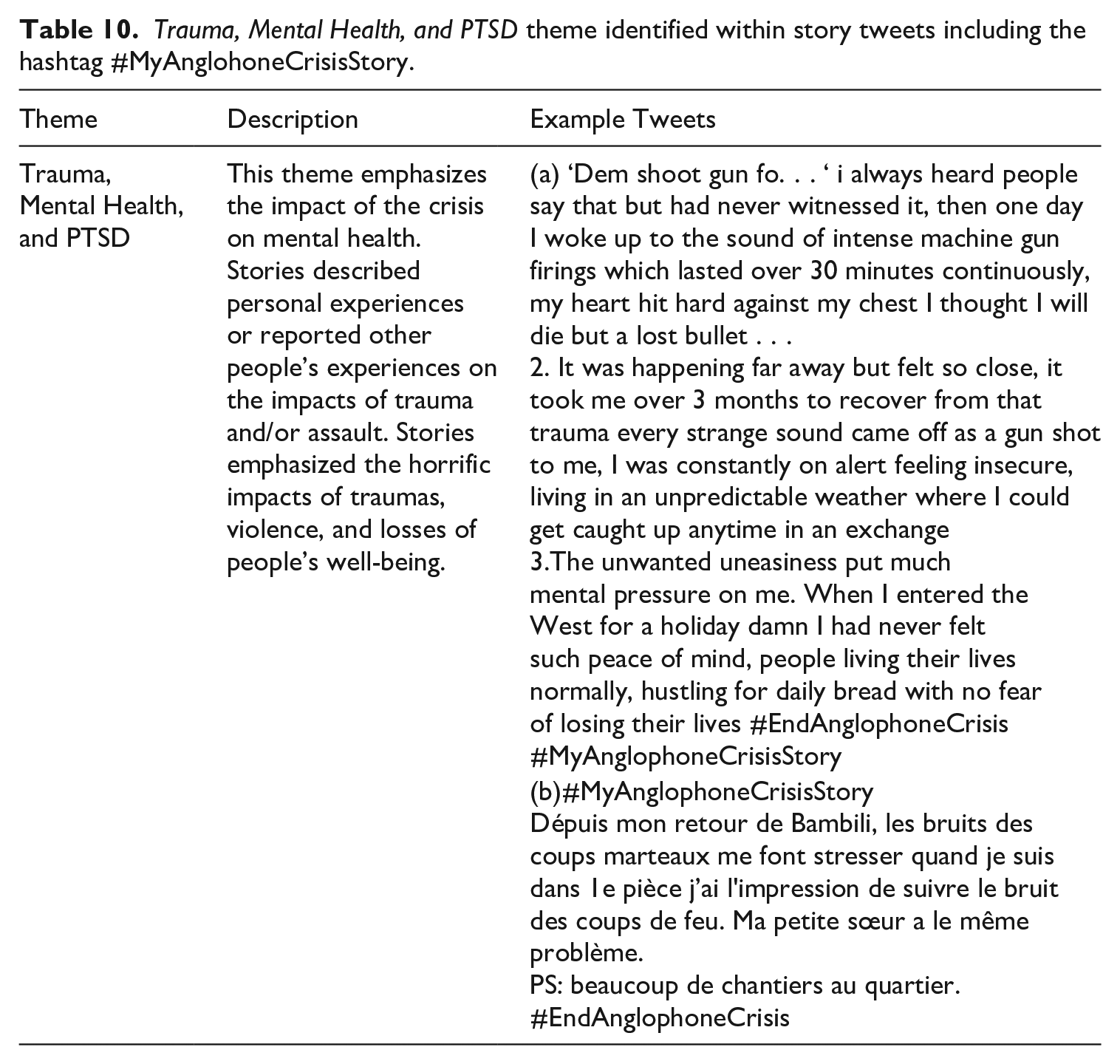
The impact of the crisis on mental health was emphasized within the stories categorized in this theme. Stories described personal experiences or reported other people’s experiences of the impacts of trauma and/or assault. The loss of loved ones, friends, or colleagues was often expressed in many stories. The negative ramifications included the loss of social (friends and colleagues), psychological (personal identity), financial (employment), and basic (adequate housing) elements, which perpetuates the emotional, mental, and psychological trauma inflicted on affected individuals. Many stories expressed a loss of hope and pessimism about the future and daily life. While it must be recognized that all the stories have an emotional element, the stories in this theme emphasized the horrific impacts of the traumas, violence, and losses on people’s well-being (Tables 10 and 11).
Trauma, Mental Health, and PTSD theme identified within story tweets including the hashtag #MyAnglohoneCrisisStory.
Top three most retweeted story tweets including the hashtag #MyAnglophoneCrisisStory.
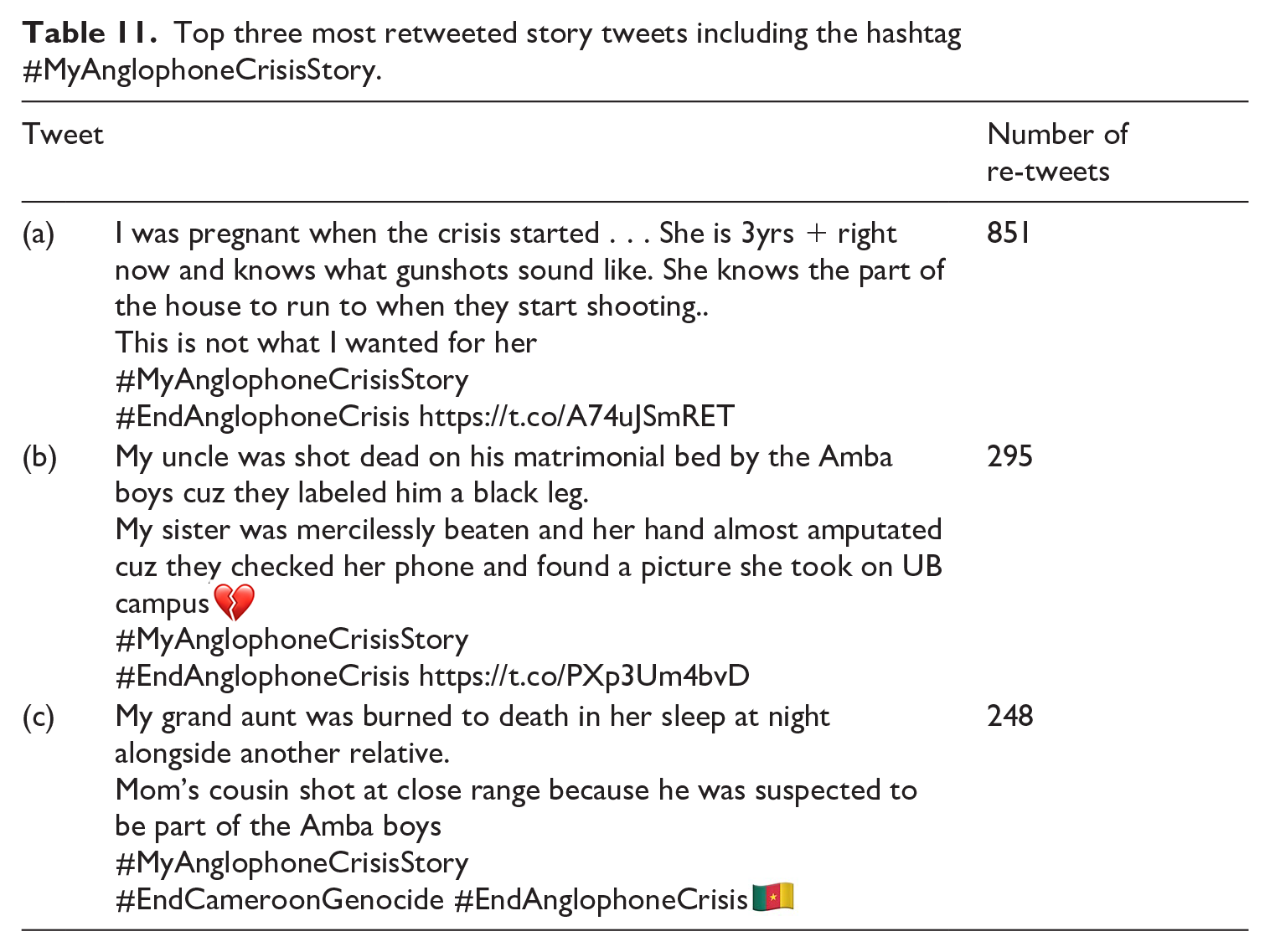
To determine the most popular stories that were being shared on Twitter, we identified the top three most retweeted ‘Story’ tweets in our dataset (Table 11). All the top three ‘Story’ tweets were retweeted at least over 100 times. The most retweeted Story tweet was also the most retweeted tweet in our dataset and was retweeted 851 times. The reasons behind why this specific tweet garnered the most attention is unclear. A careful reading reveals that the tweet regards a woman who was pregnant prior to the crisis and her heartfelt reaction to raising a child in conflict. Her child has only known war and survival strategies; the young mother’s story elicits emotional reactions from readers about the psychological and social effects of the conflict on children and their families. Perhaps readers were reacting to a mother’s expressed concerns – her small child knows how to react quickly to commonly heard gunshots – and the extinction of a mother’s dreams for her child’s future. The gendered nature of this story is also relevant: perhaps readers were reacting to how the warring males involved in the conflict appear to be taking the futures of both this mother and her female child. ‘This is not what I wanted for her’, the mother says, implying she does not believe the conflict is leading to a better future for them.
Tweets about people being shot or burned in their beds, where they would have little chance of defending themselves, are also emotionally evocative for readers, highlighting the injustices that are taking place. These are stories about people who were already vulnerable – such as pregnant women, elderly men and women, and poor people – and had very little chance of survival.
Discussion
Here, we examined the use of the hashtag #MyAnglophoneCrisisStory over a two-week period in late 2020. PoiseSocial, the originators of the hashtag, asked people to share their stories, and the online community responded. Numerous individual stories were shared, garnering hundreds of retweets, the majority of which included additional comments. This online activity illustrated that people and communities have experienced many forms of violence and disruption, and sheds light on how the crisis has affected individuals, families, and communities. The stories affiliated with the hashtag also illustrated that social media can be used to quickly galvanize those who use Twitter. What appeared to have happened was that a relatively well-known Twitter account called for responses using a new hashtag, and the community responded. This kind of appeal to the online community is evident daily in Twitter and other social media platforms.
Use of related hashtags
Our quantitative analysis reveals new information regarding the use of hashtags during the crisis. We found that the hashtag #EndAnglophoneCrisis was included frequently with the hashtag. In addition, one of the first tweets posted in response was calling for people to use #EndAnglophoneCrisis, rather than #MyAnglophoneCrisisStory. The #EndAnglophoneCrisis hashtag has been used for much longer (Human IS Right Cameroon, 2018). There was then discussion and debate by some of the active tweeters about how the two hashtags could be used, and subsequently many tweets did contain both. These interactions illustrate how conversations on Twitter can influence the use of hashtags.
Learning from the stories
Overall, 73 ‘Stories’ were identified. While the total number of stories is unknown, our total is small compared to the millions affected. As mentioned previously, Twitter is not widely used in Cameroon, with only 3.81 percent of the population reportedly using it on a regular basis (StatCounter Global Stats, 2020). Other reasons for the low number of posted stories include the perceived and real insecurity of publicly sharing stories, which can lead to assault and death in Cameroon (Kuika Watat and Jonathan, 2020), as well as the country’s poor internet and electricity infrastructure, which makes it difficult to use social media (Amadu and Samuel, 2020; Williams et al., 2010).
Our thematic analysis indicated there were many kinds of stories shared, with almost all regarding violence and trauma. These types of stories have been supported by several media and non-governmental reports over the past four years (Global Crisis Response Platform, 2021; Human Rights Watch, 2020; Norwegian Refugee Council, 2019; United Nations Office for the Coordination of Humanitarian Affairs, 2021; Willis et al., 2019) and academic studies (Nfah-Abbenyi, 2020; Ngange and Mokondo, 2019; Nwati, 2020). Stories are also being collected in other ways, such as the Database of Atrocities in Cameroon (https://research.rotman.utoronto.ca/Cameroon/) and a collection of poetry titled ‘Bearing Witness’ (Ashuntantang and Tande, 2020). Clearly what began as a regional conflict, and became a civil war, is having a very heavy toll on the country.
Social media has been used as a tool to enable marginalized communities, such as disability rights advocacy groups (Hemsley et al., 2014; Trevisan, 2016), to communicate with the public and comprehend the complexities of political situations through shared personal narratives and experiences (Hemsley et al., 2014; Trevisan, 2016). Similar to previous findings, the hashtag #TheAnglophoneCrisisStory sparked collective actions of sharing personal stories and experiences during the Anglophone Crisis, allowing users to share a sense of identity and community cohesion while raising awareness to gain support from an international audience (Eltantawy and Wiest, 2011). Our findings also demonstrate how Twitter was used as a free and accessible resource for people with limited geographical, financial, and basic resources to share information with an international network (Della Porta and Mosca, 2005).
Traumatic themes
Many stories highlighted the enormous effects on families – disruptions, dislocation, poverty, loss of family members, and lives shattered (see Table 7). The accounts of deaths and terrorized individuals were described in the theme ‘The senseless loss of life: Shot and Killed’. While most of the deaths described were horrific, the stories of the attacks and deaths of several children that occurred just a few days after the hashtag was launched, simply because they were attending school, were particularly horrifying (Wakai, 2020).
The theme ‘The Disappeared: Lost and Kidnapped’ depicted individuals fleeing violence. This theme reflects the lack of internal and international attention paid to the millions of Cameroonians whose homes have been destroyed by the crisis. Tweets in the category ‘On the Move/Elusive Safety: Escape & Displacement & Prevention’ described how, as internally displaced people sought safety in homes outside of the conflict zone – these homes became ‘refugee camps’ (Table 7). These findings point to the need for extensive home restoration and re-establishment following the end of the conflict.
Given the crisis reports and the country’s devolution into a war zone, mental health and trauma were prominent themes in the stories. Many references to people suffering from post-traumatic stress disorder (PTSD) were found in tweets categorized as ‘Trauma, mental health, and PTSD’ (Table 10). These stories underscore an immense impact on the mental health of the population of the country. Furthermore, we discovered a dearth of stories about support for these traumas, implying a scarcity of mental health services, which is supported by other published research (Pacholek et al., 2021) and the Ministry of Public Health (Mviena et al., 2020). Mviena and colleagues also mention increased needs for mental health support because of the country’s ongoing political crises. We believe that these stories are just the tip of the iceberg, with massive mental health needs that have yet to be identified or addressed. These stories highlight the importance of understanding the crisis’s ramifications for people to heal. Numerous people will require assistance as part of the recovery effort for years to come.
It is important to remember that the Anglophone Crisis is occurring in a violent world with many other crises and millions of displaced people (The United Nations Refugee Agency, 2020), and it has not received the attention it deserves. The Norwegian Refugee Council has labelled the Cameroon crisis as the most neglected displacement crisis in the last two years, referencing hundreds of thousands, if not millions, of people affected (Norwegian Refugee Council, 2019). Accurate figures are difficult to obtain; Cameroon is notorious for not having transparent data collection (i.e. Transparency International), and there is evidence that humanitarian organizations are underfunded. Innovative hashtags, such as #MyAnglophoneCrisisStory and #EndAnglophoneCrisis, are one strategy developed to bring more attention to this conflict. They purposefully challenge the lack of global and international attention by attempting to raise awareness of the cause using social media.
This study suggests five important areas for further investigation. First, the experiences of being abducted and held for ransom, including those of children who have survived these traumas, must be better understood. Second, the cultural meanings attached to all persons involved in the daily activities of the crisis are important. A recent study sheds light on the unique role that juju and traditional beliefs play in the conflict (Arrey-Mbi, 2020). Third, the effects of the crisis in other parts of Cameroon have not been thoroughly studied. These stories highlight some issues that must be addressed, such as: looking at the experiences of IDPs in other parts of Cameroon, not just the Anglophone regions; the daily abuses of power perpetrated by those in positions of power, such as the military, police, and government officials; and the drain of resources and economic impacts in other parts of the country. According to recent research, some resources intended for use in the country’s north may be redeployed to the Anglophone Regions (Roberts and Burton, 2020). Finally, this work clearly shows that even brief accounts of atrocities can have a significant impact. Further detailed narratives are clearly needed. We hope that, by amplifying these stories, as requested in hundreds of the tweets we reviewed, more progress toward peace and justice will be made.
Limitations
Our study has some limitations regarding our approach. Given that we only analyzed relevant text within tweets, we did not analyze any embedded media or external links. Therefore, our findings are not an exhaustive representation of all the topics and discourse that occurred in relation to the hashtag #MyAnglophoneCrisisStory. It is possible that a more comprehensive analysis including multimedia and related information in embedded external websites may have gathered additional findings that were not included.
When compared to a multiple case study, a single case study has less generalizability, comparability of findings across contexts, and strength and reliability of the results. However, in our work, a single case study was justified because our objective was to conduct in-depth research on a single topic, which is less effective with a multiple case approach (Gustafsson, 2017).
Since a relatively small population of 3.8 percent of social media users in Cameroon are on Twitter (Funwie, 2020; StatCounter Global Stats, 2020), our findings may only reflect the outlooks and reactions of a certain subpopulation in Cameroon. Therefore, it is important to analyze our Twitter data with discretion in terms of its generalizability to the entire country.
Although English and French are the official languages of Cameroon, many other languages (including Pigeon and German) are spoken in various Cameroonian communities (Djomo, 2009). Since we only examined tweets in English and French, there may have been relevant tweets in other Cameroonian languages that were overlooked. As a result, our findings may not accurately represent the stories of all Cameroonians.
Although social media serves as a valuable tool for dissemination of information and as a platform to provide the unheard with a voice, there are several considerations for its use. For example, there have been concerns raised about the accuracy of information posted on social media platforms such as Facebook (CT Nounkeu, 2020), given that most of the information posted is unverified. It is difficult to verify the accuracy of all the content posted on social media platforms due to the plethora of accounts about the crisis. Nonetheless, ordinary people post reports of events that are also documented in the mainstream media and by human rights advocacy organizations.
Conclusion
Our study explored how the hashtag #MyAnglophoneCrisisStory was being utilized to bring attention to the current circumstances known as the Cameroon Anglophone Crisis. The types of tweets being posted under #MyAnglophoneCrisisStory were ‘Story’, ‘Response’, or ‘Awareness and Advocacy’ tweets. ‘On the Move/Elusive Safety: Escape & Displacement & Prevention’, ‘Trauma, mental health, and PTSD’, and ‘The senseless loss of life: Shot and Killed’ were identified as major themes of shared stories. Our findings show how Twitter was a valuable information source for unheard stories, as well as the negative ramifications of the crisis and the breakdown of various health, social, and political systems. Leveraging the power of social media has the potential to discover and gather information about conflict zones that are difficult to survey using traditional methods.
Footnotes
Funding
The authors received no financial support for the research, authorship, and publication of this article.
