



Abstract
This paper reports on a multimodal critical discourse analysis of the representations of social actors and processes involved in the production of dairy products. Focussing on the website of the UK’s largest dairy company, Arla Foods UK, the analysis interrogates both linguistic and visual choices in representing dairy farmers, dairy cows and the process of dairy farming itself. The analysis demonstrates how recurrent representations function to construct a decidedly favourable image of the dairy industry, which often diverges significantly from the more complex and less palatable realities of dairy production. In particular, the website evidences a range of discursive choices which serve to recontextualise dairy farming, including the anthropomorphising of cows, the portrayal of farms as bucolic idylls, and the omission of less favourable aspects of the process (e.g., its environmental impacts and animal welfare issues). These representational strategies are designed, we argue, to align consumer perceptions with a sanitised version of dairy production, facilitating continued consumption under the guise of ethical engagement. Viewed through the lens of Critical Animal Studies, the public discourse that emerges from the website is argued to be one which serves the ideological and commercial interests of dairy industry actors, by obscuring the intensive and industrial reality of modern dairy farming, all the while constructing an (idealised) image of sustainability and animal care.
Keywords
Introduction
The contemporary dairy industry, characterised by its vast scale and intensive farming practices, sits at the intersection of numerous ethical, environmental and economic debates. With a global annual production approaching 600 million tonnes of milk, and a projected 20% increase by 2050, the stakes for considering the effects of dairy production have never been higher. However, behind the ubiquitous presence of dairy products lies a complex reality of environmental impact and animal welfare concerns, often obscured from public view by strategic marketing and restrictive industry practices. Against this backdrop, the present study examines the linguistic and visual representations of social actors and processes involved in the dairy production process, focusing on the website of one of the industry leaders, Arla. Employing a multimodal approach to critical discourse studies, this study aims to explicate the layers of recontextualisation and representation that are likely to shape public perception and legitimise ongoing practices within the industry. In this way, we explore how these representations not only reflect but also actively construct social realities, likely influencing consumer behaviour and policymaking in ways that perpetuate speciesism and environmental degradation.
Background: The reality and representation of the dairy industry
The reality of the dairy industry
Dairy farming is big business. Globally, there are around 265 million dairy cows, producing nearly 600 million tonnes of milk annually (World Animal Protection UK, 2021). The global consumption of dairy milk, alongside that of other animal-derived products, is expected to increase 20% by 2050 (FAO, 2023). So-called ‘developed’ countries have the highest demand for dairy milk, with other countries expected to follow suit (Capilé et al., 2021). At the time of writing, in the UK there are approximately 1.85 million dairy cows (Statista, 2023). These cows produce 14.9 billion litres of milk each year, the total value of which equates to £6.66 billion (Statista, 2023). The for-profit nature of dairy farming means that milk production typically intensifies over time, with dairy cows being expected to produce more milk in less time and less space (Capilé et al., 2021; Linné, 2016; Noske, 1997). An average dairy cow in the UK now produces 100% more milk than it would have done in the 1970s (House of Commons Library, 2021). Dairy farms are also increasingly large-scale and sometimes rely on so-called ‘zero grazing’ systems (i.e. whereby cut grass is brought to housed cattle). Although the majority of UK dairy cows still have access to grazing on pastures in the Summer, an increasing number of cows are kept indoors longer or all year-round (Compassion in World Farming, 2024; House of Commons Library, 2021; March et al., 2014).
While the production and the demand for dairy milk remains high, there is a significant evidence base for the harm caused by dairy farming to both the environment and also dairy cows themselves (Capilé et al., 2021; Olausson, 2018). In European diets (including UK ones), dairy products account for one quarter of the total carbon footprint (Sandström et al., 2018). In comparison to plant-based alternatives, cow’s milk is responsible for 3 times as much greenhouse gas emissions, uses approximately 10 times as much land, uses between 2 and 20 times as much freshwater, and poses a much greater risk to aquatic ecosystems (Poore and Nemecek, 2018; Ritchie, 2022).
More urgently, dairy farming has been linked to significant animal welfare issues. Dairy cows live, on average, only a quarter of their natural life span of 25 years (Vegan Society, n.d.). During this time, they will typically be artificially inseminated and become pregnant 4–5 times before being considered ‘spent’, at which point they are slaughtered. The calves that dairy cows have are typically separated from their mothers within 24 hours, causing the animals a great amount of distress, with males either being slaughtered or reared for veal (Vegan Society, n.d.). Because of how much milk dairy cows have to produce during their life, and because of the conditions in which they are kept, these animals are susceptible to numerous illnesses, such as mastitis (udder inflammation), gait abnormalities, lameness, heat stress, metritis and respiratory diseases, to give just a few examples (Capilé et al., 2021).
Such poor living conditions are notably placed firmly out of sight of the majority of human populations (in the UK and globally), who tend to occupy urban areas (The World Bank, 2023). In this way, the majority of people are detached from rural spaces where dairy cows are kept (Andersson and Smith, 2023; Capilé et al., 2021; Cook, 2015; Cook and Sealey, 2017; Linné, 2016). Not only is 71% of UK land ‘managed’ by farmers and land managers (Defra, 2022), but much of this is also out of public access (only 8% of UK land is publicly accessible). Moreover, the dairy industry often employs significant legislative force in order to restrict public access to dairy farms (Arla, 2024). As a consequence, few of those who consume dairy milk have first-hand knowledge of how it is produced (Borkfelt et al., 2015), meaning that the media ‘is now the means by which the majority of the population comes to “know” the rural’ (Woods, 2011: 35). This is why the representation of animals in dairy marketing matters, as such mediatised depictions constitute one of the key sources of consumers’ information about dairy milk and its production (Capilé et al., 2021). Such marketing has, nevertheless, been shown to often obscure, distort or misrepresent the realities of dairy farming and dairy cows’ lives, particularly in the context of high-intensity dairy milk production (Linné, 2016). In this way, the mainstream media is likely to contribute to the normalisation of dairy milk consumption, and to normalise the conditions for consumers in order to maintain practices that harm the environment and the animals involved (Capilé et al., 2021; Moore, 2014).
Representations of the dairy industry
Dairy cows are often erased from the marketing of dairy products. They have been observed to be rendered as ‘absent referents’ (Adams, 1990) or ‘animals erased’ (Stibbe, 2012, 2014) in the process (see also Capilé et al., 2021; Linné, 2016). In the UK, visual references to cows are made in only 31% of packaging of dairy products, with such suppression of their visibility detaching the animal-derived products from the animal itself (Capilé et al., 2021). Porcher and Schmitt (2012: 42) observe how, in this way, dairy cows become ‘workers operating in the shadows [. . .] exploitable and destructible at will’.
When dairy cows are represented in dairy product marketing, for the most part they are presented as willing participants in their labour and commodification (Capilé et al., 2021; Linné, 2016; Moore, 2014). This is typically linked to the emergence of a particularly prevalent narrative, that of a ‘happy cow’ depicted in an idyllic and pleasant rural environment (Capilé et al., 2021; Linné, 2016). Here, ‘the cows are willing producers of the milk that is taken from them, and the dairy industry is loving, caring and compassionate’ (Linné, 2016: 719). Capilé et al. (2021: 5) argue that this form of representation has become ‘an emblematic instance of the widespread untruthful portrayal of dairy farming and of the economic power relations behind this industry’. In critiquing the notion of dairy cows’ purported permanent ‘happiness’, the authors argue that ‘[s]upposing that the referred happiness is based on situations and states usually considered happy by humans, the referred happiness is naive and meaningless, or deceptive’ (p.15). In such representations, we observe a degree of anthromorphisation of dairy cows, something extended in presenting them as ‘talking, singing or [. . .] complicit in their own exploitation’ or being able to ‘live free and leisurely lives’ (Baker, 2001; Borkfelt et al., 2015: 1060 [original emphasis]; Capilé et al., 2021; Moore, 2014: 164). This representation of animals being ventriloquised, ascribed human-like emotions, and as engaging in interspecies intimacy, forms part of the public display and mediation of emotions that is increasingly seen in contemporary marketing (Linné, 2016). In the case of dairy marketing, such affect is clearly manufactured, as per the previous discussion of ‘happy cows’, and deployed for commercial gain.
Despite its for-profit nature, the commercial aspect of the dairy industry is often disguised (Muller, 2023). Twine (2012: 20) notes, for example, the emergence of ‘a promissory discourse that represents global “livestock” corporations as somehow benign and even philanthropic providers’, tapping into the aforementioned idea of the dairy industry being ‘caring and compassionate’. Prominent representations of dairy farms also entail the erasure of their industrialisation and technologisation, in many cases being rendered the ‘antithesis of technological culture’ (Corbett, 2006: 212). Here, ‘“big dairy” is hidden; dairy plants and transport are deleted, substituted by bucolic images of green rolling hills or contemporary depictions of open landscapes’ (Andersson and Smith, 2023: 878–879). Such imagery, in turn, has been observed to be imbued with a sense of nostalgia, further connoting ideas of naturalness and tranquillity (Linné, 2016; Moore, 2014), and positioning the dairy farm as a natural and ‘normal’ place for a cow to be (Borkfelt et al., 2015). The depiction of these, what might be termed, ‘rural idylls’, which are strongly associated with British national identity (Lowenthal, 1991), has been shown to be a prominent feature in the marketing of dairy products (Andersson and Smith, 2023; Borkfelt et al., 2015; Linné, 2016; Moore, 2014).
There is a number of reasons behind such prominent representations of dairy farming and cows, one of these being the placation of the consumer by obscuring the realities and results of the commodification of animals, as well as the cruelty this entails (Adams, 1990; Capilé et al., 2021). Borkfelt et al. (2015: 1054, 1068) discuss here the ‘silent contract’ that exists between producers and consumers and the ‘willed blindness’ of consumers which allows them to avoid the experience of discomfort that might come with knowing about what animal exploitation entails and, in that spirit of avoidance, to continue their existing consumption patterns. This is crucial to maintaining a positive self-image of a consumer as a moral person (Olausson, 2018). The cognitive dissonance stemming from simultaneously expressing sympathy for animals and exploiting them is resolved here, then, through the legitimation and rationalisation of dairy milk production and consumption, which is supported by the representation of such acts as ‘ethically justifiable’ (Capilé et al., 2021; Linné, 2016; Olausson, 2018).
Despite the manifold ethical and environmental concerns associated with the production and consumption of dairy milk, movement away from such products is very slow. In this paper, we consider how the way in which dairy products are marketed often aims to obscure or misrepresent the very practices (and their associated social actors) that give to the aforementioned ethical and environmental concerns. While the afore-discussed studies have shed significant light on general trends in such representations, marketing texts in this domain have yet to subjected to a linguistically informed analysis. As such, there is a gap in knowledge respecting the precise language forms by which the social actors and processes involved in dairy milk production are represented in this context, and through which the associated roles and processes might be legitimated as morally and environmentally ethical. Yet, such a focus is important, since as Muller (2023: 987–988) observes, ‘[t]he dissolution of systemic violence between and across species cannot occur without sufficient attention towards how language and master frames naturalise and normalise oppressive inter- and cross-species violence’. In this paper, then, we seek to shed light on the discursive (i.e. lexical and visual) choices that dairy product producers make in order to legitimate the practices associated with the industry. We do this by focusing on the discursive representation of the social actors and processes involved in dairy production, focusing, as noted, on the website of one of the industry leaders.
Data and analytical approach
In examining the (multimodal) discursive representations of social actors and processes involved in dairy production, the present analysis focuses on the website of one of the leading producers of dairy products in the UK, Arla. Arla Foods UK, to give the organisation its full name, is a subsidiary of a large international co-operative based in Denmark, one of the largest producers of dairy products in Europe and in the world. The group has a significant presence not just in Scandinavia, but also in the UK (where it is the market leader), as well as in other European and international markets. As a co-operative, the company is owned by dairy farmers who supply the milk.
Research suggests that online sources, such as Arla Foods UK’s website, constitute the primary means through which individuals seek information about, and thus learn about, the food they consume, including its nutritional properties and origins (Quaidoo et al., 2018). Indeed, the Arla website is couched in a heteroglossic, informative-cum-promotional discourse; as well as promoting Arla’s brand and products, the site also presents information about the processes involved in dairy production, including offering educational games and other interactive elements through which website users can learn more about dairy products and farming. Intended users of the website thus appear to be members of the public interested in learning more about Arla’s products and how these are made. Key sections of the website include information about the company, its work and its farms (‘About Arla’), details regarding Arla’s products (‘Brands’), a recipes section (‘Recipes’), descriptions of Arla’s efforts to make its practices more sustainable (‘Sustainability’), a section with articles about farming, nutrition and environment (‘Food for thought’), a ‘contact us’ section (‘Contact & Help’), and legal documentation on court injunction that prevents protests around Arla’s farms (‘Injunction Notice’). Our analysis addresses the entire site – including all of its constituent pages – and focuses on the most frequent representations of the particular social actors and processes considered (discussed below).
Commercial websites, the Arla site included, are characteristically multimodal in their design, incorporating the use of language, image, layout, colour, font and so forth, to convey meaning and represent social actors, processes and other things in the world. Thus, in order to apprehend, as far as possible, such representations in their full multimodal array, we adopt a multimodal approach to critical discourse studies (MCDS; Machin, 2013). In particular, adopting an affordance-driven approach to MCDS (Machin, 2016), we focus on lexical and visual choices (Machin and Mayr, 2023), seeking to identify recurring choices that contribute to the discursive representation of two sets of social actors (dairy farmers and dairy cows), and the processes involved in dairy farming. To this end, it was analytically productive, in the sense of providing as comprehensive a view of such representations as possible, for us to draw on various, complementary frameworks to account for the range of discursive choices made in these representations. As such, our analysis considers, at the lexical level, choices respecting nomination and predication (Reisigl and Wodak, 2015), including assigned roles and agency (van Leeuwen, 2008). At the visual level, our analysis is mostly concerned with choices pertaining to photography – as the principle mode through which social actors and processes are visually depicted on this website – and specifically with respect to choices such as angle of interaction and distance of shot (Kress and van Leeuwen, 2020), as well as other decisions pertaining to the depiction of represented participants and their actions, props and settings (Harvey and Brookes, 2019; Kress and van Leeuwen, 2020).
We interpret the discursive choices identified as being broadly socially constructive, and as having a dialectical relationship with society (Fairclough, 2010). In other words, we view such choices as having the power not only to construct, but also to be constructed by, the social context(s) in which this website was designed and continues to be engaged with. In this sense, such discursive choices both reflect and shape attitudes, identities, relationships and actions in the world. In our analysis, we seek to interpret the discursive choices that constitute the representations in terms of the types of social relations that are constructed between the social actors depicted in the website and website users (Kress and van Leeuwen, 2001). Importantly, we also view text designers’ choices of discourses not as arbitrary, but as motivated by their ideological positionings (Kress, 1993). With this in mind, we seek to unpack the discursive choices evident in the site in terms of the ideological and commercial motivations that underlie them. In doing so, we want to highlight the attitudes and assumptions about animals, animal-derived (dairy) products, and animal-human relationships, all of which both refract into and are conveyed by the website (Kress and van Leeuwen, 2001).
MCDS, like Critical Discourse Studies (CDS) in general, can be characterised by its emancipatory agenda (Wodak and Meyer, 2015). As analysts, we are critical of what we perceive, in the process of dairy production, to be humans’ exploitation of other animals. Accordingly, our analysis interrogates and views critically, as part of its ideological effects, the potential for the discourses making up websites such as Arla’s to legitimate and otherwise justify such exploitation. In this respect, we interpret the discursive choices identified through the lens of Critical Animal Studies (CAS). Broadly put, CAS is an interdisciplinary field that examines the relationships between humans and non-human animals (Taylor and Twine, 2014). Specifically, it seeks to critically interrogate themes such as animal rights, speciesism, animal agency and the intersections of animal oppression with other forms of social and ecological injustice (see, e.g. Adams and Gruen 2014; Brookes and Chałupnik, 2022a, 2022b). As an interdisciplinary approach, CAS draws on insights (and methodologies) from various disciplines – including philosophy, sociology, anthropology, psychology, geography and others – in order to understand and critique the material and discursive placement and representations of animals in society. Like (M)CDS, CAS has an emancipatory agenda, and advocates for the liberation of animals from systems of oppression. As part of this, those adopting a CAS approach actively engage in ethical debates and political advocacy, aiming to promote change in policies, practices and perceptions concerning animals (Taylor and Sutton, 2018). Ultimately, CAS aims to challenge speciesism – that is, broadly put, the discrimination against beings based on their species membership (Ryder, 2010 [1970]; see also: Horta and Albersmeier, 2020). This challenge is based on a fundamental questioning of the moral and philosophical grounds of human superiority and the resultant (mis)treatment of animals. Based on this view, research and advocacy under the CAS umbrella thus seeks to uncover and call out the (discursive) practices through which speciesism is realised and supported in society. In the present study, we thus aim, through our MCDS analysis, to explicate and critically interrogate the discursive practices through which speciesist attitudes underpin, and are reinforced by, the representations of social actors and processes involved in the dairy industry.
Findings
The results of our analysis are reported in terms of the social actors and processes that are depicted on the Arla website. In particular, we begin by considering the representation of the social actors involved (first, dairy farmers and then, dairy cows), and then move on to consider the representation of the processes involved in dairy farming itself.
Representations of dairy farmers
On the Arla website, it is dairy farmers, and not the cows, that are frequently presented as the producers of milk (see Extracts 1 and 2), with such erasure of cows serving multiple functions. Among these is the obscuration of the involvement of cows and the reality of their lives from the process (and with that, mention of any ethically problematic elements). Such erasure of cows also allows the website to place farmers at the centre of the process of milk production; indeed, implying that it is they who ‘produce’ the milk, and framing them as hard-working.
(1) Our Arla farms are run by farmers who are passionate about producing high quality milk for you and your family.
(2) We produce hundreds of different dairy products - and whichever Arla product you choose, you can be sure it is packed with the natural, nutritious qualities of our milk.
The construction of dairy farmers as hard-working is also achieved more explicitly across the website (Extracts 3 and 4). This keys into a wider societal discourse which positions farmers as being especially hard-working (Phillipov and Loyer, 2019).
(3) Life on the farm is hard work! Typically, an Arla farmer will get up at 5am to milk and feed their cows before they sit down for breakfast – even on Christmas day!
(4) This is the result of years of hard work and expertise from Arla farmers to manage soil, crops, animals and businesses to produce dairy in the most efficient and sustainable way.
Farmers are also presented as benevolent, looking after the health and wellbeing of ‘you’ and ‘your family’ (Extracts 5 and 6). Not only do farmers ‘produce’ milk, but they are also ‘passionate’ about bringing its ‘natural goodness’ to customers. Such recurrent use of vague but undoubtedly positively loaded lexis to appraise the milk products allows Arla to frame the farmers and their work as being oriented towards a greater social good in the sense that they support the health of reader-viewers’ families. As Extract 7 shows, these positively loaded qualities are also something that Arla farmers are described as being ‘proud’ of.
(5) Our milk is then carefully handled by dedicated teams at Arla, who are passionate about bringing the natural goodness of milk to you and your family.
(6) That’s why we’re so keen about caring for our cows and producing milk which is full of natural dairy goodness. Only by producing the best quality milk can we make the great Arla products that you and your family love.
(7) Arla farmers are proud that milk is nature’s original superfood, full of natural goodness and packed with vitamins and minerals.
This sense of dairy farmers being benevolent actors is further enforced through the frequent elision of their commercial activities. In Example 5, for instance, dairy farmers do not ‘sell’ milk to consumers but are instead described as ‘bringing’ it to them (and elsewhere on the site, as ‘giving’ and ‘providing’ it to the public). Such lexical choices background the transactional nature of the farmers’ work. Taken together, these kinds of choices obscure such commercial activities in favour of more seemingly benevolent ones, which helps in turn to frame dairy farmers as actors who are motivated by – indeed, ‘passionate about’ – a desire to support the health of families in the country, rather than being motivated by financial gain.
The benevolence of dairy farmers also extends to the cows themselves. As the extracts below show, farmers are linguistically constructed as being passionate about cows and cow welfare, and are undertaking activities to ensure this.
(8) A top priority for Arla farmers is the health of their cows, after all they are their most trusted colleagues and their welfare is key to their success.
(9) Arla farmers want to keep their cows comfortable and well cared for, because healthy cows are happy cows – and happy cows produce more milk.
(10) A well-treated cow is generally healthy and produces high quality milk. So, caring for the ladies is a win-win for the cow and for the farmer.
At the visual level, when farmers are shown, we never see them directly involved in the act of milking cows. Instead, they are often shown walking through fields; for example, Figure 1 is a still of a visual montage of numerous farmers, shown in the scenes in which they have been depicted within a video about sustainable farming. These farmers are shown either walking around outdoor green spaces (presumably, representing farms) – again, implicitly reinforcing the link between farming and nature, and thus the rendering the products of such farming as ‘natural’. At other points, the farmers are shown as involved in other activities that are ostensibly in the interests of the cows’ welfare, such as petting, feeding and grooming cows. Tellingly, these depictions tend to rely on close-up and medium shots (with the distant shots reserved for cases where the aspects of the setting are instrumental – for example, capturing wind turbines in the distance (discussed later)). These shots, Kress and van Leeuwen (2020) contend, simulate a kind of social closeness, and thereby invite reader-viewers to engage with the depicted participants as familiars. This effect is further enforced through the use of frontal angles of engagement and the recurring use of so-called ‘demand’ images, with the only exceptions being cases in which the farmers visually address some instrumental prop or the cows themselves (discussed more in the forthcoming sections). Exemplified in Figures 2 and 3, such images are typical of the visual depiction of farmers throughout the website.
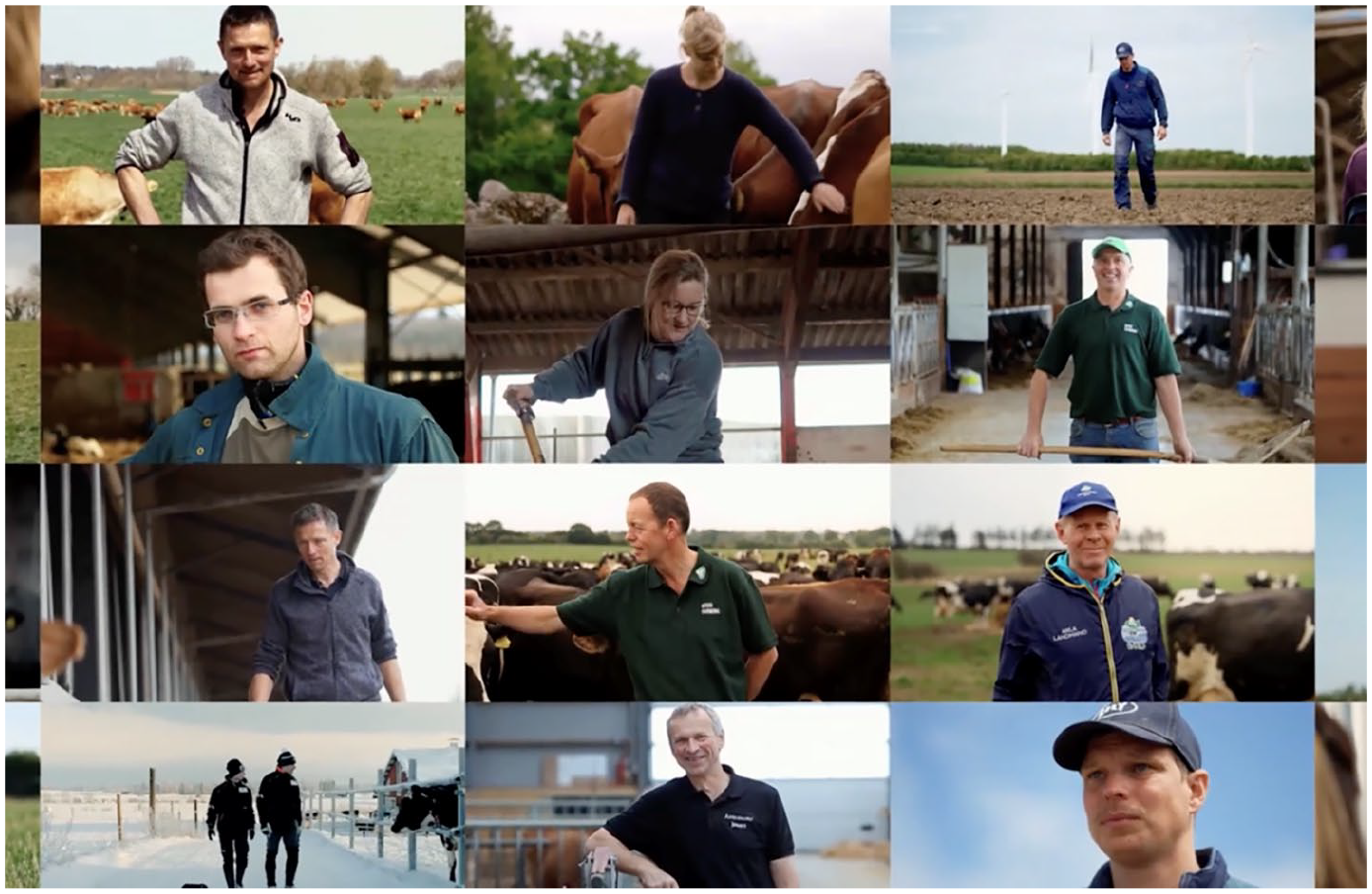
Still from a video about sustainable farming.
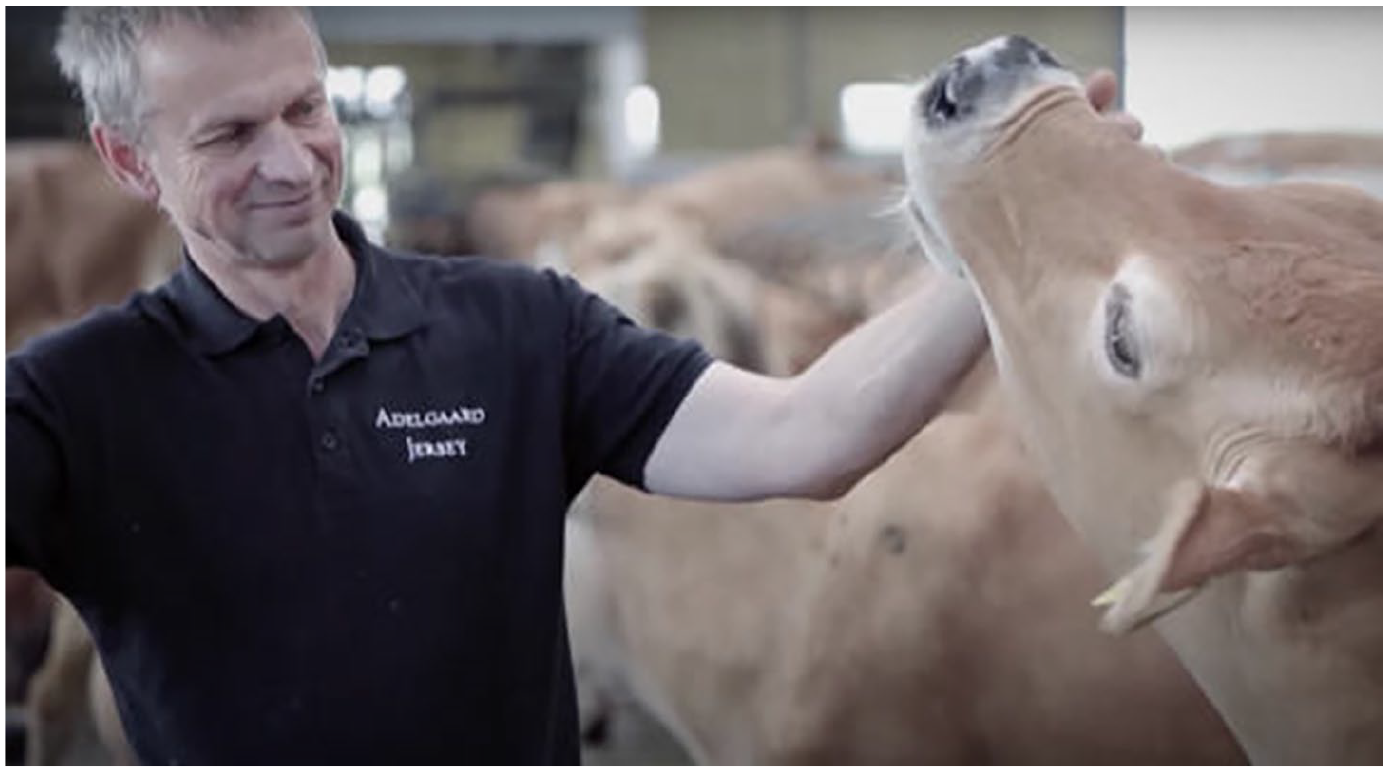
Image of a farmer petting a cow.
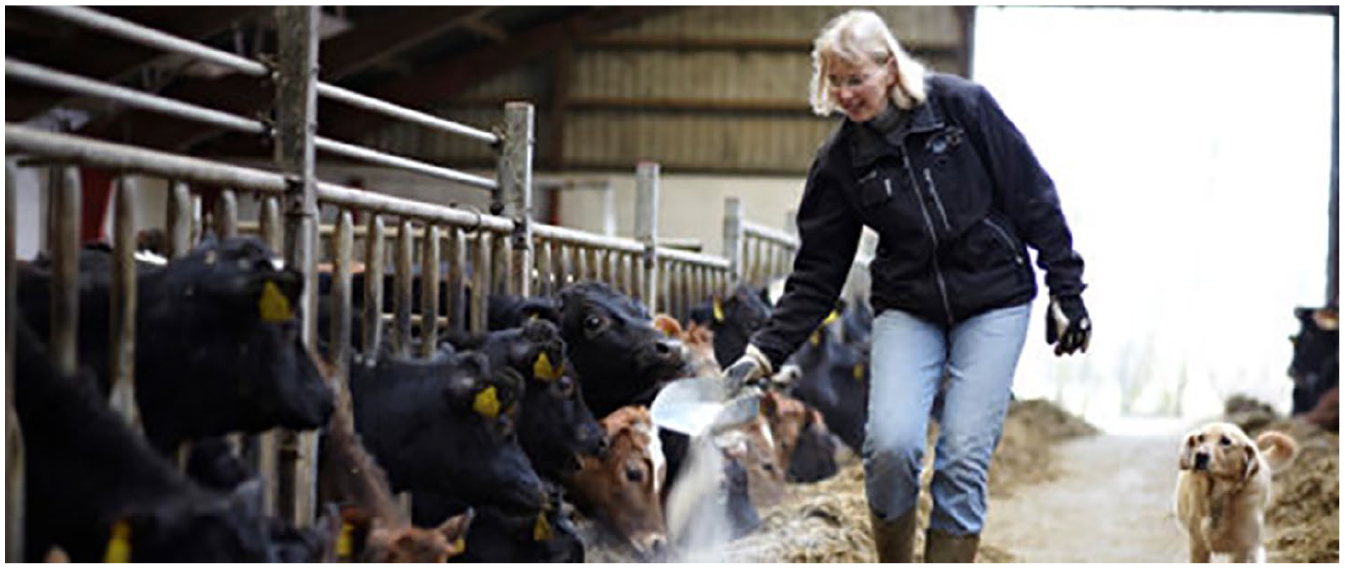
Image of a farmer feeding cows.
Representations of dairy cows
The representations of dairy farmers described in the previous section do, at various points, also involve the representation of dairy cows. However, as noted earlier, the cows are not visibly shown as being milked throughout the site and their role in the production of dairy products is mostly suppressed. For example, the ‘About Arla’ page of the site does not mention cows explicitly even once; instead, it references them less directly when mentioning ‘animal welfare’.
When cows are mentioned on the website, reader-viewers are frequently reminded that cows are ‘happy’ and ‘healthy’, as well as ‘comfortable’ and ‘cared for’. This is exemplified in Extract 9, which also demonstrates another recurring feature of such representations; namely, that the cows are supposedly kept happy because it is commercially beneficial to do so and not, for example, because this is in the interests of the cows’ welfare, or out of care for the cows themselves. In other words, in such representations, which are ostensibly about the cows’ welfare, their value and worth is located firmly within their ability to produce milk.
Searching through the Arla site, reader-viewers are presented with visual depictions of cows which provide evidence for how happy, healthy, comfortable and ‘cared for’ the cows purportedly are. For instance, the cows are rarely shown in-doors (and when they are, this is presented as exceptional; that is, they are consistently shown as being fed and tended to by farmers, rather than being left alone to dwell in such environments, as is often the case). Instead, in the majority of cases, cows are depicted as roaming in idyllic, natural countryside settings (see Figure 4). Moreover, such spaces are rarely presented as having borders (such as fences), which might suggest that they can roam without limits in a natural setting (indeed, as they might in nature), as opposed to the (actual) more restrictive and industrialised settings of the dairy farms they inhabit. When they interact with farmers in these spaces, this is either because they are being fed or otherwise engaged with in a manner that connotes the aforementioned relationship of ‘care’ between farmer and cow, as exemplified in Figure 5, in which a farmer is shown with his arm around a cow. Importantly, within these (mostly outdoor) settings, the cows are often depicted in small numbers. This comes despite the fact that the average dairy farm in the UK houses 160 dairy cows at any time (AHDB, 2024).
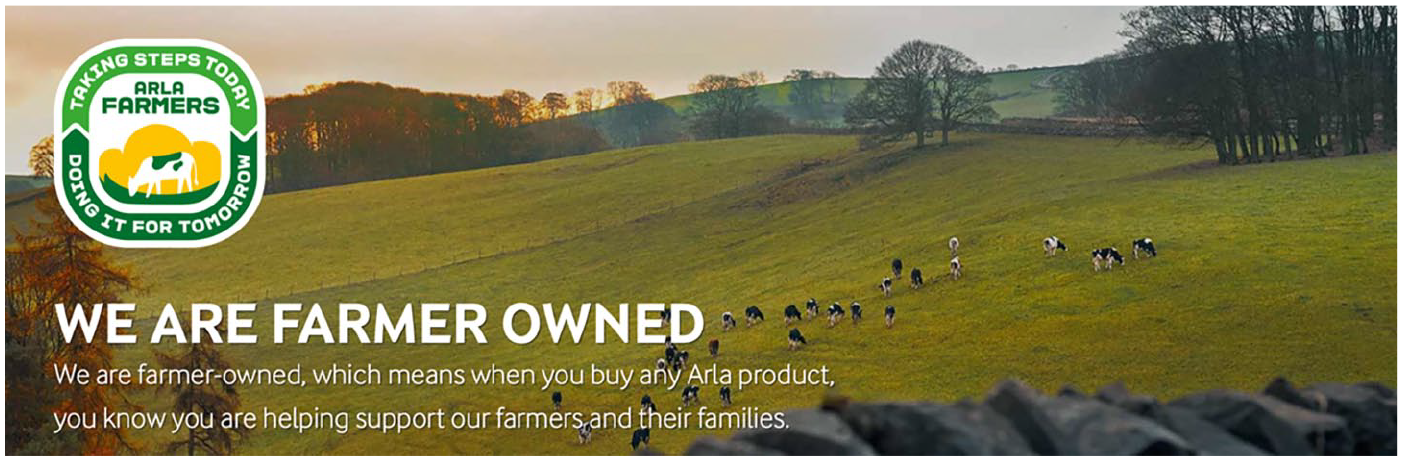
Image of cows in field, with sustainability logo in foreground.
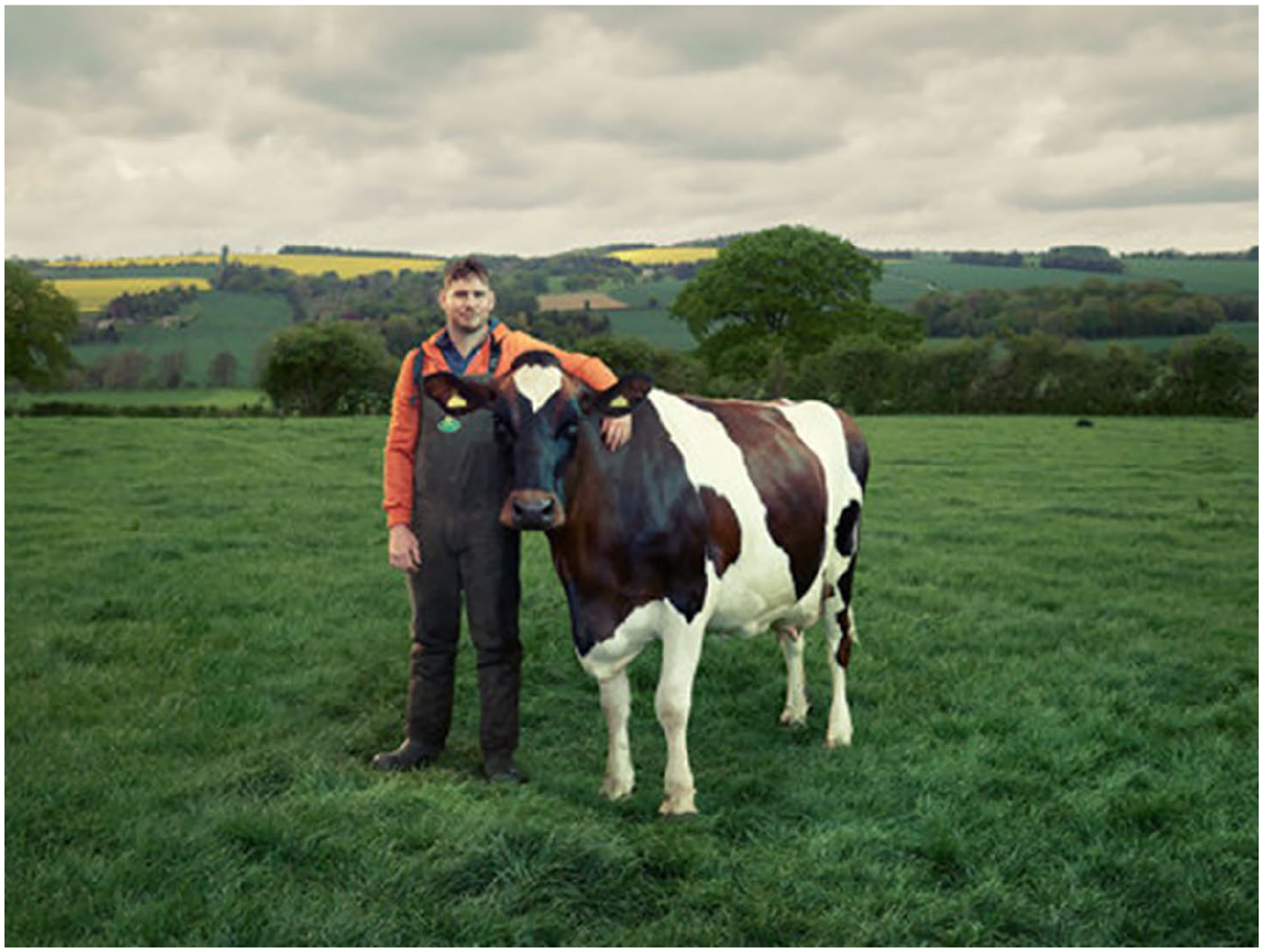
Image of a cow in field, with a farmer next to it.
The site relies not just on reader-viewers inferring that cows are happy and healthy by dint of their ostensibly roaming around in their natural environments, but – perhaps for the avoidance of any doubt – the purported wellbeing of these cows is also framed in terms that are more relatable to humans. In Extracts 11–13 below, which appear as speech bubbles attributed to cows in the ‘Virtual Open Farm’ section of the site, the situations in which cows are forced to live on dairy farms, along with various farming processes intended to monitor cows’ wellbeing to maximise their milk production, are reframed as activities that humans might engage in. For example, in Extract 11, cows having their hooves trimmed is presented as a ‘pedicure’, while the provision of a cow brush (to increase milk production and reduce the damage cows cause to farm property (Metzger, 2015)) is presented as helping cows to ‘exfoliate their skin’. These activities are presented as cows being ‘pampered’, as things that ‘help them to relax’, and as things that ‘enjoy’. At another point on the site, reader-viewers are also informed that cows ‘enjoy a good massage’.
(11) Cows have pedicures at least twice a year! Cows also have access to a cow brush to help them to exfoliate their skin. Cows enjoy being pampered as it helps them to relax.
Also taken from one of the cows’ speech bubbles on the Virtual Open Farm, in Extract 12 cows being housed together is implied to be a choice that the cows make, and is equated to cows ‘spending time with their friends’ and ‘hang[ing] out’ together.
(12) Cows love to spend time with their friends! Evidence suggests that cows even have best friends that they recognise and hang out with.
Extracts 11 and 12 show how cows are individualised and granted agency in being framed as choosing to participate in activities that have positive connotations in human society, such as being pampered, relaxing and spending time with friends. Moreover, being presented as speech coming directly from the cows themselves helps to create this impression of cows having volition in the lives they (in reality, are forced to) live. In another of the cows’ speech bubbles (Extract 13), the trackers that farmers attach to cows are likened to ‘fitbits’ and are described as being motivated by the farmer’s concern to ‘keep a close eye on every cow so they can make sure they’re well cared for’. However, unlike fitbits, which individuals themselves decide to wear, these are attached to the cows by farmers. Moreover, rather than being motivated by the kind of individualised and personalised care that might be evoked by mentions of wearable devices such as fitbits (Lupton, 2017), as well as by expressions such as ‘keep a close eye on every cow’ might indicate, the use of such technology is, rather, motivated by farmers’ needs to monitor cow health in terms of how this might impact their milk productivity, and to do so across vast herds (of, as we have noted, 160 cows on average).
(13) Some of our Arla farmers track their herd using pedometers, which are a kind of fitbit for cows. It helps them to keep a close eye on every cow so they can make sure they’re well cared for.
As we have seen, then, the dairy cows featured on the site are regularly anthropomorphised; that involves ‘the attribution of human characteristics to non-human objects, which include both ‘other’ animals and inanimate objects’ (Taylor, 2011: 266). Indeed, across the site, as well as engaging in activities such as getting beauty treatments, the cows are presented as having thoughts and they have dialogue attributed to them (as in, e.g., the speech bubbles from which Extracts 11-13 were taken). Indeed, at such points, the cows linguistically engage reader-viewers. At other points, this engagement is visual, as cows are presented as individuals who visually address reader-viewers through the use of so-called ‘demand’ images (see, e.g., Figures 5 and 6), through which the represented participants, by directly gazing at reader-viewers, would, as they might in real life, ‘demand’ some form of connection and relationship (Kress and van Leeuwen, 2020: 118). van Leeuwen (2008) argues that such representations can function as a kind of visual speech act. In this case, reader-viewers are invited to view the dairy cows as equal to us, at least in terms of their status in this process. Indeed, the cows engage reader-viewers through a close-up shot and at eye-level, establishing a sense of intimacy between reader-viewers and the represented participants (i.e., the cows; Kress and van Leeuwen, 2020).
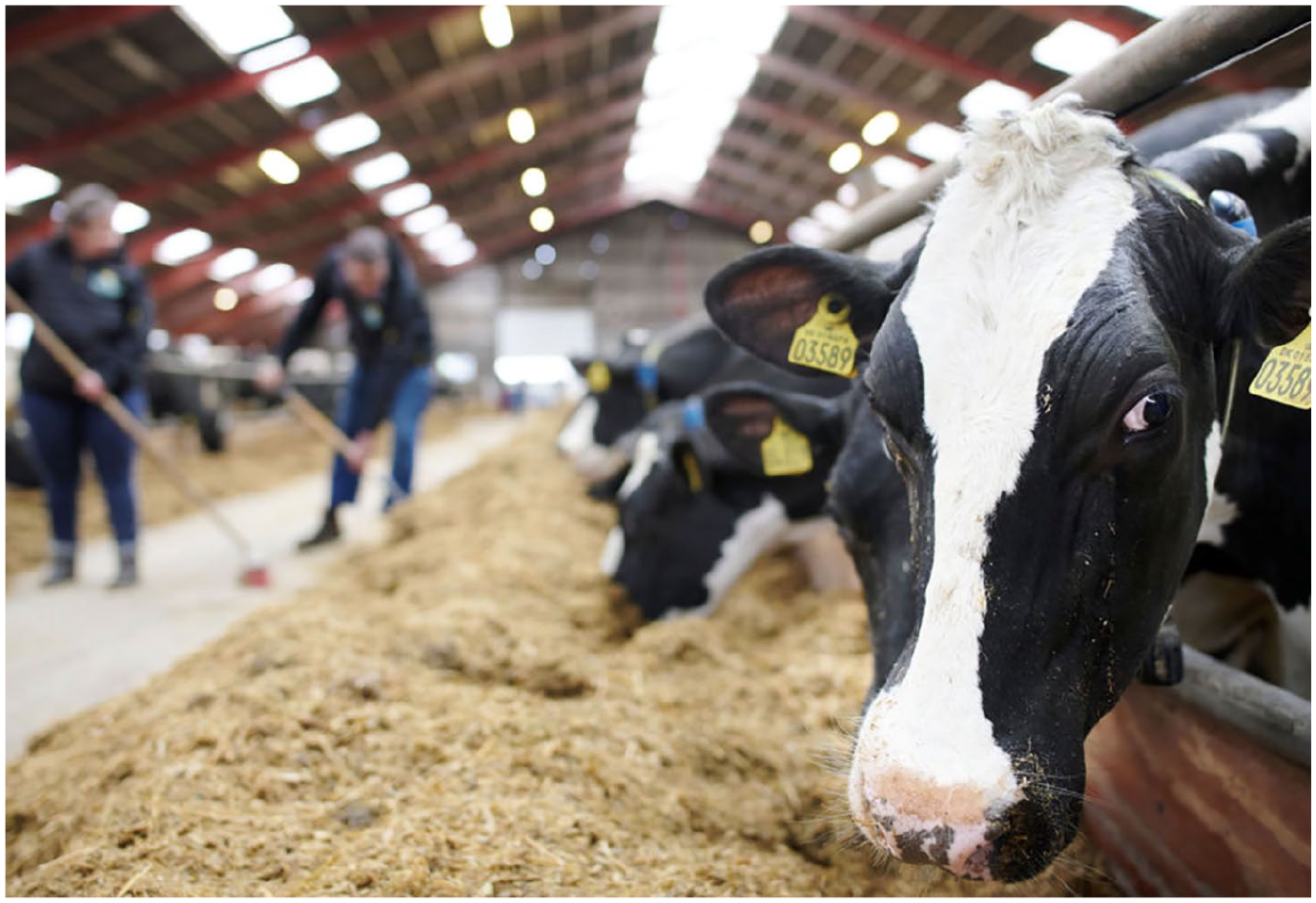
Cow visually addressing reader-viewers.
Importantly, the cows are presented as being equal not only to human reader-viewers, but also to the humans working on the Arla farms – that is, they are presented as (at least) equal to the dairy farmers. For example, in Figure 7 the farmer and cow address each other at eye level, while the farmer’s gesture – engaging in a physical stroke of the cow’s nose – adds further to the sense that this is a relationship of care.
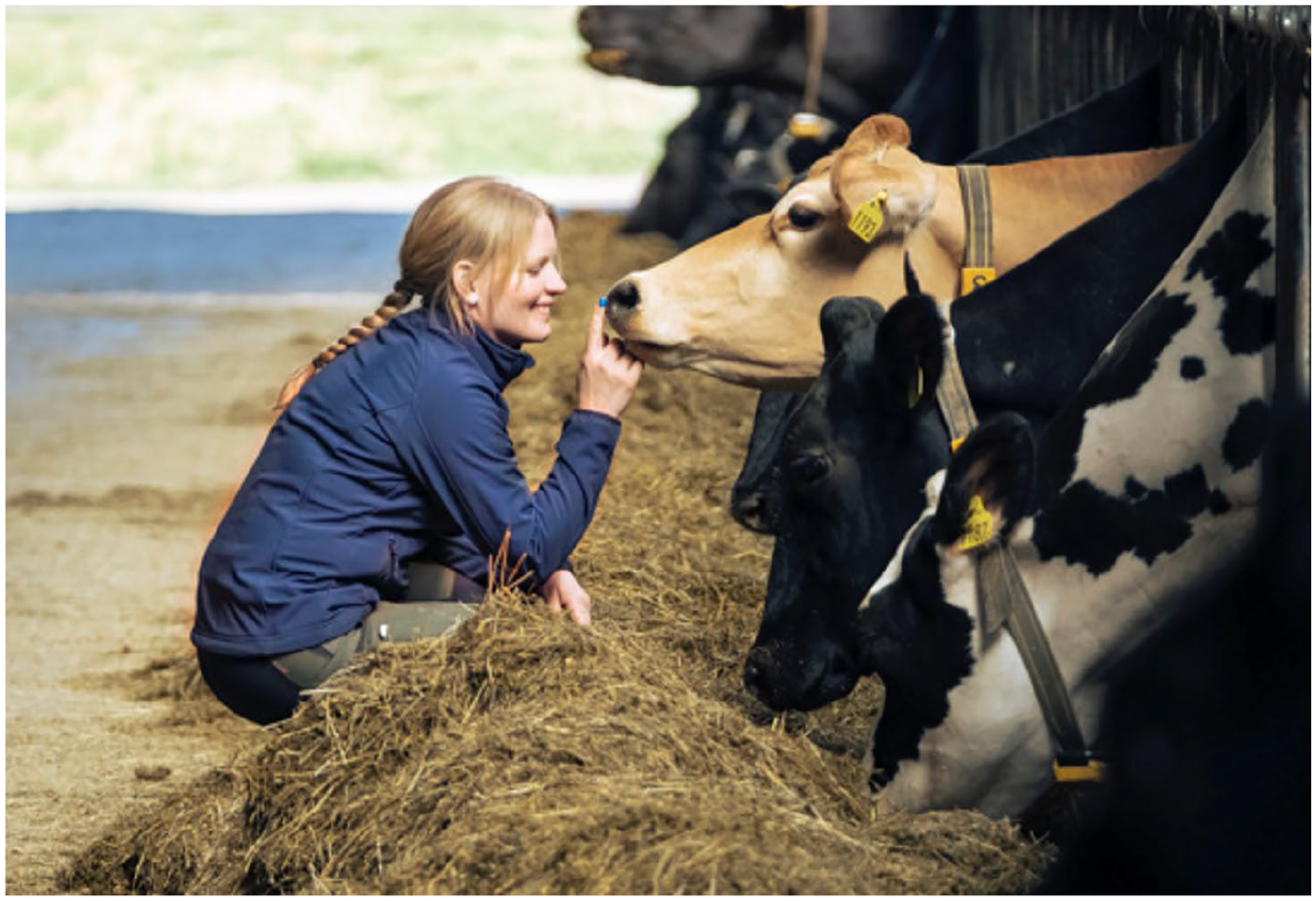
Cow and farmer visually engage each other.
This construction of the relationship between cows and farmers as equals also occurs linguistically. Throughout the site, cows are frequently referred to as ‘individuals’. As we have seen in an earlier example (Extract 10), they are also referred to using the – in this case, anthropomorphising – term for adult females, ‘ladies’. Their status, combined with the cows’ afore-mentioned capacity for expression and sentience, helps to convey a scenario in which cows make active choices. In this context, they are presented as choosing to contribute to the production of milk.
Representations of dairy farming
The representations we have considered so far could be said to offer, implicitly and explicitly, a particular view of dairy farming. Broadly, what emerges from the representations of farmers as benevolent social actors (interested not only in the welfare of reader-viewers and their families, but also the welfare of the dairy cows), twinned with the representation of dairy cows as social actors complicit in dairy farming, is the image of dairy farming as a partnership. This vision is realised in linguistic representations of farmers and cows working together, with such processes characterised by a lexicon of partnership and co-operation. For example, as attested in Extract 8 presented earlier, the cows on Arla farms are sometimes referred to as the farmers’ ‘trusted colleagues’. As we have seen, this partnership is also rendered visually, in particular through the recurring depiction of cows and farmers standing side by side (see, e.g., Figure 5), and being presented as equivalents who meet each other at eye level (see, e.g., Figure 7).
At other points, the cows are described as enjoying the processes involved in dairy farming; for example, a video describes how cows ‘love being milked’, and ‘like to be milked twice a day’. In this way, the cows are presented as not only enjoying and being complicit in the process of dairy farming, but also as having agency (or at least, a say) regarding how often they are milked. Such representations are designed, we will argue in the next section, to obscure the exploitative reality of dairy farming and, in the process, to appease the moral conscience of consumers.
Another area of ethical debate in which the Arla site engages – and, we argue, seeks to appease consumers’ consciences – concerns the environmental impacts of dairy farming. These are concerns which Arla acknowledges within the site, for example in Extract 14 below. Tellingly in this example, some people’s decision not to consume dairy products due to concerns about the environment is framed as ‘deselecting’, which implies dairy consumption to be a norm or default. Meanwhile, the passage also expresses doubt regarding the logic on which such decisions are made, as people making this decision are referred to as being ‘confused about the facts’.
(14) Some people are confused about the facts around sustainable diets. This leads to some consumers deselecting specific foods, including dairy.
As well as hedging off concerns around the sustainability of dairy production, and delegitimating these by presenting them as false beliefs or ‘confusion’, the Arla site also seeks to allay such concerns by presenting its practices as sustainable – and, by extension, itself as an environmentally conscious organisation. However, this representation bears many of the hallmarks of what Alexander (2002) describes as ‘greenwashing’; that is, the process by which some (typically commercial) social actor or organisation attempts to distract from real environmental issues, and instead over-states their commitment to sustainable development. In Extract 15 below, taken from the site homepage, we see the articulation of Arla’s ‘ambition’ to not contribute to environmental damage but to enhance the natural world (i.e. to make it ‘better’ and to contribute to a ‘stronger planet’), a commitment that is arguably unattainable from what we know about the environmental impact of producing dairy milk.
(15) Stronger people, stronger planet - Arla is owned by the same dairy farmers that supply the milk. Every step we take, from farm to fridge, is focused on one ambition - to leave the farms, the food and the world around us in even better shape for the next generation.
The processes involved in dairy farming are frequently imbued with positive-sounding (but ultimately, empty) adjectives which confer onto such processes a sense of sustainability. For example, earlier we saw how Arla farmers were described as wanting to ‘produce dairy in the most efficient and sustainable way’ (Extract 4). In Figure 4, we saw how this discourse could include – but also transcend – language, since that image employs the graphic of the circular green arrows; visual iconography instantly recognisable as connoting recycling. The use of this iconography is contextualised by overlaying language, again describing vague and future-oriented actions (i.e. ‘Taking steps today’ and ‘Doing it for tomorrow’).
This future-orientedness is a recurring theme of the sustainability discourse that permeates the site (see, e.g., Extracts 16 and 17). As well as being future-oriented, such actions are also often presented as being in-progress and incomplete, including through the metaphor of being ‘on the road’ to more sustainable practices. Notably, the actions involved are often mental processes, such as ‘inspir[ing]’ and ‘push[ing]’ (Extract 16), with the targets of, and commitments underlying, such actions also being formulated in positive-sounding but ultimately vague and abstract terms, such as to ‘do better’, to ‘reduce our carbon footprint’ (but not specified by how much), to ‘improve protection of nature’, and to ‘reduc[e] CO2e emissions significantly’.
(16) We inspire, push and reward each other to continuously do better. To reduce our carbon footprint. And improve protection of nature.
(17) On the road to net zero emissions, we are committed to reducing CO2e emissions significantly by 2030
Of course, the future-oriented nature of, and relatively weak obligation inherent in, such claims reflects the reality in which Arla operates; in other words, such claims can only be as strong and committed as their associated real-world actions and track record allow. However, at other, lower modality points on the site, a more explicitly and strongly sustainable image of dairy farming emerges. A good example of this is in the aforementioned Virtual Open Farm section of the site (see Figure 8). Here, reader-viewers are presented with an animated, ‘cartoonised’ version of a dairy farm which they can navigate with their cursor for the purposes of learning more about the process of dairy farming. Used as a pedagogical tool, reader-viewers are, we contend, invited to view this as a typical dairy farm (or at least, a typical Arla one). However, what is presented is certainly not a typical dairy farm, but rather one that is idealised, particularly in terms of the sustainability of the practices taking place therein. For example, the scene is a mostly green space, in which the most visible forms of technology are those which provide sustainable forms of energy (e.g. wind turbines and solar panels). The vast majority of the space surrounding the farm is green, and occupied by a very small number of cows (only as many as four per large field, and sometimes just one), which not only obscures the reality of how populous dairy farms are in terms of the numbers of cows they house, but with that also obscures the environmental impacts of such intensive farming, which contributes significantly to rising CO2 levels. Less-green methods of transportation, such as cars and trucks, are shown sparingly, with only as many as three vehicles occupying the vast swathes of road at any one time. The close proximity of the farm to residential spaces – which, as we have discussed, is typically not the case – suggests that the dairy products will not have to travel far in order to reach people’s homes (thereby implying that they have a low carbon footprint (which, again, as we have seen, is not the case in reality)). This proximity of the farm to residential spaces also visually embeds the farm within the community that is serves, which helps to further reinforce the image of dairy farming practices as benevolent and for the good of communities. The small number of commercial spaces to which Arla sells its products, in turn, arguably obscures the industrial scale at which it operates (having, in reality, to stock the shelves of thousands of supermarkets in the UK daily, rather than a small number of houses situated around the farm).
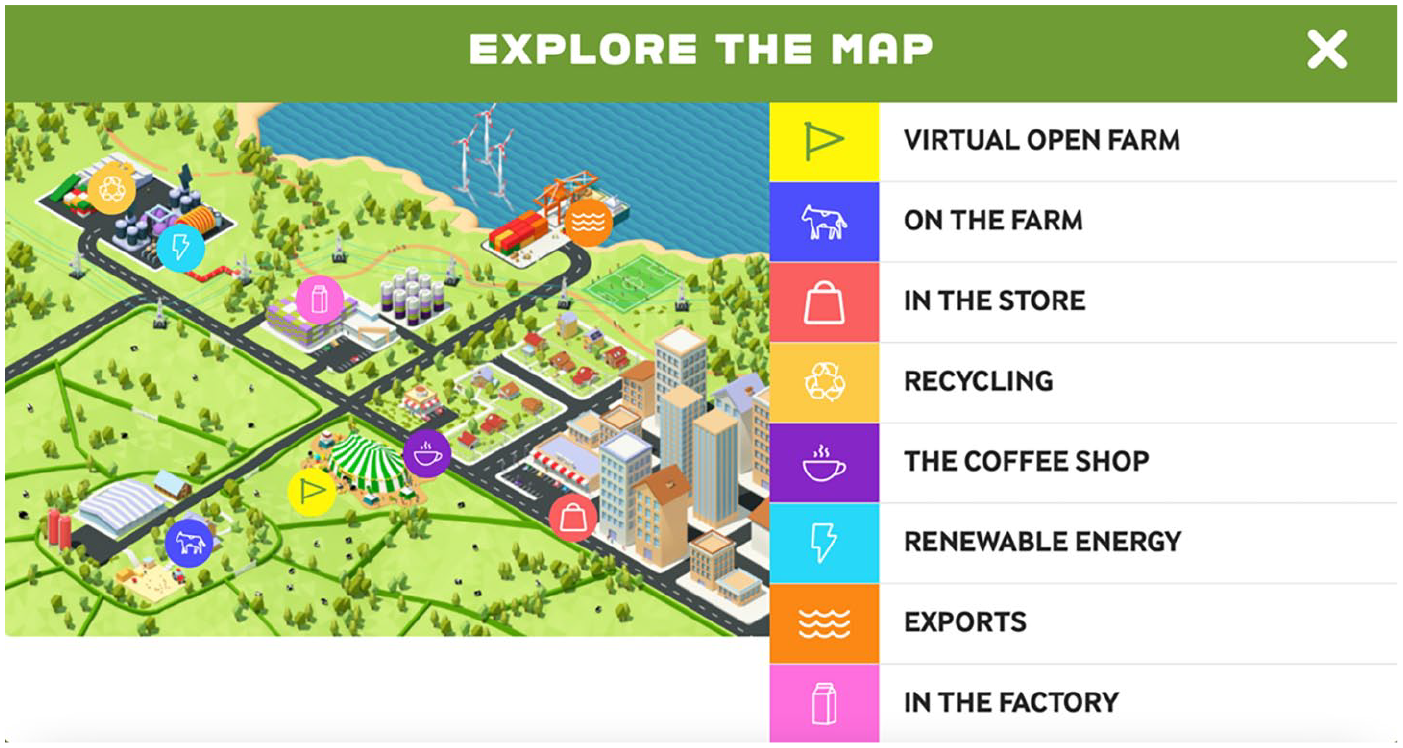
Screenshot from the Virtual Open Farm.
As we alluded to earlier, many of the concerns around the environmental impacts of dairy farming have arisen in particular due to its industrialised scale. Another way in which Arla constructs a self-image which responds to (and seeks to allay) such concerns is by backgrounding the industrial scale of modern dairy farming. Instead, dairy farming is frequently presented through a broadly nostalgic lens, which distances it from its industrial present. This discourse comprises several elements, one of which is the representation of dairy farming as a family practice. As the Extracts below attest, descriptions of dairy farming on the site frequently present it as a family activity, as well as one that has been undertaken across generations.
(18) We have farmed the land for generations, and we have the benefit of decades of knowledge and experience that helps us continually take steps to do things better.
(19) We are farmer-owned, which means when you buy any Arla product, you know you are helping support our farmers and their families.
The image of dairy farming that emerges is a decidedly nostalgic one, then, and this nostalgic discourse is also realised through visual choices across the site. Tellingly, the machinery and technology involved in contemporary dairy farming are typically obscured, with focus instead being placed, as we have seen, on green spaces and farm set-ups that are more redolent of traditional images of farms. Notably, the machinery that is used to milk cows is visibly absent. When we do see images of the machinery used in the dairy farming process (Figure 9), this tends to be of more traditional forms of such technology. All of this serves to obscure the highly mechanised and increasingly automated nature of dairy farming, in favour of foregrounding an image of it as largely manual and involving traditional methods.
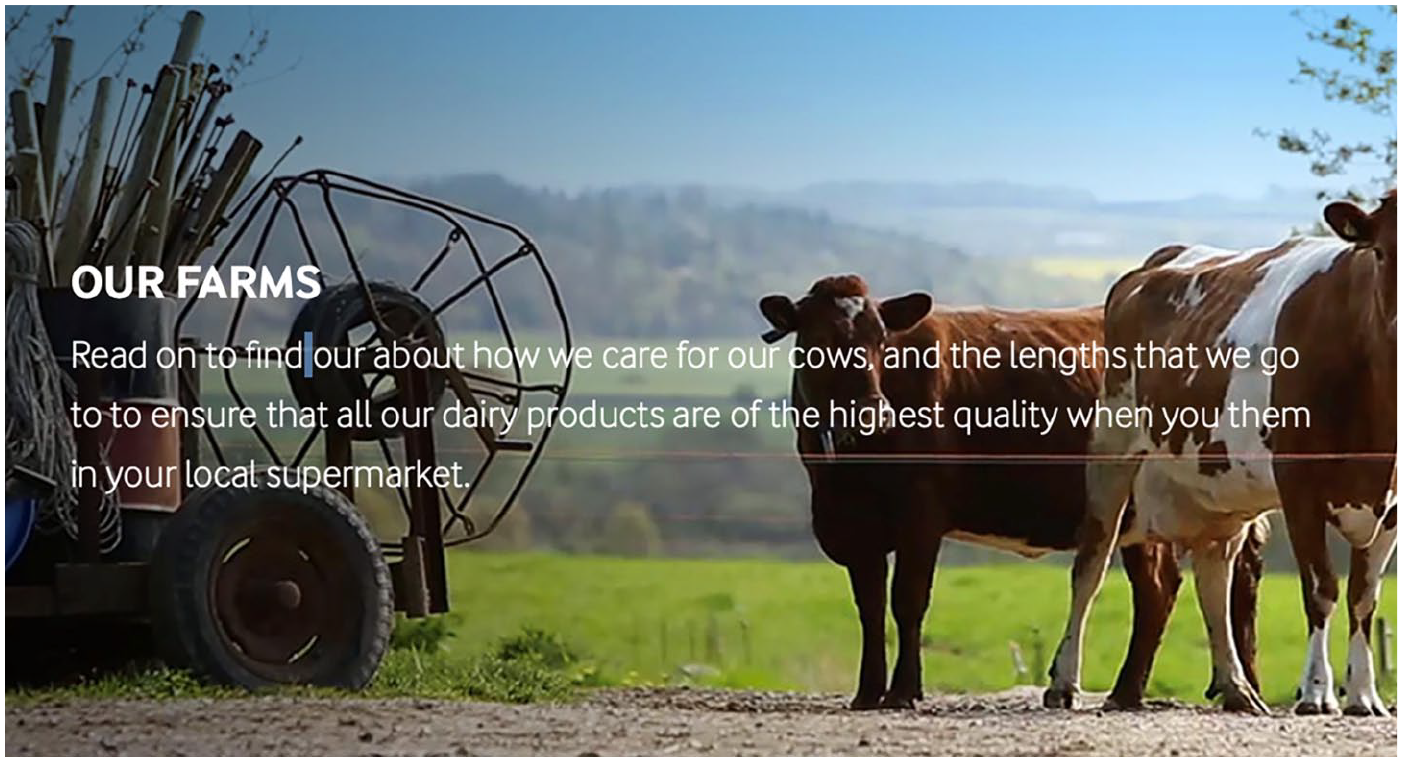
Image of cows stood beside traditional farming equipment.
Discussion and conclusions
Our critical analysis of the multimodal representation of social actors and processes on the Arla website has uncovered a range of complementary discourses which culminate in a strategic and idyllic depiction of the dairy industry. Lexical choices present the industry as natural, sustainable, family-owned and traditional, offering an overall view of it as one that is deeply connected with nature and well-being (of both humans and non-human animals alike). Visual representations complement this view, emphasising serene landscapes and contented animals. These elements collectively project an image of the dairy industry that emphasises harmony and mutual benefit, then. Yet, viewed through a Critical Animal Studies lens, this is an image which contrasts sharply with the realities of the industry and its practices. This discord becomes particularly apparent when we consider the large body of work that has raised concerns around the dairy industry’s regard for animal welfare, as well as the environmental impacts of its industrialised practices (as described, for instance, in the background section of this article).
When contemplating this reality of the dairy industry side-by-side with the version of it that is put forward by the Arla website, we can observe what is, for us, a clear discord. This arises due to the process of recontextualisation. Recontextualisation refers to the process whereby texts, discourses and/or practices are adapted and transformed across different contexts. In this process, meanings shift according to the social settings, purposes or audiences in question. Bernstein (1990) explored this concept within education, using it in his analysis of the ways in which academic knowledge is transformed into pedagogic content, in so doing highlighting the power dynamics inherent within knowledge control and curriculum design. The concept was extended by van Leeuwen (2008) who operationalised it for (M)CDS to explicate the ways in which social practices are abstracted and reshaped (particularly in media and education texts) in order to manipulate constructions and perceptions of social reality. This work, and more besides, has illustrated recontextualisation to be pivotal to understanding how meanings are reshaped across contexts, as well as for interrogating the power relations which undergird the transmission of knowledge and discourse.
van Leeuwen (2008) identifies several ‘transformations’ that occur at the discursive level as part of the process of recontextualisation, some of which appear to be particularly relevant to the representations offered on the Arla website. For example, through a process of substitution, the large numbers of – in reality, objectified – cows that occupy dairy farms are disaggregated and presented, in very small numbers, as individualised and even anthropomorphised social actors. As part of this process, their lack of volition is substituted with a construction of them as willing and agentive – as colleagues, even – in the processes associated with dairy farming. Their sentience is recognised but only in contexts where this can lead to manufacturing their consent in their own commodification and exploitation but not suffering (e.g. when separated from their calves shortly after birth). The sentience of the cows also, tellingly, does not extend to them engaging in social interactions with each other. Despite ample evidence that cows are highly social animals, who have ‘friends’ with whom they communicate and play (Millstein, 2024), such aspects of the cows’ realities are largely deleted. Instead, the interactivity ascribed to them is focused almost exclusively on contexts in which they engage with humans (be those farmers or website viewers; e.g., Figures 2, 5 and 7). Such discursive choices help to maintain focus on the cow-human relationship, making it hard, perhaps, for website users to even imagine the possibility of a social world involving cows and not humans. The effect of this, we would argue, is to normalise the notion of a symbiotic relationship between cows and humans which ultimately helps to justify cows’ involvement in dairy farming by closing off the possibility, in the minds of website users, that there could be other ‘ways of being’ for these cows.
Another recurring kind of recontextualisation of the dairy farming process that we see throughout the website is that the reality of the cows’ largely indoor existence is replaced with a mostly outdoor existence, in which they are free to roam across (often boundless) green idylls. In terms of selling the milk to consumers, such commercial aspects are substituted with the construction of a relationship of care, in which farmers are framed as benevolent actors who provide milk to ‘you and your family’ in the interests of the public’s health and nutrition. Notably, in farmers being represented as ‘producing’ the milk themselves, the role of the cow is frequently backgrounded and sometimes omitted altogether. By suppressing the representation of dairy cows and their calves, who would have been the normal and arguably only ‘natural’ consumers of the milk that cows produce, the ethical concerns around human consumption of dairy milk are obfuscated and dairy milk is instead presented as something that is ‘natural’ and ‘normal’ for humans to consume. Indeed, substituting one element of ‘reality’ for another necessarily involves a degree of deletion, which is another kind of transformation described by van Leeuwen (2008).
As well as substituting and deleting important aspects of the dairy industry and dairy farming processes, the discourse of the Arla website also involves the addition of certain elements. These additions serve to legitimate the industry and its practices. For example, through the anthropomorphisation of dairy cows, we have seen how the website attributes reactions to the cows which portray them not only as being willing to be involved in dairy farming practices, but even as enjoying these (i.e., they are described as ‘liking’ and ‘loving’ such processes). Meanwhile, through the addition of evaluations, Arla construes its practices as traditional, family-oriented, and sustainable, and its products, in turn, as sustainable but also healthy and nutritious. This latter evaluation, in particular, could be viewed as legitimating the practices of the industry more widely, as these are performed in the interests of public health and wellbeing. Yet another set of purposes attributed, through addition, to the practices of dairy farming on this site concern the wellbeing of the dairy cows themselves. Indeed, the actions of farmers are frequently presented as being in the interests of the cows’ health and wellbeing. While this may, to an extent, be the case, it is only true as so far as the cows’ wellbeing does not hinder their productivity and profitability from the perspective of farmers’ financial interests. Of course, such a relationship of benevolence can only be constructed in this way in a context in which such commercial interests and other exploitative elements are deleted from the discourse (as we have observed to be the case).
This recontextualisation of dairy industry practices relies, then, on the strategic deletion, by Arla, of practices and motivations that might be deemed unpalatable or unpleasant by consumers. This includes aspects regarding animal welfare, as well as the severe impacts that dairy farming can have on the environment. These realities might be incongruent with the particular image of itself (and the wider dairy industry) that Arla seeks to promote. The creation of a positive (self-)image of the dairy industry therefore also depends on processes of selective foregrounding, as the well the substitution and addition of elements, to craft a vision of dairy farming as bucolic, traditional, family-oriented and sustainable, and to provide a picture of ‘happy’ and ‘healthy’ cows in comfort. This resultant narrative diverges significantly, as we have noted, from documented concerns about animal welfare and environmental degradation.
Importantly, the – in our view, simplified and sanitised – depiction of industry practices that emerges is one that performs a significant ideological function; namely, it helps to legitimise ongoing practices within the dairy industry, with the aim of quelling and avoiding further ethical scrutiny. Indeed, by emphasising values such as sustainability and animal welfare, such discourse responds to public concerns while justifying the continued exploitation of animals under the auspices of humane treatment and ecological responsibility (Stibbe, 2012). This discourse aligns with speciesist ideologies that inherently prioritise human benefits over animals’ rights and needs, in the process subtly reinforcing a hierarchy wherein animals’ needs are placed as secondary to human interests (Nibert, 2002). Twinned with this is a clear commercial motivation, since such depictions are in service of the ‘silent contract’ between dairy producers and consumers, allowing those consuming dairy milk to remain wilfully ignorant of the realities of dairy farming, in turn maintaining a positive self-image as a moral person (Borkfelt et al., 2015; Olausson, 2018). Moreover, such depictions allow both dairy industry actors and consumers to continue their current practices (respectively, of production and consumption), while still aligning with highly prised ideals of naturalness, purity and (environmental) ethics.
The impacts of the recontextualised image of the dairy industry presented on this site are likely to be quite profound. As noted, websites such as that of Arla constitute one of the limited opportunities available to the public to learn about and scrutinise the practices of the dairy industry. Not only does that make the kinds of representations offered by the likes of Arla more difficult to challenge, but, in the interests of encouraging critical scrutiny and raising genuine awareness of food production practices, it might give us cause to be concerned that the only kinds of direct accounts of such practices available are, as we have demonstrated, framed in such sanitised and decidedly industry-friendly terms. Indeed, research has shown that the public generally has less awareness of the ethical aspects of dairy production than it does of meat and egg production (Capilé et al., 2021). Taking all of this together, we might question just how realistic it is for consumers to be able to make genuinely informed choices regarding the food products they consume, including their decision to support the dairy industry. This question becomes even more pressing if we assume that those who are particularly concerned with animal welfare might consume dairy products under the impression that the dairy industry’s values align with their own personal ethics. This is particularly worrying if such impressions have been created through engagement with the kinds of idiscourses that we have observed to pervade websites like Arla’s.
What is required, in order to create an environment in which critical scrutiny and genuine awareness is possible, is clearly more open communication around the practices of the dairy industry. Critical voices are out there, as our engagement with the research discussed in the background section of this article attests. However, the power and institutional embeddedness of the dairy industry and other industries based on animal exploitation (in politics, the mainstream media and beyond) means that such voices are often marginalised and stifled by mainstream discourses which, as we described earlier, only serve to promote and legitimise such industries. We see evidence of this not only in the wider marketing of dairy products, but also in the lobbying and legal action taken by the dairy industry to commercially marginalise plant-based dairy alternatives (Mallory, 2022), as well as in efforts to restrict environmental and animal rights protest action (Arla, 2024).
The challenging of discourses that seek to naturalise and normalise practices that lead to great environmental harm and animal suffering is urgently needed. Of course, in this article we have examined the website of just one of the dairy industry leaders. In future, research should continue to scrutinise such discourses, not only in the context of industry websites but, as we have noted, across the wide range of contexts in which the practices of this industry are presented, discussed and legitimised. A combination of approaches to (critical) discourse study could help to further illuminate the linguistic and visual means by which these processes occur. Meanwhile, recent work has pointed to how narratives and other forms of creative (linguistic) expression might help in not only calling out the destruction of the natural world, but also in promoting more positive visions for the future of our planet (Stibbe, 2024). In our view, it is not hard to imagine how such creative endeavours might support us in crafting an alternative, more socially and ecologically just vision for the future, including with regard to farming, agriculture and other activities in which animals and the natural world are presently exploited. We hope that our analysis will inspire such scrutiny and empower researchers through its demonstration of the utility of MCDA for precisely this kind of research and advocacy. In this endeavour, and in response to long-standing and more recent calls for more socially oriented and interdisciplinary (M)CDA (Machin, 2016; Van Dijk, 2001), we recommend that such researchers should consider employing the lens of Critical Animal Studies, as a means for more effectively illuminating, disentangling, and challenging the speciesist discourses through which animal exploitation is legitimated, and its reality concealed.
Footnotes
Acknowledgements
The authors would like to thank Emma Putland and Arran Stibbe for their insightful comments on an earlier draft of this paper.
Declaration of conflicting interests
The author(s) declared no potential conflicts of interest with respect to the research, authorship, and/or publication of this article.
Funding
The author(s) received no financial support for the research, authorship, and/or publication of this article.
