




Abstract
This paper explores the role of serendipity in journalistic decision-making. The authors draw on 25 years of newsroom ethnography to introduce the concept of a horizon of foreseeable forthcoming phases (HFFP). This concept encompasses the potential next steps that journalists envision in their text production processes, based on the decisions they already made.
The authors then analyze two complementary cases to illustrate how serendipity can influence journalistic decision-making. In the
Keywords
Why serendipity in journalism matters
From a view of integrative social theories (e.g., Archer, 2000), journalists have partial control over newswriting. They shape its course through decision-making, enabled and constrained by, for example, legal frameworks, professional standards, newsroom routines, and individual preferences. We have tracked changes in this decision-making over the last 25 years by analyzing journalists’ material, mental, and social activities of news production in context (Perrin, 2021). In doing so, we combined emic and etic perspectives (Haapanen and Manninen, 2023). In this paper, we highlight the role and growing relevance of serendipity in journalistic decision-making.
The word serendipity, first coined in 1754, 1 was used only among literary enthusiasts until the turn of the 20th century. In 1909, it made its first dictionary appearance in The Century Dictionary and Cyclopedia. In the 1930s, serendipity transitioned from literary circles to the scientific community, initially gaining prominence among natural and social sciences (Merton and Barber, 2004). From 1940 to 2024, its usage in published literature increased by a factor of 101.43, as indicated by Books Ngram Viewer. 2 Despite this growth, its role in journalism and news production remained unexplored until recently.
Drawing on 25 years of newsroom ethnography, we started to fill this gap with in-depth analyses of decision-making in the newsroom (e.g., Haapanen, 2017, 2020; Perrin, 2013). In this paper, we introduce two complementary concepts to further explore the role of serendipity in journalistic decision-making: The first concept is the horizon of foreseeable forthcoming phases (HFFP). When journalists make decisions while writing news, the HFFP opens up in front of them. It encompasses the potential next steps that journalists envision, based on the decisions they already made. The second concept is the – often disruptive – serendipitous moment:
Serendipitous moments can happen when journalists are confronted with something unexpected – something that falls outside the scope of their anticipated HFFP. The data analyzed in a series of case studies provide evidence that less experienced journalists may perceive these events as undesirable, as hindering the planned and foreseeable process, or even as bound to failure. Experienced journalists, however, tend to perceive unexpected events as inspiring, as drivers of categorically new outcomes. If they opt to seize such serendipity, they must adapt the process and pursue a new, fundamentally shifted HFFP.
On the empirical level of this paper, we analyze two complementary cases in all detail: the
In the
Serendipity, in the
By contrast, the
In his experience, however, demonstrations in Lebanon can be peaceful, too, and this reality tends to be neglected in Western public discourse. Since he considers fostering unbiased views to be a key part of a public service provider’s mandate, he decided not to add yet another item to the news that caters to the brash stereotype. But how should he visualize peaceful demonstrations in his news item without any supporting, attractive footage? After getting stuck in this critical situation, he desperately scanned hours of video footage in time lapse mode. By doing so, he happened to come across a scene that triggered an emergent solution for his item.
In both cases, serendipitous moments changed the HFFP of the journalists at work, offering an attractive alternative in the
The following sections of the paper dig deeper into the two cases and their analysis. In the research state section, we discuss the key concepts of serendipity and HFFP in the context of critical situations, emergent outcomes, and good practices. In the methodology section, we explain Progression Analysis as the multimethod approach applied. This leads to a step-by-step analysis of the
We conclude by explaining why, from both emic and etic perspectives, emergent solutions hold the potential and power to reshape our present and future reality: Not only do they solve a text production problem, but they can also impact individual and organizational journalistic practices and routines. Emergent solutions through serendipity are in high demand in times where human intelligence competes with algorithms simulating intelligence while recycling (Haapanen and Perrin, 2020) big data from the past. Serendipity disrupts the perpetuation of loops, opening up non-anticipated horizons, on both micro and macro levels of text production.
Key concepts: From serendipitous moments to emergent outcomes
In this section, we first trace the concept of serendipity in academic discourse. Based on established understanding from and in other fields, we then formulate our definition of serendipitous moments and foreseeable forthcoming phases in journalism. Finally, we contextualize our definitions by relating them to the concepts of critical situations, good practices, and emergent outcomes, as discussed for journalism in previous work.
Serendipity in journalism and media studies
Random events are essential to serendipity, but serendipity is not just about chance, luck, or divine providence. It has said to be a result from the process of bisociation, which is combining seemingly unrelated ideas or concepts (Koestler, 1964), in contrast to association, where the connection is close and expected. A similar understanding can also be found in the scarce-numbered papers in journalism and media studies that have focused on serendipity. They argue that serendipity in journalism is not just a fortunate accident, but a complex interplay of individual capabilities, organizational structures, and environmental factors.
Malmelin and Virta (2017, 2019) emphasize the interplay between serendipity, organizational creativity, and strategic management in media organizations. They highlight how cultural aspects within organizations, such as autonomy and mutual trust, can foster or hinder the potential for serendipitous creativity. These observations are supported by organizational studies where different forms of serendipity have been typologized (de Rond, 2014) and explored in more detail in terms of how organizational settings (Cunha et al., 2010) and other external circumstances can facilitate or impede serendipitous discoveries (McCay-Peet and Toms, 2015).
In turn, Bird-Meyer and Erdelez (2021) and Bird-Meyer et al. (2019) focus more on the practical aspects of serendipity in journalism. Their studies shed light on how journalists and editors encounter and interact with serendipitous events in their day-to-day work, particularly in story ideation and newsroom meetings. Maares et al. (2023) highlight an interesting aspect related to the consolidation of office spaces and, especially, the increased prevalence of remote work following Covid-19: The physical and social environment of newsrooms is significant in enabling serendipitous encounters.
Serendipity is often defined in relation to creativity, and creativity, in turn, is frequently limited to ideation in both academic research and journalistic practice (e.g., Koivula et al., 2023; Nylund, 2013). Bird-Meyer et al. (2019: 1000), for example, asked journalists in semi-structured interviews, ‘when they serendipitously encountered story ideas’, thereby constraining the scope of their answers to serendipity during idea generation. The same applies to Malmelin and Virta’s (2019) framing of serendipipitous moments during data collection. In our understanding, however, serendipity can influence any stage of the newswriting process.
Serendipitous moments and HFPPs
Taking into account both the historical perspective of the concept of serendipity and how it has been specifically addressed in journalism and media studies, as serendipitous moments we define surprising discoveries that leverage the processes and products of newswriting unexpectedly. These unexpected discoveries might be triggered either by an external impetus or internal insight. Their consequences range from substantial but optional improvements to the emerging text product – to ways out of otherwise hopelessly muddled situations that had seriously threatened the success of the writing project.
Opportunities for such serendipitous moments to happen stem from the fact that journalism takes shape as a structurally (e.g., Reese, 2021; Ryfe, 2016) and discursively (e.g., Hanitzsch and Vos, 2017) defined institution. (News-)writing is a tense interplay between organizational routines to cope with uncertainty and the nonlinear nature of real-world context itself. The routines include decisions about what to report, how to report it, and which sources or angles to pursue (Tuchman, 1973). Yet, the real-world context can make journalists encounter totally unexpected developments, which can significantly affect the story’s trajectory. In more detail, this means:
There are standards that journalists are expected to follow in their work. They encompass principles of factual writing as well as current industry trends and journalistic tenets, such as, adherence to news standards and balanced or priority-based reporting. Above all, on societal levels, the work is influenced by legal and ethical constraints. On a company level, the work is defined by available resources and newsroom-specific working methods, expectations, and directives. Finally, on a personal level, each journalist carries their own routines as well as personal values and preferences.
While this established framework sets the stage for journalists and their practices, some real-world events do not adhere to predefined patterns or predictions. Sometimes, they tend to be unpredictable and nonlinear. This creates a context that is fraught with uncertainties. Unexpected incidents, ranging from grassroots phenomena to large-scale events, can all affect newswriting. In the
Beyond the unpredictability of external events, another layer of uncertainty arises from information asymmetry. Journalists often do not have the same level of detail knowledge as experts of the subject matter a news item deals with. In the
So how do journalists navigate along the edge between deterministic guidelines and the unpredictable nature of the working environment? When analyzing cases such as
In the
This is what we have referred to as the horizon of foreseeable forthcoming phases (HFFP): Writers progress their newswriting by envisioning the HFFP in front of them. Phase by phase, they anticipate their options and choose the best of potential next phases, drawing on their goal and knowledge, often unconsciously. After such an anticipated phase has become a reality, writers may perceive it as a possibility they have deemed feasible and reasonably anticipated. They were prepared for this option, be it only mentally (Stocking and Gross, 1989) or, in some cases, such as
From a journalists’ perspective, this means that newswriting has progressed – albeit uncontrollably to a certain extent – as expected in terms of options available. While realizing a specific phase often stems from chance or external factors, the journalist tends to foresee the range of options in the HFFP as a result of his or her agency and expertise. In other words, even if a news story emerges from the unexpected, routines tend to be used as a means to deliver it on a predictable basis (Tandoc and Duffy, 2019: 2). This said, we move on to examining scenarios which are in one way or another critical and therefore require emergent solutions to be made to keep the process going.
Critical situation, emergent outcome, and good practice
Imagine a journalist is an expert on the political developments in a certain region of the Middle East. He has often been there for longer periods and has the educational background to explain what is going on. Now, this journalist is asked to report on manifestations that take place in this region. He knows that, so far, they have been more or less peaceful, similar to the usual manifestations in the place where he and his audience live. However, when being told to produce this news piece he feels that his boss, his colleagues, and even the standard news agencies’ footage implicitly expect him to cater to the stereotype of riots in this region.
This is exactly what happened in the
After all, he worked for a public service provider, whose mandate included nuanced reporting that helps the audience understand what is going on in the world. The incompatibility of this public mandate and his expert knowledge on the one hand and the expectations to sell an action movie story on the other hand put him into a critical situation. By critical situation, we understand a constellation of circumstances which lead to failure unless a solution emerges at a higher level (Perrin, 2013: 202). For the
What saved this journalist from giving up is an emergent solution, starting from a serendipitous moment, in which he spotted some new seconds of unusual visuals in all the old footage on violence: Two boats moving slowly in the water, carrying people on their way to join the manifestations. He found these scenes strange and downloaded them. Only then he realized he could use them to visualize the story he considered appropriate. He included them and explained in the item that they showed the ferry connection called Express way in the region. Finally, the wordplay Tranquil way came to his mind as a leitmotif for his item on peaceful protests.
Finding these pictures and, ultimately, the emergent solution was a consequence of serendipity. However, experiencing the serendipitous moment did not come as a total surprise to the experienced journalist. He knew that, in critical situations, reframing one’s view on the subject can help shift levels and find solutions. So he deliberately browsed the footage, back and forth, with ‘eyes wide open but unfocused’, as he put it. To him, this way of moving on instead of getting stuck in conflicting expectations is a good practice: a proven procedure to overcome a critical situation (Perrin, 2013: 202) – in this case by fostering conditions for serendipitous moments.
Method: Investigating serendipity in the newsroom
Now imagine, on the one hand, this journalist changing one single word in his emerging text. By doing so, he creates a whole news story and, finally, reshapes a public service broadcasting company’s view on their public mandate. Imagine, on the other hand, a methodological approach that is deep and broad enough to analyze such an interplay of situated activity with social contexts. We have termed this approach progression analysis (e.g., Perrin, 2003, 2013). It enables researchers to obtain data on three complementary level: as a social, material, and mental activity in organizational and societal frameworks.
Writing as a social activity
The first level of progression analysis considers the writers and the writing situation, including the writers’ professional socialization and economic, institutional, and technological influences on the work situation. This encompasses the specific writing task that the writers must accomplish and the workplace negotiations. Ethnographic data are collected through unstructured participatory observations of organizational practices as well as interviews about them. Micro findings on this level of progression analysis explain, for example, writers’ openness to the unexpected; macro findings can show the emergence and diffusion of a new practice within an organization.
Of course, progression analysis requires ethical, legal, and technical prudence. Preparing for recordings normally starts by negotiating with a media company’s legal service and tech department. The
These on-site researchers’ job was to monitor the automatic recordings from video cameras, but also the logging software mirroring all the computer activities (see next section) – and to delete whatever a person under investigation did not want to have included in the research corpus before the data were saved for the project. Every journalist participating in the project, including the media managers in the newsrooms, had the right to prevent their data from being included in the corpus or being analyzed. Interestingly, only one of the journalists from all the newsrooms under investigation ever exercised this right.
How can this be explained? – The long preparation time for recordings with progression analysis is used mainly to build trust between the journalists and the researchers and to establish a consensus about shared goals. In the project in which the
Based on his experience with previous similar research projects, the head of the research team could provide evidence that the journalists involved would benefit from feedback sessions where they could analyze their practices together with researchers. In addition, previous projects had shown that the knowledge generated was published in a way that did not negatively expose the practitioners investigated. This helped the project management team get and keep the journalists and the media management on board, even subsequent to the completion of the project when research findings were presented and measures were implemented.
After this preparatory phase of getting access to the sources, data had to be collected in as ecologically as possible a procedure. Ecological research in practitioners’ sites such as newsrooms gathers data at interfaces where they are typically exchanged in daily routines. With progression analysis, this happens at two interfaces. At the human-human interface, for example, in sessions of journalists and video editors or in editorial conferences, the researchers capture spoken language and, depending on the camera position, body language as well. At the human-machine interface, the researchers log the activities on screens and keyboards, as explained below.
Writing as a material activity
On the material level, progression analysis records observable writing activities, such as every keystroke and writing movements in the emerging text on the computer screen. Keystroke logging programs run in the background behind the text editors that the writers usually use, for instance behind the user interfaces of their company’s editing systems. The computer recordings provide information about what writers do during the text production process, micro step by micro step. Findings on this level can reveal, for example, the detailed writing activities in critical situations and serendipitous moments.
At the input end of the human-computer interface, keyboard activity can be transcribed manually from screen recordings. Alternatively, it can be recorded automatically by keylogging software (Lindgren and Sullivan, 2019). Once collected, the data are processed quantitatively and qualitatively. Newswriting research has developed basic data formats for both approaches: the revision as the minimal unit of writing activity, and the proposition as the minimal unit of verbalized decision making in a text production process (see next section). Both revision and propositions function as the coding units for all material activities and mental representations. Related to these formats are standardized transformation procedures and notation systems.
In the tradition of computer-based writing research (e.g., Severinson-Eklundh and Sjöholm, 1991), a revision is the minimal procedural unit of writing processes. Revisions consist of a sequence of operations to either insert a single stretch of characters in a growing text or delete a single stretch of characters from it. Therefore, revisions are categorized as either insertions or deletions. An insertion entails a continuous stretch of characters that is added to an existing text anywhere but at the end. A deletion, in contrast, consists of any stretch of characters that is eliminated from a text. Making changes in a text often combines deletions with insertions.
The sequence of revisions of a writing process can be transcribed in S-notation: This transcription standard marks insertions and deletions and indicates their sequence in the writing process (Severinson-Eklundh and Kollberg, 1996). Wherever the writing is interrupted to delete or add something, S-notation inserts the break-character |n in the text. Deleted passages are in n[square brackets]n and insertions in n{curly braces}n, with the small numbers indicating the order of these steps. In the following example from the
Example 1. Revisions from the
Technically spoken, what S-notation describes is an incremental series of interim versions of an emerging text. With each revision, a writer produces a next version of his or her text. This can go on for minutes, hours, days or even weeks, depending on the time frame of the writing project. For practical reasons, research on extended writing projects, such as in the
Writing as a mental activity
The third level of progression analysis draws on verbal data to infer the mental structures that might have guided the writing activities observed on the second level. After finishing a text production process, writers view a playback of their process and watch how their text emerges. While doing so, they are prompted to continuously comment on what they did while writing. An audio recording is made of this verbalization and transcribed in a cue-based retrospective verbal protocol (RVP). The RVP is then encoded. Findings on this level can provide insights into, for example, a writer’s conscious decisions to cope with a critical situation.
These conscious decisions are described in a propositional format. A proposition is the mental reconstruction of a newswriting practice, for example
Example 2. Verbal protocol from the
Again, in long-term writing projects, researchers can interview the writers based on the main interim products. This can happen in between the individual writing session or at the end. Interim interview and the resulting RVPs risk influencing the next writing phases but tend to be more accurate, based on fresh memories – whereas RVP data collected at the end of a long-term writing process is ecological in terms of avoiding any influence on the ongoing process, at the cost of details that can be remembered accurately. In collecting level-3 data on the
In sum, progression analysis enables researchers to contextualize a text production process within social institutions such as professions and organizations; to trace in detail the development of the emerging text; and finally, to reconstruct the writers’ considerations from different perspectives. Combining the levels of progression analysis allows the strategies and practices that writers articulate in their RVPs to be placed in relation to the data about their social and material activities. Product features such as a leitmotif in final texts become understandable as resulting from complex writing activities in dynamic contexts.
As there are no direct interfaces for thoughts, data about conceptualizations and intentions have to be generated especially for research purposes, but still as ecologically as possible. Retrospective verbalizations match these needs if they are collected as immediately as possible after the journalists have implemented their products. This avoids disturbing the work in the newsroom while it is in process. Subsequent text production, however, may be affected by journalists’ self-reflexive processes triggered by the verbalization itself. Therefore, progression analysis designs normally specify only one retrospective verbalization protocol per writer.
Findings: Comparing two types of journalistic serendipity
As we have explained, the horizon of foreseeable forthcoming phases (HFFP) denotes journalists’ anticipation of upcoming steps in their newswriting. While maintaining such a mental model does not imply the journalists have complete control over it, the notion underscores their capacity to navigate the inherent unpredictability of newswriting. In this section, we first draw on extracts from case studies to outline the continuum ranging from serendipity nice to have to serendipity as the third way out. We then analyze in detail the serendipitous moments in the two cases introduced above,
Understanding the range
Based on our analysis, there is a continuum between two poles of serendipity to explore. Type I serendipity unveils a valuable alternative that enriches the journalist’s HFFP. Here we can speak of serendipity as an unexpected luxury, as nice to have, as helping a good endeavor get better in passing. In contrast, Type II serendipity guides the journalists out of a critical situation in which there is no HFFP in sight anymore, no reasonable way to continue, no routinized solution at hand, no ready-made creative variation applicable. Three brief insights into real-life cases help illustrate the main characteristics of serendipity along this continuum.
On the very Type I end of the continuum, journalists encounter situations where surprising turns arise, yet do not make them abandon their HFFPs. Potential new options are considered not promising enough – or too demanding to be realized. The latter happened, for example, when a journalist reporting on an election prediction company stumbled upon an earlier version of the company’s website and noticed details that contradicted his interviewee’s statements. However, he did not feel equipped to leverage a potentially serendipitous discovery: ‘I didn’t feel like I had enough expertise on the matter’.
Further away from the type I pole are situations where journalists, even when able to continue with their original HFFPs, come across unexpected occurrences so inspiring and laden with promising outcomes that they cannot resist the opportunity. To capitalize on this, they must formulate a new HFFP. For example, a journalist reported on a municipality’s decision to ban singing in schools due to COVID-19. In the middle of the process of newswriting, she serendipitously discovered a petition signed by dozens of teachers. By giving prominence to this petition, she succeeded in adding an entirely new dimension to her story.
Yet another step further toward the Type I pole, there are situations where journalists find themselves in the right place at the right time, and the surprise completely astonishes those involved. An exemplary instance is the
In a close-to-type-II case, a journalist writing about fertility treatments reached out to a fertility clinic for interviewees – and was introduced to a couple who insisted on anonymity. This was not what the journalist had expected: ‘Nowadays people discuss such things openly, so it would have seemed odd to do it anonymously’. So she rejected the offer. Instead, she started to follow some Instagram accounts maintained by single mothers with donor-conceived children. There, she found another interviewee, and this aspect, which she initially did not anticipate focusing on, unexpectedly became the central theme of the story.
A step further involves situations where the unexpected move does not come from external sources – like social media in the above case – but from the journalists’ persistence and determined trust in their competence. When producing a TV news item under harsh time pressure, a journalist insisted on including a certain quote to balance the perspectives. This quote, however, was formulated in a lengthy and clumsy way. Both the newsroom’s editor-in-chief and the video editors strongly suggested to delete the quote. Last minute, the journalist found a trick to tighten up the quote while keeping the essence of the statement.
At the Type II end of the continuum, we situate The
A Type I case: Bishop
a
b
c, d
e
The original idea for the
f
The evening had already come when they arrived at a small remote hotel. ‘The place was about to close, and we were just going for a coffee’. Then, Bishop Ambrosius, the retired leader of the Orthodox Church in the Helsinki metropolitan area, who is quite often seen in public, happened to enter the restaurant. ‘It was just a coincidence. Of course, we had no idea we would meet and interview Bishop Ambrosius. He just happened to be there’. J.R. and T.H. did not want to miss this opportunity. Suddenly, a completely new HFFP opened up in their reportage project. ‘I then had to improvise what I dare ask the Bishop, and I didn’t have any other note-taking tools with me, so I recorded it with my phone’.
g
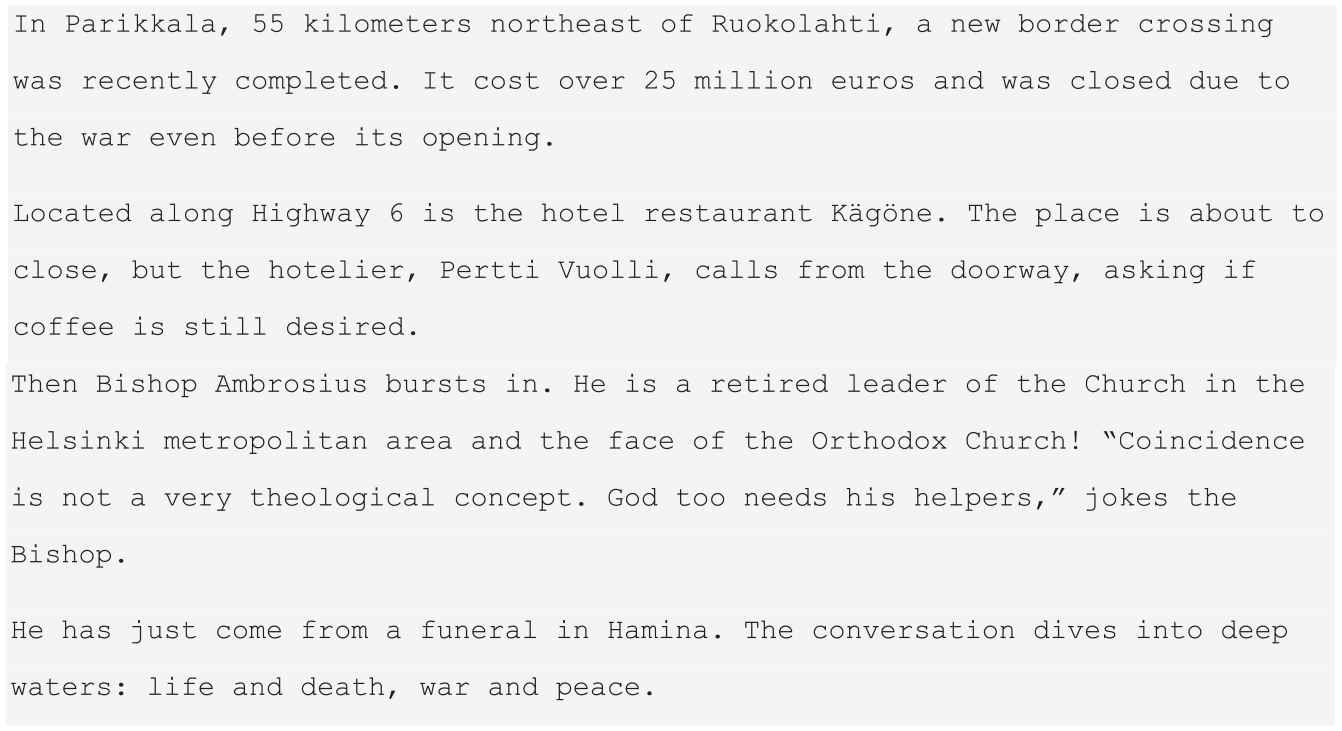
Excerpt from the published article introducing Bishop Ambrosius in the reportage. Translation from Finnish: Lauri Haapanen.
h
i
An extreme Type II case: Leba
a
b
c
d
e
f
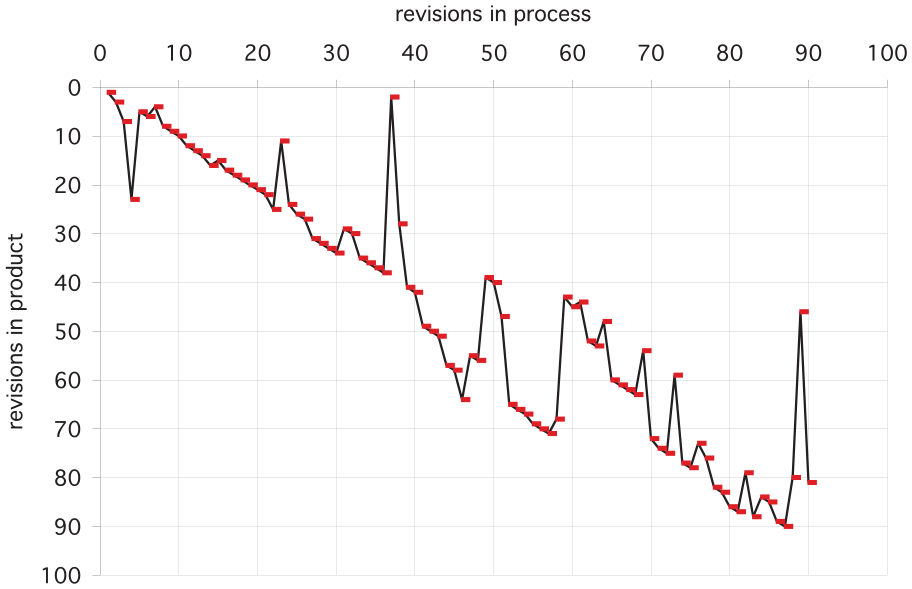
g
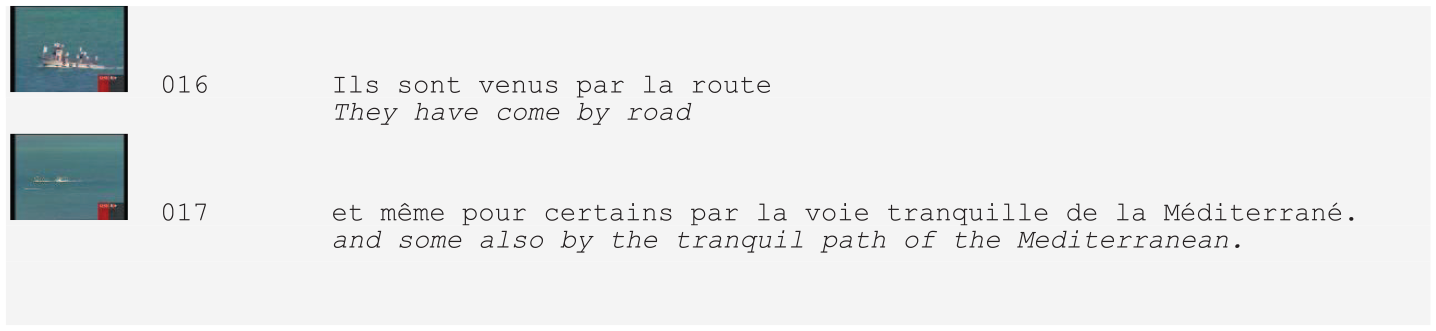
Extract of the French news item from the
h

Revisions from the
With this revision, cued by new details and R.G.’s language awareness, the design of the item emerged: R.S. started combining strong symbols around tranquil. He said that he loves the adjective because it corresponds not only to the image of the boats but also to the tranquility of the demonstration. In the RVP, he hinted that he consciously had fostered conditions for serendipitous moments by the deliberate practice of browsing the footage with eyes wide open. The emergent outcome of this exposure helped him overcome the critical situation – just before getting stuck in the stereotype reproduced by most of his source materials.
i
Conclusion: Serendipity and the future of human journalism
Why is this important? Of course, catching the momentum and finding the angle to write a really good story matters – good in terms of one’s own expectations, but also those from the media organization, the profession, the audience, and society-at-large. Our data show how journalists benefit from serendipitous moments. By openly exposing themselves to the unexpected, they even foster conditions for serendipity to happen. Their practices, made available to others, can help overcome critical situations more systematically. An example is the Appetizers Technique.
4
It resulted from transdisciplinary newsroom research into cases such as
But there is more. If we consider journalism a dynamic system in which pattern scale up and down, developing the ability to foster and exploit serendipity turns out to be a powerful tool to handle uncertainty on macro level, too, far beyond writing individual pieces. While technological developments such as the telegraph, the internet, social media, and generative artificial intelligence have thoroughly challenged journalism as a linear game of fixed routines, they offer categorically new opportunities for new forms of journalism. The solutions have been and will be found on higher levels, by forerunners, in serendipitous moments.
No, serendipity is not confined to ideation as the initial stage of the journalistic process. First, it can influence work at any stage of the newswriting process. Second, its consequences range from doing nothing to being saved. And third, it is bound to scale up as an opportunity to overcome the critical situation journalism finds itself in, with the tools like ChatGPT in an often-unpredictable world and its unexpected developments.
Of course, this relates the research into serendipity to that on learning and innovation (e.g., Porcu, 2020; Wagemans and Witschge, 2019), which presents a challenging dilemma: how to ‘routinize the processing of unexpected events’ (Tuchman, 1973: 111), while, at the same time, letting go of routines, as they represent ‘an inventory of past learning’ (Edmondson and Moingeon, 1996: 19).
To sum up: When the foreseeable forthcoming phases are bleak and gloomy because AI can predictably write all the predictable, formulaic texts automatically, it is about time we learnt and taught how to maintain a deep connection to the unpredictability of the real world – and shift horizons.