



Abstract
While there is an increasing focus on the use of online networks among autistic users, how autistic adults communicate in social networking sites remains underexplored. The article puts forward an argument for combining systematic observation of digital practices with analysis of evaluative language in order to provide a situated account of ‘autistic sociality’ in social media. Drawing on practice-based theories of social media affordances and discourse analysis research on online self-presentation and affiliation we show how autistic Twitter users rely on association, content persistence and editability in order to signal social engagement through different forms of interaction and alignment. We discuss how the proposed framework can provide a new perspective on communicative practices of autistic social media users and advance development of inclusive digital networking platforms.
Introduction
Autism affects how a person communicates with and relates to other people and the environment around them (National Autistic Society, 2021). The last few decades have witnessed a dramatic increase in the recorded prevalence of autism, with an estimated 1%–2% of the adult population in the UK having an autism diagnosis (Department of Health and Social Care and NHS England [DHSC], 2020). Though this prevalence is similar to that reported in younger populations, there has been comparatively little attention to how adults can be supported to succeed in work and social participation (but see Norris et al., 2020; Rosqvist, 2019). Autistic adults have diverse support needs and report high social anxiety levels and low engagement with in-person social opportunities that may stem from stigmatising attitudes to autism and social inequities (Crane et al., 2019; DHSC, 2020). In this context, support agencies increasingly draw attention to social networking sites (SNS) as they have been shown to enable ‘social engagement’ (Mazurek, 2013: 1711) and connections over shared interests (Gillespie-Lynch et al., 2014: 13) in autistic population. So far however research has focussed on psychosocial outcomes of SNS use without considering issues around language use and communication, that is how autistic users initiate and maintain social bonds.
Early research into autism and communication referred to autism as causing ‘impairments’, most commonly pragmatic impairments (Ochs and Solomon, 2004: 139), coming from a perspective that autism is a deficiency. A common approach in this research was ‘Theory of Mind’ which suggests that autistic individuals have difficulty in reflecting on their own and others’ mental states (Baron-Cohen, 2001). The theory has been criticised for its focus on only a few symptoms of autism, and the fact that many autistic individuals are able to ‘pass’ theory of mind tests (Gallagher, 2004). In response to this deficit model of autism, the difference model of autism has been put forward where autism is viewed as a different way of processing or being social (Davidson, 2008). Recent studies have focussed on how autistic individuals communicate (Heasman and Gillespie, 2019; O’Reilly et al., 2016; Williams et al., 2021) instead of comparing autistic people to non-autistic or neurotypical individuals. Such approaches avoid the double empathy problem (Milton, 2012), where both parties might struggle with interpreting messages in interaction but the failures of the neurotypical group may not be highlighted.
Research following the difference model has shown that autistic people can demonstrate varied and nuanced social competencies in specific communicative settings such as family (e.g. Ochs and Solomon, 2004) and/or when among others of a similar neurotype (Crompton et al., 2020). Coining the term ‘autistic sociality’, Ochs and Solomon (2004) introduced a new approach to the study of social abilities through the focus on the role of preferences and expectations characterising specific, culturally configured situations. This is a shift in focus from the individual to environment asking how different modes and means of interactions within non-autistic social worlds may either facilitate or hinder the sociality of autistic people. Other researchers and advocates within the neurodiversity movement point out societal deficits in accommodating the autistic individual, highlighting the questions of social justice, ability, and human flourishing (Gibson and Douglas, 2018). However, while the ethnographic studies highlight how ‘autistic sociality waxes and wanes in relation to societal and interactional conditions’ (Ochs and Solomon, 2010: 86), literature on SNS has so far focussed on self-reports about the psychological benefits and difficulties autistic people experience (Mazurek, 2013). Furthermore, research on communication technology in general has approached technology mainly as the means to assist the ‘impairments’ from a neurotypical vantage point (Parsons et al., 2020).
We therefore argue that existing research sidesteps the complex communicative practices and forms of agency that may make social media use meaningful for autistic users, while also obscuring the role that the affordances of SNS play in expressions of affiliation. Discourse-based studies of autistic communication have documented ‘autistic strengths’ such as specific discursive strategies for managing interactions as well as autistic resources such as creativity, sincerity, and reliance on the structure of a given interaction (Maciejewska, 2019, 2020). Davidson (2008) in turn challenged the clinical, rehabilitative applications of technology by showing how online communication has created new opportunities for expression and representation of autistic people. 1 The proliferation of autism awareness hashtags and online support groups points to routine uses of online networking by autistic adults, which need to be examined in terms of medium-specific practices. This study therefore situates autistic sociality within practice-based theory of SNS affordances (Costa, 2018) as well as in discourse analysis research on self-presentation and ‘ambient affiliation’ in SNS (Koteyko and Hunt, 2016; Varis and Bloemmart, 2014; Zappavigna, 2011). We show how this approach offers an opportunity to describe different forms of social engagement that result both from available technical features (such as, e.g. ‘likes’) and from the use of evaluative language (Drasovean and Tagg, 2015), while viewing such engagement as contingent on systems of power within social networks (Van Dijk, 1989).
We focus on the following research questions:
What is the nature of SNS interactions by autistic adults (what they are using SNS for, drawing on what kinds of resources)?
What technological affordances are enacted by these autistic users?
What ways of affiliating can be observed in autistic users’ posts?
To explore these questions we focus on data collected from Twitter. Following an overview of Twitter features, the next sections presents theoretical arguments for considering both platform affordances and language choices in the analysis of how autistic users respond to socially and technologically ordered expectations of behaviour in SNS.
Background: Twitter
Twitter is a microblogging service where users post Tweets containing a maximum of 280 characters (the character limit was raised from 140–280 in November 2017). The brevity of Tweets is an important part of the Twitter experience, which concentrates around the ‘timeline’. The timeline consists of tweets by those the user follows, retweets by those the user follows, and likes by those the user follows. Zappavigna (2011) points out that Twitter allows asymmetrical relationships where a reply to a tweet or reciprocation of a follower is not obligatory, nor is non-reciprocation interpreted as a rejection. Twitter users have different possibilities for interaction such as: direct address using the ‘@’ symbol, retweets, quote tweets, likes, and hashtags. Likes and retweets can be classified as ‘automated text actions’/ATAs (Eisenlauer, 2014: 78), where the action is controlled by the website, whereas tweets, replies/comments and hashtags are closer to ‘creative text actions’/CTAs, controlled by users. The quote tweet lies between the two, with the quoted tweet being repeated automatically and the additional comment added by the user.
Conceptual framework: Human-technology entanglements from the perspective of autistic sociality
Because of their focus on relationship formation and maintenance, SNS have been extensively studied through the lens of social capital, impression management and identity performance in line with Goffman’s (1959) dramaturgical approach. These studies are concerned with how users construct online identities and manipulate SNS profiles, and how posted content may influence friendship formation (Marwick, 2013). Early research focussed on dichotomous outcomes where SNS were seen as either promoting social capital or impeding it as time spent interacting online was thought to be replacing face to face interactions. Subsequent research has instead suggested that online connections do not substitute other forms of interaction, but rather supplement them (Marwick and Boyd, 2011). This perspective directs our attention to the relationship between technological structures and user actions. Specifically, how technologies may afford, for example, the removal of distance and time barriers, or preserve the history of interactions that, when combined with other forms of communication can facilitate maintenance of relationships.
The concept of affordances has a long history of use in computer mediated communication and technology research. In this study we align with the strand of research that draws on practice theories (Barton, 2015; Costa, 2018) to avoid unidimensional assumptions that technology determines human action, or that human activities are the results of autonomous choices. Instead, the doings of human actors and technological actors in media practices are seen as intertwined: The affordances of an artifact are not things which impose themselves upon humans’ actions with, around, or via that artifact. But they do set limits on what it is possible to do with, around, or via the artifact. By the same token, there is not one but a variety of ways of responding to the range of affordances for action and interaction that a technology presents. (Hutchby, 2001: 453)
Research on the affordances of SNS was initiated by Boyd (2011: 46) work where she identified four key affordances of networked public spaces: persistence, replicability, scalability and searchability. Persistence refers to the automatic storage of content, replicability to ease of duplicating content, scalability to the potential for high visibility and searchability to the search engines that can be used to find content. Treem and Leonardi (2013) identify four similar affordances: visibility, persistence, editability and association. Similar to Boyd (2011), persistence refers to the storage of content, though Treem and Leonardi (2013: 155) specify the accessibility of content ‘in the same form as the original display’. The visibility affordance is similar to Boyd (2011: 46) searchability, relating to the effort needed to locate content. In a move away from boyd’s categorisation, Treem and Leonardi (2013: 159–162) add editability, referring to the ability to craft and edit content, as well as association, the ‘connections between individuals, between individuals and content, or between an actor and a presentation’.
As Boyd (2011) points out, none of these affordances determine the actual practice of users and the potential outcomes. Costa (2018) has therefore introduced the concept of ‘affordances in practice’ focussing on ‘the enactment of platform properties by specific users within social and cultural contexts’. Costa’s analysis demonstrates how features may be available on a platform such as search options or content storage, but this does not always translate to affordances like visibility and persistence. Instead she highlights the importance of studying technology in use as ‘the enacted affordances are often quite different from the features imagined by the designers’ (Stahl, 2007: 660). This relational conceptualisation of affordances has affinities with the contextual view of autistic sociality. Hellendoorn (2014), for example, argues that the concept of affordances implies ‘the complementarity of person and environment and rejects the dualism of mind and behaviour’ underlying Theory of Mind approaches. Autistic individuals therefore may not perceive the same affordances in the environment as non-autistic people (Hellendoorn, 2014). While our analysis uses terminology from studies of neurotypical SNS users, our aim is to identify how autistic users enact these affordances by examining what opportunities they take up from the platform or ignore, and what new, idiosyncratic activities they may initiate themselves.
Exploring the different meanings of being social among autistic people, Rosqvist (2019) identifies two types of sociality: ‘interest based’ autistic sociality predicated on the importance of having exchanges with autistic partners based on shared interests, and ‘socially based sociality’ which is a subset of the broader category of impression management (Goffman, 1959) in relation to interaction with non-autistic partners. Socially based sociality is associated with mainstream environments such as Twitter platform which are ‘restricted and restrictive by definition’ (Davidson, 2008: 795), and may involve pressure to modify autistic behaviours and copy non-autistic social skills resulting in ‘camouflaging’ (Hull et al., 2017). Focussing on the enactment of SNS properties from the perspective of autistic sociality therefore means taking into account ‘autistic resources’ and preferences (Maciejewska, 2020) on the one hand, and the history of stigmatising discourse about autistic behaviours and communication on the other. This necessitates an approach that combines broader cultural knowledge with textual analysis to examine socially and technologically situated communicative structures behind the production of practices and shared meanings (Barton, 2015).
In addition to examining the relationship between users and technological opportunities for action, we use discourse analysis, as part of ‘discourse oriented online ethnography’, to reveal how online context is also actively ‘construed by speakers and audiences’ (Androutsopoulos, 2014: 17). The ways SNS users signal affiliation with others through linguistic choices sometimes evades analytical attention due to the focus on dyadic exchanges and ATAs (Eisenlauer, 2014). By contrast, approaches based on systemic functional linguistics have focussed on the use of evaluation – a domain of interpersonal meaning where language is used to build solidarity by adopting stances and referring to other texts. Zappavigna (2011) introduced the concept of ‘ambient’ forms of communion in SNS arguing that microbloggers draw on shared communicative practices which do not necessarily presume direct interaction between participants. In our analysis of affiliation strategies we draw on the Appraisal framework (White, 2015) adapted to Twitter (Zappavigna, 2011). It relies in part on Du Bois (2007) stance triangle, which suggests that evaluations do not only appraise the target but also align the evaluator with others. Appraisal is commonly used to analyse online alignment as the framework accounts for various forms of evaluation including modality, affect, and engagement (Drasovean and Tagg, 2015).
Our study is part of an ongoing project that uses a participatory research approach based on a partnership between community members and academic researchers (Fletcher-Watson et al., 2019). A key benefit of the approach is that it ensures that the topic of study reflects the priorities of the community group. This is particularly relevant for autism due to instances of a mismatch between the research that gets funded and the research priorities of the autistic communities (Crane et al., 2019). In the current project, the ‘community’ is a group of autistic adults from the charities Autistica and Autistic Nottingham who have been involved in all stages of research through advisory board meetings and workshops. The topic reflects the Autistica’s research priorities of communication and environments/supports for achieving the best life and social skills outcomes for autistic people (Autistica, 2016).
Data and method
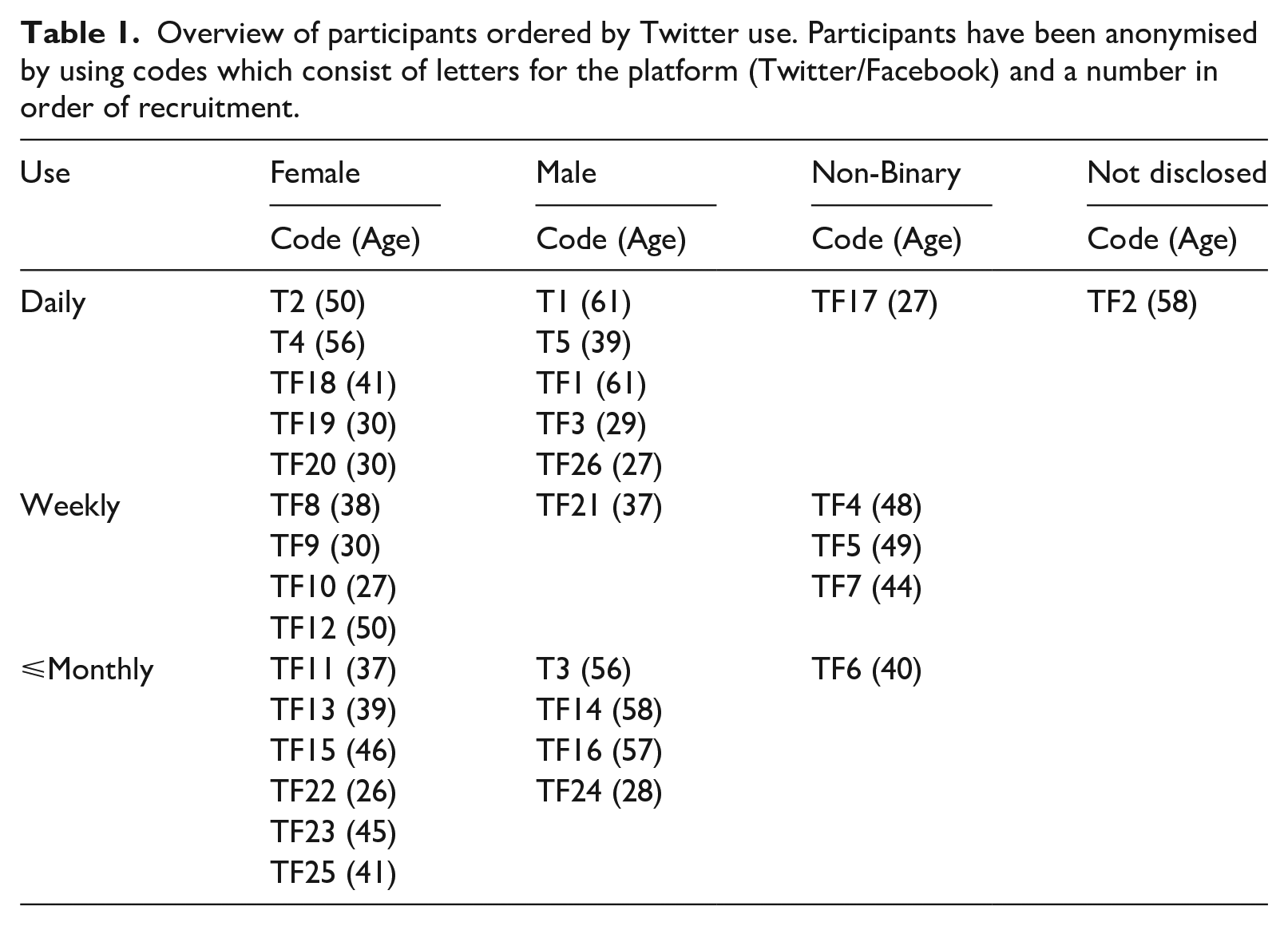
In collaboration with Autistica we recruited 31 autistic Twitter users following purposive maximum variation sampling strategy to achieve variability across age, gender, socio-economic status, and frequency of use: 15 women, 10 men, 5 non-binary/agender participants and 1 participant who preferred not to share their gender (Table 1). Of these, 12 were self-reported daily users of the platform, 6 medium (weekly) users, and 13 low-use (monthly or less).
Overview of participants ordered by Twitter use. Participants have been anonymised by using codes which consist of letters for the platform (Twitter/Facebook) and a number in order of recruitment.
Ethical approval was granted by the University Research Ethics committee (QMERC2020/58). We obtained consent from participants to follow them on Twitter from 1 March to 31 May 2021 and to collect and analyse tweets. Observation of online activities took place daily followed by weekly automatic download of posts (total 25,516). We made notes and screenshots of Twitter activities paying attention to situated examples and context of language use as well as noting down the networks and groupings that users participate in. Following Barton (2015: 48) we see social practices as ‘commonly recognised patterns of activity’ that have to be inferred from what goes on in specific events such as tagging, liking, or retweeting. In the analysis of fieldnotes, and in relation to RQ1 we therefore asked what activity type(s) the data instantiate, and how these activities related to the platform features in order to arrive at enacted affordances and overall picture of Twitter use (RQ2). The frequencies of events were also recorded and used to complement the qualitative analysis. In relation to RQ3, we analysed a sample of tweets guided by the assumptions and procedures of Appraisal theory. Broadcast Tweets were randomised in Excel per participant and the first 10 Tweets of each participant were selected (total 196 tweets). For participants with fewer than ten broadcast Tweets, all Tweets were selected and coded using NVivo 12 software.
Analysis
Observation of online activities: Enacted affordances
Visibility
The affordance of visibility relates to how easily information can be found in a network and how visible a person’s own network is. Twitter affords visibility by relaying information about and from the users and making them available first to followers, and potentially to the followers’ followers. Twitter users with many followers, and particularly more followers than the number of followed accounts, are often considered more influential (Siegert et al., 2020; Zappavigna, 2018). Our sample included only three participants (T2, T4, TF2) whose follower count had at least 100 people more than their following count. In terms of visibility to followers, broadcast tweets or status updates constituted only 17.2% 2 of the tweeting activity, reply tweets – 41%, retweets – 30.6% and quote tweets – 4.35%. While it is possible to increase visibility beyond followers by using hashtags (Zappavigna, 2011), hashtag use is limited, which corresponds to the overall low number of broadcast tweets. Only 18.7% of broadcast tweets contained hashtags, with an average of 1.1 hashtag per hashtagged Tweet. Visibility can also be enhanced by the option of retweeting when followers retweet to their own networks or like tweets. Most of our participants’ tweets were not frequently retweeted – following Siegert et al. (2020) we use 30 as a number of high count. There are seven instances of high retweets for participants – 659 (TF17), 260 (T2), 197 (T2), 115 (T2), 69 (T2), 50 (TF17), 35 (TF17) and 39 broadcast tweets attracted high like count (>30) including jokes and discussion of such topics as mask wearing, politics, Twitter policy, and autism awareness.
While the act of revealing new information about oneself in tweets can increase relational intimacy, it also involves risks. Users therefore manage self-disclosure according to whether they are in a frontstage (public self) or backstage (private self) context (Goffman, 1959). Most participants kept the default, public setting throughout observation period and therefore constructed ‘permeable boundaries’ (Walton and Rice, 2013) around their posts. It is notable therefore that they chose to tweet not only mundane reports on everyday activities (e.g. about hiking, reading) but also potentially private matters such as reporting on the challenges of living and working as autistic individuals.
Association
The association affordance on Twitter allows participating in specific topics and selection of audiences via hashtags, replies, and mentions. Users can associate themselves with individuals, content, and organisations, and in this way observe and monitor a large number of connections. The enactment of association is particularly salient in the use of replies which, as stated above, exceed the number of tweets by at least two times. While some participants used the ‘Reply’ function to produce reactions via GIFs and phatic comments such as ‘Brilliant X’ (TF21) many also chose to comment on specific topics including politics, professional interests, and autism awareness in direct response to the prompt or question in a tweet. Participants engaged with polls and questions posted by both autistic and allistic users from their networks and beyond, providing facts, links and references as part of responses (see Figure1 below).
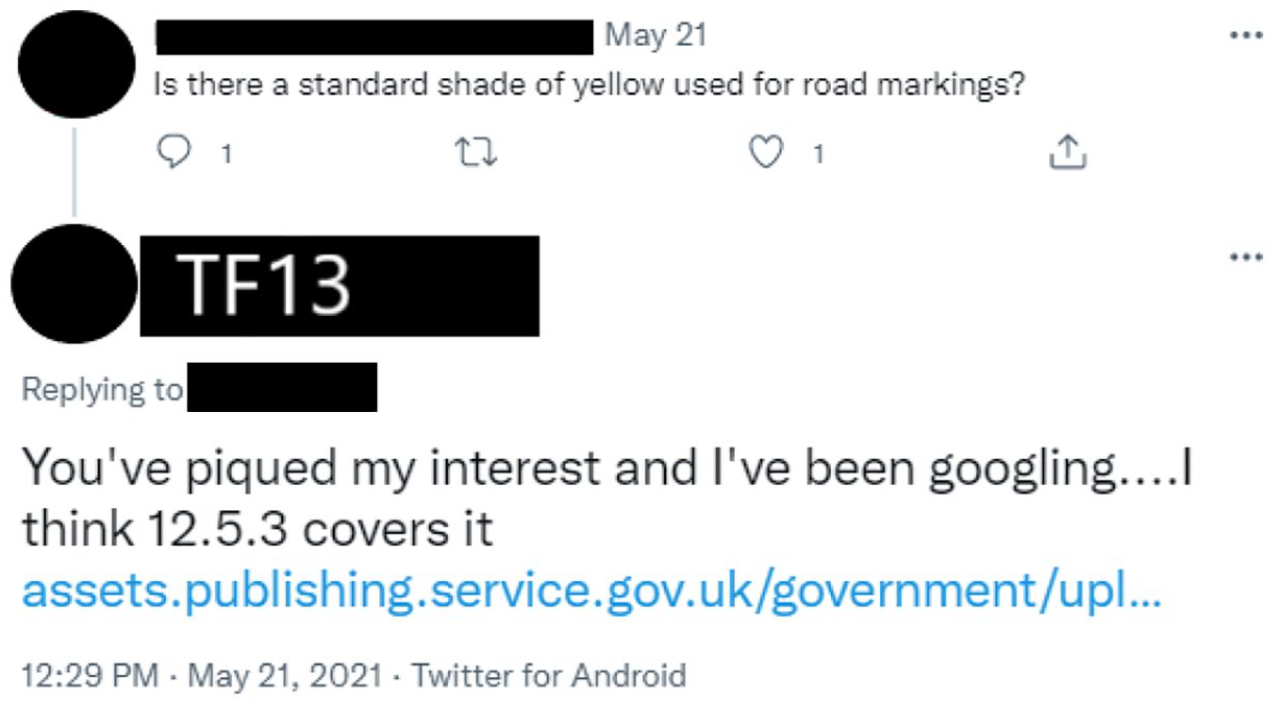
Reply tweet providing information and hyperlink.
Participants also frequently engaged with questions posted under #AskingAutistics using other autism-related hashtags in their replies such as #ActuallyAutistic, #AllAutistics, #DiagnosedAutistic, #autistic, #autism, #AutismAcceptance, #AutismAwareness, #ASD, #AutisticAcceptance, #AutisticIdentity to amplify the message. These replies included reports of personal experience in the form of testimony (Koteyko and Atanasova, 2018) raising awareness of issues such as availability of support and inclusion in workplaces. The creation and maintenance of ties was also done via the use of hashtags for professional, for example, #TVproduction, #musicteaching, as well as relational purposes, for example #happy (Zappavigna, 2011). Similarly, the About section of the profile was used by participants to produce identity statements related to diverse interests as well as autism, for example, ‘I like 60s and 70s stuff. Live in [city] but originally from North East. Autistic’.
Content persistence
The affordance of persistence-when conversations are constantly accessible and remain accessible at different times than when they transpired – makes content searchable, browseable and visual. We observed how participants enacted this affordance through the use of replies, quote tweets, and pinned tweets. The higher frequency of replies points to an important role of persistence in communicative practices of autistic SNS users as having a record of previous communication allows a degree of contextualisation and therefore working out ‘the preferred or better responses’ (Parsons et al., 2020: 210). Persistence was most notably enacted by participant T4 through an idiosyncratic activity of repeatedly posting pre-formulated replies such as ‘Most autistic people (80%+) actually prefer to be called autistic people’. This practice of correcting statements of others is made possible through encountering and/or searching for ‘incorrect’ content – that is tweets that used person first language (e.g. people with autism). The use of quote tweets to animate (Goffman, 1981) pre-existing content and pinned tweets (by nine participants) to highlight one’s own tweet on the profile page further alerted us to the practices of designing Twitter profile and curating content. Taken together such activities point to the reliance on conversational and communicative structures (Maciejewska, 2019), as alluded to in this tweet (TF17): “something I’d like to do, because I’m autistic and it would fulfil my obsessively curatorial nature, is restore/archive all my past deleted tweets over my accounts 2011–present. I’d be prepared to pay someone to help me do this. Is it impossible, as I suspect?”
Editability
Editability is about editing tweets before they are seen by others, as well as deleting posts and editing profile information. This affordance allows to preserve the ability to maintain a consistent presentation of self (Marwick and Boyd, 2011), and involves presentation flexibility through the platform’s content generation features (e.g. photo and video uploading). As we did not observe participants in real-time, we focus on the analysis of tweets and profile information (pre-post editing practices will be examined through interviews). Instances of deleting tweets were rare (only TF3 and TF17 deleted Tweets). Editing of profile information was more common, for example, adding statements about recent offline professional activity or Twitter activity such as ‘I’m shadowbanned and hardly post here’. Participants also used the opportunity to include emojis, photos, and GIFs to complement or extend the meanings conveyed through text. For example, when sharing personal experience to raise awareness participant TF20 combined text with a photo of drawer contents to make the meaning of her tweet apparent (Figure 2).
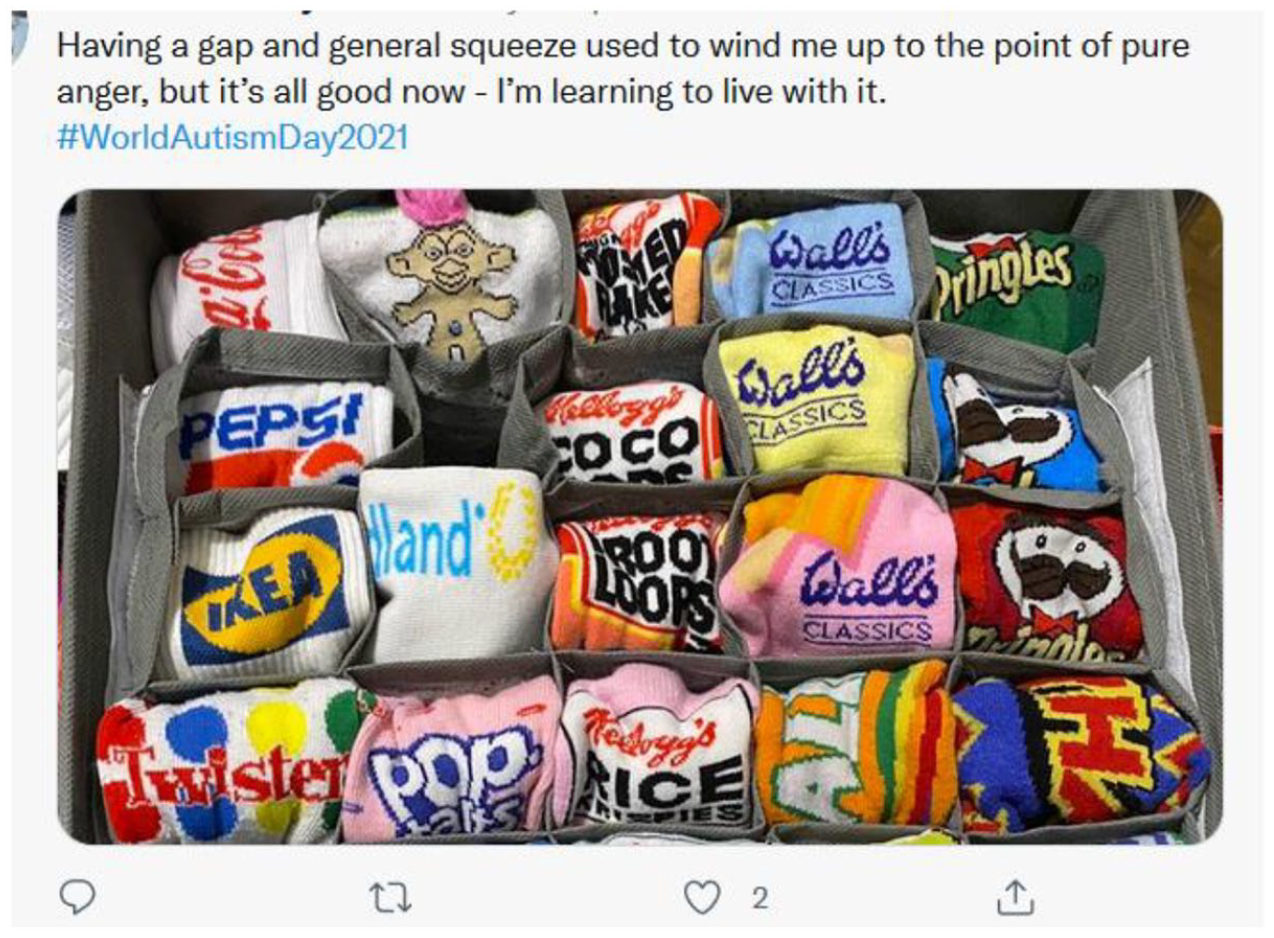
Broadcast tweet combining text and image.
Similarly, most profiles included avatars and photos (i.e. were not left blank). While the use of different semiotic resources is beyond the scope of this paper we align with digital literacy approaches that emphasise the importance of considering the multiplicity of modes and genres involved in the design of meaning (Adami and Jewitt, 2016; Barton, 2015).
Appraisal analysis: Audience affiliation strategies
In this section we report on the results of Appraisal analysis which allows us to show how participants signalled affiliation via the use of text-based evaluation. The Appraisal system is divided into three categories: Attitude, Graduation, and Engagement. Attitudinal evaluation is primarily realised through affective adjectives or adverbs and affective processes, and is concerned with three types of evaluation: ‘emotional reactions’ constitute the sub-category of Affect, ‘judgements of behaviour’ constitute the sub-category of Judgement, and ‘evaluations of things’ constitute the sub-category of Appreciation (Martin and White, 2005: 35). Graduation is concerned with the strength of the evaluation, and Engagement focuses on the dialogistic positioning of the evaluation (White, 2015). As we are interested in whether autistic adults use evaluative stances to align with others, as opposed to the detail in which they use them, we analysed the data to the first level of Attitude: Affect, Appreciation, and Judgement, Graduation: Force and Focus, and Engagement: Monoglossia and Heteroglossia (Disclaim/Proclaim, Attribute, Entertain).
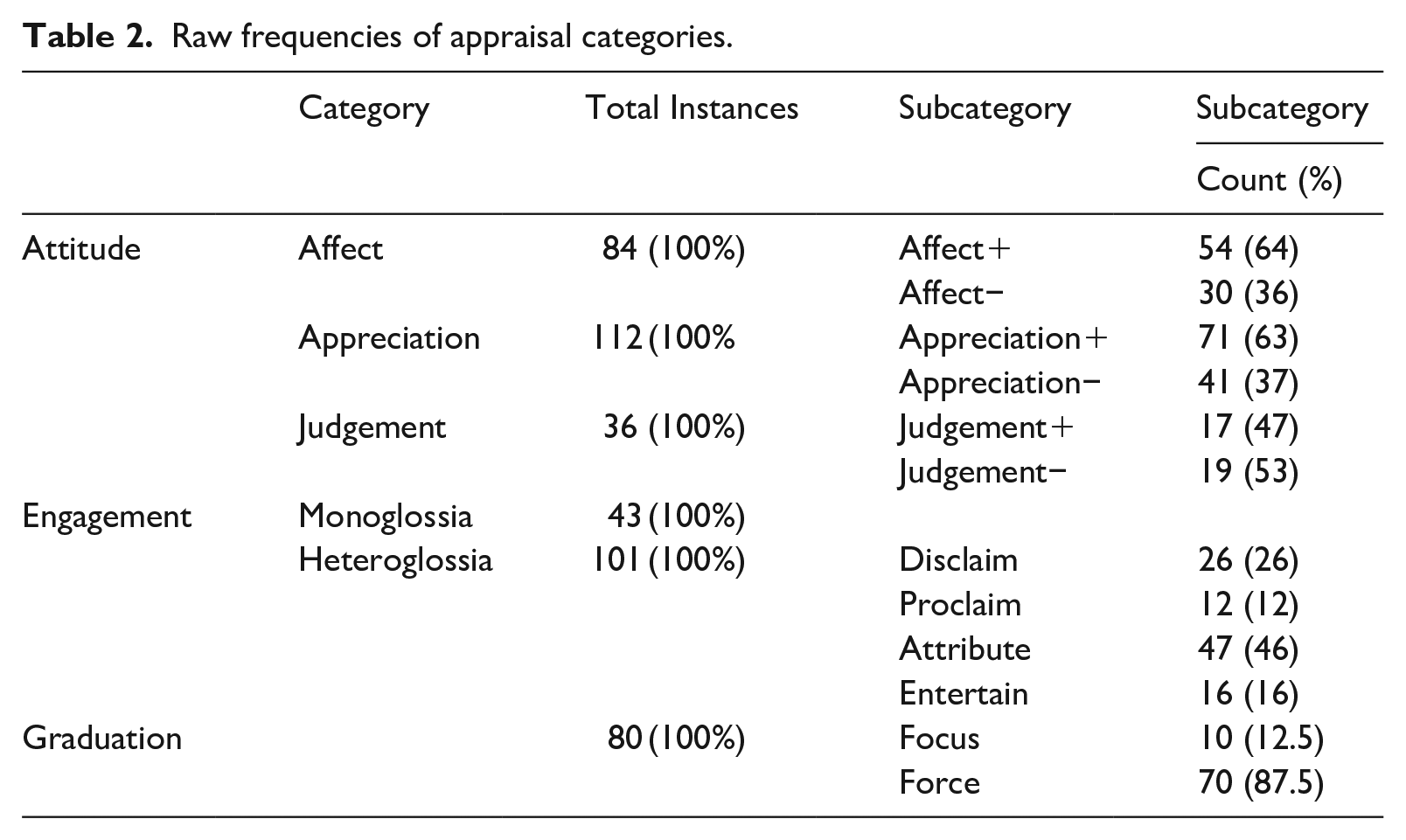
From the raw frequencies in Table 2, it is clear that participants were generally more positive than negative in their Tweets. Positive categories across Affect, Appreciation, and Judgement were used by more participants, and in Affect and Appreciation, positive evaluation was used more than negative evaluation. The exception is Judgement, where negative Judgement had more instances than positive Judgement. This difference seems to be in part due to the political nature of several participants’ Tweets, using hashtags such as #BorisJohnsonOut and #torysleaze.
Raw frequencies of appraisal categories.
The most common category was positive Appreciation, with 71 instances across 16 participants. Sixty-one instances appeared in the text of the Tweets, with 10 instances appearing as hashtags (Zappavigna, 2018), such as #beautiful, #AutisticLivesMatter, #BlackLivesMatter. Similarly in negative Appreciation, there were six instances of evaluation in hashtags, for example, #FurIsDead, #ClimateCrisis. In the text, participants used Appreciation to evaluate a variety of topics including specific objects such as their laptop, an advertisement, or the NHS, as well as topics related to autism. For example, in the Tweet below participant TF5 uses a range of evaluative stances to discuss Autism Awareness Month: I think #AutismAwarenessWeek and #AutismAwarenessMonth are a good [appreciation+] thing. Yes there’s lots [force] to be improved on [appreciation-], but so much [force] positive [appreciation+] work is done at this time. I’d like to say a big [force] “Thank You” [judgement+] to all who are listening to us & raising awareness #ActuallyAutistic [focus] [GIF displaying Autism infinity symbol with text ‘#PositiveAutism’]
They positively evaluate Autism Awareness Week and Month, followed by an acknowledgement of further work that needs to happen (‘lots to be improved on’). They go on to reinforce the positive evaluation using force ‘so much’ prior to the ‘positive work’, strengthening the Appreciation. Throughout the Tweet, they use hashtags to affiliate with wider conversations happening on the platform, both related to specific time periods with #AutismAwarenessWeek, and to autism activism with #ActuallyAutistic. Finally, they positively evaluate supporters with Judgement: ‘a big Thank You’.
Participants also regularly used Force to strengthen their evaluations, with a total of 70 instances of Force across the dataset. There was only one instance of minimising Force, while the other 69 instances were similar to those in the example above: ‘so much positive work’ and ‘a big Thank You’. There was some use of Focus, including talk of a ‘proper pay rise’ for the NHS and getting a ‘true picture’ of ‘how difficult life can be’. The most notable use of Focus for our study is in the hashtag #ActuallyAutistic as used in the example above. The use of Focus here creates a demarcation between those who talk about autism (like researchers), and those who are ‘actually autistic’.
Participants also employed Affect throughout their Tweets. In general, affective statements were used to discuss personal experiences: ‘I’m happy [affect+] it’s finally working properly now’; or to talk about societal issues: ‘How sad [affect-] that so many people forgive and forget all the rest’. While Appreciation was expressed through hashtags and text, Affect appeared in hashtags, text and emojis, with text being the most common form.
Early evening West Wales coast Walks [blue wave emoji] [sun emoji] [red heart emoji] [affect+] #grateful [affect+] #Happy [affect+] #beautiful [appreciation+] #Wales [picture from top of coastal cliff]
This example from participant TF19 demonstrates both emoji and hashtag Affect. The red heart emoji suggests positive Affect, as it suggests ‘love’ in regard to the ‘early evening walks’. This Affect is then reinforced through the hashtags which expressly name the emotions: ‘#grateful’ and ‘#happy’. In all instances of Affect (both positive and negative), the stance had a clear object or cause, as the walks in the example above. This could be related to autistic preferences for conversations with a clear topic as opposed to undefined ‘small talk’ (Bagatell, 2007; Idriss, 2021).
Participants also regularly engaged with other speakers and text demonstrated through the number of Heteroglossic instances. Most commonly used was Attribution, where participants included links to texts, directly quoted articles, and explicitly attributed speech, thoughts, and evaluations to both others and themselves. Attribution was also used by most participants with 16 participants attributing text, with the closest following category, Disclaim, being used by less than half of the observed participants.
In summary, although broadcast tweets appear to be the least used platform feature in our sample, Appraisal analysis has shown that they contain a range of nuanced affiliation strategies. Positive categories across Affect, Appreciation, and Judgement instantiate self-presentation practices characteristic of SNS such as evaluating and emphasising aspects of one’s personality, pastime endeavours, sense of humour, work and relationships (Bolander and Locher, 2015; Koteyko and Hunt, 2016) within the norms of ‘conviviality’ (Varis and Bloemmart, 2014: 42) in non-anonymous interactions on Twitter and Facebook. The distribution of Affect echoes research that challenges the portrayals of autistic individuals as emotionally distant and socially avoidant (Davidson and Smith, 2009). The evaluation accompanying autism-specific hashtags together with the use of Engagement bear similarity to ‘active self-presentation’ strategy described by Cook et al. (2021: 2) as ‘reciprocal, open, and well-practiced social behaviours’ such as asking questions, commenting and providing elaborating information, and establishing points of similarity. Such behaviours draw on autistic strengths and are therefore seen as more positive in comparison with practices of avoiding autism disclosures and suppressing autistic traits (Cook et al., 2021).
Discussion
In line with studies rejecting the focus on individualised communicative and psychological competencies of autistic people this paper has set out to examine (and emphasise) the interplay between autistic sociality and technological environment. Our focus on the simultaneous investigation of small-scale ‘language in use’ phenomena and understanding of more general cultural and social processes through enacted affordances has enabled us to suspend preconceived ideas and approach observed SNS activities as unique social episodes. Below we discuss how this approach allows for more nuanced observations of the technological and social, and their co-configuration among an autistic population.
The focus on both digital and discursive practices has enabled us to highlight the socio-cultural situatedness of posts which so far has not been taken into account in the studies of autistic participation in SNS. Ochs et al. (2004: 156) argue that perspective-taking encompasses more than inferencing about another’s mental states as members draw on awareness of ‘behavioural expectancies’ associated with socially and culturally organized situations in Ochs et al. (2004: 156). In social media contexts this involves using language, images, hashtags, likes and tools for sharing such as retweets and quote tweets as ‘meaningful communicative operations that demand different levels of agency and creativity of the user’ (Varis and Bloemmart, 2014: 41) to express membership of diverse communities. In this regard, our analysis has revealed agentive and creative uses of language and technical features to construct different professional as well as autism-related identities. Discussions under #ActuallyAutistic and #AutismAcceptance in particular involve responses to communicative differences in offline interaction, including experiences of ‘othering’ and instances of misinterpretation. Such practices therefore provide further support to Davidson’s (2008) analysis of the important role of online spaces for the expression of ‘autistic culture’. 3
As Shore (2006) notes, however, while maintaining autistic identity and culture is important there is also need ‘to learn how to interface with the vast majority of people who are not on the autism spectrum’ (p. 201), and, crucially, to facilitate such interaction in more equitable ways. We therefore argue that the understanding of how language use and communicative preferences intersect with technology is important for developing design resources aimed at supporting autistic socio-communicative abilities. For example, the significantly higher frequency of replies in our data contrasts with the linguistic study of Twitter use (Page, 2012) where broadcast style updates and reply tweets were found to be of broadly similar proportions (48% and 42%, respectively). This preference for replies may point to the importance of content persistence in facilitating the understanding and enactment of roles in online multi-party interactions. Reply tweets provide an opportunity to respond to a turn instead of initiating a one-to-many post, and the automatic addition of @ and recipients makes replies closer in directedness to email and text messages which are preferred forms of written communication for autistic people (Howard and Sedgewick, 2021). The fact that the replies in our sample tend to focus on specific issues also resonates with autistic preference for providing factual information (Cook et al., 2021). Similarly, the observed tendency to use images for extending the meanings conveyed through text may help to understand autistic user choices in constructing broadcast tweets.
Furthermore, the social media technologies allow creating ‘connected presence’ (Licoppe and Smoreda, 2005) characterised by quasi-continuous exchanges that help people to maintain relationships. The ‘quasi-continuous’ aspect stemming from the asynchronous mode as well as low obligation to respond is important from the perspective of autistic preference for space and time. Friedner and Block (2017) foreground an example of mediated sociality when at a conference, autistic attendees were given red, yellow, and green coloured stickers to place on their conference badges – a practice they had advocated for. A red sticker meant that the participant did not want to be approached, a yellow sticker meant that they wanted to be approached only by already known people, and a green sticker meant that anyone, known and unknown, could initiate interaction. The enactment of association affordance via hashtagging and providing profile information may be comparable to a green card from this perspective in that it signals readiness to communicate (while also providing opportunity to specify topics of interest). Likewise, the association with specific individuals via replies and mentions may be akin to a yellow card, whereas setting profiles as private or deleting tweets would be closer to the practice of using the red card.
In this first study of autistic sociality in SNS we have documented a range of practices signalling social engagement and supporting autistic voice. However, a number of important research directions are still to be pursued. First, a contextual approach requires a closer look at the contributions of non-autistic as well as autistic interlocutors to the dyadic interactions with autistic users through analytical frameworks such as conversation analysis. Second, while the affordances of association, persistence, and editability happen to co-inside with the preference of autistic people for a socio-spatial distance this does not erase the fact that the platforms have been developed for neurotypical users. Connected presence, as one example, includes practices of responding to the fluctuation of information in a network as well as ‘recreating’ and co-constructing social cues through text and images. It is therefore predicated on a ‘neuro-normative’ (Davidson, 2008) user who can effortlessly respond to a continuously updated timeline and social cues as they co-ordinate their activities on the platform. Further research, including our own ongoing analysis of interviews, should take into account opportunities as well as challenges underlying ‘context design’ (Tagg et al., 2017) and image-based communication in SNS (Adami and Jewitt, 2016). Understanding autistic users’ strategies of participating in algorithmically shaped social interactions will be an important contribution to the efforts to design inclusive digital networked environments.
Footnotes
Acknowledgements
We would like to thank our participants, autistic members of the project’s Advisory Board, Autistica, and Autistic Nottingham for collaboration and support, and Dr Gemma Williams and Dr Helena Webb for insightful comments and suggestions on earlier drafts of the manuscript.
Declaration of conflicting interests
The author(s) declared no potential conflicts of interest with respect to the research, authorship, and/or publication of this article.
Funding
The author(s) disclosed receipt of the following financial support for the research, authorship, and/or publication of this article: The project was funded by the ESRC (grant number ES/T016507/1).