




Abstract
The Play for Today Viewing Group, consisting of academics from the United Kingdom and Ireland who meet virtually multiple times per year to discuss a teleplay, collectively analyse two Plays for Today, The Bevellers (1974) and Not for the Likes of Us (1980). These plays reflect Play for Today’s historical tendency towards a greater inclusion of female workers alongside emergent forms and patterns of work, and from heightened studio realism, shot on video, to its use of film and critical dissection of its attractions. Analysis reveals the plays’ thematic intersections concerning work, gender and the body: this comparative approach discerns how Play for Today was a strand of interconnected dramas within British television's flow possessing deep social and cultural significance.
Introduction
Three years into its life, this article documents the history of the Play for Today Viewing Group. It incorporates the group’s interlinked multi-methodological analyses of two Play for Today plays’ representations of work, gender and the body, their status as television and their relations to the theatre and film mediums. Play for Today was a BBC1 strand of one-off dramas running from 1970 to 1984, broadcasting one play written, directed and produced by different people each week, shown midweek on BBC1, directly after the Nine O’Clock News. Around 20 sometimes experimental, invariably unpredictable single dramas were shown under this prestigious banner annually. Play for Today’s pluralism and diversity emerged from the democratising structure of feeling manifested in Armchair Theatre (ITV, 1956-74), British New Wave cinema (1959–63) and its direct predecessor on BBC1, The Wednesday Play (1964-70), which included the famous socio-politically interventionist docudrama Cathy Come Home (1966). Creators of one-off TV drama, which, since the 1950s had a close affinity with theatre and video, increasingly aspired towards filmmaking.
Famous names associated with Play for Today include Dennis Potter, Mike Leigh, Ken Loach and Tony Garnett – but both of our independent research projects, as well as the Viewing Group’s sessions, have evidenced a wealth of interest and merit beyond the output of these names. While theorists such as MacMurraugh-Kavanagh (1997, 1999) have drawn attention to the male-dominated nature of PfT’s antecedent The Wednesday Play, by drawing attention to two plays either written or directed by women for the latter strand, we wish to make the case that though the gender balance at the BBC during PfT was by no means equal, the canon of PfT typically remembered and celebrated remains disproportionate. As such, scholars would do well to turn attention to lesser-known texts, The Bevellers and Not for the Likes of Us providing only two examples.
Likewise, Play for Today’s memory tends to be evoked in reference to the ‘serious drama’ (Caughie, 2012: 52–53) of ‘realism’ or ‘studio naturalism’ (Cooke, 2015), though works made under the banner did not universally fit such moulds. Even its nominally realist plays often challenged preconceptions of what ‘realism’ might denote and how it could not be seen as antithetical to the use of studio space; points this article will demonstrate.
The Viewing Group is an online community forged during the COVID-19 pandemic, originally convened by the Arts documentarian and TV historian John Wyver, who made the documentary celebrating Play for Today’s fiftieth anniversary, Drama Out of a Crisis (BBC4, 2020). Following renewed interest in Play for Today (PfT) at this time, the first discussion on 5 November 2020 was on Trevor Griffiths’s Country (1981), following its BBC4 repeat. We set the tone by selecting a historical-set play, representing the strand’s diversity while consciously stopping the space becoming an exercise in myopic 1970s nostalgia by beginning with a representation of a more distant past. Starting in this way encouraged a broader kind of reflection upon the strand and its history, reflecting not only on what it can tell us about the period in which it was made but also other historical moments, including the present. The 32 monthly sessions since have involved wide-ranging discussion of a TV play selected by a member of the group.
The group encompasses academics and independent TV historians. Alongside this article’s editors – who have both completed PhDs about PfT – the group’s most frequent attendees are John Cook, Simon Farquhar, Christine Geraghty, Ian Greaves, John Hill, David Rolinson, Billy Smart, John Williams, John Wyver and latterly, Fabiola Creed. Other participants have included Vicky Ball, Rachel Clements, Hannah Cooper, Eleni Liarou, Jonathan Murray, Sukhdev Sandhu and Helen Wheatley.
This list of names, while encompassing a wide span of television theorists from numerous backgrounds, institutions and fields, does tend to mirror trends in authorship in regards to Play for Today and the single play strand at large – particularly in its dominance of White male scholars. This paper, however, pushes back against perceptions of this as pre-determined by the subject matter of teleplays from this period: while PfT’s associations with ‘seriousness’ might have become conflated with ‘masculinity’, and while incessant reference to the names Leigh, Loach, Potter, Griffiths, Allen and Garnett and simultaneous erasure of other names might have deterred female scholars or scholars of colour from exploring PfT or engaging with the critical field, this article presents an alternative vision for engaging with this complex history and narrativisation of PfT, using methods which make space for discussion, contestation and mutual discovery.
A fundamental aspect of the Viewing Group that permitted such work to be done is its openness to a range of approaches. As such, participants have used diverse methodologies to discuss the texts: historical or historiographical analyses, qualitative oral history, quantitative content analysis, textual analysis, alongside intertextuality, authorship, genre and reception studies.
From 2020 to 2023, the Viewing Group have discussed 27 PfTs. Thus far, no PfTs involving Mike Leigh or Dennis Potter – or Ken Loach – have been featured, which infers our collective desire to explore PfT beyond its customarily canonised creators. We have paid sustained attention to studio-based TV drama, with 62.5% of PfTs discussed being totally or mainly video-recorded.
Before the Viewing Group sessions take place, files containing each play, cuttings from newspaper coverage and criticism of the play in question are circulated. This gives group members the time and option to prepare spoken contributions to the group, however formally. Typically, some members attend with something written prepared to share with the group, others have archival documents they want to share more conversationally and some attend only having watched the play, with or without notes, offering textual readings and engaging in discourse. No singular way of preparing for the group has been prescribed nor preferred.
For this article, we selected two PfTs for the group to discuss: Roddy McMillan’s The Bevellers (21 November 1974) and Gilly Fraser’s Not for the Likes of Us (10 April 1980) (NftLoU). Both are available to watch via Learning On Screen’s Box of Broadcasts. While no two plays could be representative of PfT’s varied output, their form and content reflect historical patterns in PfT’s development. These plays exemplify PfT’s shift from predominantly male authorship from 1970 to 1976, to a far greater inclusion of women writers from 1977 to 1982. They intersect thematically: concerning workplaces, gender and the body. Furthermore, these plays variously represent PfT’s theatrical and cinematic facets: The Bevellers is a video-recorded, multi-camera studio production, while NftLoU is all-filmed. They exemplify the strand’s devolutionary tendencies: after three Wednesday Plays (1967–70), The Bevellers was BBC Scotland’s first PfT; NftLoU was PfT’s only BBC Bristol production.
This article provides a multi-perspective analysis of two undervalued PfTs, alongside an exposition of how such a viewing group works through disagreement, difference and knowledge exchange in real time. Via an insight into contemporary interpretations of PfT from leading scholars in the field, this work offers a glimpse at how the theoretical handling of the strand is carefully changing, and demonstrates the merits of looking beyond the canon. We regard this as a valuable task, feeling that renewed interest to PfT in the wake of its 50th anniversary requires an urgent riposte to the view that PfT was uniformly masculine, and solely featured very narrow depictions of historically confined labour struggles. An openness to methodologies, approaches and perspectives allows the Viewing Group to explore the themes of work, gender and the body from numerous new angles, bringing together various knowledges, expertise and subjectivities.
Here follows two edited transcripts of the Zoom discussions of The Bevellers and NftLoU on 22 June and 21 July 2023, respectively. The transcripts incorporate selected typed comments within Zoom’s ‘Chat’ function. Our editing aims for concision and clarity, and distils the conversation to its key themes: work, gender and the body, and how these facets of the two plays are realised on TV within studio or location spaces.
Part 1: Theatrical masculinity in The Bevellers
This session began with the following introduction, written by Tom May and read as follows: The Bevellers centres on young Norrie’s (Andrew Byatt) first day as a beveller – a worker who smooths materials’ sharp edges – within a subterranean Clydeside glassworks. This ensemble drama takes place over one day in one set, and eight of its nine characters are men. Following a day which includes bullying, an unpleasant initiation, the pressures of a ‘big job’ and two bevellers sustaining injuries, Norrie opts to leave this trade.
The Bevellers is representative of PfT’s theatrical influence. It was one of 26 PfTs directly derived from theatre texts, and one of four Scottish-set stage-derived PfTs. The Bevellers’ theatre original was first performed at Edinburgh’s Royal Lyceum on 16 February 1973, soon transferring to the Citizens Theatre in Glasgow. Its writer, Roddy McMillan, was a veteran actor of the Glasgow Unity Theatre, which had a radical left reputation and aimed to democratise theatrical representation. McMillan’s was the first of BBC Scotland’s 14 PfTs. Another seven were made in Scotland by BBC London. From 1976 to 1982, producers Pharic Maclaren and Roderick Graham led an upturn in the amount and variety of PfTs made by, about and for Scotland, to use Cook’s (2008) formulation.
A majority of Scotland-set PfTs, including McMillan’s, were set in the urban West Central Lowlands. The Bevellers is neglected: never having been repeated on TV, nor analysed within Cook’s (2008), Petrie’s (2000) and Murray’s (2022) Scottish screen studies. Settings in Scottish-set PfTs often include masculine work spaces, like crofting and shipbuilding. Recurrent themes include infidelity or new sexual freedoms, while the pub or drinking alcohol features in 90.5% of the Scottish-set PfTs.
The Bevellers was shot in Studio A, Queen Margaret Drive, Glasgow: BBC Scotland’s base from 1938 to 2007. Figures 1 and 2 exemplify the spaces designer Archie Clark created for The Bevellers in Studio A: Screen-shot from The Bevellers. Senior beveller Bob in his workplace. Screen-shot from The Bevellers. Three bevellers at their specific workspaces.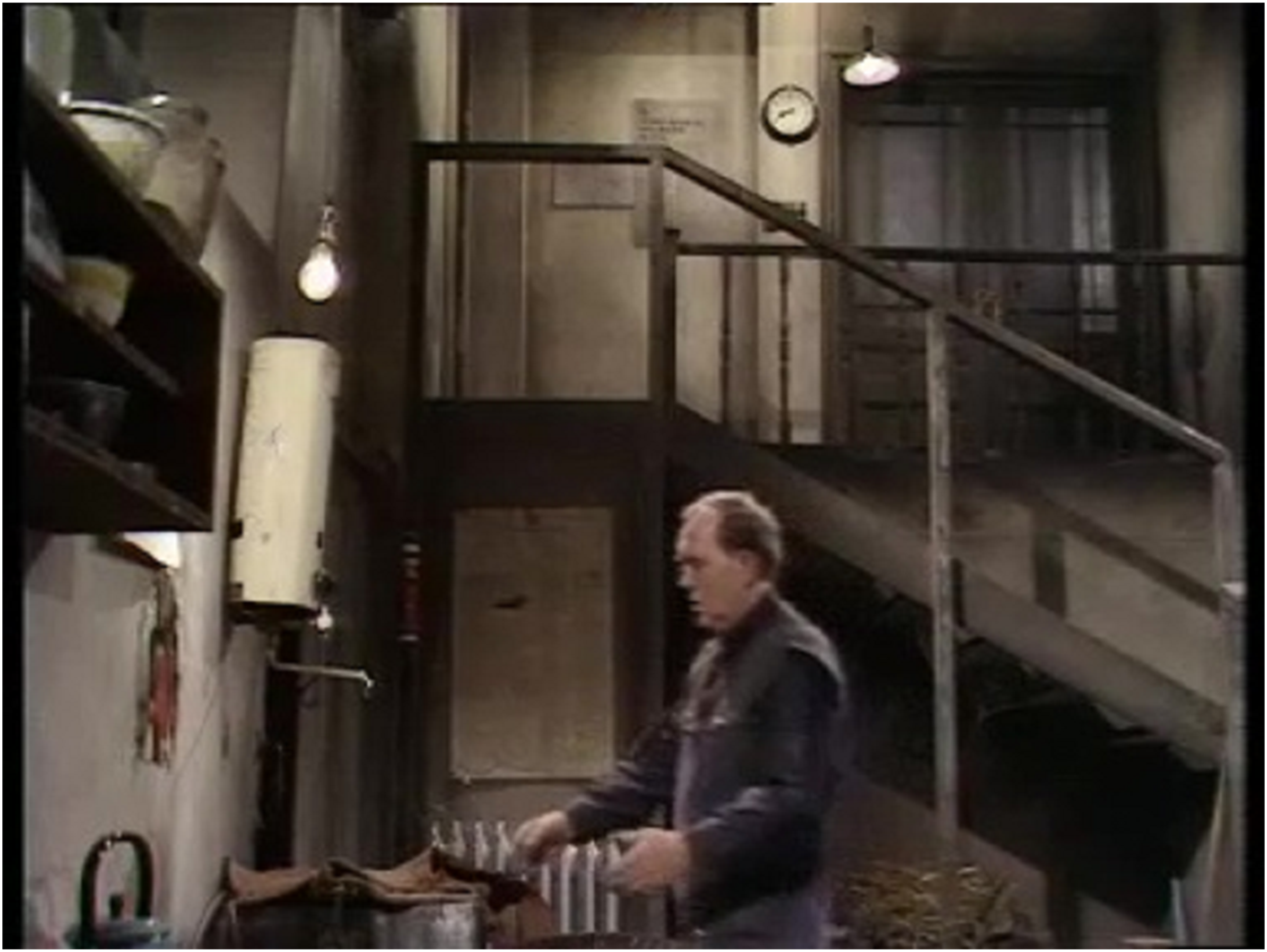
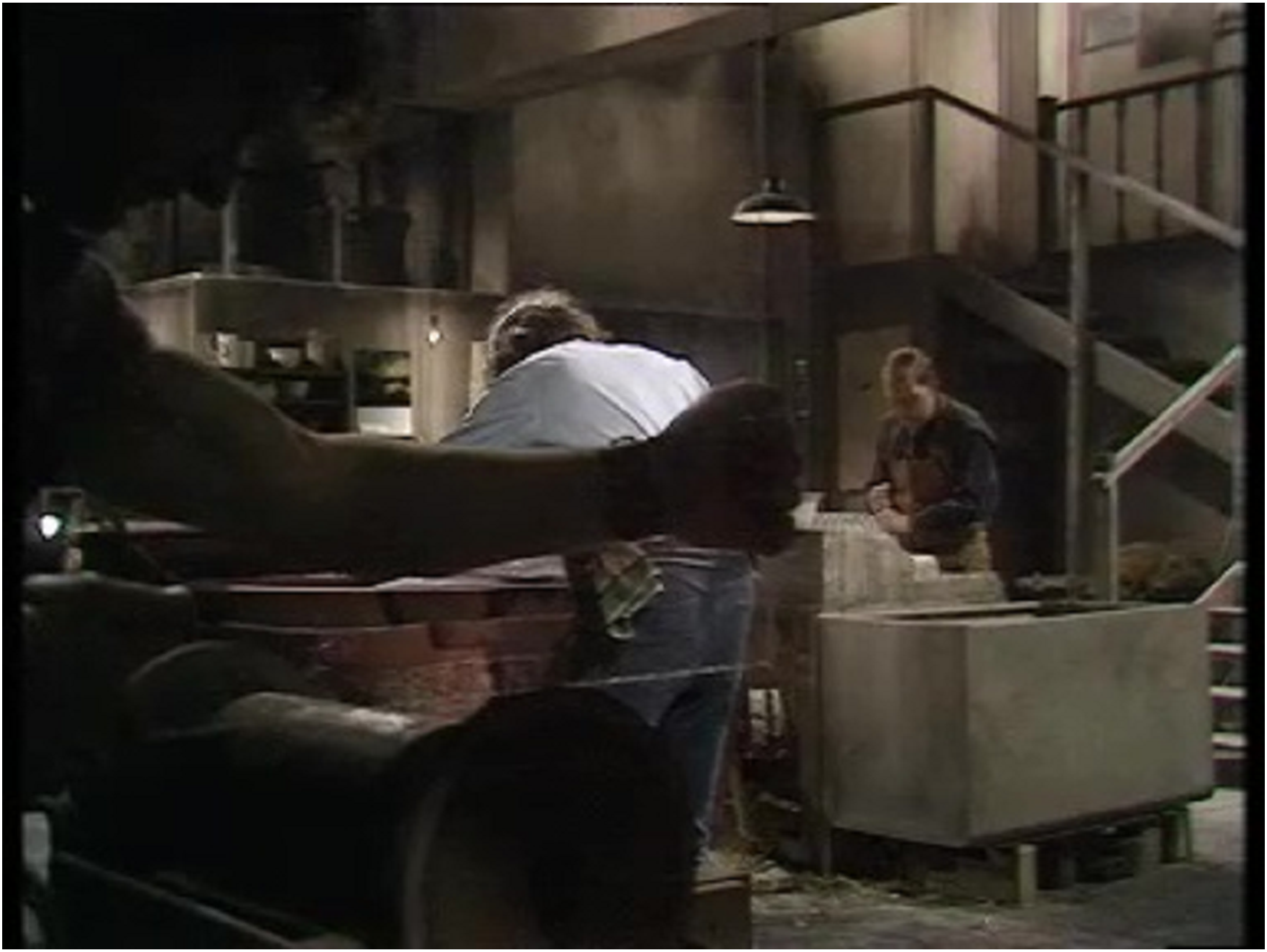
The following questions were then posed to the group: • 1: How do you feel The Bevellers uses Studio A’s space? • 2: Is its TV drama enhanced by being so closely related to theatre in performance and staging? • 3: How does The Bevellers represent • 4: How do you respond personally when watching The Bevellers in 2023, and what are your thoughts on its scheduling and reception?
To accommodate full-time caring duties, which he has granted us permission to share to illustrate the virtue of such virtual spaces, Billy Smart often replies first.
Work plays’ customary flaw is true of The Bevellers: cramming too much in, and not making the work itself central. This TV adaptation is pretty faithful to the original stage text. Tom said the play isn’t canonical in TV studies, but it is theatrically canonical, and is anthologised by Canongate (Craig & Stephenson, 2001). I’ve read it today. Interestingly, the greatest edits are with Bob (Roddy McMillan), who philosophises about work, school and manhood much more in the original source text. When interviewed, McMillan says, ‘On the stage reality depends on the writing; on television, what matters is the framing’ (Benedictus, 1974: 15). This is true, but it’s not everything. Stage acting is a distinctively figurative art form, whereas TV acting is mediated through the director choosing shots.
As a theatre spectator, and for this play especially, you are your own director, observing different details, in your own sequence, through your own understanding and interests; sometimes steered through lighting and movement. On TV, this is largely gone. Act 1’s moment of grace, when Norrie has left and the other workers relax and start working and singing together, becomes a different, less rich experience for the TV viewer. The visual grammar of Armstrong’s direction changes: a series of mixes evokes a different, and older, type of TV drama.
The case for TV drama’s importance is writ large: it’s a record of performance, while preserving the period in which the play is set. Here, very significantly, the original cast from the stage version, recreate it for TV. I thought it was terrific televised theatre. It’s at the extreme theatrical side of PfT, but is also a constructed media product. Advancing Roddy McMillan’s idea of framing, there’s a telling sequence where Bob looks at the mirror and says: ‘This is glass, and framing, in perfect union’.
The opening setup, showing the set, is classically televisual, as in soap operas. Next, a close-up of two or three people talking, then an individual close-up, followed by a reverse shot for a moment of major drama, then back to the set again. So, The Bevellers is carefully composed. Like most adaptations of theatre plays, at various points it puts us on stage so that we can see better than if we were in the theatre. This was really well done. Is there too much drama? Compared with EastEnders, it’s pretty tame!
I wondered about it being condensed; it was cut down. Following Alasdair Milne’s remark about excessive temporal compression of events in Scum (1977), it’s trying to express everything about work in a day, and that acts against realism. In this tiny space, there’s often something interesting going on in the depth-of-field.
I echo all the comments about Armstrong’s use of the set. While a factory-set play will ostensibly be realist, a non-naturalism came through when everybody was grinding, which started to make these almost hallucinatory sound effects, and then the singing emerged from that.
And, then, as Ian said, the ‘ghost’! But it’s actually a former employee, Alex. He did the Shakespearean act, entering and waving the admonitory finger… Industrial ailments will get them in the end. So, the best thing to do is get out of there. This lifted it from the standard approach to a factory setting, and was really effective. Maguire’s performance veered on over-the-top, but worked in how it was framed beforehand: a ghost is trying to scare Norrie, but then an actual man, as good as dead, enters.
I, too, would have liked to have seen more of the work. Sometimes, I find detailed explorations of processes I don’t understand hard to follow. Bevelling was so new to me that I, like others, became entranced by its motions, and felt it was taken away too soon. The injuries might have felt more prescient and visceral had they been linked to a specific aspect of the work.
Otherwise, the barrage of events in the workplace reminds me of Carol Bunyan’s work.
About the lack of women, I thought the scene with Nancy was the least well done. Nancy, as a character, is not exactly nuanced, and that event is there just so that Norrie can see Rouger (William Armour) taking advantage of Nancy, so that Norrie has a hold over Rouger, triggering Rouger’s response. At the end, the boss Mr Skinner (John Young) comes down, finds Norrie on the floor, and then takes him back up the stairs to clearly leave the factory, and says to him, softly: ‘Away home to your mother, and you’ll be alright…’
The BBC’s viewing barometer has a note, immediately below PfT, which reads ‘followed News Report’. This wasn’t usual. I recalled a fascinating column from Dennis Potter’s time as New Statesman TV critic (1974: 798), which obliquely refers to The Bevellers. The column’s main thrust was that at 8:17 and 8:27pm on the 21st, two pubs in Birmingham were bombed. Looking deeper, we can see that Midweek and the Late News had high ratings for that time of night, because news and film was emerging from the sites of the wreckage, at a time before rolling news channels. Potter vividly expresses the unsettling nature of different types of TV coexisting as tragedy emerges. ‘The pictures coming out of the screen last Thursday night’, he writes, ‘sent more than shadows into the room, for proximity always increases horror’.
He confirms that the News Report following The Bevellers had ‘hurriedly inserted’ film of the aftermath, ‘taking their place in the sequence of electronic images that lay like lead on the heart’. War in Cyprus and unemployment at 650,000 followed, and a programme about the Cold War. It’s one of the most effective pieces I have read which animates ‘television flow’ (Williams, 1990). Of TV’s relentless connection to violence, and recognising its domestic nature, Potter concludes: ‘the means of its distribution have taken us to the lip of the volcano. We can look down and see the world boiling, and then we can go and put the cat out’.
Tellingly, not a single review the next day mentioned that. Either the critics switched the TV off immediately and called their editor, or they’d already written it.
…
To summarise, the Viewing Group admired the skill with which Moira Armstrong, Archie Clark and the cast realised writer-actor Roddy McMillan’s drama of a fraught and divided masculine workplace, with its habitual hazards and violence. This intense play, using entirely interior spaces, was felt to exemplify PfT’s video and studio-shot theatre-informed tendency which was generally predominant in the 1970s.
Part 2: Feminist film stock in Not for the Likes of Us
Katie Crosson introduced this group with the following, written as spoken:
PfT is often celebrated for its ‘working-class realism’. But who makes up this ‘working-class’? And what is the ‘real life’ that we see? A canonical PfT might depict traditionally masculine labour, like the bevelling we saw last time, or, that shown in The Black Stuff (1980) or The Rank and File (1971). This narrow history of PfT overlooks the women workers depicted, as in Not for the Likes of Us (NftLoU). On the shop floor during the day, in the cinema in the evening, and serving family in between, the play follows Connie (Pam St. Clement) through the structure of her life. As Connie reminds us: ‘I’m the public and all, ain’t I?’
The Bevellers’ theatrical origins can be felt. NftLoU reflects not what is perceived to be the origins of PfT, but instead, what is understood, rightly or wrongly, to have intercepted it: British cinema. This play is partly set in a dilapidated cinema; a riposte to the idea that PfT need not be renewed as film is the future for radicalism and experimentation. ‘The picture houses were palaces, once’, Connie tells us; a picture far from the environment we see her in.
Vicky Ball (2021) suggests that the cinema here offers images intended to engender a male gaze, intercepted and problematised by NftLoU’s female stewards. They are critical of these supposedly titillating images, finding humour and sadness in them, while being fascinated by the gap between their own self-understanding and the images of women on screen. This sets up a comparison between a moment of cinematic decay and what has rightly or wrongly been declared the ‘golden age’ of television (Shubik, 2000: xiv) as we watch the uninspiring but mighty glow of the big screen on our small screens.
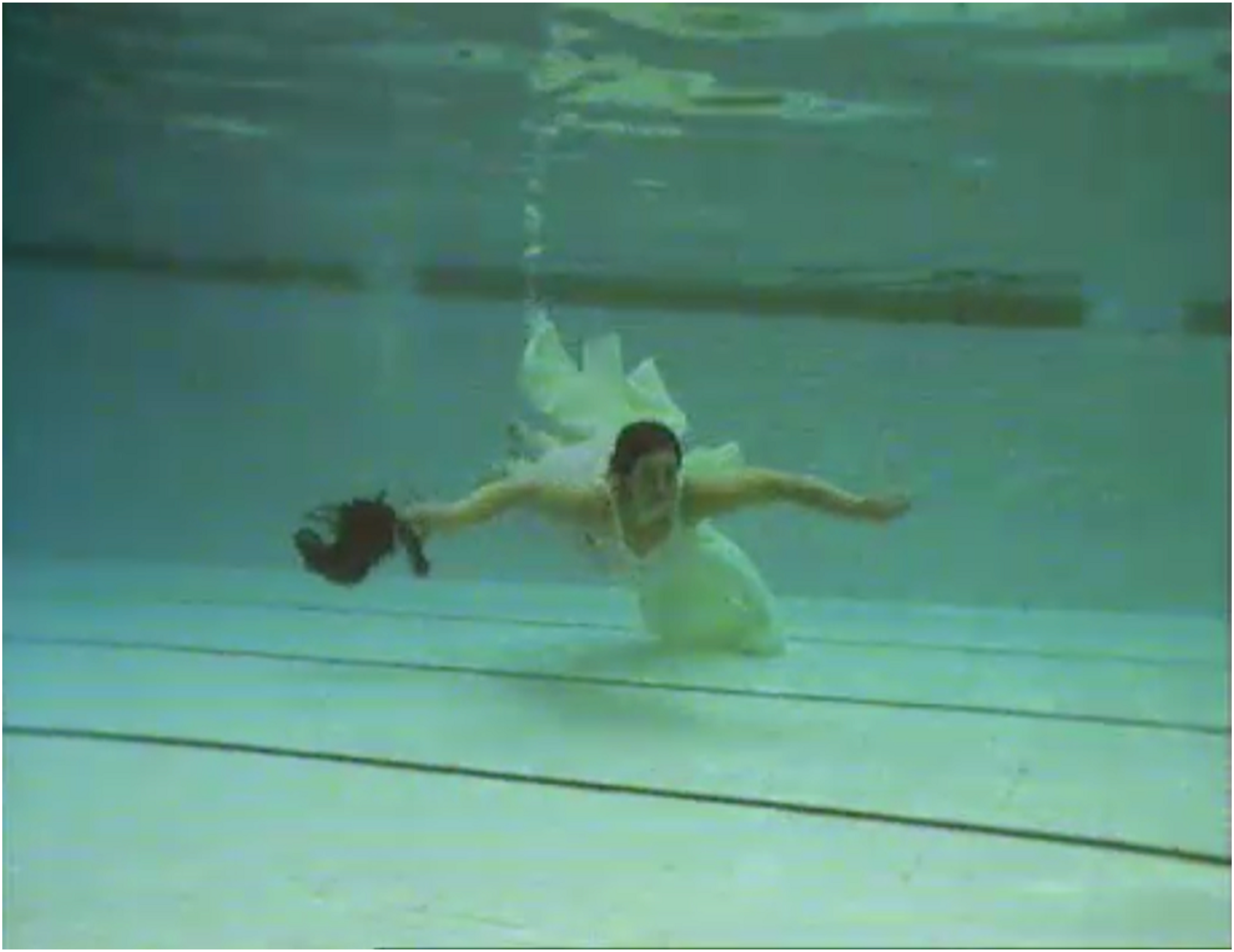
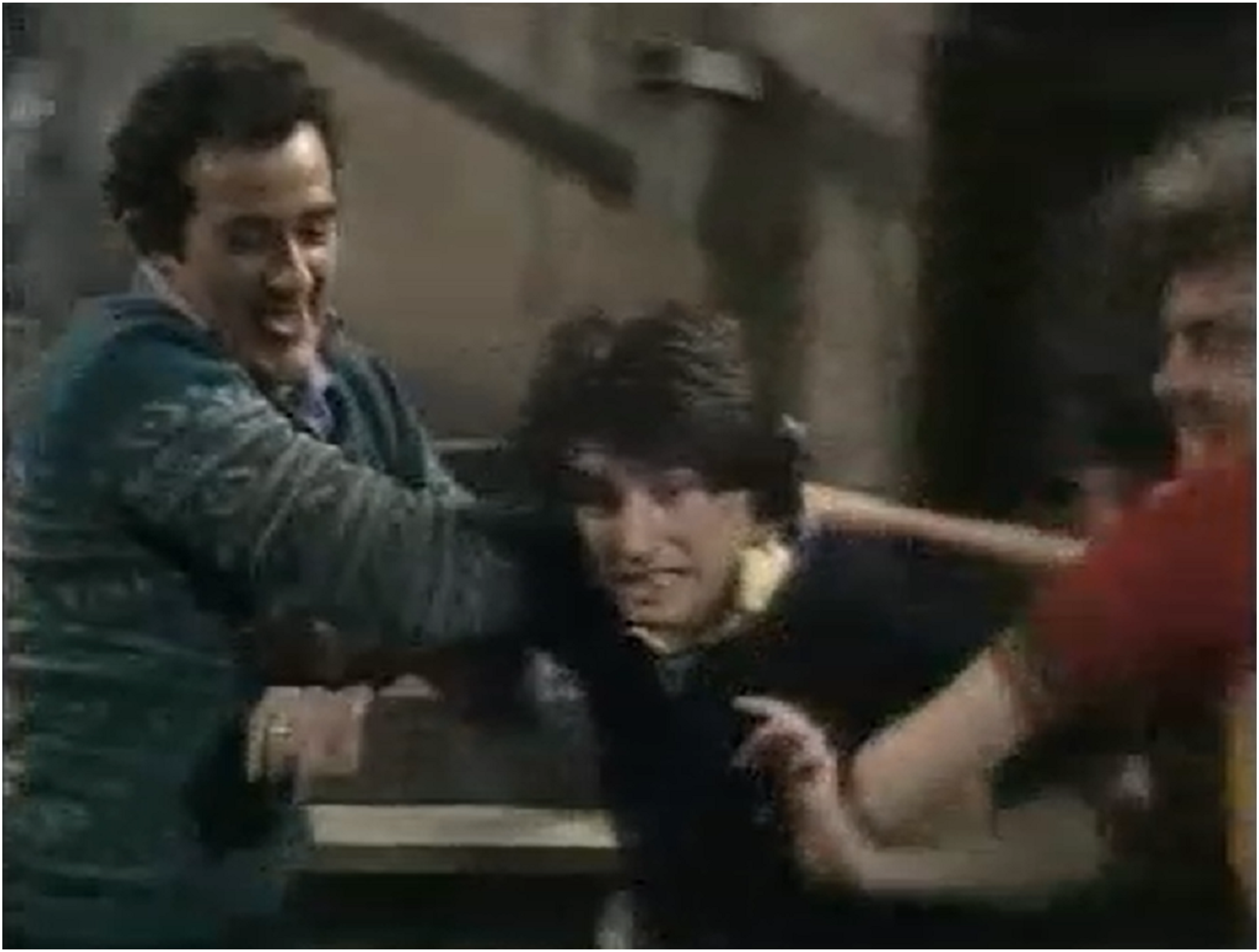
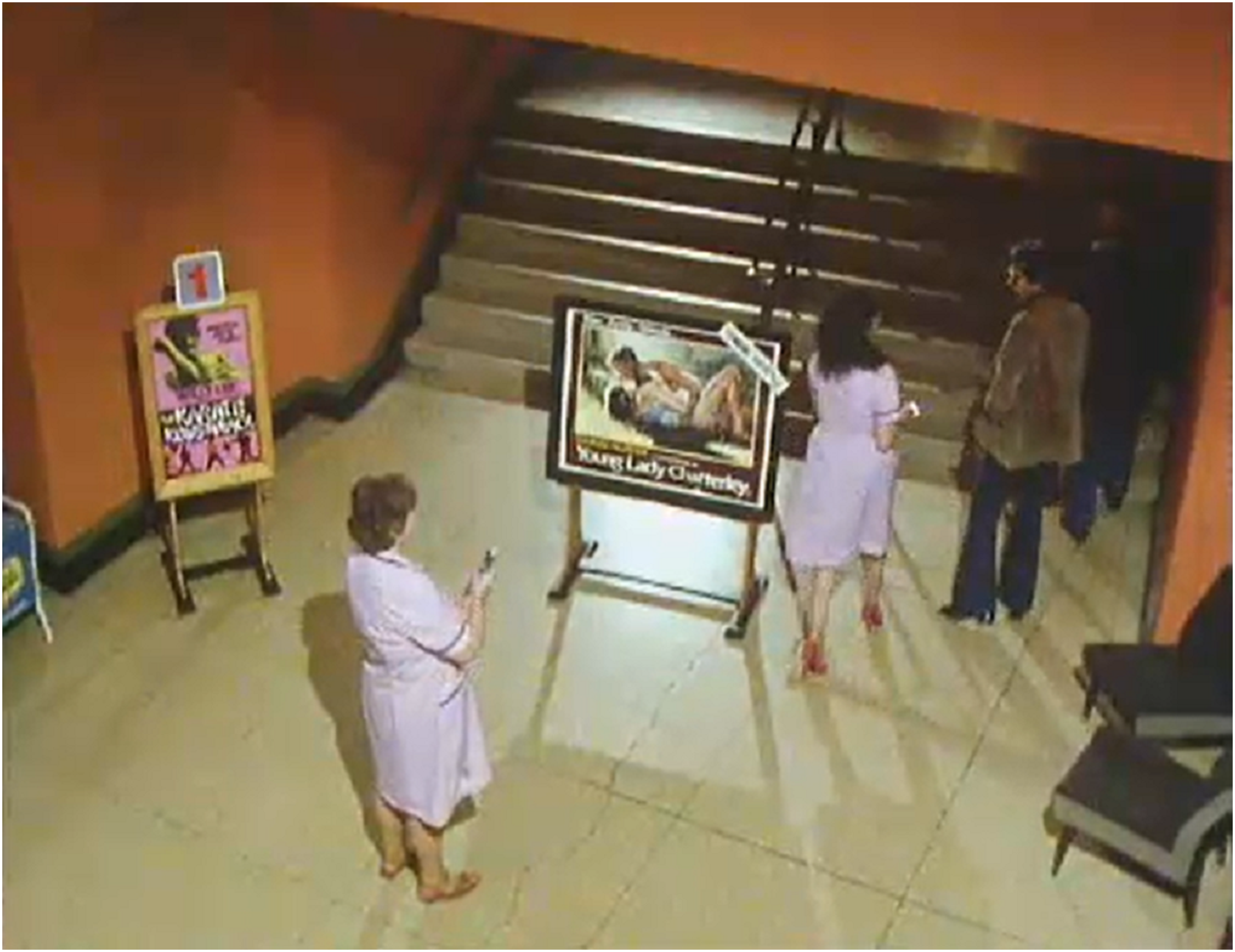
Nonetheless, it is significant that this play is shot on film. Instead of emphasising containment within one working role through studio space, shooting across multiple locations represents a different kind of working life to the bevellers’ entrapment in a specific routine, space and situation. The women here face a different exploitation, expected to juggle multiple different kinds of labour: from the productive, across two ill-paying professions (see Figure 3), to the reproductive at home. Screen-shot from Not for the Likes of Us. Denise (Carole Hayman) and Connie clean the cinema. Screen-shot from Not for the Likes of Us. Connie floats in a pool in a flowing white dress. Screen-shot from Not for the Likes of Us. Connie dives underwater and starts swimming. Screen-shot from The Bevellers. Joe (Paul Young) and The Rouger manhandle Norrie as part of his workplace initiation. Screen-shot from Not for the Likes of Us. Connie observes promotional posters in the cinema foyer.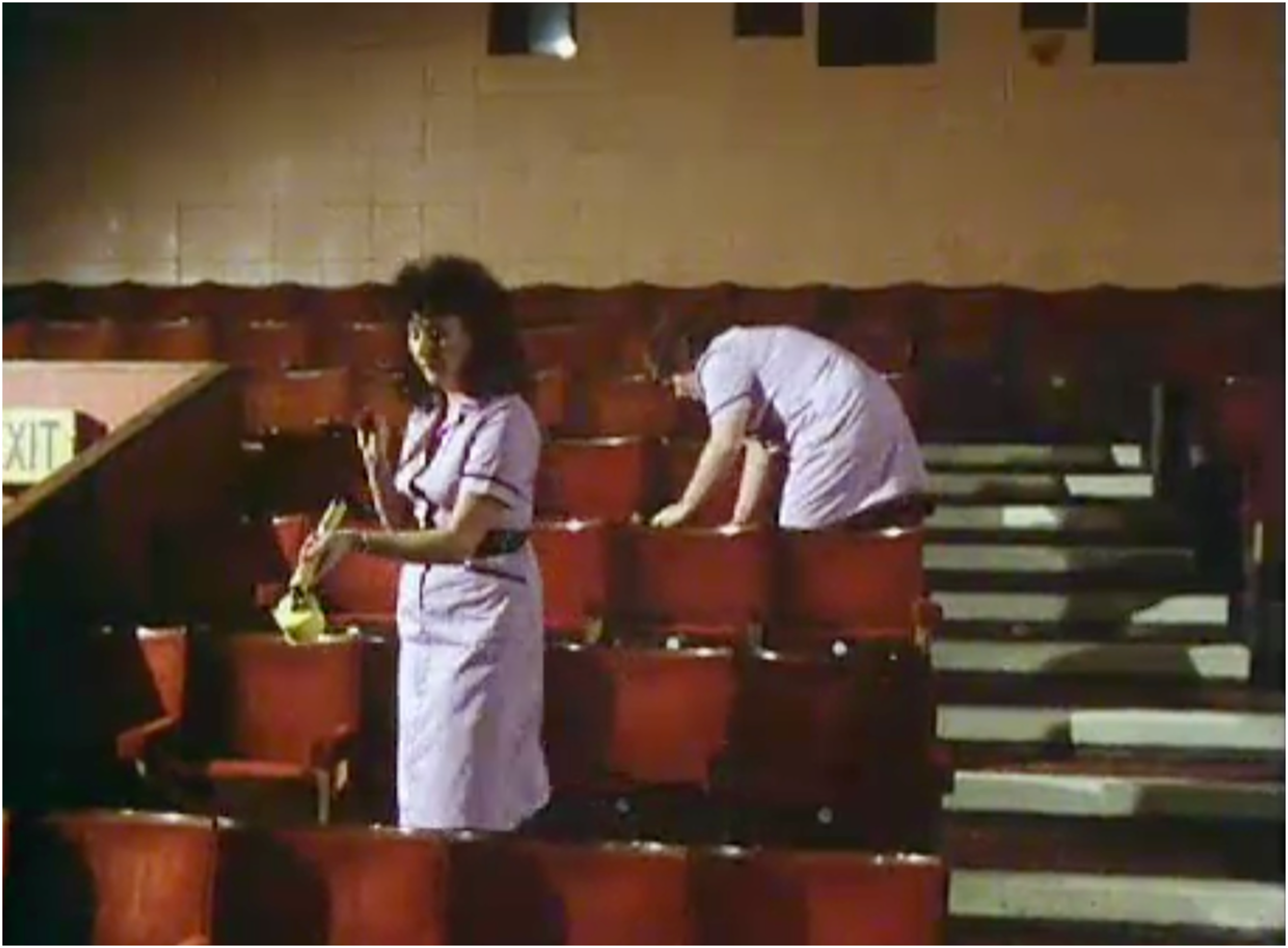
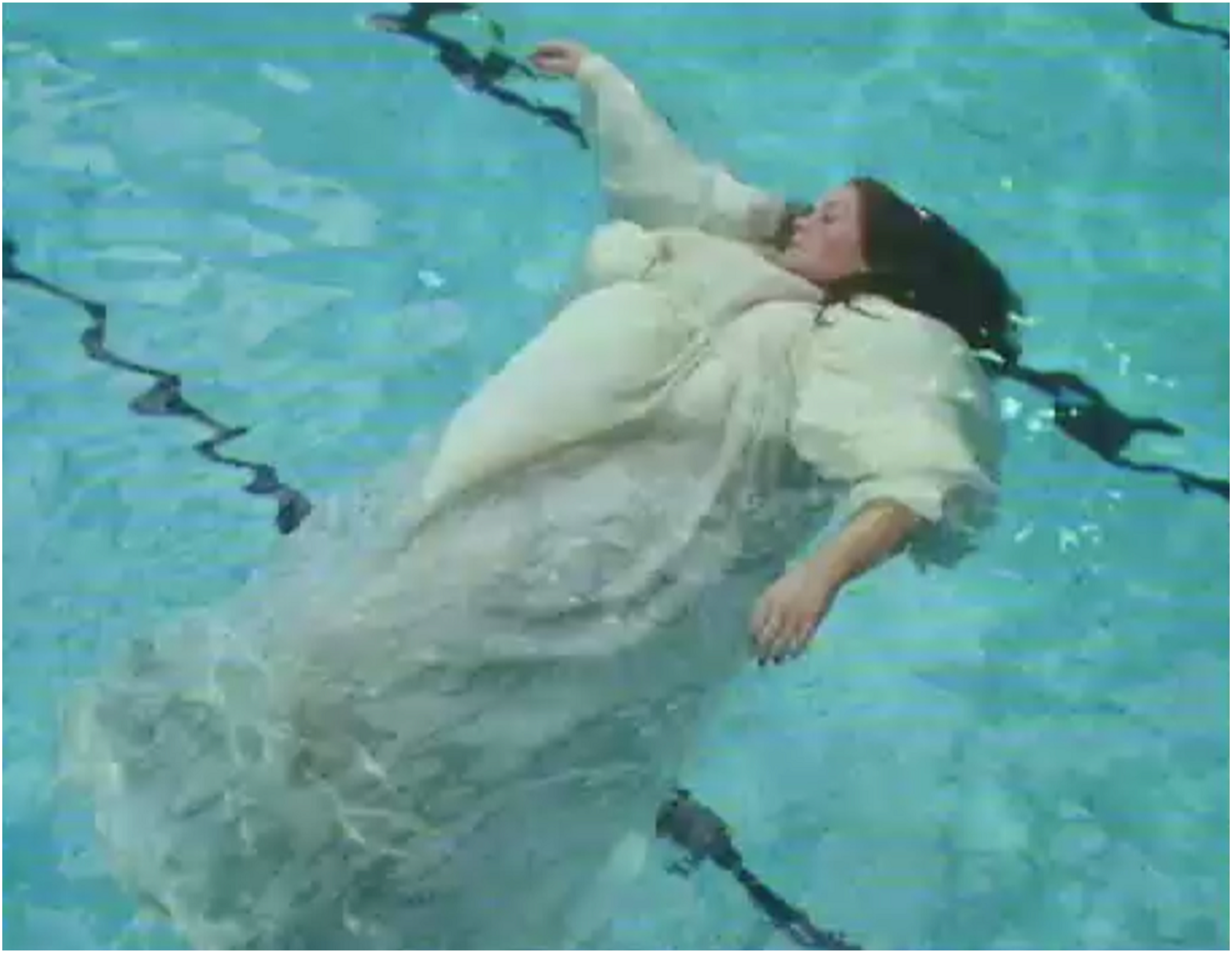
While masculine pride in a single profession is wholly absent from the play – Connie’s White working-class husband (Terry Scully) finds neither thanks nor meaning in employment – Amrit’s (Veronique Choolhun) reference to her dad working all night at the bakery after ‘a full day’s work cutting coats’ reminds viewers that juggling multiple jobs was an expected way of life for men of colour alongside women.
Fatphobia, ageism and misogyny are depicted as exacerbating and exacerbated by the economic subordination of the working-class. Not just invisible to men or society, but to herself, Connie posing nude is arguably a chance to see herself; not through the caricature of her morphing out of a promotional photograph of a conventionally beautiful woman at the cinema; not through the web of illusion sold to her; but herself, naked, whole.
The play’s reception was mixed. Scathing quotes include Ronald Hastings’s claim (1980: 35) that the play culminated with ‘a haunting scene of self-humiliation’. The mysteriously cited ‘D.R.’ writes: It was a night which severely strained the eye balls – didn’t it chaps? […] Connie’s drab existence overwhelmed everything else winning, no doubt, lots of sympathetic understanding from a host of matronly hearts across the land. It is only to be hoped her form of rebellion doesn’t catch on… (1980: 2)
Peter Fiddick (1980: 9) considers the more pressing question, above what Chris Dunkley (1980: 15) deems ‘female’ issues, to be: ‘What sort of liberation is it to be […] a bus driver on overtime with a wife working evenings?’.
NftLoU can be compared with Paula Milne’s PfT A Sudden Wrench (1982), which also follows a woman’s attempt to find agency and purpose in a male-dominated world, though that play looks at a male-dominated workplace as opposed to female-majority workplaces, dominated by one man.
There are numerous problematic moments in NftLoU where an escape from fatphobia, the class system and patriarchy is presented through fantasies which subordinate men of colour. The ineffectiveness of this dreaming and its relationship to power relations can be compared to the futility of escaping into a middle-class fantasy of safety and security in Charles Wood’s Do as I Say (1977). The only available escape afforded to Connie here is through images gifted to women by the cinema.
The Orientalist fantasies in NftLoU represent the comfort Connie takes in the separation between life and dreaming. She can only find the erotic through the ‘exotic’, requiring a safely unknown landscape in order to avoid being reminded of her real situation. Her fetish for power relies upon a process of othering and a reinstatement of other hierarchies, weaponising her Whiteness in (futile) attempt to escape her femininity. We might hope that today one could find other ways of representing this without recreating fetishisation for an audience. 1. How is it central to the play’s meanings that bodies are classed, gendered, and racialised? 2. How are embodied labour practices depicted differently in the two plays? 3. What is the relationship between cinema and television, or cinema and fantasy, in this play?
I agree with Joan Bakewell (1980: 10), that the play reaches its peak in the end section with Connie walking around The Tate, then attaining a sense of self-realisation through life modelling. Interestingly, those scenes are almost entirely wordless, achieving a synthesis between the quotidian and the fantastic. An interesting comparison is King of the Castle (1977), where urban squalor and difficulties are 16mm film, and all of the fantastic scenes are shot on highly artificial videotape: an incredible delineation between the two worlds.
I think this is very under-cast. Pam St. Clement is wonderful, but I find the rest of the performances to be quite dull, struggling with some boring dialogue. While the fantasy sequences are prettier than the everyday, I agree it is fascinating looking at Seventies Britain.
The play seemed to be rather shy of talking about body image until the end. It only felt like a main complex of the play, and of Connie, when she overcame it.
Tim King had done documentary work before: including Hospital (BBC2, 1977), an oddly forgotten documentary series. The cameraman Mike Southon told me they effectively lived in this hospital for weeks to the point where the staff forgot they were there. This is a useful experience to bring to drama, but I’m not sure that he cracked it here.
Billy’s King of the Castle connection occurred to me too, but more negatively. It looked like one of those drab, quite worthy, quite dull children’s serials of the time! But it has merits: Pam St. Clement’s fantastic; it’s got a powerful ending, which makes sense in an imagist thread through the play.
A previewer, who liked it, quotes Pam St. Clement saying that, ‘Connie comes to terms with her life. So her fantasies can do her no harm’, which I thought was quite right, and one of the things that’s wrong with it (Anon, 1980: 18). We need fantasies to do someone a bit of harm somewhere.
It’s interesting that she wrote for Angels, because some of the representation, particularly of Amrit, was thoughtful. Connie says, ‘is your father pursuing this arranged marriage?’, and she turns around and responds: ‘why do you British always think that arranged marriage is going to be the problem?’ This echoes a complaint that was made about soaps later on like EastEnders. The view that ‘Asian people have this set of problems and Black people have this set of problems’ is quite neatly dealt with in the play.
It also seems to be conscious of debates about the male gaze and the absence of the woman spectator in relationship to it. The visit to the art gallery was significant because of the images of women that Connie sees. They include Suzanne Valadon’s The Blue Room (1923), designed to constitute a ‘deconstruction’ of the male gaze by challenging the objectification of the female body. At the end, when Connie becomes a life model, it can be questioned how far this constitutes authentic self-fulfilment (or entails a form of self-objectification). However, I think this criticism is challenged by The Blue Room within the play, and its resistance to the norms of the male gaze, alongside Connie’s own active embrace of her body image.
56 PfTs had casts with 80% or higher male actors, while just one PfT, Ladies (1980), shows the reverse. The Bevellers is one of the 56. There are bleak, sometimes comic, representations of dysfunctional masculinity across recent PfTs we’ve discussed. In Fraser’s play, the bus driver husband, Stan, tells Connie she needs calming down with valium. In The Bevellers, men still have an industrial job for life, just about. Here, Connie represents women’s increasing participation in the workforce by 1980. People doing multiple, often unfulfilling jobs and failing to achieve a work-life balance is intensely relevant today.
Having the free run of this cinema that was formerly grand, prefigured earlier by Connie’s reference to the Tooting Granada, was interesting. I used to live in Tooting, and it’s a Bingo Hall now. It’s an amazing, Grade I listed building, and I think that was deliberately evoked. Connie used to get away from home and family by staying there as long as she could.
BBC1 Controller Bill Cotton, described NftLoU as ‘an effective and entertaining play’ and was sorry that Dunkley wrote about it in such a ‘liverish way’ (BBC, 1980a). I think he was right there!
The Bevellers was watched by 4.39 million people, lowest of late 1974 PfT. Its Reaction Index of 49 shows a mixed audience reception. Some viewers expressed the difficulty in understanding the ‘broad’ Glasgow dialect, which ‘seemed to consist of offensive language and workshop vulgarity’ (BBC, 1974b). While a minority found Fraser’s play ‘crude’, it gained a higher RI of 63. Some in its large 6.73 million audience disliked the fantasy elements, the ending, or found it boring, but rather more found it realistic, the acting ‘so natural’ and Pam St. Clement ‘superb’ as the ‘deeply relatable’ Connie (BBC, 1980b). Some viewers added that they hoped to see more of her. They certainly would.
...
Overall, opinion was more divided on NftLoU than The Bevellers, with many participants commending Pam St. Clement’s performance but feeling this was not matched by the actors surrounding her, or always well showcased by the writing and direction. Some disagreed, championing Gilly Fraser’s realist dialogue, nuanced approach to writing difference, and use of symbolism; and Tim King’s explorative uses of the cinema and The Tate. Most found the fantasy sequences lacklustre, but there was disagreement on whether this was a formal choice or an artistic failing.
Conclusions
Before we draw any comparative conclusions about these two discussions, their insights or their methodologies, our limitations as a group must be stated. As mentioned in this article’s introduction, the PfT Viewing Group is predominantly White and male. Not infrequently, there are more participants in a given session named John than there are women and people of colour. This is symptomatic of the state of academia, wherein historians of the single play appear to belong to one of the worst offending sub-disciplines: as proposed earlier, we might suppose this to be, in part, due to the ways the single play strand has been written and thought about over time, with a high percentage of publications on the subject focussing either positively or critically on the same few plays by the same few writers and directors. It is our hope that this discussion evidences that this sorry fact does not correlate with the object of study. The single play is a site of interest in numerous directions, including to feminist theorists; analysts of precarious labour; and scholars seeking aesthetic forms that can serve large audiences of varied viewers and stimulate discourse pertinent across methodologies, from content analysis to textual analysis to historiography.
More work can and must always be done to deepen the commitment of all television scholars, irrespective of identity, to explore histories of ignored work on screen. We must continue to address the false notion that there is ‘feminist’ media history and ‘feminist’ television which is interested in the domestic, the personal-as-political, the social; and there is structural, big-P ‘Political’ television and scholarship that explores work and economics, by and about men: as if these represent two mutually exclusive spheres. The Bevellers has here evidenced that plays about ‘male’ labour can also be interested in questions of gender, society and emotion, and NftLoU has demonstrated an equally dual focus on gendered expectations and the interaction between womanhood and labour.
The Viewing Group explored the theatrical inheritance of The Bevellers, situated in a studio, which exacerbates the claustrophobia of working in an ever-shrinking profession day-in, day-out, with the same faces and a repetition of tasks, however artful. We also discussed the inverse – NftLoU's exposé of fantasy rooted in a dying culture of cinema-going, and the use of film stock to capture a variation of locations, where labour, paid and unpaid, awaits our protagonist wherever she goes. The two transcripts capture a sense of these relations to theatre/studio and cinema/film, respectively, as enhancing the thematic resonance of gender difference and shifting labour practices across the texts. The cramped and demarcated spaces containing dangerous action and aggressive invective in The Bevellers (see Figure 6) commune with the empty spaces for talking and talking back to the screen in NftLoU (see Figure 7): highlighting the ‘risks’ of different labour practices as primarily physical in the earlier play and chiefly psychological in the latter text, though bodies and minds are worn down in both.
Significantly, this kind of textual analysis can only be performed when analysing texts comparatively: methodologically, we have reunified the Play for Today strand as a strand – not treating the plays as disparate works, but exploring their relations. Thus, a regular viewing group where many academics with different research specialisms and approaches cumulatively watch tens of plays from one strand offers a rich, unique experience and critical space that one-off events or collaborations cannot. While some participants have explained they feel that the methodological variety and depth of focus on plays’ and their creators’ background and context can inhibit extensive textual discussion – indicating that even more time could be spent discussing each play – participants generally felt that the group’s regularity and broad scope has been insightful and fruitful. We hope that the future of Play for Today studies, and television studies writ large, will benefit from such sustained engagement with long-running strands, especially in exploring beyond the canon and illuminating thematic resonances beyond the obvious and well-trodden.
The Play for Today Viewing Group is not an exercise in consensus forming, or an airtight method for conceiving of one ‘correct’, holistic interpretation of PfT or its specific plays. Rather, disagreement is an accepted part of the process of interpretation: Christine Geraghty and John Hill above share differing interpretations regarding The Death of Ophelia. This appears to be a core, hitherto unspoken, principle of the group; though the term ‘principle’ is somewhat oxymoronic given the content of the notion is to embrace disagreement. Arguments about evaluation often occurred due to the inevitable conflict in methodologies: whether the quality of performances was to be a guiding criteria, or the perceived authenticity of production design, or the artfulness of camerawork, or the socio-political thrust of a play. Such arguments, while often intractable, helpfully stopped us from committing resolutely to one singular way of seeing and interpreting a play, instead forcing to us grapple with unfamiliar lenses.
The Play for Today Viewing Group provides a space scarce within contemporary academia for academics and researchers to – for free – ask one another questions. The group allows, as the transcripts show, for a coming together of knowledges, disciplines, experiences and methodologies in a way rarely observable outside of taught education. What regular spaces, other than the BA/MA seminar rooms that we know to be at risk presently, do we have for this kind of discourse? These spaces are few and far between, making the duty to protect the remaining few all the more pressing. The tradition of seminars, discussions and roundtables in screen studies depends on a rich history, popularised in part by such practices at Cahiers du Cinéma and Screen. University of Reading’s ‘Sewing Circle’, wherein postgraduate students and staff in the Department of Film, Theatre & Television mostly discuss a single text in detail, for example, is about to turn thirty this year. The Play for Today Viewing Group is distinct from such spaces through its comparative, cumulative nature; members think through texts in depth as the group gathers and shares collective knowledge on Play for Today, inviting insightful parallels, comparisons and contrasts, as this article demonstrates.
The form of the video-call in particular allowed for an interesting experiment in collaborative theory-making, in the sessions as in this article itself. For example, the chat function allowed for a blend of multi-author writing to run alongside the verbal discussion, granting participants both immediacy and right to reply (or even interrupt), but also time to process thoughts at their own pace and write reflections down, edit them, and then post, during the spoken conversation. Similarly, likes on comments quickly gauge consensus, and replies (made public to the group or privately addressed to individual participants) carried on threads, almost like a collaborative footnote system emerging as we spoke. These are just a few of the ways that the virtual viewing group format can facilitate a plurality of voices and produce work, across difference (including differences in gender, age or neurotype), using different parts of our bodies, from voice, to our typing hands, to our listening ears, our furrowing brows, or our virtual thumbs up: more than a happy coincidence with the title of this article.
Liberating PfT from its constrictive canon and longstanding assumptions about realism, outside of traditional spaces in academia, the group continues to develop, addressing issues that remain pertinent in television studies, taking a multidimensional approach to questions that have remained unresolved long after 1984.
Footnotes
Author’s note
This article is dedicated to Moira Armstrong, Gilly Fraser and Roddy McMillan (1923–1979).
Acknowledgements
The authors give deep thanks to every member of the Play for Today Viewing Group, particularly those who participated so helpfully in the discussions which form the basis of this article. The authors express gratitude to Hannah Andrews for extensive editorial input, Christine Geraghty for advising on the article at a crucial early stage, and Louise North, Els Boonen and Katie Ankers (BBC Written Archives Centre) for facilitating access to crucial archival documents. BBC copyright content reproduced courtesy of the British Broadcasting Corporation. All rights reserved.
Declaration of conflicting interests
The author(s) declared no potential conflicts of interest with respect to the research, authorship, and/or publication of this article.
Funding
The author(s) received no financial support for the research, authorship, and/or publication of this article.
