



Abstract
This article investigates the equality of female representation in 2019 Global Original Netflix drama series by identifying trends of female representation across 82 series sample, assessing the quality of female representation in the most watched 2019 drama series and comparing analysis across British, American and International series. Overall, female representation in 2019 Netflix drama series conforms the existing literature on television studies concluding that women are underrepresented on-screen and behind-the-scenes.
Introduction: wide reach, narrow setup
Netflix has become a leading content provider and distributor achieving a global footprint in the film and television industry, while the platform enables international flow of content (Perkins and Schreiber, 2019). The subscription-video-on-demand platform is available to over 193 million global subscribers in more than 190 countries (Beers, 2020; Netflix, 2020b).
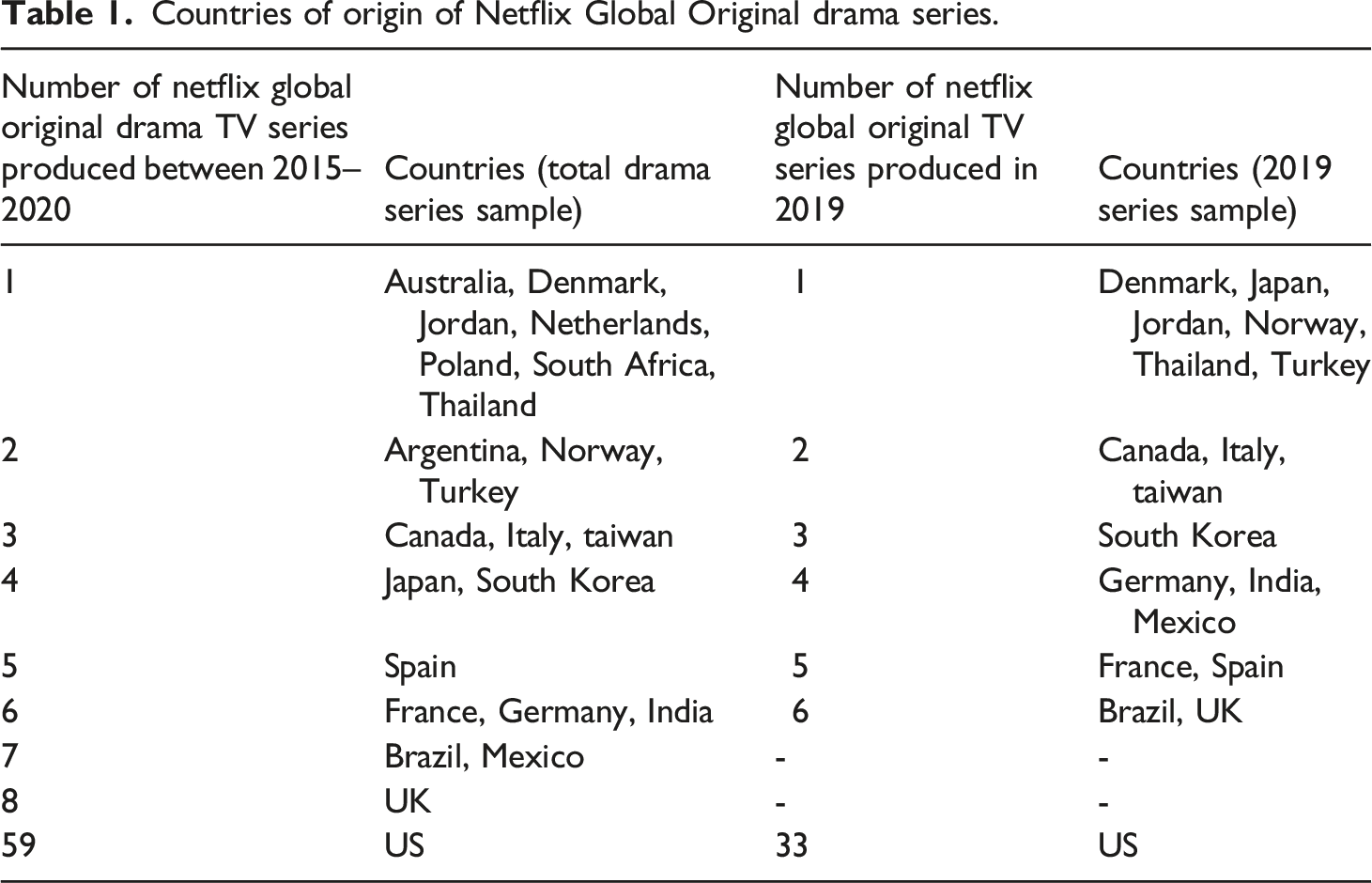
Some evidence suggests that Netflix is challenging traditional boundaries of female representation in front and behind the camera by hiring women to lead projects and commissioning unprecedented stories featuring strong, ambitious and independent female characters (Griffiths, 2016; Lauf, 2018; Bucciferro, 2019). However, whilst some argue that changing habits of video content consumption via digital platforms have opened up opportunities for women working behind-the-scenes and on-set to tell their stories (Erigha, 2015), others believe that new technologies can continue to reinforce gender imbalances (Mendes and Carter, 2008). This article investigates and critically evaluates the equality of female representation in 2019 Netflix Global Original drama series in light of Erigha’s (2015) 3-dimensional framework of representation. Additionally, comparative analysis carried out across British, American and International drama series assessed differences in female representation across different regions. It pays particular attention to the most watched series in each of these territories.
Countries of origin of Netflix Global Original drama series.
Female representation in television: a continuous struggle
Women comprised 39.6% of on-screen characters in 2013 US series and 40% of all characters on US television and Netflix in the 2014–15 season, revealing a marginal change in the 20 years of television studies (Lauzen, 2015; Sink and Mastro, 2017). However, the 2018–19 season showed an increase in female representation when women accounted for 45% of all speaking characters on US television and across all streaming platforms – the highest percentage ever recorded (Lauzen, 2019). International studies on female representation are largely in line with the US. Bryson and Bunker (2015) outlined that men outnumber women in British television around 2 to 1, though a more equal and positive gender balance exists in drama series. European studies showed that women were outnumbered by men in every television category (Mendes and Carter, 2008), while Daalmans et al. (2017) revealed that women were underrepresented in all programmes originating from all countries.
The latest improvement in female representation can be associated with the Fourth Wave of feminism, which united women via social media-based movements to fight for gender equality (Phillips and Cree, 2014). The fourth wavers’ reliance on and use of network technologies enabled mobilization of supporters and activists across cultural and national borders, which contributed to creating dissonance, understood as a first step in social change (Suzina 2020), as well as to constituting communities of solidarity (Barberá, et al., 2015). Movements like #MeToo and Time’s Up, that emerged to protest against sexual harassment and abuse towards women and to improve female representation in Hollywood (Midkiff, 2018; Thompson, 2018), employed and benefitted from these strategies.
Although the limitations of these movements have been identified (Thompson, 2018), some effects have been celebrated. The US Women’s Media Center indicated that since #MeToo emerged, media coverage of sexual assault and abuse, as well as reproductive health and wage gaps, increased significantly (Lambley 2019). Hong and Zhang (2021) investigated representation and job opportunities for film industry female writers and asked if they had improved in the wake of the #MeToo movement. They admit the difficulties in attributing causal effects and encourage more studies but affirm confidently that ‘movements such as #MeToo can in fact motivate real change’.
Female representation behind-the-scenes
Production studies found that women tend to hold lower-ranking jobs, take longer to get promoted and often face the ‘glass-ceiling’ (Mendes and Carter, 2008). In earlier studies, Bielby and Bielby (1996) argued that in creative industries several organisational features support gender inequality, for example: short-term contracts, career success depending on a person’s reputation amongst their network, and the majority of decision makers being men. More recently, it was found that women face difficulties in accessing the core of the industry and instead tend to find jobs in smaller production companies (Erigha, 2015), not getting exposure and visibility by industry leaders.
Findings from the 2014–15 television season revealed that women filled 25% of behind-the-scenes roles (Lauzen, 2015). The latest statistics show that women comprised 31% of personnel in key behind-the-scenes roles in 2018-19 series on US television and across all streaming platforms (Women in Hollywood, 2019). Similarly, women comprised 30% of all crew roles in 2018–19 programmes available specifically on streaming platforms – 29% of creators, 35% of writers, 41% of producers and 15% of directors (Lauzen, 2019). Although there was an increase in numerical representation behind-the-scenes, women continue to be significantly underrepresented in these roles. According to Ofcom (2017), women are slightly underrepresented across five main British broadcasters, accounting for 48% of staff versus 51% of women in the UK population. However, these findings consider all business divisions within these broadcasters and do not break down figures for crew members working specifically on series productions.
Television studies in the US and the UK revealed that women employed behind-the-scenes have a direct impact on the number of women portrayed on-screen and employed in other creative roles behind-the-scenes (Glascock, 2001; Lauzen et al., 2006; French, 2014; Bryson and Bunker, 2015). Lauzen and Dozier (1999b) found that women employed as executive producers used their influence at a macro level to employ more female writers who in turn assigned more powerful dialogues to female characters depicted on-screen, meaning concretely more first words, last words and interruptions uttered by female characters in television series.
Döing (2018) revealed that few women are in key creative positions because of decision-makers’ stereotypical assumptions that hiring women is risky, since their storytelling is unique and deviates from tried and tested industry standards of male storytelling. Thus, in the creative industries, ‘having a woman’s voice’, the term used to describe female workers, has been perceived unfavourably and women were not allowed to write scripts for male characters (Lauzen and Dozier, 1999b; Erigha, 2015). Lauzen et al. (2008) revealed how women use psychological coping strategies when employed in male-dominated work environments and faced with contradictions. They explain that one main gender management strategy is ‘blending in’, where women try to distance themselves from the feminine aspects of their gender and focus solely on work roles conforming to male-dominated industry expectations. This significantly impacts and modifies their behaviour since they try to balance their femininity and being businesswomen, which in turn leads to excluding unique or feminist portrayals from creative productions in support of traditional patriarchal ideologies, involving romance, family and friends (Lauzen et al., 2008).
Quality of on-screen representation
Women have been continuously depicted as submissive, compliant and desirable individuals placed in domestic environments, while men have been portrayed as rational, aggressive and dominant (Mendes and Carter, 2008; Parrott and Parrott, 2015; Sink and Mastro, 2017). The portrayal of women taking care of household tasks is related to the difference in earnings between spouses, with the assumption that women earn less money than men (Glascock, 2001). Therefore, patriarchal ideology has been communicated via television promoting male superiority and portraying gender inequality.
Rivadeneyra (2011) found 3 types of female stereotyping on Spanish television: women are portrayed as sexual objects, holding low status positions or showing nurturing characteristics. This pattern is confirmed by other scholars (Lauzen, et al., 2008; Collins, 2011; Daalmans et al., 2017). Daalmans et al. (2017) concluded that gender stereotyping is more prominent on male targeted channels, while female targeted channels promote on-screen gender equality. Hence, stereotypical portrayals of women are aimed at male viewers. Women portrayed on-screen are also younger than men and often appear significantly overrepresented compared to their proportion in the population (Signorielli and Bacue, 1999; Glascock, 2001; Lauzen and Dozier, 2005; Sink and Mastro, 2017). Sink and Mastro (2017) concluded that women become less important as they age, whilst men continue to hold central positions in television narratives.
Young women portrayed on-screen are often sexualised and a huge emphasis is placed on their bodies and attractiveness, while older women are often portrayed as married and parents (Glascock, 2001; Lauzen and Dozier, 2005; Collins, 2011; Rivadeneyra, 2011; Sink and Mastro, 2017). Men are less likely to be shown as married but often have clear occupational roles while women tend to have lower-paying and less prestigious jobs (Glascock, 2001; Lauzen et al., 2008; Mendes and Carter, 2008; Rivadeneyra, 2011).
Additionally, mainstream media content was aimed historically at the needs of white audiences while voices of ethnic minorities were excluded, alienating and underrepresenting people from Black, Asian, Latino and Native American backgrounds (Tukachinsky, 2015). The depiction of black characters on US television has increased due to popular shows containing black casts and is roughly in line with their proportion in the US population, ranging between 10-14%, although all other ethnic minorities remain underrepresented (Tukachinsky, Mastro and Yarchi, 2015).
Finally, despite the evidence of gender bias observed in the way storytellers have historically assigned different social roles to male and female characters, increasingly scholarship is starting to recognise new types of heroine and anti-heroine that have emerged in recent years. These traits are particularly popular in shows available on subscription video-on-demand platforms such as Netflix (Tally, 2016; Bucciferro, 2019; Perkins and Schreiber, 2019). Griffiths (2016) argues that Netflix supports female equality on-screen by commissioning shows such as Orange is the New Black and Jessica Jones, where female characters challenge traditional stereotypical gender norms and are often portrayed as ambitious, adventurous and empowered as men.
Performing content analysis on Netflix drama series
The most watched 2019 Netflix drama series.
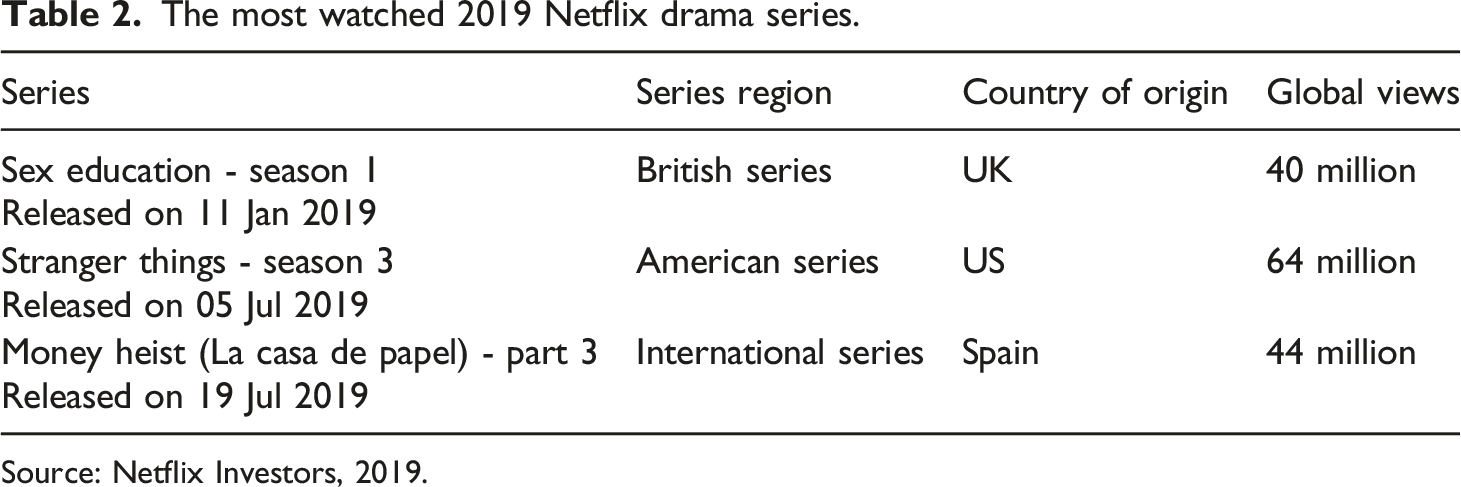
Source: Netflix Investors, 2019.
A total of 11 episodes were viewed and coded across the 3 series – 3 episodes viewed for each series released in 2019 (first, mid-season and the final episode) and the first pilot episode of Stranger Things and Money Heist since both premiered prior to 2019. Secondary data was collected for 82 drama series using the IMDb website. Top five cast members were recorded for each series to assess on-screen gender representation, while data collected on creators, writers, executive producers and directors was used to assess female representation behind-the-scenes (Lauzen and Dozier, 2004; Lauzen et al., 2008). The emphasis was placed on top-rank crew roles, where women have the power to influence female portrayal on-screen and employ more women behind-the-scenes (Poulou, 2018). Previous studies gathered information for all crew members across specified roles on selected series samples (Lauzen, 2019; Lauzen et al., 2008). Time constraints imposed limitations on this study, which led it to focus on the top five cast and crew members listed on the IMDb website, considering them as the most relevant for identifying evidence regarding female representation for their prominent participation in decision-making processes and visibility in the market and to audiences. Demographic information on age and ethnicity was gathered for all female cast and crew members using the IMDb website and Google search. Previous studies were used to derive age and ethnicity categories (Mastro and Robinson, 2000; Tukachinsky, 2015; Corfield, 2017; Sink and Mastro, 2017).
For content analysis, male and female speaking characters were categorised into major, minor and background characters, based on the number and consistency of appearances within each episode (Lauzen et al., 2008; Sink and Mastro, 2017). Non-speaking characters were excluded since coding their demographic features proved to be difficult (Lauzen et al., 2006). Different studies were used to derive character descriptors (Lauzen et al., 2006; Rivadeneyra, 2011; Sink and Mastro, 2017), while, for consistency, age and ethnicities observed on-screen were categorised as per the quantitative research. SpeechSegmenter software was used to determine the speaking time given to male and female characters (Github, 2020).
The qualitative approach included two levels. Initially, the first 3 conversations and the last conversation of each episode were coded to assess male and female dominance (Lauzen and Dozier, 1999a). Secondly, each episode was coded into 5-min segments similar to Rivadeneyra’s (2011) study to assess on-screen portrayal of dominance and emotions. Quantitative data was analysed using IBM SPSS software and analytical tools in MS Excel whilst content analysis was used for the qualitative sample, mobilizing numerical, quality and the centrality of representation data (Erigha, 2015).
Female representation on 2019 Netflix drama series in numbers
A total of 1,179 cast and crew roles were recorded across the 82 series sample with 941 staff members working on 2019 Netflix drama series productions. 95% of series creators were also series writers, therefore, to reduce data duplication for the purpose of this study, greater importance was given to series writers rather than creators.
Women comprised only a third of all cast and crew roles. Figure 1 shows that men outnumbered women as writers, executive producers and directors across all series. Overall women comprised 29% of writers, 27% of executive producers and 21% of directors. These findings show a slightly lower female representation as writers and executive producers compared to the Boxed In 2018–19 report (Lauzen, 2019). Only women in the director category were represented better in Netflix productions compared to the Boxed In report. The gender split of the top five cast members was less noticeable – women comprised 45% of members, men 55%. Gender split across roles and regions.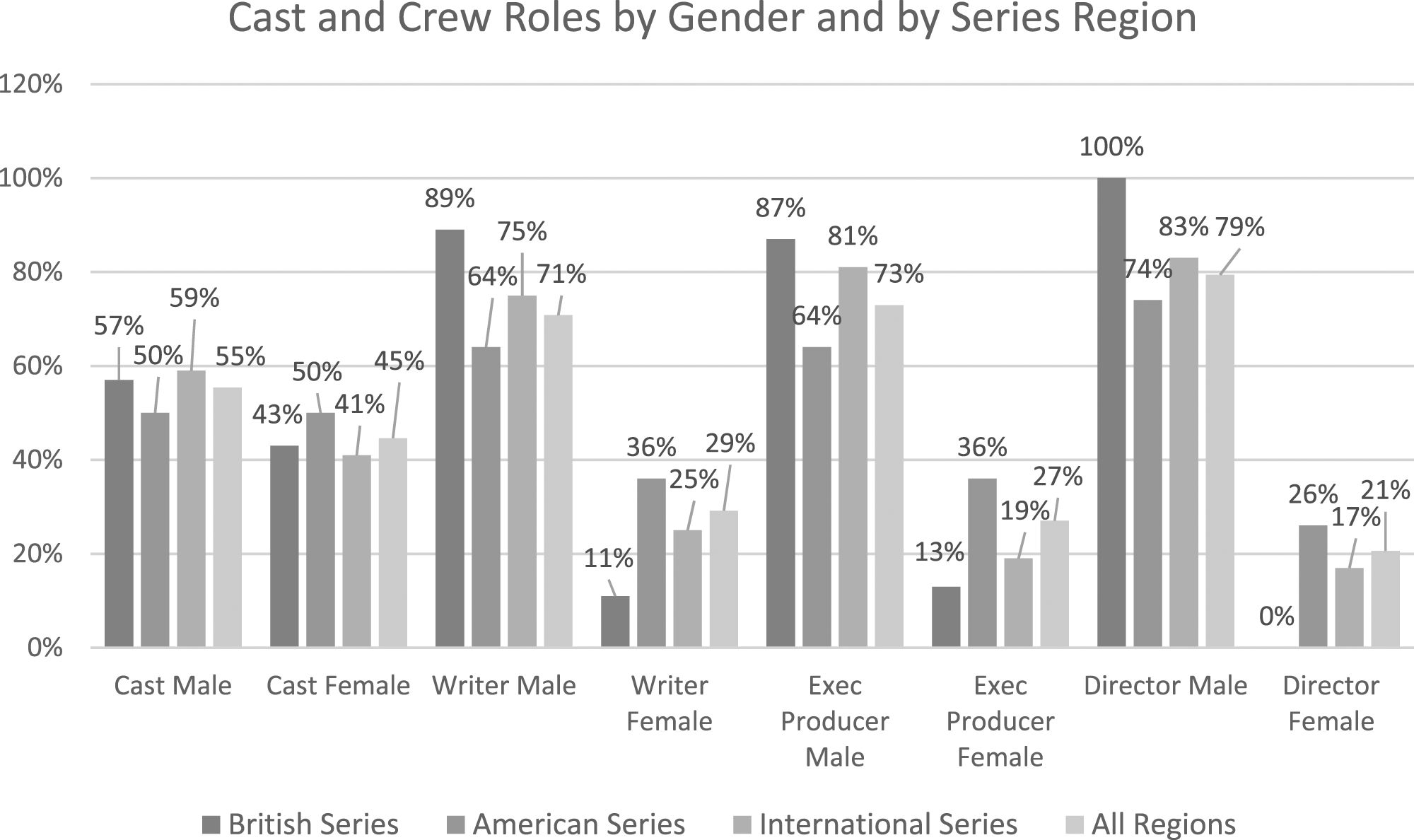
No relationships were found between women working behind-the-scenes and women listed in the top five cast members category. This may be due to the limited data gathered, and a full list of all cast members recorded for each series might reveal different results. However, a moderate positive correlation was found between female writers and female executive producers as well as female writers and female directors. Interestingly, a moderate negative correlation was found between male writers and female executive producers, while a weak negative correlation was found between female writers and male executive producers. Thus, it is more likely that a male writer and a female executive producer will not be working together on the same production than vice versa.
Gender representation behind-the-scenes
The charts in Figures 2(a) and (b) show the gender split across 3 behind-the-scenes roles and across all regions, highlighting where men, women or both genders were present in different creative roles. British series were heavily dominated by male writers, executive producers and directors, while American and International series had a better gender balance. Both genders were employed as executive producers across all 3 series categories, while the best gender balance was displayed by American series where 64% had men and women working as executive producers. (a) Gender split across crew roles and regions: Writer and Exec Producer. (b) Gender split across crew roles and regions: Director.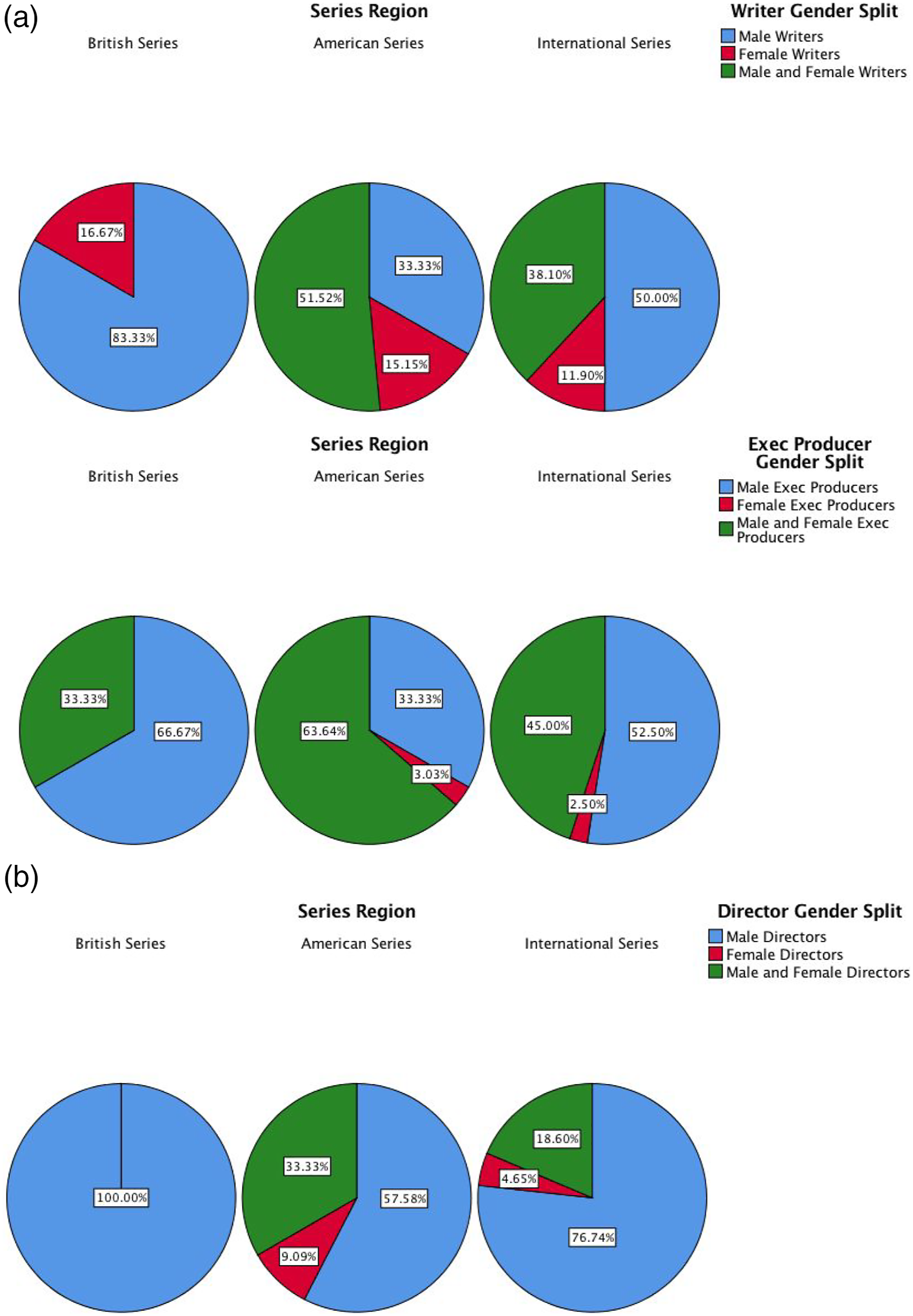
Gender imbalance was mostly visible in the director role and was heavily dominated by men across all regions. Only 33% of American and 18% of International series employed both men and women as directors. Finally, sole male creative workers outnumbered sole female creative workers across all roles and regions. Overall, American series proved to have a better gender balance across different behind-the-scenes roles.
Age and ethnicity representation
Of women working across cast and crew roles on Netflix drama series, the majority (55%) were in their 30s and 40s and women in their 20s represented almost 17%. These were the largest age categories across all regions and across different ethnic groups. Figure 3 shows that both American and International series had the largest proportion of younger women portrayed on-screen between ages 20–29 and 30–39, while British series had the largest proportion of women in their 40s. The biggest proportion of women working behind-the-scenes were between ages 40-49 across all series. A large number of crew members working on international productions could not be coded, which may limit the results on age representation for this region. Cast and crew age categories by region.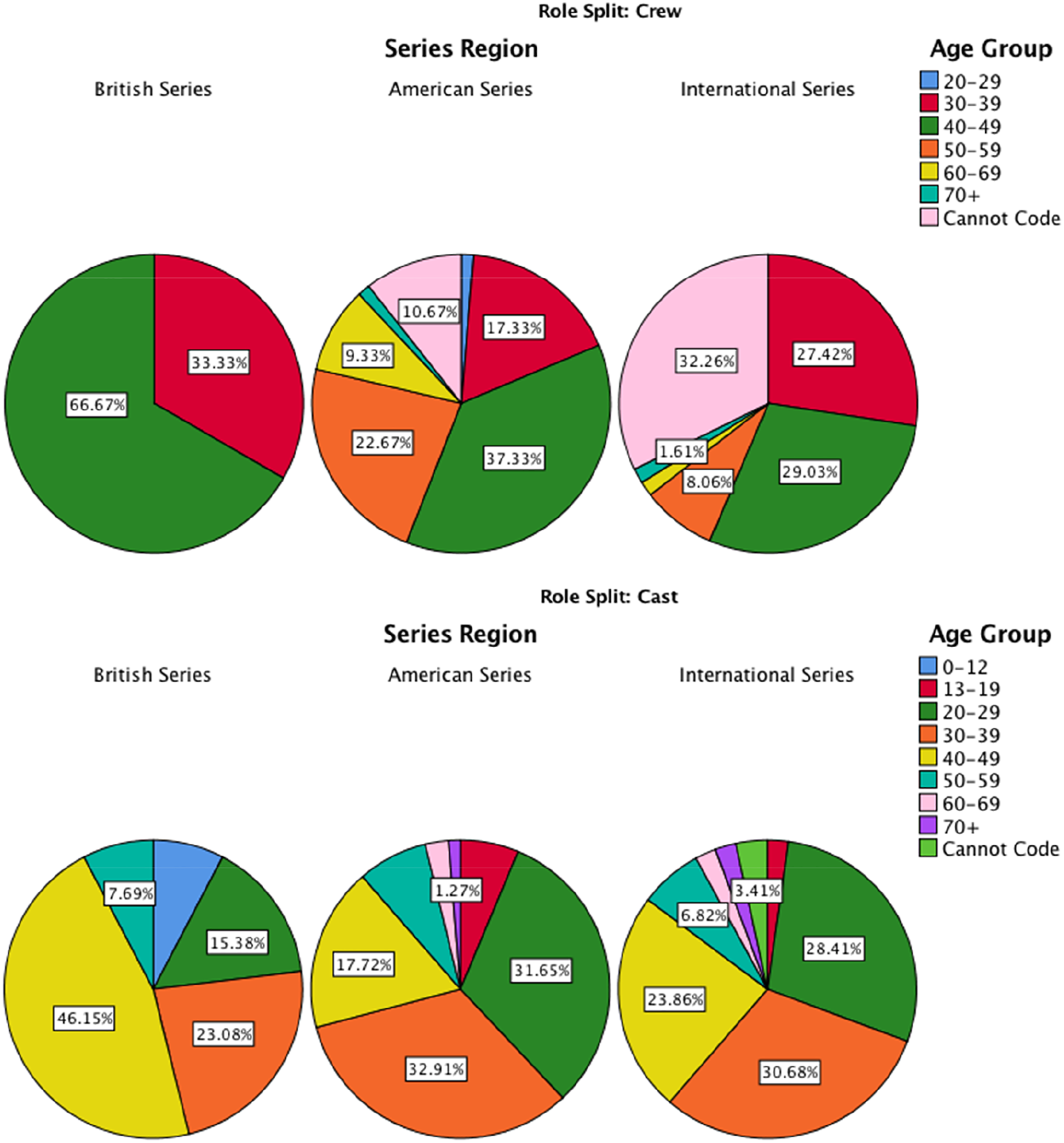
These findings are in line with other studies in this field indicating that on-screen appearances are very important as younger women tend to be portrayed on-screen, over representing their proportion of the population (Glascock, 2001; Lauzen and Dozier, 2005; Sink and Mastro, 2017). Women working behind-the-scenes are older, suggesting that they need years of experience in the industry in order to work in the most prestigious behind-the-scenes roles.
Ethnicities were recorded for 320 female cast and crew members across 82 Netflix drama series. White women outnumbered women from all other ethnicities (Figure 4). Female ethnicities across different roles.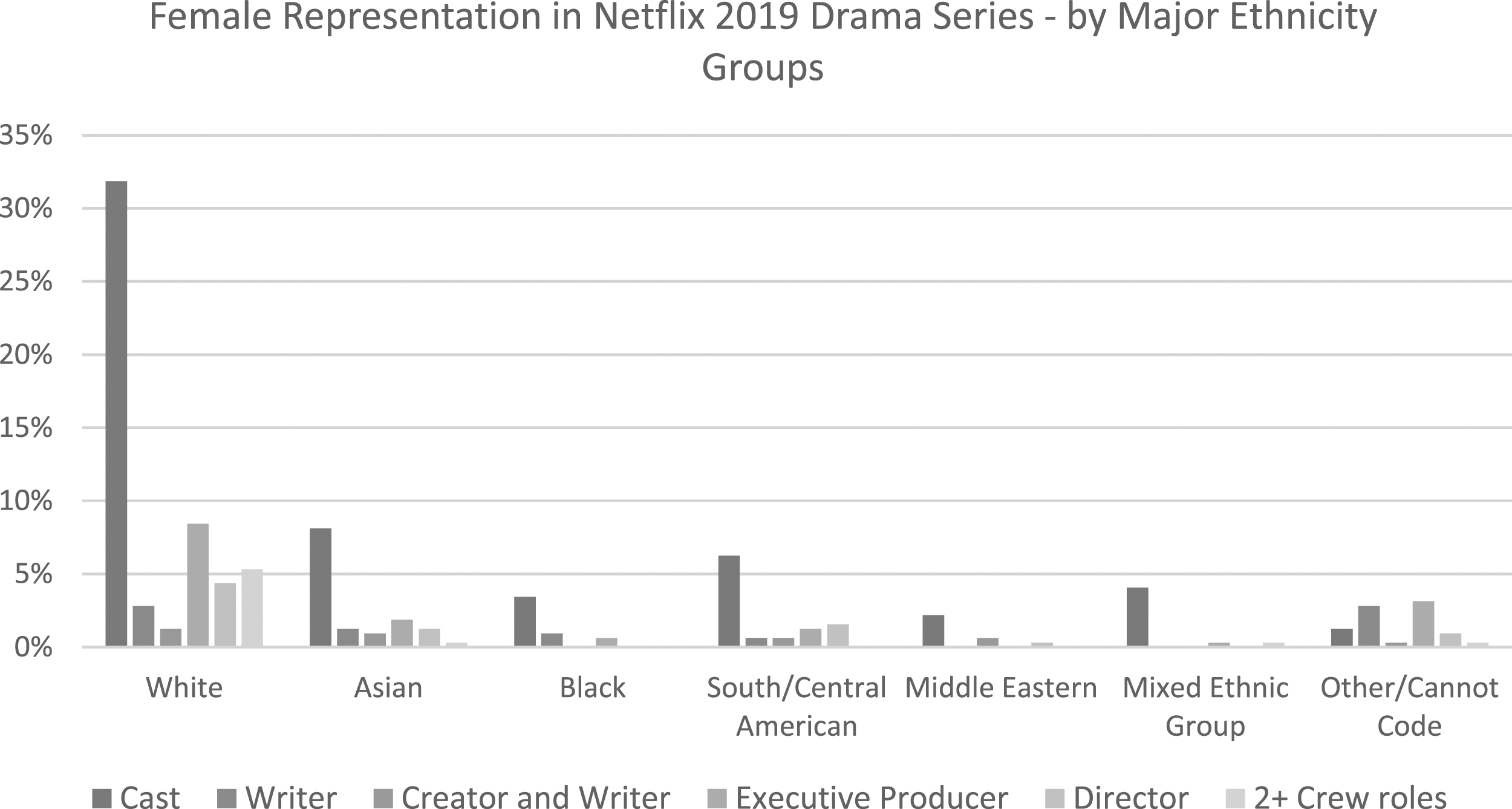
The British sample consisted of only 16 women with the majority being white, though further comparisons between different ethnicities were possible with American and International series. Women from a White American background predominated across all cast and crew roles in American series, a total of 72% of the sample, while Black ethnicity represented 10%, Asian 5%, and no South/Central Americans were found. In comparison, white women represent 60%, Hispanic or Latina around 18%, Black around 14% and Asian 6% of the American female population (Catalyst, 2020). Hence, American series do not reflect the diversity of different ethnicities in the female American population. International series had a more diverse, although not proportional, distribution of ethnic groups, where white women comprised 33% of all roles, Asian – 23%, South American – 22%, Middle Eastern – 6% and Black 1%.
Gender representation on-screen
A total of 11 episodes were viewed and coded to assess female on-screen portrayal in Sex Education, Stranger Things and Money Heist, the most watched 2019 Netflix Original Dramas according to the categories established for this study.
Sex Education is a coming-of-age series set in the present, in which a teenager (Otis, male) and his friend (Maeve, female) set up a secret sex therapy clinic at their high school. Stranger Things is set in the early 1980s in a fictional town called Hawkins, where a young schoolboy (Will, male) goes missing and his family, best friends (Mike, Dustin and Lucas, all male) and police, trying to uncover the truth of his disappearance, follow a trail of supernatural forces. Money Heist (La Casa de Papel) is a Spanish series that follows a story of 8 thieves (6 male, 2 female), who form a gang led by a mastermind (The Professor, male) and attempt to conduct the biggest heist in history at the Bank of Spain. Sex Education was created and written by a woman, while Stranger Things and Money Heist were created by male writers.
Character categories.
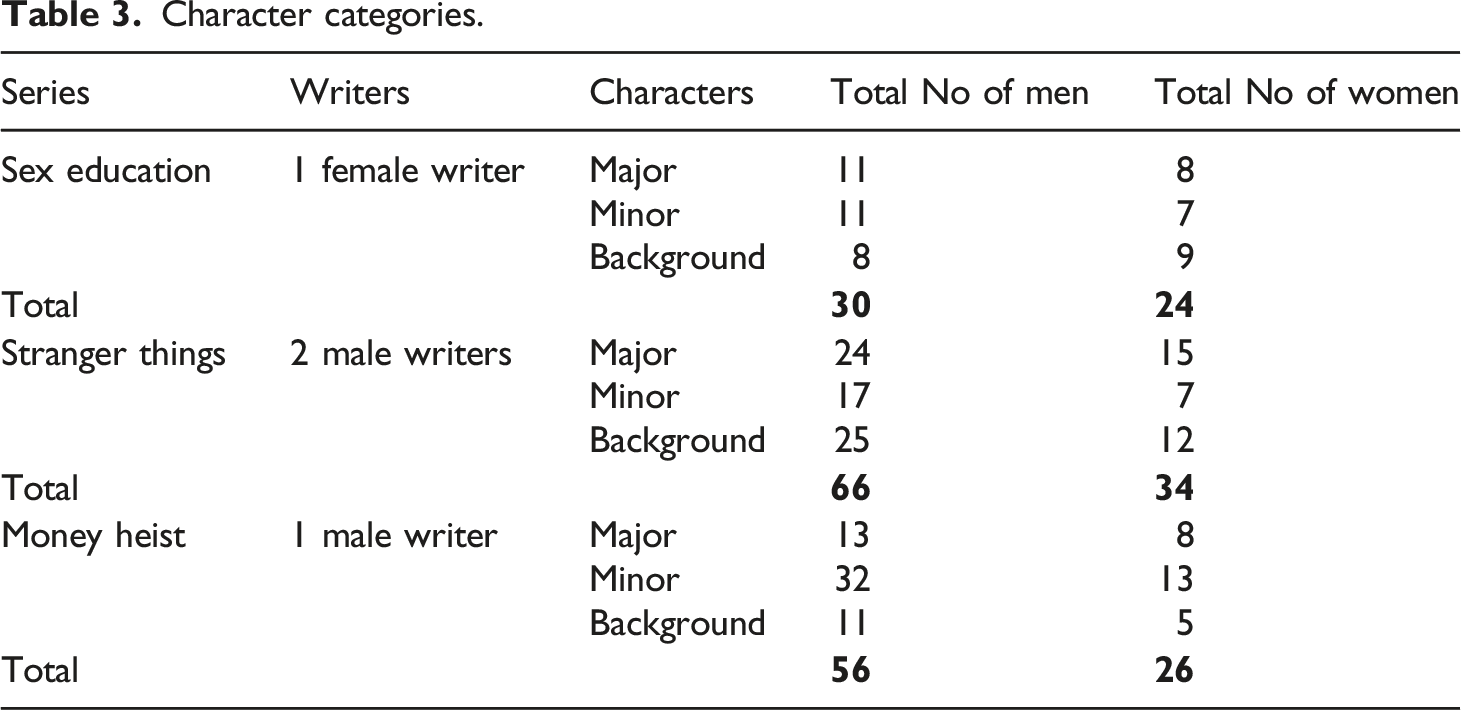
On average, for every 1 speaking female character there were 2 male speaking characters in Stranger Things and Money Heist, while Sex Education had a much better ratio of 1 female speaking character to 1.25 male speaking characters. However, male characters received more speech time than female characters across all series and episodes coded. On average men spoke between 2 to 2.7 times more than female characters across the 3 series analysed (see Figure 5). The Geena Davis Inclusion Quotient for 2015 top grossing films revealed similar results, male characters speaking two times more than female characters (Seejane, 2015; 2020). Male and female speech time.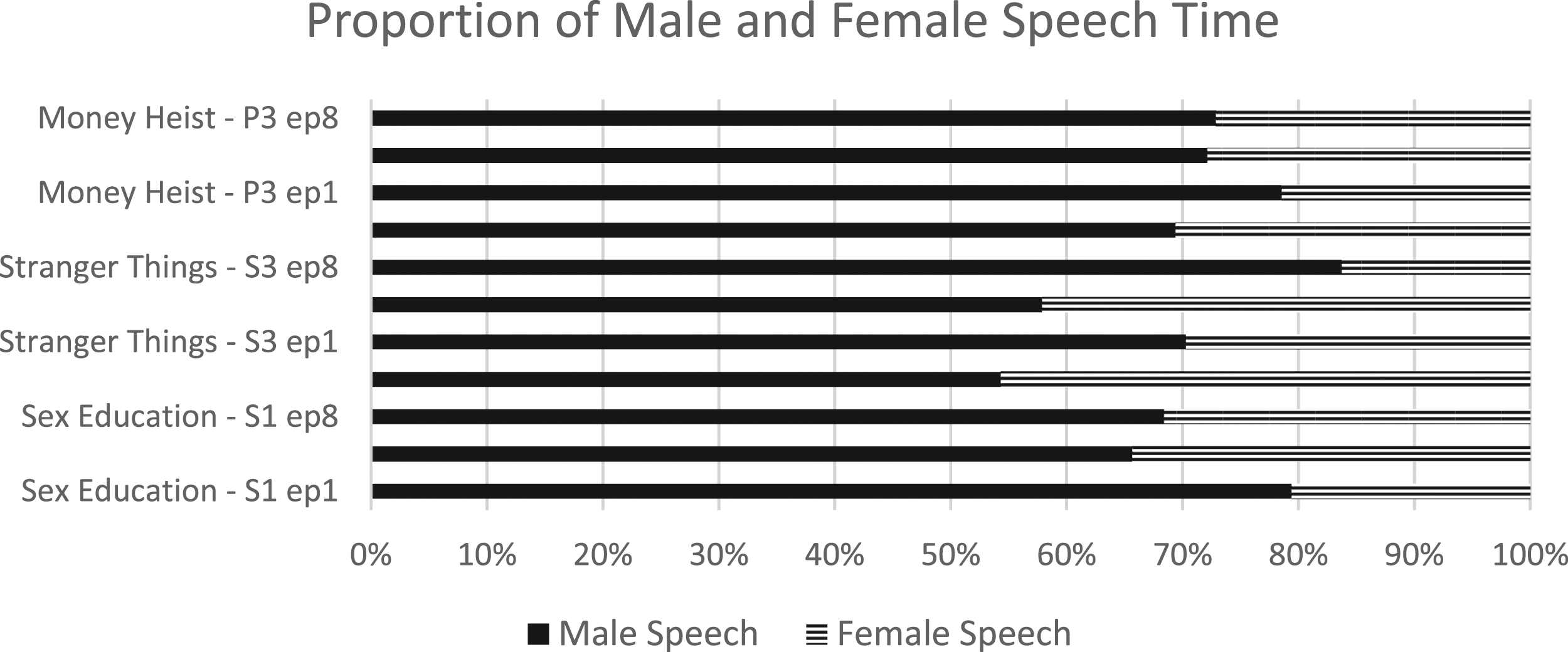
Age and ethnicity representation
Figure 6 illustrates age dispersion of all unique female characters across the 3 series analysed. The most represented group of female characters were teenagers (32%) as portrayed in Sex Education and Stranger Things. Women in their 30s represented the second largest age group (20%) and mostly appeared in Money Heist. There was a clear indication that male characters in Money Heist were older than female characters. Previous studies concluded that to portray female sexuality on-screen women tend to be younger than men (Rivadeneyra, 2011; Sink and Mastro, 2017). Age representation on-screen.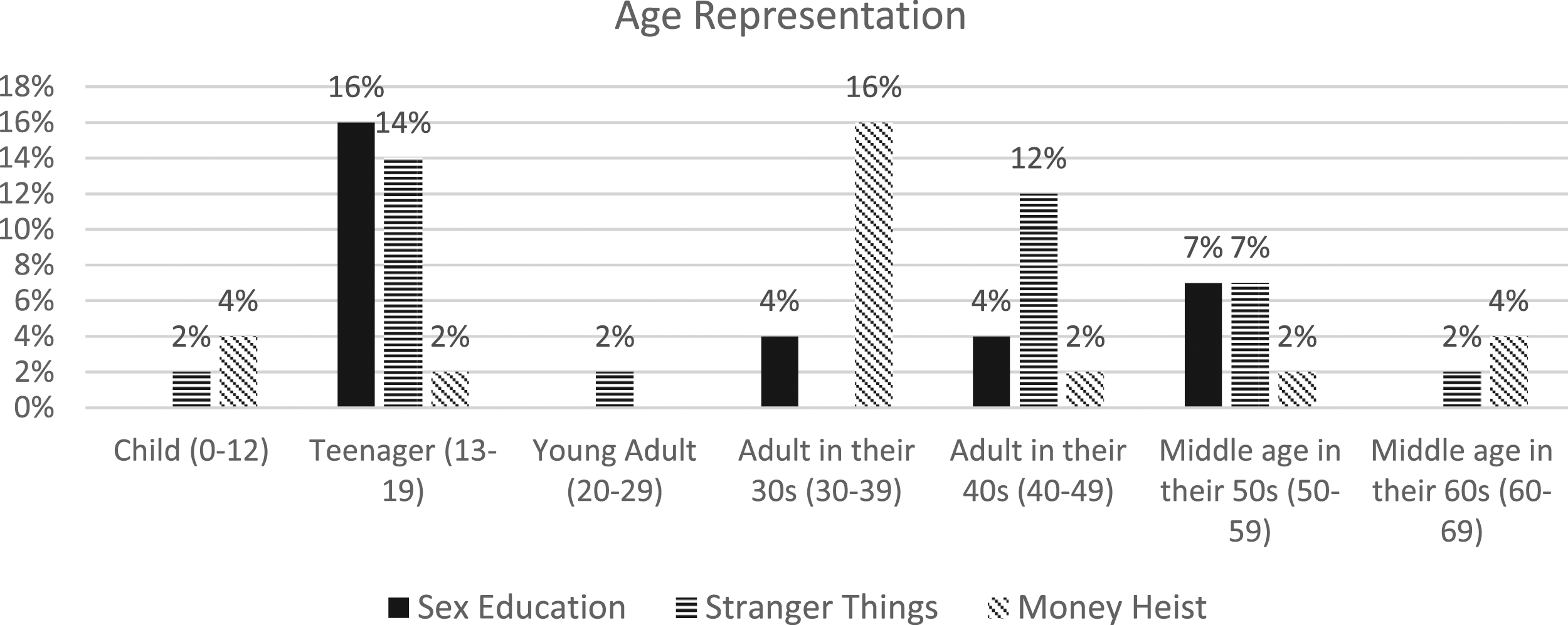
Figure 7 indicates that 84% of all unique female characters analysed across the 3 most watched 2019 series were from white ethnic backgrounds, and only 16% belonged to other ethnic groups. Sex Education had a slightly better representation of different ethnicities compared to Stranger Things or Money Heist. White ethnicity representation in Netflix drama series is much higher compared to Lauzen’s (2019) findings, containing a larger sample where 70% of women having speaking roles were white. Ethnicity representation on-screen.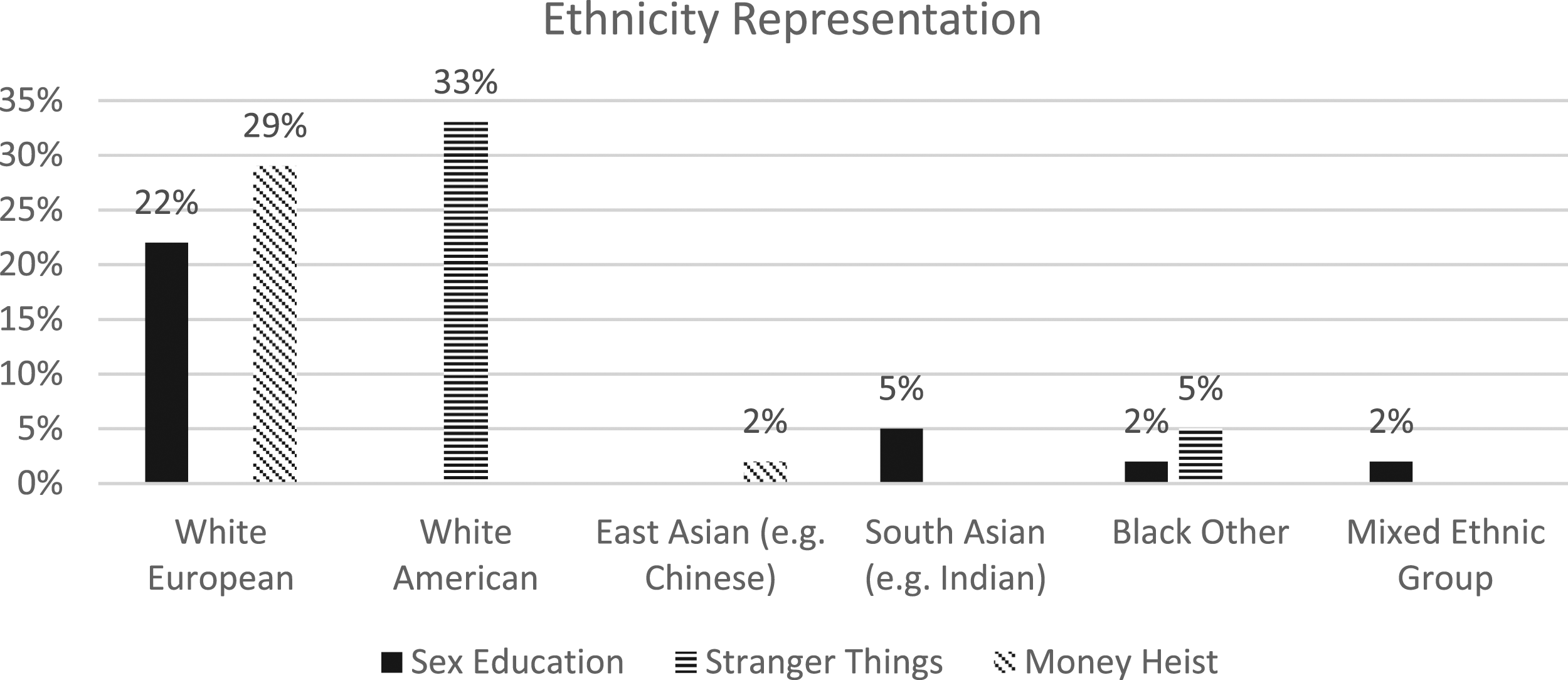
Male and female dominance on-screen
The first 3 conversations and the last conversation of each episode were coded to assess gender dominance using indicators such as: interruptions made, advice giving, topic introductions (Lauzen and Dozier, 1999b). Women were more dominant in Sex Education, while male characters dominated conversations in Stranger Things and Money Heist. However, Stranger Things displayed a better gender balance as the series progressed where both genders were equally dominant, for example, with women interrupting men and changing the course of the conversation, or both genders had an equally balanced conversation.
Overall, men displayed more power and dominance throughout all series, while women were shown portraying strong emotions and some vulnerability across the 5-min segments coded. Sex Education portrayed more vulnerability attributed to young males since 9 segments coded contained young male teenagers showing sadness, anxiety and anger, while only 3 segments displaying strong emotions were attributed to young female characters. This shows a deviation from the standard and widely accepted view that men are powerful and dominant (Parrott and Parrott, 2015). Previous studies found that female writers alter the on-screen portrayal of both male and female characters (Glascock, 2001; Lauzen et al., 2006, 2008).
Quality of female representation
Overall, female characters displayed a lot of strong emotions and vulnerability in the most watched 2019 Netflix drama series. They were shown dressed more provocatively (for instance, wearing scanty clothes to sexualise their bodies) than men which supports widely known female stereotypes (Collins, 2011). Across all series most major female characters were either in a relationship, married or divorced, which was also common for younger girls aged 12–14 in Stranger Things who developed romantic relationships with similar age boys. If a woman was married or divorced, it was also mentioned clearly that she was a mother. Female characters portrayed as mothers displayed strong caring and nurturing qualities towards their children and were never dressed provocatively. Interestingly, all major female characters were more dominant when shown in a relationship or having a close male friend.
Stranger Things, with the story being set in the early 1980s, was the most stereotypical towards women since they were portrayed as housekeepers and mothers, not having professional careers. This is not surprising given that such female stereotypes were common and widely accepted by audiences in the 1980s (Signorielli and Bacue, 1999).
Women playing thieves in Money Heist were portrayed as anti-heroines, lacking or playing with traditional heroic attributes such as idealism or morality. There was some indication that women in Money Heist are equal to their male counterparts, however, the implicit on-screen messages showed that women followed orders from men rather than acted of their own accord.
Young men and women portrayed in Sex Education were shown in intimate scenes as observed across 41% of the 5-min segments coded. One middle-aged female character was shown having a professional career as a sex and relationship therapist, which is a very unusual career to be played by a woman and shown in a television narrative.
Is Netflix any different?
In line with previous studies (Erigha, 2015; Lauzen, 2019), women were better represented on-screen than behind-the-scenes in 2019 Netflix drama series, however, numerical gender inequality existed across all cast and crew roles. Additionally, quantitative and qualitative findings support the existing academic literature on female age stereotyping since women portrayed on-screen were younger than men, signifying female attractiveness and sexuality (Collins, 2011; Sink and Mastro, 2017), while older women worked behind-the-scenes.
The content analysis on ethnicity representation indicates that women working across cast and crew roles were mostly white across all regions, while other ethnicities were marginalised. The International drama series sample showed a more diverse representation of female ethnicity behind-the-scenes compared to American and British series, suggesting that local talent was hired to work on local productions allowing more diversity in accessing such prestigious roles. Without losing the critical perspective in relation to the lack of diversity in leading production settings, these findings confer an additional significance to Netflix’s wide reach, but narrow setup introduced previously.
Role share
Women were significantly underrepresented as writers, executive producers and directors in 2019 Netflix drama series productions, comprising less than a third across each job role. A better gender balance was achieved when women worked alongside men across British, American and International series. However, looking from a different perspective, men comprised over 80% of staff for each role category and in each region, indicating that the majority of stories still have a significant male influence. This raises questions about whether industry executives imposing shared roles continue to perceive women as ‘risky-hires’.
Sex Education, created by a female writer, had a much better gender ratio portrayed on-screen, challenged gender norms and displayed a more diverse cast, compared to Stranger Things and Money Heist. It also displayed a better ethnicity representation in comparison to the overall British series sample. These findings are in line with the existing literature that women employed behind-the-scenes increase the number of women depicted in television narratives and alter the on-screen portrayal of male and female characters (Glascock, 2001; Lauzen et al., 2008; French, 2014; Bryson and Bunker, 2015).
Quality of representation
All series analysed portrayed female vulnerability that was contrasted by some on-screen dominance. A pattern emerged revealing that all major female leads were shown to be in relationships and were portrayed as more dominant than their male companions. This is a deviation from conventional views that a woman should be portrayed as submissive and bow to male dominance (Parrott and Parrott, 2015; Sink and Mastro, 2017).
Although female characters were dominant in their relationships with men, nuances in their trajectories also showed aspects of fragility and dependence on those same relationships. Tokyo in Money Heist was shown consuming large amounts of alcohol and seeking male attention when her romantic relationship ended, describing herself: ‘I’m pathetic…I can’t move on’ (3.8). Similarly, Maeve in Sex Education lied to her boyfriend and his family about her family background since it was not ideal for a girl, explaining: ‘My mum has addiction issues, my dad pissed off before I could remember... I’m not a shiny person, Jackson’ (1.5). Such stereotypical portrayal of women showing weakness, low self-esteem and dependance on men can send damaging messages to global audiences, while female viewers may consider these traits to be a natural form of behaviour (Collins, 2011; Rivadeneyra, 2011; Daalmans et al., 2017).
The strongest portrayal of patriarchal ideologies and female stereotyping was displayed in Stranger Things, with strong indications of gender inequality. The series also portrayed a young-teenage female character named Eleven who had superpowers and in the storyline was everyone’s saviour. However, while it seemed that Eleven ought to be a dominant character, she was portrayed as a quiet and vulnerable girl, who relied on her relationships with other characters to become a heroine in the story, so showing dependence. There was a clear indication that Eleven is also a victim since she would get a nosebleed and become physically weaker after using her powers, damaging her body.
Mixed female gender related messages were observed in Money Heist, showing aspects of dominance and vulnerability. At times Tokyo was portrayed as a dominant female anti-heroine giving orders to hostages and shooting at the police, while other times she was vulnerable, dependent and following orders from her male counterparts. Such mixed on-screen messages indicate that any power and dominance displayed by female characters is offset by their vulnerability and dependence on men.
In contrast, Sex Education deviated the most from stereotypical gender portrayal by showing male and female vulnerability and assigning dominance to both genders. However, compared to other series, it did not achieve a better gender balance in speaking time.
This study did not use visual framing analysis (Coleman 2010) but it is worth mentioning the importance of contrasting the construction of characters with the place they visually occupy. The case of Tokyo in Money Heist is particularly interesting in this sample, because the proportion of her voice recording is significantly higher than that of screen time. Further analyses can enlighten how this tension between empowerment and vulnerability applies in association with the frame design.
Centrality of representation
Netflix commissioned Sex Education, which was created by Eleven Film – an independent British production company (Elevenfilm, 2017). By adding the series to the platform, Netflix has given the show and its creators global industry exposure and access to international audiences. However, Netflix requested a few changes to the set such as: displaying American style lockers in school corridors, Letterman jackets, and showing students playing American football, so that it would appeal more to American audiences (Harrison, 2019). This raises questions as to whether Netflix alters all narratives available on their platform to suit their business decisions. Rodríguez and Bravo (2019) reveal that Netflix business strategies restrict the creative choices of production staff and instead of engaging with claims presented by feminist movements, continue to exploit commercially acceptable and profitable content, such as the Spanish series Cable Girls (released on 28 April 2017).
Content released via digital video streaming platforms gives great industry exposure to women working behind-the-scenes, which can lead to further success and jobs within the industry (Bucciferro, 2019; Perkins and Schreiber, 2019). However, women’s creative energy can be limited by male-dominated mainstream business strategies (Perkins and Schreiber, 2019). Therefore, the dimension of centrality of the representation can be challenged further and questions should be raised not only whether women behind-the-scenes are able to work on varied projects for key institutions, but also whether their creative energy is limited because of a strong influence exploited by the industry leader.
Final considerations
Although Netflix claims that they support gender equality across their productions, the industry leader did not achieve a better gender representation compared to other content providers and follows overall industry trends. Therefore, gender inequality continues to exist in this modern television viewing era, while Netflix remains a man’s medium. If drama genre series failed to achieve female equality on-screen and behind-the-scenes, as this study demonstrates, it is difficult to imagine that better gender equality is achieved in other genre series available on Netflix.
This study highlights several aspects that need to be analysed in more depth before celebrating narratives of change. Overall, Netflix seems to hide old habits under new clothes. It presents itself as a global and diverse provider though the vast majority of its productions still come from the established industry leader settings and do not significantly challenge the average representation of ethnicity and culture.
The same applies for female representation. None of the 3 dimensions analysed in this study (numerical, quality and centrality) were fulfilled in the 2019 Netflix drama series sample. Among other aspects, sole male creative workers outnumbered sole female creative workers across all roles and all series regions, while a high prevalence of shared roles in writing and directing positions suggests that women’s voice requires close surveillance. The observed dominance in female character development in the sample comes with several traits of vulnerability and dependent relationships. While ethnic diversity increases in international productions, white professionals still prevail in dominant production settings.
While some series available on the Netflix platform depict ambitious, strong, independent women as suggested by literature and research findings, this is not the norm across the sample. The good exceptions do not make Netflix a champion in female representation but do suggest that investment in geographical, gender and cultural diversity is able to enrich narratives and productions.
Footnotes
Declaration of conflicting interests
The author(s) declared no potential conflicts of interest with respect to the research, authorship, and/or publication of this article.
Funding
The author(s) received no financial support for the research, authorship, and/or publication of this article.
