




Abstract
Using the BBC Written Archives Centre’s records, this working paper explores a documentary about the suffragettes written by feminist, socialist filmmaker Jill Craigie for the BBC in 1949 – illuminating her previously unconsidered efforts to bring the women’s movement to life in an innovative, modern way on the small screen. Although Craigie later withdrew from this project, this paper explores how archival traces of Craigie’s television work offer new insight into her postwar career as a filmmaker, writer and onscreen personality, and shine new light on her place in a feminist genealogy concerned with the historical fight for women’s rights.
In 1949, Jill Craigie wrote to Cecil McGivern, Head of Television Programs at the BBC, stating that she was ‘bursting with ideas for television’ (BBC WAC TVART1, 1 November c.1949). Craigie had previously worked as a documentary filmmaker, directing films on art in wartime (Out of Chaos, 1944), postwar reconstruction (The Way We Live, 1946) and displaced children in war-torn Europe (Children of the Ruins, 1948). Her career in the film industry had received considerable coverage in national press: she was one of a relatively small number of women directing non-fiction films but was often lauded as ‘Britain’s only woman filmmaker’. She had recently directed her only feature film, Blue Scar (1949) , a drama set against the nationalisation of the mining industry – a highly ambitious independent film made outside of the major studios and without guaranteed distribution. As part of a Board of Trade enquiry into commercial film distribution in the same year, Craigie stated that while the BBC had a monopoly on broadcasting that was comparable to the film studios’ monopoly on distribution, the corporation also had a ‘policy of entertainment and enlightenment’, which contrasted with film policy’s ‘Entertainment without enlightenment’ – indicating her frustrations with the film industry and the interests in television she expressed in private to McGivern (National Archives BT 64.2426, 1949: 7). Using records held at the BBC Written Archives Centre (BBC WAC) in Caversham, this working paper centres Craigie’s involvement with the BBC and explores the postwar development of her career, her feminist, creative projects and her early efforts to explore the medium’s possibilities for experimental, socially progressive documentary (Price, 2021).
Craigie was involved in broadcasting intermittently throughout her life and had a long history of involvement with the BBC. She began appearing on radio and television programmes during her early filmmaking career and wrote two radio plays (1950-51). In the late 1960s, she directed two BBC documentaries – Who are the Vandals? (1967) and Keep Your Hair On (1967) . Two Hours from London (1995), the documentary she made about the outbreak of civil war in the former Yugoslavia (when she was in her 80s), was screened on BBC Two in 1995. Unlike other women employed full time by the BBC, Craigie was hired as a contract artist or on a temporary basis. Further casting her as a BBC outsider, she directed film reports on women’s jobs for ITV when it was launched in 1955 and her journalism often featured criticisms of the BBC. For instance, one of her guest reviews for the London Evening Standard in the early 1950s expressed her feeling that television hadn’t yet discovered its identity, describing one evening’s programme as ‘second-rate theatre and a hangover from sound radio’ and another emphasised that BBC television was severely restricted not only by funding but by ‘its monstrous bureaucratic control’ (Craigie, 1953a; 1953b). In the Tribune in 1962, Craigie called attention to the restrictions of the BBC’s charter and its stress on balance and neutrality: she suggested that while balance across programmes was important to maintain, impartiality within each individual programme ‘is to prohibit the freedom of expression of opinions’ and restricted the creativity of producers, directors and writers (Craigie, 1962). In later life, Craigie remained in the public eye as the wife of Labour MP and leader of the opposition Michael Foot, which has often overshadowed popular perceptions of her career and her position as an authority on the women’s suffrage movement. She began developing a history of the struggle for women’s enfranchisement titled Daughters of Dissent in the late 1960s, which was unfinished when she died in 1999 and is held in manuscript form – together with her extensive collection of historical materials relating to the suffrage movement – in her archive in the Women’s Library at the London School of Economics.
This working paper emerges from the AHRC-funded Jill Craigie: Film Pioneer project, which is re-examining and re-contextualising Craigie’s work as a socialist feminist filmmaker and screenwriter using an array of archival materials – and as part of a long, cross-media career that has been little recognised in film histories largely focusing on her contributions to British cinema. The paper is based on research I completed for Independent Miss Craigie (2021), a feature-length biographical documentary directed by Lizzie Thynne. It therefore takes up David Hendy’s use of biography in media history (2012) and Alexander Badenoch and Kristin Skoog’s suggested entanglement of media and feminist histories through a purposeful ‘stepping outside the media frame and exploring women’s biographies’ (2019: 27). I suggest that Craigie’s early work for the BBC offers vivid new insights into the development of her career and public image as a filmmaker, writer and onscreen personality. The records held at the BBC WAC offer new perspectives on the development of her professional life, allowing it to be resituated in the context of television’s growth from a ‘Cinderella’ department to mass medium and her creative labour to be recovered and recognised as part of an intergenerational feminist media history.
Bringing the women’s movement to television
In 1949, Craigie planned a feature ‘dramatised documentary’ about the women’s suffrage movement for television. Driven by a feeling that the suffragettes’ cause was ‘almost forgotten’ during the war, she had previously planned a feature film about the movement – completing extensive historical research and meeting and corresponding with former suffragettes (London School of Economics Women’s Library, 7JCC.3.6, undated). However, she ran into problems securing the support of the movement’s competing factions and shelved the idea. The postwar return of the BBC’s television service – and Senior Television Producer Mary Adams’ support – offered Craigie an opportunity for developing her interests, and in 1949 she wrote a television documentary with the aim of raising awareness of the suffrage movement’s achievements for contemporary women’s lives. The project can be seen as a predecessor to Midge Mackenzie’s landmark BBC series about the fight for the vote, Shoulder to Shoulder (1974) , which was made in the midst of the women’s liberation movement. However, Craigie was working in an altogether different feminist context – a period when historians have emphasised that the women’s movement continued to evolve (Blackford, 1995; Beaumont, 2020) but also suggested that it was ‘more quiescent’, ‘less attractive to younger women’ (McCarthy, 2010: 109) and later overshadowed by second wave feminists ‘more attracted to their grandmothers’ struggles’ than their mid-century forbears’ fetishized femininity and domesticity (Jolly, 2019: 245; Geraghty, 2000). With the aim of ‘reconnecting voices and the experience of women and women’s history across time and space’ stressed by Vicky Ball and Janet McCabe (2014), this paper uses the BBC WAC records to illuminate Craigie’s work on her suffragette documentary, analysing her development of the script, the impediments to the project and her eventual withdrawal from it. Through this close analysis of archival traces, I explore how Craigie’s suffragette documentary addressed women’s lives – negotiating contemporary ideas of modern femininity and social reconstruction pertinent to the BBC’s postwar television service, and I contend that these records attest to her work’s significance as part of a feminist genealogy concerned with the history of women’s rights.
Craigie’s 1949 television documentary about the suffragettes was characterised by an experimental fusion of documentary and ‘live’ drama. The idea was to open with contemporary footage of the suffragettes gathering at the statue of Emmeline Pankhurst on the date of her birthday in Westminster Gardens, followed by dramatic re-enactments following one suffragette and interspersed with interviews with figures in the movement (BBC WAC TVART1, ‘Votes for Women’ Television Script).
The BBC WAC contains two versions of the script. In the second version, echoing Craigie’s own first encounter with the suffragettes at their annual gathering, the opening footage of the meeting is accompanied by the following voiceover narration:
Anyone who happens to be in this part of London on July 14th, any July the 14th, will witness this curious spectacle. What are they up to, these women? How frail and helpless they seem, clasping their posies.
Don’t be deceived. These are women with a prison record and proud of it. The longer the time they served, the prouder they are. These are women who chained themselves to the railings of Downing Street. These are women who were forcibly fed. These are women that were headline news (BBC WAC TVART1, ‘A Suffragette Looks Back’ Television Script).
Beginning with this questioning of the suffragettes’ ceremony – and the narrator’s provocative questions ‘Does the vote mean so much to women to-day? Or does the suffragette movement seem in perspective little more than an Edwardian prank?’ – the documentary explores the question of the significance of the vote for modern women in the immediate postwar years (BBC WAC TVART1, ‘A Suffragette Looks Back’ Television Script). Craigie stressed that fighting for the vote was also a ‘means to an end’ for the suffragettes: it belonged to a struggle for women’s legal rights – as wives, mothers, and workers – more broadly (Craigie, 1951). The final scenes of Craigie’s initial draft stresses this connection between the suffragettes’ campaign and the rights enjoyed by ‘women of to-day’: a ‘symbolical’ suffragette character – whose part in the movement is charted in earlier dramatic scenes – appears in modern dress against the background of a modern flat (BBC WAC TVART1, ‘Votes for Women’ Television Script). Echoing an earlier scene in which the ‘symbolical woman’ discusses joining the suffragettes with a second woman, she states ‘I never bother to vote. Don’t see what difference it makes…’; the second woman responds to say that she thinks of suffragettes as fanatics – ‘don’t know what they got so worked up about’. A third ‘modern woman’ – ‘an MP or some such person’ – steps in to explain the changes the vote brought for women’s rights, and a narrator joins to conclude that ‘women of to-day’ enjoy a much improved position in society due to these ‘very great women’ – expressing communal gratitude for their work and that ‘there’s still a lot to be done’.
Correspondence between Cecil McGivern and Mary Adams suggests that McGivern was wary of commissioning Craigie’s documentary. In February 1949, McGivern argued that it was too early to commission a full script as Craigie was ‘completely unskilled in television methods and it might turn out that we have to make her work with a member of the staff’ (BBC WAC TVART1, Memo 11 February 1949). When Craigie submitted her script in July 1949, McGivern wrote that it was ‘definitely on the right lines, but it is by no means right yet’ – and recommended that BBC writer, Duncan Ross, be brought in to work with her on it (BBC WAC T4/71, Letter 11 July 1949). Ross was the sole staff script-writer at Alexandra Palace (Anon, 1949) and while he was very positive about the script’s promise, he refused to collaborate with another writer new to the medium after a ‘fairly long bout of agony’ doing this with ‘little encouragement’ and often a ‘loss of money, prestige, and sleep’ (BBC WAC TVART1, Letter 19 July 1949). He emphasised that he would be happy to help Craigie but only after one or two projects of his own. His lengthy response highlights the need for training for television writers and even touches on the lack of parity for women writers, stating: Craigie’s script is one that I feel can only be handled properly by a woman. Most men can see its possibilities, sympathise with its characters, value the dramatic scenes, and admire it all, when finished, as an achievement, but they cannot feel enough to put anything great into its creation […] It is sad for all the things this script stands for, if, in a huge organisation like the BBC, we cannot get some woman to help Britain’s only film director on a script that is already very good (BBC WAC TVART1, Letter 19 July 1949).
In 1951, Craigie wrote to the son of Annie Kenney, who had been a prominent figure in the Women’s Social and Political Union (WSPU), stating that she wouldn’t write any more about the suffragettes as ‘there are so many people and conflicting interests that one would spend more time dealing with this than in the actual writing’ (University of East Anglia Annie Kenney Papers, undated). Warwick Kenney Taylor had complained to both Craigie and the BBC about the representation of his mother in The Women’s Rebellion: A Dramatised Impression of the Suffragette Movement, Craigie's 1951 radio play. He suggested inaccuracies in the play’s representation of his mother, including a broad Northern dialect and the suggestion that she only played a small role in the movement’s early days: he also criticised the corporation and Craigie for not consulting the family about Annie’s depiction and not including her name in the list of suffragettes still alive who were named at the end of the programme (University of East Anglia Annie Kenney papers, Letter 15 March 1951; BBC WAC T4/71, Letter 7 April 1951). Craigie’s sense of hurt and regret particularly comes across in a parting shot at Kenney Taylor in her correspondence with him: ‘it seems that these things are better left for posterity when future historians make such distortions, but are safe from attack’ (University of East Anglia Annie Kenney Papers, undated). In the same year, BBC writer Norman Swallow took over on her television documentary and rewrote it to focus on a fictitious rank-and-file suffragette, ‘Jane’, ‘who joined the movement and followed it through, as so many thousands did, without getting her name into the histories’ (BBC WAC T4/71, Letter 17 April 1951). For this earlier production though, centring on one fictitious suffragette was a strategy designed to ‘allow the introduction […] of every faction, and so please all and offend no one’, in the hope of avoiding the criticisms Craigie had faced. Swallow’s documentary, The Suffragette, was filmed and broadcast in 1951. Swallow wrote that he understood why Craigie ‘now trembles in her shoes’ at the prospect of negotiating the movement’s rival factions: she was offered a credit under a name or a pseudonym but she appears to have refused (BBC WAC T4/71, Letters 17 and 23 April 1951).
While Craigie’s version of the suffragette documentary went unmade, the traces of her ghost project in the BBC WAC offer a way of re-contextualising her creative work in early television as part of an intergenerational feminist history. Ball and McCabe’s (2014) important work on Shoulder to Shoulder, emphasises the need to resituate the struggle to make the mini-series in 1974 as part of a feminist genealogy of productions representing the fight for women’s enfranchisement – including, most recently, Suffragette (2015) (Purvis, 2021). Craigie’s previous films pay determined attention to women’s views and voices as part of explorations of the postwar settlement (Tasker, 2021) and she directly contributed to postwar feminist activism with To Be a Woman, her 1951 film for the equal pay campaign. Craigie was also appearing on the BBC’s postwar experimental women’s programmes – Designed for Women (1948 and 1951) and Women's Viewpoint (1951), which, devised by Adams, have been reassessed by feminist historians for their progressive engagement with women’s rights and views as citizens (Irwin, 2014; Moseley and Wheatley, 2008).
Often making connections between different generations of women, Craigie expressed a particular interest in young women’s lives – stressing in her series on ‘London’s Bachelor Girls’ in the Evening Standard in 1956 that they should recognise how the political gains of the suffragettes had shaped their opportunities and lifestyles (Craigie, 1956; Price, 2022). However, considered in contemporary terms, as Sadie Wearing has suggested in relation to To Be a Woman, her work ‘wears what would now be understood as its liberal white feminism firmly on its sleeve’ – restricted to normative understandings of gender and sexuality, and focusing on white women (2021: 424). Seemingly between waves, Craigie developed the suffragette documentary in a period presumed to have been ‘the nadir of British feminism’ between the end of the war and the growing women’s liberation movement in the late 1960s (Pugh, 2000: 285). As such, her attempts to bring the women’s movement to public attention have been crowded out of view in feminist media histories and evidence of this television project at the BBC WAC has not been considered in any accounts of her career. Taking up Jason Jacobs’ methodology of recovering and reconstructing the visual style of early television’s ‘ghost texts’ using a ‘flotsam of fragments’ in the written archives (Jacobs, 2000), I now turn to explore how Craigie attempted to use the aesthetic qualities of television drama – its ‘liveness’, immediacy and intimacy (Caughie, 1991; Jacobs, 2000) – to communicate the suffragettes’ fight for the women’s rights in a vivid, modern way to audiences in the late 1940s.
Feminist protest and the intimate screen
The BBC’s television service offered Craigie a new creative opportunity to adapt her plans for a film about the suffragettes to the small screen in 1949. Just as Craigie’s career has been overshadowed by post-1960s feminists – between waves, so too she was developing this project during a shadowy, relatively unmapped period for television documentary at the BBC: between the documentary film movement’s development in the 1930s and during the war, and its shift into television in the 1950s and 1960s (Fox, 2013) – when television documentary was evolving and ‘beginning to find its own distinctive voice’ (Russell and Taylor, 2010: 6; Corner, 1991b). When Craigie was writing her scripts, documentary at the BBC was guided by McGivern but wasn’t formally established as a department until filmmaker Paul Rotha was appointed to head it in 1953 (Bell, 1986; Thumim, 2004). Mary Adams’ involvement perhaps further complicated Craigie’s position. Adams was apparently perceived by documentarists as a threat – as ‘an empire builder who sought to subsume documentary within her own fiefdom’ (Chapman, 2015: 175). However, Craigie appears to have been happy working with her, and they were later in touch about a potential job for Craigie in women’s television – offering some insight into Craigie’s idiosyncratic position as an ‘insider/outsider’ in documentary film culture (Wearing, 2021). In terms of its form too, Craigie’s suffragette documentary can be situated as building on earlier forms of story-documentary – and the fusion of drama and documentary in her previous films, and also as a precursor to the emergence of drama documentaries at the BBC in the 1950s (Chapman, 2015). When Craigie was writing her script in the late 1940s, the television service was expanding but was nevertheless inchoate (Jacobs, 2000) – driven by the ‘enthusiasm of the amateur’ (Caughie 1991: 40) and responsible for ‘strange hybrid forms of early television documentary’ (Bell 1986: 80). And Craigie’s ambitious plans for combining present-day footage of the suffragettes’ meeting with interviews and drama scenes filmed ‘live’ at Alexandra Palace – are testament to this unsettled, experimental environment.
In January 1949, film critic C.A. Lejeune wrote excitedly about television’s possibilities for filmmakers, writers and producers. Lejeune argued that the medium’s intimacy and immediacy [with dramas filmed and broadcast live] offered viewers the ‘sense of taking part in a current adventure’ and an ‘irrefutable person-to-person address’ (C.A. Lejeune 1949-50). Craigie’s work on the suffragette script – evidenced in her redrafted version and her correspondence with Mary Adams – indicates her efforts to use these aesthetic qualities, to depict the suffragette movement in a visceral, affective way for modern audiences. On Adams’ advice (BBC WAC TVART1, Letter 13 May 1949), in early 1949 she redrafted her script to focus on the ‘highly personal emotional’ story of Charlotte ‘Charlie’ Marsh (Figure 1) – who joined the WSPU at 19; became a ‘suffragette poster girl’ – leading many processions; and was one of the first suffragettes to have been force fed by stomach tube in 1909, having been apprehended for disrupting a speech by Harold Asquith from the roof of Bingley Hall in Birmingham (Atkinson, 2018). Craigie’s revised script answers the question, ‘Does the vote mean so much to women to-day?’ with an interview with Marsh filmed at Alexandra Palace: Marsh introduces her memories of the movement, stating that ‘the woman of to-day just doesn’t understand what it was like to be a woman when I was a girl. The vote was only the key to things we really wanted’ (BBC WAC TVART1, ‘A Suffragette Looks Back’ Television Script). A fade to a photograph of Marsh as a young girl serves as a transition to action-filled drama sequences recreating her suffragette career– from her middle-class home life and her early work as a sanitary inspector in East London visiting home workers, to first joining the WSPU, militant action and imprisonment. Filmed and broadcast ‘live’, these drama sequences pay close attention to Marsh’s first-hand, physical and emotional experiences of campaigning and militant action. Charlotte Marsh (1911) 7JCC/O/02/138 Jill Craigie archive, The Women's Library at LSE.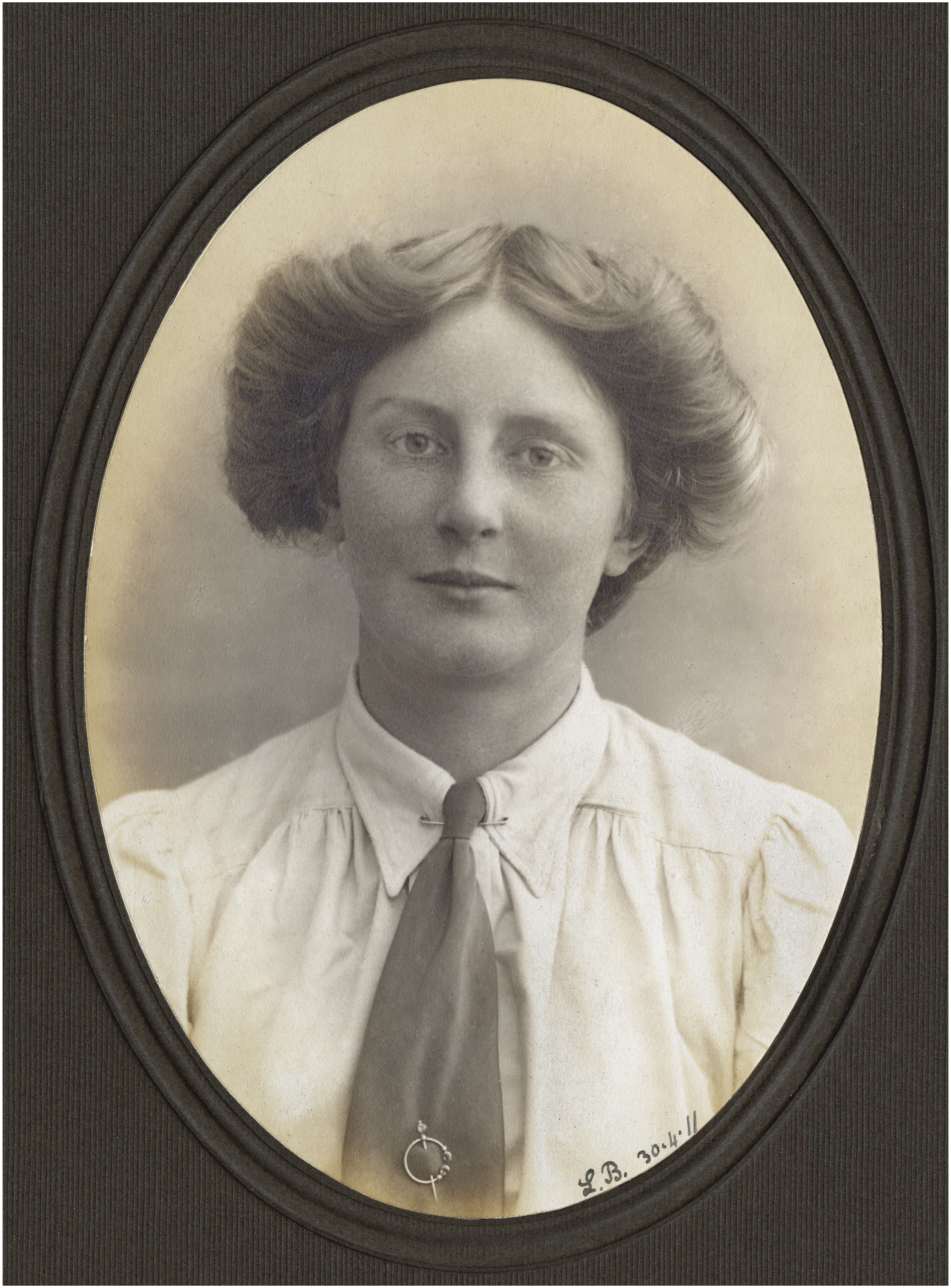
Indeed, Craigie’s script demonstrates attention to early television drama’s characteristic focus on ‘“nearness” to actors’ and dramatic action: using camera movement and close-ups to follow Charlotte Marsh’s movements and performance closely, and pre-recorded voiceovers and dialogue to express her thoughts (Jacobs, 2000: 6). For instance, in an early scene Marsh appears chalking a sign to the Hyde Park rally on the pavement and is physically attacked by an opponent to women’s enfranchisement with a bucket of paint: directions on the script suggest that
Indicative of Craigie’s feelings about the potential spectacle of the suffragettes’ fight and their literal movement onscreen, in her account of her earlier plans for a feature film, she wrote: ‘“Movies must move,” the technicians were fond of saying in those days. Certainly, the suffragette movement moved in every sense of the word’ (London School of Economics Women’s Library 7JCC3.6, ‘Introduction’, undated). Craigie’s recreation of Marsh’s disruption of the Bingley Hall meeting in her television script certainly demonstrates the spectacle and movement of the suffragettes’ militant activities: Marsh is shown chatting nervously on a corner section of roof, first speaking nervously her comrade Mary, then throwing stones down at the street and cutting down roof slates, shouting ‘Votes for Women!’ – before a fireman’s ladder appears and hoses are turned on them (BBC WAC TVART1, ‘A Suffragette Looks Back’ Television Script). In a letter to Adams, Craigie suggested that ‘the most interesting visuals are in the militant scenes’ but she was wary of representing the movement as accurately as possible and was sensitive to the idea that the spectacle of militant action needed to be translated for the different scale of the small screen (BBC WAC TVART1, Letters 9 April, 17 June 1949). She suggested that there were ‘various other things that happened to Charlotte Marsh, notably a big window smashing episode and the burning of a building, not to mention a prison riot, and a second bout of forcible feeding. But all these things seemed to me to be too much on the grand scale for television’ (BBC WAC TVART1, Letter 17 June 1949). Indeed, Craigie went to some lengths to adapt her skills to television and to learn about production: a memo in March 1949 described her as ‘very anxious to come and see as much television as possible’ (BBC WAC TVART1, Memo 12 March 1949) and arrangements were made for her to visit the filming of two programmes; she also reported to Adams that she planned to hire a television set ‘to see just what you are all up to so that I won’t find myself suggesting anything too impracticle [sic]’ and sought art director David Rawnsley’s advice on production design (BBC WAC TVART1, Letter 7 March 1949).
Despite these efforts, Craigie’s script contains indications of her lack of confidence in planning a ‘live’ television drama: for instance, she wasn’t sure that the Bingley Hall sequence could be broadcast live as it was ‘difficult to think of a transition which will give the actress time to get dry before she appears again in prison’ (BBC WAC TVART1, ‘A Suffragette Looks Back’ Television Script). Suggesting some of its limitations, Norman Swallow’s comments on Craigie’s script in 1950 identified some problems with its structure and style and advised that a stronger commentary was needed throughout (BBC WAC TVART1, Letter 21 November 1950). Overall though, Swallow concluded that he found it ‘human, interesting, moving and exciting, and the faults in it can be remedied […] without very much worry’ and suggested to Craigie that ‘sticking to Charlotte Marsh’ more consistently would help to create a more personal and intimate story suitable for television (BBC WAC TVART1, Letter 21 November 1951; T4/71 Letter 10 April 1951). A handwritten note from Adams – ‘do so!’ – on this letter offers an indication of her investment in this project and her authority over its development. Duncan Ross’ previous analysis hadn’t mentioned practicalities concerning its production but did highlight the project’s radical social potential for changing ‘wrong and reactionary’ attitudes (particularly men’s) about the suffragettes and women’s contemporary status. Ross shared Craigie’s belief in documentary’s important social role in postwar society (as emphasised in (Bell, 1986; L.W., 1953) and he described her script as ‘one of the few really promising Documentary scripts I have read since coming to Television’ (BBC WAC TVART1, Letter 19 July 1949). Suggesting a level of uncertainty surrounding the reception of such a feminist documentary though, Adams argued that it would need to be broadcast on Emmeline Pankhurst’s birthday as that would give it the ‘“protection” of a topical peg’ (BBC WAC T4/71, Letter 1 May 1951). Complicating Craigie’s involvement, the possibility was also mooted that she should appear as the ‘young woman of to-day’ in the documentary’s original final sequence (BBC WAC TVART1, Memo 12 March 1949). Craigie rejected the offer as she wanted to direct, but this is indicative of BBC interests in her image as a ‘public woman’ – and tensions between Craigie’s will to contribute creatively to early television and her increasing employment as an onscreen personality.
‘Pursuing the entry of Jill Craigie into television programmes’
In 1951, Craigie appeared on three of the four editions of Women’s Viewpoint, taking part in discussion of ‘is there a women’s viewpoint?’, education for girls and women’s magazines. The programme consisted of ‘unrehearsed discussion by women, for women, of problems of special interest to women’, which Irwin has effectively re-contextualised as putting ‘the spotlight on the “public woman”, active in the public sphere in her role as citizen’ (2014: 121). Craigie was invited as a woman ‘of established reputation or prominence in some field of public life’ (BBC WAC T32/363, TV Talks, 1951), and was increasingly positioned as a ‘public’ woman at the BBC in the early 1950s – although as a media personality, rather than specifically in relation to her film career (Irwin, 2014: 121). In December 1951, Cecil McGivern wrote congratulating Craigie, inferring her new status as a personality by mentioning her name in the third person: ‘I gather from Ronnie Waldman [Head of TV Light Entertainment] that you and he are vigorously pursuing the entry of Jill Craigie into television programmes. I am delighted and look forward to the first born of this (television) union’ (BBC WAC TVART1, Letter 20 December 1951). In a period when the television service was in the process of building its own stars and personalities as part of its negotiation of popular appeal (Holmes, 2008; Mundy, 2008), Craigie appeared on a number of different programmes: as a judge on amateur film competition Cine Club, a story-teller, on press panels, and three times on the hugely popular What’s My Line? – including on a ‘special ladies’ night’ edition, alongside regulars Marghanita Laski and Elizabeth Allan, in 1952. Evocative of What’s My Line’s projection of “celebrityness” into the front room with a captivatingly novel mixture of showbiz glamour and cosiness’ (Corner, 1991a: 4), the Daily Herald described Craigie as ‘astonishingly pretty in a white gossamer shawl over a strapless evening gown’ and that ‘she sailed in right away and made an all-time record by guessing the occupation of a farmer in a few seconds’ (Pearce, 1952: 3).
Craigie wrote candidly in the Evening Standard a year later that appearing on television was more lucrative than writing for it, suggesting that there was ‘no incentive’ to be a television writer (Craigie, 1953b). Questioning why writers such as Compton Mackenzie, Marganhita Laski and Lesley Storm appeared more often on television than writing for it, Craigie emphasised that personal appearances paying from 15 to 30 guineas ‘can hardly be called work’ by contrast, with ‘sitting down at a desk from nine till six for three or 4 weeks and if it involves research three or 4 months’ for 60 guineas (1953c). Here she offered insight into her increasing visibility on television and speaks from her own, ultimately unsuccessful, experiences of writing for it. Demonstrating the BBC WAC’s importance for the feminist historian (Moseley and Wheatley, 2008), the traces of Craigie’s television work nonetheless offer significant new insights into her enduring interest in women’s lives, reaching them through ‘new’ media and the development of her career in the immediate postwar years (Price, 2021). Consideration of Craigie’s work in television broadens the scope of film histories that have focused on her relationship with the film industry and allows for a more nuanced understanding of her cross-media career. In keeping with Margaretta Jolly’s suggestion that the suffragettes can be used to ‘measure new feminisms’ (quoted in Ball and McCabe 2014), Craigie’s work on creatively reinterpreting the women’s movement on television screens offers a glimpse of the distinctive nature of her creative labour and feminist work in the 1940s and 1950s – at a time when she was concerned with raising awareness of women’s rights but when her career was also shaped by shifting ideals of modern femininity, the ‘public woman’ and the growth of light entertainment at the BBC.
Footnotes
Acknowledgments
This research was funded by the Arts and Humanities Research Council as part of the Jill Craigie: Film Pioneer project (2018–2021). Many thanks to Kate O’Brien at the BBC Written Archives Centre for her help with the archival research, to the Jill Craigie: Film Pioneer project team (thanks to Yvonne Tasker for sharing papers from the University of East Anglia Annie Kenney archive with me), the project board members, and the editors of this special issue, Hannah Andrews and Sarah Arnold, for their advice and support during the research and writing process.
Declaration of Conflicting Interests
The author(s) declared no potential conflicts of interest with respect to the research, authorship, and/or publication of this article.
Funding
The author(s) disclosed receipt of the following financial support for the research, authorship, and/or publication of this article: This work was supported by the Arts and Humanities Research Council (AH/R01308X/1).
