




Abstract
Remand remains a particularly punitive and painful form of incarceration for prisoners, as well as their loved ones on the outside attempting to provide support. Drawing on in-depth qualitative data collected from 61 loved ones’ supporting remanded prisoners in England and Wales, this article examines how the ambiguity and unknowns associated with this form of incarceration is particularly painful. Through the unique application of Boss’s theory of Ambiguous Loss, this article contributes new knowledge about the nature, scope and resilience shown by loved ones supporting remanded prisoners, indicating where future research and policy should be focused.
Introduction
The researcher and family therapist Pauline Boss has written extensively on a particularly painful form of loss, an ‘ambiguous loss’ (1977), which is ‘always stressful and often tormenting’ (1999: 5), because clarity and closure are not achieved as it is for other types of loss, for example, death or divorce. Events associated with ambiguous loss are ‘situations beyond their (an individuals’) control or outside constraints that block the coping and grieving processes’ (Boss, 1999: 7); they are unconventional losses. Originating as a concept connected to feelings of loss related to paternal psychological absence, and then reframed as a wider form of loss with uncertainty, the theory of ambiguous loss has been extensively examined and tested by researchers, and applied to many different groups, including prisoners (Boss, 2016). ‘What researchers are finding – again and again – is that ambiguous loss leads to feelings of ambivalence, helplessness, identity confusion, insecure attachment, and hopelessness’ (Mendenhall and Boss, 2022: 524).
This article builds upon this work, and in an original application of the theory, it will be argued that ambiguous loss is extremely pertinent for ‘loved ones’ supporting remand prisoners, due to the number of unknowns attached to these punitive sanctions. As clarified later in the article, the authors have purposefully chosen to use the term ‘loved ones’ to refer to family members, friends, partners and significant others supporting those remanded into prison (please also see Masson and Booth, 2018). This article draws from a qualitative study with 61 loved ones supporting individuals who were or had been on remand. It sheds new light on the pains of imprisonment for loved ones through the nature of how ambiguous loss is experienced by this group, the uncertainty and confusion surrounding the incarceration, the delays obtaining information, the hope for release or a sentence date, and the impact on the mental health and wellbeing of prisoners’ families and their isolation. The article then explores the responses of families to this uncertain period, through actions taken to try and reduce harms associated with ambiguous loss, or via acceptance of what they can control, as well as actions taken by prisoners to reduce the ambiguity through guilty pleas to ensure an endpoint for their loved ones. Viewing prisoners’ families through this unique theoretical lens will significantly help us to understand their experiences and from this recommendations for future policies and practices have been made.
Ambiguous loss
According to Boss (1999), ambiguous loss can be split into two types of loss affecting families. The first is ‘leaving without goodbye’ – where loved ones are physically absent but psychologically present, for example, missing servicemen or children. They are gone but also here. In these circumstances, families must navigate their lives hoping that closure will be achieved through their loved ones eventually returning home. The second type of ambiguous loss is ‘goodbye without leaving’ – where family members are physically present but psychologically absent, for example, individuals with Alzheimer’s disease or mental ill-health. Here, although their family member is still with them, they have changed, they do not have the same thoughts, emotions and memories. They are here but also gone. According to Boss (1999: 9), in both types ‘those who suffer the loss have to deal with something very different from ordinary, clear-cut loss’. Living with either form places enormous pressure on loved ones, often producing ‘sadness, confusion, doubt, and anxiety’ (Boss and Yeats, 2014: 63). This is because those left behind must navigate the unknown often with little direction or guidance as the loss is not tangible, and others in their support network frequently do not understand the emotions experienced with ambiguous loss. For example, ‘with a clear-cut loss, there is more clarity – a death certificate, mourning rituals, and the opportunity to honor and dispose remains. With ambiguous loss, none of these markers exists’ (Boss, 2004: 553). Often, families experiencing this loss are encouraged to move on when clarity remains out of reach, further adding to the mixture of emotions and confusion.
A widely explored concept which is often discussed in the ambiguous loss literature, and families of prisoners (Chui, 2016), is family boundary ambiguity. Whereas ambiguous loss ‘is the stressor event or situation’ of unclear loss, ‘boundary ambiguity is the perception of that stressor’ (Boss, 2016: 278), which is a ‘continuous variable, which predicts family conflict and personal symptoms of depression and anxiety’ (Boss, 2016: 270). It is argued that owing to boundary ambiguity, family members may be unsure of the construction and dynamics of their changed family network following the loss and feel uncertainty about the position and roles that others now take. Conceptual links to ‘disenfranchised grief’ (originally coined by Doka, 1989) have also been made, which shows how the loss associated with imprisonment is not socially recognised, meaning that prisoners’ families are not acknowledged or supported within communities and social networks. The boundary ambiguity experienced is not only directed at the absent loved one, but across the wider family and social network, and can therefore have serious implications for the types of support or isolation experienced during this time. Therefore, boundary ambiguity is an important consideration when exploring loved ones’ lived experiences of loss during custodial remand.
Ambiguity associated with custodial remand
This is not the first article to apply ambiguous loss to prison, with Boss (2016) previously listing incarceration as an example of ambiguous loss, ‘that can in turn produce complicated grief’ (King and Delgado, 2021: 438), which Chui (2016: 3) argues ‘can be experienced at and across different stages of the incarceration process’. Indeed, several academics have applied the theory to the carceral environment, for example, children of prisoners (Arditti, 2012; King et al., 2024; Manby, 2016), caregivers of female prisoners’ children (Booth, 2020), family members (Chui, 2016; King and Delgado, 2021) and prison visiting areas (Moran and Disney, 2019).
However, this important article enriches our understanding of the theory through the unique application of ambiguous loss to a period of remand, where the accused is held in prison as an unconvicted (pre-trial) or convicted but unsentenced (pre-sentence) prisoner for an unknown period. The ongoing use of remand for so many individuals (as discussed later) has been heavily criticised for decades, but more recently Lönnqvist (2023: 1) described it as the ‘most intrusive procedural measure in modern criminal justice systems’, and Andrade et al. (2022: 943) said remand prisoners are ‘in a particular situation of uncertainty and vulnerability and face considerable difficulties since their admission’. This is very much reflected in the higher rates of self-harm and suicide by those on remand (HM Inspectorate of Prisons (HMIP), 2024; House of Commons Justice Committee, 2023; Zhong et al., 2021). Although remand can be a matter of days, this unsettling and harmful ‘in limbo’ period can last a significant amount of time. For example, the National Audit Office (NAO) (2021) 1 estimating an average of 209 days in England and Wales, with the amount of time spent on remand increasing (UK Parliament, 2022). As such, it will be argued that there are multiple intertwined ways in which remand is experienced as a particularly painful loss for loved ones with an indefinite endpoint which differs from the pains, and indeed ambiguous losses, associated with incarceration when sentenced.
Although ‘remand is intended to be used as a last resort’ (House of Commons Justice Committee, 2023: 4), many entering custody do so on remand, making up 67% of first receptions in England and Wales in 2023 (Ministry of Justice (MoJ), 2024). 2 In England and Wales, the decision to remand a defendant comes under the Bail Act 1976 and the Criminal Procedure Rules 2020. In addition, the ‘no real prospect’ test introduced within the 2012 Legal Aid, Sentencing and Punishment of Offenders Act now means that people should not be remanded unless a guilty outcome for the accused offence would warrant a custodial sentence. 3 As such, it should be the case that those accused of more serious, violent offences are remanded (see Masson and Booth, 2022). However, data indicate that a large percentage of remand prisoners are not held for violent offences, 4 particularly so for women (MoJ, 2018), but are deemed ‘risky’ due to persistent offending (House of Commons Justice Committee, 2023), or risk court absence due to vulnerabilities, such as substance misuse, mental health issues or homelessness (JUSTICE, 2022). Likewise, even when the custody threshold is crossed, a custodial sentence will not always be received – with many remand prisoners being found not guilty (House of Commons Justice Committee, 2023; JUSTICE, 2022). These individuals are denied opportunities to properly engage in prison programmes which may reduce pains of imprisonment and prepare them for release. They are also not eligible for the minimal discharge grant given to sentenced prisoners exiting custody. Importantly, this prison and release support is also denied to those with reduced sentences 5 due to guilty pleas, or those found guilty but due to time served do not return to prison as sentenced prisoners.
Through its very nature, those affected by remand are impacted by an ambiguous situation ‘which is beyond their control’ (Boss, 1999: 7), and specific pains are inflicted through the many unknowns and confusion associated with this period (Freeman and Seymour, 2010; Lönnqvist, 2023), which differ from those when sentenced. Despite international critiques of its use (e.g. Andrade et al., 2022; Booth and Masson, 2021; Lönnqvist, 2023), the numbers remanded in England and Wales are increasing (MoJ, 2024). In a paper exploring the impact of the State-approved extension of the time people could be held on remand during the COVID-19 pandemic (Booth and Masson, 2021: 27), it was argued that the increasing number of court cases, and lengthy court delays, pre-existed COVID-19, ‘owing to external, systemic factors, with issues arising when processes and practices were not organised or administered in a timely fashion’. Similarly, remand numbers continue to grow post-pandemic, now accounting for 18% of the total prison population in March 2024 compared with 8% in March 2019 (MoJ, 2020, 2024), 6 which is ‘placing increasing pressure on the prison estate’ (House of Commons Justice Committee, 2023: 5) which is already heavily overcrowded (UK Parliament, 2024). Therefore, the harms associated with these incredibly painful and punitive custodial periods are more extensive and far-reaching as growing numbers experience remand either directly as prisoners or indirectly as loved ones supporting them. Despite this, there remains little academic or political attention on remand (Anderson et al., 2021; Dhami and Van den Brink, 2022; Lönnqvist, 2023), with even less notice given to families supporting remand prisoners. It is therefore crucial to explore the nature and scope of these harms for loved ones to ensure that the ambiguous losses emanating from remand are no longer ignored.
Importantly, when listing incarceration as an example of ambiguous loss, Boss (2016) included it as the first form of ambiguous loss, physical absence with psychological presence, and the authors agree that remanded prisoners and their loved ones experience this form of ambiguous loss. However, remanded prisoner’s families can also experience the second type of ambiguous loss, where their loved one is psychologically absent (due to stressors related to their incarceration and deteriorating mental health, e.g. Andrade et al., 2022) but physically present due to the maintenance of contact (e.g. visits, telephone and video calls, letters and emails). At differing time points, those outside experience either ‘leaving without goodbye’ or ‘goodbye without leaving’, or in fact both, due to the changing nature of uncertainty surrounding remand. Therefore, in order to manage the multifaceted uncertainty, individuals choosing to support remand prisoners must constantly adapt to the fluidity of their situation, and, “walk on eggshells” because they never know if their loved one is going to be one way or another’ (Boss, 1999: 16).
Methodology
The experiences of those included in this article come from the Families on Remand (FOR) project, where through three prison visitor’s centres (two male and one female) in England and Wales the researchers conducted semi-structured interviews with 61 loved ones with experience of supporting someone on remand. The decision to use the term loved ones does not intend to add judgement to the quality of the relationships involved, nor to obfuscate potential toxic or abusive relationships, rather it attempts to indicate the presence of a relationship that is in some way supportive. This term is deemed appropriate for the project as participants were identified in prison visitor centres and were therefore a sample that reflected the views and opinions of those who visited and supported a remand prisoner and a term they identified with. The decision to refer to the sample as loved ones also comes from an appreciation that, sociologically, the concept of ‘family’ has been criticised for narrowly concerning blood relatives rather than families of choice (Jones-Wild, 2012), while the term ‘significant others’ as used by others in this area (see Farmer, 2017), might be confused with those only intimately involved.
The project was funded by The Oakdale Trust, and ethically approved by both authors then universities. 7 After initially discussing the purpose of the project, aspects relating to confidentiality and withdrawal processes with the researchers and reading the participant information sheet, all participants provided written consent to be interviewed and for their interviews to be recorded, transcribed and analysed by the authors and pseudonyms used for any quotes used in publications. Contact details were provided by those who wanted to receive updates about the project and to access support. Once consent was provided, interviewees were reminded of their option to not answer any questions and how to withdraw their participation. All participants were over the age of 18 (21–90 years), most of the participants were female, often partners or mothers (Masson and Booth, 2023) (although there were many different relationships captured), and although the participants represented a wide range of ethnic backgrounds the majority self-identified as White British. 8 The majority of the interviewees were interviewed alone, however, a few were interviewed with a friend or family member, and some interviews were concluded at a later date. It is important to note that some of the loved ones in the study were supporting those remanded for violent offences, including domestic abuse, and while the researchers purposefully did not ask about the alleged offence, some interviewees spoke about the circumstances. In a few instances it became clear that there were victims who were being protected by the remand, but in cases where the victim/s were relatives or known to the remanded person, it was not these individuals attending prison visits and providing support who were interviewed.
Although initially recruited in three visitor’s centres, their experiences covered a much wider range of prisons due to movement within the prison estate, or previous periods of incarceration. All interviews were transcribed verbatim, and then sense checked and thematically coded by both researchers and all data were securely stored as directed by both universities’ ethical approval boards. For more information regarding the methodological considerations see Booth and Masson (2021) and Masson and Booth (2022).
‘You’re hanging on all the time waiting for the next step’ (Sally, partner)
Early into data collection it became apparent that many aspects relating to remand remained out of the hands of loved ones on the outside, they had so little or no control and did not know when answers would be provided, or when the experience would end. Many overlapping issues related to ambiguous loss came out of the interviews and subsequent thematic analysis, and to explore these, this article has been framed around two overarching themes. The first theme Living in limbo/Uncertainty is linked to the nature of ambiguous loss, and the impact of this on the participants’ mental health. The second theme Reducing the Ambiguity examines the response to, and actions taken to mitigate, ambiguous loss, including the active roles taken to support those in prison as well as guilty pleas to obtain a release date.
Living in limbo/Uncertainty
At the point of separation, when custodial remand was issued, some loved ones interviewed were more prepared for the imprisonment (see Masson and Booth, 2022 for more information), whereas several others were not. For those unprepared, the loss attached to incarceration was sudden and particularly acute: He went literally from the police station to the court and in the court he got remanded straightaway . . . You go out of your mind because it’s so sudden . . . going from seeing someone constantly to then not seeing them at all and not hearing from them is just like . . . It feels almost like breathing, do you know what I mean? (Ariel, partner)
The suddenness surrounding the remand was often the first of numerous pains attached to their loss, and for many this separation was so severe that loved ones described it ‘like having a loss in the family, a death or something’ (Jackie, mum). This was especially noted in instances where the person was remanded for the first time, as this initial separation was often felt more acutely because it was a new, unknown, experience. However, integral to the pain of ambiguous loss is that ‘people are stuck alone in a limbo of not knowing, with none of the usual supports for grieving and moving forward with their lives’ (Boss, 2010: 139). In fact, one charity, Rethink Mental Illness reported difficulties in providing support because of the lack of certainty about the future for those remanded (House of Commons Justice Committee, 2023). To a large extent, this feeling of limbo reported by interviewees was worsened by poor information-sharing from criminal justice agencies whereby many loved ones struggled to access timely and accurate information about the remanded person. This was identified as a challenge across the sample, regardless of whether it was the first time on remand or someone returning to custody on remand. Information about the prison – and associated rules and procedures – need to be sent to loved ones in the community on, or soon after, the reception of their loved one into prison to reduce the initial ambiguity. Boss (2007) explains that loved ones actively seek information to clarify and understand their situation, but often this information is unavailable or inadequate, leaving them to live with the ‘paradox of absence and presence’ (p. 72). The struggles associated with this positionality, including a lack of endpoint to the separation, was how many interviewed described their situation.
That’s the biggest thing with remand, you’re living in limbo, you’ve got no end date. (Tara, partner) You didn’t know how long this nightmare was going on for, like we didn’t know if he’d be found guilty or what, it was just horrible waiting and not knowing for all that time. (Jackie, mum)
For many this waiting was made worse by court delays: Every time he had court, they were dropping the court, putting it to this date. And that led our relationship as well to be, we were just waiting and waiting. We couldn’t move forward with our life. We couldn’t do anything. (Jenny, partner)
Court delays remain a systemic issue within our criminal justice system (CJS) (Booth and Masson, 2021), of which remand prisoners’ loved ones feel the brunt. Even in instances where those interviewed had experience of remand from a previous offence (either committed by the same individual or another loved one), living with this constant uncertainty was exceptionally difficult and often remains ‘a highly traumatic experience’ (House of Commons Justice Committee, 2023: 23). For Scarlett, the repeated experience of supporting her two sons on remand, and through their previous convictions and custodial sentences, meant there was unresolved grief; the harms she experienced were cumulative with every new remand compounding and exacerbating the harm and hardships she felt. The concept of hope was also key for many, for example, by attempting to protect her son and not spoil his upcoming birthday, Elsie delayed telling him where his dad was in the hope her partner would not get stuck in the system: I didn’t tell him when it very first happened because I was hoping that when it went to court, he would have got out but because they kept postponing it . . . I just said to him that his dad was . . . helping out in a shop, that dads away working and is busy . . . and then hoping that he was gonna’ be back for his birthday.
Echoing previous findings of ‘situational stressors related to the uncertainty of their trial’ (Andrade et al., 2022: 948), several clung to the ‘hope’ that they would get a court date, that a court date would not be delayed, that those in prison would be found not-guilty or that they would have a release date to work towards: It’s the not knowing; when they’re sentenced you’ve got a date of when they’re coming home but when they’re on remand . . . you just don’t know, you’re sitting there doing overtime thinking you know ‘when’s he gonna’ come home? How long’s he getting?’ (Kylie, partner)
Boss (2010: 144) suggests that ‘to stay strong, people need hope despite ambiguous loss’. However, many interviewed remained held up by court processes for extended periods of time, and while the timeframe of remand varied across the FOR project dataset, the longest reported by a loved one was nearly three years. This is one key way that ambiguous loss can be experienced differently by loved ones supporting a remand prisoner compared with a sentenced prisoner; not having clearly defined court dates and/or release dates to work towards was incredibly challenging. Thus, it remains a constant waiting game for those inside and outside of the prison, which those interviewed reported as being made worse due to ongoing concerns for their loved one’s safety and mental health in prison, which echoes previous findings on high levels of mental ill-health in remand populations (Andrade et al., 2022; Zhong et al., 2021). Tracey spoke about how her foster son now had post-traumatic stress disorder (PTSD) from what he witnessed in prisons, how terrified he was of other prisoners, and the numbers who had taken their own lives while he was incarcerated. As Freeman and Seymour (2010: 127) explain, ‘feelings associated with uncertainty tend to be negative when they arise in dangerous, threatening or fearful circumstances’, which is arguably how some of the interviewees characterised the environment in which their loved one was detained. Fears of this nature can be exacerbated by prisons’ poor communicative facilities whereby loved ones describe the challenges of re-establishing contact following separation (Booth, 2020) and maintaining contact with the incarcerated person thereafter. For instance, telephone contact is one-way from prison (HMIP, 2016) which means that loved ones in the community have little control over the timing and frequency of this contact. Although those unconvicted are permitted more weekly spending money than convicted prisoners (MoJ and HM Prison and Probation Service (HMPPS), 2019), there are still limits imposed by the prison which impact how much money can be spent on telephone credit and therefore how much contact is permitted. Likewise, access to telephones (whether on landings or in-cell) is the same for everyone incarcerated in the jail, regardless of conviction status. Therefore when telephone credit runs out, and the person in prison is unable to telephone, this can result in a particularly stressful and worrying experience for those awaiting the call: When you’re sitting there hoping twenty-three hours a day, duck, it’s really long . . . it’s like the other day when I didn’t know that his credit had gone and he couldn’t top up and all that, I’m then sitting there thinking. (Georgie, partner)
Without being able to make contact, loved ones are often left for long periods thinking the worst, ‘I just wish I could pick up the phone to him and ring him’ (Louise, partner). Many interviewees described what they had heard on the phone or witnessed in visits that fuelled their anxieties: He said ‘I feel like someone’s given me, or put something in me drink, I don’t feel right’ and I said ‘well what do you mean?’ and the next thing, the phone went dead . . . it was heart-breaking, I thought he was dead, I thought he was gone, Jesus. (Cody, partner)
Others would have occasional reminders in their daily life that would make them think things were normal and they no longer had an ambiguous loss, but painfully they would realise nothing had changed and they had to keep waiting: You’ll hear that little knock at the door or just hear the key turning, but it’s the key turning and it’s the next door neighbour so it’s those little things and you’re thinking ‘is he home?’ or ‘is it this or is it that?’ or ‘he’s not’ and you’ve just got to sit down and wait for him to come back. (Chelsea, partner)
Interestingly, some felt this waiting was worse for those on the outside: I get that they’ve done wrong and that’s why they’re here but it’s punishing the families more than anything else and not knowing. (Louise, partner)
These sentiments echo previous research with prisoners’ families which highlighted how the ‘family sentence’ (Booth, 2020) or ‘collateral consequences’ (Jardine, 2018) of incarceration can be just as devastating and detrimental to those in the community as to those imprisoned. The findings presented here indicate how the added layer of uncertainty that accompanies remand, from the challenges in navigating new prison regimes and with limited formal support mechanisms, to the feeling of being ‘in limbo’ while awaiting court dates, means that this period of imprisonment is likely harder for loved ones to negotiate. Indeed, Scarlett indicated that regardless of the family dynamic, this separation by virtue of remand was always experienced as painful by loved ones: It’s always going to be hard on the family do you know what I mean? . . . (It) doesn’t matter what kind of family you’re in it’s going to put pressure on having someone on the inside. (Scarlett, mum)
This unsurprisingly often takes a toll on mental health, even for those with previously good mental health. Many described painful life experiences prior to the remand of their loved ones, for example, serious and debilitating accidents, or the death of family members, and the existing literature repeatedly demonstrates how prisoner’s families are considered to be highly vulnerable (Booth, 2020; Halsey and Deegan, 2015; Murray, 2005). In Masson and Booth (2022), it was argued that loved ones are often juggling multiple difficulties in their lives prior to this period of incarceration, however, those interviewed were not a homogeneous group and some would have described their lives previously as quite stable with good levels of mental health. Boss (1999: 9) suggests that ‘even in otherwise healthy people, the uncertainty of such a loss can diminish power and get in the way of action’. According to ambiguous loss theory, deterioration of mental health is a very natural response to such forms of loss: Ambiguous loss ‘can make people feel helpless and thus more prone to depression, anxiety, and relationship conflicts . . . Ambiguous loss is a loss that goes on and on, those who experience it tell me they become physically and emotionally exhausted from the relentless uncertainty’. (Boss, 1999: 7–8)
Reflecting this emotional exhaustion, or ‘immobalisation’ (Boss, 2010: 140), as discussed in previous publications (Masson and Booth, 2022, 2023); there was a noticeable knock-on effect on many interviewees’ mental health when attempting to support those on remand. For example: My heart is in my mouth like 24 hours, I’m like scared all the time . . . at night I’m on my own and . . . it’s just a sad state of affairs, I need my life to come back to normal . . . I just don’t know, you know, how things will fair now and it’s like my heart just like thumps every time I just like think about it. (Bindu, mum)
Bindu, like others, had to stop work due to the stress relating to her sons’ remand. Marina also stopped work soon after her daughter’s remand, needing to prioritise her daughter’s case and her own mental health: I’m stressed and . . . I’ll be honest with you, it’s not possible to be working, too much stress.
Her son who was also interviewed for this research said his mum had significantly changed: She wants to know everything quickly, like when we call her she always thinks something bad is happening . . . she says ‘good news or bad news?’ (Freddie, brother)
Those on the outside are dealing with these worries and issues not in a silo, maintaining contact with the person in prison on remand is often not their only commitment, but they have been left behind to pick up the pieces and to deal with issues such as childcare, housing, bills, as well as unresolved previous trauma. For many, the impact on their own health was compounded by the sense of isolation from other family members who did not understand their experiences supporting a remanded prisoner, or disapproved of the maintenance of contact: They can’t believe that I’m standing by him. (Stephanie, partner) They don’t have nobody in prison, they don’t really understand what you’re going through. (Chelsea, partner)
Misunderstandings or dismissals of this nature link to recent research with family members and children of prisoners (see McCarthy and Adams, 2021; Pockini, 2023; Soto, 2013), which has applied the concept of ‘disenfranchised grief’. This concept indicates how loved ones in the community are not given sufficient space, support or acknowledgement by wider society to mourn the loss which accompanies imprisonment. For many, having to negotiate these kinds of relationships within their social networks created boundary ambiguity, through confusion regarding both who is in and out of the family, and the role now held. It also noticeably impacted their own mental health as, at times, this could cause them to feel unsupported or isolated following the loss which accompanied the remand. According to Carroll et al. (2007: 211), ‘since its inception, family boundary ambiguity has become widely used in family stress research to describe and explain the effects of family membership change on individual and family functioning’. For many interviewed, these relationship changes, associated difficulties organising and reorganising their lives in these uncertain situations, and the duration of this unpredictable time while the remand was imposed, significantly impacted their mental health: It’s quite emotional, just like you sit there in the day and once you’ve done everything you just sit and cry ‘cause you’re that lonely. (Gina, partner) I suffer with extreme depression and anxiety . . . the only places I go out are to visit him so I’m by myself, confined indoors all the time so it affects my mental state quite bad so erm the fact that I don’t have, I couldn’t ring my mum and talk to her or my dad, it’s quite hard for me ’cause I have to deal with it all on my own. (Naomi, partner)
For some, and perhaps in response to the ‘disenfranchised grief’ they were experiencing, new support networks were created with other prisoners’ loved ones to fill the void that other family members normally filled pre-remand: I think when you don’t have it from your own family you seek it where . . . you can. (Zabina, mum)
In comparison, other interviewees maintained their mental health despite the chaos associated with their loved ones’ remand. ‘Some families or family members are able to exhibit a high tolerance for ambiguity and move forward despite a lack of information’ (Carroll et al., 2007: 228), and it is suggested that this was potentially due to actions that were taken to reduce the ambiguity or the feeling of loss, which will now be discussed.
Reducing the ambiguity
‘Ambiguous loss makes us feel incompetent. It erodes our sense of mastery and destroys our belief in the world as a fair, orderly, and manageable place’ (Boss, 1999: 107). To counteract this erosion some loved ones took on specific, active rolls to help deal with remand, allowing them to manage the ambiguity related to their loved ones’ incarceration and reduce their own stress levels. After learning that some privileges in the prison regime differed between those unconvicted and those convicted, for example, around wearing their own clothes and having additional visits and spends, some interviewees prioritised ensuring those remanded were able to access and benefit from these perks. This was not always a straightforward endeavour as enacting these privileges meant loved ones needed the right information and understanding about how the prison regime operated. As mentioned in a previous publication (Booth and Masson, 2021: 29), many loved ones on the outside ‘were navigating systems that they had no training and limited experience of’. Likewise, there were some community-based tasks that any prisoner might struggle to manage because, as one mum, Jackie, expressed ‘they can’t do it from the inside, so it’s down to you’ due to restrictions to the internet and telephones in prison. Boss (1999: 23) suggests that when supporting those affected by ambiguous loss, professionals should be ‘empowering families to take control of their situation even when ambiguity exists’ by sharing information. Several loved ones spoke about chasing criminal justice professionals (be that prison officers, solicitors or probation officers), being the ‘middle person’ between all the different systems, providing paperwork to lawyers, ensuring nothing was missed. For example: ‘Mum can you them to do this, and can you do that?’ So I’m the go-between which is what I find the most difficult . . . I know the solicitor’s not doing her job properly . . . they’ve seen her once (in one year)! (Zabina)
Sometimes, this criminal justice involvement provided purpose and identity as a supporter to the prisoner and a means to reduce ambiguous loss. This echoes Taylor’s (2016: 349) findings that knowing that their support mattered to the prisoner ‘may help families to cope with the absence of a loved one during incarceration’. However, often the ‘paperwork’ is not contained to criminal justice, but issues with, for example, accommodation or finances: Instead of having to write letters to different people to give consent for people to be able to discuss stuff with me instead of . . . because he can’t . . . I’ve registered him with the housing round here for him, so they’re emailing me, but I’m now waiting for the lady from the housing to give me the details for me to pass onto his solicitor. (Charlotte, partner)
Although potentially providing those on the outside with a role and helping to reduce the ambiguity, this support was very time-consuming. It is argued that providing additional access to resources to manage community-based tasks, whether while on remand as Zabina indicates below or as a newly sentenced prisoner, could be a simple yet hugely beneficial way to support those both inside and outside prison: I’m getting letters from debt collectors because she took out a, a loan when she was homeless . . . it’s stressful, they keep sending me letters . . . I have spent hours trawling through all her old emails to try and find this information and I just think, for people on remand, if they gave them access just once a week to something that would, wouldn’t that make life easier? For us? The people on the outside who have to do all the kind of thing? (Zabina, mum)
Linked to the earlier argument that having a loved one remanded may negatively impact those on the outside’s mental health, taking such an active role has the potential to make the experience even more stressful, painful and frustrating. For example, remand prisoners are permitted more visiting privileges than sentenced prisoners, which could provide additional opportunities for contact while, however, this could place additional pressure on loved ones to visit regularly. It was found that remaining in contact by undertaking lengthy and financially costly journeys for prison visits, was another way that interviewees demonstrated attempts to reduce the feelings and experiences associated with ambiguous loss. One interviewee, Annie, took regular weekly or fortnightly international flights to visit her husband while he was remanded. While she was willing to undertake this extensive, international, round trip to visit and support her husband, it was also expensive, stressful and time-consuming.
Elsewhere the authors have applied the theory of ‘techniques of neutralisation’ (Masson and Booth, 2022) to conceptualise how the interviewed loved ones saw their imprisoned relative as deserving of support and continued contact. This was owing to several factors that contributed to their incarceration, including, for instance, addiction, mental ill-health and multiple failures by statutory agencies. Ongoing contact and support for the remanded person could be interpreted as mechanisms to reduce the pains of ambiguous loss. However, and as already mentioned, contact for an unknown period of time may exacerbate the harms of ambiguous loss when they are ineffective and/or inaccessible. Again, this demonstrates that attempts at reducing ambiguous loss had different outcomes for interviewees and could therefore either be successful at facilitating increased control or an additional stressor associated with ambiguous loss. Importantly, many loved ones of prisoners, including those on remand, do not remain in contact with those in prison, and it is posited that this disengagement may be viewed as a way in which many prisoners’ families protect themselves from this ambiguous loss, and regain control of their lives. It may also be an outcome of ‘disenfranchised grief’ insomuch as loved ones are unable to negotiate the loss within their everyday lives owing to the lack of support and recognition they have received following the separation caused by the remand.
Other participants took other approaches to make remand less painful. One partner, Sally, described regaining control by actually stopping trying to take control and accepting the circumstances despite how painful and unfair they felt: I think one the most important things in the prison is acceptance, it doesn’t matter, none of that is relevant anymore, you are there and you are not coming out so you have to get through every day and think what can I do to make sure we get through each day to make it as least stressful, mentally, and making it physically possible and as soon as we flipped that switch we both sort of got on with it a lot easier, make short term plans, plan visits, keep contact, things that make you worry less.
For Scarlett, this acceptance was vital as she eventually acknowledged that she could not keep letting the situation involving her sons damage her: She had to develop ‘a tough skin . . . you just have to, or you’ll just get sectioned won’t you? That’s the other alternative’.
Another way in which this acceptance might be understood and linked to ambiguous loss is through the application of ‘tempering mastery’ (Boss, 2010)
9
whereby individuals find ways to take command of some, or all, of their difficult circumstances, and let go of what cannot be controlled. It can be linked to control and the ways in which some exhibit control even in the most challenging and uncertain situations. This was articulated particularly well by one of the FOR project interviewees, Stewart, who explained his mantra for managing uncertainty, including his wife’s remand which, in his calculation, fell into the second of the three categories he outlined: Every problem that comes your way falls into three categories. It’s either a problem that you have total control over so in which case, exercise that control and resolve that problem. It might be something over which you have some control or influence, in which case exercise that little bit of control you’ve got or use your influencing skills to try and resolve that problem. Or it falls into the last category where you have neither control nor influence in which case you have to, for your own sanity, remove it from your mind’s worry list because there’s nothing you can do about it.
Also identified in the interviews were ways in which the remanded person took action to reduce the pains of their incarceration, and by association, the harms associated with ambiguous loss for their loved ones. In Masson and Booth (2022), the concept of guilty or not-guilty pleas was discussed (echoing other research that many feel pressured to admit guilt, e.g. Jones, 2011), and several spoke about prisoners attempting to reduce the ambiguity surrounding the length of their incarceration by submitting a guilty plea in the hope of a reduced sentence, but importantly an end date in which they could work towards: He was like ‘at least if I just go guilty now’ which they’ve (his lawyer) said to him ‘you’re better going off guilty’, it’s brought his date forward and he’ll know a date, what day he’s going out otherwise you’re just sat in there not knowing; it could be January, February, it could be April . . . he’s ended up on anti-depressants . . . and it’s not right. (Gina, partner)
The importance of an end date, and the closure this brought, was spoken about by many interviewees. For example: It’ll be better once we have got a sentence, it’s like Christmas, you’re on a countdown rather than just not knowing, but that’s the only thing really, once he’s got a sentence we know what we’re dealing with. (Angela, partner)
Despite the sadness relating to a custodial sentence if it was given, there was a definite sense of shared relief that the ‘countdown’ clock could begin and there was a shared importance of a sentence, or end, date: The good thing, if you can call it a good thing when they are finally convicted it gives you some kind of closure and some direction. (Wynnie, mum)
However, there were differing opinions regarding whether this was the right thing to do, as often the prisoners were deemed not-guilty or had mitigating circumstances pre-existing the offence making them less accountable (see Masson and Booth, 2022). The way guilty pleas are expedited through the CJS, and with a likely reduction in the overall sentence issued, meant that many of those remanded seriously considered taking this route: He just doesn’t want to go not guilty and drag it all out through the courts and make it worse for himself. (Elsie, partner)
Defendants should not feel pressured to enter a plea to speed up the slow clogs of our CJS and reduce the amount of time they, and those supporting them on the outside, experience such ambiguity. Likewise, a guilty plea did not always result in the anticipated speeding up of the processes and clarity that loved ones desperately sought. For example, despite her partner pleading guilty, partially to reduce the ambiguity, Annie had to wait a further three months until a sentencing date was secured by the courts, further adding to the unknown.
Many in the study employed techniques to manage the ambiguous loss they experienced each day, week or month, hoping for a court date and the closure that this might bring to their lives, and the prospect of a move towards a more ‘normal’ or ‘certain’ loss. However, it is argued that for many this ambiguity does not shift in the way in which they had hoped it would. Instead, they move on to a different type of ambiguity, where there remains no closure, or the closure is so far in the distance it is hard to properly imagine or hold on to due to the way in which the prison system retains control. By way of example, even if a prisoner is released from prison at the halfway or two-thirds point, as many prisoners in England and Wales are, they will be held to certain licence conditions (Beard, 2020), which may feel quite restrictive despite being technically ‘free’, especially for those convicted of violent offences. These restrictive licence conditions increase the likelihood of recall into custody, which in recent years has been used more widely (MoJ, 2024). However, the unknowns and ambiguities that are associated with sentenced and recalled prisoners are different to the experiences of loved ones supporting those on remand. It is also important to note that the remand experience may often inflict damage, which stays as a form of trauma through a sentence and thereafter, and therefore negatively shaping the whole criminal justice involvement.
Limitations
While the application of ambiguous loss theory to this study provides nuanced insights into the exceptional experiences of remand for loved ones, there are potential limitations to consider. First, because the findings are from a qualitative study they are not intended to be generalised. However, the findings have ‘transferability’ (Lincoln and Guba, 1985) as the application of ambiguous loss to other types of prisoners has been carried out by other researchers, and the sample, involving interviews with 61 loved ones, is sizable and is likely to have similarities with experiences by others supporting someone in prison custody, including remand. A second possible limitation is the time elapsed between data collection (in 2018 and 2019) and the publication of this article, which could limit the theoretical application. However, the prison system has not improved significantly in the ensuing years and the experiences of prisoners and loved ones have worsened during this period owing partially to the COVID-19 pandemic. Prison research during and since the pandemic indicates an increasingly punitive and much less humane environment than discussed in this article for those detained (Prison Reform Trust (PRT), 2020b; Uservoice and Queens University Belfast, 2022) and their loved ones (PRT, 2020a). A third limitation was being unable to systematically track the outcome for many participants (and, therefore, whether those with loved ones on remand at the time of interviewing were found not guilty or released at sentencing). This is something we seek to rectify in a larger project, with repeat follow-up interviews with the same individuals from court, over a longer period of time. This longitudinal project could also explore further whether the ambiguity relating to their incarceration was experienced differently when progressing from pre-trial to pre-sentencing remand. A final limitation relates to the final sample of interviewees visiting and supporting their loved one in prison. Those who choose not to, or who cannot visit or maintain contact, are not represented because of the recruitment approach of identifying loved ones in prison visitor centres. Visitors centres have routinely been used as a site to identify and recruit loved ones of prisoners as they are otherwise much ‘hidden’ in society. However, it is acknowledged that those not captured in the research may experience the ambiguity of remand differently, especially in instances where they may be a victim of the offence for which the person was remanded. However, the decision not to visit may represent a way in which families take back control of this very unsettling experience or are experiencing protective measures triggered at the same time as the remand, such as a restraining order, for reasons of safeguarding during the legal proceedings.
Conclusion and recommendations
The motivation for this article and applying the theory of ambiguous loss to loved ones supporting remanded prisoners was to shed light on this especially painful form of separation. ‘The social sciences and the humanities are mostly concerned with what is present, observable, tangible and measurable’ (Lars et al., 2013: 423). Sadly, the ambiguous loss created by remand (pre-trial and pre-sentenced) is none of these, loved ones are stuck, in limbo, waiting for structure and answers, and to regain control. This article demonstrates that the consequences of remand and the associated ambiguous loss are multifaceted, with loved ones potentially experiencing both forms of ambiguous loss, and that this type of imprisonment, often used liberally by the courts in England and Wales, has very serious repercussions to many.
The first theme explored in this article, Living in Limbo/Uncertainty, highlighted the plethora of ways that loved ones attempted to navigate the loss of the remanded prisoner. For many interviewed, ambiguous loss started with the sudden, unexpected nature of being remanded, which although may have been experienced like a bereavement did not enact the support from others that death may. Many worried about the safety or mental health of those on remand, accentuated by barriers to direct contact with the prisoner once initial contact was made and significant delays getting information. Many spoke about actively waiting for court where they hoped their loved one might be found not guilty and released from prison, or where a release date would be provided, and an endpoint could be worked towards. Attention was then drawn to how choosing to support those in prison often had a knock-on effect on the many other commitments in these loved ones’ lives and the changes to family dynamics and isolation from others created boundary ambiguity and the effect of these circumstances, including the loss to their mental health and wellbeing. Taken together, these very challenging experiences weighed heavily on the loved ones interviewed.
The article then explored the second theme of Reducing the Ambiguity, and many interviewees demonstrated different mechanisms to cope with the ambiguity or to regain control. Some sought to clarify the situation and systems and took on active roles within their loved ones’ affairs or legal case, others built structure around contact and visitation with those in prison. Although this helped them to regain control of new and ‘uncontrollable’ situations, this was often very time-consuming, and to the detriment of their own mental health. Conversely, others regained control by accepting what could be controlled, and what could not be mastered. Another way in which the ambiguity could be reduced was through the prisoners’ actions, by submitting a guilty plea in court to reduce the unknown time period, so their families had something tangible to work towards. Importantly, although the focus of this article is on the ambiguous loss associated with a period of remand, for those supporting those in prison, who are often holding out hope for a not guilty outcome or a sentence date, the ambiguity does not go entirely at this point. Further aspects often ensure that there remain many aspects out of their control, and they are still at the mercy of a punitive CJS as sentenced prisoners, or upon release. Given this context, it may be worthwhile for academics to carry out further research, which considers how ambiguous loss theory affects other groups impacted by incarceration, including those who are directly or indirectly impacted by a custodial sentence, recall and/or post-custody navigating licence conditions. Greater levels of research on the experiences of those held on remand, including, crucially, those seeking to support them, is also necessary. Likewise, it is important to consider how ambiguous loss and boundary ambiguity are managed on the return home of the previously incarcerated, as reintegration may not remove the stress and harms experienced during the period of separation, raising important questions about the nature of the transition, and future, for all involved.
Given the continued emphasis on the importance of family ties to reducing recidivism (Farmer, 2017; Home Office, 2004; National Offender Management Service, 2009), a comprehensive understanding of the experiences of loved ones on the outside of prison walls remains surprisingly lacking. It is often viewed through the prisoner lens, with an emphasis on how families can help prisoners rather than how those on the outside can be supported. This original article provides a contrast to the established body of literature and contributes to both the nature and scope of the pains of imprisonment experienced by prisoners’ families, but also expands the theoretical application of ambiguous loss. Current practices and policies ignore the impact of remand on loved ones, resulting in situations which are uncertain, harmful to their mental health, and with which they have little control. The numbers entering prison via remand in England and Wales are extremely high, and increasing, and so the harms associated with this form of separation will only continue to be far-reaching if changes are not implemented. Courts must be given stronger guidance as to the negative impact of remand and the suitability of alternatives to remand, such as electronic monitoring and conditional bail (House of Commons Justice Committee, 2023). Those making decisions about remand and bail must further consider all the harms associated with them, including the impact on their loved ones. This is particularly important if alleged offences are non-violent and alternatives to remand can be used.
Given the importance of relational ties for prisoners during and post-custody (Farmer, 2017, 2019), it is also prudent to further explore how ambiguous loss manifests for loved ones and what support might be implemented to build their resilience. This article’s findings show the need to improve channels of communication so that prisoner’s loved ones can speak to those in prison as well as obtain information about prison processes. To address these issues, there should be a legal requirement for expedited information-sharing between agencies to ensure named loved ones are provided guidance that outlines how to negotiate contact and the ability to make or receive contact within a timely manner. There should be two-way communication options for remanded prisoners (i.e. in cell telephones) for at least the initial period of incarceration. We also recommend an expansion of the provision of paid work for remanded prisoners, the pay of prisoners should be increased and this money be given directly to those financially and emotionally supporting them to reduce the financial burden. As well as this, an expansion to the Assisted Prison Visits Scheme (APVS) is needed because it currently does not cover the costs of all visits that remanded prisoners are entitled to (Gov.uk, 2024). The challenges facing loved ones of prisoners have been identified for a long time, but there is limited nuance to that or awareness of their lived experiences and we continue to fail them. There needs to be named dedicated staff members in prison for loved ones to liaise with regarding concerns and questions, as well as dedicated support for those supporting prisoners on remand (e.g. family support workers as proposed by Lord Farmer (2017, 2019)), and this ought to come from ring-fenced central funding. This support needs to include mental health support for those on the outside, as well as better guidance on how they can support those remanded in prison who have mental health issues. Furthermore, support should also be provided to loved ones navigating changes to family dynamics and other people’s responses as a result of remand.
Support also needs to be provided for those acting as ‘middle’ people navigating processes, for example, trial preparation, which many may feel extreme pressure to undertake to best support those remanded. This support might be through training or short videos about different processes delivered by experts. There are of course costs attached to the support that we are recommending; these are justified by repeated government stance on the importance of families for supporting prisoners and reducing recidivism levels. Some remanded prisoners enter guilty pleas in an attempt to speed up criminal justice proceedings and reduce the stressful experience of living with ambiguous loss. This signals serious inadequacies with the policies and processes operating in the CJS; the court process needs to be expedited and there needs to be clearly defined court dates which should not be changed, and should not exceed the maximum time limit allowed for remand. In addition, there needs to be greater protective measures to ensure people do not feel pressured to plead guilty to ensure an end date to the ambiguity. Meanwhile, the sentencing of those pleading, or found, guilty needs to be sped up so those sentenced to prison can receive a sentence plan. Future research and policy decisions would benefit by taking heed of what has been reported and recommended in this article and furthering the conversation regarding opportunities for appropriate interventions.
Footnotes
Appendix
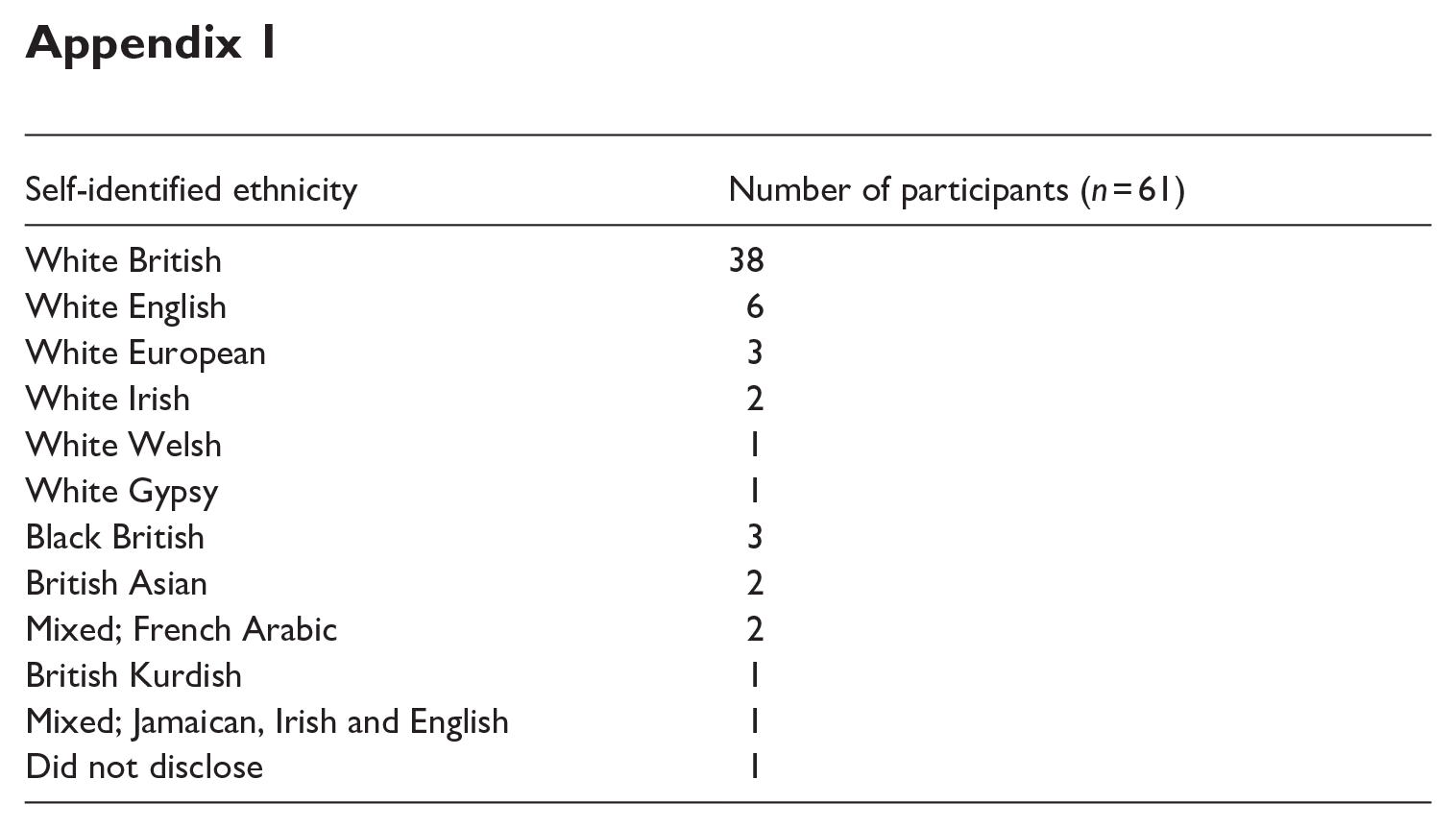
| Self-identified ethnicity | Number of participants (n = 61) |
|---|---|
| White British | 38 |
| White English | 6 |
| White European | 3 |
| White Irish | 2 |
| White Welsh | 1 |
| White Gypsy | 1 |
| Black British | 3 |
| British Asian | 2 |
| Mixed; French Arabic | 2 |
| British Kurdish | 1 |
| Mixed; Jamaican, Irish and English | 1 |
| Did not disclose | 1 |
Acknowledgements
The authors thank everyone who kindly gave up their time to share their experiences with them; their voices matter. They also thank Dan and Roberta, as well as The Oakdale Trust for their support with the research, and for the reviewers for their helpful comments and suggestions.
Declaration of Conflicting Interests
The author(s) declared no potential conflicts of interest with respect to the research, authorship and/or publication of this article.
Funding
The author(s) disclosed receipt of the following financial support for the research, authorship and/or publication of this article: This research was funded by The Oakdale Trust.
