




Abstract
Refugee and migrant women in prison are likely to have experiences of trauma and gender-based violence, which shape their pathways to prison and impact their experiences in prison. This systematic review analyses the findings of qualitative studies to gain a deeper understanding of the experiences of migrant and refugee women before and during imprisonment. The review was guided by the Preferred Reporting Items for Systematic Reviews and Meta-Analyses statement (PRISMA). A systematic search of four academic databases, ProQuest Central, Taylor and Francis Journals, SAGE Journals and APA PsycInfo and web and citation search was carried out between April and October 2022. The search dates for identifying literature were from September 2001 to September 2021. The review’s search strategy identified 3208 articles from 4 databases and 9 studies from web and citation search, of which 11 met the inclusion criteria for the review. Quality appraisal was conducted using the Critical Appraisal Skills Programme (CASP). Four analytic themes were identified that detail refugee and migrant women’s experiences before and during imprisonment: women’s pathways to imprisonment; health care experiences; intersectional identities and women’s agency in the context of prison experiences. The findings suggest that the current systems of incarceration fail to reflect the complexity of women prisoners’ racial and ethnic backgrounds. Thus, there is a need for a greater understanding of refugee and migrant women’s experiences to promote better institutional and community support for women before and during prison to eliminate their pathways to the prison. There have been a few studies with a focus on refugee and migrant women in prison. This is an area which lacks focus in terms of both research and intervention, and this review will make an important contribution in this regard.
Introduction
The past two decades have witnessed a substantial increase in the number of women being incarcerated globally (Morgan, 2019). Since 2000, the number of women incarcerated has increased worldwide by approximately 53% (Walmsley, 2017). Although women’s prison populations differ internationally, refugee and migrant women represent a rapidly growing proportion of the number of women specifically in the prisons of Europe and the United States (Zinn et al., 2016). In an era where carceral experiences are increasingly racialised (Wacquant, 1999) and feminised (Kruttschnitt and Gartner, 2003), this review focuses on the pre-prison experiences of refugee and migrant women, including their experiences of border crossings, and their subsequent experiences within the prison system.
This review is situated within the border criminology scholarship that examines the intersections between migration, border control and criminal justice, where inequities shaped by gender, racial and ethnic disparities remain under-explored (Bosworth et al., 2018; Canning, 2017; Mehta, 2018). These intersections give rise to intricate inequalities and a ‘dynamic system of racial and ethnic disparities’, which are under-theorised and under-researched in both theoretical and empirical terms (Bosworth et al., 2018: 3). Border criminology has highlighted women’s experiences of policing, surveillance, detention and imprisonment in the context of cross border mobility (Bosworth and Kaufman, 2011; Canning, 2017), but with little attention to its connections with gendered pathways that force women to migrate, particularly violence against women (Segrave, 2021).
Gender and racial inequalities are inherent not only in the societal and cultural norms but also in the security ideology of bordering processes and practices of state governance (see Kurwa and Gurusami, 2022). This is best illustrated in the case of migrant and refugee women moving across borders and experiencing imprisonment, which further exacerbates their vulnerabilities and marginality. For example, throughout a significant part of the 20th century, poor, working-class and migrant Latin American and Asian women were the most vulnerable to exclusion and deportation within the United States immigration context; they were constructed as ‘criminal’ and ‘terrorist’ threats to the country (Chavez, 2008; Hondagneu-Sotelo, 1995, 2013). Culturally and Linguistically Diverse (CALD) women in Australian prisons have also been depicted as the ‘forgotten’ and ‘silent’ few (Easteal, 1992; Kilroy, 2003), denoting both the lack of studies related to them and their exclusion, isolation, discrimination, stigmatisation and marginalisation within the prison system (Centre for the Human Rights of Imprisoned People, 2010).
Feminist criminology scholarship on women’s pathways to imprisonment has mapped the gendered ways in which discourses of criminalisation are shaped and the experiences that lead women into the criminal justice system (see Cherukuri et al., 2009; Daly, 1994; Owen et al., 2017, Rowe, 2012). This scholarship has, however, been limited in its focus on refugee and migrant women. Similarly, studies focussing on women’s experiences within prison (Bosworth, 2000; Giallombardo, 1966; Kruttschnitt and Gartner, 2005, 2008; Owen, 1998; Wright and Cain, 2017) are limited by ‘methodological nationalism’ (Wimmer and Glick Schiller, 2002), where intersections of national differences and experiences of imprisonment are often overlooked. For instance, a recent systematic review by Bright et al. (2022) provides an overview of women’s experiences of prison-based healthcare engagements and outcomes, but it does not consider racial, ethnic and national differences. Consequently, in the context of the rising number of refugee and migrant women incarcerated globally (Matos, 2016; Zinn et al., 2016), the specificities of their marginalised and underrepresented positions and the limited research in this field, it is important to focus on their experiences before and during imprisonment. Drawing on different socio-political and geographical contexts, this review thematically analyses findings from qualitative research conducted with refugee and migrant women in prisons to gain a deeper understanding of their experiences from their own perspectives. 1
Methods
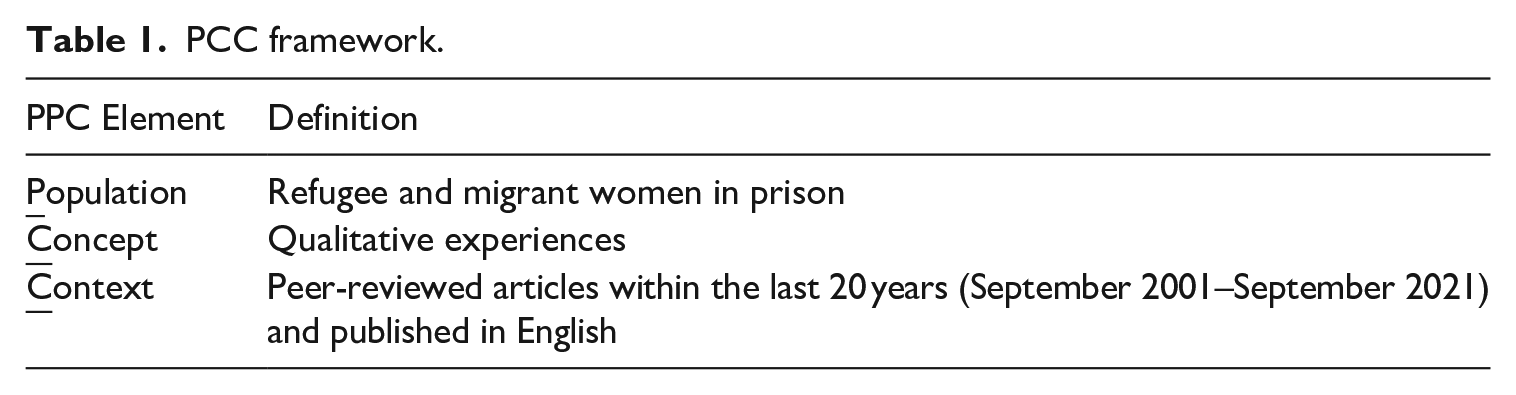
This systematic review is reported in accordance with the preferred reporting items for systematic reviews and meta-analyses statements (PRISMA) (Page et al., 2020). The review protocol is registered with the International Prospective Register of Systematic Reviews (PROSPERO) (CRD42022355637). A population, concept and context (PCC) framework (Table 1) was used to guide the selection of terms used in the search strategy and to formulate the following research question:
RQ1. What are refugee and migrant women’s pathways to and experiences in prisons?
PCC framework.
Search strategy
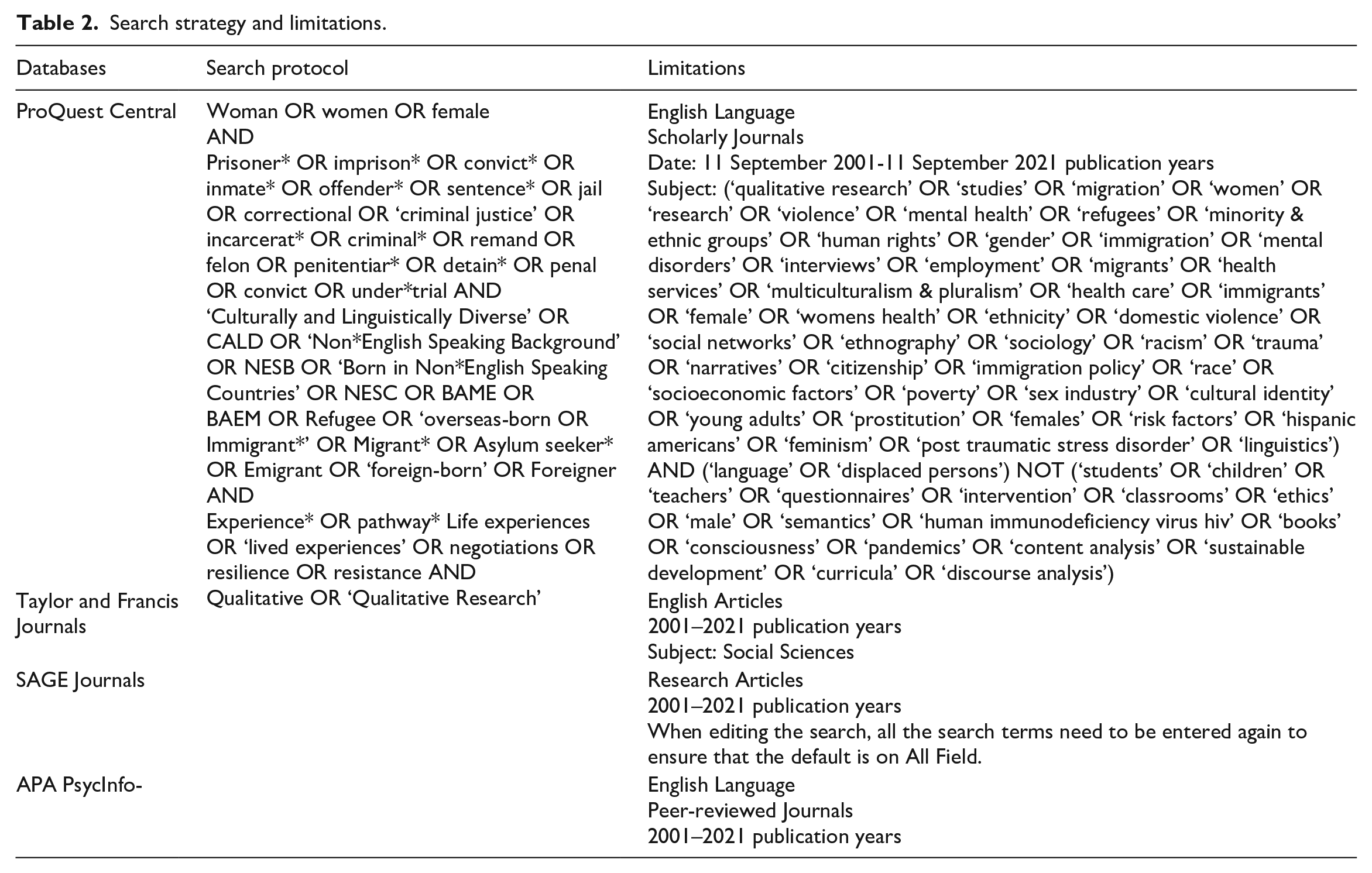
A systematic search of four academic databases, ProQuest Central, Taylor and Francis Journals, SAGE Journals and APA PsycInfo, web and citation search was conducted between April 2022 and October 2022. We conducted a thorough search across an extensive array of databases, encompassing both our selected databases and others such as Project Muse, Scopus, PsycArticles and Wiley. The final selection of the four databases was based on factors such as subject relevance, alignment with the study’s inclusion and exclusion criteria and overlap between databases. For instance, Project Muse was excluded due to its abundance of studies predating 2001. For online database searches, the terms of the search protocol were searched as combined strings using Boolean operators (Table 2). A search of websites and the reference lists of included databases’ articles was conducted to maximise the yield of relevant papers. Studies were restricted to peer-reviewed journal articles in English, published between 11 September 2001 and 11 September 2021. There was no restriction on geographical origin owing to a dearth of research in this subject area.
Search strategy and limitations.
Inclusion and exclusion criteria
All the studies obtained from the search were reviewed and assessed for eligibility. The studies included are (1) peer-reviewed journal articles published in English between 2001 and 2021 and (2) qualitative studies that focused on women who had been in prisons and with a history of border crossing in any country or study location. This time period was selected because of the rise in crimmigration policies and practices (Stumpf, 2006) globally after the 9/11 tragedy in the United States. The focus on qualitative studies is aligned with the aim of understanding refugee and migrant women’s experiences. Mixed method studies were included if there was a qualitative component to the same. Given that this systematic literature review extends over two decades and spans global boundaries, the difficulties linked to the accessibility and standardisation of grey literature add complexities to the processes of verification, source identification and evidence synthesis. To mitigate any potential concerns regarding validity and replicability of results, the team opted to exclusively include peer-reviewed articles. The studies excluded were: (1) studies focused solely on women who had not been to prison; (2) review articles, commentaries, book chapters and conference papers; (3) studies not focusing on women’s experiences in prisons; (4) studies not focussing on women who have crossed borders and (5) quantitative studies. All searches and outcomes were stored using an EndNote library.
Study selection
The initial review of studies resulting from the database search was conducted by one author (AA), who removed duplicates and reviewed titles and abstracts for eligibility. This was followed by a collaborative peer review process. Weekly team meetings were held to critically discuss and evaluate studies for eligibility based on their titles and abstracts. Based on the discussions in these meetings, the author (AA) conducted a second search to ensure a comprehensive review of all studies for eligibility and to avoid any potential limitations. Full-text versions of all remaining potentially eligible articles were retrieved and independently screened, by two authors (RM and GD), against eligibility criteria. Two authors (AA and WP) cross-checked the reference lists of the selected articles (via databases and web search) to identify any relevant studies. Any dilemma regarding the eligibility criteria of individual studies was resolved by discussion between the four authors. Eleven full-text peer-reviewed published articles met the inclusion criteria and were included in this systematic review. See Figure 1 for the flowchart of the search strategy and data extraction process.
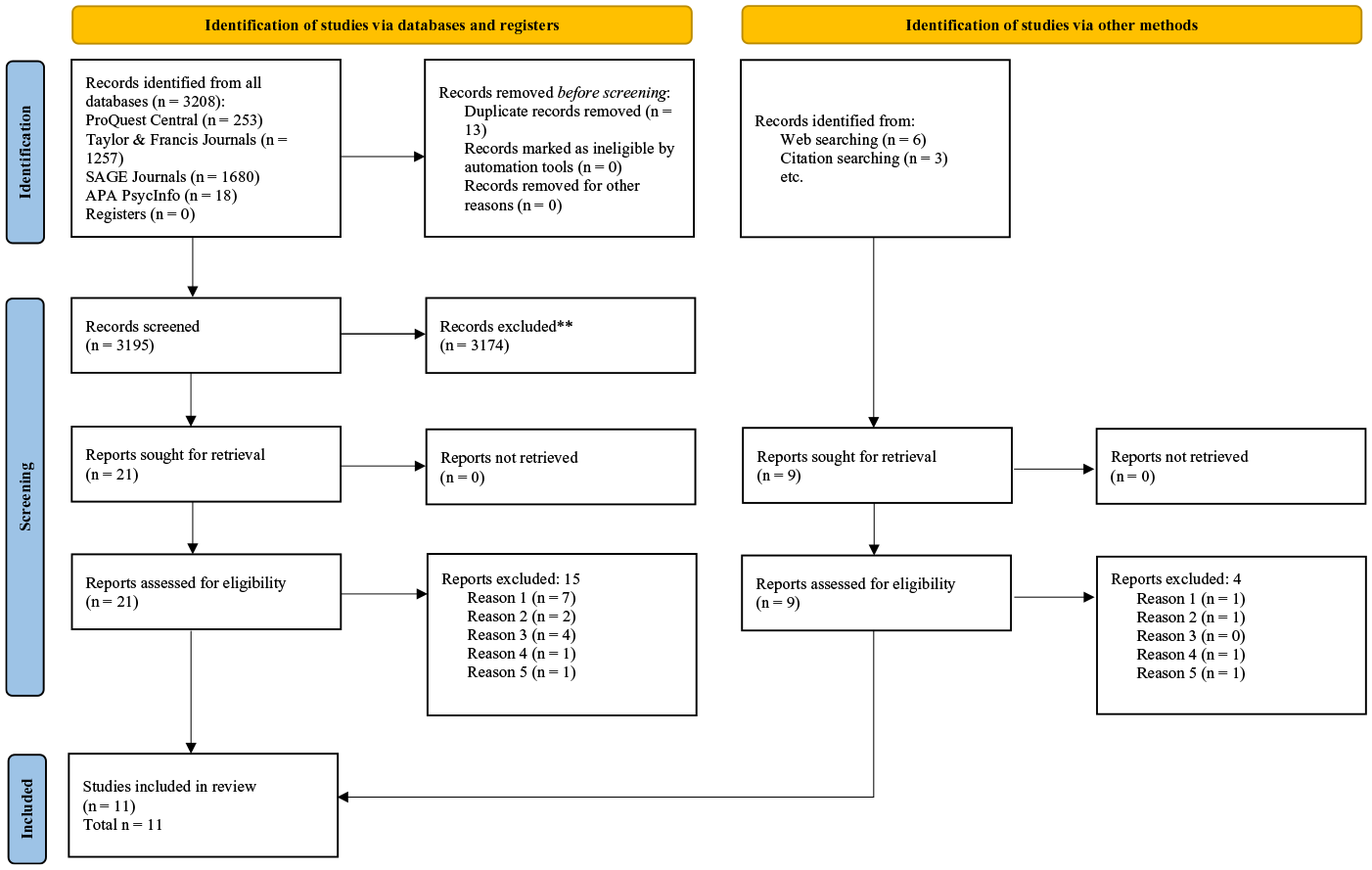
PRISMA 2020 flow diagram.
Quality appraisal
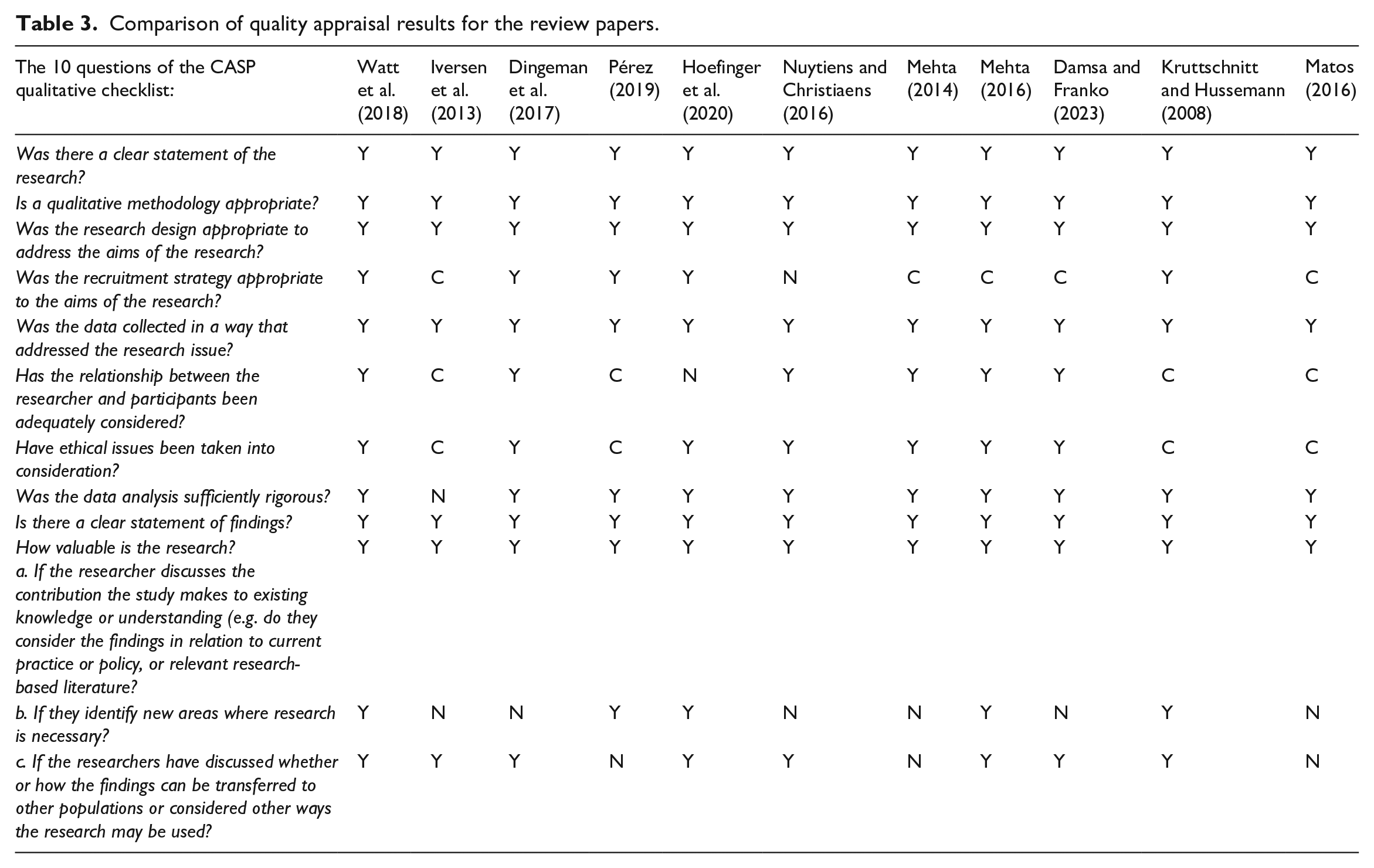
Quality appraisal of the included studies was independently undertaken by two reviewers (RM and GD) using the Critical Appraisal Skills Program (CASP) (2018) Qualitative Checklist to evaluate the methodological quality, rigour, trustworthiness, relevance and results. This tool contains 10 questions rated as ‘Yes’, ‘No’ or ‘Can’t tell’ responses. The quality weightings of the included studies (Table 3) were considered when reporting and discussing the results.
Comparison of quality appraisal results for the review papers.
Data extraction and analysis
A Microsoft Excel data extraction form was developed and piloted for extracting information from each study. This included author, year, country of origin, study aim, key themes, recruitment methods, sample and population characteristics and findings. To develop a robust and meaningful review, two authors (AA and RM) conducted a thematic analysis of the selected articles using Braun and Clarke’s (2006) six-step method of data familiarisation; generation of initial codes; generation of themes; review of potential themes; definition and naming themes and, finally, producing the final analysis with reference to the review question.
Findings
Search outcomes and study characteristics
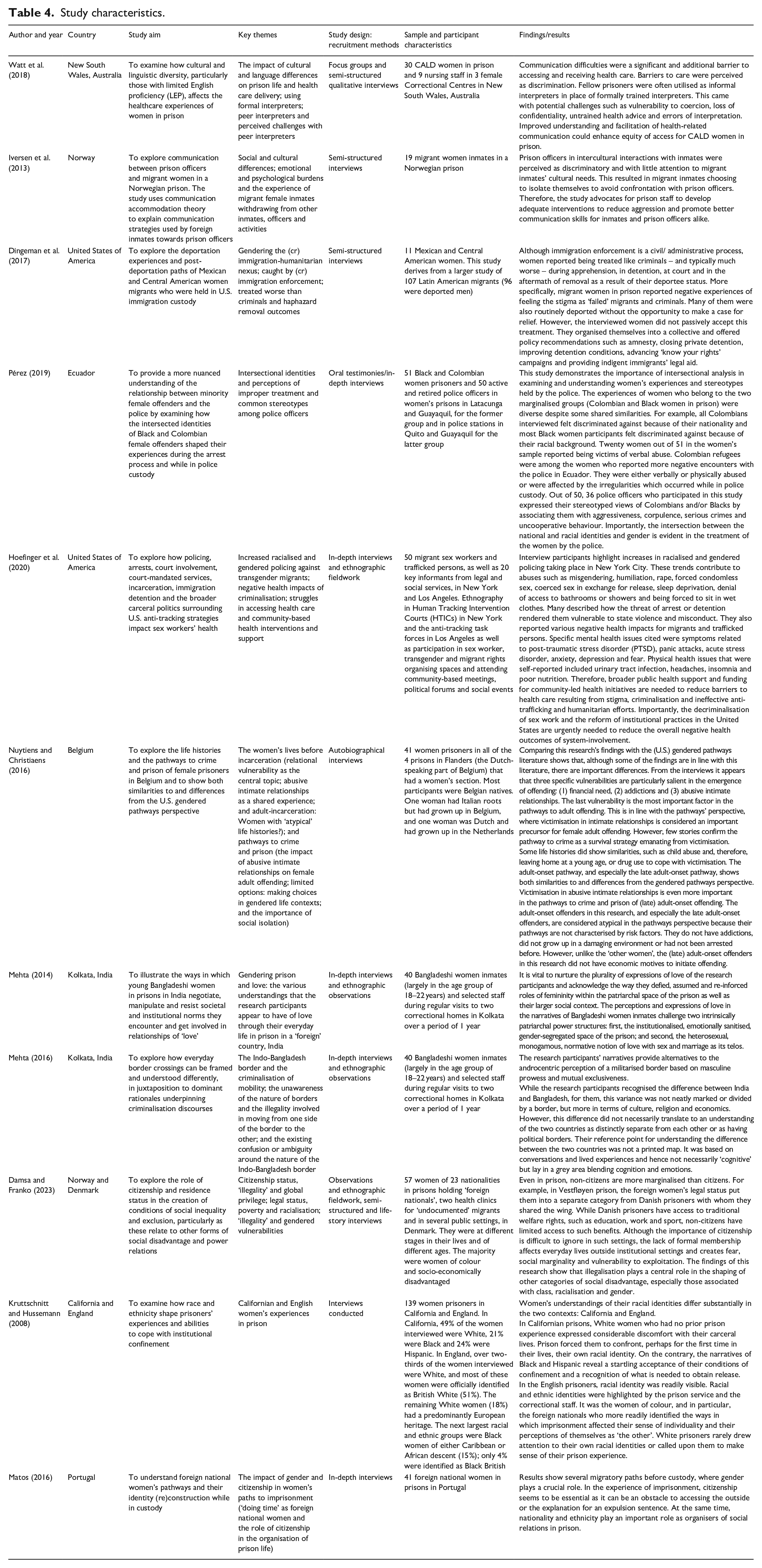
The number of studies that identified study selection against the eligibility criteria and reasons for exclusion is depicted in Figure 1. The search strategy yielded 3208 studies from 4 databases and 9 studies from web and citation searching. After removing duplicates (n = 13), 3195 studies were retained for the title and abstract screening. A total of 21 citations from the databases and 9 citations from web and citation searching met the eligibility criteria for full-text screening, from which a final total of 11 papers were eligible for this review. Table 4 presents a summary of the characteristics of the 11 included studies that were eligible for this review.
Study characteristics.
Quality of studies
Overall, the body of evidence was of mixed quality, and the results of the methodological quality assessment are outlined in Table 3. The research statement of all studies was clear. In five of the studies included, the positionality of the researchers was either explored at a preliminary level or unknown (Hoefinger et al., 2020; Iversen et al., 2013; Kruttschnitt and Hussemann, 2008; Matos, 2016; Pérez, 2019; Watt et al., 2018). Although the studies provided variable descriptions of the data collection methods, six of the studies had only basic information about the data analysis processes (Damsa and Franko, 2023; Hoefinger et al., 2020; Matos, 2016; Mehta, 2014, 2016; Pérez, 2019). The presentation of findings in the papers did, however, reflect the rigour of analysis. Similarly, the recruitment strategies were not clearly mentioned in five of the studies, but the research participants approached were aligned with the research aims (Damsa and Franko, 2023; Iversen et al., 2013; Matos, 2016; Mehta, 2014, 2016). The recruitment strategy for Nuytiens and Christiaens’ (2016) study excluded some women on the basis of being mentally ill or for reasons of ‘security, emotional stability or limited communication skills’ (p. 198). Given the focus of the study on women’s gendered pathways to prison, this group would have been crucial for inclusion as they are excluded more broadly within society as well. The correlations between the findings and the current policies were explicit in five studies (Damsa and Franko, 2023; Dingeman et al., 2017; Hoefinger et al., 2020; Kruttschnitt and Hussemann, 2008; Nuytiens and Christiaens, 2016).
We acknowledge that there are limitations in this checklist method of quality assessment as it adheres to a normative structure and style of reporting about research and does not take into consideration the criticality, creativity and differences in writing styles in the global North and South. Most of the studies are carried out in challenging political, policy and institutional contexts. The rigour and innovation in methodological approaches are often not adequately highlighted in the articles but are nonetheless reflected in the depth of the narratives of the women interviewed. The studies also contribute to an underdeveloped area of scholarship and the ways in which they map the field’s needs to be acknowledged beyond the limitations of the tabular representation.
Four analytic themes
Four main themes were identified as a result of the thematic analysis:
Women’s pathways to imprisonment;
Health care experiences;
Intersectional identities; and
Women’s agency in the context of prison experiences.
Women’s pathways to imprisonment
Refugee and migrant women’s narratives in the different studies highlighted the structural and institutional barriers that shaped their overall well-being and pathway to prison. These barriers encompassed a wide range of issues, including the colliding of crimmigration laws with humanitarian principles leading to a paradox of protection and disregard for migrant women under the law (Dingeman et al., 2017); the intersection of social disadvantages created by race, gender, class and ethnicity with citizenship status (Damsa and Franko, 2023; Kruttschnitt and Hussemann, 2008; Matos, 2016); sexual humanitarian anti-trafficking interventions that lead to the criminalisation of sex workers (Hoefinger et al., 2020) and androcentric paradigms of state sovereignty and border control (Mehta, 2016). Some of the studies refer to the histories of colonisation and slavery that compel women to migrate and create precarity which eventually shaped their pathway to prison (Damsa and Franko, 2023; Hoefinger et al., 2020; Kruttschnitt and Hussemann, 2008; Matos, 2016; Mehta, 2016).
In addition to these, abusive relationships with caregivers and/or intimate partners created multi-layered vulnerabilities for women, encompassing physical, emotional and sexual aspects, at the individual, relational and societal levels, often leaving them impoverished and trapped in cycles of drug and alcohol addiction (Nuytiens and Christiaens, 2016). In some cases, social isolation played a critical role, as the absence of a supportive social network led them to ‘choosing’ the ‘delinquent path’ and ‘criminal path’ (Nuytiens and Christiaens, 2016: 206).
Therefore, inequalities and exclusion tend to precede migrant women’s imprisonment (Damsa and Franko, 2023; Matos, 2016; Nuytiens and Christiaens, 2016). Importantly, the impact of gender relations and citizenship status on foreign national women’s trajectories to imprisonment is evident (Matos, 2016). Foreign national women described migratory paths before prison as acts of escaping from violent relationships, seeking better health care for unwell children and reuniting with husbands or family members (Matos, 2016). They also reported instances of discrimination during childhood and adulthood (Matos, 2016). Such conditions and experiences of discrimination resulted in migrant women not achieving education or getting employment in the host country, experiencing the constraints on their life choices and being caught up in networks of human trafficking and international drug trade (Damsa and Franko, 2023; Matos, 2016).
Health care experiences
Four of the studies made explicit the difficulties and barriers that refugee and migrant women experience in seeking to access and receive health care in prisons and immigration detention settings (Damsa and Franko, 2023; Hoefinger et al., 2020; Iversen et al., 2013; Watt et al., 2018). Each of these studies highlighted the struggle for women to access confidential, unbiased and supportive health care. Communication difficulties were reported as the most significant barrier to health care for CALD women in prison in Australia. Women from CALD backgrounds, especially women with limited English proficiency (LEP), reported difficulty communicating in English and perceived racism and discrimination from prison staff ‘to be the main cause of disrupted health care’ in everyday prison life (Watt et al., 2018: 1161). Some women reported accessing formal interpreters, but there were concerns about the accuracy of formal interpreters, especially in their medical interpretations (Watt et al., 2018). Many women reported not being offered a formal interpreter and not knowing this service was available (Watt et al., 2018). Although peer interpreters were preferential to some women, there were concerns about the lack of confidentiality and the vulnerability of using private information against women with LEP (Watt et al., 2018). Similarly, migrant sex workers and trafficked women in the United States reported clear anti-migrant attitudes from guards ‘who would deride and deny urgent health care by claiming to not understand the detainees on the basis of language’ (Hoefinger et al., 2020: 14).
Isolation was another substantial barrier that CALD and migrant women experienced in accessing health care in prison (Iversen et al., 2013; Watt et al., 2018). Some migrant prisoners chose isolation or withdrawal as a solution to avoid conflict, but isolation often results in being ‘more vulnerable or susceptible to poor health and possibly reduce their chances to rebuild their lives after release’ (Iversen et al., 2013: 75). Stigma related to sex work and drug use, gender and/or racial identity and immigration status are also barriers to accessing quality, unbiased health care (Hoefinger et al., 2020). Migrant women, sex workers and people with experiences of trafficking in Hoefinger et al.’s (2020) study described the correlation between anti-trafficking laws and practices that included policing, arrest and incarceration in the United States and negative health consequences. Specific negative mental and physical health outcomes cited were related to post-traumatic stress disorder (PTSD), sexual violence and derision by police and guards, acute stress disorder, stigma and prejudice against sex workers and transgender people of colour, urinary tract infection, headaches, insomnia and poor nutrition (Hoefinger et al., 2020).
Intersectional identities
Most of the studies demonstrate the importance of intersectional analysis in examining and understanding foreign national or noncitizen women’s experiences at the time of police arrest and while in prison (Damsa and Franko, 2023; Dingeman et al., 2017; Hoefinger et al., 2020; Iversen et al., 2013; Matos, 2016; Pérez, 2019). Based on the results of these studies, it is suggested that prison should be rethought from a lens of gender and citizenship. Migrant women in prison reported that communication problems are not simply a lack of language skills (Iversen et al., 2013). Communication problems were triggered by discriminatory attitudes and negative prejudices of some of the prison officers as some migrant women reported being placed in solitary confinement and never given any reason by the prison staff (Iversen et al., 2013). Out of 51 women in the sample of Pérez’s (2019) study, 45 complained about the behaviour of the police. Women believed that stereotypes about their nationality, social class and race were reflected in the regular suspicion and stigma attached to them and the constant police surveillance they were subjected to (Pérez, 2019). Women also illustrated how gender intersects with nationality, ethnicity and migration status, with labels such as ‘the European foreigner’, ‘the African’, or ‘the Colombian’ women used in the prison, to shape the structure of prison relations, both between prisoners and between prisoners and staff (Matos, 2016: 361).
The intersection between migration, border control and ‘illegality’ created disparities, as described by some of the women whose fear of deportation is exacerbated because of abusive relationships and gendered repercussions they face in their country of origin (Damsa and Franko, 2023). Women also demonstrated how their vulnerability as migrants waiting for declarations of immigration status is complicated by legal charges such as a child neglect charge, for example (Dingeman et al., 2017). In addition, several migrant transgender women participants reported poor access to physical and mental health services, ‘derision . . . and shockingly demeaning conditions’ during incarceration (Hoefinger et al., 2020: 13).
Women’s agency in the context of prison experiences
Agency was present in the way several migrant women prisoners described making decisions to escape violent relationships and migrate (Matos, 2016). Agency was also reflected in the narratives of women of colour who drew less on their own racial identities and more on how they were managing to cope with the conditions of institutional imprisonment and the separation from the outside world (Kruttschnitt and Hussemann, 2008). Many foreign national and racial minority women prisoners reported avoiding conflicts with other prisoners, recognising what is needed to obtain release without incurring additional difficulties and deeply reflecting on who they were (Kruttschnitt and Hussemann, 2008). To highlight instances of support, migrant women prisoners reported that ‘some prison officers were concerned with the difficulties foreign nationals faced . . . [and] how other inmates at times provided them with food and clothing or offered to be hosts in case they were granted day parole’ (Matos, 2016: 362).
Although migrant and foreign national women prisoners’ experiences are characterised by the violence/injustice of crimmigration, criminalising labels, neglect by the state and coercive practices, women often resisted through narratives and activism (Dingeman et al., 2017). Far from passively adopting the (re)production of female victimhood, women in Dingeman et al.’s (2017) study, spoke from ‘the perspective of a mother, wife, or activist than a victim’ (p. 300). Their acts of resisting the deportation system and immigration custody included ‘sharing testimonies, joining solidarity groups, participating in research, and educating others’ and offering policy recommendations such as ‘closing private detention, improving detention conditions, eliminating bars on re-entry, advancing “know your rights” campaigns, and providing indigent immigrants legal aid’ (Dingeman et al., 2017: 310–311). Young Bangladeshi women, who had migrated without legal papers to India and had subsequently been imprisoned, also resisted the normative gendered societal and institutional narratives and criminalisation discourses by getting involved in a multitude of different ‘love’ relationships (Mehta, 2014). Instead of focusing on narratives of violence, many young foreign women prisoners spoke about love as the possibility of recasting a ‘new’ self in a prison in a foreign land (Mehta, 2014). They found multiple ways to connect with their lovers (male inmates, female inmates/‘sisterly love’ and both) through, for example, writing love letters and exchanging glances of affection with each other when going to court with male prisoners in the same police vans (Mehta, 2014).
Discussion
To the best of our knowledge, this represents the first systematic review focusing on qualitative research about the pathways and experiences of refugee and migrant women in prison. This review draws on as well as underscores the research gaps in the fields of border criminology and feminist criminology. It incorporates 11 studies conducted over 2 decades, drawing out rich, in-depth narratives from these women. These studies offer valuable insights from various global perspectives, encompassing the United States, United Kingdom, Portugal, Ecuador, Denmark, Norway, Australia, India and Belgium. However, barring a few notable exceptions (Mehta, 2014, 2016; Pérez, 2019), there is a noticeable dearth of focus on refugee and migrant women in prison environments within the Global South.
Research on women’s pathways to prison has shown that women in prison are characterised by child and adult experiences of victimisation, social inequalities and intersectional power structures (Batchelor, 2005; Brown, 2006; Crenshaw, 1989; Girshick, 1999; Simpson et al., 2008). Qualitative studies reveal how certain discourses, which stereotype and construct criminal identities, are intricately embedded within intersectional and marginalised social identities, defined along the lines of race, class and gender (Brunson and Miller, 2006; Kessler and Dimarco, 2013). In line with the gendered pathways literature, findings from this review reveal multilevel vulnerabilities and complex intersectional marginalisation vis-à-vis citizenship, race, ethnicity, gender and class (Damsa and Franko, 2023; Matos, 2016; Nuytiens and Christiaens, 2016). However, one study does not fully fit this one-sided accumulative vulnerability since childhood (Nuytiens and Christiaens, 2016). Nuytiens and Christiaens (2016) assert the positive childhood that at least 15 interviewed women experienced before they reached adulthood. Atypical to the literature on women in prison, the life courses of these adult-onset women in prisons reveal only one vulnerability: abusive intimate relationships (Nuytiens and Christiaens, 2016). There are, however, limitations to this understanding as internalisation of gendered norms may shape women’s understanding of their childhood experiences. Gendered norms and social control create precarities for women, which are layered and may not be easily identifiable. The precarities are further exacerbated by circumstances created by the intersection between migration, border control and criminal justice systems in the host countries. The review highlights the complex ways in which statist narratives of protection and criminalisation marginalise women through a display of benevolence, discrimination, neglect or arbitrary violence (Dingeman et al., 2017).
Intercultural communication, English-language barriers and discriminatory attitudes contribute to poor health outcomes among CALD, migrant and noncitizen women in prisons (Damsa and Franko, 2023; Hoefinger et al., 2020; Iversen et al., 2013; Watt et al., 2018).
This review underscores the parallels in experiences of migrant, refugee, CALD and noncitizen/foreign national women in accessing quality health services within prison systems across various global contexts, notably in countries such as Norway, Denmark, Australia and the United States. For instance, in Norway, despite legal entitlements to welfare services such as the European Health Insurance Card, ‘foreign nationals’ and ‘undocumented’ migrants frequently face obstacles in accessing these services (Damsa and Franko, 2023). Furthermore, reports from Australian women’s prisons bring to light the significant communication hurdles faced by women with LEP. Predominant concerns include the lack of adequate interpreter services, a dearth of comprehensive information about prison operations and legal rights and restricted access to religious practices and guidance from religious ministers (Centre for the Human Rights of Imprisoned People, 2010). These findings have implications for the management of communication complexities, the development of support services, the need for cross-cultural counselling and structural changes in institutional practices of the correctional services to eliminate racism and to enable better health access for migrant, refugee, CALD and noncitizen/foreign national women in prison.
The impact of intersecting marginalised identities, particularly race, nationality and gender, on women’s experiences prior to and in prison was extensively mentioned in 7 out of the 10 studies, establishing the particular vulnerabilities experienced by refugee and migrant women (Damsa and Franko, 2023; Dingeman et al., 2017; Hoefinger et al., 2020; Iversen et al., 2013; Matos, 2016; Mehta, 2014; Pérez, 2019). Experiences of racialised, ethnicised and classist hierarchies and stereotypes in prisons and immigration custody, led to further violence, deterioration of women’s health, vulnerability and exclusion. The intersection of marginalised identities is often exacerbated on gendered grounds. The marginalised groups of trans-migrant women of colour, sex workers and LGBTQIA+ communities revealed the intersectional forms of stigma around sex work, sexuality and sex-gendered discrimination in the enforcement of sexual humanitarian policies and interventions (Hoefinger et al., 2020). Consequently, more qualitative research needs to be conducted on the experiences of women prisoners with intersecting marginalised identities.
As a direct result of being marginalised and in prison, many migrant, refugee, CALD and foreign national women prisoners are often portrayed as passive, ‘victims’, exploited or/and vulnerable. However, this review reveals the various ways in which women exercise their agency through contesting the heteronormative premise of prisons and border management policies and practices, challenging ideas of victimhood and forming grassroots collectives. Race and ethnicity had varying impacts on the lived experiences of women in prison and their abilities to cope with the different types and periods of confinement (Kruttschnitt and Hussemann, 2008). Being used to dealing with a disadvantaged social status, it was not uncommon for foreign national women prisoners to cope with adversities in their carceral lives (Kruttschnitt and Hussemann, 2008). Nevertheless, in the context of social and structural barriers, women attempt to have a choice of where and how their lives will develop and gain some control over their lives after prison (Matos, 2016). Although migrant women were consistently deported without the opportunity to explore avenues of relief, they resisted the (re)production of female victimhood by speaking against the government and male violence (Dingeman et al., 2017). Moreover, the perceptions and expressions of love that young foreign national women prisoners expressed – towards men and women in prison – mark a dynamic way of resisting patriarchal power and the heterosexual normative notion of love (Mehta, 2014).
Conclusion
This systematic review underscores the pressing necessity for gaining a deeper comprehension of the diverse experiences of women in prisons, particularly those from marginalised racial and ethnic backgrounds. It advocates for a critical re-evaluation and transformation of their conditions of confinement, shedding light on the intricate interplay between incarceration and the politics of racial identities. Furthermore, the review has brought to the forefront a crucial need for additional research that locates the nuanced pathways that lead migrant, refugee, CALD and foreign national women to prison. In addition, these studies should also explore their distinctive experiences within the confines of prison. By addressing these gaps in research, we can foster a comprehensive understanding and contribute to the development of informed and equitable policies and practices to better support refugee and migrant women and prevent their incarceration.
Since refugee and migrant women are typically marginalised according to race, gender, sexuality and citizenship status, this review has clearly demonstrated the salience of intersectional approaches to examining and understanding women’s experiences in prison. Despite often having histories of trauma and vulnerabilities, migrant, refugee, CALD and foreign national women prisoners present narratives of agency, self-assertion and resistance throughout their mobility trajectories. These acts of agency provide an insight into the workings of power exercised by the state and its punitive bordering policies and practices that manifest themselves in crimmigration and/or humanitarian approaches. Experiences of women, who are at the receiving end of these punitive bordering policies and practises, need to be acknowledged, heard and responded to both at a global and state-specific level. Institutional and community support should be garnered to better support women crossing borders so that they can access and inhabit social worlds underpinned by principles of equity and justice. Highlighting the significance of offering such support for these women is crucial for enhancing their well-being and cultivating their pathways post-release from prison. Such an approach not only benefits individuals but also fosters long-term positive outcomes for communities at large.
Footnotes
Declaration of Conflicting Interests
The author(s) declared no potential conflicts of interest with respect to the research, authorship and/or publication of this article.
Funding
The author(s) received no financial support for the research, authorship and/or publication of this article.
