




Abstract
There are an increasing number of cyber-vigilante groups in the United Kingdom who use the Internet as a tool for regulation and retributive justice. The policing of child sexual predators by citizen groups outside of law enforcement, commonly termed ‘paedophile hunters’, has evoked a range of responses among media commentators and the general public. This article explores public perceptions of vigilante justice in the United Kingdom via an online survey to assess the extent to which they are considered retributive. It focusses on the moral justice imposed by such groups and interrogates the relationship between retribution and doxing (the ‘naming and shaming’ tactics which are commonly actioned by paedophile hunting groups). The findings highlight three dominant responses to cyber-vigilantism: (1) public support for cyber-vigilantism; (2) doxing as a human rights issue; and (3) a lack of faith in the criminal justice system. This article is consequently concerned with the merits and drawbacks of retributive justice when led at a community level and critically examines perceptions of this form of citizen-policing.
Cyber-vigilantism has captured public attention in recent years through the rise of what have been dubbed online ‘paedophile hunters’ (Humberside Police, 2020). This contemporary form of vigilantism, which has also been termed digital vigilantism (Trottier, 2017), online shaming (Skoric et al., 2010), Internet vigilantism (Chang, 2018), digilantism (Stratton et al., 2016), hacktivism (Klein, 2015) and netilantism (Chang and Poon, 2017), has been the subject of increased media attention, largely due to the growth of digital communities and widespread use of social media. The aim of cyber-vigilante groups in this context is to police online spaces with the aim of weeding out paedophiles. To achieve this, members of cyber-vigilante groups pose as children online to lure out alleged offenders. After enough evidence is gathered, the cyber-vigilantes arrange to meet with the alleged offender with an aim to publicly expose them and hand them over to the police. Such meetings are often filmed or livestreamed to heighten feelings of shame and humiliation on the part of the alleged offender. The ability to like and share such content allows for wider members of the general public to participate in the digilantism, with ‘support for vigilante websites [reflecting] the popular appeal of activity such as online naming and shaming’ (Dunsby and Howes, 2019: 42). Publicly exposing paedophiles, via filming the initial meeting with them, is one of the dominant tactics used by cyber-vigilante groups. This is evidenced by the captioned videos and photographs shown on the Facebook pages of cyber-vigilante groups, such as Dark Justice, Wolfpack Hunters and Guardians of the North. Cyber-vigilantes arrange to meet with alleged offenders, who believe they are meeting with the child they have been speaking to online. The confrontations are then filmed (which can include live streaming to online social media platforms), and alleged offenders are detained by the cyber-vigilantes and handed over to the police.
This paper examines public perceptions of cyber-vigilante justice through data retrieved from an online survey of both quantitative and qualitative questions. Three spheres of cyber-vigilantism in the area of child sexual abuse are explored; policing, retribution and justice. Online naming and shaming continues to be an under-researched area in criminology, and it is thus essential that research aims to uncover public perceptions of ‘doxing’ (the act of publicly revealing private information via the Internet) as a means of achieving retribution and justice. This article starts by exploring existing literature on the sociologies of vigilantism and digital society. It then proceeds to examine the police response to cyber-vigilante groups, followed by an analysis of public perceptions of the motives and tactics of cyber-vigilante groups.
Vigilantes or concerned citizens?
Understanding cyber-vigilantism allows for existing definitions of vigilantism to be extended, contextualising them within contemporary digital landscapes. The term ‘vigilantism’ is of Spanish origin and, when taken literally, means ‘to stay vigilant’, often being used to refer to the work of a ‘watchman’ or ‘guard’. Johnston (1996: 232) has defined vigilantism as ‘a social movement giving rise to premeditated acts of force – or threatened force – by autonomous citizens, [with such acts focussing] upon crime control and/or social control, [aiming] to offer assurances (or “guarantees”) of security both to participants and to other members of a given established order’. Although of merit, older definitions such as these fail to incorporate the motives of cyber-vigilante groups in contemporary society. Johnston (1996) states that vigilantism must encompass the use or threatened use of force which is seldom a by-product of online vigilante activities (Smallridge et al., 2016).
Digitally mediated vigilantism allows for a ‘more profound transformation in societal participation [and] the weaponization of visibility, that is sharing the target’s personal details by publishing/distributing them on public sites (“doxing”)’ (Favarel-Garrigues et al., 2020: 188–189). Trottier (2017) has defined digital vigilantism as ‘a process where citizens are collectively offended by other citizen activity, and respond through coordinated retaliation on digital media platforms’ (p. 55). This article consequently applies Trottier’s (2017) definition of digital vigilantism to the work of online paedophile hunters and uses the term ‘cyber-vigilantism’ interchangeably with ‘digital vigilantism’ throughout. The emerging work of ‘digital criminology’ should also be noted here, as it seeks to downplay the dichotomy of online and offline criminal justice interventions. In similar style to Trottier’s (2017) definition, the behaviour of digital vigilantes is indeed comparable to offline vigilantes; the difference only lies in the tools utilised to achieve their goals. From this perspective, cyber-vigilantes are simply vigilantes, as defined in the traditional sense, armed with smartphones and computers. It is the behaviours of cyber-vigilante groups, alongside the impacts these behaviours have, that constitute the most important elements of understanding them. The online, or ‘digital’, part of their work merely provides the tools to achieve their objectives. This paper therefore recognises ‘the embedded nature of technology in our lived experiences of criminality, victimisation and justice . . . [alongside] the emergence of new technosocial practices of both crime and justice’ (Stratton et al., 2016: 27). The motives of cyber-vigilante groups are no different to the vigilantes that existed before the digital age; they merely have more tools at their disposal.
In terms of citizen-led justice, voluntary policing on the Internet has secured a growing body of the literature in recent years due to the increase of more mainstream voluntary action in the digital age. The rise in ‘responsibilization’ of crime prevention (see Garland, 1996; Whittaker and Button, 2020) has seen growing public concern to protect the vulnerable at a citizen-based level. Scambaiting, where Internet vigilantes pose as potential victims to lure in scammers, serves to waste the time, resources and energy of real scammers (Byrne, 2013). It does, however, differ from cyber-vigilantism, particularly in the form of paedophile hunters, as it does not conform to the weaponization of visibility that has come to be standardised in many cyber-vigilante efforts. As noted by Sorell (2019) ‘in scambaiting, digilantism seems to consist of weaponized humour and inconvenience rather than abuse’ (p. 156). However, regardless of the severity of retributive actions implemented, it is clear that it is ‘the recipe of a significant problem combined with the thin state response [that] has motivated some individuals to voluntary action’ (Button and Whittaker, 2021: 8). Although community activism in the form of retribution has indeed become more commonplace – and visible – due to the Internet and the many tools it provides, it is the methods of exposing and shaming online groomers that have become unique to paedophile hunting groups specifically (Frampton, 2022).
Further research has demonstrated that cyber-vigilantism as a typology of online self-justice (Loveluck, 2020) places emphasis on technology as a tool of citizen-policing and retribution (see Dunsby and Howes, 2019; Kosseff, 2016; Smallridge et al., 2016; Trottier, 2017). Cyber-vigilante groups in the form of paedophile hunters, however, do not exclusively rely on technology to reach their goal; technology is instead a tool which is utilised to police the Internet, identify offenders, gather evidence and arrange face-to-face meetings, known as ‘stings’. Upon a successful sting, where the alleged offender is confronted and detained by the cyber-vigilantes, law enforcement is then notified, and the alleged offender is taken away for questioning. Technology is utilised again during the sting to achieve the final goals of retribution and deterrence via ‘naming and shaming’ on online platforms.
The word ‘vigilante’ is rejected by many cyber-vigilante groups, such as Dark Justice, a two-man operation in Newcastle upon Tyne. They state on their website: ‘We’re not vigilantes who operate above the law, we’re concerned citizens who work closely with the police to help effect change and to keep our children safe’ (Dark Justice, 2021). Similarly, the cyber-vigilante group Guardians of the North acknowledge that some refer to them as a ‘vigilante group’, but they see themselves as carrying out a ‘public service’ due to the police being overworked and underfunded (Guardians of the North, 2021). Other cyber-vigilante groups describe themselves as ‘sexual predator hunters’ (Silent Justice, 2021) and a ‘community response to an epidemic of grooming in the UK’ (Wolfpack Hunters, 2021). It should be noted that paedophile hunting groups such as these fall under the category of ‘organised vigilantism’ and not ‘spontaneous vigilantism’ due to the meticulous collection of evidence they gather, alongside the established order they follow in their planned operations.
Motives: From security and ‘stings’ to ‘doxing’ and deterrence
It is important to understand the motives of cyber-vigilante groups to gauge how such motives reflect public attitudes towards paedophilia more broadly. On the surface, the motives of cyber-vigilantes sit under an altruistic umbrella (see Boyd et al., 2003; Fehr and Gächter, 2002), with members of paedophile hunter organisations appearing uninterested in personal gain and acting solely to protect the safety of children across the country. Feedback from members of the general public on cyber-vigilante groups’ social media channels demonstrate feelings of altruism towards the cyber-vigilantes. With responses being frequently positive, cyber-vigilantes are largely commended and respected for the work they do. There is, however, evidence of past trauma among some cyber-vigilantes, which suggests that personal motives, in terms of self-healing, may play a part in achieving their end-goals. Guardians of the North founder, Joe Jones, disclosed in an interview that the cyber-vigilantes selected to work in his group had all been personally affected by abuse, stating, ‘All the team members that I’ve chosen have all been affected by abuse in different ways, so they’re all in it for the right reasons’ (Jones, 2018).
There are underlying tones of moral philosophy and utilitarian reasoning (Mill, 1861) in the work of paedophile hunter groups. The ethos of the ‘greatest happiness of the greatest number’ as ‘the measure of right and wrong’ (Bentham, 1779) undeniably constitutes the main tenant of support for paedophile hunters. The social solidarity created by the actions of such groups is also evident, with online responses from the general public championing their work. It is clear, when it comes to matters of criminality, that offences against children sit at the top of the victim hierarchy, with paedophiles even being deplored among prison populations. As outlined by Ashenden (2002), ‘alongside this conception of childhood as a stage of innocence and vulnerability is the idea of the paedophile as a pervert, as a dangerous individual whose very identity threatens society and the individual’ (p. 199). To support cyber-vigilante groups, then, is to support the fight against society’s moral enemy. However, the biggest pornography website in the world, Pornhub, has revealed that the word ‘teen’ is a ‘consistent feature in its popular search terms’, with worldwide figures revealing it is ‘the fourth most searched for term in the US and the UK’ (Pegg, 2016). Public opposition to sexual advances against adolescents thus continues to symbolise a hypocrisy in this moral reasoning. It is concerning that there are public and private dichotomies of morality when it comes to the sexualisation of children.
For cyber-vigilantes, the security they provide by implementing ‘stings’ serves to relieve public fear. Not only are paedophile hunter groups detaining alleged offenders by handing them over to the police, but they are also publicly exposing them online which ‘gives back’ to communities in a way that traditional criminal justice cannot achieve. Punishment, in this context, is in the hands of the ordinary law-abiding citizen, with doxing acting as a cathartic tool where citizens purge society of those seeking to corrupt its most vulnerable foundations. This form of public condemnation and shaming produces a variety of effects, including ‘deterrence, identification, punishment [and] systematic change’ (Loveluck, 2020: 217). Public perceptions of rising crime levels can also be a contributing factor in support for cyber-vigilante groups, with the community-based efforts and ‘civilian policing’ (Sharp et al., 2008) implemented by such groups often receiving public support. Indeed, research has discovered a ‘strong relationship between public perceptions of procedural justice in the police and courts and levels of vigilantism’ (Osgood, 2014: 9).
The way in which many paedophile hunting groups achieve their own form of justice is highly retributive, with identification, confrontation and public naming and shaming symbolising a vengeful spectacle – a modern-day panopticon with a far-reaching watchtower. However, stings and doxing are not utilised by all cyber-vigilante groups due to their associated harms. For example, an online paedophile hunter known as ‘The Phantom’ quit his cyber-vigilante justice efforts in 2018, blaming the aggressive behaviour of vigilante groups; ‘my aim’, he said, ‘is to provide the evidence for the police and then it’s up to them and the courts what happens . . . I’m not there to judge the person. I don’t agree with the vigilante stuff’ (Richardson, 2018). The retributive justice delivered by some cyber-vigilante groups can thus produce a moral dilemma concerning the human rights of alleged offenders, the functionality of the justice system and wider public safety.
Stings and doxing are a delicate part of the retributive justice efforts of cyber-vigilante groups, as they consist of justice being solely in the hands of the cyber-vigilantes themselves (and their online supporters if they choose to livestream the confrontation), even if this is just for a short time. While they wait for the police to arrive on the scene, the cyber-vigilantes are controlling the situation alone, often having to make a citizen’s arrest if an alleged offender tries to escape. The use of cameras heightens the emotional response of the situation; not only is a person being confronted and accused of one of the most heinous crimes possible, this confrontation is also being filmed, sometimes livestreamed, for the world to see. The legal principle of presumption of innocence does not exist during the sting or doxing; the human rights of the alleged offender are a privilege cyber-vigilante groups often choose to deny them. Paedophile hunting groups have defended the need for stings and doxing, arguing that it provides retribution as a means of public compensation for a system that is failing; in many cases, suspects go on to be charged but are given suspended sentences, so no prison time is served. Furthermore, filming the confrontation acts as a form of insurance, evidencing that suspects have not been assaulted and ensuring group members have kept the suspect safe until the police arrive.
The fragility of sting and doxing processes can be seen in several cases, some of which have ended fatally. In one case, albeit a spontaneous as opposed to an organised operation, a paediatrician’s home was targeted and vandalised after ‘self-styled vigilantes confused the professional title with paedophile’ (Allison, 2000). Other cases have resulted in alleged offenders having physical or mental breakdowns. In the case of the cyber-vigilante group Guardians of the North, a sting filmed by the BBC for the documentary ‘Paedophile Hunters: The Rise of the Vigilantes’ (2019), showed an alleged offender collapsing after being confronted. ‘What should have been a routine “door knock”: of a suspected child groomer ended in disaster when the man was rushed to hospital in an ambulance after fainting in front of the cameras’ (Elsom, 2019). The emotional responses of alleged offenders have, in some cases, led to them taking their own life. ‘In 2013, Gary Cleary hanged himself in Leicestershire after being pursued by Letzgo Hunting, an online group that exposes suspected paedophiles’ (Trottier, 2017: 56); and his case is not an isolated one. According to media reports, Michael Parkes who was ‘snared by an Internet “paedophile hunter” killed himself days after police had questioned him’ (BBC News, 2014), Nigel Sherratt killed himself ‘two days after being confronted by online paedophile hunters’ (BBC News, 2019) and ‘at least eight men killed themselves in the UK (in 2019) after being labelled child sex offenders on social media by so-called paedophile hunters’ (Smythe and Nye, 2019). One case resulted in the cyber-vigilante group, Wolfpack Hunters, being banned from stings for 2 years due to physically assaulting the alleged offender by ‘punching and headbutting him’ (Lawrie, 2019). There is also the issue of copycat vigilantism, as was seen in the case of Darren Kelly, where a 16-year-old girl ‘had launched a “personal campaign” against paedophiles and had recruited friends to help’ (BBC News, 2016). Kelly, who thought he was meeting a woman and not a child, was stabbed to death by one of the youths recruited to the copycat vigilante gang; three out of the four copycat vigilantes on trial in this case were under the age of 18. It is thus clear that cyber-vigilante stings require extensive research by adults, clear evidence and non-physical confrontation to achieve their aims safely.
Although most stings do not result in physical violence against alleged offenders, such cases demand a deeper understanding of Johnston’s (1996) ‘use or threatened use of force’. Force in such instances may not be physically inflicted; it may be emotionally and mentally inflicted as part of cyber-vigilante groups objective to deliver retributive justice. Although the aims of cyber-vigilante groups tend to be met with admiration and understanding, the tactics they adopt can provoke feelings of unease, particularly in terms of the wider effects public naming and shaming can have on the alleged offender’s wider family, friends and associates.
Criminal justice responses to citizen-policing
The relationship between cyber-vigilantes and the criminal justice system continues to be a contentious one. The response of the police is instrumental to how cyber-vigilante groups’ tactics are perceived, both by the public and in academic research. Smallridge et al. (2016) argue that, when the actions of such groups are legitimised by law enforcement, they should not be considered vigilantes. However, where the support of law enforcement is not obtained, most likely during the early stages of such groups, they should be considered vigilantes. Cyber-vigilante groups can thus ‘drift between vigilantism and proactive citizenship’ (Smallridge et al. 2016: 63).
Research has noted the fragility of the relationship between vigilante groups and the police. Silke (2001) has situated the police as ‘involved in a hearts-and-minds struggle with vigilantes for the support of local communities’ (p. 132). In matters as delicate as paedophilia, the police’s discouragement of paedophile hunters could be mistaken for a weakened commitment to the cause. With public support for vigilantism often being associated with a lack of faith in the criminal justice system (Bateson, 2021; Legocki et al., 2020; Sharp et al., 2008; Silke, 2001), the relationship between paedophile hunting groups and the police is a fragile one.
Although some cyber-vigilante groups claim that, due to their efforts, several paedophiles have been convicted, the response of the police is usually focussed on discouraging groups from any involvement in justice-seeking. There was a brief deviation from this message in 2017, when media reports revealed that the police ‘may consider working with paedophile hunters’ (Press Association, 2017). Chief Constable Simon Bailey stated at the time, ‘we may consider working with these groups in certain instances, if it helps us protect children and we can manage the risks of their involvement’ (Police Professional, 2017). However, police responses since then have repeatedly advised cyber-vigilante groups to cease hunting paedophiles, urging them to leave justice solely in the hands of law enforcement. Headlines evidencing such discouragement have included the following: ‘Vigilantes told to leave “paedophile hunting to the professionals” as police investigations put at risk’ (d’Arcy, 2007), ‘Paedophile-hunters are warned off by police after brawl’ (Simpson, 2015), ‘Are ‘paedophile hunters’ hindering police?’ (Trott, 2015), ‘Vigilante ‘paedophile hunters’ told to leave investigation to police’ (Scheer, 2021) and ‘Vigilante ‘paedophile hunters’ prevent police focusing on dangerous targets, officer warns’ (Telegraph Reporters, 2021). The official line tends towards vigilante involvement as problematic, hindering police work and compromising official investigations. The police have stated that the exposure of suspected paedophiles gives suspects the opportunity to destroy evidence before they are able to properly investigate them, alongside highlighting the grave consequences that can occur for those who are wrongly accused (Perraudin, 2017). Police chief Simon Bailey stated in 2019: I can’t deny [the work of paedophile hunters has] led to convictions, but they’ve also led to people being blackmailed, people being subject of GBH (grievous bodily harm), the wrong people being accused, people committing suicide as a result of interventions, family lives being completely destroyed, in the name of what? Facebook likes. (Press Association, 2019)
Bailey’s views continued to be upheld in 2020 as a spokesman for North Yorkshire Police stated, in response to a local sting: The police service does not endorse Online Child Abuse Activist Groups and will not work with them. Unlike our highly-trained officers in the Online Abuse & Exploitation Team and the Digital Forensics Unit, they operate without any procedures to keep people safe. Accused people can become vulnerable to self-harm and there are cases around the country of people committing suicide. (Gray, 2020)
Beyond these more obvious matters of safeguarding there is also the issue of liability. Cyber-vigilante groups are at risk of losing any form of police support due to their tactics potentially hindering official investigations. As noted by Hadjimatheou (2021: 557), paedophile hunting groups avoid being passively ‘responsibilised’ by authorities and are instead ‘driven by their own sense of justice to act where they perceive the authorities are falling short’. Due to this issue of liability, it is unlikely that the police will change their public stance on cyber-vigilante groups. Contrary to the official line of the police being that they will not work with such groups, ‘senior police figures have reached out to paedophile-hunting groups to offer vague opportunities for collaboration in the fight against child sexual abuse’ (Purshouse, 2020: 385) due to their popularity and success. The relationship between the police and vigilante groups is therefore an area that should continue to be analysed as the number of cyber-vigilante groups will likely rise in the digital age.
In contrast to the police’s official reluctant stance to work with paedophile hunters, the courts have a history of ruling in favour of cyber-vigilante groups. In 2017, it was ruled that ‘there was no legal requirement for the activities of such groups to be subject to controls’ (Perraudin, 2017) after legal teams acting for two men caught by the cyber-vigilante group Dark Justice argued that such operations ‘diminished the integrity of the court process’ (Perraudin, 2017). Similarly, in 2020, a case was brought by Mark Sutherland, a paedophile who was convicted using evidence from a Glasgow-based paedophile hunting group. His legal team argued that prosecutions based on the operations of cyber-vigilante groups breached human rights. The Supreme Court ruled against Sutherland, stating that paedophile hunters ‘do not violate the right to privacy’, with the judgement concluding that ‘the interests of children have priority over any interest a paedophile could have in being allowed to engage in criminal conduct’ (Dearden, 2020).
The human rights argument still, however, bears credence. Research in this area has argued that ‘the investigatory practices of paedophile hunters are antithetical to numerous core values and functions of the criminal justice system’ (Purshouse, 2020: 385). This human rights dilemma is explored in the sections that follow, where public perceptions of vigilante groups are examined.
Methodology
This article examines 102 responses from women and men across a broad age range (18–70) and provides extensive qualitative comments illustrating public perspectives on paedophile hunters. It currently constitutes one of the largest surveys of qualitative opinion on this issue. This study, which was approved by the Ethics Committee of Social Sciences, Arts and Humanities, implemented an online survey in order to generate a picture of public perceptions of vigilante justice. An online survey is a method of systematic data collection which allows for wide-reaching, quick access to potential participants. This survey, which was distributed between the months of January and April 2021, also provided a COVID-safe methodology as much of the distribution time was during the period of the UK Coronavirus lockdown.
There are many benefits to implementing an online survey. Survey methodology can help contribute to understandings of human behaviour, with public opinion research offering a deep interrogation of community values, resulting in fruitful sociological analysis (Brenner, 2020). The speed of data collection, alongside the visual and audio stimuli and innovative question displays, enable respondents to navigate the survey coherently and at their own pace (Callegaro et al., 2015). Although the response rate was an issue throughout the data collection process, snowball sampling enabled a steady increase in responses over the 4-month response window, with a total of 102 responses being received. As there was no obvious subject population to target, distribution of the survey was limited to social media pages on Twitter and Facebook. The survey was shared both on the researcher’s Twitter and Facebook pages and on broader social science-based discussion groups on Facebook, with respondents being encouraged to share the survey with their wider connections. Social media pages were used in order to quickly gather responses and enable a faster snowballing effect. It should also be noted that much of the 18–25 age group consisted of undergraduate students on a BA (Hons) Criminal Justice and Criminology degree programme. This was due to the researcher having easy access to them, alongside a wider appreciation of their experience in debating retributive justice.
The survey consisted of both open- and closed-ended questions to allow for generalisations to be made where appropriate, but also for responses to be explored qualitatively. The aim was to gain a representative sample of the population – by age and gender – to ascertain whether support for cyber-vigilante groups fluctuated across any of these categories. However, no responses from the 71 and over category were retrieved, thus eliminating this age category from the analysis. This was likely due to a lesser engagement with technology but could also be due to the somewhat sensitive nature of the topic area, with relatives and friends being less likely to pass the survey along to older citizens due to the assumption that this age group would be less receptive to the research aims. There was a better response rate for younger age categories (18–25: n = 28, 27.5%, 26–39: n = 19, 18.6%), with responsivity decreasing as the age categories got higher (40–50: n = 22, 21.6%, 51–60: n = 23, 22.5%, 61–70: n = 10, 9.8%). More females (n = 71, 69.6%) than males (n = 28, 27.5%) participated in the survey, with 2.9% (n = 3) of participants identifying as ‘other’, and all respondents lived in the United Kingdom.
The data collection tool used was Jisc Online Surveys which incorporates useful signposting tools throughout to ensure respondents can easily navigate the survey. Respondents were assured that all their responses would remain anonymous, with the only identifying factors requested being their gender identity and age category. The survey was divided into three sections which are outlined in Table 1.
Sections of the survey and their relation to the research aims.
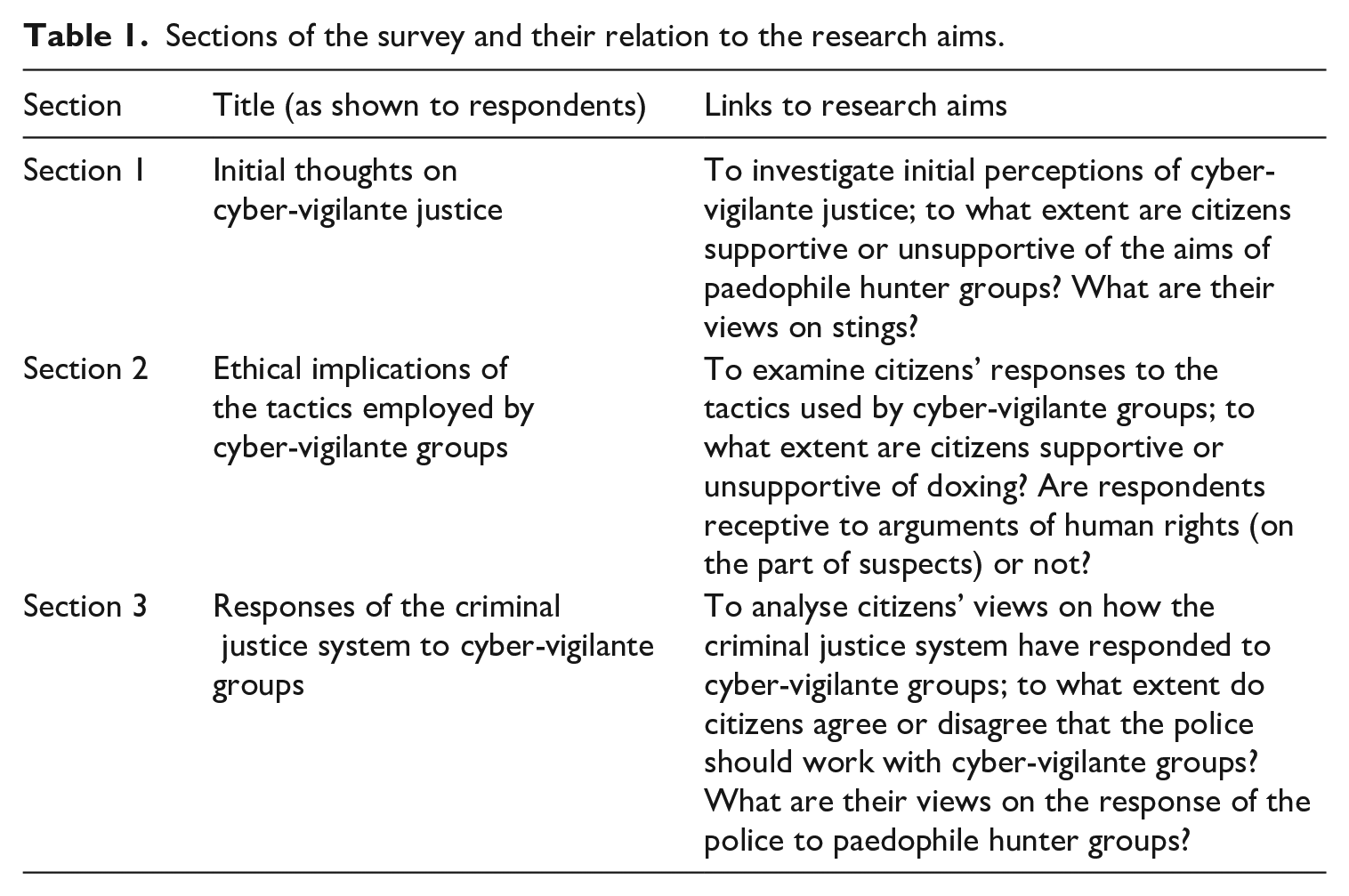
The quantitative data from the survey enabled generalisations to be made using the data analysis tools on Jisc Online Surveys. In addition to this, an inductive thematic analysis of the qualitative data was implemented, with frequently occurring responses being assigned codes which were then grouped together under three dominant themes, outlined in section ‘Results and discussion’. Inductive thematic analysis allowed for greater flexibility and for interpretation to be led by data (Guest et al., 2012).
Results and discussion
Respondents were initially asked to watch a short video from the BBC which showed a paedophile hunter sting caught on camera. From this, they were asked whether online vigilante groups should be allowed to expose paedophiles in this way. Forty-nine percent (n = 50) of respondents agreed with such tactics, 28% (n = 29) disagreed, and 23% (n = 23) remained undecided. It became clear throughout the data analysis that respondents were mostly supportive of the aims of cyber-vigilante groups, with such support marginally decreasing when considering the moral dilemmas of doxing. The following discussion examines three major themes that emerged from the survey: (1) public support for cyber-vigilantism; (2) doxing as a human rights issue; and (3) a lack of faith in the criminal justice system.
‘They deserve to be exposed’: In support of cyber-vigilantism
As argued by Chia (2019), ‘individuals’ perceptions regarding the consequences and social acceptance of crowdsourced vigilantism each have multiple dimensions’ (p. 3). Although a marginal majority of the respondents were in favour of exposing suspected paedophiles, a reasonable proportion remained undecided on the morality and effectiveness of this. It is thus important to note that some respondents struggled to achieve a moral consensus on the practicality of doxing, with between 10% and 20% of the sample consistently sitting on the fence when questioned in this regard.
Doxing was considered a strong method of deterrence, with 53% of respondents either strongly agreeing (19%, n = 19) or slightly agreeing (35%, n = 36) that the filming of suspects would stop paedophiles from attempting to groom children online. Sixteen percent (n = 16) remained undecided, with the remaining 31% either strongly disagreeing (18%, n = 18) or slightly disagreeing (12%, n = 13). Qualitative responses from those in favour of such tactics revealed the foundations of a moral hierarchy, with the safety of children overriding the privacy of suspects.
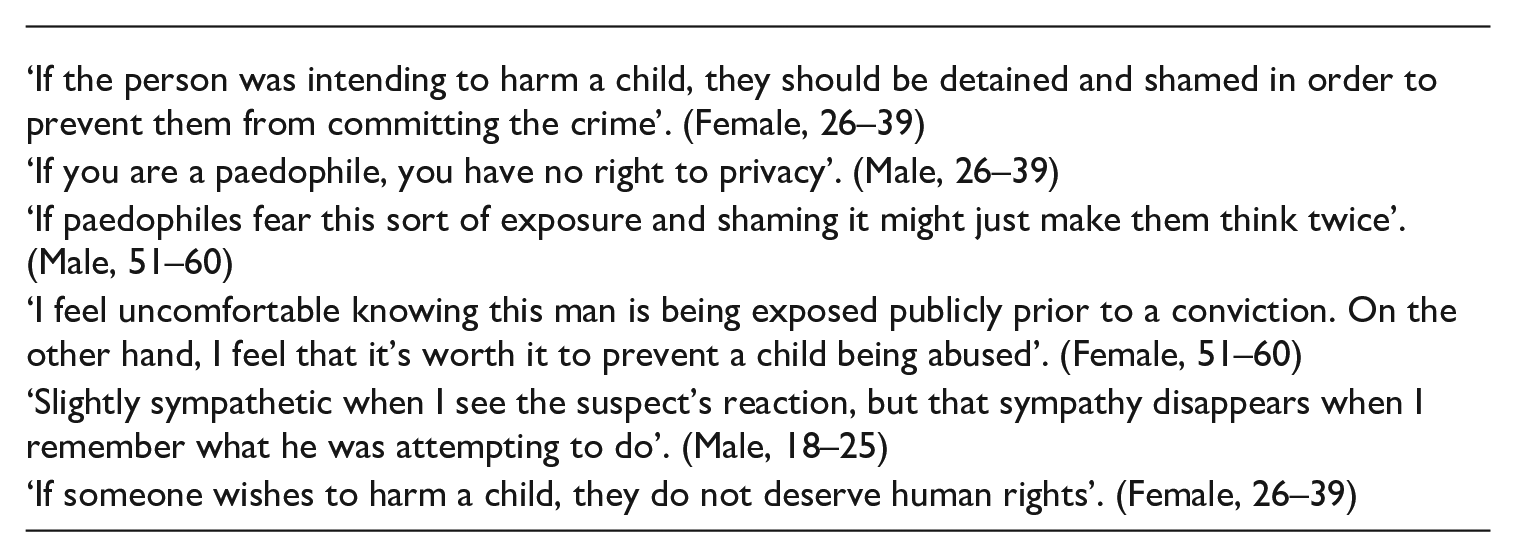
Within the context of the crime, doxing was subsequently considered an effective tool for deterrence. In terms of retribution, respondents were asked to rank the name and shame tactics of vigilante groups on a scale of retribution, with 1 being ‘not at all retributive’ and 10 being ‘highly retributive’. Fifty-six percent (n = 56) of respondents ranked doxing as a 7 or higher, with 14% (n = 14) selecting 9 or 10. Three percent (n = 3) of the sample selected 1, with 18% (n = 18) selecting 4 or below. The 18–25, 40–50 and 51–60 age categories were more likely to consider doxing a retributive tactic, although it should be stressed that this trend may also be due to the higher response levels within these populations.
When asked whether they would feel reassured or concerned to learn that cyber-vigilante groups were monitoring online activity and targeting suspects in their local area, many qualitative responses revealed a slight tendency towards the word ‘reassured’.
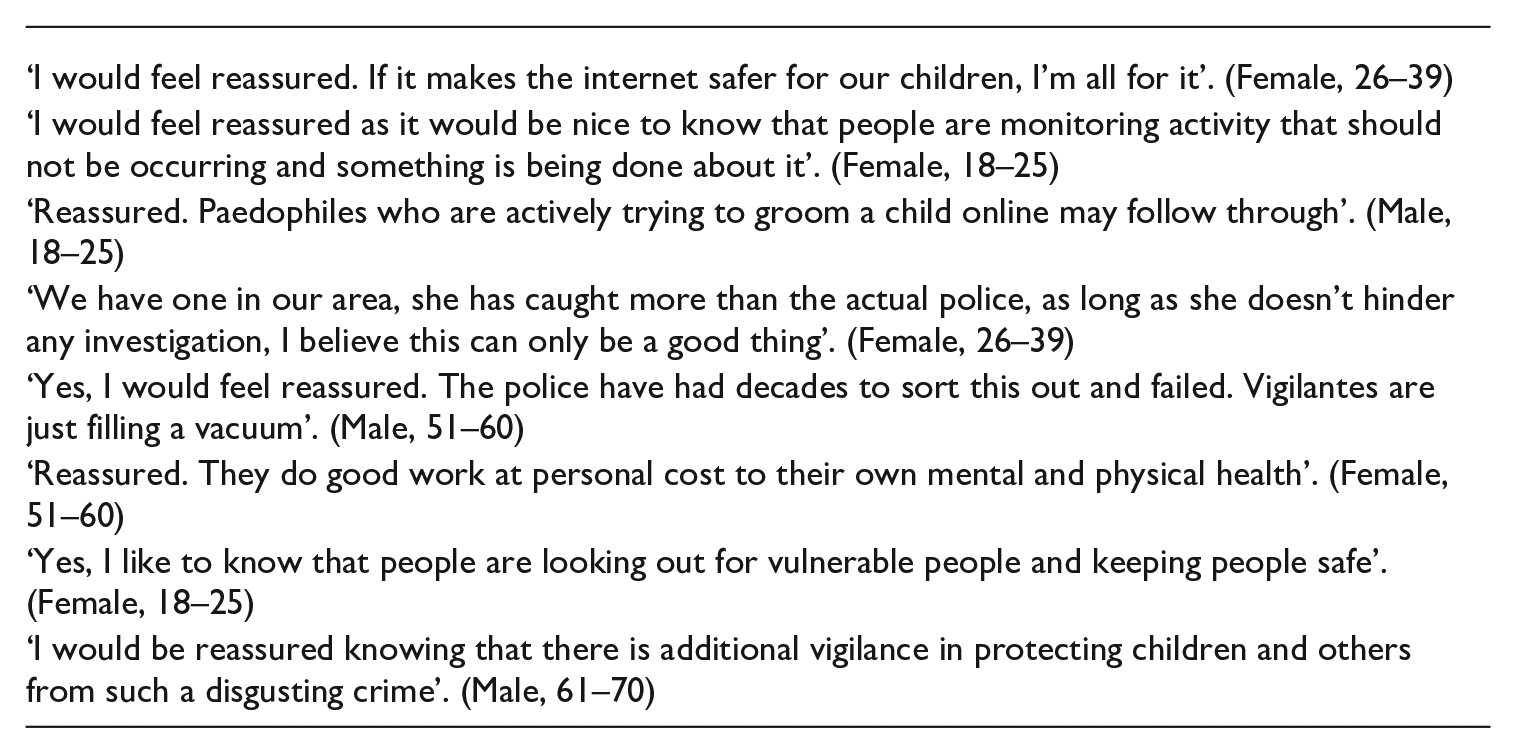
The data thus revealed that a marginal majority of respondents were in favour of the continuance of cyber-vigilante groups, with the problems posed by such groups being outweighed by the wider protection of children and the justice that might be achieved.
Doxing, safety and human rights: Against the merits of cyber-vigilante justice
A sizeable proportion of the survey population expressed hesitancy towards the tactics implemented by cyber-vigilante groups. Such hesitancy rested on the grounds of privacy (of both the suspect and their family/associates), safety, and the flouting of Article 6 of the Human Rights Act 1998; the right to a fair trial, alongside the legal premise of ‘innocent until proven guilty’. After watching a video clip of a paedophile hunter sting being caught on camera, respondents were asked whether online vigilante groups should be allowed to expose suspected paedophiles in this way. Twenty-eight percent (n = 29) disagreed, and 23% (n = 23) remained undecided, with respondents expressing a variety of concerns.
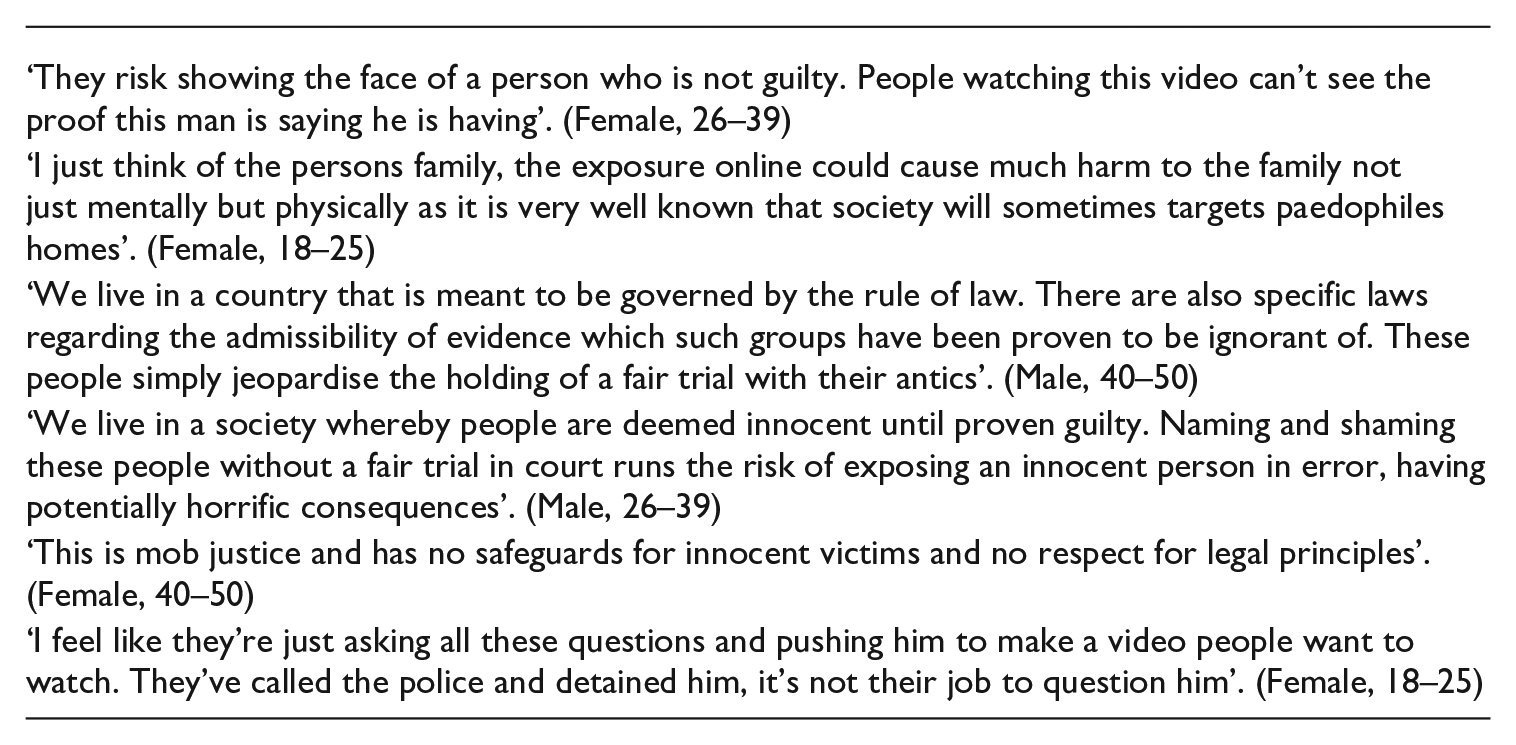
The identification of suspects was not considered specifically problematic; it was the act of doxing that raised concerns regarding safety and human rights, with many respondents expressing their distain at the flouting of traditional legal principles. Of particular concern was the potential for suspects to be wrongfully exposed, alongside the renunciation of their right to a fair trial.
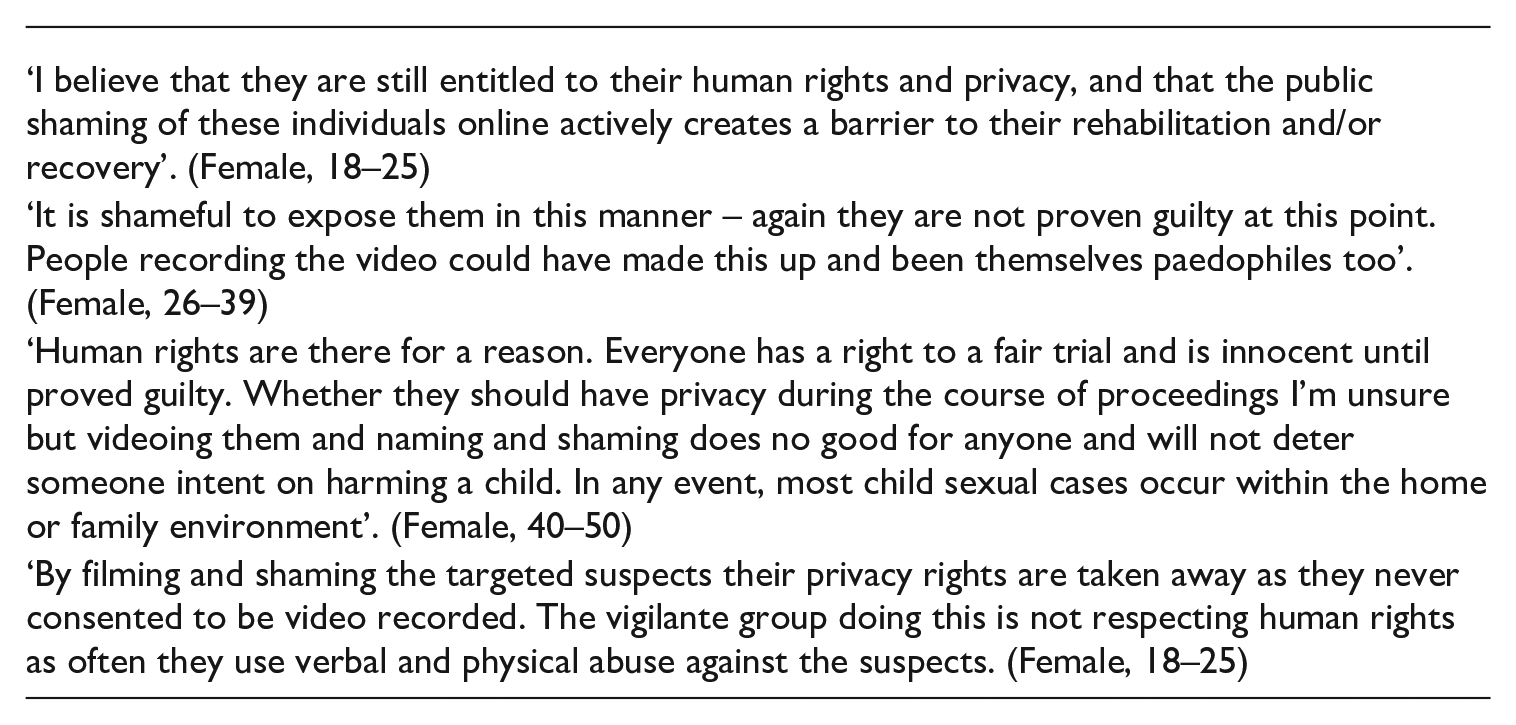
The primary motive of doxing is ‘to render a target visible in a multifaceted and lasting way by gathering and publishing any available information about them and inviting audiences to do the same’ (Trottier, 2020: 206). This process was perceived by several respondents to be inhumane and dangerous, constituting an unnecessary social harm. Indeed, most respondents (79%, n = 80) agreed with the statement that ‘Public displays of justice are dangerous when left in the hands of ordinary citizens’, with 53% (n = 54) strongly agreeing and 26% (n = 26) slightly agreeing. Only 2% (n = 2) of respondents strongly disagreed with this sentiment, with a further 8% (n = 8) slightly disagreeing. The process of doxing was thus seen to compromise the safety and human rights of suspects, with the self-styled policing tactics adopted by vigilante groups being deemed the most problematic part of this form of citizen-led justice.
‘The police do not have time to deal with this problem’: Contextualising the lack of faith in the criminal justice system
There was more unanimous agreement among respondents when it came to the matter of online safety. Twenty-six percent (n = 26) strongly agreed and 53% (n = 54) slightly agreed that ordinary citizens policing the Internet will increase Internet safety for children. Only 11% (n = 11) strongly disagreed with this sentiment, with a further 8% (n = 8) slightly disagreeing. However, when it came to whether matters of justice should be left solely in the hands of law enforcement agencies, the consensus was less clear. Fifty-one percent (n = 52) of respondents either strongly or slightly agreed that justice should be restricted solely to the powers of law enforcement, while 39% (n = 40) either strongly or slightly disagreed with this sentiment, with the remaining 10% (n = 10) remaining undecided.
Qualitative responses revealed a lack of trust in the criminal justice system among some respondents. There was a perception (which in some cases may have been due to lived experience) that the criminal justice system could not be relied upon to identify, arrest and deliver retribution as efficiently as cyber-vigilante groups.
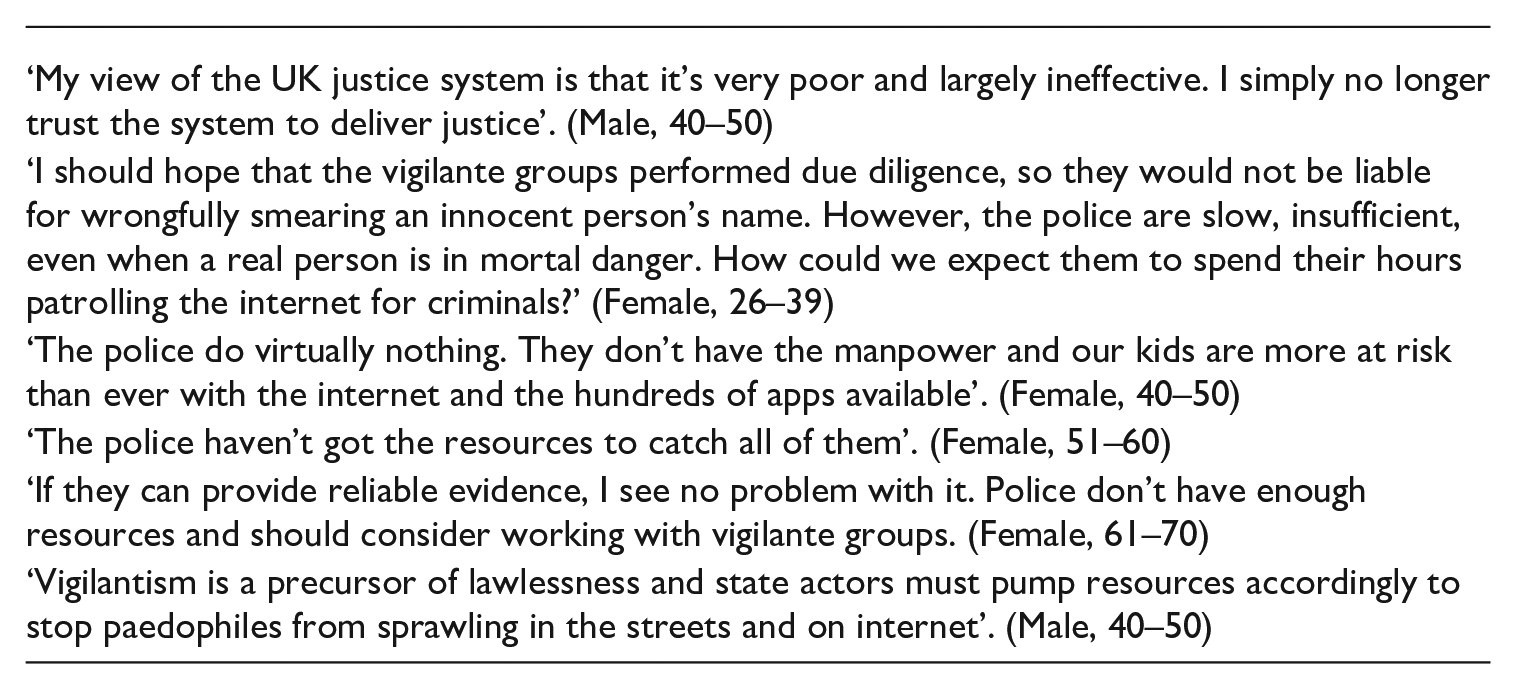
It has been widely researched that a reduction in police confidence can have major implications for the legitimacy of policing (see Bradford et al., 2009; Lockey et al., 2019; Merry et al., 2012; Myhill and Bradford, 2012; Reiner, 2000). The focus on a lack of resources led to the belief among respondents that there is simply not enough time or enough officers to police the Internet effectively. Cyber-vigilante groups are therefore seen to be filling a necessary void, compensating for a lack of official policing. This approach is increasingly documented in popular culture, such as in the Netflix documentary ‘Don’t F*uck with Cats: Hunting an Internet Killer’. This model of ordinary citizens acting as digital detectives fuels the image of criminal justice agencies as underfunded, incompetent and, in some cases, even unnecessary. The desire to achieve justice in this context can thus be viewed as a need, with cyber-vigilante groups actively responding to this societal malaise.
Some respondents attributed an altruistic approach to the work of cyber-vigilante groups, but this was often compromised by the more dubious morality of doxing. The commodification of vigilantism was seemingly overlooked by respondents as they were unaware that some cyber-vigilante groups monetize from behind the guise of altruism. As noted by Hadjimatheou (2021), some paedophile hunting groups ‘have charity status, accept donations, and some even sell branded merchandise to raise funds’ (p. 554). It was, however, the action of doxing that produced more emotive responses among the sample, with some respondents actively noting that cyber-vigilante groups do not get paid for their efforts.
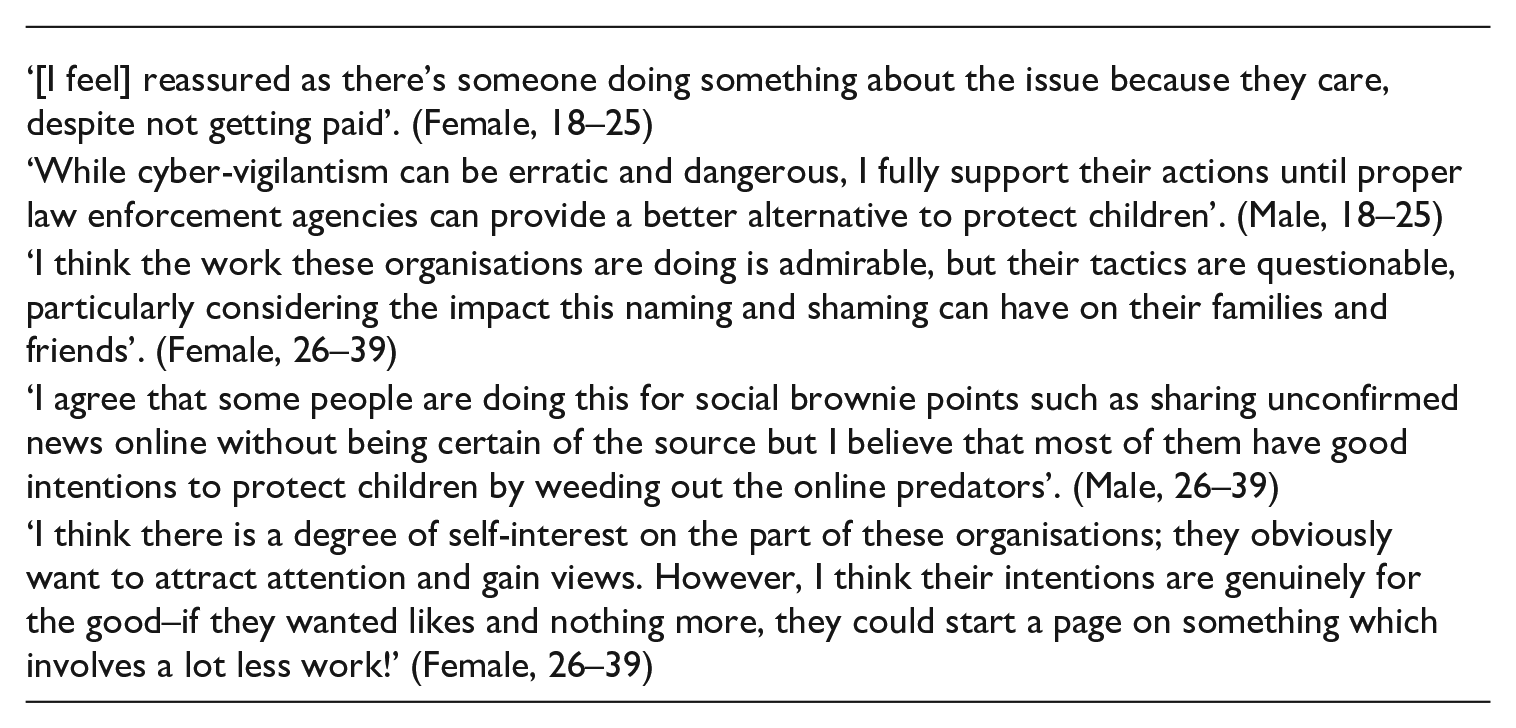
Doxing was sometimes overlooked by respondents as a novel form of citizen-led justice which utilises technology as a form of both retribution and deterrence. Instead, it often invited perceptions of self-interest, with ‘online glory’ serving to compromise the objectives of stings. In the words of one respondent, ‘You do not see police officers posting videos of criminals they have caught just to get some Facebook likes’ (Female, 18–25). This statement is, however, at odds with modern day societal norms as police around the world increasingly utilise social media to highlight their work. Indeed, the ‘online glory’ enjoyed by some cyber-vigilante groups is enjoyed by police forces, too. The Facebook and Twitter pages of UK police forces praise both individual police officers and the wider successes of the force. For example, in May 2022, the Metropolitan Police Service’s Facebook page displayed a photo an individual police officer who won an award for her work with young people in Haringey, alongside Thames Valley Police (2022) sharing a promotional video of their work over the past year on their Twitter page beneath the hashtag #ProudToBeTVP. The utilisation of social media can therefore be seen across the board. It is, however, the unregulated act of doxing by cyber-vigilante groups which continues to invite feelings of apprehension. Without uniform or official governing, cyber-vigilantes are constructed as tumultuous, upholding the perception that ‘civilians add no value to the investigative process [and act] as an impediment to police–public partnerships’ (Huey et al., 2012: 95).
Although it was clear that cyber-vigilante groups were, in most contexts, considered a welcome and necessary tool for the policing of online child grooming, the doxing process presented a moral predicament for respondents. In terms of justice, although there was a general lack of confidence in police resources, there was a preference for the maintenance of traditional legal principles, with many respondents feeling that the right to a fair trial was compromised by the doxing process.
Concluding thoughts
I can’t say I’ve a 100% conviction in one clear direction, [there are] shades of grey in some of this, it’s a complex issue. (Male, 40–50)
The objectives of cyber-vigilante groups and the tactics they use produce a range of emotive responses. Although respondents in this study were generally agreeable to the aims of such groups, the methods they use to achieve their own form of justice constituted grey areas where morality and righteousness, for many respondents, were blurred. The social harms produced by doxing were deemed an infringement of human rights and compromised the legal principle of ‘innocent until proven guilty’. This resistance to the doxing process is surprising considering we are living through an age of digitalised scandals where individuals are frequently ‘subjected to trial by media’ (Greer and McLaughlin, 2017: 112) long before they are tried by the traditional mechanisms of the criminal justice system. Nonetheless, there was a clear resistance to the democratisation of justice, with many respondents fearing that the exposure of suspects by ordinary citizens compromised the rule of law. This predicament presents an interesting quandary. Although there was a lack of faith in the safety and morality of citizen-policing, there was also a lack of faith in the ability of the wider criminal justice system to police or effectively deliver justice. There thus appears to be inconsistent agreement on what justice means more broadly, alongside confliction regarding what constitutes retribution in the digital age.
The Supreme Court ruled in 2020 that paedophile hunters’ do not violate human rights, stating that ‘the interests of children have priority over any interest a paedophile could have in being allowed to engage in criminal conduct’ (Brooks, 2020). However, the police continue to discourage cyber-vigilante groups from ‘taking the law into their own hands’, with the exposure of suspects being deemed a risk that may ‘jeopardise the safety of individuals, their families and the wider public’ (Brooks, 2020). The same quandary thus plays out in the criminal justice system, with cyber-vigilante groups being condoned in the courtroom, only to be discouraged by the police. It appears that even the criminal justice system itself struggles to navigate the grey areas paedophile hunting groups present. Have their efforts secured hundreds of convictions? Yes. But are they to be encouraged? No.
A balance needs to be established between law enforcement and cyber-vigilante groups. The Coronavirus pandemic and accompanying UK lockdowns have revealed a heightened response on the part of cyber-vigilante groups, with paedophile hunting groups claiming to ‘have seen a five-fold increase in the number of sex offenders trying to make contact with children online since the lockdown’ (White, 2020). In some cases, a more collaborative relationship between paedophile hunting groups and the police was established during this time. For example, Guardians of the North handed over eight suspects to the police without confronting them head-on (Dawson, 2021) due to lockdown/social distancing rules. This method of vigilantism, according to the respondents in this study, would be preferable as it puts the process of arrest (or ‘confrontation’) back in the hands of law enforcement while still enabling and recognising the efforts of the cyber-vigilante groups themselves.
Future research should aim to focus on the range of emotive responses to doxing and examine how these effects differ, if at all, from mass media scandals. It appears that naming and shaming, when left in the hands of ordinary citizens, is considered dangerous and harmful, even when sufficient evidence is gathered. However, the same process is utilised within the cultural production of our mass media daily without producing such hostile responses; conversely, it does, in fact, profit from scandal and accusation. It may be that the naming and shaming of public figures is considered more acceptable as they are viewed as ‘made’ and ‘owned’ by the public. When applying the same approach to an ‘ordinary citizen’, more pressing questions of morality appear to emerge. With this in mind, doxing behaviour needs to be understood in much broader terms. It is increasingly being implemented on the social media platform TikTok in response to both criminal and non-criminal behaviours (see Bali, 2021; Demydova, 2021; Slater, 2022) and bears parallels to wider voyeur-centric forms of criminality, such as revenge porn. Legislative reform on doxing is inconsistent around the world and thus serves to blur the (il)egality of the behaviour. More research is therefore needed into this emerging trend, from both offender/victim perspectives, and also in terms of wider societal attitudes.
Beyond the retributive intentions of doxing, questions must be raised about treatment options for paedophiles and the range of provisions available to them before they make the decision to act on their urges. Countries such as Germany have been leading the way in this regard, with their Dunkelfeld Project aiming to stop child abuse before it happens (see Beier et al., 2014 and Connolly, 2015). The first evaluation of this project revealed that risk factors for child sexual abuse were reduced, sexual offending against minors was prevented and the number of contact offences were reduced, as well as child pornography offences (Beier, 2016). Although there has been some effort to tackle child sexual abuse before it happens in the United Kingdom, such as the Stop It Now! campaign (Stop It Now!, 2021) and the charity StopSO (2021), the lack of mainstream publicity of these initiatives has done little to increase awareness or de-stigmatise those willing to receive help before an offence has occurred. Private rehabilitation should be an accessible option for paedophiles in the United Kingdom and should not require a conviction as a prerequisite to access such therapy. As noted by Jahnke (2018), ‘there is reason to believe that many paedophilic men experience trouble finding a suitable psychotherapist due to the stigmatized nature of their sexual interests’ (p. 147).
It is clear that the work of cyber-vigilante groups does much to uphold the stigma of paedophilia. Nevertheless, the act of doxing can be effective as it serves to implement deterrence and retribution as compensation for a discouraging legal justice system, where prison time is rarely served by the convicted sex offenders exposed by such groups. However, doxing also serves to restrict rehabilitation efforts, compromises some of our most basic legal principles, and inhibits necessary social and political conversations from taking place on how we can treat paedophilic urges before they destroy the lives of children.
Footnotes
Declaration of Conflicting Interests
The author(s) declared no potential conflicts of interest with respect to the research, authorship and/or publication of this article.
Funding
The author(s) received no financial support for the research, authorship and/or publication of this article.
