




Abstract
Mass shootings are one example of a focusing event that has particular significance for firearms legislation. Mass shootings shock, disturb and provoke enormous and controversial debate, often causing significant public and media resonance, becoming the subject of intense discussion politically. At times providing an impetus for legislative amendments, often in distinct ways that routine gun violence does not. If certain events highlight the need for reform, policy change becomes more likely. Cases with the lowest number of victims are likely to generate the least amount of attention and are most likely to be missed in data collection, rendering them the least noteworthy, least important in terms of lethality and social and political consequence. Various problems come to the attention of people in and around government, necessitating an understanding of why such problems occupy officials’ attention and appear to be more ‘deserving’ of attention.
Introduction
Despite a considerable volume of literature about firearms crime, mass shootings had previously received relatively little academic consideration outside of the United States. Now, we have become accustomed to reading and hearing about mass murder and in particular, mass murder by firearms, not just in the United States but more frequently across many European countries (Nurmi, 2014). This previous lack of criminological attention surrounding mass shootings had resulted in limited reviews of the literature and a paucity of knowledge. This impeded both practitioners and academics tasked with making sense of the phenomenon (Rocque, 2012). What has been written often focuses on the psychological profile of the perpetrator (Mortimer, 2020; Wilson, 2016), their social isolation (Blum and Jaworski, 2016), masculinity (Kalish and Kimmel, 2010), mental health/ill health (Knoll and Annas, 2016; Metzl and MacLeish, 2015) and the impact the media has on the portrayal of mass shootings (Wheeler, 2016). There was little attention on firearms control and in particular, policy and legislative reform following mass shootings (for notable exceptions, see Hurka, 2017). There has been an increase in research on mass shootings recently, Anisin (2021) explores the relationship between mass shootings and firearms purchases, and Peterson and Densley (2021) compiled a database of mass shooters, including first-person accounts from the perpetrators, in an attempt to understand how they can be prevented.
The recent Plymouth shooting saw renewed interest in firearms control and concern regarding the wider issues posed by the shootings. The perpetrator was linked with online terrorist propaganda and had published hate speech against women on social media (Correia and Sadok, 2021). This prompted widespread debates about misogynistic views and the incel movement (Hardy et al., 2021), although attention soon turned to how another mass shooting incident had been perpetrated with legally owned firearms. There were also concerns related to the perpetrator’s mental health and a history of violence that had led to his licence and shotgun being taken away (Independent Office for Police Conduct (IOPC), 2021), although they were returned shortly before the shooting after he completed a mandatory anger management course.
There are clear similarities between the Plymouth and Cumbria mass shootings. Both incidents were perpetrated with legally owned firearms. In addition, there was significant information about the perpetrators’ previous behaviour that should have alerted the licensing officers (Home Affairs Select Committee (HASC), 2010), yet they managed to retain their licences. A full investigation into the Cumbrian forces firearms licensing concluded that the licensing system had operated properly (HM Inspectorate of Constabulary (HMIC), 2015). While there were no clear opportunities to improve the system, there were wider recommendations that might improve domestic firearm security and licensing. Recommendations included, but were not limited to, exchanges between health authorities and the police and more extensive enquiries into the suitability of the applicant (Whiting, 2010).
The circumstances surrounding the Plymouth perpetrator’s firearms ownership and appropriateness reignited concerns about licensing regimes and police oversight. Devon and Cornwall’s compliance with firearms licensing guidance was subject to an independent peer review and an IOPC review. The investigation led to rapid revision of firearms legislation and the introduction of new statutory guidance that sets a clear framework for police to follow and prioritises public safety, reflecting the HMIC (2015) report. The report had warned about the danger of more tragedies due to the fundamental gaps in licensing in England and Wales, had those gaps been addressed it might have prevented the shooting in Plymouth. However, firearms legislation is to be tightened with additional safety checks that focus on the applicant’s medical history (Home Office, 2021).
The licensing system is designed to reduce the risk of lawfully possessed firearms being misused criminally, not to eliminate it (HASC, 2010), and it is argued that shootings of this nature are very rare in the United Kingdom (Patel, 2021). Indeed, most scholarly and expert sources agree that mass shootings are rare violent crimes (Bjelopera et al., 2013; Blackman and Baird, 2014; Bowers et al., 2010; Doran, 2014; Duwe, 2004; Lankford, 2016; Schultz et al., 2014). However, they are the most visible form of firearms violence (Studdert et al., 2017). They often occur in a public space that is very much ‘close to home’, unlike much of what transpires in the criminal underworld that is often at a distance from everyday life (Duquet, 2016: 3). Fox and Levin (2003: 49), however, argue that it is not as rare an occurrence as it is often assumed to be – an assertion supported more recently by research conducted by Nurmi (2014), Böckler et al. (2013), Johnston and Joy (2016) and National Centre for Victims of Crime (2018) who discuss the phenomenon of mass shootings and comment on the rising frequency and increase in fatalities of incidents occurring, primarily in North America and Europe in the last two decades, as outlined in Figure 1.
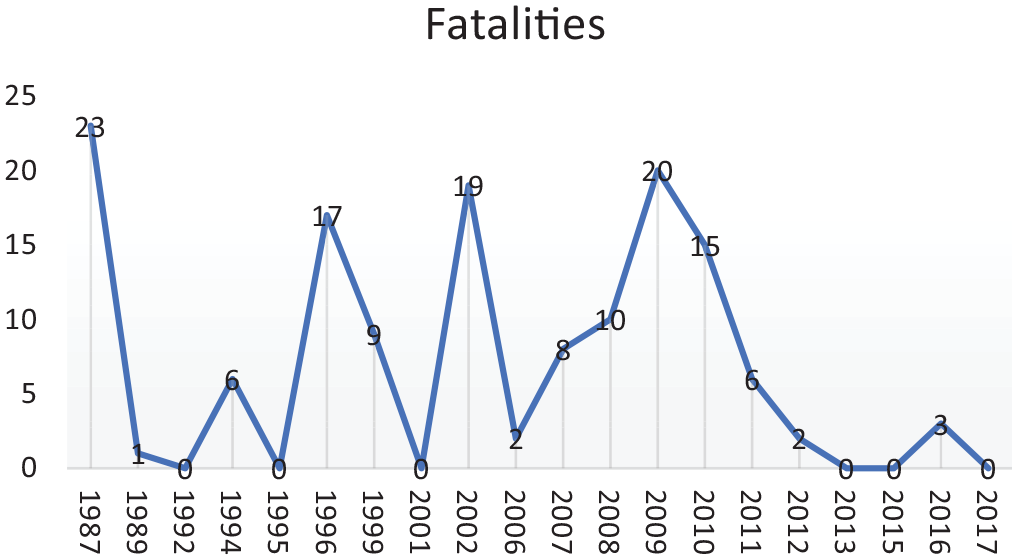
Mass shooting fatalities in selected countries during the period 1987 and 2017.
Mass shootings are often considered acts of extreme violence that frequently illicit public and political debates (Chappell, 2014) while at the same time elevating public fear and anger (Studdert et al., 2017). Perpetrators of mass shooting incidents are seldom pursuing criminal profit or killing in the name of terrorist ideologies (Bjelopera et al., 2013). They are not motivated by a set of beliefs they feel justify or mandate their behaviour (Borum, 2004). Often the violence is not a means to an end, with the violent incidents lying outside of conventional crime issues, for example, gang activity or domestic violence (Bjelopera et al., 2013: 3), both of which are distinct issues requiring different analysis and solutions. Similarly, there are mass shootings that are ideologically motivated, for example, radical Islamic or extreme far-right (including neo-Nazis, racist skinheads) (Schildkraut et al., 2021). Such attacks are symbolic of broader political or social causes (Nacos, 2003) and are aimed at achieving an economic, political, religious or social goal, or are intended to coerce, intimidate or convey a message to a larger audience than the immediate victims (Hunter et al., 2021: 265). There are also acts of hate crime that are motivated by the offenders’ bias against a race, religion, disability, gender, sexual orientation or transgender identity (CPS, 2022), such as Orlando in 2017. Although such incidents did not occur as frequently as other mass shootings, they nonetheless resulted in considerably more fatalities (Duquet, 2016). However, such mass shootings were excluded from this study, and the definition of mass shooting for the purpose of this research is similar to that of Levin and Madfis (2009: 1227), who discuss the antisocial and non-state sponsored killing of multiple victims, during a single episode, at one or more closely related locations.
The definition of public mass shootings used for this research is shootings that occur in the public and/or semi-public space, perpetrated by one offender and resulting in three or more randomly selected victims, with at least one fatality. The term victim refers to those fatally shot and those injured; however, it does not include the perpetrator. Focusing on incidents with one perpetrator, the definition of mass shootings excludes organised or institutionalised killings such as war crimes, acts of political terrorism, hate crime or organised crime gangs (Fox and Levin, 2003). These are included in other studies, and to include all terrorist or politically motivated mass shootings would be beyond the scope of this article.
Mass shootings shock, disturb and provoke enormous and controversial debate, often causing significant public and media resonance, becoming the subject of intense discussion in political culture (Böckler et al., 2013). At times, they provide an impetus for legislative amendments to European frameworks and policies (Duquet, 2016; Hurka, 2017), often in distinct ways that routine gun violence does not. If certain events highlight the need for reform, then policy change becomes more likely, as illustrated by Kingdon’s (1984, 2003) Multiple Streams Framework (MSF). According to the MSF, three separate categories or process ‘streams’ are required to come together at the same time during a brief ‘window of opportunity’ for agenda setting (Kingdon, 1984, 2003) When a policy window opens and it is perceived as an opportunity to push a cause, the likelihood for policy change increases (Hurka, 2017; Kingdon, 1984). The three processes; problems, policies and politics, while largely independent of one another are joined together at a critical juncture, and out of this coupling of the streams, the greatest policy changes occur (for a full discussion see Kingdon, 1984). Mass shootings are one example of an external shock or focusing event that indicates a problem (Birkland, 1997) and has particular significance for firearms policy (Hurka and Nebel, 2013).
Policymakers must pay attention to problems and identify relevant and feasible policy solutions as alternatives to produce major policy change (Bardach, 2012). Once a problem is defined this creates an opportunity for policy entrepreneurs to push proposals. Those within policymaking exert their power to raise attention, frequently drawing on both facts and emotional appeals (True et al., 2007: 161). In the case of Plymouth, one of the victims was 3-year-old Sophie Martin. Values play a substantial role in problem definition and what factors are considered most important, and subsequently become a problem that must be prioritised (Cairney and Jones, 2016: 40), although some problems receive much less attention (Ferretti et al., 2019). Following Cumbria and the licensing review, there were two notable domestic events involving legally owned firearms, in Birtley in July 2010 and Durham in January 2012. Both highlighted a lack of adequate systems and safeguards (Turner, 2017), and although they led to criticisms of the police, they did not result in policy change.
According to Kingdon’s MSF, the three streams must join at critical junctures to produce policy change. When high priority is placed on a focusing event and a viable solution or alternative is available, policy and politics combine, and policy change becomes more likely (Kingdon, 1984). The availability of a viable alternative is not in itself a sufficient condition for change, and policymakers must be receptive to the proposed solution. Those within government can present a significant barrier to change, either due to existing views on policies held by policymakers or resistance from established policy communities (Kingdon, 1984). How well received the solution is can be affected by public mood, election results and pressure group campaigns that help to bring problems to the attention of policymakers. If certain events highlight the need for reform, then policy change becomes more likely, particularly when there appears to be a solution or alternative ready for the problem (Cairney, 2018) – in this case, the recommendations from the previous HMIC report following the Cumbria shooting.
The Plymouth shooting generated such concern that it demanded attention and some sort of response. The problem was combined with a solution and there was political will for change. The various streams of influence combined. The guidance that had been recommended earlier became statutory, with police now legally required to have regard for the guidance for the first time (Home Office, 2021). Had there been more robust and accountable procedures in place, the victims of the shootings in Birtley, Durham and Plymouth would still be alive (Dickinson, 2022).
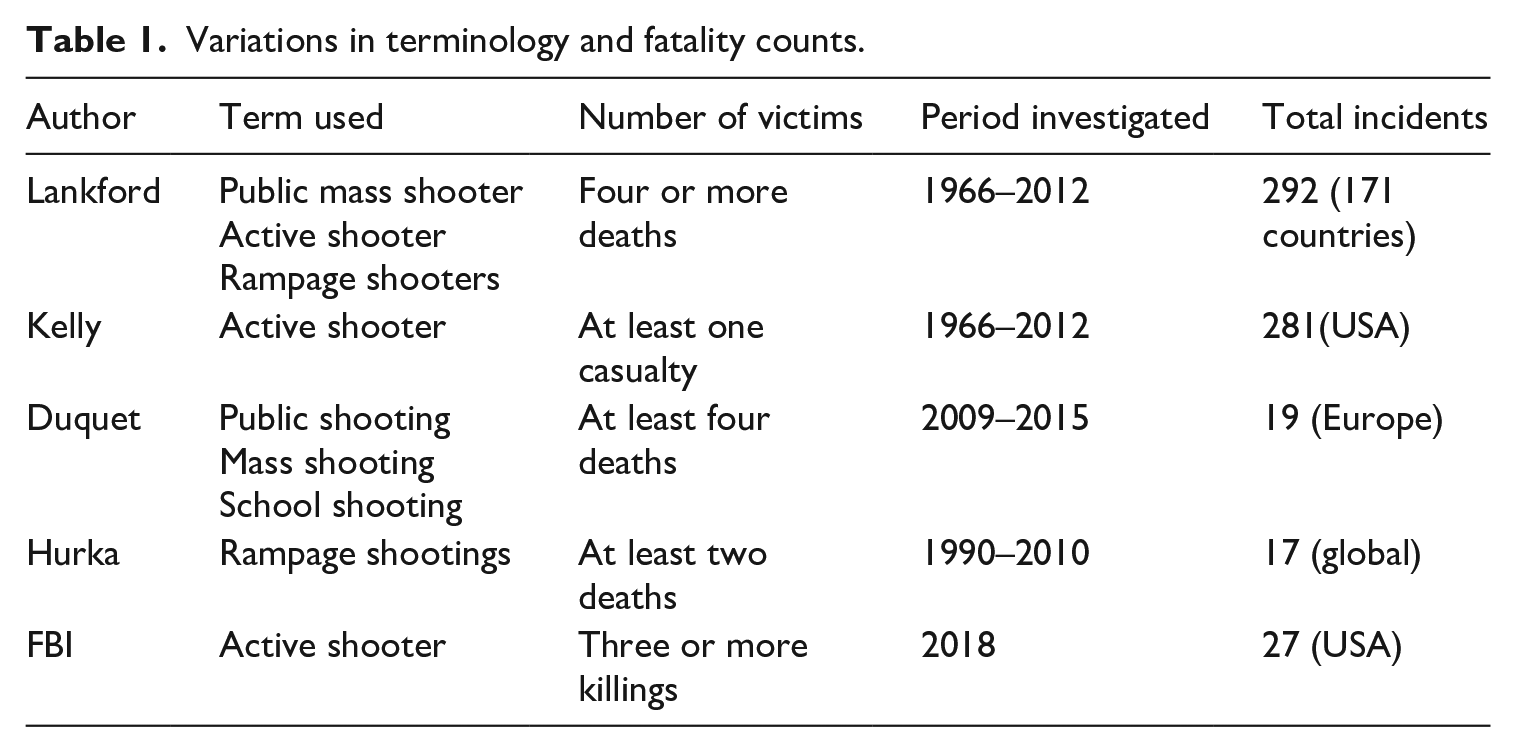
Mass shootings consist of many variables that require different analysis, and a combination of factors means most shootings fit into one or more categories of mass shootings (see Table 1) and are also excluded from others. Mass shootings are a broad concept (Bjelopera et al., 2013: 3). Cultural differences can also vary how definitions and incidents are socially constructed in different nations and regions (Hall and McLean, 2009: 314). Terminology and inclusion and exclusion criteria vary across researchers, resulting in somewhat different, but overlapping, populations being studied (Langman, 2009), which then have different consequences for research findings, impacting upon our understanding of the level of firearms violence and increasing the challenges associated with conducting meta-studies (Böckler et al., 2013; Harding et al., 2002; Kelly, 2010; Lankford, 2013; Larkin, 2009; Nurmi, 2014). How mass shootings are defined can reduce or increase the number of mass shootings that are recorded (Lott and Landes, 1996), and then how they appear within data sets. Such differences have created greater challenges when attempting to put such events into context, as a result of difficulties with their construction (Schildkraut and Elsass, 2016). This article will provide an overview of the existing literature relevant for this article, looking at how definitions can restrict and limit our understanding and knowledge of mass shootings. The research focuses specifically on single perpetrator public mass shootings and how they are responded to across Europe.
Variations in terminology and fatality counts.
Terminology and definitional ambiguities
There are varying dimensions of the phenomenon of mass shootings (Muschert, 2007) and the purpose of this article is to examine the definitions and concepts applied to mass shootings, and types/sub-types of mass shootings, establishing key terminology and contextualising the issue. To delineate an understanding of mass shootings, the researcher reviewed both publicly available or open-source data and existing literature, various government and non-government reports, and academic journal articles and materials. Within these sources, a variety of terms were discussed: spree killing (HMIC, 1987), multiple victim public shootings (Lott and Landes, 1996), mass murder, mass shooting (Duquet, 2016; Webster and Vernick, 2013), rampage shooting (Newman et al., 2004), mass shooting episode (Schultz et al., 2014: 4), amok killings (Kellner, 2013; Kelly, 2012; Levin and Madfis, 2009), massacres, autogenic massacres (Bowers et al., 2010; Mullen, 2004: 60), mass public shootings, public mass shootings (Lankford, 2016), active shooter incidents (Blair and Schweit, 2014), pseudo commando mass murder (Dietz, 1986) and mission-oriented maximum violence (O’Toole, 2014). Schultz et al. (2014: 2) define mass shootings as ‘intentional, planned, perpetrated shooting events involving the use of firearms to kill or injure multiple victims, typically carried out in a school, worksite or other public venue’, although more recently this has included churches and religious buildings. These shootings are intended to intimidate a specific subgroup motivated by ethno-religious hate (Peterson and Densley, 2019), the perpetrators frequently have a history of racism, anti-Christianity, anti-Semitism and Islamophobia, and they are often tied to White supremacist and neo-Nazi groups (Schildkraut et al., 2021).
As we can see, terminology, inclusion and exclusion criteria vary across researchers, resulting in somewhat different but overlapping populations being studied (Langman, 2009). Subsequently, there are different consequences for research findings impacting our understanding of the level of firearms violence and increasing the challenges associated with conducting meta-studies (Böckler et al., 2013; Harding et al., 2002; Kelly, 2010; Lankford, 2015; Larkin, 2009; Nurmi, 2014). How mass shootings are defined can reduce or increase the number of mass shootings that are recorded (Lott and Landes, 1996), and then how they appear within data sets.
False positives and negatives
Those studying mass shootings face a number of challenges in terms of defining the incidents, such as ascertaining how valid and reliable the methods are for measuring their frequency and characteristics (Roth and Koper, 1997; Webster and Vernick, 2013). Discrepancies in how mass shootings are classified and recorded have a significant impact on our understanding of mass shootings.
When a search term has multiple meanings, false positives may occur, thereby returning results that do not necessarily meet the definition (Deacon, 2007; Schildkraut, 2014; Soothill and Grover, 1997). An example of this would be in Brannenburg, Germany in 2000 : a teacher was killed by a student with a sword, yet this was included in a timeline of worldwide school/mass shootings; ‘one teacher killed by a 15 year-old student, who then shot himself, the shooter has been in a coma since’ (Infoplease, 2018). Larkin (2009) include a knife attack in Sundsvall, a Swedish high school (2001) as a rampage school shooting. Schildkraut and Elsass (2016), in their discussion of the Falun shooting in 1994, listed it as a shooting that occurred in Switzerland and not Sweden, and similarly the US statistics from the Centers for Disease Control and Prevention (CDC) would include a firearm incident at a school bus stop as well as a gang shooting that took place outside a school (Weiner, 2013).
Conversely, false negatives occur when a search term is so narrow that news articles, and therefore, mass shooting events, are excluded because they do not meet the criteria as entered. For example, it was reported in the Independent that there had been no mass shootings in Switzerland since 2001 (Brueck, 2018). However, there were mass shootings in Daillon in 2013, Menznau in 2013 and Wurmlingen in 2015. Similarly, in Finland, Nurmi (2012) asserts that there have been no mass shootings since the two school shootings, yet there were mass shootings in Espoo in 2009, Hyvinkää in 2012 and Imatra in 2016. All the above highlight how incidents often do not fit neatly into one category of ‘mass’ shooting. The possibility of false positives and false negatives increases the likelihood that the list of events that meet our definition of a mass shooting is not fully exhaustive. In addition, there are also conflicting perspectives regarding what constitutes a ‘mass’ shooting and the large number of terms used to describe the phenomenon can lead to confusion and issues with reporting.
An American problem?
Mass shootings and indeed firearms control, or lack thereof, feature frequently in discourse relating to the United States, a country that boasts 51,438 retail gun shops, compared to 36,569 grocery stores (Date et al., 2012). Mass shootings have been described as a part of American life, akin to baseball or apple pie (Alvarez and Bachman, 2014). This is undoubtedly due to the number of mass shootings that have taken place. The United States has had a mass shooting every single year for the past 20 years (Gun Violence Archive, 2022) and the number of incidents continues to rise. In 2019, there were 417 mass shootings in the United States, while in 2021 there were 641 (Gun Violence Archive, 2022). With less than 5% of the world’s population and almost 30% of mass shootings, the United States had more than six times its global share of public mass shooters (Lankford, 2019: 73). Within the United States, self-defence and freedom are the foundation upon which human rights supposedly rest (Squires, 2014); this provides a climate that is favourable to widespread gun ownership and weaponisation, with some states calling for more permissive firearms laws so that individuals can protect themselves (Arango and Closson, 2022), a result of their ideological, cultural and political beliefs and the strength of their interest groups, in particular the National Rifle Association (NRA).
Much of what has been written about mass shootings focuses on the United States, in particular, school shootings, which are often constructed as moral panics by the news media (Burns and Crawford, 1999), intensifying the debate surrounding firearms legislation (Schildkraut et al., 2015). In the United States where the preponderance of research has been conducted (Chappell, 2014; Nurmi, 2014), mass shootings are frequently referred to as active shootings or rampage shootings (Lankford, 2016). However, they are quantified by many according to the number of fatalities. Such definitions specify a minimum of four fatalities in a single incident by an individual (Krouse and Richardson, 2015). It is this definition that is often used in studies of mass shootings (Lankford, 2016; Reuter and Mouzos, 2003). This corresponds with the definition of mass murder originally cited by the Federal Bureau of Investigation (FBI), and as such is frequently adopted within much of the mass shooting literature (see Duquet, 2016; Fox and Levin, 2003; Krouse and Richardson, 2015; Lankford, 2016; National Centre for Victims of Crime, 2018). This was changed to three or more victims in 2012; however, many continue to use the original definition (Lott, 2018).
There is also a lack of clarity as to whether the definition fatality threshold includes or excludes the perpetrator, adding to the confusion and variations in how mass shootings are classified and recorded. Mass murder involving a single perpetrator indiscriminately shooting at strangers in a public place is the most heavily publicised type (Fox and Levin, 2003: 49) and an important feature of the definition used for this research.
Defining by numbers – Fatality thresholds
The ambiguity in terms of definitions is undoubtedly responsible for the significant variation in numbers of mass shootings that are observed, dependent upon the individual or organisation that is identifying and analysing them (Duquet, 2016: 5). While this research is not concerned with and does not focus on the United States, mass shootings are frequently considered an American problem (Hurka, 2017; Lankford, 2016); even the Hungerford massacre was referred to as an indication of the spread of the US gun culture (O’Connor, 1987). It could be argued that mass shootings are synonymous with the United States, where a large proportion of the research literature originates, along with a rather arbitrary fatality figure, as set out by the FBI definition.
The following Table 1 demonstrates the variations in terminology, scale of incidents and fatality counts.
Categorising types of mass shootings presents several issues due to the complex nature and varying dimensions of the phenomenon (Muschert, 2007). How we define and categorise mass shootings is based on multiple factors, including the number of victims, the location, who the victims are and what the shooter’s motives were, although the purpose of this research is not to explore motivational factors.
As discussed previously, mass shooting definitions usually require a ‘somewhat arbitrary threshold demarcating the number of victims killed per incident’ (Bjelopera et al., 2013: 4). For example, individual incidents that involve one perpetrator who kills up to three people are often described as single, double or triple murders, and as such are not recorded as a mass shooting (Bjelopera et al., 2013). This would exclude several of the mass shootings selected for inclusion in this research, notably Antwerp, which is of particular significance when considering firearms control, as the shooting accelerated the decision-making process, pushing forward changes to firearms legislation (Duquet and Van Alstein, 2015).
There are some researchers who define mass shootings as any shooting incident where more than five victims die (Chapman et al., 2006: 365; Stein, 2007: 444). Both Lankford and the Flemish Peace Institute included mass shootings of four or more victims, excluding the perpetrator in their studies. Fox and Levin (1998) also state there must be four or more victims, by one assailant, occurring in a single event lasting anywhere from a few minutes to several hours. Reuter and Mouzos (2003) also define mass shootings as the killing of four or more victims by gunshot within a few hours. Bogus (2015) and (Follman et al., 2014) suggest it is at least four fatalities, including the perpetrator, while Bjelopera et al. (2013) on the other hand, suggests it is four, excluding the perpetrator. This highlights another issue with how mass shootings are defined and measured, the inclusion or exclusion of the perpetrator in the number of fatalities. Duquet’s (2016: 5) definition of a mass shooting is taken to refer to an incident where three or more people are killed by one or more perpetrators in a short period of time, often within a few hours, while Lott and Landes (1996) defined mass shootings as shootings that occur in public places where two or more individuals are killed and injured. Action on Armed Violence’s (AOAV, 2014) definition, on the other hand, focuses on it being a singular incident that occurs outside of a recognised conflict zone, and similar to Lott and Landes (1996) specify the inclusion of two or more individuals who are killed or injured.
As shown above, mass shootings are quantified by many according to the number of fatalities. The focus on events with a higher fatality count such as these neglects the importance of lower magnitude events (Scheithauer and Bondü, 2011). Definitions frequently do not take into consideration that the intended outcome involved more victims. Had the injuries of those wounded been fatal, the numbers would have at the least doubled, and in some cases tripled. For example, between 1983 and 2012, it is argued that there were 78 mass shootings in the United States; this resulted in 547 deaths (not including the perpetrator) and 1023 casualties, including deaths and victims who suffered non-lethal injuries from gunshots (Bjelopera et al., 2013).
If we consider both injuries and fatalities that took place between 1987 and 2017 across the four countries selected for inclusion – the United Kingdom, Finland, Germany and Belgium – there are significant differences in the number of victims, regardless of the rate of ownership, as can be seen in Figures 2 and 3. During this period, there were 19 mass shootings resulting in 400 victims, 141 people who were fatally shot and a further 259 who were injured. The mass shooting in Belgium contributed significantly to the number of injuries. During the Liege mass shooting, six were fatally shot, while 129 people were injured. When measuring the extent of mass shootings, considering all victims presents a clearer picture of the perpetrators intent to cause harm to as many people as possible.
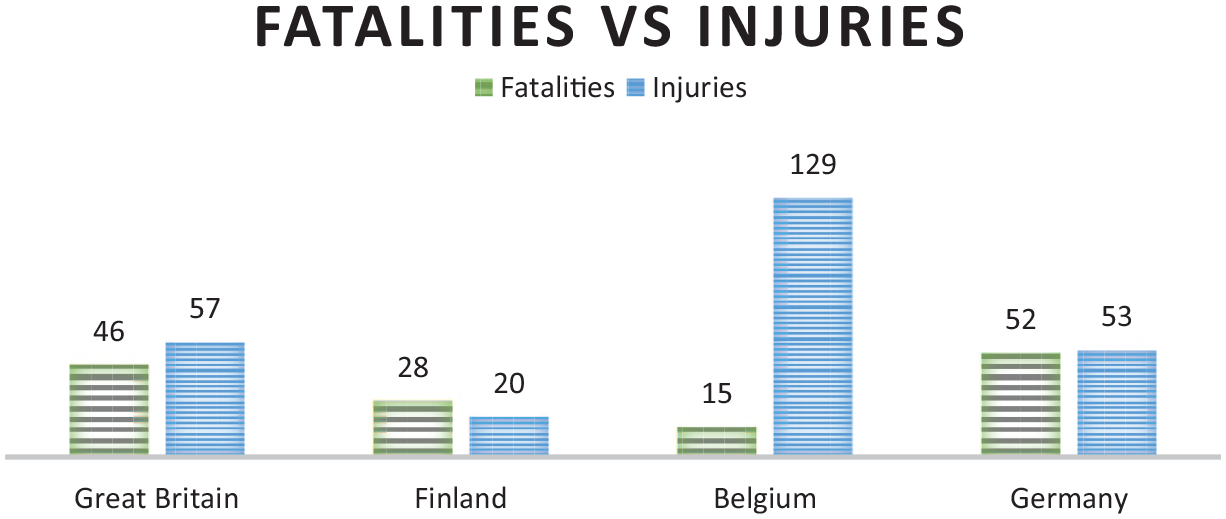
Fatalities compared to injuries during the period between 1987 and 2017.
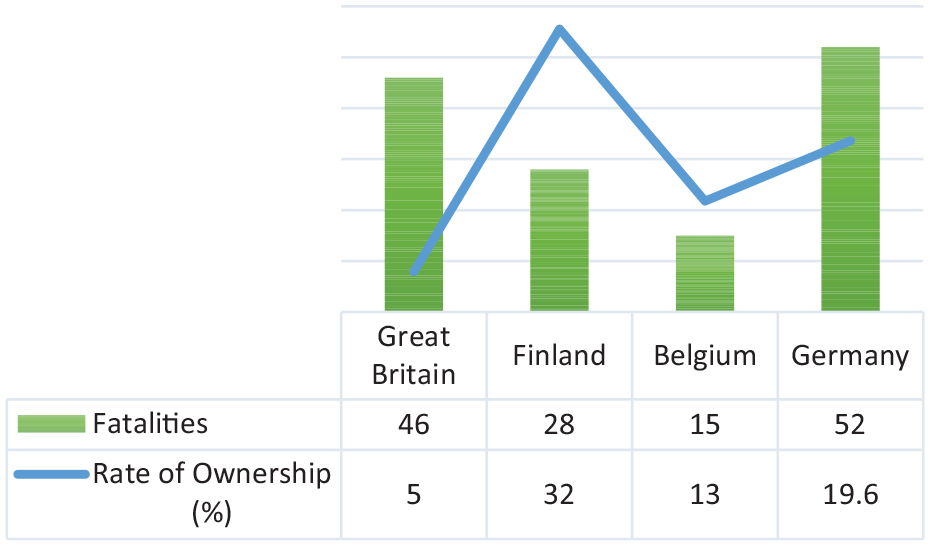
Fatalities by rate of ownership.
The aforementioned definitions demonstrate how compiling incidents based on such an arbitrary threshold may fail to adequately capture the extent of incidents (Bjelopera et al., 2013). This raises questions of what impact this has upon our understanding of mass shootings, and more importantly, what characteristics an event must incorporate to qualify as a mass shooting (Hurka, 2017) and what events matter under what circumstances? This ambiguity in terms of ‘mass’ highlights a clear need to develop a consensus definition of mass shootings (Schultz et al., 2014) one that allows us to synthesise past studies and position future studies (Muschert, 2007), rather than limiting our understanding by excluding cases that do not have enough victims.
While it has been argued that mass shootings are not very common and represent a limited proportion of the total homicide figures and deaths in any country (Duquet, 2016: 3), the impact of mass shootings is considerable. Given the random and violent nature of acts of mass shootings, it is clear they are often premeditated with the intention of inflicting as much harm as possible (Schultz et al., 2014). Indeed, Kelleher (1997) discusses ‘mass murder by intention’, where fewer than the required number of people were killed, although the intention and attempt to murder more were clear. There are many factors that impact the survival of those involved, such as location of wounds and how long it takes the emergency services to respond. There are also technological advances, improved surgical methods and medical developments that help surgeons to improve their treatment of gunshot wounds (Dobson, 2002; Henzl, 2013), in addition to interoperable communications equipment and established protocols for choosing and notifying appropriate medical facilities (Reeping et al., 2020); more recently, there are gunshot detection systems that identify where shots are fired and apps that allow teachers to report attacks to the police (Wash, 2020).
Such advances result in fewer victims, thereby minimising by extension, the number of shootings that meet the requisite fatality count. There is also often little consideration of those who survive such attacks without injury, leading Schildkraut and Elsass (2016: 27) to suggest that victims should be considered in a more abstract sense. In support of Schildkraut and Elsass’ suggestion, this research argues that definitions should focus less on the mass element, in terms of the number of fatalities, and instead given the intent, consider the total number of victims and fatalities. In arming themselves with a firearm and then indiscriminately shooting people, the lethal intent is clear. The intention is to commit homicide, that the fatality count is lower is not a result of the perpetrator carefully selecting victims. Therefore, this research moves to consider all victims rather than just those that were fatally shot.
Duration, location and type of event
In addition to debates regarding the fatality threshold, there is also a lack of clarity in relation to the duration, location and ‘type’ of mass shooting. Mass shootings may occur across multiple geographical areas or crime scenes, but they are usually restricted to a particular place, for example, a school or workplace. According to Dietz (1986), for it to be considered a mass shooting rather than a serial murder, or sensational homicide, it must be one continuous event, with no ‘cooling off’ period (Aitken et al., 2008). Fox and Levin (2003, 2015) also discuss a single event; although they suggest the duration can extend from a few minutes to several hours, this is similar to Reuter and Mouzos’ (2003) assertion that it must occur within a few hours to be a mass shooting, while according to Duquet (2015: 5), it must occur in a short period of time. Both Hungerford and Cumbria are examples of shootings which originated in one location before moving to others and occurred over a period of time. The Hungerford shooting began in Savernake Forest, 7 miles west of the Hungerford village, where it ended: while the Cumbria shooting took place over 3 hours, in various locations within a 45-mile radius around Cumbria.
Since the 1990s, many of the mass shootings that have taken place have occurred in schools, universities and college campuses. There are mass shootings that take place in other locations, even where several individuals are killed; however, these often receive very little attention in the media (Schildkraut et al., 2017), instead the focus is on school shootings. Although frequently associated with the United States (Böckler et al., 2013: 9), school shootings have occurred in the United Kingdom, Finland and Germany as well as Canada, Japan and Yemen (Aitken et al., 2008: 265). School shootings are similar in nature to other mass shootings, in that they are considered planned acts of mass violence. Nurmi (2014) suggests that school shootings are placed in two categories, targeted and rampage; as the categories indicate, targeted shootings are intended to intimidate a particular population (Schildkraut and Elsass, 2016: 19), while rampage shootings emphasise the random selection of the victims (Nurmi, 2014: 8). Revenge shootings that only target predetermined victims are ruled out, both in this and Nurmi’s research, as are terrorist/ideologically/politically motivated shootings.
School shootings are typically perpetrated by students who currently, formerly or recently attended the school (Nurmi, 2014: 8, Schildkraut and Elsass, 2016: 20); examples would be Erfurt and Winnenden in Germany, although Dunblane, while a shooting, would be an exception as it does not fit into definitions of school shootings used by many researchers (Langman, 2009; Muschert, 2007; Newman et al., 2004). Hamilton was a middle-aged man, who was neither a current, recent or former pupil. This demonstrates how not all mass shooting events ‘are easily categorised into carefully constructed parameters of a particular type of event’ (Schildkraut and Elsass, 2016: 20).
The aforesaid comments highlight why expanding and clarifying definitions would unite episodic violent crime events (Schildkraut and Elsass, 2016: 26) and lead to a more complete picture of the issue. A fatality threshold and/or geographical location often dictate which shootings are categorised or defined as mass, and both factors can undoubtedly have an impact on the perceived severity of the event, which in turn has implications in terms of the firearms control debate.
Victim status
Another factor considered important in mass shootings is the victim status. The age of the victim is of particular significance, in respect of newsworthiness and responses, both of which can be seen to have an impact in terms of legislation. Mass shootings where the victims are children often result in calls for stricter gun control measures to prevent such tragedies (Zhang et al., 2019), as was the case following Dunblane. Although in the United States the Sandy Hook mass shooting was considered a catalyst for relaxing legislation, proponents argued that providing more people with firearms to protect themselves would limit the opportunity for mass shootings, amid proposals suggesting arming teachers will prevent mass shootings (Smith, 2018).
Mass shootings often stand out due to them being seemingly premeditated attacks on random, innocent victims (Newman et al., 2004), particularly if we think of instances where young children have been targeted, such as Dunblane and Antwerp. Mass shootings on school grounds account for a relatively small percentage of victims, yet they capture more public attention than other shootings (Wong, 2019). Women and children are disproportionately represented in mass shootings (75%) compared to other types of firearm violence (Gonzalez-Guarda et al., 2018): an example would be Winnenden, where all the victims were female except one (Duquet, 2016). This is unsurprising given that some perpetrators intend to ‘go out in a blaze of glory’ (Mullen, 2004). Perpetrators of mass shootings are often focused on attracting attention in an attempt to gain notoriety; violent incidents with children and women are often considered more newsworthy (Chibnall, 1977; Greer, 2007; Jewkes, 2015; Schildkraut et al., 2017). This would perhaps explain why despite their innocence children are sometimes targeted for mass shootings, although others suggest mass shootings demonstrate an apparently irresistible urge to unleash lethal violence, more or less randomly (Beres, 2017), instead arguing that the victim selection is far more random and indiscriminate (Bjelopera et al., 2013; Knoll, 2010; Lott and Landes, 1996; Studdert et al., 2017).
Summary
This article has highlighted the lack of consensus surrounding how mass shootings are defined and classified. Cases that cause the least amount of death and destruction are likely to generate the least amount of media attention; such cases are subsequently most likely to be missed in data collection, thus rendering them the least important in terms of lethality and social and political consequence. There are mass shootings with high fatality thresholds that result in legislative/policy change, and some that result in legislative change despite a low fatality threshold. Similarly, there are instances of mass shootings that occurred in schools that resulted in amendments to legislation and others that did not. It is clear to see that some events appear to be more ‘deserving’ of attention yet never receive it, leading Kingdon (1984: 15) to ask, ‘What makes people in and around government attend at any given time, to some subjects and not to others?’. It is not always clear which factors result in legislative change or why decision makers pay attention to one thing rather than another (Kingdon, 1984: 1).
Footnotes
Declaration of Conflicting Interests
The author(s) declared no potential conflicts of interest with respect to the research, authorship and/or publication of this article.
Funding
The author(s) received no financial support for the research, authorship and/or publication of this article.
