




Abstract
This article examines police data to assess the duration for which different groups of victims of modern slavery endured exploitation and the length of time after their exploitation concluded before it was officially recorded. The article proposes that these measures of modern slavery victimisation can provide important insights into temporal dimensions of the problem and how best to intervene. Reference to current numbers of victims ‘rescued’, it is argued, can be misleading given the proportion of belated reports of exploitation. These are more indicative of systemic failures in the provision of statutory services that young and vulnerable people hesitate to call upon in the context of an increasingly hostile immigration environment.
Background
The volume of trafficking and modern slavery offences reported to public authorities appears to be increasing globally. The total number of detected victims (i.e. those coming into contact with law enforcement) is rising (UNODC, 2020) as national governments pursue ‘legislative reform, coordination among national actors, special law enforcement capacities and improved victim protection efforts’ (UNODC, 2018: 7). Cumulative data from 2003 to 2018 indicate that women comprise 70% of the world’s trafficking victims (UNODC, 2018: 25). The harms experienced by trafficked women, particularly through sexual exploitation where women represent 96% of victims, are severe and enduring (Walby et al., 2016). Men, conversely, are more frequently identified as victims of forced labour (Lightowlers et al., 2021; UNODC, 2018) where they can be subject to periods of exploitation and experience physical, psychological and financial abuse (e.g. see Stringer et al., 2016). The proportion of men identified as victims of human trafficking is increasing (UNODC, 2020). Official responses to these forms of exploitation often proceed on the basis that the arrest of suspects and rescue of victims by the police present the most effective solution. Yet, what is rarely acknowledged is that successful prosecutions are comparatively rare – there were just 69 convictions under the 2015 Modern Slavery Act 1 in the United Kingdom between 2017-2020 (IASC, 2020) – and that victims have often endured both lengthy periods of exploitation before police intervention and that, in many cases, the exploitation has ceased some years before it is brought to the attention of the authorities. Even then, exploitation often goes unreported until a person confronts a threat from the state, such as deportation or arrest, and this may represent the first time they have had the opportunity to communicate their experiences (Villacampa et al., 2021; Villacampa and Torres, 2019).
The focus of this article is temporal measures of modern slavery victimisation. Specifically the duration of exploitation – the length of time that people have been subject to exploitation and the length of time lapsing between the end of the exploitation and the reporting of the victimisation to the police (referred to here as the lag). Both measures are significantly impacted by investigative strategy for several reasons highlighted in the discussion that follows. Both academic commentary and official reviews of human trafficking and modern slavery have repeatedly identified significant challenges with investigations and prosecutions. In the United Kingdom, the crime and security focus of early anti-trafficking policy continues to forestall the development of victim-centred, human rights–based policy focused on victim support (Broad and Turnbull, 2019). Consequently, victims are often reluctant to report their experiences and to participate in court proceedings, fearful of their exploiters and mistrustful of authority, particularly where they are undocumented (Farrell et al., 2008; Putt, 2007; Roberts, 2018; Villacampa and Torres, 2017; Walby et al., 2016; Ward and Fouladvand, 2018). Those victims who have committed criminal offences while being exploited are afraid of being prosecuted and convicted, the protections against this in both European Union (EU) Directive 2011/36 and the 2015 Modern Slavery Act often proving ineffectual (Anti-Slavery International (ASI), 2020; Rodríguez-López, 2020). In the United Kingdom, the National Referral Mechanism (NRM) (the system through which victims are identified and consequently able to receive support) continues to be slow in its decision-making, causing distress to victims, and is seemingly discriminatory in its practice, with non-EU nationals receiving disproportionately more negative outcomes than EU nationals (National Audit Office (NAO), 2017). Referrals to UK Visas and Immigration (UKVI) continue to expose potential victims of trafficking to the threat of deportation (Her Majesty’s Inspectorate of Constabularies, Fire and Rescue Services (HMICFRS), 2017). Within this context, many foreign nationals discover that the support available is contingent upon them providing evidence against perpetrators in criminal justice proceedings. Few long-term guarantees are offered in terms of rights to remain or protection for themselves and other family members or from those against whom they have testified (Broad and Muraszkiewicz, 2019; Muraszkiewicz, 2016; Schwartz and Geng, 2018). 2 The conflict between the hostile immigration policy context in the United Kingdom and the ability to provide effective support to trafficked persons was heightened by announcements made in the ‘New Plan for Immigration’ in March 2021 which was roundly criticised for undermining victims’ confidence in reporting and for creating a legislative framework which will increase marginalisation and criminalisation of victims (ASI, 2021; ECPAT, 2021) as the Home Secretary, Priti Patel, attempts to ‘make every effort to remove those who enter the UK via routes deemed illegal’ (Grierson, 2021).
One likely consequence of failing to provide protections to victims, especially those with no legal right to remain in the United Kingdom, is that those enduring exploitation will take longer before alerting the authorities, exposing themselves and others who are similarly positioned to a range of harms. The International Labour Organization (ILO) has conducted analysis of victim-focused data on duration of exploitation, from the International Organisation for Migration (IOM) counter-trafficking database, finding that the average duration in cases of forced labour was just over 20 months and for sexual exploitation, 23 months (ILO, 2017). Although useful in providing an overview of temporal aspects of victimisation at a macro-scale, no victims are recorded as being exploited in the United Kingdom. Enduring lengthy exploitation has been associated with poor mental health (Ottisova et al., 2016) and increased risk of mental disorder (Abas et al., 2013). For victims of sexual exploitation, it is also associated with increased risk of sexually transmitted diseases (Oram et al., 2012). Other analyses suggest that domestic servitude is one of the hardest forms of exploitation for victims to escape given the social isolation involved (Reed et al., 2018), and victims are more likely to experience severe restrictions and violence (Rose et al., 2021). The length of time that elapses between the experience of exploitation and receipt of support surely impacts the extent of the harm caused and the ability to cope with the lasting physical, psychological and financial consequences. In historic reporting of rape cases, victim credibility can be called into question, providing further barriers to others considering reporting their experiences (Jordan, 2004). However, to the authors’ knowledge, no studies have examined the length of time between the end of exploitation and reporting of modern slavery victimisation – lag – as an indicator of how responses to modern slavery victims are operating, with contemporary and historical cases often conflated in official statistics. Where official reports quote the number of crimes reported in any one year, the proportion of those that occurred years previously is often missing, obscuring both the actual number of cases taking place in that year and the ongoing nature of activity to be dealt with by law enforcement and other agencies. This article provides further contextual information about the length of time for which victims are exploited with respect to different recorded types of exploitation and the respective lags in reporting. It also illuminates missed opportunities to intervene and the importance of sustaining multi-agency networks and support structures that enable victims who are reticent to report to law enforcement to escape from exploitative situations sooner. While arrests and charges can indicate success or failure of policing strategy, we suggest that adding temporal dimensions could help to provide further insights into how processes can reflect barriers victims face in terms of engaging with law enforcement and other service providers that typically include social services, immigration enforcement and border control.
Data
This study uses data pertaining to 540 victims of modern slavery offences reported to and recorded by a police force in a large metropolitan area in England between April 2015 and June 2018. Relevant data were missing in relation to 132 victims of these 540 cases, leaving a sample of 408 cases upon which the following analysis is based. The data included the type of exploitation experienced, age and sex of victims, details of date the crime was recorded and the earliest and latest dates the exploitation could have occurred. A child in this context is below 18; adults are 18 and over. The dataset included detail on primary and secondary types of exploitation where victims had experienced multiple forms. The current analysis uses primary exploitation type only, as there were too few entries on secondary exploitation types to make this analysis either reliable or meaningful. Of the 408 cases, 139 were ‘historic’ cases that involved exploitation that had ceased prior to the victim coming to the police’s attention, with some offences having occurred as far back as 1993. These historic cases are retained in our analysis.
Two outcome variables of interest were derived from the dataset: ‘duration’ and ‘lag’. Duration pertains to the length of time over which the exploitation occurred. It represents the number of days elapsed between when the exploitation commenced (crime committed from date) and when it ceased (crime committed to date): information routinely collected by police officers when taking crime details. Victims’ exploitation ranged from 1 day to several years. The mean and median duration were 539 days (almost 18 months) and 119 days (almost 4 months), respectively – on this basis, we removed one outlier, both to improve the analysis and to preserve confidentiality. This left 407 observations with a range of between 1 and 5905 days (over 16 years) (mean = 512.1, median = 119). Our modelling of duration is thus based upon these 407 observations.
Lag pertains to the length of time elapsed from when the exploitation ceased (crime committed to date) and when the exploitation was reported (crime reported date), namely, when the police were made aware of the exploitation. The lag in reporting of victims’ exploitation ranged from zero to 8677 days (over 23 years) where a lag of zero days applied to victims who escaped or left their exploitation and immediately reported this to police or were identified in a targeted police operation. The mean and median were 567 (just over 18 months) and 64 days or 2 months, respectively. Two outliers were removed which left 406 observations with a range of between 0 and 5236 days (over 14 years) (mean = 528.2, median = 63.5). Our modelling of lag is thus based upon these 406 observations.
Methods
Initial descriptive interrogation and Kruskal–Wallis tests (a non-parametric method for comparing independent samples) were run to ascertain the extent to which both duration and lag varied by exploitation type – and, in the case of the latter, by the source of referral to the police. Given the overdispersed distribution of counts for both the duration and lag variables (variances being greater than the means), regression models for both outcomes were specified as negative binomial generalised linear models using the glm.nb function from the MASS package in R (Venables and Ripley, 2002). The negative binomial specification is similar to Poisson (log linear) regression model designed to model count data; however, it restricts the assumption that the variance is equivalent to the mean, allowing flexibility for overdispersion in the data with an additional parameter that adjusts the variance independently from the mean (Sroka and Nagaraja, 2018). Using the duration and lag outcome variables, respectively, the regression models predict the number of days elapsed as a function of the exploitation type, victim age and sex (and by referral origin for the lag variable).
Only cases with a duration of at least 1 day were included in the regression modelling of this outcome variable. Having read the modus operandi fields available in the dataset, it was clear not all such cases had had a duration of less than 1 day and that this was a consequence of recording. There were a small number of cases (n = 32) where the exploitation was described as occurring on a single day – such as incidents of children having been collected from care homes and transported to other locations where they were sexually exploited. However, it is likely that these victims had at least met their exploiter before but the data provided no way of knowing how long they had been groomed for or in contact with the person who ultimately exploited them on the reported occasion. Therefore, these cases were removed from the analysis. Models of duration were thus based on n = 353 observations when also accounting for the listwise deletion procedure associated with the glm.nb function, in which a further 22 cases were dropped due to missing information on either age or sex.
In the case of lag, reading of the modus operandi fields suggested zero counts were an accurate reflection of victims having escaped or been able to leave their abuser(s), or identified during a targeted police operation and reporting their exploitation to first responders or the police – hence also being the date on which such exploitation ceased. Cases of zero days lag were thus retained in the analysis when modelling lag, leaving 383 cases on which to run the regression model, once missing cases for missing observations on other variables had been accounted for. We also examined the correlation between lag and duration to ascertain the extent to which longer durations of exploitation might also result in longer lags in reporting. This enabled us to explore whether individuals exploited for longer encountered more barriers to reporting.
Data on modern slavery are scarce (Villacampa et al., 2021). And most analyses of police data are limited in that they can only focus on those instances of crime that have come to the attention of the police. In the context of modern slavery, this obscures those crimes where barriers to reporting have remained in place or where intelligence and proactive policing measures have been insufficient to locate victims. However, police recorded crime data are recognised as useful for demonstrating how modern slavery offences are being reported and recorded, indicating the ‘police’s awareness and visibility of the offences’ (Stripe, 2020: 7).
Operational demands and recording practices commonly impact both police data quality and completeness (Bjelland and Dahl, 2017; Cockbain et al., 2019; Lightowlers et al., 2021). Frontline officers primarily record details of modern slavery crimes either as a result of direct contact with a victim or via a referral from an external agency. Where information is missing from the initial record, there is limited capacity for frontline officers, specialist teams and data analysts to backfill such details, for example, with information that develops during prosecutions. Consequently, there remain many ‘unknown’ and thus missing entries as well as inaccuracies for some of the variables of interest, including date parameters. This analysis excluded incomplete data, which are known to be a limitation of police data concerning modern slavery (Villacampa et al, 2021). We have no reason to believe that their exclusion is systematic in any way. Finally, despite the potential to add considerable value, additional analysis by country of origin was not possible due to the large proportion of missing data. 3
Findings
Duration
The average duration of abuse by exploitation type is visualised in Figure 1. Domestic servitude (1022 days; 2.8 years) and labour exploitation (775 days; 2.1 years) were on average longest in duration. Forced criminality 4 (e.g. forced begging or forced shoplifting) and sexual exploitation were on average around a year in length (369 and 324 days, respectively) but varied considerably (see standard deviations). On average, facilitating travel for the purposes of exploitation was shortest in length at around 2 months in duration (69.3 days). By comparison, cannabis cultivation lasted on average 483 days (around 16 months). A Kruskal–Wallis test of the duration confirms a significant difference in the means of duration by exploitation type (χ2(5) = 64.064, p < 0.001).
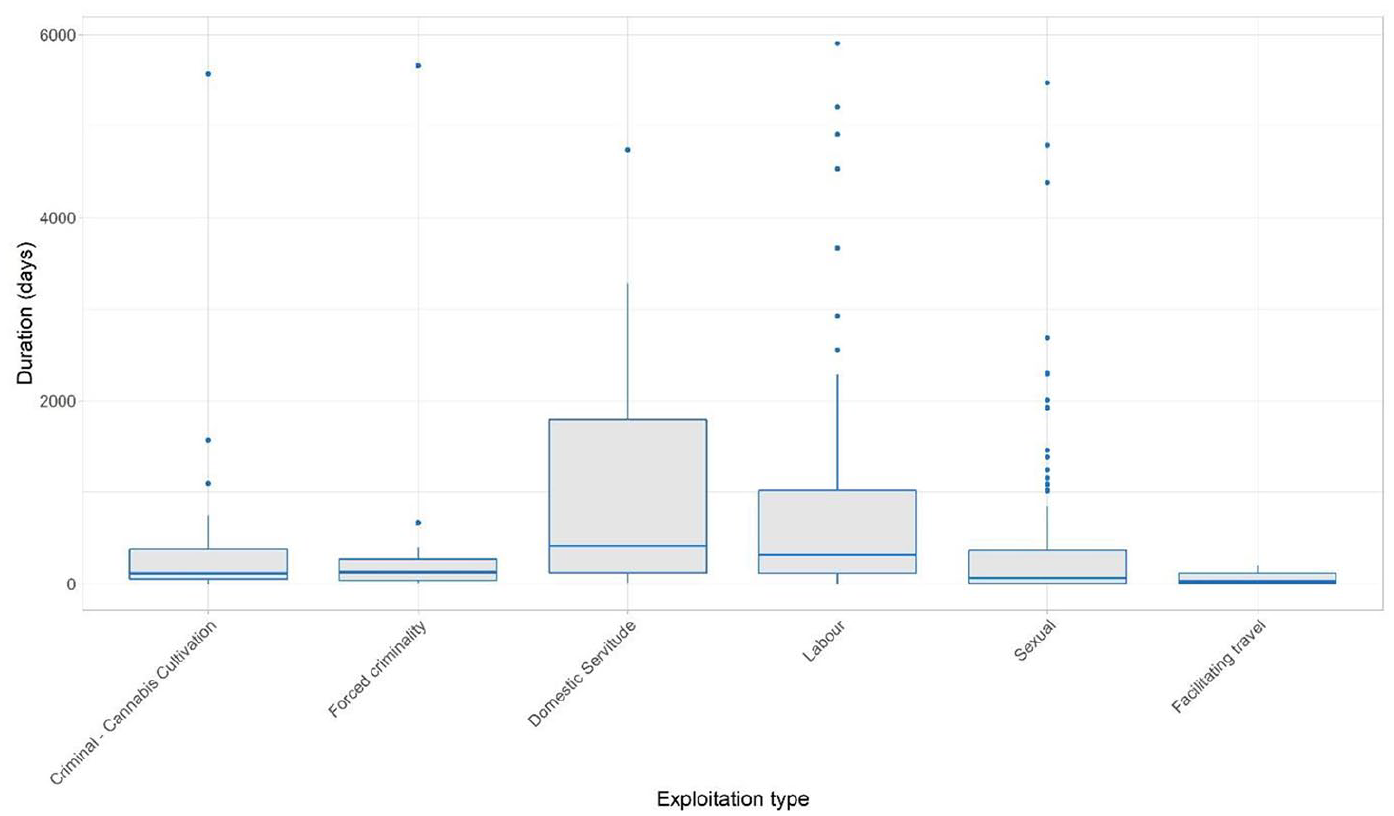
Abuse duration (days) by exploitation type (n = 407).
Duration of child exploitation (across all types) was 280 days (just over 9 months) compared with 776 days (just over 2 years) for adults. This trend was also represented when examining sexual offences specifically with child sexual exploitation being on average 214 days (approximately 7 months) and sexual exploitation of adults 530 days (approximately 17 months).
Figure 2 illustrates differences in the duration of exploitation between male and female victims across exploitation types. While durations for domestic servitude are similar for males and females among the cases considered here, women were exploited for longer durations than men in cases of forced criminality and sexual exploitation. However, men experienced long durations of exploitation compared to women in cases of facilitating travel, cannabis cultivation and labour exploitation.
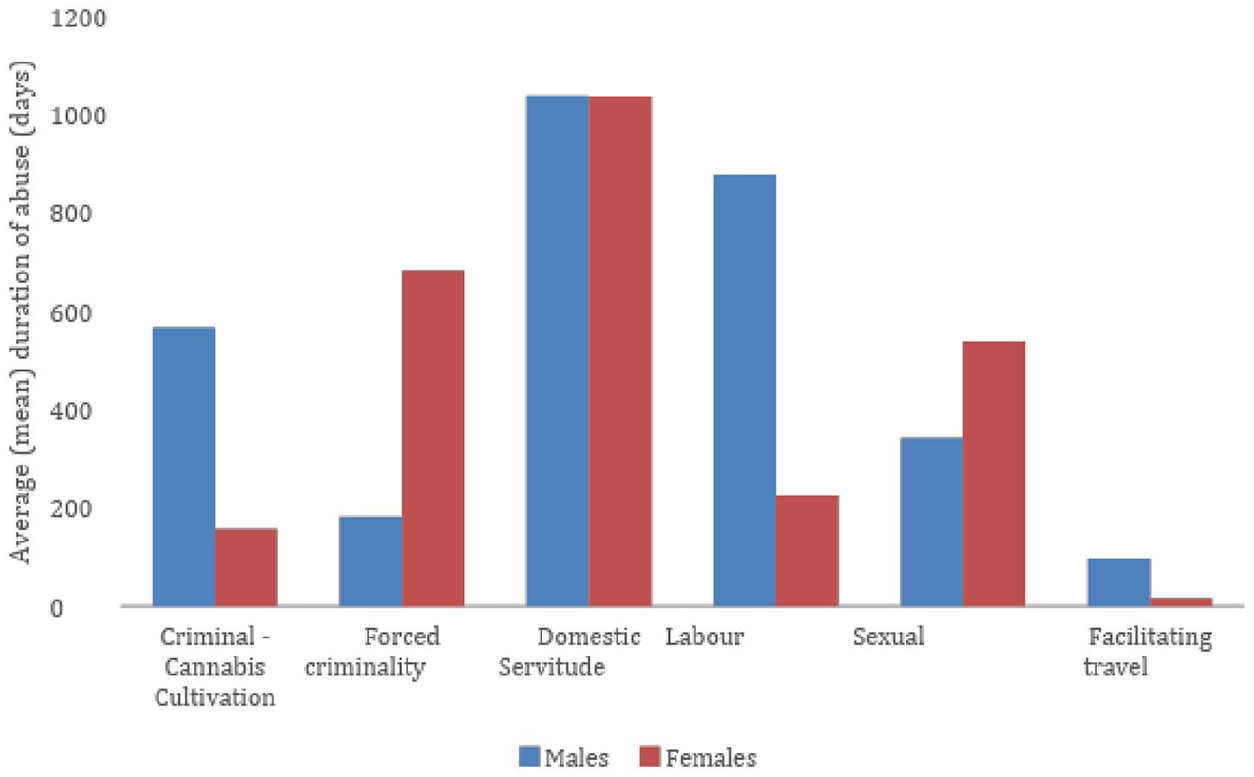
Average duration of exploitation by gender and exploitation type (n = 407).
Negative binomial model – Duration
Once the sex of the victim and their age were controlled for in regressing the duration on exploitation type, we identified that forced criminality (incidence rate ratio (IRR) = 0.33) and domestic servitude cases (IRR = 2.95) were associated with longer durations as well as crimes involving male victims (controlling for crime type and age) (IRR = 2.14) (see Table 1). Durations of domestic servitude exploitation (consisting primarily of female victims) were the longest, with the IRR of this type of exploitation being 24.6 times higher than that of facilitating travel (having the shortest duration). Indeed, expected durations of domestic servitude exploitation were, on average, 195% longer (IRR = 2.954), holding all other factors constant.
Negative binomial regression coefficients – duration (n = 353; bold figures indicate where p ≤ 0.05).
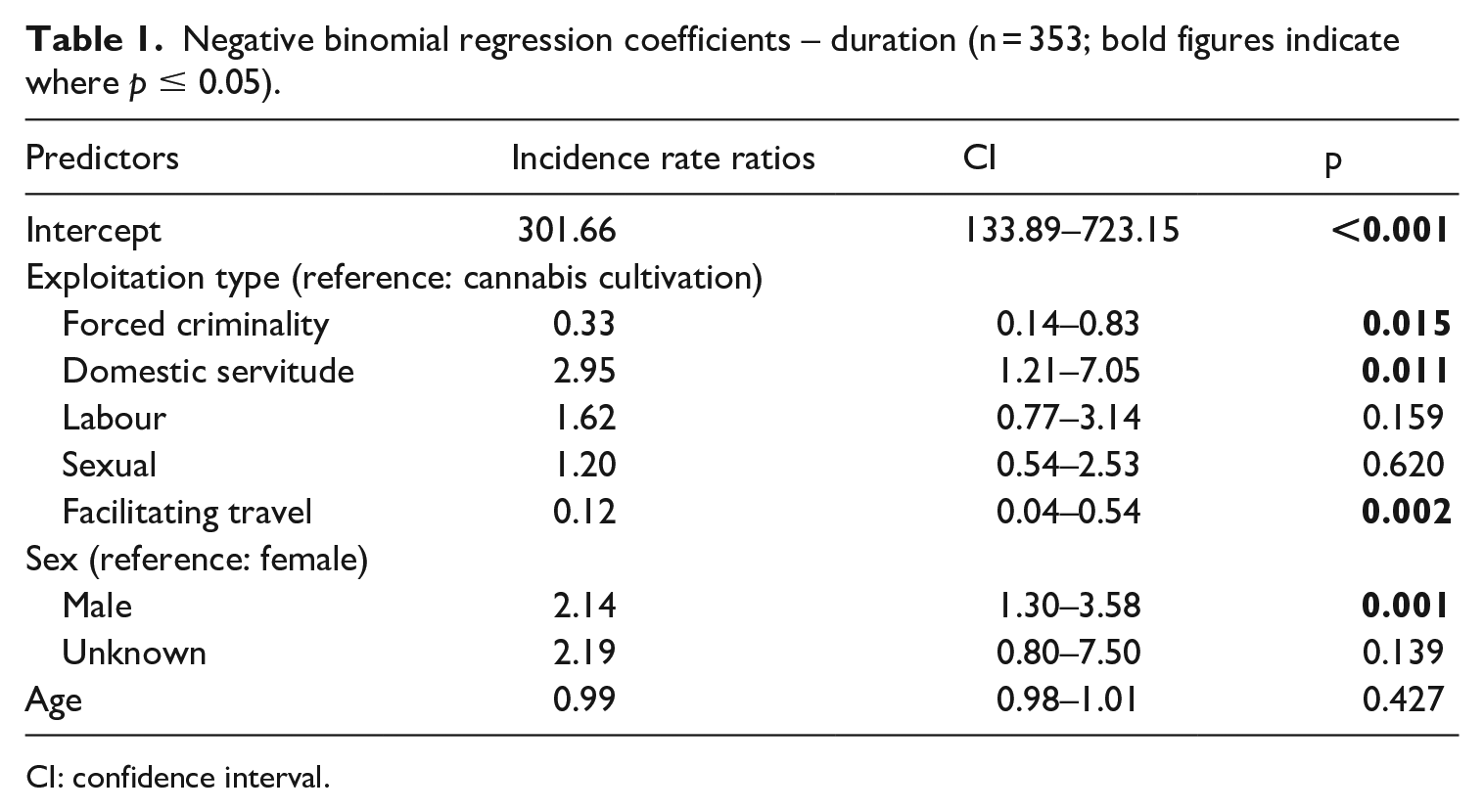
CI: confidence interval.
Lag
The average lag in reporting abuse by exploitation type is visualised in Figure 3. Domestic servitude and labour exploitation were on average longest in terms of lag – approaching a 2-year delay between the exploitation ending and the crime reported (672 and 648 days;1.84 and 1.78 years, respectively). Delays in the reporting of sexual exploitation were also lengthy, with on average an 18-month delay (565 days). Cannabis cultivation had an average lag of 194 days – around 6 months. Forced criminality and facilitating travel had average lags of around 2 months and 1 month, respectively (71 and 32 days). A Kruskal–Wallis test of the lag confirms a significant difference in the means of lag by exploitation type (χ2(5) = 24.223, p < 0.01). The mean length of lag for offences of domestic servitude was the highest followed by labour and sexual exploitation. Across all exploitation types, lags in reporting associated with children were shorter on average (241 days; almost 8 months) than those associated with adults (771 days; just over 2 years). This trend was also observed when specifically considering sexual exploitation – cases involving child victims had mean lag of 174 days (almost 6 months), while those involving adults had a lag of 493 days (just over 16 months).
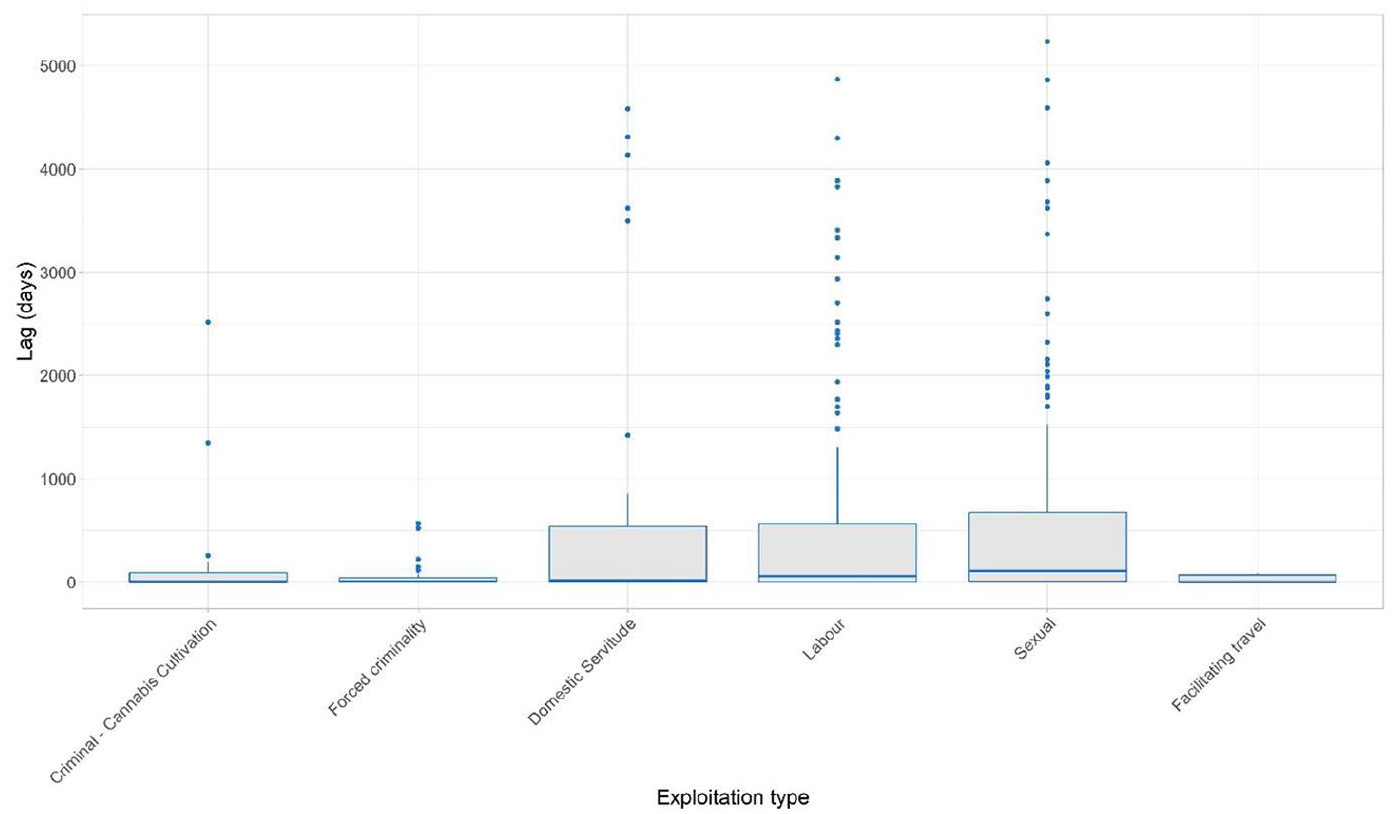
Reporting lag (days) in reporting by exploitation type (n = 406).
In considering the lag in reporting to the police, it was important to also consider the source of referrals and how the length of time which lapsed before victims reported their experience varied in terms of who they were reporting it to. Victims of modern slavery offences may come to the attention of the police directly, for example, through a victim contacting the police or through a police operation informed by intelligence, which results in the identification of victims. However, some victims first report their victimisation elsewhere, for example, to non-governmental organisations (NGOs), to officials whom they encounter at borders as they travel into the United Kingdom or when faced with deportation, or to other professionals that they may encounter, such as health or social workers and solicitors. These professionals then make referrals to the police or support victims to do so directly.
Our data suggest that only a small proportion of victims (n = 36, 10%) are identified directly by the police, that is, those with no lag, having been discovered via a police recorded incident or as a result of intelligence. Hence, most victims will have left exploitative situations before the authorities become involved. The average lag in reporting abuse to the police by origin of the enquiry is summarised in Table 2. Cases referred to the police of victims reporting to UKVI had, on average, the longest reporting lag (mean = 1280; around 3.5 years) and the largest variation associated with reporting time (SD = 1497). This was followed by those where victims had reported their victimisation to an external agency and were subsequently received by police as ‘referrals’ (609 days; 1.67 years). There were 47 cases where the origin of the report was ‘unknown’ (which comprised cases where this was not recorded) (527 days; 1.47 years). Shorter lags were associated with cases where victims reported directly to the police, either because of action taken following intelligence reports (33 days; just over a month) or through incidents reported directly to them (193; 6.35 months; see Figure 4). A Kruskal–Wallis test of the lag confirms a significant difference in the means of lag by enquiry origin (χ2(4) = 40.39, p < 0.01). The shorter lag for instances reported directly to police may be a result of proactive policing. This can prompt a proactive response where police purposefully look for victims based on information received. There may also be differences in the demographic of victims that are willing to report their victimisation directly to law enforcement.
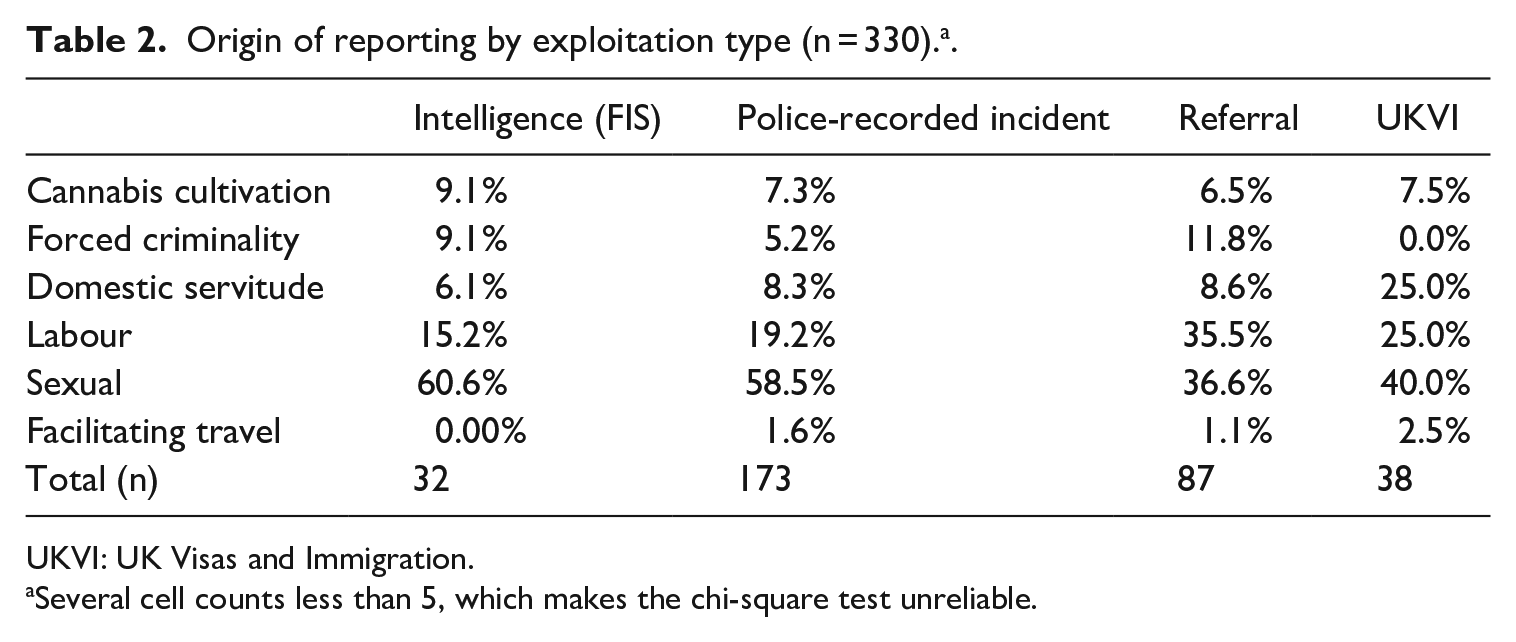
Origin of reporting by exploitation type (n = 330). a .
UKVI: UK Visas and Immigration.
Several cell counts less than 5, which makes the chi-square test unreliable.
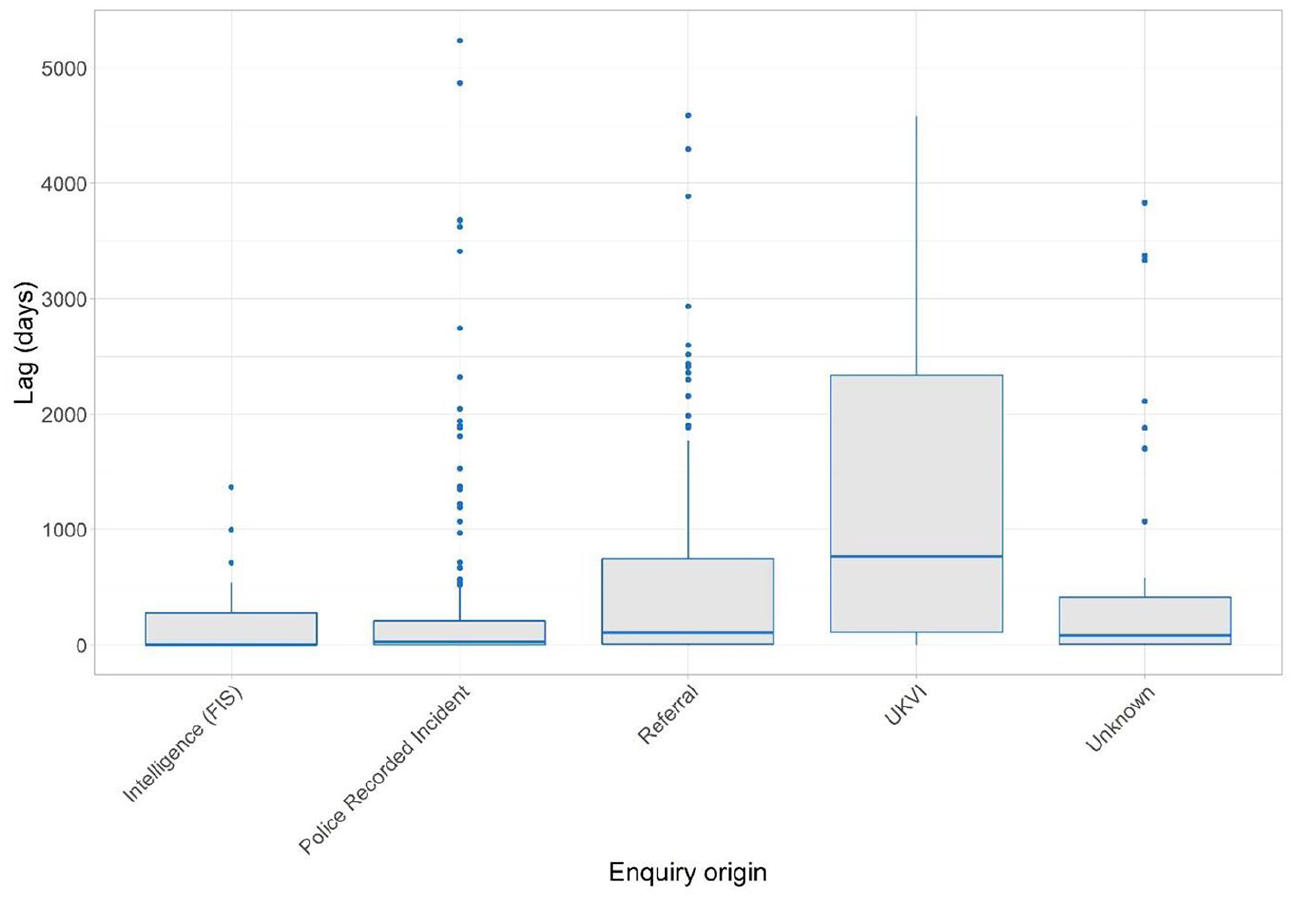
Reporting lag (days) in reporting by enquiry origin (n = 406).
Origin of reporting
Considering the origin of reporting by exploitation type, that intelligence reports and police action predominantly result in identification/reporting of sexual exploitation (61% and 59% each; see Table 2) is likely due to targeted police operations addressing this type of exploitation. Referrals from other agencies most commonly related to labour and sexual exploitation (just over a third for each). UKVI was associated with reports of sexual exploitation (40%), as via other pathways, but a quarter of their reports were associated with labour and domestic servitude cases. This was the most prominent reporting pathway for cases of domestic servitude when compared to other reporting origins.
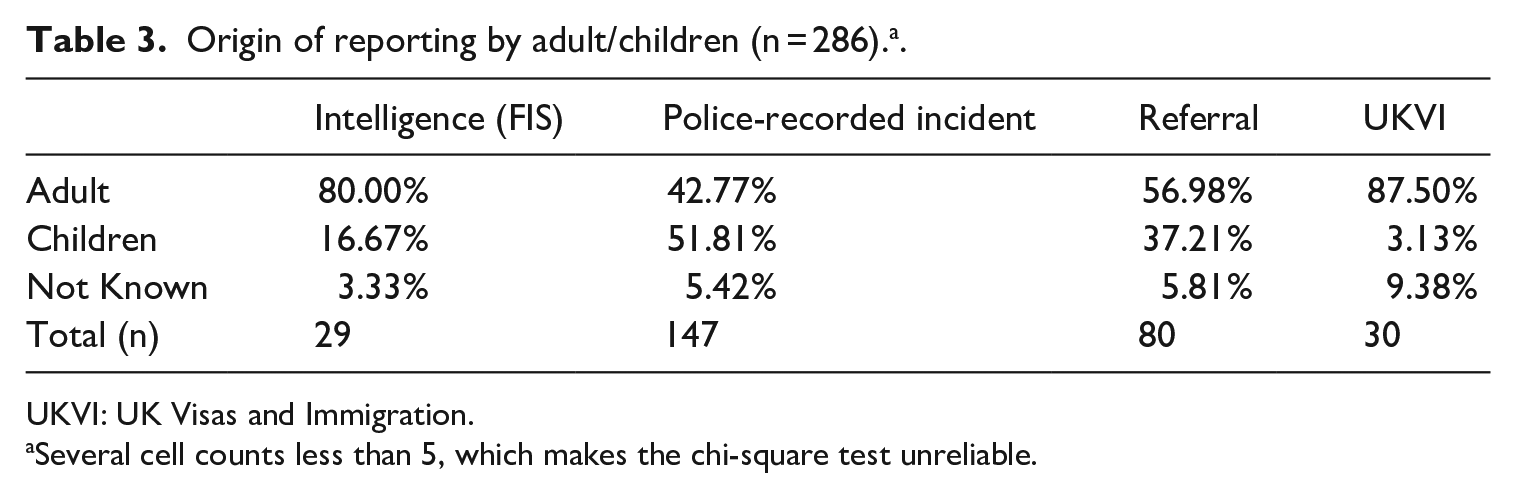
When considering the origin of reporting by adult/child, police intelligence and UKVI were more likely to identify/report adult exploitation (80% and 88% of their reports concerned adult exploitation, respectively; see Table 3). Referrals from other agencies/NGOs were also more likely to report adult exploitation (57%), but over a third of their reports related to children (37%) too. Reporting directly to the police was more commonly associated with exploitation relating to children – with over half of the reports relating to those under the age of 18 (52%).
Origin of reporting by adult/children (n = 286). a .
UKVI: UK Visas and Immigration.
Several cell counts less than 5, which makes the chi-square test unreliable.
Negative binomial models – Lag
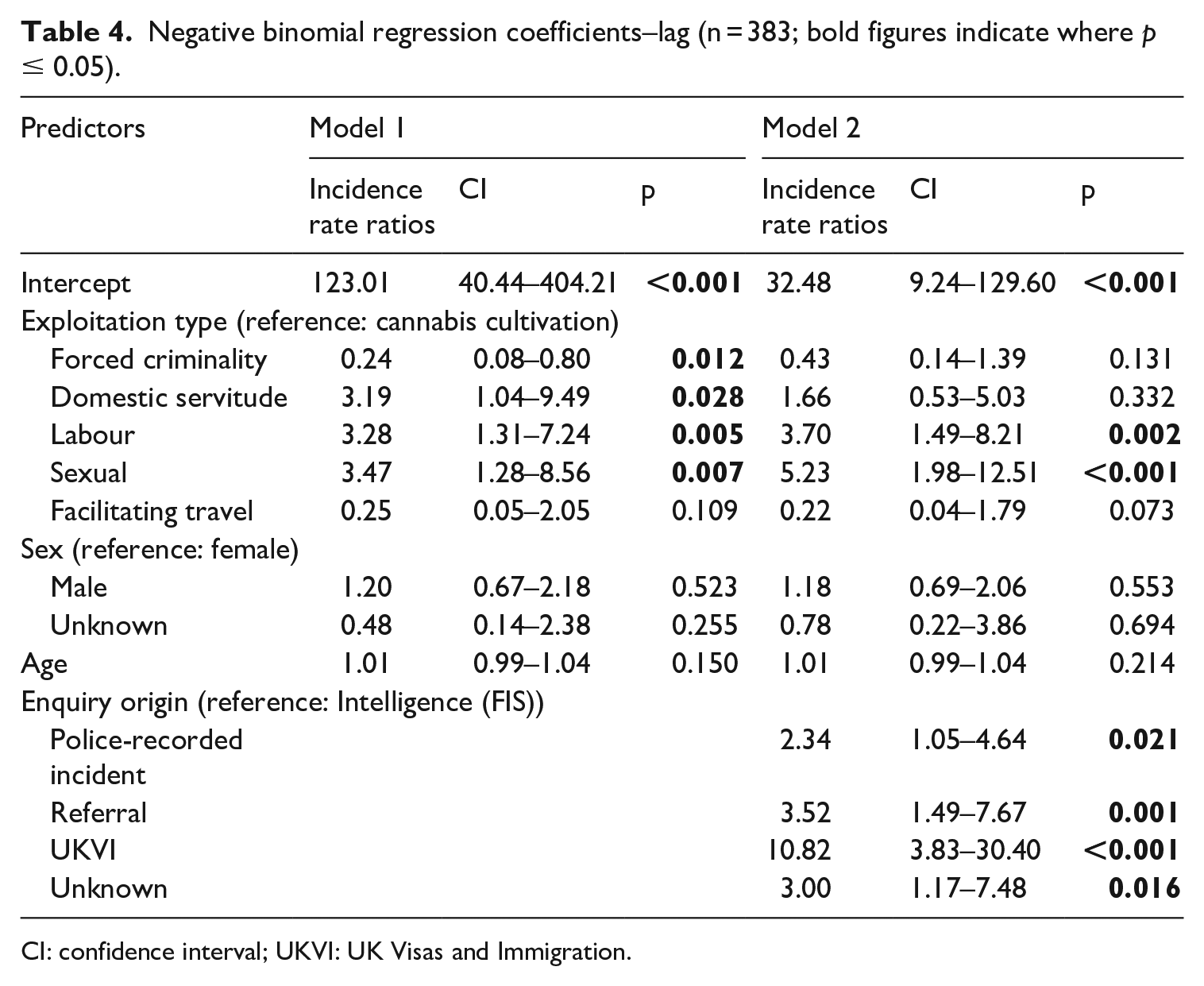
Once the sex of the victim and their age were controlled for in regressing the lag on exploitation type (Model 1), we identified that those exploited for the purposes of sexual exploitation (IRR = 3.47), labour exploitation (IRR = 3.28) and domestic servitude (IRR = 3.19) were associated with significantly longer lags before the exploitation was reported (see Table 4, Model 1). Lags in reporting associated with sexual exploitation were the longest.
Negative binomial regression coefficients–lag (n = 383; bold figures indicate where p ≤ 0.05).
CI: confidence interval; UKVI: UK Visas and Immigration.
When re-running the above outlined model to include enquiry origin (Model 2, Table 4), we again identified that those victimised through sexual exploitation (IRR = 5.23) and labour exploitation (IRR = 3.7) were associated with significantly longer lags (see Table 2, Model 2). The lag associated with cases of domestic servitude was no longer significant. As in the previous model, cases of sexual exploitation were associated with the longest reporting lag. Lags associated with this exploitation type were, on average, 12 times longer than those for forced criminality. Lags in reporting associated with reports made to the UKVI were associated with the longest reporting lag (IRR = 10.82). This was followed by other referrals from external agencies (referral IRR = 3.53) and those for whom the referral source was unknown (IRR = 3; see Table 4, Model 2). In both models, age and sex did not significantly influence the lag in reporting.
Association between duration and lag
To assess whether those exploited for longer periods were disinclined to report their exploitation for longer, the correlation between duration and lag was examined. On aggregate, the Spearman rank correlation was relatively weak (r = 0.14, p = 0.008). However, when disaggregating by exploitation type, moderate to strong correlations (from a social scientific perspective) were identified for labour exploitation and domestic servitude (r = 0.25, p = 0.013 and r = 0.44, p = 0.004, respectively). This would suggest that individuals exposed to these types of abuse may (on average) go longer without support and cases go longer before being investigated.
Discussion
Overall modelling of the duration of exposure to modern slavery exploitation and the time taken to report it (lag) revealed that those caught in domestic servitude are generally exploited for longer than those subject to other forms of labour and sexual exploitation. The length of time for which victims were exploited varied by gender and exploitation type. Women were exploited for longer than men in cases of sexual exploitation and forced criminality. Men experienced longer durations of exploitation compared to women in cases of labour exploitation, cannabis cultivation and facilitating travel. In terms of reporting, there was typically a 2-year lag between exposure to domestic servitude and labour exploitation before abuse was reported, compared to around 1.5 years in cases of sexual exploitation. By comparison, cannabis cultivation, forced criminality and facilitating travel came to the attention of the police in a matter of months. Overall, most exploitation is reported after it has ceased, suggesting that comparatively few victims immediately report to or are identified by police and other organisations, and that most survive unsupported by the criminal justice system in the immediate aftermath of modern slavery.
One implication of considering such findings is that the way in which law enforcement interventions operate needs to be considered not simply in terms of number of arrests or victims identified, but in terms of how long the exploitation has endured before any intervention. An increasing number of cases reported to the police where the duration of exploitation was shorter than in previous years might be indicative of success in combating trafficking. Conversely, the resolution of cases where exploitation has endured, though important, is also indicative of a greater degree of harm being caused and a system that is not working to facilitate identification and disclosure. Reducing the length of time during which people are in exploitative conditions or identifying and overcoming the obstacles that prevent people from reporting will result in decreased trauma and increased recourse to support and justice. Hence, duration and lag ought to be considered important measures of how the system is operating or maybe even a counterbalance to the focus on arrests and ‘rescues’, neither typical of how most exploitation ends. Most victims have coped with exploitation, escaped it and managed their lives for considerable periods before law enforcement and other agencies become involved. This is why many are hesitant to commit to engaging in investigatory process that has the potential to threaten whatever stability they have secured for themselves, to reopen memories of the original trauma, particularly in the increasingly hostile immigration environment, or to put them or their loved ones at risk of recrimination from their exploiters.
Duration of exploitation and insights into reducing the length of exploitation
Our findings reveal that duration of exploitation varies across exploitation type and gender. Men are most frequently exploited in otherwise legitimate labour markets (UNODC, 2018). The length of exploitation victims endure within these legitimate labour markets is typically longer than the exploitation endured by those working in the primarily illicit market that facilitates sexual exploitation. This is most likely a product of the light touch approach to regulating legitimate labour markets in the United Kingdom. Although the powers of the Gangmasters Labour Abuse Authority (GLAA) have been expanded to include the regulation of all labour markets, it remains under-resourced in relation to its remit (Davies, 2020) and is heavily reliant on ‘whistleblowers’ to report infractions (Stevenson and Cole, 2018). This shifts responsibility onto workers who may feel at risk of being exploited, excluded or harmed by unscrupulous employers if they come forward or come further on behalf of others. Conversely, many exploited workers do not consider themselves as such. Many consider working in the United Kingdom’s cash economy as better than working in their home countries where pay rates are lower, even though they know they are paid less than local workers (Davies, 2020; Kenway, 2021).
In the United Kingdom, the sex industry was the focus of anti-trafficking work prior to other forms of labour exploitation. This may partly explain why the duration of sexual exploitation endured by adult women and children tends to be shorter. However, such outcomes should not be taken as evidence that modern slavery policy is more effective at tackling the exploitation of women. Our findings indicate that exploitation in domestic servitude has a significantly longer duration than other forms of labour exploitation, including sexual exploitation. Those victimised within domestic servitude are often also subject to other types of victimisation (Rose et al., 2021). Those in domestic servitude are particularly vulnerable to isolation as it is founded on informal arrangements, and workers are confined to a family home with very little contact with others (Rose et al., 2021). The opportunities for those exploited in these circumstances to ask for help or for others to recognise their exploitation are minimal and very much a product of the Overseas Domestic Worker (ODW) policy that renders domestic workers dependent on their employers for residency (Fudge and Strauss, 2014: 165). Efforts to strengthen the ‘resilience of communities’ – especially Nigerian communities – towards domestic servitude, articulated in the government’s Serious and Organised Crime Strategy (HM Government, 2018: 41), continue to miss the point that victims are rendered vulnerable to exploitation by law that prevents them from changing jobs, keeping them in low paid, long hours employment that prevents them accessing education and gives them no other avenues of returning the remittances they typically owe to family in their countries of origin. They are often unable to report their exploitation without risking deportation, and hence often only do so when the threat of deportation is imminent and they have little to lose.
Lag in reporting of exploitation and insights into encouraging victims to come forward
Lags in reporting are also indicative of how the system is operating for people who are vulnerable to exploitation. Our findings indicate some very lengthy lags across all exploitation types but significantly longer lags associated with sexual and labour exploitation, as well as domestic servitude. Reporting lag did not vary by age or sex of the victim.
At present, there are three main routes into the identification of potential victims with varying implications for the length of time between the exploitation and reporting:
Proactive interventions by police, which are more likely to result in the immediate discovery.
Those not identified through proactive intervention are then more likely to be identified by other external agencies. In these cases, the lag between exploitation and reporting is around 2 years.
Finally, where migrants face deportation, they may reveal their exploitation for the first time, for example, to the UKVI, producing what appear in our dataset as longer lags. The extensive lags in reporting of this form of exploitation are indicative of a system in which immigration law undermines modern slavery policy, causing those who are exploited keep their experiences to themselves until they face a threat of deportation.
Victims of modern slavery, particularly those without leave to remain in the United Kingdom, have been frequently unable to access the support they need and have been criminalised and deported (Hales, 2017; Nicholson et al., 2019). Following a super-complaint in 2018 regarding police responses to migrant victims, HMICFRS (2020) specifically identified that inconsistent responses to victims revealed the operation and/or culture of policing that prioritises immigration over investigation of crime and the safeguarding of victims, particularly in cases of modern slavery (and domestic abuse). For those in exploitative work, regardless of the legitimacy of the market, knowledge that deportation or imprisonment is a potential outcome of contact with authority deters reporting. But while increasing support and the ability to access this support is important, it fails to address the limited options of those on the margins of society and with precarious legal status to access employment through any other means. The hostile environment, anti-immigration policy is at odds with the anti-slavery narrative, neglecting and compounding both the employment situations that lead to exploitation and the barriers that exist to maintain that exploitation (Bowling and Westernra, 2020; Gadd and Broad, 2018; Jobe, 2020) – and to lengthen the reporting lag. When Home Secretary Priti Patel highlighted the misuse of the asylum and NRM systems in the backdrop to the New Plan for Immigration, it prompted concern from NGOs and the Anti-Slavery Commissioner that this would exacerbate vulnerabilities of trafficked victims and make reporting less likely (Bulman, 2021). Exploitative labour must be ‘understood as part of and an outcome of processes of widespread, normalised, low paid, insecure, precarious work’ (Lewis and Waite, 2015: 2), which severely limits both their choices and their interactions with authority. The higher numbers of people reporting to the UKVI after a comparatively longer lag in these data may indicate that these individuals have not previously been in contact with anyone receptive to reporting until they are in a position where they are leaving the country. Even where contact is made with authorities at the border, the response can be far from supportive because failed asylum seekers can be misconstrued as bogus claimants. A report by the Independent Chief Inspector of Borders and Immigration (2021) found that while the Modern Slavery Strategy had highlighted the opportunities for Border Force and UKVI to identify victims at the border, there have been tendencies to refer victims without status in the United Kingdom to immigration authorities rather than to investigate modern slavery activity. Efforts to adequately engage with victims are hindered by issues with staff awareness of and training in modern slavery and how to appropriately utilise specialist modern slavery officers (Hadjimatheou and Lynch, 2017; Independent Chief Inspector of Borders and Immigration, 2021).
However, cases where there is no lag between exploitation and reporting – for example, when there is a police raid – often reveal more complex interdependencies between individuals involved in the offence and with organisations offering support. Cases involving children involved in coerced drug dealing (‘county lines’) or who have been ‘groomed’ to provide sexual services are indicative of earlier failures of the care system and the inequalities within British society that push some young people to the margins and into situations where they are willing to take part in these activities, seeing no feasible alternatives (Gearon, 2019; Windle et al., 2020). Something that needs to be better understood in modern slavery policy is how duration and lag contribute to a system in which many young people who are exploited as children often receive NRM decisions as adults. A 14-year old who has been criminally exploited for over 2 years, then reported it 8 months after the exploitation ended, will be close to 17 before they enter the NRM. If their case is not resolved within a year, they will be adults before a conclusive grounds decision is made. This can easily diminish their right to protection, especially if foreign nationals, as once adults, the best interests of the child are no longer paramount in decisions made about them.
Our findings add to the existing but limited research on duration and provide a unique, exploratory insight into the variation and potential use of considering the lag in reporting. The duration for which individuals are exploited could be shortened and avoided entirely by proactive intervention by authorities, not limited to law enforcement but any service that may encounter someone in need of support. This can be achieved by reducing the risks of criminalisation and deportation for those who are exploited. Reducing both the duration for which victims experience exploitation and the lags in reporting to the police must therefore be seen as indicators that are just as important as the actual number of arrests, prosecutions and victims identified. As has been the case in some police areas, debunking the myth that most victims are ‘rescued’ in police raids is essential if more victim-centred practice is to be developed. Considering strategy in terms of disrupting ongoing exploitative activity must take account of the context within which those exploited make decisions, including not to report their experiences or not to support a prosecution for fear of being deported and/or returned to a more difficult situation. Better measures of exploitation duration and lags in reporting will in turn expose the perverse effects of anti-slavery policy that has become tethered to anti-immigration policy (Gadd and Broad, 2018).
Footnotes
Acknowledgements
We would like to thank the police data analyst who prepared the data and police staff who provided feedback.
Declaration of Conflicting Interests
The author(s) declared no potential conflicts of interest with respect to the research, authorship and/or publication of this article.
Funding
The author(s) disclosed receipt of the following financial support for the research, authorship and/or publication of this article: This work has been undertaken as a result of ESRC funding and the authors would like to acknowledge and thank the ESRC for this funding (Grant Ref.: ES/R004471/1)
