




Abstract
This article draws upon quantitative and content analysis of 585 reports of rape recorded within two police force areas in England in 2010 and in 2014 tracking individual incidents to eventual outcome to examine the impact, if any, of intersecting inequalities on trajectories of rape cases reported to police. The data were collected as part of the wider Economic and Social Research Council funded Justice, Inequality and Gender-Based Violence research project which examined victim-survivor experiences and perspectives on justice. Building on existing distinctions between types of rape case based on the relationship between victim-survivor and accused, the results suggest age and gender are significant factors in how sexual violence, and the criminal justice system, is experienced. While younger women and girls were disproportionately affected by certain types of sexual violence case and more likely to come into contact with the criminal justice system compared to men and older women, they were not necessarily more likely to achieve a conviction. The findings also confirm that some of the most vulnerable victims-survivors of sexual violence, especially those with poor mental health, are still not achieving criminal justice. Victims-survivors from Black and minority ethnic group or lesbian, gay, bisexual, transgender, transsexual, queer groups are underrepresented within the criminal justice system, implying these groups are not seeking a criminal justice response in the same way as ‘white’ heterosexual victims-survivors.
Introduction
For many years, a number of approaches have made significant contributions to our understanding of rape victim-survivor experiences of the criminal justice system (CJS) including studies that rely upon victim-survivor testimony (e.g. Brooks and Burman, 2016; Campbell, 2006; Rich, 2014; Rumney, 2008) or perspectives of professionals within criminal justice agencies (e.g. Regehr and Alaggia, 2006); those based on court observation (e.g. Durham et al., 2017; Smith and Skinner, 2012) or analysis of rape trial transcripts for evidence admissibility or sentencing outcomes (e.g. Burman et al., 2007) as well as studies that draw upon the interpretation of data derived from criminal justice agencies such as the police and Crown Prosecution Service (CPS) (e.g. Hester and Lilley, 2017; Hohl and Stanko, 2015; Kelly et al., 2005; Lea et al., 2003) . In this article, we focus on the latter of these approaches. While having some obvious limitations (for instance, we know that not every incident of victimisation comes to official attention, and that using such data present victim-survivor ‘stories’ through the eyes of criminal justice personnel), this approach allowed us to explore CJS responses and analyse the progression and trajectories of those cases that are reported to, or at least recorded by, the police. Previous such studies have recognised that certain kinds of cases take different pathways through the CJS and produce unique investigative challenges. For instance, previous research found high withdrawal rates in rape cases committed as part of domestic abuse (Hester and Lilley, 2017), comparatively higher conviction rates for rapes committed by strangers when compared with other types of cases (Rumney et al., 2016), and evidential challenges brought by historic cases. This article draws upon a quantitative and content analysis of 585 rape reports to police to examine the way in which the intersection of gender and age impacts upon case trajectories and outcomes.
Background
The CJS in England and Wales remains under intense scrutiny for the way in which it responds to victims-survivors of sexual violence, and it is the response to complaints of rape and talk of ‘performance’ in criminal justice terms that are arguably at the epicentre of public and academic debate. Of the headlines generated by existing empirical studies involving official statistics, and inspection reports seeking to explore what happened to rape cases that came to the attention of the CJS (Feist, 2007; Grace et al., 1992; Harris and Grace, 1999; Hester and Lilley, 2017; Kelly et al., 2005; Rumney et al., 2016), the most conspicuous relate to the low overall conviction rate for rape, which currently stands at 7.5% for England and Wales (HMICFRS, 2016). This figure is central to the idea that a ‘justice gap’ exists (Brown and Walklate, 2011; Temkin and Krahé, 2008) characterising the CJS in England and Wales as failing to deliver on its obligations to victims-survivors (deemed to be conviction), and consequently, society in general.
In attempting to address the justice gap, a range of policies, measures and interventions have been introduced across the CJS, alongside manifest changes in the law and an emphasis on support mechanisms and referral processes. The last 20 years have seen, among other things, the introduction of Sexual Assault Investigative Techniques (SAIT) officers, the establishment of specialist police units focused only on sexual offences changes in the guidance given to prosecutors, an increase in the use of special measures 1 and the introduction of Sexual Assault Referral Centres (SARCs) and Independent Sexual Violence Advocates (ISVAs). Such developments, particularly those that have focused on supporting victims-survivors have made significant contributions to the pursuit of justice, for example, the involvement of ISVAs in reducing withdrawal rates (e.g. Rumney et al., 2016) and support from a SARC halving the chances of victim withdrawal (Hohl and Stanko, 2015). Despite these advances, concerns remain about how policy translates into effective practice via what has been referred to as an ‘implementation gap’ (Stern, 2010). The apertures of both justice and implementation provide a bleak context through which to examine the social and legal response to rape and consequently, both have featured as rationale for several key initiatives such as the government’s current Ending Violence Against Women and Girls strategy, the Police and Crown Prosecution Service’s joint Rape Action Plan (2014), and the Review into the Investigation and Prosecution of Rape in London (2015).
In 2016–2017, the police received 41,150 reports of rape being committed against adults (HMICFRS, 2016), while the more nationally representative data Office for National Statistic (ONS)/Crime Survey for England and Wales (CSEW) victim survey (ONS, 2013) estimated that 85,000 women and 12,000 men become victims-survivors of rape every year. This statistical gap between national prevalence and rapes reported to the police provides elementary evidence for what is commonly referred to as the ‘dark figure’ of crime. Although victim surveys such as the CSEW are considered essential for a better understanding of prevalence, they too suffer from imperfections such as their failure to integrate groups such as the homeless and the institutionalised (Brown et al., 2010) or older (60+ years) victims-survivors of intimate violence, including rape (Bows and Westmarland, 2017). As the challenge of establishing prevalence figures for sexual violence remains significant, what is perhaps clearer, is that more people than ever before are reporting that they are a victim-survivor of rape to the police with recently published data revealing a 123% increase in the number of rapes being reported to the police since 2011–2012. The increase in reporting does not necessarily mean that more rapes are being committed (although of course this cannot be ruled out either) but has happened alongside changes in police recording practices (ONS, 2015) and a series of high-profile investigations into sexual abuse, such as Operation Yewtree and the ongoing Independent Enquiry into Child Sexual Abuse that is implicated in elevating the profile of sexual abuse and creating a climate in which more survivors are willing to report (ONS, 2013).
Method
The findings reported here form part of a wider study into ‘Justice, Inequality and Gender Based Violence’ 2 (hereafter the Justice project), which examined victim-survivor perspectives on justice. This article draws on quantitative and content analysis of case file data on rape reported to the police, capturing and coding information on demographics of complainants and accused (e.g. gender, age, ethnicity), victim-survivor vulnerabilities (e.g. mental health and intoxication) and needs (e.g. disability and substance misuse), incident characteristics (e.g. who reported), aspects of the police investigation (e.g. forensic exam and other evidence gathered) and outcome (e.g. deemed a crime, arrest, charges and convictions). Existing data held by project partners on 436 individual rape cases from 2010 was augmented and updated with a further set of 149 individual rape incidents reported to police within the same force area in the South West and North East England during the months of May and November 2014. The supplementary data were accessed on-site at police force headquarters (or equivalent), extracted and anonymised by removing all potential identifiers before being securely removed off-site for coding and analysis. For the 2014 data, a pro-forma was developed (based on earlier data extraction) to ensure a consistent approach to data extraction across the two sites. The sample criteria included incidents involving victims-survivors aged 14 years and over at the time of report and concluded cases only (data collection took place 19–25 months after report to allow enough time for the case to conclude). A quantitative dataset developed by reading and coding the textual/qualitative data collected for each incident using a comprehensive coding framework. The ‘new’ and existing datasets were combined using a retrospective, qualitative harmonisation approach (Griffith et al., 2013) allowing us to answer our research questions ‘how do victims-survivors of GBV experience criminal (formal) “justice” and how does inequality affect access to support pathways and trajectories through the criminal justice system?’ in a meaningful and statistically valid way. The data were analysed using the software package SPSS Statistics 23. Exploratory descriptive analysis (frequencies and crosstabs) was conducted for complainant and suspect characteristics (e.g. gender, age, ethnicity) and the type of case based on relationship between complainant and accused, to identify significant associations in the data. Binary logistic regressions were then used to ascertain the effect of age, mental health and specialist support services on CJS outcome.
Terminology
‘Victim-survivor’ or ‘complainant’ refer to the injured party/alleged victim, however, we recognise that individuals may self-identify with either or none of these terms. We use ‘suspect’ and ‘accused’ interchangeably. ‘Younger’ victims-survivors were considered those aged 25 years and under (at the time of incident) with a subgroup of much younger (aged under 16 at time of incident), and ‘older’ were those aged 50 years and over. The broad age range defining older victims-survivors reflects the differing definitions within the existing domestic and sexual abuse literature which ranges from 45+ years (e.g. McGarry et al., 2017) to 65+ years (McCleary-Sills et al., 2018). Regarding ethnicity, for analysis purposes, we coded anything recorded other than ‘white’, ‘white British’, ‘white European’ or ‘white other’ as Black and minority ethnic group (BME). We use the acronym LGBTQ+ in its broadest sense (recognising that people may self-identify in a range of other non-heterosexual sexual orientations and genders). The term ‘mental health issues’ (MHI) is used throughout recognising this covers a range of conditions from anxiety and depression to schizophrenia and dementia. The MHI variable was coded ‘yes’ in the dataset where ‘mental health’ was either flagged specifically by police or referred to anywhere within the case file information. It is perhaps important to note here the limitations of these data in that the nature and severity of the mental health issue was not recorded consistently within, and indeed across, the police data systems, and it is possible that the data are under-inclusive as not all complainants with an MHI will disclose symptoms to police. Also having a mental health issue may not impact on the attrition process in the same way as being recorded as having a mental health issue (Ellison et al., 2015).
Findings
This section profiles the 585 incidents of rape reported exploring how gender, age, mental health and specialist support impact on experiences of rape and criminal justice outcome.
Who was involved?
The majority of complainants (91%) were women, of whom 87% were ‘white’. Just 9% of complainants were men and all, except one, recorded as ‘white’. No complainants were recorded or identified as transgender. As would be expected in rape cases almost all accused were men, although a woman was recorded as suspect in three incidents (a mother accused of being complicit in historical rape and sexual assault against her daughter from the age of 4 years, and 2 women accused of non-consensual sexual activity against a male partner; all were deemed a crime but not rape). Complainants were aged between 2 and 93 years at the time of assault. Most were younger (25 years and under, 65%) compared to 3% older complainants (50 years and over). Suspect age was missing in 21% of cases but, where recorded, almost half (49%) were younger (with 12% under 16 years old). Information regarding sexual orientation, of either complainant or accused, was missing in all cases except for one (report of rape by a male same-sex intimate partner).
The complainant knew the suspect in 89% of cases. Applying the same case types as Hester and Lilley (2017), based on the relationship between victim-survivor and accused, the majority of reports to police were acquaintance rapes (i.e. where the suspect was known to the victim to some extent but was not an intimate partner or family member, 39%), followed by rapes by a current/ex intimate partner, that is, in the context of intimate partner violence (IPV, 28%). In 22% of incidents, the complainant was an adult survivor of historic childhood sexual abuse (CSA), that is, where the rape took place longer than a year ago but an adult by the time of reporting. Less than 2% of cases involved non-historic rape by a family member (occurring less than 12 months prior to report).
General case progression
As shown in Table 1, the majority of rape reports to police were subsequently recorded as a crime (86%). After investigation, the police considered 224 cases (38%) should be referred to the CPS for a charging decision. The CPS decided to charge the accused in 65% of cases referred. Over half (55%) of referred cases (representing 21% of all incidents) proceeded to trial. Seventy-nine cases resulted in a conviction (equal to 14% of all incidents) and over half of the successful convictions were for rape (58%) which equates to 8% of all incidents reported to police closely matching the 7.5% figure reported by the national Rape Monitoring Group (HMICFRS, 2016). The accused was acquitted in one third of cases proceeding to trial (33%) and convicted of a lesser offence in a quarter of cases proceeding to trial (25%).
Case outcome and attrition (gender, age, mental health, specialist support).
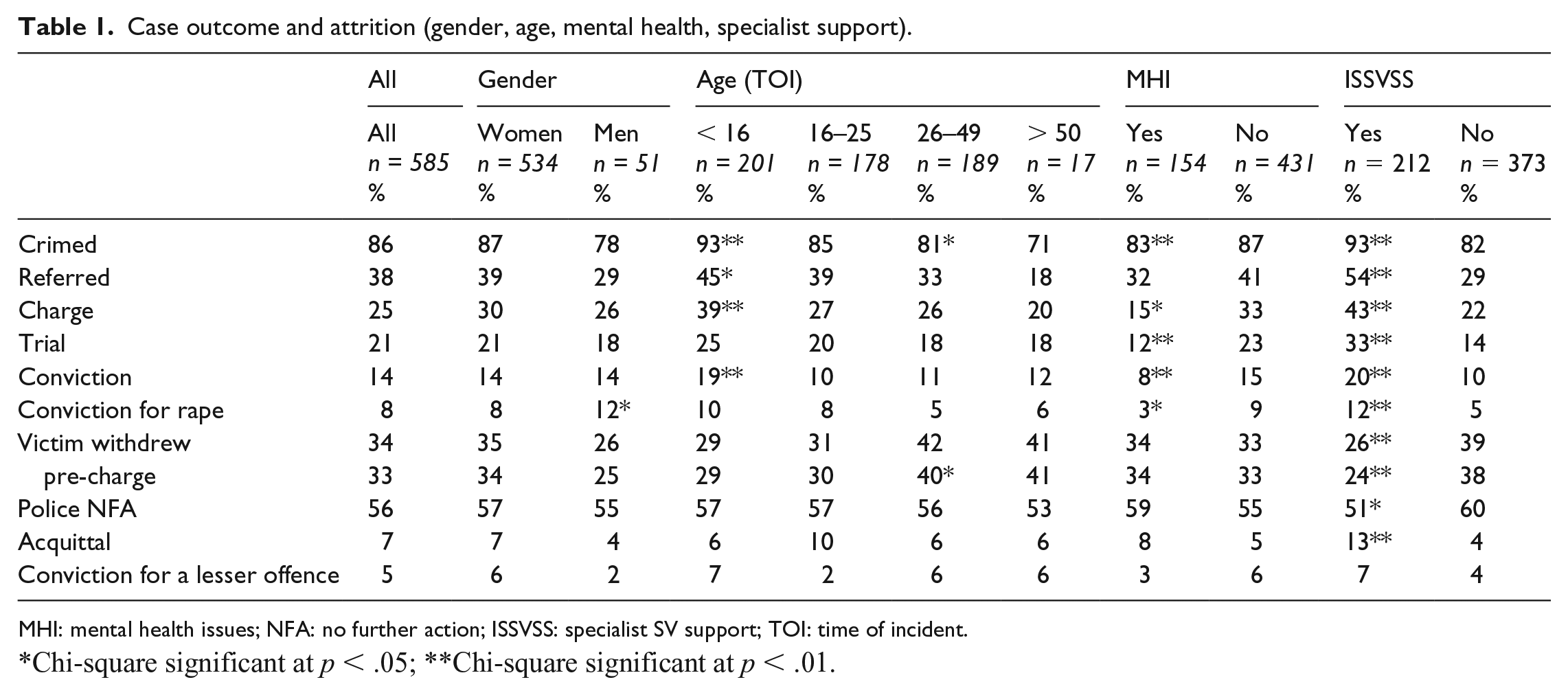
MHI: mental health issues; NFA: no further action; ISSVSS: specialist SV support; TOI: time of incident.
Chi-square significant at p < .05; **Chi-square significant at p < .01.
Trajectories showed non-historic familial rape and historic CSA were most likely to progress all the way through the CJS and result in conviction (36% and 19% respectively) compared to IPV rapes (12%) and acquaintance rapes (11%). This reflects recent trends (Hester and Lilley, 2017; Kelly et al., 2005; Lea et al., 2003) showing acquaintance cases as the most common type to be reported yet the least likely to result in conviction. Despite a lack of forensic evidence in historic CSA cases, conviction may be more likely because there is often more than one victim, because victims had disclosed similar accounts to variety of people and medical or social service records provided supporting evidence (Hester and Lilley, 2017, 2018)
Impact of mental health
In over a quarter of all incidents reported (26%), the complainant was recorded as having mental health issues (MHI) ranging from anxiety, depression and post-traumatic stress disorder (PTSD) to self-harm, eating disorders, borderline personality disorder, schizophrenia and dementia. Most of these were women (90%) and younger (62%). Incidents involving victims-survivors with MHI were significantly less likely than those without MHI to be deemed a crime (83%, p < .01), to result in charge (15%, p < .05), to proceed to trial (12%, p < .01) and to result in conviction (8%, p < .01). Exploring attrition pathways, 33% of all cases not considered a crime by police involved victims-survivors with MHI. While the rate of withdrawal was similar between complainants with MHI and those without, cases involving those with MHI were more likely to result in no further action (NFA, 59%) compared to those without MHI (56%). One possible reason may be that police find some victims-survivors with MHI difficult to understand or confused and their stories are seen as inconsistent (Hester and Lilley, 2017, 2018).
Impact of specialist support
Over one third of complainants (36%) were referred to or receiving support from specialist sexual violence support services (Rape Crisis/ ISVA service). Compared to those not referred/receiving support these cases were significantly more likely to be deemed a crime (p < .01), result in charge (p < .01) and (controlling for age, ethnicity and gender) were 1.9 times as likely to result in a conviction (p < .01). They were also 42% less likely to result in NFA (p < .05) and 49% less likely to withdraw from the process (p < .01).
Younger victims-survivors (25 years and under)
More than half of all rapes reported (57%) were against younger women and girls who, compared to younger men and boys, were more likely to report assault by an acquaintance (45%) or current/ex intimate partner (26%). Rapes against younger women and girls included a number of assaults by peers (friend or fellow pupil). Nineteen complainants were aged 13–15 years (two assaults occurred on school premises). In most of these cases, which tended to be reported by a third party (parent, social services or school), the victim-survivor did not wish to engage with the police investigation and resulted in an NFA decision, despite clear efforts by police to gather evidence from a variety of sources (including forensics, suspect interviews and witness statements). Acquaintance cases against younger women were most likely to involve a complainant under the influence of alcohol at time of incident (a number of reports included women 16–18 years being sexually assaulted while at a party many of whom were noted as being incapacitated/ drunk at the time of assault). Cases involving a drunk complainant were more likely to result in an NFA decision due to combination of ‘evidential difficulties’ and unwillingness of the victim-survivor to engage with the investigation despite case files suggesting that police pursued a range of avenues to meet the evidence threshold to secure a charge (including forensics, witness statements, photographs and/or CCTV, seizing clothes and communications evidence, for example, texts, emails, social media).
Of rapes by a current/ex intimate partner 6 involved a complainant aged 12–13 years at the time of incident and in 23 cases the victim-survivor was 14–15 years (male suspects all of similar age or slightly older). Many were reports of non-consensual/coerced sexual activity in the early stages of a relationship reported by either school, social services or parent and most (60%) resulted in NFA due to evidential difficulties or victim withdrawal.
In contrast to cases involving younger women and girls, two thirds (66%) of rapes against younger men were historic CSA (90% of those under 16 years, Table 2). Despite such cases being less likely to yield forensic evidence because of the time lapse (the oldest complainant reporting 50 years after the abuse occurred) and significantly less likely to be referred to specialist sexual violence support services (19%, p < .05) than younger women and girls (and indeed all other victims-survivors), cases involving younger male complainants were less likely to drop out of the system due to victim retraction/non-engagement and more likely to result in conviction for rape (13% of men under 16 years and 15% of men 16–25 years compared to 10% of women under 16 years and 8% of women 16–25 years). However, as age increased the type of case involving male complainants changed, with acquaintance rape accounting for 77% of assaults against men aged 16–25 years (average age of complainant was 21 years). In 70% of these cases, the complainant had been under the influence of alcohol or drunk at time of assault. All were recorded as a crime except for three cases (deemed a false allegation) but more than half (58%) resulted in an NFA decision (mostly due to evidential difficulties or deemed not in the public interest). Only one case was referred to CPS for a charging decision (based on forensic evidence) but no charge was brought in this case. An intimate partner was accused in two cases (one same-sex and one heterosexual relationship), both were crimed but resulted in police NFA.
Case features and outcomes (by complainant age and gender).
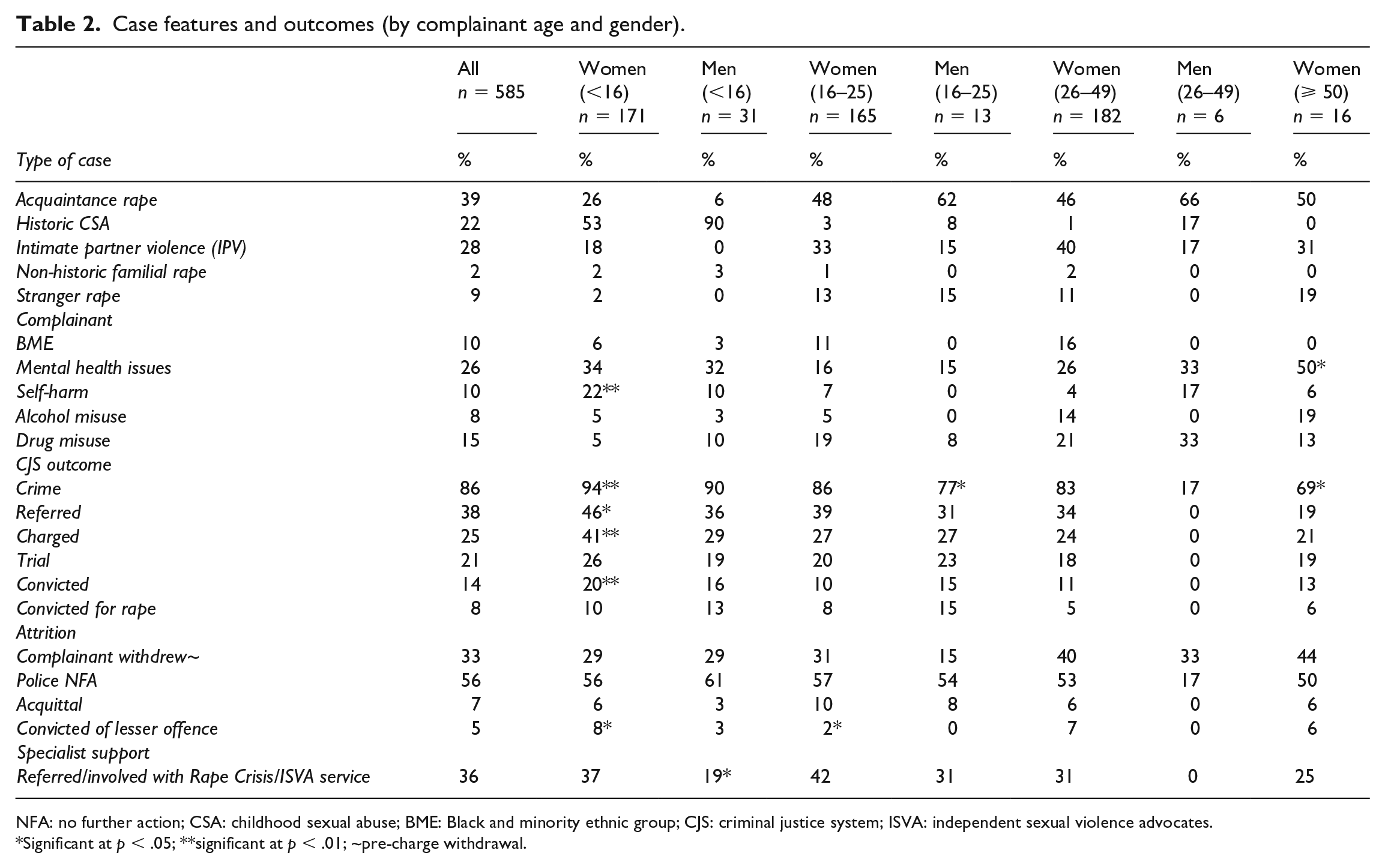
NFA: no further action; CSA: childhood sexual abuse; BME: Black and minority ethnic group; CJS: criminal justice system; ISVA: independent sexual violence advocates.
Significant at p < .05; **significant at p < .01; ~pre-charge withdrawal.
Victims-survivors aged 26–49 years
Almost a third of incidents involved a victim aged 26–49 years (32%). Again, most were women (97%) and ‘white’ (83%). Twenty-nine victims-survivors, all women, were coded as BME (equivalent to 50% of all BME complainants). Women mostly reported acquaintance rape (57%) followed by rape by a male current/ex-partner (41%). Of 20 reports of stranger rape, 6 were deemed a false allegation and of the 14 incidents deemed a crime 10 were undetected, mostly due to evidential difficulties (70%). Within this age group were a number of cases of sex workers reporting rape by a client. Trajectories of this specific ‘sex worker-client’ case-type showed these cases were less likely to progress through the CJS than any other type of rape case.
Two thirds of men aged 26–49 years (four cases) reported acquaintance rape. Two cases were reported by a third party and after speaking to police the alleged victim stated that a rape had not occurred; in another, the accused was a family member of a female ex-partner who was arrested but NFA was taken as deemed a false allegation, and in another, despite a forensic exam and DNA tests, the suspect could not be identified. The remaining two cases involving men involved a self-reported historical CSA case and a report of rape by a female intimate partner (neither were deemed a crime).
Rapes against women aged 26–49 years were more likely to progress through the system than rapes against men the same age. In fact, only one of the six assaults reported by men aged 26–49 years was deemed a crime (acquaintance rape NFA-ed due to the victim withdrawal and no suspect being identified). The five incidents not recorded as crimes were three acquaintance rapes, one historic and one IPV case. In the latter two, the complainants’ mental health issues were reported as the main reason no offence could be established (in the IPV case the case file suggested the complainant had a long history of mental health issues and was being treated under section 117 of the Mental Health Act 1983. No offence of rape could be made out, and this case was treated as a vulnerable adult/adult concern case). None of the male victim-survivors were referred to or involved with specialist support services.
Older victims-survivors (50 years and over)
Less than 3% of complainants (n = 17) were older at the time of incident, lower than the 5% reporting rate for victims-survivors (50 years and over) found by Ball and Fowler (2008). All, except one, were ‘white’ (ethnicity in 1 case unknown) and all, except one, were women (one report by 83-year-old man of rape by 63-year-old male acquaintance, the victim had MHI and housing/homelessness issues and the case deemed not in the public interest). In most cases (81%), the accused was either an acquaintance or intimate partner. In three cases, the suspect was a complete stranger (the complainant retracted in two but in the other, a 51-year-old woman was dragged into a side street and raped–the accused was convicted and sentenced to life imprisonment). The only other case resulting in conviction involved a 51-year-old woman assaulted by a paid carer/professional who was arrested for attempted rape, convicted of sexual assault and detained under section 37 of the Mental Health Act).
Older complainants were significantly more likely to be recorded as having MHI (50%, p < .05–including a 93-year-old care home resident whose dementia was the main reason no offence could be established). Three were recorded as having issues with alcohol misuse (including one IPV case where the 66-year-old complainant with MHI, self-harm and learning difficulties retracted the allegation and her husband was released with NFA). More than a third of complainants (6 incidents) had consumed alcohol at the time of the incident (with 1 incapacitated/drunk at the time of assault). None of these cases resulted in a referral to the CPS for charge. After men aged 26–49 years older, female victims-survivors were least likely to be referred to or involved with specialist support services.
Compared to younger victims-survivors (women and men), incidents involving older victims-survivors were significantly less likely to be deemed a crime (69%, p < .05), and 82%t less likely to be referred for charge (p < .05).
Discussion
Building on existing distinctions between types of rape case based on the relationship between complainant and accused (Hester and Lilley, 2017), our results suggest the intersection of age and gender is a key factor in understanding how sexual violence, and the CJS, is experienced. Supporting evidence that sexual violence is gendered (e.g. Barter, 2009; Bows and Westmarland, 2017; Home Office, 2013) and challenging the ‘real-rape’ myth of stranger rape against a young female (Estrich, 1987) our analysis showed that women, particularly younger women and girls, were disproportionately affected by sexual violence by peers or within the context of IPV. This echoes research suggesting while both young men and young women experience peer-on-peer abuse, they do so in gendered ways (Firmin and Curtis, 2015) with young women and girls more frequently abused by their peers than boys and young men and more likely to report a negative impact on their lives (Barter, 2011; Firmin, 2011). Prevailing gendered perceptions and sexist attitudes among young people (Frosh et al., 2002; Silverman et al., 2006) plus confusion about what consent is (Firmin and Curtis, 2015) are blamed for high rates of sexual coercion and intimidation among young people (Barter, 2009, 2011) Misunderstandings of non-consensual sex and coercion techniques used by young men mean young women and girls may feel pressured to have sex when they do not want to (Coy et al., 2013) and allow young men and boys to rationalise rape to avoid responsibility (Coy et al., 2013; Silverman et al., 2006). Sexual violence within young people’s intimate relationships, as in adult IPV, can form part of a pattern of abusive and controlling behaviour that can be just as harmful, if not more, as abuse in young people’s relationships typically escalates more quickly than adults (SafeLives, 2017). Thus, there will be similar risk factors for attrition for young women and girls, such as coercion or fear of further abuse from the perpetrator, which may be compounded by persistent peer pressure to have sex (SafeLives, 2017), confusion as to whether or not they have experienced sexual abuse (Cossar et al., 2013; Coy et al., 2013) or fear of the social consequences of reporting (Clasen et al., 2018; STIR Project, 2015). Given the close association between mental health and domestic violence (Mental Health Foundation, 2017) and that sexual abuse disproportionately affects the mental health of young women and girls compared to young men and boys (Barter, 2009), these factors combined can mean it is less likely that younger women and girls will pursue police action or prosecution once a report has been made (perhaps by a third party) and are thus more likely to disengage from the criminal justice process.
While the type of rape experienced by older women was similar to that of younger women (with most perpetrators a male acquaintance or intimate partner), there were far fewer reports by older women and cases were less likely to progress through the CJS. Research suggests older rape victims-survivors may be less likely to access help due to physical barriers such as poor health/impairments associated with age, or emotional barriers, which mirror those of younger victims (e.g. shame, fear of disbelief, self-blame, not recognising sexual abuse) but are perhaps exemplified for older victims-survivors due to diminished supportive networks or generational norms inhibiting disclosure (Bows, 2018b). While more severe MHI, such as dementia, may risk disclosure being dismissed or present difficulties in gaining consent for forensic examination, social/cultural barriers to accessing help or justice also exist in the form of ageist attitudes and beliefs depicting older people as vulnerable or sexually undesirable (Bows, 2018b; Bows and Westmarland, 2017).
Women and girls reported rape in much higher numbers than younger men and boys and were more likely to report rape by an acquaintance or intimate partner. While cases involving women and girls were more likely to result in conviction overall, they were significantly more likely to result in conviction for a lesser offence than cases involving male victims-survivors. This could be partly explained by research showing prevailing gender inequalities and discrimination in how the CJS treats female victims-survivors with rape myths still prevalent within jury deliberations (e.g. Bows and Westmarland, 2017; Smith and Skinner, 2017).
Conversely, while reporting in smaller numbers, cases involving younger men and boys were more likely to be historic CSA and more likely to result in conviction for rape. This echoes research by Hester and Lilley (2017) who also found historic CSA rape cases were significantly most likely to result in charge and conviction (often because such cases often involve more than one victim-survivor, complainants had disclosed similar accounts to a variety of people or because medical or social services records provided supporting evidence). However, this higher rate of progression through to conviction in the current research in cases involving male victims represents an important shift in trend compared to previous research which found male victims-survivors of historic rape were less likely to progress beyond the police investigation stage (Hester and Lilley, 2017). As age increased however, the profile of male rape in the current research changed, with acquaintance rape being reported by the majority of men over 16 years alongside an increase in attrition, in this instance reflecting existing evidence that acquaintance rape cases are least likely to result in a CPS charge (Hester and Lilley, 2017).
Results suggests that case type (which in turn is influenced by age and gender) was a key factor in trajectories. Police and other responding agencies must therefore understand the different contexts within which sexual violence is experienced, its divergent impact on the mental health and well-being of victims-survivors and the particular barriers to reporting and remaining in the system faced by different social groups. Men, for example, also face similar barriers to reporting rape as women, such as self-blame, but may also perceive they will be met with ignorance, on the part of some officers, of the dynamics of male rape and are concerned that sexuality may be an issue (Rumney, 2008). Or, the prevailing ideology that views rape as a biological reaction by men to attractive young women may make it difficult for older victims-survivors to conceptualise their experience as rape or to seek support from organisations that predominantly focus their attention on the younger victim (Bows, 2018b). Older people also tend to suffer a range of physical and psychological health conditions which may result in specific impacts following sexual violence which in turn create barriers to accessing help and challenges for practitioners in providing support (Jeary, 2005; McGarry et al., 2017).
Our findings suggest BME and LGBTQ+ victims-survivors of rape are being lost at the first stage of attrition by not making an official report (see also Kelly, 2001). Complainants from BME communities (98% women) accounted for 11% of incidents. This may, in part, be due to poor recording of ethnic identity by police. 3 However, our research suggests numerous barriers to reporting sexual violence by BME victims-survivors, including the normalisation of sexual violence within marriage, fear of not being believed or language barriers involved in reporting such a personal crime, in addition to structural and cultural factors from issues of honour and shame within the community and poor initial response from police (Mulvihill et al., 2018) to insecure immigration status (Bates et al., 2018).
Victims-survivors from LGBTQ+ communities were invisible in our sample. Relatively few men reported rape by an acquaintance or intimate partner with only one incident recorded as rape within a same-sex relationship (male victim and male suspect) and no complainants were identified as transgender. Yet we know lesbian, gay and bisexual people experience sexual violence at similar or higher rates than heterosexuals (e.g. Donovan et al., 2006; Rolle et al., 2018) and younger LGBTQ+ people are particularly vulnerable to IPV and sexual violence (DeKeseredy et al., 2017). Yet, these groups report at much lower rates to the police (Guasp, 2011; Hunt and Fish, 2008). Evidence also suggests sexual victimisation is highly prevalent among transgender people (both before and after transition) who are more at risk compared to the general population (Cense et al., 2017) but victimisation within the trans community remains hidden and unlikely to be discussed (Hester et al., 2012). Individual, cultural and structural barriers go some way to explaining the underrepresentation of LGBTQ+ complainants in the police data. These include not recognising one’s own experience as abuse (Donovan and Hester, 2008), fear of being ‘outed’ (Hester et al., 2012), worries about a homophobic or transphobic reaction from agencies such as the police (Donovan and Hester, 2008; Rumney, 2008) or experiences of sexual abuse overlapping with hate crime and hate incidents related to their sexual orientation or gender identity (Harvey et al., 2014).
Our results also draw attention to the importance of police referrals to independent specialist sexual violence support services such as Rape Crisis/ISVA services, by supporting existing evidence that they reduce attrition and thus increase chance of conviction (Brown et al., 2010; Stanko and Williams, 2009). Such services can lead to notable improvements in victims-survivors’ mental health and feelings of empowerment (Westmarland and Alderson, 2013) offering flexible and targeted support and delivering a broader type of ‘justice’ that goes beyond the CJS (Hester and Lilley, 2018). Older victims-survivors, however, were less likely to have been referred to such services compared to others, unsurprising given the lack of attention given to sexual violence against older people in crime statistics and social care (Bows, 2018a) but which must be addressed given the range of physical and emotional effects of sexual violence for older survivors (Bows, 2018a). Younger men were also significantly less likely to be referred, despite rape crisis centres dealing with large proportions of historic CSA cases and thus suggests a need to develop or refine existing referral pathways to make specialist care referrals more efficient for statutory agencies, such as the police (Hester and Lilley, 2017).
Finally, our findings allude to the importance of prevention through education as well as for specialist sexual violence services to be accessible to all victims-survivors. Effective intervention with young people is essential for prevention, for example, through education about what constitutes a healthy relationship, consent and abuse and teachers should be trained on the dynamics of sexual bullying and violence, and the need to report incidents to police and other authorities (Barter, 2009). While we did find evidence that sexual violence was being reported to police by schools, this is likely to be only the tip of the iceberg regarding sexual violence in UK schools considering the under-reporting and lack of consistency in schools reporting sexual assault to police. 4 Given that some groups are not seeking a criminal justice response to the same extent as younger, ‘white’ heterosexual victims-survivors there is also a need to ensure specialist service provision can encompass support needs across all demographics, including BME and older women and be developed to actively include LGBTQ+ people (Harvey et al., 2014) acknowledging that the experiences of all these groups can be rooted in gender inequality and deep-rooted social norms, attitudes and behaviours that discriminate against and limit victims-survivors across all communities.
Conclusion
Despite recent calls for a policy approach to gender-based violence which is less driven by prosecution (Sharp-Jeffs, 2016) how rape complaints are dealt with within the CJS remains important not only for victims-survivors who seek this type of justice, but also because it sends a powerful signal to wider society (Hohl and Stanko, 2015). However, echoing existing research, our findings imply that despite the numerous interventions introduced over the last two decades to improve the CJS response to victims-survivors of sexual violence more effort is needed, both by criminal justice and non-criminal justice agencies to understand how intersectionality impacts experience of both sexual violence and of help/justice-seeking in order to target an appropriate level and type of support to victims-survivors, many of whom may have specific needs. The current study confirms existing evidence of the continued ‘justice gap’ and that a criminal justice response may not be regarded as a priority for victims-survivors (ONS, 2014). While a number of previous studies have examined progression of individual rape cases from report to court in England and Wales, they have not explored the intersection of age and gender and the impact of this on CJS outcome. The findings reported in this article provide further understanding about the association between victim-survivor characteristics and case trajectories and how certain inequalities might impact experience of the CJS in England. It highlights the importance of understanding particular challenges and barriers faced by younger and older women and men and other victims-survivors, such as those from BME and LGBTQ+ communities, when reporting rape to police. The study thus adds to the current evidence base regarding prevalence and attrition in rape cases and informs the continued discourse that is necessary around how all victims-survivors of sexual violence, and gender-based violence more widely, experience and/or achieve criminal justice.
Footnotes
Acknowledgements
The authors would like to thank the two police forces involved for facilitating data access.
Declaration of Conflicting Interests
The author(s) declared no potential conflicts of interest with respect to the research, authorship, and/or publication of this article.
Funding
The author(s) disclosed receipt of the following financial support for the research, authorship, and/or publication of this article: The research was funded by the Economic and Social Research Council (ESRC grant ES/M010090/1).
