




Abstract
This study analyzes the financial transactions of performance rights organizations (PROs) in the European Union to trace market structures and identify consolidation opportunities. Using network analysis, it reveals distinct PRO clusters shaped by economic, geographical, and cultural factors, influencing licensing strategies and operational integration. While economies of scale can be achieved through joint platforms, consolidation efforts must balance efficiency with cultural representation. The paper explores strategic options for smaller PROs, weighing intraregional consolidation against outsourcing to interregional rights management hubs. It advocates a holistic view and a regulatory framework that incentivizes both market efficiency and fair cultural representation in the evolving digital music economy.
Keywords
Introduction
Performance Rights Organizations (PROs) have historically gained legitimacy by acting as essential intermediaries that emerged to protect authors’ rights as managing individual claims became increasingly complex in the 19th century (Albinsson, 2013). Recognized and regulated by national laws, PROs provide a collective mechanism that strives to ensure fair compensation for rightsholders. PROs operate as collective entities that aim to represent their members’ interests, treating all members under the same conditions, such as uniform administrative fees and equal voting rights. In addition to managing rights, they play an important cultural function by promoting creativity, advocating for copyright in the public sphere, engaging with policymakers, and enhancing bargaining power against large licensees (e.g. broadcasters, streaming services, and record labels), which individual creators could not achieve on their own (Ficsor, 2022; Hooijer, 2016). The extent to which PROs are committed to commercial efficiency as opposed to social or cultural purposes varies (Rogers et al., 2022). Traditionally, PROs have expanded their activities internationally by entering into reciprocal agreements, allowing them to represent each other's repertoires in different countries, a practice formalized in agreements based on the 1936 CISAC model contract (Gilliéron, 2006). This approach has allowed rightsholders to receive royalty payments when their works are used in territories where they are not directly represented. This mono-territorial licensing model worked well in the pre-digital era when music distribution was largely localized and dominated by physical media. However, this model is inherently fragmented and requires separate licenses for each territory, which complicates the licensing process. It has inherent inefficiencies, particularly due to its horizontal division based on geographic territories, which often resulted in de facto or de jure monopolies within those areas. This fragmentation and the reliance on separate licenses for each territory have increasingly complicated the licensing process, especially in a globalized and digitally connected world.
The rise of digital music consumption challenged this model. Streaming services operate on a global scale, offering content that transcends national borders. This change has created a demand for licensing models that consider the cross-border nature of digital distribution. The European Union's collective rights management (CRM) Directive (Directive 2014/26/EU) addressed this issue by promoting legal harmonization and encouraging PROs to adopt multi-territorial licensing practices (Guibault and van Gompel, 2016). This shift is crucial as the traditional market structure, characterized by territorial monopolies, proved inadequate in the digital age. The inefficiencies, such as higher transaction costs and longer processing times (Klingner et al., 2021), became evident, particularly with the demands from digital service providers (DSPs) for comprehensive global licenses. The CRM Directive has thus facilitated the creation of multi-territorial licensing models. Under these models, a single license applies to multiple territories, which should simplify the licensing process for both PROs and licensees and thus allow for a more efficient collection process for rightsholders. 1
The CRM Directive also mandates that PROs must provide clear and detailed financial reports. Transparency in financial reporting is important not only for compliance but also to enable rightsholders to assess the performance and strategic adaptations of PROs to the new market paradigm. By disclosing detailed information on the collection and distribution of royalties, PROs give rightsholders the assurance that they act in their best interests. If it becomes known that a PRO for consistency shows a preference for specific works in its licensing or distribution policy, this could give rise to disputes and a loss of trust among its members. The comparative analysis of financial reports enables rightsholders to make informed decisions about which rights they want to allocate to which PROs in which territories (CRM Directive, Article 5). In this increasingly competitive environment, driven by digital distribution's complexities, PROs have a strong incentive to innovate and enhance their operations to retain their market power and ensure they continue to serve their members effectively and efficiently.
To meet these challenges, PROs have introduced strategies such as the consolidation of front-office (licensing) and back-office (monitoring, royalty distribution) activities (Towse, 2013). This trend toward consolidation reflects the broader market dynamics, where merging resources and streamlining operations become necessary to maintain efficiency and competitiveness. Initiatives such as the International Copyright Enterprise (ICE) 2 and the Nordic Copyright Bureau (NCB) 3 provide centralized services and thus enable participating PROs to eliminate redundancies, reduce administrative costs, and improve service delivery: by sharing infrastructure, participating PROs spread the fixed costs of setup and maintenance across a broader reach, reducing the unit cost for each participant. These savings allow PROs to invest in advanced technologies that improve the accuracy and efficiency of royalty processing, resulting in more accurate and/or timely distributions for rightsholders. Consolidation also strengthens the bargaining position of PROs in negotiations with licensees such as DSPs. A centralized licensing body can negotiate more effectively on behalf of multiple PROs, securing better terms and higher royalties for their rightsholders. However, this centralization has a twofold effect: as it facilitates access to multi-territorial licenses for the consolidated repertoire, it pressures smaller PROs to entrust their repertoires to these entities as foreseen by the CRM Directive. If PROs do not feel adequately represented by these entities and have no control over, for example, the tariff structure or the promotion of their repertoire, they have the option of creating their own infrastructure for multi-territorial licensing, for which they could also join forces with other PROs. On the one hand, one could say that this creates diversity (of licensing options), on the other hand, it leads to fragmentation and legal uncertainty—licensees might only select the most commercially attractive repertoire, which would ultimately lead to a decrease in cultural diversity (Bednarz, 2013).
PROs not only have to deal with the problems of multi-territory licensing, but also with the value gap as another consequence of digital transformation: due to the democratization of content production and distribution, copyrighted material was uploaded to content-sharing platforms such as YouTube and exploited without permission or remuneration being paid to the rightholders. This initially led to a years-long legal dispute between YouTube and GEMA (Haunss, 2013), during which music videos hosted on the platform were blocked in Germany. The debate unfolded on a pan-European level—advocacy by GESAC, CISAC, and other interest groups of PROs 4 and rightholders put pressure on policymakers to mandate content-sharing platforms to validate uploaded copyrighted content is authorized (Directive 2019/790, Article 17). The PRO market is now facing a similar situation due to the GenAI (Generative Artificial Intelligence) trend: The activities in this context range from studies (Curt et al., 2024; Goldhammer et al., 2024) to position statements issued (GEMA, 2024), as well as legal actions such as lawsuits (Goebel, 2024). In this discourse, the threat to cultural diversity is also addressed, which is substantiated by declining royalty flows (Curt et al., 2024) and the cultural homogenization resulting from generative AI technologies (GEMA, 2024).
The evolving landscape of the PRO market, with its increasing complexity and competitiveness, necessitates a deeper understanding of inter-organizational structures. This study aims to shed light on the complex interrelationships between PROs, focusing on the existing and potential efficiency gains from consolidation through a financial network analysis. By using data from transparency reports, this analysis provides insights into the systemic potentials and risks within the EU PRO market, highlighting the ongoing changes and their implications for rightsholders and PROs alike.
The main part of this paper is structured as follows:
Methods: This section describes the data collection process, focusing on how the financial data from the transparency reports of 20 PROs operating in the EU were collected and harmonized across different formats and terminologies to enable a consistent analysis. We also outline the methods used for the cluster analysis, including the visualization of associations between PROs. Results and discussion: This section presents the results of our analysis, identifying clusters within the PRO market. We highlight areas where economies of scale have already been realized or can be achieved through consolidation and discuss economic and cultural drivers. We interpret the results in the context of the current market dynamics and the existing strategic positioning of PROs. We also discuss the wider implications of different scenarios in restructuring the PRO market. Conclusion: The paper concludes with a summary of key findings, reflecting on the impact of the EU regulatory framework on current market structure and PRO strategies. We outline future research directions and argue for studies that incorporate multiple years of data to track market trends over time and suggest expanded research on the global impact of multi-territorial licensing and surveillance beyond the EU. Finally, we make recommendations to facilitate consistent market analysis and support balanced measures that promote market efficiency, international scalability and cultural diversity.
Methods
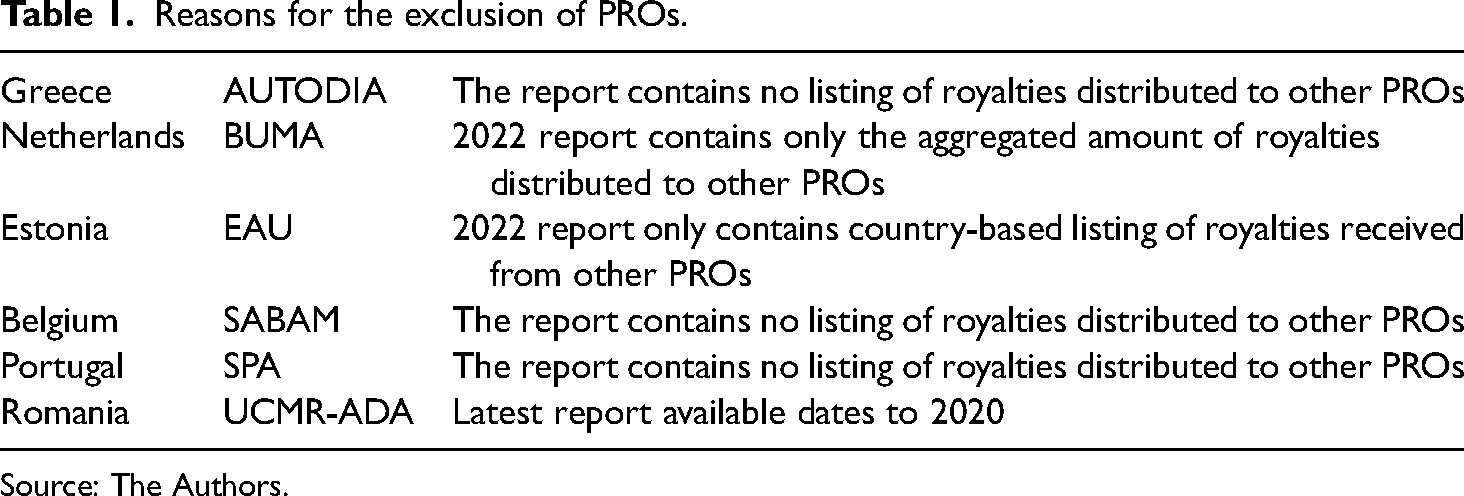
The initial phase of this research was dedicated to thorough data collection and analysis. We started the data collection with the official list of EU-based Collective Management organizations (CMOs) published by the European Commission 5 and filtered for “Musical” rights using the CISAC directory. 6 Due to its international importance and the fact that it manages music rights in Cyprus, we have also included the British PRS for Music, even though it is not based in the EU. In this way, we identified 26 relevant PROs as primary data sources for this study. While the transparency reports of most PROs were easily accessible on their websites, challenges arose as some PROs had not updated their reports for years, or the reports did not provide enough detail on royalty flows from/to other PROs. Among the available reports, the year 2022 proved to be the most common current reporting period. Older reporting periods and PROs that did not publish transparency reports in required detail or at all were excluded. This led to a dataset comprising 20 PROs. In Table 1 we list the reasons for the exclusion of PROs.
Reasons for the exclusion of PROs.
Source: The Authors.
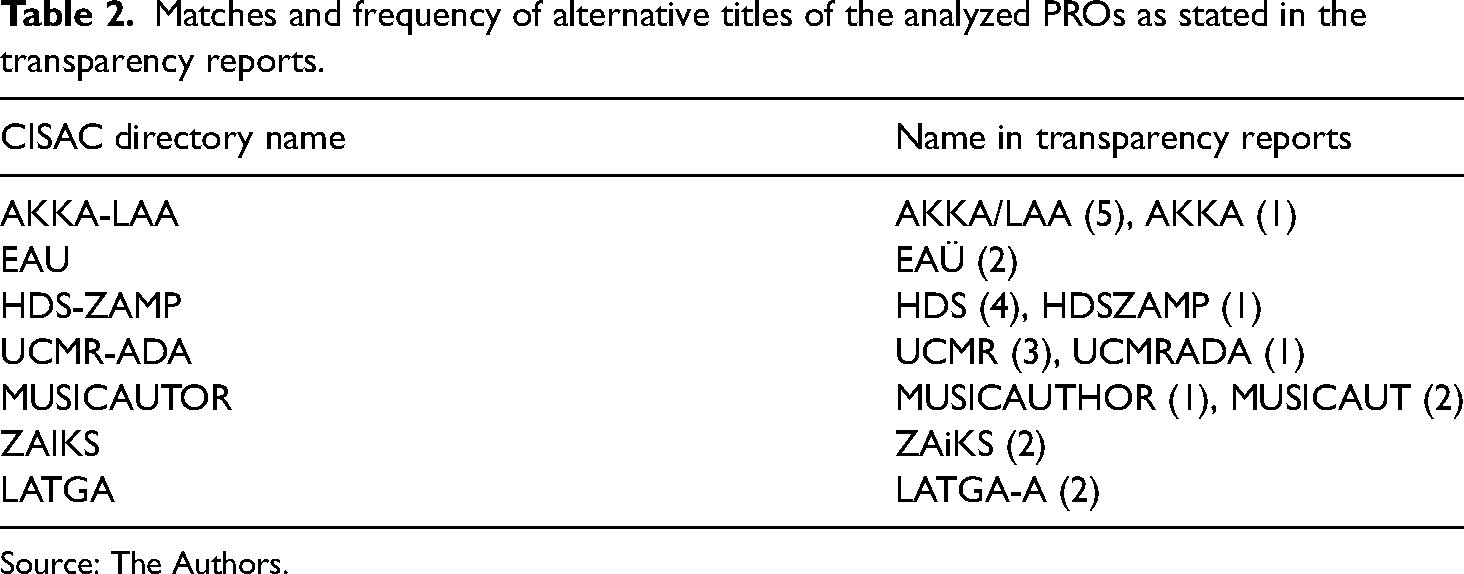
Given the diversity of the transparency reports in terms of format, currency, and levels of aggregation, the raw data required extensive processing to be suitable for comparative analysis. The harmonization process involved several steps: We began by extracting relevant financial data from the transparency reports, focusing on identifying tables and figures that detailed royalty flows between PROs. To address the inconsistencies in how identical PROs were named across different reports, we standardized the names, ensuring that each PRO was uniformly identified throughout the dataset (see Table 2).
Matches and frequency of alternative titles of the analyzed PROs as stated in the transparency reports.
Source: The Authors.
Following this, all financial figures were converted into a common currency (Euro). This conversion was based on the median exchange rates of 2022, obtained from the European Central Bank. 7
Additionally, we addressed the inconsistencies in terminologies and aggregation views/levels within the transparency reports. This involved creating a consistent schema, where uniform labels for manifestation type, 8 consumer medium, 9 licensee type, 10 and exploited copyright type 11 were attributed across the entire dataset. This controlled vocabulary should serve as a foundation for standardizing future transparency reporting, promoting consistency and clarity across PROs (Miller and Klingner, 2022). However, as there were major qualitative differences in the presentation of the figures (different granularity and aggregation views on legal objects) in the transparency reports, a multi-dimensional analysis was still virtually impossible. We therefore decided to analyze only the total amounts that were exchanged between the PROs.
The harmonization process produced a standardized set of reports, where each report includes data with multiple columns. The index column serves as a key for the distributions to cooperating PROs. The columns contain aggregated sums, aligned with the four properties defined by the uniform schema. The aggregation summed figures with the same characteristic per property (e.g. aggregated sum for all figures reported for manifestation_type = audio). Each entry in the column labeled right_category_all represents the total sum of royalties
The core of the analysis involved performing hierarchical clustering on the matrix W, which is an 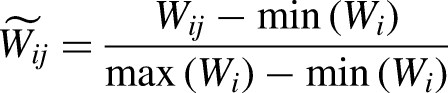
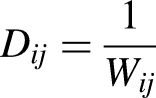
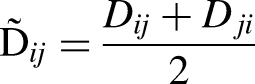
We employed the Ward linkage method for clustering (Anderberg, 1973). As an agglomerative approach it starts with each PRO in its own cluster and then successively merges the closest pairs of clusters until all PROs are grouped into a single cluster. The Ward linkage method is a criterion to decide which clusters to merge at each step. It aims to minimize the increase in total within-cluster variance.
The output of the hierarchical clustering process using Ward's method is the linkage matrix Z. Each row of Z represents a single step in the agglomerative clustering process where two clusters are merged:
The first column contains the index of the first cluster being merged. The second column contains the index of the second cluster being merged. The third column contains the distance between the two clusters that were merged (calculated according to Ward's criterion). The fourth column contains the number of PROs in the newly formed cluster after the merge.
Thus, the linkage matrix Z provides the necessary information to trace the history of the clustering process.
Results, interpretation, and discussion
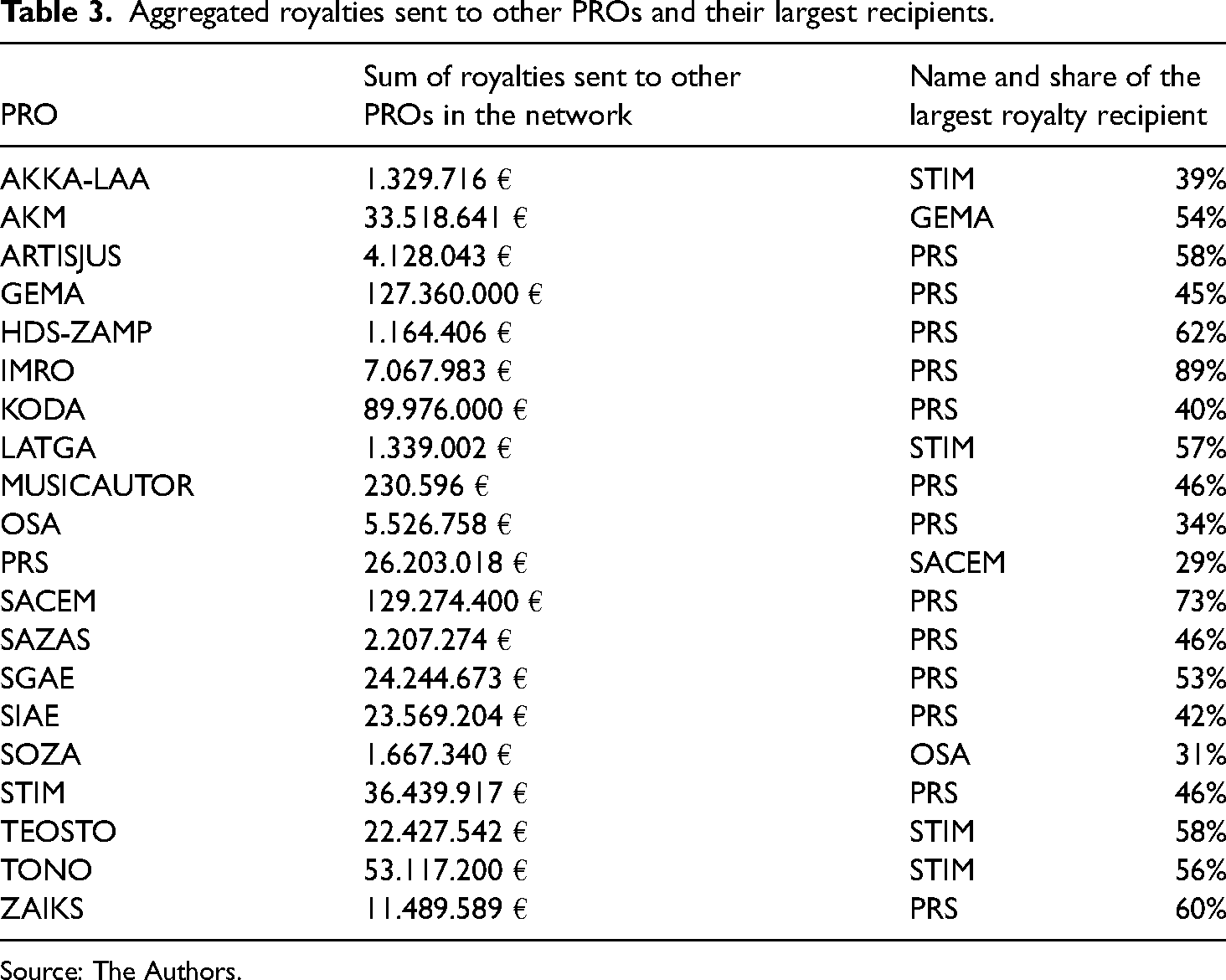
An initial examination of the overall royalty flows across all PROs is a helpful step preliminary to the cluster analysis. It provides a comprehensive understanding of the magnitude and distribution of royalties, establishing a foundation for putting clusters into context. Table 3 lists the aggregated amount of royalties sent by PROs (in alphabetical order) to other PROs.
Aggregated royalties sent to other PROs and their largest recipients.
Source: The Authors.
To identify clusters within the observed network of royalty transactions, the previously defined linkage matrix Z is utilized to calculate a dendrogram. A dendrogram is a tree-like diagram that visualizes the hierarchical clustering process. Each leaf of the tree represents an individual PRO, and each branch represents the merging of two clusters. The height of the branch indicates the distance at which the clusters were merged. In Figure 1, we present dendrograms of the observed PRO network, using both unscaled (left) and scaled data (right).
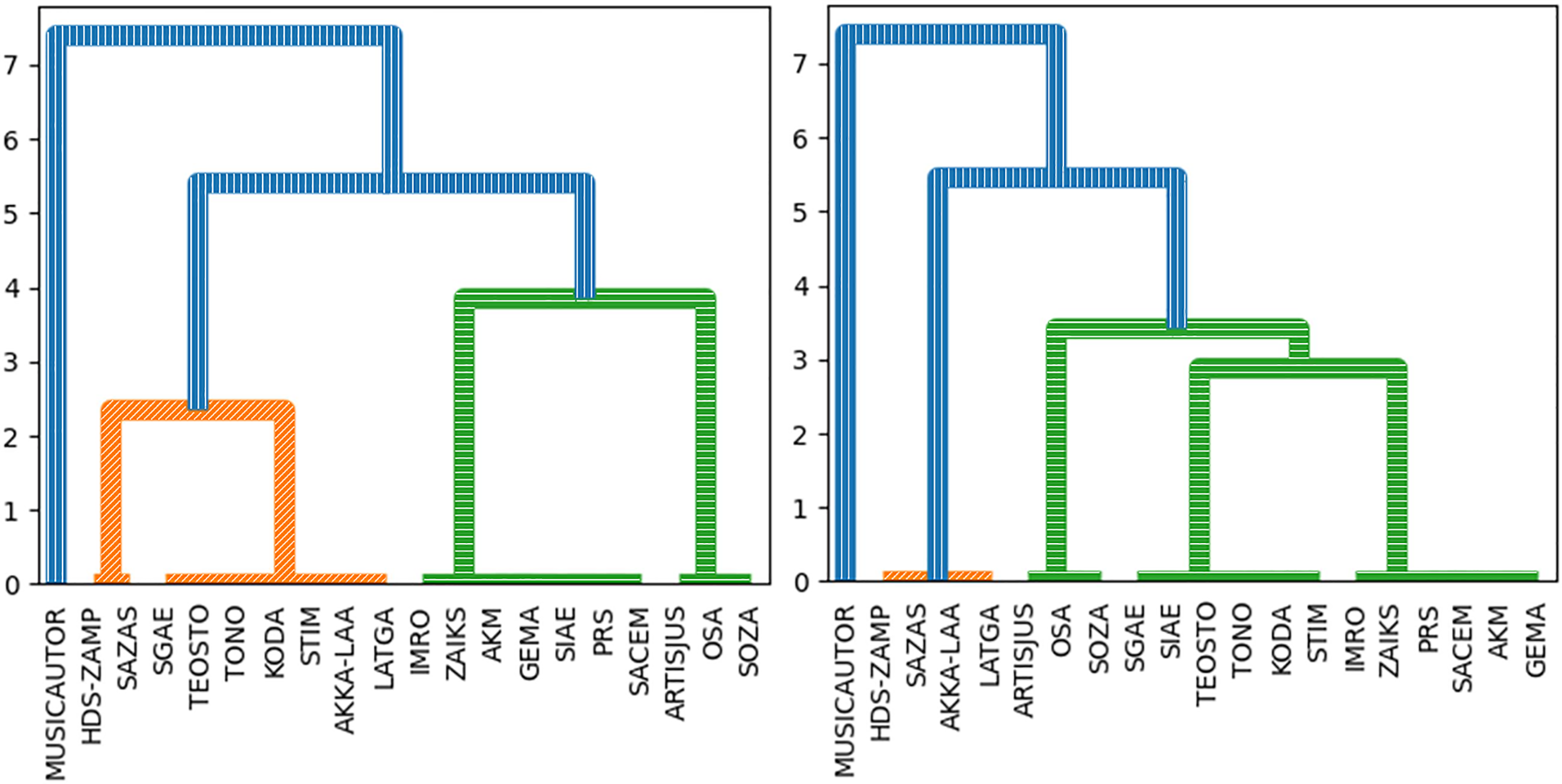
Dendrogram of PRO clusters (left unscaled data, right scaled data).
To obtain a specified number of clusters k, the dendrogram is “cut” at a threshold r, which is chosen as the maximum cophenetic distance—the distance at which two PROs are first joined together in the hierarchical tree.
13
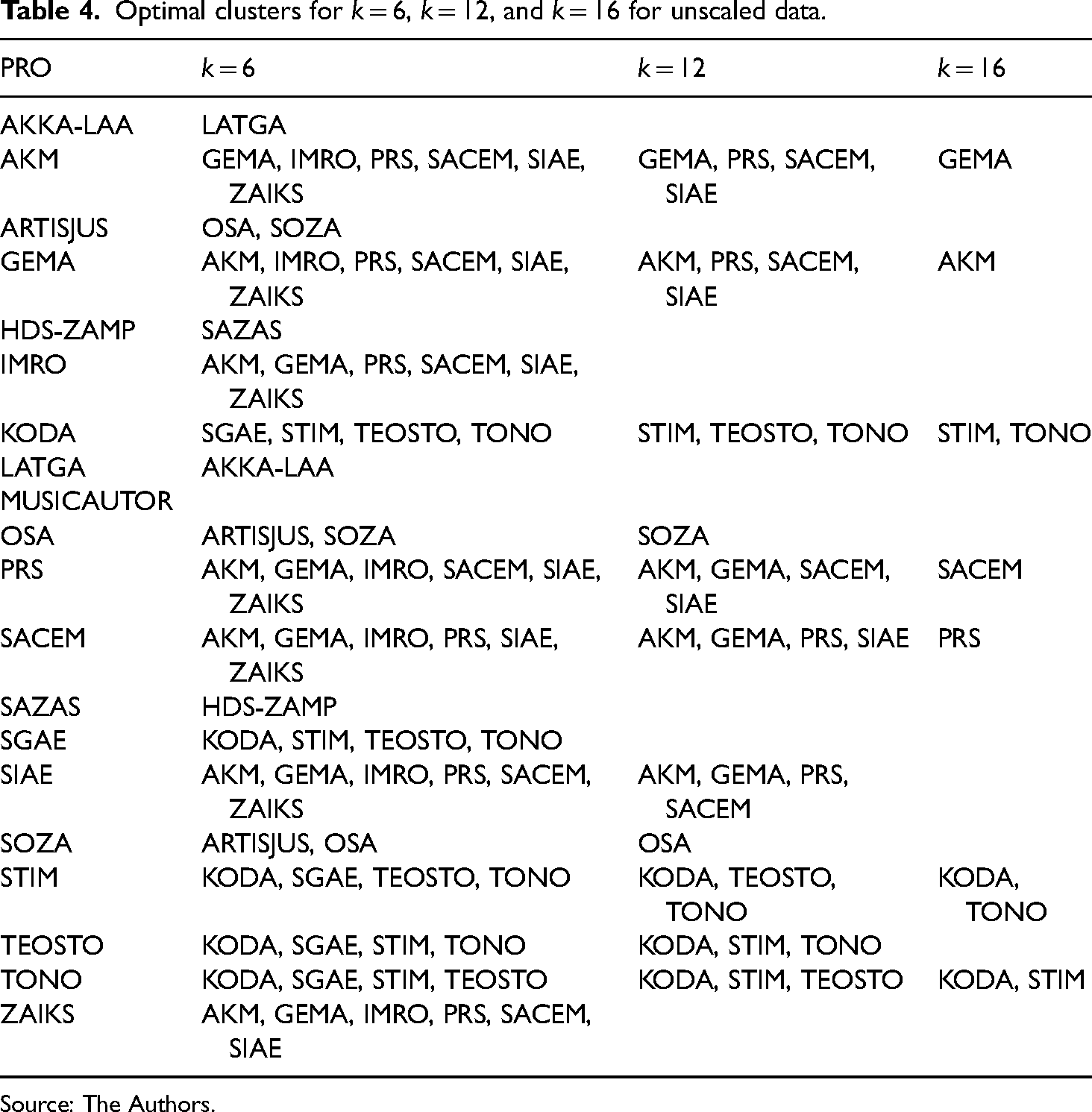
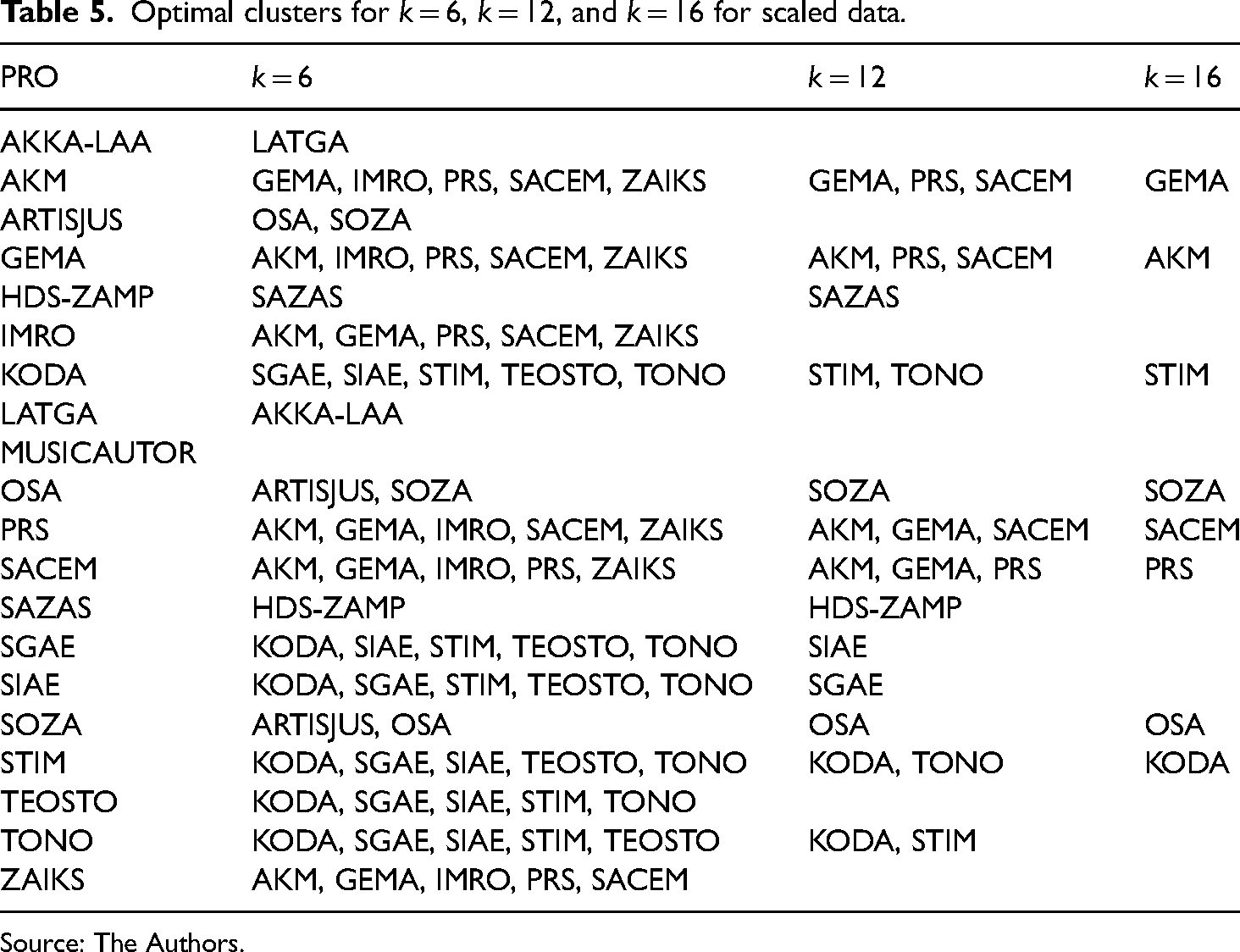
As an example, we list the optimal clusters
Optimal clusters for k = 6, k = 12, and k = 16 for unscaled data.
Source: The Authors.
Optimal clusters for k = 6, k = 12, and k = 16 for scaled data.
Source: The Authors.
The identification of these clusters prompts a deeper exploration of the (potential for) organizational consolidation within the observed PRO network. The slightly different nuances of the patterns, depending on whether min-max scaling was used, suggest a parallel interpretation of the cluster results.
The PROs AKM (Austria), GEMA (Germany), PRS (United Kingdom), SACEM (France), IMRO (Ireland), and ZAIKS (Poland) tend to cluster together in the scaled and unscaled data, reflecting a popular repertoire across territories. As these PROs manage rights in some of the most lucrative and influential music markets in Europe, with extensive repertoires that include internationally recognized works, the large market sizes and global reach of these PROs enhance their attractiveness as partners in potential market consolidation efforts, further reinforcing their exclusive clustering. Operational synergies between these PROs are/were already realized through common infrastructures such as ICE, FastTrack, and Armonia, 14 which standardized practices and enhanced efficiency in rights management across borders.
ICE, driven by PRS, STIM, and GEMA, has successfully operated as a multi-territorial licensing and processing hub since 2015. The ICE Core license also includes the repertoire of other EU-based PROs: IMRO, SABAM, and AKM. By pooling resources and expertise, these PROs developed a platform capable of managing large volumes of data, processing royalties with greater efficiency, and providing detailed, accurate reports to rightsholders. ICE's centralized system reduces the duplication of efforts that would occur if each PRO maintained its own infrastructure, thereby minimizing costs, enhancing accuracy, and improving transparency in royalty processing (Towse, 2013).
The larger PROs (AKM, GEMA, PRS, and SACEM) not only share the characteristic of having an internationally popular repertoire but also a common cultural and historical background. Germany, Austria, England, and France as historical centers of classical music and the arts have led to the development of sophisticated music rights management systems. These countries were not only hubs for composers and performers but also the nuclei of the development of intellectual property laws, which have influenced the operational frameworks of PROs: The Statute of Anne in Great Britain (1710) is regarded as the first modern copyright law, laying the foundation for the protection of copyright as a right of the author. By 1777, sheet music was recognized under the Statute of Anne. In Germany (1837), the Prussian Act introduced the most advanced copyright law of its time, giving prominence to posthumous authors’ rights. In 1842, copyright laws in Britain were extended to protect music created overseas, to the particular benefit of music publishers in France and some German states. The Paris Café Ambassadeurs case of 1847 resulted in the payment of compensation to Ernest Bourget for unauthorized performances of his compositions. This case led to the creation of SACEM in 1851, the world's first PRO for musical works. In 1873, the necessity of international protection of intellectual property became evident when exhibitors boycotted the International Exhibition of Inventions in Vienna (Austria) as they feared that their inventions would be exploited abroad without any remuneration (Little, 2001).
The Nordic PROs KODA (Denmark), STIM (Sweden), TEOSTO (Finland), and TONO (Norway) also have strong economic ties, which are reflected in the fact that they are clustered even with higher k (indicative of stronger separation of clusters). The NCB plays a crucial role in aligning the operational practices of these PROs, particularly in managing mechanical rights across the Scandinavian region. The NCB model has resulted in cost savings and improved efficiency.
The Nordic PROs also share a distinct cultural and geographical bond rooted in common traditions in folk music, classical compositions, and contemporary genres. Historically, these regions have placed a strong emphasis on collective societal values and social welfare (Nordic model), which have influenced the development of their music rights management systems. The strong social structures and emphasis on equity within these societies have helped shape the operational frameworks of these PROs, fostering an environment where intellectual property is highly valued and protected. The NCB could therefore serve as a good example of a balance between economic efficiency and cultural preservation.
The geographically neighboring Eastern European PROs ARTISJUS (Hungary), OSA (Czech Republic), and SOZA (Slovakia) also form fairly exclusive clusters (whereby the ties between SOZA and OSA are stronger, indicated by the fact that they are also clustered together at higher
In the unscaled data, Baltic PROs (AKKA-LAA, LATGA) cluster with Nordic PROs (TEOSTO, KODA, STIM, TONO). However, in the scaled data, they cluster with Balkan PROs (HDS-ZAMP, SAZAS), which in turn form a separate cluster in the unscaled data. The Baltic and Nordic regions have historically engaged in extensive cultural exchange, and this similarity in their PRO clustering suggests a continuity of these ties, potentially influenced by similar legal frameworks, economic structures, and cultural policies. These ties were also reflected in operational practice, as the Baltic PROs EAÜ, AKKA-LAA, and LATGA were part of the NCB until mid-2020. 15 In contrast, the cultural and historical development of the Baltic and Balkan regions is quite different, although both regions were influenced by socialist regimes in the 20th century.
The rather weak ties of these smaller clusters suggest that they operate with a higher degree of independence from the larger European PROs. This independence allows them to focus on their cultural preservation goals, but it also limits their integration into broader European market consolidation efforts. This may root in operational models that differ from those of larger, more market-driven PROs.
This suggests that regional consolidation, rather than integration into larger European hubs, may be more appropriate for these regions. In this way, they could join forces with PROs from territories where the repertoire is frequently used, which may be more advantageous than simply exploiting existing technological infrastructures. Such an approach would allow these PROs to maintain their cultural interests while benefiting from the operational efficiencies of consolidated entities. These PROs’ role in preserving regional cultures might otherwise be marginalized in broader consolidation efforts.
The decision to delegate rights management to a larger organization or to consider their own consolidation attempts hinges on the strategic priorities of these PROs. While the long-term benefits of investing in shared infrastructures—such as operational efficiencies, cost reductions, and improved accuracy in royalty processing—can be substantial, a significant challenge lies in the initial investment required. Developing platforms like ICE entails considerable upfront costs, including the development of technology, integration of existing systems, and training of personnel, which may not result in reduced management costs in the short term (European Commission: Directorate-General for Communications Networks, Content and Technology, 2021). These expenses can be particularly daunting for smaller PROs or those with limited financial resources, potentially tempting them to transfer their repertoires to larger entities better equipped to manage them efficiently.
However, a PRO's dependency on a culturally unrelated licensing hub or joint venture for a significant portion of its royalties can reveal strategic vulnerabilities. Even though larger entities are obligated to ensure fair compensation and avoid discrimination in repertoire management, smaller PROs may lack the bargaining power to effectively represent their rightsholders’ interests. Without influence over governance in such collaborations, there is a significant risk that the shared infrastructure may not achieve its intended goals, or worse, may exacerbate existing cultural tensions or inequalities. The potential loss of autonomy for individual PROs is a central concern. When multiple organizations adopt a standardized infrastructure, they may need to compromise to fit into a unified system, which can be particularly challenging for PROs operating in different cultural environments where the needs of rightsholders and licensees vary significantly. On the other hand, if a PRO has a predominantly regional focus, it could be argued that outsourcing the rights management of online music will allow it to focus on strengthening its core competencies and free up resources for cultural advocacy and other intermediary functions in favor of the interests of the rightholders it represents (Kakabadse and Kakabadse, 2000).
In considering these perspectives on the creation of shared services versus outsourcing (Wang and Wang, 2007), PROs must carefully assess the potential return on investment, balancing the immediate financial burden against the anticipated long-term gains. This evaluation should consider not only the direct financial benefits but also the strategic advantages, such as improved market positioning, enhanced service delivery, and the ability to manage rights more effectively in an increasingly complex global environment.
It is also crucial that policymakers strike a balance between promoting efficiency and safeguarding cultural diversity. While consolidation can lead to operational efficiencies and improved service delivery, it is essential that these efforts do not come at the expense of the unique cultural and linguistic characteristics that define different repertoires. To this end, policymakers should ensure that any regulatory changes or incentives include provisions that protect cultural diversity. This could involve mandating that consolidated PROs retain some degree of local autonomy over cultural policies and repertoire management or creating safeguards to ensure that minority cultures and languages are adequately represented in the global rights management landscape.
In addition, policymakers should also consider revising and updating regulations to accommodate new models of rights management that transcend traditional territorial boundaries beyond digital music rights. By promoting a more flexible regulatory environment, policymakers can help PROs transition to a model that better reflects the realities of globalized live performances, where rights management often needs to be conducted across multiple jurisdictions simultaneously (Klingner et al., 2021).
The feasibility of extending monitoring systems (e.g. BMAT 16 ) for various rights categories on an international scale is a key area of interest here. Such systems, which track the use of creative works across different media and platforms, offer potential benefits in terms of increased trust, efficiency, and quality of service. By centralizing and standardizing monitoring processes, PROs can improve the accuracy of royalty collections and distributions, reduce administrative burdens, and enhance transparency. Moreover, the increased trust generated by transparent, standardized monitoring could strengthen relationships between PROs, rightsholders, and users, facilitating smoother licensing processes.
Adopting a holistic market perspective is critical for PROs as they navigate the complexities of CRM in an increasingly globalized digital environment. By viewing the market from a comprehensive, bird's-eye perspective, PROs can identify strategic opportunities that might not be apparent through a narrower, territory-focused lens. This approach allows PROs to integrate their operations more effectively, streamline processes, and reduce redundancies that often arise from the traditional model of territorial repertoire ownership.
Conclusion
The impact of the European Union's CRM Directive on the current market has shaped the operational landscape. This framework has fostered greater transparency and accountability within PROs, while also pushing them to adopt more efficient and scalable practices to remain competitive in an increasingly globalized and digital market.
This study has provided insights into the operational and strategic dynamics of PROs within the EU, with the adoption of a comprehensive market perspective. The analysis found that the identification of clusters based on financial flows corresponds to geographical proximities and cultural ties, while also indicating potential or realized economies of scale through organizational consolidation. The study emphasized the benefits of adopting a bird's-eye view of the market, which allows PROs to better align their strategies with market trends and potentially move beyond the traditional notion of territorial repertoire ownership and the inefficiencies of representation agreements. This shift leads to greater infrastructural efficiency and better service provision for rightsholders and licensees.
Several future research topics arise from the results of this study. One is the incorporation of multiple years of data to track market trends over time, which would provide a more nuanced understanding of the long-term effects of cluster identification and consolidation strategies. Longitudinal studies could explore how these strategies impact both market efficiency and cultural diversity over extended periods, offering deeper insights into their sustainability.
Additionally, there is a need for expanded research into the global implications of multi-territorial licensing and monitoring, particularly beyond the EU. As digital platforms and content consumption increasingly transcend national borders, understanding the challenges and opportunities of global rights management becomes critical. Future studies should examine the potential for international collaboration among PROs and the implications of such efforts on global market dynamics.
Based on the insights gained from this study, several policy recommendations are proposed. First, there is a clear need for ongoing regulation of PRO reporting formats to facilitate consistent market analysis and effective intervention. Standardized and transparent reporting is essential for accurately assessing market conditions, identifying potential inefficiencies, and ensuring that rightsholders are compensated adequately. Second, policymakers should aim to implement balanced regulatory measures that support market efficiency, international scalability, and cultural diversity. While fostering greater efficiency and scalability is important, it is equally crucial to ensure that these efforts do not erode the rich cultural diversity that defines the European creative industries. Regulations should therefore encourage collaboration and consolidation where appropriate, but with safeguards in place to protect the unique cultural identities managed by different PROs.
By continuing to refine regulatory frameworks and support research in these areas, policymakers and industry stakeholders can help ensure that the European music and media markets remain dynamic, efficient, and culturally vibrant in the face of ongoing global changes.
Footnotes
Declaration of conflicting interests
The authors declared no potential conflicts of interest with respect to the research, authorship, and/or publication of this article.
Funding
The authors disclosed receipt of the following financial support for the research, authorship, and/or publication of this article: Parts of the work were funded by grants of the German Ministry of Education and Research in the context of the joint research projects "SO/CLEAR" (01IS18083B) and "MANGAN" (01IS22011C) under the supervision of the PT-DLR.

Supplemental material
Supplemental material for this article is available online.
Notes
References
Supplementary Material
Please find the following supplemental material available below.
For Open Access articles published under a Creative Commons License, all supplemental material carries the same license as the article it is associated with.
For non-Open Access articles published, all supplemental material carries a non-exclusive license, and permission requests for re-use of supplemental material or any part of supplemental material shall be sent directly to the copyright owner as specified in the copyright notice associated with the article.
