




Abstract
Organizational culture manifests in core beliefs, values and cultural artefacts. This study examines the organizational artefacts, for example, management practices, stance with the outside world, and content choices of European student radio stations, based on survey data gathered from radio managers in 19 countries. Student radio stations are non-commercial media outlets connected to higher education institutes, at least partly managed and operated by students. Previous research on organizational culture and media systems are heuristics for this study in examining whether European student radio stations cluster regionally based on the observed cultural artefacts or whether they show convergence. In contrast to these studies, findings suggest that the region of the station does not determine its cultural artefacts. The studied stations give freedom of choice to individual station members and lean towards alternative content but are also systematic in their management. If any, mainstream media and podcasts are seen as competition.
Introduction
The terms used to refer to student-run radio differs geographically. ‘Student radio’ applies in UK and Scandinavia (SRA, 2019; SRS, 2019). In France and Canada, ‘campus radio’ is standard (NCRA/ANREC, 2022; RadioCampus, 2019). In Southern Europe, the term ‘university radio’ (ARU, 2016; RadUni, 2019) is used, and in the US, it is known as ‘college radio’ (Collegeradio.org, 2022). In this research, ‘student radio’ generally refers to either streaming or broadcasting radio station that is at least partly student-managed and with content mainly produced by students from or connected to a particular institute of higher education.
The US student radio has a long history, where ‘college radio’ is subsidized within the public education system. Students were part of the early days of radio in Europe as well. In many countries, following the American model has been curbed by a lack of external subsidies or more restrictive licensing (Priestman, 2001: 22). In the US, college radio has constituted an alternative to commercial radio with a drive for more diversity of music and open-format programming, distinguishing it from the mainstream. It has trained students for a future in broadcasting in a learn-by-doing platform, allowing mistakes and experimentation (Sauls, 2000: 103; 168). In Europe, student radio has also been a hands-on training ground for future professionals in media, providing students with opportunities to explore new formats and activities otherwise out of their reach. It emphasizes alternative music and underrepresented social groups whose issues do not otherwise surpass the threshold of publicity. Some stations focus more on the latter than media and journalism education (Scifo, 2007: 233–234, 237; see also IJIE Consortium, 2014). In Canada, the ‘alternativeness’ has extended into relationships with the community, internal policies and organizational practices (Fauteux, 2015: 150–187). Being led by students without previous management experience is challenging for student radio stations. They also face the loss of personnel due to annual graduation, leading to a current demand to recruit replacements and a yearly variation of skill levels, personal characteristics and leadership potential (Raymond, 2016: 204).
Sometimes student radio stations are categorized or self-identify (e.g., Cammaerts, 2009; CSRFM, 2020; Limu Radio, 2019; Demon FM, 2020) as ‘community radio’, which have been characterized by Coyer and Hintz (2010) as having (1) ownership and control in the hands of self-organized and independent citizens’ groups and non-profits, (2) access to non-professional media makers, (3) transparent and open decision making, favouring collective structures, (4) skill-sharing, individual and collective empowerment and capacity-building, as training is essential both for continuity and personal development of volunteers and (5) a voice for cultures not represented in the mainstream media.
Organizational culture
Culture is a system of meanings that includes norms and conduct rules that form distinct ways of being (Gregory, 1983: 364). Culture is a shared and implicit understanding of a group’s (e.g., organization’s) accepted and desired behaviours (Wilkins and Ouchi, 1983). According to Schein (2004), culture combines values, beliefs, ideologies and organizational policies. In his well-known ‘onion model’, an organization’s culture is a layered structure in which different tiers affect each other. At the often-subconscious core are basic assumptions about, for example, human nature and relationships. These assumptions affect the mid-layer, consisting of espoused values expressed in the organization. At the top are the artefacts that embody the deeper, implicit layers of organizational thought. Artefacts are the most easily viewed, heard and felt characteristics of an organization and at the highest consciousness level, and they can sometimes steer people’s behaviours and attitudes (Adam and Galinsky, 2012; Schein, 2004: 25–27). The artefacts are thus the manifestations of the underlying assumptions (e.g., Irwin and St-Pierre 2014). They can be intangible notions, such as names (Glynn and Marquis, 2013) and contracts (Kaghan and Lounsbury, 2013), or tangible, like inanimate objects (Yanov, 2016). Artefacts such as symbols, heroes, rituals and organizational practices reflect its core values (Hofstede et al., 2010: 22–23). Artefacts in a student radio context may include parlance, clothing and outside appearance, organizational structures, set rules, musical choices, technical facilities and members’ behaviours. Artefacts are also the explicit mission or other proclamations of an organization’s primary purpose, hanging on a studio wall, stated on its website or in the vocabulary of a station manager. To keep the organization operational, its members must respect and adjust to its culture, promoting crucial commitment and internal integration (Schein 2004: 112–120). For a student radio, this can manifest in spending one’s spare time doing radio instead of other activities and communities.
Past experiences on what practices produce desirable results establish these as ‘our way’ of doing things, obliging new members to comply (Schein, 2004: 70–84). A radio station’s explicit artefacts, such as management structure, operational practices, production processes and selected content, represent how the station reacts and interact with the outside world.
Region as a taxonomy
Organizational cultures can reflect the broader cultural customs, values, beliefs and actions witnessed nationally and may manifest on a group and individual level. The Hofstede model examines the influence of national culture on an organizational level. It identifies six value dimensions: (1) Power Distance (the different solutions to the fundamental problem of human inequality); (2) Uncertainty Avoidance (the stress level in a society when facing an unknown future); (3) Individualism versus Collectivism (the integration of individuals into primary groups); (4) Masculinity versus Femininity (the division of emotional roles between women and men); (5) Long Term versus Short Term Orientation (people’s focused efforts towards the future or the present and past); and (6) Indulgence versus Restraint (the gratification versus control of desires related to enjoying life) (Hofstede, 1991; Hofstede et al., 2010; Minkov, 2007).
Hofstede et al. (2010) assume that each society has distinctive integrative forces, mental patterns of thinking, feeling and acting learned through life experiences. The highest level of power distance and uncertainty avoidance are found in Eastern and Southern Europe and the lowest in Scandinavia and North-Western Europe. These attributes, in turn, influence organizational decision-making and structures and what are seen as the normal ways of acting and solving problems (19; 35–36; 319–353).
The model has been criticized for oversimplifying many facets of cultures (Venaik and Brewer, 2013). Cultural typologies should not be taken as exhaustive taxonomies but as adaptive models that can partly explain why different cultures impact organizational practices, management structures and goals (Hofstede et al., 2010: 315–323). Culture can impact how, for example, media practices and journalistic roles have evolved and how they can differ from one country to another (see, e.g., Hanusch 2009: 621–622).
The media systems model offers another taxonomy emphasizing regional differences. Initially developed by Hallin and Mancini (2004) and later refined by further studies (e.g., Büchel et al., 2016; Brüggeman et al., 2014; Castro Herrero et al., 2017; Jakubowicz, 2007), the paradigm asserts media landscapes through journalistic professionalism, the media markets, the extent of parallelism in media system and political interest groups and the role of the state. Based on these variables, certain countries cluster together to form different media systems that seem to notably follow the Southern, Central, Northern, Western and Eastern European regions. Even though criticized for forcibly clustering countries with distinct cultures and economies (Syvertsen et al., 2014), one can assume that the broader media system partly affects the choices, practices and values of a radio station.
In contrast to differences, the idea of convergence highlights similarities between organizations. Convergence happens on various levels. First, geographically distant cultures intertwine through adopting policies and influence through media and other cultural products, often witnessing conglomerated ownership. Content and stories spread from one media to another, increasingly so through information technology. A cultural shift in which individuals are encouraged to seek new information, make connections and engage in social interaction accelerates convergence (Jenkins, 2006: 3–4).
The flood of international influences has led some scholars to argue that media universally favours the liberal, commercially oriented model witnessed mostly in the US. (e.g., Dawes, 2017; Fenton, 2011; Hallin and Mancini, 2004, 2017; McChesney, 2001; see also Ala-Fossi, 2005). Convergence occurs in organizations as they adopt different management styles, practices and values. During the 20th century, the unprecedented success of the US economy and its supremacy in the political sphere made the American endeavour for rapid growth the benchmark for organizations worldwide (Barley and Kunda, 1992: 364–365; Bains, 2015: 1–2, 20).
For a university-based student radio, the setting is two-folded. On the one hand, there are differences in national histories, cultures and educational models. However, after WWII, a political project of European unification emphasized uniting people (Bruter, 2005). The travelling youth making connections have built grassroots integration, promoted by governmental initiatives encouraging Europeanism (e.g., Jobs, 2017; Mummendey and Walduz, 2004). EU funding has encouraged European universities to boost student and staff mobility (European Commission, 2021). This leads one to expect European student stations to exhibit certain international similarities.
Study design and data
This research explores the cultural artefacts of student radio organizations, examining whether they group or differ based on European regions. Studies on media systems and Hofstede’s cultural typologies are used as a preliminary taxonomy justifying the hypothesis that the clusters found in this research follow the regional typologies of the more broadly studied models (see Brüggeman et al., 2014: 1037). When explaining culture, typologies should be used with caution as they may oversimplify categories and emphasize unity instead of diversity within each culture (Martin, 1992: 304–307; Schein, 2004: 200, 214–215). Here, typologies are used merely as a heuristic for hypothetical case grouping. It guides the analysis of how European student radio stations in different countries cluster, whether there is divergence or convergence among the cases at hand and whether regions have any significance in defining their organizational artefacts. Based on several case studies and on the assumption that regional, societal, historical circumstances and the social construction of national cultures, in general, affects organizations, the premise is that region is a practicable stencil for clustering European student radio stations. As suggested by previous studies on organizational culture and media systems, this article presupposes that regional differences and clustering will occur, especially in the part of Europe where the organization is situated: North, South, East, West and Central. This research answers two questions:
What kind of cultural artefacts are present in the European student radio organizations? Do European student radio stations show divergence or convergence on these artefacts and cluster based on their nationality and geography?
The focus is descriptive and comparative. The research is based on a survey conducted within European student radio stations in 2018. The data was collected using an online survey software Webropol. The survey investigated the practices, choices and views on the station’s role and was aimed at station managers, faculty advisors and editors (later referred to as ‘managers’). The managers were chosen as respondents because they have decision-making capacity and a presupposed comprehensive view of their station’s organizational practices and choices.
As there are no Europe-wide registers on student radio, the potential stations were gathered through various online sources, such as Wikipedia (2017), Internet-radio.com, www.listenlive.eu and TuneIn.com. Listings from national student radio organizations in Sweden (SRS, 2019), the UK (SRA, 2019), France (RadioCampus, 2019), Italy (RadUni, 2019) and Spain (ARU, 2016) were also used. The initial search produced a list of over 260 European student radio stations. Those with online contact details (e.g., a fill-in form, email address) were sent an invitation link with a cover letter to take the survey. Unfortunately, one-third of the emails failed to reach the respondent, which could mean that the address found on the website was wrong or the station was no longer operational. Some of the stations also had no contact details, website, or any indication of whether they still existed or not.
After sending out invitations in three rounds, data of 90 respondents from 21 countries were gathered. Fifty-one were managers, representing 46 individual stations from 19 countries. Especially active were student radio stations in Spain, but most countries are represented by just one station in the data. Some countries with online evidence of student radio (Cyprus, Czech Republic, Denmark, Hungary, Luxembourg and Switzerland) did not participate despite several attempts to contact the found stations.
There are a couple of pragmatic reasons for the timeframe of the data used for this paper. The author of this paper was the main organizer of the first global student radio conference, ‘Alternatives’, sponsored by the Finnish Cultural Foundation in 2016 in Lahti, Finland, where student radio makers, experts and academia were invited to participate (e.g., Quicke, 2016). During preparation and marketing for this conference, an initial list of contact details from various student radio stations was gathered. After the conference, in 2017, the author was appointed the president of World College Radio Day (Collegeradio.org, 2022), an international network of volunteers responsible for organizing an annual global event celebrating student radio. This two-year time frame gave leverage in attracting student radio stations to participate in the survey. It allowed the researcher to gather the data for this study following the significant date of the first global student radio conference up to a year later when the author was appointed World College Radio Day president. As the data is nearly five years old, one should remember that some of the artefacts observed here could be outdated. Nevertheless, the analysis provides a relatively recent snapshot of European student radio (Table 1).
Student radio stations and managers in the data.
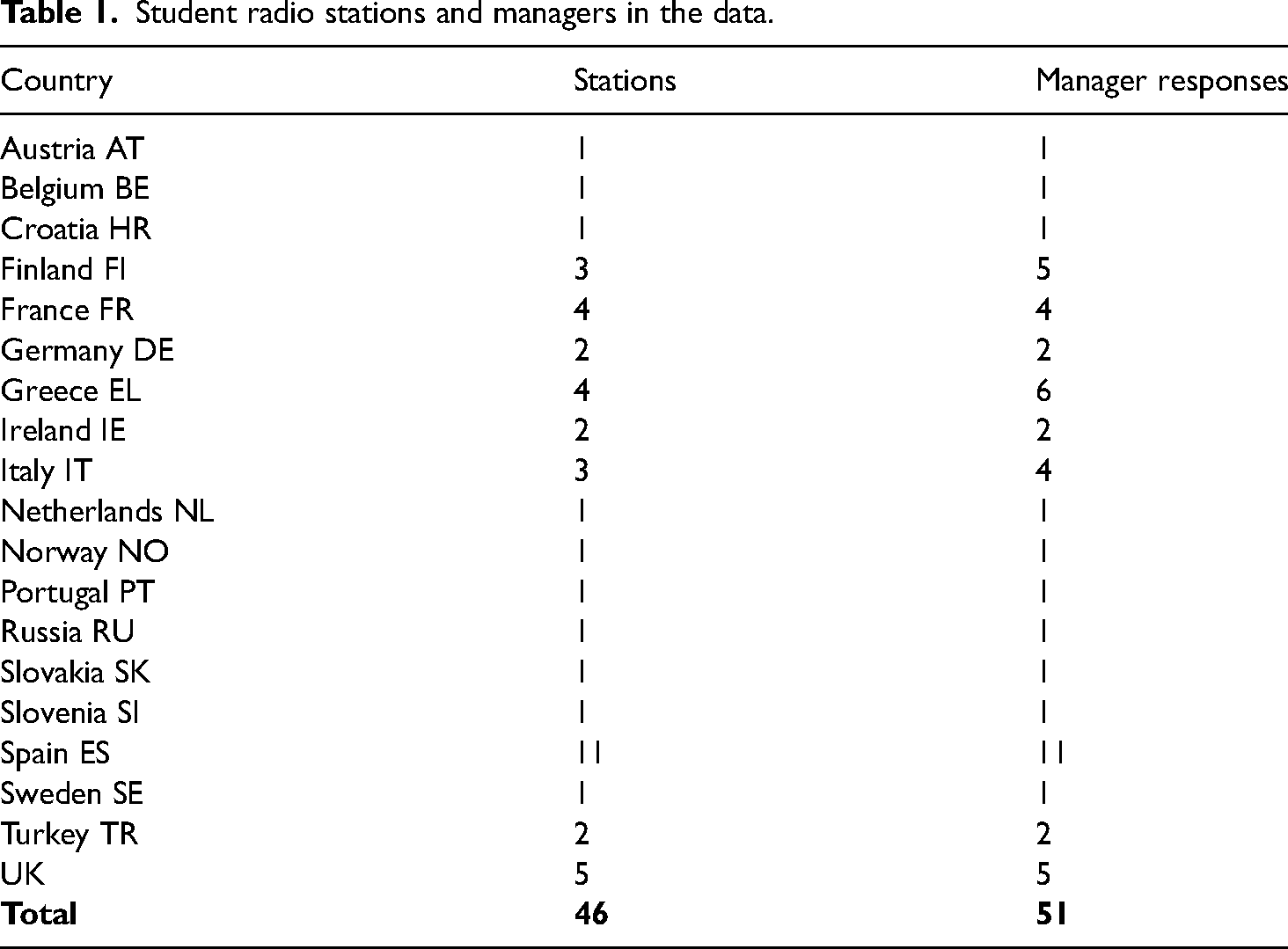
In some of the questions, not all respondents answered. The missing data has been imputed with a mean of the item, thus not affecting the sample average. In questions where the respondents provided an ordinal value, standard deviation has also been computed to see whether there is much variation. A high value suggests a notable difference and a low value a high correspondence among respondents.
This research has two layers. First, it views the characteristics of the stations in general, forming an overall image of the artefacts of the European student radio organizational culture based on the managers’ answers. Second, it tests if the responses form meaningful clusters based on geography, whether nationality or region influence the organizational artefacts or whether there are no significant differences, suggesting a more convergent European student radio culture. A cluster analysis was conducted using the statistical analysis software SPSS (Statistical Package for Social Sciences) with the selected variables to analyze whether the cases group based on nationality. Cluster analysis is a statistical method for grouping responses based on the variance within the selected variables’ data (e.g., Romesburg, 2004). As the variables are either categorical (yes, no; multiple choice) or ordinal (1–10 scale), the Two-Step Cluster Analysis algorithm with Schwarz’s Bayesian clustering criterion, suitable for handling categorical data, was chosen as a method for forming the clusters. The two-step procedure is an exploratory tool that reveals natural groupings within a dataset, otherwise not apparent (IBM, 2020; see Tkaczynski, 2016). The model quality was assessed with a Silhouette measure that calculated an object’s cohesion with others in its cluster and against other clusters (Rousseeuw, 1987). For predictor importance, if a selected variable is significant in crafting the following clusters in the model, a default cut-off value is 0.4. The analysis produces a cluster membership variable. This variable enables one to examine whether the stations from the same countries and regions group together or not. The analysis was conducted by not setting a fixed number of expected clusters. If natural groupings arise, the cases diverge and form different clusters. If the analysis only provides one cluster, this, on the other hand, suggests more convergence in that variable.
Results
The literature on European student radio is scarce, especially in English, although a few studies have tried to depict student radio from various perspectives. Most of the research is done in Spanish about university radio in Spain, from asserting its pedagogical values and skill-development opportunities (Zúñiga et al., 2016), its content and programming policies (Martín-Pena and Narvaez, 2014) and evaluating the composition of its content as a public radio (Peña and Pérez-Alaejos, 2016). From a historical perspective, Doliwa (2015) has explored the vicissitudes of Polish student radio from the 1950s to the 2000s, its comparatively high level of freedom of speech, its challenges compared to the 1990s emergence of commercial media, and its newly found opportunities in the digital age. Some studies focus on case studies on individual stations. Mariano Giorgi (2017) has examined the phases of an online university radio project at the University of Limoges, France, and done a semiotic analysis of the reasons for its abolition. From an organizational culture perspective, there are no studies. Wilson David (2015) explores a community radio station’s empowering and learning effects on a university campus. She scratches the surface of organizational practices by depicting tensions between the academic goals and Ofcom (the UK’s government-approved communications regulator) license requirement and the managerial solutions for solving them.
The following analysis measures organizational practices, crafted policies, emphases and choices that become visible through an organizational culture’s artefact layer. As noted, student radio stations have three distinct features based on previous literature, the organizational practices influenced by student involvement, an alternative stance towards more mainstream media and the emphasis on alternative music. Thus, the selected variables for this analysis focus primarily on these aspects, reflecting the research focus, European student radio culture’s artefact layer. The examined artefacts are (1) the purpose of the station at the moment, (2) the level of systematicity of station management, (3) does the station have explicit rules of conduct for its staff, (4) who, if any, are the station’s primary competitors in the radio sector, (5) the balance between music and other content (e.g., talk), (6) does the station follow the number of its listeners or (7) who its listeners are, (8) the proportion of music, (9) who gets to choose the music played and (10) what is the balance of alternative or marginal music and more mainstream or ‘hit’ music?
Questions 2, 3 and 9 are about decision-making and organizational structure. As Hofstede et al. (2010: 317–318) put it, organizing always requires answering two questions: who has the power to decide what, and what rules or procedures should be followed to attain the desired ends? The answer to the first is influenced by cultural norms of power distance and cultural norms about uncertainty avoidance to the latter. Decision-making procedures and rules of conduct are crucial elements of any rational organization (Weber and Parsons, 1947) and thus a critical feature of any organizational culture. It implies involvement, equality and hierarchy in any organizational structure. Questions 1, 4, 6 and 7 reflect how the station views its relative position with the outside world; questions 5, 8 and 10 refer to a student radio station’s selected content, the most perceivable artefact to the public.
Decision making
Level of systematic management
Here, the level of systematic management refers to the goal-oriented and organized manner and means of managing different radio operations aspects. These systematic management efforts are evaluated through the following questions: Does your station have (1) an official management structure, (2) an explicit strategy, (3) any performance standards and (4) a method for monitoring the quality of programming? These variables reflect the level of goal-directedness, organized character and seriousness the station has set on its operations. Saying yes to all these questions (value 4) gives the highest level of systematic management while having none (value 0), resulting from answering either ‘no’ or ‘I don’t know’, is interpreted as having a low level of systematicity. The construct of management’s systematicity was initially tested using principal components analysis (PCA) to see whether these variables and an additional variable of ‘Has your station set any explicit rules of conduct?’ would measure the same latent phenomenon. PCA produced two components: the first including variables 1–4, the other including only the rules of conduct, which can be understood to measure something other than the systematicity of management. One must be cautious to avoid making strict conclusions, though, as Cronbach’s Alpha for the variable is only 0.489, which implies a low correlation between items and makes creating or using a sum variable unwise.
Seventy-five percent of the respondents mention that their station has a management structure, 61% performance standards, 63% explicit strategy and 73% quality monitoring. It should be noted that the respondents might have different perceptions of what the above themes mean. For example, the ‘quality’ in the question about quality monitoring of programming may have been understood as meaning, for example, the audio’s technical quality or the quality of the content. Nevertheless, these variables are not intended to map the actual processes or their varying aspects but the overall aspiration to operate in an orderly, goal-directed and quality-oriented fashion. The relatively high proportions of all these elements can be interpreted to reflect that European student radio stations have at least a drive for station management’s systematicity.
The resulting cluster analysis produced a model with five clusters and a good 0.6 Silhouette measure of cohesion and separation. Looking at the predictor importance, the question about performance standards is the lowest at 0.39, which is still acceptable for the model with a good Silhouette measure. These clusters can be understood as representing the level of systematicity, with cluster 1 having the highest level with all the factors present. It is also the largest, with 33% of cases. The second in size (22%) is cluster number 4, with no management structure or explicit strategy but with performance standards and a quality monitoring method. Third in size (20%) is cluster number 3, with a management structure and explicit strategy. Fourth in size (14%) is number 5, with all other elements than explicit strategy, and the smallest in size (12%) is cluster 2, with all other elements than performance standards (Table 2).
Student radio clusters based on the level of systematic management.
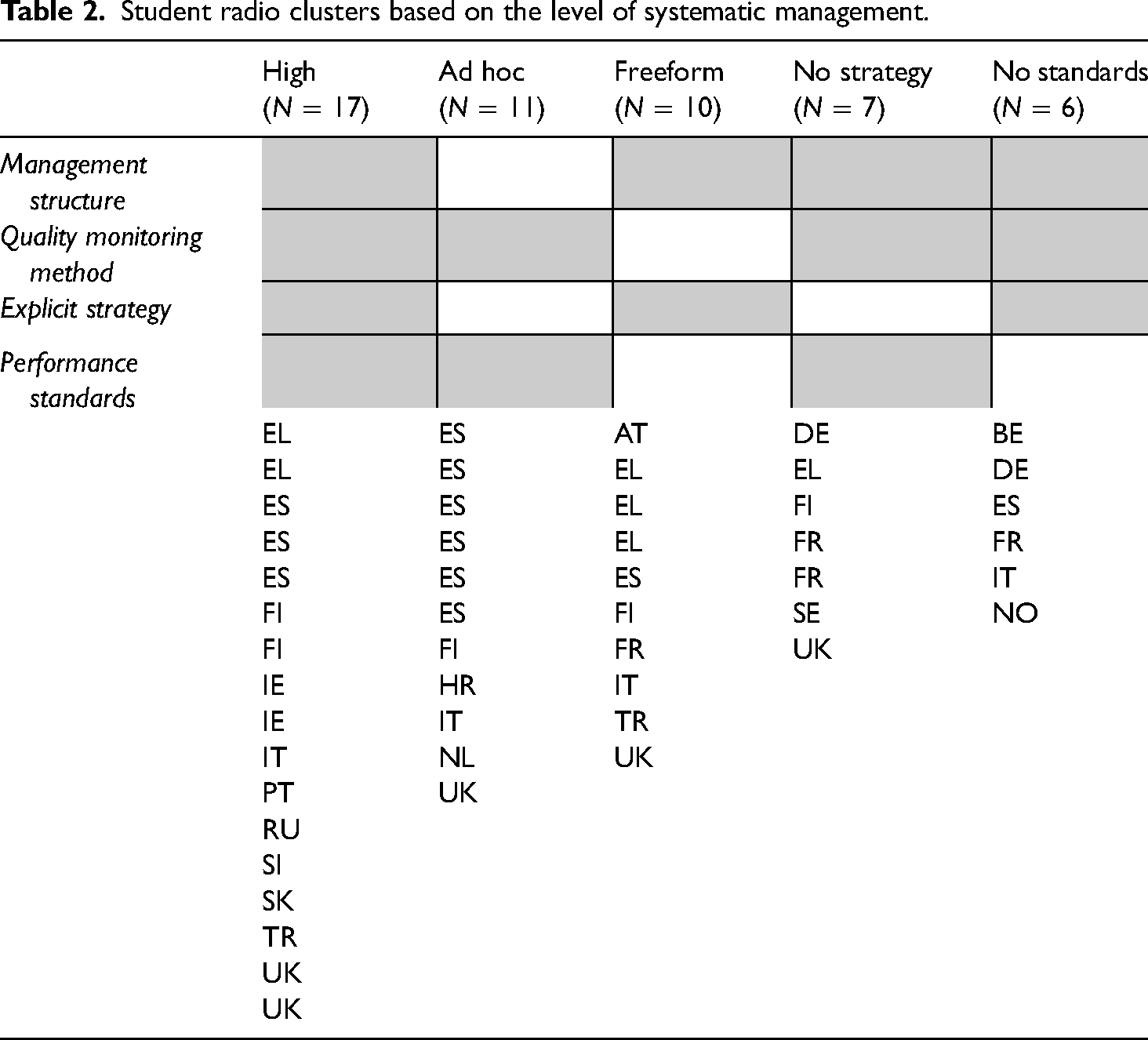
All in all, as the initial frequencies of the entire data suggest, the level of systematicity is relatively high, and the clusters suggest that there are only slight differences in which methods or elements are present. The clusters have been named accordingly as high (1), medium-high (2 and 5) and medium (3 and 4). Perhaps the most distinctive are clusters 3 and 4, with two elements present. Cluster 4 has no management structure or strategy, and cluster 3 has no quality monitoring method or performance standards. The divergence infers different ways of managing the station: Cluster 4 suggests a more ad hoc operation and cluster 3 hints at a more freeform way of doing things. The table here shows the countries within each group. The stations from different countries are somewhat evenly mixed in different clusters, and nationality or region does not seem to matter as much on the level of systematicity. Again, Nordic countries are spread across all the clusters, as are South-European stations. In cluster 1, there are stations from all parts of Europe, implying that high systematicity is not particularly tied to a particular region.
Rules of conduct
Explicit rules of conduct can be viewed as part of the organizational culture by regulating the station staff’s behaviour. Again, there is a chance of different interpretations for this variable, as rules of conduct can refer to how one acts towards other organization members or on-air, for example. Still, this question evaluates if the organization tries to influence how its members act in certain situations or not. This does not mean that the station with no set rules does not monitor its staff members’ behaviour. Every organizational culture affects at least partly how its members act and react within its boundaries.
Asking whether the station has set any rules of conduct for its staff, over 82% say yes. Cluster analysis produces two clusters. The smaller cluster has ‘no rules of conduct’ with eight respondents, two from Finland and one from Russia, the Netherlands, the UK, Turkey, Germany, Spain and Greece. Again it seems impossible to form clear-cut national or regional clusters based on this variable.
Relative position
Station purpose
The station’s primary purpose implies a given organization’s stance towards its operations, the audience and the outside community. In this question, the station managers were given the option to choose multiple primary purposes. For nearly 71% of the stations, the primary purpose was education. The second most common response (for 53%) was entertainment, then to be a social club (37%) and public service (33%). In 12%, the prime purpose was other than the above with open-ended answers like ‘alternative to other media’, ‘culture’, ‘social service’ and ‘support and promotion of unknown and young artists’. Cluster analysis with all other choices produced three different clusters, with a fair silhouette measure predicting cluster quality being 0.4. Looking at the predictor importance, one sees that ‘educational purposes’ and ‘other’ have values less than 0.4, referring to their frequential proportions in the data. The three clusters can be described as follows: (1) student life-oriented, which covers 41% of the stations; (2) public service-oriented, 22% of the stations; and (3) educationally oriented, 37% (Table 3).
Student radio clusters based on their primary purpose orientation.
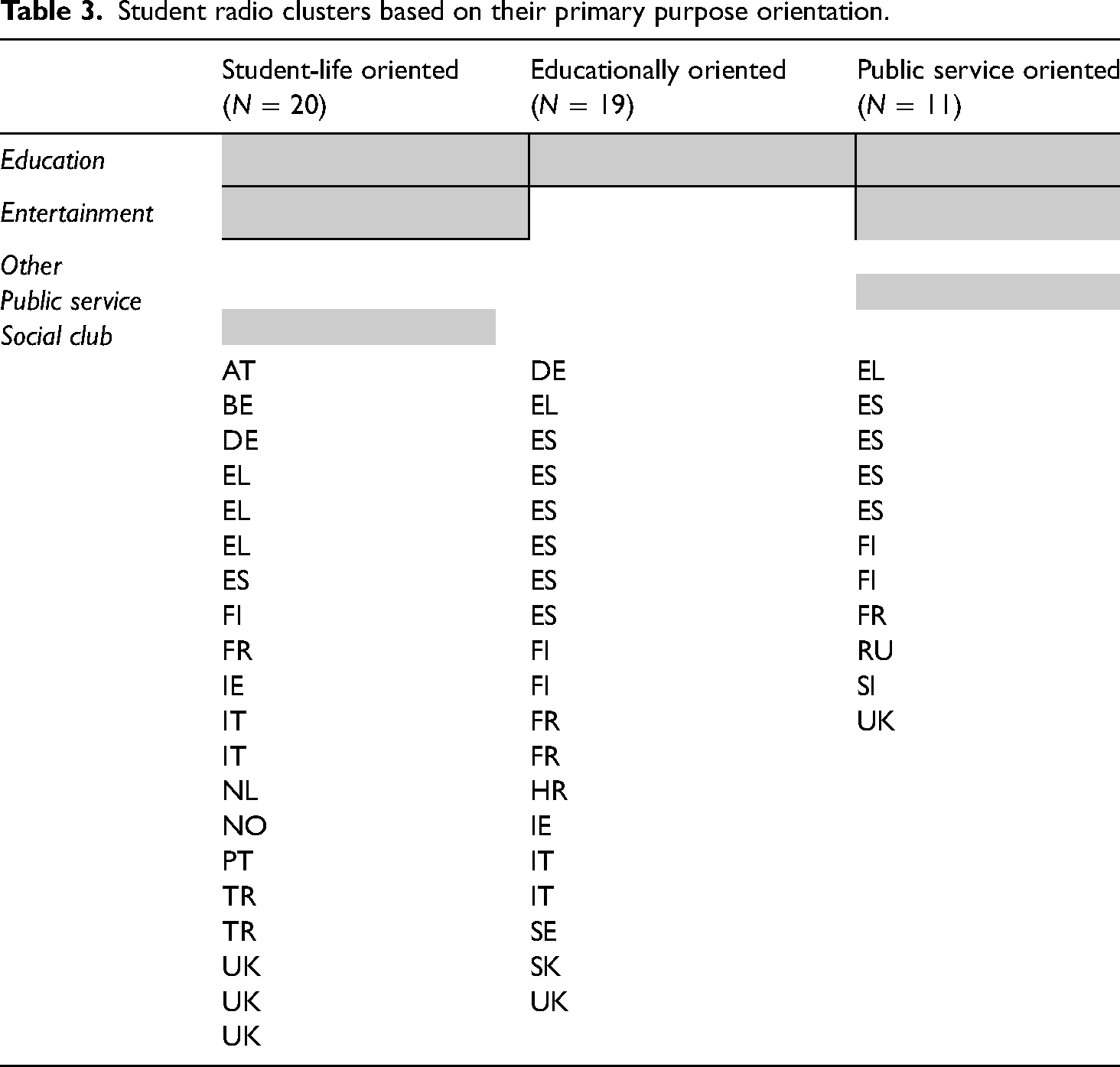
As one can see from Table 3, Spanish stations are strongly steered towards educational purposes with a public service orientation. Scandinavian stations, like French ones, are divided relatively evenly into all groups. Stations from the UK, Ireland, Belgium and the Netherlands are mostly student-life oriented. There is also a strong representation from South-European countries (Greece, Italy, Portugal). Generally, no clear-cut regional differences suggest that one part of Europe concentrates more on a specific purpose than others.
Major competitors
The question of who (if any) are their biggest rivals in the radio sector reflects the managers’ perception of the outside world and their place in the media landscape compared to other content providers, be it public radio, commercial stations, or other student radio stations.
Respondents could select multiple options from the following choices: Commercial stations, public broadcasting stations, individual stations (e.g., online podcasts), community stations, other student radio stations, no competition, other or I don’t know. 39% of the respondents say that they do not have any competitors. Thirty-five percent mention commercial stations as their main competition, 28% say public broadcasting, 26% other individual stations, like podcasts, 12% other student radio stations, 10% community stations and 8% other than any of the ones mentioned here.
Initial cluster analysis produces a three-cluster model with a good Silhouette average of 0.6. Predictor importance shows that ‘Other’, ‘Other student radio stations’ and ‘I don’t know have’ relative importance of less than 0.1, so they were left out of the final cluster solution. ‘Public radio’ and ‘community stations’ also had less than 0.4 importance levels. When these choices were removed from the analysis, the second iteration produced a three-cluster model with only a slightly better Silhouette value of 0.7. The original model was chosen for further analysis, considering the limited predictor importance. The most defining predictors are ‘We don’t have competition’, ‘Individual stations’ and ‘Commercial stations’.
The largest cluster (24 respondents) consists of stations that see commercial and public broadcasting as their biggest rivals. This cluster can be thus called ‘Mainstream radio’. The second largest (18) are the ones who see their station having no competition, and the smallest (9) are the ones who see online podcasts and other individual content providers as the most significant competition. As seen in the table, there is rather interesting national and regional clustering (Table 4).
Student radio clusters based on their perceived competition.
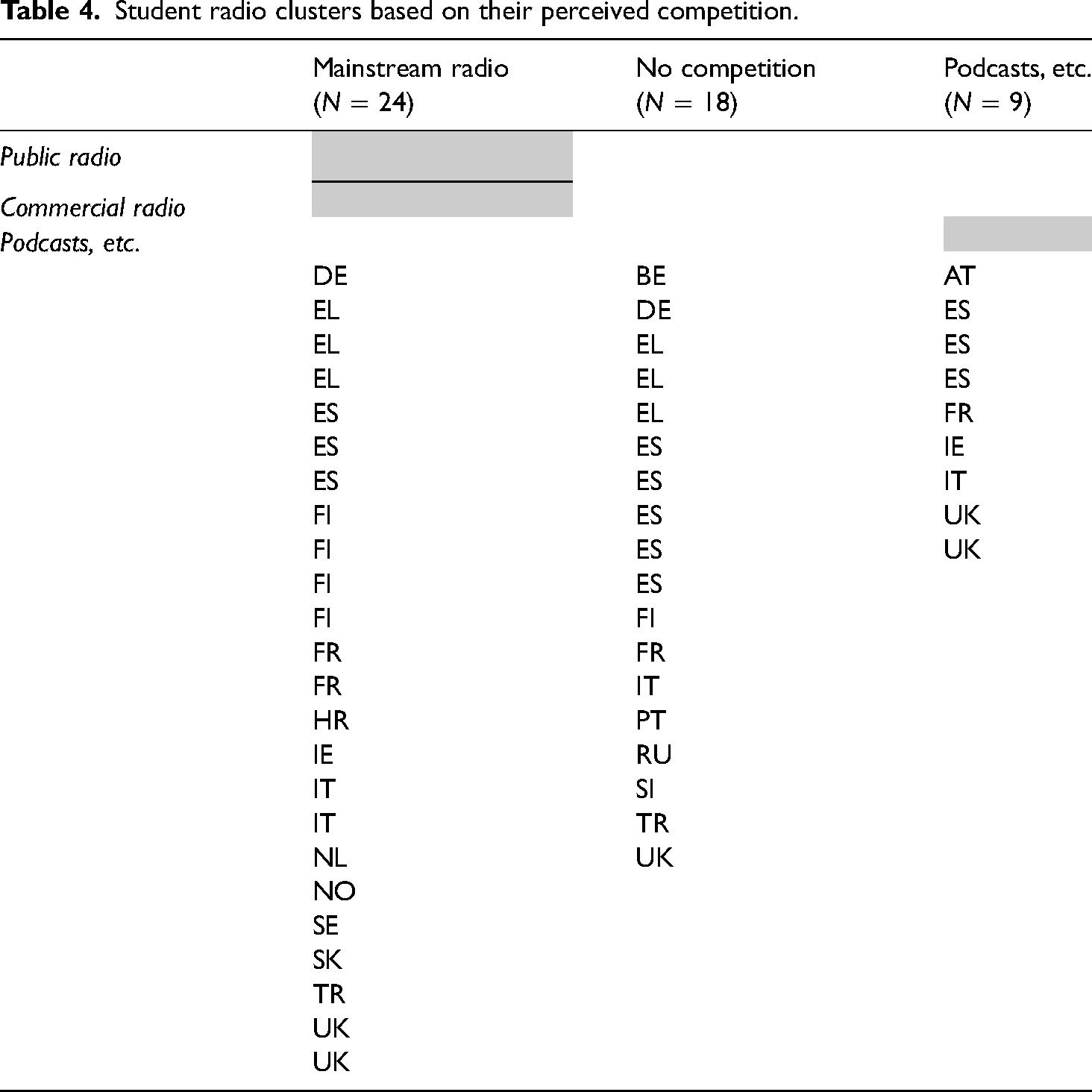
There is a relatively high concentration of managers from the British Isles who see, for example, online podcasts and individual stations as their biggest competition. However, some see commercial stations as competition as well. Interestingly, the Spanish station managers mostly see no competition or individual podcasts as the most significant competition, which may be because podcast penetration among listeners over 18 was highest in Spain at just over 40%, followed by Ireland with nearly 38%, with the European average being 28% (Feldman, 2019). For most Scandinavian managers, the commercial stations are the biggest rivals even though Sweden is third in the Statista statistics with over 36% penetration, and Northern Europe is high in podcast listening in general (Coppola, 2020). Again, all of Europe is represented in all clusters, although East-European stations are not present in the podcast cluster. Again, the data used may paint an outdated image, as there is a current tendency in Eastern Europe to steer community media voices to rapidly growing podcasts (e.g., Community Media Forum Europe, 2022; Götting, 2022).
Listener following
Sixty-three percent of the managers state that their station follows the number of listeners their station has, but only 35% report that they monitor their listeners. Cluster analysis based on these two questions produces a three-cluster model with a good average Silhouette of 0.9. The clusters, almost similar in size, can be seen to represent the level of interest the stations in each group have in monitoring their listeners, with the largest cluster (18 respondents) following both the number and demographics, the second largest (17) only the amount and the third not following either (Table 5).
Student radio clusters based on the level of audience monitoring.
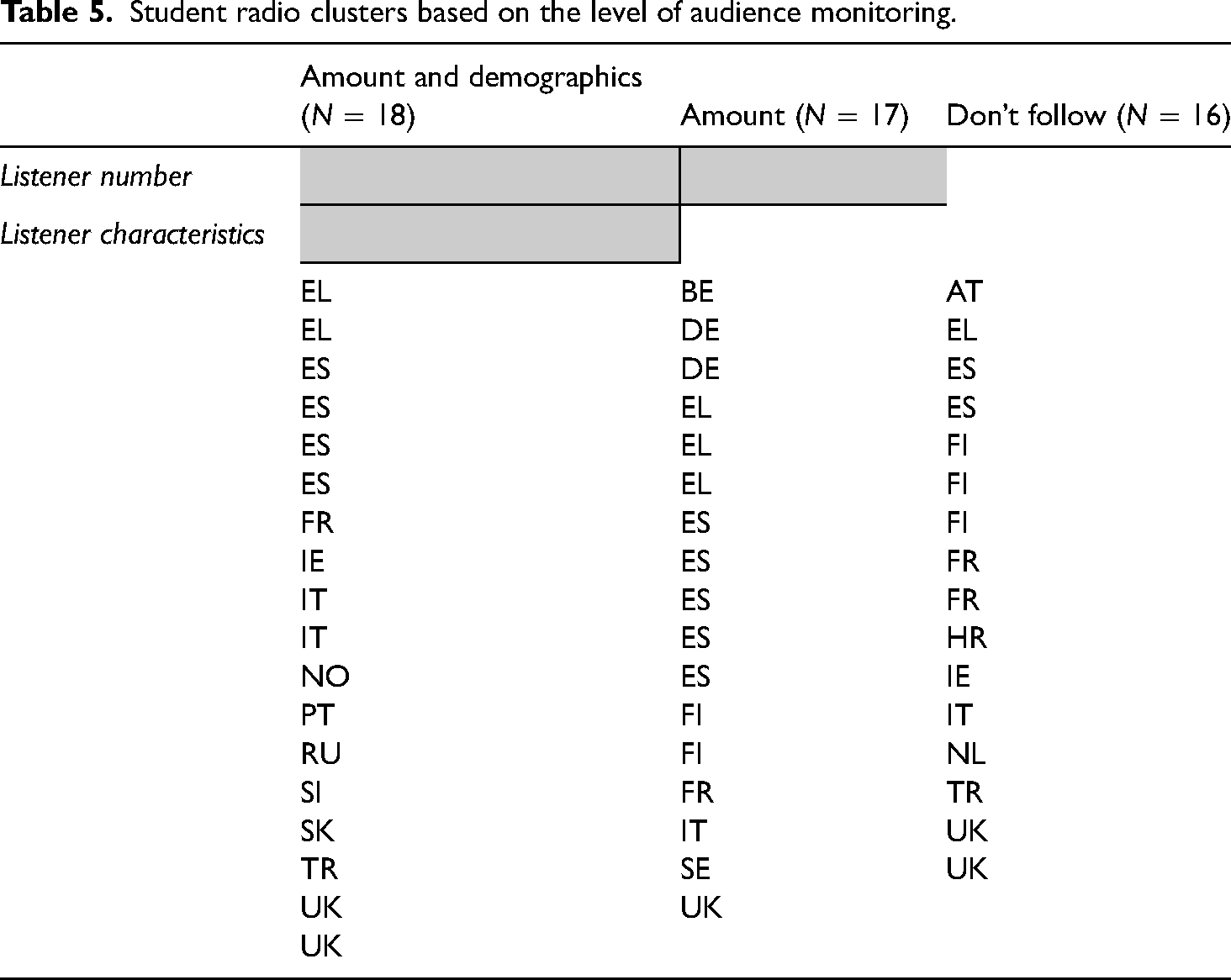
There seems to be an even distribution of different regions in each cluster. Most European student radio stations seem to follow their listeners at least to some extent, but interestingly a third of the respondents do not follow them. Possible implications vary from not being that interested in the listeners but more of other aspects of doing radio. However, it can mean that these stations do not have the means, either the technology or know-how, to do so. Whatever the reason, this group is interesting, given that student radio falls under the community media category. The listeners should be a pivotal part, both as recipients and content makers.
Selected content
Proportion of music
This part of the results looks at content as a cultural artefact of a student radio organization, reflecting its values and stance. Student radio and music are tightly connected. Research about the importance of music in adolescence (e.g., Laughey, 2006; Miranda et al., 2015) underlines the role of music in the life of the expected listeners of student radio. Music seems to drive audio listening in Europe (Coppola, 2020) generally. Asking about the proportion of music, 41% of the respondents say that music makes 60–79% of their shows’ content. In 28%, the proportion of music is 40–59% and 18% over 80%. Clustering the data with this variable produces four groups with a Silhouette value of 0.9 (Figure 1).
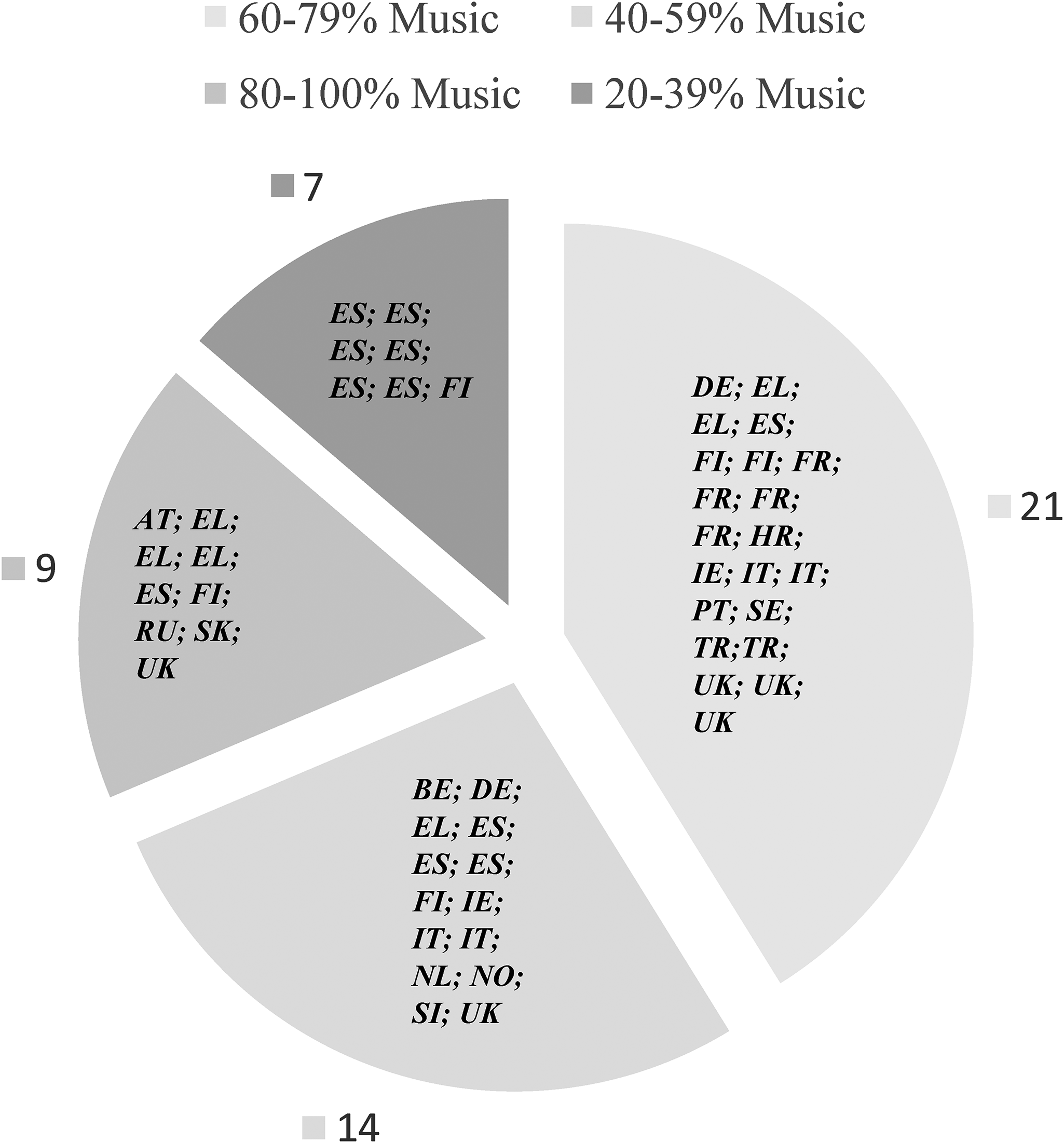
Student radio clusters based on the percentage of music in all content.
The amount of music is the lowest in Spanish stations, which can partly be explained by the purpose of these stations being more towards education and public service than student-life oriented (see question 1 in this article). Again, there is representation from all parts of Europe in all clusters, and no clear-cut regional differences can be made.
Choice of music
US College radio is said to be about individual DJs handpicking the music played instead of, for example, an automated playlist dominating the rotation (e.g., Kerr, 2020; Mastrogiacomo, 2018). When European station managers were asked about selecting the music played, 49% reported individual DJs. Twenty-eight percent report that there is a music director, and 14% report that there is automated software that selects music. Ten percent report that the choices are made in some other way. Interestingly, none of the respondents says that listeners get to choose the music. Clustering the responses produces a model with a Silhouette value of 1.0 and four clusters (Figure 2).
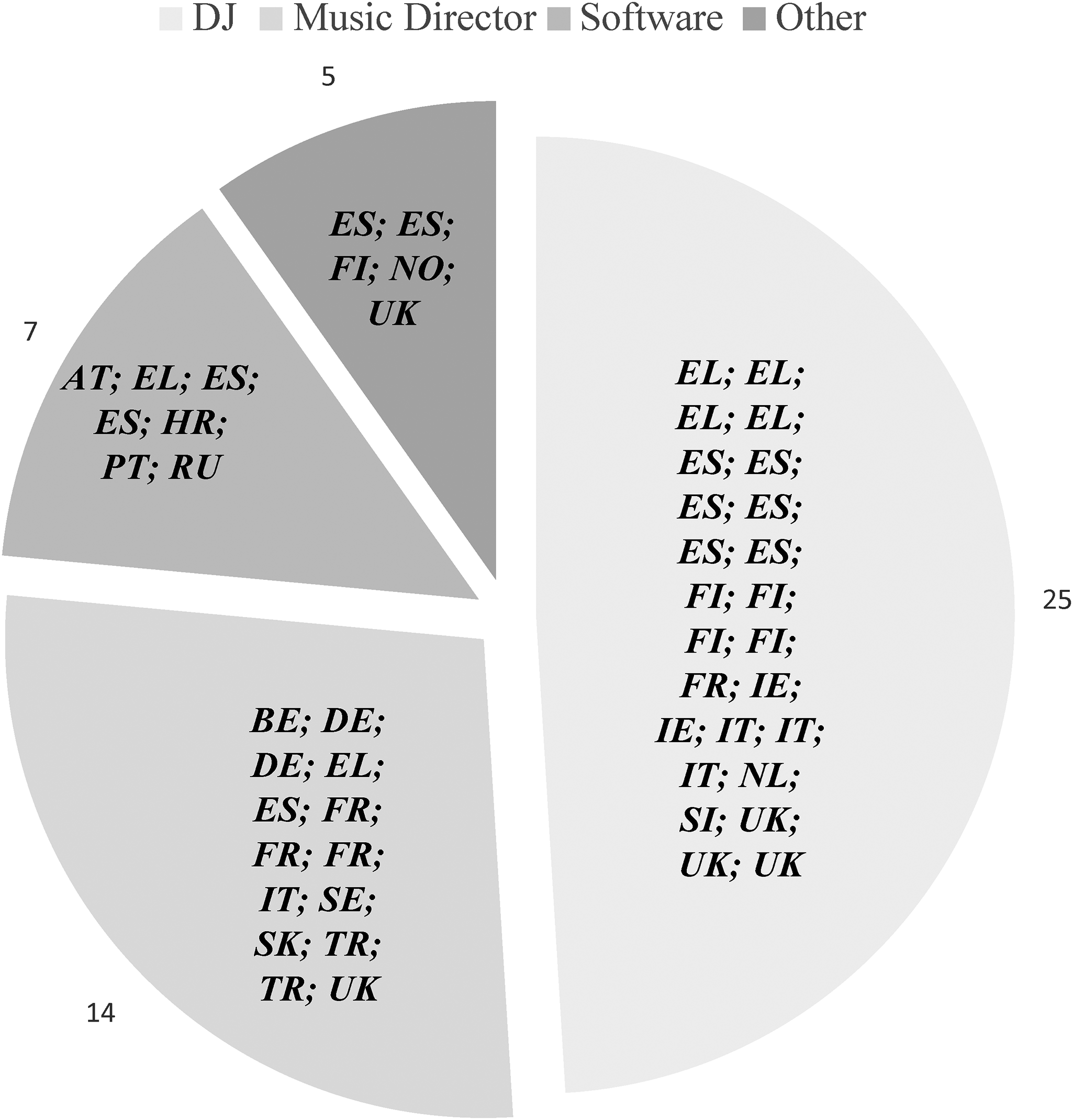
Student radio clusters based on who selects the music played.
The French seem to group in the Music Director Cluster, as do German and Turkish managers. Other than that, there do not seem to be any clear national or regional patterns in the data.
The choice of marginal never heard of and indie music over contemporary mainstream hits is one of the medium’s key features (e.g., Dolan, 2020; Raymond, 2016: 201). When asking the European student radio managers whether their station prefers marginal or mainstream ‘hit music’ on a scale from 1 (alternative only) to 10 (hit music only), the mean sets at 4.3, with the standard deviation being 2.0. The result suggests that European student radio stations generally favour music not classified as ‘hits’ but not strictly. When treating the 10-step scale as a continuous variable (e.g., Zumbo and Zimmerman, 1993), the cluster analysis produces two clusters with a good Silhouette measure of 0.7. The first cluster (29 respondents) median value is 3, suggesting an emphasis on more marginal and perhaps less-heard music. In the second cluster (22 respondents), the median sets at 6, implying more mainstream music choices (Figure 3).
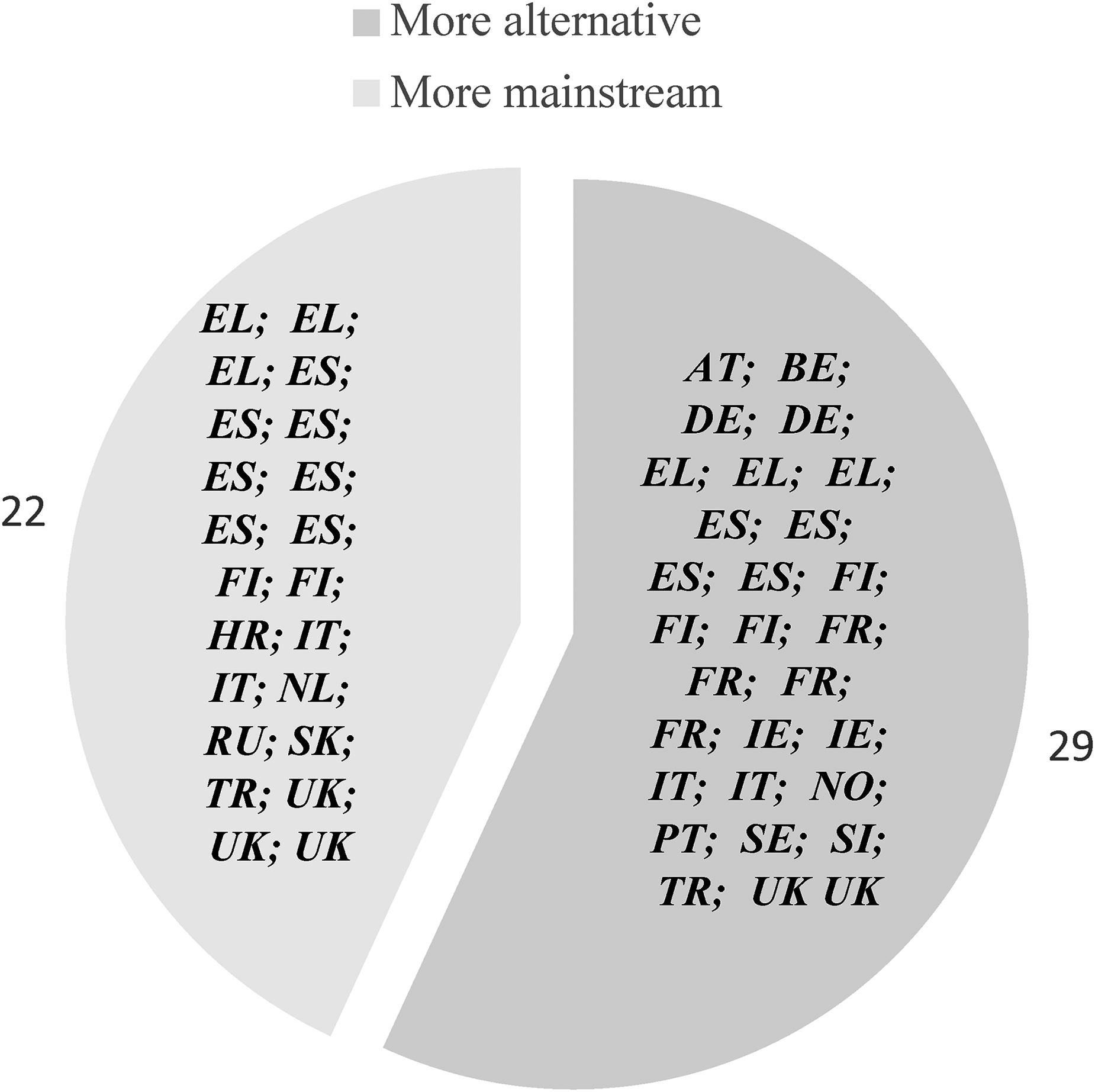
Student radio clusters based on music preference.
Comparing the clusters, one can see that countries in Eastern Europe are more mainstream-oriented than in other parts. Other than that, there is a mix of countries from different regions in both clusters.
Conclusions
This article aimed to examine the artefact layer of European student radio organizations and present a picture of this phenomenon. It also set out to see if these organizations diverge and cluster based on region or nationality. The premise was grounded on the results found in previous studies on organizational cultures by Hofstede et al. (2010) and similar taxonomies found in research done on media systems which imply that national cultures affect and are perceived in the organizational cultures that differ from one country or region to another. The focus was on the most visible and easily communicated layer of organizational cultures, their artefacts. In the student radio context, these were organizational structures and decision-making practices, clear views about the station’s position related to the outside world, and selected media content. Based on data from 51 student radio managers representing 46 individual stations from 19 countries collected in 2018, one can, of course, only scratch the surface of the phenomena. However, as there are no comprehensive European studies about student radio stations’ organizational cultures or this form of media, the findings shed light on a relatively unknown subject and call for further investigations.
In the seminal studies on European media systems and organizational cultural differences based on national cultures, it has been shown that geographical, political, historical and societal aspects affect how and why organizations form and value their ways of doing things. Specific regional differences can be seen in these studies, with Northern, Southern, Eastern, Western and Central Europe forming diverging regimes. In this article, clear-cut divisions of student radio cultures within these regional boundaries are not found. One cannot say that European student radios are alike. However, the differences are slight, and the clusters found in the analysis propose that nationality or region of Europe is not the critical defining factor when it comes to differentiation, not in most of the examined variables at least.
Even though the frequencies of different attributes produce a relatively unified picture, the conducted cluster analyses produce 2–5 clusters in all inspected variables instead of only one. Thus, it would be incorrect to say that European student radio shows strong convergence in the selected dimensions. Other factors in play make stations diverge from one another, but these differences are found throughout Europe despite nationality in most cases.
Based on student radio managers’ responses, an overall image of the artefact layer of European student radio’s organizational culture can be described. European student radio stations are primarily for educational purposes, especially in the South, where stations have a public service orientation. However, all in all, many of them emphasize entertainment and student-life orientation.
The level of systematicity in station management is assessed by having an official management structure, an explicit strategy, performance standards and monitoring the radio programming quality. This is the dimension in which there is the most divergence. Still, it is fair to say that the level of (or at least an endeavour towards) systematicity is high in European student radio stations, with slight variations in the present elements’ different aspects. Countries’ distribution is somewhat mixed, making it impossible to infer that certain regions would have higher aspirations for systematicity than others. Four in five stations have rules of conduct for their staff. It can be said that these organizations take their operations seriously enough not to create a laissez-faire or ‘anything goes’ environment with no explicit norms to govern the way the members of the organization behave – again, despite the region of the station. One can speculate whether these choices reflect student management’s efforts to secure that the university does not cut station funding due to uncontrolled, non-goal-directed behaviour or whether they project the station’s values on an efficient, smooth-running organization (see, e.g., Cameron, 2006).
Three in five student radio managers perceive their station as having competition, mainly with mainstream media, especially commercial stations and private podcasts. This is understandable as nearly all surveyed stations stream online; for many, the internet is the only channel. One noticeable feature of European student radio stations is that two out of five managers do not see their station having any competition, implying that a station’s driving force is something other than competing with others.
If perceived as part of a community media definition, student radio stations should serve their close community, give voice to people from that community, and listen to this audience’s needs. Two of three European stations follow at least how many people tune in, and one-third also know their audience. Interestingly, though, one-third seems to follow neither the number nor the demographics of their listeners. Does this imply a more inward-looking take, focusing on doing radio instead of making it heard?
North American college radio prides itself on giving individual DJs the freedom to select the music they want to play in their shows. This content is often viewed as the most defining attribute of college radio. However, the data shows that European counterparts emphasize alternative music more than hit music and the freedom of a DJ to choose – but not necessarily as strictly as the US discourse would imply. The hundred-year linkage of American college radio and alternative music has made it an acknowledged steppingstone for new bands (Wall, 2007), making ‘being alternative’ a more significant cultural artefact than in Europe. Here, providing alternatives for mainstream media might mean playing, for example, older hits not heard elsewhere.
Furthermore, in half of the stations, individual DJs choose the music, but nearly a third leave these choices to a music director, others to automated software or other methods. Music plays a big part in European student radio throughout the continent, as music consists of nearly 60% of all content in nearly ¾ of the stations. Apart from Spain, where the proportion of music is the lowest, this emphasis on music can be seen throughout Europe.
Limitations and future implications
As mentioned, the data used in this article dates to 2018 and is somewhat limited, with many European countries with active student radio missing from the analysis, narrowing the generalization of the observations and causing concern for reviewing the findings in a more recent light. As most of the countries involved are not English speaking, one should also bear in mind the possibility of misinterpretation of the questions and the concepts used in gathering the data through an online survey. Countries with strong traditions of student radio, such as Poland, which was one of the first countries to test student-driven radio on university campuses (see Doliwa, 2015) and Denmark, where there are over 30-year-old traditions of student radio (XFM, 2019), are not represented in the data, leaving room for future research to test whether the findings hold with more comprehensive data.
This article has examined whether nationality or the region of Europe has significance in how student radio stations differ from one another or how they cluster together based on organizational artefacts. The results suggest that, at least in the selected variables, nationality or the region of the station is not as significant as in previous studies on organizational cultures and media systems. One can hypothesize that we might be seeing the effects of Europeanism, experienced especially in the realm of student and academic mobility within Europe mentioned earlier, where influences travel with exchange students from one country to another. The deduction does not necessarily hold when these stations are examined using different variables. One of the significant limitations of this article is that it does not answer why the radio stations cluster based on the selected artefacts, what are the reasons why a station would emphasize systematicity of management, see competition in mainstream media or choose to give freedom of musical choices to an individual DJ?
These questions are not the scope of this article, though, as the focus was on examining the artefact layer of the organizational culture of this type of media that lacks general research altogether. As Schein (2004: 220–223) has said, artefacts do not reveal the more profound dimensions of the organization’s culture, that is, the values, meanings and beliefs. Extracting values from artefacts alone is risky. Future research, preferably by using mixed methods of research combining ethnographical case studies, content analysis of stories, rituals and symbols and further quantitative analysis with more recent data, is needed to dig deeper into the organizational culture. Student radio, after all, is a phenomenon that affects thousands of students, hundreds of universities, student communities and other audiences throughout Europe, in addition to being a part of the media landscape's alternative, community and third sector, which according to the Council of Europe (2019) is a vital indicator of media pluralism.
Footnotes
Declaration of conflicting interests
The author(s) declared no potential conflicts of interest with respect to the research, authorship, and/or publication of this article.
Funding
The author(s) received no financial support for the research, authorship, and/or publication of this article.
