




Abstract
Motivation is central to understanding athletes’ engagement, performance, and persistence in sport. Coaches play a crucial part in the physical and psychological development of athletes and are central figures in maintaining their motivation levels. This systematic review synthesizes and explores the associations between the variables that make up the motivational sequence proposed by the Hierarchical Model of Intrinsic and Extrinsic Motivation (HMIEM): motivational climate, basic psychological needs (BPN), motivational regulation and behavioral outcomes. Following PRISMA guidelines, searches were conducted in Web of Science, PubMed, Scopus, and SPORTDiscus databases for studies published between January 1997 and May 2025, involving athletes aged 12 and older. Twenty-two studies met inclusion criteria, predominantly employing cross-sectional designs (86%), encompassing 10367 athletes. Findings revealed that task-involving motivational climates were positively associated with autonomous motivation and negatively related to controlled motivation. Basic psychological need satisfaction was positively linked to more autonomous forms of motivation, while autonomous motivation demonstrated positive associations with favorable behavioral, emotional, and cognitive outcomes. Conversely, ego-involving climates correlated negatively with autonomous motivation and positively with controlled motivation. These findings underscore the critical importance of coach-created motivational climates and psychosocial alignment within HMIEM for optimizing athletes’ motivational experiences and well-being.
Keywords
Introduction
Motivation is a central construct in understanding athletes’ engagement, performance, and persistence in sport.1–3 Despite the fundamental role of motivation, coaches also play a crucial part in the physical and psychological development of athletes and are central figures in maintaining their motivation levels. Through interpersonal relationships, 4 leadership styles, 5 and feedback, coaches can create motivational climates that can satisfy or frustrate the basic psychological needs and consequent motivation of their players. 6 Understanding how coaches can structure motivational environments to optimize athletes’ psychological needs, motivational quality, and behavioral outcomes is fundamental and has direct practical implications (i.e., athlete retention and dropout prevention. 7 In this field of research, self-determination theory (SDT)8,9 and achievement goal theory (AGT) 10 are considered theoretical reference frameworks for understanding the cognitive, behavioral, and emotional patterns associated with practitioners’ goals in sporting contexts). 11
Theoretical frameworks
Achievement goal theory (AGT)
Achievement Goal Theory (AGT) 10 explains how individuals pursue goals and develop motivation across contexts, emphasizing the influence of the social environment on motivational regulation and behavior.12,13 This theory encompasses two complementary dimensions that explain motivational processes in achievement contexts. The first-dimension concerns goal orientations, which represent relatively stable individual differences (dispositional perspective) in how people define success and competence. Athletes may be predominantly task-oriented (defining success through self-improvement and mastery) or ego-oriented (defining success through outperforming others.14,15
The second-dimension concerns perceived motivational climates, which reflect the situational characteristics of the performance environment (situational perspective) created by significant people, particularly coaches, in sporting contexts. While goal orientations represent what athletes bring to the situation, motivational climates represent what the situation provides to athletes.15,16 The coach-created motivational climate is a multidimensional construct. It may be empowering—characterized by task involvement, autonomy support, and social support—or disempowering, marked by ego involvement and controlling behaviors.17,18 Empowering climates foster the satisfaction of basic psychological needs (BPN), while disempowering climates are associated with BPN frustration. 11 This systematic review focuses on the situational dimensions, specifically, how coach-created motivational climates influence athletes’ psychological needs and motivational regulation.
Self-determination theory
SDT provides a comprehensive socio-cognitive framework for examining the psychosocial factors that underpin human behavior.19,20 SDT is organized into six interrelated mini theories, each addressing distinct motivational dimensions along a continuum of self-determination. Given the focus of this systematic review on each level of the Hierarchical Model of Intrinsic and Extrinsic Motivation (HMIEM) in sport, two mini theories are specifically emphasized: Basic Psychological Needs Theory (BPNT) and Organismic Integration Theory (OIT).
According to BPNT, human development and well-being are deeply influenced by the quality of the social context. 20 This mini-theory identifies three universal, innate needs—autonomy, competence, and relatedness. 21 Though conceptually distinct, these three needs are strongly interconnected in their effects on motivation and well-being. In sport contexts, coaches play a crucial role in supporting or thwarting athletes’ autonomy, competence, and relatedness through their interpersonal style and the motivational climate they create.6,22 Need satisfaction predicts more self-determined motivation23,24 and is linked to better psychological health, including quality of life and reduced depression and anxiety.8,25,26 Conversely, need frustration, distinct from low satisfaction, predicts maladaptive outcomes such as burnout and depression, and is negatively associated with self-determined motivation.24,27–29
OIT19,30 examines different forms of motivation and how environmental factors facilitate or hinder the internalization and integration of behavioral regulation. 8 Motivation types vary in their degree of autonomy, distinguishing extrinsic motivation forms based on internalization levels. 30 Some motivations are more internalized (autonomous), while others are controlled, influenced by external pressures. According to SDT,8,19,20 motivation exists along a continuum from amotivation (lack of intention) through controlled regulations (external, introjected) to autonomous regulations (identified, integrated, intrinsic), setting SDT apart from earlier theories.9,31,32 Theoretically and empirically, autonomous motivation is positively correlated with behavioral outcomes, while controlled motivation is negatively correlated.19,31,33–35 In sport, autonomous motivation is linked to greater effort,11,36 reduced burnout 37 increased enjoyment, 38 and better mental health. 39
HMIEM: A link between theories
AGT and SDT have been widely applied in the sport context, where athletes are central to coaches’ motivational interventions that can influence health and well-being in both positive and negative ways. 18 Within the HMIEM, 40 both AGT and SDT operate at the same level of generality, the contextual level, which is mediated by the satisfaction or frustration BPN.
The HMIEM proposes that motivation operates at three hierarchical levels. The global level represents stable motivational orientations across life domains, reflecting personality-like individual differences. 41 The contextual level represents motivation within specific life domains (e.g., sport, education, relationships), which is the focus of this review. 42 The situational level represents momentary motivation during specific activities or situations. 43 These levels are reciprocally related: situational experiences accumulate to shape contextual motivation, which in turn influences global motivational orientation.
At each level, motivation follows a social factor → psychological mediators → types of motivation → consequences sequence.40,44 Social factors include environmental influences created by significant others (in sport, this includes the motivational climate established by coaches). Findings consistently indicate that controlling coaching behaviors—characterized by pressure, conditional regard, and excessive regulation—tend to undermine athletes’ self-determined motivation. In contrast, autonomy-supportive behaviors, which emphasize choice, empathy, and meaningful rationale, are associated with greater satisfaction of the basic psychological needs and, consequently, more self-determined forms of motivation. 1 These findings underscore the pivotal role of the coach–athlete relationship within the motivational process, underscoring the importance of studying such interpersonal dynamics to inform evidence-based interventions that promote optimal motivation and well-being in sport settings.
Statement of the problem and purpose
Researchers consistently highlight the importance of understanding how the motivational climate created by the coach influences the regulation of athletes’ motivation.18,45,46 While individual studies47,48 have examined portions of this motivational sequence, the literature remains fragmented, and the overall evidence has not yet been integrated into a unified framework. The general propositions of AGT and SDT are well-established, important gaps remain in our understanding of the HMIEM model, specifically in sport contexts.
First, a narrative review was conducted with a view to identifying future research directions in the field of motivation, considering the HMIEM. 49 This study establishes that the motivational sequence (Social Factors → BPN → Motivation → Consequences) has attracted the attention of various researchers, but that much research remains to be carried out in this field, namely: a) the integration of theories other than SDT (e.g., AGT, Theory of Planned Behavior), b) research into theoretical advances regarding a better understanding of the contribution and limitations of each theory, as well as a better prediction of the outcomes promoted in sporting contexts. Given the type of study conducted by the author, we consider that our systematic review is a more robust type of study that will enable us to contribute findings to the literature by integrating empirical studies, thereby allowing us to understand what has been achieved to date and where we might go from here; for example, as is the case with further research into the relationship between the motivational climate created by the coach and the processes of motivational regulation.
For instance, Alkasasbeh & Akroush 50 examined the impact of intrinsic and extrinsic motivation on performance, but their framework omitted the social factors (antecedents) and psychological mediators (BPN) that are foundational to the HMIEM. Consequently, the authors failed to consider a key aspect of the motivational process: the integration of social factors into the motivational sequence. This is one of the most important variables to understand, as it is through these factors that individuals can perceive satisfaction and/or frustration with BPNs and thus regulate their motivation. In short, existing reviews have either been unsystematic and theoretical (narrative) or focused on isolated bivariate relationships, leaving the entire chain “from antecedents to outcomes” to be synthesized.
Secondly, while the authors identified primary studies,11,39,46,51,52 that have begun to test this holistic perspective, the increasing frequency of these publications in recent years signals a clear “massa crítica” (critical mass) and interest in the field. For example, Alesi et al. 51 examine the entire motivational sequence, demonstrating that positive self-concepts act as mediators between the link established between a task-oriented climate and self-determination, leading to greater commitment. In the studies by Monteiro et al.11,53 the results demonstrated that when the coach tends to create a task-oriented climate, their athletes tend to satisfy their needs, which results in greater regulation of autonomous motivation, leading to greater perceived effort and an intention to continue swimming. However, to the best of our knowledge, no systematic review has yet been conducted to consolidate these findings. It is therefore essential at this stage to consolidate this growing body of evidence through a systematic review, so that new directions and future studies on this topic can be identified.
Therefore, the purpose of this systematic review is to: examine the associations among variables that constitute the motivational sequence, specifically, motivational climate → BPN → motivational regulation → behavioral outcomes—in sport athletes. The contributions of this review are to: (1) identify the associations between the different components of the HMIEM model, (2) provide the first comprehensive synthesis of the complete HMIEM sequence in sport.
Methods
Search strategy
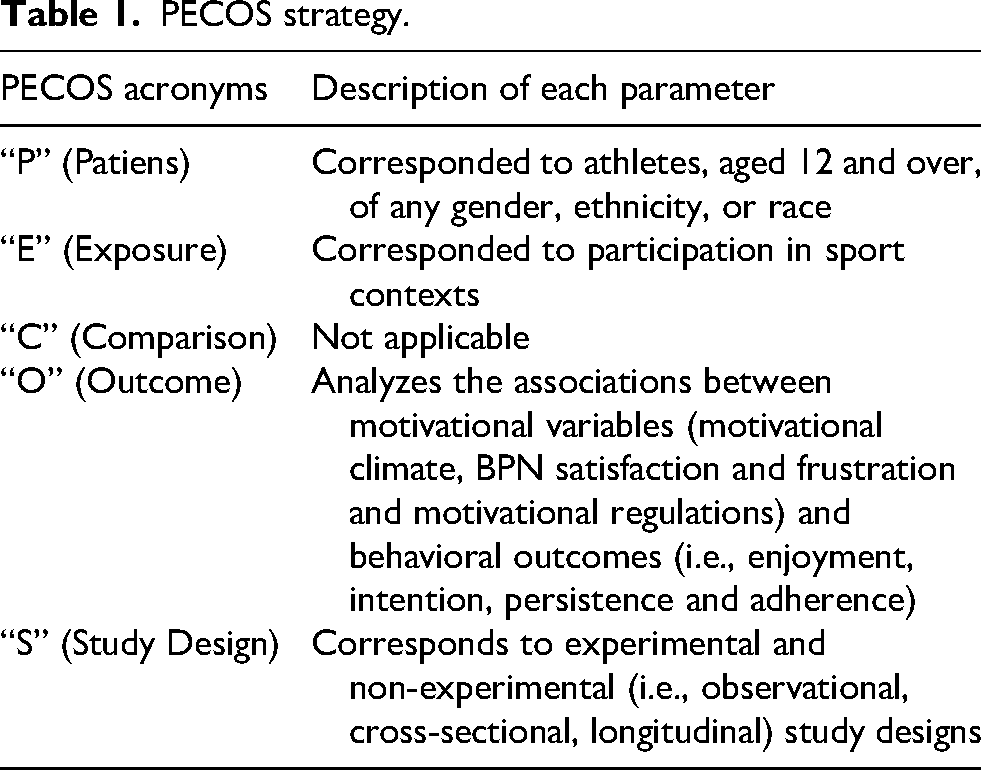
The systematic review was built following the items proposed by the PRISMA 2020 protocol, 54 PECOS strategy 55 (Table 1) and the methodology described by Bento. 56 After conceptualizing the systematic review, it was registered on the PROSPERO portal and assigned the registration number CRD420250644059 in 2025.
PECOS strategy.
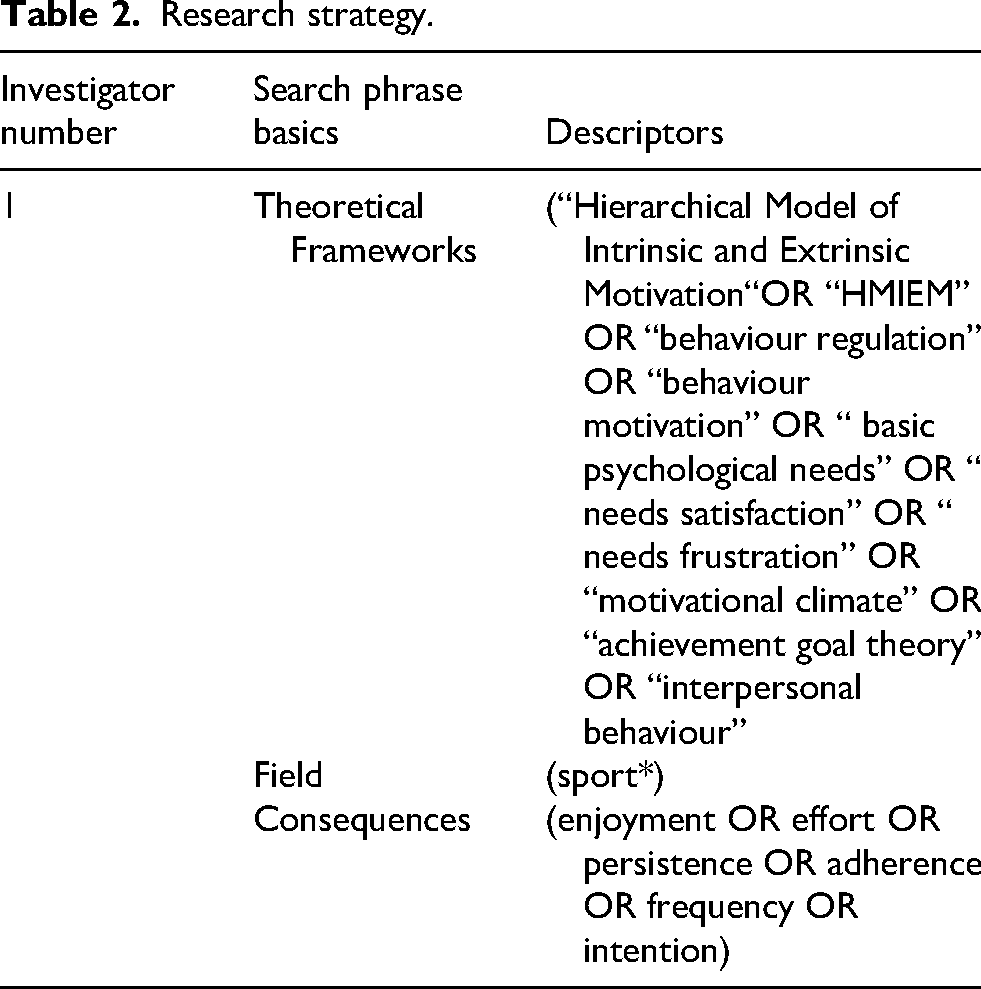
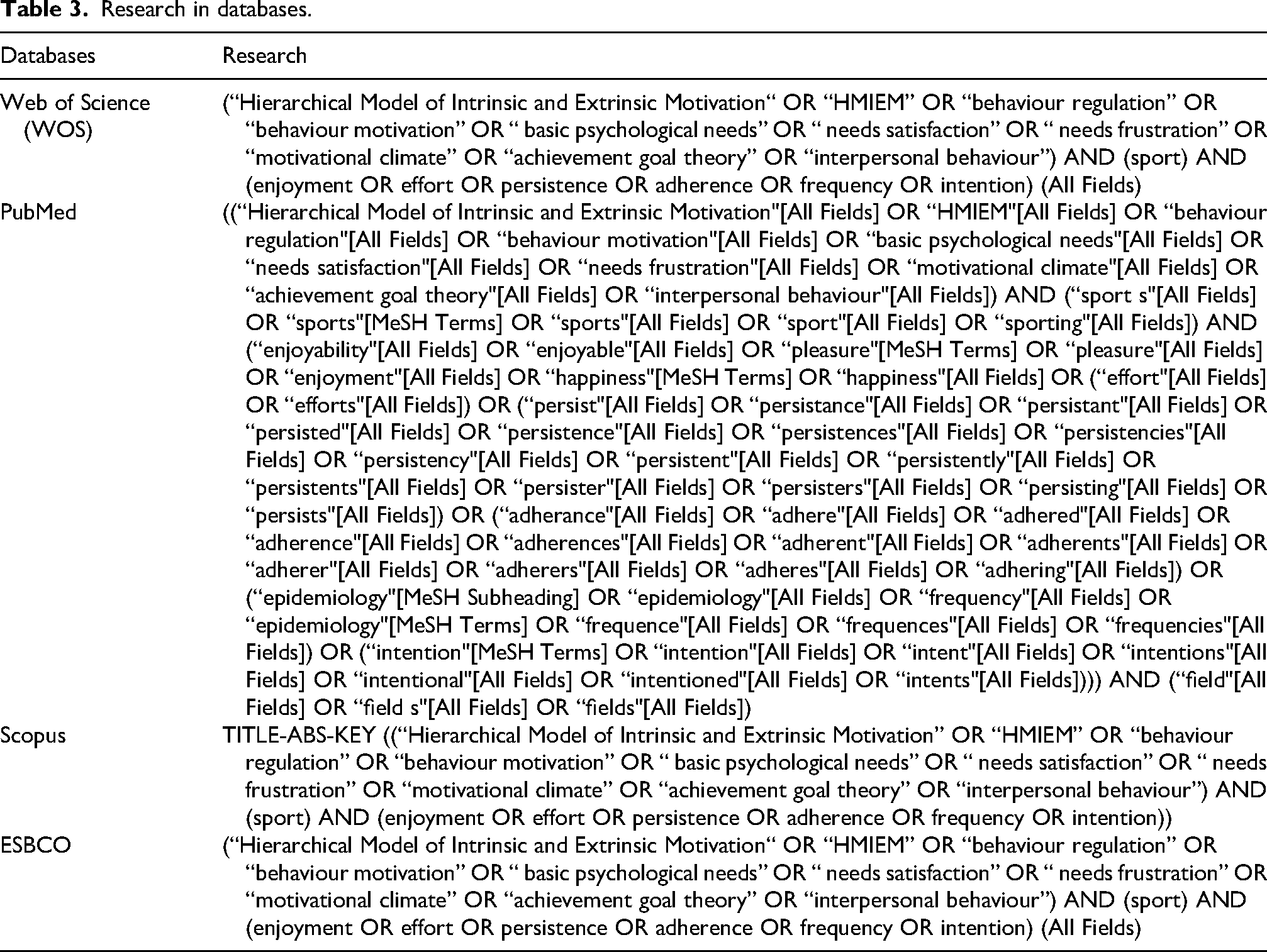
To initiate the review, we sourced relevant records from four electronic databases: Web of Science (All Fields), PubMed (All Fields), Scopus (Tittle, Abstract and Keywords), and SPORTDiscus (Tittle, Abstract and Keywords), encompassing articles published from 1997 to May 2025. The keywords used in the database search were “Hierarchical Model of Intrinsic and Extrinsic Motivation,” “HMIEM,” “behaviour regulation” “behaviour motivation,” “basic psychological needs,” “needs satisfaction,” “needs frustration,” “motivational climate,” “achievement goal theory,” “interpersonal behaviour,” “sport* (MESH Term)” “enjoyment (MESH Term)” “effort,” “persistence,” “adherence,” “frequency,” “intention (MESH Term)”. All procedures relating to research sources and research strategy are available and described in Tables 2 and 3.
Research strategy.
Research in databases.
The relevant studies were downloaded from the databases into EndNote X7 software, and duplicate articles were removed. At Level 1, titles and abstracts of all identified records from the database search were manually screened, analyzed, and checked against eligibility criteria by BV and MJ, discrepancies between the researchers were resolved by a third researcher (DM). At Level 2, full-text publications of every study not eliminated in the previous screening were retrieved for complete review.
Eligibility criteria
Studies were included if they:
involved male and/or female athletes aged 12 years or older (the age at which young people acquire the ability to assess the difficulty of a task in relative terms)
49
with no reported disabilities or illnesses. were published in English between January 1997 (corresponding to the year Vallerand published the HMIEM model) and May 2025. were explicitly based on the HMIEM, considering the integration of SDT and AGT. examined at least three components of the HMIEM, or the complete sequence linking motivational climate, basic psychological need satisfaction/frustration, motivational regulations, and behavioral outcomes (emotional, cognitive, and behavior). were conducted in sport-specific contexts (e.g., competitive, recreational, or organized sport). used validated sport-specific measures, such as the Perceived Motivational Climate in Sport Questionnaire-2 (PMCSQ-2), Motivational Climate Sport Youth Scale (MCSYS), Sport Motivation Scale (SMS-I or SMS-II), Behavioral Regulation in Sport Questionnaire (BRSQ), or other theoretically consistent instruments. employed experimental or non-experimental designs.
Studies were excluded if they:
We’re not based on SDT, AGT, or HMIEM. Studies that are not written or published in English will be excluded Did not analyze associations among the key motivational constructs. Used non-validated or non-sport-specific instruments. They were conducted in non-sport contexts (e.g., physical education, exercise, leisure, or work). Were reviews (with a different purpose), theoretical papers, dissertations, or other gray literature.
Results
Selection of studies
After searching various databases, 1032 studies were identified. In the first phase, duplicate articles were identified by reviewing titles and abstracts (i.e., articles that did not correspond to scientific publications and lacked a well-established, objective experimental design). After this stage, 87 studies with relevant potential for the study were identified and moved on to the next stage. Considering the established eligibility criteria and the reading of the articles, a sample of 22 studies (21 studies via databases and registers, plus 1 study via other methods) was drawn up for analysis. For further details on the selection process, refer to the PRISMA flow diagram in Figure 1.
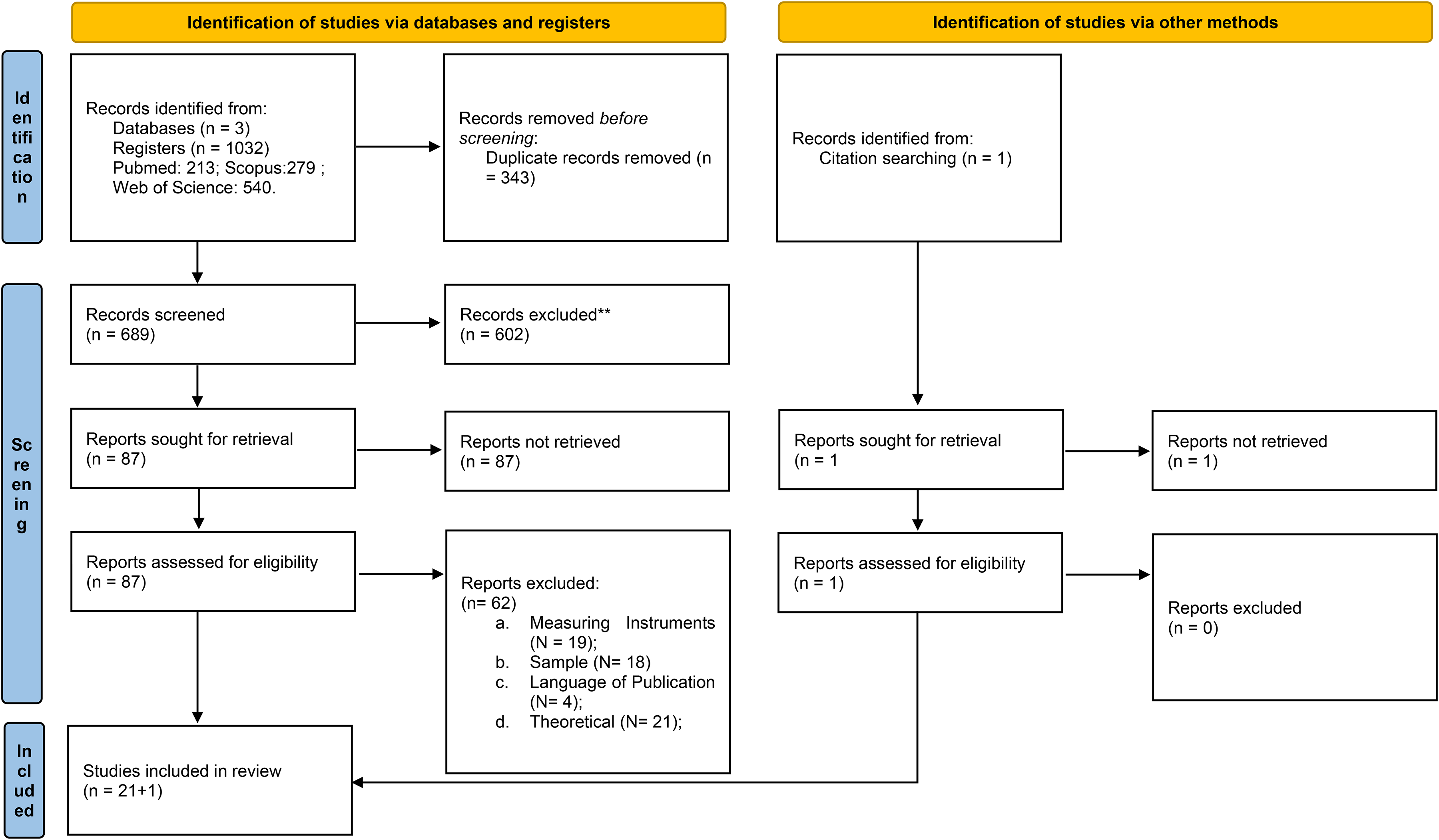
PRISMA flow-chart describing the selection process in the systematic review.
Quality assessment
The Downs and Black checklist were designed to evaluate the methodological quality of both randomized and nonrandomized comparative studies. The checklist consists of 27 questions that seek to determine the quality of the study, considering various parameters, namely the study's design, the adequacy of the statistical procedures, the clarity of the description, and the main conclusions. The scale's score ranges were given corresponding quality levels: excellent (26–28); good (20–25); fair (15–19); and poor (≤14). No items were removed from the scale, leaving the 28 possible points.
The methodological quality of the studies was between fair and poor. Of the 26 existing criteria, the study with the highest corresponding number of criteria (17) was written by Monteiro et al. 53 On the other hand, the article with the lowest criteria score (11) was published by Almagro et al. 52 Specific methodological weaknesses consistently identified across studies included: (1) lack of power calculations or justification of sample size (absent of item 27 in 18/22 studies); (2) insufficient reporting of participant recruitment procedures and potential selection bias (problematic in item 11 (10/22 studies)); (3) failure to report or adjust for potential confounding variables such as prior sport experience, competitive level, or other psychological factors (inadequate in item 5 (22/22 studies)); (4) probability values been reported properly (item 10: 13/22 studies); (5) blinding measures of the main outcomes of the studies (22/22 studies).
Despite this limitation, the review retains value in a) documenting consistent patterns of associations that align with theoretical predictions; b) identifying gaps in the literature that future research should address; c) providing preliminary evidence that can guide hypothesis generation for more rigorous studies; and d) offering tentative practical implications that warrant testing in intervention research.
Studies and participant characteristics
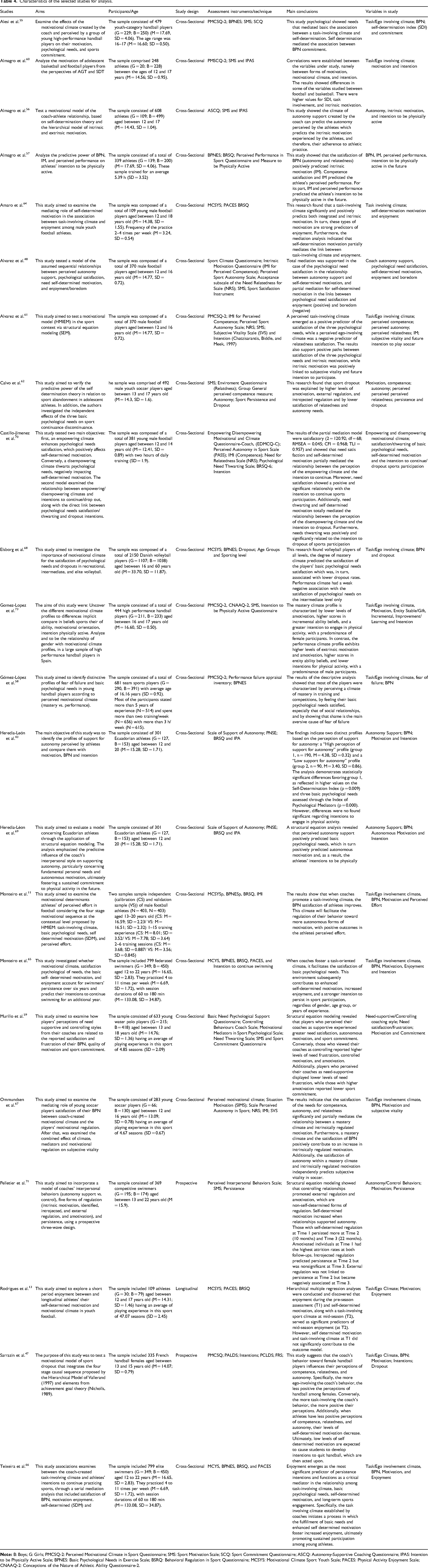
As shown in Table 4, the sample (N = 22) exhibits a strong European predominance (n = 18; 82%), with Spain (n = 10)47,51,52,57–63 and Portugal (n = 5),11,13,53,64,65 contributing most of the studies. Additional research originated from France, 46 Norway, 66 Denmark, 67 Ecuador,42,68 Mexico, 69 and Canada. 70 Methodologically, cross-sectional designs prevailed (n = 19; 86%), followed by prospective (n = 2) and longitudinal (n = 1) approaches. Statistical analyses focused on testing the HMIEM sequence, primarily through Bivariate Correlations (n = 19), SEM (n = 14), and Mediation Analyses (n = 14). Advanced modeling included Multi-Group Analysis (n = 4) for invariance testing and Cluster Analysis (n = 3) for athlete profiling. The total population comprised 10,367 athletes (6818 males; 3549 females), predominantly aged between 12 and 20 years, though the full range spanned 12 to 60. Practice frequency varied from 1 to 11 sessions per week (60–180 min per session). Notably, the largest study (Elsborg et al., 2023; n = 2150) captured a diverse competitive spectrum, including recreational (43.3%), intermediate (35.9%), and elite (20.8%) levels.
Characteristics of the selected studies for analysis.
Study results
The main findings indicate that a task-involving motivational climate is positively associated with autonomous motivation and negatively associated with controlled.5,11,47,51–53,60,61,64,65,67,69,71 In contrast, an ego-involving motivational climate is negatively related to autonomous motivation and positively related to controlled motivation.46,51,58,60 Furthermore, BPN satisfaction was positively linked to more autonomous forms of motivation and negatively associated with more controlled forms.5,46,47,51,52,58,60,61,69 Lastly, autonomous motivation was positively related to higher levels of emotional, cognitive, and behavioral outcomes (e.g., enjoyment, intention, perceived effort, persistence), whereas controlled motivation showed negative associations with these outcomes.11,46,51,53,61,64–67,69 In addition to these findings, around 12 studies11,42,46,47,51,53,60,61,65,66,68,69 managed to incorporate the entire motivational sequence into their research, whilst 10 studies13,46,52,57–59,64,67,70,72 analyzed only three parts.
Discussion
The purpose of this systematic review was to examine the associations between the variables that make up the motivational sequence (horizontal level/sequence): motivational climate → BPN → motivational regulation → behavioral outcomes in athletes. To fulfill this purpose, two objectives were defined for this literature review: (1) identify the different associations within the HMIEM model and (2) to synthesize the HMIEM motivational sequence.
This review was able to analyze the horizontal level in its entirety, in which the task-oriented climate correlated positively with autonomous motivation, by mediating the satisfaction of basic psychological needs, leading to more positive behavioral consequences. The ego-oriented climate was positively associated with more controlled forms of motivation, leading to negative consequences. These theoretical assumptions are empirically supported by various studies carried out in the field of sport.11,18,65,73,74
Associations between components of HMIEM
The synthesis of this systematic review established clear associations between variables of the HMIEM model, specifically at the contextual model. The evidence gathered from the analyzed studies11,13,46,51–53,57,61,65–67,69,72 consistently demonstrates a negative association between ego-oriented and task-oriented climates: These studies have also shown that there is a tendency for ego-oriented work climates to be negatively associated with BPN satisfaction. Conversely, task-oriented work climates were found to correlate positively and significantly with BPN.
These results suggest that the perception of the motivational climate—primarily shaped by the coach—acts as a decisive precursor to the athletes’ psychological state. AGT emphasizes athletes’ perceptions of the motivational climate shaped by significant others (e.g., coaches) and its influence on behavioral outcomes, 53 while SDT focuses on the role of psychosocial determinants in shaping motivation through the mediation of basic psychological.8,19,75,76 In this regard, if SDT suggests that social context influences levels of self-determination by facilitating/inhibiting the satisfaction of BPN,8,9,17 then the motivational climate can have an impact on regulating athletes’ motivation, 71 and this aspect is very important in maintaining behavior over time.11,13,46,51–53,59,63,67–69,71,74
Regarding the internal dynamics of the motivational sequence, the data reported across several studies11,47,51,53,58–62,65,67,69 indicate that the greater the satisfaction of BPN, the greater the regulation of motivation in more autonomous forms. In some studies, the mediating role that BPN has on the relationship between the motivational climate and motivation regulation was demonstrated, with the support strategies adopted by the coach being the three important psychological needs for more autonomous motivation regulation. According to the BPNT, all human beings have three BPN essential in transmitting better feelings of well-being and more autonomous forms of motivation. 8 In short, SDT states that when practitioners tend to have internalized the reasons for practicing a certain type of sport, they will experience an autonomous motivation in which they value and/or enjoy the sport they are practicing. This psychological dynamic will result in more positive outcomes, such as greater interest, concentration, and enjoyment.11,47,51,53,60–64,67,69,71
The behavioral consequences identified in this systematic review further validate the impact of the motivational continuum. In general, autonomous forms of motivation were positively and significantly associated with behavioral consequences (enjoyment, perceived effort, intention, commitment, persistence, subjective vitality).11,13,42,47,51–53,57–62,64–72,77 On the other hand, controlled motivation was systematically linked to maladaptive consequences (boredom and dropout). One of the fundamental assumptions of SDT is that individuals tend to incline and self-restructure throughout their lives. They are active organisms whose functioning can be facilitated or inhibited by the social context. 78 When these mechanisms work optimally, the process of internalizing behavior can transform itself from external to internal regulation, integrating these rules into itself. Thus, more internal regulation tends to lead to more positive behavior, while external regulation tends to lead to more negative behavior.11,13,43,47,51–53,59–64,66–74,79
HMIEM sequence in sport
The integration of different SDT micro-theories into a sequential chain provides a holistic understanding of motivational processes in this review. 75 The synthesized data provides strong empirical evidence to support the causal chain linking motivational antecedents to behavioral consequences.11,42,46,51,53,59,60,64,65,68,71,72,77 Specifically, our results demonstrate that the coach-created climate (AGT) significantly how athletes’ basic psychological needs are either satisfied or frustrated (BPNT), which subsequently dictates the quality of motivational regulation (OIT) and the persistence of the behavior.20,40,49
Regarding the hierarchical structure of the HMIEM, all studies analyzed focused on the contextual level (sport/ leisure domains) and the interpersonal relationships between coach and athlete.6,18,40,49 Within this level, our synthesis successfully mapped the entire horizontal sequence.40 Thus, as conceptualized by Ryan, 20 we can see that the satisfaction and/or frustration of BPNs tends to be the result of how everyone perceives the contextual circumstances. In a practical sense, when an individual sees the coach as a supportive figure, providing support, positive feedback and creating a climate where learning and personal progress are emphasized, task effort is rewarded and mistakes are part of learning progress they are more likely to fulfill their BPNs. 11 Consequently, when the environment created by the coach is more ego-centered, characterized by neglect and marked by constant comparisons between participants, where the demonstration of competence is highlighted, results are rewarded and mistakes are emphasized, the greater the likelihood that the latter will experience frustration related to BPN.
The final segments of the sequence further clarify how these psychological states translate into action. Our analysis found a consistent and significant positive association between BPN satisfaction and autonomous motivation.11,47,51,53,58–62,65,67,69 However, according to Deci & Ryan9,19,79 a positive and significant relationship can be expected between BPN frustration and more controlled forms of motivation. Our data also aligns with this theoretical framework, in that, in the studies analyzed, BPN frustration was positively associated with more controlled forms of motivation.11,47,51,53,60–64,67,69,71
Finally, the motivational sequence recognizes that the regulation of motivation can be related to different behavioral consequences, be they more behavioral, cognitive or emotional.6,19,20,40 Autonomous motivation, driven by the satisfaction of BPNs, tends to be associated with positive behavioral consequences, as presented in the results section of this systematic review. Controlled motivation, on the other hand, is negatively related to positive behavioral consequences, leading to behaviors such as dropping out.11,47,51,58,60–64,67,69,71
In conclusion, the studies identified in this systematic review provide a comprehensive empirical validation of the HMIEM as a sequential chain. 40 This model appears to be a sequential chain that provides us with a holistic understanding of the motivational process in exercise and sport. The evidence confirms that the motivational process begins with social factors (coach-created climate), which trigger a psychological cascade through BPN and motivational regulation, ultimately determining the quality of the athletic experience and behavioral persistence.
Limitations and future directions
This systematic review identifies several limitations that warrant consideration in future research concerning sports motivation. As evidenced by our quality assessment, the predominance of cross-sectional designs—coupled with methodological quality scores ranging from “fair” to “poor"—is largely attributable to the constraints of the assessment tool employed. The Downs and Black checklist, while validated for various study designs, includes criteria tailored for interventional research that are often inapplicable to cross-sectional data (e.g., Item 15 regarding the blinding of outcome assessors for interventions).
To address these evaluative challenges, future systematic reviews should consider either: (a) the exclusion of checklist items that are consistently non-applicable to the study designs under review, or (b) the adoption of a mixed-methods qualitative assessment for methodological quality. Furthermore, to enhance the robustness of cross-sectional research, future studies must adhere to more rigorous reporting standards. These include performing power analyses to justify sample sizes, providing detailed recruitment protocols, identifying and controlling for potential confounding variables, and ensuring the transparent reporting of all statistical analyses conducted.
A further limitation of the current review concerns the linguistic restrictions applied during the search and filtering process. Although a significant number of relevant studies were identified in Spanish and Portuguese, our analysis was constrained by language-based exclusion criteria. To mitigate language bias and ensure a more comprehensive synthesis of the global evidence base, we recommend that future systematic reviews expand their inclusion criteria to encompass non-English publications. This is particularly relevant in the field of sports motivation, where a substantial body of literature is produced in Ibero-American contexts.
Thirdly, one major limitation is that, in empirical terms, researchers have only studied the dark side of needs in two studies, examining how these can be associated with climates, motivation regulation, and behavioral consequences. This topic has already been investigated in the context of exercise by Rodrigues et al. 24 and has not been very explored in the context of sport. Therefore, future studies should continue to understand the links between variables using a more cross-sectional approach and then transpose their research to longitudinal methods, allowing coaches to understand how these variables behave over time.
Finally, we observed that all included studies operated exclusively at the contextual level of the HMIEM. Future research should therefore expand into the situational level, using experience sampling or daily diary methods to capture motivational fluctuations within sessions; the global level, to explore how sport-specific motivation integrates with general life well-being; and cross-level effects, to examine how global orientations moderate responses to contextual climates or how accumulated experiences reshape an athlete's global motivational personality.
Practical implications
Despite the practical limitations presented, the results of this systematic review allow us to draw important conclusions on the practical component of coaches in different sports. Our recommendations for sports organizations and coach education programs are to invest in training sessions and skill development that make the entire coaching staff aware of the need to update their knowledge and the potential that this topic can have for the health of their teams, especially the players.
For coaches, consistent evidence supporting the HMIEM sequence provides a clear roadmap for motivational intervention. Coaches should prioritize creating task-involving motivational climates characterized by: (a) emphasis on effort, improvement, and skill mastery rather than normative comparison; (b) provision of meaningful choices and athlete input in training decisions to support autonomy; (c) constructive, informational feedback that enhances perceived competence; and (d) inclusive team dynamics that foster relatedness. Therefore, training should focus on the task (self-referenced criteria) rather than solely on the result, creating dynamics that give players greater autonomy (guided discovery), so they recognize their competence and improve their relationship. Planning the training session with consideration of the athletes available is crucial for maintaining motivation levels.
In conclusion, HMIEM-based interventions should adopt a sequential approach, beginning with modification of coach behaviors to enhance task-involving climate features, monitoring changes in athletes’ BPN satisfaction, assessing shifts in motivational regulation, and finally evaluating behavioral outcomes. Assessing psychological issues should be part of an early-season evaluation, so that we establish a baseline to compare with future measurements taken during the season. This information can be invaluable, as it enables the coach to reflect on their planning and approach during training sessions and adjust as needed.
Conclusion
This systematic review explores the motivational climate created by coaches and examines both the positive and negative dimensions of SDT, highlighting that a positive alignment among the psychosocial determinants along the horizontal axis of the HMIEM is crucial for behavioral outcomes—such as enjoyment, perceived effort, fear of failure, intention, commitment, persistence, dropout rates, and subjective vitality.
The analysis further confirms that when the motivational climate associates positively with the satisfaction of athletes’ BPN, facilitates the autonomous regulation of motivation. Specifically, satisfaction of BPN is positively and significantly associated with autonomous forms of motivational regulation, which in turn is significantly associated with positive behavioral outcomes. Conversely, the presence of BPN frustration correlates negatively with autonomous motivation and positively with controlled motivation, thereby increasing athletes’ intention to dropping out.
In conclusion, the positive alignment of HMIEM variables, underpinned by a supportive motivational climate, is fundamental to eliciting beneficial behavioral consequences. These findings offer valuable insights for coaches in designing training sessions that foster a task-involving motivational environment, thereby promoting BPN satisfaction and increased autonomous motivation, which ultimately contribute to more favorable behavioral outcomes among athletes.
Supplemental Material
sj-xlsx-1-spo-10.1177_17479541261455244 - Supplemental material for Application of hierarchical model of intrinsic and extrinsic motivation in sports: A systematic review
Supplemental material, sj-xlsx-1-spo-10.1177_17479541261455244 for Application of hierarchical model of intrinsic and extrinsic motivation in sports: A systematic review by Bernardo Viveiros, Miguel Jacinto, Nuno Couto, Luís Cid, Rui Matos, Nuno Amaro, Raúl Antunes and Diogo Monteiro in International Journal of Sports Science & Coaching
Footnotes
Acknowledgements
We would like to thank all the authors for their contribution in writing and revising the manuscript.
Ethical considerations
Ethical approval was not required for this study as it is a systematic review of publicly available published literature and did not involve human participants or primary data collection.
Consent to participate
Not applicable
Author contributions
BV: Writing—review & editing, Conceptualization, Methodology, Project administration; BV, MJ and DM: Writing—review & editing, Conceptualization, Methodology; BV: Writing—original draft, Conceptualization, Methodology; MJ, RA, RM, NA, LC, NC and DM: Writing—review & editing, Formal Analysis; MJ, RA, RM, NA, LC, NC and DM: Writing—review & editing.
Funding
The authors disclosed receipt of the following financial support for the research, authorship, and/or publication of this article: This work was supported by National Funds by FCT - Foundation for Science and Technology, under the projects UID/04045/2025 (https://doi.org/10.54499/UID/04045/2025), UID/PRR/04045/2025 (https://doi.org/10.54499/UID/PRR/04045/2025) and UID/PRR2/04045/2025 ( ).
).
Declaration of conflicting interests
The authors declared no potential conflicts of interest with respect to the research, authorship, and/or publication of this article.
Data availability
No primary data was collected or generated in this study. All sources analyzed are cited within the review
Supplemental material
Supplemental material for this article is available online.
References
Supplementary Material
Please find the following supplemental material available below.
For Open Access articles published under a Creative Commons License, all supplemental material carries the same license as the article it is associated with.
For non-Open Access articles published, all supplemental material carries a non-exclusive license, and permission requests for re-use of supplemental material or any part of supplemental material shall be sent directly to the copyright owner as specified in the copyright notice associated with the article.
