



Abstract
Purpose:
Research shows that compression garments can improve perceived recovery, especially for delayed-onset muscle soreness. However, most studies focus on acute effects. This study examined consecutive compression garment use during a short track speed skating camp.
Methods:
Twenty-two male short track speed skaters (17.3 ± 1.2 years) were assigned to a compression stockings (CGs) group that wore CGs between sessions or a control (CON) group that followed the same training without compression. Daily measures included training load (session RPE), readiness to train, countermovement jump height, and sleep (hours and scores). The athlete recovery stress scale (ARSS) was assessed on Day 1 and Day 5. Linear mixed model compared group differences over time.
Results:
The ARSS showed interaction effects for mental performance capability (MPC) (β = 3.806, p < 0.001) and physical performance capability (PPC) (β = 2.222, p = 0.050), indicating different changes over time between groups. Post hoc results revealed larger reductions in MPC and PPC from Day 1 to Day 5 in the CGs group than in CON. In sensitivity analyses adjusting for cumulative training load, PPC interaction effect was attenuated, whereas MPC remained statistically significant. Training load, readiness to train, CMJh, and sleep quality did not show any significant differences.
Conclusion:
Five consecutive days of lower-body compression garment use did not provide clear evidence of improved subjective or objective recovery outcomes in this applied training camp setting; observed changes in perceived physical and mental performance capability should be interpreted cautiously given training-load variability and incomplete exposure data.
Keywords
Introduction
Recovery management is fundamental for optimising sports performance, as it supports both physiological restoration and psychological readiness.1,2 Adequate recovery allows the body to restore homeostasis by replenishing fluids and fuels, restoring physiological function, and repairing exercise induced tissue damage. 2 Training adaptation depends on the balance between fitness gains and fatigue responses, 1 and in high performance sport, performance changes are often modest. 3 Accordingly, insufficient recovery can progress from underrecovery or nonfunctional overreaching to overtraining syndrome.1,3 From a psychological perspective, effective recovery also involves restoring mental resources such as motivation and concentration and reducing stress responses, thereby supporting mental well-being. 1 This highlights the need to monitor recovery during periods of high training load.
Short track speed skating involves frequent high-intensity training sessions and competition schedules, and training camps are often integrated into the periodisation cycle to manage these workloads. The sport also includes prolonged crouched skating with substantial lower-body loading, 4 and speed changes associated with high metabolic and muscle oxygenation demands, 5 which might contribute to a higher rate of perceived exertion (RPE) during recovery. 4 When such demands are repeated across consecutive training days, accumulated fatigue may compromise subsequent training quality. Within this applied training-camp setting, recovery management is particularly relevant for maintaining day-to-day training quality.
A training camp provides a multi-day setting to evaluate the effectiveness of recovery strategies beyond single-session use. 6 Accordingly, evaluating recovery interventions over multiple days may provide insights that single-day study designs cannot capture. A number of these methods have already been investigated in previous studies. For instance, five days of whole-body cryotherapy (−120°C, 3 min, twice per day) following moderate-intensity exercise in twelve professional tennis players showed anti-inflammatory effects. 7 Similarly, the use of cystine and theanine supplementation before and during a nine-day camp helped stabilise the post-exercise immune function in 16 long-distance runners. 8 In addition, a comparison of carbohydrate intake combined with stretching, cold water immersion (CWI), and full-leg compression garment during a three-day tournament style basketball competition indicated that CWI was more effective in maintaining physical performance. 9 However, recovery strategies that require dedicated facilities and additional supervision or time may be more difficult to implement consistently during multi-day camps and travel, despite potential efficacy. Together, these findings suggest that recovery responses may differ across strategies and contexts, and that both effectiveness and feasibility may influence real-world strategy selection, highlighting the value of multi-day evaluations in applied settings.
While the aforementioned recovery strategies yielded promising results, nutritional supplements and cryotherapy are rather expensive and hard to administer. Therefore, practical feasibility often influences which strategies are used in applied settings. Compression garments are one low-burden strategy that is also favoured by athletes. 10 Accordingly, the present study focused on compression garments as a feasible option that can be applied consistently between sessions, rather than as a claim of superiority over hydrotherapy. Evidence suggests that compression garments may influence delayed onset muscle soreness (DOMS) and selected physiological markers after exercise, 11 and some studies have also reported changes in sleep-related outcomes following high-intensity exercise. 12 However, the overall evidence remains inconsistent, with recent syntheses reporting trivial or no effects on performance outcomes and indicating that compression garments are unlikely to negatively influence exercise-related outcomes.13,14 Overall evidence also suggests that wearing compression garments during or after exercise does not appear to facilitate recovery of muscle strength, although isolated studies have reported no effects or detrimental strength-recovery responses in specific garment configurations. 13 Although proposed mechanisms related to blood-flow haemodynamics are plausible, including changes in venous return as well as arterial and microvascular contributions to muscle perfusion and oxygenation, 15 the effectiveness of compression garments in multi-day training camp settings remains unclear.15–17 The magnitude of these effects may also depend on exposure duration, which further supports the relevance of evaluating compression garments across consecutive days in applied settings. 18 Notably, much of the available research has been conducted in acute designs and primarily in healthy, non-elite participants, 14 limiting transferability to elite training environments.
To summarize, compression garments have been studied across various sports, but the evidence supporting its recovery benefits remains inconsistent.11,13,14,16 In particular, limited research has examined both subjective and objective recovery responses to compression garment use across consecutive training days in elite athletes. To our knowledge, no studies to date have investigated the prolonged use of compression garments for short-track speed skaters during training camps. Examining both perceived recovery and measurable performance effects may provide insights into recovery responses in this applied training context. Therefore, the aim of this study was to evaluate the effects of prolonged compression garments use during a short-track speed skating training camp on both subjective recovery responses and objective performance-related outcomes.
Materials and methods
Participants
A total of 26 short track ice skaters were initially recruited (all male, weight 68.91 ± 7.63 kg, height 178.40 ± 5.26 cm). Recruitment was conducted through the embedded sports scientist of the federation and team coaches. Participants under 16 years old and suffering from injuries or health issues that could interfere with training or recovery were excluded. Following these criteria, 22 participants were eligible and included in the final analysis. The study was approved by the ethics committee of the University of Groningen (UMCG RR number 19931), and the experimental design, benefits, and possible risks of participation were explained to the participants before they signed their informed consent. The study was conducted according to the Declaration of Helsinki (2013).
Study design
The primary endpoint was the Group × Time interaction across five training days. A priori power analysis in G*Power (version 3.1.9.6) using a repeated measures ANOVA within-between interaction targeted an effect size of f = 0.20, representing a small to medium interaction that is plausible for perceptual recovery outcomes in skaters. This choice was informed by previous findings in elite short-track speed skaters, where Méline et al. (2021) observed small effects on field performance and moderate effects on isometric strength after hot-water therapy. 19 Although the intervention differed from the present study, their results provided a benchmark for the expected range of effects in this population. The a priori sample size calculation assumed α = 0.05, power = 0.80, two groups, five measurements, a correlation among repeated measures = 0.50, and ε = 1.00, indicating a required total sample size of n = 32. Due to practical constraints, a total of 22 participants were recruited, and the study was conducted using a parallel group design, with participants randomly assigned to either an experimental group wearing compression garment stockings (CGs, n = 10) or a control group (CON, n = 12) (see Table 1). A post hoc sensitivity analysis showed that with n = 22, the minimal detectable Group × Time interaction at 80% power was f ≈ 0.24.
Subject characteristics. Values are presented as mean (SD).
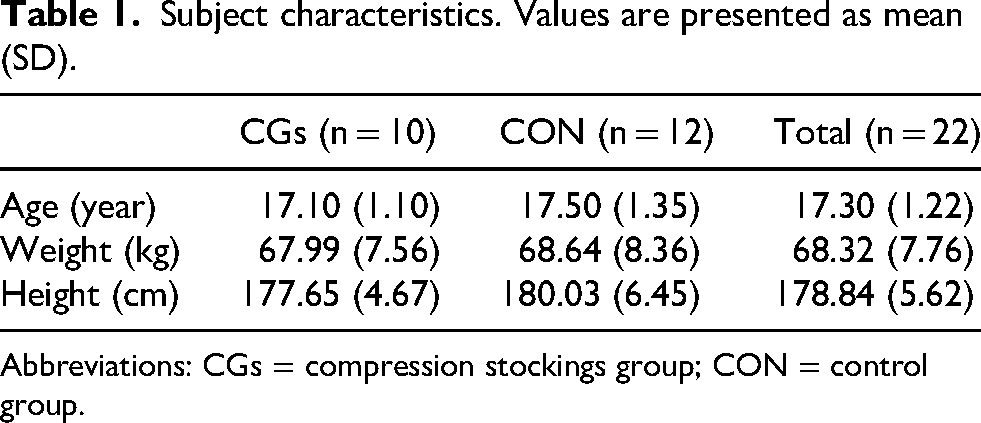
Abbreviations: CGs = compression stockings group; CON = control group.
For the flow chart of the experiment see Figure 1. All participants followed an individual training plan during a five-day camp, from October 28 to November 1, 2024. Training sessions were coach-led and followed the same camp schedule for all athletes, while individual intensity and task execution could vary. Training sessions were conducted twice daily, with one session scheduled in the morning, typically between 08:00 and 10:00, and a second session in the afternoon, generally between 13:00 and 17:00. On the first and last day of the training camp, the short Dutch version of the athlete recovery stress scale (ARSS) 20 was used as a baseline measurement, serving as pre- and post-intervention evaluations, completed via an online Google form. During the five-day training camp, each morning before the start of training, athletes performed the countermovement jump (CMJ) test and completed the daily Readiness to Train (RTT) questionnaire. Athletes also self-reported their actual training data, including volume and duration, together with sleep quality assessments. All this information was submitted via the Smartabase mobile management system (Fusion Sport, Brisbane, Australia), utilized by the speed skating federation.
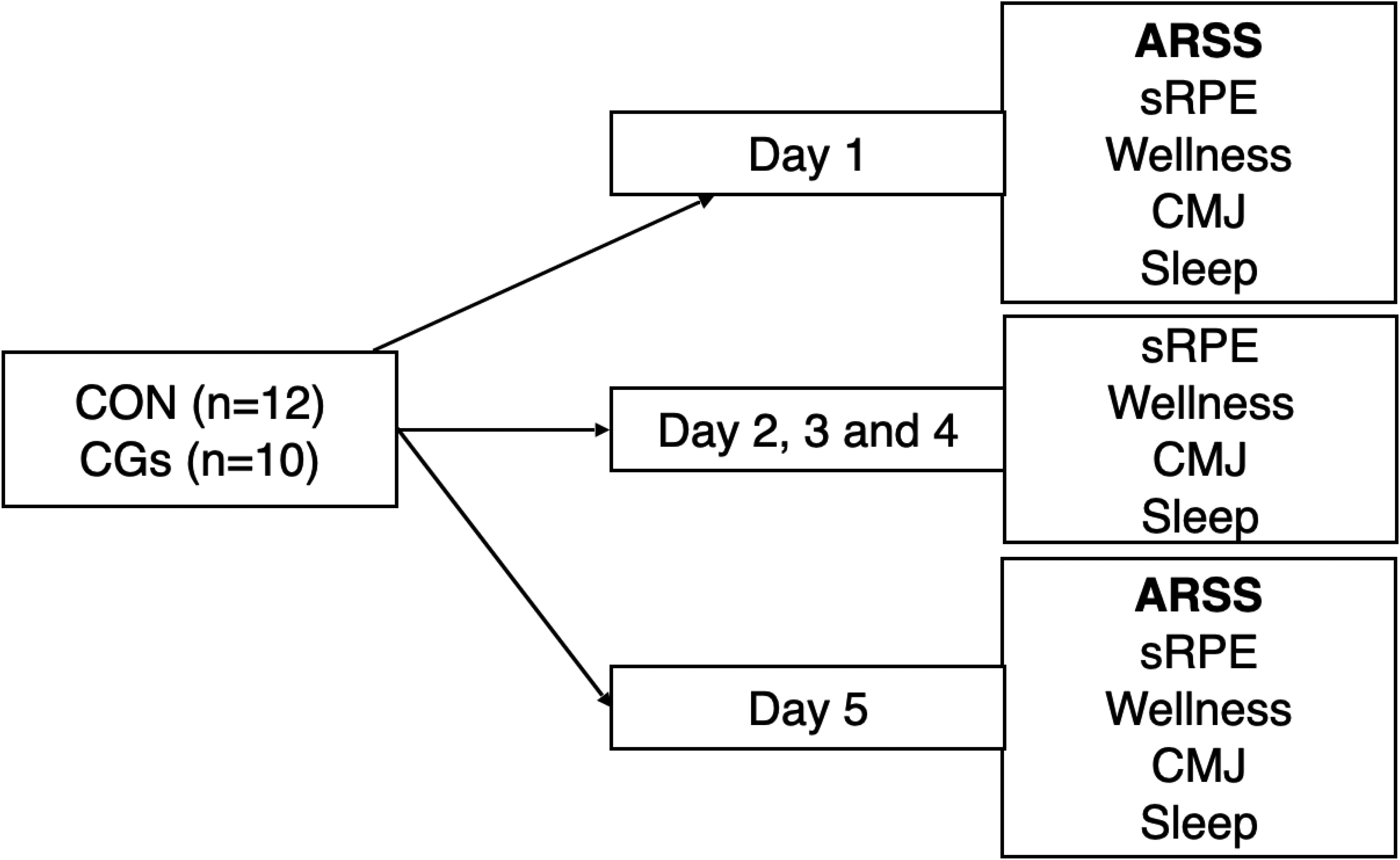
Study design and measurement schedule across the five day training camp. Participants were allocated to the compression stockings group (CGs, n = 10) or control group (CON, n = 12). The Acute Recovery and Stress Scale (ARSS) was assessed on Day 1 and Day 5, while session rating of perceived exertion (sRPE), wellness questionnaires, countermovement jump (CMJ), and sleep were assessed daily.
Recovery strategy
Participants in the CGs group wore the stockings after the last daily session until bedtime and again from wake-up until the first session or morning testing, but not during training. As wear time and compliance were not recorded, exposure was estimated from the camp timetable at approximately 6.25 to 9.5 h/day. The CON did not use stockings.
Compression stockings were thigh-high (STOX Medical Thigh High Stocking Unisex; manufacturer-specified class 2 graduated compression, 23–32 mmHg). The stockings covered the leg from immediately above the medial and lateral malleoli to the proximal thigh below the gluteal fold. The garments were designed to apply greater compression distally at the ankle, with compression progressively decreasing proximally toward the thigh, consistent with standard graduated compression principles. Anthropometric characteristics of weight, height, and leg length were used to determine the size of the stockings.
Acute recovery and stress scale
The Acute Recovery and Stress Scale (ARSS) has often been used as an effective tool for monitoring and assessing acute recovery and stress levels in athletes.21–24
The recovery dimension includes four scales: physical performance capability (PPC), mental performance capability (MPC), emotional balance (EB), and overall recovery (OR); the stress dimension includes four scales: muscular stress (MS), lack of activation (LA), negative emotional state (NES), and overall stress (OS). Each scale has four items, with a total of 32 sub-items. A seven-point Likert scale ranged from 0 (does not apply at all) to 6 (fully applies). Higher recovery and lower stress scores represent better overall recovery-stress performance. In the present study, the Dutch translated version of the ARSS was used, 21 which includes strong internal consistency (α = 0.91 and 0.90 for the recovery and stress dimensions, respectively) and construct validity supported by five confirmatory factor analyses and correlations with established recovery-stress instruments.
Data management system
To collect data on training load, RTT, and sleep quality, the standard implementation of the Smartabase athlete monitoring system 25 was used.
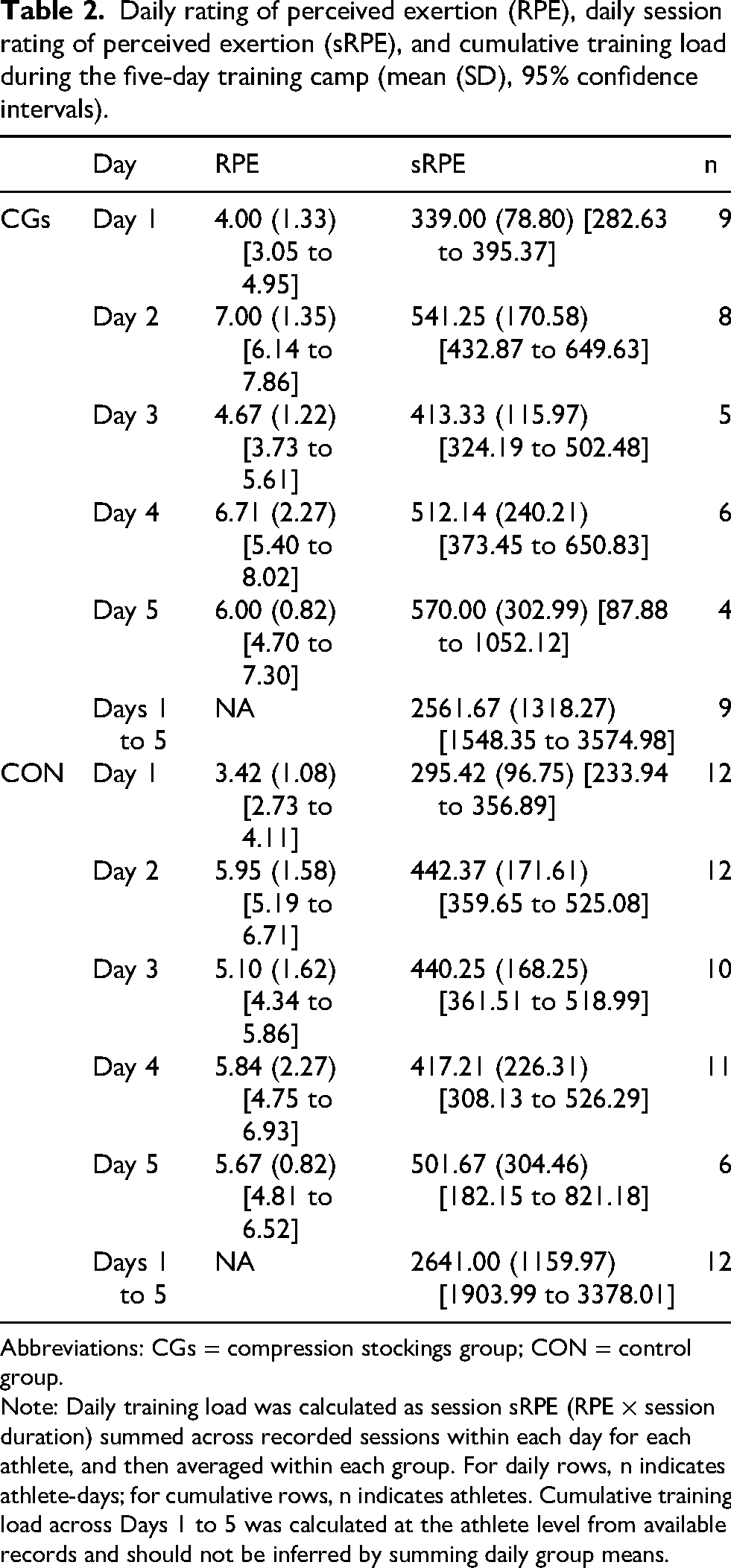
Daily rating of perceived exertion (RPE), daily session rating of perceived exertion (sRPE), and cumulative training load during the five-day training camp (mean (SD), 95% confidence intervals).
Abbreviations: CGs = compression stockings group; CON = control group.
Note: Daily training load was calculated as session sRPE (RPE × session duration) summed across recorded sessions within each day for each athlete, and then averaged within each group. For daily rows, n indicates athlete-days; for cumulative rows, n indicates athletes. Cumulative training load across Days 1 to 5 was calculated at the athlete level from available records and should not be inferred by summing daily group means.
Sleep quality
Sleep data were collected using self-reported responses filled in by the researchers directly asking each participant immediately prior to the countermovement jump (CMJ) measurements. Specifically, participants were asked two questions: “How many hours did you sleep last night?” and “How would you rate the quality of your sleep on a 1–10 scale?”. Sleep quality was rated on a scale from 1 (Very Poor) to 10 (Excellent). 28
Countermovement jump height
All participants performed CMJ three times, with at least 30 s of rest between each attempt within the same session, as part of the daily morning measures for jump height evaluation and physical recovery measures.
29
The mean of the three trials was used for statistical analyses. Participants were instructed to start the jump from a standing position with their hands on their hips and to execute a maximal vertical jump after a downward countermovement. We also instructed participants to keep their legs straight until the landing because differences in knee flexion can impact the determination of CMJ height (CMJh). Data were collected from ForceDecks (Vald Performance, Brisbane, Queensland)
30
using VICON (version 2.12) and analysed with the Motion Lab Systems C3Dserver (version 1.203) and Python. The CMJh was calculated using the following equation:
Statistical analysis
The means ± standard deviations (SD) and 95% confidence intervals (CI) for all values were presented in the descriptive statistics. The Shapiro-Wilk test was used to assess normality. For the primary statistical analyses involving repeated measurements (e.g., RTT, sleep, and CMJh data across five days), a Linear Mixed Model (LMM) was used to appropriately account for within-subject variability. Interaction effects were examined, and when interactions were not statistically significant, main effects were interpreted accordingly. Post hoc comparisons were performed using least squares means (LSM), with effect sizes (Cohen's d) calculated to quantify the magnitude of observed differences, where effect sizes were classified as small (0.20–0.49), medium (0.50–0.79), or large (≥ 0.80). 31 For ARSS data, which required consistent first- and last-day reporting, 5 out of 22 participants were excluded from the analysis if any day of data was missing. Missing data were 15.45% for CMJ, 9.09% for sleep, and 6.36% for RTT, while training-load records contained occasional missing session entries, resulting in variable athlete-day counts for daily sRPE estimates. Sensitivity analyses were conducted to explore potential confounding by training load, in which cumulative training load was included as a covariate in the mixed-effects models for ARSS outcomes. Cumulative load was computed from available sRPE records using two windows (Days 1 to 4 and Days 1 to 5). Models including training load were fitted using available training-load records (complete-case with respect to the training-load covariate).
All data were analysed using the Python packages pandas (Version: 2.2.3) and statsmodels.formula.api (Version: 0.14.4
Results
Participants who did not meet the eligibility criteria or were absent from the final performance measurements were excluded from the analysis. Twenty-two participants were included in the final analysis. Participants were excluded (n = 6) due to being under the minimum age requirement, back injury, or absence from the final performance measurements. The demographics of the included participants are shown in Table 1. No significant differences in height and weight were found between the two groups.
Acute recovery and stress scale
The results of the ARSS are summarised in Figure 2 and Supplementary Table 1. Means for each ARSS item were calculated based on equations in the manual. 21 Mixed-effects models were used to account for the repeated-measures design and unequal group sizes across time points. Non-normal distributions were observed for PPC (p = 0.047) and LA (p = 0.020) scores in the CGs.
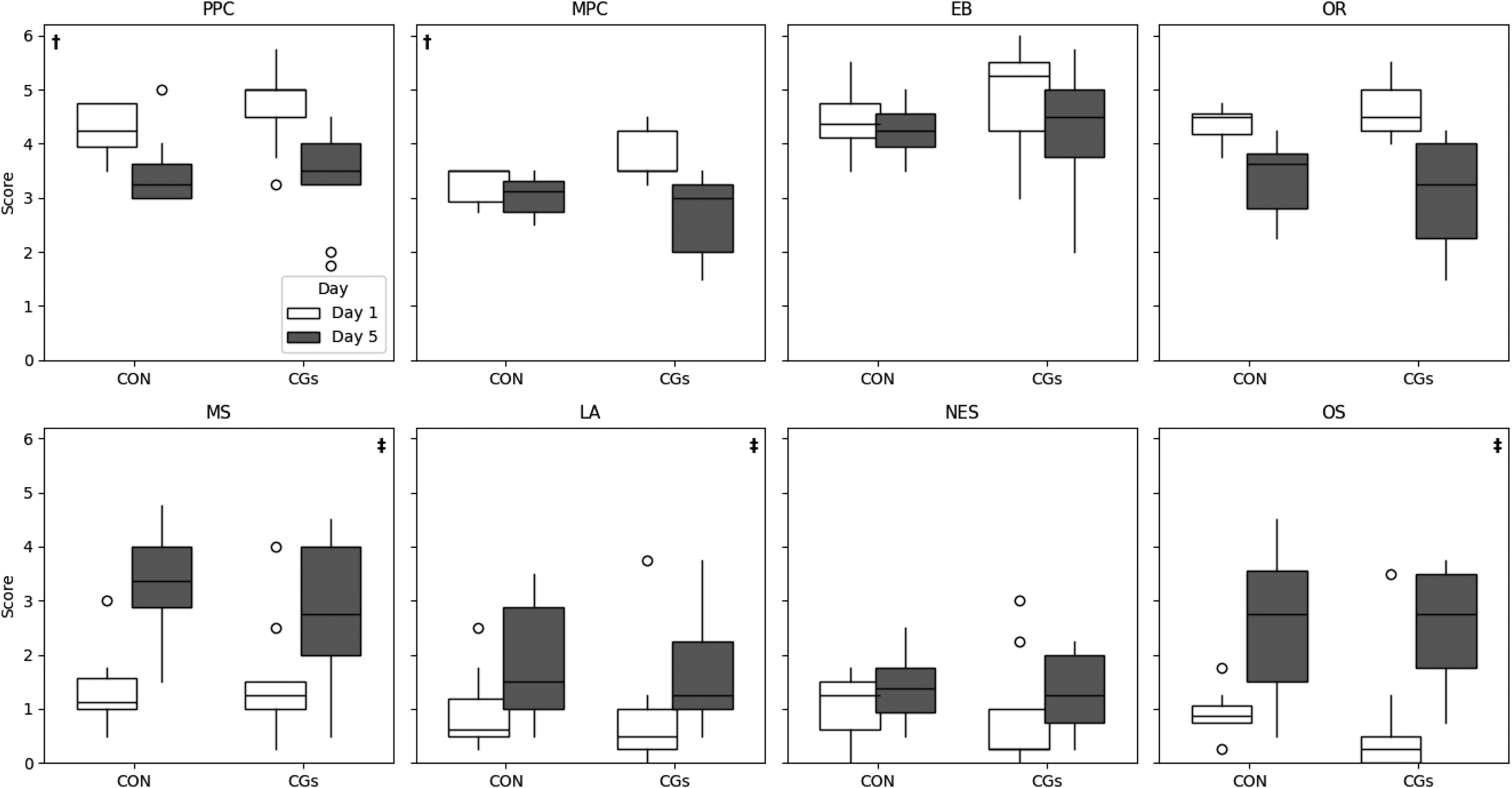
Acute Recovery and Stress Scale (ARSS) subscale scores on Day 1 and Day 5 in the compression stockings group (CGs, n = 10) and control group (CON, n = 12). Boxplots show the median and interquartile range, with whiskers indicating data spread and points indicating outliers. White boxes represent Day 1 and grey boxes represent Day 5. † p < 0.05 for Group × Time interaction (PPC and MPC). ‡ p < 0.05 for main effect of time (MS, LA, and OS). Abbreviations: CGs = compression garments group; CON = control group; PPC = Physical Performance Capability; MPC = Mental Performance Capability; EB = Emotional Balance; OR = Overall Recovery; MS = Muscular Stress; LA = Lack of Activation; NES = Negative Emotional State; OS = Overall Stress. Note: Scale ranges from 0 (does not apply at all) to 6 (fully applies).
A significant time effect was observed with most dimensions exhibiting a negative and statistically significant coefficient for Day 5 (p < 0.05). More specifically, all recovery dimensions on Day 5 were significantly lower than those on Day 1, whereas stress dimension scores were lower on Day 1 (except for Negative Emotional State, p = 0.060). Regarding group effects, a significant main effect was observed only for MPC (β = -2.222, p = 0.021), indicating overall lower MPC scores in the CON group when averaged across time points.
Additionally, significant interaction effects emerged for MPC (β = 3.806, p < 0.001) and PPC (β = 2.222, p = 0.050), reflecting group-specific differences in scores over time. Post-hoc analyses showed that MPC scores in CGs group decreased from Day 1 to Day 5 (mean difference = −4.556, p = 0.0002), whereas no significant change over time was observed in the CON group. No significant between-group differences in MPC were observed at either Day 1 or Day 5. Similarly, PPC scores decreased significantly from Day 1 to Day 5 in the CGs group (mean difference = −5.222, p = 0.0053), with no significant time effect in the CON group and no significant between-group differences at the corresponding time points. In sensitivity analyses adjusting for cumulative training load (Days 1 to 4 and Days 1 to 5), evidence for the PPC interaction effect was attenuated and did not meet conventional significance thresholds (adjusted p approximately 0.090), whereas MPC effects remained statistically significant after adjustment.
Training load
The results of mean RPE and sRPE are presented in Figure 3 and Table 2, with detailed training load by type of training provided in Supplementary Table 2. Table 2 reports n for each daily estimate and cumulative training load across Days 1 to 5. Training sessions were coach-led and followed the same camp schedule for all athletes, while individual intensity and task execution could vary, which is reflected in the variability of sRPE. LMM revealed a significant main effect of time (β = 0.549, p = 0.026), indicating that participants’ RPE increased significantly over the duration of the training camp. No significant group (p = 0.210) or interaction effect (p = 0.909) in RPE was observed.
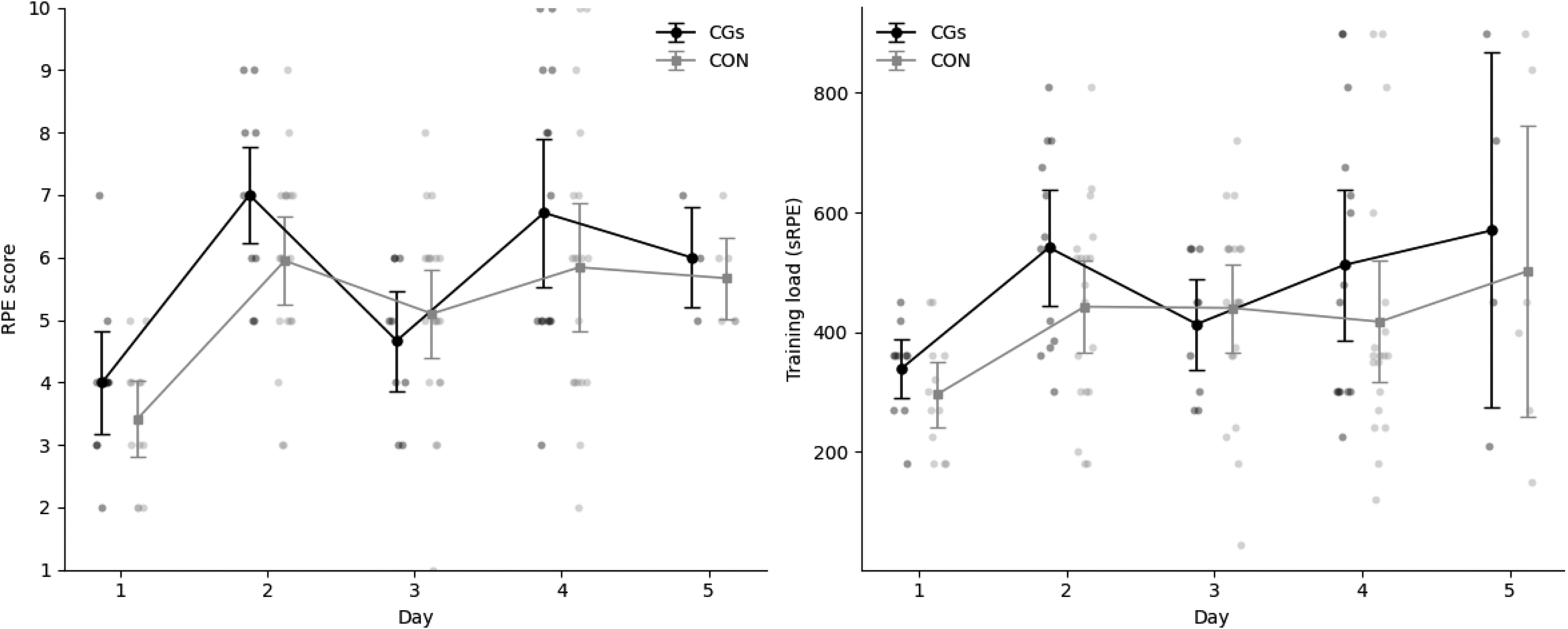
Rating of perceived exertion (RPE) and training load (sRPE) across five training days in the compression stockings (CGs) and control (CON) groups. Points represent individual skaters’ daily values. Lines show group means with 95% confidence intervals. Daily RPE was calculated as the mean of the morning and afternoon session RPE values. Daily training load was calculated as the sum of session sRPE from the morning and afternoon sessions.
Descriptively, the CGs group consistently exhibited higher daily load across the training camp, except on Day 3 (CGs 413.33 ± 115.97, CON 440.25 ± 168.25), where values were comparable. Training load demonstrated a trend toward an increase over time (β = 48.816, p = 0.051). No significant group (p = 0.223) or interaction effect (p = 0.700) was found.
Readiness to train scale
The outcomes of the physical and mental readiness to train scale are summarised in Figure 4 and Supplementary Table 3. Mixed-effects models were used because the data did not follow a normal distribution. The results indicated no significant main effect of group on any of the measured variables. However, a significant time effect was observed for several outcomes. Specifically, the physical readiness score decreased significantly over time (β = -0.434, p < 0.001), the soreness score also showed a significant decline (β = -0.727, p < 0.001), and the motivation score decreased significantly over time (β = -0.238, p = 0.019).
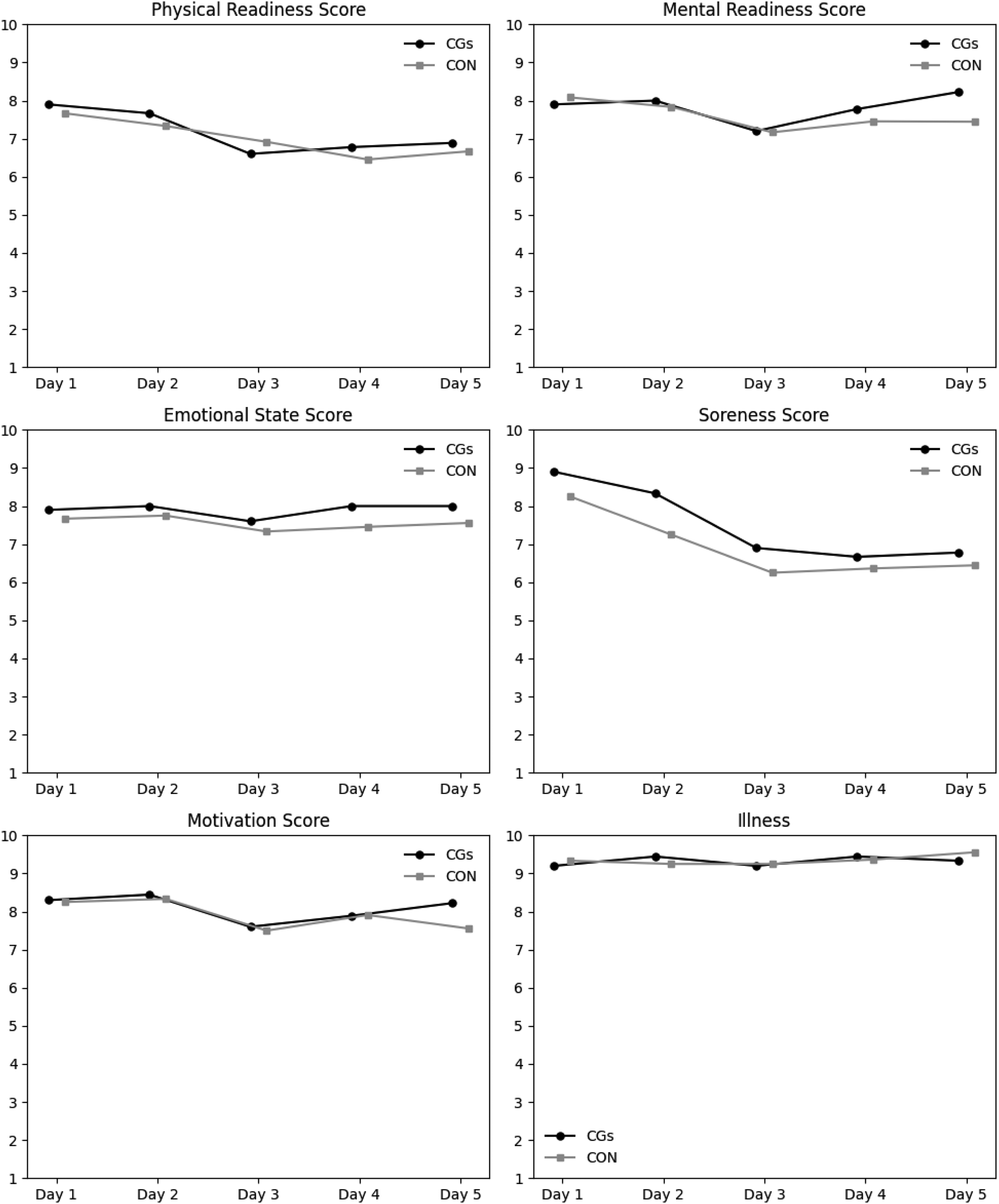
Readiness to train scale scores across five training days in the compression stockings (CGs, n = 10) and control (CON, n = 12) groups. Values are presented as group means. Significant main effects of time were observed for physical readiness, soreness, and motivation (p < 0.05), with no significant group or group × time interaction effects. Note: Scores range from 1 (very poor) to 10 (excellent); a score of 10 indicates no illness or no soreness.
Additionally, no significant interaction effects between time and group were found for any outcome, indicating that the time course trends were similar across both groups.
Sleep quality
Sleep-related outcomes are presented in Supplementary Figure 1 and Supplementary Table 4. LMM revealed no significant main effect of group (p = 0.102), time (p = 0.528), or interaction effects (p = 0.236) on sleep duration. Similar to sleep duration, there was no significant main effect of group (p = 0.189), time (p = 0.962), or interaction effects (p = 0.231) in sleep scores. Descriptively, sleep duration tended to be slightly higher in the CGs group on most days.
Countermovement jump height
CMJh results are presented in Figure 5 and Supplementary Table 5. LMM revealed only a statistically significant main effect of time at Day 3, where CMJh showed a significant reduction compared to baseline (β = -1.712, 95% CI: −3.307 to −0.116, p = 0.035), indicating decline in CMJ performance on Day 3 compared to Day 1, when data from both groups were combined. No significant main effect of group (CGs vs CON) was observed (β = -1.731, p = 0.577), or interactions (p > 0.05). Post hoc analysis based on least squares means revealed that CMJh was lowest at Day 3 in both groups. Cohen's d indicated a small effect size for the difference between CGs and CON across time points (range: - 0.08 to 0.26). Specifically, the largest between-group effect was observed at baseline (Day 1, d = 0.26), although this did not reach statistical significance (p = 0.574).
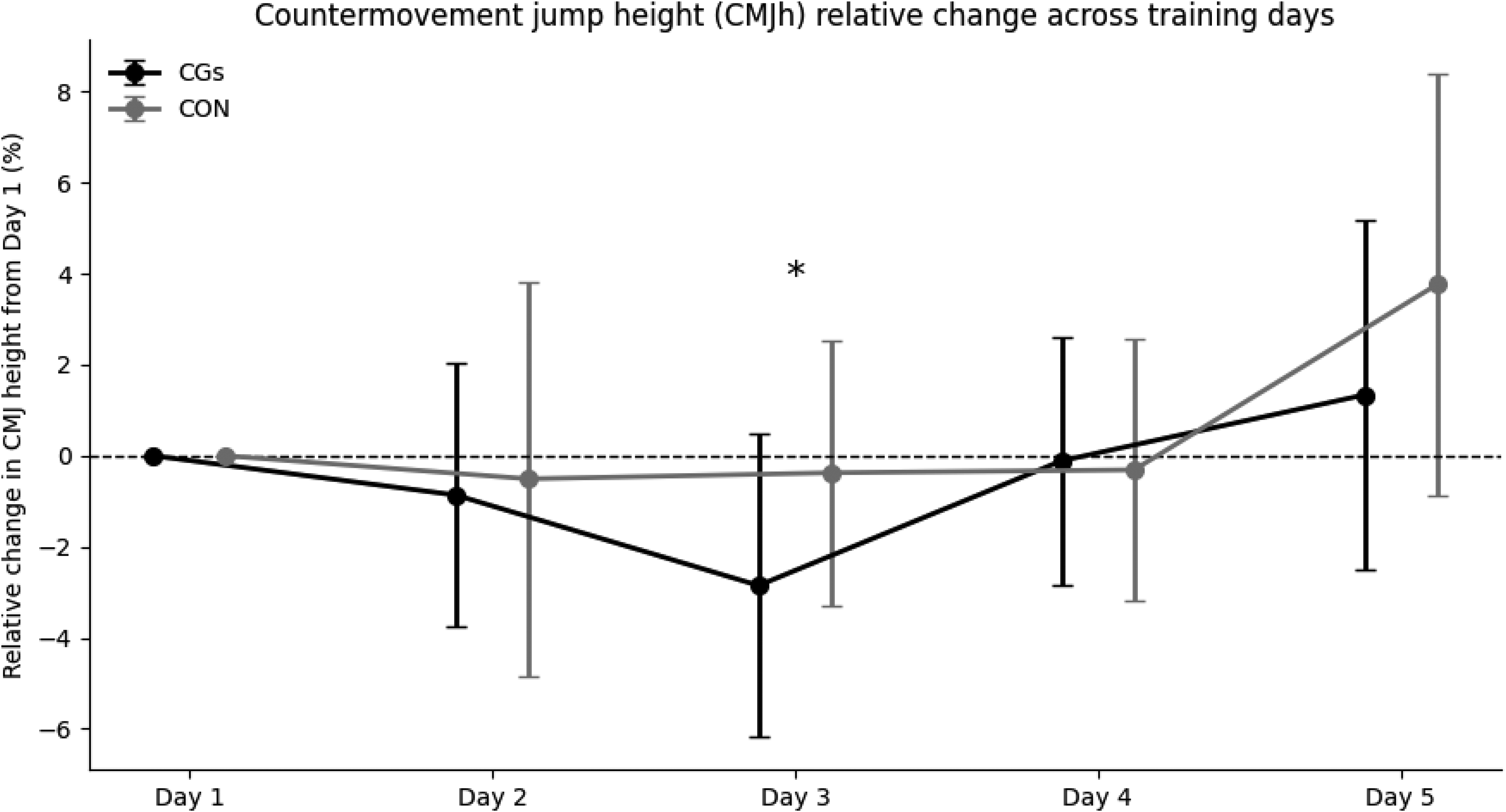
Relative change in countermovement jump height (CMJh) from Day 1 across five training days in the compression stockings (CG, n = 10) and control (CON, n = 12) groups. Values are presented as mean (95% confidence intervals). p < 0.05 versus Day 1 (main effect of time; Day 3). No group or Group × Time interaction effects were observed.
Discussion
This study investigated the effects of compression stockings on recovery measures during a five-day training camp. We observed a main effect of time in most recovery related variables (ARSS, training load, RTT, and CMJh), with increasing stress and a declining recovery, indicating that the training camp was indeed challenging for the athletes. In contrast to our expectation, the CGs group showed poorer physical and mental performance capability on the ARSS from Day 1 to Day 5. Furthermore, no group differences were observed for perceived daily load, CMJh or sleep quality over time. Taken together, these findings should be interpreted as observations within an applied training camp setting in which training load differed between groups and exposure to compression was not fully quantified. Therefore, the present data do not allow definitive conclusions regarding the efficacy of daily compression garment use for recovery over five consecutive training days.
Overall, our results can be interpreted as longer-term recovery (ARSS from Day 1 to Day 5) and short-term recovery based on daily measures (training load, RTT, and CMJ). We observed time effects in subjective recovery measures with lower ARSS scores and worse daily RTT scores across the camp, alongside a trend toward higher training load, while training duration changed only marginally. In contrast, CMJ height and sleep quality did not show consistent changes across the camp. This pattern suggests an overall decline in perceived recovery, without clear evidence for greater accumulation of mental than physical fatigue.
To the best of our knowledge, this is the first study to assess the impact of CGs over multiple days in short-track speed skaters. The ARSS, particularly PPC, has been proposed as a sensitive tool for monitoring recovery and stress with delayed effects. 22 However, training load is also closely related to recovery-stress state. Collette et al. (2018) showed that sRPE-based training load explained a substantial proportion of variance in ARSS subscales in high-performance swimmers, 22 indicating that ARSS responses should be interpreted within the training load context. In the present study, PPC and MPC showed a larger decline from Day 1 to Day 5 in the CGs group than in CON. However, training load differed between groups and training-load records were incomplete, which limits causal interpretation. In sensitivity analyses adjusting for cumulative training load, evidence for a between-group difference in PPC over time was attenuated, whereas MPC effects remained statistically significant. Therefore, these findings should be interpreted as observations within this applied camp setting rather than definitive evidence of compression-specific effects on longer-term subjective recovery. Within the ARSS framework, MPC reflects perceived cognitive and emotional readiness and is therefore not determined solely by physiological fatigue. It is possible that subjective perceptions of recovery quality, including garment comfort, sleep quality, and the burden of wearing a constrictive garment across consecutive nights, contributed to MPC differences independently of training load. However, this interpretation remains speculative and should not be considered evidence of a direct negative effect of compression garments. This contrasts with studies reporting acute changes in ARSS after a single bout of compression garments following exercise, although protocols, populations, and timing differ. 32 Muscular Stress increased by Day 5 in both groups, consistent with validation studies,20,22 but CGs did not differentially affect Muscular Stress by the end of the camp.
Interpretation of the ARSS findings should be made with caution because the groups differed at baseline (Day 1), with lower scores in the CGs group than in CON. While the CGs group declined further, the control group showed minimal change, which may reflect baseline recovery status rather than an effect of the intervention. Baseline differences could have been influenced by training load, recovery status, or diet prior to the camp. Therefore, it is difficult to conclude that CGs had a harmful effect over this period. Residual confounding from unmeasured factors, including sleep quality and individual differences in perceived comfort, cannot be excluded.
We did not observe a beneficial effect of CGs on daily RTT, suggesting no improvement in readiness between consecutive training days. Still, the CGs group reported more favourable scores on five out of six scales, with ‘illness’ remaining high across all participants, indicating no one reported feeling unwell. The ‘soreness’ item decreased until mid camp and increased toward the end, similar to patterns reported during a six-day cycling camp. 33 Although no interaction effect was found in athlete self-report measures (ASRM) 34 of athletes in our study, the trend of RTT, together with the ARSS results, suggests that ASRM tools may serve as practical and responsive indicators for monitoring individual training loads, either independently or in combination with objective metrics. 34 Overall, any effect of compression garments on daily readiness appeared small, with no clear negative impact.
Similar to RTT, no significant differences were found for RPE or daily training load. The CGs group showed higher load values across 4 out of 5 days, but this did not reach statistical significance. Most compression garments studies have focused on changes during exercise while wearing compression garments, and have reported no differences.14,34,35 RPE increased over time regardless of condition, indicating that cumulative training fatigue occurred across the training camp. Because the number of contributing athlete-days varied across days and training load records were occasionally missing, group differences in training load should be interpreted cautiously. As shown in Table 2, the CGs group generally showed higher daily training loads across most days, whereas cumulative training load across Days 1 to 5 was comparable between groups. These findings suggest that CGs had limited impact on perceived exertion and training load in this context, but the interpretation of between-group differences is constrained by training-load variability.
CMJh showed a reduction on Day 3 compared with Day 1 when data from both groups were combined, with no significant between-group differences. This aligns with prior research indicating limited effects of compression garments on jump performance recovery, including repeated sprint training in handball where CMJ did not improve despite changes in physiological markers 32 and a sprint skiing competition where compression garments did not enhance CMJ recovery or perceptual recovery. 36 One explanation is that fatigue in the current study may not have reached a level where CG related neuromuscular benefits become detectable. 12 Although we combined CMJ with subjective measures, adding biochemical markers such as CK could have helped interpret whether CG influenced muscle damage or inflammation even when performance outcomes were unchanged. 37 As suggested previously, subjective recovery is best interpreted alongside objective measures when evaluating recovery interventions. 38
Sleep duration and sleep score showed no significant group, time, or interaction effects
Strengths and limitations
Our study addresses a gap in the recovery field by evaluating the effects of prolonged CGs use during continuous days. The inclusion of the ARSS enabled a multidimensional assessment of perceived recovery across physical and psychological domains. Furthermore, the integration of sleep duration and quality as outcome measures extends the current understanding of recovery by considering the potential influence of compression garments.
Despite its strengths, the study has several limitations. First, due to the lack of strict control over participants’ diet, sleep, and training prior to the training camp, baseline variability was observed in some outcome measures, which may have influenced the intervention effects. Potential expectation effects related to subjective recovery measures cannot be excluded; however, no consistent benefits of CGs use were observed.
Second, the sample size, although adequate for sensitivity analyses, is relatively small. In addition, we had some missing data for certain key variables, such as ARSS and CMJh, which might reduce statistical power and thereby limit the generalizability of our findings.
Third, the study lacked a placebo (sham) garment condition and blinding, so expectancy effects related to wearing garments cannot be ruled out.
Fourth, we did not monitor physiological variables such as heart rate during training sessions, which are important for quantifying internal load and understanding physiological responses to exercise. The absence of such parameters restricted our ability to interpret performance adaptations comprehensively.
Fifth, although the camp schedule was standardised, athletes followed an individual training plan and training load could vary across athletes and days. Training-load records also contained occasional missing session entries, resulting in variable numbers of athlete-days contributing to daily estimates. Therefore, between-group comparisons and causal inferences regarding compression-specific effects should be interpreted with caution. In addition, residual confounding from unmeasured variables cannot be excluded.
Sixth, the cohort consisted of men only, which limits external validity to male ice-skaters and precludes inference to female athletes. Lastly, no biochemical or neuromuscular markers (e.g., creatine kinase or lactate) were collected to objectively assess muscle damage or physiological recovery, which could have strengthened our findings.
Seventh, the duration of CGs wear was not quantified. Although athletes were instructed to wear the stockings between sessions, individual compliance and daily wear time were not recorded, and therefore the actual exposure could have varied between athletes and across days. This limits interpretation of dose response effects. In addition, interface pressure was not independently measured in vivo. Because the study was conducted in an applied training camp setting, pneumatic pressure measurement devices were not available, and we therefore relied on manufacturer-specified compression characteristics and sizing guidance. This is a meaningful methodological limitation because manufacturer-specified pressures may not reflect the actual pressure applied at the skin-garment interface, and this may vary according to limb circumference, garment size, and fabric tension.43,44 Therefore, variability in both compression exposure and the applied compression stimulus cannot be excluded, which further limits interpretation of compression-specific effects.
Future research should seek to clarify the physiological and psychological effects of individual responses to compression garments, alongside comprehensive monitoring of internal (heart rate, RPE, sRPE, etc.) and external training loads. Moreover, the systematic integration of subjective and objective measures within robust study designs is essential for more accurately assessing the effectiveness of compression garments across various recovery contexts. Trials should also enrol women and prespecify sex stratified analyses to identify potential sex differences.
Perspective
The present findings do not allow definitive conclusions regarding the efficacy of compression garments for recovery in applied multi-day training settings. Observed differences in PPC and MPC between groups should be interpreted in the context of unequal training loads and incomplete exposure data, and cannot be attributed specifically to compression garment use. Future research with standardised training loads, verified compression dosing, and larger samples is needed before practice recommendations can be made.
Supplemental Material
sj-docx-1-spo-10.1177_17479541261445842 - Supplemental material for Recovery and performance responses to compression garments in short-track speed skaters during a 5-day training camp
Supplemental material, sj-docx-1-spo-10.1177_17479541261445842 for Recovery and performance responses to compression garments in short-track speed skaters during a 5-day training camp by Shuting Li, Quint van der Leeuw, Michel Brink, Koen APM Lemmink and Matthias Kempe in International Journal of Sports Science & Coaching
Supplemental Material
sj-docx-2-spo-10.1177_17479541261445842 - Supplemental material for Recovery and performance responses to compression garments in short-track speed skaters during a 5-day training camp
Supplemental material, sj-docx-2-spo-10.1177_17479541261445842 for Recovery and performance responses to compression garments in short-track speed skaters during a 5-day training camp by Shuting Li, Quint van der Leeuw, Michel Brink, Koen APM Lemmink and Matthias Kempe in International Journal of Sports Science & Coaching
Supplemental Material
sj-docx-3-spo-10.1177_17479541261445842 - Supplemental material for Recovery and performance responses to compression garments in short-track speed skaters during a 5-day training camp
Supplemental material, sj-docx-3-spo-10.1177_17479541261445842 for Recovery and performance responses to compression garments in short-track speed skaters during a 5-day training camp by Shuting Li, Quint van der Leeuw, Michel Brink, Koen APM Lemmink and Matthias Kempe in International Journal of Sports Science & Coaching
Supplemental Material
sj-docx-4-spo-10.1177_17479541261445842 - Supplemental material for Recovery and performance responses to compression garments in short-track speed skaters during a 5-day training camp
Supplemental material, sj-docx-4-spo-10.1177_17479541261445842 for Recovery and performance responses to compression garments in short-track speed skaters during a 5-day training camp by Shuting Li, Quint van der Leeuw, Michel Brink, Koen APM Lemmink and Matthias Kempe in International Journal of Sports Science & Coaching
Supplemental Material
sj-docx-5-spo-10.1177_17479541261445842 - Supplemental material for Recovery and performance responses to compression garments in short-track speed skaters during a 5-day training camp
Supplemental material, sj-docx-5-spo-10.1177_17479541261445842 for Recovery and performance responses to compression garments in short-track speed skaters during a 5-day training camp by Shuting Li, Quint van der Leeuw, Michel Brink, Koen APM Lemmink and Matthias Kempe in International Journal of Sports Science & Coaching
Supplemental Material
sj-docx-6-spo-10.1177_17479541261445842 - Supplemental material for Recovery and performance responses to compression garments in short-track speed skaters during a 5-day training camp
Supplemental material, sj-docx-6-spo-10.1177_17479541261445842 for Recovery and performance responses to compression garments in short-track speed skaters during a 5-day training camp by Shuting Li, Quint van der Leeuw, Michel Brink, Koen APM Lemmink and Matthias Kempe in International Journal of Sports Science & Coaching
Footnotes
Acknowledgments
Sincere gratitude is extended to all participants.

Ethical considerations
The study was approved by the Medical Ethics Review Board of the University Medical Center Groningen under RR number 19931.
Consent to participate
Participants provided written informed consent in accordance with the Declaration of Helsinki, and all participants were read the informed consent form before signing.
Contributions
SL, QL, and MK conceptualized and designed the study; QL collected the data; SL drafted the initial manuscript; MK, MB, and KL edited and revised the manuscript; All authors read and approved the final manuscript.
Funding
The authors received no financial support for the research, authorship, and/or publication of this article.
Conflict of interest
The authors declared the following potential conflicts of interest with respect to the research, authorship, and/or publication of this article: Matthias Kempe is on the Editorial Board of the International Journal of Sports Science & Coaching.
Supplemental material
Supplemental material for this article is available online.
References
Supplementary Material
Please find the following supplemental material available below.
For Open Access articles published under a Creative Commons License, all supplemental material carries the same license as the article it is associated with.
For non-Open Access articles published, all supplemental material carries a non-exclusive license, and permission requests for re-use of supplemental material or any part of supplemental material shall be sent directly to the copyright owner as specified in the copyright notice associated with the article.
