



Abstract
Dropout from elite sport poses a critical challenge to both athletes and sport systems, particularly when it occurs despite ongoing competitive potential. While performance development remains the system's central selection criterion, personal and environmental factors may also influence athletes’ dropout considerations. This study investigated how dropout considerations evolve over time and which factors may contribute to these changes directly or indirectly via perceived performance development. Using a longitudinal design with two measurement points (T1 and T2), we analyzed survey responses from N = 235 German elite athletes (M = 17.5 years; 46.4% female). Change-score analyses indicated that dropout considerations were dynamic, with individual patterns reflecting both intensification and decline. Regression models predicted dropout considerations at T2 controlled for baseline dropout considerations at T1. Results showed that mental health problems, dissatisfaction with training conditions, and time and role conflicts were directly associated with increased dropout considerations, whereas burden of injury and social support showed indirect associations via perceived performance development. Motivation played a dual role, predicting dropout considerations both directly and indirectly via perceived performance development. These findings highlight key targets for preventive intervention and underscore the importance of addressing psychosocial and environmental factors alongside athletic performance.
Keywords
Introduction
Across various societal domains such as education, employment, and sport, individuals may prematurely terminate intended long-term developmental pathways. In the literature, this phenomenon is commonly referred to as dropout.1,2 In the context of sport participation, Kay et al. 3 conceptualize dropout as a prolonged, voluntary withdrawal from sport that may either lead to later re-engagement or result in permanent non-participation. Referring to elite sport, dropout rather describes the sudden or planned early ending of an athletic career, distinguishing it from age-related retirement. 4 While dropout has been extensively studied in recreational and grassroots sport,5,6 comparatively little research has addressed elite sport. Nonetheless, the existing literature reports high dropout rates within elite sport,7,8 emphasizing both its prevalence and relevance in high-performance contexts.
Guided by a talent development framework,9,10 we view performance development as a central organizing principle of elite sport. Within high-performance environments, athletes are continuously evaluated based on their consistent progression or their ability to maintain an exceptionally high performance level. From the perspective of the elite sport system, performance development and expected future performance, respectively, functions as a key legitimizing factor for selection and deselection decisions.11,12 This is in line with elite sports inherent logic as a social system that centers around the code of winning and implies a continuous effort to maximize performance. Consequently, when athletes experience periods of stagnation or decline, regardless of their actual long-term potential, they may begin to question their prospects of remaining in the system.8,13 Accordingly, dropout is closely intertwined with the elite sport system's logic of competition and selection.
Beyond (lack of) performance, previous research on dropout – much of it based on retrospective interview studies14–17 – has identified a broad range of factors associated with athletes’ withdrawal from elite sport, including factors that point to underlying systemic issues within elite sport structures. To organize this heterogeneous body of evidence, Moulds et al.
18
recommend Bronfenbrenner's
19
Process–Person–Context–Time (PPCT) model as a comprehensive meta-framework to structure the range of dropout-related factors reported in the literature. At the level of the person, studies have linked dropout for example to unmet psychological needs, low motivation, heightened stress or burnout, and injuries.8,14,15,20–22 Process-related factors such as issues related to the quality of coach-athlete relationship and coaching style have also been reported as risk factors.1,13,16,17,23,24 In addition, contextual challenges including limited support, financial difficulties, and difficulties reconciling sport and educational demands in a dual-career context have been linked to a higher likelihood of dropout.1,8,14–17,25 In particular, younger athletes may be prone to experiencing strain due to the “double burden” of dual careers, for instance when examination periods overlap with intensified training or competition preparation.
26
Conversely, protective factors such as strong positive feelings during training, team cohesion, and autonomy-supportive coaching can counteract dropout tendencies and promote career continuation.27–29 Taken together, these findings suggest that dropout is not only influenced by individual, personal factors but also shaped by social and systemic conditions within elite sport environment. Building on a talent development framework that places performance development at the center of elite sport pathways, we consider that such conditions may affect dropout decisions either directly, by reducing athletes’ willingness to stay in the system, or indirectly, by hindering their performance development and thereby weakening their standing within the system's evaluative framework
Longitudinal studies on dropout exist to a fewer extent and do sometimes not distinguish in their operationalization of dropout between athletes who were deselected due to underperformance and those who are actually dropouts because they voluntarily left the system despite retaining competitive potential.8,20,21,30 However, this distinction is critical: while performance-based deselection aligns with the logic of elite sport, dropout in the presence of ongoing athletic potential poses a more serious challenge for high-performance systems. Such cases represent a loss of promising talent, reduce the likelihood of competitive success, and diminish the return on long-term investments in athlete development. Elevated dropout rates among capable athletes thus indicate structural shortcomings in talent development pathways, calling into question the system's efficacy and legitimacy.
The present study addresses this research gap by focusing on the development of athletes’ dropout considerations over time. In doing so, it responds to the limited number of longitudinal studies in this area and to the lack of conceptual differentiation between voluntary dropout and deselection. While previous research has often treated such considerations as cross-sectional proxies for eventual dropout behavior, 29 we focus instead on their longitudinal development, conceptualizing them as a psychologically relevant process preceding actual disengagement. Examining how dropout thoughts emerge, intensify, or diminish before a final decision is made allows us to capture a critical pre-decisional stage that has received little attention in elite sport, despite being documented in grassroots contexts.31,32 By adopting a longitudinal and process-oriented focus on the pre-decisional stage, we treat dropout considerations as a more proximal and sensitive indicator of emerging disengagement than observed dropout behavior itself.
In addition, this study aims to identify conditions that shape these considerations. Drawing on talent development frameworks that emphasize performance development as a core organizing principle in elite sport, we test two pathways: direct associations on dropout considerations and indirect associations via athletes’ self-rated performance development and their perceived prospects within the system, thereby enabling the identification of conditions under which dropout may still be preventable.
Drawing on longitudinal data from German elite athletes, the present study addresses three research questions: (1) How do dropout considerations change over time? (2) Which factors are associated with these changes? (3) Which of these factors are related indirectly via perceived performance development? This twofold approach enables a more nuanced understanding of how different conditions contribute, either directly or via performance development, to the rise or reduction of dropout considerations over time.
Conceptual framework
Building on the talent development lens introduced above, this section specifies the conceptual structure underlying our research questions by organizing the examined predictors into key domains highlighted in talent development research. Because no single framework maps directly onto our empirical variable set, we draw on converging assumptions from two models: Güllich 9 and Hohmann's 10 adaptation of the ‘Munich Model of Giftedness’ to the sport context, and Henriksen's ‘Danish model’ of athletic talent development environments. 33 Across these approaches, performance development constitutes a central organizing principle of elite sport pathways, but is influenced by both personal characteristics and environmental conditions. Henriksen's model further differentiates between influences from the sporting and non-sporting environment.
Our variable perceived performance development is therefore placed at the center of our conceptual considerations. In elite sport, athletes’ prospects for continued support and selection within the system are closely tied to evaluations of their performance as progressing, stagnating, or declining. 34 We operationalize performance development as a self-rating rather than an objective score, not only because objective indicators are difficult to compare across sports, 35 but also because athletes’ decision-making processes are likely driven by their own interpretations of developmental progress. This subjective focus explicitly allows for the possibility that perceived performance development diverges from external evaluations, such as coach assessments, while still being psychologically consequential for dropout considerations.
Following Güllich 9 and Hohmann, 10 we consider personal factors that can shape how athletes regulate the demands of the elite sport pathway and thereby influence their development. Motivation is included because sustained engagement in a long-term developmental process depends on motivational processes that initiate and sustain goal-directed activity, including effort and persistence over time. 36 In elite sport, where developmental pathways and career transitions are often marked by stress, uncertainty, and setbacks, 37 motivational processes may be particularly relevant and have also been linked to dropout, 1 making motivation a plausible factor in whether dropout considerations decrease or increase over time. Mental health problems are included because elite athletes are vulnerable to conditions such as anxiety or depression38,39 due to the unique psychological and physical demands associated with high-performance sport. In addition, mental health problems have also been linked to athletic dropout.21,22
In line with both talent development perspectives, we further include environmental conditions within the sporting environment that shape athletes’ development opportunities and experiences. Critical life events are mentioned as an environmental moderator. Among them, injuries are an important critical event that may disrupt development trajectories9,10 and increase the likelihood of deselection. 11 The present study emphasizes athletes’ subjective perception of burden of injury, rather than solely the occurrence or severity of injuries. This acknowledges that burden of injury depends not only on physical severity but also on contextual factors, such as timing within the training or competition cycle. 40 Coach-athlete interaction is included because coaching styles matter for promoting athletes’ motivation and psychological functioning,41,42 shaping the motivational climate in teams 43 and are related to the continuation of participation in elite sport. 44 Training conditions are relevant, as they represent a structural feature of the sporting environment in which athletes strive to develop their performance. Supportive conditions facilitate athletic sucess 45 and promote long-term development. Team cohesion is included as Henriksen 33 highlights teammates as key actors in the sporting environment and prior research has identified them as an important source of motivation and support.46,47 Thus, strong team cohesion may protect against increasing dropout considerations by promoting social connectedness and psychological safety and by increasing the perceived social costs of leaving. Moreover, positive affect referring to the experience of positive emotional states in the training context was considered. Because athletes spend substantial time in training, positive feelings in this setting may support mental health 48 and serve as a protective factor against dropout thoughts. 27 Finally, social support in sport is another feature of the sporting environment. Support from relevant others may come from multiple sources, however, a lack of social support has been associated with dropout,13,17 while perceived social support can reduce stress and contribute to greater well-being and satisfaction with performance.49,50
Finally, consistent with Henriksen's emphasis on influences beyond the sporting environment that can also shape athletes’ ability to sustain their developmental pathway, we include an indicator that points to the athlete's family. Precisely, we consider parental pressure as one salient pathway through which parents may shape athletes’ experiences and decisions. Previous research has shown that athletes who fail to reach the elite senior level report higher levels of parental pressure. 51 Moreover, perceived parental pressure has been linked to stronger dropout intentions among youth athletes. 29
Time and role conflicts are included because elite sport participation often co-occurs with substantial demands outside sport, which can create pressure and overload. 52 This aligns closely with dual career perspectives, which conceptualize elite athletes’ development as the ongoing management of competing athletic and educational demands. 26 In Henriksen's 33 framework, the maintenance of a workable sport-life balance is highlighted as a relevant feature of sustainable talent development environments. Following this perspective, our measure captures the extent to which such balance is not achieved. Conceptually, time and role conflicts lie at the intersection of the sporting environment, which generates demands through training and competition, the non-sporting environment, which imposes additional requirements from other life domains, and personal factors, insofar as athletes may differ in how they appraise these demands and cope with them. An identity-based view further suggests that time and role conflicts may become more pronounced when athletes strongly identify with both their student and athlete roles.53,54 Such conflicts, in turn, may increase dropout considerations. 27
Taken together, these variables have been repeatedly discussed in research on elite-sport dropout. The present study, however, embeds them more explicitly within a talent-development logic that places perceived performance development at its center, while also acknowledging the role of personal resources and environmental conditions in shaping athletes’ dropout considerations. In addition, we place particular emphasis on the sporting environment to highlight actionable levers within the sport system; i.e., areas, structures and conditions that can be improved to better support athletes and reduce dropout risk.
Materials and methods
Study design and context
The present study is based on longitudinal quantitative survey data collected as part of the interdisciplinary research project “in:prove” (Individualized Performance Development in Elite Sports through Holistic and Transdisciplinary Process Optimization). The project's primary aim is to identify individual performance potential in German elite athletes. The project employs a holistic, data-informed, and transdisciplinary approach, based on a shared understanding that excellence in sport is the result of an interplay of individual and environmental factors. This paper primarily analyzes the psychosocial data collected within the scope of the project. The present analyses are based on a two-wave longitudinal design with prospectively assessed dropout considerations (T1 and T2) allowing to analyze change. This is complemented by some retrospective assessments at T2 for selected predictors.
Data collection
Data were drawn from the project's standardized survey, which forms an ongoing and expanding dataset. The data analyzed here were collected over the first three years of the in:prove project (April 2022 to June 2025) and included all athletes who participated in at least two measurement occasions. Up to June 2023, the survey was administered as a paper-and-pencil questionnaire completed during a dedicated testing session, which also comprised additional diagnostics as well as cognitive and motor tests. Athletes filled out the questionnaire independently. From July 2023 onward, data collection was transitioned to an online questionnaire, which athletes received in advance of a testing day. Participants were able to decide whether their responses would be shared with individuals from their personal environment and, if so, with whom. At the time of data collection, all participants were part of one of Germany's highest national squads (Olympic Squad, Prospective Squad, Junior Squad). Therefore, athletes could only participate in this study when nominated for one of these squads by their respective national coaches. Data collection was conducted separately for each squad, typically during national training camps. Accordingly, each squad – and thus each individual athlete – had specific T1 and T2 measurement occasions; across athletes, the earliest data collections were conducted in April 2022 (T1) and June 2023 (T2), whereas the latest collection took place in June 2024 (T1) and June 2025 (T2). The interval between measurement points was on average 381 days.
All respondents gave their written informed consent to take part in this study and participated voluntarily. For athletes under the age of 18, parents filled out the consent form. The study and its procedures were approved by the Medical Ethics Committee of the Justus Liebig University Giessen (AZ55/22).
Sample
Data were obtained from athletes affiliated with six Olympic sport federations representing eight disciplines: volleyball (43.9%), trampoline (12.4%), rhythmic gymnastics (9.5%), 3 × 3 basketball (8.5%), artistic gymnastics (7.7%), ice hockey (6.9%), table tennis (6.0%), and modern pentathlon (5.5%). By July 2025, N = 235 athletes had taken part in at least two measurement points. The sample includes 53.6% males and 46.4% females. The mean age is 17.5 years (SD = 4.1). Beyond the sample's demographic characteristics, frequency distributions and descriptive statistics for our independent and dependent variables are shown in Table 1.
Variable description.
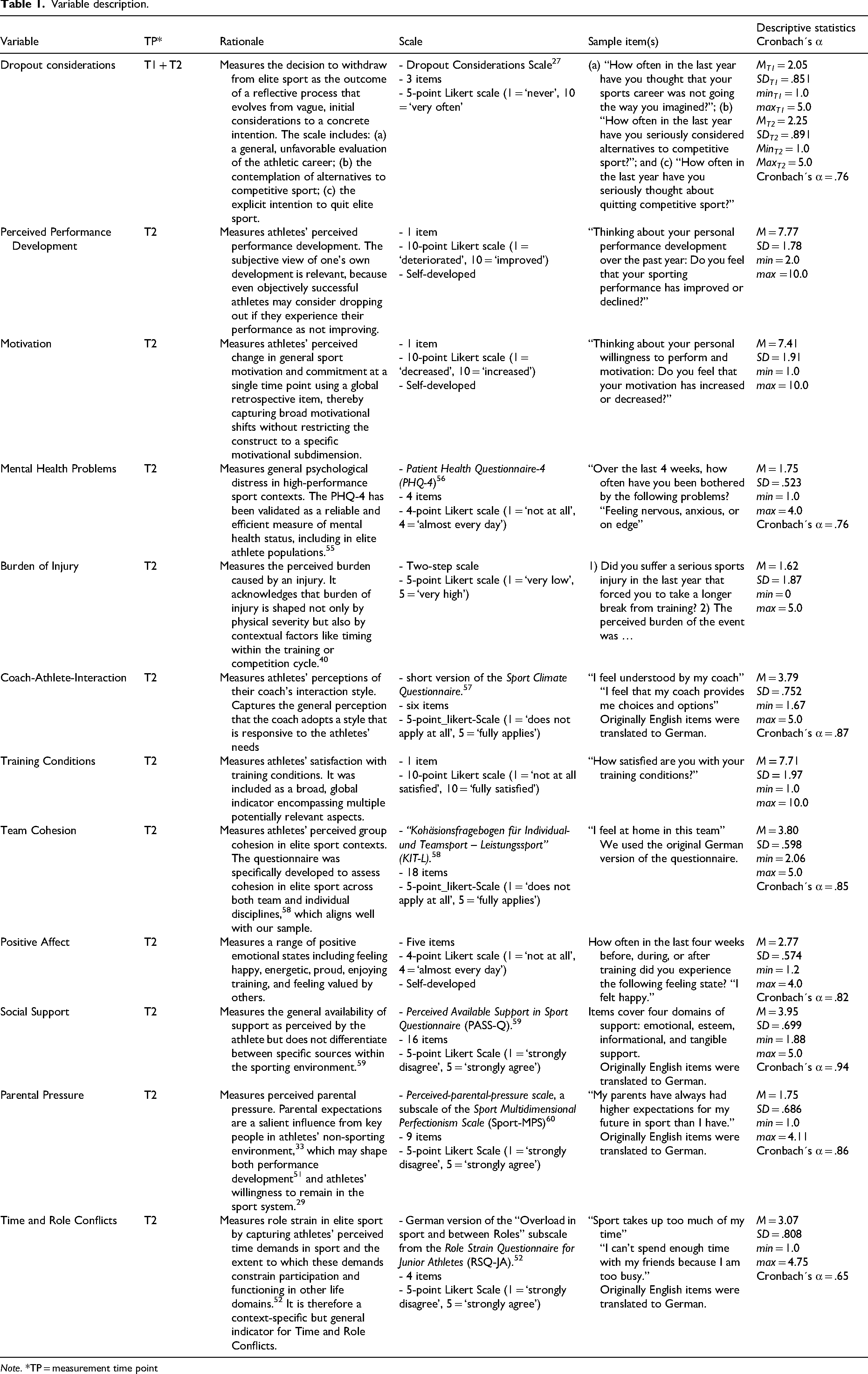
Note. *TP = measurement time point
Measures
Building on the conceptual framework outlined above, this section details the operationalization of the study variables. An overview of all variables, corresponding instruments or scales, and item sources is provided in Table 1. Because the survey was administered in German, English-language measures were translated using a forward-back translation procedure. Specifically, three researchers independently translated the items into German; discrepancies were resolved by consensus. The agreed German version was subsequently back-translated into English and reconciled with the original wording to ensure conceptual equivalence. Variables were assessed either at both T1 and T2 or at T2 only. Constructs that inherently required a retrospective appraisal (e.g., perceived change over the past year) were therefore assessed at T2 and answered retrospectively (Table 1). Some predictors were available only at T2 because they were added as the survey evolved. Socio-demographic information was solely collected at T1.
As potential confounding variables, we included age (in years) and gender (female vs. male). Age was considered due to its natural association with career stage; older athletes may be closer to the expected end of their competitive careers and therefore more likely to have dropout-related thoughts. Gender was included based on prior research suggesting that female athletes may be at increased risk of disengaging from sport early on.8,20
Analytical approach
To address our research questions (RQ), we used a three-step analytical approach. For RQ 1, we examined intra-individual change in dropout considerations across the two measurement points (T1 and T2) using a change score approach. Based on the magnitude of score differences, participants were grouped into five categories: (a) stable dropout considerations (Δ ≤ ± 0.33), (b) moderate increase (Δ > + 0.33 to +1), (c) substantial increase (Δ > + 1), (d) moderate decrease (Δ < –0.33 to −1), and (e) substantial decrease (Δ < –1). Frequency distributions were calculated to assess the prevalence of each change pattern. In addition, a trajectory plot visualizes the temporal development of dropout considerations, stratified by initial levels (low, medium, high).
To address RQ 2, we estimated multiple regression models to identify relevant predictors of change in dropout considerations. Precisely, we employed a baseline-adjusted (autoregressive) approach in which T2 dropout thoughts were regressed on their corresponding T1 values, together with relevant predictors and control variables. This autoregressive approach allows us to analyze both stability and change in dropout thoughts over time. Including baseline dropout considerations captures stability in the sense that previous dropout thoughts (T1) predict current dropout thoughts (T2), whereas further predictors included in the model then account for change, i.e., variance in the level of dropout thoughts, net of prior levels. There is a long and ongoing debate about the strengths and limitations of this approach compared to raw change models,61–63 whereby the approach we favor is more commonly recommended. 64 Its main advantages are that it retains information about the level of dropout thoughts and is less sensitive to potential measurement errors. Predictors were entered using their T2 values. Where measures were available at both time points, T2 assessments were used in order to anchor predictors to the T2 wave and ensure comparability across models. Depending on the construct, these T2 assessments reflected either current status or a construct-specific retrospective reference period. Before conducting the analyses, we checked the assumptions of linear regression models (i.e., linearity, normal distribution of residuals, homoscedasticity, absence of multicollinearity).
For RQ 3, we treated perceived performance development as a dependent variable in a second regression analyses in order to examine its associations with the selected variables. The aim of this analysis is to ascertain whether predictors that are not directly associated with dropout could potentially be indirectly related to dropout through their association with performance development. Subsequently, the significant predictors from both regression models were combined in a path diagram, illustrating potential direct and indirect relationships between the variables of interest. This diagram serves as a visual synthesis of the regression results, providing an interpretative summary of direct and indirect associations related to changes in dropout considerations, thereby making the assumed directional structure of the model transparent. All statistical analyses were conducted using IBM SPSS Statistics 29. In addition, R (Version 4.5.1) was used for selected data visualizations and supplementary analyses.
Results
RQ 1: Development of dropout considerations
In this study, we examined how dropout considerations of elite athletes develop over a period of 12 months. The answer is that for 21.6% of the athletes, dropout considerations remained stable. Approximately half of the sample (49.1%) showed an increase in such considerations, comprising 31% showing a slight increase and 18.1% demonstrating a more substantial rise defined as a change of more than one point in the mean score. In contrast, about 30% of the athletes reported a decline in dropout considerations over the same timeframe; within this group 21.1% indicated a slight decrease and 8.2% a more pronounced reduction. Figure 1 displays the percentage distribution of athletes across the different patterns of change in dropout considerations.
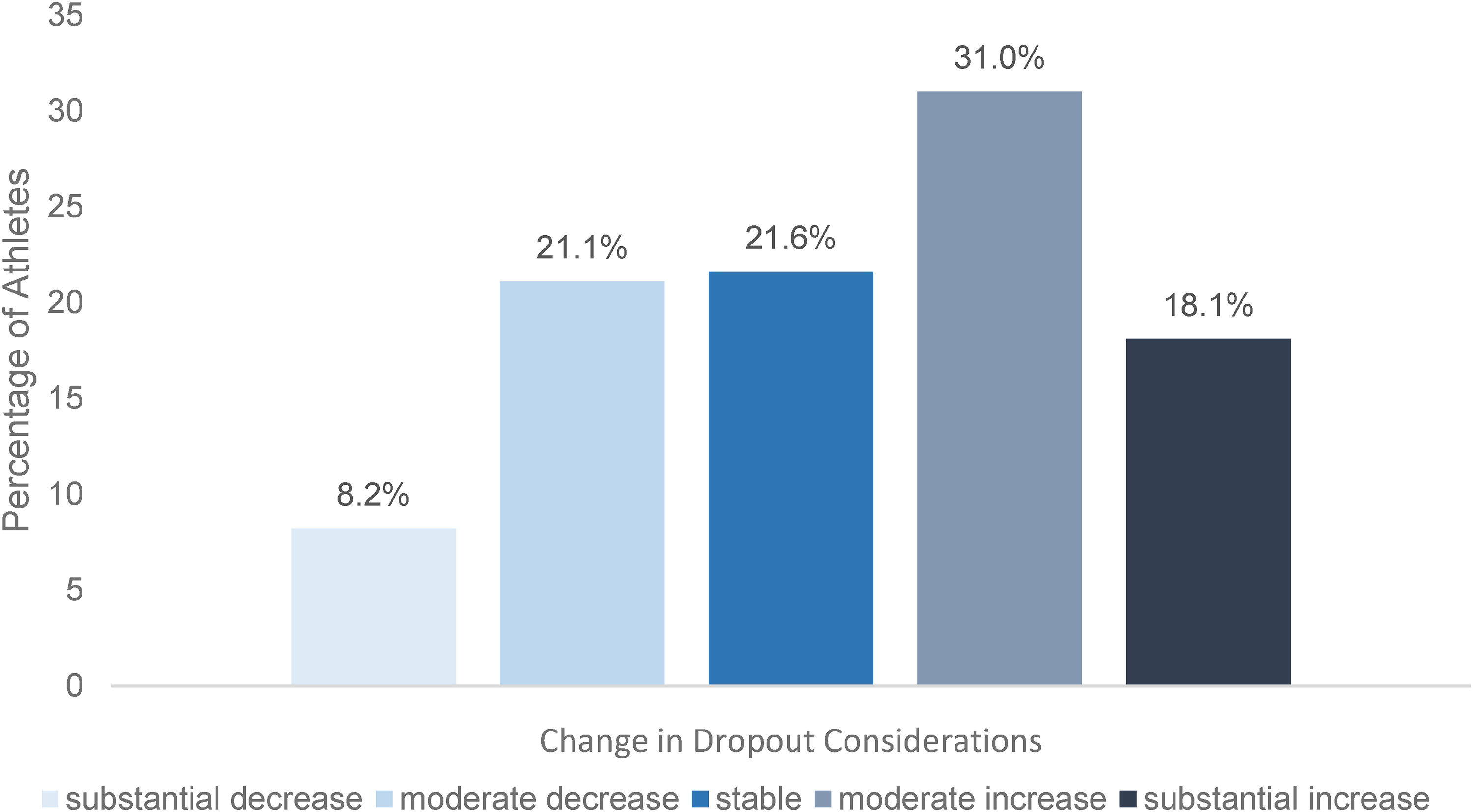
Change in decreasing and increasing dropout considerations from T1 to T2.
Figure 2 illustrates how athletes with low, medium, or high dropout considerations at T1 changed to different levels at T2. At the initial measurement (T1), 70.7% of athletes reported low levels of dropout considerations, 23.7% medium levels, and 5.6% high levels. At the follow-up (T2), the distribution shifted slightly, with 66.8% reporting low, 22.1% medium, and 11.1% high dropout considerations. Among those with low dropout considerations at T1, 79.9% remained stable in this category at T2, 15.9% shifted to medium, and 4.3% transitioned to high dropout considerations. Of those starting in the medium category, 38.2% remained in the same category at T2, while 40.0% showed a decrease to low and 21.8% an increase to high dropout considerations. Among athletes with initially high dropout considerations, 53.8% remained in the high category, 23.1% reported a reduction to medium, and 23.1% showed a substantial decline to the low category (Figure 2).
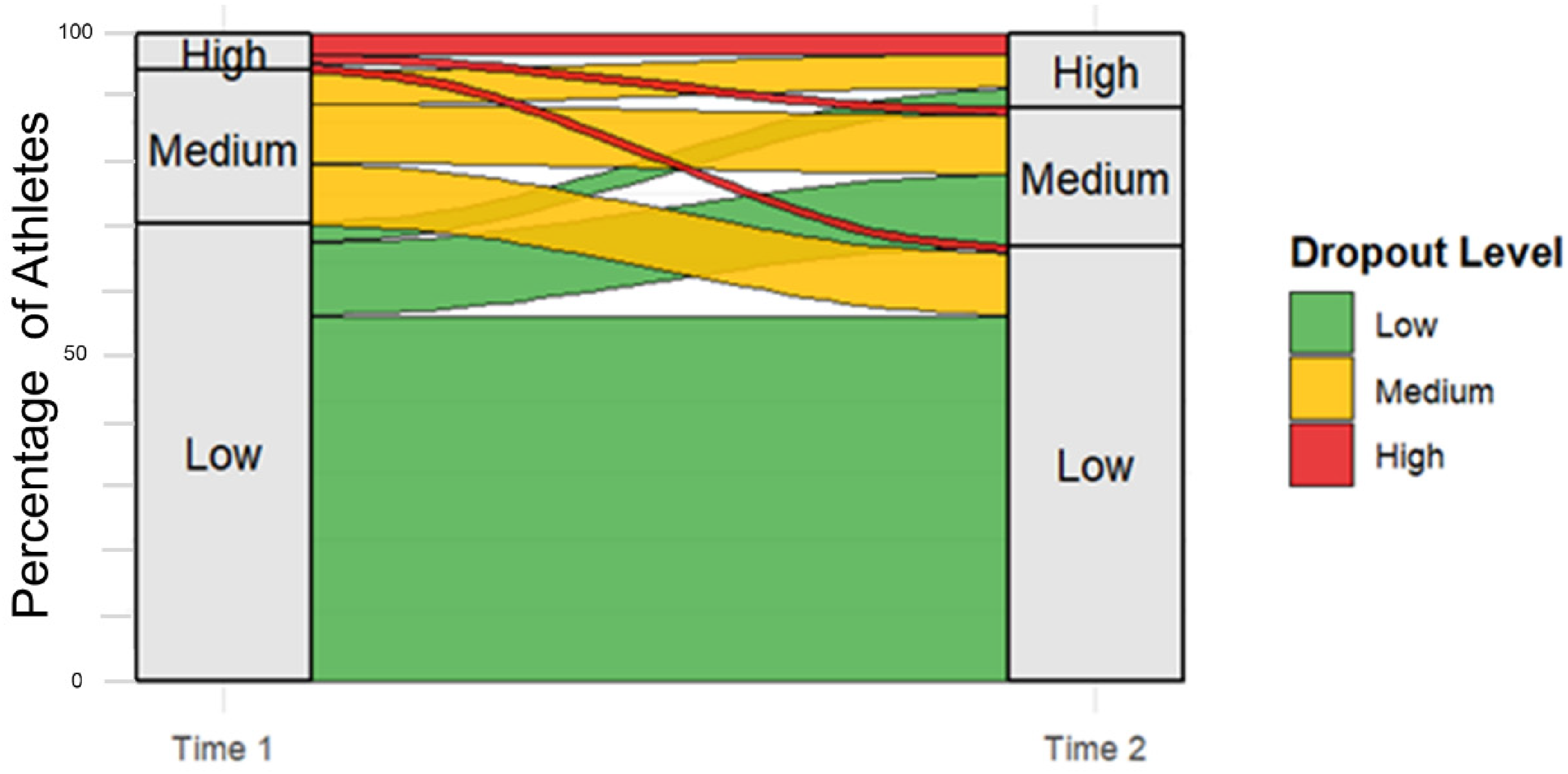
Development of dropout considerations from T1 to T2 based on the dropout level. Note. Categorization is derived from the mean score on the dropout considerations scale: low = 1.00–2.50; medium = > 2.50–3.50; high = > 3.50–5.00.
RQ 2: Factors influencing the development of dropout considerations
Baseline adjusted regression models are presented in Table 2. The first regression model simply includes the autoregressive term and shows that dropout considerations measured at T1 accounted for 22.1% of the variance in dropout considerations at T2 (R2 = .221). Adding age, gender, and perceived performance development (model 2) increased the explained variance to 42.9% (R2 = .429). The inclusion of person- and environment-related factors (model 3) further improved the model fit, accounting for 57.4% (R2 = .574) of the variance in dropout considerations. Perceived performance development emerged as the strongest predictor (β = −.285, p < .001). In addition, four of the ten person- and environment-related variables were significantly associated with an increase in dropout considerations: decreasing motivation (β = −.207, p < .001), poor mental health (β = .160, p = .011), dissatisfaction with training conditions (β = −.115, p = .047), and time and role conflicts (β = .117, p = .047). Gender also showed a significant effect (β = .130, p = .016), indicating that females were more likely to report higher dropout thoughts. Positive affect (β = −.008, p = .913), coach-athlete interaction (β = −.083, p = .215), team cohesion (β = −.034, p = .577), perceived parental pressure (β = −.052, p = .326), social support (β = .073, p = .313), and burden of injury (β = −.004, p = .939) were not significantly related to changes in dropout considerations.
Linear regression model for the development of dropout considerations.
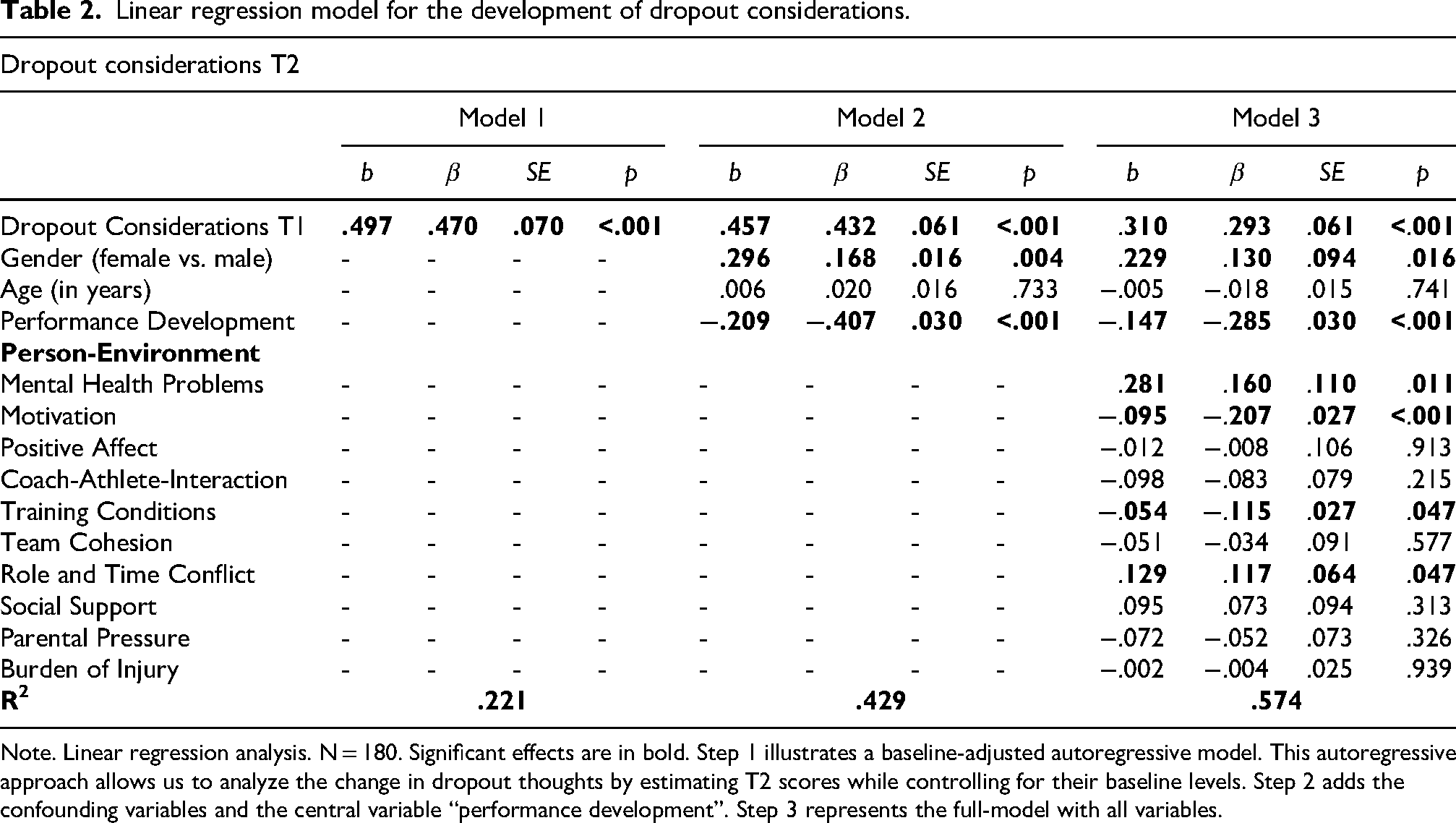
Note. Linear regression analysis. N = 180. Significant effects are in bold. Step 1 illustrates a baseline-adjusted autoregressive model. This autoregressive approach allows us to analyze the change in dropout thoughts by estimating T2 scores while controlling for their baseline levels. Step 2 adds the confounding variables and the central variable “performance development”. Step 3 represents the full-model with all variables.
RQ 3: Factors affecting performance development
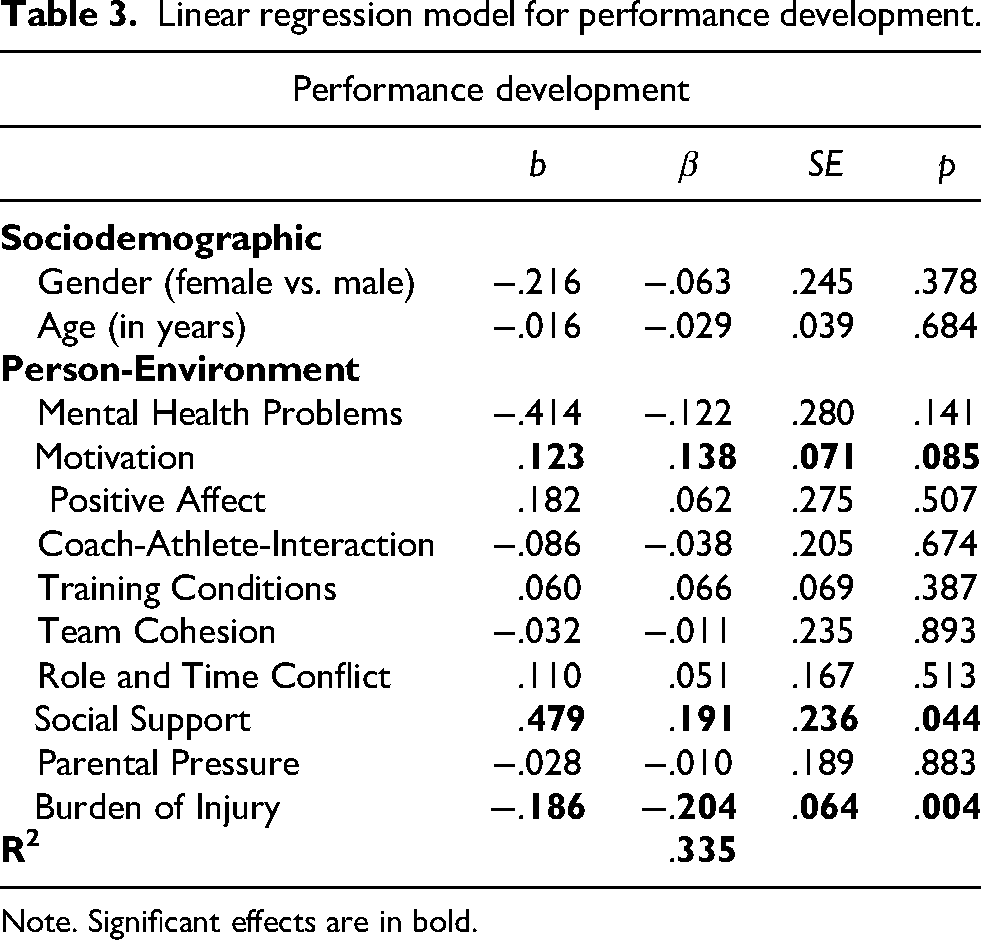
Given the outstanding relevance of performance in the context of elite sports, a second regression model (Table 3) examines self-rated performance development. The model explained 33.5% of the variance in perceived performance development (R2 = .335). Burden of injury was negatively associated with perceived performance development (β = −.204, p = .004), whereas social support showed a positive association (β = .191, p = .044). Motivation reached marginal significance (β = .138, p = .085). All other variables were not significantly related to perceived performance development over the course of one year.
Linear regression model for performance development.
Note. Significant effects are in bold.
Figure 3 summarizes the findings of the two regression analyzes in a path diagram. It illustrates direct associations of mental health problems, time and role conflicts, and training conditions with baseline-adjusted dropout considerations, as well as indirect associations of burden of injury and social support via perceived performance development. Motivation was linked to dropout considerations both directly and, marginally, indirectly through performance development.
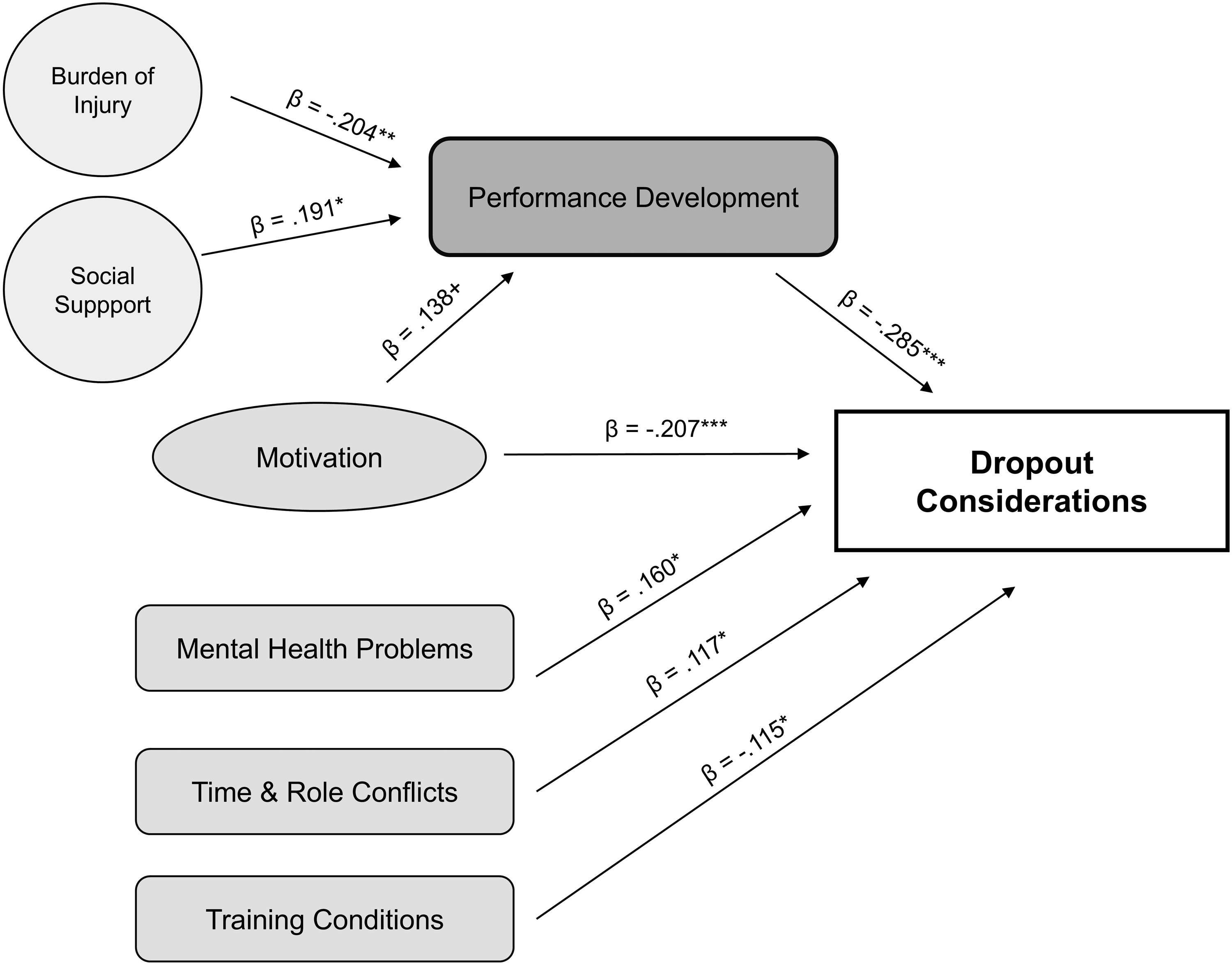
Pathways of direct and indirect factors associated with dropout considerations.
Discussion
This study had three aims: (1) to describe longitudinal changes in prospectively assessed dropout considerations among elite athletes; (2) to identify factors associated with these changes; and (3) to test which associations with dropout considerations are indirect via perceived performance development. In doing so, the study advances a process-oriented perspective on dropout, foregrounds athletes’ own considerations, and adds longitudinal evidence on how perceived performance development is shaped by a broader constellation of personal and environmental influences.
RQ 1: Development of dropout considerations
With respect to the first research question, results show that dropout considerations are inherently dynamic in nature and fluctuate considerably over time, suggesting that disengagement is not a singular or fixed decision point, but part of an evolving evaluative process. This aligns to findings from recreational sport, where dropout was also described as the outcome of a prolonged and multifaceted decision-making process.31,32 Approximately half of the athletes reported an increase in such considerations, whereas around 30% experienced a decrease – some even shifting from high to low levels. This pattern highlights that very frequent and concrete dropout intentions may diminish over time, suggesting that disengagement is a reversible process rather than unidirectional progression. On average, dropout considerations were slightly higher at the second measurement point, possibly expressing increasing reflection on athletic and professional (future) prospects when athletes proceed from junior to senior squads.
RQ 2: Factors influencing the development of dropout considerations
To better understand the mechanisms underlying changes in dropout considerations, the study examined factors directly associated with subsequent changes in dropout thoughts. Findings showed that perceived performance development was the most influential factor in our analysis, underscoring its role as the sport system's central selection criterion.11,12 Importantly, our study captured athletes’ subjective perceptions of their performance development. Such perceptions may align with objective performance indicators, but are also shaped by feedback from significant others, a person's expectations, social comparison standards, and personal interpretation. Montull et al. 65 make a strong claim that self-rated measures can be regarded as meaningful as they integrate and compress information from a multitude of dimensions. Our findings also buttress that self-rated performance development clearly matters: the belief that performance development is lacking led to increased dropout considerations compared with a baseline. Although all athletes had national squad status at the time of measurement, they were familiar with the competitive logic of the elite sport system, knowing that lack of development could result in non-nomination and could, in turn, threaten the continuation of their career.
In addition, personal factors were directly associated with changes in dropout considerations. Motivation was the second-strongest predictor overall, and a decrease in motivation was associated with increasing dropout thoughts over time. This finding aligns with a substantial body of research that conceptualizes motivation as a multifaceted construct and has investigated its role in dropout from sport.1,20 Furthermore, mental health problems also emerged as a key predictor of dropout considerations. Poorer mental health was linked to rising dropout thoughts, consistent with an expanding body of research that underscores the importance of mental health for athlete well-being and career sustainability. 22 These findings reinforce the need to address mental health proactively within elite sport. Mental health issues should not carry a stigma, and preventive measures should be implemented before more severe problems emerge. 39 At the same time, such difficulties should not be understood solely as reflecting individual vulnerability, but also as outcomes shaped by the structural conditions and demands of the elite sport system.
In addition to personal aspects, the sporting environmental factor training conditions was also relevant. Dissatisfaction with training conditions predicted increases in dropout considerations, potentially reflecting shortcomings in infrastructure, coaching quality, or access to essential resources. In contrast to Vargas et al.,
45
however, we did not observe an association between perceived performance development and dissatisfaction with training conditions. This discrepancy may in part be explained by the broad and subjective nature of the concept “training conditions”, which likely encompasses a diverse range of factors from the athletes’ perspective. Nonetheless, the findings indicate that athletes must experience their daily training environment as sufficiently functional and appropriate to avoid destabilizing their commitment to the high-performance sport system
Moreover, the greater increase in dropout considerations among female athletes aligns with evidence that actual dropout is more prevalent among women, 8 highlighting the value of examining the process preceding dropout.
RQ 3: Factors affecting performance development
The analysis of performance development as an outcome variable added further nuance to these findings, indicating factors that may be related indirectly to dropout considerations via athletes' perception of performance development. Motivation played a particularly distinctive role in our analysis, as it was the only variable associated with dropout considerations both directly and, to a lesser extent, indirectly through performance development, showing that changes in self-rated motivation are accompanied by changes in perceived performance development. With regard to its link to performance development, the direction of the relationship cannot be determined empirically. However, we assume a reciprocal relationship: perceived stagnation may undermine motivation, while low motivation can in turn hinder the effort and focus required for improvement. In the dual-career context, Niehues35,68 also provides a detailed account of student-athletes’ motivational profiles and calls for more fine-grained research designs able to disentangle the causal structure between motivation and performance development.
Burden of injury was not directly related to dropout considerations but showed a strong negative association with perceived performance development. Injuries are an inherent part of elite sport, and single episodes may not immediately affect career commitment. However, when injuries repeatedly disrupt training, delay progress or undermine confidence in meeting performance standards, they may indirectly catalyze doubts about continuing participation in elite sport. This aligns with findings by Guevara et al., 11 who reported that more than half of deselected athletes had experienced a significant injury prior to deselection, suggesting that injuries may play an indirect role in career termination via performance limitations.
Perceived social support, by contrast, was positively linked to performance development. Supportive environments may help athletes maintain or restore a sense of progress during challenging periods, buffering the effects of setbacks and help to preserve the perception that progress remains possible despite short-term difficulties. This finding refines earlier insights from qualitative cross-sectional studies, in which a lack of support was frequently described as a trigger for dropout.13,21 Rather than acting directly as a protective factor against dropout, findings presented here suggest that social support may positively shape how athletes perceive their own performance development. This interpretation aligns with findings by Tamminen et al., 50 who identified a strong association between perceived support and athletes’ satisfaction with their performance. At the same time, the indirect pattern observed here may reflect the relative homogeneity of the sample with regard to access to organized support. Because this sample included only athletes with squad status all of them are embedded in comparatively well-developed support structures. Under these conditions, the level of perceived support may be less decisive as a direct predictor of dropout considerations but has still relevance for shaping athletes’ experiences and interpretations regarding their own performance development.
Practical implications
The two complementing perspectives on the dynamic nature of dropout considerations, direct associations and indirect associations via performance development, not only reinforce the centrality of performance development in the sport system's logic but also identify specific, modifiable conditions across the person- and environment-related domains that may help prevent avoidable dropout while preserving performance standards. Thus, the findings suggest concrete areas where preventive action can be taken to reduce avoidable dropout in elite sport, while underscoring that some risks arise from systemic dilemmas requiring structural responses.
First, coaches and sport organizations should foster regular, transparent, and participatory communication 69 about athletes’ performance development and expected potential. Such exchange can help athletes maintain a realistic understanding of their current progress and future prospects, reducing the risk of discrepancies between subjective and objective evaluations that might otherwise prompt premature career decisions in anticipation of deselection.
Second, social support should be actively strengthened. In practice, this support can come from family, friends, coaches, or sport psychologists, and may encompass diverse aspects such as fostering self-confidence, providing encouragement during challenging phases, assisting with organizational demands, or offering relief in everyday life. 70
Third, targeted interventions that normalize help-seeking behavior and integrate mental health literacy into everyday training environments should be developed. Coaches and support staff should be trained to recognize early warning signs and refer athletes to qualified professionals. Moreover, embedding psychological screening into routine medical assessments could facilitate early detection and reduce stigma. 71
Fourth, the association between role and time conflicts and dropout ideation underscores the need for more flexible and individualized dual career structures that accommodate athletes’ diverse life demands. At the same time, such conflicts are often systemic in nature, as high-performance sport inevitably competes with educational, vocational, and personal domains. This creates structural dilemmas that cannot be fully eliminated, but sport organizations and policy makers can take steps to reduce their intensity–for instance by providing more flexible educational pathways, financial security, or coordinated dual career programs. 72 Interdisciplinary coordination between coaches, academic or vocational advisors, and psychological support services is essential to prevent conflicting expectations and promote sustainable participation. Furthermore, targeted efforts to enhance role clarity and self-management competencies may empower athletes to navigate competing demands more effectively and mitigate dropout-related risks.
Strengths
This is one of the first studies to examine dropout-related thoughts longitudinally in an elite sport context. Previous research has examined dropout intentions exclusively using cross-sectional designs, based on the assumption that they serve as reliable proxies for actual behavior. 29 This study goes beyond that perspective by applying a longitudinal lens to the antecedent process of disengagement, aiming to capture its temporal dynamics and psychological complexity. In contrast to earlier longitudinal research that merged voluntary dropout and deselection into a single outcome category,20,22,30 our study isolates athletes’ own dropout considerations, emphasizing the internal decision-making processes that precede actual disengagement. Importantly, the three-item measure of dropout thoughts enabled an efficient, low-burden implementation in the field, which is particularly advantageous in elite-sport contexts. Furthermore, by employing a relatively short interval of one year between measurements – as Baron-Thiene and Alfermann 20 – we were able to capture more immediate changes and directional dynamics, which are often missed in studies with broader time gaps.8,22 This perspective allows for a more fine-grained understanding of dropout as a process rather than a single outcome event. It is a further strength that the sample included athletes from both individual and team sports, allowing the results to reflect a wide range of competitive settings within the same national system.
Limitations
This study has merits but also some limitations that should be considered when interpreting the results. Our measure of dropout thoughts has not been established whether three items fully capture the reflective process preceding dropout. Furthermore, athletes who had actually dropped out by the second measurement point could not be followed up, which limits the ability to directly link dropout considerations to subsequent dropout behavior. Additionally, data were collected at only two time points, and additional measurement waves would allow for a more detailed understanding of how dropout considerations and performance development evolve over longer periods. The sample was restricted to German elite athletes, which may limit the generalizability of the findings to other sport systems or cultural contexts. Potential differences by sport type or squad level could not be examined separately due to limited subgroup sizes. Finally, the models included a targeted set of predictors based on theoretical and empirical relevance; however, context-specific demands in athletes’ dual careers (e.g., school-related burden), as well as factors beyond the psychosocial perspective such as physiological determinants (e.g., injury susceptibility) or macro-level conditions (e.g., national funding structures) may also play a role and warrant examination in future research.
Conclusion
By capturing dropout considerations over time and integrating both direct and indirect pathways via athletes’ perception of performance development, this study offers a nuanced understanding of how person- and environment-related conditions interact in elite sport. The findings reinforce the central role of performance development as the system's core selection mechanism, while also identifying modifiable conditions that can trigger dropout thoughts even in the presence of performance potential. Importantly, these factors should not be ascribed solely to the athletes; instead, they are embedded in and partly produced by the conditions and specific demands of the elite sport system. Addressing these factors, through improved communication, targeted mental health support, and optimization of training environments, can help sport organizations reduce avoidable dropouts without compromising competitive standards. Future research should examine how dropout considerations dynamically evolve across longer segments of athletes’ careers and to what extent these considerations predict subsequent actual dropout.
Footnotes
Acknowledgements
The authors would like to thank all of the participating athletes and national coaching staff for their time and dedication to this project. The authors would also like to thank the in:prove research group for their inspiration and support.
ORCID iDs

Ethical considerations
The study was approved by the ethics committee of the University of Giessen (AZ 55/22). All procedures were in accordance with the 1975 Helsinki declaration and its later amendments.
Consent to participate
Informed consent was obtained from all individual participants included in the study.
Funding
The authors disclosed receipt of the following financial support for the research, authorship, and/or publication of this article: This project was funded by the Federal Institute of Sports Science on the basis of a decision by the German Bundestag (ZMI4-081901-21-25). The data analyzed was part of a multidisciplinary large-scale data set, which includes multiple points of measurement and a cross-sectional and longitudinal perspective. The subset of data included in this study covered the longitudinal, social and psychological data collected in the period between April 2022 and July 2025.
Declaration of conflicting interests
The authors declared no potential conflicts of interest with respect to the research, authorship, and/or publication of this article.
Data availability
The data supporting the findings of this study can be obtained from the first author upon reasonable request.