



Abstract
This study aimed to explore the children-to-youth sport transition (CYT) from parents’ perspectives, exploring how parents perceive and navigate the CYT. In Norway, athletes transition to youth sport at age 13, when the Children's Rights in Sports are replaced by the Youth Sport Recommendations. This brings changes to the goals, priorities, and operations of sport organisations, reshaping the youth sport environment. We interviewed six parents from Norwegian handball and cross-country ski sports and analysed the data using reflexive thematic analysis. We identified three main themes: parents’ understanding of the CYT, parents’ perceived support for CYT athletes, and parents’ own challenges and meaning-making of sport parenting. Parents perceive the CYT as a period of holistic changes in their children's lives, as athletes must cope with increased workloads in sport and at school, higher expectations, and changes in their peer relationships due to their sport commitment. Parents facilitate their children's sport involvement and coping during the CYT by providing practical and emotional support. At the same time, parents themselves experience challenges as their children transition to youth sport, like increased time commitment, learning new regulations, and the emotional strain of seeing their children face adversity. Their children's sports involvement affects family time and limits parents’ opportunities for other interests. Still, parents value the time spent in sport with their children and find their sport parenting journey rewarding and meaningful. The findings highlight the importance of providing resources and support to parents, enabling them to efficiently navigate the CYT experiences of their children and themselves.
Introduction
Sport is a vital part of the lives of children and youth in Norway and around the world. In 2023, Bakken and Strandbu 1 found that 92% of Norwegian children (6–12 years) and 75% of adolescents (13–19 years) participated in organised sport. This high level of participation has implications for parents, especially as parental involvement in sport has increased over the past decades.2,3 Parents are highly engaged in their children's sporting activities, dedicating considerable time and financial resources to support their children's sport participation.3,4 Research has shown that parents experience a range of practical, emotional and social outcomes when their child is involved in organised sport. 5 Stefansen and colleagues 4 illustrated how Norwegian parents viewed “organised sport as a key part of a proper childhood” (pp 171), with their role as responsible parents to be present for the child. Parents perceive sport not only as a way to foster their child's social, psychological and physical development, but also as a shared experience that strengthens their connection to their child's life. Athletes themselves valued their parents being involved and present at their sport activities, but did not want their parents to interfere in their social relationships with teammates or their decisions about participation. 6
Parents play a key role in socialising their children into sport 6 and shaping their experiences. Studies have shown that parental involvement can influence athletes’ self-esteem, competitive stress, anxiety, enjoyment, and motivation. 7 Research also shows that parental roles and influences change as children progress through different stages of sport development, with parents adapting to meet their athletes’ evolving needs.8,9 The vital parental role underscores the need to understand sports parents’ experiences and the support they need so that they, in turn, can efficiently support their children. 7 Building on this understanding, the present paper focuses on the children-to-youth sport transition (CYT) from the parents’ perspective, exploring how they perceive and navigate the transition. This work is part of a larger study that also explored the experiences of the coaches 10 and the CYT athletes themselves.
Children's sports in Norway (ages 6–12) are governed by the “Provisions for Children's Sport and Children's Rights in Sport”, 11 which emphasise athletes’ long-term development, inclusion, and play. To support these goals, there are restrictions such as limiting competition participation to local and regional levels and prohibiting rankings, with sanctions for clubs that fail to comply. Once athletes reach the age of 13, the “Recommendations for Youth Sport” 12 take effect. These guidelines uphold similar values while allowing federations, clubs, and coaches greater flexibility to prioritise and facilitate youth athlete development and performance. This shift marks the transition from children's sport to youth sport in Norway, aligning with normative transitions identified by athlete development and career models. The developmental model of sport participation (DMSP) outlines three stages of development toward sport expertise: sampling years, specialising years, and investment years. 8 The transition from sampling to specialising years is estimated to occur around age 13, involving a shift from participating in multiple sports and deliberate play to focusing on one sport characterised by deliberate practice aiming at enhancing skills and performance. This transition also parallels the athletic transition from the initiation to the development stage in the holistic athletic career model (HACM). 9 However, the HACM broadens the understanding of transitions by illustrating how athletes navigate them not only in the athletic domain, but across various domains of their lives (i.e., psychological, academic/vocational, psychosocial, financial, legal). Athletes entering the development stage are simultaneously transitioning from childhood to adolescence, from primary to secondary school, while also adjusting their parent-adolescent relationship and building relationships with new coaches and peers.
Career transitions are seen as turning phases in the athletic career, and athletes’ ability to cope with transition demands is a key factor, influencing their career trajectory. 13 The athletic career transition model (ACTM) describes a transition as the process in which athletes cope with transition demands by mobilising internal and external resources while dealing with personal and environmental barriers. 13 Athletes who are sufficiently resourceful in dealing with the demands and barriers (e.g., having relevant competencies and support from significant others) will cope successfully with the transition, whereas athletes low on resources may not cope and need intervention to progress their careers. In the case of ineffective or no intervention, an unsuccessful transition may have negative consequences like developmental setbacks and mental ill-health. Given their crucial role in athlete development, some transitions have received considerable attention in sport psychology research, such as transitioning out of sport, 14 or moving from junior to senior levels. 15 However, the understanding of transitions experienced in the early stages of athlete development remains limited.
The children-to-youth sport transition
The scarce research on the CYT reveals that athletes experience increased demands in sport, school, and social life, including increased emphasis on winning and performing, physical and disciplinary standards, training loads, workload in school, team selections, time management issues, as well as shifts in their relationships with coaches and peers.16,17 Pettersen et al. (2025) 10 found that the coaches of CYT athletes face challenges specific to the transition, primarily due to the athletes’ nonlinear biological, psychological, and social development during puberty, and the varying levels of commitment and goals that make it difficult for coaches to meet the athletes’ diverse needs. To support their athletes, coaches focus on an environment that fosters mastery and healthy lifestyle habits by instilling patience, providing sport experiences that are on the athletes’ terms, characterised by coaches providing flexibility for schoolwork and other sports.
Parents have been identified as the main supporters for athletes transitioning to the development stage,18,19 yet only a few studies have examined parents’ experiences during the CYT. These reveal that parental stressors at this stage are related to sport-family conflicts, school-sport balance, increasing time and financial investment, along with relational and organisational issues. For example, parents find themselves acting as sports agents, protecting their child from negative experiences, experiencing a lack of information, struggling to understand the coaches, managing their child's reactions to losing, coping with intense travel schedules, navigating inequalities among siblings and feelings of guilt, and balancing the demands and conflicts of school and sports.8,19–21 Thrower et al. 22 found that parents of young athletes need knowledge of changes in the sport system (e.g., differences in rating, ranking systems) and adolescent development (e.g., maturation, sport pathways) to make informed decisions and support their children effectively.
The limited literature on the CYT suggests that parents’ experiences, stressors, and needs are shaped by their child's developmental stage, highlighting the transition as a key change event. Recognising the important parental role in athlete development, this study examines parents’ experiences when their children transition to youth sport in handball (HB) and cross-country skiing (XCS). We aimed to answer the question: How do Norwegian parents perceive and navigate their children's transition from children to youth sport?
Methodology
Situating the study
This study is informed by the assumptions of social constructionism, which posits that multiple realities exist and that knowledge is constructed through our experiences, interactions, and interpretations. 23 What we consider real is spoken from a particular standpoint or tradition of understanding, 24 meaning that each participant (and researcher) hold subjective perceptions of their experiences shaped by their personal context and social interactions. As our sport and research knowledge and backgrounds influenced the collaborative construction of knowledge with the participants, we describe the research team. The first author is a mother of two children, a developing researcher, a former HB athlete, and has experience as a sport psychology practitioner, coach, and coach developer. The second and third authors are former winter sport athletes, experienced sport psychology practitioners and researchers on sport transitions, and parents of now-adult children who underwent the CYT. Our backgrounds worked complementarily, enriching the contextual understanding of the data and interpretations of the findings.
Participants and procedure
To collect information-rich data, we purposefully recruited parents who met three criteria: (i) had children in HB or XCS who recently underwent the CYT transition, (ii) represented both parental roles (mother, father), and (iii) did not function as parent-coaches. We selected HB and XCS because they are among the most popular sports for children and youth in Norway, with a long tradition of international success. Focusing on these sports allowed us to explore parents’ experiences and approaches in contexts where youth participation is high and structured pathways to elite performance are well-established. In addition, collaboration between the authors’ institution and local clubs facilitated recruitment of information-rich participants. We contacted six clubs (four XCS, two HB), asking them to share our invitation with the athletes’ parents. The invitation included a detailed information letter outlining the study's objectives, participants’ rights (voluntary participation, withdrawal, confidentiality), and a consent form. Eight parents responded, six met the criteria (three mothers, three fathers). We excluded two potential participants based on criteria (i), meaning their children were too young (under 13). The criteria and procedures aimed at recruiting typical youth sport parents who could provide insights into the realities of the CYT through rich and relevant data. 25 When determining how much data is sufficient, we relied on Malterud et al.'s 26 idea of information power, which tasks the researcher with reflecting on the information richness of the dataset. They argued that a study with a narrow aim, highly specific participants, grounded in established frameworks, strong interview dialogue, and a data analysis focusing on in-depth exploration of the phenomena under study needs the least amount of participants. Our study concentrates on parents’ perceptions and navigation of a specific developmental period (CYT, 13–15 years according to established models). Furthermore, parents had two or three children who experienced the CYT, meaning they had undergone the transition multiple times as parents. Five of the six parents interviewed were involved with the team and/or club as volunteer leaders or held administrative or board roles. These positions may have given the parents detailed knowledge about the club and/or team organisation and procedures. Therefore, we judged that the sample of six participants represented rich, parental experiences within the CYT context. By the time of this study, the first author had gained experience in conducting interviews with both adults and young athletes, and her training as a sport psychology consultant was valuable in establishing trust and rapport during the interviews. The participants were knowledgeable about the sport context, articulative, and reflective regarding their experiences. This, along with the length of interviews, contributed to the richness of the data. Based on these reflections, we judged that the six interviews provided sufficient information power to develop credible themes. We focused on gaining a comprehensive understanding of parents’ CYT experiences and approaches while learning from two popular and historically successful sports in Norway. All parents had a sports background themselves, ranging from youth to national levels. Two of the six parents had coaching experience, but neither coached their children during the CYT or at the time of the interview. Table 1 presents demographic information about the parents interviewed and their children.
Participants information.
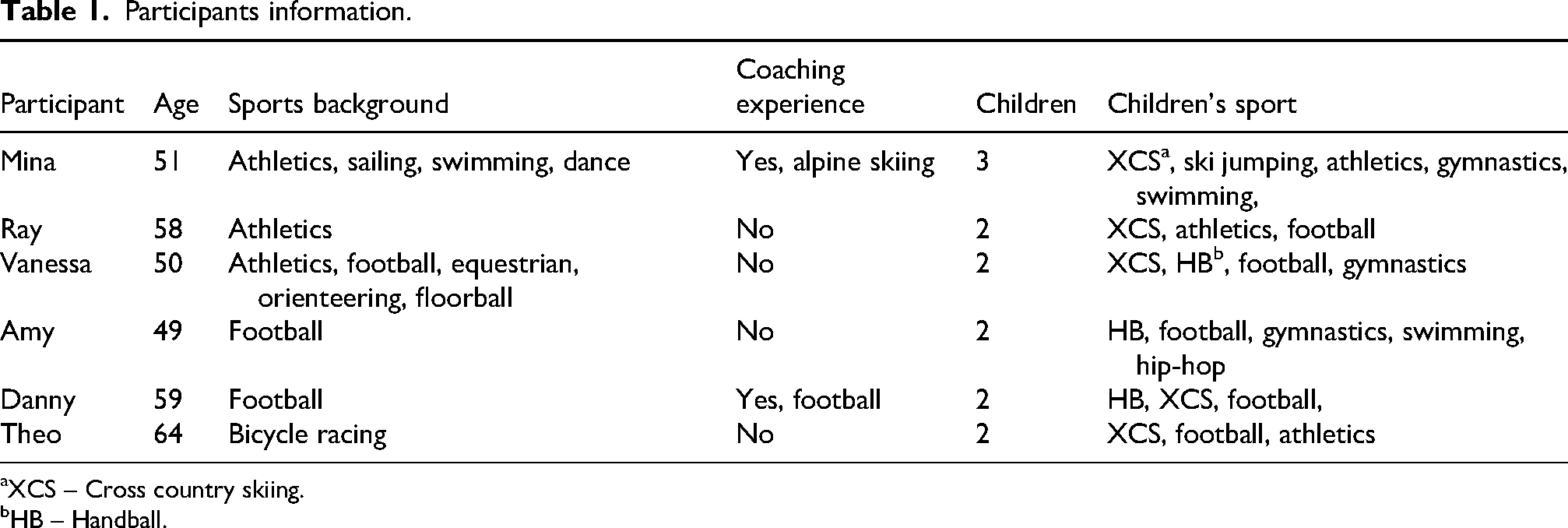
XCS – Cross country skiing.
HB – Handball.
Throughout the study, we protected the anonymity of parents, athletes, and others involved. Once invitees consented, third-party consents from their children were obtained to inform them of their parents’ involvement, their rights related to the study, and how we would protect their anonymity and treat matters of confidentiality. Therefore, we present the results with pseudonyms and omit information that could identify a parent, athlete, coach, or club. The study adhered to national guidelines regarding ethical data collection and treatment and was reviewed and approved by the Norwegian Agency for Shared Services in Education and Research.
Data collection, analysis, and rigor
To learn about parents’ experiences with the CYT we employed semi-structured interviewing. 27 The interview guide was inspired by previous research on youth athletes’ transitions, 18 Wylleman's HACM, 9 and Stambulova's ACTM. 13 While these frameworks sensitised us to what might be relevant, we had chosen not to ask participants directly about predefined concepts of the CYT. This way, we aimed to avoid imposing existing assumptions onto parents’ experiences and constraining their meaning-making by using specific terminology. Instead, broad, open questions allowed parents to construct and prioritise what they perceived as meaningful during this transition. To build rapport and comfort, the first author started the interviews by asking parents to talk about themselves and their sport backgrounds. 25 Following, she asked open-ended questions, such as, “Let's focus on the time when your child entered youth sport at the age of 13, what can you share about your child's life at that time?”. The interviews took place at the parents’ chosen time and location and lasted between 76 and 110 min (Mduration = 95 min). All interviews were conducted in Norwegian, audio recorded, and transcribed verbatim into 150 pages of single-spaced text.
We analysed the data using data-driven reflexive thematic analysis to disclose and co-construct patterns from the dataset. 28 In the analysis, we did not base our coding and theme development on the models, rather, they functioned as sensitising concepts that supported our interpretation of the parents’ stories. In phase 1, the first author transcribed the interviews using an auto-transcription service (Autotekst) and checked text accuracy by re-listening to the audio while reading and correcting the transcription. In this process, she made notes of non-verbal language, such as laughter, tone of voice, and pauses, which added meaning and depth to the data. To further familiarise herself with the data, she read the text multiple times, making initial notes to deepen her connection with the data. Phase 2 involved systematically reviewing and labelling all data relevant to the research question. Phases 3, 4, and 5 focused on generating, developing, and reviewing themes, followed by refining and naming them. We approached the coding process and theme development as a flexible and organic process, moving back and forth between themes, codes and transcripts. The first author developed the initial themes inductively, which the co-authors reviewed individually before organising them into a thematic map (Figure 1). The three authors collectively reviewed, refined, and finalized the map and themes. In phase 6, the findings were assembled in a written report. Raw data quotations were translated into English to convey the themes’ meanings via the words of parents.
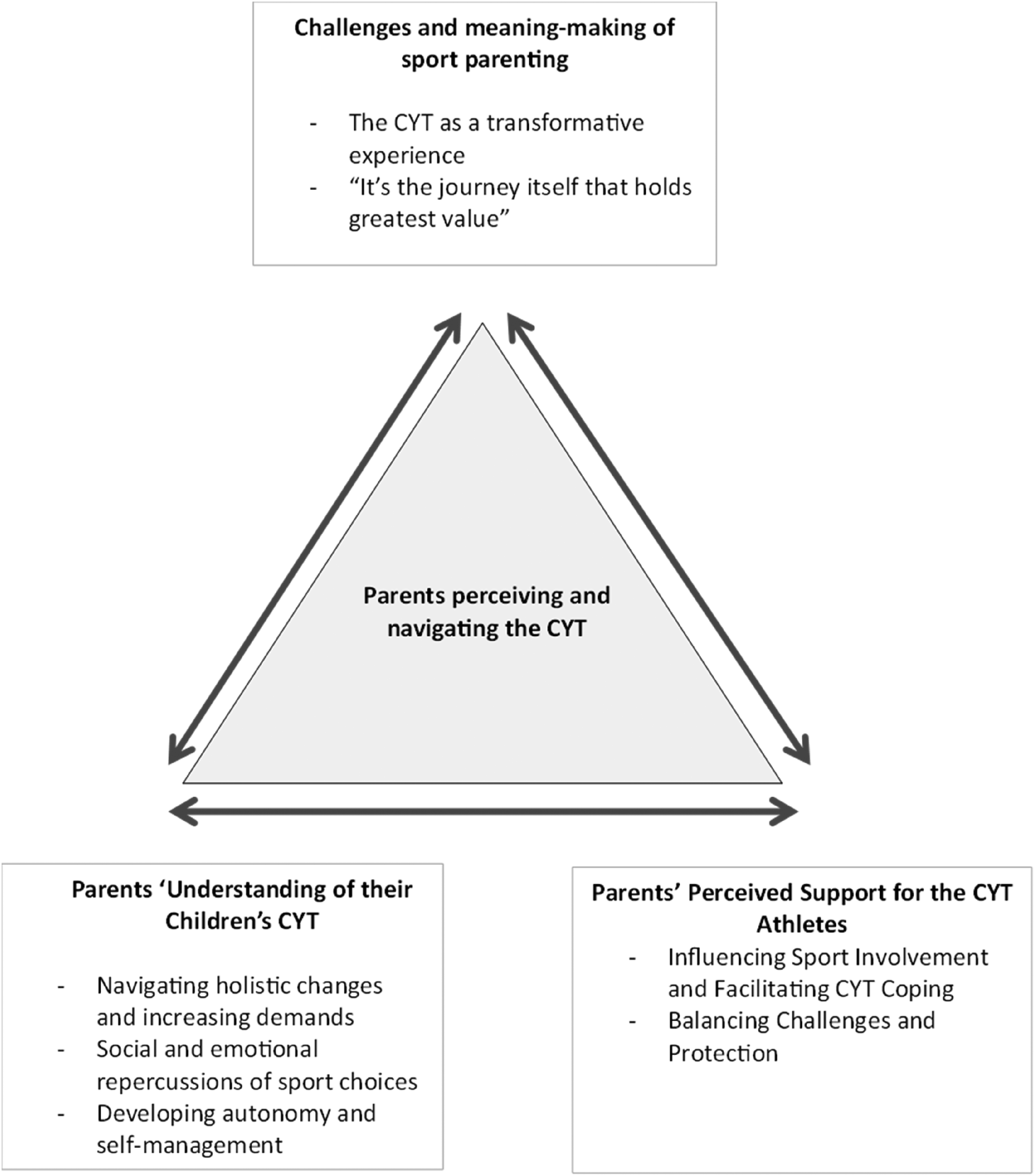
Thematic map of parents’ perspectives of the CYT.
In line with the constructionist assumptions, we employed a relativist approach 29 to maintain rigor throughout the research. We kept a reflexive attitude during the process,25,28 critically reflecting on how our background, experiences, and knowledge might influence the research process. We shared a draft of the findings to all the participants, inviting them to engage in member reflections. 30 Three participants responded with thanks, but no comments on our interpretations. Further, the two co-authors served as critical friends, 30 challenging, supporting, and offering alternative views towards the development of themes, perspectives, and the interpretations of the data into meaningful findings.
Findings
We organised the findings in a thematic map (see Figure 1), illustrating the three main themes and seven sub-themes, disclosing parental experiences with their children's CYT. In the following section, we elaborate on the themes and sub-themes.
Parents’ Understanding of their Children's CYT
The parents in this study perceive the CYT as a period filled with changes, challenges, and growth for their children. Three subthemes support parents’ understanding of children's CYT: (a) navigating holistic changes and increasing demands, (b) social and emotional repercussions of sport choices, and (c) developing autonomy and self-management.
Navigating holistic changes and increasing demands
This subtheme focus on the holistic changes that children experience during the transition and how they navigate them, as perceived by parents. Parents reflected that when their children transitioned to youth sport, several changes occurred in their children's lives, like moving to a new training group or club, merging teams, increasing training loads, and starting lower secondary school. Parents generally viewed these changes as a “natural process” (Ray, XCS) and progression in their children's development. However, some expressed concerns that certain demands were premature. For instance, regional development programs required 12-year-olds to prioritise only that sport. Amy's (HB) son faced this dilemma in football, his other sport: “If selected for the regional team, the boys were told early on to prioritise football or risk losing their spot”. This pressure from coaches forced athletes into choices they might not want to make yet, “Even if they wanted to prioritise playing the handball match over regional team training that one Saturday, they couldn’t, because they would lose their spot in the regional team” (Amy, HB).
Parents also highlighted how athletes’ individual growth and maturation impact their performance and sports experiences during the CYT. In Ray's (XCS) eyes, “Most of the guys who reach the sprint final are 1.85 meters tall and 75 kilos. Competing against such guys is impossible for those who have not yet developed as much physically.” Amy's (HB) son started focusing on how his body composition was related to performance in HB, “He discovered the link between food and strength training, and he started eating more and weighing himself frequently. His goal was to gain weight to become a stronger and more robust HB player”. For the XCS girls, changes in the body during puberty seem to affect performance negatively: “They [girls] go from being as good as the boys one year, to suddenly being far behind the next” (Theo, XCS). Vanessa (HB), who has children in both HB and XCS, talked about how, “It is important to support athletes during the changes that occur in puberty, especially XCS girls, because for them the changes in performance and progress are more often negative.”
The most prominent change sports parents observed was the increased training and competition load. At ages 12–13, the athletes participated in several sports, but as each sport increased the number of training sessions, athletes had to prioritise between them. In the eyes of parents, the reason for this prioritisation was that their children experienced the increased load as becoming “too much”. Ray (XCS) shared that his daughter quit football at age 12, due to overwhelming demands: “She was chosen for the regional football team, which required even more practice. She could not handle it.” Parents perceived “too much” as the result of increased physical load, insufficient rest, and management of increased mental load and expectations. The mental load was salient, and even when there were no explicit demands from coaches or parents to attend, athletes still felt they could not meet their implicit expectations: There were still expectations in a way… like, it was that thing of constantly having to say “no” to some training sessions because they clashed with other sports. And I think it was also her own expectations of “if I’m going to take part in something, then I’m fully committed” (Vanessa, HB)
Along with increased physical load, this interplay of intrinsic and extrinsic expectations created a higher perceived sports-related load for athletes, ultimately guiding their decisions about their participation. On top of the increased load in sport, parents also observed increased workloads in schoolwork, contributing to a greater overall load on the athletes. However, parents viewed lower secondary school as a positive change: “Things came together when she started lower secondary school. It required more responsibility from her, and she was ready for it” (Mina, XCS).
Social and emotional repercussions of sport choices
Parents observed changes in their children's social relationships during the CYT. Some, like Ray (XCS), focused on the new social dynamics as children entered lower secondary school, noting, “It seems like cliques form quickly, where there are those who are considered cool and those who aren't. Like when he [son] was invited to things while others weren't.” Other parents highlighted changes in friendships when athletes specialise in one sport. Friends outside of sport often struggle to understand priorities, like going to bed early to rest, leading to feelings of exclusion. Mina (XCS) explained, “It's difficult for her [daughter] to explain that she's making different choices. She's not interested in the Halloween party, yet that's what everyone at school talks about.”
The parents also notice that social interactions influence how athletes prioritise sport. Some athletes stay active in a second sport due to friendships, while prioritising the other sport. According to Vanessa (HB), “Socially, the most drastic decision for her [daughter] would have been to give up football, so she stayed with it, though she prioritised XCS”. In the parents’ eyes, their children's sport participation decisions during the CYT both shape and are shaped by social relationships, and the choices they make often bear emotional costs. Mina (XCS) described how her daughter's increased involvement in skiing led to gradual social isolation from her once-close group of friends at school: “She has become like a small satellite, drifting away from her group at school. She gets fewer invitations to movies and birthdays; I see it hurts her.”
Developing autonomy and self-management
Generally, parents believe their children coped well with the CYT demands as they learned to be independent, prioritise tasks, structure their days, and plan ahead. Parents consider these skills to be important resources for managing the demands of sports and school during the CYT. As Ray (XCS) noted, “Often the kids who play sport and learn to organise their time also becomes quite structured at school. This helps them get through primary school quite smoothly.” Around the age of 12, Danny's (HB) son grasped the importance of being organised and managing his time efficiently: “Eventually, he understood that he needed to complete his schoolwork before going to training.” Mina's (XCS) daughter found balance between sport and friends with some help from an older friend in skiing: “She asked a friend how she handles it [being social and competing]. Her friend said she goes to the party but leaves early, so my daughter decided to do that too.”
In summary, the theme of parents’ understanding of their children's CYT reveals the increasing demands athletes must navigate. As athletes experience growth and maturation during puberty, their performance is impacted, and the overall load often forces them to prioritise between sports and begin sport specialisation. Throughout this transition, they seem to develop useful strategies for standing on their own while balancing sports, school, and friendships.
Parents’ perceived support for the CYT athletes
Due to the individual and contextual changes during the CYT, parents adjust their support. Parents’ perceived support is illustrated via two subthemes: (a) influencing sport involvement and facilitating CYT coping, and (b) balancing challenges and protection.
Influencing sport involvement and facilitating CYT coping
Parents recognise their influence on their children's sport choices and level of involvement. Shaped by their preferences for sports and an active lifestyle, parents influence their children through the activities they introduce and encourage: “My wife and I enjoy being outdoors, so we’ve introduced and encouraged the kids to participate in activities like football, track and field, and XCS.” (Ray, XCS). When the training and competition load increases and athletes start prioritising, parents guide their children's choices while respecting their autonomy, like Vanessa (HB) shared: “We never said she had to quit, but with the level of commitment now required, it wasn’t wise to do handball, football, and XCS. Our opinion was that choosing football made more sense because it's easier to combine with XCS”.
Parents facilitate sport participation and coping during the CYT by providing practical and emotional support. For example, Amy (HB) helped her children structure and plan their days by asking them days in advance, “How are you getting to practice? Who is driving?” By this, she is trying to create a predictable and structured daily routine, while at the same time challenging her children to plan their activities. As the demands in sport grow, parents spend more time driving them to practice and competitions and managing their equipment. Parents involved in cross-country skiing spend considerable time acquiring equipment and preparing skis, “Cross-country skiing demands a lot from the parents. I spend many hours in the waxing room” (Ray, XCS). For emotional support, parents emphasised the value of being present and actively involved in their children's activities. Danny (HB), reflecting on this commitment, shared that “It is important to maintain a consistent presence, including at practices”. Mina (XCS) highlighted the need to balance this involvement with respecting the children's wishes, explaining that she strives to figure out how to “best support them without pushing them. It's a balancing act between encouraging and facilitating while ensuring I don’t pressure them into something they don’t want.” Talking about setbacks with their children is another way parents offer emotional support. Amy (HB) shared how she tried to help her daughter put setbacks into perspective, like when she was deselected for the first team for tournaments: “I talked about short-term setbacks versus long-term goals, reminding her that it [team selection] is just for this weekend, and that the players on the women's team have faced similar challenges on their path”. However, Amy (HB) also learned that sometimes giving space is just as valuable as direct support: “When he [son] plays a bad game, my words don’t help. He simply needs to deal with it on his own”. This highlights the importance of knowing when to step in and talk and when to step back and allow the child to navigate challenges on their own.
Balancing challenges and protection
Parents see great value in supporting their children to deal with holistic challenges related to their athletic and personal development as a part of their CYT journey. For Theo (XCS), his son “grew stronger by experiencing a range of emotions through sport and managing to work through them. Even when it is difficult in the moment, it provides a foundation he can carry into adulthood, work, and family life.” Danny (HB) shared his rules about prioritising schoolwork: “We told our kids that school comes first, and afterwards they can do whatever they want”. Ray (XCS) stressed the importance of his children understanding the required effort behind goals and aspirations: “You must accept the consequences of the goals you set. Things don’t happen on their own. You must put in the effort to reach your goals, and you can have a lot of fun along the way.”
While parents believe that dealing with challenges is important for athlete development, with the increased demands and specialisation during the CYT, they also see a need to protect the children. They begin to monitor their load and health more closely, intervening when necessary to prevent overtraining and overuse injuries. When Mina's (XCS) daughter decided to specialise in cross-country skiing, “she [daughter] believed the training plans had too few sessions and wanted to add more. I believed they were sufficient. Reasoning that at 13, one might not know what is best, we decided to hold back”. Parents encourage sustainable progress and help athletes find a balance by teaching them patience and long-term thinking as important CYT resources. Danny (HB) explained, “You can increase the training load, but it's crucial that you avoid trying to match athletes who are stronger than you. You need the courage to follow your path rather than copying others”. Vanessa's (HB) son was sometimes frustrated about his peers performing better than him in handball because they reached puberty earlier. While talking to him about this, she tried to instil some patience: “I reassure him that it's an advantage to enter puberty late. You get to grow as much as possible before puberty sets in and build a solid training foundation.”
This theme demonstrates parents’ focus on helping their children manage their overall workload and maintain sustainable participation in sports. Parental support can take various forms, such as arranging logistics for sports, offering emotional support, giving space, or simply being present. For these parents, CYT is like juggling four balls: support, challenge, autonomy, and rules (e.g., completing schoolwork before training).
Challenges and meaning making of sport parenting
Parents face evolving demands related to perceived responsibilities as their children transition to youth sport. This theme is supported by two sub-themes: (a) the CYT as a transformative experience, and (b) “It's the journey itself that holds greatest value.”
The CYT as a transformative experience
Entering youth sport brought uncertainty for parents regarding new rules and regulations in sport. Mina (XCS), having no background in skiing, felt, “It was a shock realising that we’re reaching a point where different rules apply. There are so many things to stay on top of, like correct equipment, competition entries, and training camps.” The CYT also had an emotional impact on parents. They felt challenged upon seeing their children face adversities, yet also took pride in their successes. Theo (XCS) admitted that he found it “difficult in many competitions, when he [son] was bottom three or last. It made me sad to see him struggle.” Parents reflected that they must navigate their children's different paths and experiences in sport. For instance, Theo's (XCS) youngest son won every race he entered while the oldest did not: “Alex [pseudonym] sometimes cried, wishing for just a bit of what [the advantages] his little brother has. Even now, after several years, this remains quite emotional for me to talk about. The way Alex persevered is incredible.”
The increased time commitment required in sport during the CYT demands adjustments in family life. Often, families had to split up for training and competition, and vacations are adjusted around sport seasons: “My daughter's cross-country skiing affects our winter travel plans. We can never go on a two-week vacation to Thailand, though it would be nice” (Vanessa, HB). For Mina (XCS), her children's sport participation meant that her other interests were put on hold for a while, “It's impossible to support your children and make time for mom to do all sorts of other activities. I decided that watching them pursue their passion is rewarding enough.
“It's the Journey Itself that Holds Greatest Value”
Parents saw benefits to being involved in their children's participation in sports. They would get to know their children's friends and get a glimpse into their children's lives by simply being there. As Amy (HB) commented “the information you get from driving four kids to and from training and matches is invaluable. Yes, having four girls in your car reveals a lot about their relationship and roles!”. Having children participating in sport also influences parents’ social relationships, “We were all involved…it's really within sport we parents have our friends today. It has meant a lot.” (Danny, HB). The parents also expressed their appreciation for having an active lifestyle with their children, being on the journey together, and watching them grow, learn, and master. They found such experience rewarding: “The best part is the experience of being there with them in these moments, when you can see their joy, feelings of mastery, satisfaction, and having fun with friends” (Mina, XCS). For Theo (XCS), it was about Being part of that journey, no matter where it leads, matters the most to me. It's the journey itself that holds the greatest value. If someday some gold medal or honour comes out of it for them, so be it. But being part of the journey is what truly counts.
In summary, this theme reveals how parents navigate the evolving demands of sport parenting during the CYT, requiring them to manage emotional highs and lows, shift their family priorities, and improve their sport knowledge. Despite these challenges, they cherish the time spent in sport with their children and find their sport parenting journey rewarding and meaningful.
Discussion
In this study, we examined the children-to-youth sport transition (CYT) from the parents’ perspective, exploring how they perceive and navigate the CYT. The parents shared their perceptions of how youth sport differs from children's sport, highlighting increased demands both in sport and other areas of their children's lives. In particular, they described increased workloads in school and sport, higher expectations, and changes in their relationships with peers. These findings align with the assumptions of the DMSP, 8 by illustrating how sport intensifies during specialising years, and the HACM, 9 by highlighting the holistic nature of transitions and the interrelatedness of various levels of athletes’ development. Transition literature has established that coping with transition demands depends on athletes’ appraisal of the demands (as routine, challenges, or threat), and the resources available to the athlete (internal and external). 13 This interaction between demands and resources is evident, as parents perceived that athletes were prepared for some changes and others were premature. For instance, some athletes struggled with the expectations as sport intensified, whereas starting lower secondary school was seen as a positive change. From this, we may assume that the children had the necessary resources to cope with the new demands of school and were therefore able to adjust and develop. 13 According to the parents, independence, resilience and planning skills were necessary internal (personal) resources to cope with the demands of the CYT. Previous research on the transition to youth sport (i.e., specialising/developmental stage) identified similar qualities as vital for dealing with challenges, highlighting reflection skills, time management, decision-making, independence, and social skills.10,31 From their interpretation of their children's increased demands and changing needs during the transition, parents adjusted their support to suit their children's needs, aiming to develop the necessary transition resources. They do this by challenging their children, questioning, and discussing situations, or simply by being present. Supporting CYT athletes as a parent is a complex task, where parents carefully balance support and challenge, autonomy and rules. While parents provide this support and direction for their children, the parents themselves are unsupported as they attempt to navigate the CYT. 19
Existing research on parental experiences in youth sport has highlighted the financial, time, and emotional commitments they face when their children participate (see Sutcliffe et al., 2024). 5 These investments influence parents’ relationships with peers and family, as well as their own career path, health, and well-being, both positively and negatively. 32 The developmental approach of this study enhances the understanding of parents’ sport experiences by emphasising how parents’ demands and stressors change during the athletic career of their children. The transition to youth sport required parents to adjust family life, learn new sport regulations, monitor their children's load more closely, and find the balance between guiding their children's choices while allowing independence and autonomy. Similarly, Harwood & Knight 33 found that tennis parents in the specialising stage face more stressors related to time, family, and sport organisation than those in the sampling stage, due to increased training and competition load. Importantly, parents highlight that although the CYT requires sacrifices, such as family time, holidays, or other interests, they appreciate being part of their children's journey and enjoy watching them grow, learn, and master sports. Parents’ meaning-making regarding their involvement in their children's sport is linked to the perceived benefits for both the child and themselves. They believe that participating in sport and coping with it's challenges will help their children develop life skills, including resilience, discipline, planning, and emotional management. For themselves, parents highlighted the joy of watching their children grow, overcome challenges, and enjoy sport, as well as the value of connecting with other parents and maintaining a close relationship with their child. 4 A lot of the youth sport parenting research has focused solely on parental stressors (e.g., Harwood et al., 2010), 20 but the findings from this study and Sutcliffe et al. (2024) 5 suggest that it is also important to recognise potential positive effects on parents’ relationships, health, and well-being.
Parents’ experiences highlight the critical role they play as children begin to prioritise sports and organise their days to manage the workload, making parents influential in athletes’ career trajectories. Parents guide their children in their participation choices in sport and set rules for school and sport priorities. The parents involved in this study come from a sports background. They promote an active lifestyle and a passion for sport within their families. The dynamic can be seen as the development of a strong family sport culture, which has been shown to have a lasting and relatively consistent impact on young people's participation in sports. 34 These values, their sport interests and their desire to protect their children, influence how they guide and shape their children's choices, such as which sport children specialise in, how they balance school and sport, and their level of participation 19
The present study complements Pettersen's et al. (2025) 10 study on coaches’ CYT experiences, showing that both coaches and parents recognize similar elements as critical in the transition: (a) athletes’ physical, psychosocial, cognitive, and psychological development during the CYT impact athletes’ performance and experiences; (b) the workloads in school and sport increases; (c) changes in school and sport shape peer relationships; and (d) athletes start prioritising their time and focus on one or two sports. However, parents and coaches differed in how they were challenged during the CYT. Coaches found it challenging to facilitate each athlete's highly individual needs due to athletes’ differences in growth, maturation and commitment. Parents felt they lacked knowledge about the competitive changes in youth sport, struggled with the time commitment and with managing their own emotions upon seeing their children face difficulties in their sport (e.g., poor results). Both coaches 10 and parents focus on balancing autonomy and guidance as well as challenging and protecting the youngsters to facilitate their coping during the CYT.
Practical implications
Youth sport coaches and clubs should acknowledge the critical role of parents in athletes’ career development and aim to facilitate parents’ positive support. The findings from this study, and Dunn & Tamminen's study, 19 suggest that the CYT is just as challenging for parents, and that they too need support to cope with the CYT demands and be able to facilitate their children's positive sport experiences. In preparing for the CYT, parents can benefit from learning about the upcoming changes in the sport's structure and regulations, as well as the growth and development that occur during adolescence. Programs aiming at educating parents have been shown to have some effect, indicating improvements in their knowledge and skills. 35 However, given the individual needs of athletes—and their parents—during the CYT, any programs should be tailored to the specific context, meaning that the delivery and content are adjusted to suit the needs of the CYT athletes and parents involved. 32
Additionally, clubs and teams should aim to foster a climate that encourages positive coach-parent relationships to support all actors during the CYT. The parents in this study enjoyed being part of their children's sport journey. As such, coaches and clubs should enhance this enjoyable involvement. Effective practices for positive parent-coach interactions include coaches and clubs fostering open and honest communication about coaching approaches and how parents can support, recognising parents as valuable team members, and creating safe, supportive environments that promote productive and respectful interactions between parents and coaches. 36
Limitations and future research
It is important to interpret the findings of the present study within its context. We focused solely on parents’ perspectives on the CYT, meaning that athletes’ experiences were interpreted through the lens of their parents. Future research should examine the CYT from athletes’ perspectives to gain insight into their CYT experiences. Additionally, Wall et al. (2020) 37 argued that a dyadic perspective emphasising relational processes can help deepen our understanding of career development and transition. This involves exploring child-parent interactions during the CYT or expanding to analyse the athlete-coach-parent triad to gain further insight into the interactive and joint transition processes. Furthermore, we did not distinguish between mothers and fathers or boys and girls in this study. Previous research shows that differences in athletes’ perceptions of parental practices are more pronounced when fathers are involved than when mothers are involved. 38 To better understand parental support during the CYT, future research should consider the impact of gender differences in the athlete-parent relationship.
The participants’ children had varying levels of commitment to sport, so each parent could have children who were both more and less committed athletes. However, during interviews, parents tended to focus on the challenges of their more committed children. This may be because the challenges faced by such children were more prominent and created greater challenges for parents in supporting the CYT athletes. We encourage future research to explore the role of athletes’ goals and commitment related to how both athletes and parents navigate the CYT.
Five of the six interviewed parents were involved with the team and/or club as volunteer leaders or held administrative or board roles. These positions likely provided parents with greater insight into the organisation and processes of the club and team, which may have shaped their understanding of the CYT. To gain a more comprehensive view of parents’ CYT experiences, future research should include parents without such roles. Furthermore, future research should include parents from more diverse cultural and socioeconomic backgrounds. Knoester & Bjork (2025) 2 found that higher social class was associated with greater parental investment of time and money to support their children's sport participation. These factors are likely to influence parents’ experiences and perceptions of the CYT.
In considering the holistic ecological approach to talent development environments, Henriksen et al. (2010) 39 found that, in addition to coaches and parents, peers and older athletes (serving as role models) play a key role in athletes’ micro-environments. Considering the changes in peer relationships during the CYT, 10 research should explore peers’ roles in transitions. Additionally, the influence of the CYT athletes’ macro-environment (such as sport federations, policies, and sport and school culture) should not be overlooked. Finally, transition researchers were recently challenged to bridge holistic developmental and ecological approaches to better situate development and transitions within related environments and contexts, and how the complexity of these interactions influences transition processes and outcomes. 32 We see such a challenge on the agenda of CYT researchers.
Conclusion
This study emphasises that parents play a significant role in supporting athletes during the CYT, and that the CYT is equally demanding for parents as it is for athletes, who experience increased loads in sport and school, changes in peer relationships, and physical changes related to puberty. Parents felt challenged by the time commitment, new regulations, and their own emotions watching their children struggle. They supported their children by managing the logistics of participation, offering emotional support, giving space, or simply being present. The findings highlight the importance of providing support to parents so they can have positive experiences and effectively support their children during the CYT. We see insights into how parents perceive, navigate, and support their children through the CYT as a major contribution of this study, providing new empirical findings to enrich the existing knowledge of this early career and under-researched transition.
Footnotes

Ethical considerations
This study was reviewed and approved by the Norwegian Agency for Shared Services in Education and Research. In accordance with institutional and national guidelines, the project did not require review by a formal institutional ethics board, as it did not involve medical research, interventions, or the collection of sensitive personal data.
Consent to participate
Informed written consent was obtained from all subjects involved in the study.
Consent for publication
Not applicable
Author contributions
Jannicke Pettersen, worked on study conceptualisation, development, data collection, analysis and interpretations, and writing of the paper.
Stiliani “Ani” Chroni, worked on study development, data analysis and interpretations, and writing of the paper.
Natalia Stambulova, worked on study development, data analysis and interpretations, and writing of the paper.
Funding
The authors received no financial support for the research, authorship, and/or publication of this article.
Declaration of conflicting interests
The authors declared no potential conflicts of interest with respect to the research, authorship, and/or publication of this article.
Data availability
In accordance with the study's proposal, which was reviewed and approved by the Norwegian Agency for Shared Services in Education and Research, and considering the small sport community of Norwegian sport, data is not shared to protect the anonymity of the parents, children, and clubs.