



Abstract
This study aimed to examine the previously unexplored area of agreement between golfers and a coach when assessing putts across two testing sessions. Eleven right-handed golfers (n = 6 males, 5 females, with the average putts per round 32.9 SD = 5.0) completed a 12-putt task, and a SAM PuttLab baseline at each session. The 12 putts varied by distance; short: 6–9 ft (1.83- 2.74 m), medium: 12–15 ft (3.66–4.57 m), long: 18–20 ft (5.49–6.10 m), and slope (limited <1%, moderate >1% < 2%, severe >2%). Following each of the 12 putts, the golfers and coach independently rated five variables: green reading, setup, pace, aim, and execution, using binary yes/no ratings. The coach had access to feedback via TrackMan. Cohen's Kappa was used to assess agreement for each variable. Hierarchical multiple regression analyses examined predictors of putting performance, including hours of practice, SAM PuttLab consistency scores, and average putts per round. Results demonstrated low overall agreement across the two testing sessions. Regression analyses indicated that average putts per round was a significant predictor of performance at both testing sessions. Baseline kinematic consistency predicted performance at the first session, while practice hours did not predict performance at either session. These initial findings highlight the complexity of the perceptual-cognitive-motor skill of putting. Future research should continue to investigate how golfers and coaches develop shared affordances, using mixed method approaches, incorporating measures of expertise to gain greater understanding of how expert putting performance emerges and is maintained under variable environmental and individual conditions.
Introduction
Sport expertise research examines how expertise is developed and maintained, with the aim of providing guidance to best promote or enhance elite sporting performance. 1 Putting performance is a crucial aspect of golf, often serving as a key indicator that distinguishes top-tier golfers from the rest of the competitive field.2,3
In golf putting, the complexity of attending to the most relevant information and selecting the most appropriate strategy is heightened by the ever-changing nature of the task. 4 In the pre-putt period, as part of their ‘green reading’ golfers make decisions about the optimal path from the ball position to the hole, taking into consideration the slope, break, and green contours. 3 In this phase, golfers attempt to determine the correct aim line and required force before taking up their putting stance in preparation for the putting stroke. 4 When reading the green, golfers must adapt to specific circumstances such as the weather and make decisions based on the environment, such as the topographic characteristics of the green. 4 Successful performances rely on making the right decisions about how to perform the task relative to their own action capabilities.5,6 This involves accurately setting intentions (reading the green) in relation to goal-directed behaviour (holing the putt), perceiving information in the environment specific affordances (defined as opportunities for action 7 ) and evaluating their own skill capabilities. 8
As golfers refine their knowledge of affordances and their own skills, they undergo a process of ‘attunement'. 9 This process involves using learning experiences to progressively refine how to use information within the environment to achieve goal-directed behavior.9–11 Research shows that experts are better at detecting relevant information about task-specific affordances, allowing them to develop advanced strategies to achieve goal-directed behaviour compared to novices.12,13 One reason for the increased skill is linked to a ‘richer’ affordance landscape. 14 As a golfer's expertise develops this involves travel to different courses which in turn increases the richness of the affordance landscape due to varied grass types, weather conditions, course types, and more experience of dealing with and finding a way to cope with unfamiliarity.
Experts are typically better than novices at detecting affordances, however, research suggests they do still need to work on the ‘attunement’ process and keep recalibrating. 15 For example, expert golfers struggle to adapt to changes in green speed and may require multiple putts on a green to adjust their technique. 16 Green speed is influenced by many factors including but not limited to wind, grain, rain, dew, and footprints. 16 While controlling for maintenance and green inconsistencies is beyond this study's scope, testing at two time points in the year enables an exploration into whether golfers can attune to green speeds, as in the UK winter greens are slower than summer greens. Understanding these factors is crucial for developing players’ green-reading and distance-control skills. 16 Importantly, previous research has shown that an additional putt can significantly affect success, 17 emphasizing the need to consider a player's ability to adapt to varying green speeds at a motor control level. 16 Recent research in soccer has also shed light on the importance of understanding how athletes (experts and less experts) adapt to the environment considering how an athlete's perception of the environment and their own ability influence decision making and performance. 18 Initially, both groups overestimated their ability when faced with a novel, ecologically valid task. After feedback, performance improved in both groups, but experts demonstrated superior real time decision-making, underpinned by their ability to extract relevant environmental cues, integrate opponent positioning, and align these with their own abilities to make more accurate real-time decisions. 18
To understand “real athletes and real situations”, research has stressed the importance of using putting surfaces and settings as representative to those the golfers will experience in competitive golf. 19 The task of recreating competitive settings is one of the main challenges for sport expertise researchers, as there is a need to balance the requirement to measure actual sporting behaviour whilst maintaining control of extraneous variables (e.g., weather). To meet this challenge, researchers are increasingly seeking to create representative tasks that can replicate informational constraints of applied competitive performance environments. 5 In this case, representative task design refers to arranging experimental conditions to represent the behavioural setting to which the results apply. 20 This enables researchers to examine the processes underpinning perceptual expertise by recreating the perceptual environment that informs action. 5 By using representative task this will also aid understanding of a golfer's field of affordances, the landscape of affordances (such as but not limited to grass, green speed, putt type, weather). To make golf putting tasks more representative in design, as a starting point, this study aims to explore how environmental changes due to the time of year (summer and winter) across a range of putts affect golfers’ existing action capability. Seasonal variation between winter and summer affords distinct influences at the individual, environmental, and task levels. 21 At the individual level, golfers may increase playing time during summer due to favourable weather and extended daylight hours. Environmentally, course conditions improve in summer because of both weather and the maintenance practices of greenkeepers. From a task perspective, these factors contribute to a more consistent ball roll and increased green speed compared to winter. Additionally, the time of year influences task difficulty as slower greens are considerably easier to putt on than fast, highly contoured ones. 17 Examining the seasonal differences provides an opportunity to explore how performance emerges through the interaction of individual, environmental, and task factors. By examining performance at two seasonal time points, this study aims to develop a deeper understanding of how golfers actively facilitate such adaptation, potentially through perceptual attunement and decision-making processes.10,18 To help achieve success and to evaluate a golfer action capabilities there are key variables that underpin putting success such as, selecting the appropriate strategy (associated starting line, pace, intended aim point) and executing the putt to ensure the ball remains on the intended path at the correct pace. 22 If the golfer cannot detect how to exploit affordances in the environment or reliably evaluate factors relative to their performance, it may lead to inappropriate focus in future practice or repeated errors.
Furthermore, incorporating coach ratings may provide an opportunity to examine how collective affordances develop and whether a shared language emerges between coach and golfer. 23 At present, to the best of our knowledge we are not aware of research exploring how shared affordances are understood in golf putting. This study aims to begin addressing this gap by exploring how golfers might attune to constraints and evaluate their own performances. By including a range of putts, the study may offer insights into factors associated with successful putting, particularly by considering the unique characteristics of each putt and how golfers navigate slopes, breaks, and varying ground conditions. In this case, to enable the coach to be able to judge the golfer's performance relative to their perceptions of each player's action capabilities, the players were known to the coach to mimic typical practice in the real world.
In this study, by comparing the levels of agreement between the coach and golfer, areas of congruence and divergence in their perceptions can be identified, alongside the coaches’ knowledge/understanding of the players’ action capabilities. This comparison can reveal how effectively the coach interprets the affordances in the environment and how this understanding aligns with the golfer's perspective. Discrepancies between the golfer's and coach's assessments can highlight areas where the golfer may need additional guidance or potential performance impact changes similar to those previous reported within golf-caddie relationships. 24 Additionally, if the coach's evaluations do not align with the players, this has implications for the coach when designing and setting challenge levels of activities within their coaching practice. To assist the coach in their decision making, and reduce the chance of error, they will be permitted access to TrackMan4® (TrackMan A/S, Vedbæk, Denmark) data. TrackMan4® uses a dual radar system providing accurate data for diagnosis and analysis of golf shots, 25 including information on ball speed and roll speed.
To the best of our knowledge, no previous research has examined golfer–coach agreement. However, existing evidence suggests that coaches who are familiar with their athletes are more likely to design learning environments tailored to their needs and to provide specific rather than generic feedback 26 so it is hypothesised that golfers and their coach will show agreement in post-putt ratings. Agreement is predicted to be higher in the summer compared to the winter, and greater for successful (holed) putts than for missed putts. Agreement is also expected to be higher when golfers report greater pre-shot confidence in their green reading and ability to execute the intended strategy, relative to when confidence is lower. In addition, the study aims to examine whether putting performance varies as a function of playing surface (winter vs. summer), in relation to expertise (measured by average putts per round) and kinematic baseline measures. It is hypothesised that established markers of expertise, such as greater kinematic consistency and fewer average putts per round will be associated with superior performance.
Method
Power: The sample size calculation was based on the precision-for-planning approach. 27 This method requires specifying the target margin of error and the confidence interval of the estimate of interest to compute an accurate sample size. Considering the lack of previous evidence on this topic in golf, we cannot compute any a-priori sample size estimation based on power analysis given that the effect size of interest is unknown. However, based on the rating study between coach and athlete rowers 26 the magnitude of the standard deviation (sigma) of the rating was 0.54 (pooled) for a large to very large difference. This value is used to determine the target margin of error of the confidence interval for the parameter estimate in this new study, whereby a precise sample size calculation can be computed. The target margin of error is calculated as a function of the standard deviation (sigma) of the previous study and the magnitude of the parameter estimate that is considered meaningful based on our judgment and domain expertise in the field. It was considered an error of perception of accuracy equal to 1 missed putt as meaningful. Therefore, the value used for the sample size calculation is: f = parameter estimate/sigma → 1/0.54 = 1.851.
For the estimation of the sample size we have used the following formula (Please see Cumming 2012, Understanding the New Statistics, page 371): - t_critical is the critical value of the t distribution with a 95% confidence interval (since the standard deviation in the population of interest is unknown, we use the t distribution for the simulation); - f is the value calculated before to determine the width of the margin of error of interest; - chi-square_critical is the critical value of a chi-square distribution which is used to adjust the sample size calculation and increase the assurance (99% probability) that the observed margin of error in the new study will not be greater than the target margin of error defined a-priori.
N = [2.131/1.851]^2 × 7.2611 = 9.626 rounded up to 10 participants”.

Participants
Eleven right-handed golfers (6 males and 5 females, aged between 18 years and 68 years, SD =13.98), volunteered for this study. Self-reported average putts per round in the last year ranged from 27 to 40 (with an average of 32.9 SD = 5.0). Golfers self-reported practicing for 24.6 (SD = 12.7) hours per week in the winter and 35.0 (SD = 16.7) in the summer. Average putts per round, greens in regulation and current practice hours are metrics recommended to characterise putting expertise because the standard measure of handicap alone is not a sensitive measure of putting ability per se.28,29 Participants were asked to self-report current average putts per round, greens in regulation, number of years playing golf and total hours per week practice. Importantly, to answer these questions participants could access previously recorded performance data stored in a cloud-based database from the club or individual mobile phone apps. 29
The coach is a PGA professional with over 20 years’ experience, who had regular contact with all the participants and was familiar with their games, careers and goals. The coach has experience coaching all levels of golfer from novice to Tour Player (including US Amateur Champion, Walker Cup and GB&I team members, European Tour, Challenge Tour, Ladies European Tour, European Seniors Tour and the Tartan Tour). The coach has Fellow Professional Status by the Professional Golfers Association and has completed PGA/UKCC L3 coaching qualification and an MSc in Performance Coaching. The coach is experienced working with multidisciplinary support practitioners and using technology within their coaching.
Procedure
Ethical approval was granted by the Ethics Committee of the lead author institution of the time of data collection (University of Stirling). The golfers completed two testing sessions in Scotland. One in winter (November- January testing period), average ambient temperature 7 degrees, wind speed ranged from 15- 21 km/h, cloud cover ranged from 76–78%, there was no rain during the testing session but average days rain each month was 15–18 days with 78–84 mm rain, humidity was 91%. One in the summer (July – August), average ambient temperature 23 degrees, wind speed ranged from 10–11 km/h, cloud cover ranged from 73–74%, there was no rain during the testing session but average days rain each month was 15 days with 72–74 mm rain, humidity was 86–87%). These environmental factors were monitored using weather app (www.metcheck.com) for each testing session. Testing sessions started at the same time each day. The stimp rating was also taken before and after each testing session to ensure the green speed had not changed during the session. Winter greens (8 stimp) were slower in stimp value (stimp value is a measure of green speed captured on stimp meter, whereby the higher the stimp rating the faster) in comparison to the summer greens (11 stimp). At the start of the testing session, participants completed 16 × 12 ft putts on an indoor flat artificial surface (Stimp 11) using SAM PuttLab to act as a baseline before completing the 12 putts outdoors. At the start of the outdoor putting task the researcher explained the format of the 12 putts and the process of asking and verballing collecting ratings pre and post putt. The golfers completed 12 putts on the outdoor practice green at the golf club. Each of the 12 putts were taken from different places on the green, however, these putts were consistent across participants (Table 1). The task was designed specifically to be representative of putts during a round of golf, including varying distance (short, medium and long putts) and slope (uphill, downhill, right to left and left to right). 30 Each putt was assessed by the coach, prior to golfers seeing the task, using a ball rolling device (https://theperfectputter.com) to establish a near optimum starting direction and ball speed for the putt. When assessing the coach used the criteria of optimal ball speed as a pace that leaves the ball 12–18” past the hole if missed. TrackMan4® was then calibrated to this as the target line. For each testing session, it was always the same coach who made the assessments, set up the putts and calibrated the TrackMan4®. Before each putt, the golfer ‘read’ the putt and marked their intended aim so the coach could see and also commented on their strategy for the putt (e.g., line and pace). Then the researcher asked the golfer to rate their confidence in both green read and intended execution by verbally saying their scores out loud after they had read the green but before they walked into the putt and went into their address position. Post hitting the putt, the golfer and coach were asked to verbalise their ratings out loud to the researcher, but they could not hear each others rating of the putt. The rating measurement was based on the key aspects of putting. 31 Golfers used their own golf club and used their own ball (with associated markings). The golfers were instructed to include any normal routines they may have and not to change or add to any processes that they typically adopt. When the researcher spoke to the golfer for their ratings this would create a change to their typical putting routines but every effort was made to not distract the golfer and limit disruption.
Details on the different putt distances and slope in the 12-putt task.
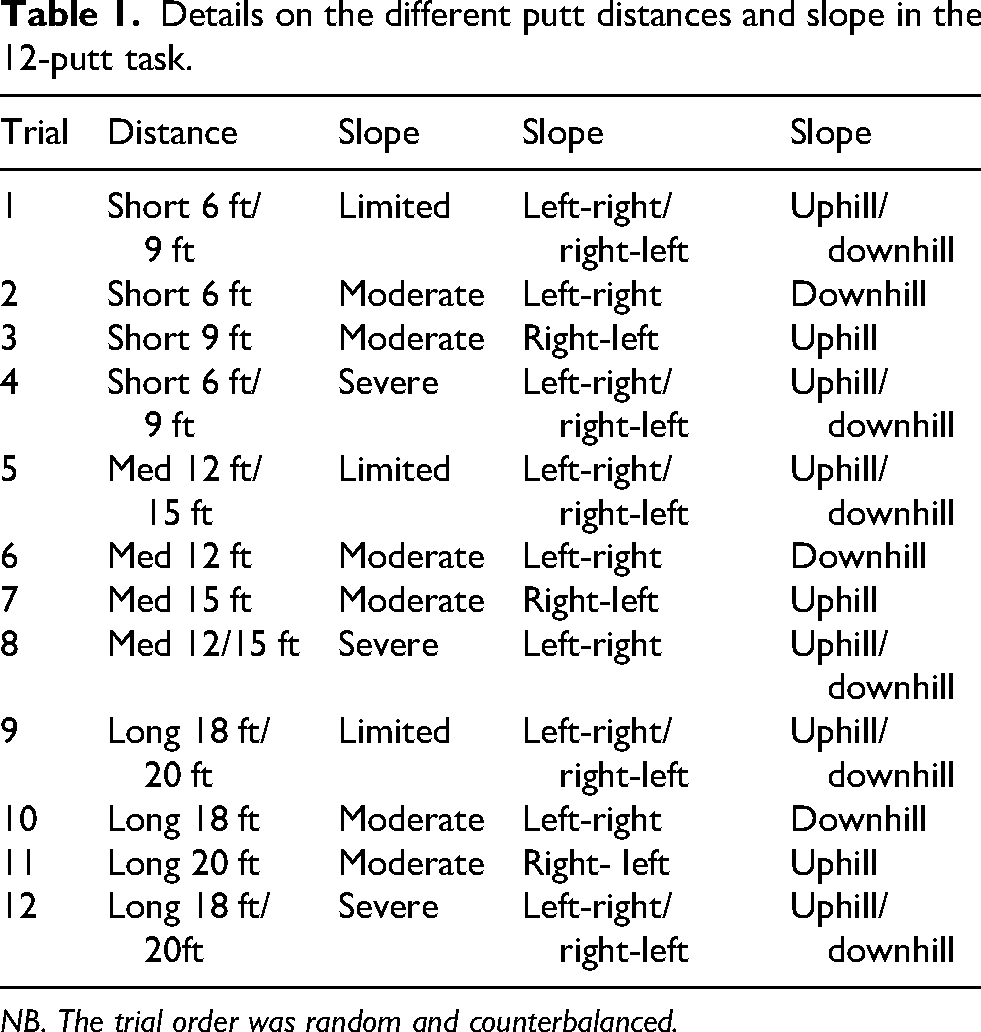
NB. The trial order was random and counterbalanced.
Measures
Pre-putt confidence rating:
The golfer rated their confidence in their ‘ability to read the putt’ and their ‘ability to execute the putt in line with their chosen read’ (out of 10- with 10 being very confident).
Golf putt evaluating rating (post): After hitting their putt and the ball had stopped rolling, the golfer and coach independently assessed the putt using five variables; 1) green reading, 2) putt set up/start line, 3) putt pace, 4) hit relative to the golfers intended aim point and 5) putt execution (i.e., did they execute the putt based on their intention). When assessing the putt, post execution, the research asked the golfers and coach to independently rate ‘Yes’ (if they felt the variable was accurately achieved) or ‘No’ (if they felt the variable was not accurately achieved). In addition to observing the putt, the coaches could use kinematic feedback provided by TrackMan4® to support their assessments. The binary measure is consistent with Kappa Cohen ratings and the specific variables were chosen as they are considered to be key variables in putting. 31
Performance: Putting performance was assessed through the number of successful putts, defined as the putt being “successful” (holed in one stroke) or unsuccessful.
Swing Kinematics: Kinematic variables were captured by SAM PuttLab technology (SAM PuttLab (https://www.scienceandmotion.com/puttlab/ 32 ). Sixteen repetitive putts were taken using SAM PuttLab on an indoor straight 12 ft putt to form a baseline profile. The consistency rating was a composite score combining the consistency rating of the variables of face aim, face impact, path direction, face to path, path length, impact spot, face rotation, backswing time, impact time and impact speed. For each variable the consistency rating shows the distribution of the data values of the single putts on a uniform scale. The raw data values are compared with the distribution of the tour data sample and then the consistency rating is calculated. This allows to directly compare the consistencies in all parameters directly with each other. A Consistency rating of ≥ 75% means that the consistency is as good as for 68% of the tour players and indicative of high consistency in movement execution and technique. 50% to 75% indicates a performance is considered good for an amateur player but below tour player standard. ≤ 50%. indicates performance below the tour professionals benchmark range and indicative of someone who does not have consistency in their movement execution and technique.
To examine ball and roll speed during the 12-putt task TrackMan4® was used. Only these metrics were chosen as no devices were fitted to the club. Trackman, recommend ball and roll speed are explored together as they are linked. 25 Roll speed is defined as the speed at the point where the ball starts to roll (when peripheral speed and velocity are equal). Roll Speed should be assessed in relation to Ball Speed, to get a better assessment of how much speed the ball loses during the Skid Phase. Ball speed is defined as the speed of the golf ball's centre of gravity immediately after separation from the club face. Trackman advise being able to have to have a consistent Ball Speed on a given putt, allows the golfer to have better distance control. The optimal ball start line/target line (read) was calibrated during the set-up process for each putt.
Statistical analysis
Firstly, a paired t- test was performed to check if there were any differences in performance across the two testing sessions (including checks for normality) using the significance level 0.05. Then relative agreement between the raters was calculated, outlining the proportion of total ratings that the raters both said “Yes” or both said “No” on. To analyse the rating, coach and golfer agreement were statistically compared using a Cohen Kappa test for each of the five variables (green reading, putt set up
Hierarchical multiple regression analyses were conducted to examine predictors of putting performance (for both the winter and summer conditions). Predictor variables were entered sequentially to allow evaluation of incremental variance to be explained. In Model 0 (M₀), hours of practice (relevant to season) and SAM PuttLab Consistency scores (relevant to testing session season) were added to the model as predictors of performance. In Model 1 (M₁), average putts per round was also added to determine whether expertise explained additional variance beyond the factors added in model 0.
Simple linear regressions were conducted to examine whether average putts per round predicted roll speed and ball speed across winter and summer conditions. Prior to analysis, data were screened for accuracy and missing values. Linearity, independence of errors, and homoscedasticity were examined using residual scatterplots and the Durbin–Watson statistic. Multicollinearity was assessed via variance inflation factors (VIFs), with values < 5 considered acceptable. No assumption violations were identified. Model performance was assessed using R2, adjusted R2, and root mean square error (RMSE). Predictor significance was evaluated with t-tests, and overall model significance was tested using F-tests. All analysis was completed in SPSS (IBM SPSS Statistics for Windows, Version 31.0. Armonk, NY: IBM Corp; 2023).
Results
Performance
The paired t-test revealed there was not a difference between putts holed in winter performance (M = 20.5% SD = 10.0) in comparison to summer performance (M = 15.2%, SD = 13.9, t(10) = 0.989, p = 0.346, d = 0.298).
Ratings
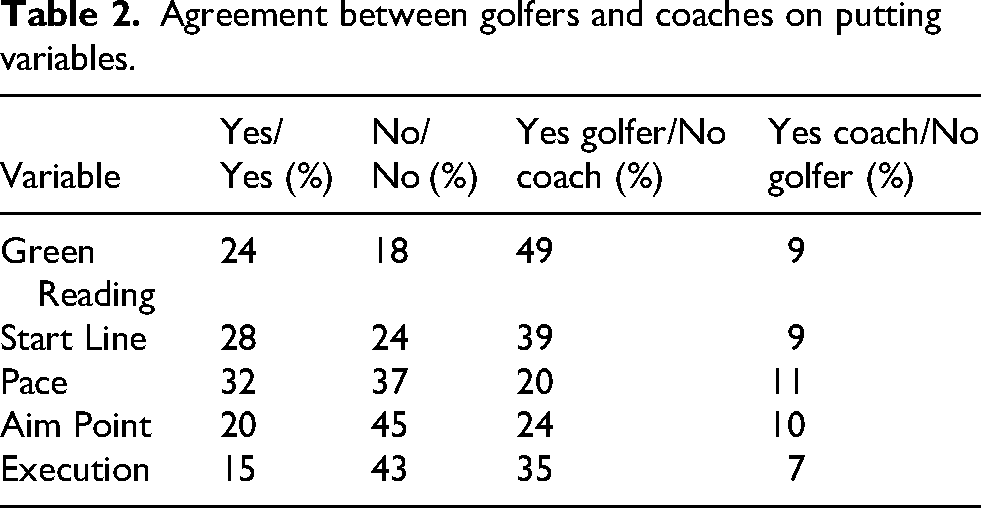
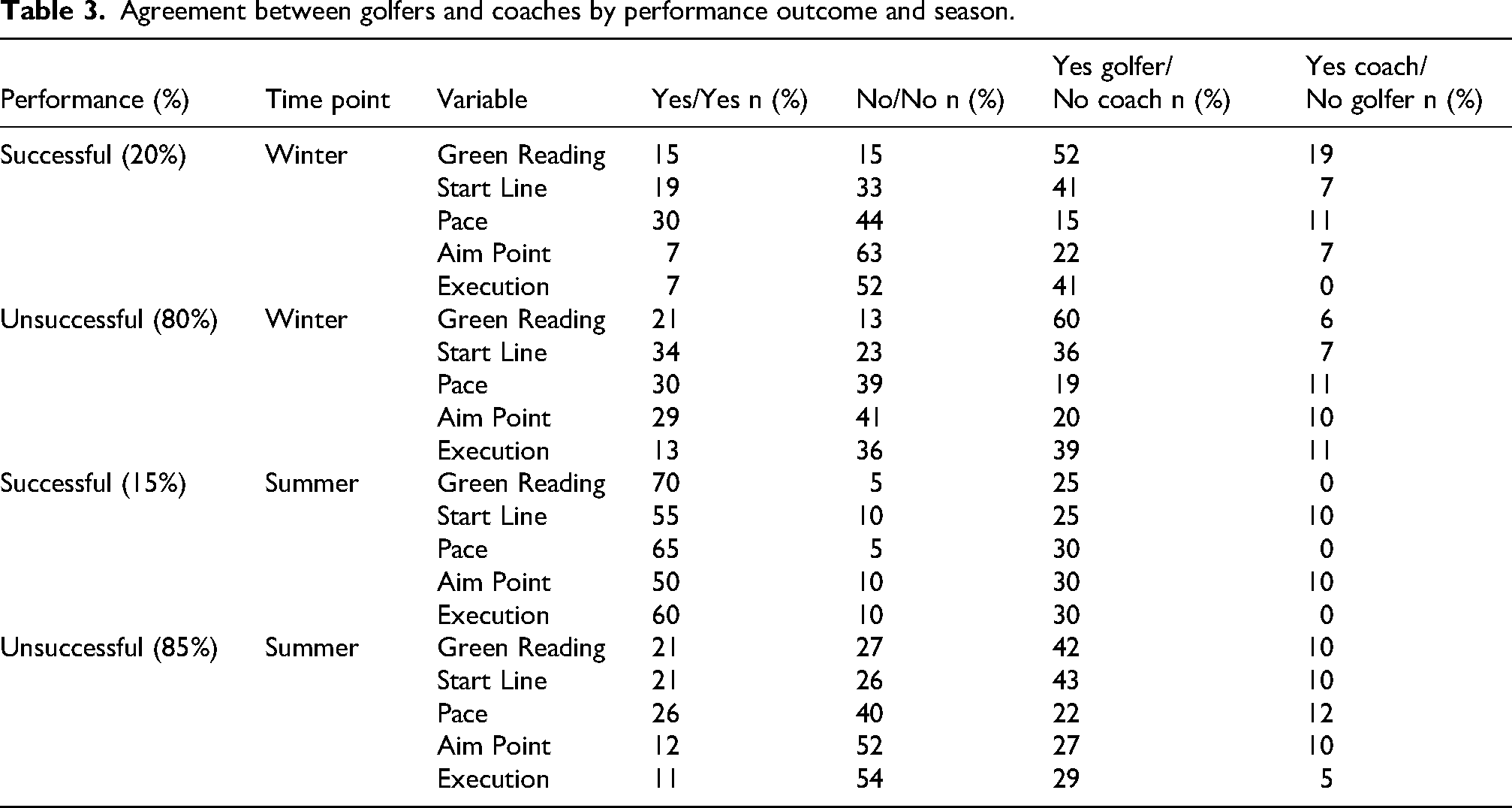
A total of 132 putts were analysed in the winter and summer for each of the five variables. Relative agreement is presented in Table 2 and relative agreement linked to time and performance (within putt success) in Table 3.
Agreement between golfers and coaches on putting variables.
Agreement between golfers and coaches by performance outcome and season.
Green Reading: In winter, the rating scores indicated no agreement (Kappa = –.083, SE = .058, p = .123). In summer, agreement was slight but not significant (Kappa = .117, SE = .069, p = .100). When collapsed across both time periods, overall agreement remained at the no agreement level (Kappa = .005, SE = .044, p = .907).
For performance, agreement was consistently at the no agreement level: missed attempts (Kappa = –.018, SE = .050, p = .714), successful attempts (Kappa = .062, SE = .072, p = .408), and all trials combined (Kappa = .005, SE = .044, p = .907).
Start Line: In winter, agreement was slight and statistically significant (Kappa = .165, SE = .069, p = .023). In summer, agreement was none and not significant (Kappa = .083, SE = .071, p = .250). When collapsed across both time periods, there was slight agreement but significant agreement (Kappa = .124, SE = .049, p = .015).
For performance, agreement was no agreement for missed attempts (Kappa = .099, SE = .055, p = .076) and slight agreement for successful attempts (Kappa = .158, SE = .120, p = .184). Combined trials confirmed slight but significant agreement (Kappa = .124, SE = .049, p = .015).
Pace: In winter, agreement was weak and significant (Kappa = .437, SE = .078, p < .001). In summer, agreement was weak and significant (Kappa = .332, SE = .078, p < .001). When collapsed across both time periods agreement reached fair levels and was significant (Kappa = .383, SE = .056, p < .001).
For performance, missed attempts showed fair agreement and was significant (Kappa = .337, SE = .064, p < .001), while successful attempts reached fair but non-significant levels (Kappa = .256, SE = .154, p = .059). Combined trials indicated fair agreement and significance (Kappa = .383, SE = .056, p < .001).
Aim Point: In winter, agreement was fair and significant (Kappa = .341, SE = .081, p < .001). In summer, it was also fair and significant (Kappa = .220, SE = .080, p = .007). Combined results showed fair and significant agreement (Kappa = .281, SE = .057, p < .001).
For performance, missed attempts showed fair agreement and significance (Kappa = .235, SE = .066, p < .001), while successful attempts had slight agreement and was not significant (Kappa = .188, SE = .131, p = .148). Combined trials confirmed fair and significant agreement (Kappa = .281, SE = .057, p < .001).
Execution: In winter, there was no agreement or significance (Kappa = .040, SE = .069, p = .561). In summer, it reached fair levels of agreement and was significance (Kappa = .301, SE = .072, p < .001). Across both seasons, combined agreement was slight and significant (Kappa = .167, SE = .050, p = .001).
For performance, missed attempts showed no agreement (Kappa = .072, SE = .057, p = .203), while successful attempts reached fair agreement and was significant (Kappa = .211, SE = .082, p = .018). Combined trials indicated slight agreement and significance (Kappa = .167, SE = .050, p = .001).
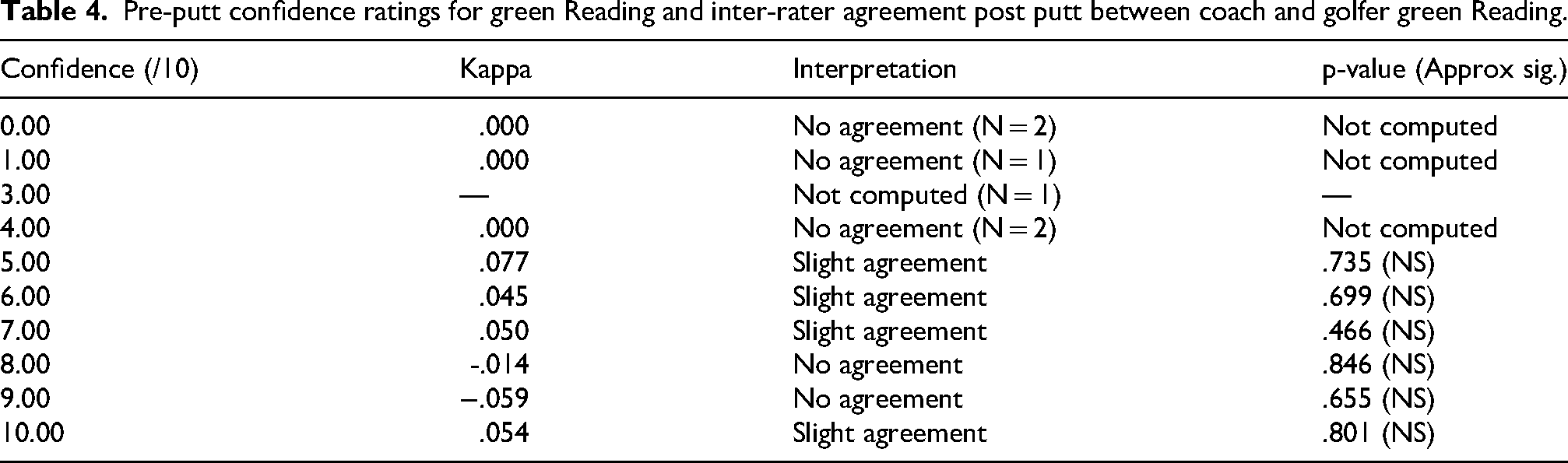
Pre putt confidence: Pre confidence level for green reading showed no to limited agreement (Table 4).
Pre-putt confidence ratings for green Reading and inter-rater agreement post putt between coach and golfer green Reading.
Expertise
For Winter putts (Figure 1), Model 0 was not significant (F(2, 8) = 1.463, p = .287), explaining 26.8% of the variance (R2 = .268, RMSE = 9.60). Model 1, which added average putts per round, was not significant (F(3, 7) = 3.769, p = .067), explaining 61.8% of the variance (R2 = .618, RMSE = 7.42). In this model, average putts per round (β = 1.252, t = 2.530, p = .039) and SAM PuttLab consistency winter (β = 0.805, t = 2.565, p = .037) were significant predictors, whereas hours of practice were not.
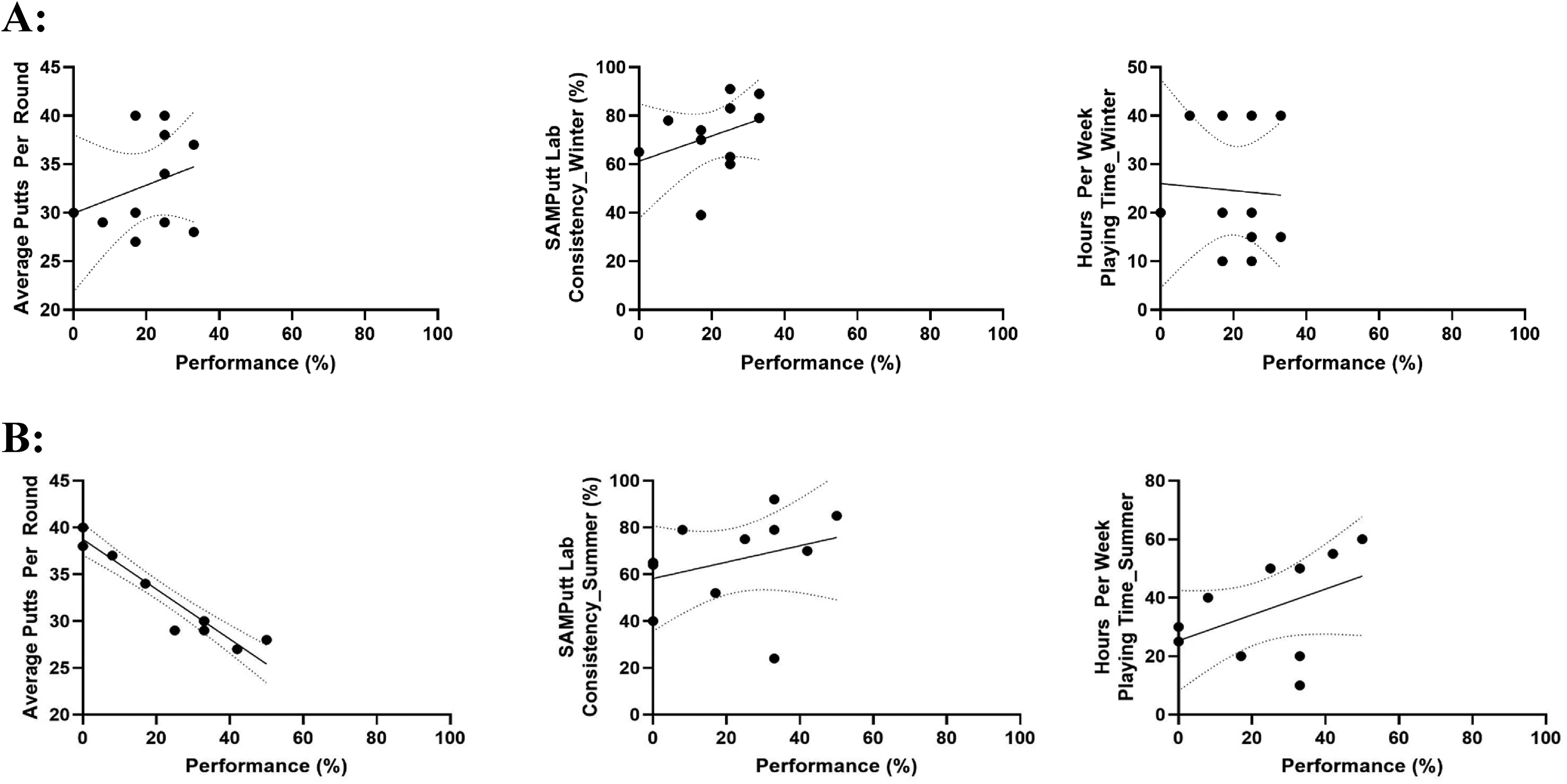
Exploring predictors of performance in winter (panel A) and summer (panel B). Predictor variables were entered sequentially to assess incremental variance explained. In Model 0 (M0), hours of practice (season specific) and SAM PuttLab Consistency scores (testing session season) were included. In Model 1 (M1), average putts per round was added. In winter, neither model was significant. In summer, Model 0 was not significant, but Model 1 became significant with the inclusion of average putts per round.
For Summer putts (Figure 1), Model 0 was not significant (F(2, 8) = 1.179, p = .356), explaining 22.8% of the variance (R2 = .228, RMSE = 17.66). Model 1, which included average putts per round, was significant (F(3, 7) = 25.382, p < .001), explaining 91.6% of the variance (R2 = .916, RMSE = 6.23). Average putts per round was a significant predictor (β = -0.948, t = -7.564, p < .001), whereas hours of practice and SAM PuttLab consistency summer were not significant. A lower average putts per round was related to higher level of performance (Figure 1).
For ball speed, winter models were non-significant (R2 = .184), as was summer ball speed (R2 = .198). For roll speed, winter models were non-significant (R2 = .001), whereas summer roll speed was significant (F(1, 9) = 10.37, p = .010, R2 = .535), with average putts per round negatively predicting roll speed (β = -0.732, t = -3.22, p = .010).
Discussion
The study aimed to evaluate the level of agreement between a coach and golfers in assessing key factors influencing a putt. It was hypothesised that golfers and the coach would demonstrate agreement in their post-putt ratings. However, the results indicated low overall agreement across the two testing sessions. Agreement was somewhat higher for pace (moderate) and aim point (fair), and speculatively this may imply that golfers may be more accurate in judging pace due to their perception of ball roll as an environmental affordance. Similarly, aim point was pre-marked and therefore shared in advance of the putt, potentially highlighting that the variables with higher agreement were also the most explicit within the environment. In support of our findings, previous research, particularly Pelz (1994), indicate that focusing on ball roll could be a useful starting point for recognising break and pace. These findings illustrate the importance of preserving the natural environment as part of the experimental task 14 to aid understanding on skilled perception and action 34 and to explore the perceptual-action coupling. From a practical standpoint, continuing to monitoring how the individual learns to perceive and judge ball roll or set an aim point can help the coach to shape the environment 13 and can help the golfer to develop functional perception-action coupling. 35 The overall aim in this area would be to explore ways to increase levels of agreement and reliability of rating between golfer and coach to enhance communication and coach effectiveness.
The disparity in agreement on green reading, start line, and execution was unexpected, yet aligns with previous findings on coach and athlete agreement in rowing. 26 Disagreement typically arose when the golfer reported success (“yes”) and the coach did not (“no”). This may partly reflect the coach's access to additional information via Trackman, highlighting the broader issue of how technology influences performance judgements within the coach and athlete dyad. 26 These findings emphasise the importance of effective communication between golfers and coaches to establish a shared understanding of key variables in putting. 36 For example, in summer, agreement on green reading when the golfer was successful (yes/yes or no/no) reached 75% (Table 3), raising the question of what specific communicative processes facilitated this alignment. Future research should therefore examine how golfers and coaches exchange intentions and evaluation criteria for green reading and start line. This is particularly relevant since establishing the correct green read is fundamental: the start line determines alignment with the target and underpins the chosen pace and strategy of the puttt.37,38 Critically, if golfers cannot reliably judge the accuracy of their own execution, they may struggle to assess their action capabilities18,22,38 or to evaluate their overall skill level, 18 both of which are essential components of successful performance.13,18 Alternatively given the coach's perspective is indirect, it may be that their interpretation is missing elements. 26 Taken together, it is proposed research continues to focus on including both the coach and athlete's input and exploring how shared decision making can be enhanced to inform coaching and performance.
The higher predicted agreement between golfers and the coach ratings in the summer compared with winter; was not found. In part that maybe be due to the lack of difference in performance between winter and summer. The only variable showing an increase was execution, which shifted from no agreement in winter to fair agreement in the summer. It may be tempting to attribute this increase to the greater number of playing hours and improved green quality during the summer, which could enable golfers and coaches to optimize execution strategies. However, regression analyses provide a more nuanced picture. For winter putts, although the overall model showed only a tendency toward significance, average putts per round and SAM PuttLab baseline consistency emerged as significant individual predictors of performance, whereas hours per week did not. However, a higher average putts per round was related to superior performance, but the model was not significant. In contrast, for summer putts, the model was significant when adding average putts per round, explaining 91.6% of variance, with average putts per round being the only meaningful predictor. In this case, as expected, a lower average putts per round was related to superior performance. SAM PuttLab baseline consistency and practice hours did not significantly predict summer performance. Unexpectedly, baseline SAM PuttLab average consistency decreased from 72% in winter to 66% in summer (although both values reflect generally good movement consistency).
These findings underscore the value of adopting a holistic perspective when evaluating performance and the development of shared affordances. 39 It is plausible that higher-skilled golfers were able to leverage the improved summer green conditions, with individual skill and environmental factors jointly shaping execution choices, particularly the use of pace and break affordances. Supporting this interpretation, our results provide tentative evidence that higher-skilled golfers adapt their strategy in summer by producing faster roll speeds compared with lesser-skilled golfers. This is supported by data comparing Tour Level players who have consistent and faster roll speeds in comparison to amateur players. 25 The mechanisms underlying this adaptation remain unclear, highlighting the need for future research using similar task designs to explore these differences further. At this stage, the possibility for ceiling effects within the winter testing session cannot be ruled out as expertise-based differences could not be reflected within the task, however, it could also be lack of practice and familiarity with putts on slower greens, or also linked to the higher levels of green inconsistencies in winter. Taken together, these findings reinforce the importance of considering the dynamic interaction between the individual, the task, and the environment in shaping the development of shared affordances between golfer and coach.
Building on this, we also predicted that agreement would be higher for successful (holed) putts than for missed putts. Results were inconsistent, with only execution showing higher levels of agreement related to within-performance success. These findings suggest that while certain aspects of putting performance, such as execution, may benefit from shared understanding between golfer and coach, other variables are less consistently aligned. This highlights the need for future research to investigate how golfers and coaches evaluate factors related to successful putting and how shared affordances can be developed. Importantly, our findings support the idea that considering the choice of action response is critical when designing research to inform practice and helping to advance understanding of the mechanisms underpinning sport expertise. 40
The predicted higher agreement levels related to increased confidence pre-putt in green reading and ability to execute the intended strategy was not found for green reading. However, the findings revealed pre-putt confidence in execution was related to higher levels of agreement. Combined with the other findings relative to execution, especially in the summer these findings can be supported by previous research that support the notion of commitment to your stroke is relative to superior performance 41 and feeling confident can increase putting performance. 42 However, caution needs to be taken as the nature of the Likert scale means it is tricky to provide a complete overview as there are such few instances of confidence ratings ≥ 4.
The design of this study was not intended to determine whether the golfer's or coach's evaluations were more accurate, especially given that one coach rated all golfers. Instead, the purpose was to explore the extent of agreement and consider what affordances within the environment may underpin the development of shared perceptions. At this stage, the findings should be regarded as tentative, highlighting the need for further research into the use of common language and the evaluation sources employed by golfers and coaches. Beyond simple yes/no ratings, future work should investigate agreement and consistency in decision-making in more detail including the information sources used. Such research would provide greater insight into the nuances of perceptual attunement and how it is shaped by task demands, temporal factors, and expertise.
Practical implications
From a practical perspective, our findings reinforce the need to consider golf putting as a complex perceptual-cognitive-motor skill influenced by unpredictable environmental factors, such as variable green topology and grain. From an Ecological Dynamics perspective, understanding the information an individual perceives to regulate actions is crucial for developing perceptual expertise. Representative task designs, including outdoor putting with realistic environmental constraints, can facilitate this understanding and inform potential interventions. Encouraging golfers and coaches to verbalize their perceptions and evaluations can help align thinking, foster insight, and enhance coaching effectiveness.
Strengths and limitations
The study design enabled a deeper understanding of perceptual expertise in golf putting. Combining a representative task with both coach ratings and technological measures provided a more objective assessment of putting performance. Collecting data before and after the task offered valuable insight into the interaction between the golfer, task, and environment.
Several limitations, however, must be acknowledged. The use of a single coach and binary ratings (restricted to yes/no responses) limited the richness of the evaluation. The study did not explore the specific informational cues or environmental sources golfers relied on, nor did it capture the detailed content of practice, despite recording hours per week. Furthermore, while the design attempted to enhance representativeness (e.g., using single putts on a real green), the task is not truly representative of the context of competition putts (e.g., marking scores with playing partners). Lastly, we acknowledge the small sample size limits the scope of the findings. This work should be regarded as an initial step in demonstrating the potential need for continued investigation of the topic across diverse cohorts and larger samples.
Future directions
Future research should examine the nature of golfers’ practice, along with the task and environmental constraints that shape expertise development. It should also explore golfers’ knowledge of and about the environment to uncover the affordances they rely upon and address absent information sources. Using multiple coaches to rate performance could strengthen reliability and allow for more nuanced evaluation. Collectively, such work would offer practical insights into how golfers and coaches develop shared affordances and language to support expertise development in putting. Given the study's design and limited sample size, the present findings should be considered tentative, and further research is needed before specific interventions can be developed.
Future research is recommended to continue to explore and assess perceptual factors, such as visual search behaviour and strategic adjustments during putting.3,30,43 For example, the use of eye trackers and other technologies, such as EEG, can facilitate an integrated approach that includes both motor and perceptual-cognitive assessments to fully understand expert putting behaviour. While such work has primarily been conducted in laboratory settings,41,44 extending this research outdoors or using more representative tasks would be valuable. Eye tracking can provide insight into the information golfers gather to guide decision-making and movement planning, particularly in dynamic environments, 45 and can help inform evidence-based practice guidelines and recommendations. 1 Additionally, by increasing the sample size and incorporating multiple coaches to establish inter-rater reliability and explore golfers’ knowledge of and interaction with environmental affordances. Understanding the type and quality of practice, including task and environmental constraints, will provide greater insight into expertise development. Collectively, this research will enhance understanding of how perceptual expertise is developed in complex, dynamic environments, supporting both the alignment of golfer and coach perceptions and the design of targeted, evidence-informed training interventions.
Conclusion
This study revealed that golfers and coaches had limited agreement on key factors influencing a putt, with only moderate agreement on pace and fair agreement on aim point. At this stage, no conclusions can be drawn due to the tentative nature of the findings and limits of current research design. Future research is recommended to continue to explore how golfers and coaches develop shared affordances using a range of mixed methodological approaches.
Footnotes

Ethical considerations
Ethical approval was granted by the Ethics Committee of the lead author institution at the time of data collection (University of Stirling) via the General University Ethics Panel, submitted through the Department of Psychology.
Consent to participate
Informed consent to participate was written.
Consent for publication
As part of the informed consent form, participant gave consent for publication.
Funding
The authors disclosed receipt of the following financial support for the research, authorship, and/or publication of this article: This work was supported by the sportscotland.
Declaration of conflicting interests
The authors declared no potential conflicts of interest with respect to the research, authorship, and/or publication of this article.