



Abstract
Engagement with technical coaching in community-level cricket remains underexplored, particularly in relation to pace bowling, despite its potential to influence both performance and injury. Pace bowlers are crucial to team success, yet experience the highest injury risk of all playing positions. Specific technique factors are associated with increased ball release speed as well as higher risk of lumbar bone stress injury. If coaches understand pace bowling technique as it relates to performance and injury mechanisms, they may be better equipped to enhance technique and mitigate injury. This study aimed to describe the technical pace bowling coaching practices and knowledge of community-level cricket coaches in Australia. A cross-sectional survey design with purposive sampling was used. One hundred forty-four coaches with at least one season of coaching experience completed an online survey. Eighty percent reported engaging in technical coaching at least ‘sometimes’, and 83% perceived their knowledge to be ‘moderate’, ‘high’, or ‘expert’. Despite this, coaches provided only superficial detail on how they coach pace bowlers to improve performance and reduce injury risk. Over 60% of coaches held lower-level accreditation (Level 1 or below), with informal learning methods being most prevalent. Findings suggest a misalignment between coaches perceived and actual knowledge of pace bowling technique, particularly in relation to performance enhancement and injury mitigation. This misalignment is likely due to lower-level coach accreditation courses lacking technical coaching content, combined with coaches’ reliance on informal forms of knowledge acquisition without a foundational knowledge base of pace bowling.
Introduction
The performance of pace bowlers is influential to the success of a cricket team, with the objectives of the fielding team being to take wickets and reduce runs scored by the batting team. As pace bowlers typically comprise the majority of a bowling attack, they play a central role in achieving this objective. One of the most influential performance attributes for a pace bowler is faster ball release speed (BRS).1–4 Increased BRS directly affects the reaction and execution time of a batter, thereby decreasing the likelihood of a successful shot.5–7 Faster bowlers deliver fewer balls and concede fewer runs per wicket compared to their slower counterparts. 5
The majority of biomechanical research in pace bowling has investigated kinematic relationships to BRS,3,7–9 and injury.10–12 Faster bowlers typically display faster run-up velocity and a more extended front knee, with the front foot planted further in front of the body at front foot contact (FFC), which allows a larger braking impulse to effectively transfer linear momentum into angular momentum.1,6,7,13–15 Faster bowlers also flex their torso more after FFC as it pivots and accelerates about the pelvis, while also delaying bowling arm circumduction.6,7 This ‘delay’ creates a greater acceleration path, enabling greater impulse to be applied to the cricket ball and ultimately resulting in higher BRS.6,7
Unfortunately, pace bowlers are more susceptible to injury compared to other playing positions, with lumbar bone stress injuries (LBSI) being the most prevalent (up to 67%), representing 15% of all missed playing time, and recovery periods of up to eight months.16–18 Several technique factors have been linked to LBSI. These include more than 30° of shoulder counter-rotation between backfoot contact (BFC) and FFC, excessive contralateral trunk side flexion (specifically the thoracolumbar angle) at BFC and ball release, increased rear hip and knee flexion angles at BFC, and a more extended lumbopelvic angle and increased front hip flexion angle at FFC.1,12 Adolescent male pace bowlers are up to 6.7 times more vulnerable to LBSI compared to their adult counterparts, 19 meaning coaches need to be more vigilant and have greater biomechanical awareness when coaching this population.
Emerging evidence shows pace bowling technique can be modified in adolescent pace bowlers through technical coaching and physical training interventions. For example, a two-year individualised technical coaching intervention on elite young male pace bowlers demonstrated group-level improvements in kinematics, such as more side-on shoulder alignment and reduced shoulder counter-rotation. 20 There were significant improvements in rear-leg knee flexion angle upon BFC (i.e., reduced knee flexion), however, greater front-leg knee flexion upon FFC was also observed. 20 Within adolescent community-level pace bowlers, an exercise-based intervention helped reduce shoulder counter-rotation and lateral trunk flexion (relative to the pelvis), compared to controls (whereby both variables increased to a small extent). 21 These findings highlight the potential value of evidence-informed coaching strategies to effectively alter movement patterns and help mitigate injury risk within community-level adolescent pace bowlers.
Despite growing evidence that coaches can modify pace bowling technique to optimise performance and mitigate injury risk, 20 it remains unclear whether community-level coaches possess the technical knowledge to do so. Only one study has investigated technical pace bowling coaching practices and barriers faced by coaches of adolescent bowlers. 22 The study reported approximately half of coaches do not frequently engage in technical coaching, citing a lack of knowledge as a major barrier. 22 While the findings revealed key insights into coaching behaviours, the study was limited in its exploration of the technical qualities that coaches understand regarding the development of BRS and mitigation of LBSI. Although community-level coaches are not expected to be biomechanists, they should possess a level of technical knowledge that is appropriate to their coaching context. Without this basic understanding, coaches may struggle to identify sub-optimal movement patterns and modify technique to support player development.
Understanding coaches’ knowledge of pace bowling technique relating to performance and injury mitigation can help education programmes target foundational gaps and deliver context-specific support. Coach education programmes can positively influence coaches’ knowledge, attitude, and behaviour, and therefore positively impact coaching effectiveness. 23 While it is unclear whether community-level cricket coaches have sufficient technical knowledge to assess pace bowling technique, technology may offer a practical support mechanism. Readily available technology such as smartphones and tablets with video tools or low-cost movement analysis applications have been advocated to assist cricket coaches. 22 These tools allow coaches to slow down, replay, and annotate a bowler's technique, aiding in the identification of sub-optimal movement patterns. There is evidence of cricket coaches supplementing their technical coaching with technology to provide visual feedback to players, 24 although the specific technology and the depth of application remain unknown. Without sufficient biomechanical knowledge of the variables linked with BRS and LBSI, coaches may struggle to assess a player's technique accurately or use the technology to its full potential during technical coaching.
Therefore, the overarching aim of this study was to understand the current practices and knowledge of community-level cricket coaches regarding technical pace bowling. There were five aims embedded within this overarching aim. To investigate community-level cricket coaches with respect to: 1) their engagement with technical coaching of pace bowling (Survey Q17,18), 2) their self-perceived knowledge of pace bowling technique (Q13,15,16), 3) their sources of knowledge acquisition (Q14), 4) their perception of the importance of technical coaching relating to performance and injury (Q19–22), and 5) how they use technology during technical coaching (Q23–26).
Methods
Study design
A descriptive cohort (cross-sectional) survey study design captured quantitative and qualitative (free text) data from eligible cricket coaches. Questions were designed and selected based on existing literature, 22 and additional original questions were developed through collaboration with the research team. All survey questions were reviewed by academics within sports science to ensure clarity and minimise bias, and subsequently pilot tested with community cricket coaches (n = 6) to confirm the target population could understand and answer all proposed questions, ensuring relevance to the research aims. Minor refinements were made based on feedback during each stage of survey development. Ethical approval was granted by the university's ethics advisory board (approval number: HEAG-H 90_2024).
Participants and recruitment
The study used purposive sampling, which involved emailing 537 cricket clubs and advertising through social media (Facebook, Instagram, LinkedIn). A database was compiled from a publicly available website (https://play.cricket.com.au/program-finder) and club contact details were extracted (Victoria = 227, New South Wales = 134, Queensland = 61, Western Australia = 38, South Australia = 35, Tasmania = 32, Northern Territory = 9). Clubs were only included if they offered a junior cricket programme in any age group from 9–18 years. Clubs were emailed and asked to distribute a 15-min survey to any coaches of junior players. The inclusion criteria required coaches to be aged 18 years and over, have coached junior players (aged 10–19 years) at the community or sub-elite level for at least one cricket season, and be in Australia. Screening questions at the beginning of the survey prevented participants from answering further questions if they did not meet the inclusion criteria. Participants were asked to consent at the beginning of the survey and provided with a link to the plain language statement. All responses were collected anonymously.
Survey design
All survey data were collected through online platform Qualtrics (Qualtrics, Provo, UT). Before commencing the survey, participants were briefed on the intent of the survey and asked to think only about their coaching of pace bowlers in their predominant coaching role, while certain sections of the survey included a preamble, e.g., think only about the pace bowling action (i.e., a player's movement technique). The survey (Supplementary Material) consisted of up to 21 questions across four sections: ‘Background Information’ (Q4, 5, 7–12; demographics, accreditation, coaching role), ‘Knowledge about the bowling action’ (Q13–16; self-perceived knowledge, knowledge acquisition, satisfaction), ‘Technical engagement’ (Q17–22; frequency, perceived importance), and ‘Use of technology’ (Q23–26; technology application during coaching). Full wording of each survey question is available within the Supplementary Material. Display logic was used to display questions only if response criteria to previous questions were met. Responses to questions were indicated using varying response formats (e.g., Likert Scale, select one or multi-select check box). Free text responses captured textual data for four questions where coaches were asked to provide specific detail about their coaching practices in terms of improving performance or mitigating injury, and use of technology during coaching. The survey was open for ten weeks during the cricket preseason period.
Data preparation and analysis
Data were exported to Microsoft Excel (Microsoft, Redmond, Washington, USA) for checking prior to analysis. One hundred sixty-six responses were recorded. One hundred forty-four responses were included in the final analysis after removing responses that met exclusion criteria (i.e., less than 50% completion of all questions, participant was under the age of 18 years, participant had not coached at least one full cricket season). Descriptive analysis was conducted to determine the most frequent response for all closed-ended questions. Responses within the category of ‘other’ were recoded to fit within an existing classification if possible or omitted from analysis unless otherwise stated. Accreditation level was classified into two ordinal subgroups ‘higher’ (Level 1.5, Level 2, Level 3) and ‘lower’ (No accreditation, Level 0, Level 1). The grouping preserved ordinal progression of accreditation levels to facilitate comparative analysis. For free text responses, an inductive content analysis was conducted.25,26 Responses were coded accordingly, such as mention of biomechanical/technical terminology or reference to a phase of the pace bowling action. 26 Two members of the research team independently coded free text responses to ensure alignment. Responses could be coded into one or more categories. Any discrepancies were resolved through discussion, with analysis by a third member of the research team when required.
Results
Coach demographics
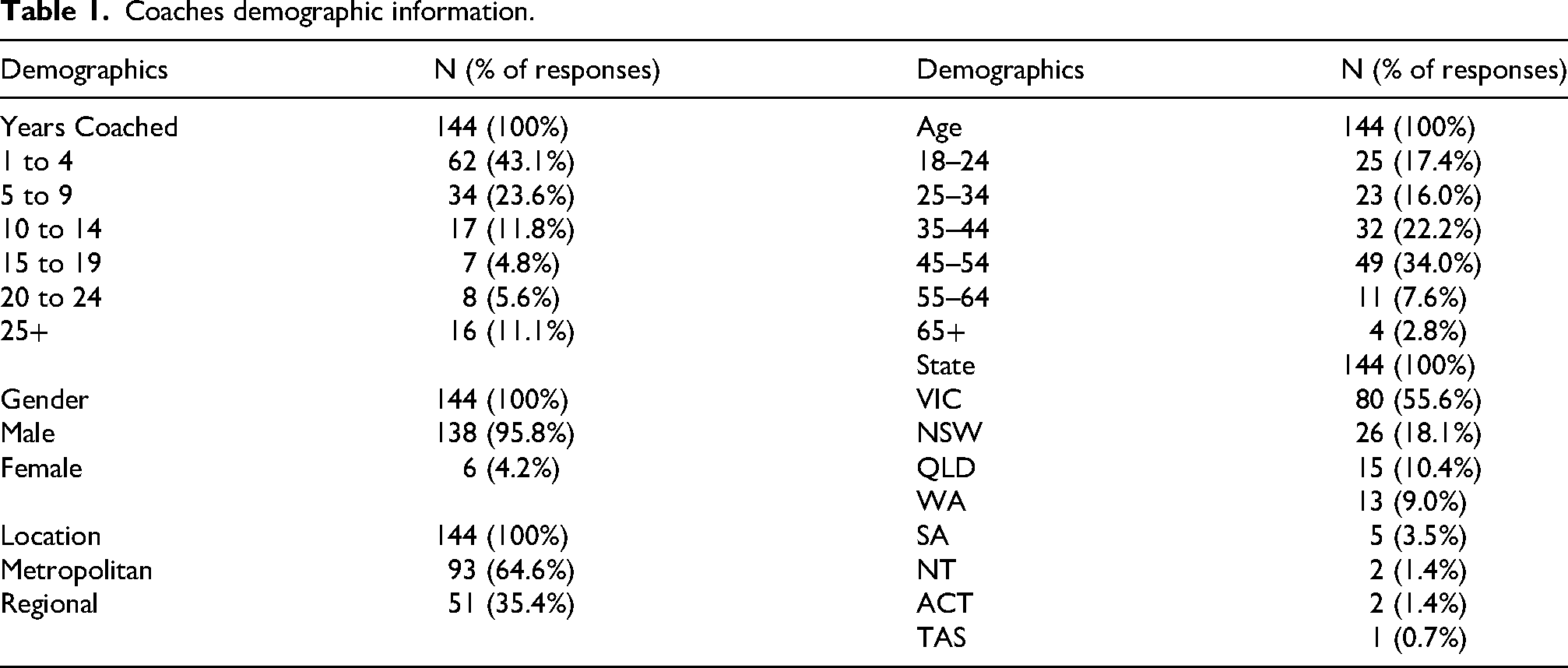
The average age of coaches was 40.3 ± 12.8 years, with a coaching experience of 9.36 ± 10.2 cricket seasons (Table 1). Most coaches were male and resided in a metropolitan area. Just over half of the coaches were based in Victoria, Australia.
Coaches demographic information.
Technical engagement
The majority of coaches engaged in technical coaching at least ‘sometimes’ (once per month), while less than 20% of coaches engaged ‘rarely’ or ‘never’ (Figure 1). In terms of context (Figure 2), coaches most frequently coach bowlers during regular training, with less than 20% coaching outside of regular training. Most (61%) coaches work alongside others (head or assistant coach), while 36% coach on their own (no assistant coach).
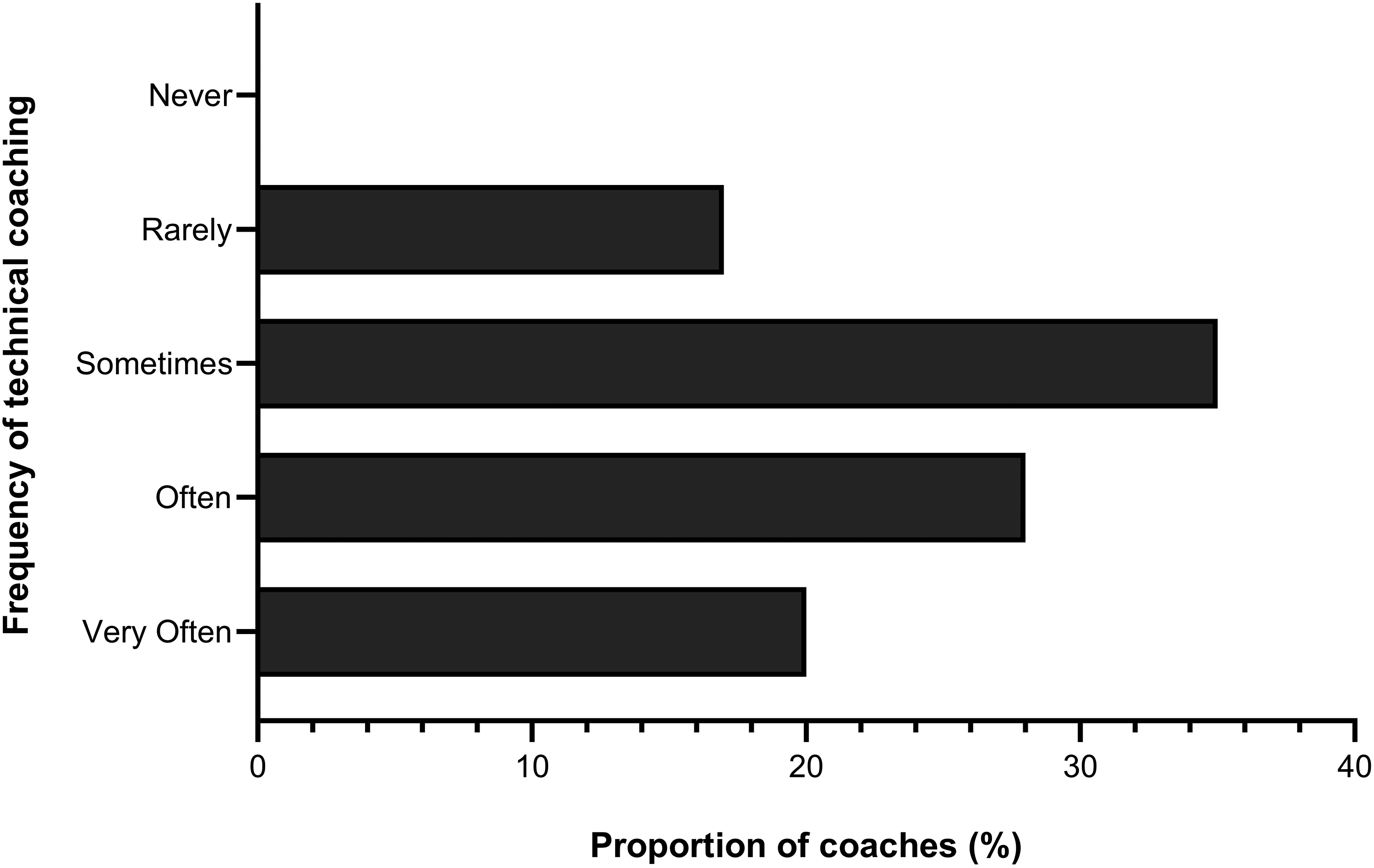
Frequency of technical pace bowling coaching (99% response). Rarely (a couple times per season), Sometimes (at least once per month), Often (at least once per fortnight), Very Often (at least once per week).
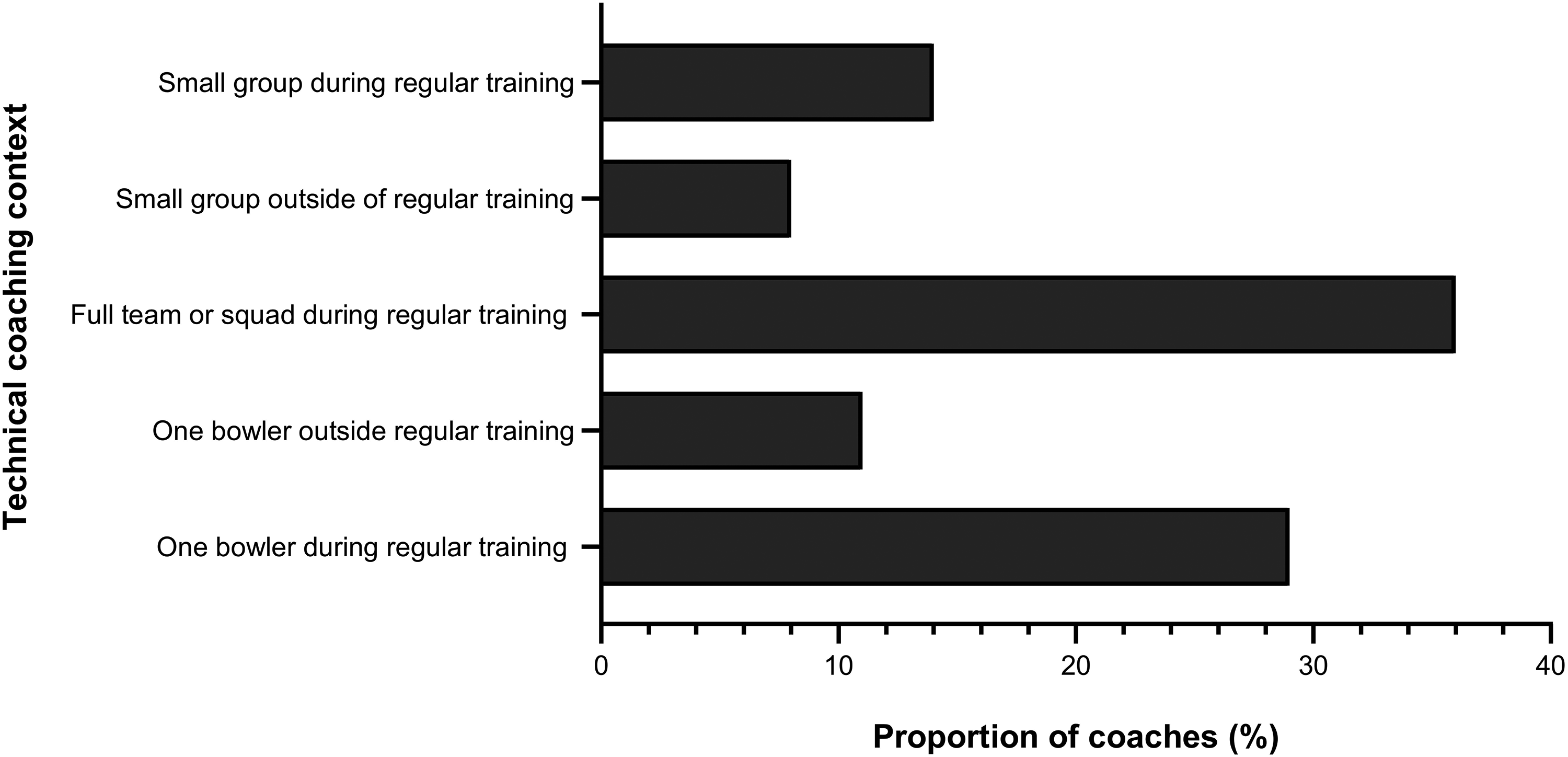
Coaching setting when working with bowlers. (99% response).
When asked to describe their technical coaching related to improving performance (i.e., free text response), 48% of coaches made broad reference to coaching “technique” or “action”, for example, “working with bowlers to break the action down into specific movements and positions”, or “holistic approach looking at technique”. Thirty- three percent of coaches referenced a phase of the bowling action (e.g., “run-up”, “follow through”), while 23% of coaches mentioned a body part (e.g., “front arm”, “bowling arm”). Only 13% of coaches referred to biomechanical terminology (e.g., “momentum”). Fifty-one percent of coaches mentioned other factors not related to technique characteristics such as “accuracy” (17%). Twenty-five percent of coaches did not respond.
Similar responses were seen in relation to mitigating injury with 58% of coaches broadly referencing coaching “technique” or “action”, while 63% of coaches mentioned other factors not relating to technique characteristics such as “workload” (30% of coaches) or “strength and conditioning”. Under one-fifth of coaches referenced a biomechanical or technique variable (10% lateral flexion, 5% “counter-rotation”). Twenty-two percent of coaches did not respond.
Knowledge about pace bowling technique
Coaches’ perception of their knowledge regarding pace bowling technique was largely rated at a high level, with 83% believing their knowledge level was ‘moderate’, ‘high’ or ‘expert’ (Figure 3). However, almost two-thirds of coaches surveyed held an accreditation level 1 or lower (Figure 4).
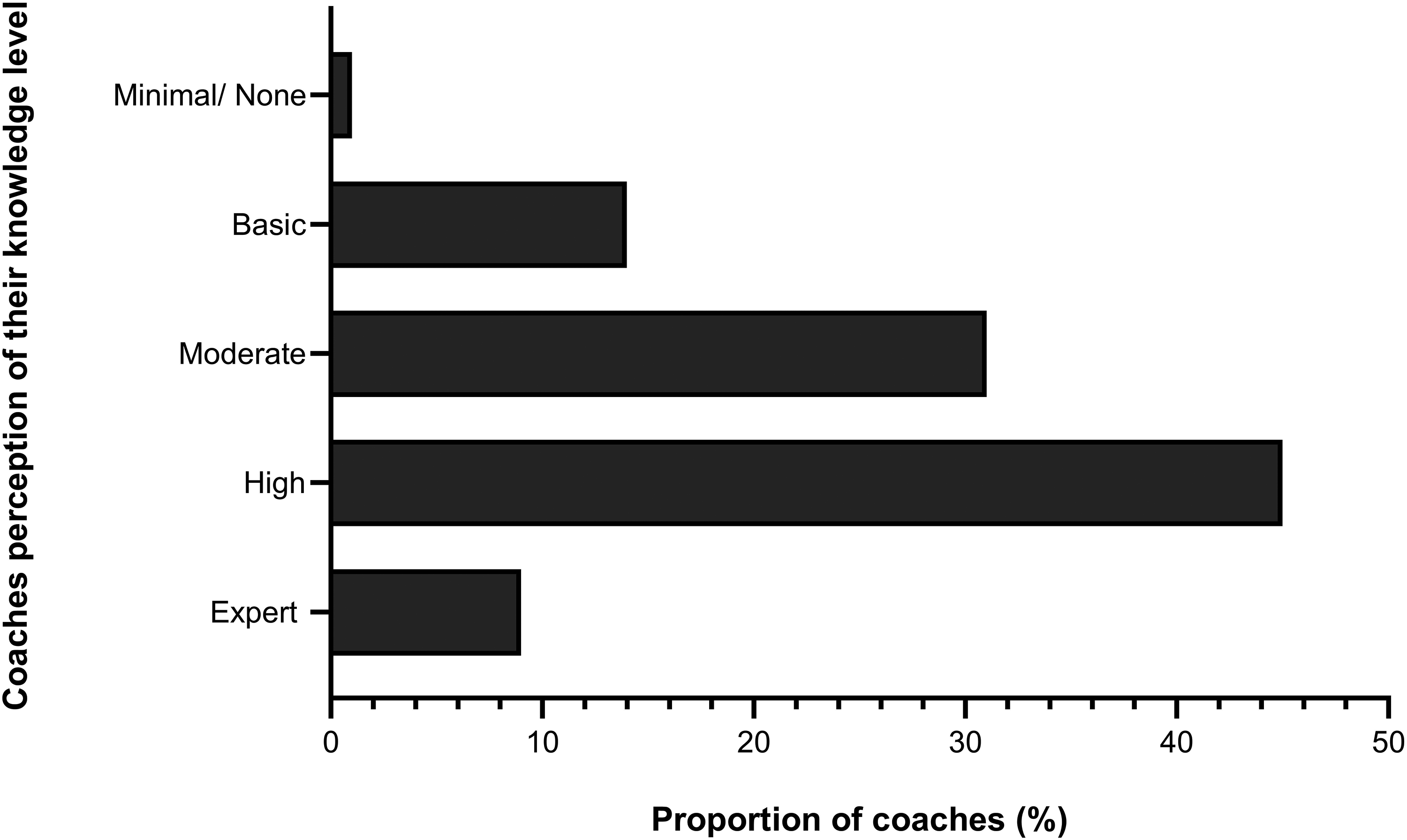
Coaches perception of knowledge regarding pace bowling technique (100% response). Basic knowledge (you know a little about the bowling action but cannot describe it in detail), Moderate-level knowledge (you understand it and can discuss it), High-level knowledge (you understand and can discuss, while also being able to observe and recognise differences, good or bad), Expert knowledge (you can analyse, evaluate and intervene with every bowler you coach).
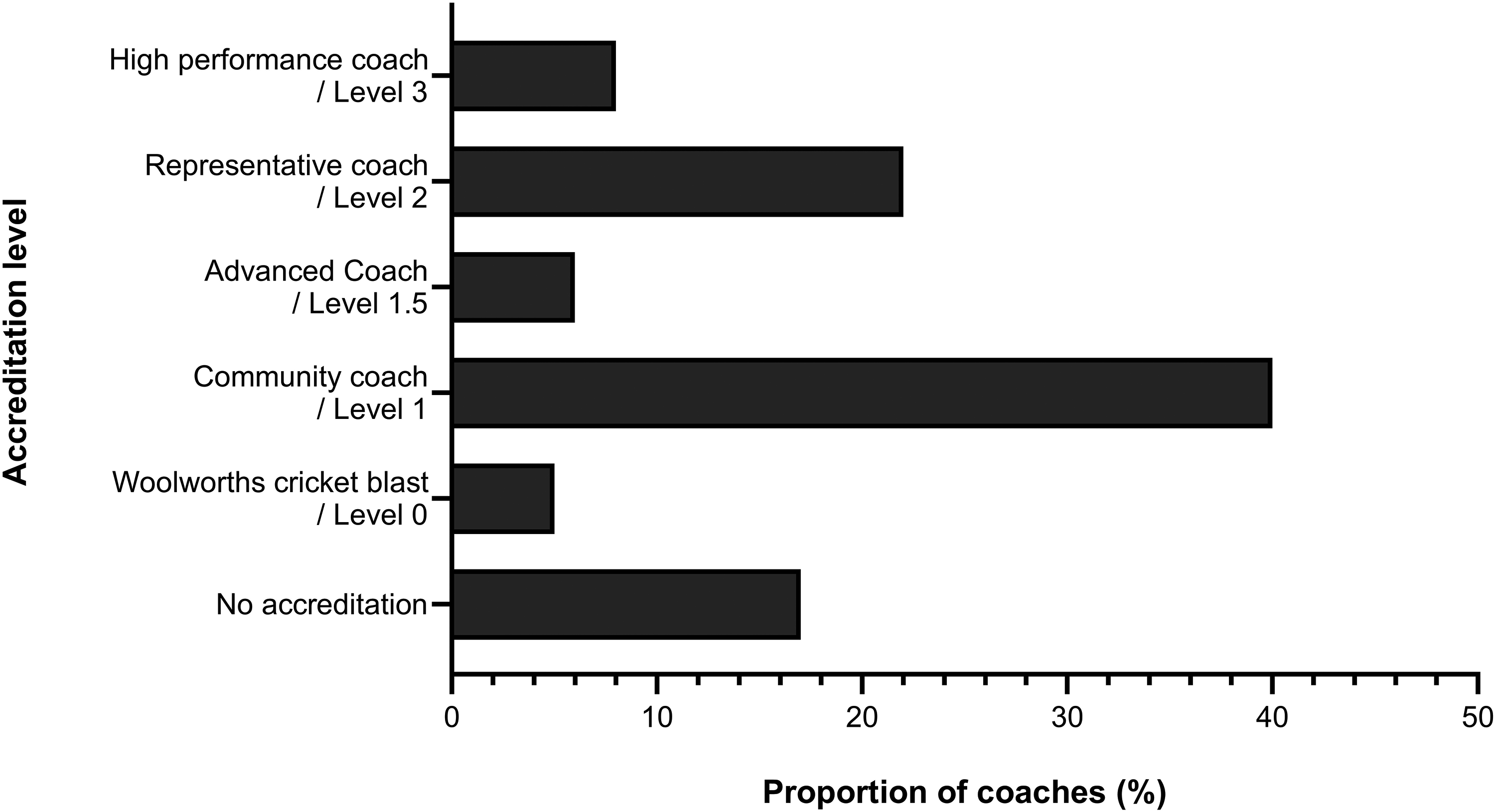
Coaches highest form of cricket coach accreditation level (100% response).
Knowledge acquisition
The most common sources of knowledge acquisition were obtained through informal learning methods. Conversations with coaches, watching cricket, and experience as players all featured as a source of knowledge for over two-thirds of all coaches surveyed (Figure 5). Formal learning such as accreditation programmes (50%) and coaching conferences (38%) were less prevalent, while peer-reviewed research was the least cited source of knowledge (22%). In the ‘Other’ category, coaches reported learning through their university education (“PhD”, or “engineering/ physics background”) and “seeking information from experts”.
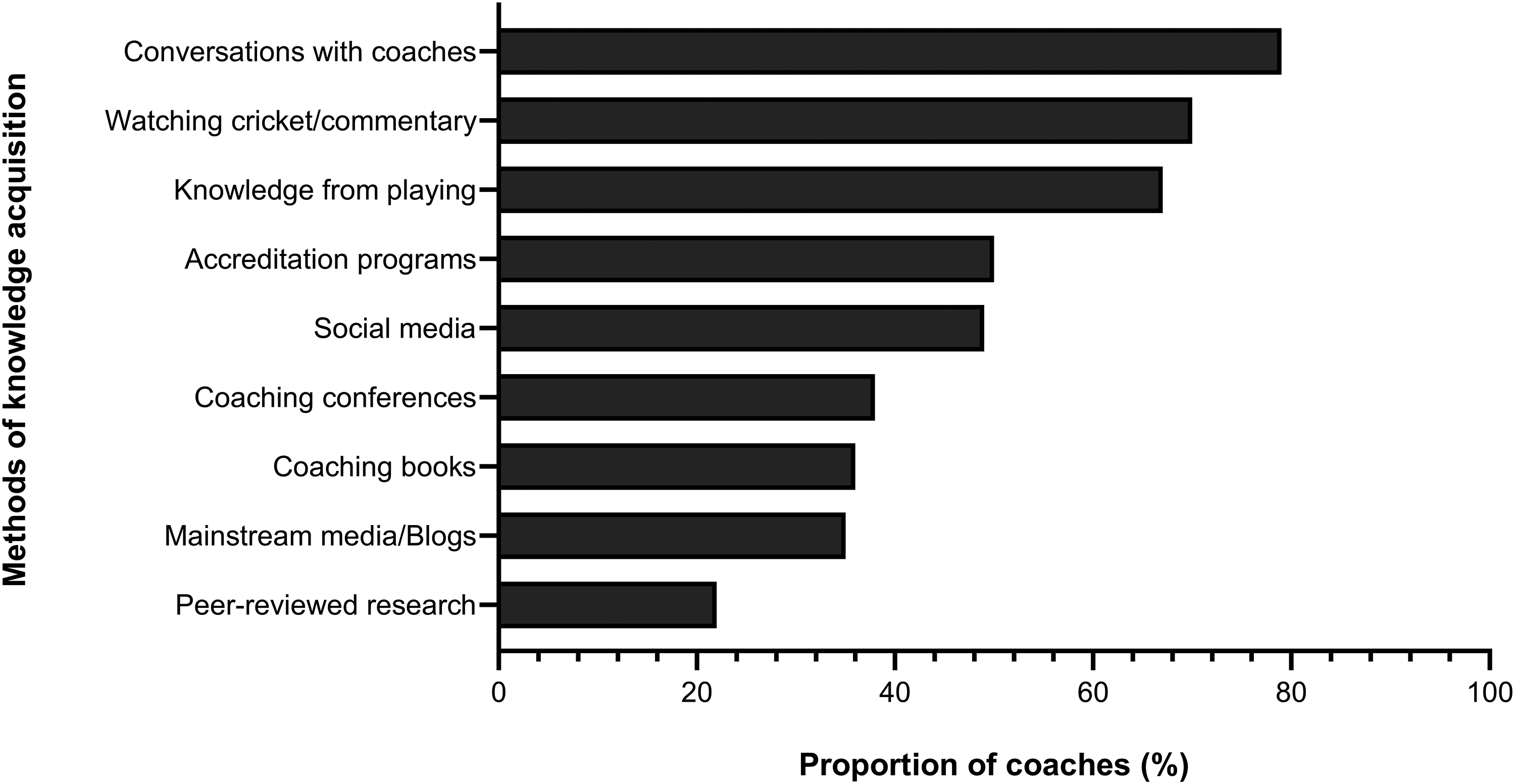
Methods of knowledge acquisition regarding pace bowling technique (multi-select) (100% response). ‘Other’: 3%.
Perceived importance
Coaches generally placed high importance on technical coaching for both performance enhancement and injury mitigation (Figure 6). Most coaches (66%) placed ‘high’ or ‘very high degree of importance’ on technical coaching to improve performance, while no coaches believed that technical coaching had no importance for performance. Similarly, 66% of all coaches believed coaching to mitigate injury is ‘high’ or ‘very high degree of importance’, while a small number of coaches (18%) perceived coaching to mitigate injury to have ‘small’ or ‘little to no’ importance.
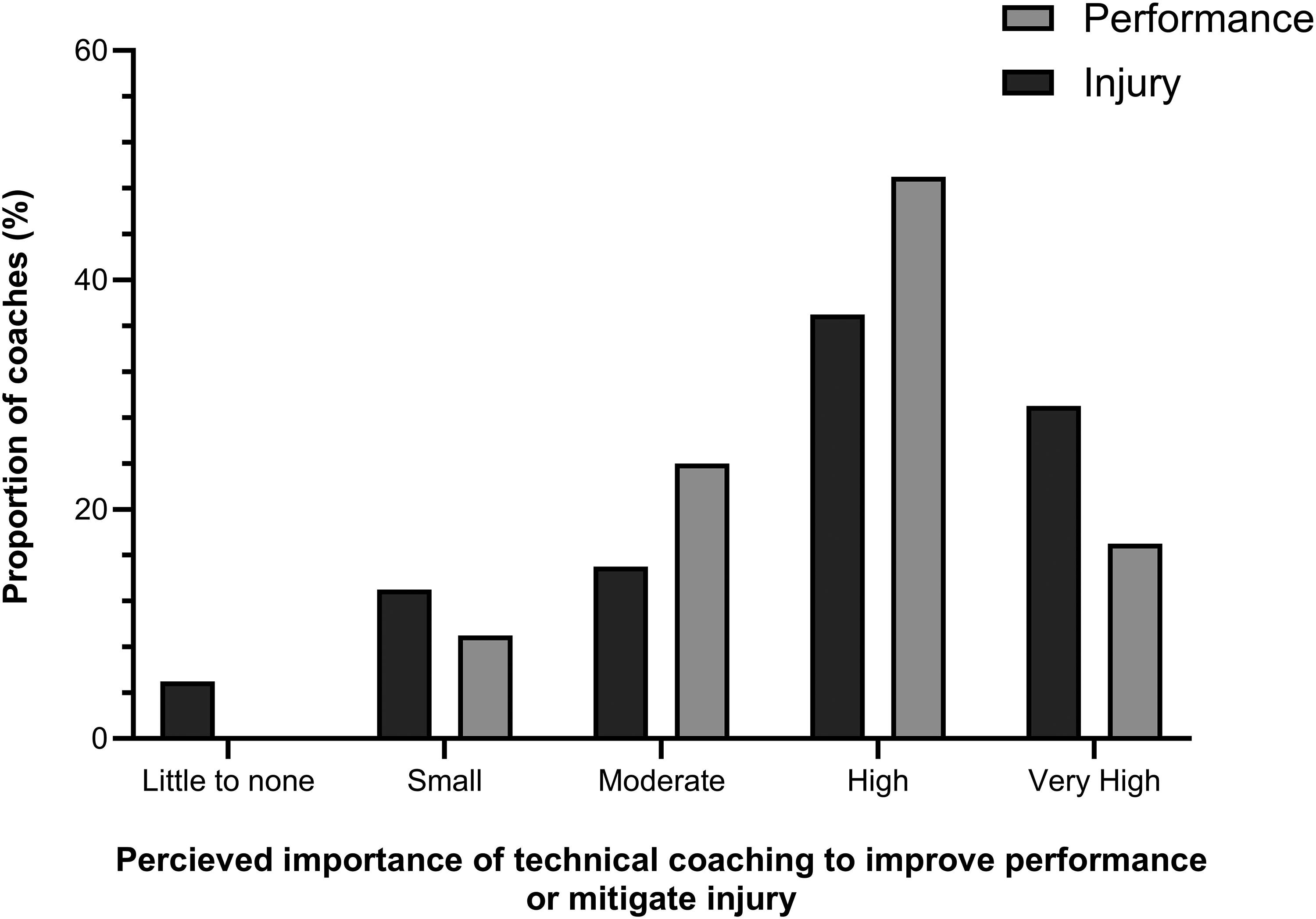
Coaches perception of the importance of pace bowling technique for injury mitigation and performance enhancement (performance: 97% response, injury: 95% response).
Knowledge satisfaction
Most coaches reported either ‘neutral’ (44%) or ‘satisfied’ (42%) perceptions of their technical knowledge of pace bowling, with the majorifty of coaches holding ‘lower’ level of accreditation (Figure 7). A smaller proportion of coaches (14%) were dissatisfied with their knowledge level, most of these coaches held a ‘lower’ accreditation (10%).
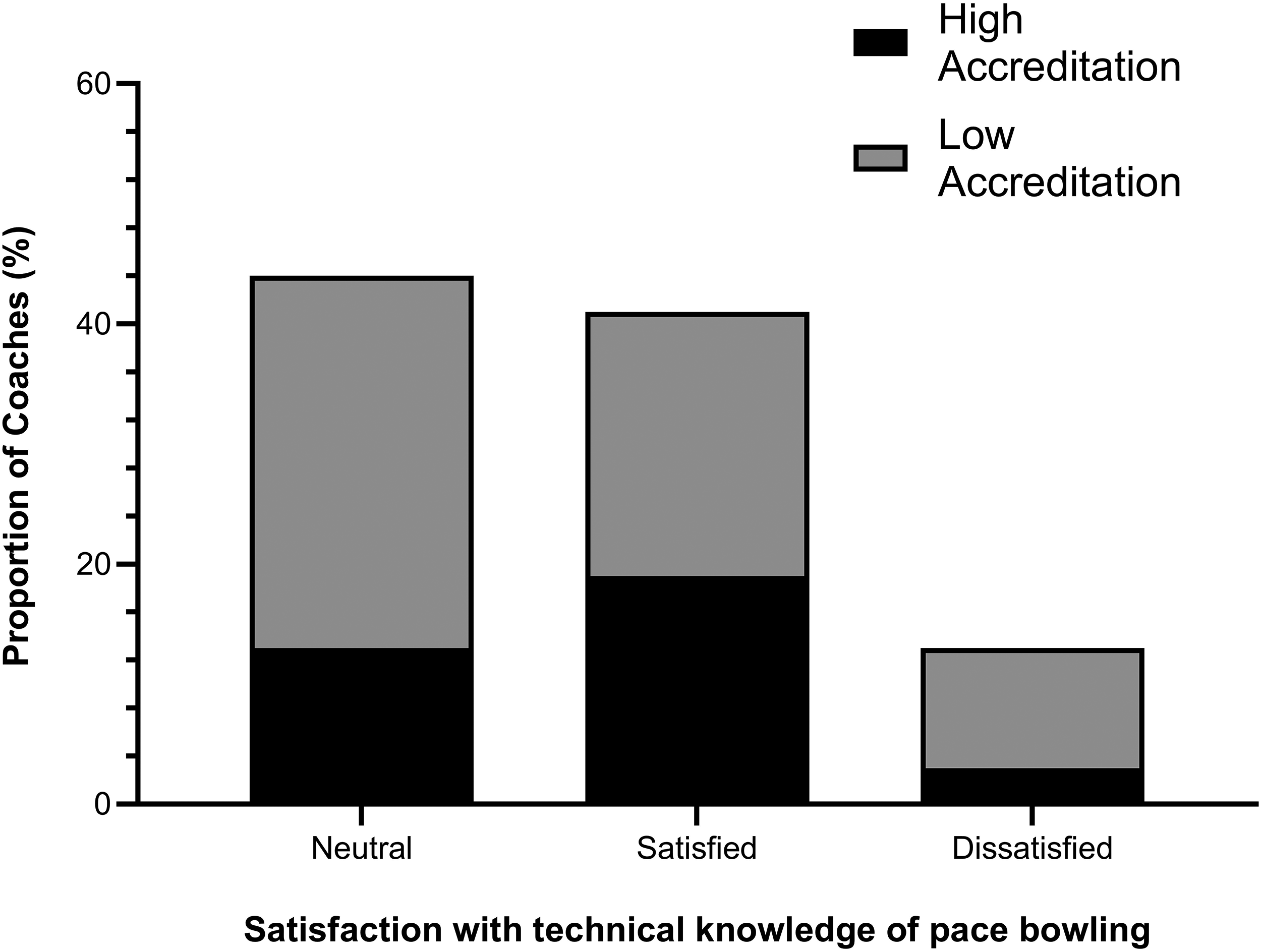
Coaches satisfaction with their level of technical knowledge with respect to their accreditation level. (100% response). Lower accreditation = No accreditation, Level 0, Level 1. Higher Accreditation = Level 1.5 Level 2, Level 3.
Use of technology within coaching
Neary one-quarter of coaches never used technology during coaching (Figure 8), and 10% of coaches used technology ‘rarely’. Of the coaches that did use technology, the most common form was video, predominantly recorded via mobile phone or tablet (73%) (Figure 9). When asked to describe what they use technology for, 96% of coach responses related to technique analysis or player feedback, such as “Provide visual feedback to the player” or “Film and review immediately with the bowler”. Three coaches (2%) described using technology to measure or look at joint angles. Of the 34 coaches (25%) who did not use technology during coaching, 62% stated lack of resources (time, money, or access to devices) as the main reason, while 24% stated players they work with are “too young” or believed that it would not benefit players due to their age.
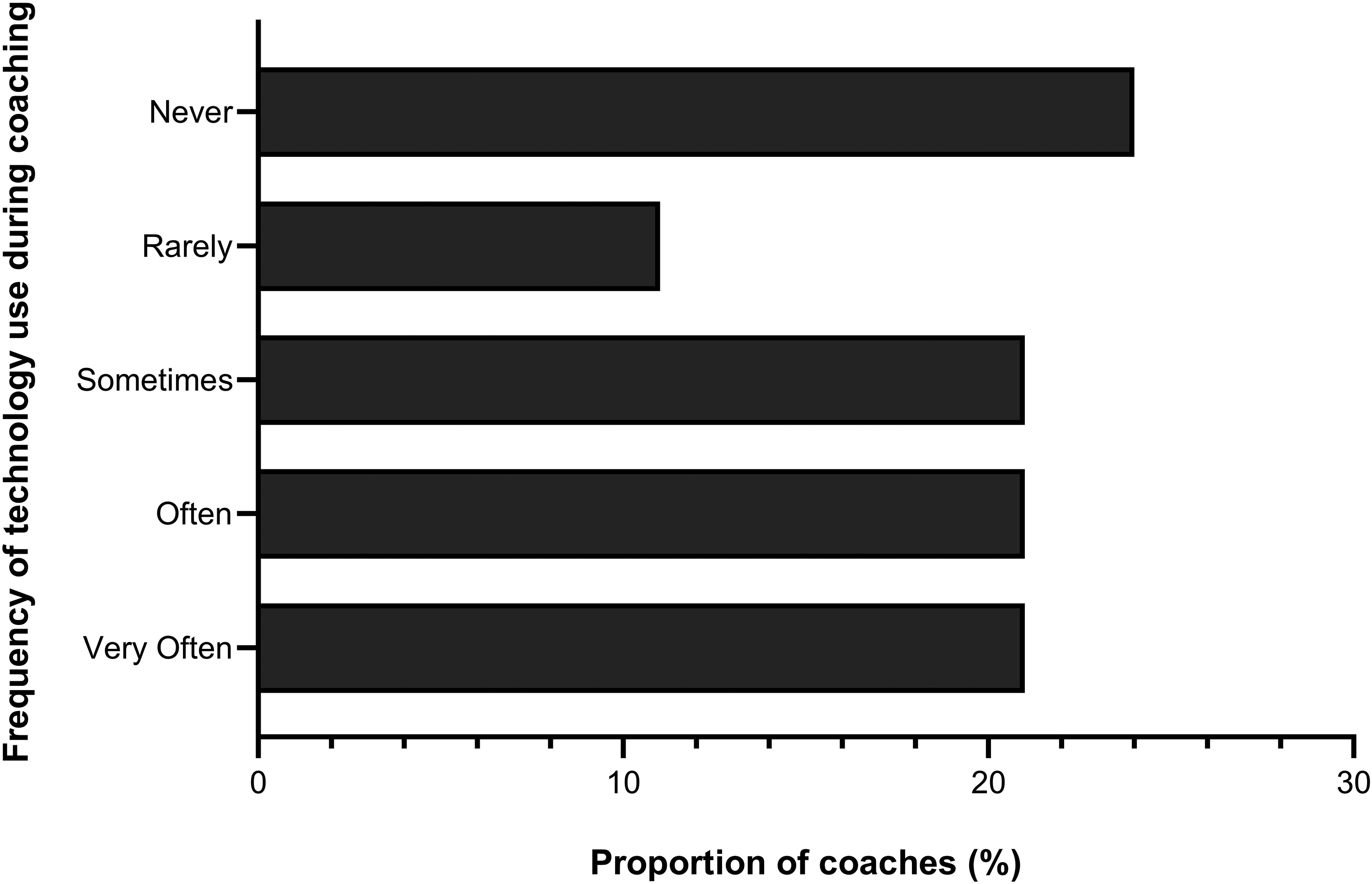
Frequency of technology used during coaching (95.1% response). Rarely (a couple times per season), Sometimes (at least once per month), Often (at least once per fortnight), Very Often (at least once per week).
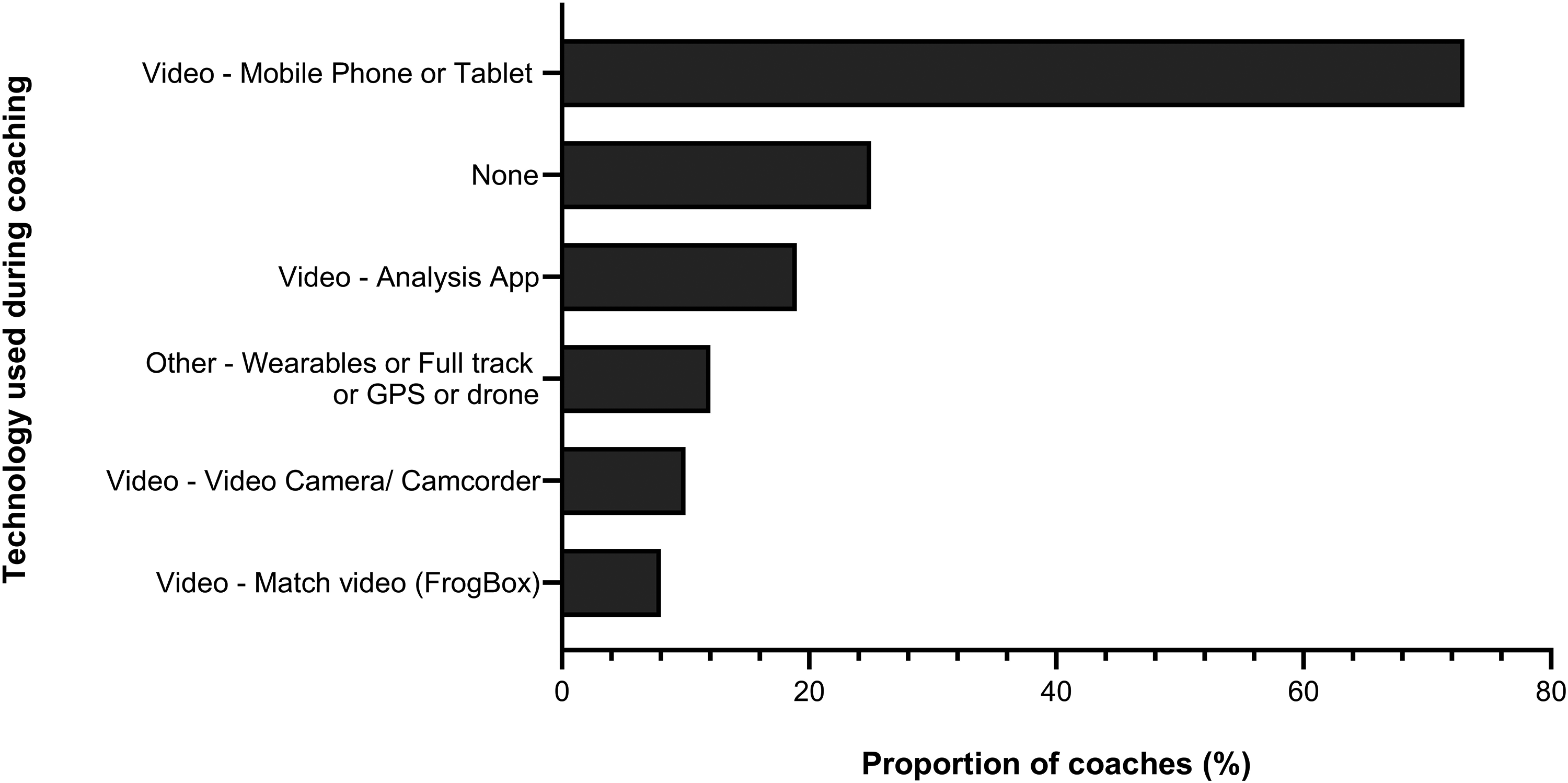
Type of technology used (multi-select) (93% response).
Discussion
The overarching aim of this study was to describe the technical pace bowling coaching practices and knowledge of community-level cricket coaches in Australia. Additionally, this study identified coaches’ sources of knowledge acquisition, coaches’ perception of the importance of technical coaching relating to performance and injury, and whether, and in what ways they used technology to support their coaching of pace bowlers. Before presenting the findings, it is important to outline contextual factors that shape how the findings of this study should be interpreted.
Cricket, particularly at the community level, is steeped in tradition. As a culturally rich and prevalent sport in Australia, cricket playing experience remains a readily accessible source of knowledge for coaches (Figure 5). 27 By extension, coaching often relies heavily on informal learning opportunities such as observing other coaches, (uncritically) recreating the drills that coaches participated in as children, and personal intuition rather than formal education or evidence-informed approaches to coaching.28,29 As such, training sessions are frequently conducted in enclosed netted environments (“the nets”), to maximise training volume while potentially sacrificing skill development.28,30
Like many other grassroots sporting contexts, community cricket coaches are often required to perform various tasks including training design, stakeholder (parent or guardian, club) and participant management, technical instruction and skill development, while also supporting emotional and behavioural development. 31 Many coaches are parent/guardian volunteers who serve as organisers, educators and mentors, mostly on their own with limited outside support from their own clubs or governing bodies. 32 These coaches must balance injury prevention and building competence (a basic psychological need according to self-determination theory)33,34 in one of the most biomechanically complex movement patterns in cricket (pace bowling), in a way that is robust enough to accommodate physical maturation across adolescence in youth contexts. The implications of a coach not intervening when movement patterns can potentially lead to injury or restrict ongoing skill development are not limited to the immediate coaching context, potentially impacting ongoing participation in sport and physical activity. 35
The majority of coaches (83%) reported engaging in technical coaching at least once per month (‘sometimes’, ‘often’ or ‘very often’), while 17% reported doing so ‘rarely’. Contrary to previous findings, 22 no coaches in this study reported ‘never’ coaching technical pace bowling, suggesting that all respondents were actively attempting to engage with players and support their technical development in pace bowling (Figure 1). The various contexts where technical coaching was reported indicate multiple opportunities to provide technical coaching, most commonly during team training (where multiple bowlers are active at once) or by specifically targeting one bowler during a team training session (Figure 2).
Two- thirds of coaches reported perceiving technical coaching as ‘high’ or ‘very-high’ importance on both performance and injury mitigation, reinforcing its perceived value at the community level (Figure 6). Notably, mitigating injury was rated as less important than improving performance. More coaches reported that coaching to mitigate injury was of ‘small’ or ‘little to no’ importance (18%) compared to coaching for improved performance (9%) which is worth noting as LBSI has a reported prevalence of up to 67% of younger pace bowlers. 16 It is possible that coaches are more familiar with technical factors that relate to improving performance as there are more known variables associated with increased BRS,1,7,13–15 compared to those linked to injury risk.1,12 Several variables related to LBSI such as increased rear knee and rear hip flexion angle at BFC have only been published in scientific journal articles recently, 12 making it unlikely that these findings have filtered down to community-level coaches. 36 Additionally, peer-reviewed research was the least reported method of knowledge acquisition (Figure 5), consistent with previous studies highlighting the disconnect between research and its implementation into coaching practice. 36
A clear misalignment between the self-assessed knowledge of coaches and their ability to articulate key technical concepts was seen across the survey. While 85% of coaches reported their technical pace bowling knowledge to be at ‘moderate’ level or above (Figure 3), free text responses revealed superficial detail about their coaching aims to enhance performance or mitigate injury. Most references included broad terms such as “technique” or “action”, with occasional reference to a specific limb (“front arm” or “bowling arm”) and no further explanation as to their functional relevance. While the free text responses may not adequately reflect the depth of knowledge each coach possesses, an inability to connect technical pace bowling factors to their functions despite a self-perceived ‘moderate’ or ‘high’ level of technical pace bowling knowledge is worth noting. Here, one must consider the Dunning-Kruger effect: previous research has demonstrated its prevalence in sports coaching, 37 suggesting that an inability to recognise one's own incompetence can lead to inflated self-assessments. 38 Although the current findings cannot definitively support the presence of such an effect here, there are some similarities seen in this misaligned self-perceived knowledge and limited technical descriptions. This misalignment suggests that some specific knowledge regarding pace bowling technique is present, but perhaps to an insufficient depth and without an understanding of underpinning theoretical principles to support it. By extension, coaches may be unable to critically evaluate and deepen their understanding, as their high confidence in the technical aspects of pace bowling may inadvertently limit their pursuit of further knowledge.
One of the most frequently referenced technical factors was the ‘run up’ phase, aligning with prior research into technical coaching practices. 22 Run-up velocity has been found to be a significant contributor to ball release speed in multiple biomechanical studies, with findings showing strong positive correlations between final run-up velocity and BRS across male and female cohorts.1,7,8,39,40 Several plausible explanations may account for run-up being most referenced in coach responses. First, the run-up is highly observable, meaning coaches can compare the speed (velocity) that a bowler creates during this phase of a delivery. This may be due to the run-up accounting for most of the time within the bowling sequence, and because it involves a cyclic, largely single-plane motion, unlike the complex multi-plane motion of the delivery stride. Second, coaches may have developed intuitive awareness of the association between faster run-up speed and faster BRS through their own playing and coaching experience, as well as exposure through social media and television broadcasting of professional cricket, listed as common sources of technical pace bowling information (Figure 5).
For technical factors that are more difficult to observe with the naked eye, technology may help coaches bridge the gap between what is easily viewable and factors that require deeper analysis. A large proportion of coaches reported using mobile phones or tablets to support their coaching practice (Figure 9), primarily for reviewing bowling technique. This aligns with previous research citing the use of technology (video cameras, smartphones) to provide visual feedback during coaching. 24 Technology enables coaches to capture human movement in ways that can be slowed down, replayed, and overlaid with other visual information such as joint angles and boxes or lines to observe factors like lateral flexion. This clarity can assist with targeted technical feedback for performance enhancement and injury mitigation. Despite this, 25% of coaches reported never using technology (Figure 8), and only a small proportion of coaches mentioned using a motion analysis tool (application) to assist with this process. Just three coaches detailed analysing joint angles. This suggests a disconnect between the availability of technological tools and their uptake within community-level coaching, 41 potentially due to limited awareness of these tools, uncertainty about their use, or a lack of experience in applying them to technical coaching contexts. The integration of technology by most coaches (Figure 8) for visual feedback may indicate a deeper understanding of biomechanical and technical factors than initially reported in the free text responses of this survey. However, the inability to articulate these concepts suggests that technology use remains superficial. Given that technology acts as an assistive tool for identifying and applying biomechanical or technical factors of pace bowling, formal learning opportunities could help to integrate technology within community coaching to maximise its use within this context.
While technology may be a valuable tool for coaches to identify technical features, its impact is dependent on the depth of understanding with which it is applied. Superficial knowledge about pace bowling technique can have major implications for athlete performance and injury mitigation. Coaches lacking awareness of key technical variables may not step in and provide technical coaching to athletes who may benefit from it, or when they do, it might not be relevant to these objectives. Beyond run-up velocity, several variables have been shown to positively correlate with faster ball release speed. These include the angle of the bowling arm at FFC (commonly referred to as delay of the bowling arm), minimising flexion of the front knee after FFC, and increasing the amount of flexion of the trunk between FFC and ball release.6,42 Additionally, factors such as lateral trunk flexion and collapsing of the back hip or knee (commonly seen together), are highly correlated with lumbar spine bone stress injuries.1,12 The superficial knowledge captured in this survey suggests that community-level cricket players may be missing out on performance development opportunities, while also facing potentially greater injury risk if they continue bowling with suboptimal mechanics.43,44
A plausible contributing factor to the superficial knowledge observed in this survey could be the limited biomechanical or technical content embedded within coach education programmes targeting community cricket coaches within Australia (e.g., Community Coach Accreditation [Level 1]). These accreditation programmes primarily focus on “junior development principles, strategies, and resources to foster an enjoyable and engaging junior cricket playing experience”, 45 and are designed as formal learning opportunities that are scaled to the level of participant (i.e., coaches working with junior cricketers to complete Community Coach Accreditation). While these aspects of community sport coaching are important, the absence of content addressing biomechanical or technical foundations of pace bowling means coaches attending such accreditation courses are not exposed to the technical pace bowling concepts they may need to effectively support athletes. Within the current accreditation pathway, technical pace bowling variables (related to performance and injury such as front knee flexion angle or trunk lateral flexion angle) are only addressed at the High Performance (Level 3) accreditation course,46,47 which are reserved for coaches working with athletes at the highest levels of competition. 48 As such, there are limited opportunities for community coaches to access quality formal learning opportunities that include the technical and biomechanical concepts for pace bowling, at an appropriately scaled level for their coaching context.
Given the limited technical content within accreditation programmes, coaches are heavily reliant on informal self-directed learning opportunities to acquire their technical knowledge of pace bowling. This was most commonly through seeking information from social media, talking with other coaches, watching television broadcasts and listening to the commentary, or their own experiences of playing cricket (Figure 5). This aligns with previous research in coaching49,50 where the accessibility of these resources may make them more attractive to volunteer coaches over formal learning opportunities such as accreditation courses that require greater time and financial commitments. 49 Informal self-directed learning is typically used by intrinsically motivated coaches to overcome practical coaching dilemmas and evolve their coaching practice, with most informal methods of learning occurring within the coach's local environment.33,50 The sources of information cited here, from television broadcast commentary and social media to personal playing experience, offer a level of diversity that may deviate from the biomechanical and technical foundations of pace bowling. How coaches specifically apply the information they gather through informal learning opportunities is beyond the scope of this survey, but the superficial knowledge captured through the free-text responses suggests that the ‘learning’ element of informal learning may not be consolidated, as the descriptions of coaching actions related to biomechanical and technical pace bowling were superficial at best.
The localised connection of informal learning opportunities complements some of the shortcomings of formal education, which is often characterised by a level of standardisation that limits contextual relevance for each coach. Concurrently, informal learning opportunities are limited to the depth and breadth of knowledge in these local communities and an individual's analytical and critical abilities. 51 Informal learning opportunities are often used by coaches to gather information on and develop strategies for practical coaching dilemmas, such as supporting the development of biomechanical and technical factors of pace bowling. It is incredibly difficult to critically appraise the diversity of information encountered on social media, through peer discussion, and presented in broadcast commentary, when the coaching dilemma itself is poorly conceived. Without structured support to build reflective practice, identify knowledge gaps, and find reliable information to fill these gaps, it may be difficult for community coaches to evolve their practice to improve player performance and mitigate injury risks.
Coaches have previously identified that a key barrier to technical coaching is a lack of knowledge, skill and experience. 22 In this study, 63% of coaches held an accreditation level of Community Coach (Level 1) or below (Figure 4), suggesting that coaches may have had very limited or no exposure to technical or biomechanical concepts relating to pace bowling, and limited opportunity to develop their coaching skills in this area. As such, coaches may primarily have informal self-directed learning opportunities, potentially restricting the depth and breadth of their knowledge. In line with this research, 22 the ‘moderate’ or above level of self-perceived knowledge for this cohort may be the reason why technical engagement was also relatively high. Conversely, the superficial knowledge demonstrated in the free text responses when asked to expand on biomechanical and technical factors of pace bowling raises questions about what these technical coaching interactions focused on. Notably, the satisfaction levels reported by the cohort differed across the levels of accreditation (Figure 7), where the largest dissatisfaction in knowledge of pace bowling was cited by those with a Community Coach Accreditation (Level 1) or lower. This dissatisfaction with pace bowling knowledge may be compounded by the lack of exposure to appropriately scaled biomechanical and technical knowledge and predominant reliance on informal self-directed learning. In particular, 44% of coaches reported a ‘neutral’ satisfaction regarding their knowledge of pace bowling in relation to their coaching level, suggesting a level of nonchalance that does not align with the level of self-directed learning warranted for the consolidation of informal learning opportunities.
To complement the abundance of informal learning opportunities that coaches are already engaging with, reflective and critical practice could be the focus of accreditation courses. As biomechanical and technical factors are currently absent from the courses that are most relevant to community cricket coaches, appropriately scaling this information so that it becomes more contextually relevant is key. This could be implemented through coaching workshops, for example focusing on a small number of variables and teaching a coach how to use technology to conduct simple measurements of variables such as front knee flexion angle at FFC and BR, and trunk lateral flexion at BR. Based on the superficial knowledge featured in the free text responses of this survey, a deeper exploration of the ‘run-up’ phase and the functions of associated limb structures (bowling and non-bowling arms) could support coaches in their technical coaching interventions for performance and safety. For instance, focusing on being “smooth and straight” while running towards the crease simplifies factors such as momentum towards the target and through the crease, excess lateral flexion, and developing a repeatable action that suits the individual's movement capabilities. Importantly, a criticism of formal learning approaches like accreditation courses is that coaches often participate in the activities as players, rather than actively coaching; inviting a junior cricket team along to be the participants that coaches can support would create a more contextually relevant interaction in a decontextualised space. Additionally, the content from the accreditation course could be condensed into social media content for coaches to (re)discover beyond the course, and a workshop that connects local clubs together could focus on practical coaching dilemmas of pace bowling coaching with support from a senior coach or educator to further complement the course.
Limitations
The cohort generally comprised of middle aged to older male coaches from metropolitan regions, with the largest proportion of respondents coming from Victoria. As cricket operates within a federated governance model where each state and territory is individually responsible for the delivery of coach education and development, 52 the lack of geographical and gender diversity in this cohort may not reflect the broader population of community cricket in Australia. While the researchers did seek out responses from coaches across the whole of Australia, the large concentration of cricket clubs based in Victoria compared to other states and territories, as well as the local reach of the research team (being based in Victoria) may explain the geographical concentration of participants. Therefore, the findings of this study are most representative of community level coaching within Victoria, Australia, and the geographic concentration should be considered when interpreting and generalising the findings.
A cross-sectional survey design also includes methodological limitations. A cross-sectional design captures responses at a single time point, limiting insight into change over time or ongoing development. As this study used convenience sampling and participation was voluntary, there may be an overrepresentation of coaches with strong opinions or vested interest in the subject, while underrepresenting coaches who felt less confident or motivated to contribute. 53 Self-reporting also relies on participants to answer questions honestly, which introduces the possibility of social desirability bias. 54 While the survey questions did attempt to provide some context or examples of what a response meant, for example providing a blurb regarding each ‘level of knowledge’ about the pace bowling action, coaches still may have varied perceptions of the interpretation. Additionally, this survey also features free-text response questions to gain deeper insights from participants but requires high participant motivation to provide a detailed response. 55 While the free text-response offer valuable insight, analysis is limited to what was explicitly written, which may not encompass the full extent of a coach's knowledge or practice. Despite best efforts to keep the survey brief and time efficient, survey fatigue may have affected participant motivation and therefore limited the quality and true accuracy of the responses or potentially caused participant dropout.
Conclusion
This study provides insights into technical coaching practices of community-coaches relating to pace bowling, the perception of their knowledge, methods of knowledge acquisition, as well as what technology they use during their coaching and how they use it. The findings reveal that community-level coaches are attempting to engage in technical coaching, they perceive technical coaching to be important for improving performance and mitigating injury, and they generally perceive their technical knowledge of the pace bowling action to be high. However, coaches provided only superficial detail about their coaching practices with minimal reference to biomechanical terminology, likely due to most coaches having ‘lower’ levels of accreditation and developing most of their knowledge through informal methods. Most coaches suggested they currently use technology during their coaching of pace bowlers, although at varying frequencies, but provided limited insights into exactly what variables they look at or how the technology is used. It is recommended that community cricket coaches are supported with resources that improve their understanding of technical pace bowling and therefore improve their capacity to meaningfully develop players from a young age, while also mitigating risk of injury.
Supplemental Material
sj-docx-1-spo-10.1177_17479541261421423 - Supplemental material for Community cricket coaches are ill-equipped for technical coaching of pace bowlers: A survey of Australian coaches
Supplemental material, sj-docx-1-spo-10.1177_17479541261421423 for Community cricket coaches are ill-equipped for technical coaching of pace bowlers: A survey of Australian coaches by Andrew RJ Cronwright, Alex Lascu, Kris Hinck, Claire Kenneally-Dabrowski, Dan B Dwyer, and Simon A Feros in International Journal of Sports Science & Coaching
Footnotes
Acknowledgements
We are grateful to the research participants who contributed to this study. We also thank the reviewer for their constructive feedback, which helped strengthen the manuscript.
ORCID iDs

Authors’ contributions
AC: Conceptualisation, Data Collection, Formal analysis, Writing – original draft, Writing – review & editing, Project administration. SF: Conceptualisation, Methodology, Formal analysis, Writing – review & editing, Visualisation, Supervision, Project administration DB Dwyer: Conceptualisation, Methodology, Formal analysis, Writing – review & editing, Supervision, Project administration. CKD - Conceptualisation, Methodology, Writing – review & editing, Supervision. KH - Conceptualisation, Methodology, Writing – review & editing, Supervision. AL - Conceptualisation, Methodology, Writing – review & editing, Supervision.
Ethical considerations
Ethical approval was granted by the university's ethics advisory board (approval number: HEAG-H 90_2024).
Consent to participate
Informed consent to participate was obtained electronically, with all individuals required to indicate consent via a tick box prior to commencing the survey.
Consent for publication
Not applicable. The study did not collect any identifiable personal data, images, or videos requiring consent for publication.
Funding
The authors disclosed receipt of the following financial support for the research, authorship, and/or publication of this article: This work was funded by a Deakin University Postgraduate Research Scholarship.
Declaration of conflicting interests
The authors declared no potential conflicts of interest with respect to the research, authorship, and/or publication of this article.
Data availability
In accordance with the consent agreement used, and in recognition of the minimal risk of participant identification, the raw datasets generated and analysed are not accessible outside the research team. Aggregated or de-identified data may be made available from the corresponding author upon reasonable request and subject to institutional approval.
Supplementary material
Supplementary material for this article is available online.