



Abstract
Given its popularity and large market value, professional basketball has attracted increased academic attention over the past few decades. We employ the Extreme Value Theory (EVT) to compare two almost unreachable records in NBA: all-time and 10-time season scoring champions. The surpassing probabilities for each record were measured using EVT. We find that the surpassing probability of the NBA all-time scoring champion is more than eight times higher than the surpassing probability of the NBA 10-time season scoring champion, indicating that the latter is the more unlikely record.
Introduction
Sports have a great economic, political and cultural influence on daily life. The global sports market had a value of $459 billion in 2019 and is expected to reach $826 billion by 2030. 1 In more than 3,000 sports around the world, 2 basketball is among the most popular ones. According to Adam Silver, the current commissioner of the National Basketball Association (NBA), NBA’s revenue was over $10 billion in the 2021/22 season. Given its popularity and large market value, professional basketball has attracted increased academic attention over the past few decades. There are various topics in the field of basketball data analytics: modeling score processes,3–5 identify momentum,6–8 player and team performance evaluation,9–14 position performance assessment,15–17 home-court advantage analysis,18,19 and the impact of team physical characteristics, 20 just to name a few. For a comprehensive overview of these domains, we refer to systematic reviews such as Courel-Ibáñez et al. 21 and Chen et al. 22
To the best of our knowledge, there are few articles focusing on single achievements, which are nevertheless striking: Wilt Chamberlain scored 100 points in a single game on March 2, 1962; Earvin Johnson won the NBA Finals Most Valuable Player Award during his rookie season (1979/80); Stephen Curry broke 300 three-pointers barrier and made 402 three-pointers in the 2015/16 season; Michael Jordan led the NBA in scoring 10 times. Even after many years, people still discuss and honor these achievements in the NBA history.
On February 7, 2023, LeBron James broke Kareem Abdul-Jabbar’s NBA all-time scoring record of 38,387 points which remained unbroken for 38 years (James’ record is 38,424 up to the end of Feb 2023), and the game was unprecedentedly stopped for a brief ceremony. LeBron James was excited about this achievement and said “I would never, ever in a million years dreamed it’s better than what it is tonight.” 23 When he was asked if this achievement makes him the greatest player of all time (GOAT), he answered: “…I’m going to take myself against anybody that’s ever played this game.” Before we proceed, it is important to note that we do not conduct an all-around comparison between Michael Jordan and LeBron James in this paper.
Both players have earned numerous honors throughout their careers. Their NBA championships and honors are visually summarized in Figure 1. These achievements naturally lead to frequent comparisons between them. However, such a comparison would involve too many factors and some of which are difficult to measure, e.g. dominance on the court or global influence off the court. Here, we compare the NBA all-time scoring record made by LeBron James with the 10-time season scoring record made by Michael Jordan. Even though the goal of this paper is not on the GOAT, the comparison between the two achievements obviously contributes to the GOAT debate in the scoring category in an objective manner.
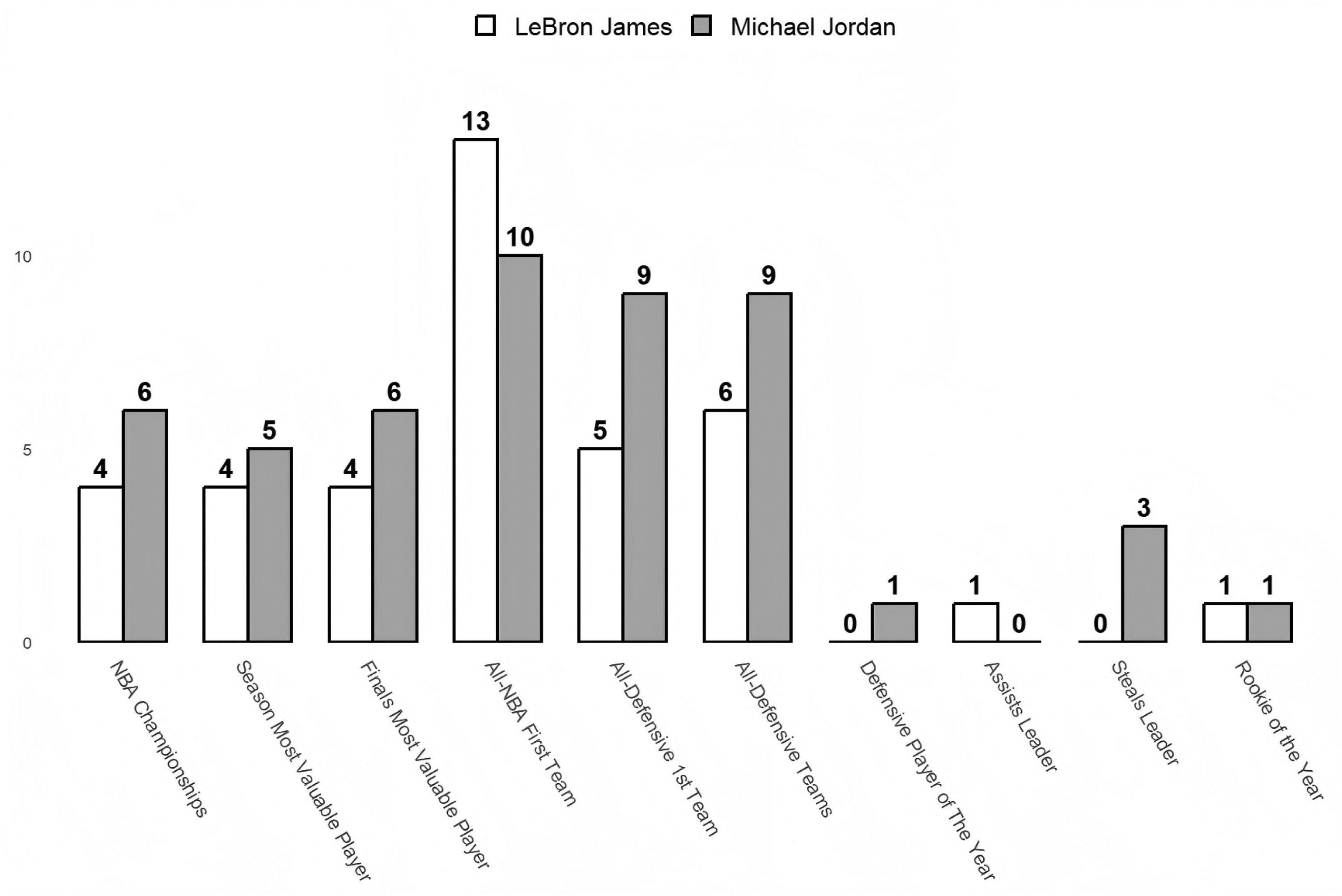
Number of NBA championships and honors earned by LeBron James (22 seasons, career ongoing) and Michael Jordan (15 seasons).
These two almost unreachable achievements are extremes. Thus, we use the Extreme Value Theory (EVT) to measure how unlikely these records are. Specifically, we calculate the probability of surpassing these records; the lower the probability, the more improbable the record is. For a comprehensive review of EVT, we refer to Gomes and Guillou. 24
The article is organized as follows. Section “Statistical model based on EVT” describes the methodology and Section “Data description and results” presents the data and results. Section “Discussion” provides the discussion and conclusions.
Statistical model based on EVT
Our method employs EVT to investigate the basketball players’ achievements, similar to the approach used in the early work of Einmahl and Magnus, 25 which applied EVT to predict sport world records. We present a brief overview of EVT here and refer to Embrechts et al. 26 for a detailed discussion.
Let

For a fixed

The estimator for


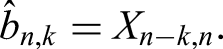
The choice of
The SP of the NBA all-time scoring champion can be estimated by Equation (1), directly with plug-in estimators provided above. The lower the SP of the record is, the more improbable is to exceed the record. The same applies to the SP of the NBA season scoring champion. However, Michael Jordan earned the title of NBA season scoring champion 10 times, which is a joint event. Although becoming the scoring leader depends more directly on all players’ performance within a specific season rather than past seasons, individual performances may still be correlated across years. To address this, we assume that the SP of one season scoring record is yearly independent conditioning on the second-highest point totals in the respective seasons. The second-highest score reflects the overall level of scoring of a season. Conditioning on this variable allows us to account for differences in scoring environments across seasons and to isolate record events from temporal dependencies.
Data description and results
In this section, we first describe the data construction and then the estimations of the SP of those two records using the aforementioned approach.
Data description
Numerous factors—including rule modifications, pace of play, and number of games–influence scoring performance and could be relevant when evaluating records. However, integrating these variables requires subjective decisions regarding selection and weighting. This study focuses on measuring the surpassing probability of records based on observed outcomes. We therefore concentrate specifically on the scoring data, following an outcome-oriented rationale: player’ scorers represent a final, integrated measure that captures the net effect of all influencing factors.
The data of NBA all-time points and regular season points are collected from NBA’s website at www.nba.com using data scraping techniques. As of February 2023, there are 4,787 players on the NBA all-time scoring list and we analyze the top half of the all-time scoring list (PTS
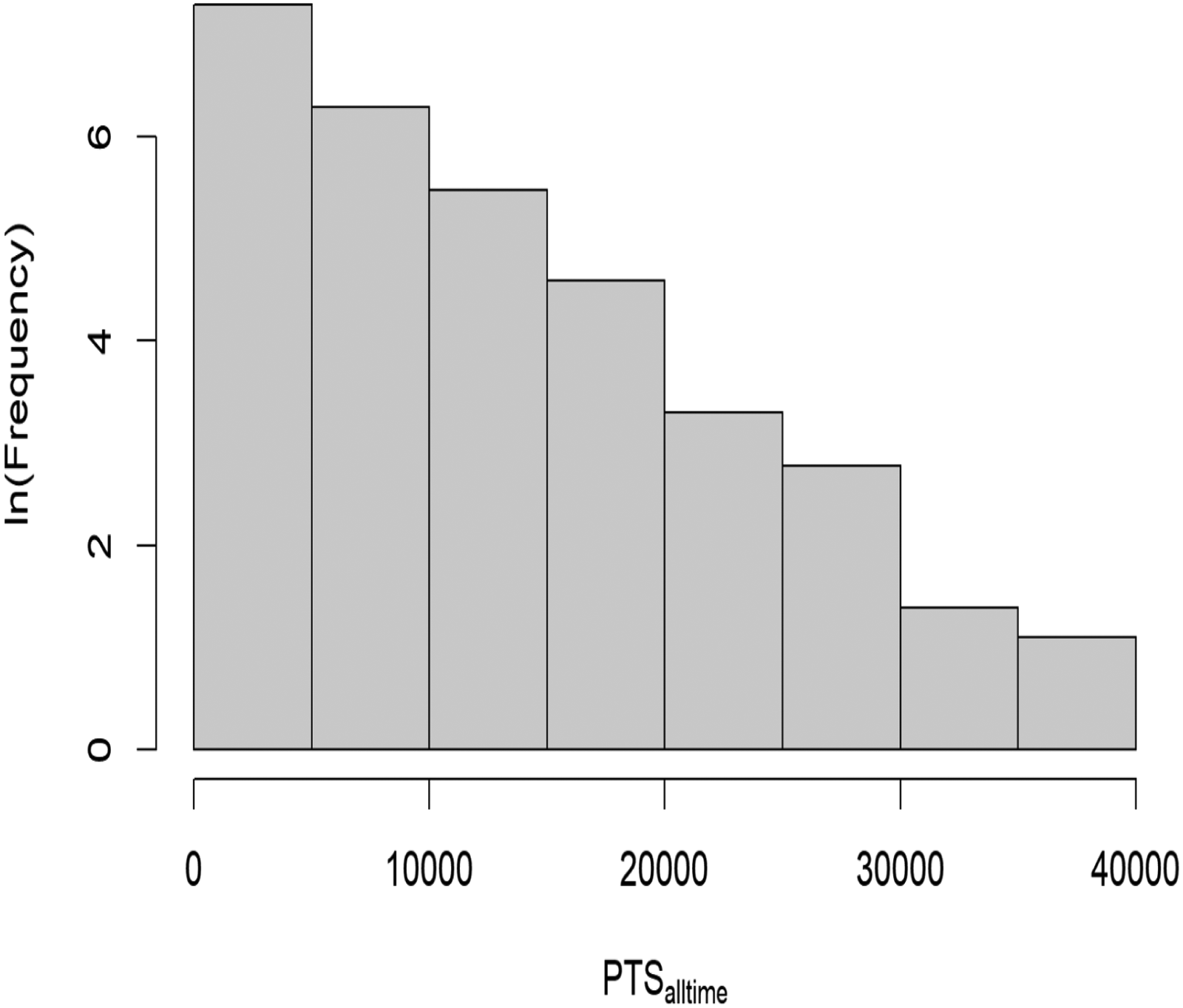
Histogram of the top half of PTS
Unlike LeBron James, who is still an active NBA player, Michael Jordan has retired. Figure 3 shows their career spans. LeBron James has played continuously since 2003, whereas Michael Jordan’s career was divided into distinct periods, including 1984/85-1992/93 seasons, 1994/95-1997/98 seasons, and 2001/02-2002/03 seasons. During the 1986/87-1992/93 and 1995/96-1997/98 seasons, Michael Jordan won the season scoring leader. The NBA scoring title is given to the player who has the highest points per game average during the regular season. To measure the SP of the NBA 10-time season scoring champion, the datasets from these ten seasons are collected. Again, we use the points per game average in a regular season, denoted by PPG
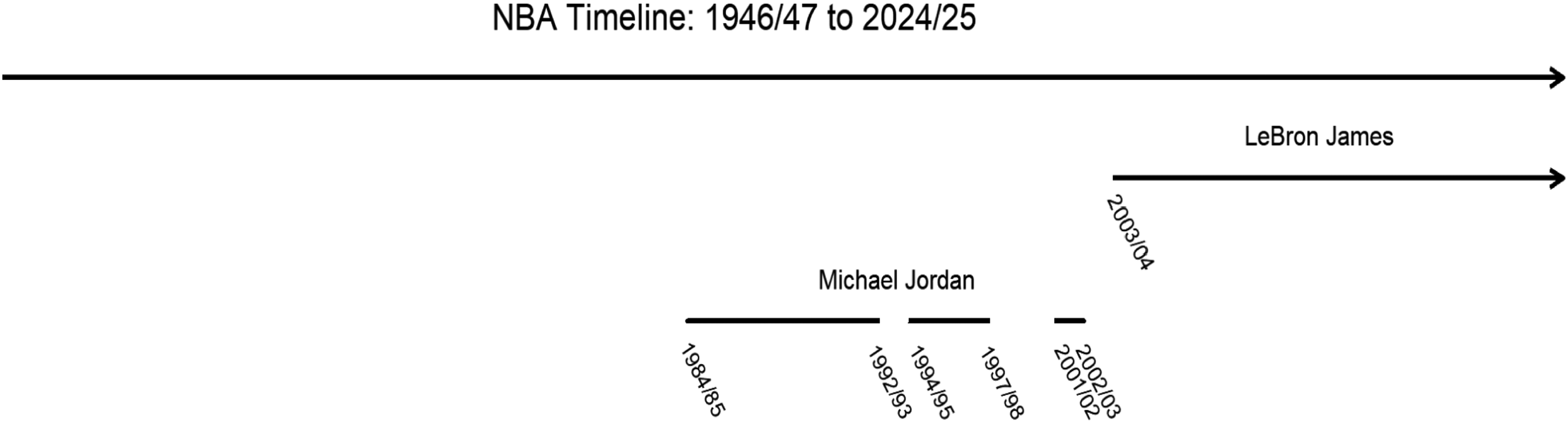
The career spans of LeBron James and Michael Jordan.
Figure 4 shows histograms of the PPG
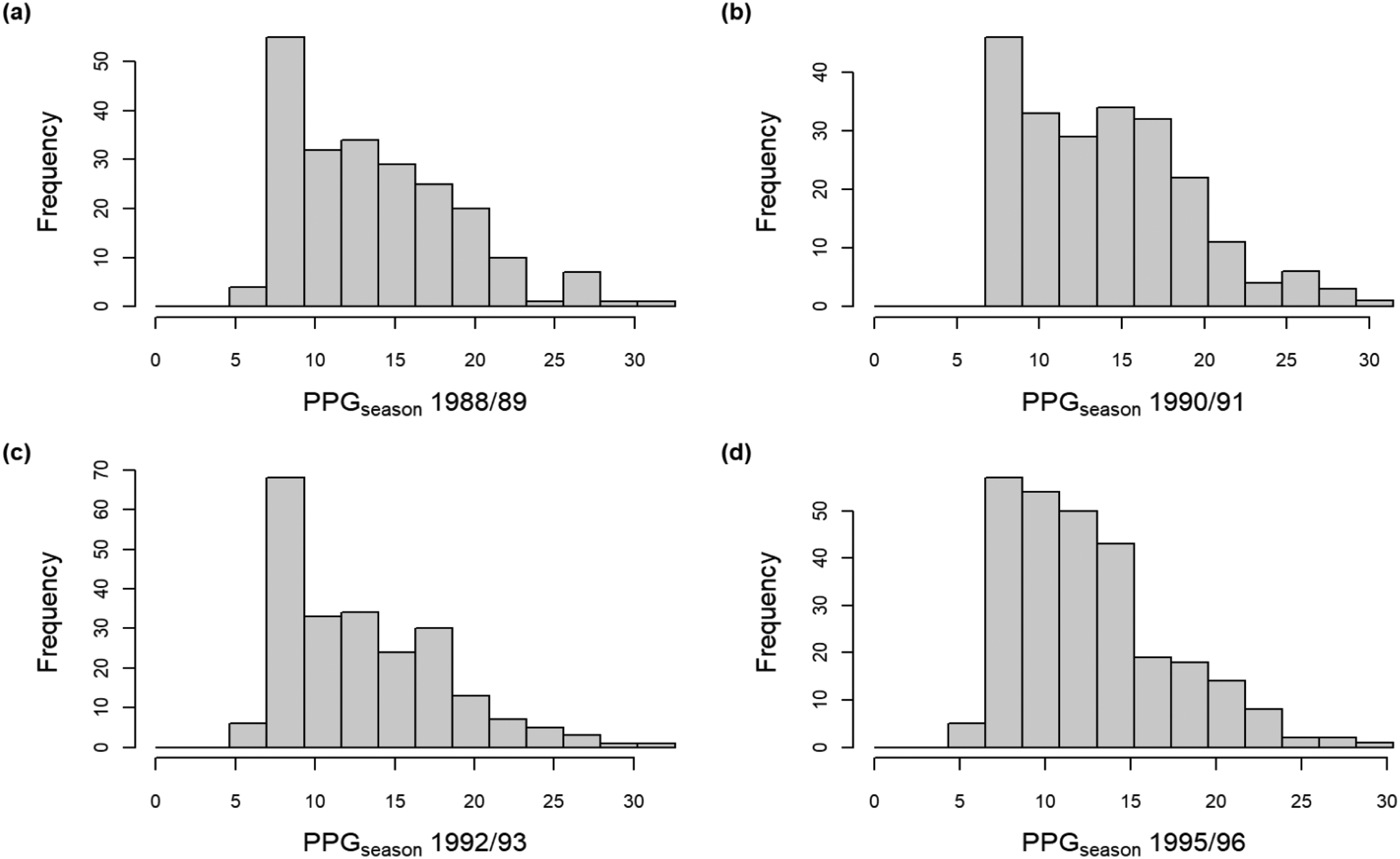
Distribution of PPG
Results
We now apply EVT to our samples to measure the SP of the NBA all-time scoring champion and NBA 10-time season scoring champion.
We first estimate
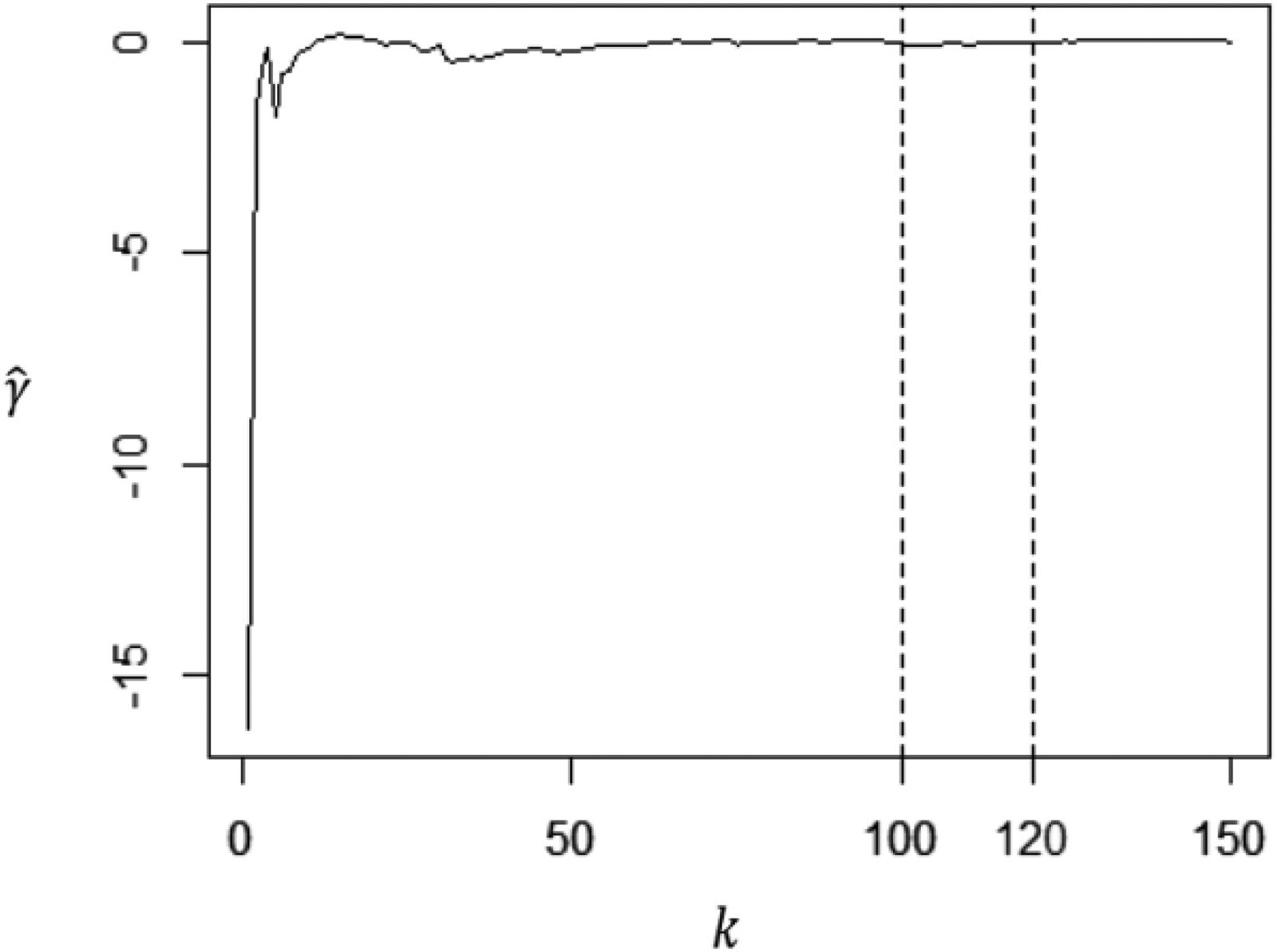
The plot of
Results for NBA scoring points.
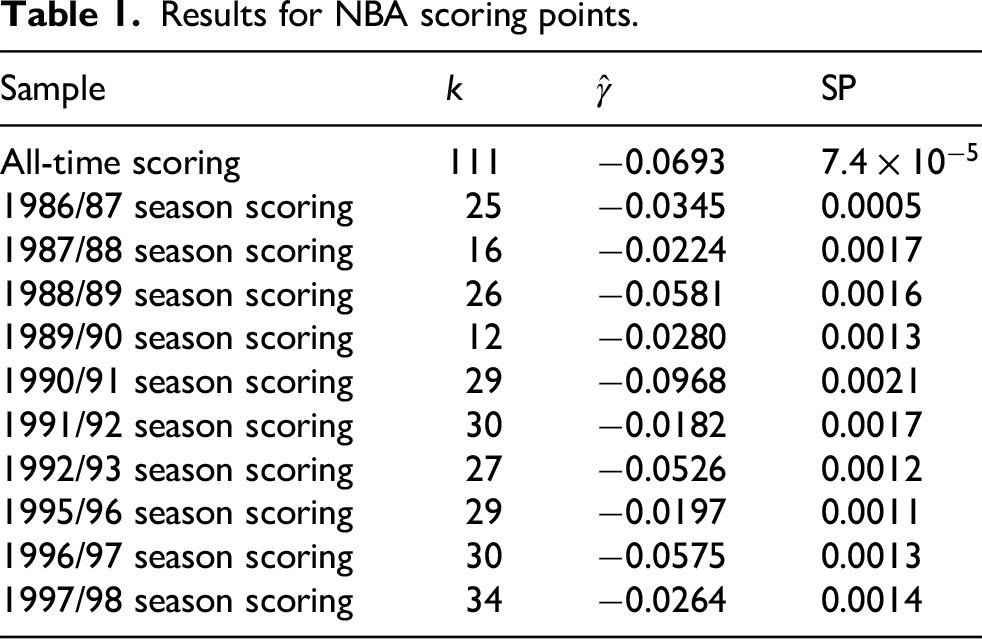
Given the value of
Table 1 also shows that the SP of the NBA all-time scoring champion is about
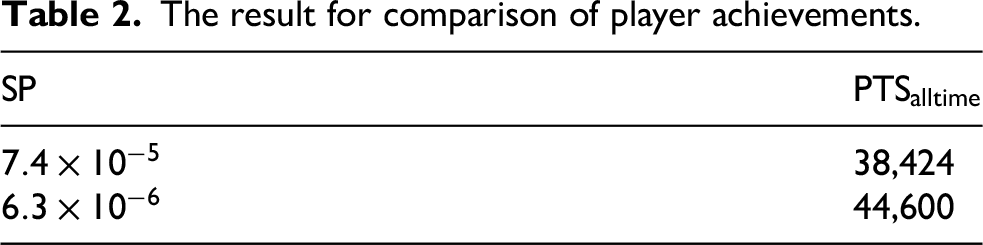
The lower the SP of the record is, the more improbable is to exceed the record. Thus, the NBA all-time scoring record made by LeBron James is more likely than the 10-time season scoring record made by Michael Jordan. Furthermore, as LeBron James is still an active NBA player, he has the opportunity to raise the SP of the NBA all-time scoring record above the SP of NBA 10-time season scoring champion. Therefore, we are also interested in how many more points LeBron James needs to reach the SP of the NBA 10-time season scoring record. The result is shown in Table 2. By making the SP of the NBA all-time scoring champion equal to
The result for comparison of player achievements.
Sensitivity analysis
To further contextualize the result, we examine the SP of the NBA’s all-time scoring record at the end of each regular season from
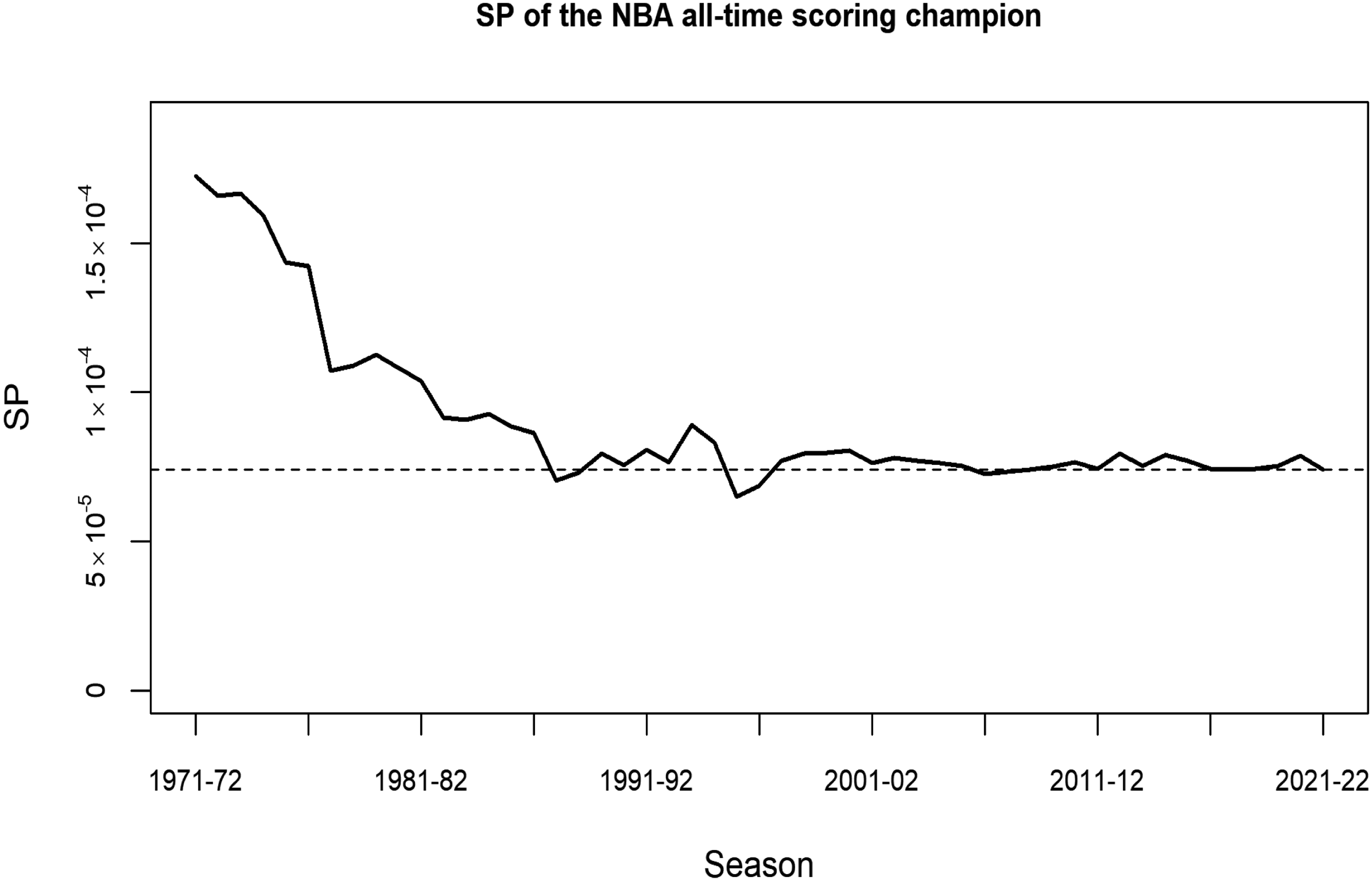
The plot displays the SP for the NBA all-time scoring at the end of each regular season from 1971/72 to 2021/22, with a dashed line indicating the value of
Although only Michael Jordan has won the NBA 10-time season scoring champion, we performed a simulation to estimate the SP of a player achieving this record. By randomly selecting 10 seasons from the 1971/72 to 2020/21 seasons over 500 iterations, we generated the results and presented in Figure 7. The period begins with the
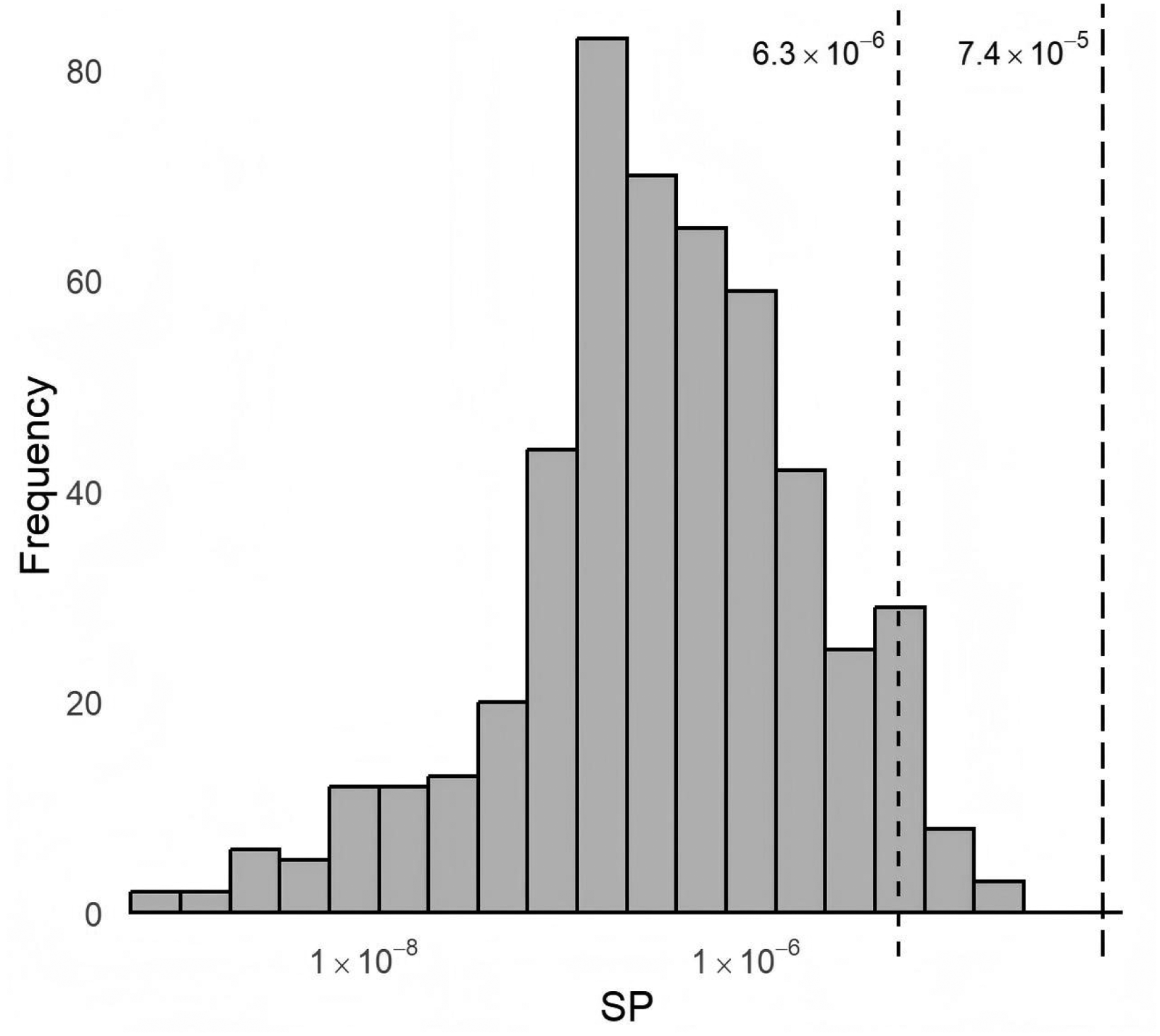
Distribution of Simulated SP for NBA 10-time scoring champion. A dashed line and a long dashed line mark the values of
The above results are derived from the top half of PTS
The result for comparison of data selection.
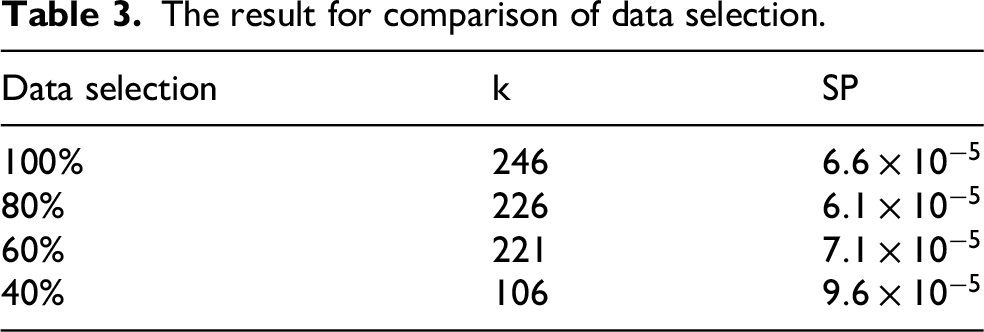
An important consideration is the sensitivity of the SP to the choice of
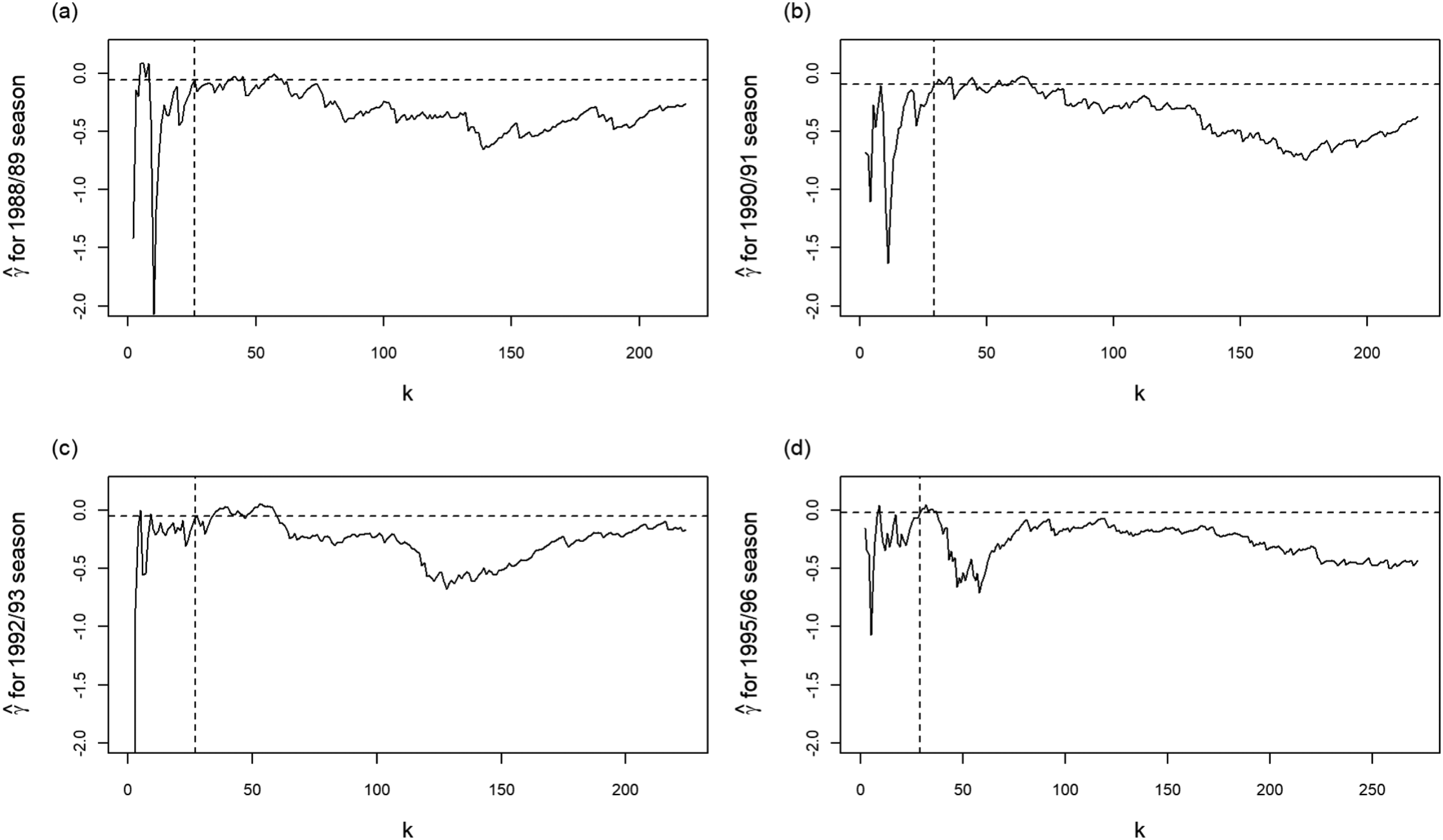
The plot of
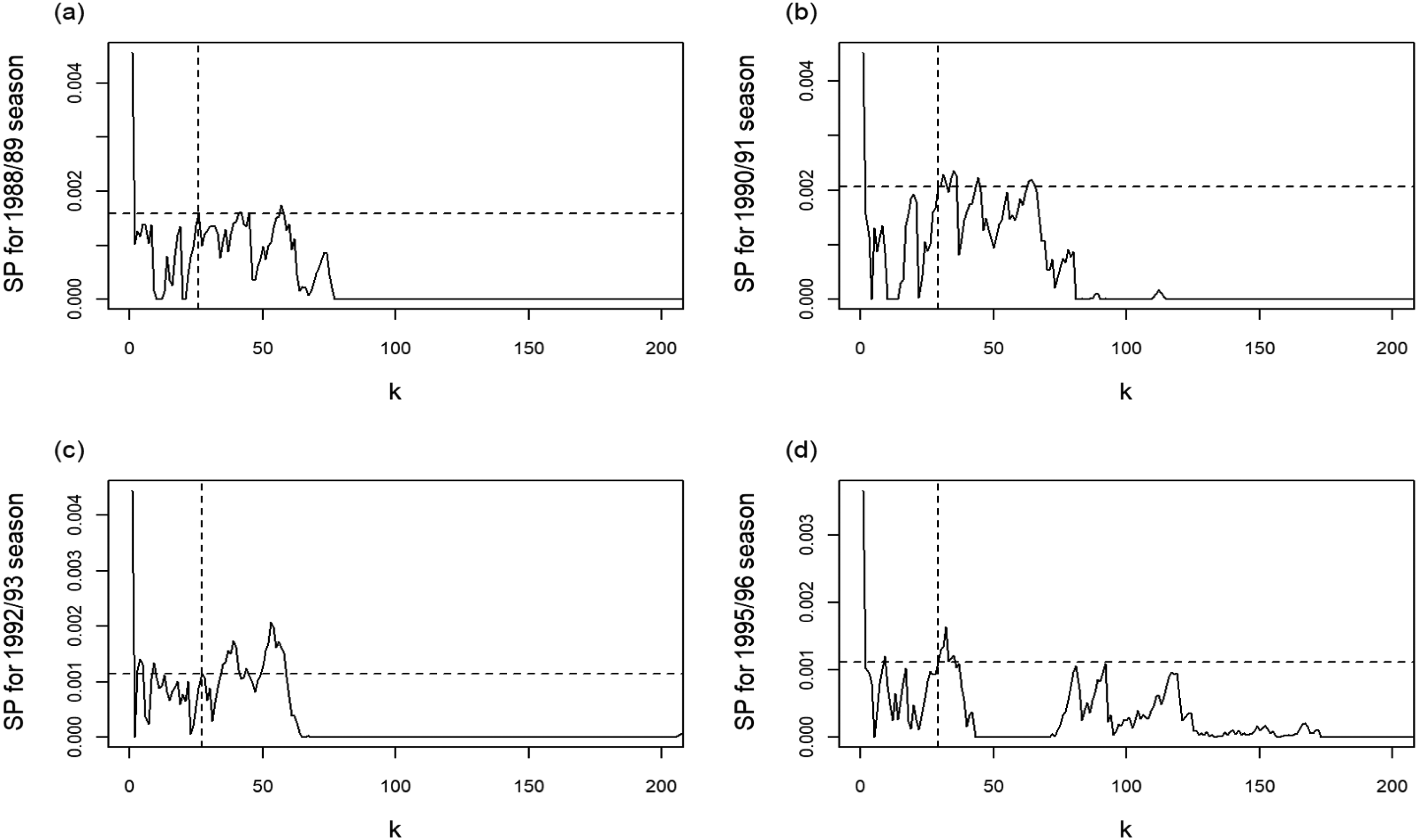
The plot of SP versus
Since each season’s top-half data contains about 250 points, the first stable region usually lies between k = 10 and 40. However, the exact position of the first stable region varies by season due to differences in seasonal scoring environments. We observe that around the vertical line in each of the plots, both
Discussion
The sport records are associated with extremes. In this paper, we apply EVT to measure how unlikely the records are by estimating the SP of the records. Given that Michael Jordan is the only player who earned the NBA 10-time season scoring champion and LeBron James holds the all-time scoring record as of 2025, we focus on these two specific, almost unreachable achievements: LeBron James’s NBA all-time scoring champion and Michael Jordan’s NBA 10-time season scoring champion. We calculate the probability of surpassing these records, which are both extremely low, corresponding to the exceptional difficulty of achieving them. In the more than twenty years since Michael Jordan’s retirement, no player has won more than four season scoring titles. Before LeBron James became the NBA’s all-time scoring champion, Kareem Abdul-Jabbar held the record for nearly 40 years. In addition, the lower the probability is, the more improbable the record is. Therefore, the SP of Lebron James’s NBA all-time scoring champion is more than eight times higher than the SP of Michael Jordan’s NBA 10-time season scoring champion. Meanwhile, we find that the SP for becoming the NBA all-time scoring champion is higher than that for becoming the NBA 10-time random-season scoring champion.
Unlike Michael Jordan who is retired, LeBron James is still an active NBA player and continues to extend his own records. Consequently, the SP for the NBA all-time scoring champion title is expected to decrease. Therefore, we estimated the points LeBron James needs to reach the SP of the NBA 10-time season scoring champion. We found that he would need to score at least 2,416 more points to reach the SP of the NBA 10-time season scoring champion.
While some studies have applied EVT to record sports,25,29,30 this paper is the first to use EVT to compare the achievements of basketball players. The SP measures the difficulty of achieving a record, providing an objective basis for decision-making. For players, SP provides a clear assessment of the challenges, translating abstract goals into probabilities. This quantitative perspective assists players in designing tailored development plans and making more rational pathway choices. For coaches, SP serves as an objective metric to evaluate the risks associated with supporting individual honors. From an organizational perspective, the difficulty reflected by SP correlates with the commercial and brand value of achievements, informing decisions in player recruitment, brand positioning, and long-term business strategy.
A further application of this method can be the cross-seasonal comparison of achievements. For instance, it could be used to analyze the relative difficulty of earning a scoring title in separate seasons. Such a comparison would reveal differences in the competitive environment, helping to quantify the impact of contextual variables such as rule changes.
When extending this method to cross-seasonal comparisons, dependencies across seasons become an important factor. This paper assumes that the SP for the season scoring record is conditionally independent across seasons, given the second-highest score. Recognizing the potential limitations of this simplification, future work could strengthen the framework by directly incorporating these longitudinal dependencies.
Footnotes

Ethical approval
Not applicable.
Consent to participate
Not applicable
Authors contributions
The authors have contributed equally.
Funding
The authors received no financial support for the research, authorship, and/or publication of this article.
Declaration of conflicting interests
The authors declared no potential conflicts of interest with respect to the research, authorship, and/or publication of this article.
Availability of supporting data
The data that support the findings of this study are publicly available on NBA’s website, at www.nba.com.