



Abstract
Military pilots experience high G-forces, leading to muscle fatigue and neck injuries that may impair performance. Despite growing interest in neck training as a preventive measure, its effectiveness in improving strength, endurance, and injury prevention remains unclear. This scoping review systematically examines the literature on neck training for military pilots, summarizing key findings, methodological limitations, and research needs. A systematic search identified 54 studies assessing various neck training protocols, their impact on strength and endurance, and their role in injury prevention. Studies were analyzed based on participant demographics, training methodologies, and outcomes. Strength and endurance training enhance neck resilience and reduce injury risk. However, most studies had small samples, short interventions, and lacked long-term data. Key factors like helmet weight, cockpit ergonomics, and physiological differences were often underreported, limiting applicability. Neck training appears beneficial for injury prevention and pilot performance under G-force exposure. However, standardized protocols and long-term studies are needed. Future research should develop structured, evidence-based training programs considering ergonomic and physiological factors to optimize pilot health and operational effectiveness.
Introduction
Military pilots endure extreme physical demands due to high-G forces experienced during flight maneuvers, which place significant strain on the body, particularly the neck.1,2 These forces, especially during rapid acceleration and high-speed turns, can exceed +9 Gz, leading to muscle fatigue, strain, and long-term injury. The neck muscles must stabilize the head while supporting helmet-mounted devices and flight equipment.3,4 Consequently, neck strain is a critical concern in aviation, impacting performance, comfort, and, in severe cases, causing disability.5,6 Previous studies have shown that G-force exposure contributes significantly to neck discomfort and injury, with comparative research indicating that tactical fighter pilots exhibit significantly greater cervical spine stiffness than non-pilot populations. However, methodological limitations hinder the identification of key factors for preventive training programming.7,8
Neck training is essential for fighter pilots, serving both injury prevention and performance optimization in high-G environments. Given the significant mechanical demands placed on the cervical spine, pilots must develop distinct physical capacities: strength, endurance, and stability. Strength training enhances the neck's ability to resist high-magnitude loads during rapid acceleration. 9 Endurance training focuses on sustaining muscular activity over prolonged periods, allowing pilots to maintain posture and control under sustained G-forces. Stability training improves neuromuscular control, reducing compensatory movements and minimizing injury risk.10–12 Tailored training protocols that address each of these capacities help mitigate acute injuries, reduce chronic neck pain, and enhance operational performance. 13
Despite a considerable body of research on G-force effects on pilot health, gaps remain in the efficacy and standardization of neck training protocols. Most studies focus on specific aspects such as strength, endurance, or injury prevention but lack an integrated approach to cervical health.9,14 Furthermore, many studies feature small sample sizes and often overlook individual factors such as age, pilot experience, or preexisting conditions.7,11 While recruitment challenges are inherent to such specialized populations, future research could address these limitations through international multicenter collaborations and longitudinal cohort designs to enhance statistical power and generalizability.15,16 Variability in assessment methods and study populations further complicates the establishment of standardized training guidelines.10,12 Additionally, few studies compare different training methods or evaluate long-term effects on injury prevention and performance.6,8 Some studies contrast trampoline exercises with strength training for reducing neck strain, 14 while others assess multimodal physiotherapy programs for alleviating flight-related neck pain.8,11 These inconsistencies highlight the urgent need for research comparing training protocols in diverse scenarios and considering individual factors to optimize neck training programs.7,10
While this review is anchored in the context of high-G exposure - a hallmark of tactical fighter aviation - it also includes studies involving military helicopter pilots. Although helicopter pilots are not exposed to high-G forces, they experience substantial cervical loading due to prolonged static postures, vibration exposure, and the use of head-supported mass such as night vision goggles (NVGs). These occupational demands impose significant strain on the cervical spine, resulting in a similar risk profile for musculoskeletal injuries. Therefore, the scope of this review was expanded to include both high-G-exposed fighter pilots and other military aviation personnel subject to sustained cervical stress.
Given these constraints, this review aims to: (1) systematically analyze the available scientific literature on neck training for fighter pilots, examining its effects on strength, endurance, and injury prevention; (2) summarize research findings and key variables investigated; (3) describe the characteristics of existing research, including methodologies and participant demographics, while identifying gaps in the literature; and (4) offer recommendations for future research to enhance neck training protocols and improve the performance, reduce muscle pain and fatigue, and support the overall well-being - encompassing physical performance and perceived mission readiness of fighter pilots exposed to high G-forces.
Methods
Protocol and registration
A scoping review was conducted in accordance with the Preferred Reporting Items for Systematic Reviews and Meta-analyses extension for Scoping Reviews (PRISMA-ScR) 17 and was registered with the Open Science Framework (registration: osf.io/c5jup). 18
Eligibility criteria
The inclusion criteria followed the Population, Concept, Context (PCC) framework, which is widely used in scoping reviews. 19 We included studies that investigated neck training interventions among military aircrew with substantial cervical loading, regardless of specific aircraft type. This encompassed fighter pilots regularly exposed to high-G environments and helicopter pilots who, despite not encountering high-G forces, face considerable cervical demands due to operational ergonomics, helmet-mounted systems, and vibration exposure. Studies were excluded if they did not specify military aviation populations or lacked a clear cervical training or assessment component. The concept focuses on protocols, exercises, or interventions designed to improve neck strength, endurance, flexibility, and range of motion - key components that support compensatory mechanisms used by pilots to counteract high G-forces - while also preventing injuries and reducing neck pain. The context includes research conducted in military aviation or other high-G-force settings, covering experimental studies, observational studies, or qualitative analyses published in English and peer-reviewed journals. Studies were excluded if they did not focus on populations exposed to high-G-force conditions, addressed general fitness protocols without specific neck training, or included irrelevant populations.
Information sources and search
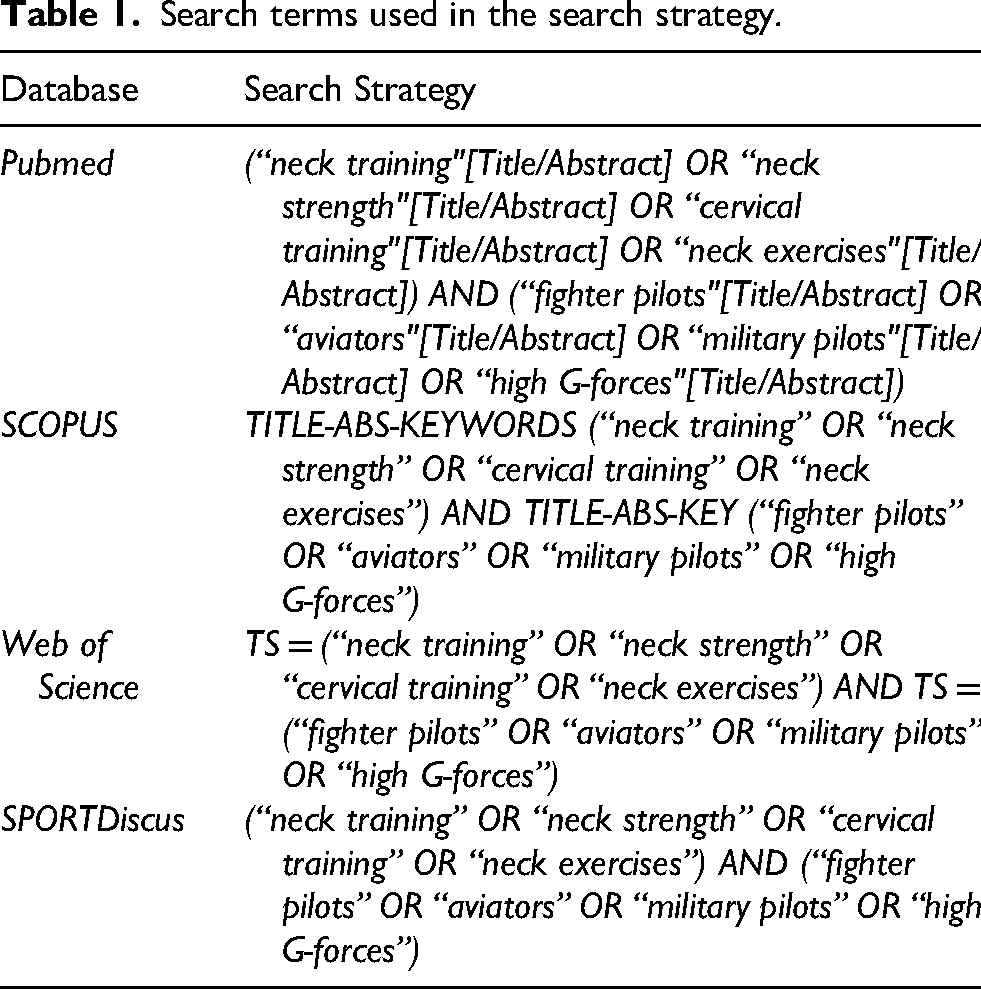
A systematic search of electronic databases (PubMed, SCOPUS, Web of Science core collection, and SPORTDiscus) was performed from the earliest records until January 10, 2025. The reference lists of the selected articles were manually searched for other potentially eligible studies. Once all articles were found, outcome variables from all studies were categorized into key themes to support the dissemination of findings (Table 1).
Search terms used in the search strategy.
Selection of sources of evidence
After removing duplicates, the search results were independently assessed by two researchers (JB and RMB) based on the eligibility criteria. 20 Disagreements were resolved through discussion or, if necessary, by consulting an additional reviewer (HS). 21 Studies that could not be excluded based on their titles or abstracts were subjected to full-text analysis to determine eligibility.
Data charting process
Following the screening of articles and extraction of information, the authors discussed the overarching themes and topics covered in neck training literature for fighter pilots. A standardized data extraction sheet was developed to capture relevant study details, including study design; population characteristics; neck training protocol specifics (such as exercise, intensity, frequency, and duration); measured outcomes (such as strength, endurance, and injury rates); and key findings and conclusions. 22
Data items
Outcomes from each study were categorized into overarching themes following the methodologies established in previous research. The main topics of this review were neck strength, endurance, flexibility, injury prevention, pain management, and functional performance under G-force conditions. Although some included studies reported on multiple outcomes (e.g., strength and pain), each study was counted only once in the total number of included records. However, in accordance with scoping review methodology, these studies may appear across different thematic result sections to facilitate topic-specific synthesis. This approach supports a comprehensive presentation of relevant findings while avoiding duplication in the overall study count. However, studies that only assessed measures describing participant characteristics, such as pilot experience or flight hours, without directly relating them to the outcomes of the intervention, were excluded from thematic tables and sections. The general characteristics of each study, including the year of publication, geographic region, cohort investigated, and sample size, were extracted. Data were standardized where appropriate, such as converting units of measurement, to ensure consistency across studies. As the aims of a scoping review are to (1) demonstrate the extent, range, and nature of the literature on a topic and (2) summarize the findings of the topic, no analysis was carried out. 23 The study characteristics, key outcomes, and data are summarized unless otherwise stated.
Critical appraisal of individual sources of evidence and synthesis of results
Two reviewers [JB and RMB] independently extracted the data, with any discrepancies resolved by consensus [HS]. The key variables collected included participant demographics such as age, sex, and pilot experience, as well as details about the training protocols, including the types of exercises performed, equipment used, frequency, and duration. Outcomes related to neck strength, endurance, flexibility, injury rates, and pain levels were also retrieved, along with contextual data such as G-force exposure and flight hours per week.
Results
Selection of sources of evidence
A literature search identified 36 records, with 43 additional records from citation searching. After removing duplicates and screening, 14 records were assessed, with 11 included and 3 excluded. Additionally, 43 reports were evaluated separately, all included. In total, 54 studies were reviewed. The article selection process is shown in Figure 1.
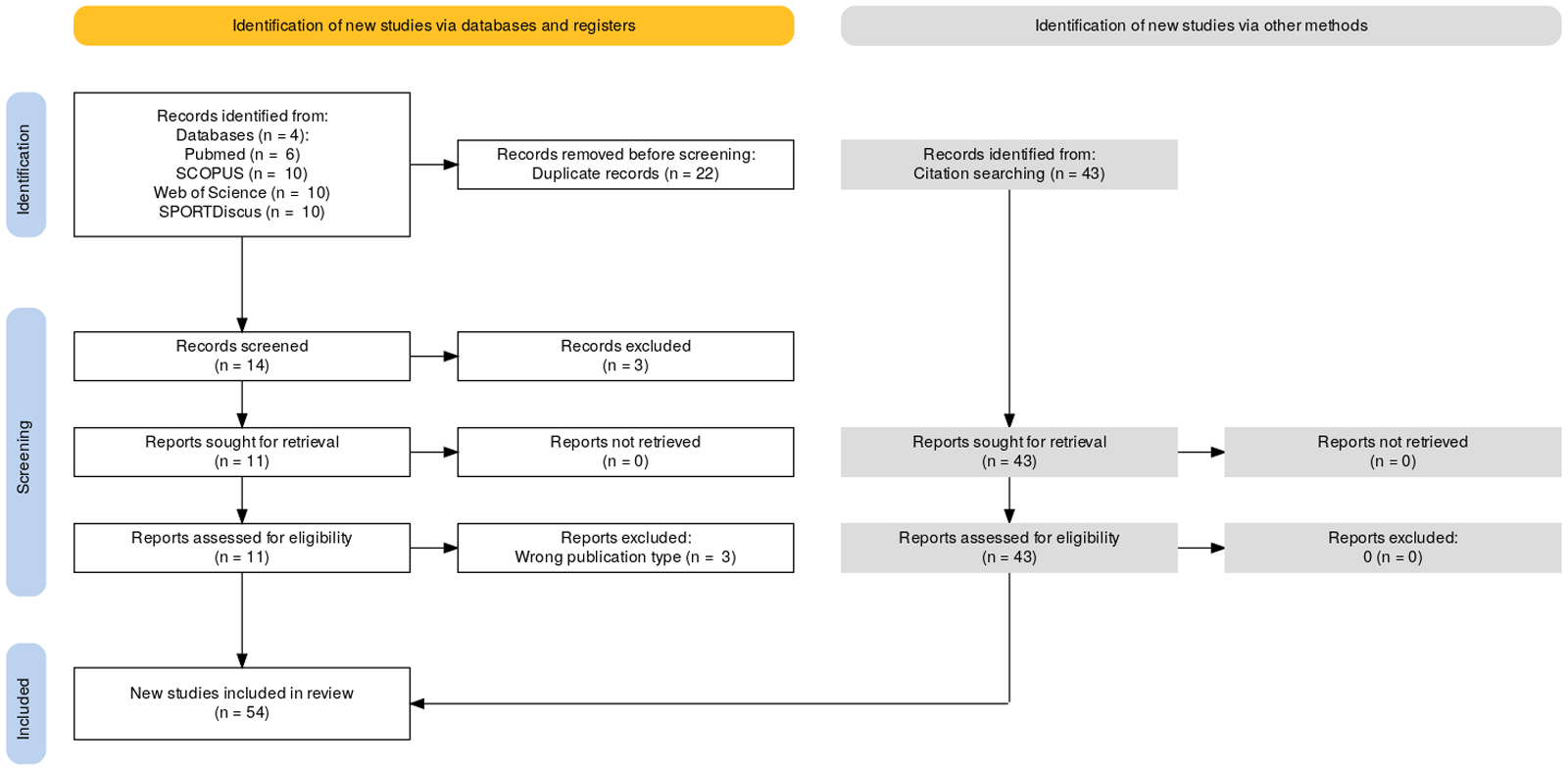
Flow of selection process for eligible studies for inclusion.
Characteristics of sources of evidence and results of individual sources of evidence
Cohorts investigated
The reviewed studies mainly examined male fighter pilots aged 20–64 years, reflecting military aviation demographics. Some studies included helicopter pilots, nonpilot personnel, and asymptomatic individuals for comparison.24,25 Most participants were adults; few studies assessed younger trainee pilots, 26 and older adults (>65 years) were rarely represented. Several studies focused on flight-related neck pain and musculoskeletal symptoms, 26 whereas older adults (> 65 years) were rarely represented. Several studies have focused on individuals with flight-related neck pain and musculoskeletal symptoms.1,27
Asymptomatic participants were included to evaluate baseline strength, endurance, or biomechanics.25,28 Comparisons between pilots and non-pilots, or experienced and inexperienced pilots, highlighted differences in muscle activation, neck pain prevalence, and training responses. 29 Some studies examined helmet and night vision goggle impacts on neck strain, 30 but female pilots and mixed-sex cohorts received limited attention, revealing research gaps. Overall, these studies emphasize a specialized population with restricted diversity in age, sex, and roles.
Critical appraisal within sources of evidence
Of the 54 studies on neck training in fighter pilots, the most common focus was neck muscle strength and training methods (13 studies, 24%), followed by neck pain and management (10 studies, 19%) and training protocols (10 studies, 19%). G-force exposure (6 studies, 11%), measurement tools (6 studies, 11%), and helmet impacts (5 studies, 9%) were also explored. Ergonomics and posture (5 studies, 9%), prevention strategies (3 studies, 6%), and device innovation (2 studies, 4%) were less frequent. This distribution highlights the broad research themes in neck training for fighter pilots. A detailed breakdown is presented in Figure 2.
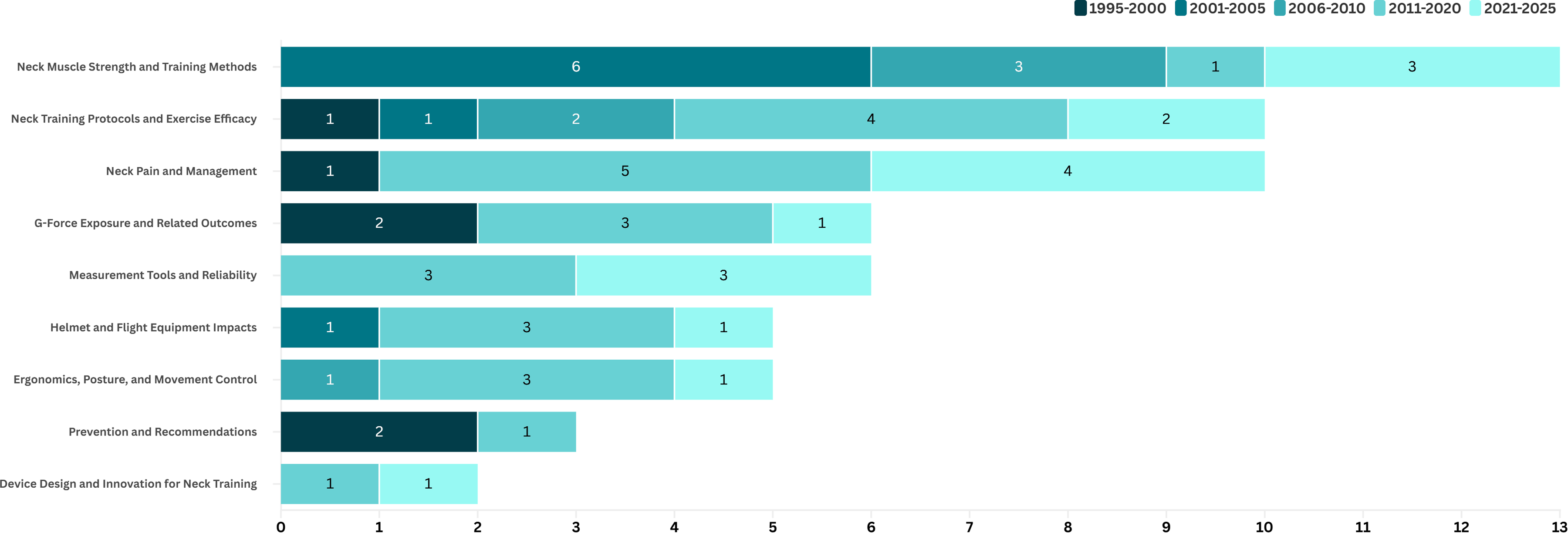
Distribution of publications by topic and time period.
Synthesis of results
Publication year and neck training topics
Figure 2 shows the rise in neck training studies, with 63% (n = 36) published between 2011 and 2025. The earliest study dates to 1995, with five studies from 1995–2000, seven from 2001–2005, six from 2006–2010, twenty-six from 2011–2020, and ten from 2020–2025, reflecting growing research interest.
Geography of studies
The United States had the most publications (n = 12), followed by Sweden (n = 6), Denmark (n = 4), Australia (n = 4), Spain, and the UK (n = 2 each). China, Brazil, the Netherlands, Canada, and Israel contributed one each (n = 1). Figure 3 shows the distribution by country.
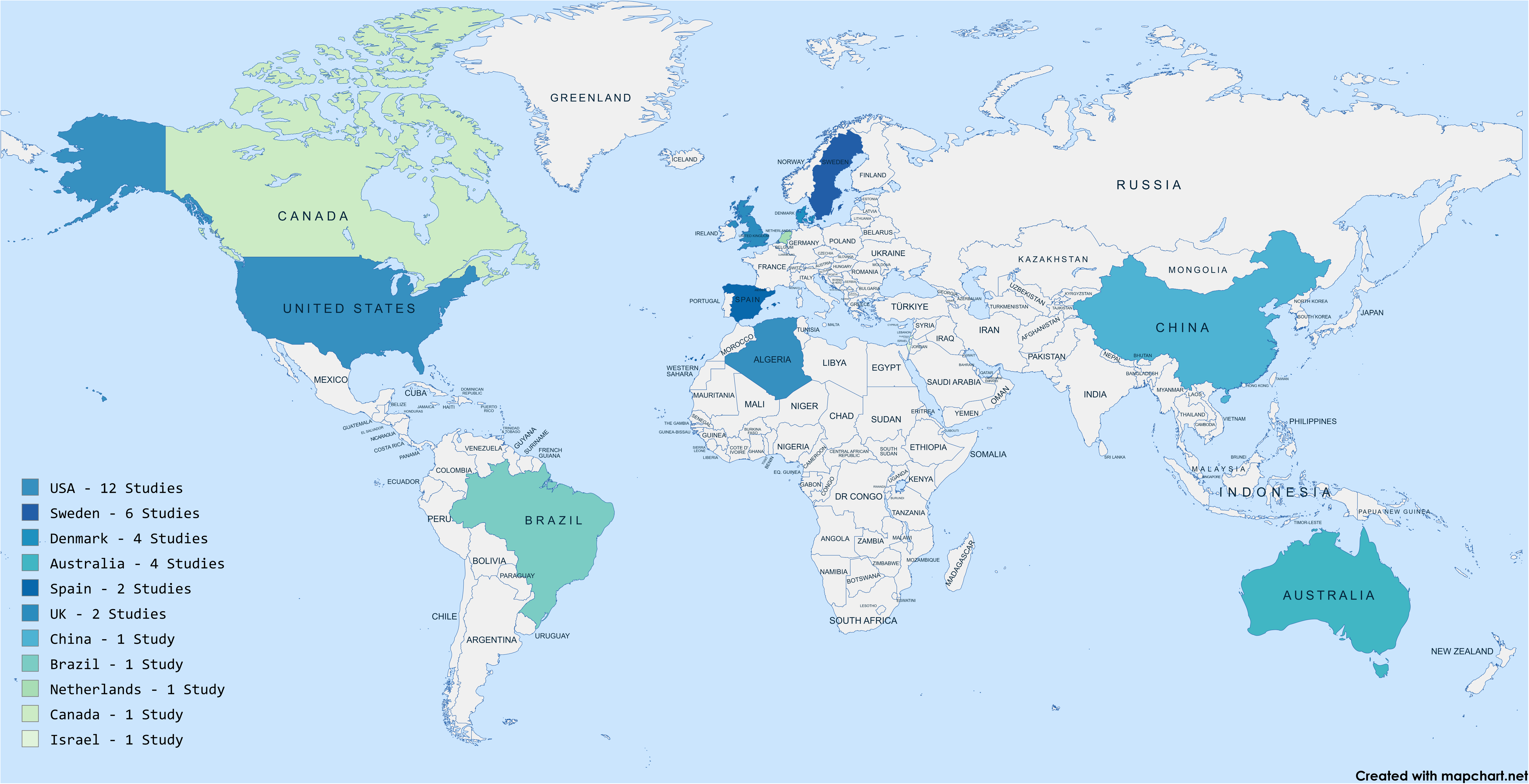
Heat map of articles published by each country: articles are attributed to the first affiliation of the first author.
Discussion
This study aimed to: (1) systematically review literature on neck training in fighter pilots; (2) summarize research outcomes and variables investigated; (3) describe research characteristics and gaps; and (4) provide recommendations for future research. The 54 studies were categorized into neck muscle strength, pain management, training protocols, g-force exposure, measurement tools, helmet impacts, ergonomics, prevention, and device innovation. Findings were conflicting due to limitations outlined in Figure 4. Figure 4 presents a summary of findings and recommendations. The left column reflects empirical findings synthesized from the 54 included studies. The right column provides research recommendations derived from methodological limitations and thematic gaps.
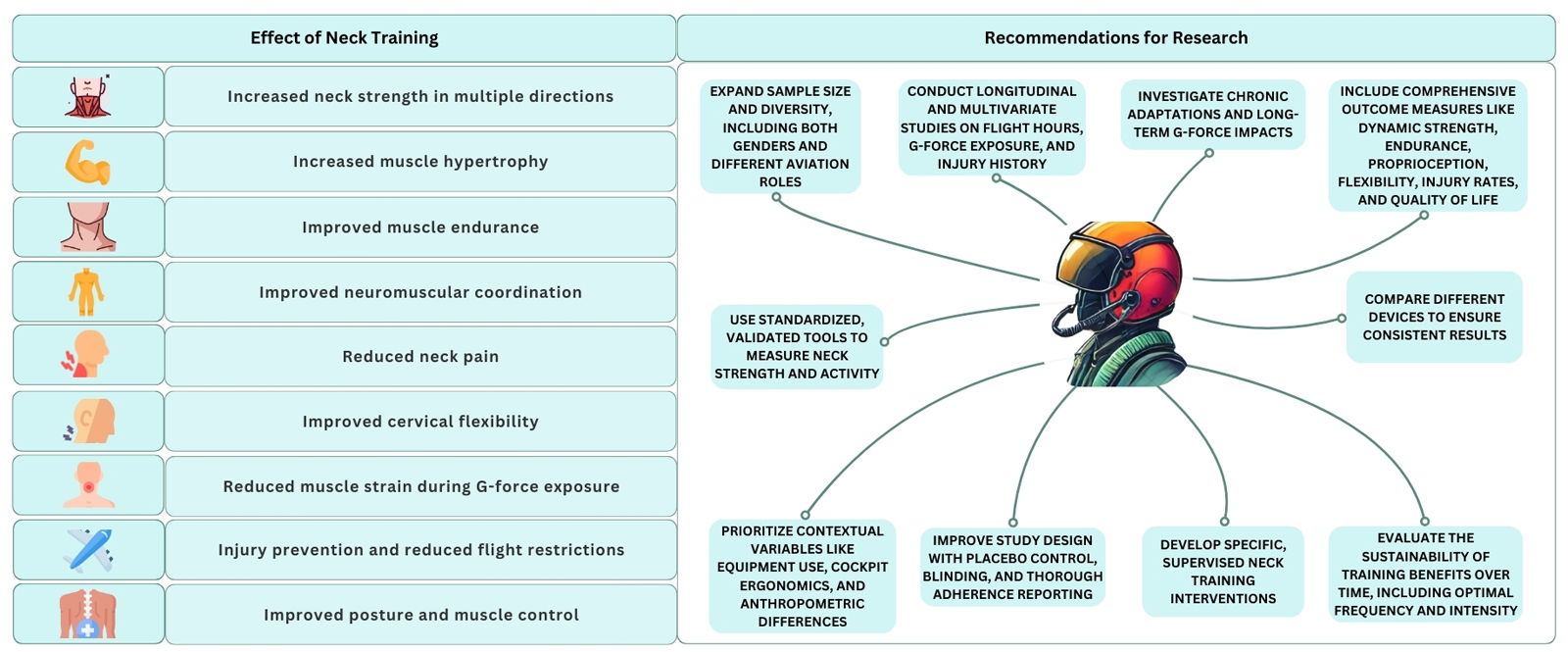
Research recommendations and a summary of key findings relating to neck training for fighter pilots.
Neck muscle strength and training methods
The studies on neck muscle strength and training methods show both converging and diverging findings on training effectiveness, neuromuscular adaptations, and G-force (+Gz) impact on muscle function [Table S1]. A consistent theme is the efficacy of isometric and dynamic strength training for enhancing neck strength. Several studies11,31 demonstrated significant improvements in flexion, extension, and lateral flexion strength, particularly with multi-cervical units or specific training machines like the NSE-1. Structured resistance training leads to measurable gains in strength, hypertrophy, and endurance. Comparisons between multi-cervical units and TheraBand exercises indicate superior strength gains with specialized training devices. 11 However, studies differ on adaptation levels and real-world applicability. While dynamic strength training, including isometric-dynamic protocols, improved strength and hypertrophy 31 some suggest functional strength training better replicates real-world demands for pilots. 32 Training under simulated G-forces, such as a long-arm centrifuge, enhanced strength and endurance while reducing perceived strain, emphasizing specificity in training outcomes. 32
Beyond strength improvements, neuromuscular function and muscle activation patterns have been central to several studies. Surface electromyography (sEMG), though not a direct measure of coordination, has been used to infer neuromuscular coordination by analyzing muscle recruitment timing, activation amplitude, and intermuscular synchronization during isometric tasks. 33 These parameters offer meaningful insight into how training modulates coordination patterns, which are crucial for strength development - particularly during early neural adaptation phases.34–36 Multiplanar resistance and perturbation-based training protocols - designed to replicate rapid loading and directional changes - have been shown to elicit plyometric-like responses in the cervical musculature. Such training improved axial rotation strength and neuromuscular control, indicating that dynamic, reflex-driven exercises may provide additional functional benefits beyond traditional static approaches. 37 In contrast, studies on neck endurance training and injury prevention emphasized coordination-focused modalities over maximal strength gains.38,39 These findings suggest that while strength training enhances force production, endurance and motor control exercises may be more effective in mitigating neck pain and fatigue during prolonged high-G exposures. 38
A key question is whether neck muscle training mitigates G-force effects. Some studies indicate limited + Gz exposure resulted in only modest neck flexion strength improvements, 26 while others found supervised neck and shoulder exercise regimens significantly reduced neck pain but did not yield notable strength increases under G-force exposure. 40 These findings suggest training adaptations may be more relevant for injury prevention and endurance than absolute strength gains under extreme conditions. The variability in + Gz exposure complicates interpretations. Some findings indicate that functional training in simulated G-force conditions enhances strength and muscle volume, 32 while others argue that strength gains alone may not improve resistance to G-forces unless combined with neuromuscular and endurance-based approaches. 37
Studies reinforce the importance of structured strength training for neck strength, endurance, and hypertrophy. However, differences in methodologies affect effectiveness in operational settings. Some emphasize pure strength gains via resistance training,11,31 while others highlight neuromuscular coordination, endurance, and functional training as equally important for individuals exposed to high-G forces. 38 While no single training method emerged as definitively superior, an integrated approach that targets strength, endurance, and neuromuscular coordination appears promising based on current evidence. However, this should not be interpreted as evidence of equal efficacy across all modalities, nor as a justification for uncritically combining protocols. Rather, careful selection and evaluation of training strategies remain essential. Specialized equipment—such as multi-cervical units, plyometric multiplanar devices, and functional strength systems under simulated G-forces—provides valuable tools for targeted interventions aimed at enhancing performance and reducing injury risk.32,37 Future research should prioritize well-designed longitudinal studies that compare the efficacy of distinct neck training modalities, incorporating both objective strength assessments and real-world performance outcomes under G-force exposure. Methodological challenges - such as small sample sizes, variability in training protocols, and limited ecological validity - must be addressed to enhance generalizability. While no single approach has demonstrated clear superiority, current evidence suggests that effective programs likely integrate strength training, neuromuscular coordination, and endurance-based interventions to holistically optimize cervical function in high-G environments.
Neck pain and management
Research on flight-related neck pain (FRNP) provides insights into its occurrence, contributing factors, and treatment approaches, with areas of agreement and disagreement [Table S2]. Studies broadly agree on FRNP's occupational burden, linking repeated high-G exposure and prolonged flight hours to increased risk.1,41,42 Reduced cervical range of motion (CROM) is a common issue, especially in older pilots with longer careers. 1 A biopsychosocial approach highlights FRNP's mechanical, behavioral, and psychological influences.
Variations exist in intervention effectiveness. Physiotherapy and exercise-based programs mitigate pain, 27 with multimodal physiotherapy showing benefits in reducing pain intensity and disability. However, long-term follow-up suggests limited sustainability of improvements in pain catastrophizing and cervical rotation. 43 Neck-strengthening exercises demonstrate preventive potential, reducing injuries and neck pain. 44 Early interventions such as structured warm-up routines and head pre-positioning before G-force exposure have been shown to effectively reduce neck strain and injury risk. These strategies, particularly when combined with isometric pre-activation, enhance neuromuscular readiness and are supported by studies demonstrating their preventative benefits in high-performance aviation settings.6,44,45
Aircraft design and equipment also impact FRNP. Higher neck pain prevalence in F-16 pilots versus Typhoon pilots is linked to cockpit geometry and seat design. 46 Observational studies have reported an association between advanced flight equipment - such as the Joint Helmet Mounted Cueing System (JHMCS) and night vision goggles (NVG) - and increased reports of neck pain, particularly among Royal Netherlands Air Force pilots during 2007–2014, though no direct statistical causality has been established. 47 Thus, equipment modifications complement physical training in mitigating FRNP. Long-term G-force exposure complicates FRNP understanding. Centrifuge training studies suggest chronic spinal changes and persistent pain in F-16 pilots, indicating cumulative strain effects.6,48 Other findings emphasize acute impacts over structural changes, warranting further research.
Behavioral and demographic factors also influence FRNP risk. Training frequency, musculoskeletal conditions, and occupational habits, like desk work, significantly impact prevalence and recovery.41,42 The occupational burden is evident, with 97% of Danish F-16 pilots experiencing pain during or post-flight. 49 This widespread prevalence reinforces the need for systematic FRNP management. FRNP arises from physical, behavioral, and occupational factors. Physiotherapy, strength training, and early interventions help, but long-term solutions require exercise, ergonomic modifications, and risk management. Future research should assess these combined strategies and address biomechanical challenges from modern flight equipment and evolving pilot workloads.
Neck training protocols and exercise efficacy
The evaluation of various neck exercise programs and their effectiveness reveals a range of interventions designed to enhance muscular endurance, alleviate discomfort, and improve functional abilities, especially among individuals subjected to high gravitational forces, such as fighter pilots in the military [Table S3]. There is strong consensus on the beneficial effects of structured training programs, with evidence supporting improvements in muscle strength, endurance, and pain reduction.6,50,51 However, differences have emerged in specific training methodologies and their long-term impact on cervical function.
A key area of convergence is the importance of multimodal training approaches incorporating strength, endurance, and coordination exercises. Studies have demonstrated that structured programmes can significantly reduce neck pain and improve muscle function.6,52 Training focused on the deep neck muscles has been particularly effective in mitigating pain and enhancing functional resilience under high-G conditions. However, variability in adherence to training protocols influences outcomes, with some studies reporting significant improvements only among participants who maintained consistent training routines.53,54
Despite this agreement, studies have diverged on the most effective training modalities. Some studies emphasize the benefits of traditional resistance exercises, demonstrating that machine-based and elastic-band exercises induce muscle activation levels similar to those observed during aerial combat, making them suitable for strength training. 50 Others advocate more dynamic and functional approaches - such as trampoline exercises, weighted helmet training, and advanced technologies including multi-cervical units, plyometric multiplanar systems, and the VALD ForceFrame - which apply resistance across multiple planes and offer real-time feedback during isometric and dynamic tasks. These modalities not only reduce muscle strain and enhance cervical endurance but also contribute to neuromuscular adaptation and strength monitoring. Evidence suggests such approaches may provide additional benefits, including reduced workdays lost due to neck pain and fewer flight restrictions associated with G-force-related strain.14,55
The role of neuromuscular activation and kinematic training is also an area of discussion. Studies analyzing muscle activation patterns during flight have underscored the need for targeted conditioning strategies to prevent injury because combat maneuvers place high demands on neck extension and rotation.56 Virtual reality-based self-kinematic training has shown promise in improving movement patterns, although low compliance has limited its effectiveness in reducing pain. 57 These findings suggest that while innovative training modalities can enhance neuromuscular control, supervised programs may yield better adherence and outcomes.
In examining endurance-specific protocols, there is a consensus that dedicated neck endurance training improves overall muscle performance, particularly in fighter pilots. 58 Programs designed to increase maximal voluntary contraction and torque development have shown significant gains in cervical function, reinforcing the need for progressive overload training to optimize muscle adaptation. 54 However, not all endurance-based interventions have demonstrated uniform success as compliance and training intensity appear to influence the results.
Although no single training method has demonstrated clear superiority, combining resistance, dynamic, and endurance-based approaches appears to best support cervical function in high-G environments. Functional methods can reduce strain, and emerging technologies such as virtual reality may complement traditional modalities. However, the lack of positive effects in some studies may be attributable to low compliance, as operational demands and irregular schedules often limit consistent participation among fighter pilots. Several studies reported poor adherence to training protocols, and many failed to establish minimum participation thresholds or include compliance as an analytical criterion. This limits the interpretability of results and may partially explain the variability in outcomes. Supervised programs, by contrast, have shown more reliable improvements, emphasizing the need for structured, accessible interventions. Future research should refine these strategies while prioritizing adherence and realistic implementation in high-performance populations.
G-force exposure and related outcomes
Research examining the impact of G-force exposure on neck injuries and muscle strain in fighter pilots uncovered a multifaceted relationship between job requirements, physical fitness, and injury prevention techniques [Table S4]. Across studies, there is broad agreement that high-G maneuvers place substantial strain on the cervical musculature, contributing to a high prevalence of neck pain and musculoskeletal injuries.59–61 However, differences emerge in the reported effectiveness of preventive strategies, role of physical conditioning, and impact of equipment design on injury risk.
One key area of convergence is the recognition that neck injuries are a frequent and mission-disruptive issue for fighter pilots, particularly in aircraft that require sustained high-G maneuvers. 59 Many studies have reported that neck pain is exacerbated by specific head positions and combat maneuvers, with pilots experiencing peak muscle strain that can exceed maximal voluntary contraction levels, thereby increasing the risk of injury. 55 Despite the acknowledged need for prevention, there is variability in the approach pilots take, with some studies highlighting low adherence to structured neck strengthening programs, while others suggest that stretching routines are more commonly performed before flight. 59
However, the effectiveness of physical training interventions remains debatable. Some findings suggest that there is no clear correlation between general physical training and the prevalence of neck pain, as pilots engaged in different types of training still experience significant strain and discomfort. 60 However, structured functional strength training programs, particularly those incorporating targeted neck, shoulder, and core exercises, have been shown to increase muscle strength and volume, while reducing strain under simulated G-force conditions. 32 This suggests that while general fitness routines may not directly mitigate neck pain, specific high-load training tailored to the demands of G-force exposure could offer protective benefits.
Another point of discussion is the role of helmet-mounted displays and aircraft ergonomics in exacerbating the cervical strain. Research indicates that pilots using advanced helmet systems experience increased neck load, which may contribute to higher injury rates. 60 Similarly, comparisons between fighter pilots and other military personnel showed a greater prevalence of musculoskeletal disorders among aviators, reinforcing the notion that the unique biomechanical stresses of aviation require targeted intervention strategies beyond those used for general military populations. 61 This aligns with studies recommending ergonomic modifications to reduce strain, including adjustments to the cockpit design and pilot seating posture. 55
Neck injuries in high-G environments are well-documented, but prevention methods remain debated. Functional strength training enhances resistance to G-forces, yet ergonomic and technological solutions are crucial. Future research should integrate strength training, ergonomic interventions, and pilot-specific conditioning to align preventive strategies with aviation operational demands.
Measurement tools and reliability
The examination of research on tools for measuring neck muscle strength and range of motion reveals an increasing focus on reliable and standardized evaluation techniques in both military and clinical environments [Table S5]. This trend underscores the importance of valid assessment methods across these settings. There is broad consensus on the necessity of accurate and reliable devices to evaluate isometric neck strength and cervical range of motion (ROM), with studies demonstrating strong psychometric properties for various measurement tools.28,62,63 However, differences have emerged regarding the specific devices used, their reliability across different testing conditions, and their applicability in real-world settings.
One key area of convergence is the high validity and reliability of newer measurement tools compared with traditional gold-standard devices. Studies validating helmet-attached force gauges, handheld dynamometers, and digital dynamometers indicate strong correlation coefficients and inter-tester reliability, reinforcing their potential as cost-effective and portable alternatives to isokinetic machines.28,62 Similarly, research on the VALD ForceFrame and DynaMo supports their reliability in isometric neck strength assessments. The ForceFrame, in particular, can be adapted for cervical testing by positioning the subject in a seated posture and applying force against a padded sensor mounted on an adjustable frame, allowing for standardized measurement of flexion, extension, and lateral flexion. Although both tools demonstrate strong reliability (ICC > 0.8 for ForceFrame vs. 0.76 for DynaMo), slight variations suggest that performance may vary depending on specific test conditions. A newly added figure illustrates the ForceFrame setup to aid replication and enhance practical understanding. 63
However, a point of divergence lies in the degree of agreement between the different devices and methodologies. While some studies report nearly perfect correlations between low-cost and gold-standard tools, 28 others find only moderate to excellent reliability when comparing new technologies, such as JTECH wireless dual inclinometers, with reference devices, such as CROM3 and MicroFET2. 64 This variation suggests that although many tools can accurately assess neck strength and ROM, their consistency across different settings and populations may require further validation.
Another key consideration is inter-rater and test-retest reliability, particularly in functional movement assessments. Research on movement control tests for neck flexion and shoulder movements found that while some tests exhibited substantial to almost perfect inter-rater reliability (kappa > 0.60), others showed lower consistency, highlighting the importance of standardized administration protocols to ensure reproducibility. 65 Similarly, studies assessing the Royal Air Force Aircrew Conditioning Programme (ACP) found high content validity in exercise selection, suggesting that well-structured, population-specific conditioning programs align with operational needs. 66
While no single device has demonstrated clear superiority, the combination of advanced technology, standardized procedures, and structured training has the potential to improve assessment consistency - provided that validated protocols are employed and properly implemented. Portable devices show promise but require further validation across varied conditions. Future research should focus on harmonizing assessment protocols and systematically evaluating device performance to strengthen neck strength and mobility evaluations in both military and clinical contexts.
Helmet and flight equipment impacts
A review of research investigating the effects of helmets and flight gear on neck strain and injury susceptibility reveals a recurring issue related to increased cervical muscle stress caused by the extra weight and head positioning during high-G maneuvers [Table S6]. Across studies, there is broad agreement that helmet-mounted devices, such as the joint helmet-mounted cueing system (JHMCS) and night vision goggles (NVG), contribute to greater neck strain and pain, particularly in rotational postures and high-Gz conditions.5,49,67 However, there are differences in how various helmet conditions impact muscle activation patterns, and whether all pilots experience the same level of strain under different operational conditions.
One major area of convergence is increased muscle loading in specific cervical regions owing to additional helmet weight. Studies have confirmed that the posterior neck muscles are particularly affected by the JHMCS, as its weight distribution alters the loading pattern and increases strain during air combat maneuvers.5,67 Similarly, NVG use leads to greater anterior neck muscle activation, suggesting that the direction of strain varies depending on the type of equipment and the head posture during flight. 30 These findings reinforce the importance of weight distribution in helmet design as uneven or excessive weight increases cervical strain and potentially contributes to long-term musculoskeletal issues.
Despite this consensus, some studies differ in their assessments of the impact of helmet weight on neck pain and muscle activity. While some studies highlight a clear correlation between heavier helmets and increased injury risk, others indicate that helmet modifications alone do not necessarily lead to higher reported pain levels. 30 Additionally, individual coping strategies, such as fixing the head position before high-G exposure and performing pre-flight warm-up exercises, may influence the extent to which pilots experience discomfort. 49 This finding suggests that training and neuromuscular adaptation play a role in mitigating the negative effects of helmet weight, making pilot conditioning programs a critical component of injury prevention strategies.
Another point of discussion is the difference between fixed-wing and rotary-wing aircrafts in terms of helmet-related strain. While fighter pilots in high-performance jets experience acute and repetitive strain due to rapid, high-G maneuvers, helicopter pilots also experience sustained muscle activation caused by prolonged head positioning and helmet-mounted equipment. 68 This variation underscores the need for customized interventions tailored to specific aircraft environments rather than a one-size-fits-all approach to pilot neck health.
Helmet and flight equipment design impact neck strain, influenced by posture, movement, and adaptation. Lighter helmets help but don’t eliminate cervical overload risks. Future research should integrate ergonomic designs, strength training, and operational adjustments to reduce strain, ensuring a comprehensive approach for aviation personnel in high-G environments.
Ergonomics, posture, and movement control
Research examining ergonomics, posture, and movement control in elite pilots underscores the importance of maintaining a healthy cervical spine, improving posture, and ensuring proper muscle function. These factors are critical in alleviating neck pain and minimizing strain during high-G maneuvers [Table S7]. To address potential ambiguity in study inclusion, we distinguished between findings related specifically to high-G exposure and those applicable to broader aviation roles. Although the physiological stressors differ in nature, the underlying musculoskeletal risk and the principles of cervical training - strength, endurance, coordination - are shared across these populations. There is broad agreement across studies that restricted cervical range of motion (CROM), inadequate postural control, and sustained muscle activity contribute to neck pain, particularly among fighter and helicopter pilots.45,69,70 However, differences have emerged regarding the effectiveness of training programs, the role of proprioception, and the impact of cockpit ergonomics on muscle activity and strain.
A key area of convergence is the association between limited CROM and prevalence of neck pain. Studies have consistently reported that pilots with neck pain exhibit reduced cervical extension and rotation, suggesting that restricted mobility may increase the risk of injury and impair the operational performance.69,70 Although no significant differences in muscle strength or proprioception were observed in some cases, these findings reinforce the need for individualized retraining programs focused on maintaining optimal CROM, which may help reduce musculoskeletal strain and enhance resilience under high-G loads.
Despite this general agreement, studies have diverged in their evaluation of the impact of postural control training on muscle function and pain reduction. Research investigating deep neck muscle-strengthening programs has found improvements in postural stability, particularly in balance-based tests. 71 However, the study noted no significant changes in shoulder steadiness or broader postural control measures, raising questions about the extent to which physical training alone can influence overall postural control in highly conditioned populations. This suggests that baseline physical capacity may limit observable benefits and that training interventions should be tailored to specific weaknesses rather than generalized.
Another important aspect is the interaction between the head posture, muscle activity, and cockpit ergonomics. Studies indicate that head movements combined with torso adjustments during air combat maneuvers significantly increase cervical flexor and extensor activation, with helmet-mounted displays further amplifying the strain. 45 The use of headrests was found to reduce extensor muscle activity, although this came at the cost of increased strain on the flexors, thus emphasizing the need for balanced ergonomic solutions. Similarly, helicopter pilots operating in confined and ergonomically restrictive environments experience sustained neck and shoulder muscle activation, highlighting the importance of cockpit adjustments in reducing prolonged strain during long-duration flights. 72
Cervical spine health in pilots requires a multifaceted approach involving mobility retraining, targeted strength exercises, and ergonomic cockpit modifications. While neck strengthening improves postural control, its effectiveness is enhanced when combined with tailored ergonomic support. Continuous monitoring plays a vital role in this process by enabling real-time tracking of neuromuscular performance, fatigue, and recovery. Such longitudinal data helps detect early signs of musculoskeletal overload or performance decline, allowing for timely intervention and personalized training adjustments. It also facilitates safe progression of exercise protocols, supports injury prevention, and enhances operational readiness by identifying high-risk maneuvers or equipment-related strain patterns. Future research should integrate biomechanical, ergonomic, and neuromuscular strategies - anchored by continuous monitoring systems—to optimize cervical function and sustain health in aviation personnel.
Prevention and recommendations
Research examining preventive measures and guidelines for neck pain in pilots underscores the significance of prompt intervention, specific muscle-strengthening routines, and proper posture control in minimizing injury risks and mitigating symptoms linked to high G-force exposure [Table S8]. Across studies, there is a broad consensus that neck pain is highly prevalent among high-performance jet pilots, with incidence rates increasing as flight hours increase.44,73 However, differences have emerged regarding the effectiveness of specific preventive measures, particularly in the role of strength training, pre-flight stretching, and cervical traction as strategies for reducing pain and injury.
A key area of agreement is the beneficial role of neck strengthening exercises in mitigating pain, with studies indicating that pilots who engage in regular resistance training for neck muscles report fewer pain episodes and injuries over time.44,73 However, adherence remains an issue as a significant proportion of pilots do not consistently perform strengthening exercises, potentially limiting their long-term effectiveness. Furthermore, while strengthening exercises were associated with a reduction in neck pain, their effect was not statistically significant for F-16 pilots, suggesting that aircraft-specific factors such as cockpit ergonomics and maneuvering demands may influence the effectiveness of training interventions. 73
Despite this consensus, studies have diverged on the efficacy of alternative interventions, such as pre-flight stretching and cervical traction. Research found no significant benefits of stretching before flight in reducing neck pain, suggesting that static stretching alone may not be sufficient as a preventive strategy
Another key finding is the importance of early intervention and postural management. Studies indicate that pilots who engage in preventive strategies from the start of their careers experience lower injury rates, emphasizing the need for the consistent implementation of neck health programs. 44 Additionally, postural strategies, such as pre-positioning the head against the seat before G-loads and performing isometric contractions, were found to reduce injury risk, further highlighting the role of biomechanical adaptation in mitigating strain. 44
A multifaceted approach combining strength training, posture optimization, and personalized interventions is essential for preventing neck injuries in pilots. While resistance training is key, effectiveness varies by aircraft and adherence. Passive methods aid pain management. Future research should refine interventions, enhance adherence, and tailor strategies to pilots’ biomechanical demands.
Device design and innovation for neck training
Research examining device design and innovation for neck training reveals the promising potential of sophisticated training equipment and methods to enhance neck strength and muscular control. This is particularly relevant for individuals subjected to high G-forces, such as pilots and athletes [Table S9]. Across studies, there is broad agreement that technologically advanced devices incorporating adaptive resistance mechanisms and neuromuscular feedback significantly enhance training outcomes, with measurable increases in neck strength across multiple movement directions.37,75 However, differences emerge in the specific mechanisms used to generate resistance, targeted muscle groups, and overall applicability of these devices to real-world operational settings.
A key area of convergence is the effectiveness of resistance-based training machines in improving the neck muscle strength. Research confirms that both isometric and dynamic resistance training protocols lead to significant gains, with some devices enabling strength increases of up to 83.7% in neck extension after six weeks of training. 75 Similarly, neuromuscular training protocols using centripetal force have demonstrated substantial improvements in axial rotation strength, reinforcing the idea that progressive resistance mechanisms can optimize neuromuscular engagement and enhance muscle function. 37 These findings suggest that neck-training devices incorporating biomechanical features such as multi-planar resistance application, variable load dynamics, joint-specific force modulation, and real-time neuromuscular feedback can be highly effective in improving neck function in populations exposed to extreme physical demands.
Despite this consensus, studies have diverged in their approach to resistance application and movement specificity. While some devices rely on adaptive hydraulics and sensor-based resistance adjustments to provide controlled isometric exercises, others incorporate dynamic rotational resistance to enhance neuromuscular engagement.37,75 This distinction highlights a fundamental question in neck training: should training emphasize controlled, high-load isometric exercises or dynamic, functional movements that better replicate real-world head stabilization challenges? Although both methods have demonstrated efficacy, their optimal application may depend on the specific performance demands of the user, whether in aviation, military, or contact sports.
Another critical aspect is safety and adherence to training protocols. Both studies reported high compliance rates and no adverse events, suggesting that modern neck-training devices can be safely integrated into structured training programs. 37 The use of biological feedback mechanisms and controlled resistance adjustments further enhance safety by ensuring that excessive loading and injury risks are minimized. 75 However, long-term studies assessing sustained benefits, injury prevention efficacy, and transferability to operational performance are needed to validate the real-world impact of these devices beyond short-term training cycles.
Technological advancements in neck training devices enhance cervical strength and neuromuscular control for high G-force populations. Future research should optimize resistance mechanisms, tailor protocols to occupational needs, and assess long-term effects. Combining isometric strength and dynamic neuromuscular training ensures structural robustness and functional movement control in high-performance individuals.
Gaps in literature and future recommendations
Research on neck training in fighter pilots has notable gaps 76 limiting its optimization for injury prevention and performance improvement. Many studies have small sample sizes (6–90 participants), reducing generalizability.31,37,38 Most focus on male pilots in specific aircraft, excluding female pilots and diverse aviation roles.1,77 Short study durations (6–12 weeks) and cross-sectional designs hinder assessments of long-term strength, endurance, and injury prevention.26,32 Studies on F-16 pilots often omit key factors like G-force exposure, flight hours, and helmet weight, despite their influence on outcomes.49,59 Few provide longitudinal data on neck strength and endurance, relying instead on cross-sectional snapshots.33,45 Research frequently emphasizes isometric strength while neglecting endurance, flexibility, and functional outcomes.31,78 Tools like surface electromyography (sEMG) and dynamometers often lack validation, causing potential measurement bias.62,63 Many studies also lack placebo controls, blinding, and appropriate control groups, which increases the risk of bias - particularly in self-reported neck pain outcomes. While these methodological challenges are common in exercise-based research, especially within specialized populations like fighter pilots, future studies could mitigate these limitations by incorporating strategies such as sham interventions, attention-matched control activities, and blinded outcome assessments to enhance internal validity and reduce expectancy effects.27,41 Adherence to self-administered interventions is low, affecting results52,53 and Helicopter pilots in one study showed only a 29% adherence rate, undermining findings on neck strength training effectiveness. Exercise protocols also lack specificity for aerial combat maneuvers, limiting applicability.52,53 Future research should expand sample sizes and population diversity, incorporating female pilots and various aircraft roles.79,80 Longitudinal studies tracking flight hours, G-force exposure, and injury history would provide stronger insights. 80 Research on chronic adaptations and G-force effects over time is essential.26,60 Comprehensive outcome measures should assess dynamic strength, endurance, proprioception, flexibility, injury rates, and quality of life.69,70,81 Standardized tools for measuring neck strength should be validated across populations.70,82 Detailed contextual data, such as cockpit ergonomics and anthropometric differences, should be included to improve findings’ relevance.49,78 Enhanced study designs should incorporate placebo-controlled conditions, blinding, and improved adherence tracking.27,53 Tailored interventions should target Reactive and Slow Dynamic Strength during flight and Static Strength off-mission, addressing aerial combat stressors. 82 Supervised programs improve adherence and outcomes, as shown in fighter pilot neck training research.6,12 Long-term evaluations should measure training sustainability and optimal intervention intensity. Functional strength training studies with extended follow-up periods would provide crucial insights into persistent effects.32,50
Conclusions
This scoping review underscores the critical role of neck training in mitigating injury risk and enhancing operational performance among fighter pilots exposed to high G-forces. The evidence indicates that targeted training protocols - incorporating strength, endurance, neuromuscular coordination, and flexibility - can reduce the incidence of neck pain, improve cervical function, and support sustained postural control during demanding flight maneuvers. While no single approach emerged as universally superior, integrated and task-specific interventions, particularly those utilizing specialized equipment and real-time feedback, offer promising benefits. Methodological challenges, including small sample sizes, variability in compliance, and limited use of placebo or control conditions, constrain current generalizability and highlight the need for more rigorous and longitudinally designed studies. Importantly, continuous monitoring and individualized training adaptation appear vital for maintaining neuromuscular readiness and preventing overuse injuries. Future research should prioritize validated assessment tools, standardized protocols, and operationally feasible interventions to advance neck health, resilience, and mission readiness in high-performance aviation contexts.
Supplemental Material
sj-docx-1-spo-10.1177_17479541251388819 - Supplemental material for Neck training in military pilots: A scoping review
Supplemental material, sj-docx-1-spo-10.1177_17479541251388819 for Neck training in military pilots: A scoping review by João Bruno, Raynier Montoro-Bombú and Hugo Sarmento in International Journal of Sports Science & Coaching
Supplemental Material
sj-docx-2-spo-10.1177_17479541251388819 - Supplemental material for Neck training in military pilots: A scoping review
Supplemental material, sj-docx-2-spo-10.1177_17479541251388819 for Neck training in military pilots: A scoping review by João Bruno, Raynier Montoro-Bombú and Hugo Sarmento in International Journal of Sports Science & Coaching
Supplemental Material
sj-docx-3-spo-10.1177_17479541251388819 - Supplemental material for Neck training in military pilots: A scoping review
Supplemental material, sj-docx-3-spo-10.1177_17479541251388819 for Neck training in military pilots: A scoping review by João Bruno, Raynier Montoro-Bombú and Hugo Sarmento in International Journal of Sports Science & Coaching
Supplemental Material
sj-docx-4-spo-10.1177_17479541251388819 - Supplemental material for Neck training in military pilots: A scoping review
Supplemental material, sj-docx-4-spo-10.1177_17479541251388819 for Neck training in military pilots: A scoping review by João Bruno, Raynier Montoro-Bombú and Hugo Sarmento in International Journal of Sports Science & Coaching
Supplemental Material
sj-docx-5-spo-10.1177_17479541251388819 - Supplemental material for Neck training in military pilots: A scoping review
Supplemental material, sj-docx-5-spo-10.1177_17479541251388819 for Neck training in military pilots: A scoping review by João Bruno, Raynier Montoro-Bombú and Hugo Sarmento in International Journal of Sports Science & Coaching
Supplemental Material
sj-docx-6-spo-10.1177_17479541251388819 - Supplemental material for Neck training in military pilots: A scoping review
Supplemental material, sj-docx-6-spo-10.1177_17479541251388819 for Neck training in military pilots: A scoping review by João Bruno, Raynier Montoro-Bombú and Hugo Sarmento in International Journal of Sports Science & Coaching
Supplemental Material
sj-docx-7-spo-10.1177_17479541251388819 - Supplemental material for Neck training in military pilots: A scoping review
Supplemental material, sj-docx-7-spo-10.1177_17479541251388819 for Neck training in military pilots: A scoping review by João Bruno, Raynier Montoro-Bombú and Hugo Sarmento in International Journal of Sports Science & Coaching
Supplemental Material
sj-docx-8-spo-10.1177_17479541251388819 - Supplemental material for Neck training in military pilots: A scoping review
Supplemental material, sj-docx-8-spo-10.1177_17479541251388819 for Neck training in military pilots: A scoping review by João Bruno, Raynier Montoro-Bombú and Hugo Sarmento in International Journal of Sports Science & Coaching
Supplemental Material
sj-docx-9-spo-10.1177_17479541251388819 - Supplemental material for Neck training in military pilots: A scoping review
Supplemental material, sj-docx-9-spo-10.1177_17479541251388819 for Neck training in military pilots: A scoping review by João Bruno, Raynier Montoro-Bombú and Hugo Sarmento in International Journal of Sports Science & Coaching
Supplemental Material
sj-docx-10-spo-10.1177_17479541251388819 - Supplemental material for Neck training in military pilots: A scoping review
Supplemental material, sj-docx-10-spo-10.1177_17479541251388819 for Neck training in military pilots: A scoping review by João Bruno, Raynier Montoro-Bombú and Hugo Sarmento in International Journal of Sports Science & Coaching
Footnotes
Acknowledgments
None.

Consent to participate
As this study is a scoping review, it does not involve direct human participants. The research is based on previously published studies that have obtained ethical approval and informed consent from their respective participants. No new data collection involving human subjects was conducted by the authors of this review.
Authors’ contributions
João Bruno, Hugo Sarmento, and Raynier Montoro-Bombú conceptualized the review and criteria. João Bruno, Hugo Sarmento, and Raynier Montoro-Bombú completed the screening and data extraction of all data within this manuscript. All authors created the tables and figures. All authors contributed to the writing of the manuscript. All authors reviewed, refined, and approved the final manuscript.
Funding
At no point was funding received by any of the authors for the writing of this manuscript.
Conflicts of interest/competing interests
João Bruno, Hugo Sarmento and Raynier Montoro-Bombú have no conflicts of interest.
Data availability
All data is available in the manuscript or as Electronic Supplementary Material. Any other requirements may be directed to corresponding author.
Supplemental material
Supplemental material for this article is available online.
References
Supplementary Material
Please find the following supplemental material available below.
For Open Access articles published under a Creative Commons License, all supplemental material carries the same license as the article it is associated with.
For non-Open Access articles published, all supplemental material carries a non-exclusive license, and permission requests for re-use of supplemental material or any part of supplemental material shall be sent directly to the copyright owner as specified in the copyright notice associated with the article.
