



Abstract
What defines a coach's journey? Is it the local, national or global level they reach, and/or the subsequent tournaments they win? Is it one of potential fulfilment – matching their position against pre-determined benchmarks? Or is it the experiences undergone along the way, overflowing into what is yet to come? Not a connected series of progressive steps mapped in advance, but a continual ebb and flow, the definition of which, remains beyond the horizon? Our aim, here, is to advocate for the latter. Drawing on Tim Ingold's concept of wayfaring, we suggest that a coach's journey is not one of ‘being’ but becoming; not a nominal sequence that closes in vertically, but a dynamic, cascading process that opens out (a)longitudinally. The implications of this conceptualisation are explored across three components of wayfaring: i) on knowing, ii) on attending, iii) on carrying on. To animate each, we share the biographical reflections of an international Rugby Union coach whose career stretches more than three decades. In sharing these reflections, our hope is to show that a coach's journey need not be defined by the levels reached or tournaments won, but the definition of which continually unfolds through experiences undergone along the way.
Fulfilment is ever-deferred, ever ‘not yet’. Humans, wherever and however they live, are always humaning, creating themselves as they go along. 1 (p. 140)
Prologue: on climbing a mountain
In the second chapter of his book, Correspondences, anthropologist Tim Ingold recounts attending a lecture in which a mountaineer spoke of his various expeditions. While awe-inspiring, the tales shared were riddled not with a sense of triumph, but that of sorrow. Having ascended the tallest and most challenging peaks, there was nowhere further to go; no mountain left to climb. This, according to Ingold, was striking, as it foregrounded a narrowing conception of life, viewed by the mountaineer as a series of peaks to ascend, occupying the top for a fleeting moment only to tick it off a pre-determined list of achievements.
In reflecting upon this lecture, and the mountaineer's ensuing lament, Ingold spends the remainder of the chapter pondering a series of rather pertinent questions: What of those who make a life on the slopes? Those who do not occupy the mountain, nor look upon it as a peak to ascend, but who inhabit it, going along with its goings on? Would inhabitants subscribe to the mountaineer's narrowing conception of life? To respond to such questions, it is worth quoting him at length:
For inhabitants, mountains are part of a familiar but ever-evolving world, where nothing is the same from one moment to the next. Inhabitants get to know this world by making paths through it. Life is measured out in steps and traced along the ground. The mountaineer, however, is not an inhabitant but an occupant. His lines are not traced in walking but are first projected, as a solution to the puzzle of how to get from base to summit by a connected sequence of points, and then enacted on site by means of ropes and spikes. 2 (p. 64)
These distinctions – of the occupant and inhabitant – are profound. To us, they speak to a broader distinction of life viewed as a sequential product of being; of fulfilling one's potential ‘as’, and life viewed as an ongoing process in-becoming; of finding our way in a world that is never the same from one moment to the next. 3 To be clear, we are not suggesting that the inhabitants woven into Ingold's response do not climb mountains. Our position is that they do so not to cross off a conquered peak from a finite list of pre-determined achievements. Rather, climbing is a way to know the mountain better than before; of attending to its ever-changing undulations. The peak, otherwise stated, is part of the mountains mountaining, and reaching it, no more or less, defines the journey than that of attentively dwelling amongst its slopes.
There are parallels here with the seminal words of Greek philosopher Heraclitus, who is said to have proclaimed that ‘one cannot step into the same river twice’. The mountaineer-occupant would do well to reflect upon this proclamation, for it would imply that each climb is different, defined not by the peak reached, but the experiences undergone along the way. What's more, these experiences overflow, carrying on to what is yet to come. 4 It is this overflow that means the climber is (subtly) transformed with every climb; they are not the same climber. But what of mountains? Well, they too are in flow, changing with the passing of a world that is never settled. 5 Both the climber and mountain are suspended in-becoming. ‘And although with each journey’, says Ingold 6 (p. 17) ‘one may cover the same ground, each is nevertheless an original movement…[t]here is no fixed template or specification that underwrites them all’. Following this sentiment, perhaps we could ease the mountaineer's lament by rewriting Heraclitus’ seminal proclamation: one cannot climb the same mountain twice, for it is not the same mountain and they are not the same climber.
Introduction
What defines a coach's journey? Is it the local, national or global level they reach, and/or the subsequent tournaments they win? Is it, in other words, a journey defined through fulfilling (or not) one's potential – matching their position against pre-determined statistical benchmarks? Or is it defined through the experiences undergone along the way? Not a connected sequence of progressive steps moving in an ascending and (oftentimes purportedly) linear direction, but a continual ebb and flow, the definition of which, remains beyond the horizon? The aim of this paper is to advocate for the latter. Our thesis is that a coach's journey is not defined by looking back and up – tracing where one has been and where one is going against steps plotted in advance. It is a journey with a continually unfolding definition 7 – faring along a path, the end of which renews as a beginning through the various transitions sustained along the way. Thus, following the suggestions of Dieffenbach et al., 8 this paper can broadly be seen as responding to the calls made within the sports coaching literature for researchers to direct attention toward the experiences that coaches undergo through the various transitions they embark upon – willingly or not – throughout their careers.
To guide this thesis, our paper traverses two main sections. In the first, we draw on Ingold's1,6,9 concept of wayfaring. As a mode of travel, wayfaring is journey-oriented, whereby one follows a path as it unfolds through the tight coupling of perception and action. 10 Such coupling renders wayfaring attentional – it is something one actively does with and alongside others by looking, as well as listening and feeling. The epistemological implications of this are noteworthy, implying that the wayfarer comes to know the path as they go; it is not fully determined before they leave.11,12 Though, despite its journey-orientation, wayfaring does not discount the import of dwelling within places inhabited along the way. These places are not terminal, nor do they define the journey. They are more like moments of inhalation in which one looks around and picks up the scent once again. 1 This perspective holds that life for the wayfarer is not lived at but unfolds ‘in the passage from place to place and the changing horizons along the way’ 13 (p. 227).
Conceptually positioned as a process of wayfaring, a coach's journey would know no end, carrying on through the experiences undergone along the way. Moreover, its directionality would flow (a)longitudinally, opening out with the turning of ends into new beginnings. What, though, are the practical implications of defining a coach's journey as a process of wayfaring? To frame our response to this question, the second section of our paper weaves in a biographical analysis stemming from a Rugby Union coach, which meanders through three components of wayfaring: i) on knowing; ii) on attending; iii) on carrying on. As a narrative method of inquiry, 14 a biographical analysis seeks to breathe life into various scientific discoveries or theoretical constructs by probing into the personal and professional experiences of individuals of interest. 15 Pertinently, there is no one valid method of biographical analysis, instead it draws on a range of narrative techniques from disciplines such as anthropology, sociology and psychology. 15 The approach we draw on here follows the conversational narrative espoused by Dašić, 15 where ‘data’ are gathered through the course of an ongoing conversation in response a central question or topic. It is hoped that sharing such humble biographical reflections can liberate others from the systemic expectations and pressures of ‘being’ a coach, showing that a coach's journey – irrespective of competitive levels reached and/or tournaments won – can be defined through the experiences continuously undergone along the way. We briefly speak to this idea in our concluding remarks, noting how our work foregrounds broader discussions related to the way that ‘success’ is traditionally defined across the coaching landscape.
Faring our way along
Through a series of compelling works, Ingold1,6,9 makes the proposition that all living creatures lead their lives not in places, but in-between them. Life, in other words, is not lived at, but unfolds along a path of observation. 16 To tease this idea out, let us contrast two travellers: one making their way across the routes of a maze; the other along a path in a labyrinth. 1 Technically, the difference between a maze and a labyrinth is that the former offers not one route, but multiple, and while each may be chosen, most lead to a dead end. 17 The avenues of a maze are also demarcated by obstructive barriers that occlude the way ahead. Unlike the labyrinth that opens out to the world, the avenues of a maze progressively enclose, narrowing the traveller's movement with every wrong turn. Each time a fork or dead end is reached, a decision must be made: to go left, go right, backward or straight ahead. Travelling the maze can, thus, be represented as a ‘stochastic sequence of moves that are punctuated by decision-points, such that every move is predicated upon the preceding decision’ 1 (p. 131). What is of note is that such a stochastic point-by-point sequence puts the emphasis on the maze-traveller's destination. That is, the decisions made along the way are the reflections of a narrowing sequence of prospective steps, a journey leading toward a pre-determined end.
In the labyrinth, however, such narrowing decision-points do not exist. Rather, a path of observation leads, and the traveller is compelled to follow as carefully as they can. In accord with the ecological approach to visual perception pioneered by James Gibson, 16 a path of observation is best thought of as a unitary movement that unfolds over short (i.e., minutes, hours, days, weeks) or long (i.e., months, years, decades) periods. 10 Moreover, following it is not a passive exercise, but an active process of directly attending to features in order to find one's way along. In contrast to the maze, the danger is not in reaching a dead end, but of wandering off, ‘losing the scent’; a danger which can be subverted through the tight coupling of perception and action.13,16 This view holds that the traveller must always pay attention to the path's unfolding and adapt their movements in response to changes in environing conditions. The labyrinth-traveller, thus, is inherently attentional. 1
Considering these differences, we could suggest that the maze-traveller is a navigator and the labyrinth-traveller a wayfarer. To speak to this, let us turn to Figure 1. The connected sequence of circles depicts the life of a navigator; lived at and in various destinations. It is the circles which are of import here, not the connecting lines in-between. As a microcosmic example, consider a series of ‘stop-starts’ a passenger makes while sitting on a train in order to arrive at a destination established prior to departure.3,18 While on the train, the journey is of little concern, with the train simply transporting the passenger across a landscape on the shortest possible route to go from point A to point B in the fastest possible time. The surrounds race past the window, with the passenger only knowing their location by matching their position against pre-determined ‘stops’ on the route. It is a view surmised by Hutchins
19
: When the navigator is satisfied that he has arrived… he might look to the chart and say ‘Ah, yes; I am here, off this point of land.’ And it is this sense that most of us feel where we are. We feel we have achieved reconciliation between the features we see in our world and a representation of that world. (p. 286)
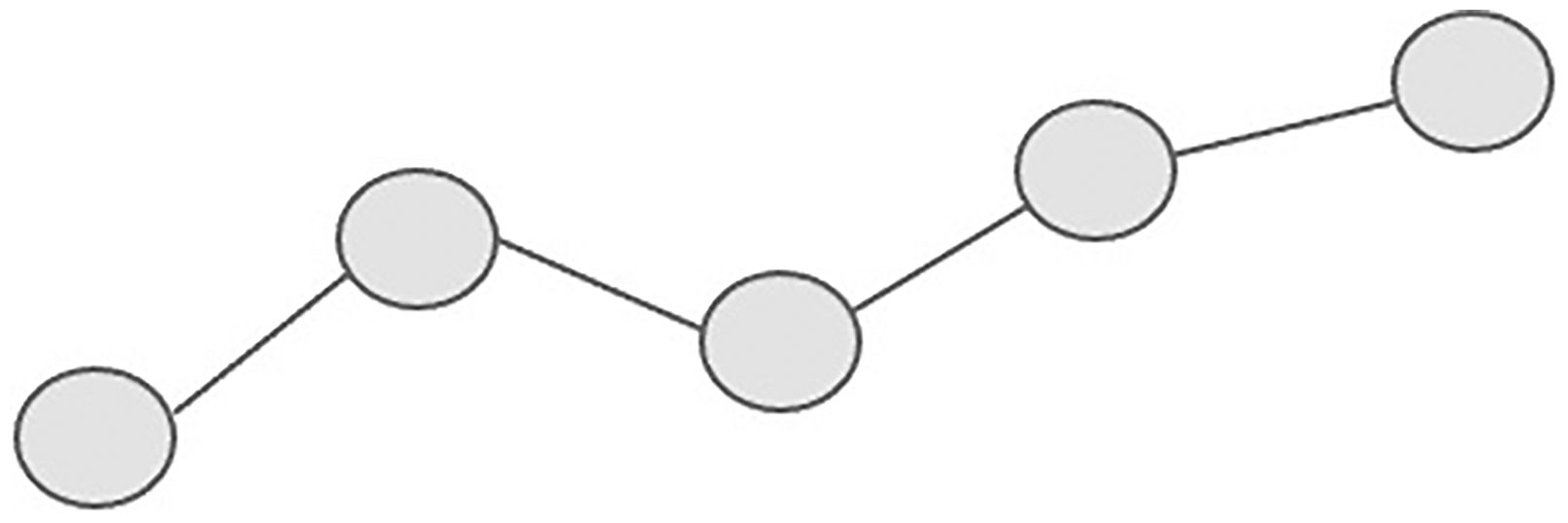
The destination-orientation of the navigator. Life is lived at, with the journey in-between being of little significance.
Let us now compare this with Figure 2, which shows paths of wayfaring. These paths do not connect, and nor do they run between. They flow in-between, always carrying on through. This does not mean the wayfarer does not pause along the way, but that these pauses are more like moments of rest rather than destinations; opportunities to draw breath in readiness to follow the path once again. 1 This is why in following a path of observation, the wayfarer does not reach a destination but continually weaves knots (see Figure 2). Far from being conceived as static surroundings to be skimmed across, the environment for the wayfarer is a dynamic place to be joined with. 6 Thus, in contrast to navigation, where location and movement are mediated, it is the attunement of the wayfarer's movements in response to informational ebbs and flows that affords them opportunities to carry their journey on. 13
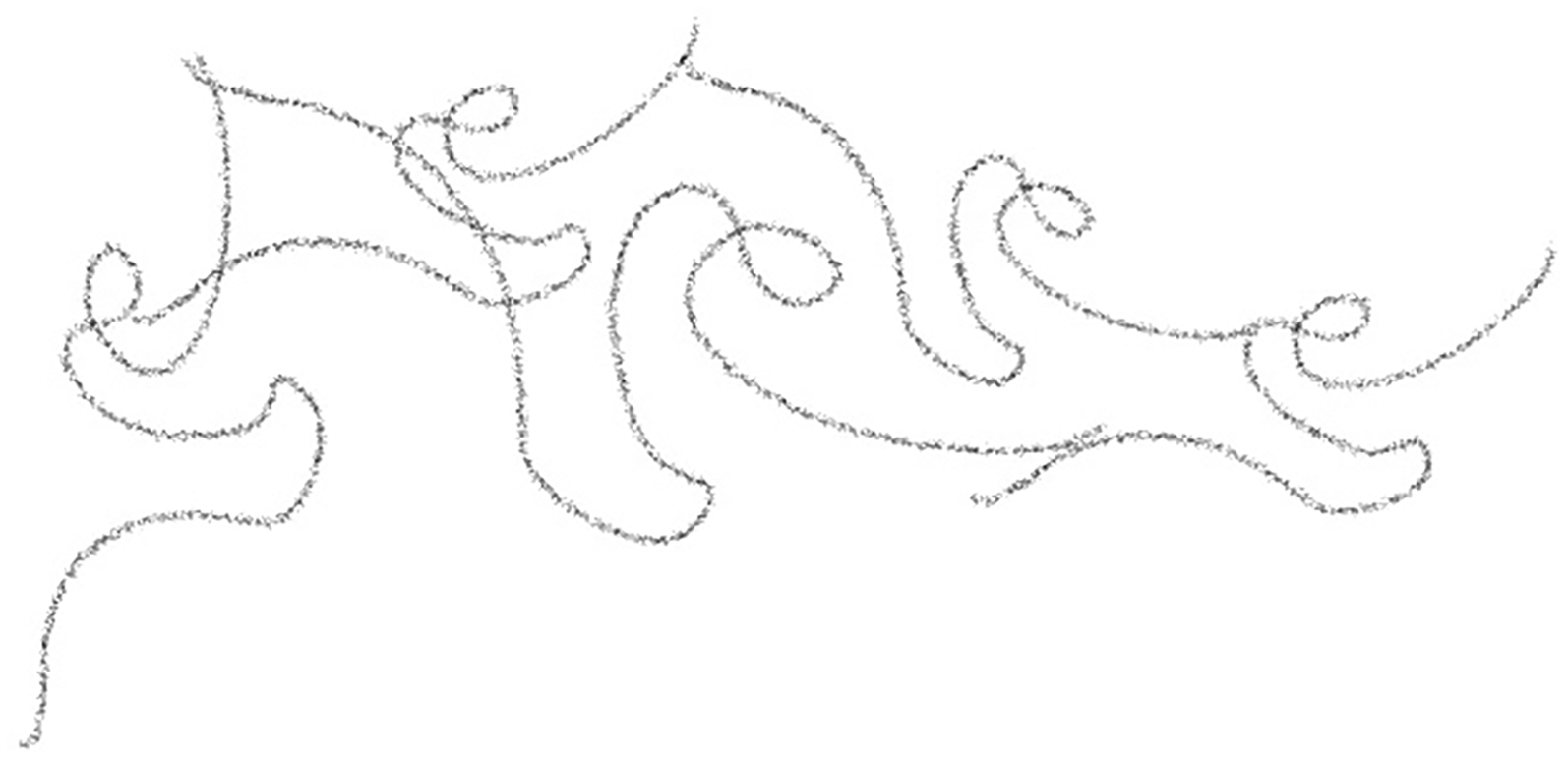
The journey-orientation of the wayfarer. Life is not lived at or in but unfolds in-between.
Herein we find the crux of our thesis. Navigation, to us, speaks to a coach's journey defined as a process of potential fulfilment – of matching one's career trajectory against destinations plotted in advance. Taking a brief step back, some may ask why such a view is of concern at all? Recall in our prologue, where we spoke of a mountaineer's ensuing lament – having climbed the tallest and most challenging peaks, there was nowhere further to go, no mountain left to climb. Could the same not be said of coaching defined through the levels reached and/or tournaments won? Much like the mountaineer, a coach's journey defined as such would become a narrowing, vertical sequence of pre-determined achievements – an ascending trajectory that could inadvertently pay homage to the aphorism: what comes up, must come down. 20 Viewed as a process of wayfaring, however, this directionality subverts – moving from a closed in verticality, to an opening out horizontality. 21 This perspective does lead to an interesting question, though: what are the practical implications of conceptually positioning a coach's journey as a process of wayfaring?
To frame our response, the following section weaves in the reflections of a Rugby Union coach, anchored around three components of wayfaring: i) on knowing; ii) on attending; iii) on carrying on. To garner these reflections, a biographical approach was taken up with. As a narrative and processual mode of inquiry, a biographical approach seeks to explore the lives and ensuing experiences of people who are of particular interest to a certain population.14,15 In sport, such people typically reflect coaches and/or athletes, with a biographical approach thus affording the opportunity, not only to highlight central experiences, but to speak through moments of adversity, reflecting upon how such events shape various career transitions. 15 While acknowledging the many different types of biographical analysis, our approach followed what Dašić 15 refers to as a conversational narrative, which gathers ‘data’ (e.g., events, insights, experiences and exchanges) through engagement in conversation. In the present case, this conversation (manifest in face-to-face coffee catch ups, phone calls, emails, and text messages) unfolded across a four-month period (August – November 2024) and was sustained between a Rugby Union coach and skill acquisition scientist (both co-authors of the present paper). To offer context to these respective participants, the Rugby Union coach has over 30-years’ experience, coaching at a variety of developmental levels across the world, while the skill acquisition scientist has over 15 years’ experience in academia, having written extensively on the concept of wayfaring. The ‘data’ gathered through this conversational process materialised into the forthcoming biographical reflections. As such, following a brief conceptual introduction to the respective component of wayfaring, each reflection is written in first-person prose by the Rugby Union coach.
On knowing
For inhabitants are wayfarers: they move through the world rather than across its outer surface. And their knowledge…is not built up but grows along the paths they take. 22 (p. S134)
Earlier, we mentioned that for the wayfarer, knowing is not something that happens before they leave, but unfolds along the way. This implies that to know is to move, or rather, moving is knowing. 22 As a corollary, the wayfarer's knowledge is not gained or acquired, and nor is it transmitted. Noted in the quote with which this sectioned opened, it grows through the experiences undergone along the way. Simply, it is a process of knowing not more, but better. 22 The aim here is to explore this episteme and its implications for a coach's journey conceptually situated as a process of wayfaring. Though, prior to this, we first stake out our theoretical grounding, drawing on the distinctions made by James Gibson16,23 in his theory of direct perception: on knowing about and knowing of one's environment.
Knowledge about refers to some state of affairs, such as knowing that ‘The Gabba’ is a sporting stadium located in Brisbane, Australia, or that a forward pass is penalised in the game of Rugby Union. The utility of this knowledge resides in its referential meaning – it can be shared between people. Comparatively, knowledge of one's environment refers to skilful action that results in some desired outcome, such as finding one's way to ‘The Gabba’ without the need of navigational aids. The former type of knowing is information transmitted at second-hand, manifest through images, pictures and written-on surfaces, while the latter is grown primarily by directly perceiving features of an environment for oneself.
16
So says Gibson
16
: Knowledge of the environment…develops as perception develops, extends as the observers travel, gets finer as they learn to scrutinize, gets longer as they apprehend more events, gets fuller as they see more objects, and gets richer as they notice more affordances. Knowledge of this sort does not “come from” anywhere; it is got by looking, along with listening, feeling, smelling, and tasting. (p. 242, emphasis added)
To consider this distinction further, let us explore the convention of game models, which are oft-used in team sports such as football. The purpose of this secondary information is to instruct a player about certain game features – like where to stand and/or how to pass the ball when faced with a particular type of defence. 25 Presumably, this knowledge about one's opposition has been gained by, and transmitted from, a coach, who designs practice tasks that explicitly constrain player behaviours in such a way to enact a pre-determined game model. Not only is this knowledge secondary, but it is projective – it is determined prior to an event occurring. While this projected knowledge about one's opponent may help narrow players’ search space in the performance landscape before heading out to compete, it does not directly regulate their behaviour while in the game. 26 This is because what regulates behaviour – in accord with the ecological approach followed here – is continuously emerging information that specifies key affordances, like the movements of opponents and teammates, weather conditions and other critical objects, surfaces and events, all of which cannot be directly perceived through the scribbling of a game model on a whiteboard. 27 To animate this example, we now turn to our first coaching biographical reflection.
Biographical reflection 1: From game models to principles of play
In 2006, upon entering my third pre-season at the Cornish Pirates, and following on from notable progress in the previous two seasons, I spent much of my time studying the tendencies of leading teams around the world in the hope of finding a competitive edge. What I had noticed during this time was that such teams oft-utilised explicit attacking structures and formations that I felt we could emulate at the Pirates. For reference, in the preceding seasons, we had adopted a rather unstructured approach to game-play, in which playing formations were more emergent than pre-determined and explicit. Thus, to attempt to accentuate our competitiveness, my observations seeded the basis for an offensive game model, primarily informed by other team playing styles. Much of the 2006 pre-season was spent introducing key features of this game model – both on and off the field – such that we could ‘press play’ and enact its ensuing structures during the forthcoming competitive season.
On field, this ‘copy-paste’ 28 approach led to the design and integration of highly prescribed practice tasks, through which I drilled players about where to stand, when and how to pass, and which defensive gaps to exploit. The repetitiveness of these sessions was critical, as I believed (at the time) that it consolidated the players’ ability to enact this model automatically during competition, without depleting their attentional processes. Simply, it was the automaticity of this positional model that I was chasing through my repetitive practice designs. To complement this automaticity off the field, I often used team meetings to test the players understanding of the game model, using explicit instruction and rhetorical questioning. Only later in my journey did I realise that I was subscribing to a coach-centred, linear pedagogical approach to skill acquisition, grounded in an ethos of repetition with more repetition.29–31 Otherwise stated, I believed that to successfully take our performance to the next level, players needed detailed knowledge about its constituent features, manifest through the game model I had designed.
What transpired during the season turned out to be an unfortunate, but seminal, moment in my coaching journey – a knot along the way. First, given the quantity of prescribed and repetitive practice we had enacted during the pre-season, our in-season performances were rigid and robotic, with the players unable to adaptively respond to changes in the game's unfolding. In effect, the players’ desire to execute my game model meant they were unable to respond to the specific invitations that emerged in each game. Second, as the season carried on and our performances plateaued, my frustration at the players inability to adapt became matched by their frustration at an inability to express themselves during a game. The players felt the highly prescriptive approach to practice that I deployed, not only overly-constrained their ability to play, but significantly impacted their enjoyment of the game, resulting in them expressing feelings of disempowerment and a lack of ownership. This was voiced by one of the players in our end of season review, stating: ‘this is not our program, but yours. We need to go back toward our more unstructured style. That worked better for us!’
In reflecting upon these words, and the ensuing pedagogical approach I had been using throughout the season, it dawned on me that in copying others, I had created an environment that downplayed our identity. Moreover, while by season's end players were able to verbally recite key components of our game model, it had not transferred to successful performances on-field given the players’ inability to adaptatively respond to a variety of scenarios during a game. Stated differently, I had been prioritising the accumulation of knowledge about, which came at the expense of supporting players grow their knowledge of the competitive environment. This issue led me to ask what has proven to be a seminal question in my coaching journey thus far: how can I support players to grow their knowledge of the game, while guiding their attention to key features about it? In response, I spent much of the following pre-season re-conceptualising my role as a coach. This saw me evolve from the conveyor of declarative knowledge about how the game should be played, to the designer of practice tasks replete with key information sources that players could learn to detect, thereby supporting their knowledge of the game. 31 And what of my game model? This evolved into our principles of play, 32 which acted to guide, not specify, player behaviour. 33
Such a perspective shift led to many key changes in how I coached, one of which being my embracement of ‘identifiable messiness’ in practice. By this, I mean the design of practice tasks with an identifiable goal that can be achieved in a variety of different ways. 32 Stated simply, practice became a problem-solving activity that helped players grow their knowledge of the game. Once again, only later in my journey did I realise I had begun following a path of observation guided by principles of nonlinear pedagogy, 29 grounded in key tenets of an ecological dynamics rationale. 34 While I spent the following seasons exploring this nonlinear approach, it did lead me to an interesting question that seeds the next section: if knowing is not a capacity to be filled, but a sensitivity to be tuned, what, then, does it mean to pay attention?
On attending
Knowing is not about prediction and control but about remaining attentive to the unknown knocking at the door.
35
(p. 193)
The process of learning to perceive affordances (i.e., opportunities for action) is what Gibson refers to as an education of attention. Given its grounding in direct perception, attention is best thought of as a process of ‘tuning-in’ to specifying information, a process of attunement. Like wayfaring, this process of attunement does not reach a point of conclusion but carries on for as far as one wishes to attend to that which is of concern.16,37 The corollary is that in the practice of any craft, mastery resides not in the computational capacity of one's mind, but in an embodied sensitivity to subtle variations in environing conditions that are always going on. 38 Considered in the context of team sport, we could speak of a master Rugby Union player as one who is attuned to information that directly specifies opportunities to exploit one's opposition – be that by passing, running, offloading, kicking or evading. This idea would hold that, as a player finds their way through a game, what guides their prospective action is not a prior, projected model of how the game should be played, but a finely tuned perceptual system resonating with information specifying affordances available at any particular moment in competition.38,39
Somewhat paradoxically, though, the notion of attunement places much of the emphasis on the side of the perceiver, which risks an asymmetric view of the environment as complete, simply waiting to be perceived.40,41 As a masterful Rugby Union player may attest, skill resides not only in a sensitivity to information ‘there’, but also in a forbearance, patiently waiting on an opponent to respond to affordances that come-into-being. For in this response, a master Rugby Union player may have to alter course and attend to newly generated information specifying affordances that invite other actions. Considering this, educational philosopher Jan Masschelein 41 offers a different reading of ‘attention’ to that espoused by Gibson. For Masschelein, attention is not just a process of attunement, but one of exposure, a matter of displacing one's view. The purpose of this displacement is not to reach an all-knowing vantage – a destination – but to learn to ‘see things from a different perspective’. Critically, this process of ‘seeing from a different perspective’ requires one to wait on the world to reveal itself and respond with a masterful sensitivity. 1
In weaving key ideas of Gibson and Masschelein together, we can speak of attention as having two sides: attunement and exposure. Doing so, though, does bring us to an interesting question: which of them comes first? Well, to us, making one's way through any venture in life – be that a game of Rugby Union, surfing a wave or hiking a trail – requires one to step out into a world on the move, and expose themselves to the risk and uncertainty of what may transpire. But it is in this risk and uncertainty where true skill resides – for we can only attune to that with which we are exposed. 39 Thus, as suggested by Deleuze in the quote with which this section began, paying attention is about submitting to the risks of exposure, and masterfully tuning in to the opportunities afforded along the way. To help others pay attention, then, is to start from an education of exposure, which precedes an education of attunement. To animate this, we now turn to our second biographical reflection.
Biographical reflection 2: Surfing the two sides of attention
Following my time at the Cornish Pirates, I transitioned into a new role, joining the Queensland Reds in the 2009 Super Rugby competition as attack coach and coaching coordinator, alongside a newly formed rugby department. Bringing with me a range of experiences, like those undergone at the Pirates, I felt it was critical to set about establishing an ecosystem at the Reds that afforded players the opportunity to take ownership of their program, having input into the way they aspired to play. Thus, starting from a colloquial blank slate, one of the first things we set about integrating were principles of play, designed through careful consultation with key members of the playing group. Moreover, as highlighted in my first reflection, I had also come to appreciate a renewed, ecological view of my role as a coach by this stage – progressing from the conveyor of declarative knowledge to the designer of tasks that afford opportunities to explore a variety of movement solutions. 31 To this, I would like to note that the coaching and high-performance group I was a part of at the time, led by the head coach, embraced an approach to performance preparation that actively sought alternative ways of doing. Such openness allowed me to both express myself and sharpen my coaching skill, situated within what was a safe and vibrant environment that I felt was genuinely innovative with regards to coaching and performance preparation.
Central to my shift foregrounded above was a seminal appreciation that no two scenarios encountered during a game will ever be identical – things will always be different. Considering this, I often asked myself during the 2009 pre-season: how can we design practice tasks that show players where to look, but not tell them what to see? In other words, how can the tasks we design afford players the freedom to explore a variety of different movement solutions in the overall achievement of a task goal?
What I had not realised at the time was that in pondering this question, I was inadvertently talking about the design of practice tasks that consisted of varying levels of safe uncertainty. 32 As shown in Figure 3, practice tasks characterised as such are those which encourage players to adaptatively respond to a game's unfolding ebbs and flows. Contrasted against my ethos of repetition with more repetition at the Pirates in 2006, these tasks actively foster repetition without repetition.42,43 I bring this up because (to me) such tasks allow us to surf both sides of attention discussed earlier. Namely, the description of a practice context as ‘safe’ implies there are opportunities – affordances – waiting to be perceived, actualised and explored (attunement), while the ‘uncertainty’ term implies a concurrent forbearance, a responsiveness to the opportunities that come-into and out-of-being (exposure). To design such practice tasks, I found it critical that we leant on key principles of nonlinear pedagogy – namely representative learning design and constraints manipulation. 31 The importance of representative learning design cannot be understated here, as it helped to ensure players were exposed to key sources of information, which allowed them to attune to information encountered in competition. 44 Moreover, the use of task constraints and their ensuing manipulation allowed us the opportunity to amplify certain affordances, while dampening others. Considering the experiences undergone at the Pirates in 2006, I actively worked with key players at the Reds when designing practice tasks to ensure that they ‘felt’ like a game and resonated with how players wanted to play. Only later in my journey did I realise I was engaging in the practice of representative co-design. 45
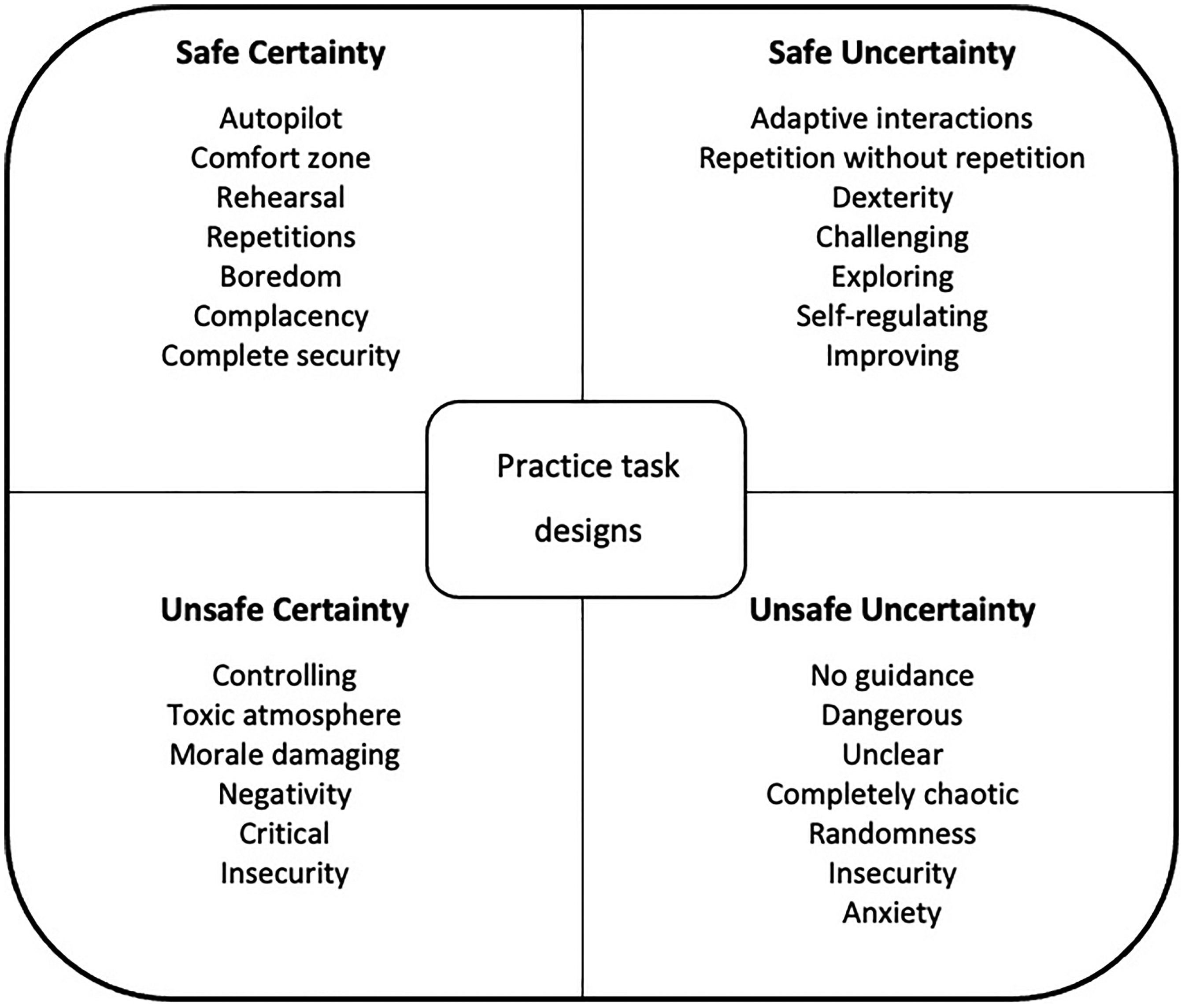
The (un)safe (un)certain quadrant for practice task designs.
To more concretely demonstrate how we designed practice tasks at the Reds that surfed both sides of attention, I would now like to share a more nuanced example. Specifically, moving into the 2009 season, we identified a key area of growth related to our ability to move the ball into attacking field positions, thereby increasing our capability to score. This fed into one of our principles of play, which we termed ‘motion offence’. Effectively, we were encouraging players to keep moving the ball in search of space to exploit. Indeed, while this motion offence always ‘looked’ different, changing based on a variety of interacting constraints, the principle acted as a type of ‘north star’ that guided the players’ search for space. To unpack this further, let us consider a game-based practice task we referred to as ‘Team Attack’, which focused on keeping the ball in motion within the opposition's 22 m line. To give some context as to why this distance was chosen, our internal research at the time identified that positive attacking outcomes within 22 m of an opposition's defensive line was an indicator of successful performance within the Super Rugby competition.
46
Requiring two opposing teams, this practice task was typically performed on a full field with a total of 30 players (i.e., 15 vs 15). The attacking team was given the task goal to score as quickly as possible, while the defending team were required to prevent a score for as long as possible. Now, while this may seem like it was simply match-play, there were key constraints I purposely manipulated to accentuate (or dampen) opportunities for the attacking team to achieve the task goal, three of which are listed below:
Starting position: I would often start this task from a different position by alternating how the ball would be fed into play. At times, I would pass the ball to the defending team, with the attacking team having to win it back before being able to score (attacking from moments of transition). On other occasions, I would start the game from a more structured position, such as a scrum or line out. The point of this variety was to encourage players to find and exploit space during both structured and unstructured moments of game-play.
46
Player number manipulation in both attack and defence: While this task typically started with balanced player numbers, I would often remove defending players to amplify affordances for the attacking team as the task unfolded. This encouraged the attacking team to search for and exploit moments in attack when they noticed an overload (i.e., 15 vs 13). Conversely, I would remove attacking players at times to give the defending team an overload (i.e., 13 vs 15). This, I found, challenged the attacking team to retain ball possession, keeping it in motion while patiently exploring scoring opportunities through actions, such as offloads. Match scenario and score line: Often accompanying the constraints manipulated above, I would integrate various match scenarios into the practice task. For example, we would create conditions in which scores were level for a defined period of time, replicating moments late in a game. Such scenarios, we found, encouraged unique movement solutions, with the attacking team exploring more creative actions to keep the ball in motion such that they could score within a defined time period. Moreover, we often coupled this constraint manipulation with player-led ‘strategy time’. By this, I mean setting the problem (i.e., ‘two minutes of play left, scores are level, try to win or save the game’) and then giving players 60 s in their respective teams to strategize without coach involvement. This, I found, encouraged greater player ownership, while fostering opportunities for on-field leadership.
By the time I transitioned from the Queensland Reds at the end of the 2013 season, not only had I sharpened an appreciation of principles of play and nonlinear pedagogy, but I had started to appreciate the overflow of experience. The coach I was when I started at the Reds was not the same upon leaving, as the experiences I had undergone transformed the ways in which I attended to my role. This period concurrently coincided with my completion of a postgraduate program of study, through which I attained a Master's of Sports Coaching. Indeed, while I felt my coaching skill was sharpening, the enrolment in such a program began to show me that the closer I attended to my coaching skill, the further I had to go. This seminal realisation was both invigorating and overwhelming, leading to a question that seeds the forthcoming section: while appreciating the continued growth of my knowledge, when would I actually ‘be’ a coach?
On carrying on
It is the movement itself that counts, not the destination it connects… wayfaring always overshoots its destinations, since wherever you may be at any particular moment, you are already on your way somewhere else. 9 (p. 162)
Earlier, during our prologue, we spoke of a mountaineer-occupant who viewed climbing as a series of peaks to ascend. Occupying the top for a fleeting moment, the goal was to tick off pre-determined achievements from a finite list of peaks. To us, this example reflected a rather narrowed and close-ended temporality, which we can now appreciate as being synonymous with that of navigation. Specifically, ascending a peak could be situated as a discrete event, leading toward a point of finality – a point of ‘being’ achieved. To recall Ingold, the climber's lines ‘are not traced in walking but are first projected, as a solution to the puzzle of how to get from base to summit by a sequence of points, and then enacted on site by means of ropes and spikes’. How, though, would this temporality change if we were to view climbing as a process of wayfaring? In other words, if life is viewed as a process that carries on through experiences undergone along the way, then how best to define the temporality of wayfaring?
To respond to this question, we turn to the third chapter of John Dewey's seminal text, Art as Experience. In considering experience, Dewey explores the relation between doing and undergoing. People, Dewey acknowledged, do all kinds of things in life. A Rugby Union player, for example, may play a game, then converse with a coach about their performance, then engage in a practice task in readiness for their next match. In each of these things, there is a degree of certainty to be achieved – that is, they know they are playing a game, they know they are talking with a coach, and they know they need to practice in readiness for the next match. Yet in each, there is also an experience undergone – the player is transformed (even subtly) by engaging in the doing of each activity. According to Dewey,
4
this is because in experience: [f]low is from something to something. As one part leads into another and as one part carries on what went before, each gains distinctness in itself. The enduring whole is diversified by successive phases that are emphases of its varied colors. (p. 38)
What this example attempts to show is that the experiences undergone in the doing of various things – like playing a game of Rugby Union, conversing with a coach, and designing a practice task – always overflow. Appreciating this, we could state that the temporality of wayfaring is not a metronomically sequential process leading to point of being, but – as the quote with which this section opened points toward – it is a continuous duration that is always on its way to somewhere else; a process suspended in-becoming. This, after all, is why life for the wayfarer is not live between, but in-between. To explore this idea further, we now turn to our last biographical reflection.
Biographical reflection 3: A coach in-becoming
‘As in life’ says Ingold, 6 ‘what matters is not the final destination, but all the interesting things that occur along the way. For wherever you are, there is somewhere further you can go’ (p. 174). I think about this quote a lot. Personally, it liberates me from the paradox foregrounded in my second biographical reflection: that on the one hand, after over 30 years of coaching, I am attuned to information that specifies key aspects of my role, while on the other, I feel I have so much further to go, as each day is an opportunity to learn with and from others – knowing not more, but better. Perhaps this is why I feel less comfortable ‘being’ a coach, and more ‘becoming’ a coach. It is a journey, after all, that is not finished but carries on with experiences undergone along the way. The aim of this last reflection is to speak to this durational temporality through the overflow of three key transitions.
The first relates to my transition from playing to coaching. Like most who follow such a transition, how I coached early in my career was shaped by experiences undergone during my playing career. Notably, I was fortunate to have played at two leading premier rugby clubs in New South Wales, both of whom were led by world cup winning coaches. The overflow of experience, though, was less about the way I was coached, and more about the realisation that there was no universal way ‘to coach’. Specifically, while both clubs were successful, both engaged in different ways of doing. While not necessarily appreciating it at the time, this exposure to difference proved seminal for my coaching. It fostered a belief, which I still hold onto today, that coaching is less about adhering to one ‘correct’ way, and more about working with and alongside others to find ‘our way’.
To provide some further context here, let me briefly touch on my formative years coaching at a grassroots level in the UK, starting in 1995. Following my experience as a player at two successful, yet distinctive clubs, I first set about resonating with the values of the clubs I was coaching – asking myself questions such as: ‘what keeps players coming back each year? And how can I foster this attraction?’ What I quickly learnt was that yes, winning was important, but deeper than that was the establishment of an environment that brought people together, bounded in their collective difference. Along with this, I came to appreciate my role in designing a broader environment – beyond the grass – that catered for many different skillsets and motivations. As I had experienced as a player, drilling one way of doing was not going to facilitate such an environment, so I set about learning to design an environment that fostered opportunities for all players to grow and develop. Noted in my earlier two reflections, only later in my journey did I realise I had stumbled into tenets of nonlinear pedagogy by way of experiences undergone during my playing days.
The second transition relates to my pursuit of higher education. In-between leaving the Cornish Pirates and joining the Queensland Reds in 2009, I undertook a season with the Leicester Tigers Academy. This period coincided with a growing desire to further my coaching, leading me to enrol in a Master's Degree at the University of Sydney. While a central driver for this enrolment was to sharpen my skill as a coach, I found it led to more questions than answers – paying homage to the quote with which I opened this section: ‘wherever you are, there is somewhere further you can go’. Not only did my enrolment help align experiences undergone with key theoretical advancements in the field of skill acquisition and coaching science, but it facilitated experiences that are carrying on to this day. Specifically, following the completion of my Master's Degree, I set about publishing my first academic paper. 46 The experiences undergone in writing, drafting and publishing this work have since carried on, materialising into conversations with other coaches, scientists and practitioners from sports organisations all over the world. Pertinently, one of these conversations materialised into another publication some three years later, 32 with the experiences undergone overflowing into the writing of these very words. The key point being the experiences undergone during the completion of my Master's Degree opened up further opportunities along my way in becoming a coach.
The third transition relates to a perspective shift that seeded the very basis for this paper. Specifically, in 2013, following my time at the Queensland Reds, I was appointed assistant coach with the Australian Rugby Union team – the Wallabies. Why this experience is of considerable note, is that it had been an ambitious goal of mine to reach this international level since initiating my coaching career in 1995. However, the overflow of this experience was perhaps a little more painful than those spoken about above, as I was only to be in this position for 18-months, being laid off in October of 2015 following a change in head coach. Indeed, I had achieved my goal of reaching this international level but was left feeling like I had so much further to go in my coaching journey. Otherwise stated, while I had reached an international level after nearly two decades of coaching, my journey was far from being defined. In fact, while the experiences undergone with the Wallabies – and in the years preceding – unquestionably shaped my values and resilience as a coach, what I found had overflowed was the import of maintaining a balanced life away from rugby. Simply, like the mountaineer in our prologue, I realised that I had been prioritising the arrival at a pre-determined, close-ended destination, which had come at the expense of other aspects of my life. I was engaging not in wayfaring, but navigation. While this may seem counterintuitive, I found that fostering interests away from coaching enriched my craft and love for the game.
After coaching the national team of Tonga and then having spent two years in Japan with the Kobelco Steelers, I found myself transitioning back to the Queensland Reds in 2018, some five years since leaving. Perhaps like the mountaineer in our prologue, I was back climbing what may have appeared to be the same mountain. Yet, not only had the organisation changed (by way of administration, coaches, and players), I too had changed. Carrying the experiences undergone in reaching the Wallabies, I found myself carefully prioritising a more balanced life away from coaching and rugby, while actively encouraging the players I worked with to do the same. For me, this materialised in a renewed perspective and love toward family, friends and hobbies (such as surfing), which I found led me to adopt a calmer demeanour in the face of adversity during the ebbs and flows of the Super Rugby competition. Indeed, I was paying homage to Heraclitus’ seminal proclamation noted in our prologue: one cannot coach the same club twice, for it is not the same club and they are not the same coach. Nowadays, my journey continues to unfold, offering new challenges and enriching experiences coaching at a grassroots level in Noosa, Australia. Poetically, it is the experiences I have undergone that have led me back to where I started at a community level. This does, however, lead me to ask a question I am still in the midst of answering: has my journey been defined, or is it suspended in-defining?
Concluding remarks
The aim of this paper was to advocate for a coach's journey defined, not through the levels reached, but the experiences undergone along the way. To frame this, we first drew on Ingold's concept of wayfaring, which, as a mode of travel, was contrasted against that of navigation. Following this, we then sought to address the practicality of our conceptual propositions by weaving through the biographical reflections of a Rugby Union coach, anchored around three components of wayfaring: i) on knowing; ii) on attending; iii) on carrying on. Our goal, in sharing these biographical reflections, was to show that the definition of a coach's journey continually unfolds through the experiences undergone along the way – thereby denoting a process of wayfaring.
We concurrently hoped that in their humility, these reflections could serve to liberate others by highlighting the systemic pressures of ‘being’ a coach. This interpretation, we suggest, foregrounds a broader implication stemming from our work. Namely, it fosters questions about how coaching ‘success’ could be re-considered by encouraging a less deterministic scope of competition outcome, and more of their sustained growth manifest in careful reflection on current practice. We do acknowledge, though, that this speaks to a broader systemic issue that often transcends the locality of coaching. 47 Nevertheless, it is hoped that in sharing these experiences, and aligning them with the conceptual framework of wayfaring, a piece such as this can at least serve to instigate conversation at a governing body level, opening the door for administrators, managers and various policymakers to look beyond the definition of a coach's journey through the narrow lens limited by a list of pre-determined outcomes.
To round this out, we would like to briefly touch on a subtle, but nevertheless important, paradox. That is, we find ourselves writing ‘concluding remarks’ to a paper that advocates for the continuity of experience. Perhaps, then, it would be better to think of this, not as a conclusion, but as another knot along the path of observation. A moment in which we – the authors – have paused to draw breath in readiness for the journey ahead, wherever that may lead. Doing so would turn these ‘concluding remarks’, and indeed this paper, into an opportunity for a renewed beginning, defined not by the sentiments nor reflections shared therein, but the possibilities opened up along the way.
Footnotes
Acknowledgements
The first author would like to thank Kay Booker for her support along the way, as without which, such a journey would not have been possible.

Ethical considerations
Not applicable.
Consent to participate
Not applicable.
Consent for publication
Not applicable.
Data availability
Not applicable.
Funding
The authors received no financial support for the research, authorship, and/or publication of this article.
Declaration of conflicting interests
The authors declared no potential conflicts of interest with respect to the research, authorship, and/or publication of this article.