



Abstract
The purpose of the study was to explore possible explanations for the link between the quality of a coach-athlete relationship (CAR) and performance in professional cricket. Understanding the mechanisms through which CARs influence on-field performance may provide practical insights for sport practitioners including coaches. A total of 54 (28 male and 26 female) professional cricketers from the United Kingdom completed a survey measuring CAR quality, communication strategies, psychological safety, and collective efficacy, along with performance data from 50,159 deliveries across the 2023 county championship and Rachel-Heyhoe Flint trophy. Bootstrap analysis of the main variables of the study revealed that CAR quality positively predicted skill execution performance in bowlers (line and length target area %). Parallel mediation models also found that communication strategies (i.e., conflict management and openness), psychological safety, and collective efficacy explained the association between CAR and cricket performance. This research explains the link between CAR and on-field objective performance, suggesting potential reasons for performance success and failure. It paves the way for additional research that aims to explain the impact of social-environmental and interpersonal factors on objective performance.
Coach-athlete relationships (CAR) have previously been described as the essence of coaching, 1 in which coaches’ and athletes’ cognitions, feelings and behaviours are mutually and causally inter-connected. 2 The importance of coach-athlete relationships has previously been identified within literature across a range of facets including happiness, welfare, 3 providing emotional support 1 and in performance, both subjectively and more recently objectively. 4 However, with this recent link to objective performance, it warrants the question as to why coach-athlete relationships predict objective performance levels, with the current aim to focus on possible factors to explain this link that have been previously highlighted within research.
Relationship quality has been conceptualised in terms of closeness, commitment, complementarity and co-orientation between an athlete and their coach, also known as the 3 + 1Cs model. 5 Closeness refers to a coach and an athletes’ affective bond (e.g. mutual trust, respect, appreciation), commitment refers to their intention to maintain the connection over time and complementarity refers to their behavioural interactions capturing the extent to which they are cooperative and collaborative. Finally, co-orientation reflects the degree to which a coach and an athlete have similar views and shared understanding. The 3 + 1C model of CAR has been used extensively across research demonstrating the importance of relationship quality between a coach and an athlete.
Within competitive sport, and professional cricket more specifically, CAR has been viewed as an important contributor to athletes’ physical and mental state.1,6 Rice et al. 6 highlighted that coaches’ relationships with their athletes can facilitate positive attitudinal changes and can equip athletes with the essential tools to execute their responsibilities with integrity and confidence. Their study conducted with junior cricketers demonstrated that the coach-athlete relationship is essential for heightened levels of self-consciousness and overall performance. The significance of the relationship was further illustrated in a study conducted by Khan and colleagues 7 who identified that Pakistani female athletes who largely work with male coaches, feel uncomfortable expressing thoughts and feelings relating to their sport. This lack of comfort to voice one's thoughts and feelings was found to lead to dysfunctional (or less-than-optimal) coach-athlete relationships, subsequently affecting female athletes’ self-efficacy and mental toughness.
Previous research has also demonstrated the importance of building and cultivating effective CARs to enhance sporting performance. For instance, Gencer 8 and Zaker and Parnabas 9 explored the links between CAR quality and self-esteem, motivation, and sport performance while other studies by Jowett and colleagues10,11 have investigated these links via cross-sectional, dyadic, and longitudinal designs. However, what all these studies have in common is measuring performance subjectively. Several scholars like Clarkson et al. 12 and Josefsson et al. 13 have called for researchers to use objective performance measures to strengthen the claim that CAR impacts actual sporting performance.
Investigating the impact of the coach-athlete relationship quality on athletes’ objective performance, Phillips et al. 4 carried out a study that aimed to explore the association between the CAR quality and an objective, on-field measure of athlete performance. The results indicated that perceptions of CAR quality positively predicted athlete successful batting shot execution in cricket. This was the first study that examined the links between athletes’ perceptions of relationship quality with their respective coaches utilising an objective measure of performance, namely a shot execution metric. This study also highlighted that in relation to Jowett et al. 1 3 + 1Cs model of CAR, commitment and complementarity (as opposed to closeness) were significant and strong predictors in executing cricket performance (batting successfully), suggesting that athletes and coaches who make investments over time (commit time, effort, energy) and collaborate by working out solutions together, providing feedback and being open to alternatives (e.g. asking questions, listen to ideas) are likely to see improvements to the batting technique. Based on the findings of this research, Phillips and colleagues 4 made two recommendations for future research: (a) to examine the association between CAR quality and objective performance whereby both batting and bowling measures of performance are included, and (b) to explore the mechanisms or processes by which CAR quality impacts these objective performance measures. The present study aims to address both recommendations.
First, to address the recommendation regarding bowling performance, assessment of current research has focused on the shortest form of the game (T20) and what it takes to be successful. 14 Specifically, the importance of taking wickets whilst minimising the number of runs conceded per over are crucial to increase the likelihood of success. 15 As was highlighted by Phillips et al., 4 a major limitation of these metrics to assess performance is that they fail to consider the processes involved 16 as well as the constraints on performance, 17 such as strategy and player technique. Whilst the initial study from Phillips et al. 4 helped set the tone in understanding the processes in performance in an objective a repeatable way, further examples particularly from a bowling standpoint will help to solidify the aim of more objective measures of performance. Assessing the processes involved in successful bowling has been put forward by Leamon and Jones 18 whose framework which identifies efficient/target areas in seam bowling and how they contribute to the successful outcomes (wickets). Within this framework, they quantified the line (Stumps/channel) as well as length (6–8 m) which produced the lowest overall batting averages: runs conceded between each wicket to fall. 19 Whilst this framework has yet to be tested empirically, it does provide a foundation for a structure going forward to measure the processes involved in successful bowling. As highlighted by van den Berg et al., 20 with the growth of data collection in cricket and the growth of performance analysis within cricket, 21 bowler pitch maps are now being recorded and coded, providing an objective and consistent measure in which to test seam bowling performance and provide feedback to players. 22
There is empirical evidence showing that the quality of the coach-athlete relationship associates with subjective performance2,23 and objective performance. 4 As was reported by Phillips et al., 4 better performances in batting were predicted by good quality coach-athlete relationships. Subsequently, coaches and athletes whose relationships are characterised by trust, respect, commitment, and collaboration create a positive environment within which they can be themselves allowing them to unleash their potential in ways that coaches and athletes in poor quality relationships may not be able to do so. When assessing environmental factors important to high quality CARs, psychological safety (PS) is of utmost importance to be considered. PS has been defined as a state in which there is comfort to take risk and challenge or speak up openly, without the fear of negative repercussions. 24 The concept of psychological safety has attracted sport scholars25,26; however, remains a relatively new construct within the CAR context27–29 and coach/athlete leadership.3,30 Subsequently, PS can provide an important social environmental or interpersonal situational medium to explain the links between quality coach-athlete relationships and performance in cricket skill execution. Correspondingly, there is plenty of evidence in organisational psychology 31 to show that PS is crucial to job performance with decreases in job performance levels due to the fear of the repercussions associated with making mistakes. Therefore, it can be hypothesised that PS creates a fearless interpersonal environment 32 that has the capacity to transfer the positive effects of quality coach-athlete relationships on cricketers’ performance and skill executions. PS and quality (trusting) relationships have been theorised to be associated 33 and therefore, the CAR quality allows athletes to feel safe to express themselves freely, both within the interactions they have with their coaches and within their broader sporting environment. If there is freedom of expression and a desire to work together to creatively identify solutions, when mistakes and errors are seen as part of the process of learning, improving, and succeeding, then it is likely that such an environment will create better conditions for performance to improve.
Alongside PS, collective efficacy was hypothesised to transfer the effects of quality CAR to performance. 4 Collective efficacy is defined as an athlete's confidence in the processes of their own team, rather than comparing individual abilities in relation to the opposition. 34 Literature has indicated the CAR is important in developing collective understanding in an athletes’ ability 35 as well as predicting athletes’ perceptions of collective efficacy.36,37 This research suggests the importance of the CAR within a wider team environment. Moreover, there is consistent evidence in the literature to indicate the reciprocal relationship between collective efficacy and performance. 34 These findings support the research conducted by Ma et al. 38 and Si 39 and others who found the higher the sense of collective efficacy, the better the team performance. Collective efficacy is thus an important resource to achieve team goals and deal with any potential obstacles. 40 With previous evidence to support the links between CAR and collective efficacy as well as collective efficacy and understanding, it appeared reasonable to hypothesise the mediating role of collective efficacy between CAR quality and cricket skill execution.
Lastly, it was hypothesised that communication strategies as proposed by Rhind and Jowett, 41 specifically conflict management and openness, would serve as mechanisms for the association between CAR quality and performance. Athletes who have the capacity to manage conflict, prevent and resolve disagreements and to be open and honest about their needs, wants, and preferences, are more likely to benefit their performance, skill development and execution. Within the extant literature, communication has been shown to be positively correlated to the CAR42,43 and athletes’ capacity to freely communicate as well as manage conflict are key strategies associated with effective CARs. 27 Moreover, Stanford et al. 44 found that openness was an important dimension in building personable relationships, while Rhind and colleagues 45 revealed its importance cross-culturally. The importance of communication is also deemed important for athletes’ performance.43,46,47 The links between performance and communication in sport settings remain embryonic, however, research from organisational settings provide convincing evidence. For instance, Bui et al. 48 conducted a meta-analysis of 175 studies across a 30-year period and indicated where communication was open, and information freely shared, resulted in greater team performance. With communication strategies shown to be important within the CAR as well as having an impact on performance levels, it is plausible that communication will serve as a mediator between CAR and cricket skill execution.
Whilst the previous sections have outlined how each of the potential mediators (i.e. communication, psychological safety, and collective efficacy) impact performance and the CAR, the extant literature has also provided insights about how these variables work together. Jowett et al. 27 reported that when athletes experience high levels of psychological safety, open channels of communication and conflict management and resolution are present leading to better quality relationships. This finding was further reinforced by Maughan and Jowett 32 as well as Senel and colleagues’ 28 findings who identified the interplay between CAR, coach behaviours and PS. Such findings support previous work such as Remtulla et al. 49 who explained the impact a psychological safe environment has on the open channels of communication within a professional (business) environment. Moreover, Durrah 50 suggested the importance of shared collaboration and friendships in creating a psychological safe business environment. This was furthered by Patil et al. 51 who found that team efficacy was positively correlated to creating a psychologically safe environment.
Guided by research, psychological safety, communication and collective efficacy were chosen to study the link between CAR and performance. While the association between the CAR quality and subjective performance has been demonstrated in research, this research seeks to examine the mechanisms by which CAR quality and objective performance are associated. Thus, this study examined the link between CAR quality and objective performance as well as the following two hypotheses:
The quality of the coach-athlete relationships predicts higher levels of batting and bowling performance based on the processes involved (shot connection and bowling target areas). Openness and conflict management (communication), psychological safety and collective efficacy mediate the relationship between coach-athlete relationship and cricket skill execution (Shot connections and bowling target areas).
Methods
Participants
A total of 54 professional cricketers consisting of 28 males and 26 females within the United Kingdom, with a mean age of 25.9 (SD = 5.1) years took part in the study. 21 athletes identified their role within a team as a batter, 13 identified themselves as a seam bowler, with the remaining 20 identifying their role as an All-rounder- contributing with both bat and ball. Athletes reported on average working with their current coach for 2.7 (SD = 2.1) years.
Procedure
Upon institutional ethical approval (2022-11344-12206), contact was made to coaches and analysts within the first-class county and women's regional programme requesting participation for the study. The inclusion criteria for the study were as follows; must be aged 18 and over, is a professional athlete 52 and is expected to play First-Class County/Women's regional cricket in the 2023 season. Athletes then completed an online questionnaire prior to the start of the 2023 season relating to the following domains: coach-athlete relationship, coach-athlete communication strategies, psychological safety, and collective efficacy.
Following permission from the England and Wales Cricket Board (ECB), data surrounding balls faced, instances where a shot was played as well as shot connections were collected for each of the First-Class County/Rachel Heyhoe Flint Trophy games in which the 41 batters participated. These competitions were selected as they are the longest formats played by male/female professionals domestically under the regional/county structure in the UK. Furthermore, data consisting of the lines and lengths bowled by the 33 bowlers/all-rounders was collated. In total, this produced data for 50,159 deliveries across 198 games.
Research participants completed and signed an informed consent form after reading a participant information sheet.
Materials
Coach-Athlete Relationship Questionnaire (CART-Q direct version 53 ) is an 11 item self-reported measure of the quality of the coach-athlete relationship. Athletes were asked to describe how each statement is relevant to how they interact with their head coach (e.g. I am close to my coach; I trust my coach; I am responsive to my coach) across a 7-point Likert-type scale, from 1 (strongly disagree) to 7 (strongly agree). The alpha co-efficient of the entire items of the scale for this sample was .94.
Communication Strategies (CARM-Q 45 ) concerning items relating to conflict management and openness strategies from the coach-athlete relationship maintenance questionnaire were used to assess the quality of communication strategies used within the CAR. Athletes were asked to describe how each statement is relevant to how they interact with their head coach (e.g. I am patient during disagreements; I am open about my feelings) across a 7-point Likert-type scale, from 1 (strongly disagree) to 7 (strongly agree). The items of each of the subscales demonstrated a high alpha coefficient; Conflict management (.96), and Openness (.94).
Psychological Safety Scale 33 is a 7-item measure aimed at assessing the level at which an athlete feels they can share thoughts and feelings without risk of damaging their reputation or standing. Athletes responded to the items (e.g. It is safe to take a risk on this team), across a 7-point response scale, from 1 (strongly disagree) to 7 (strongly agree). The alpha co-efficient for the items with this sample of athletes was .85.
Collective Efficacy Questionnaire for Sports (CEQS 54 ) is a 20-item scale aimed at assessing athlete perception of a team's confidence going into a competition or championship. Athletes reported how confident they were (e.g. persist when obstacles were present, outplay the opposition) across a 7-point response scale, from 1 (not at all) to 7 (extremely confident). The alpha co-efficient for the items with this sample was .95.
Performance: Shot Connections. In accordance with the method used by Phillips et al.,
4
data regarding Shot Connections was coded by county analysts through recording each individual ball clip within Play Cricket Scorer Pro (PCS Pro), coding for whether a shot was played as well as the connection made on the bat in accordance with ECB measured parameters (see Table 1 for full list of shot connections and their operational definitions). The number of balls middled was converted into a percentage in relation to the number of balls faced (and where a shot was played) before being collated in Microsoft excel alongside questionnaire responses. Inter-rater reliability of the shot connections recorded was tested by randomly selecting 4800 shots across 20 different matches to be reanalysed within a hand-written notational system. It was shown in accordance with Warrens,
55
that there was a strong agreement between the two shot connection scores,
Types of shot connections recorded and operational definitions.
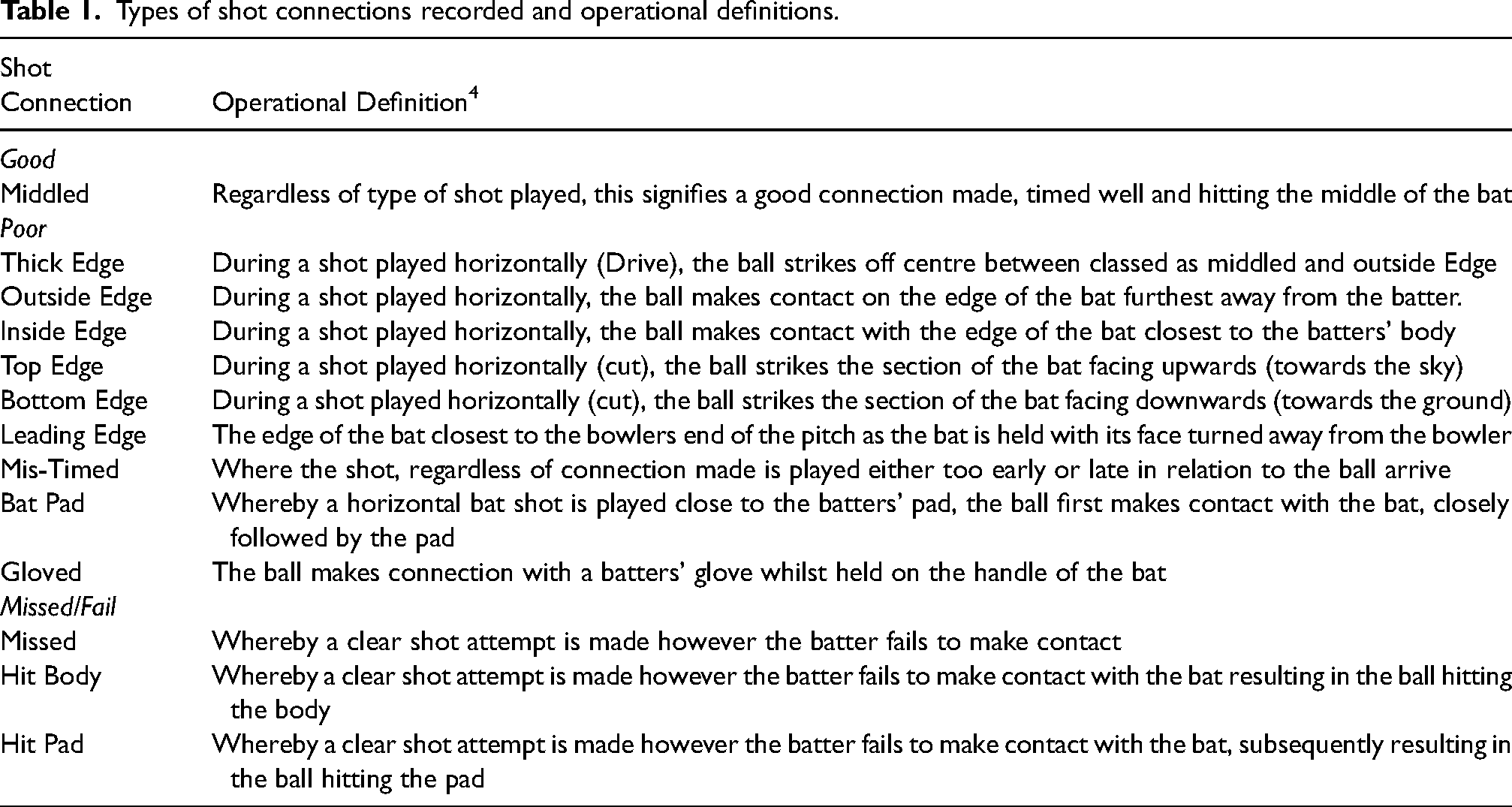
Performance: Line and Lengths. Data regarding the lines and lengths bowled by seam bowlers was selected in accordance with the values represented by Leamon and Jones.
18
Through recording each individual ball clip within PCS Pro, the location on a pitch where the ball landed was recorded (See Table 2 for full list of lines and lengths noted). The number of balls which landed within the target area (6–8 m within a stumps/channel line) first noted by Leamon and Jones
18
was converted into a percentage in relation to number of balls bowled across the 2023 season, before being collated in Microsoft excel alongside questionnaire responses. Inter-rater reliability of the line and lengths recorded was tested by randomly selecting 5249 deliveries across 20 different matches across the 2023 season to be reanalysed It was shown in accordance with Warrens,
55
that there was a strong agreement between the two shot connection scores,
Lines and lengths recorded and operational definitions for seam bowlers.
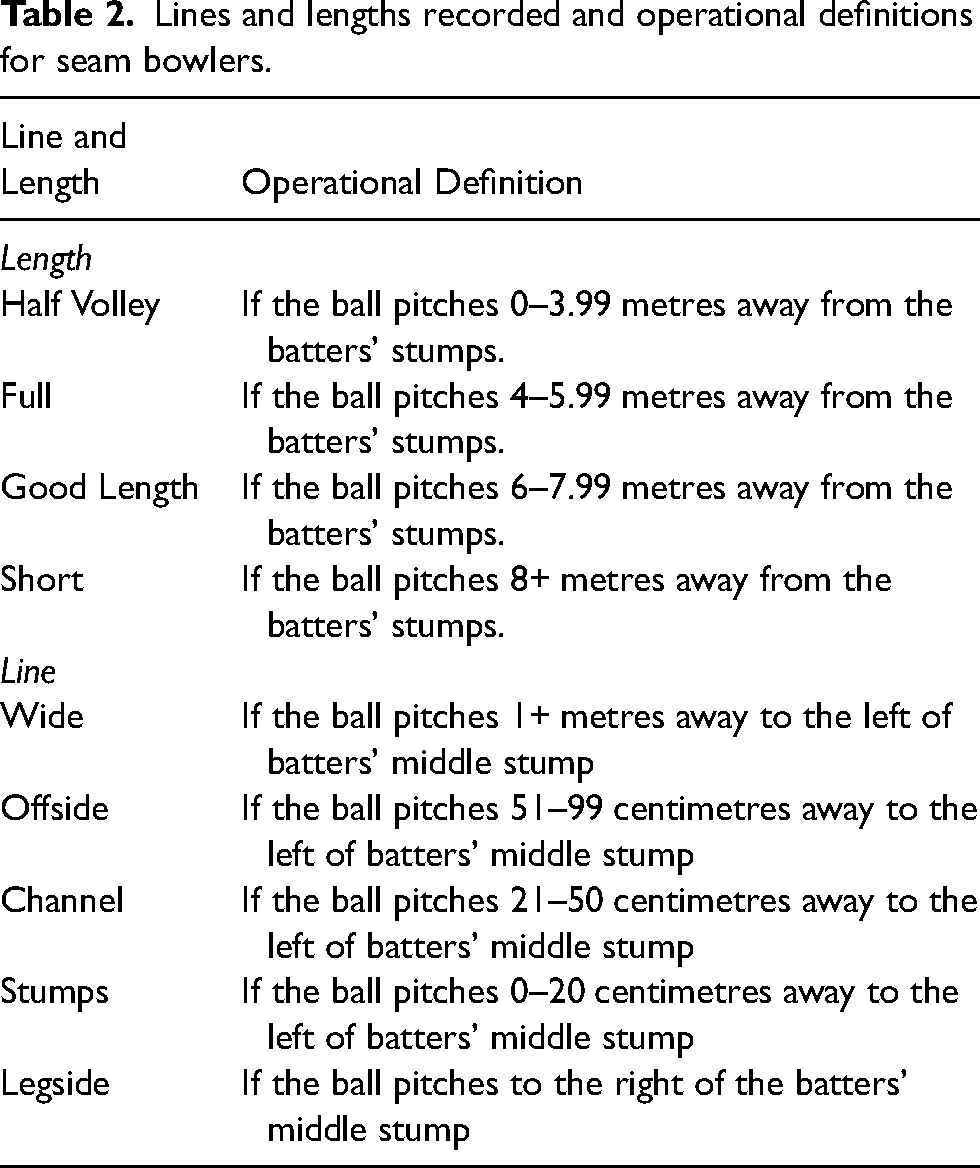
Data analysis
Data from the above measures alongside performance data relating to shot connections and lines and lengths bowled was collated into excel before being exported to IBM® SPSS® Statistics programme for analysis. In accordance with the aims of the study, a linear regression was performed to explain any variance between CAR and cricket performance (batting and bowling). Secondly, a parallel multiple mediation model using model 4 within the PROCESS macro 56 in SPSS was used to assess the influence of CAR on performance (batting and bowling) directly as well as the indirect effects caused by the above suggested mediators. As per the suggestion of Langlinais et al., 57 the PROCESS macro was set to generate the effects of the model based on 5000 bootstrap samples and a 95% confidence interval. A mediation would be indicated when a confidence interval does not include a zero. 58
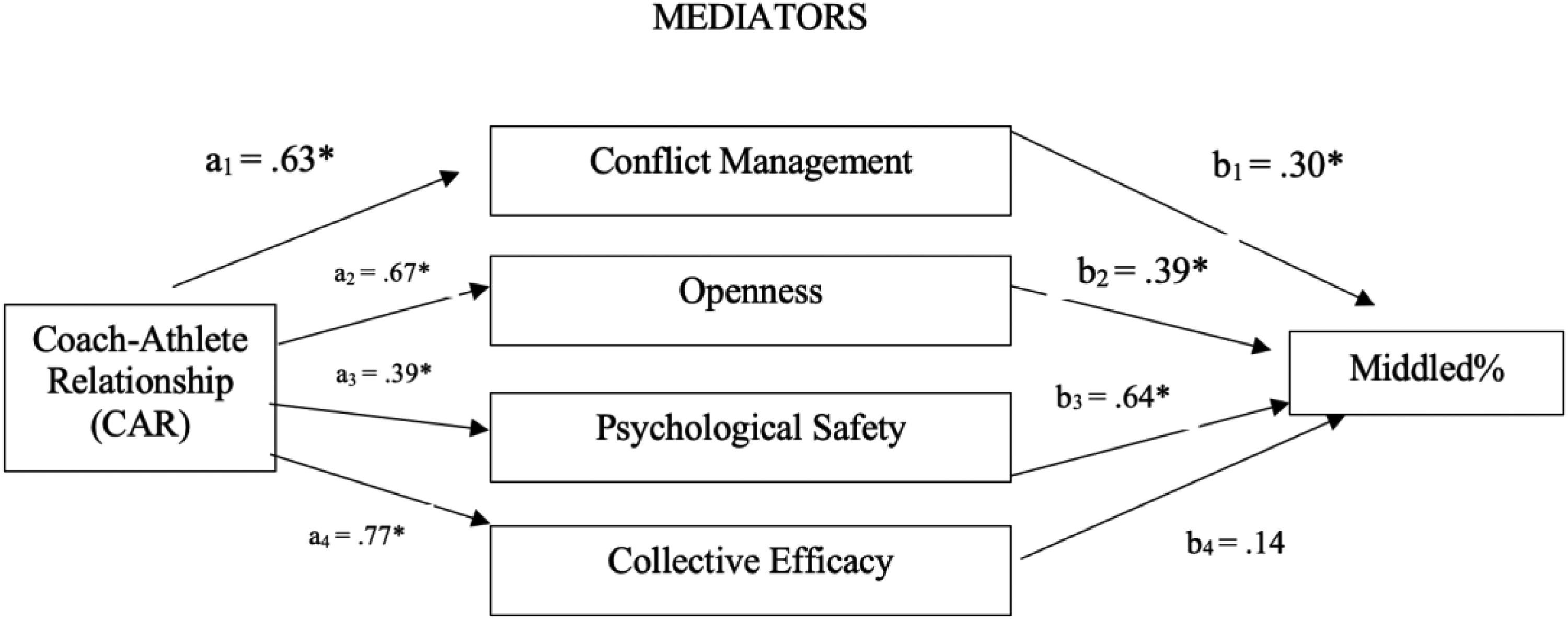
Multiple mediation model of the tested variables on batting performance. All paths are unstandardised coefficients. Significant paths are indicated * (p < .05).
Results
Prior to the analysis, accuracy of data entry, missing values, outliers, as well as assumptions of linear regression and mediation analysis (i.e. Levene's test of equality of error variances, Kolmogorov-Smirnov's test of normality) were examined. No issues were identified. The following section outlines the results of this study in accordance with its aims and hypothesis.
Table 3 highlights the means, standard deviations, and the correlations between the key variables within the study. As expected, significant correlations were recorded between CAR and both batting and bowling performance. Significant correlations between conflict management, openness, psychological safety, and performance were also recorded.
Mean (M), standard deviations (SD) and the correlations between all study variables.
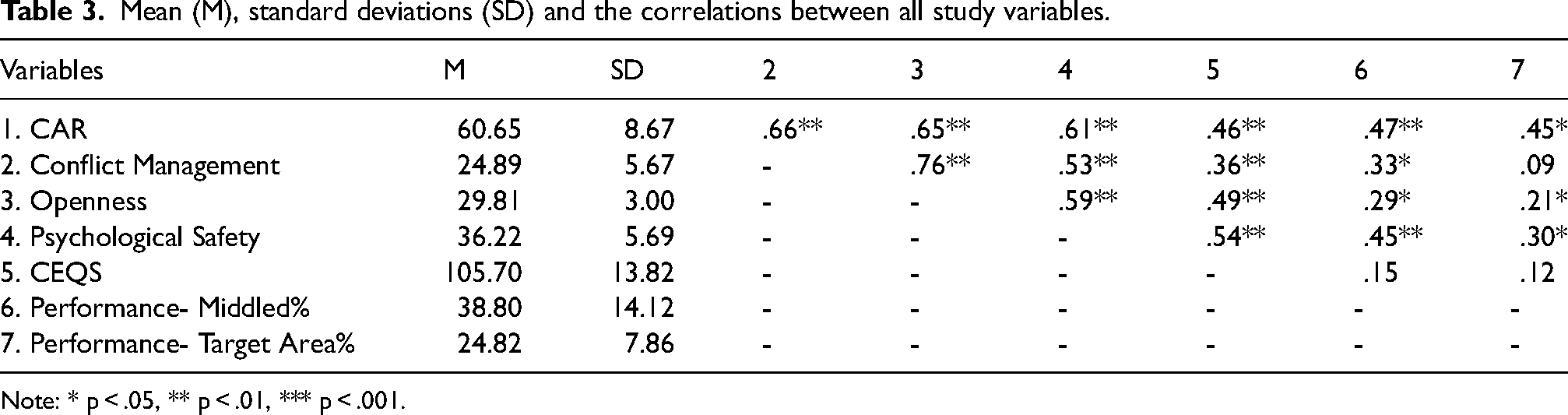
Note: * p < .05, ** p < .01, *** p < .001.
In line with the first hypothesis, linear regression analyses were run to assess the ability of CAR to predict (1) the percentage of balls bowled within the suggested target area (Target area%) and (2) the percentage of balls middled (Middled%). It was shown (1) the variance of the bowling model was 47%, F (1, 52) = 14.70, p < .001 and (2) variance produced on batting performance at 46%, F (3, 49) = 10.13, p < .001.
Regarding the second hypothesis, a multiple mediation model was used to test the effect of the testing variables on the relationship between CAR and batting performance. It was shown that CAR had a significant effect on performance (direct effect = .90 [95 CI%, .80, to .95]), as shown in Figure 1. In regards to batting performance (middled %), bootstrapped confidence intervals indicated the presence of a mediation (confidence intervals were shown to be above zero) in three of the testing variables, with mediating effects shown in conflict management (indirect effect = .30 [95 CI%, .10 to .50]), openness (indirect effect = .52 [95 CI%, .30 to .74]), and psychological safety (indirect effect = .64 [95 CI%, .37 to .83]). A full summary of the findings including indirect effects (ab) and confidence intervals (CI) are shown in Table 4.
OLS path analysis for the indirect effects of coach-athlete relationships on batting performance through the testing mediators.
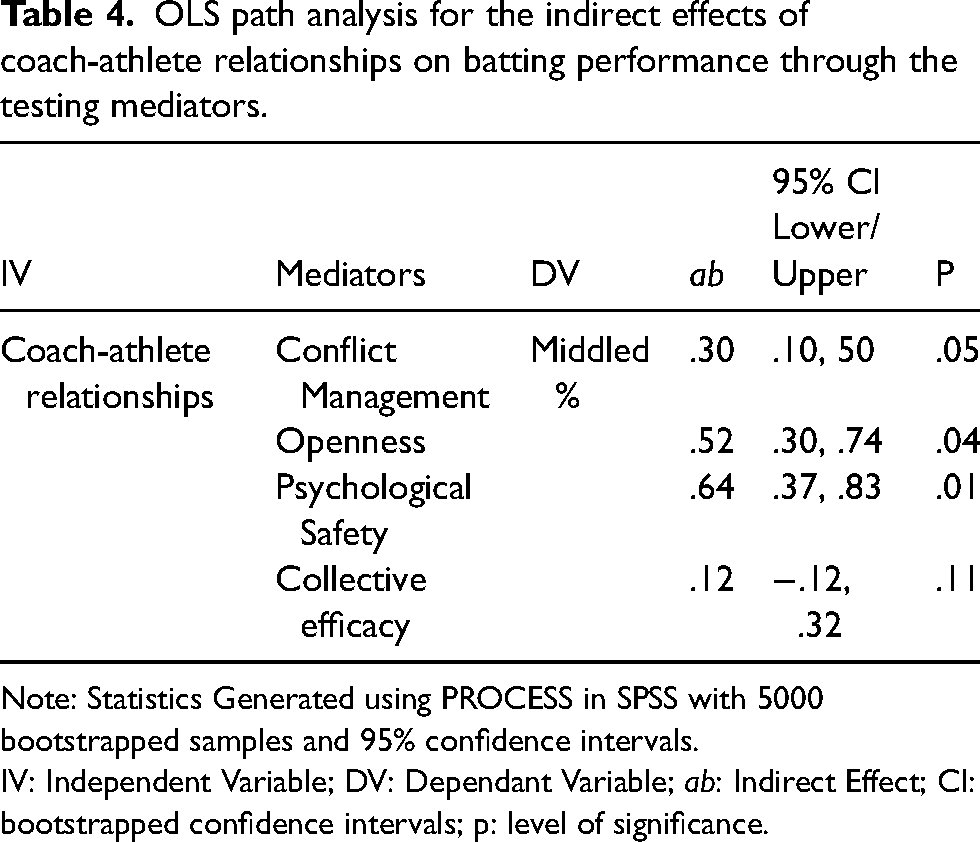
Note: Statistics Generated using PROCESS in SPSS with 5000 bootstrapped samples and 95% confidence intervals.
IV: Independent Variable; DV: Dependant Variable; ab: Indirect Effect; CI: bootstrapped confidence intervals; p: level of significance.
A multiple mediation model was then used to test the effect of the testing variables on the relationship between CAR and bowling performance. Firstly, it was shown that CAR had a significant effect on performance (direct effect = .67 [95 CI%, .45, to .89]) as shown in Figure 2. Secondly, bootstrapped confidence intervals indicated the presence of a mediation in in three of the testing variables, with mediating effects shown in openness (indirect effect = .35 [95 CI%, .19 to .51]), psychological safety (indirect effect = .54 [95 CI%, .32 to .76) and collective efficacy (indirect effect = .15 [95 CI%, .01 to .29). A full summary of the findings including indirect effects (ab) and CI are shown in Table 5.
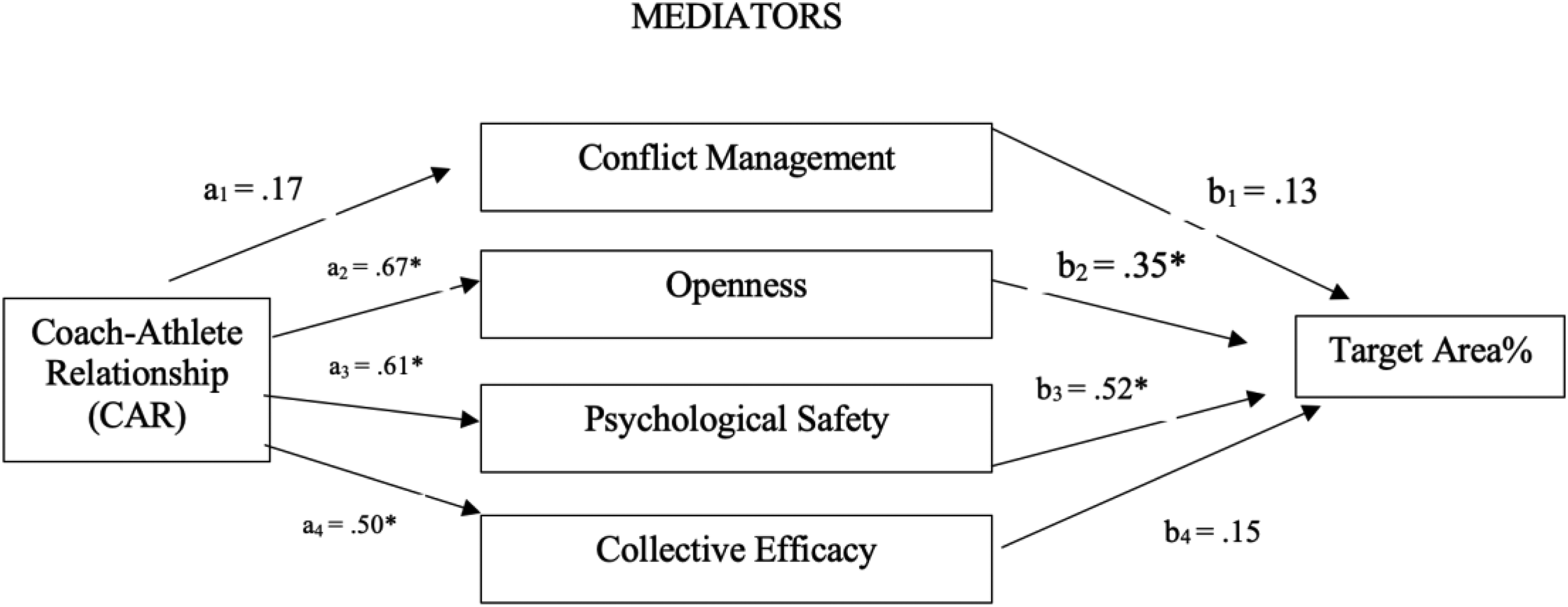
Multiple mediation model of the tested variables on bowling performance. All paths are unstandardised coefficients. Significant paths are indicated * (p < .05).
OLS path analysis for the indirect effects of coach-athlete relationships on bowling performance through the testing mediators.
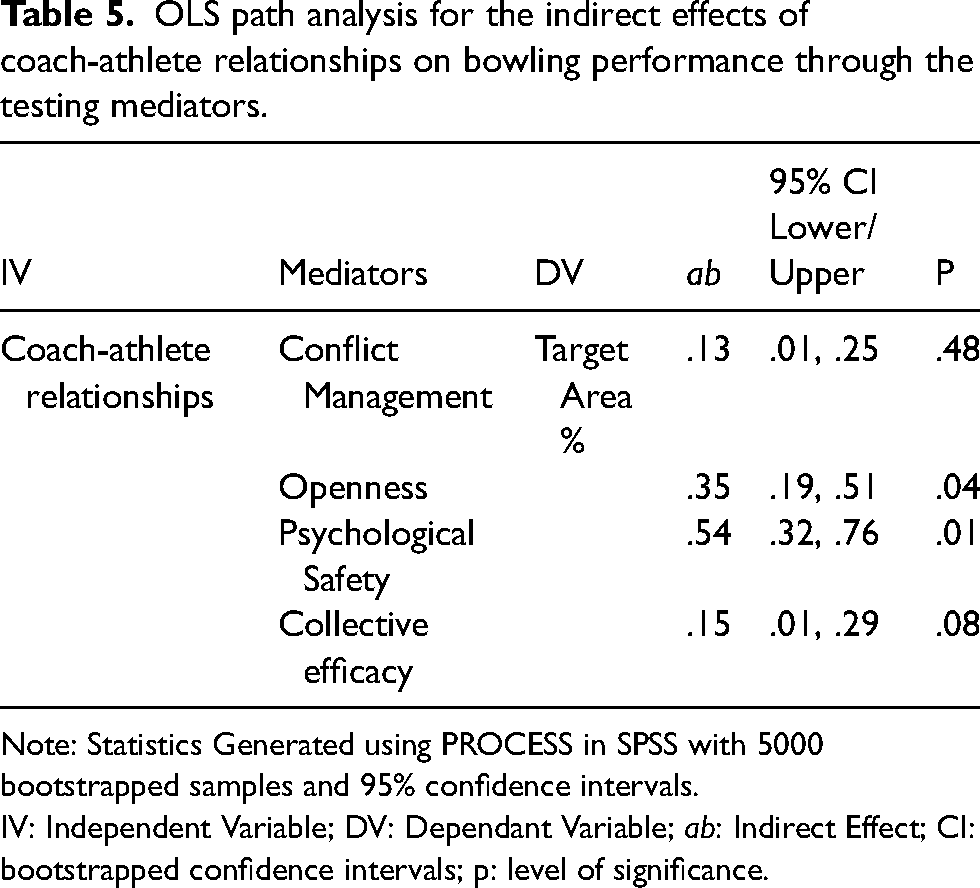
Note: Statistics Generated using PROCESS in SPSS with 5000 bootstrapped samples and 95% confidence intervals.
IV: Independent Variable; DV: Dependant Variable; ab: Indirect Effect; CI: bootstrapped confidence intervals; p: level of significance.
Discussion
The aim of this study was to investigate the link between CAR quality and objective performance in cricket as well as to investigate three distinct mediators to explain any link. Two hypotheses were specifically examined: (a) the quality of the coach-athlete relationship predicts higher levels of batting and bowling performance based on the processes involved (shot connection and bowling target areas), and (b) factors relating to openness, conflict management, psychological safety and collective efficacy mediate the relationship between coach-athlete relationship and the processes involved in cricket skill execution (i.e. shot connections and bowling target areas).
The analysis of the obtained data revealed that (a) CAR significantly predicts cricket batting and bowling target area performance, and (b) factors relating to conflict management, openness and psychological safety mediated the link between CAR and batting performance, while openness, psychological safety and collective efficacy explained bowling performance. These results demonstrate that a positive relationship exists between CAR quality and bowling performance, further indicating as CAR quality increases, athletes are also likely to see increases in their skill replicability. 4 Moreover, the results suggest that through increases in coach-athlete communication, athletes’ perception of psychological safety, and the sense of collective efficacy, CAR quality can affect skill execution.
In line with the first hypothesis, it was shown that a positive association exists between CAR and bowling performance based on the percentage of balls bowled within a specified target area (skill execution). This result has reaffirmed the association between CAR quality and objective sporting performance (on field measure) first identified by Phillips et al. 4 In the present study, this association has been evidenced in examining a new sample of professional bowlers employing an additional metric, namely, bowling target areas, in evaluating performance. These findings support and extend previous literature that has used subjective measures of athlete performance8,9 by filling an empirical gap 12 and by demonstrating that psychological constructs and physical or objective performance-related constructs are linked. Collectively, this evidence underlines the practical significance of the research conducted as this relates to psychosocial gains (e.g. relationships, communication, psychological safety, group dynamics) afforded in sport performance.
Secondly, the findings of the study supply possible explanations of the mechanisms or processes by which the CAR and objective cricket performance are associated. In both batting and bowling performance it was shown that athlete psychological safety explained the link between CAR and skill execution. This finding was in line with previous research in which it supports the interconnections of such variables as CAR quality, psychological safety and sport performance3,28,29,32 as well as the links with psychological safety and job performance. 31 These findings suggest that when coach-athlete relationships are of higher quality, athletes reported higher levels of PS. They also suggest PS provides a mechanism by which the effects of quality relationships transfer to athletes’ better skill execution during competition. When athletes perceive that the relationship with their coaches is one of trust, respect, commitment, and cooperation, then they can allow themselves to perform freely without, for example, feeling that a performance mistake can lead to punishment (e.g. deselection in subsequent matches, embarrassment in the locker room) and that freedom of expression is often ‘rewarded’ with better performance in both batting and bowling. It is also possible to suggest that absence of PS as a result of low relationship quality can lead to poorer performances in cricket. There is evidence to indicate that lack of good quality relationships creates fearful coaching environments where psychological safety is very low. 32 While more research is warranted, from a practical point of view, if a coach can create a fearless coaching environment in which athletes feel safe to take risks and challenge themselves and one another, not only will it further promote the quality of the relationship but subsequently, the skill execution. It could be suggested that promoting a fearless and risk-tolerant environment encourages athletes to step out of their comfort zones and to challenge themselves to achieve new levels of performance.
Similar conclusions can be drawn, in part, when referring to collective efficacy. The findings of this study not only demonstrated a positive association between CAR and athletes’ perceptions of collective efficacy consistent with previous studies, 37 but it also found that collective efficacy explains the association between CAR and athletes’ performance. However, collective efficacy could only explain the link between CAR and bowling performance. This may be due to the unique nature of cricket as a sport as Pote et al. 59 highlighted - cricket is a team sport made up of individual, distinct performances. For large parts of a match when batters are performing their skill, they do so alone (the majority of their team is off the field), which is very different compared to bowlers’ skill execution who have all their team-mates around to provide support and collaboration. Similarly, the nature of bowling also requires greater collaboration with others, for example to enforce plans as well as build game-related pressure. Subsequently, players need one another for fielding or taking catches, building relationships and a level of understanding with one another in the process. This shared understanding, particularly in a bowling unit not only boosts the quality of relationships but has now shown the importance of collaboration in the success of executing a technical skill that can often determine how well a team performs in a game. 4
In terms of communication strategies, the present findings support the importance of openness in the CAR and suggest having open and honest conversation or dialogue is paramount for performance benefits and is consistent with previous studies both within sport43,60 and beyond. 48 This finding expands our current understanding of the importance of openness in CAR by applying it to an objective on-field metric of performance such as batting and bowling skill execution. When examining conflict management (CM), however, findings differed in relation to the two distinct performance metrics utilised. Whilst supporting the importance of CM to the CAR, 61 it only explained the link between CAR and performance in batters. It can be suggested that this may be due to the nature of batting and the greater consequence a mistake can cause, with poor shot connections increasing the likelihood of dismissal. 62 This is in contrast to bowling, where failing to hit a target area can be rectified in the next delivery, meaning that the consequences of the outcome are not as damaging or absolute or even consequential for the score. With the stakes perceived to be higher for batters in terms of the value of their errors, it can be suggested that batters more consistent in their skill replicability have a stronger relationship with their coach, that allows them to deal and eradicate conflicts or mistakes effectively. It is also plausible that batters because they have to deal with high performance stakes, the capacity to regulate emotions, such as during a conflictual situation, is important as shown by Ros-Morente et al. 63 Thus, development of emotional regulation in cricketers, especially in batters, could help to increase the management of conflict when it arises and quality relationships. 64
There are a few limitations of this study worth addressing. Whilst bootstrapping analysis is more commonly accepted within psychological research, it should be noted that there are weaknesses to this method, including inflating potential type 1 errors. 65 This method was selected however, in part due to the small sample size employed in this study (n = 54). It should be noted, as per the work of Langlinais et al., 58 that in smaller samples than the present study, the method of bootstrapping used could be pushed further than other tests as its performance was ‘relatively invulnerable’ to outliers. In the present study, measurements of the testing variables were all collected prior to the start of the season, and despite a prediction in the association between CAR and performance being identified, it fails to establish how the strength of this association can fluctuate over time. Further research should therefore incorporate a longitudinal design with multiple timepoints to assess how factors such as competition results could impact the strength of the relationship and vice versa throughout a season while also establishing causality among the variables.
Furthermore, despite the positive findings above, the current study only examined the relationship between CAR (and its mediating factors) and performance from this sole direction, raising possible questions around the direction of each prediction. This raises the argument, are positive CARs in fact a result of individuals playing and playing well and therefore central to a coach's plans compared to those on the periphery who may have lower CAR. It could be suggested higher CAR are a result of performance rather than its cause, with the reverse of the present relationship needed for testing before confirming any importance. The authors also note that the testing variables were only examined from the athlete's perspective, this therefore fails to consider the coaches perception of overall relationship quality, meaning recommendations could only be made from athletes’ data. It is suggested that future research include coaches’ perception of the testing variables to compare responses and provide greater depth to possible practical recommendations suggested.
Potential concerns regarding the performance metrics used within this study and their broadness in nature are noteworthy. It is acknowledged, as is the case in any competitive sport, there are additional contexts at play such as the match scenario or the current state of the game. However, the authors felt the broadness of the measures were needed to maximise the potential sample, for example by including matches from both the Rachel-Heyhoe Flint trophy and the County Championship, each of which contain their own contexts such as powerplays or current state of a multiday game. Likewise, whilst the bowling plan and target area metric was considered a typical bowling Plan A and therefore it was not individualised to take into account, for example, match scenario or specific opposition's batter, it allowed the authors to maximise the sample which is limited considering the size of the population of professional cricketers in the UK. Therefore, imposing any further sample limitations would have decreased an already small sample size and may have resulted in issues with statistical power when running any analysis. The authors acknowledge that in this study CAR was measured and reported from an overall perspective rather than looking at individual components. This therefore fails to indicate how each facet of the CAR may have impacted the psychological mediators tested as well as the subsequent impact on the performance. This was done to remain broad in the initial findings, limiting any possible testing issues (like those stated above) and introduce multiple possible explanations for the relationship between CAR and performance. The authors would welcome further research to breakdown the facets of CARs as well as their link to the psychological mediators tested when explaining variances in performance.
The findings of this study have practical implications, particularly from a performance point of view. As was suggested by Phillips et al., 4 coaches and athletes should broaden their understanding of the factors that impact objective performance, one of which is the quality of the coach-athlete relationship. It could therefore be suggested that national governing bodies and player committee boards should incorporate information around these factors in their respective education courses and modules. Furthermore, findings such as these highlight the importance of sport psychologists, many of which are now embedded in professional sports teams, by embracing and working alongside them, coaches can develop good quality relationships with their athletes and achieve the perceived performance benefits shown within this study. Similarly, by working with their sport psychologists, coaches can look to increase perceptions of psychological safety within their team by establishing norms for how failure is handled, embracing those who are seen taking risks as well as creating a safe space for players to bring up new ideas and change current ways of thinking; this could allow coaches to create task-orientated motivational climates focused on improvement. 66 Furthermore, team sessions using methods seen within personal-disclosure mutual-sharing (PDMS) interventions which promote open and honest communication, 67 will help create environments were conflict is well managed and discussed constructively. The findings of this study suggest that the coach-athlete relationship quality can offer a performance edge, as a result coaches need to be mindful of the power of quality coach-athlete relationships because they can create opportunities for open dialogue, better conflict management, and a sense of collective achievement all of which are associated with varying degrees to batting and bowling performance in cricket.
In summary, this study introduced bowling target areas as an objective and repeatable metric in which to assess bowling skill execution performance. Furthermore, it is the first study of its kind to offer explanations about the reported association between CAR and objective performance. From a practical viewpoint, coaches should pay attention to the relationships they develop with their athletes as these personal connections can offer a springboard for competitive advantage, while nurturing open channels of communication, an environment where everyone in the team can take interpersonal risk without fear and confidence in/among team members. The present study has opened further avenues of research in this area, particularly in trying to understand the cause-and-effect relationship between CAR and performance over a longer period through adopting longitudinal designs in future research.
Footnotes
Author note
Paper Submitted for publication in the: International Journal of Sport Science and Coaching. Date of submission: 12/6/25.
Ethical considerations
Institutional ethical approval (2022-11344-12206) was obtained from Loughborough University.
Consent to participate
Research participants completed and signed an informed consent form after reading a participant information sheet.
Declaration of conflicting interests
The authors declared no potential conflicts of interest with respect to the research, authorship, and/or publication of this article.
Funding
The authors received no financial support for the research, authorship, and/or publication of this article.
