




Abstract
The training process, as posited by periodization, is depicted as based on predictable phenomena. This survey investigated how coaches perceive the predictability of athletes’ responses to training. A sample of 106 coaches [age range: 18–65 + years, 31% 15 + years coaching experience, 58% worked in individual-events/sports and 32% worked with athletes competing at international level] from various countries participated in an online survey regarding the predictability of training responses. Few coaches (13%) indicated that they could ‘Often’ predict how much an athlete would improve over a training phase. When asked whether it was feasible to predict an athlete's response to either a single session, or a series of them, there was limited outright agreement (14% and 23%, respectively). The majority of coaches indicated that they made changes to the plan with many (46%) doing so frequently (‘Always’ and ‘Often’). A key assumption within traditional training theory is that training outcomes are predictable. The current results suggest that coaches may not believe this to be the case. Instead they may be more consistent with modern conceptualizations of the adaptation process as a complex system evolving over time. If training theory is to remain relevant and aid coaches then it needs to engage with these problems and the realities coaches face.
Introduction
As Murphy's Law warns us “Anything that can go wrong will go wrong”. 1 This concept plays havoc with plans as illustrated by the construction of Berlin Brandenburg airport. Despite being in the planning stages for 29 years, construction still required an extra nine years to complete due to unforeseen setbacks. 2 Similarly for coaches despite careful planning, training plans can easily become disrupted by something as common as an injury or more complex and rarer like a global pandemic. Regardless of the task planning involves taking information, including past experiences, and imagining potential future scenarios through the use of causal chains of events.3,4 For athletes training, planning may be conceived as (1) determining a goal or target, (2) establishing a time frame within which to achieve it, (3) identifying area(s) necessary for improvement so as to achieve the target or goal and (4) determining appropriate interventions to target the identified area(s).5,6 Each of these requires a prediction to be made and in some cases a series of them.
Within the training literature periodization is one of the most widely discussed planning approaches.7,8 Axiomatic to periodization are that (1) specific training leads to specific physiological adaptations and (2) physiological adaptations drive performance changes.7–9 A final inferred axiom is that due to the division of time into pre-determined periods, each with pre-assigned goals (i.e., focus on specific physiological adaptations), the time required for these changes are predictable.7–9 It is worth noting that periodization deals with a variety of timelines from daily up to annually and sometimes an athletes lifetime.7,8 The logic underpinning periodization's axioms are a mechanistic conceptualisation of the training process.7–9
Despite being posited as the principal planning approach amongst coaches (sport-specific coaches (SSC) and strength and conditioning (SCC)), there is little research on whether coaches agree with these propositions or that the ‘model’ aligns with their experiences. 7 A series of semi-structured interviews with SSC about planning, highlighted that while the coaches all established plans on multiple timelines, the long-term plans were frequently disrupted. 5 For example, one coach remarked “Injuries strongly interfere; we have the macrocycle planned out, and the athlete gets injured and misses a large chunk of that macrocycle”. Alternatively, others discussed the impact of inter- and intraindividual responses to training “Sometimes I think a girl will take six months to learn something, and already she's doing it after just one month, or vice-versa. There are enormous variations in learning rates”. The authors highlighted that while disruptions varied in their source and severity, they ultimately led to the coaches having to make frequent changes to their plans thereby effecting their original long-term predictions. A recent survey found that a majority of coaches (both SSC and SCC) strongly believed (71%) that non-physical factors exerted an influence on responses to physical training. 10 They (92%) also indicated that life stress (i.e., stress from non-training sources such as home life) played a ‘Very important’ or ‘Absolutely essential’ role in modifying how well athletes physically adapt to training. Such uncertainty may explain why a number of recent surveys and interviews have documented SSC and SCC adopting alternative planning approaches to periodisation.6,11–13 This potential shift is highlighted well in Loturco et al. survey of Brazilian soccer SSC (n = 49). The majority of coaches (94%) reported that their approach utilised flexible training programs, with content, loads and strategies adjusted according to an athlete's response or their objective needs. Similarly, amongst Argentinean rugby SCC (n = 35) from a range of background Zabaloy et al. reported that the majority used a similar flexible approach with only 17.1% reportedly using a periodised approach. 13
Sports science aims to assist coaches and athletes in attaining positive performance outcomes via research translation. 14 It has been suggested that periodization is the principal planning approach for athlete preparation and superior to non-periodized methods. 7 A pre-requisite for periodization is the ability to make specific predictions regarding trainings impact on physiological adaptations (e.g., RFD) and concomitant performance changes (e.g., 30-m sprint time). 7 If possible, then coaches should feel confident that making such predictions are possible, however whether this is true or not is unknown as little research exists to-date. A straightforward way to determine this is by asking coaches, with online surveys being a tool that can capture a large number of opinions easily and quickly. Indeed, it has been suggested recently that surveys can play an important role in understanding coaches views and practices, as well as highlighting difficulties faced by them so that they can be addressed in future research. 15 In short they can assist in the process of aligning research with practice. Therefore, the objective of this survey was to inquire how coaches from a range of backgrounds perceive the predictability of athletes’ responses to training.
Methods
Sample selection and administration
With no centralised coaching database for probability sampling, we used a convenience sample. Participation was voluntary and all those who took part were notified they could withdraw at any point. Due to the fundamental nature of the topics explored within the survey there was a limited inclusion criteria of currently working with athletes as a coach (sports-specific or SCC), being at least 18 years old and English literate. With no agreed way to determine sample size for surveys we established ours based on similar studies leading to a minimum sample of 100.16–19 The survey was available online through Microsoft Forms from November 2021 to February 2022. It was distributed through the authors social media accounts and personal networks. At the survey's landing page potential participants could access an information sheet for the study. Participation required coaches to indicate that they had read the information sheet and gave consent.
Study design and survey development
It was determined to use cross-sectional study approach. A review of the English-language literature highlighted that no current survey featured detailed questions on the specific topics that were of interest. Therefore, it was decided that a new survey was needed. Recent surveys in the literature as well as texts on methodology were consulted to aid in the determination of best practice regarding reliability and validity.13,19–25 Given the exploratory nature of the survey face/content validity were considered most important. This was in-turn combined with the piloting process which took place across two rounds with two separate groups. The first was with a small group of experienced coaching practitioners qualified to doctoral level (n = 3). The group's coaching experience was in a range of sports, including both team and individual events, and at a variety of levels. Simultaneously they were also still actively publishing within sports science. This round helped determine whether the survey accurately reflected the relevant literature, with feedback being used to improve content and clarity. A few examples of this included inclusion of questions, restructuring of questions and removal of questions (e.g., due to repetition, lack of precision). A second round of content analysis combined with piloting was then performed focussing on expression of concepts and clarity. For this a separate group of practitioners, representative of the target population, was used (n = 7). This feedback allowed for minor alterations and refinement. To accommodate a wide variety of performance metrics across sports, certain terms (e.g., “improvement”) were intentionally left undefined, this was to allow for each coach to apply the measures most relevant to them. While not raised as problematic during either round of piloting, it is worth noting when interpreting the studies findings. Other forms of validity such as concurrent, predictive and construct validity were not deemed appropriate. Regarding reliability as this survey was both exploring what coaches do and think, something that can naturally fluctuate over time, stability (test-retest reliability) was not considered necessary. 16 Internal reliability and inter-observer consistency were also not seen as appropriate.
The final survey was constructed around three distinct topics that ordinarily would be covered in distinctly separate surveys: (1) factors driving physical training adaptation, (2) ‘fundamentals’ of planning training and (3) the predictability of the training process. This merging was done due to issues around recruitment and retention of participants. At the outset it was determined that these separate topics would be merged into one survey but then be separated back out for analysis. In part this was also considered necessary as it would not be possible to coherently cover all the topics in a single article. The authors felt that these circumstances met the criteria set out by the American Psychological Association, as well as by other researchers who have written on the topic, for separating a single data set into multiple publications.26,27 This article deals with the third topic, that of the predictability of the training process.
The questions discussed are available in supplementary material but are also given within each figure as they were presented to participants. Before being presented with questions regarding the key topics participants were asked to provide demographic information via nine questions. The questions in the survey were a mixture of single-item response variables, multiple response variables and ordinal scales. For the ordinal scales five-point options were used as it has been suggested that this number maximises discrimination without sacrificing reliability with longer scales leading to data quality reduction. 28 Before submitting the survey, participants were asked if they were willing to take part in planned follow-up questionnaires. Ethical approval for the survey was obtained from the German Sport University Cologne ethics committee. Additional information can be found in the Checklist for Reporting Results of Internet E-Surveys (CHERRIES) available in Supplementary Table S1. 29
Statistical analysis
Due to convenience sampling only descriptive statistics (in the form of percentages) are presented as generalisations or inferences could not be made to the wider population. 30 Similarly, subgroup differences were assessed using only descriptively statistics in the form of percentage comparisons rather than inferential tests. Survey responses were exported to Microsoft Excel, anonymised, missing data checks performed and then explored in comparison to the literature. A partial summary of the data is presented in text with the rest available in the supplementary material.
Results
Demographic information
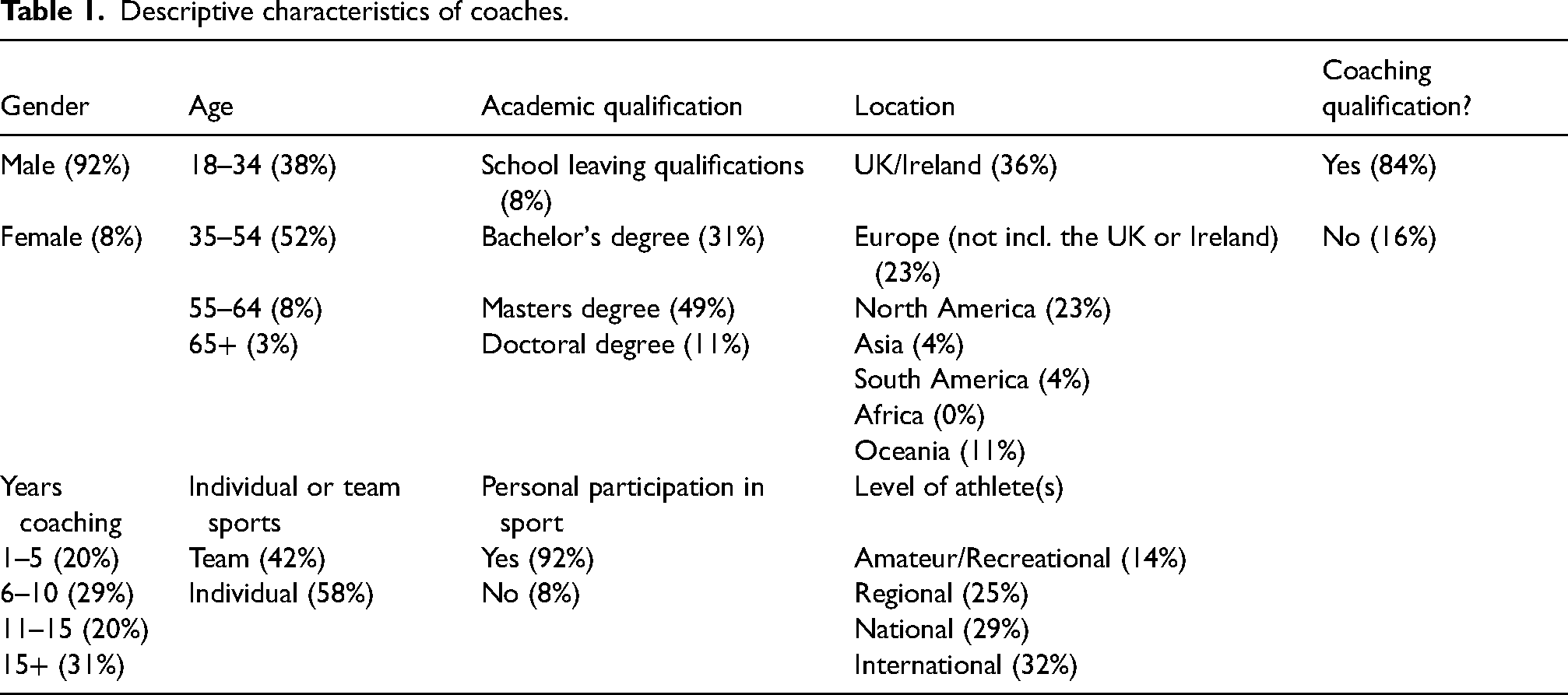
On close 106 coaches had completed the survey. Demographic details of the participants can be seen in Table 1. Participants were predominantly male (92%) with a high level of formal education (60% postgraduate). The majority (84%) held a coaching qualification. Participants worked with team and/or individual sports at a variety of levels.
Descriptive characteristics of coaches.
Self-rated ability to predict improvement
The frequency with which the coaches evaluate the success of prescribed training protocols and how frequently they can predict an athlete's level of improvement to a training phase is displayed in Figure 1. Only a small number of coaches indicated that they could routinely predict how much improvement an athlete would make. The credibility of this finding is bolstered by the fact that many coaches reported routinely tracking how their forecasts compare to actual improvements. For the question ‘At the end of a training protocol do you evaluate athlete(s) response against your initial prediction?’ four coaches did not respond to the question. The percentage depicted is based on the 102 who did respond (Table 1).
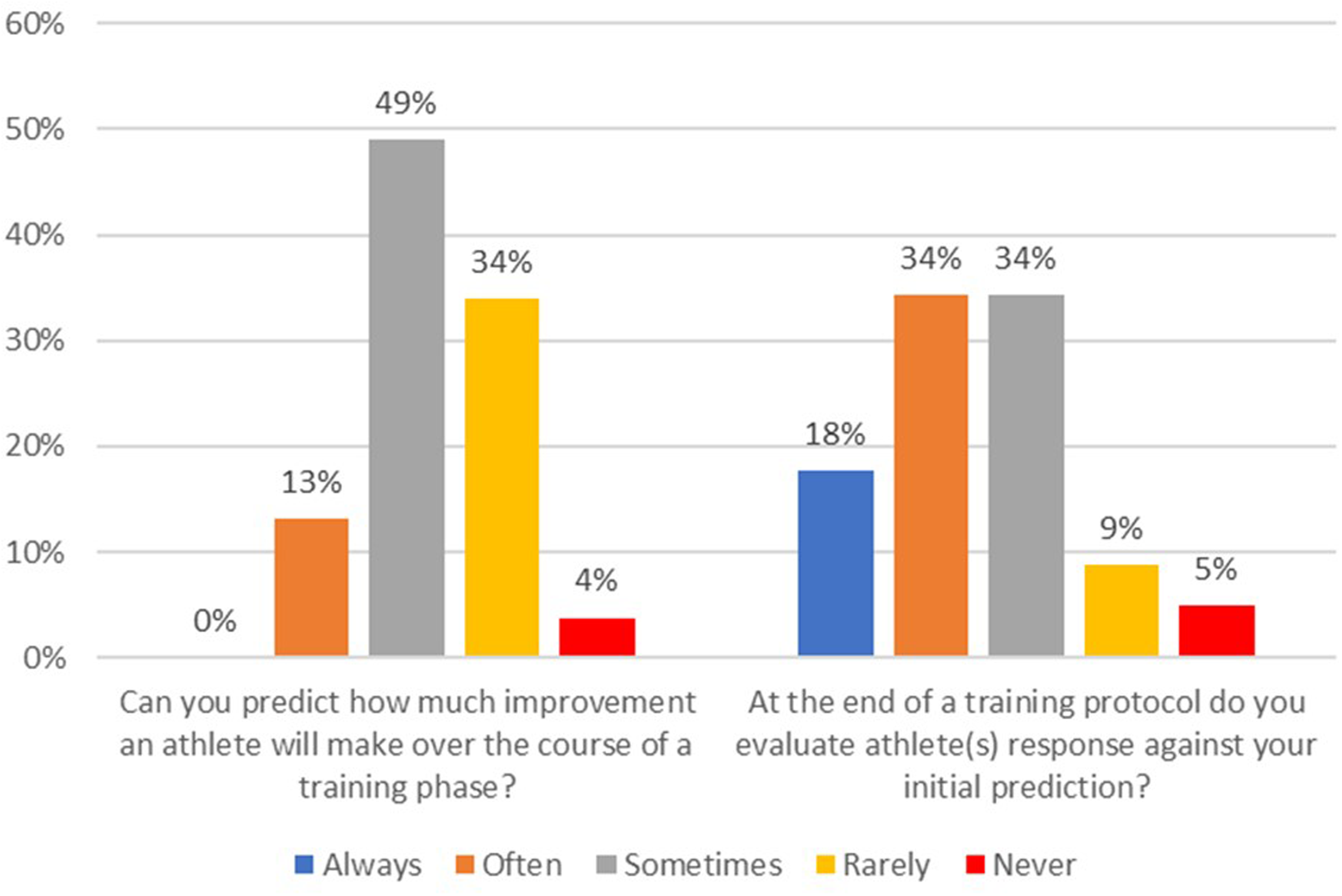
Coaches self-rated predictive ability.
Theoretical ability to predict improvements
The coaches’ beliefs about whether an athlete's response to training can be accurately predicted across two different time periods are displayed in Figure 2. The majority of the coaches disagreed or remained neutral about the feasibility of accurately predicting an athlete's response to a single session and express a similar level of uncertainty when considering a series of sessions.
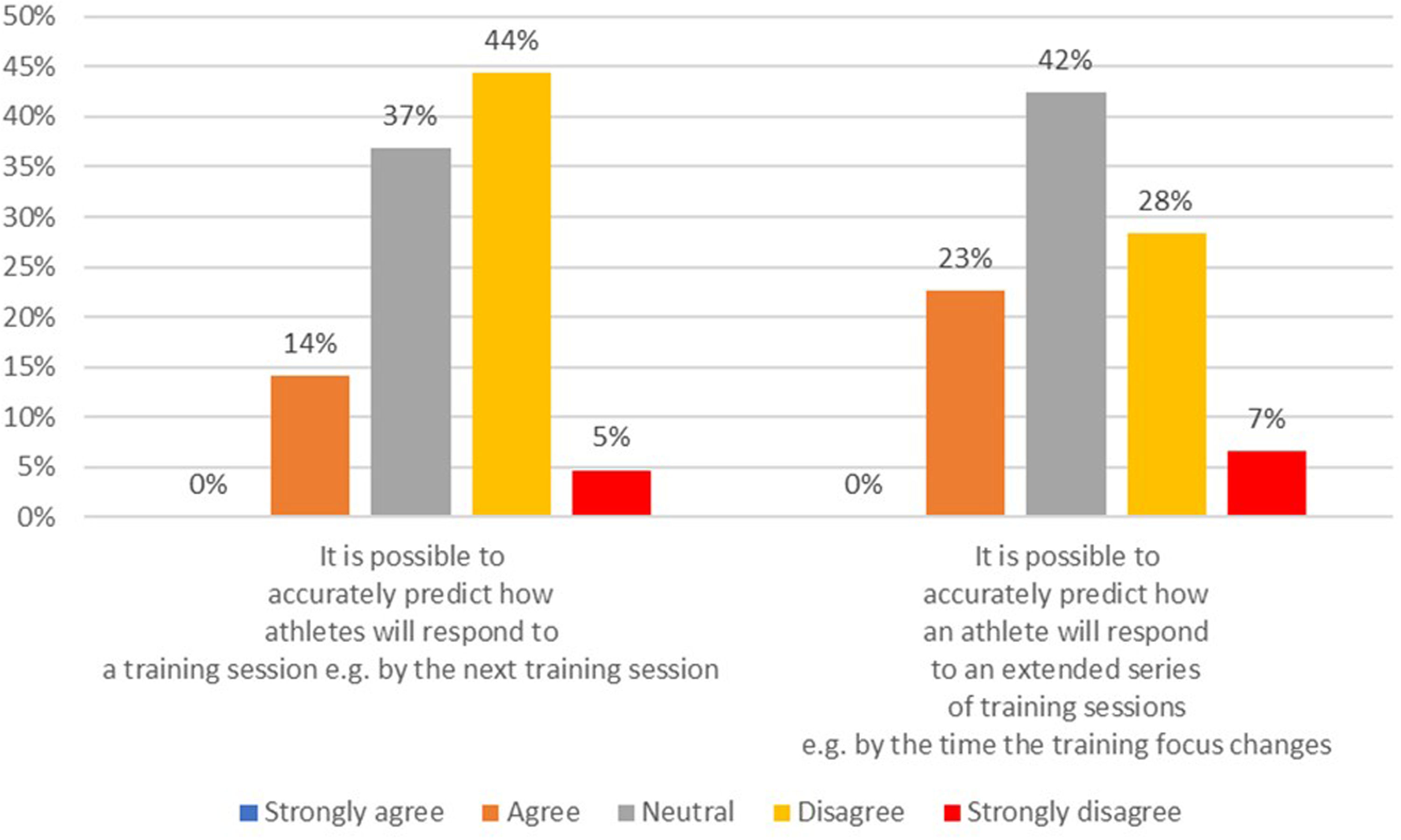
Coaches beliefs about predicting adaptations.
Increasing predictive power
The coaches’ responses to statements regarding whether they record and review changes made to the training plan, and the type of data they think should be used for modifying training on a day-to-day basis, are displayed in Figure 3. The frequency with which the coaches make changes to the plan is displayed in Figure 4. A large proportion of the coaches reported frequently revising their training plans. When modifying training on a day-to-day basis there was a pronounced preference amongst the coaches for using subjective measures with fewer relying on objective metrics. In Figure 3 CMJ height refers to countermovement jump height while HRV refers to heart rate variability.
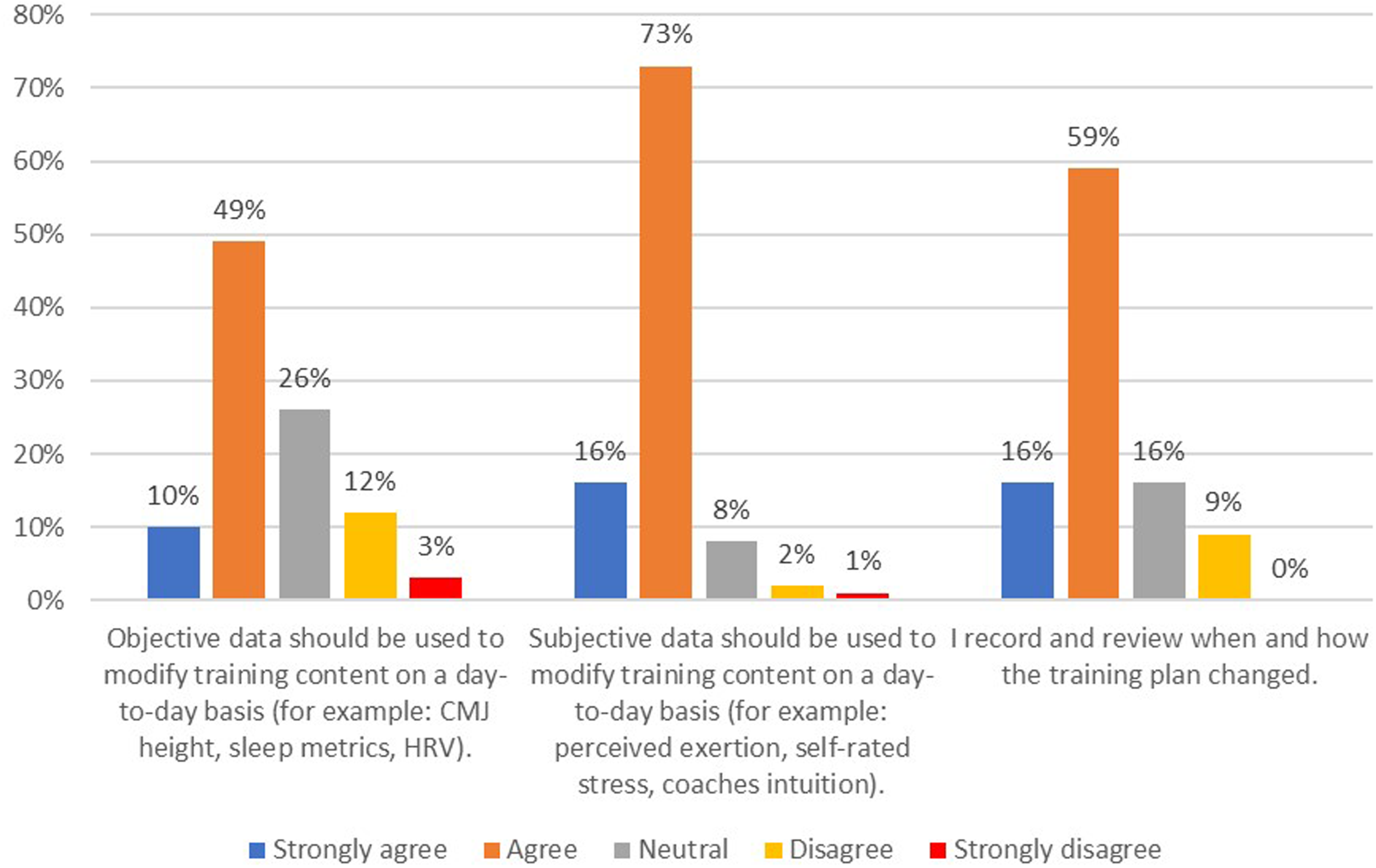
Responses regarding type of data for updating day-to-day training.
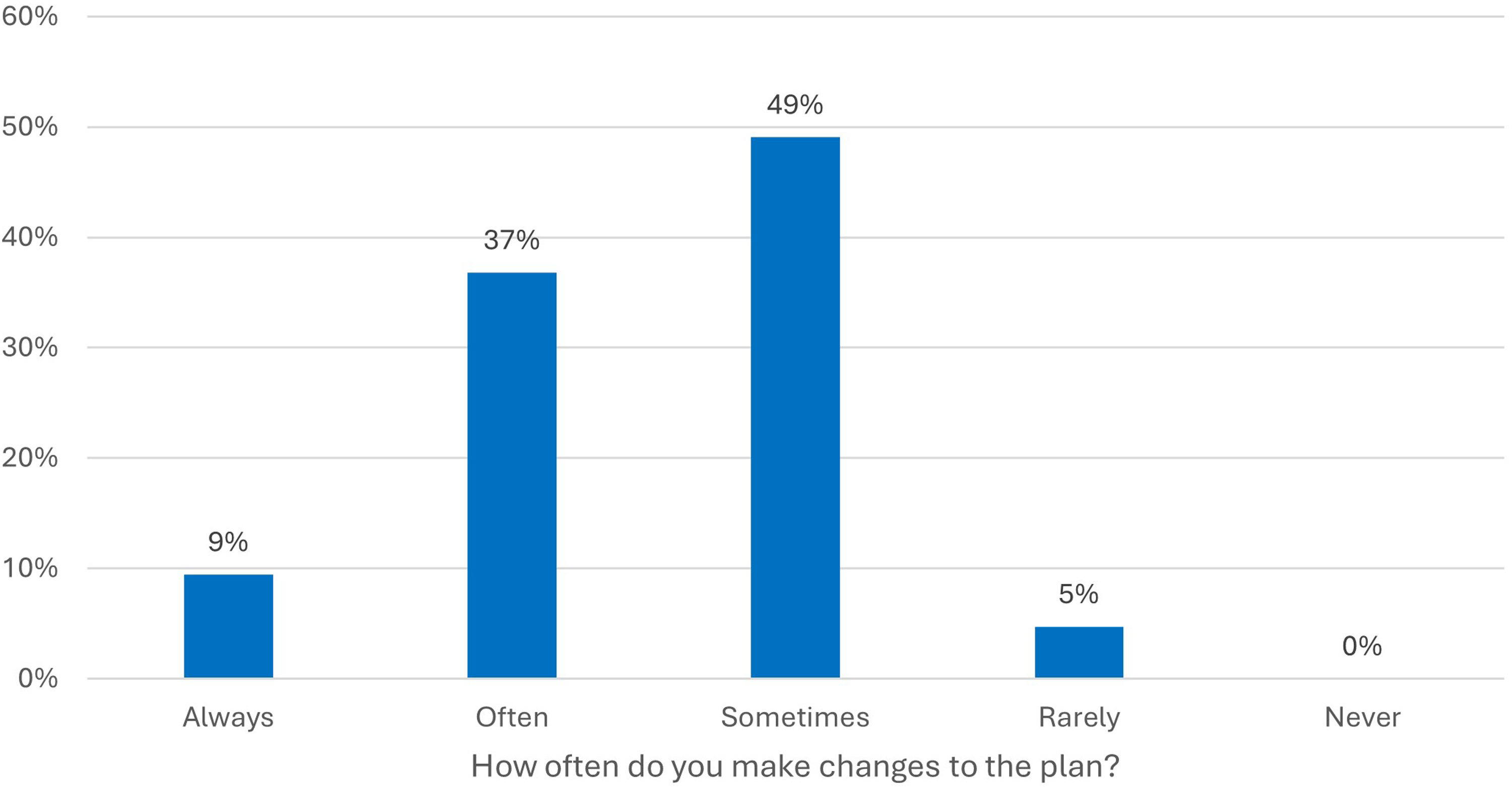
Responses to statement about frequency of changing the plan.
Discussion
In this study, we examined how coaches from a range of backgrounds perceive the predictability of athletes’ responses to training. Despite a presumption of predictability within periodization, few coaches (13%) indicated that they could ‘Often’ predict an athlete's level of improvement after a training phase, with more indicating they could ‘Rarely’ or ‘Never’ do so (34% and 4%). Even when asked whether they considered it possible to accurately predict how an athlete would respond to a training session, or an extended series of sessions, there was only limited agreement (14% and 23% agreed respectively). A substantial proportion of the coaches also indicated that they frequently (‘Always’ & ‘Often’) made changes to the plan (46%). Though crucial to traditional planning approaches, most coaches did not perceive athletes’ responses to training as highly predictable. While this lack of perceived predictability may run contrary to parts of training theory, it aligns with findings within the wider literature.31–33
Do coaches feel they can predict training improvements?
An important initial question was to establish how many coaches evaluated their initial predictions against eventual training outcomes. Of the sampled coaches 52% indicated that they ‘Always’ or ‘Often’ evaluated the accuracy of their initial predictions, with another 34% reporting ‘Sometimes’. Although determining the accuracy of training predictions is rarely, if ever, suggested within the training literature, the majority of coaches surveyed did evaluate their initial predictions. Such a practice enables determination of whether training has progressed as planned. When asked about their ability to predict an athlete's improvement over a training phase, only a minority of coaches (13%) responded that they could frequently (‘Always’ and ‘Often’) do so. In comparison more coaches (38%) indicated they could ‘Rarely’ or ‘Never’ predict an athlete's level of improvement. The fact that so few coaches chose ‘Always’ or ‘Often’ appears in conflict with the mechanised logic deployed in training theory as it relates to the planning of training.7,8 For example, periodization is built upon making a cascade of interdependent predictions therefore leaving limited room for change and necessitating accuracy.8,9,34 This accuracy is paramount as periodisation was conceptualised so as to allow athletes to reach peak performance on specified occasions.
While these results may seem surprising given the straightforward mechanistic presentation of training, the truth is that such predictions are incredibly complex.5,9 Indeed our findings seem to be in agreement with those of Afonso & Mesquita who conducted one of the few studies to examine the unpredictable nature of the training process and its impact on planning. 5 Through interviews they found that while coaches made long-term plans the unpredictability that took place in the short-term, due to unexpected events and the non-linear nature of training processes, disrupted these predictions. As one coach commented “There is great disparity in learning rates between athletes. Some take a few days to improve, others can take months. I can’t predict that”. 5 Similarly, outside of sports it is well documented that predicting task outcomes in environments similar to those experienced by coaches (i.e., complex) is inherently challenging and met with varying degrees of success.31–33
Do coaches think training is predictable?
Predicting response to single training sessions
An important distinction exists between one's effectiveness in making predictions and what is believed to be possible by someone who is more skilled, experienced or with greater resources. Amongst these coaches only a minority (14%) thought it was possible to accurately predict an athlete's response to a single training session with almost half (49%) disagreeing. This is in line with the broader literature that suggests predicting how an athlete responds to training (let alone a single session) is incredibly difficult due to both the range of contributory factors and individual differences.34–36 As an example, Stults-Kolehmainen et al. found that psychological stress had a strong moderating effect on the recovery of muscular function (including force output) after only a single session of heavy resistance training. Participants experiencing the highest levels of stress took significantly longer than their ‘low-stress’ counterparts to recover. 36 Obviously, this is further complicated by the fact that training sessions cannot be examined in isolation, as was done by Stults-Kolehmainen et al., with prior training possibly amplifying the effects of psychological stress. It is worth noting that the previous example is regarding traditional strength training. Many sports have a large technical and/or tactical aspect which are effected by learning, a process which is inherently non-linear and itself is also effected by stress. 5
Predicting response to multiple training sessions
When then asked whether it was possible to predict how an athlete would respond to a series of training sessions, less than a quarter (23%) agreed with more still disagreeing (35%) and the largest group (42%) being those who indicated ‘Neutral’. Though better than the prior statement the belief amongst these coaches in predicting training responses is still low. This is of particular importance as making predictions about how athletes will respond to a series of training sessions is key to longer term planning. 7 Worth noting here is that this and the prior statement asked ‘how’ an athlete would respond which is qualitative rather than quantitative. Such predictions are fundamental to periodization as its central purpose, and underpinning rationale, is to enable athletes to achieve their peak performance on pre-determined dates.7,37 This lack of predictability once again seems to echo the findings of coach interviews by Afonso & Mesquita. 5
An important concept underpinning periodization's predictive abilities is that the outcome of the training process is simply a summation of all its individual parts, this is merely an extension of the underpinning mechanistic logic.9,34 However, due to our understanding about the complex adaptive nature of the training process this is now heavily disputed.9,34 Indeed the non-linear nature of training and its underpinning processes means that the relationship between inputs and outputs are not stable over time. 34 Therefore, the different elements within a protocol that are meant to lead to performance improvements will not be the same either inter or intra-individually. This problem is highlighted well in a study of sprinters following a resisted sprint training program for 10 weeks. 38 At completion of the study there was a four-week peaking period with testing performed each week. The results showed that the sprinters reached peak performance on different weeks with performance indicators, such as 5-m and 30-m times, peaking at different points. This problem is further compounded by the lack of repeatability in training outcomes due to intra-individual differences. 35
Amongst these coaches, self–rated predictive confidence (Figure 1) appears to mirror their broader beliefs about what is feasible in practice (Figure 2). In both cases, only a small minority indicated that they could ‘Always’ or ‘Often’ predict the magnitude of an athlete's improvement (13 %), similarly <25% agreed that it is possible to accurately forecast how athletes will respond to a single session or a series of sessions. These findings build on previously published survey results which suggested that coaches may not see training and its planning as a predictable process. 39 In that survey less than 50% of coaches preestablished defined and detailed goals for individual training periods concurrently only 33% believing that physical adaptations were achievable within specific and fixed timeframes. Overall it would seem that many of the coaches, possibly through experience, understand that the training process and its outcomes are not as predictable as portrayed in large parts of the training literature.7–9
Increasing predictive ability
Whilst the effects of uncertainty on the training process can be somewhat mitigated in the initial planning stages it cannot be fully removed. One possible indicator for the lack of predictability in the training process is how often changes to the plan are made. While it is unlikely that no changes would ever be needed, few changes could indicate that things are going as planned or at least within an acceptable range.
When asked how often they made changes to the plan all the coaches indicated that they did so at some point. Almost half (46%) indicated that they did so frequently (‘Always’ or ‘Often’) with only a minority (5%) reporting that they rarely did. Following on from this 74% indicated (‘Agree’ and ‘Strongly agree’) that they record and review these changes. A possible interpretation of these results is that for the majority of coaches things do not go as initially planned and therefore changes are frequently needed. Alternatively understanding that the training process is inherently uncertain, and therefore not highly predictable, these coaches’ approaches may not be based on making long-term fixed plans. Rather they could use relatively loose plans that are altered as needed so as to align with reality and the athlete's needs. This necessity to make changes on a regular basis suggests that their experiences do not align with the presentation of training the process as proposed by planning approaches such as periodization. 8 It is important to note however that revising the plan need not be inherently negative, rather they become problematic only when a planning framework assumes the original sequence must be followed with little to no change. Also, coaches may adjust programs when athletes exceed expectations, learning a new skill faster than anticipated, or when external factors (e.g., weather, competition scheduling change) create situations out of a coach's control. However, in the context of this survey, the overall frequency of adjustments principally signals a gap between prediction and reality, underscoring the inherent uncertainty of training forecasts.
Though limited research exists on this topic, a series of surveys and interviews with coaches suggests that a dynamic planning approach may be a more accurate representation of what many coaches actually do.5,11–13 Such an approach would be characterized by plans that are adapted to be aligned with the athlete's evolving needs. One reason given by Brazilian sprint and jump coaches for adopting such an approach was that it allowed for changes to take place if events occurred differently from predicted. 12 An example being achieving qualifying results, needed for future competitions, at a different time point than planned. In such a situation future training may need to be adjusted to realign the original plan with the new circumstances.
Important to adjusting plans, especially on a regular basis, is the information used. Therefore, we asked coaches separately whether they believed objective measures and subjective measures should be used when updating training on a day-to-day basis. Whilst there was an agreement by many that both should be used, there was a clear preference for subjective data (89%) over objective data (59%). These results are in line with research suggesting that, if possible, both should be used. However, it has been noted that subjective measures do have greater sensitivity and accuracy when reflecting the impact of acute and chronic training loads. 40
The role of experience on predictive beliefs and planning
Important to consider is how the amount of experience a coach has may influence their confidence and accuracy in predicting training outcomes. When asked ‘Can you predict how much improvement an athlete will make over the course of a training phase?’, four times (24%) the number of novice coaches (1–5 years experience) reported they could do so ‘Often’ than those with over 15 years of experience (6%). When interpreting these results, it is important to understand the difference between making a prediction about a single event, in comparison to the frequency with which they would be correct over a number of predictions. The question posed would be the latter as it was not asking about a specific training phase but in general, that is on average. For this sort of prediction our decision is likely informed by a mixture of the evaluation of the tasks difficulty, the knowledge of the person about the task (i.e., the coach and planning) and their past experience with the task. 41 A lack of knowledge about the task, which is in part informed by experience or lack thereof, has shown to lead to overconfidence when making predictions. 42 Inversely as knowledge and experience grows overconfidence tends to decrease up to a point. The potential role of overconfidence is further reinforced by the fact that only 14% of coaches with 1–5 years of experience ‘Agreed’ that it was possible to accurately predict how an athlete will respond to an extended series of training sessions. Therefore, despite only 14% agreeing it was possible 24% thought they could do it ‘Often’ and 52% ‘Sometimes’, this suggests a pattern consistent with overconfidence among less experienced coaches relative to their seasoned counterparts.
Like the difference in confidence in their predictions, the results also highlighted that coaches with the most experience made changes to their plans more frequently (39% ‘Always’ & ‘Often’) than their less experienced counterparts (24% ‘Always’ & ‘Often’). It could be that after working with athletes for an extended period of time, coaches become aware of the inter- and intra-individual variability in athletes’ responses to training as previously discussed. If so, then making adjustments more frequently to an athletes training based on emerging data (via athlete monitoring) would be considered prudent. Indeed, when reviewing the data from four years of forecasting competitions (involving 400,000 predictions on over 500 questions) Atanasov et al. found that the most accurate forecasters were those who made frequent small updates to their forecasts. 43
Influence of athlete level on predictive beliefs and planning
In addition to experience, coaches’ confidence in their predictions also varied with the competitive levels of their athlete(s) though to a smaller degree. While 27% of coaches working with ‘Amateur/Recreational’ level athletes indicated that they could ‘Often’ predict how much improvement an athlete will make over the course of a training phase, only 12% working with ‘International’ level athletes did. This in part explained by the fact that 73% of coaches working with ‘Amateur/Recreational’ level athletes had 1–5 years experience and only one coach with 1–5years experience worked with ‘International’ level athletes. It is worth also noting that the results for coaches working with athletes competing at ‘National’ level were similar to those working at an ‘International’ level. A possible reason for this is that this category also stated that this was for coaches working with athletes who ‘competed at the highest level within your country; i.e., national championships or top league’. Therefore, for those working in team sports such as soccer, this may be the equivalent to working with international level athletes in other sports, as that option stated that the athlete must represent their country. An explanation for why coaches working at the highest levels may not rate their predictive powers particularly highly, is that over time the margin of improvements for athletes shrinks and what is required to gain them becomes more difficult to determine.
This increased level of uncertainty as athletes progress may also explain why the frequency with which coaches adjusted their plans also increased alongside an athlete's experience. For coaches working with ‘Amateur/Recreational’ athletes only 27% indicated that they ‘Always’ or ‘Often’ changed the plan, in comparison 62% of coaches working at an ‘International’ level said that they ‘Always’ or ‘Often’ made changes. The reason for this significant difference could have a number of reason, such as the need to tailor more specifically the training to the athlete or dealing with changes in competition schedule as previously highlighted by Loturco et al. 12 When taken together these findings highlight that both coach experience, and the level of athlete that they work with, can exert a substantial influence on perceived predictive abilities. In practice, it may be beneficial for coach education programs to start addressing, if they do not already, the role of cognitive biases. As well as discussing the impact of such biases it would also be beneficial to teach tactics on how to counter them for which extensive research has already been done.44,45
In summary, amongst these coaches there was a broad lack of confidence in predicting outcomes, potentially compensating for this by regularly adjusting training plans. At a subgroup level the data revealed that less experienced and recreational-level coaches displayed seemingly greater ‘optimism’ in their predictive abilities. In contrast, seasoned and international-level coaches, possibly influenced by repeated experiences with athlete variability, adopted a more cautious, adaptive approach. The responses of the most experienced coach, and those working at the highest levels, seemingly stand in contrast to traditional, mechanistic periodization models and underscore the need for dynamic, feedback-driven frameworks in sports science. Taken together, it seems crucial that coach education starts to explicitly address cognitive biases while also embracing the non-linear, emergent nature of athlete development.
Key takeaways
Widespread Predictive Uncertainty
A small fraction of coaches felt confident predicting athletes’ improvements, only 13% felt they “Often” could predict phase outcomes, and only 23% believed the response to a series of sessions was predictable highlighting a disconnect between mechanistic planning models and coaching reality.
Routine Plan Adaptation
Nearly half of the coaches (46%) “Always” or “Often” adjust training plans in response to ongoing athlete feedback, with a clear preference for subjective measures over objective ones (89% and 59% respectively). This underscores that effective coaching hinges on continuous and individualized plan revision.
Context-Dependent Predictive Beliefs
Predictive optimism declined with both coach experience and athlete level, with novice and recreational-level coaches reporting higher confidence (24% and 27% “Often” can predict phase improvements) than veterans (6%) and international-level coaches (12%).
Limitations
This study suffers from common limitations relating to the use of non-probability sampling.16,24 Due to a lack of female coaches in this study (8%), future research should explore whether the current results extend to the broader female coaching population. With a clear overrepresentation of the anglosphere, due to the survey's language, future research should look to establish, via a cross-cultural adaptation, whether these beliefs are held by coaches in other countries. Though steps were taken to try and limit misinterpretation of questions/statements, through piloting and use of clear expressions, this is not fully unavoidable. An example of this is defining terminology regarding frequencies whereby terms such as ‘Often’ or ‘Rarely’ may interpreted differently amongst coaches. Future survey research could look to link percentages to each term (e.g., Often (75–99%)) or ask coaches to review their training logs.
Conclusion
This study's results carry an important message. The implicit assumption that training responses are predictable phenomena, an idea fundamental to traditional training theory and periodisation, remains controversial and was not generally accepted amongst these coaches. Therefore, future research on planning methodologies must acknowledge the uncertainty inherent in predicting training adaptations. This understanding needs to be reflected in the research questions asked, the methods used to answer them, and the types of answers given. Such an approach will require a break from tradition where training approaches are compared to establish which is ‘superior’ and study results are discussed as if replicable over time and in different contexts. Further neglecting the complexities of training risks increasing the divide between sports science and coaches.
Supplemental Material
sj-docx-1-spo-10.1177_17479541251361617 - Supplemental material for Do coaches believe they can predict athletes’ responses to training? An international survey of coaches’ beliefs regarding the predictability of training-induced adaptations
Supplemental material, sj-docx-1-spo-10.1177_17479541251361617 for Do coaches believe they can predict athletes’ responses to training? An international survey of coaches’ beliefs regarding the predictability of training-induced adaptations by Kechi Anyadike-Danes, Lars Donath and John Kiely in International Journal of Sports Science & Coaching
Supplemental Material
sj-xlsx-2-spo-10.1177_17479541251361617 - Supplemental material for Do coaches believe they can predict athletes’ responses to training? An international survey of coaches’ beliefs regarding the predictability of training-induced adaptations
Supplemental material, sj-xlsx-2-spo-10.1177_17479541251361617 for Do coaches believe they can predict athletes’ responses to training? An international survey of coaches’ beliefs regarding the predictability of training-induced adaptations by Kechi Anyadike-Danes, Lars Donath and John Kiely in International Journal of Sports Science & Coaching
Supplemental Material
sj-docx-3-spo-10.1177_17479541251361617 - Supplemental material for Do coaches believe they can predict athletes’ responses to training? An international survey of coaches’ beliefs regarding the predictability of training-induced adaptations
Supplemental material, sj-docx-3-spo-10.1177_17479541251361617 for Do coaches believe they can predict athletes’ responses to training? An international survey of coaches’ beliefs regarding the predictability of training-induced adaptations by Kechi Anyadike-Danes, Lars Donath and John Kiely in International Journal of Sports Science & Coaching
Footnotes
Consent to participate
At the survey's landing page potential participants could access an information sheet for the study. Participation required coaches to indicate that they had read the information sheet and gave consent.
Data availability
Survey data available in supplemental material.
Declaration of conflicting interest
The authors declared no potential conflicts of interest with respect to the research, authorship, and/or publication of this article.
Funding
The authors received no financial support for the research, authorship, and/or publication of this article.
Ethical considerations
Ethical approval was obtained from the Ethics Committee of the German Sport University Cologne (Ethical Proposal Code 136/2021).

Supplemental material
Supplemental material for this article is available online.
References
Supplementary Material
Please find the following supplemental material available below.
For Open Access articles published under a Creative Commons License, all supplemental material carries the same license as the article it is associated with.
For non-Open Access articles published, all supplemental material carries a non-exclusive license, and permission requests for re-use of supplemental material or any part of supplemental material shall be sent directly to the copyright owner as specified in the copyright notice associated with the article.
