



Abstract
The characteristics of those who advance the frontiers of human capabilities have fascinated scientists for centuries. Studying those who operate at, and advance, the edges of human performance may hold lessons that could benefit athlete development for all ages and stages of competition. To help contribute to this research area, the present study explored race performance characteristics of the world's best endurance cyclists. All race results listed on the Union Cyclisme International database for athletes between the years 2010–2024 (N = 5,168,668 total race observations; N = 107,024 unique athletes [21.12% women and 78.88% men]) were considered. Basic descriptive statistics (e.g., gender, location, confederation, and discipline) were used to describe ‘eminent’ athletes. This eminent sample was further explored relative to their discipline status (i.e., those who race in one discipline, or multiple) and transition patterns. Findings indicate subtle differences between groups in terms of ages to milestones, duration between accomplishing milestones, and transition patterns.
Introduction
National and professional teams in cycling sports such as Mountain Biking and Road Racing, often operate considerable annual budgets to support athlete compensation, operations, logistics, management, sport scientists, coaches, and equipment. 1 With these significant budgets, teams invest in cutting edge science in the hope of supporting the athletes in achieving podium performances at major competitions such as the Olympics or the Tour de France.1–4 To more effectively allocate the limited resources available in many sports, researchers and practitioners have focused significant effort on trying to predict the next superstars through various testing and assessment practices (i.e., athletic identification). These practices are common across most sports and continue to gain research interest.
Of the available evidence on athlete identification, there appears to be a variety of practices, frameworks, and theories that underpin the approaches used. 5 For example, Johnston et al. 6 examined the various tests and assessments that are employed within many sport domains. Findings from the review revealed that most research on athlete identification (sometimes termed talent identification; TID) has been unidimensional (i.e., focused on one aspect of sport performance such as physical or physiological components), but multidimensional approaches (e.g., examining multiple areas of sport performance such as physical, physiological, psychological, perceptual cognitive etc.) are becoming more common. This is demonstrated in the growing available evidence on task or test representation (i.e., mirroring the sport demands) examining aspects of an athlete's background, such as sport exposure history (e.g., what sports were played, in what capacity, and for how long 7 ), demographic information (e.g., age, birthplace, family sport profiles8,9 etc.), and relationships between hours of training and the number and nature of competition(s) attended early in development with measures of later success.10,11
Descriptive studies of elite athletes are an important way to learn more about athletes who ‘survive’ the tumultuous journey to becoming the best.12,13 With a better understanding of some of the qualities, traits, characteristics and histories of these athletes, approaches to training, policies related to resource allocation, and education frameworks can be better tailored and more evidence-informed for interest-holders to follow. For instance, researchers 14 exploring successful athletes in endurance sports such as cross-country skiing, have examined the podium finishes of athletes to determine certain winners kept winning in their sample, or if the medal distribution was more equal across the sample. Barth and colleagues 14 identified that the six most successful athletes won half of the medals able to be won. Their work also made distinctions between serial winners (i.e., athletes winning in a single ski discipline) and multiple winners (i.e., athletes who win in multiple ski disciplines). 14 Interestingly, the majority of athletes (81%) won more than one medal within two or more disciplines (multi-discipline) compared to serial (single-discipline) medalists. The authors speculated that most athletes winning various medals were characterized by possessing highly adaptable skills and/or a broad repertoire of different skills enabling high performance in related, but different tasks.
In cycling, there is growing attention dedicated to the developmental trajectories of riders, including the training characteristics of junior riders 15 and elite/professional levels;16–22 however, compared to sports like soccer, the available information is sparse. Perhaps a contributing reason for the limited number of studies examining the developmental histories of the best sport performers in the world is the definitional ambiguity surrounding the terms best, elite, professional, and eminent. 23 This lack of measurement and conceptual precision presents a challenge for investigators, administrators, coaches, and athletes looking to explore the frontiers of human performance. For example, differences in ability are evident even at the highest levels of sport (e.g., all- stars vs non-all-stars in North-American professional sports, Olympic medal contenders vs non-medal contenders, team leaders vs helpers in World Tour cycling, Ballon d’Or nominees vs starters in Champions League soccer, or Grand Slam winners versus tennis players ranked in the top 250 in ATP). To allow for differentiation between these tiers of performers within the ‘expert’ category, Baker and colleagues 24 proposed a taxonomy that investigators could use to appropriately classify performers for research purposes. Baker and colleagues 24 made a case to index performers based on three classifications; (1) training level, (2) skill level and (3) competition level. To establish training levels, performers can be categorized as either not engaging in training, training inconsistently, or training regularly. Skill levels are ranked according to naïveté, followed by novice and progressing to basic, intermediate, advanced, and ultimately expert and eminence at the international competition level. With respect to the level of competition, classifications range from competing at regional/local, state/provincial level, national to international levels. To underpin their case for eminence and sub-dividing this group at the zenith of human performance from the expert class, they argued it “would be valuable to establish a set of clear criteria for the identification of an ‘eminent’ athlete to overcome some of the limitations of previous work on exceptional performers” (p.5). 24
This highlights an on-going consideration for researchers studying the highest levels of skill. Performers who ultimately fall within the eminent category are difficult to access and the limited numbers of participants can lead to underpowered studies from a statistical standpoint. However, these statistical considerations only serve to emphasize the importance of clearly defining skill levels to avoid comparing ‘apples and oranges’ (i.e., the expert from the eminent). Furthermore, even given these statistical limitations, there is academic and social value in studying eminence in athletic, academic, musical, and political domains. 25 Doing so can help shape our understanding of the potential contributing factors influencing the development of these performers, which may, in turn, be used for informing developmental models and strategies for others. For example, studying the journeys that elite athletes take to reach Olympic level performance may inform the pathway for others who are training for international competition.
Over the past decade, there has been increasing interest in this sub-group of the population of expert performers, to understand what makes them unique. For instance, Rees et al. 26 categorized super-elites as those that have won multiple Olympic Gold medals or World Championships in their respective sports. However, while this was a reasonable criterion for their project exploring Olympic performers, it is too crude to be useful across all sports, as not all sports participate in the Olympic Games, nor is it likely that all players on a World Championship team would be considered of equal quality.
The taxonomy proposed by Baker and colleagues 24 allows for a more inclusive measure. They proposed that multiple indicators could be considered and started with an early suggestion of four potential criteria to explore eminence in sports: (1) MVP arguments, (2) Hall of Fame arguments, (3) career length arguments and (4) Lotka-Price a arguments. While this initially proposed list can be defended, it is overly centered around the North American cultural sport paradigm. Most sports that have their origins in Europe or Asia do not have MVPs or a Hall of Fame. Moreover, Lotka-Price arguments might not be universal since they are influenced by the depth and breadth of participation in a domain and these factors vary considerably across sports. Given cultural and organizational differences between sports and in both history and depth of competition, it stands to reason that the criteria to demarcate eminence will vary from one sport to the next to accommodate the uniqueness of each sport.
Eminence in endurance cycling
Several approaches can be taken to establishing what eminence means in endurance cycling (e.g., what do cyclists have to do to be considered eminent?). For instance, one could use a
A second approach,
A third approach is
Present study
For the purposes of the present research, participants were considered eminent using the
Results from the Delphi 37 revealed that an eminent endurance cyclist must have won three or more races (either within one cycling discipline or between two or more disciplines) in a premier race at the elite level over their career (i.e., winning three World Championships, Olympic Games, Grand Tours, Monuments or World Cup overall classifications). Using these criteria, this study sought to identify race performance characteristics for the world's eminent endurance cyclists competing between 2010 and 2024.
Methods
Sample description
Data were extracted from the publicly available Union Cyclisme International (UCI) 38 website containing athlete and race information between January 1, 2010 and December 31, 2024 on all available cycling disciplines including BMX Freestyle Park, BMX Racing, Mountain Bike, Cyclo cross, Para-Cycling, Road, and Track (N = 53,333,248 total observations; N = 1,181,182 unique athletes). After removing disciplines that were not considered endurance, and athletes with invalid age data (i.e., those with ages of 0 or over 100 years) this left four disciplines including Road, Mountain bike, Cyclo cross, and Track (N = 5,168,668 total observations; N = 107,024 unique athletes). Of these athletes, 21.12% were unique athletes listed on the website as competing as women (N = 22,604) coming from six confederations (i.e., Union Européenne de Cyclisme) across 157 countries, and 78.88% were listed as unique men athletes (N = 84,418), coming from six confederations from across 185 countries with a remaining two athletes listed in mixed-only. For a detailed overview of the process for identifying eminent athletes, please see Supplemental File 1.
Analyses
The analyses for this study included multiple steps, all of which were performed using R, 39 with statistical significance set at p < 0.05. The first step involved the identification and labelling of eminent athletes followed by identifying the eminent athletes’ discipline status (i.e., those who won races in one discipline, and those who won races across two or more disciplines). After this, the milestones in which both groups of eminent athletes achieved certain accomplishments were detailed. The final step involved examining the transition patterns for eminent athletes who competed in multiple disciplines, all of which will be explained in more detail below.
Step 1: identifying eminence
To determine which athletes would be considered eminent cyclists, ‘premier’ races were first identified. To do this, ‘elite’- level competitions (as defined by the ‘competition name’ defined by UCI sanctioned events) were identified. From 2010–2014, the were 8638 ‘elite’-labeled competitions b , 64.70% of races c within those competitions were specifically for men, and 35.30% of races were specifically for women. From those races, there were 18,387 (22.31%) unique women and 64,029 (77.69%) unique men participating.
Then, races were identified from the elite categories if they were a ‘premier race’. This meant races were considered if they were for individual riders (not in Team Time Trials; TTT). In addition, races that were included had ‘Olympic Games’, ‘World-Cup’, or ‘World Championship’ in their race name or competition name, with the exception of the Road discipline, which also included those athletes who won the final stage of Grand Tours or Monuments including Tour de France, Tour de Feminin, Vuelta a España, Giro d'Italia. Across the women's and men's races, this left 68 unique competition names as defined by the UCI website, and after distilling and amalgamating races that were the same (by gender and by international language) this left 18 competitions (and the respective races that meet our criteria) for consideration (10 eligible Road competitions, 2 Cyclo cross competitions, 2 Track competitions, and 4 Mountain bike competitions).
Once premier races were identified, the ‘status’ of the athletes, being either ‘eminent’ or ‘not eminent yet’, was assigned. Athletes who had won three or more premier races either within the same endurance cycling discipline (i.e., only in Road racing), or across two or more disciplines (i.e., between Road and Track cycling) were classified as eminent.
Step 2: identifying discipline status
Informed by the criteria outlined in Barth et al.'s work in Alpine Ski racing, 14 the present study considered athletes who won races in one discipline and in two or more disciplines. Athletes who had won three or more premier races in a single discipline only were labelled as ‘single-discipline’ eminent athletes. Athletes who won three or more premier races across two or more disciplines were labelled as ‘multi-discipline’ eminent athletes. Importantly, in the present sample, even though athletes were labeled as ‘single-discipline’ athletes, they may have participated in races in two or more disciplines. The distinction is that they needed to have won premier races in two or more disciplines to be eligible for multi-disciplinary eminent status. Descriptive statistics including frequency counts, means, and standard deviations were performed on each of the cycling groups (i.e., Road, Track, Mountain bike and Cyclo cross) and within gender groups (i.e., men's events and women's events). For a full list of races included in the premier race category, and for a detailed overview of the process for identifying eminent athletes, please see Supplemental File 1.
Step 3: identifying race performance milestones
Following the identification and classification of eminent athletes, milestones in a cyclist's racing career were identified. The four race milestones of interest included: Milestone 1; the age at which an athlete achieved a podium finish (top 1st, 2nd, and 3rd) in any elite-ranked race (a UCI sanctioned elite competition), Milestone 2; the age at which an athlete achieved a podium finish (top 1st, 2nd, and 3rd) in a premier race (e.g., World Championships, Olympics, Tour de France, Tour of Flanders etc.), Milestone 3; the age at which an athlete won (finished in 1st place) a premier race, and Milestone 4; the age at which an athlete achieved three wins (finished in 1st place) in three premier races (single-or multi-discipline).
Descriptive statistics were examined for these milestones, including the age at which each milestone was achieved for each of the eminent athletes, by gender, and by cycling discipline (e.g., Road, Track, Cyclo cross, Mountain Bike). To better understand the eminent athletes, smaller sub-groups were examined (i.e., single-discipline eminent group and multi-discipline eminent group) and were further explored by gender (i.e., men and women). To assess these differences, multiple linear regressions were performed. The first model examined the effect of discipline status (single- vs. multi-discipline), gender, and their interaction on age at which eminent athletes achieved each milestone, using the equation: Age ∼ multi_status * gender. The second model assessed how discipline status and gender influenced the duration (in years) between achieving milestones, using a similar approach. Statistical significance was assessed using permutation tests with 10,000 permutations, implemented via the `lmPerm` package. 40 This approach maintains the exact Type I error rate regardless of the presence of outliers. 41 Assumptions of the linear regression models with permutation testing were checked with residual plots, which are available in the Supplementary File.
Step 4: exploring discipline movement patterns in race wins
This fourth step was further broken down into sub-steps to examine the patterns of discipline movements (from winning a race in one discipline, to winning in another) within the multi-discipline eminent athletes. In this sense, movements (termed ‘transitions’) do not imply that an athlete starts in one discipline and then leaves the discipline for another, rather it is more dynamic, where an athlete can win races in one discipline, then can win races in another, then can come back to win in the original discipline. The following sub-questions were examined:
Results
Eminence
Seventy-one cyclists (46.48% women, 53.52% men) won three or more premier races and became the eminent sample. These athletes were registered under the Union Européenne de Cyclisme (UEC; n = 54), Oceania Cycling Confederation (OCE; n = 12), and Pacifique Association des Cyclisme (PAC; n = 5). For the country the athlete was registered under, there were 16 different countries with the majority of athletes listed as representing: The United Kingdom (n = 14), Australia (n = 12), The Netherlands (n = 8), Italy (n = 5), Germany (n = 5), Belgium (n = 5), France (n = 4), United States (n = 4), Denmark (n = 3), Switzerland (n = 3), Spain (n = 2), Slovenia (n = 2), Czechia (n = 1), Slovakia (n = 1), Poland (n = 1), Canada (n = 1).
Single-discipline and multi-discipline eminence
Of the 59 eminent athletes who had won three or more premier races in a single discipline (single-discipline eminence), 47 were athletes in Road (n = 18 women, n = 29 men), 9 in Track (n = 8 women, n = 1 men), and 3 in Mountain bike (n = 2 women, n = 1 men). The remaining eminent athletes (n = 12) won three or more premier races across two or more disciplines (‘multi-discipline eminent athletes’). Of these athletes, five were women and seven were men. See Figure 1 for the combination of disciplines these athletes won races in.
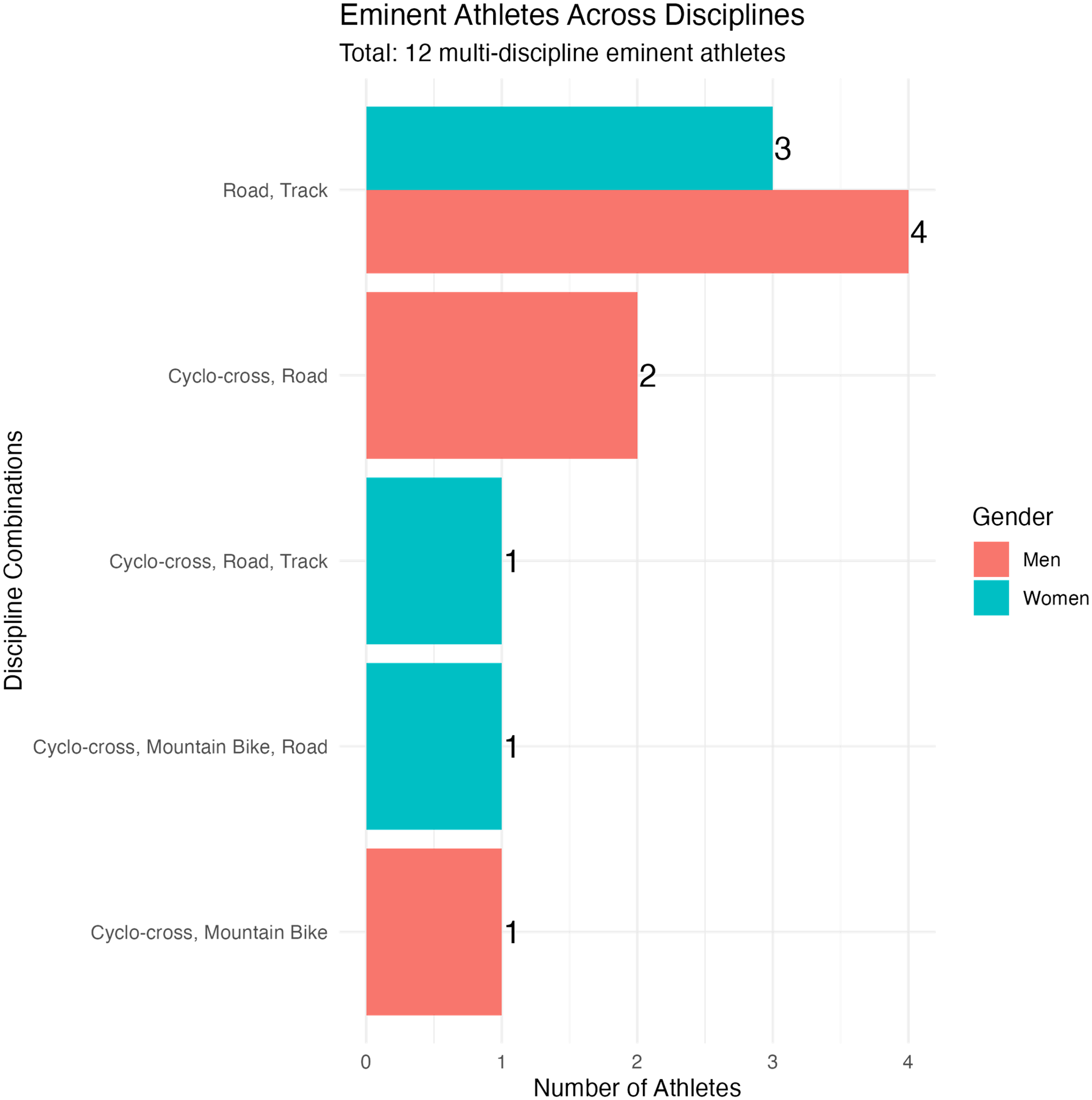
Distribution of eminent multi-discipline race winners by discipline combination and gender.
Race performance milestones
For a detailed overview of the descriptive information for eminent athletes (separated by gender), the milestones they achieved, and the races they competed in after achieving eminent status, please see Figure 2.
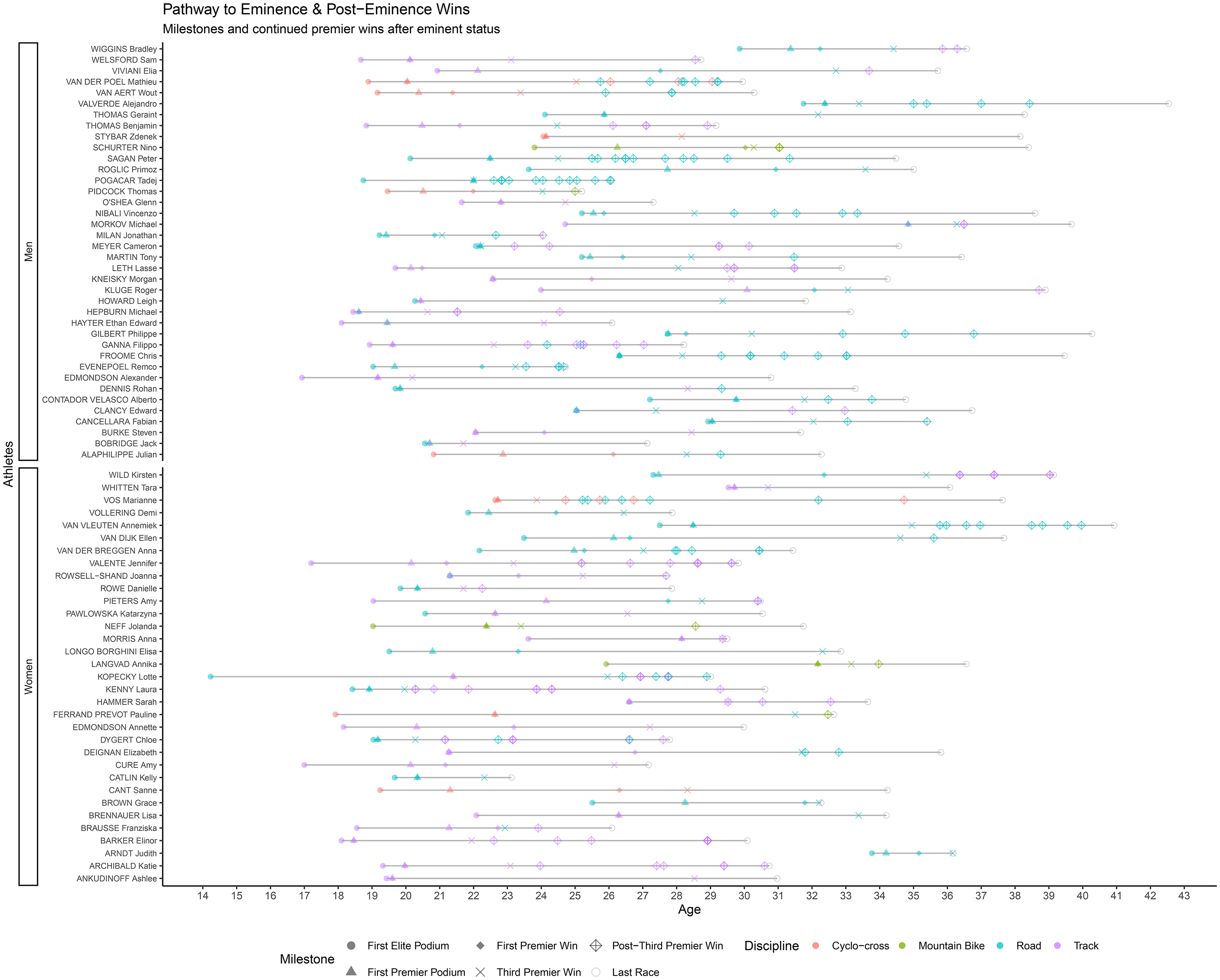
Career trajectories of eminent athletes: milestones and premier wins.
Age at milestones
We examined whether multi-discipline athletes achieved career milestones at different ages than single-discipline ones, and whether this pattern differed by genders. Permutation tests revealed no significant effect of multi-discipline status for any milestone age.
Duration between milestones
We then examined whether multi-discipline athletes progressed between career milestones at different rates than single-discipline athletes, and whether this pattern differed by genders. Permutation tests revealed two significant findings. First, women progressed from elite podium to first premier podium significantly faster than men (gender effect: −0.62 years, p = 0.048); eminent women who reached elite podiums, achieved premier-level wins approximately 7.4 months faster than eminent men.
Second, multi-discipline athletes progressed from first premier win to third premier win (achieve eminent status) significantly faster than single-discipline ones (multi-discipline effect: −0.80 years, p = 0.026). This represented a nearly 10-month advantage in achieving eminent status once athletes secured their first premier wins. There were no significant interactions between multi-discipline status and gender observed for any duration measure.
Discipline transition patterns
Results of the count performed for how many times athletes transitioned from one discipline to another can be found in Figure 3. The chi-squared test revealed sparse cell counts (25% with expected frequencies < 5), validating our decision to use simulation-based p-values. The test showed significant dependence between previous and current disciplines (χ² = 473.65, p < 0.001, simulated). To view the transition between disciplines visually, please see Figure 3 and Figure 4. To see the raw transition matrix, please see Table 1.
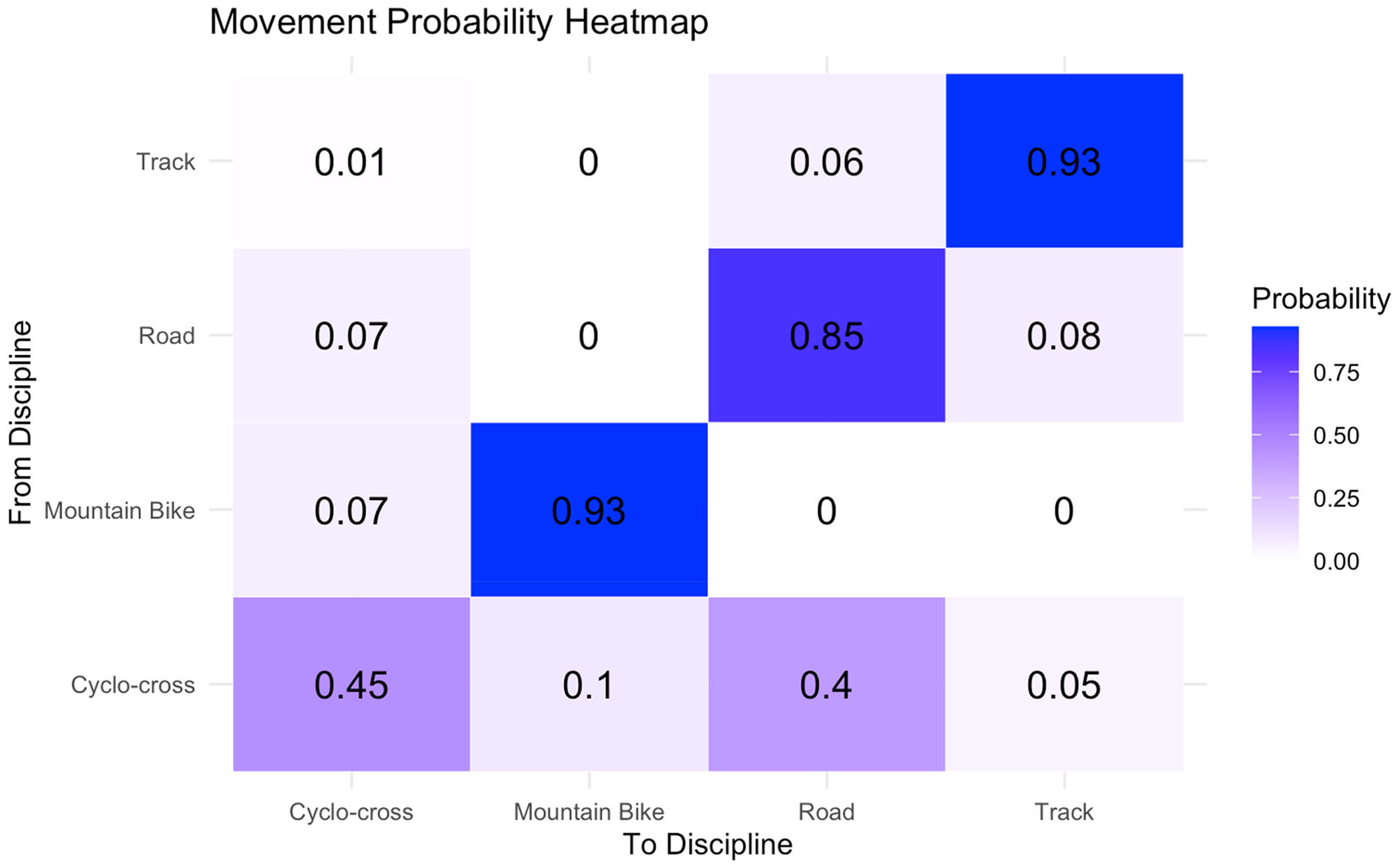
Heatmap of race-winning movement/transition probabilities across disciplines. ** To interpret this heatmap, each cell represents the probability that an athlete who wins in one discipline (row) will win their next race in another discipline (column). Darker colors indicate higher probabilities of movement. For example:
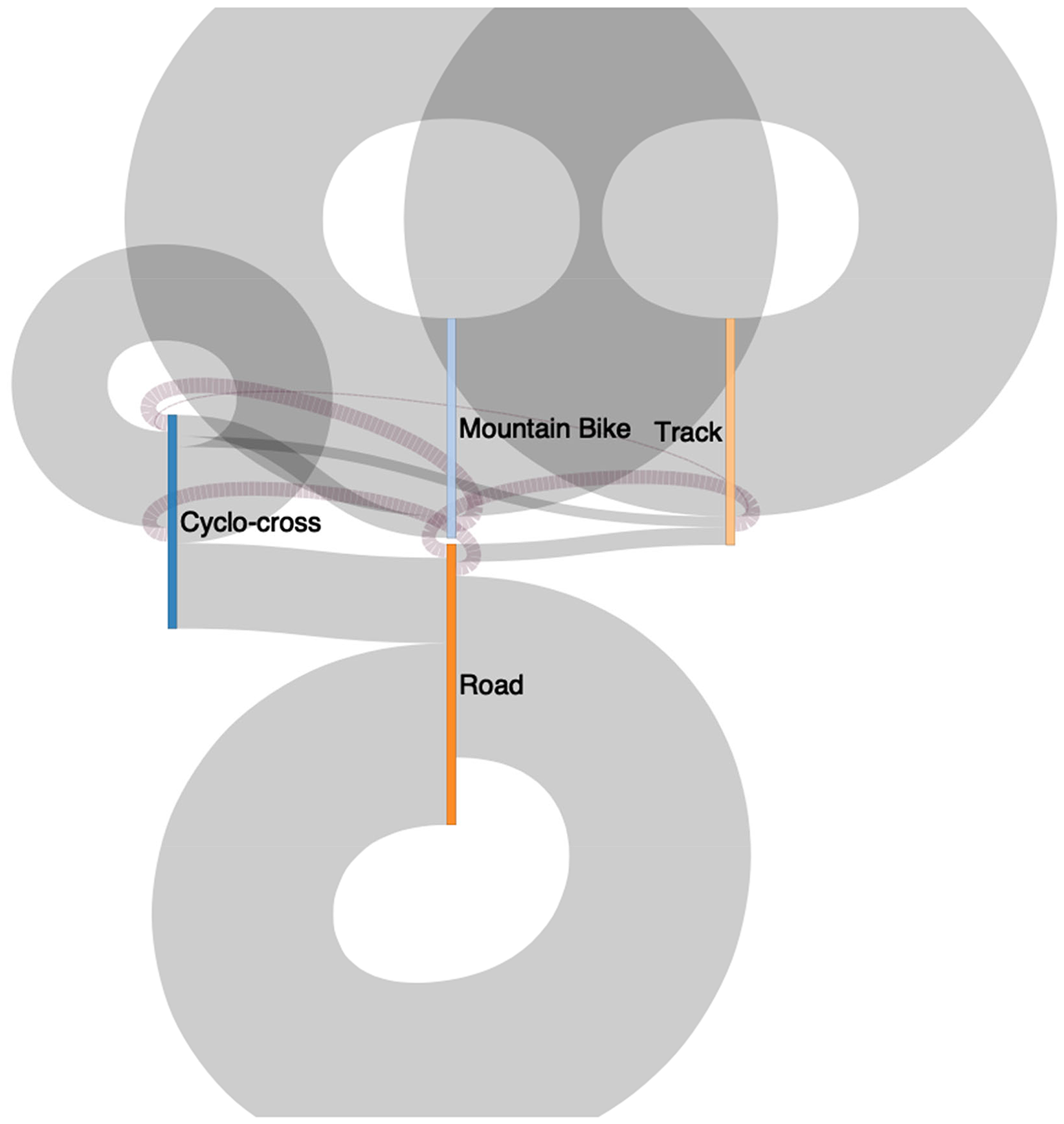
Sankey diagram of race-win movement patterns across disciplines.
Transition matrix capturing movement patterns of race wins across disciplines.
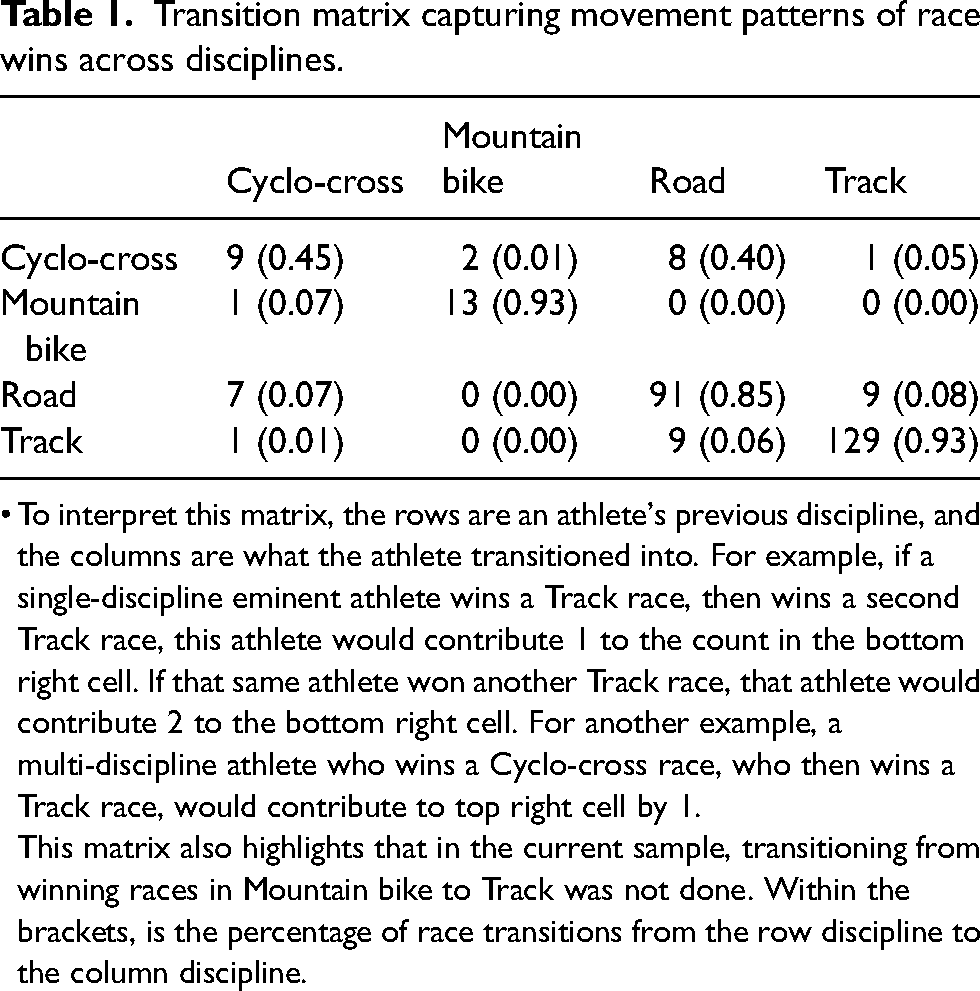
• To interpret this matrix, the rows are an athlete's previous discipline, and the columns are what the athlete transitioned into. For example, if a single-discipline eminent athlete wins a Track race, then wins a second Track race, this athlete would contribute 1 to the count in the bottom right cell. If that same athlete won another Track race, that athlete would contribute 2 to the bottom right cell. For another example, a multi-discipline athlete who wins a Cyclo-cross race, who then wins a Track race, would contribute to top right cell by 1.
This matrix also highlights that in the current sample, transitioning from winning races in Mountain bike to Track was not done. Within the brackets, is the percentage of race transitions from the row discipline to the column discipline.
To further examine how eminent athletes transition disciplines, a Markov Model was used to estimate how athletes’ transition (and win) between different disciplines over time. Overall, the results of this analysis indicated a well-fit model. To show the degree of fit, please see Table 2 for the observed and expected (generated from the Markov Model) transitions.
Markov model estimates for race-winning movement patterns across disciplines.
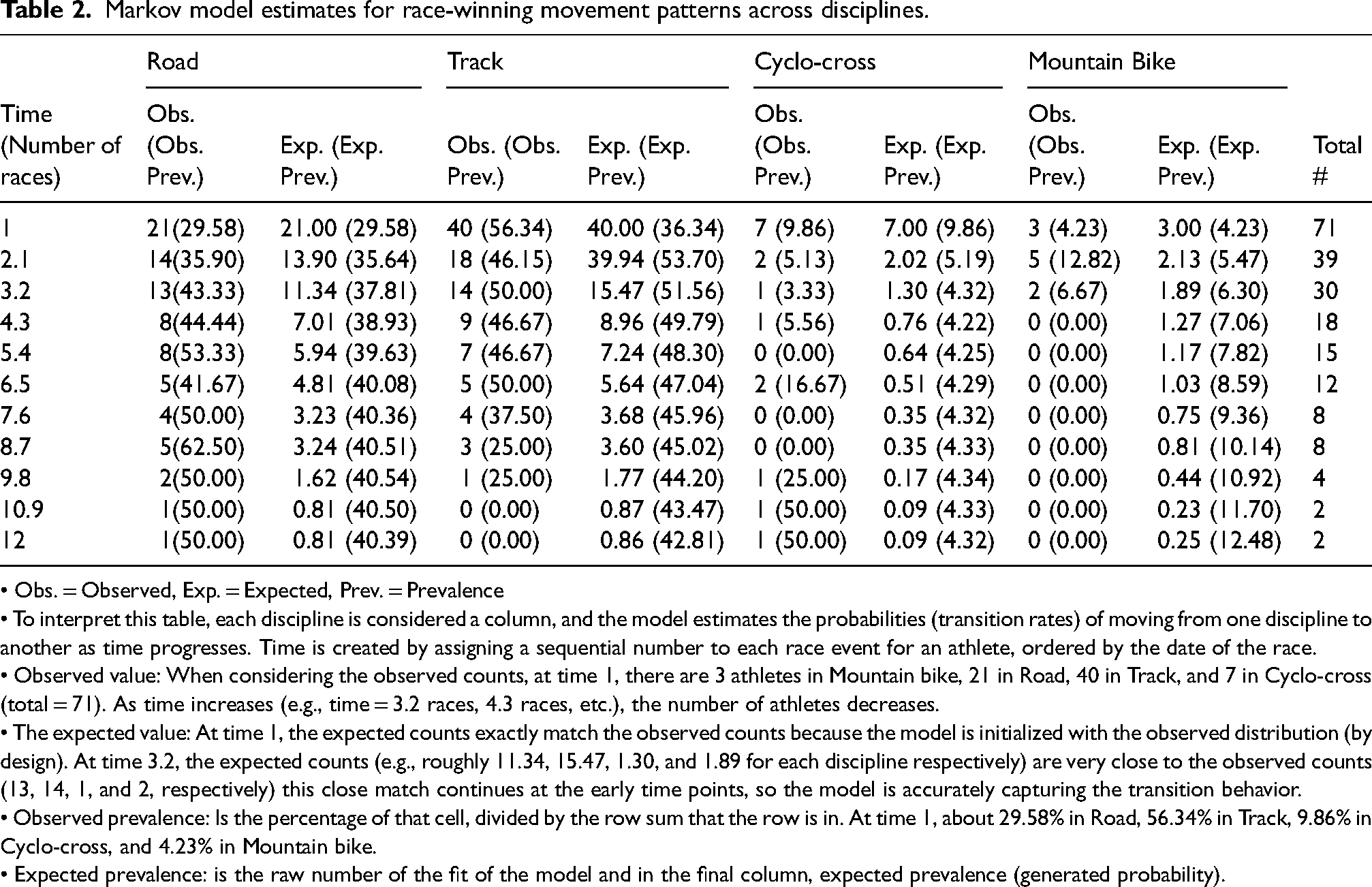
• Obs. = Observed, Exp. = Expected, Prev. = Prevalence
• To interpret this table, each discipline is considered a column, and the model estimates the probabilities (transition rates) of moving from one discipline to another as time progresses. Time is created by assigning a sequential number to each race event for an athlete, ordered by the date of the race.
• Observed value: When considering the observed counts, at time 1, there are 3 athletes in Mountain bike, 21 in Road, 40 in Track, and 7 in Cyclo-cross (total = 71). As time increases (e.g., time = 3.2 races, 4.3 races, etc.), the number of athletes decreases.
• The expected value: At time 1, the expected counts exactly match the observed counts because the model is initialized with the observed distribution (by design). At time 3.2, the expected counts (e.g., roughly 11.34, 15.47, 1.30, and 1.89 for each discipline respectively) are very close to the observed counts (13, 14, 1, and 2, respectively) this close match continues at the early time points, so the model is accurately capturing the transition behavior.
• Observed prevalence: Is the percentage of that cell, divided by the row sum that the row is in. At time 1, about 29.58% in Road, 56.34% in Track, 9.86% in Cyclo-cross, and 4.23% in Mountain bike.
• Expected prevalence: is the raw number of the fit of the model and in the final column, expected prevalence (generated probability).
Threshold for transition
Analysis of multidisciplinary progression using Fisher's Exact test (FDR-corrected) revealed no strict threshold for cross-discipline success among the 71 eminent athletes. Multidisciplinary champions emerged as early as the second win (5.6%, 4/71), increasing progressively to 9.9% by win 3, approximately 25% by wins 5–6, and 50% by wins 8–11. Of the two athletes who reached 12–13 wins, both had achieved multidisciplinary status. Significant differences in multidisciplinary proportions were found between early (wins 1–2) and later career stages (wins 6–11; adjusted p-values: 0.001–0.047), with the strongest effect between win 1 and win 8 (adjusted p = 0.0009). To visualize this, please see Figure 5.
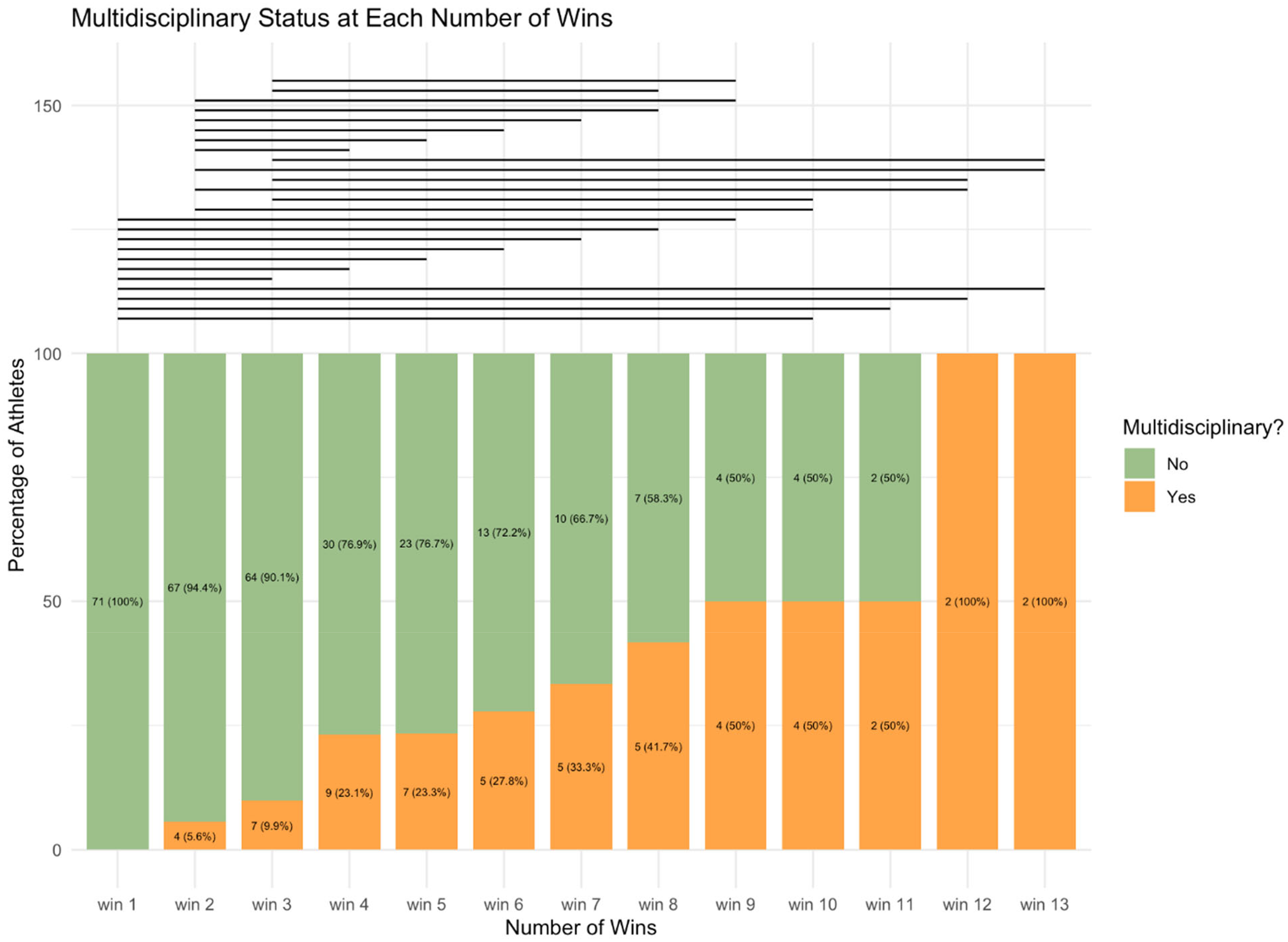
Multidisciplinary status of eminent athletes by number of race wins.
Discussion
This investigation examined the race characteristics of the world's eminent endurance cyclists. Studies of eminence in sporting populations are rare due to challenges around access and sparsity of subjects, although they are more widely used in other areas of achievement (see43,44). Explorations of performers at this exceptional level of skill have the potential to advance our understanding of skill development and attainment. As expected, this is a status very few cyclists achieved; of the athletes included in the endurance cycling disciplines in our sample (n = 107,024) only 71 athletes (0.07%) were eminent. Furthermore, of these eminent athletes, only 16 have reached eminence across multiple disciplines.
To better understand these rare, eminent athletes, their milestones and transition patterns were examined. Overall, findings from this cohort investigation revealed several interesting results. First, that being a multi-discipline eminent athlete is quite rare (n = 12; 5 women, 7 men). In many ways, these athletes deserve their own in-depth exploration, to understand the training load, race schedule, equipment needs/costs, coaching requirements (and so on) that these athletes require. As noted above, this distinction between multi-vs-single-discipline athletes is based solely on the number of premier wins and does not reflect participation (athletes who register and compete, but do not win). Future work could benefit from examining full participation histories of athletes across disciplines to better understand the complexities of the interactions.
Second, when examining milestones reached by eminent athletes, there were very few significantly different milestone ages reached by discipline, gender, or status. This suggests athletes did not necessarily follow a linear or predictable trajectory,45–47 and that most created their own ‘path’ to reach eminence. This can be especially highlighted in Figure 2, where some athletes reached all their milestones before other athletes had even started to achieve theirs, and speaks to need to consider individuality when discussing athlete selection policies, athlete development plans, and funding models. These findings align with previous work done in the field when considering milestones reached by various categories of athlete (recreational vs developmental vs expert).48,49 For example, when examining the career performances of track and field athletes at World Junior Championships, results from the work of Foss and colleagues 49 challenge the notion that achieving elite success as a junior athlete is a prerequisite for the same success at the senior level. The authors remark that making predictions of which athletes will become successful senior athletes with any real accuracy is unlikely given the individuality of athletes and unique needs and constraints within and beyond the system.
When looking closely at the significant differences within the group of eminent athletes for the milestones they reached and when, results suggested some differences between cyclists who had success in a single discipline and those with multi-discipline success. In terms of the amount of time it took for athletes to achieve the milestones, multi-discipline racers required less time between Milestone 1 (first elite podium) and Milestone 3 (first premier race win). As well, women in the sample progressed from the elite podium to first premier podium significantly faster than men. These effects could be due to several factors, such as the breadth and depth of the athlete pool for the women compared to the men – which is likely due to series of socio-political-cultural reasons.50,51 As noted above, there were a total of 107,024 unique athletes with 21.12% listed as women and 78.88% listed as men. Moreover, from 2010–2014, 64.70% of races within elite endurance competitions are specifically for men, and 35.30% of races are specifically for women. This indicates there were greater opportunities available for men to race than there were for women, which may have potentially influenced the speed at which women progressed through certain milestones. In addition, the number of U23 teams and race opportunities for women is substantially less than the men (e.g., the men on the road have a U23 UCI Nation Cup series, while the women do not).
Third, when investigating thresholds of wins for athletes, findings suggest that while some exceptional athletes demonstrate early versatility (winning in multiple discipline), the probability of achieving multidisciplinary success increases substantially with accumulated victories rather than requiring a specific win threshold. Perhaps multidisciplinary athletes have a longer career life, or more opportunities to win with more premium race options during their peak physical capacity, but this theory would have to be investigated in future analyses.
While our analyses do not allow us to draw any conclusions about the benefits of multi-discipline participation, it does spark important questions about the value (and cost) of competing in multiple disciplines. While multi-discipline athletes progressed through certain milestones faster, they also had longer racing careers (in years). While speeding up the progression from race milestones may not be particularly valuable for athletes, race career length undoubtedly is. Hypothetically, career longevity can offer advantages such as funding/sponsorship opportunities, more developmental opportunities, and perhaps even continued participation. The mechanism(s) driving this relationship is still to be determined, but certainly worth further investigation to better understand athletes and their career journeys.
One hypothesis could be drawn from the relationship between skill acquisition and motor learning. For example, the constraints-based approach to motor learning52,53 proposes that motor skills can be developed through constraining aspects from three groups of factors. The theory speaks to opportunities of constraining the performer (i.e., limiting the athlete in executing a motor task), the task (i.e., making the drill, assignment, or game itself more or less challenging), and/or the environment (for example, changing the size of the field of play or the type of surface). When combining endurance cycling sports, one could argue that having athletes alternate between bikes with different gearing (e.g., a Road bike with multiple gears and a Track bike with a fixed gear) and execute similar bike handling skills on varying surfaces (such as tarmac, dirt, a smooth track) may manipulate key task and performer constraints that consequently lead to improved skill. Future work is needed to test the validity of this speculation.
Overuse injuries 54 and burn-out 55 could be another reason athletes may benefit from engaging in multiple cycling sports. More specifically, the ability to sustain high volumes of training has been identified as critical in the development of elite endurance athletes. For endurance cyclists, it is not uncommon to accumulate over a thousand hours of training in a year. 56 It has also been well documented that high volumes of work in a monotonous fashion or environment increase the risks of both overuse injuries and burn-out.57,58 As a result, strategically combining cycling sports throughout the year for an elite rider may decrease monotony and reduce the associated risks, whilst promoting the required physiological and psychological adaptations. That said, these hypotheses are largely speculative in this context but present interesting avenues for future exploration.
As well, albeit rare, it is possible some athletes have the potential to attain incredible achievements in multiple sports because of their talent. There is precedent for athletes with superior capabilities (i.e., super-talents) finding success in multiple sports at a high level (e.g., speed skater and cyclist Clara Hughes; American football and baseball all-star Bo Jackson). The greater rates of multi-event success in cycling may be due to the greater access elite cyclists have to cross over between events.
Limitations
While this study presents novel findings for the field of elite Road, Track, Cyclo Cross and Mountain Bike, there were multiple limitations that are important to acknowledge. First, this cohort includes those who competed between 1 and 13 year(s) ago and, as a result, proportions might have changed as advancements in resourcing and training prescription progressed and it would not include past or future eminent performers. Second, some individuals, most notably those who competed in the last few years in the cohort, may still be selected in future elite world championships. Therefore, our results may not truly reflect the full effects of the sample's competitive performance. Third, the introduction of a minimum salary for athletes on women's world tour (Road) teams in 2020 could change some of the relationships and outcomes described in this article, emphasizing the need for replication of these analyses in future samples. Finally, in using the results of the Delphi-study to inform the criteria for ‘eminence’, ‘emerging-eminence’ and ‘elite’ athletes, arguments could be made utilizing different criteria. For example, future work may build on these criteria to consider different levels of importance relative to the various disciplines. For example, a win in cyclocross may have an assigned weight that is different than a monument win. As mentioned in the introduction, multiple approaches could be used to determine different status levels of athletes, all of which present their own strengths and weaknesses.
As with many big data sets, there is always a risk for error in the data entry and data cleaning processes. For example, some races were identified as having spelling errors (e.g., ‘trial’ vs ‘trail’ and Giro di Lombardia vs. Il Lombardia), different language spellings, and formatting/spacing differences (with underscores or extra spaces or hyphens), which means it is possible, if not likely, that there are some errors within the dataset. Also, sometimes the names of the races changed over time (i.e., UCI Mountain Bike World Cup vs Mercedes-Benz UCI Mountain Bike World Cup) with new sponsors, and we have tried to capture these changes accurately, but there is still a chance the race name was not captured properly. We have tried to be as transparent as possible in outlining our process in the Supplementary File.
Future directions
These analyses highlight several areas for future work. For example, examining the next cohort of sample data (e.g., from 2025–2035) may help to identify changes and trends (if any) in the areas of investigation included in this study (gender differences, sport differences, etc.). It may also be beneficial for researchers and practitioners to consider how commercial influences affect performance and development trends within these populations. For instance, athletes competing in multiple sports may appeal to varying populations of fans, which may increase the marketability of multiple winners. As world tour teams professionalize, commercial influences may accentuate these findings in future cohorts. As well, it would be interesting for future work to identify the retirement status for these eminent athletes, to better understand aspects of career journey and career length. Finally, this work is admittedly, the ‘tip of the iceberg’ for understanding athlete performance in endurance cycling. Further work could add to the research landscape in cycling by examining the possible mechanisms driving these findings. For example, it would be important to look more closely at certain developmental systems in various countries, continents, within and beyond endurance disciplines to better understand the interaction of the athlete, the environment, and the system.
Conclusion
Reaching the required level of aptitude to compete in the elite categories in UCI sanctioned races is impressive, a feat that only a small proportion of competitive cyclists ever achieve. However, even within this elite group, levels of achievement vary, with some never winning a major race and others winning consistently. This last group, which we have labeled ‘eminent’ has been rarely examined in sport settings but represents a key cohort for understanding the process of skill development and the upper limits of human achievement. Through examining the eminent sample of endurance riders, there is much we can learn about their milestones and their movements across disciplines. These results highlight the variabilities and nuances amongst the developmental pathways in eminent cyclists and may inform evidence-informed models of athlete development.
Supplemental Material
sj-docx-1-spo-10.1177_17479541251356012 - Supplemental material for Best of the best: A cohort study of race performance characteristics of eminent endurance cyclists
Supplemental material, sj-docx-1-spo-10.1177_17479541251356012 for Best of the best: A cohort study of race performance characteristics of eminent endurance cyclists by Jesse Korf, Kathryn Johnston, Yiru Wang and Joseph Baker in International Journal of Sports Science & Coaching
Footnotes
Acknowledgements
The authors want to acknowledge the Union Cycliste Internationale (UCI) for recording and reporting the cycling data.
Data availability statement

Conflict of interest disclosure
The authors declared the following potential conflicts of interest with respect to the research, authorship, and/or publication of this article: The lead author, JK works for the Australian National Sporting Organization, AusCycling.
Funding
The authors received no financial support for the research, authorship, and/or publication of this article.
Supplemental material
Supplemental material for this article is available online.
Notes
References
Supplementary Material
Please find the following supplemental material available below.
For Open Access articles published under a Creative Commons License, all supplemental material carries the same license as the article it is associated with.
For non-Open Access articles published, all supplemental material carries a non-exclusive license, and permission requests for re-use of supplemental material or any part of supplemental material shall be sent directly to the copyright owner as specified in the copyright notice associated with the article.
