



Abstract
Performance analysis serves as a crucial feedback mechanism in sport. Key performance indicators (KPIs) are essential to this, yet research predominantly examines KPIs relative to outcomes. This systematic review synthesises existing literature on KPIs in Rugby Sevens to identify their application, context and classifications while highlighting gaps and inconsistencies in the field. A systematic search across seven electronic databases identified 18 relevant publications meeting inclusion criteria, detailing 220 unique KPIs. These KPIs serve diverse purposes, including assessing winning or losing, team ranking, and scoring or conceding, reflecting the complexity of performance analysis. The majority (56%) of studies focused on game or tournament outcomes, while 33% examined performance. Despite diverse applications, there is a notable focus on outcome-oriented research, potentially limiting holistic effectiveness. Notably, 46% of the studies provided operational definitions for KPIs, leaving a sizeable proportion (54%) without explicit definitions. This review highlights the complexity of the performance analysis domain and KPI usage within Rugby Sevens and advocates for use of an existing framework to standardise definitions. Addressing these gaps will facilitate a more consistent and effective approach to performance analysis, promoting deeper insights into the multifaceted nature of the sport and evolve the overall landscape of Rugby Sevens performance assessment.
Key points
To advance performance analysis in Rugby Sevens, greater emphasis should be placed on understanding the “how” behind key match events, examining the specific actions and behaviours that lead to successful outcomes. While much of the current research focuses on results-based metrics, exploring underlying processes can offer more actionable insights for coaches. Machine learning further enhances this potential by uncovering complex patterns in performance data.
Performance assessment in Rugby Sevens relies on a wide range of KPIs that cover individual player performance, team dynamics, and strategic elements. However, inconsistent definitions across studies, highlights the need to employ standardised operational definitions. Utilising the video analysis framework of descriptors and definitions by the Rugby Union Video Analysis Consensus group would ensure transparency, comparability and accuracy in both research and practice.
To enhance performance assessment in Rugby Sevens, a deeper understanding of influencing factors, such as tactical, gender-specific, and situational differences are essential. For example, successful male and female teams employ distinct tactical approaches, yet female teams remain underrepresented in the literature. Additionally, emerging technologies like machine learning offer significant potential for analysing performance but require standardized, high-quality data to maximize their impact. Addressing these gaps will enable more comprehensive and effective performance analysis.
Introduction
Rugby Sevens, a rugby football variant, is a field-based, contact sport in which two teams of seven on-field players compete against each other. Each game lasts 14 min in total. It is played on the same size playing field and according to the rules of rugby union. Rugby Sevens is an intermittent, high-intensity sport that calls for a high degree of physicality as well as both technical and tactical skill. 1 Much like rugby union, teams attempt to score via tries, conversions, and penalty kicks, with the team with the highest score winning the game. 2
Much of the research in Rugby Sevens has predominantly focused on the use of Global Positioning System (GPS) units and accelerometer devices across different demographics such as age groups, gender, and competition levels (e.g., elite, amateur). Research has shown that during a 14-min Rugby Sevens match, there are a total of 22.97 ± 3.49 activities, each lasting on average 40.19 ± 30.61 s in duration. 3 Moreover, each possession for a team is crucial in gaining an advantage, emphasising the importance of performance analysis for monitoring activities crucial to success.
Performance analysis serves as a crucial feedback mechanism for both players and coaches, guiding training, tactics, and player selection decisions, therefore, accuracy is vital in this feedback.4,5 In the early days of performance analysis, coaches often relied on memory to recall the major events or observations in a game or competition to then formulate their feedback. However, research suggests that without objective measures, these observations of performance post competition can be inaccurate and can lead to a misunderstanding of successful performance. 6 Nowadays, performance analysis or notational analysis as it is known in its simpler form can be defined as; “an objective way of recording performance, so that critical events in that performance can be quantified in a consistent and reliable manner”. 7 Underpinning performance analysis is the recording of actions both positive and negative that occur throughout a game which is often achieved through the use of key performance indicators (KPIs). KPIs are variables with some value or informative information to characterise a performance component which are frequently used to quantify performance. 8 The tracking of these KPIs has experienced substantial changes since its inception, transitioning from manual notation to more technology-based computerised notational methods. A significant development in this progression has been the introduction of video analysis, which is routinely employed to quantify performance in rugby.9,10 This methodological advancement has given rise to two primary categories of KPIs, “what” and “how” indicators. 11 “What” indicators refer to quantifiable events within the game (e.g., number of tackles), whereas “how” indicators describe the manner in which these events are executed, offering coaches critical insights into the underlying processes behind performance. 11 Despite technological advancements, the fundamental principle of systematically recording and analysing key aspects of players’ performance of the game remains unchanged.12,13 Charles Reep was one of the pioneers of performance analysis through a technique of hand notation using pen and paper. 14 Since then advancements in technology has enabled the use of both computerised annotation methods and video analysis software for more detailed analysis of performance. 15 A recent review by Lord et al. 15 included a wide range of sports, with soccer accounting for the majority of the research done in this field.16–18
Hughes and Bartlett 19 investigated the application and classification of KPIs in performance analysis across a wide range of sports, including net or wall games like tennis, invasion games such as rugby, and striking or fielding games which include cricket and baseball. Specific to invasion games such as rugby or soccer, research suggests that performance measures used across sports are similar, despite the differences in terminology. The primary focus of these KPIs revolves around scoring indicators or metrics that represent the quality of performance in specific aspects of the game. Hughes and Bartlett's 19 classification of KPIs includes four distinct categories: match classification indicators, biomechanical indicators, technical indicators, and tactical indicators.
For the purpose of this review, a key performance indicator (KPI) is defined as a quantifiable variable representing specific in-game events referred to as “what” indicators. The primary focus is on these “what” KPIs, though studies incorporating “how” indicators are also included in the analysis, as they often rely on “what” measures as their foundation. This review aims to provide an evidence-based overview of KPIs in Rugby Sevens, examining their application, role in performance analysis, and classification to offer a comprehensive understanding.
Methods
Design and search strategy
This systematic review was completed in accordance with the Preferred Reporting Items for Systematic Reviews and Meta-Analyses (PRISMA) guidelines. 20 The search was conducted on 20th of March 2025. The following seven electronic databases were included as part of this review (SPORTDiscus, PubMed, Web of Science, SCOPUS, MEDLINE, CINAHL, and EMBASE), with all relevant publications from the earliest record to 20th March 2025 included in the search. The search strategy contained key words associated with the specific topic of the review of investigating KPIs in Rugby Sevens and were as follows; “Performance Indicator*” OR “Performance Chara*” OR “Game Related Stat*” OR “Match Stat*” OR “Match Related Stat*” OR “Performance Analy*” OR “Tactic* Analy*” OR “Performance Me*” OR KPI OR “Performance Stat*” OR PI OR “Key Performance Indicator*” OR “Tactic* Indicator*” OR Characteristics* OR “Patterns of play” OR “Notational Analy*” OR “Tech* Deter*” OR “Tech* Indicator*” OR “Effective Strat*” AND “Rugby”. Once all pertinent articles had been retrieved, a manual check of the appropriated papers’ reference lists was carried out to find any further possible publications.
Inclusion and exclusion criteria
Criteria for inclusion were as follows:
The research study was written and published in English. The research study was a conference paper or a full-text paper from a peer reviewed journal or conference. The research included Key Performance Indicators in the context of performance analysis. The research was completed in the sport of Rugby Sevens of any gender or competition level.
Criteria for exclusion were as follows:
The research study was not published or available in English. The research was completed in rugby league or rugby union. The research did not include the relevant dataset related to both the match events rugby sevens.
Data extraction
A standardised data extraction sheet was used to extract important information from the studies included. The data extracted included first author, year of publication, country, study design, population, sample size, assessment tools, and outcomes. The following variables were used to analyse the papers included in this current review: competition, gender, level of competition, study focus (e.g., performance-oriented or outcome-oriented), aims and objectives of the study, method of KPI selection, number of KPIs identified, provision of definitions, and KPI classification (e.g., general play, scoring and conceding) (See Table 1 and Table 2). Two authors (CF and ADO’H) independently extracted the data, while any inconsistencies were resolved by a third author (MS).
Reviewed studies and characteristics.
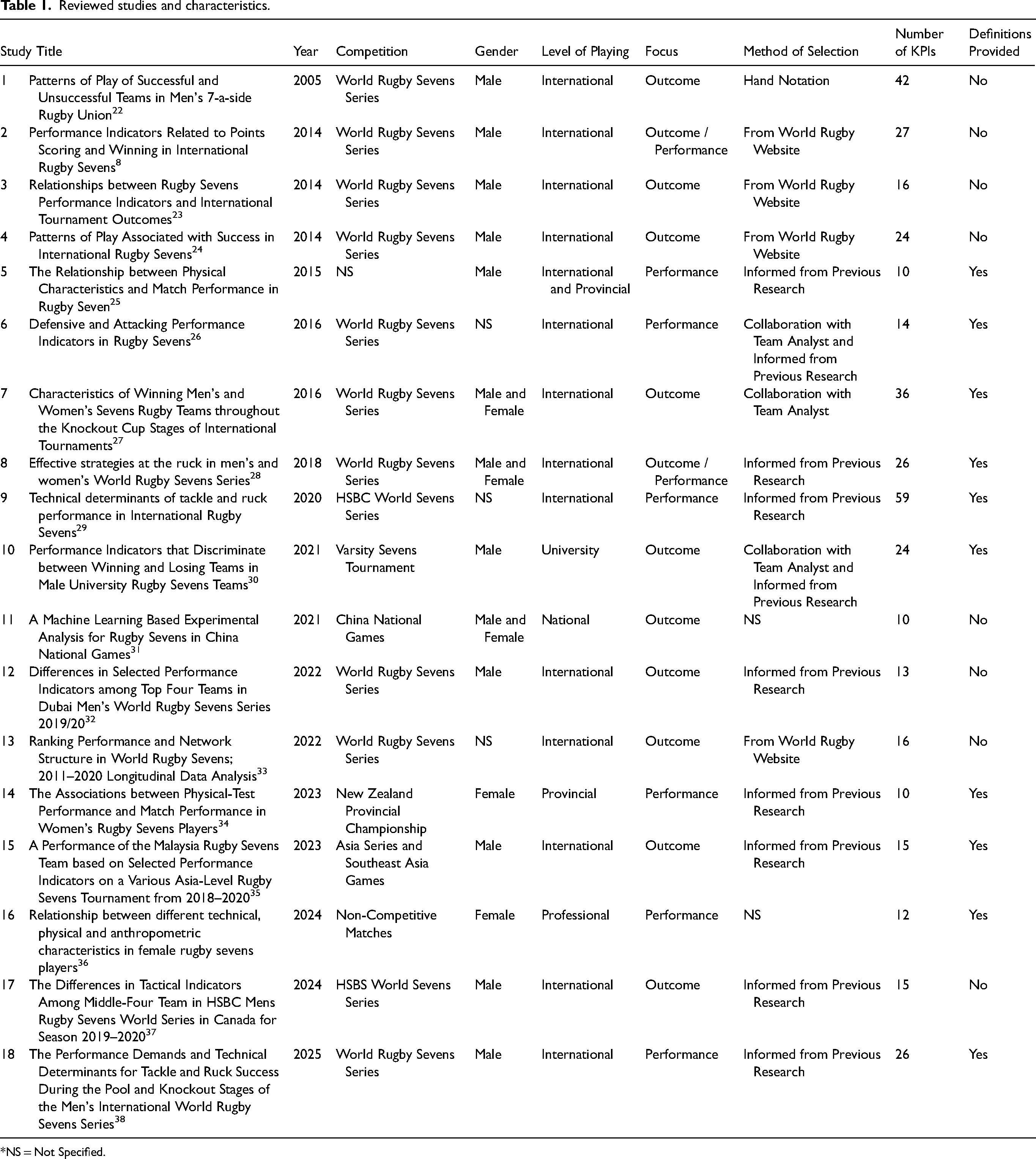
*NS = Not Specified.
Key performance indicators (what) and classification by study.
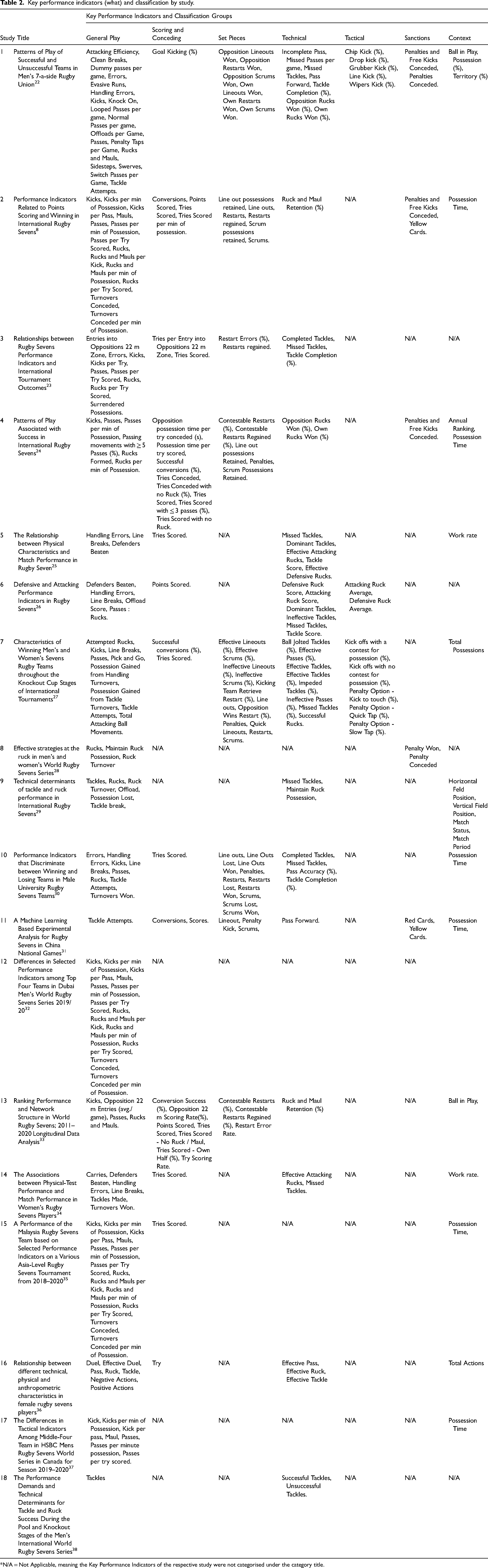
*N/A = Not Applicable, meaning the Key Performance Indicators of the respective study were not categorised under the category title.
Management and selection of studies
The initial search revealed a total number of 4991 articles. Subsequent to the elimination of duplicates (n = 3160), the titles and abstracts of all retrieved articles (n = 1834) were screened. Full texts (n = 89) of all relevant records were obtained and further examined for eligibility based on the above inclusion and exclusion criteria with 71 articles eliminated. This process was repeated for records identified through the manual search of reference lists. The systematic review was completed with a total of 18 articles included in the final sample. Figure 1 displays the screening process.
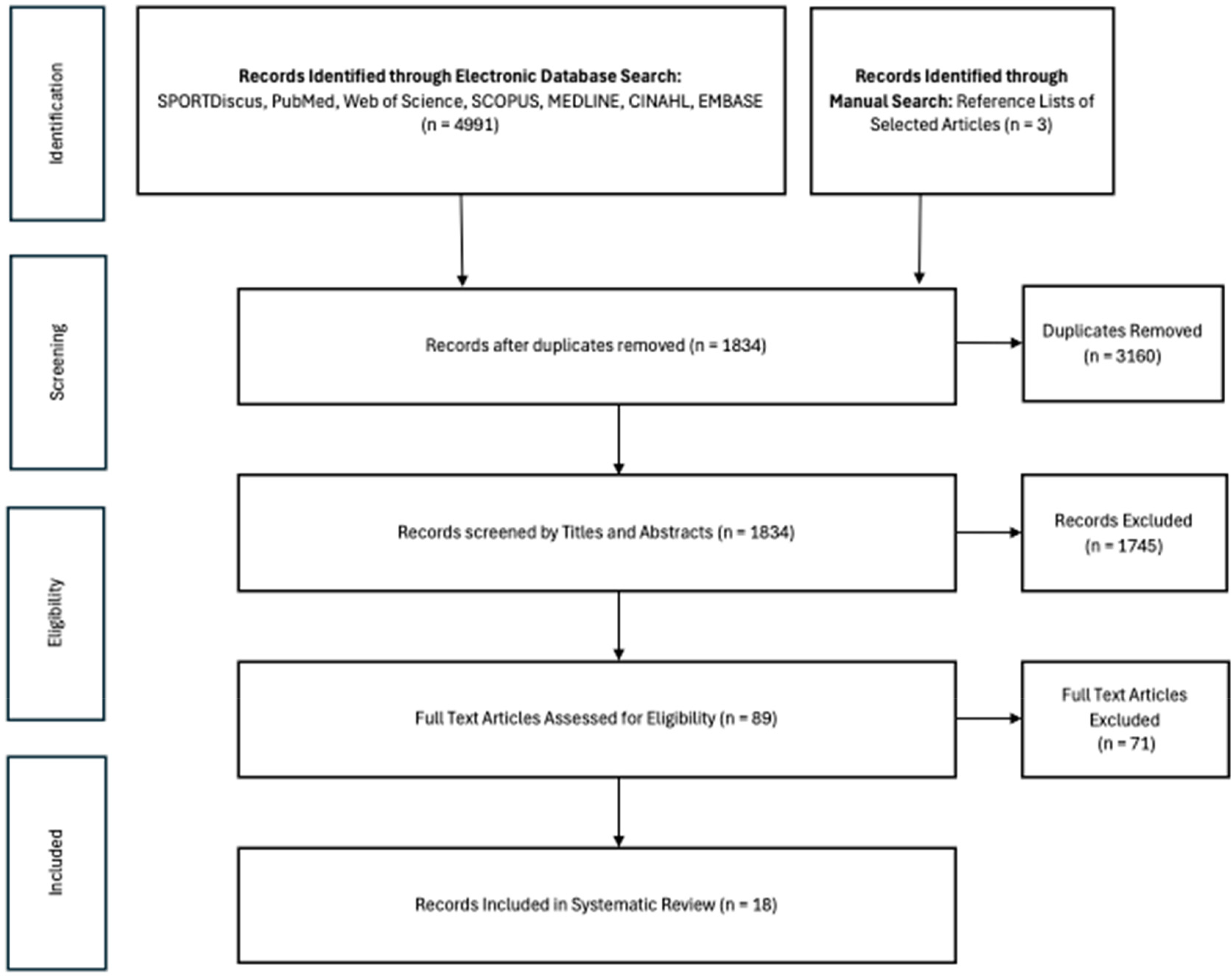
Study selection PRISMA flow diagram; key performance indicators in rugby sevens.
Quality of assessment
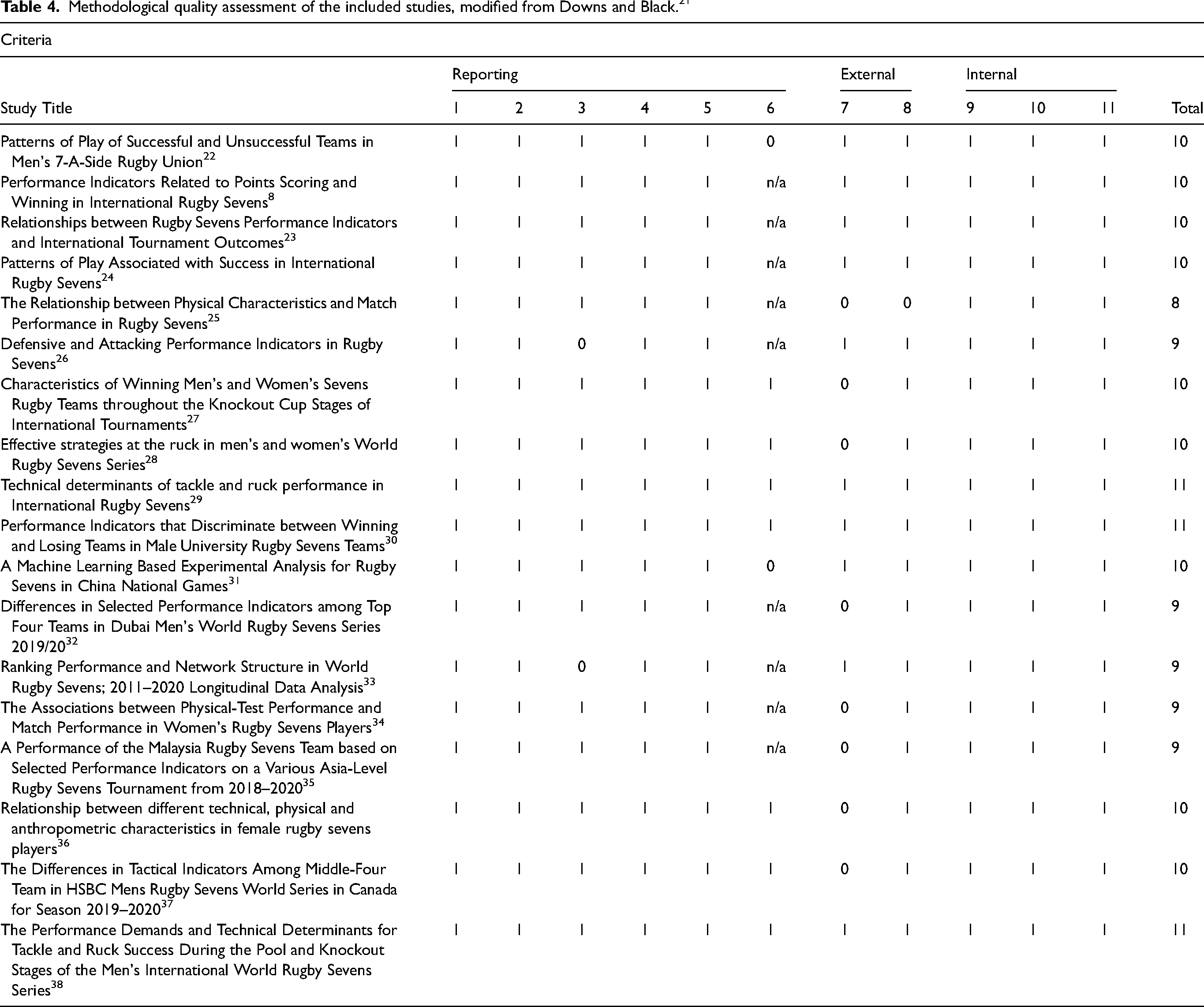
Quality of assessment was performed using a modified Downs and Black 21 checklist in order to assess the methodological quality of the studies. As seen in Table 3, a total of 11 of 27 possible items were selected per relevance to this systematic review. Items were scored ‘1’ (yes) or ‘0’ (no/unable to determine, with N/A representing items which were not applicable to the respective study. Scores were calculated to provide the quality score for each study included. The quality and bias of the 18 included studies ranged from 8 to 11. No study was excluded following the quality of assessment (See Table 4).
Modified Downs and Black checklist, modified from Downs and Black. 21
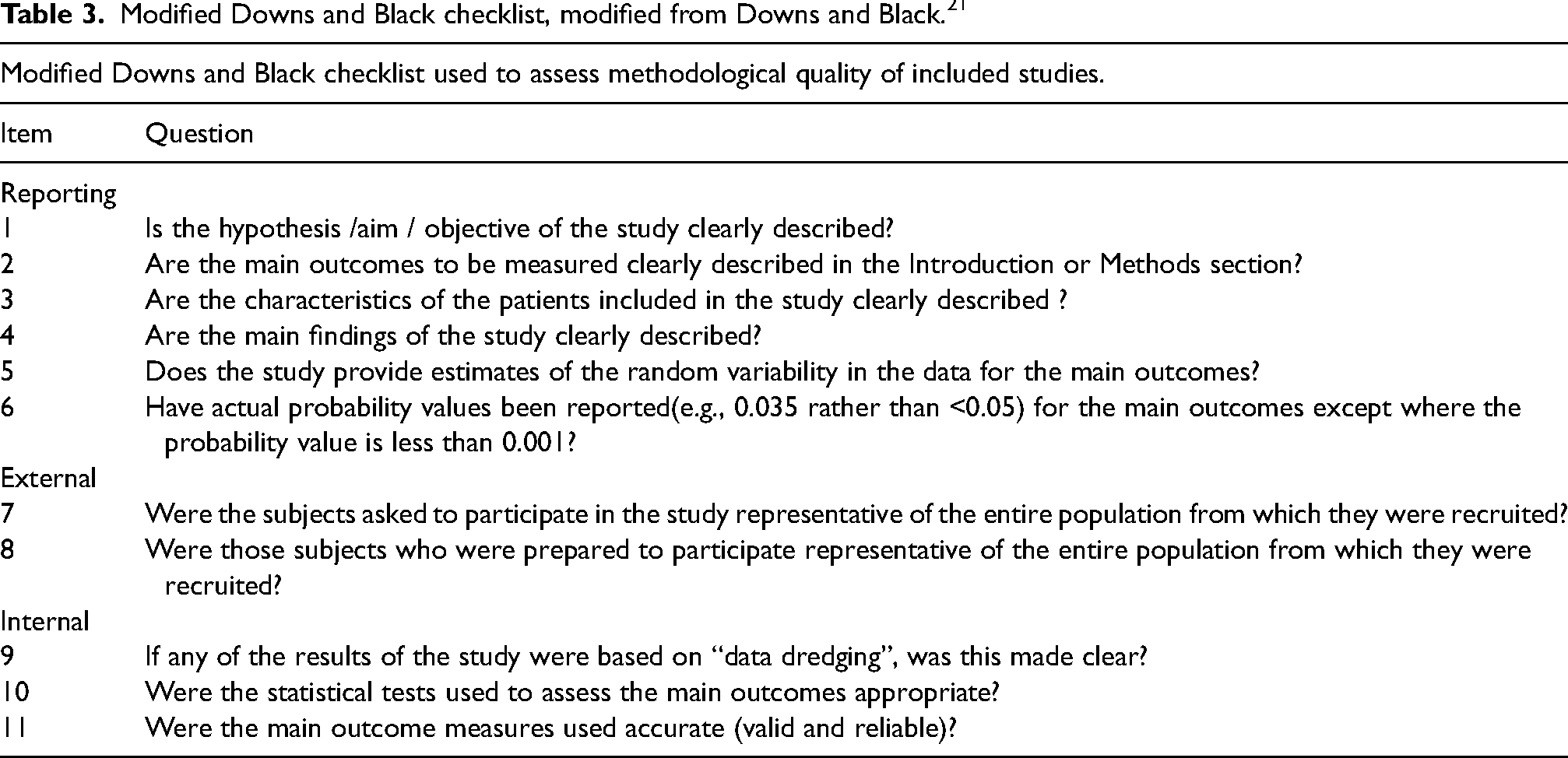
Methodological quality assessment of the included studies, modified from Downs and Black. 21
Results
Data organisation and study context
Studies employed data sets of varying sample sizes, ranging from a minimum of 10 matches to a maximum of 4074 matches. Of the 18 studies included, 15 studies centred around the “what” regarding performance analysis, whereas 3 focused on the “how”, specifically related to tackle and ruck performance. Four research studies used KPIs in the context of winning and losing, with another 4 studies focusing on KPIs related to team ranking. Three studies assessed KPIs alongside physical measures of performance whereas two studies applied KPIs within a machine learning context. Three studies focused on performance around the tackle and ruck. The remaining 2 studies evaluated KPIs linked to scoring and conceding, or examined KPIs related to both success and points scoring.
Research in this domain predominantly focused on males, constituting 56% (n = 10) of the studies conducted. Three (17%) studies encompassed both male and female participants, and two studies (11%) was focused exclusively on females. Three (17%) of the papers included in this analysis did not specify the gender of the teams investigated (See Table 1).
Key performance indicators context and classifications
This analysis identified 220 unique key performance indicators from the examined literature. Many of the 220 KPIs were repeated multiple times in the selected studies, resulting in a total of 400 KPIs referenced throughout the combined studies. From the 220 unique reported KPIs, 148 were classified as focusing on ‘what’(outcome or event), while 72 KPIs focused on ‘how’ (process or method). When considering the context surrounding the quantification of KPIs, 254 distinct KPIs were identified. Of these 254, 86 were contextualised, with 50 expressed as percentages, 20 as frequency per game, 6 per minute of possession, 5 per try scored, and 1 each per pass, per kick, and per entry into the opposition's 22-metre zone. Two KPIs were expressed relative to time, with one reported in minutes and one in seconds.
Key performance indicators were classified in six (33%) of the 18 studies, with classifications in two studies representing attacking and defensive variables. Other classifications of key performance indicators included possessions, restarts, gaining possession, set pieces, penalties, offensive options, defensive statistics, scoring, match development, phase play, and general play. Variables were not classified in the remaining 66% (n = 12) of studies. Consequently, 139 of the 400 reported KPIs were not classified. In an attempt to classify all 148 unique ‘what’ KPIs, the following classifications were adapted from the research. KPIs were classified on a high-level as; attack (n = 69), defence (n = 24), attack and defence (n = 20), set piece (n = 27), or other (n = 8). Following this, KPIs were classified more detailed in the following; general play (n = 47), sanctions (n = 6), scoring and conceding (n = 15), set pieces (n = 29), tactical (n = 12), technical (n = 24), and context (n = 15) (See Table 2 and Figure 2).
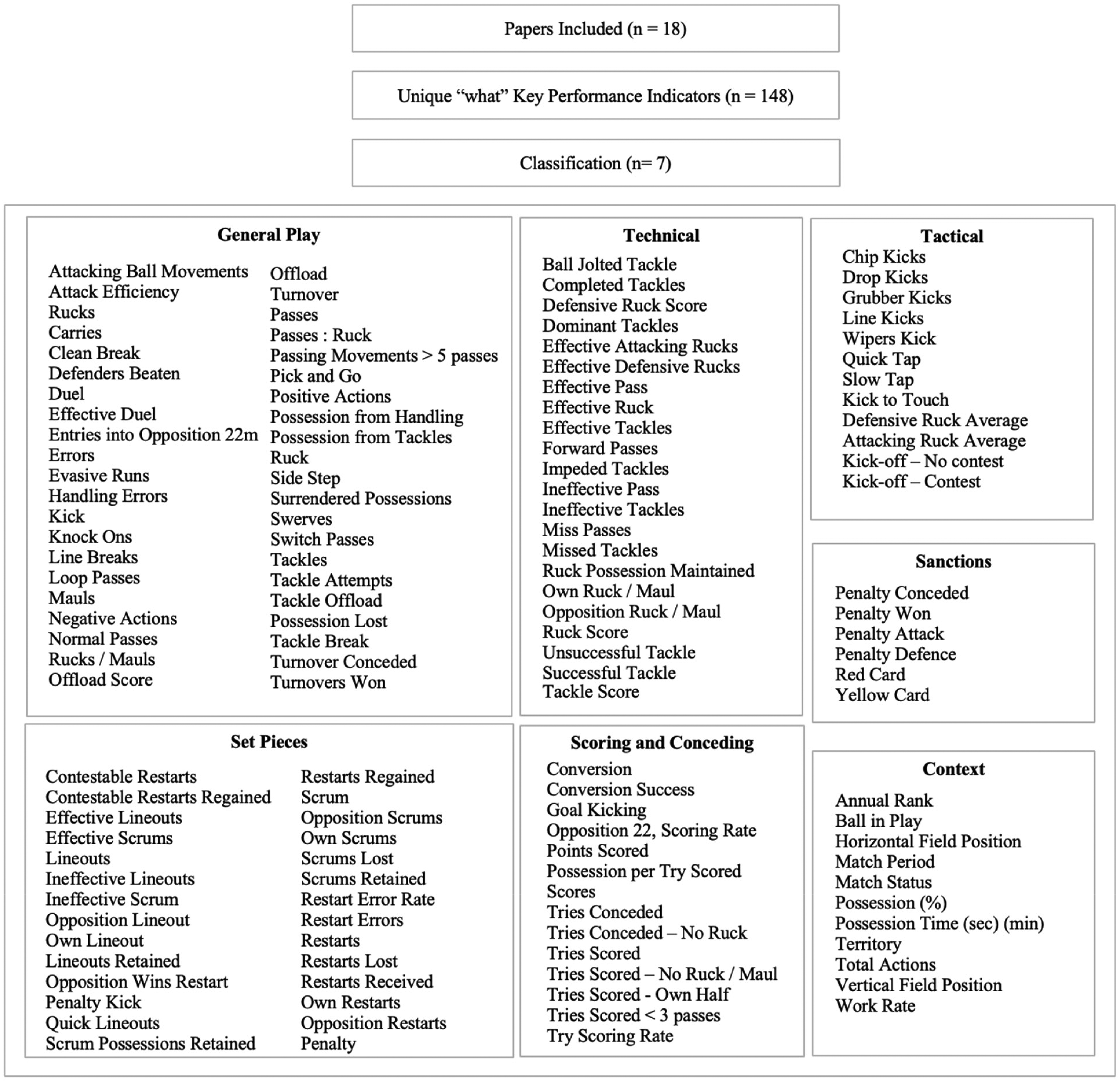
Classification of key performance indicators in rugby sevens.
Selection of performance indicators
The selection process of KPIs within the research varied across this investigation. The most preferred technique, seen in 44% (n = 8) of the investigations, was to use KPIs that were informed from previous research. KPIs were adapted from the World Rugby Series reports in 22% (n = 4) of the articles. In 8% (n = 1) of investigations, collaboration with Rugby Sevens Analysts was used. In 11% (n = 2) of the studies, both collaboration with a team analyst and adaptation from previous studies was used to inform the selected KPIs. The selection process for the remaining 11% (n = 2) of studies was not specified.
Applications and focus of KPIs
The outcome of the tournament or games in the tournament was the focus for 56% (n = 10) of the studies in this analysis. The performance of the teams themselves, irrespective of the outcome, was the focus for 33% (n = 6) of studies, with the final 11% (n = 2) of studies incorporating both the outcome of the tournaments and the performance of the team itself.
Use of operational definitions
Among the studies examined, of the 254 distinct KPIs operational definitions were provided for 168 of these. These definitions were present in 10 out of the 18 studies (56%), while the remaining 8 studies did not provide any definitions for KPIs (44%). Consequently, 86 KPIs lacked explicit definitions in the reviewed research. Tries scored was the most commonly used KPI (n = 11), with passes second (n = 9) and rucks and kicks third appearing 8 times respectively. Notably, 185 variables within the respective 18 studies were observed to occur only once, with examples including forward passes, dummy passes, and contestable restarts.
Discussion
The aim of this systematic review was to provide a comprehensive and evidence-based analysis of the key performance indicators in Rugby Sevens, with a primary focus on the “what” of performance analysis, while also considering their applications, context, and classifications, in performance assessment. To achieve this, 18 studies were reviewed following a rigorous search and screening process. While previous reviews have examined the physical and technical demands of Rugby Sevens across different competition levels, age groups, and genders,39–42 this review uniquely concentrates on performance analysis by identifying and synthesising 220 unique KPIs, 148 of which focused on what events occurred, reported in the literature. This focused approach provides valuable insights into the specific metrics used to evaluate performance in Rugby Sevens, addressing a critical gap in the field.
The identification of 220 unique KPIs across the reviewed literature highlights a common challenge faced by performance analysts, the overwhelming volume of available data. Callinan et al. refers to this as the era of “big data,” where the abundance of information can hinder rather than help if not carefully managed. 43 As such, it becomes essential for analysts to translate complex data into meaningful, practical insights that inform coaching decisions and athlete development. Furthermore, the rapid match turnaround typical of Rugby Sevens tournaments increases this challenge, placing considerable time and pressure on analysts who must quickly interpret and relay data in high-performance environments. 44 Interestingly, the earliest study on KPIs in Rugby Sevens, which focused on identifying “what” events occur during a game, reported the highest number of variables among all reviewed studies. 22 This may be attributed to the exploratory nature of the research, as it served as a foundation for performance analysis in rugby sevens. With such a broad range of KPIs reported across the literature, researchers and practitioners make deliberate choices about which KPIs to prioritise. This process of selecting key indicators plays a vital role in shaping meaningful performance insights and ensuring that analysis aligns with specific tactical goals and competitive demands.
Selection of performance indicators
The goal of performance analysis or KPIs in sport is to optimise the feedback for the athlete and coaches, thereby improving overall performance. 4 As memory alone may be unreliable in the recall of successful performance, objective measures such as KPIs alongside video analysis are essential. 9 Collaboration with performance analysts is a common approach to identifying meaningful KPIs, as expert coaches or performance analysts help highlight critical aspects of performance. Three studies in this review adopted such collaboration.26,27,30 However two of these studies combined analyst collaboration with references to the existing research,26,30 reflecting the varied strategies employed across the literature.
A notable example of KPI development is the pioneering work by Hughes and Jones, who identified and created 42 KPIs through video annotation, 17 of which significantly differentiated between successful and unsuccessful teams. 22 This study has influenced subsequent research by establishing KPIs that other researchers have built upon to advance performance analysis in Rugby Sevens. Eight studies within this review combined previous research with modifications to suit their specific objective.25,28,32,34,35,37,38,45 Such modifications allow researchers and practitioners to minimise irrelevant data collection and focus on metrics which align specifically with their goals. However, this approach increases the risk of overlooking variables that may be critical for one team in comparison to another. Additionally, the evolution of the game alongside rule changes could lead to previously identified KPIs, now holding minimal informational value. 46 However it is worth noting, this may not be as applicable to Rugby Sevens compared to other sports, given the sport itself is relatively new.
Four studies utilised match play data and KPIs from the World Rugby website.8,23,24,33 While this method enables benchmarking and comparisons between teams, the 62 different KPIs used across these four studies illustrate the varied ways in which these KPIs were applied, depending on the specific research objectives and contexts. Moreover, the lack of clear definitions for some World Rugby reported KPIs can introduce ambiguity and hinder effective performance evaluation.
Outcome orientated research
The majority of studies in this review (56%) focused on the outcomes of tournaments or games, utilising KPIs to differentiate between winning and losing teams or to assess team rankings. This outcome-oriented approach reflects the prevalent use of KPIs to evaluate success in Rugby Sevens.
Key performance indicators and winning vs losing teams
This outcome orientated approach is exemplified by Hughes and Jones, 22 Moolman et al., 30 and Sulaiman et al., 35 who investigated differences in KPIs between winning and losing teams. Despite their similar objectives, the studies exhibited considerable variation in KPIs used, with only two KPIs, kicks and passes, common across all three studies. The studies by Hughes and Jones, 22 and Moolman et al. 30 collectively employs 58 KPIs, with only eight common across both papers. Hughes and Jones identified 42 KPIs through video annotation, of which 17 significantly differentiated successful from unsuccessful international teams. 22 Similarly, Moolman et al. investigated KPIs in university teams and identified 24 KPIs, with four (total restarts received, restarts won, total line breaks, and tries scored) being significant for winning teams. 30 However, none of these significant KPIs overlapped with those in the study by Hughes and Jones. 22 Sulaiman et al. further explored winning and losing teams, using 15 KPIs, and found that tries scored was the only significant differentiator. 35 This variability and lack of consistency between significant KPIs highlights the complexity of the domain and the lack of standardisation regarding KPIs, despite the common research aim, which limits cross-study comparisons.
Barkell et al. expanded the focus by examining KPIs in both men's and woman's Rugby Sevens teams, assessing whether indicators of success were consistent across genders in relation to outcome. 27 Findings suggest that winning teams, irrespective of gender, recorded more successful passes and tries scored, aligning with prior research.23,24 However, tactical differences were observed, with men's teams prioritising contestable restarts, whereas women's teams relied more on quick lineouts. These gender-based tactical differences are not exclusive to Rugby Sevens. In Rugby Union, similar patterns have been identified, with men's teams more likely to kick for territorial advantage, while women's teams favour maintaining possession and progressing through multiple phases involving passes and line breaks. 47 Such findings underscore the importance of considering gender-specific strategies when designing and applying KPIs, as performance profiles and tactical preferences may differ across men's and women's formats, even within the same rugby code. Despite these valuable insights, the limited representation of female teams in the literature underscores a significant gap that warrants further investigation.
Key performance indicators and team rankings
Other studies with an outcome orientated focus examined KPIs in relation to team rankings, both within tournaments 23 and across seasons. 24 Higham et al. utilised KPIs to benchmark successful teams in international tournaments, finding that higher-ranked teams were more efficient in both attacking and defensive KPIs, such as entries into the opposition 22 m zone. 23 Lower-ranked teams reported higher values for negative metrics like missed tackles. Expanding on this, Higham et al. conducted a longitudinal study over four years, employing 24 KPIs to assess annual team rankings. 24 Their findings indicated that higher-ranked teams were more effective in possession, scoring more often relative to the total number of possessions, whereas lower-ranked teams exhibited greater possession but conceded more tries. Again, despite similarities in the overall objective, only three KPIs were consistent across these two studies, further highlighting the variability in KPIs.23,24
Sulaiman et al. also investigated rankings, focusing on the top four teams in a tournament. 32 Despite its somewhat restricted approach, this study employed 13 KPIs with findings of this work indicate the only significant differences between teams were for the number of kicks per pass and passes per minute of possession. These limited findings may reflect the high level of tactical consistency and efficiency among top-tier teams. In contrast, Ismail et al. examined performance differences among middle tier teams in the series. 37 This work highlighted differences in number of passes and reliance on individual ability in comparison to structured, possession based tactics. This contrast between the tiers suggests that higher-ranked teams may share more uniform tactical models, while mid-ranked teams demonstrate greater variation in style, likely due to differences in skill depth, team cohesion, or adaptability under pressure.
Key performance indicators, machine learning and outcome prediction
Two studies applied machine learning to outcome-oriented KPIs, showcasing the potential of advanced performance analysis in Rugby Sevens. Xu and Yang used 10 KPIs to predict the outcomes of knock-out matches in the China National Games, achieving 87.5% accuracy. 31 Significant KPIs included conversions, possession time, and tackles, aligning with previous findings.23,24 Similarly, Sasaki et al. predicted team rankings using KPIs such as time-to-try scoring rate and try conceding rate. 33 These findings suggest that shorter time-to-try scoring and longer intervals between conceded tries are strong indicators of success, reiterating the importance of efficiency in possession and defence. While these machine learning applications hold promise, their current reliance on small datasets and limited generalisability highlight the need for further research to integrate these techniques into practical performance analysis. Despite this, it is expected to see more and more applications of these techniques to sport and specifically performance analysis. 48 When it comes to predicting match outcomes, these technologies hold value for both spectators, particularly in the context of sports betting, and coaches who can leverage them for player selection, tactical decisions, and substitution strategies. 49 Machine learning applications in performance analysis are increasing and often involve the identification of the most influential KPIs. In order to address the “big data” problem, one such approach utilises principal component analysis (PCA), a dimensionality reduction technique, to refine large datasets. 43 In a rugby league case study, PCA was employed to reduce a set of 48 KPIs to 14, which were identified as the most predictive for determining player positions. 50 From a performance analyst viewpoint, PCA retains the most significant variance within the dataset, ensuring that essential performance information is preserved despite dimensional reduction. This balance between simplification and informational integrity enhances the accuracy of insights drawn from the data. Another application includes self-organising maps (SOMs) in rugby union. 51 SOMs have been used to condense large datasets into visual maps of in-game activities. These maps aid in identifying playing styles and performance patterns by clustering similar behaviours or tactical movements, offering analysts a powerful tool for rapid pattern recognition and strategic planning. 51
Performance orientated research
Given the importance of performance in this review, it's worth noting that just three publications focused on the performance component rather than the outcome.
Key performance indicators and physical parameters
Ross et al., 25 Sella et al. 34 and Muller et al. 36 explored the relationships between physical attributes and match performance in Rugby Sevens. Both Ross et al. 25 and Sella et al. 34 incorporated 10 KPIs in their methodologies, with seven shared KPIs and three differing between the studies. Performance in both studies was tested using various different measures representing speed, power, strength, and aerobic capacity. The findings of Ross et al. found that line breaks and defenders beaten were positively related to speed, measured through the use of a 40 m sprint test. 25 Both of these KPIs represent attacking KPIs however, speed was also related to defensive KPIs such as tackle score and missed tackles. Other performance measures related to KPIs were that of power, represented by horizontal jump test and counter movement jump (CMJ). Athletes exhibiting higher levels of peak power demonstrated greater effectiveness in both attacking and defensive rucks. Although Sella et al. did not investigate defensive rucks, measures of peak power had only a trivial effect on efficiency in attacking rucks. 34 Significant results found by Sella et al. revealed that the effect sizes for power assessed through CMJ, and strength evaluated through back squat were both moderate and small, respectively, in relation to the number of tries scored. 34 Work rate which was calculated by combining selected KPIs was found to be moderately affected by back squat. Other performance measures included in this study revealed either small or trivial effect sizes on the KPIs investigated. Building on this, Muller et al. also explored the link between physical attributes and performance but found no significant relationship between sprint speed and technical actions. 36 This contrasts with the findings of Ross et al. who reported that faster sprint times over 40 metres were moderately related to more line breaks (r = –0.51) and higher tackle scores (r = –0.46). 25 Muller et al. suggested that the lack of correlation in their study could be due to differences in the level of competition or how technical performance was measured. 36 This highlights how the impact of physical qualities like speed may vary depending on the context and level of competition.
Scoring and conceding points
Ross et al. focused on the relationship between KPIs and points scoring or conceding. 26 As mentioned, the objective of this study was focused on performance rather than outcome which feeds into the work completed by Hardy and Jones who identified three different types of goals; outcome, performance, and process goals. 52 In this study, a total of 13 KPIs were studied, with all demonstrating substantial links with both points scoring and conceding. Results indicated that tackle score, a measure of effective tackles, impacted the concession of points the most. On the other hand, the factor that most significantly influenced points scored was line breaks, consistent with the findings of Moolman et al., who observed that more successful teams tended to have a higher number of line breaks. 30 Higham et al. also investigated KPIs in relation to points scoring with a focus on both performance and outcome. 8 This study aimed to calculate variability in KPIs both between teams across a season and within the teams themselves. The findings suggest that the changes observed within individual teams over time showed more variation compared to the differences between different teams. A substantial association with points scored within teams was observed for 13 out of the 17 KPIs investigated. 8 The frequency of rucks and mauls per minute of possession had the strongest relationship with points scored and the likelihood of being successful. While this KPI has been investigated in two prior studies, it is worth noting that this study is the first to identify a substantial relationship.32,35 Building on this, a higher number of rucks and mauls retained influenced both points scoring and winning positively. This relates to the concept of possession, aligning with the findings of the study, indicating that teams with more efficient possession tend to achieve greater success.23,24
Tackle and ruck performance
Three studies explored the processes underlying performance outcomes, the “how”, by examining how specific player actions and strategies contribute to match events.28,29,38 Although not the primary focus of this systematic review, these studies provide insight into tackle and ruck situations, analysing the factors that influence their outcomes. Barkell et al., in particular, was the first to investigate player behaviours during the ruck, identifying key actions associated with either retaining or losing possession. 28 Hendricks et al. built on this work while also incorporating actions around the tackle, emphasising the importance of the ball carrier actively fending off the tackler to create offload opportunities. 29 Similarly, actively placing the ball following the formation of a ruck is important for maintaining possession. 29 De Klerk et al. added to the research on tackle and rucks identifying the difference in specific type of tackles that occur across the different stages of a Rugby Sevens tournament. 38 From a coaching perspective, these findings have significant practical value. By identifying the specific behaviours that contribute to successful ruck or tackle outcomes, coaches can design training sessions that prioritise these key actions. For example, drills can focus on improving fend techniques, quicker ball placement, or adjusting tackle strategies based on game phases. This ensures that training is evidence based and aligned with the desired performance goals. 53 Rather than relying solely on intuition or tradition, coaches can use this research to target the most effective skills and decision-making behaviours, ultimately enhancing both individual and team performance. Similar studies exist in rugby union in relation to lineout strategies, 54 goal kicking, 55 and scrums, 56 each offering valuable insights into the tactical and technical demands of these key set piece and scoring situations. However, comparable research within the context of rugby sevens remains limited. Given the unique demands of the sevens format, such as reduced player numbers, increased space, and faster transitions, understanding the “how” behind key match events like lineouts, conversions, and scrums is particularly important. It is therefore recommended that future research investigates the specific player behaviours, decision-making processes, and tactical approaches that contribute to successful execution in these areas within rugby sevens. Such work would not only enhance theoretical understanding but also provide practical guidance for coaches aiming to optimise training strategies and improve performance in high-pressure match scenarios. By shifting the focus toward the processes that drive successful outcomes, researchers can help bridge the gap between performance data and applied coaching practice in the sevens game.
Other factors that influence performance
It is crucial to acknowledge that meeting all the above KPIs in terms of performance does not automatically ensure a team's success. Other factors influence performance and should not be ignored such as match location, weather conditions, and the opposition.57,58 These external elements can significantly impact a team's ability to execute its strategies effectively. Alongside these situational factors, physical factors such as high speed metres and total metres of the individual players themselves can also impact overall performance. 40 In essence, successful performance in Rugby Sevens requires a holistic approach that combines physical fitness, technical skills, and strategic thinking executed in consideration of the external situational factors. For example, physical fitness ensures players can maintain intensity across the fast-paced nature of the game, technical skills enable precision in executing KPIs such as line breaks or tackles, and strategic thinking helps players and teams adapt to changing match dynamics. Coaches, players, and support staff must work collaboratively to develop and refine these three elements to create a well-rounded and adaptable team. Although work by Ross et al., 25 Sella et al., 34 and Muller et al. 36 have explored some of these factors, there remains a need for a more integrated approach to Rugby Sevens performance. To achieve success, it is essential for teams to not only strive for excellence in game-specific performance metrics but also address these broader physical, technical, and situational elements in their preparation. This multidimensional focus can potentially promote a more balanced and effective team performance on the Rugby Sevens field.
Lack of definitions
A common trend observed in the studies is the absence of clear operational definitions for individual KPIs. This shortfall was noted in more than half of the examined studies, with 168 unique KPIs being explicitly defined across the entire body of research. This may lead to a scenario where a KPI representing the same match action is referred to by different names throughout the research. For instance, the term ‘restarts regained’ was left undefined by both.8,23 While another study, Moolman et al. defines a similar variable, restarts won, as “when the receiving team successfully gained possession from the restart”. 30 Consequently, the absence of well-defined definitions for KPIs in Rugby Sevens may result in a lack of transparency and, at times, contribute to a misunderstanding of both individual performance indicators and overall team performance.
The issue is further intensified when categorising performance indicators into respective groups or frameworks, as inconsistent or missing definitions limit the reliability of cross-study comparisons. While it is acknowledged that KPIs can be tailored to the specific needs of individual teams, for research purposes and broader comparisons, standardised definitions are essential. To help resolve this issue, researchers and performance analysts are encouraged to adopt the video analysis framework and definitions developed by Hendricks et al. 9 This framework standardises key terms and their application, enabling consistent benchmarking and performance comparisons. Such frameworks offer valuable models for Rugby Sevens, emphasising the importance of a unified, sport-specific performance analysis language. Validation of KPIs has been explored in rugby union, as seen in the work of Watson et al., 59 but similar efforts have yet to be undertaken in Rugby Sevens. Given the structural and strategic differences between the two formats, results from rugby union may not be directly transferable. Therefore, dedicated efforts to validate KPIs in Rugby Sevens are recommended. The validity and use of these standardised definitions would not only enhance research consistency but also facilitate meaningful comparisons across teams, competitions, and future studies. In addition, the use of standardised definitions would streamline the role of performance analysts, making it easier to transition between teams and apply consistent analysis methods.
Conclusion
In conclusion, this systematic review highlights performance analysis for Rugby Sevens, focusing on KPIs and their applications. However, a lack of utilisation of standardised definitions and classifications limits transparency and comparability across studies. The utilisation of numerous different KPIs emphasises the complexity of this domain alongside highlighting the necessity for use of the video analysis framework for a more profound comprehension of the different factors that impact performance assessment in Rugby Sevens. Utilising this framework would benefit researchers, analysts, and governing bodies alike. Most studies focus on outcomes like winning and rankings, overlooking the complexity of performance influenced by physical, tactical, and situational factors. Gender differences in tactics highlight the need for tailored KPIs and more inclusive research, as female teams remain underrepresented. Additionally, emerging applications of machine learning demonstrate potential but require standardised data and further validation. Advancing Rugby Sevens performance analysis requires a holistic, collaborative approach to develop validated KPIs, integrate situational factors, and ensure inclusivity, enabling more comprehensive performance assessment and optimisation.
Footnotes
Acknowledgements
For the purpose of Open Access, the author has applied a CC BY public copyright licence to any Author Accepted Manuscript version arising from this submission.
Declaration of conflicting interests
The authors declared no potential conflicts of interest with respect to the research, authorship, and/or publication of this article.
Funding
The authors disclosed receipt of the following financial support for the research, authorship, and/or publication of this article: This work was conducted with the financial support of the Science Foundation Ireland Centre for Research Training in Digitally-Enhanced Reality (d-real) under Grant No. 18/CRT/6224.
Ethical approval
This study did not require ethical approval as it involves a systematic review of previously published studies and does not require any further data collection. All data utilised in this review is available and has been previously published in peer-reviewed journals. Therefore, no informed consent or ethical approval is required for this work.
