



Abstract
In soccer, planning should be based on long-term goals but is typically highly dictated by each week's game. Planning unfolds through the constant interplay between long-term goals and short-term constraints, making it one of the biggest challenges for coaches to articulate and intertwine these two timeframes. This qualitative case study explored how a soccer coach managed the interplay between contents planned in the long-term and the implementation of short-term plans in a youth soccer team. One coach and twelve players participated in this study over eight consecutive weeks. The lead author assumed the dual role of researcher and head-coach, collecting data through documented coach planning, field notes, and reflective diary. Data was examined through thematic analysis, which emerged three major themes: (1) changes in short-term planning due to intrinsic factors (e.g., responses to the proposed drills); (2) adaptations in short-term planning due to extrinsic factors (e.g., absence of the players in training); (3) consequences of the interplay between short-term and long-term planning contents. These factors led the coach to modify short-term training plans to address emerging player and team needs, resulting in adjustments to the sequence of long-term planned content. To support this process, the coach employed pedagogical approaches to design and adapt tasks within short-term plans while continuously assessing key performance indicators to advance long-term planning. Therefore, coaches can establish long-term goals to guide short-term planning. Still, these must remain flexible to accommodate players and the team's needs, reinforcing the dynamic interplay between planning and adaptation in coaching practice.
Introduction
Soccer training involves systematic and organised exercises to develop players’ physical, mental, technical, and tactical skills and overall team performance. 1 This process requires the interaction among planning, assessment, interpretation of information collected, and the continuous readjustment of training plans. 2 Planning emerges from stipulating over-arching goals to more detailed outlines, and involves the selection of themes and contents, in (more) fixed or variable timelines.3,4 Typically, short-term planning focuses on individual session plans and micro-cycles, and long-term planning encompasses the entire season. 5
Soccer, as any team sport, is a complex and dynamic system, comprising many interacting elements (i.e., players) that exhibit non-linear and co-adaptive behaviours with the environment.6,7 Given these features, a single training session can induce different responses from various athletes and/or divergent responses from the same team over time. 8 Additionally, players usually exhibit huge variability in training stimulus adaptations, which makes it hard for coaches to predict how the athlete will respond to training in the short- and long-term.9,10 For these reasons, it is unlikely that long-term planning will perfectly align with the non-linear nature of the soccer training process.
In practice, planning is typically based on long-term goals (e.g., pedagogical content or performance goals) but largely constrained by each week's game due to short-term preoccupations (e.g., game performance). 11 Within this framework, coaches develop daily plans that integrate into a weekly structure, ensuring players train and recover appropriately for the game. 12 Nevertheless, training plans can be affected by several unpredictable variables emerging from the context (e.g., players’ absence due to injury) or the players themselves (e.g., players’ psychological stress). 13 Thus, planning unfolds through the constant interplay between long-term goals and short-term constraints, making it one of the biggest challenges for coaches to effectively articulate and intertwine these two timeframes.4,14
From this perspective, studies in various sports contexts4,14–16 have found that the interplay between long-term planning and the reality of short-term planning implementation is ambiguous, complex, and nuanced, but remains largely underexplored. For example, research in artistic gymnastics, swimming, and other modalities, 4 showed that while structured long-term planning provided a guiding framework, unexpected events necessitated a more short-term-focused approach. Similarly, in sailing, 15 external factors such as weather conditions and real-time tactical decisions often led to significant deviations from pre-planned training strategies. In soccer, Pass et al. 14 investigated whether the intended training load was implemented as planned over the training sessions of a youth soccer team. Their analysis revealed that the planning was influenced by organisational demands and the coaches’ feelings before or during training sessions (e.g., task durations).
Yet, to date, there is little published empirical data regarding how soccer coaches manage the interplay between the contents planned in the long-term and the implementation of short-term plans, highlighting a need for more research within real-world training contexts. 4 Case studies offer valuable real-life data and new insights for sports coaches, as each context presents unique challenges and strategies. 17 A qualitative approach enables researchers to explore contextual realities, 18 and can be well-suited to self-evaluation coaching case studies, such as this one.
Therefore, this case study aimed to investigate how a soccer coach manages the interplay between contents planned in the long-term and the implementation of short-term plans in a male youth soccer team over eight consecutive weeks. Specifically, we conducted a qualitative investigation of the coach's planning process, and the corresponding execution of short-term plans based on long-term contents. It was not our intention to generalise results but to offer suggestions to support the pedagogical intervention in coaching practices, 19 contributing to a deeper understanding of the dialogue between coaching and planning in sports by presenting and discussing data within the context of youth soccer.
Method
Study design
A case study was conducted to explore a particular phenomenon over time, through detailed and in-depth data collection about a real-life case. 17 The case study was used to obtain new insights into the interplay between short- and long-term planning in real practice contexts and contribute to improve a general understanding of this topic. Aligned with the purposes of the study, a qualitative approach was adopted framed upon an interpretative paradigm. 18 The qualitative approach allows exploring the researcher's understanding and interpretation of the reality around him. 18 The interpretative paradigm can offer an exclusive standpoint from a particular coaching context as well as investigate how multiple factors may influence the planning, therefore providing a deeper understanding of coaches’ feelings, thoughts, and beliefs. 20
The intervention was elaborated on short- and long-term planning composed of 16 training sessions, implemented over two months (Figure 1). Importantly, this was an initial plan, where the training days and times were fixed, but the content and its sequence remained flexible. The specific eight-week period was chosen based on logistical convenience for the planning implementation. Given the nature of this study, every aspect of planning was subject to potential changes as the process unfolded. Therefore, our qualitative investigation focused on the magnitude of these changes, their reasons, and their consequences. The study was approved by the Ethics Committee of the Faculty of Sport of the University of Porto (CEFADE_45_2022).
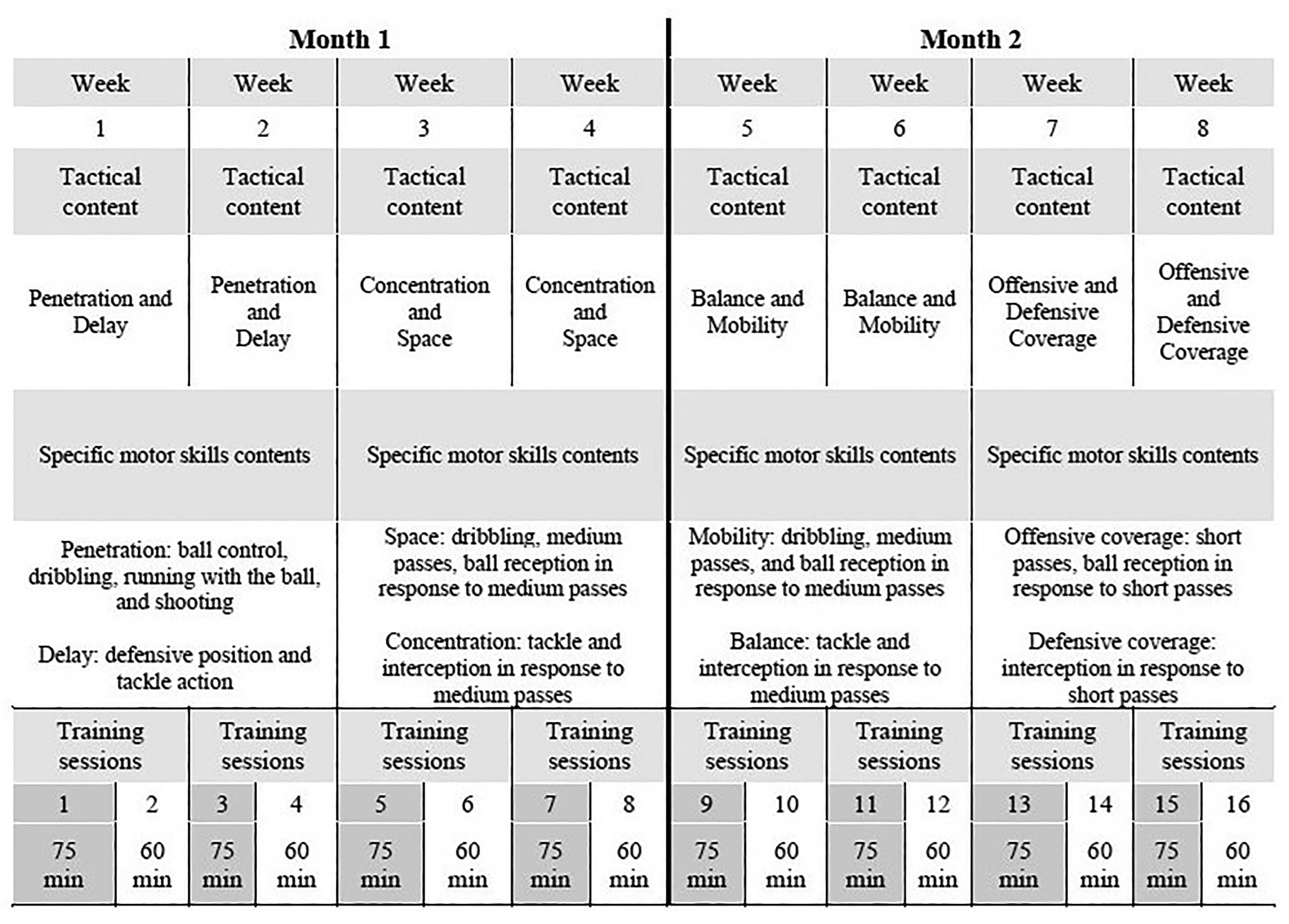
Initial planning intervention.
Context
The study was conducted on the U-10 male soccer team at a local club in northern Portugal. Purposive and convenience sampling 21 were used to select 12 male youth soccer players. Since this case study was a self-analysis by the coach, these criteria were chosen because the participants were already training under the guidance of the head-coach (lead author). Most players were aged between 9 and 10 years old and had at least one year of practice experience and formal competition. In detail, all players included in the case study had trained at least twice per week for one season before the study and had already participated in formal competitions almost every weekend. The team competed in a championship organised by the regional soccer association in the 7-a-side game format, with official games usually played on Saturday mornings. This game format consists of each team playing with seven players including a goalkeeper. The rules of the 7-a-side game format follow the official rules of the 11-a-side soccer game format, except that there is no offside rule, and each team may substitute the players freely. The official games last 50 min divided into two halves of 25 min.
The goals, methods, and logistical implications of the study were explained to the club's director, the players’ legal tutors, and the players. In addition, it was clarified to players that participation was strictly voluntary, and they could withdraw at any time. All parents and players signed the informed consent forms. Data was collected from the club and the coach. No personal data was collected from players. Also, the data collection did not interfere with the normal activities of the club. Therefore, there were no additional risks to the players beyond the common practice of soccer.
Participants
The head-coach involved in this case study was finishing the UEFA Coaching License Level I (UEFA C). Additionally, he had more than seven years of coaching experience; nevertheless, as a head-coach, he had only one year of experience. The head-coach was also attending the master's degree in Sports Training. For this reason, the first author assumed a dual role of researcher and the coach responsible for implementing the planning and documenting the short- and long-term changes that occurred over eight weeks. This study provided an excellent opportunity to self-evaluate his coaching and planning processes (as described in other studies).22,23 However, despite the advantages of the coach-researcher role in qualitative investigations, it is important to acknowledge the potential risk of data bias when combining these roles, as maintaining a balanced perspective during data collection, analysis, and discussion can be challenging. 24 To mitigate this risk, the remaining authors critically reviewed the data, ensuring that concerns were raised and preventing any potential bias or data manipulation in the analysis. For instance, at the beginning of the data analysis, within a preliminary theme, the first author (and coach) initially focused on adjusting the task and justifying the required changes. However, after the co-authors’ review, some questioned whether certain modifications reflected on the planning interplay or were merely influenced by the first author's coaching perspective, i.e., addressing the ‘problem’ more as a coach than as a researcher. Following a critical discussion of the data, the research team reached a consensus, refining the focus of the section to assess whether the task adjustments remained aligned with the planned content and/or impacted long-term planning.
Pedagogical contents of planning
Although fundamental motor and coordinative skills tasks were included in the training plans, overall, the pedagogical contents planned in the long-term primarily focused on tactical principles of play and technical contents of game.25,26 Essentially, these principles comprise a set of basic game rules that guide the players’ actions to facilitate the organisation and space management in the offensive and defensive phases of the game. 25 The tactical principles of play are synthesised in Table 1 according to Garganta et al. 27 (supplemental material).
Based on the long-term contents planned, the short-term plans were designed to develop adaptive performers capable of searching, exploring, and refining a manifold of performance solutions, allowing them to successfully comply with the principles of play in different contexts. 28 Moreover, the coach introduced and developed the principles of play flexibly and in a very simple manner through game-based competition during each training session, as the tactical principles of play should be taught according to the players’ capabilities to learn new content.29,30
Data collection
Data was collected using the coach's planning, field notes (FN), and a reflective diary (RD). FN are an essential component of qualitative research because they can help construct deep, thick, and rich descriptions of the study context. 31 Deviations from the plan were recorded in the FN after each session, along with emerging events (e.g., how they unfolded, barriers encountered, and strategies employed). This process allowed a thorough analysis of the coaching approach, the rationale behind plan changes, and their outcomes. The FN subsequently guided the first author in writing the RD, which in turn helped the coach-researcher to reflect on the critical events in training, self-evaluating his coaching and planning process. 32
Data analysis
Data analysis followed an inductive perspective, 33 typical of the interpretative paradigm and useful when the investigation aims to carefully observe a particular context and then discuss the data collected and provide new insights into the current literature. Thematic analysis 34 was used to analyse the data from training plans, RD, and FN. The thematic analysis was chosen because it enables the researcher to identify, analyse, and report the themes within the extensive data set. 34 As recommended by Braun and Clarke 35 we followed the six-stage model for conducting thematic analysis: (i) familiarising ourselves with data; (ii) analysing and generating initial codes; (iii) searching for themes; (iv) reviewing initial themes and codes; (v) defining themes and its relations and meanings; (vi) producing the results through a narrative. More specifically: (i) The head-coach systematically recorded data using a Microsoft Excel spreadsheet, reviewing it multiple times and compiling information from planning documents and field annotations; (ii) He then organised the data, identifying patterns and recurring topics that could emerge as potential initial codes; (iii) The data were re-read by the lead author and co-author to refine these codes and ensure they captured meaningful insights; (iv) The codes were grouped into preliminary topics; (v) These topics were further developed into themes and sub-themes through discussions and critical analysis with the co-authors. These discussions enabled researchers to explore alternative perspectives and ensured alignment with the study's purpose; (vi) In the last stage, we aimed to develop introspection through the coach's reflections written in the RD on planning issues over the eight weeks. In this sense, data analysis was not categorised to fit the theory but to search for patterns and understand how they might support or oppose current theories in coaching contexts.
Trustworthiness
To ensure data trustworthiness, several additional procedures were undertaken. A data triangulation method 36 was applied by collecting information from multiple sources (i.e., coach's plans, field notes, and reflective diaries). A Microsoft Excel datasheet was used to systematically record data from these sources. Throughout the data analysis process, themes and subthemes were presented to the research team for validation. Regular research team meetings were held, during which co-authors acted as critical friends, 37 questioning interpretations and engaging in in-depth discussions and reflections on themes and subthemes related to planning and implementation. This process helped to minimise individual research bias in data interpretation. 37 Consequently, all data were critically reviewed by the research team, with themes being revised, merged, or updated throughout the analysis process.
Results
Three major themes were developed through the analysis of the data: (1) changes in short-term planning due to intrinsic factors (e.g., responses to the proposed drills); (2) adaptations in short-term planning due to extrinsic factors (e.g., absence of the players in training); (3) consequences of the interplay between short-term and long-term planning contents.
Changes in short-term planning due to intrinsic factors
To teach the contents outlined in the long-term plan, the head-coach distributed them across short-term plans. One strategy used to deliver these contents was designing the same tasks for all players while organising teams based on skill levels. For example, the player with the best attacking skills would play against the player with the best defensive skills. However, during the implementation of the short-term plans the coach needed to adjust the task planned based on each player's needs. For instance, in a task focusing on 1vs.1 (i.e., penetration and delay tactical principles), if the coach felt that the player with the ball was having difficulty by passing the defender, the coach would instruct the defending player to perform passive defence. Thereby, the coach catered to each player's specific requirements within the same task: “Based on the contents planned for this week, I design tasks to develop the defensive and offensive tactical principles of penetration and delay. The first task was designed on several mini fields to play 1vs.1 based on players’ skill levels, where the players sought to dribble past the opponent (i.e., the offensive tactical principle of penetration) and carry the ball through the bottom line, while the opponent tried to stop the attack (i.e., the defensive tactical principle of delay).” Training session 1, RD
Consequently, the process of short-term planning implementation was highly dependent on intrinsic factors such as players’ performance in the tasks. When necessary, the coach adjusted the task constraints (e.g., game rules, complexity, and difficulty levels) to promote appropriate game scenarios for the player and the team. For example, the coach designed a task to stimulate players to enlarge the effective playing space and facilitate the offensive actions of the team in possession of the ball (principle of space), thus increasing the number of goal-scoring opportunities with the attacking team in numerical superiority (3vs.2 +Gk). This setup allowed one attacking player to be ‘free’ from defenders - more time and space. However, the coach noticed that the attacking team struggled as the quality of the defence outweighed their numerical advantage. To reduce the difficulty, the coach added another attacking player (4vs.2 + Gk), increasing the numerical advantage. With four players, the attacking team is organised in a diamond-shaped structure, occupying the space more effectively. Although this increased the game's complexity due to additional players, it created a more suitable context for the attackers to succeed: “Today, the training goal was to coach concentration and space tactical principles. For the final part of the training, I designed a task in the format of 3vs.2 + Gk to focus on the tactical principle of space and to increase goal-scoring opportunities. However, the attacking players were having lots of difficulty scoring, so I added one more attacking player (4vs.2 + Gk) to allow more scoring opportunities.” Training session 6, RD.
Adaptations in short-term planning due to extrinsic factors
Even though the contents of the long-term plan were systematically distributed across weeks, extrinsic factors sometimes forced the coach to adjust short-term planning, making it difficult to adhere strictly to the established long-term contents. For instance, there were occasions when players arrived late for training, requiring the coach to modify the session. For example, the coach designed a warm-up task to prepare players for a small-sided game (4v4 + 4 floaters) focused on balance and interception skills. However, due to the late arrival of three players, extra time was needed to explain the task and clarify its objectives, resulting in lost training time and incomplete execution of all tasks. The coach believed players needed to grasp the content in the short-term for long-term planning progression. Without repeating explanations, the late players would have missed vital information, hindering their learning and potentially affecting the achievement of long-term goals. This dilemma faced by the coach was recorded in week 7: “The objective was to coach the tactical principle of balance. Three players arrived late, so I had to repeat some sets of warm-up tasks (so that all players could understand the content), thus losing time.” Training session 13, RD.
Another extrinsic factor that influenced the implementation of short-term plans was players missing from practice. To overcome this barrier without straying from the session's goals, the coach had planned previous variations into each learning task (e.g., changing team compositions or game rules). However, when multiple players were absent, the tasks diverged from the desired game principles. For example, if 2 players were absent in a Gk + 6vs.5 task, the coach had to adjust the teams to Gk + 5vs.4, straying from the formal game (Gk + 6vs.6 + Gk). Beyond influencing the training plans, the players’ absence had the potential to impact the players’ learning in the short- and long-term: “Today's goal was to improve the defensive organisation (tactical principle of concentration) in a format of Gk + 5vs.5 + 1 Floater (the team with the ball would have numerical superiority). Yet, two players were missing because they were sick (and gave notice minutes before the training), so I changed the task design for Gk + 4vs.4 + 1 Floater. Although the main training goal was not affected, the format of the game stays far away from the formal game (Gk + 6vs.6 + Gk). Moreover, in the next training session, I will need to reinforce the content for the players who didn’t attend.” Training session 5, RD.
Consequences of the interplay between short-term and long-term planning contents
Throughout the implementation of short- and long-term planning, intrinsic and extrinsic factors influenced the process, creating an interplay between the contents established for the long-term, their distribution in the short-term, and their progression across short-term plans. For instance, initially, the head-coach attempted to coach the content planned for the long-term using a subjective assessment of players’ performance, based on the success criteria of each tactical principle of play. If the coach observed that the players performed well in a tactical principle of play, he would assume they could progress to other learning content. Yet, beyond the internal and external factors that emerged during the implementation of short- and long-term planning, the rhythm of players’ learning did not follow as the long-term plan intended, often with the coach needing to extend some content for more micro-cycles than planned: “The training sessions this week were planned to continue coaching the tactical principles from last week (i.e., balance and mobility). The players are nearly grasping the ideas. They usually can organise themselves on the field based on the tactical-technical situations that arise in the game.” Training number 15. RD.
Furthermore, planning contents were (re)planned over weeks based on players’ needs and team performance in previous games. For instance, in a certain match, players made technical errors in passing and ball control due to difficulties with space management and positioning, failing to offer diagonal passing options for their teammates (i.e., offensive coverage). Without free passing options, they resorted to risky passes into open spaces or to marked teammates, leaving the ball receiver with limited time and space (i.e., in unfavourable conditions), which affected their ball-control skills (Figure 2 (supplemental material)). For this reason, the coach adjusted the short-term plan in the following week to reinforce the players’ understanding of this tactical principle of play (i.e., coached the offensive coverage tactical principle again), deviating from the original contents planned in the long-term: “This week's training session was completely re-planned due to the performance of the players and the team in the last game. In this game, the players made more tactical-technical mistakes than they usually do. For example, the players didn’t offer offensive coverage options correctly, and they failed simple and short passes and ball receptions (e.g., midfield player to right-back).” Training number 7, RD.
As a strategy to progress the learning contents established in the long-term planning, the coach used the weeks without official matches to design short-term plans focused on long-term content. For instance, the coach adjusted the short-term plan after a game to correct team performance. In the subsequent week (without a formal match), the coach designed the tasks to teach a specific tactical principle as planned in the long-term. The coach felt that by adopting this approach, he could manage the coaching of specific tactical principles planning in the long-term with the demands that emerged from the short-term. “As the team will not have an official game next weekend, the two training sessions of this week were planned to coach the specific tactical principle of mobility, which I wish I had started teaching earlier in the season. Thus, the first task comprised a game format of 4vs.3 and 3vs.2, in which points were scored when a player received the pass behind the opposing goal line. The second task followed the same objective although using a collective scale and with goalkeepers (6vs.5 + Gk).” Training session 11, RD.
Overall, due to emerging short-term demands, the content planned for weeks 7 and 8 (offensive and defensive coverage) was shifted to weeks 4 and 5, with the content for week 5 (balance and mobility) starting in week 6. Additionally, the coach extended the focus on balance and mobility tactical principles for more than two weeks (Figure 2).
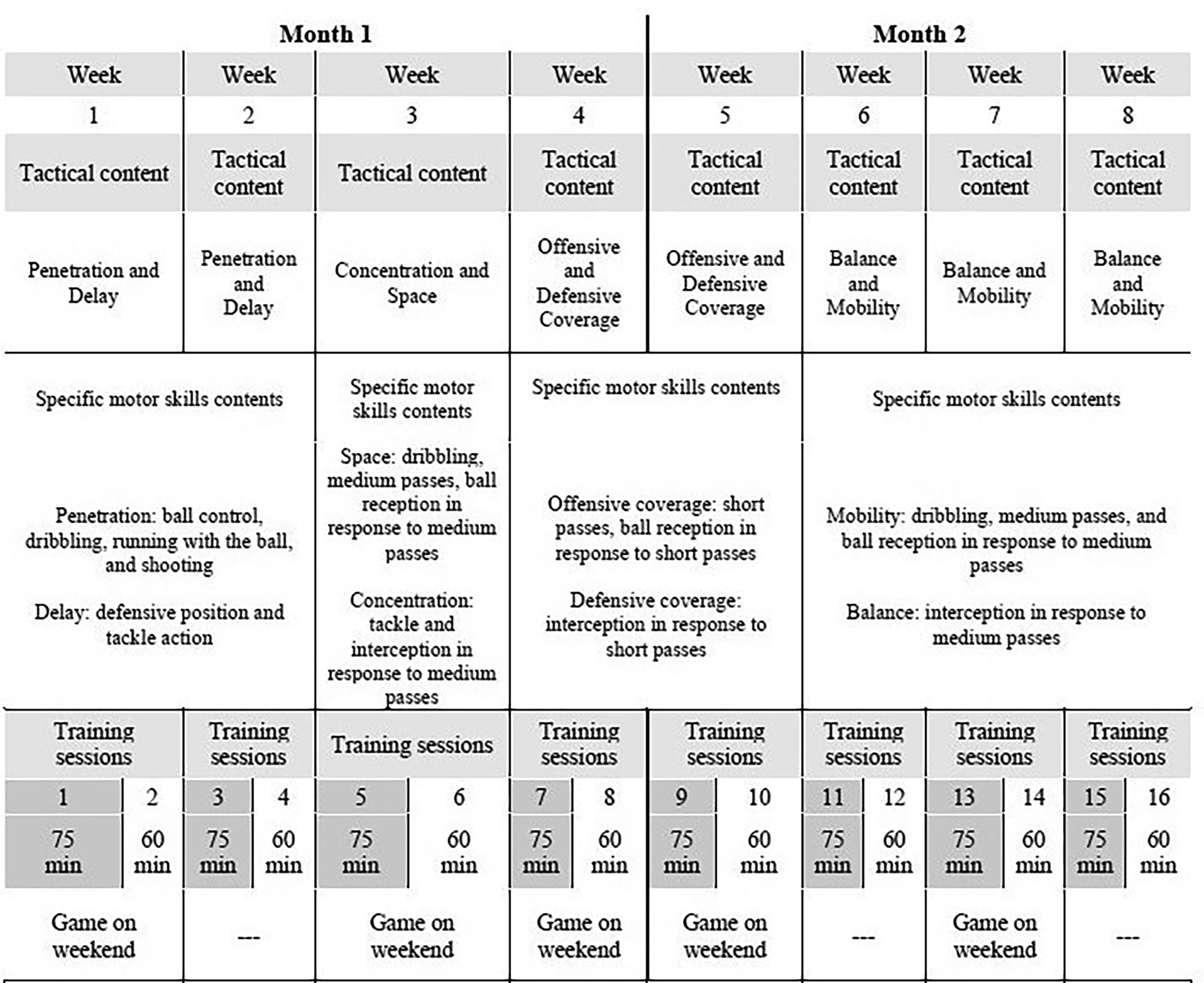
Real planning implementation.
Discussion
We conducted a qualitative investigation of the coach's planning, and the corresponding execution of short-term plans based on long-term contents. Our findings highlighted that the performance of the players in the official matches, the intrinsic factors (e.g., the performance of the players in the tasks), and extrinsic factors (e.g., players’ missing the training) that emerged in the short-term influenced the implementation of short- and long-term planning. These factors created the need to redefine the contents in long-term planning.
The short-term plans required adaptations due to internal factors such as players’ performance in executing tasks. When adjustments were necessary during the implementation, the coach manipulated key task constraints (e.g., game rules, task complexity, and difficulty) to foster tactical-technical actions and support skill development based on players’ responses (see Figure 3). Given the age group (U-10), individual and collective tactical behaviours were introduced and developed in a simple manner, with principles and motor skills taught through varied stimuli and guided by constraint manipulation, without rigidly structuring actions. Moreover, by providing opportunities for action exploration, players could be encouraged to actively self-regulate and exploit movement variability, facilitating skill adaptation. 38 Our approach was supported by the previous recommendations,39–41 highlighting that manipulation of key task constraints during small-sided games can be an effective pedagogical approach for coaching the tactical-technical contents.
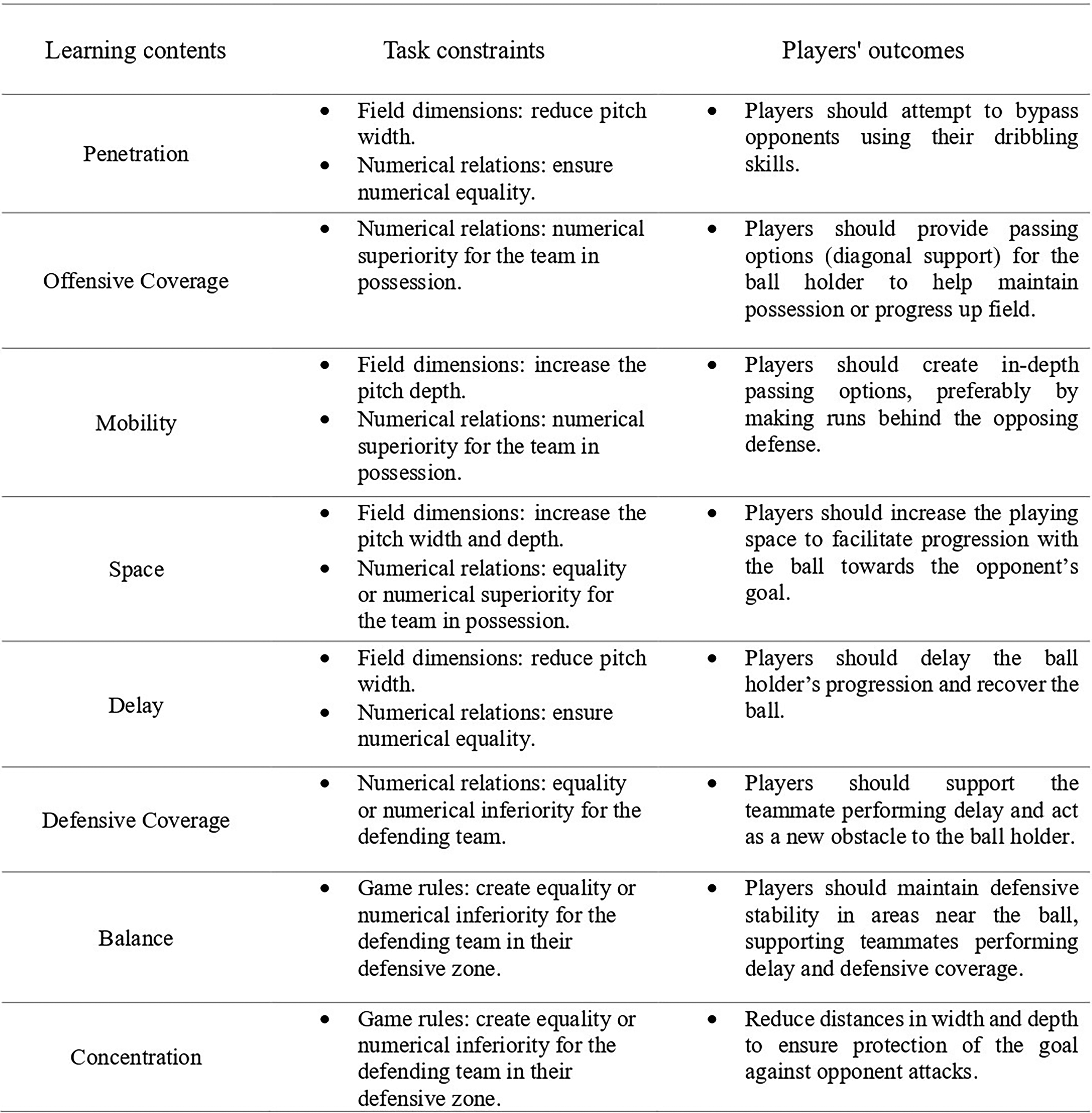
Manipulation of key task constraints to promote skill development and foster learning contents according to the intended players’ tasks responses.
In our study, the coach had to manage several external factors while implementing short-term planning. For example, when some players were absent, the coach adjusted team compositions (e.g., Gk. + 6vs5 to Gk.5vs4). Such seemingly minor changes could impact the players’ tactical organisation, as the team format deviated from the official game structure (Gk. + 6vs6 + Gk). These external factors often required modifications to the training plans. In contrast, such factors may be less prevalent in other sporting contexts, where training attendance can be compulsory to player selection. Moreover, in more competitive environments (e.g., professional clubs), higher-level squads may draw players from lower-level squads to complete team compositions. However, other studies have highlighted the need to adapt training plans due to external factors, such as organisational demands, 14 and weather conditions, 15 which often lead to deviations from the initial plan. Our finding aligns with the description by Mees et al. 42 who emphasised the constant need for planning adjustments in sports contexts. Furthermore, the coach's ability to adapt training plans is linked to their coaching expertise, which involves balancing initial planning intentions with real-time adaptations.42,43
In this study, the head-coach designed simple variations in the tasks as a strategy to overcome these external factors. For example, he had previously planned different team compositions to make it easier to adapt training plans when needed. This strategy was based on structured improvisation. 43 In structured improvisation, coaches can design alternative routes in the training plans, which may help them to operate the short-term plans without losing sight of the goals in the long-term. 4 However, as found in this study, even with the design of alternative routes, training plans may still need to be adjusted, as coaches cannot entirely predict how players will respond to the training stimulus due to their intra- and inter-individual variability. 9 For this reason, beyond pre-planning different team compositions, coaches should also pre-plan task variations (e.g., game rules) in response to player performance. This enables them to adapt tasks in a way that appropriately stimulates learning.
Here, the internal and external factors in the short-term planning had consequences in the long-term planning. For instance, the coach needed to adjust the short-term training plans based on the emergent needs of players, deviating from the original pedagogical contents planned in the long-term. Our findings are aligned with Jones and Wallace 44 which highlighted that integrating short- and long-term goals is strongly influenced by the immediacy of the next official games. This is one of the reasons why in team competitive sports like soccer, coaches’ planning is often dictated throughout each game week (e.g., short-term plans).11,45 Within weekly training plans, coaches can teach the learning content planned in the long-term, correct performance mistakes, and prepare the team for the next game.
In this case study, the coach was generally concerned about the players’ performance. However, it is important to recognise that at the U-10 level, players are still learning and developing fundamental tactical-technical elements of the game, and performance errors are a natural part of this process. Nonetheless, in coaching practice, errors have often been perceived as flaws to be eliminated, when in fact they should be recognised as integral and constructive aspects of learning. 27 Rather than suppressing errors, players should be encouraged to explore movement, learn from their bodies, and recognise their strengths and weaknesses. By doing so, players are provided with rich learning opportunities to play freely and explore a multitude of innovative and adaptive performance solutions. 30 Therefore, in this case study, given the players’ age, the head-coach should be less concerned about game performance in the short-term and more on players’ long-term development.
The interplay between short- and long-term factors influenced the rhythm of the progress of the learning content over the season. As a strategy, the coach tried to progress the learning content based on a subjective assessment of the players’ performance. For instance, when the coach noticed the players were performing well in the tactical principles of play, he assumed it was a sign that players could move on to advanced learning content (Figure 4). This approach was based on the indications of Lyle 46 who highlighted that coaches can rely on key performance indicators to evaluate players’ performance during training and competition. Moreover, the bi-directional method between assessment and planning allows coaches to continually adjust short-term plans based on the emergent needs of contexts while still staying aligned with the long-term goals. 47
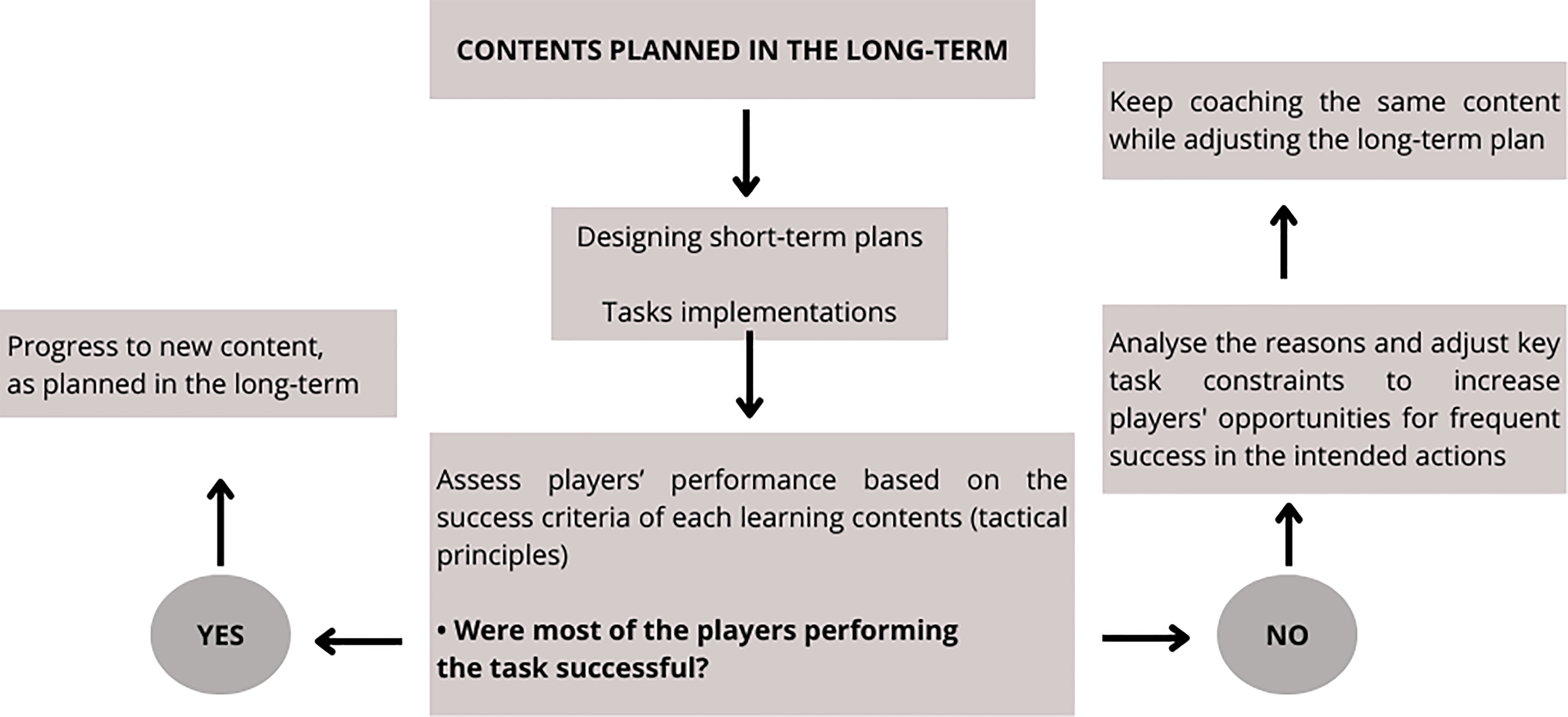
The framework used by the coach to evaluate players’ performance on the task and to determine whether to progress with the planned contents.
Practical implications
Coaches should design long-term plans as a guiding framework for crafting short-term session plans. However, short-term plans must remain flexible, adjusting to players’ individual and collective needs. For instance, coaches can first define the pedagogical content to be taught throughout the season. Based on this content, they can design training plans focusing on game-related skills (i.e., tactical, technical, physical, and mental). Each of these principles should include key performance indicators (e.g., success criteria) to assess whether the team and players are performing well and effectively learning the planned content. By continuously evaluating these indicators, coaches can refine and adjust training plans to ensure progress and development throughout the season.
Conclusion
Our findings revealed that the interplay within the training plans emerged from intrinsic and extrinsic factors in the short- and long-term. Specifically, the tactical principles of play in soccer guided the definition of long-term learning content, which in turn shaped the design of short-term training plans. However, constraints that emerged during micro-cycles affected the implementation of short-term planning, leading the coach to adjust the long-term contents. Thus, in our case study, although planning was based on long-term content, it was adapted in the short-term to meet the players’ and the team's emerging needs (Figure 5).
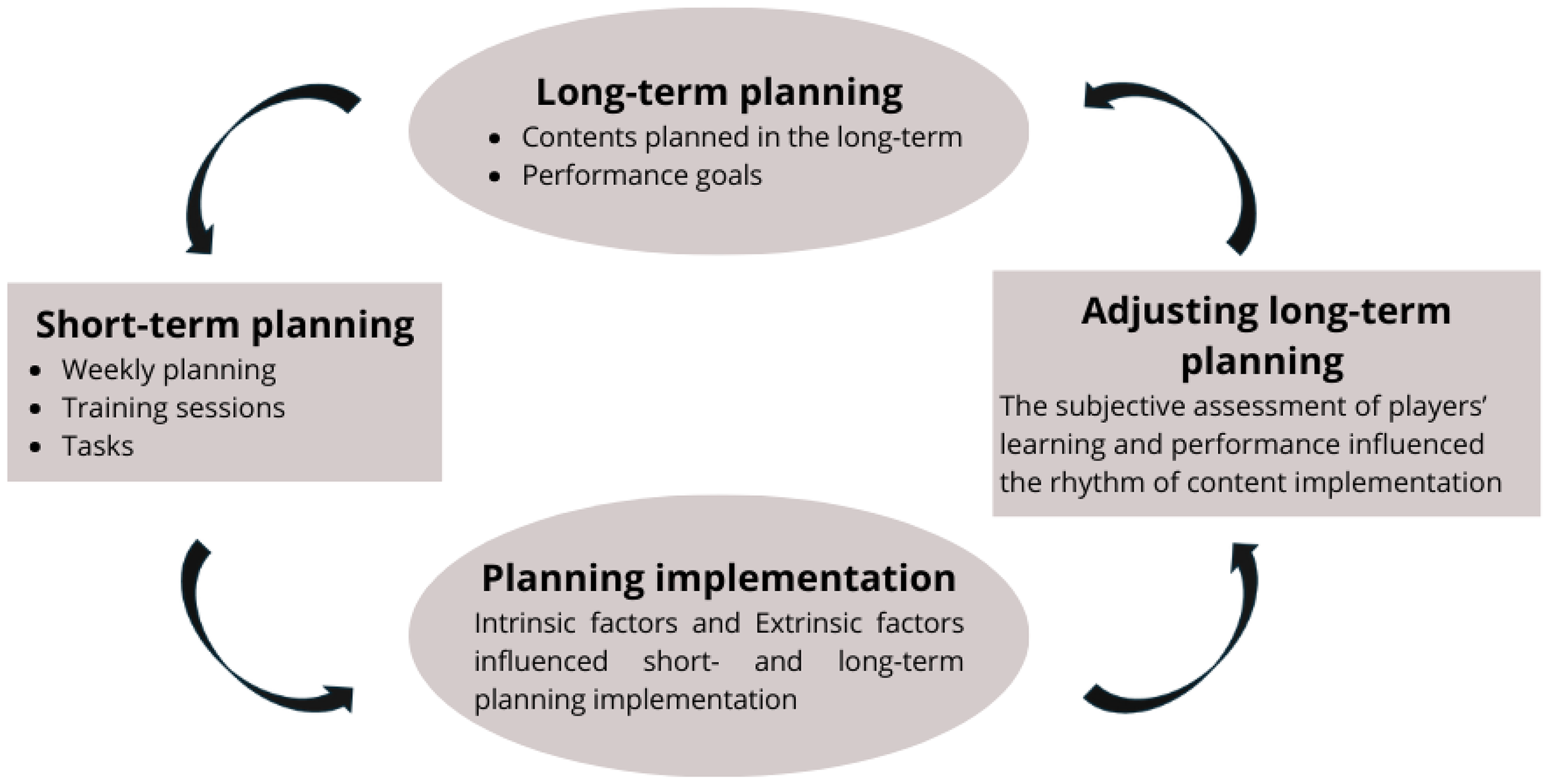
Intrinsic and extrinsic factors influencing the interplay between short- and long-term planning.
A limitation of this study is the eight-week planning intervention, which may have restricted observations of long-term planning shifts, particularly given the inherent non-linearity of the learning process in youth athlete development. A longitudinal intervention could provide in-depth insights into the interplay between short- and long-term planning. Additionally, as the data reflects a specific youth coaching context, generalisability should be considered. Future research with longitudinal interventions and cross-cultural comparisons could further examine how soccer coaches navigate these dynamics, providing insights for more flexible and adaptive coaching approaches.
Supplemental Material
sj-pdf-1-spo-10.1177_17479541251341429 - Supplemental material for Exploring the interplay between long-term planned goals and short-term plan implementation in coaching a youth male soccer team: A qualitative case study
Supplemental material, sj-pdf-1-spo-10.1177_17479541251341429 for Exploring the interplay between long-term planned goals and short-term plan implementation in coaching a youth male soccer team: A qualitative case study by Maurício Facchini, José Afonso, Ana Ramos, Patrícia Coutinho, Fábio Yuzo Nakamura, Filipe Manuel Clemente, Isabel Mesquita and João Ribeiro in International Journal of Sports Science & Coaching
Supplemental Material
sj-png-2-spo-10.1177_17479541251341429 - Supplemental material for Exploring the interplay between long-term planned goals and short-term plan implementation in coaching a youth male soccer team: A qualitative case study
Supplemental material, sj-png-2-spo-10.1177_17479541251341429 for Exploring the interplay between long-term planned goals and short-term plan implementation in coaching a youth male soccer team: A qualitative case study by Maurício Facchini, José Afonso, Ana Ramos, Patrícia Coutinho, Fábio Yuzo Nakamura, Filipe Manuel Clemente, Isabel Mesquita and João Ribeiro in International Journal of Sports Science & Coaching
Footnotes
Declaration of conflicting interests
The authors declared no potential conflicts of interest with respect to the research, authorship, and/or publication of this article.
Funding
This project was supported by the Foundation for Science and Technology (FCT, Portugal), under Grant EXPL/CED-EDG/0246/2021.
ORCID iDs

Supplemental material
Supplemental material for this article is available online.
References
Supplementary Material
Please find the following supplemental material available below.
For Open Access articles published under a Creative Commons License, all supplemental material carries the same license as the article it is associated with.
For non-Open Access articles published, all supplemental material carries a non-exclusive license, and permission requests for re-use of supplemental material or any part of supplemental material shall be sent directly to the copyright owner as specified in the copyright notice associated with the article.

