



Abstract
Athlete engagement with monitoring remains challenging, despite athlete monitoring systems (AMS) having the potential to enhance performance. Behaviour change frameworks may offer strategies to improve AMS engagement, but are underutilised in elite sport. This study assessed the practicality and utility of a behaviour change intervention (BCI) to improve AMS engagement. Three national team coaches (43.6 ± 10.0 years) and eight athletes (20.1 ± 2.0 years) participated in a six-month BCI to promote AMS adherence to daily monitoring using the Behaviour Change Wheel (BCW). All participants completed pre and post intervention semi-structured interviews, which were thematically analysed. Adherence to monitoring declined during the intervention, but the coaches reported improved athlete awareness of monitoring. Reduced adherence could be attributed to the partial implementation of the intervention caused by coaching personnel changes. In the post intervention interviews athletes indicated there was considerable intercoach variability in AMS use and feedback to athletes, frustrating both athletes and coaches. The coaches noted athletes lacked motivation and understanding of the AMS and its purpose, further hindering engagement. Overall, the use of the BCW enabled a feasible intervention to be devised, but the BCW proved cumbersome to adapt to the swift organisational changes often experienced in elite sport. Future interventions should consider ensuring a consistent and shared framework for AMS use between staff. Behaviour change targets should have contingencies for organisational changes, and focus on key interactions such as the coach/athlete relationship, its inter-relation with AMS data, and the feedback of data between the coach, athlete and practitioner.
Keywords
Introduction
Elite sport has seen an exponential increase in the volume of athlete monitoring undertaken in recent years. 1 This increase has in part been fuelled by improvements in the theory and practice of scientifically monitoring athletes, 2 alongside the advent of big data, 3 and wearable technology. 4 Monitoring systems utilised by teams typically include markers of internal load, or the psychophysiological response to training, and external load i.e., the work completed by the athlete. 5 Typically, monitoring data is collected with the involvement of the athlete, for example completing a self-report questionnaire, but increasingly technology has allowed ‘invisible’ monitoring where data such as heart rate or positional information is downloaded from wearable devices with minimal or no direct input from the athlete. 6
Despite the widespread use of athlete monitoring tools, the perceived efficacy of monitoring has been reported as variable.7,8 Reasons for the poor perceptions of athlete monitoring system (AMS) efficacy include: poor buy-in of stakeholders to the AMS, 9 measurement issues, 10 ineffective leadership, 11 inappropriate data analysis techniques, 1 and inadequate feedback processes. 12 Each of these constructs contribute to determining the success of an AMS. Although, arguably gaining buy-in is a key antecedent AMS success, because without it there is no athlete monitoring data to analyse, nor feedback to give to athletes.8,13
Where researchers have observed poor buy-in to an AMS, causes have been attributed to factors such as: athletes receiving little or no feedback, 12 hostile surveillance cultures, 14 a failure to translate scientific findings into useful practical applications, and a fear of athlete monitoring metrics usurping coaching craft can also negatively impact coach buy-in.15,16 Many of the solutions proposed to improve buy-in, such as athlete education, 17 and more visible usage of AMS in practice, 18 have face-validity; however, there appears to be a lack of a systematic or theory-driven approach to address poor buy-in.
As buy-in is central AM success 10 but problematic to achieve and sustain, 19 it is critical to explore how to systematically gain and maintain the buy-in of key stakeholders. AMS implementation guidelines refer to ensuring buy-in is gained, but provide the practitioner with no meaningful method of how to achieve it. 13 Thus, while researchers have identified poor buy-in as a barrier to AMS implementation, 10 the application of any systematic approach or theory to successfully achieve stakeholder buy-in is notably absent.
Behaviour change techniques are systematic procedures that are part of a wider intervention designed to change behaviours, such as poor AMS buy-in. 20 Many different behaviour change theories and frameworks exist, 21 which can make it challenging to determine which behaviour change technique(s) to implement. However, the Behaviour Change Wheel (BCW) offers a systematic approach and a clear evidence base linked to theories of behaviour change.22,23 The BCW has also been previously successfully implemented in elite sport environments,24,25 with a meta-analysis in health-care research, 26 reporting mean follow-up durations of six-months to evaluate the efficacy of the intervention.
The BCW is underpinned by the COM-B model (Capability, Opportunity, Motivation and Behaviour), a theory of behaviour change. The COM-B model identifies behaviours that could be targets for behaviour change intervention (BCI), as it assumes that for any behaviour to occur, i.e., adherence to an AMS, there must be capability, opportunity and motivation in order to do so. 23 Using the model, users can explore, design and evaluate an individual's capability, opportunity or motivation to perform a behaviour, which in turn helps them understand why certain behaviours occur. Once the reason for a behaviour is ascertained, the COM-B model allows practitioners to assess which item(s) on the COM-B model could be modified to influence the intended behaviour, with leaders playing a crucial role in facilitating this change. 27 The BCW therefore provides a holistic perspective with which to solve behaviour change problems and a toolkit to do it. This is relevant, as the need for a multi-factorial and, moreover, a practical approach to address AMS implementation issues has been previously identified. 10
To date, research within the area of athlete monitoring has tended to focus on improving micro-components of the AMS alone, such as: the technology,13,28 the measures collected, 29 and the data analysis techniques used. 1 A multifactorial approach instead allows consideration of the athlete and their environment, shifting the research focus from solely the mechanics of the AMS, to the wider context in which the AMS is employed. The use of a broader lens, i.e., the athlete and their environment, versus a more reductionist approach is mirrored in other research strands. For example, the wider environment has been considered in athlete talent development. 30 In relation to AMS in elite sport, a need for such an approach has been identified to ensure successful AMS implementation. 10
There is limited pre-existing guidance to support sports science practitioners achieve AMS buy-in, but gaining buy-in is fundamental to athlete monitoring success.6,31 This is problematic given the increasing push to use monitoring insights to support coach decision making, 4 and the widely reported variability in athlete engagement with monitoring. 19 The BCW provides an evidence-based approach to elicit behaviour change and potentially improve buy-in which has been lacking to date, it also encourages a holistic approach to address reasons for non-engagement. 22 Therefore, the aim of this study was to assess the practicality and utility of a BCI using the BCW, implemented over a six month period within an elite sport organisation. 22
Methods
Study design
All participants took part in a six-month BCI where monitoring was completed daily in a custom mobile application, with one-to-one interviews occurring pre and post. The intervention was planned in a workshop facilitated by the lead author and led by the coaching team.
Participants
Recruited through a mixture of convenience then purposive sampling, three members of the coaching and management team, and eight Tier 3 and 4, 32 combat sport athletes, gave their written informed consent to take part in this study. The mean age of the athletes was 20.1 ± 2.0 years, and the coaching team 43.6 ± 10.0 years. Ethical approval was granted through the local University ethics committee (HWB1901).
Procedures: interviews
The research followed the consolidated criteria for reporting qualitative research checklist and the TIDieR checklist.33,34 Athletes and coaches were invited to attend one-to-one interviews at their training location with the lead author. Athletes were asked their opinions on their AMS pre and six months post a BCI, including reasons for (non) adherence and the utility of the information (Figure 1). A custom mobile application based AMS had been in place for approximately one year prior to this study taking place. The AMS required athletes to input captured Likert scored responses on subjective wellness, hours slept, session RPE, body mass and training status (training, modified training or rest day). Semi-structured interview guides were developed to aid discussion of participant's views on their athlete monitoring system, (Supplementary materials). Pre-intervention interviews focussed on both the athletes’ and coaching teams’ views on athlete monitoring practices within their sport. Post-intervention interviews included an additional discussion regarding the impact and perceptions of the BCI. Interviews were digitally audio-recorded, transcribed verbatim, and then re-checked for accuracy, the interviews lasted between 4–28 min. Daily data on AMS adherence was downloaded from the AMS mobile application for the duration of the intervention period.
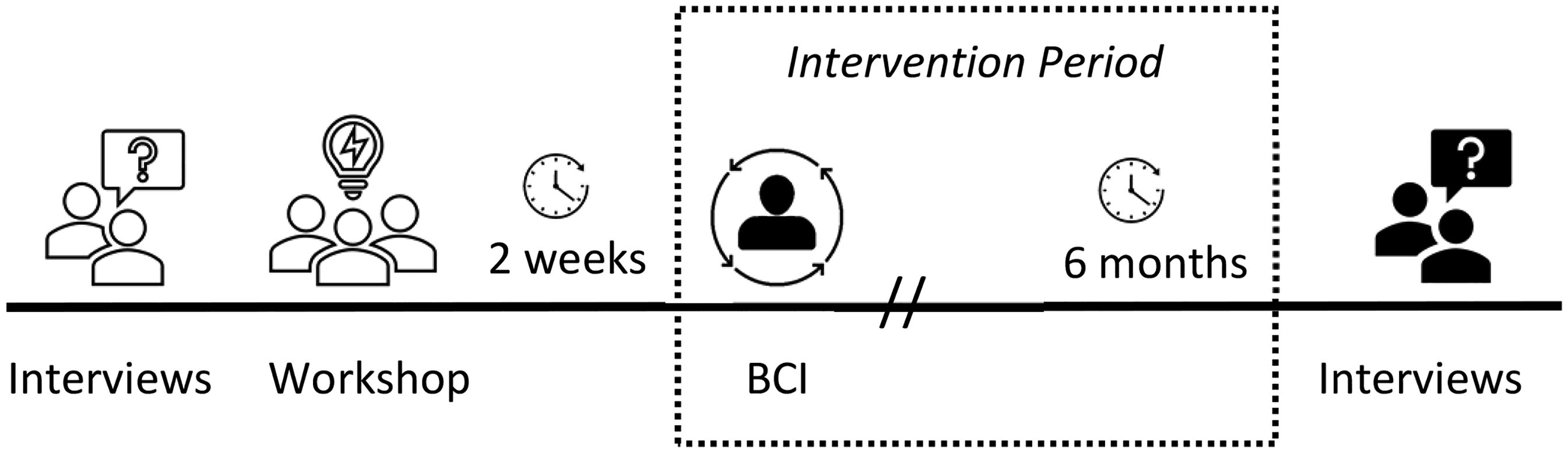
A timeline of the study protocol. BCI; Behaviour Change Intervention.
Procedures: intervention
Following the pre-intervention interviews, a workshop facilitated by the lead author was held with the coaching team. In this workshop the BCW framework, 22 was utilised to identify appropriate behaviour change targets, with themes and anonymised quotes from the athlete pre-intervention interviews further informing this discussion. The coaching team were encouraged to consider a wide range of different behaviour change targets, stimulated by the BCW framework and supporting discussions. However, not all potential targets were considered appropriate or practical, and the coaching team decided which interventions would be most achievable for their setting (see supplementary materials). Due to the social capital the coaches held within the team, the coaches led the intervention which lasted six-months in line with the mean timeframe of interventions reported in the literature.26,35
Data analysis
The pre and post intervention interview data were analysed thematically with a pragmatic epistemology,. 36 NVivo 11 Pro (QSR International Pty Ltd, Doncaster, Australia) was used to code the interview data, and the themes were grouped by pre and post-intervention interviews. Using an inductive approach, meaningful units of text were attributed to themes, coded to nodes, and then the themes were grouped into lower and higher orders. Finally, the themes from the interviews were shared and discussed with the research team, and subsequently the participants. Any comments raised were then considered in the construction of the final thematic analysis. Participants were coded C1 to 3 for coaches/management and A1 to 8 for athletes.
Results
Higher and lower order themes from the pre and post intervention interviews are summarised (Figure 2). Due to competition requirements, one athlete was unable to complete post- intervention interviews.
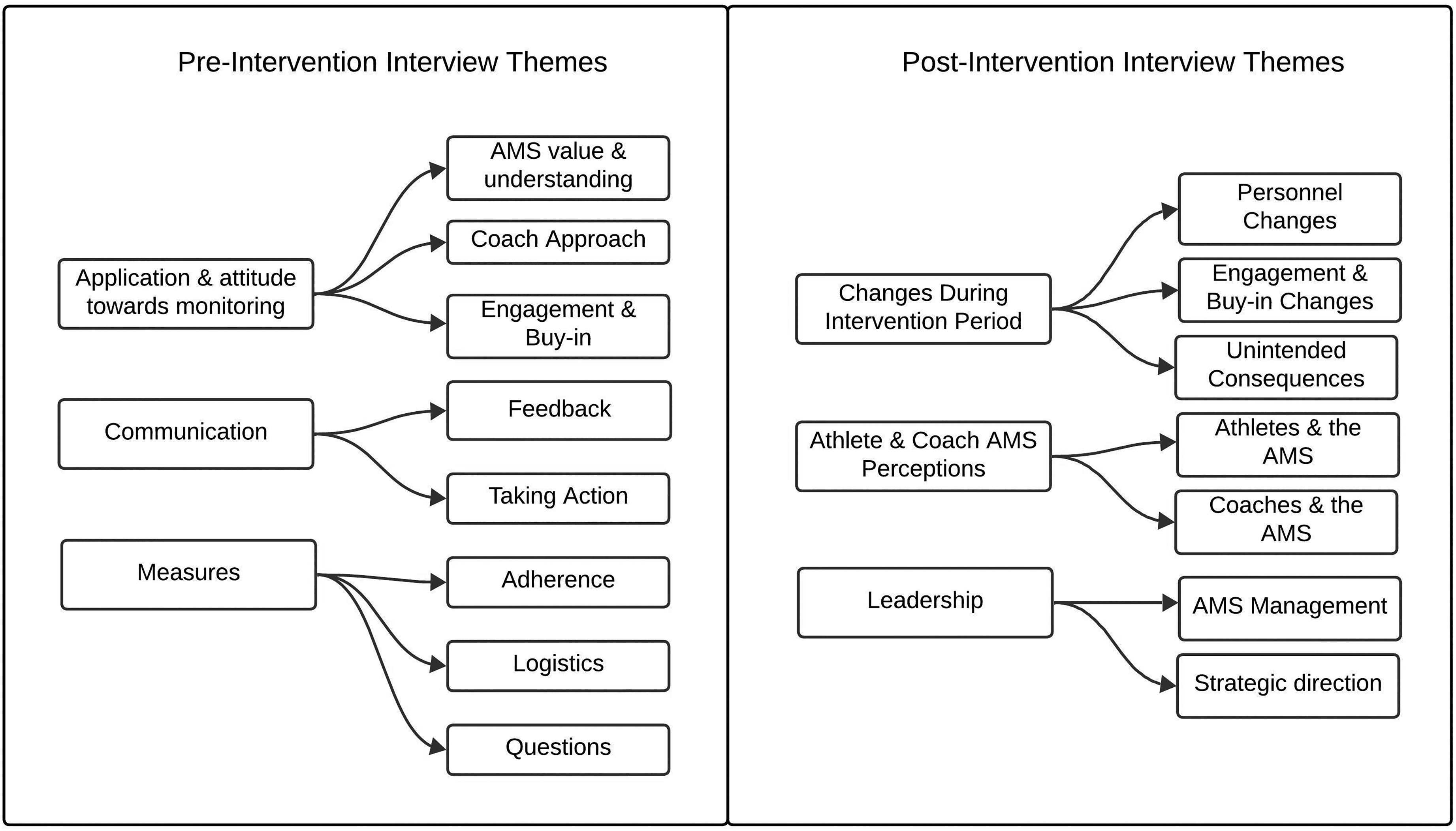
Higher and lower order themes for pre and post-intervention interviews.
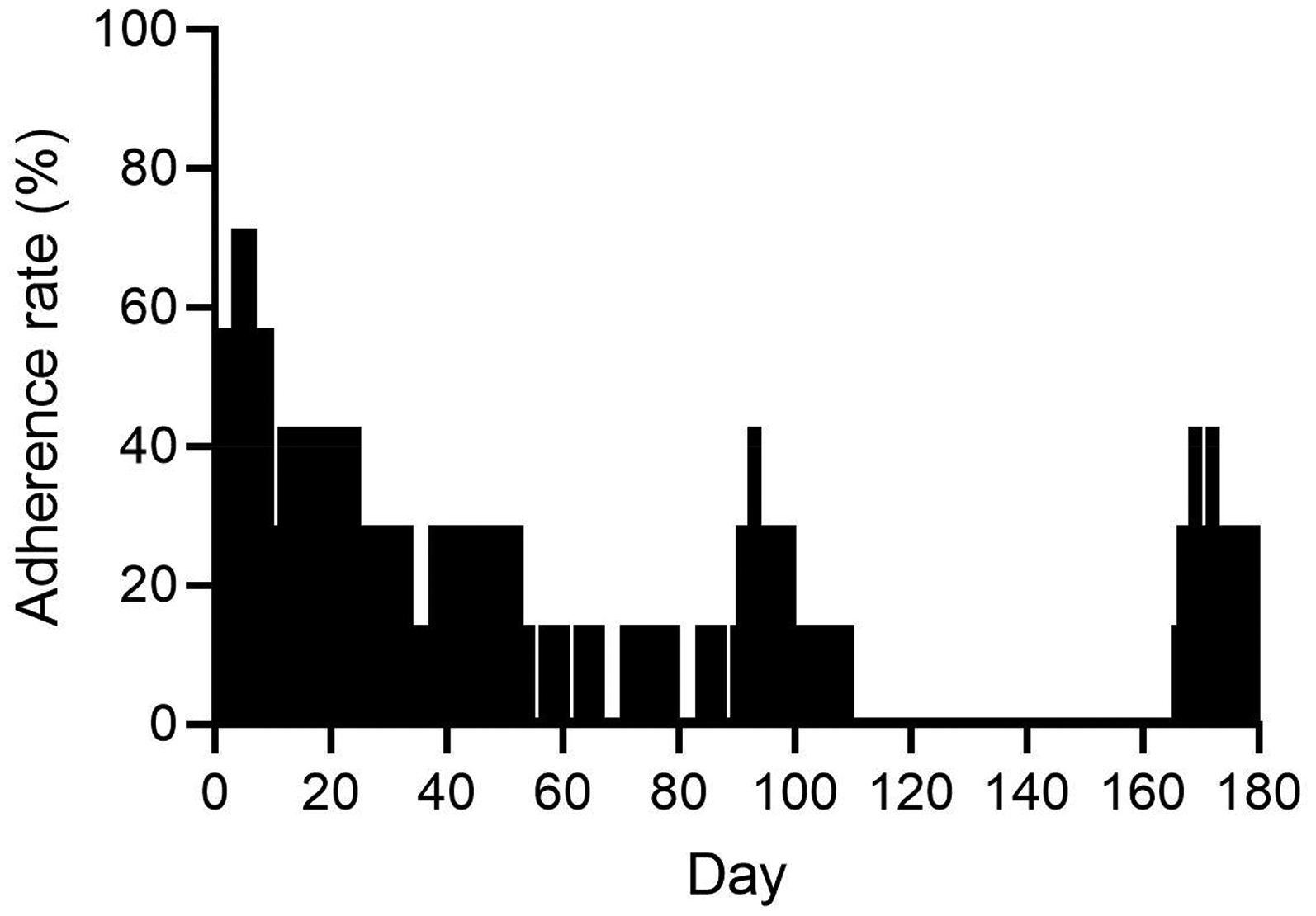
Athlete adherence rates to their athlete monitoring system during the 6-month long (Day 0–180) behaviour change intervention. The gap in adherence between days ∼110–160 occurred following the announcement of forthcoming changes in personnel.
Pre-intervention higher-order interview themes: application and attitude towards monitoring
The coaching team believed the AMS could support decision-making for performance optimisation, injury prevention and athlete development. However, they highlighted that the primary AMS aim was to build professionalism via educating athletes on how their bodies respond to stressors, thus creating the habits essential to their athletic careers, but they expressed doubt that the athletes understood this. “[The monitoring] was to teach them [athletes] to be professional. To let them know what it's going to be like when you become a world-class performance athlete…..but I don’t know if they see the relevance of it.” (C03) “In terms of helping performance, I don’t know if we’re there yet, but definitely in terms of flagging up potential injuries or potential, you know problems with the athlete; it's been really good for that.” (C03) “I was just exhausted in myself, and I really wanted to compete, but my coach was like, this is the time you need to pull out of this competition and save your energy for the next one, it was the right decision, that [athlete monitoring] evidence helps me make important decisions.” (A08) “I think the monitoring could be valuable, I don’t think it's being used, like to its full potential yet.” (A02) “One coach looks at the monitoring data, but like, the other doesn’t really care that much about it.” (A07) “I’m old-fashioned, I like to write data out… so yes, we have the app, but I have my files, and it [the files] gives me faster answers.” (C02) “So, I’m very performance monitoring driven, but we have one coach who is not in terms of monitoring data or evidence, you know, but they are very technically orientated instead.” (C01) “The monitoring isn’t as easy or interesting as SnapChat.” (A07) “I just don’t feel like, do you know on your phone you go on your Apps, it's not one that you’d want to go on. It's not interesting.” (A05) “On the computer you can see the graphs and stuff of your body weight and things like that, but again, I am just looking at it for the fun of it, I suppose.” (A02) “For the most part, yes [athletes are honest]. Where I struggle with it, or I know that they’re not honest, is when the score is exactly the same for twenty-eight days in a row.” (C03) “I’m honest most of the time. If I forget to fill it in, sometimes I just put something in to put something in, but I try to be as honest as I can.” (A04)
Communication
Athletes deemed AMS feedback to be sporadic, with some athletes indicating that their scores had resulted in conversations with coaches regarding their health, and others not. Athletes did not appear to find great utility in the data summary provided by the mobile application, nor did they register it to be a form of feedback. The majority of athletes indicated that the coaches looked at their athlete monitoring data; however, both coaches and athletes indicated the transparency with which subsequent training programme decisions were made in light of their AMS data could be improved. “The feedback we get off one coach is great, but I think our other coaches need to see the data as well.” (A03) “I’ve seen a lot of people who collect data, but the athletes never see what happens with that data, so they don’t actually feel there's any benefit, even though the coaches might well be making decisions based on it, the athletes don’t know that.” (C01)
Measures
Both athletes and coaches reported that they found the mobile application swift and easy to use. “This App is like really simple, it's just like click a button, it's not like you have to write and stuff.” (A01) “It's not clear, like it says like, give a 1 to 10, but what's 10, what's 1? So, I could be not giving them the correct sort of information.” (A05)
Post intervention interviews: changes during the intervention period
During the 6-month intervention period some substantial personnel changes occurred within the sport. Two of the coaches announced that they planned to leave their posts shortly after the post-intervention interviews, thus impacting the BCI implementation. Despite this, out of the six behaviour change targets identified in Table 1, two were fully implemented (1 and 6), two were partially implemented (2 and 5) and two not implemented (3 and 4). “We’ve lost the lead coach, so, you know there's a big period of change… all the ideas or solutions that we had, are all valid; are all achievable. It's just the climate we were in at that time made it very difficult for us.” (C03) “My perception is the coaches have made changes. I don’t think there has been much change from the athletes.” (C01) “I fought really hard to get [them] engaged with it at the beginning, to get them to buy-in. And I fatigued in my battle, so, I kind of just let the energy of it slip and actually watched it slowly go into not being used anymore.” (C03) “Because the engagement was so low, the person with the highest engagement was like thirty, forty percent. So, I was actually celebrating people not really engaging.” (C03)
Specification of target behaviours and COM-B behavioural analysis.
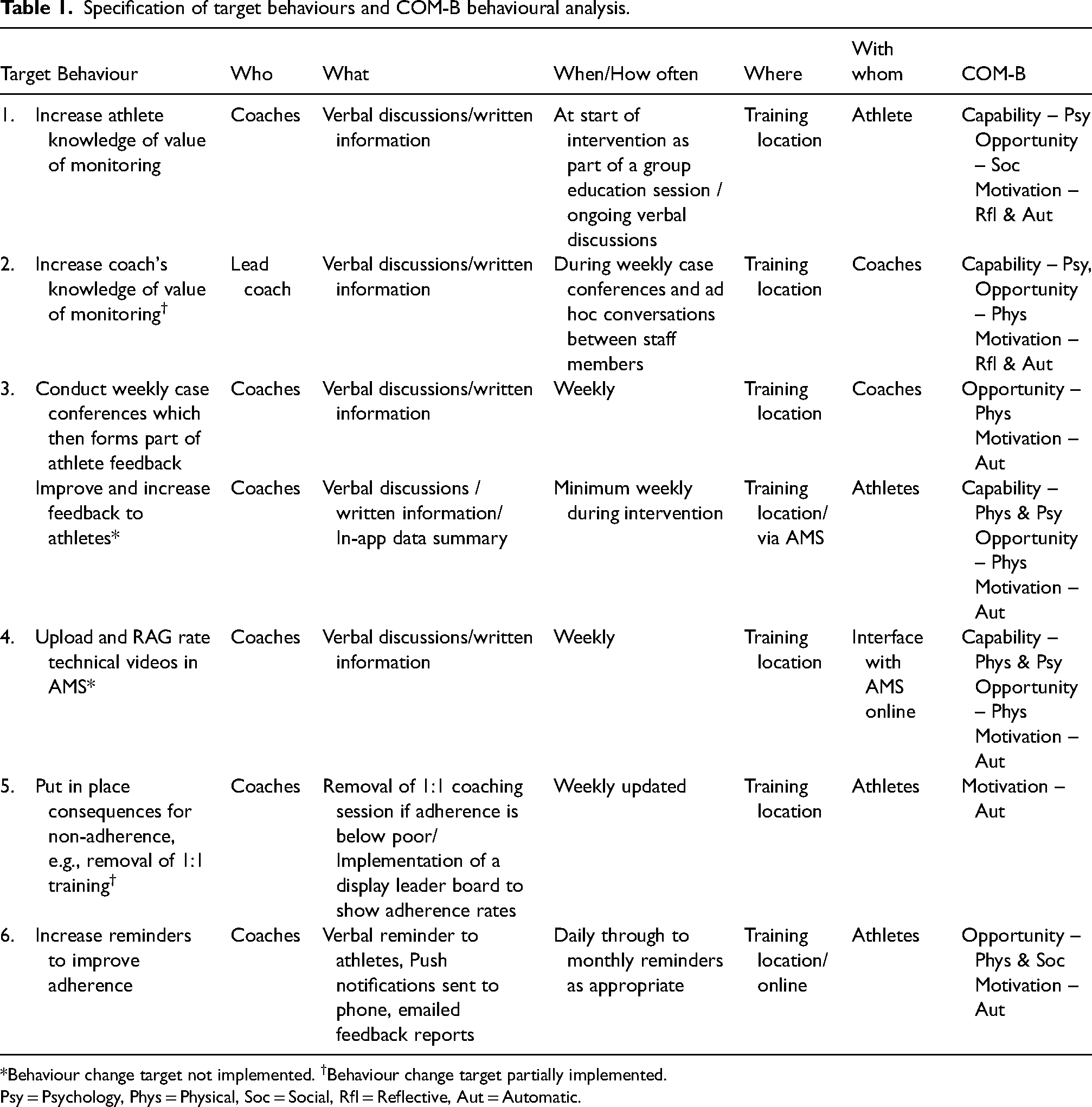
*Behaviour change target not implemented. †Behaviour change target partially implemented.
Psy = Psychology, Phys = Physical, Soc = Social, Rfl = Reflective, Aut = Automatic.
Coaches and athletes and the AMS
The post-intervention interviews revealed that athletes had varying levels of AMS comprehension and use. Some athletes didn't fully appreciate or comprehend its potential, while others used the tool to gain insights into their training responses. “I’m more aware of like the impact that the training is having on me, and through the effort [ratings] I can see like some days I’m more tired than others.” (A04) “The problem is not the monitoring system, the players are not educated enough to understand how the monitoring works and how important it is, how it can support them. There is a gap.” (C02)
Leadership
Coaches initially favoured a positive reinforcement approach to the BCI, but this strategy was reconsidered due to the athletes’ poor adherence to the AMS, and the coaches diminished focus on the BCI. Notably, between days 110–160 (Figure 3), there was a period of non-adherence that coincided with the announcement of staffing changes. “Next time I’ll just get the AMS working exactly how I want it to work, and then whichever coach comes in next will have to fit to that system. We tried carrot and stick, I’m not a stick kind of person. But I think we probably needed something a little bit harder to driver it home.” (C01)
Discussion
This is the first study to investigate the use of the BCW, 22 to address poor engagement of athletes with their AMS, a significant barrier to successful AMS implementation.12,13 The principal findings of this study were that through the BCW framework, some feasible behaviour change targets were developed, but AMS adherence was not improved (Figure 3). However, the coaching team reported improved athlete professionalism towards monitoring. Possible explanations for the lack of improvements include: the partial implementation of behaviour change targets due to personnel changes, and an inability to easily modify the agreed behaviour change targets. Due to the limited opportunities to carry out intervention-based research in elite sport settings, this study can provide practitioners with insight into how they can influence AMS adherence.
Leadership and implementation of the athlete monitoring system
Performance optimisation and illness/injury prevention are usually cited as key AMS objectives between sports. 2 However, in this study the coaches primarily utilised the AMS to promote athlete professionalism, and athlete accountability. 14 Athlete professionalism was explained by the coaches as promoting behaviours expected of their athletes at the world class level, reflected, in part, by AMS adherence which they felt was an important characteristic that elite developing athletes should demonstrate. Indeed, attributes such as a hard-work ethic, motivation and athletes being students of their sport have been cited as some of the key characteristics that facilitate the careers of junior team athletes, and perhaps explains why the primary AMS objectives in this study differ from those typically reported.37–39 Nonetheless, the athletes perceived the primary role of their AMS as supporting performance and highlighting potential illness/injury concerns, thus contradicting the coaching aims for the AMS. These expectation mismatches were particularly apparent when athletes reported that coach feedback on athlete monitoring was insufficient and did not necessarily help their performance. The lack of a shared vision in AMS objectives may have contributed to athletes failing to adhere to completing their monitoring and risked negatively impacting the coach-athlete relationship. 40
The coach-manager stated a preference for ‘bright-side’ i.e., socially desirable leadership techniques, 41 such as building their sporting organisation around the coaches’ strengths. However, in the post-intervention interviews they subsequently stated that using punitive measures, such as athlete deselection from teams, might be needed to ensure AMS adherence. Such ‘dark-side’ i.e., socially undesirable traits of leadership have been proposed to be part of an effective suite of leadership behaviours, but risks deleterious effects on working relationships.41,42 The bright-sided leadership approach the coach-manager utilised was however unsuccessful in promoting improved AMS adherence. One coach reported that the poor athlete engagement left them feeling fatigued and frustrated, and as a consequence they lost momentum with the AMS intervention. Such emotions have previously been found to be contagious within an organisation, which may further exacerbate poor AMS engagement, 35 and partially explain athletes’ observations that the coaches grew less concerned about AMS adherence.
The coaching team primarily dictated the implementation of the intervention in a ‘top-down control’ approach. Such approaches to administering behaviour change have been highlighted as challenging to administer within a complex adaptive system (i.e., a network of heterogenous individuals that act, respond, and adapt to the behaviours of others) potentially resulting in unintended consequences, and failures to adapt to the BCI. 43 Such unintended consequences were observed within this study, for example, even when athletes stated the AMS app was intuitive and user-friendly, they still struggled to engage with the app versus other social media content on their phones. Additionally, the leader board displaying athlete adherence rates to the AMS inadvertently became a celebration of poor rather than good adherence. Unintended consequences can serve to highlight areas for improvement. Accordingly, practitioners may want to reconsider measures that coerce or incentivise engagement or assess if they feel an AMS app can capture athletes’ attention. 43
Personnel changes led to de-prioritisation of the BCI with not all targets implemented (Table 1). Job precarity and personnel changes are relatively commonplace in elite sport, due in part to performance pressures and short-term staff contracts.44,45 The organisational change this causes can lead to projects that aren’t perceived as being directly involved in the next medal opportunity (i.e., an AMS) failing to receive attention. 45 The imminent loss of two coaches led to significant flux within the sporting organisation, with one coach employing a ‘fire-fighting’ approach to maintain the day-to-day needs of their role. The coach-manager felt, however, that this status of flux presented an opportunity to positively change the staffing structure and make athlete monitoring a key performance indicator for the team.
Engagement with the athlete monitoring system
Engagement and buy-in of key stakeholders has been highlighted as key to a successful AMS, but simultaneously a potential barrier to its use,10,12 with poor AMS engagement widely reported..8,9,13 While most athletes and coaches in this study indicated that they felt the AMS had value for their sport, there were significant problems observed with both athlete and coach engagement. Athletes reported that not all coaches were fully engaged with the AMS, which contributed to their poor AMS adherence. In comparison, coaches and coaching management primarily perceived the athletes as responsible for poor AMS engagement and highlighted it as a key problem to address. The athlete's ability to understand the AMS and their motivation to engage with it appeared to vary within the team, despite athletes noting that the AMS was easy to use, relevant and useful. The varying motivation levels of athletes to engage with the AMS might in part reflect that the AMS was imposed on them. Self-determination theory 46 indicates that the imposition of an AMS may lead to a reduction in an athlete's sense of autonomy, which may contribute to feelings of loss of control. This finding is supported by research indicating that athletes can feel disempowered by an AMS, particularly if athletes perceive its objective is not in their best interests, or they lack trust in the personnel administering the monitoring.6,14
As observed by other researchers,10,12 several athletes reported they received insufficient feedback from their AMS data, which negatively impacted their coach-athlete relationship. Indeed, some athletes perceived the AMS to be unnecessary, or the questioning ‘hostile,’ which was not the stated intention of the coaches. Previous research suggests that electronic monitoring increases the likelihood for individuals to report monitoring practices to have deceptive objectives. 14 These factors, in combination with inter-coach variation in AMS engagement, may further undermine an athlete's desire for competence and relatedness 46 and demotivate athletes to engage with monitoring.
In comparison to athlete reported reasons for poor engagement, coaches reported that gaps in athlete motivation, poor understanding of AMS value, and insufficient athlete education were the predisposing factors to poor athlete engagement. Similar findings have been published elsewhere, 10 and it is possible these issues contributed to the poor AMS adherence observed. However, the coaches level of buy-in and engagement with the AMS was highlighted by both athletes and coaches, and others,8,9 as a vitally important step in achieving AMS engagement.
Coach buy-in is an antecedent to AMS engagement and thus its success 13 ; however, differing levels of coach buy-in and understanding of the AMS were apparent in this study, with inconsistent feedback reported between coaches. While insufficient feedback practices have been widely reported,5,12 differences in feedback practices within a coaching team is a novel finding. While two of the three coaches reported regularly incorporating AMS data into their daily practice, one coach indicated a preference for pen and paper data collection and demonstrated limited engagement with the AMS. Nevertheless, the same coach reported in interview that they were happy with the AMS and that the data it gathered was useful to them. These apparent contradictions may be the result of interview response bias. 47
The variability between how the coaches utilised the AMS appeared to cause friction within the coaching team. Conflict within a sporting organisation has been previously reported as a significant source of stress for elite coaches, 48 along with coach-coach tension. 49 This friction may also have contributed to some of the negative perceptions athletes had of the AMS, as inconsistency between coaching styles can be a stressor that can be detrimental to the coach-athlete relationship. 50 Therefore, consistency and ‘quality assurance’ between coaching approaches to athlete monitoring should be employed by coaching management to ensure the quality of the coach-athlete relationship is supported, and not antagonised,6,14 by the introduction of an AMS.
Previously, research has indicated that by playing to both the coach's strengths and existing interests, practitioners can help build momentum and achieve buy-in. 45 By sticking to the behaviour change targets identified by the BCW, the ability to capitalise on existing ‘wins’ to achieve coach buy-in, were perhaps diminished. 40 Accordingly, perhaps interventions which played to individual coaching strengths, for example technical analysis, should have been prioritised, and embedded into the AMS and case conference meetings. This would have played to the strengths of the coach who was least engaged with the AMS, whilst simultaneously creating accountability to their peers in meetings.
The feasibility of BCW use in an elite sport context
The BCW provided a practical and evidence-based toolkit to support the implementation of a BCI (see supplementary materials). 22 The use of the BCW to promote adherence to AMS was novel as it has only previously been used for in a nutrition intervention in elite sport. 24 However, personnel changes in the sporting organisation during the intervention period led to the BCI being deprioritised, despite the established feasibility and scientific evidence supporting the proposed intervention. Furthermore, it became apparent during the course of the intervention that some of the identified target behaviours (Table 1) became unsuitable to pursue or resulted in unintended consequences. For example, the removal of 1:1 training sessions as a consequence for poor AMS adherence would have reduced athletes’ training volume. Therefore, despite significant scientific evidence underpinning the BCW, the efficacy of it as an intervention in different settings including elite sport is still being evaluated,.24,25
The BCW incorporates social cognitive theory, 51 which is underpinned by the concept of reciprocal determinism and a causal chain, i.e., a linear deterministic system.43,52 When BCI are viewed through a social cognitive lens, it is assumed that the better planned and researched the inputs, in this example the target behaviours, the larger the outputs, i.e., the changes in behaviour. However, this mechanistic approach fails to take into account the impact of non-linear influences on thought and action. 53 Non-linear processes do not assume a direct relation between cause and effect i.e., the scale of the intervention does necessarily lead to a proportionate change in the outcome variable. Examples of non-linear changes can be seen in other fields where relapses in substance abuse occur with minor apparent changes in risk factors. 54
Human behaviour within sporting organisations is however not necessarily linear. Instead, it has features of a complex adaptive system, 43 characterised by the athletes adapting to the changing environment (e.g., personnel changes), non-linearity of response (e.g., lack of expected behaviour change) and the distributed control of behaviour (e.g., relationship between athletes, coaches and other individuals/groups). 53 This contradicts the linear deterministic assumptions implicit in the BCW. 22 The lack of observed change, and the failure to fully implement the BCI can arguably be attributed to its implementation in a complex adaptive system. 43 Any BCIs must be adaptable to dynamically changing environments, or they risk failing. 43 Combining the systematic approach of the BCW with improving specific relationships and interactions may address this concern. Specific targets should include: the coach-athlete dyad, utilisation of AMS data and feedback loops. 55
A limitation of this study is its generalisability to other elite sport settings. Nonetheless, as elite sports typically have underpinning similarities in governance, structure, monitoring systems and the issues they face e.g., AMS engagement, some transferability between settings can be cautiously presumed. 56 Practitioners are therefore advised to infer the relevance for their own settings as appropriate. Although the sample size in this study was small, it encompassed the entire training centre. Furthermore, it was not deemed logistically or ethically possible to implement a control arm to this study, but future studies should explore this possibility.
Conclusion
The aim of this study was to assess the practicality and utility of a BCI. Through the novel use of the BCW, 22 a feasible and practical BCI was constructed for the sporting organisation. However, no improvement in monitoring adherence during the intervention period was observed, suggesting practicality and feasibility alone are insufficient to ensure the effectiveness of a BCI. This is likely a result of the personnel changes that occurred during the intervention period, resulting in incomplete adaptation and implementation of the behaviour change targets. Nonetheless, coaches reported an improvement in athlete professionalism towards monitoring. However, some unintended consequences of implementing the targets, became apparent e.g., social media distracting athletes from completing their AMS. The time-intensive nature of the BCW methodology inhibited changes to the behaviour change targets in the fast-paced and changing environment of elite sport. Furthermore, the linear-deterministic nature of the BCW risked over-simplifying the complexity of the situation it tried to address. To provide a more agile approach to implementing BCI, behaviour change targets should instead focus on improving key interactions such the coach/athlete dyad and its interrelation with AMS data, and feedback of AMS data between the practitioner, coach and athlete.
Practical applications
Behaviour change targets should be adaptable to the evolving demands of the elite sport environment, with built-in contingencies for unplanned events e.g., personnel changes.
Practitioners should consider applying user experience and social media strategies, such as gamification, to enhance athlete engagement with mobile AMS platforms.
A consistent and shared framework for AMS use between stakeholders is critical, to avoid misaligned priorities for its use and to ensure its consistent application in the daily training environment.
Direct cause and effect patterns of BCI e.g., adherence, may not become immediately apparent. However, practitioners should still adopt evidence-based approaches, as benefits like improved professionalism, as seen in this study, may emerge in time.
Supplemental Material
sj-docx-1-spo-10.1177_17479541251338804 - Supplemental material for Evaluating a behaviour change intervention to enhance athlete monitoring system engagement: Insights from elite sport
Supplemental material, sj-docx-1-spo-10.1177_17479541251338804 for Evaluating a behaviour change intervention to enhance athlete monitoring system engagement: Insights from elite sport by Emma C. Neupert, Tim Holder and Simon A. Jobson in International Journal of Sports Science & Coaching
Footnotes
Acknowledgements
The authors would like to thank the athletes and coaching team who made this study possible.
Declaration of conflicting interests
The author(s) declared the following potential conflicts of interest with respect to the research, authorship, and/or publication of this article: Editorial board member of the journal.
Funding
The authors received no financial support for the research, authorship, and/or publication of this article.

Supplemental material
Supplemental material for this article is available online.
References
Supplementary Material
Please find the following supplemental material available below.
For Open Access articles published under a Creative Commons License, all supplemental material carries the same license as the article it is associated with.
For non-Open Access articles published, all supplemental material carries a non-exclusive license, and permission requests for re-use of supplemental material or any part of supplemental material shall be sent directly to the copyright owner as specified in the copyright notice associated with the article.
