



Abstract
This study investigated coaching practices in female Gaelic football in Ireland, with specific emphasis on coaches’ perception of the role of strength and speed training on performance. A questionnaire comprising of five sections (i.e., coaching demographic, strength and speed training, programming, strength and speed testing, and menstrual cycle) was developed and subsequently circulated to female Gaelic football clubs (i.e., senior, intermediate, junior level, and age specific categories) and all 32 county boards in Ireland. Sixty-six coaches completed the survey (43 ± 10 years). Seventy-nine percent of coaches reported including strength and speed training as part of their programming. Additionally, 79% and 90% of coaches indicated that they strongly agree that strength and speed training can positively influence match-play performance, respectively. In the context of programming for strength qualities, practitioners primarily orientated towards the development of strength endurance. Free sprinting was the most popular ‘specific’ method of speed development. Additionally, strength training was a popular ‘general’ method of enhancing speed, with 95% of coaches reporting that they believe strength training has a positive effect on overall sprint performance. Strength and speed testing was implemented by approximately half of the surveyed coaches. Fifty-nine percent of coaches surveyed reported that they do not take the menstrual cycle into consideration when programming for their players. Overall, this study highlights some theory-practice gaps, particularly in relation to the programming of strength qualities and knowledge surrounding the impact of the menstrual cycle in performance. Consequently, coaches should interpret this practice-based information with caution when prescribing strength and speed training with their athletes.
Introduction
Gaelic football, an invasion-style field-based sport, is widely considered to be one of the most popular participation-based sports in Ireland. 1 With the Irish diaspora settling across the globe, Gaelic football is also now played extensively around the world.2,3 Gaelic football can be characterised by multidirectional, intermittent bouts of high-intensity activity, requiring a unique blend of tactical and physical characteristics. These include muscular strength and speed qualities that are integral to successfully executing the sport-specific skills of the game (e.g., kicking, hand-passing, fielding). 4 Muscular strength, in particular, serves as a foundational quality that underpins many of the tasks that are associated with successful athletic performance.5,6 Strength training can be further categorised into its corresponding strength qualities; (i) maximal-strength: the ability to exert maximal force on an external object or resistance (e.g., traditional strength training exercises such as back squat with loads ≥ 85% 1RM) 7 ; (ii) explosive-strength: the ability to produce maximal force in minimal time (e.g., loaded jumps and weightlifting derivatives)8,9; (iii) reactive-strength: the capacity to bear a stretch load and rapidly switch between eccentric and concentric muscle actions (e.g., hurdle hops, bounds, drop jumps) 10 ; and (iv) strength endurance, defined as exercise that involves low loads and higher repetitions (≥ 15 reps; ≤ 60% 1RM) 11 that may be completed in a gym, sports hall, or on the pitch in the form of circuit training (e.g., squats, press ups, jumps etc.).
The current body of literature suggests that stronger athletes demonstrate superior jump,12–14 sprint,14,15 and change of direction ability,14,16 subsequently resulting in improved performance across a range of both athletic and sports specific skills. 6 Furthermore, sprinting ability (e.g., capacity to accelerate rapidly and reach high sprinting speeds) has also been shown to differentiate between playing standards in both male and female team-sports.17–19 Moreover, sprinting ability has been shown to be associated with success in key match play performance indicators (e.g., line breaks, tackles attempted, defenders beaten) in rugby.20,21 Sprinting is a multidimensional skill, 22 and a range of training methods can be employed to enhance performance. While technical drills and free sprinting form the basis of many speed development programmes, practitioners also implement ‘general’ training methods such as maximal-; explosive-, and reactive-strength (e.g., plyometric training). 23 Although these training methods do not replicate the sprint running movement, they stimulate many of the important underpinning neuromuscular components that limit sprint performance (i.e., ground reaction impulse and leg stiffness). 24 Indeed, a recent review has demonstrated that different strength training modalities can have a positive effect on sprint performance (i.e., up to 40 m) in female team-sport athletes. 25
Previous investigations have examined coaching practices relating to general strength and conditioning in a range of sports including rugby,23,26 volleyball, 27 basketball, 27 swimming, 28 and soccer.23,27,29 One of the commonalities in exercise selection from all these sports are Olympic style weightlifting and associated derivatives. Practitioners favoured the squat as a means of enhancing lower body muscular strength. Additionally, practitioners working in elite football codes commonly implement a combination of both specific (i.e., technical drills and free sprinting) and non-specific (i.e., strength training) training methods to develop sprint ability. 23 Haugen 30 has previously suggested that practitioners are often ahead of scientific research in implementing critical training components and may represent an untapped source of information in sports-science research. Therefore, the knowledge derived from such research will offer both coaches and researchers alike an insight into current applied practice and provide a source of new concepts for diversifying or modifying future practices and experimental studies.
While scientific literature demonstrates theoretical rationale and quantitative evidence relating to the most effective methods of enhancing muscular strength and sprint ability, it does not sufficiently encompass the nuanced and context-specific aspects of applied practice, particularly in the context of female Gaelic football, where there is a notable dearth of research. It is noteworthy that, within female Gaelic football, limited resources often lead to support staff, such as team managers and sports coaches, assuming the role of strength and conditioning coach, overseeing conditioning, strength, and speed sessions, particularly at club level. This is primarily due to financial constraints and limited personnel available to many teams. Consequently, there is a need to capture knowledge derived from the applied practice of all coaches within the sport. This would provide an understanding of the prescription and beliefs surrounding effective strategies in a practical setting, extending beyond the scope of the existing scientific literature. This applied knowledge may inform future experimental trials aimed at examining the role of strength training on sprint adaptations in this cohort and highlight gaps between evidence-based knowledge and what is being practically implemented by coaches. Therefore, the aims of this research were to; (i) gain an insight into the current coaching practices specific to strength and speed development within female Gaelic football in Ireland, and (ii) investigate coaches’ perception on the role of strength and speed on performance.
Methods
Research design
A questionnaire was devised to investigate strength and speed coaching practices in female Gaelic football in Ireland. Additionally, the coaches’ perception on the role of strength and speed training on performance was explored. In female Gaelic football, teams are typically categorised as elite (i.e., intercounty; those playing at the highest level) or sub-elite (i.e., club level) with each category having a subset of grades representing a tier of play at which adult players compete (e.g., senior, intermediate, and junior). Additionally, there are age-specific categories such as minor (i.e., players under 18 years old) and Under-16, thus providing young players the opportunity to compete against their peers of similar age and skills. However, it is noteworthy that, in female Gaelic football, players who compete at the Under-16 age category are eligible to compete at adult level. 31 Consequently, all respondents that were actively engaged in coaching players that are eligible to compete at adult level were included in this study (i.e., under-16 and above). The questionnaire was subsequently circulated to female Gaelic football clubs (i.e., senior, intermediate, junior level, and age specific categories) and all 32 county boards in Ireland.
Participants
Ninety-four coaches completed the questionnaire, having undergone a pre-questionnaire screening process to ensure eligibility. This was determined by the primary investigator using an established inclusion criteria (i.e., coaches were over the age of 18 years; actively coaching in female Gaelic football in Ireland with a minimum of 1 years’ experience; coaching players eligible to compete at adult level). Following the screening process a total of sixty-six coaches (age 43 ± 10 years; n = 50 male, n = 16 female) met the inclusion criteria and were subsequently included in the final analysis. Respondents were required to select their role within the team from the following: strength and conditioning coach, sports scientist, sports coach (i.e., skills coach), manager/head coach, physiotherapist. Additionally, respondents were given the option to select ‘none of the above’ if their role was not listed. In this study, all respondents will be uniformly referred to as ‘coaches’. Despite the diverse range of roles articulated by respondents, active coaching engagement in female Gaelic football was a study prerequisite, therefore the term ‘coach’ is used throughout this study. This is particularly relevant given that sub-elite teams (i.e., club teams) may not have the resources to engage with the services of a qualified strength and conditioning coach. Consequently, coaching and support staff (i.e., sports coach, manager, physiotherapist) may be required to implement training practices to enhance the muscular strength and sprint ability of their team. A plain language statement outlining the purpose, aims, requirements, and the confidentiality of information was provided to all coaches. All coaches were informed of the benefits and risks of the study before providing electronic informed consent to initiate the questionnaire. Ethical approval was granted by the institution's Research Ethics Committee.
Procedures
The self-administered online questionnaire was adapted from previous research23,26,27 and developed using an open access online questionnaire application, Microsoft Forms (Microsoft Corporation, 2023). The questionnaire comprised of five sections: (a) coach demographic, (b) strength and speed training, (c) programming, (d) strength and speed testing, and (e) menstrual cycle. Each section included fixed response and open-ended questions. Coaches had the opportunity to provide specific answers using the ‘other’ option should their answer not be included in the fixed response list. Additionally, some questions allowed for the selection of more than one response, therefore some questions have more responses than others. The questionnaire is available as supplementary material. The questionnaire instrument was developed and reviewed by a panel (n = 4) of industry and academic experts to ensure content and face validity. Members of the panel had experience with coaching female athletes and the development of questionnaires. The panel reviewed all the questionnaire items for readability, clarity, and comprehensiveness, and provided a rating based on a 5-point Likert scale of quality. The Likert scale evaluated the quality of each questionnaire item and ranged from 1 (poor) to 5 (excellent). Additionally, feedback and recommendations were provided where appropriate. The panel review resulted in slight modifications to the wording of questions and definitions, the rearrangement of questions for better flow, and the inclusion of additional questions (i.e., section relating to the menstrual cycle) that collectively improved the survey's clarity and validity for use within female Gaelic football. Such was the nature of the comments and feedback, only one round of review with the panel was necessary. Pilot testing was conducted with a small number of coaches (n = 10) to confirm the face validity of the questionnaire, ensuring that the questions were clear, relevant, and accurately captured information relating to the topic of interest. The survey was circulated to clubs (i.e., senior, intermediate, junior level) and county boards (n = 32) via email across Ireland. Contact details were gathered through club, county and provincial board websites, and social media. Further, it was advertised through social media networks (e.g., X; formerly Twitter) to provide a broad overview of the perspectives of coaches nationwide. The survey remained open for 12-weeks (December 2022 to February 2023), allowing for an extended period of data collection and participant engagement. To mitigate non-response bias, the survey was reissued to clubs and county boards who did not acknowledge receipt of the survey on two occasions. Additionally, the survey was regularly reposted (i.e., biweekly) on social media networks throughout the 12-week period. This strategy increases engagement by maximising the chances of capturing responses from individuals who may have initially missed or overlooked the survey invitation.
Statistical analysis
All responses were collected via Microsoft Forms and collated on a Microsoft Excel (Microsoft Corporation, 2023) spreadsheet for further analysis. Descriptive statistics were calculated for respondents’ years of coaching experience and presented as median (IQR). A frequency analysis was used to assess fixed response questions. A content analysis was undertaken to analyse open-ended questions according to the guidelines outline by Hsieh and Shannon.
32
This approach was undertaken to identify, analyse, and report the main categories within the data subsequently allowing for a more quantitative interpretation. Specifically a deductive content analysis was used to identify and categorise the data using a predefined set of themes based on existing theory or prior research.
32
In some cases, coaches’ responses provided sufficient information that contributed to more than one category. It is important to note that some percentages do not sum to 100% due to respondents having the option to select multiple answers. The relationship between menstrual cycle consideration, whether coaches take the menstrual cycle into consideration in their coaching practices, and gender, was assessed using a Chi-Square test of independence. The relationships between menstrual cycle consideration, coaching grade and coaching level were assessed using Likelihood Ratio Chi-Square Tests as the assumption of minimum expected frequencies was violated (i.e., expected frequencies less than 5 in more than 20% of the cells) in both instances. Further, the data on respondent experience was not normally distributed, therefore a rank-biserial correlation was applied to assess the association between experience and menstrual cycle consideration. The rank-biserial coefficient was calculated using the equation from Wendt,
33
based on the U statistic from a Mann-Whitney U test: rrb = 1 -
Results
Coach demographic
Sixty-six of the 94 coaches met the inclusion criteria and were subsequently included in the final analysis. Collectively, respondents reported a median of 5.0 years’ experience in coaching female Gaelic football, with an interquartile range (IQR) of 6.8 years. The majority of respondents were male (76%; n = 50) with only 24% (n = 16) of female respondents actively coaching in football. Among the 66 respondents, 71.2% (n = 47) indicated a singular role within their respective teams, while 21.2% (n = 14) reported assuming two roles, and 7.6% (n = 5) reported undertaking three roles. Twenty nine percent (n = 19) of coaches identified their role as strength and conditioning coach, 7.6% (n = 5) as sports scientist, 48.5% (n = 32) as sports coach (i.e., skills coach), 40.9% (n = 27) as manager/head coach, 1.5% (n = 1) as physiotherapist, and 10.6% (n = 7) of respondents did not disclose their specific role. Six percent (n = 3) of coaches had professional strength and conditioning accreditation that included; accredited strength and conditioning coach (UKSCA) (3.0%; n = 2), certified strength and conditioning coach (NSCA) (1.5%; n = 1), and professional coach accreditation scheme (ASCA) (1.5%; n = 1). Other physical preparation certifications held by coaches (4.5%; n = 3) included ‘GAA Physical Fitness Level 1’, ‘IRFU S&C Level 1’, and ‘Poliquin International Certification Program’. Approximately 80% (n = 53) of coaches reported having a coaching award specific to Gaelic football, including introductory/foundational coaching award (19.7%; n = 13), Level 1 coaching award (33.3%; n = 22), Level 2 coaching award (19.7%; n = 13), Level 3 coaching award (7.6%; n = 5). Eighteen percent (n = 12) of coaches reported having no professional strength and conditioning, sports science, or coaching accreditation. The majority of coaches (34.8%; n = 23) had completed a bachelor's honours degree (level 8) as their highest level of formal education. This was followed by a Master's degree (24.2%; n = 16), secondary school level (15.2%; n = 10), a bachelor's ordinary degree (Level 7) (12.1%; n = 8), a higher certificate (Level 6) (9.1%: n = 6) and a PhD (4.5%; n = 3). The coaches included in this research had reported intercounty (27.3%; n = 18), club (66.7%; n = 44), and collegiate (6%; n = 4) as their highest current coaching level. Among the surveyed cohort, 41% (n = 27) reported coaching at senior grade, 18% (n = 12) at intermediate, 12% (n = 8) at junior, 20% (n = 13) at minor, with the final 9% (n = 6) reporting that they are coaching at under 16's level. The majority of female coaches reported coaching club level (75%; n = 12) with 25% (n = 4) coaching intercounty. In comparison, a greater proportion of male respondents reported coaching at intercounty level (28%; n = 14), with the remaining male respondents coaching at both club (64%; n = 32) and collegiate level (8%; n = 4).
Strength and speed training
Seventy-nine percent (n = 52) of coaches reported including both strength and speed training in their programming. Twelve percent (n = 8) of coaches specified that they only include speed training as part of their programme. Subsequently, coaches provided some context as to why they do not include strength training with their team. These include, “lack of funding within the club to support the girls in gym and S&C trainer”, “haven't started yet due to low numbers”, “they get strength training with another team”, “there is a lack of time and facilities with the teams I am coaching”, “many of the girls are also involved with other teams and clubs in Camogie, Soccer and Rugby and group training sessions tend to be skills & game-based”, “lack of resources and time”, “separate coaches do this”, and “I feel as they are still growing it's not necessary and some girls still just play for fun”. One coach reported including strength training only in their programming. The coach attributed “lack of knowledge” as the reason for the exclusion of speed training in the programme. Five coaches reported neither including strength or speed training in their team's programme. Reasons for not including these components of fitness include; “not qualified to do it”, “team starting off”, “time of entry to coaching set up led to more skills/tactical focused sessions”, “trying to fulfil too many roles”, “players playing many other sports so concentrating on skills”, and “trying to minimise dropout rate by focusing on keeping girls playing football”. These five coaches were not eligible to complete the remainder of the questionnaire and therefore 61 coaches completed the remaining questions. Coaches (n = 61) were asked to select their level of agreement relating to the influence strength and speed training has on match-play performance. The majority of coaches indicated that they strongly agree that strength (79%; n = 48) and speed training (90%; n = 55) can positively influence match-play performance.
Programming: strength training
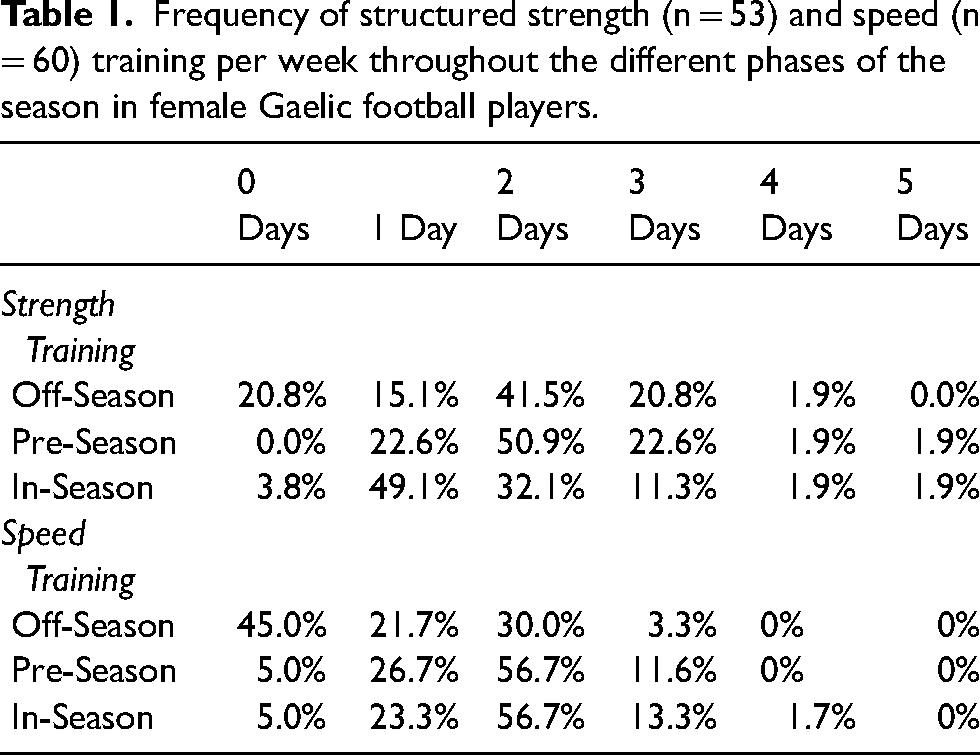
Coaches reported using a range of strength training methods throughout a season. The most reported form of strength training was strength endurance (89.7%; n = 47), followed by reactive and explosive strength (83%; n = 44), and maximal strength (56.6%; n = 30). Forty-two percent (n = 22) of coaches reported using all strength training methods throughout the season. Coaches were subsequently asked which type of strength training was the primary focus during each phase of the season (e.g., off-season, pre-season, in-season). The most reported method utilised by coaches during the off-season was strength endurance (60%; n = 32), followed by maximal strength (32%; n = 17), reactive strength (6%; n = 3), and explosive strength (2%; n = 1). During the pre-season, strength endurance (49.1%; n = 26) was the most utilised method, followed by explosive strength (30.2%; n = 16), reactive strength (11.3%; n = 6), and maximal strength (9.4%; n = 5). In-season, reactive (49.1%; n = 26) and explosive strength (37.7%; n = 20) were the most reported methods, followed by strength endurance (9.4%; n = 5) and maximal strength (3.8%; n = 2). The majority of coaches prescribed 2 strength training sessions per week during the off- (41.5%; n = 22) and pre-seasons (50.9%; n = 27). Moreover, during in-season, the majority of coaches (49.1%; n = 26) are prescribing one strength training session per week. Table 1 illustrates how often players participate in structured strength training per week throughout the different phases of the season. Ninety-five percent (n = 58) of coaches reported that they believe strength training has a positive effect on overall sprint performance. The specific strength training methods that coaches reported to be most effective for enhancing speed across the different phases of a sprint (i.e., initial acceleration (0–10 m), late-stage acceleration (10–20 m), long sprint (>20 m)) are presented in Table 2. Open-ended questions provided more detail on the specific strength training exercises coaches believed to be most effective for enhancing sprint performance. Strength training exercises were categorised into hip dominant, knee dominant, or explosive exercises, plyometrics, and ‘miscellaneous’, for further analysis. The number of responses in each category and exemplar responses are provided in Table 3.
Frequency of structured strength (n = 53) and speed (n = 60) training per week throughout the different phases of the season in female Gaelic football players.
Coaches’ perception (n = 51) on which type of strength training method is the most effective for enhancing sprint performance in female Gaelic football players.

Coaches’ responses (n = 44) on specific strength training exercises most effective for enhancing sprint performance in female Gaelic football players.
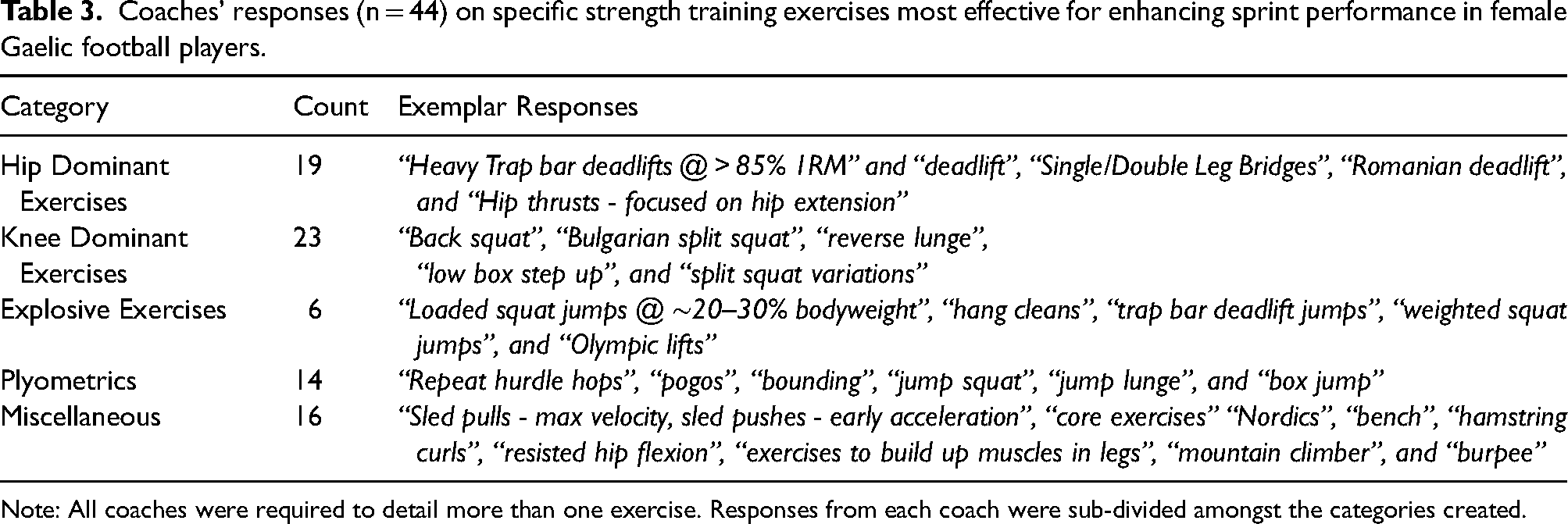
Note: All coaches were required to detail more than one exercise. Responses from each coach were sub-divided amongst the categories created.
Programming: speed training
Specific speed development methods were prescribed by 91% (n = 60) of coaches throughout the season. However, 45% of coaches don’t prescribe speed training during the off-season with a further 10% not prescribing speed during the pre-, and in-season. Moreover, 25% of coaches only prescribe speed training one day per week throughout each phase of the season. An overview of the sprint exposures prescribed by coaches each week is presented in Table 1. The most reported training method used by coaches was free sprint training (86.7%; n = 52). This was followed by technical development drills (58.3%; n = 35), resisted sprint training (42%; n = 25), and assisted sprint training (15%; n = 9). The coach's perception on the relative importance of these training methods for developing speed capabilities are presented in Figure 1. Reported sprint distances prescribed throughout the season were late-stage acceleration (10–20 m) (98%; n = 59), long sprint (>20 m) (92%; n = 55), and initial acceleration (0–10 m) (88%; n = 53). Coaches were subsequently asked which sprint distances were the primary focus during each phase of the season (e.g., off-season, pre-season, in-season). The reported sprint distances prescribed by coaches during the off-season were long sprint (47%; n = 28), initial acceleration (42%; n = 25), and late-stage acceleration (12%; n = 7). During the pre-season, late-stage acceleration (57%; n = 34) was the most prescribed distance, followed by long sprint (25%; n = 15) and initial acceleration (18%; n = 11). In-season, initial acceleration (43%; n = 26) was the most prescribed distance, followed by late-stage acceleration (28%; n = 17) and long sprint (28%; n = 17). The majority of coaches (73%; n = 44) integrated speed training as part of an extended warm up. This was followed by integrating speed as part of the technical and tactical drills (57%; n = 34) and as part of a separate speed session (43%; n = 26). The integration of speed training into the overall programme is presented in Figure 2. Open-ended questions provided a more detailed insight into the training methods coaches believed to be most effective for enhancing sprint performance. Responses were subsequently categorised into the predefined training methods. The number of responses in each category and exemplar responses are provided in Table 4. Free sprint training was the most popular method of enhancing sprint performance with 41 coaches reporting its use. This was followed by strength training (n = 20) and technical drills (n = 19).
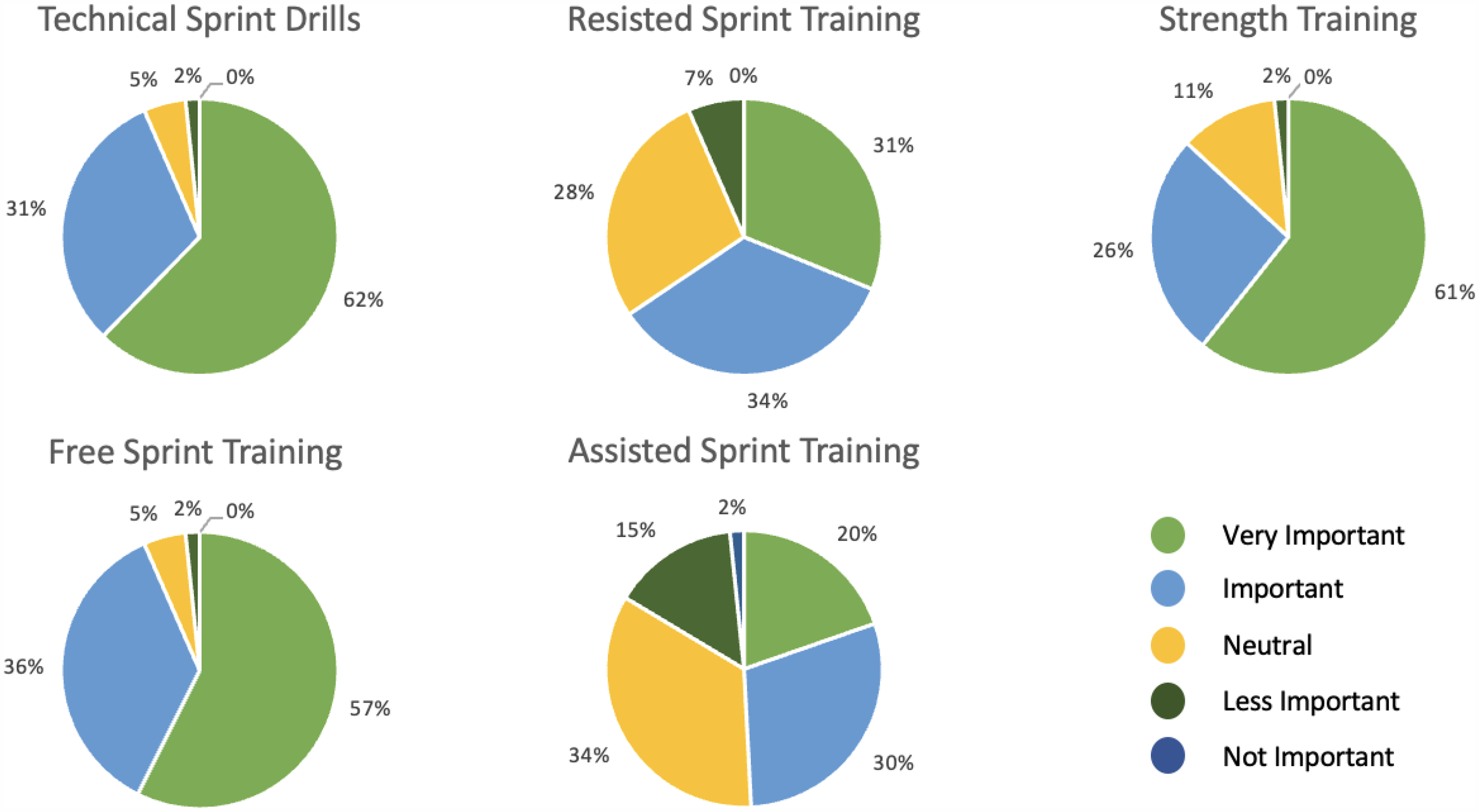
Coaches’ perception (n = 61) on the level of importance of training methods used for developing speed capabilities in female Gaelic football players.
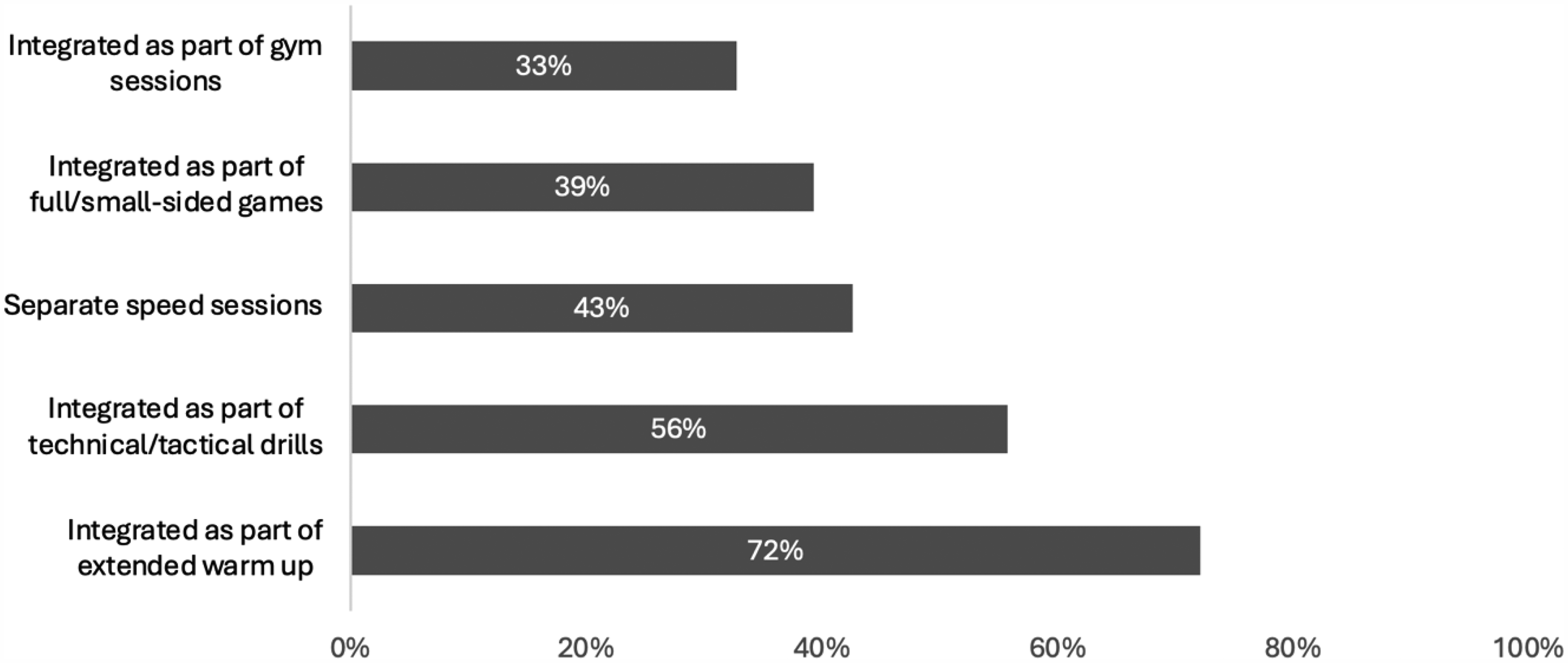
Coaches (n = 60) integration of speed training into the overall programme in female Gaelic football players.
Coaches’ responses (n = 55) on the overall training methods that are most effective for enhancing sprint performance in female Gaelic football players.
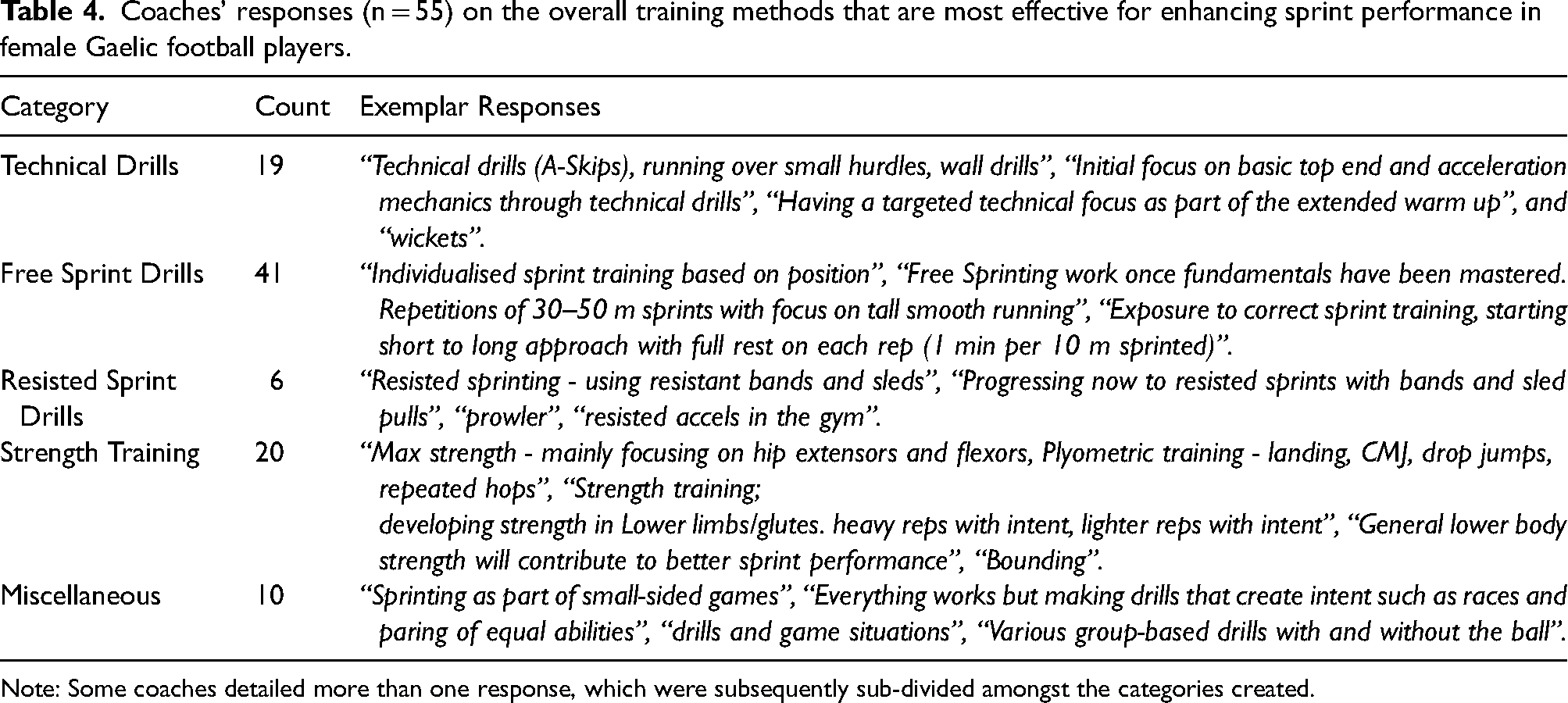
Note: Some coaches detailed more than one response, which were subsequently sub-divided amongst the categories created.
Strength and speed testing
Forty-eight percent (n = 29) of coaches reported performing strength testing with their players throughout the season with the majority of coaches (48.3%; n = 14) performing strength testing sessions three times throughout the season. Additionally, 24.1% (n = 7) of coaches perform strength testing twice per season, 17.2% (n = 5) do so three times, 6.9% (n = 2) four times, and 3.5% (n = 1) six times per season. Of the coaches who performed strength testing, all reported performing strength testing on more than one occasion throughout the season. Coaches reported using the isometric mid-thigh pull and 1–3RM maximal strength testing for the main compound lifts (e.g., squat, trap bar deadlift) to assess lower body maximal strength. Explosive- and reactive-strength were measured through vertical and horizontal jumps (e.g., squat jump, countermovement jump, drop jump, and broad jump) and subsequently calculated ratio-based metrics such as reactive strength index and dynamic strength index. Coaches also reported assessing their players upper body maximal strength (e.g., bench press) and strength endurance (e.g., push up test and maximum chin up test). Fifty-four percent (n = 33) of coaches reported that they administer sprint testing throughout the season with the majority of coaches (36.4%; n = 12) stating that they administer sprint testing three times per season. Additionally, 3.0% (n = 1) of coaches perform speed testing once per season, 24.2% (n = 8) do so on two occasions, 15.2% (n = 5) four times, 18.2% (n = 6) six times, and 3.0% (n = 1) seven times per season. Late-stage acceleration (10–20 m) (58%; n = 19) and long sprints (>20 m) (58%; n = 19) were the most commonly measured sprint distances, followed by initial acceleration (0–10 m) (39% = 13), and flying speed (split times i.e., 10/20 m segments) (36%; n = 12). Coaches who did not administer strength or speed testing cited “time constraints”, “lack of equipment”, “lack of knowledge”, and “lack of facilities” as barriers to why they do not conduct strength and speed testing.
Menstrual cycle
Forty-one percent (n = 25) of coaches surveyed reported to take the menstrual cycle into consideration when programming for their players. An open-ended question was asked to allow coaches provide more detail as to how they take the menstrual cycle into consideration when programming for their players. Responses were subsequently grouped into a number of predefined categories. The number of responses in each category and exemplar responses are provided in Table 5. At the same time, the majority (59%; n = 36) of coaches do not take the menstrual cycle into consideration. The rationale may provide an insight into barriers coaches encounter when programming for female athletes, including: lack of knowledge on the impact of the menstrual cycle on performance (25%; n = 5), knowledge on how to practically apply information gathered by tracking the menstrual cycle (30%; n = 18), training will remain the same regardless of the phase of players menstrual cycle (15%; n = 9), lack of resources (10%; n = 6), and lack of communication from players (23%; n = 14). Two coaches (3%) offered additional insights with one emphasising that “training stays the same, people are on different cycles and allow individuals to choose to back off or not with support from coaches”. Additionally, another coach noted that it's a personal subject and that they “just allow women to exercise their own judgement on what is suitable based on how they're feeling”. The Chi-Square test for gender and menstrual cycle consideration showed no significant association (χ2(1) = 0.266, p = 0.606). Similarly, the Likelihood Ratio Chi-Square Tests for coaching grade (χ2(4) = 0.692, p = 0.952), as well as coaching level ( χ 2(4) = 2.420, p = 0.298), and menstrual cycle consideration, revealed no significant relationships. The rank-biserial correlation coefficient revealed that there was no significant association between the experience of coaches and their decision to take the menstrual cycle into consideration (rrb = 0.08; p = 0.590).
Coaches’ responses (n = 25) to menstrual cycle considerations when programming for female Gaelic football players.
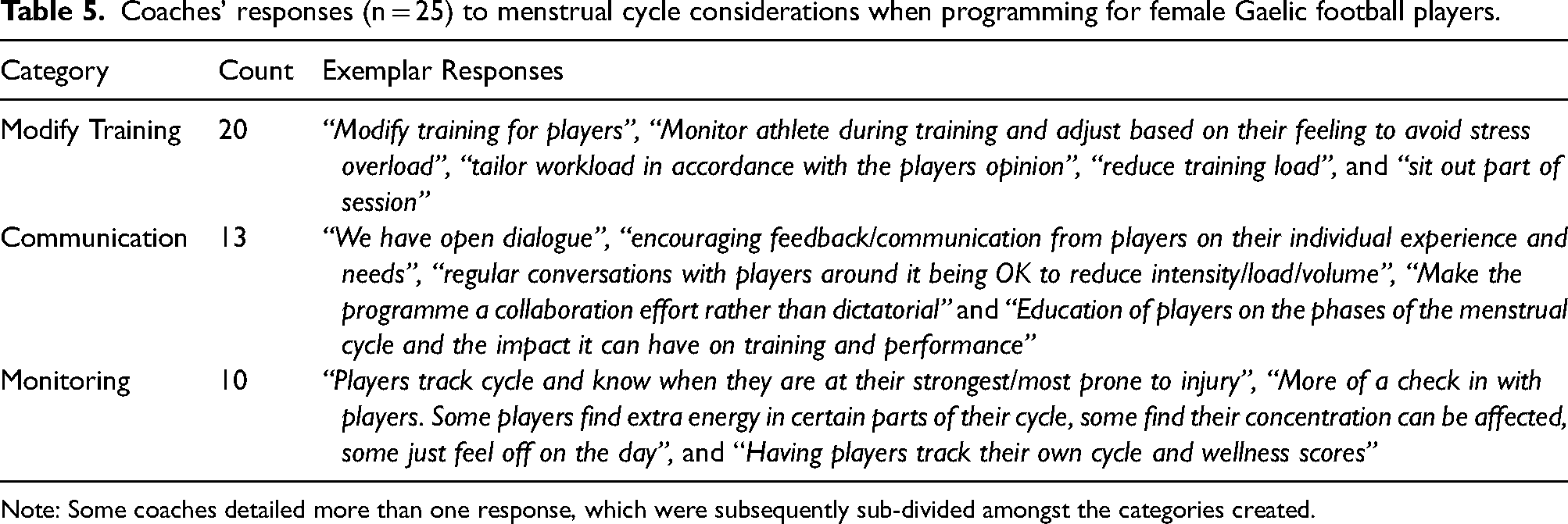
Note: Some coaches detailed more than one response, which were subsequently sub-divided amongst the categories created.
Discussion
This is the first study investigating strength and speed coaching practices in female Gaelic football in Ireland with specific emphasis on the coaches’ perception of the role of strength and speed training on performance. Strength and speed training was regularly implemented by coaches as part of the overall programme for their athletes throughout the season; in addition, the majority of coaches believe that both strength and speed play an integral role in match-day performance. Free sprinting was the most popular ‘specific’ method of speed development with the majority of coaches reporting that they believe strength training has a positive effect on overall sprint performance. Of note, the majority of coaches do not consider the menstrual cycle when programming for their athletes suggesting that the majority of coaches lack the necessary knowledge and resources to modify and adapt training accordingly.
Strength training
The results of this study highlighted that strength training was regularly performed as part of an overall programme in female Gaelic football, from grassroots youth (i.e., u16) to elite adult (i.e., intercounty). Additionally, 79% of coaches indicated that they strongly agree that strength training can positively influence match-play performance. This belief aligns with the findings of a previous review 6 that suggested greater muscular strength may translate to athletic performance across a wide range of both general (e.g., jumping, sprinting and change of direction ability) and sports-specific skills. Coaches reported implementing strength endurance (89%) training most frequently as part of their team's overall programme throughout the season. This was followed by both reactive- and explosive-strength training (83%). Interestingly, maximal-strength training was the least implemented method with 57% of coaches reporting its inclusion. Maximal-strength, and its underlying neuromuscular characteristics, plays an important role in generating maximal power and successful athletic performance, particularly in novice or relatively weak athletes. 34 Consequently, club (e.g., novice and/or relatively weak) players may benefit from building a foundation of strength through maximal-strength training before progressing to more advanced methods such as reactive- or explosive-strength. Although not specifically investigated in this research, there were indications of periodisation strategies being implemented throughout the season. In the context of programming the different strength qualities, coaches primarily orientated towards the development of strength-endurance during the off- and pre-season. This is unsurprising given that the majority of coaches were not qualified strength and conditioning coaches (only 6% hold either UKSCA or NSCA professional accreditations). Notably, 53% of elite female Gaelic football players have reported they do not have full access to gym facilities, 35 a percentage which is potentially higher for sub-elite players. As a result, strength-endurance, which can be developed through body weight or circuit training, can be easily administered in a sports hall or pitch with minimal equipment. Given the accessibility and versatility of this type of training, it may be a suitable alternative for coaches with limited access to facilities or lack knowledge of the scientific principles underpinning athletic development. Reactive-strength was the most utilised strength quality in-season, which is corroborated by what has been previously reported in the literature on team-sport athletes.26,29
A decrease in training frequency was observed throughout the season (i.e., strength sessions per week). During the off-season the majority of coaches (42%) prescribe two strength training sessions per week. This is in contrast with previous literature which has highlighted that the majority of practitioners prescribe 3 to 4 strength training sessions per week in male and female team sport athletes.26,36 The off-season provides coaches with the opportunity to focus on the development of physical qualities through increased training volume and frequency given that it is a period without any competition. During the pre-season, the majority of coaches (51%) prescribed 2 strength sessions per week, consistent with previous recommendations that female Gaelic football players should complete 2–3 strength training sessions per week during this period. 36 Conversely, during the in-season, the majority of coaches (49%) adopted a maintenance approach of one strength session per week. It is possible the rationale behind this reduction in training frequency could be the orientation towards a greater emphasis on the technical and tactical sessions. It has been previously suggested that maintaining strength and power gained during the preceding preparatory period in professional soccer players can be achieved through a single weekly maintenance session during the in-season. 37 Nevertheless, the information presented here highlights some theory practice gaps, specifically during the in-season where it has been reported that the majority of practitioners in male and female team sports prescribe 2–3 strength sessions per week.26,29,36,38
Sprint training
Consistent with previous research, 23 the majority of practitioners (91%) in this study implemented speed training within their programmes and indicated that they strongly agree that speed training (90%) can positively influence match-play performance. Moreover, 57% of coaches reported prescribing specific speed training twice per week during the pre- and in-season. However, specific speed training was uncommon during the off-season (45%). During training and games, players are typically exposed to a large volume of acceleration efforts (i.e., 0–5; 0–10 m), as a consequence, it would be expected that players are exposed to adequate volume of acceleration efforts therefore maximising their potential. However, players are seldom exposed to maximal velocity during games and the technical elements of training, therefore, frequent exposures (e.g., ≥ two sessions per week) to longer sprint distance would be required for adequate development of sprinting speed.
Specific speed training was integrated into the overall programme primarily through an extended warm-up (76%), subsequently aligning with the findings of Nicholson and colleagues. 23 The most utilised ‘specific’ training method to enhance speed was free sprint training (87%), followed by technical development drills (58%). Contrastingly, coaches rated technical development drills to be of greater importance relative to free sprinting. Nevertheless, these findings are consistent with previous literature 23 that both free sprinting and technical development drills are the most utilised ‘specific’ speed training methods.
Late-stage acceleration (10–20 m) was the most commonly prescribed distance by coaches throughout the season, followed closely by long sprints (≥ 20 m) and initial acceleration (0–10 m). Similar to strength training, there was some indication that sprint distances were periodised throughout the season. Long sprints (47%) were the most frequently prescribed during the off-season, late-stage acceleration (57%) during pre-season, and initial acceleration (43%) during the in-season. Periodisation of sprint training varies amongst leading sprinting communities with coaches typically employing “long-to-short” or “short-to-long” periodisation models. These approaches focus on long distances in the early preparation period and progresses to short distances throughout the training year, or vice versa. 24
Programming
‘General’ training methods, such as strength training, are also used to aid in the development of sprinting speed. Strength training can target specific neuromuscular components that may not be optimally developed through sprinting alone (e.g., increased peak force, peak power, leg stiffness). 24 Ninety-five percent of coaches reported that they believe strength training has a positive effect on overall sprint performance. Additionally, coaches reported that their perception on the relative importance of strength training for improving sprint performance was similar to technical development drills and free sprinting (Figure 2). Coaches prescribed a range of strength training exercises, specifically to enhance sprinting speed. Exercises were categorised into knee and hip dominant, explosive, plyometric, or miscellaneous exercises (Table 3). Specifically, knee dominant exercises (n = 23) were the most commonly prescribed exercises, with coaches utilising the back squat, lunge variations, and steps ups as part of their programming. This was followed closely by hip dominant exercises (n = 19) such as trap bar deadlift, hip thrust, and Romanian deadlift. These findings align with previous research, emphasising that the squat, step up, and lunge variations are the most frequently implemented traditional strength training exercises in an overall programme.26,28,29
When prescribing strength training methods specifically to enhance sprinting speed, previous literature has observed that practitioners primarily utilise plyometric exercises (i.e., reactive-strength) such as hurdle jumps, ankle hops, bounds, drop jumps, and assisted jumps to enhance sprint performance.23,26,27 Furthermore, Hughes and colleagues 25 demonstrated reactive-strength to be the most effective strength-training method to enhance sprint performance, specifically in female team-sport athletes. In the current study, coaches reported explosive-strength to be the most effective strength training method to enhance initial and late-stage acceleration, while strength endurance was reported to be the most effective for enhancing longer sprint performance. Although it has been suggested that explosive-strength may be one of the most important qualities for performance in fast movements such as sprinting or jumping,8,9 the belief that strength endurance is the most effective for enhancing longer sprint performance is in contrast to previous literature. While the rationale for this disparity remains unclear, unlike professional teams, many amateur sports, such as female Gaelic football, do not require advanced degrees or professional accreditation, highlighting the lack of consensus on regulating competencies and credentialing standards in the field of strength and conditioning. 39 This unique situation may present a set of challenges that can impact the development and performance of players in the sport. Nevertheless, the findings of this study are consistent with the current body of literature that the combination of both ‘specific’ and ‘general’ training methods are recommended for enhancing overall sprint performance as they expose athletes to neuromuscular adaptations that subsequently enhance physical capacity and mechanical efficiency.40,41
Strength and speed testing
Adaptations in physical capacities will change throughout a season in response to an appropriately designed training programme.42,43 Therefore, strength and speed testing is important when aiming to monitor changes in performance and ascertain if training programmes have been effective. Forty-eight percent of coaches reported administering strength testing with their players throughout the season with coaches using the isometric mid-thigh pull and 1–3RM maximal-strength testing for the main compound lifts (e.g., squat, trap bar deadlift) to assess lower body maximal strength. Explosive- and reactive-strength were measured through vertical and horizontal jumps (e.g., squat jump, countermovement jump, drop jump, and broad jump) and subsequently ratio-based metrics such as reactive strength index and dynamic strength index were calculated. Measuring and evaluating these metrics may be useful for detecting training induced changes in the strength capabilities of athletes. 44 Therefore, it is not surprising that practitioners consider these strength-qualities integral for performance given the importance of maximal- and explosive-strength, as foundational qualities for overall athletic performance, 6 and the positive effect of reactive-strength on sprint performance. 45
Similarly, 54% of practitioners reported that they evaluate sprint performance throughout the season, which is considerably lower than what has previously been reported in elite male and female team-sport athletes (98%). 23 Practitioners predominantly measuring late-stage acceleration (10–20 m) (58%) and long sprints (>20 m) (58%). Overall, a lower number of coaches administer strength and speed testing than previously reported.23,26,27 However, given that the majority of respondents coach at the sub-elite level, it is no surprise that barriers to testing included; “time constraints”, “lack of equipment”, “lack of knowledge”, and “lack of facilities”.
Menstrual cycle
This study introduces an interesting perspective on how practitioners navigate the complexities of the menstrual cycle when programming for their athletes. The majority of coaches (59%) surveyed reported that they do not take the menstrual cycle into consideration. Interestingly, the decision to consider the menstrual cycle in coaching practices was not associated with coach's gender. Additionally, coaching level, grade, or overall experience also did not appear to influence whether coaches account for the menstrual cycle in their coaching practices. The key barriers cited were; knowledge on how to practically apply information gathered by tracking the menstrual cycle (30%), and knowledge on the impact of the menstrual cycle on performance (25%). This further perpetuates the disparities between the sexes in the sporting environment (e.g., access to expertise in sport science and medical provision), the knowledge surrounding the known anatomical, physiological, and endocrinological differences between men and women, and how to apply this information to practice. 46 Conversely, 41% of coaches surveyed reported taking the menstrual cycle into consideration when programming for their players. Practitioners reported modifying training on an individual basis based on effective communication with players and monitoring of the menstrual cycle. It is noteworthy that the responses, outlined in Table 5, do not convey an in-depth knowledge of the intricacies surrounding the menstrual cycle. Specifically, the natural fluctuations in ovarian hormones (e.g., oestrogen and progesterone) experienced across the menstrual cycle can exert a multitude of diverse and complex effects on female physiology, which could potentially impact performance and adaptation to training. 46 Notably, a previous report 35 identified that 72% of elite Gaelic football players perceive that the menstrual cycle affects their performance. Moreover, 79% of elite players do not have regular access to medical support, 35 a percentage that is potentially higher among sub-elite players. Consequently, the majority of players do not have access to female-specific support in relation to reproductive health. Therefore, there is an evident need for more open communication among practitioners and players regarding the menstrual cycle, its associated symptoms, and management strategies.
The current body of evidence does not warrant general guidance on programming specifically for the female athlete and the effects of the menstrual cycle on exercise performance remain equivocal within the literature with substantial variation between individuals. 46 Consequently, female athletes may respond differently to one another following a training intervention and therefore an individualised approach to modifying training should be considered based on each athlete's response to training across the menstrual cycle. 46 Additionally, practitioners should be cognisant of the fact that hormonal contraceptive use may impact athletic performance differently to naturally menstruating women. 47 In consideration of the multitude of factors outlined by coaches and the current available research, it is evident that there is a need for extensive research into the relationship between the menstrual cycle and its effects on training and match performance. Furthermore, with only a small portion of coaches having professional qualifications, the majority of coaches may lack the knowledge to modify and adapt training programmes accordingly. Consequently, this study highlights gaps in coaching knowledge in relation to the menstrual cycle and further research in establishing evidence-based guidelines is warranted.
Limitations
Although this study provides an insight into strength and speed training practices of female Gaelic football players, it is not without limitations. With are over 1000 clubs in Ireland, in addition to elite intercounty teams, the relatively small sample size of 66 respondents does not fully capture the entire coaching landscape and attitudes of coaches in female Gaelic football and is therefore recognised as a limitation. Further, of the entire sample, a limited number of the surveyed population identified as a strength and conditioning or athletic development coach.
Practical applications
This study provides an overview of the strength and speed training practices in female Gaelic football and the perception of the role of strength and speed on match-play performance. Notably, this study highlights some theory-practice gaps, particularly in relation to the programming of strength qualities and the lack of knowledge surrounding the impact of the menstrual cycle in performance. Additionally, there is a lack of understanding on the intricacies associated with the menstrual cycle and how to practically apply information gathered through tracking or monitoring of the cycle. This study also highlights what coaches perceive to be important pertaining to the inclusion of strength and speed training into the overall programme. However, some of the information gathered from the surveyed coaches is in contrast to what would be considered best-practice, based on existing literature. Consequently, coaches and practitioners should interpret this practice-based information with caution when prescribing strength and speed training with their athletes. Nevertheless, coaches should consider the inclusion of strength and speed testing in order to monitor training induced changes in performance. Finally, the information presented in this study may also influence the design of future experimental studies and inform current applied practice in the field. Future research should consider profiling the strength characteristics of female Gaelic football players and explore the influence of strength training on the magnitude of sprint adaptations.
Conclusion
This novel study is the first to investigate coaching practices in female Gaelic football in Ireland, emphasising coaches’ perceptions of the role of strength and speed training on performance. From the data analysed in this survey, key research findings emerged. Strength and speed training was regularly implemented by coaches as part of the overall programme for their athletes throughout the season; in addition, the majority of coaches believe that both strength and speed play an integral role in match-day performance. In the context of programming strength qualities, practitioners primarily orientated towards the development of strength endurance. Free sprinting was the most popular ‘specific’ method of speed development. Additionally, strength training was a popular ‘general’ method of enhancing speed capability, with 95% of coaches reporting that they believe strength training has a positive effect on overall sprint performance. Strength and speed testing was implemented by approximately half of the surveyed coaches, which, although lower than reported previously, remains pivotal in detecting training induced changes in the strength and speed capabilities of athletes. Although 41% of coaches surveyed consider menstrual cycle in their programming, this study demonstrates that the majority of coaches (59%) lack the necessary knowledge and resources to modify and adapt training accordingly. Consequently, coaches may consider modifying training on an individual basis based on effective communication with players and monitoring of the menstrual cycle.
Supplemental Material
sj-pdf-1-spo-10.1177_17479541251333946 - Supplemental material for Strength and speed training practices of female Gaelic football coaches in Ireland
Supplemental material, sj-pdf-1-spo-10.1177_17479541251333946 for Strength and speed training practices of female Gaelic football coaches in Ireland by William Hughes, Kris Beattie, Mark Lyons, Clement Higginbotham, Aoife Lane, and Robin Healy in International Journal of Sports Science & Coaching
Footnotes
Acknowledgments
The authors would like to acknowledge and thank all those who took the time to complete the questionnaire.
Author contributions
All the authors contributed to the conception and design of the study. WH drafted the manuscript, and all authors contributed to editing and revising the manuscript. All authors read and approved the final manuscript prior to submission.
Declaration of conflicting interests
The authors declared no potential conflicts of interest with respect to the research, authorship, and/or publication of this article.
Funding
This research was supported by the Technological University of the Shannon President's Doctoral Scholarship awarded in 2020.

Supplementary material
Supplementary material for this article is available online.
References
Supplementary Material
Please find the following supplemental material available below.
For Open Access articles published under a Creative Commons License, all supplemental material carries the same license as the article it is associated with.
For non-Open Access articles published, all supplemental material carries a non-exclusive license, and permission requests for re-use of supplemental material or any part of supplemental material shall be sent directly to the copyright owner as specified in the copyright notice associated with the article.
