



Abstract
This study reports the application of elite sport coaches’ pressure training practices and the extent to which these individuals followed a multi-phased pressure training framework, recently proposed by Fletcher and Arnold (2021). Nine Australian sport coaches participated in the study. Participants included coaches of current or former elite-level athletes, and were either currently using, or had previously used, pressure training activities in their training sessions. Participation involved undertaking semi-structured interviews, with interview questions tailored to the three phases (design, implementation, debrief and review) of Fletcher and Arnold's multi-phased framework (Fletcher and Arnold, 2021). In addition, the coaches were asked to comment on their perceived facilitators and challenges involved in designing and implementing their pressure training tasks. The results showed disparity between the recommended framework and the coaches’ current uses of pressure training. The study revealed that, although coaches understood pressure training and believed it to be beneficial, no participant followed the multi-phased framework in its entirety. All participants expressed facing limitations regarding adequate knowledge, support, and resources when attempting to conduct pressure training interventions in their respective sports. It is recommended that future researchers collaborate closely with elite coaches to explore their training practices and determine how to best support their use of pressure training.
Pressure training is an intervention used by coaches to induce psychological pressure to help athletes adapt to the high stakes, competitive environment of elite sport. 1 Given that athletes often experience pressure when performing or competing in sport, 2 pressure training can be employed to allow athletes to practice executing their perceptual-motor skills in situations designed to simulate the stressors they might face during competition. 3 Pressure has been defined in early pressure training literature as any factor or combination of factors that increase one's perceived importance of performing proficiently on a particular occasion. 4 Multiple studies have highlighted the important role pressure training can potentially play in enhancing athlete performance outcomes.1,3 A recent meta-analysis determined that pressure training in sport and law enforcement had a large positive effect on performance under pressure for experimental groups, when compared to non-pressure control groups. 1 Similarly, Adler and colleagues proposed that those exposed to high-level anxiety conditions in their training (e.g., training while being filmed, performing at an elevated height), demonstrated enhanced accuracy in training performance, during training sessions where anxiety was introduced, compared to those who did not train with anxiety. 3
Pressure training design and implementation
Different theoretical frameworks have been reported to outline the specific ways of designing and implementing pressure training interventions.5,6 For example, after interviewing 11 elite-level coaches on how they created pressure in their training sessions, Stoker and colleagues identified two general categories of stress-induction, including consequences (e.g., rewards and punishment) and demands (e.g., training session difficulty). 6 It was established that, through these forms of stress-induction, coaches were able to manipulate the consequences of training, according to the individual athlete's capacity to respond to the demands. 6 Manipulating such demands has been suggested as important for adjusting the amount of pressure to which an athlete is exposed during training, though manipulating consequences is suggested to create a higher level of perceived pressure for athletes, compared to manipulating demands in isolation.6,7
Practical guidelines for designing and implementing pressure training interventions have been proposed, which include the common features (e.g., environmental manipulation, stress induction), proposed functions (e.g., strengthening psychological characteristics, mastering coping skills), and considerations for implementation (e.g., increasing demands of stressors, increasing significance of appraisals).6,8,9 However, there remains little empirical information to provide guidance to practitioners (e.g., coaches, sport scientists, sport psychologists) on how to specifically design and implement pressure training in a practical setting, beyond the suggestion of general themes (e.g., one should individualise pressure manipulations or ensure they are representative of the pressure experienced in competition). 5 For example, Stoker and colleagues presented a framework generated by analysing elite sport coaches’ interview data and exploring how the coaches designed pressure training environments. 6 The framework included the variables that were manipulated (i.e., demands and consequences) to generate a pressure response in athletes (i.e., perceived importance to perform). 6 This framework illustrates that while pressure training guidelines exist in the current literature, these may have been influenced by coaches’ subjective experiences and biases, without sufficient scientific evidence to confirm their effectiveness. Research has also explored the views of athletes and sport psychologists in relation to pressure manipulations in training (e.g., simulating psychological demands of competition) and the mechanisms by which pressure training improves performance in pressurised environments (e.g., learning and practicing coping skills), 10 and its effectiveness on athletes' competitive performances. 11 Kegelaers and colleagues expanded the pressure training literature by exploring elite sport coaches’ uses of varying methods of planned disruptions in training to expose athletes to increased demands, aiming to familiarise athletes with the pressure of competition. 12 While it is evident that initial research exists regarding pressure training interventions,6,12 Fletcher and Arnold's comprehensive framework is unique in its conceptualisation because it uses multiple phases that each work to inform the next, along with providing practical guidelines to help inform coaches on the use of pressure training in elite sport settings. 5 This multi-phased approach to stress and pressure training includes specific design, implementation, and debrief and review phases, each with a list of appropriate inputs (e.g., adapted training methods) and expected outcomes (e.g., improved performance under pressure).
According to Fletcher and Arnold, phase one (design) involves developing an understanding and awareness of the representative performance stressors in a given sport, to establish the aims and desires for the team and/or individual athlete, according to the team or organisation's environment, culture, and current training. 5 In the context of this paper, representativeness refers to what Headrick and colleagues defined as the inclusion of situation-specific information, mirroring the demands that coincide with constraints of a competitive performance environment (e.g., simulated competition-specific scenarios that elicit emotional responses), which are both physically and psychologically challenging and stimulating for athletes in training. 13 Fletcher and Arnold suggest the integration of these representative stressors into training should include a process of strategic planning whereby coaches and psychologists work collaboratively toward establishing these aims and outcomes. 5 When working through this initial phase, importance is placed on acquiring technical skills for the athletes, shaping the team environment and culture, and mapping strategies to manipulate the environment to evoke stress-related responses from athletes, with the aim of helping them to maintain performance and functioning under pressure. 5 All stakeholders, including coaches and athletes, should be included in the education around how and why such design is taking place, thereby helping athletes to view pressure training as an opportunity to improve, rather than as an unnecessary burden. 5
Phase two (implementation) in Fletcher and Arnold's framework is used to enhance athletes’ psychological skills, coping strategies, and perceived support, by enabling them to effectively manage representative performance stressors. The aim is to enable athletes to better detect physical and psychological threats to their performance and develop appropriate responses. 5 In this second phase of the framework, Fletcher and Arnold emphasise the necessity to monitor athlete performance progress by aligning training observation with baseline performance assessment, and assessing psychological responses to stressors and pressure. Such monitoring allows identification of the stress-induction methods that need to continue, stop, or be modified. 5
Finally, Fletcher and Arnold proposed that phase three (debrief and review) should clearly evaluate the extent to which both coaches’ and athletes’ aims and desired outcomes were achieved. 5 They suggested phase three should be a collaborative process between athletes and coaches, and should allow opportunity for open and informative reflection concerning the planning and delivery of pressure training. This reflective process should result in an understanding of what went well, what did not go well, and what change is needed, regarding the design and delivery of pressure training. 5
Although Fletcher and Arnold's framework offers a foundation for delivering an effective pressure training intervention, the approach currently lacks practical examples that demonstrate the challenges and realities associated with implementing the three phases in a regular training program. 5 Furthermore, while previous research has examined coaches’ perspectives and strategies regarding pressure training, 12 these examples are yet to be compared against a framework, such as Fletcher and Arnold's, 5 to examine whether coaches do, in fact, have the necessary means (i.e., time, resources, knowledge, etc.) to realistically conduct effective pressure training interventions at an elite level. Considering the global respect associated with the Australian sport system, 14 and the researchers’ access to elite coaches within this domain, the present study is an opportunity to assess the extent to which the coaches in that system align their pressure training practices with empirical guidelines.
Moreover, it remains to be seen whether coaches of elite athletes are able to realistically follow the proposed phases and guidelines in their training sessions and, if so, whether such guidelines are beneficial for improving competitive performance under pressure conditions. It is hoped that uncovering the realities of coaches’ pressure training practices, through the lens of Fletcher and Arnold's framework, 5 will reveal some of the significant barriers and facilitators coaches face when conducting pressure training, thereby guiding future researchers and sport scientists on where coaches need further support when implementing a framework such as that provided by Fletcher and Arnold. 5 The present study used the three phases (design, implementation, debrief and review) of Fletcher and Arnold's framework to qualitatively assess the extent to which elite sport coaches in the Australian sport system naturally incorporate these guidelines into their pressure training interventions. 5 Semi-structured interviews with nine elite coaches were conducted to examine their practical approaches to pressure training within the context of this multi-layered framework. 5
Methods
Participants
Seven male and two female coaches (n = 9) participated in the study. Participants were either current or former coaches of elite-level athletes (i.e., athletes competing at national, international, or Olympic level) of all genders, and confirmed, prior to interviews, they were either currently using, or had previously used, pressure training activities in their training sessions. The average age of the coaches was 47.1 years (SD = 10.49) and their ages ranged from 35 to 65 years. The average amount of elite coaching experience of the coaches was 10.56 years (SD = 5.13) with a range of five to 25 years. Participants included elite coaches from Australian rules football, basketball, cricket, equestrian, netball, squash, surfing, table tennis, and volleyball.
Procedure
The interview schedule comprised a list of questions that followed the order of the three phases based on Fletcher and Arnold's multi-phased approach, 5 with the addition of benefits and challenges, to gain a deeper understanding of the coaches’ experiences of pressure training. Participants were asked introductory questions around their beliefs and assumptions regarding pressure training, and the extent to which competition-representative pressure is able to be recreated in training (e.g., As you see it, what is the goal of pressure training? and Can major competition pressure be recreated in training?). Understanding coaches’ beliefs and assumptions regarding pressure training was important to establish at the commencement of each interview, as it allowed the interviewer to confirm that participants had a clear understanding of the topic. Other examples of questions included (i) who was involved in the design of pressure training, (ii) what was the schedule of implementation of your pressure training activities, (iii) how did you debrief and review the pressure training interventions, and (iv) what benefits and challenges did you face (for interested readers, the full interview schedule is available as supplementary material). The final questions in each interview referred to Fletcher and Arnold's framework as a proposed guideline for pressure training, and the coaches were invited to compare their current pressure training practices with this suggested framework. 5 They were also asked to report how possible it was for them to cover the guidelines promoted by the framework, in their existing roles. While the interview schedule was deductively designed around Fletcher and Arnold's framework, throughout, the framework was only explicitly introduced at the conclusion of each interview to avoid leading the coaches’ responses when discussing their pressure training practices.
Data collected from the participants was audio- and/or video-recorded and transcribed verbatim. The interviews were conducted by the lead researcher using either Zoom© or face-to-face methods. The interviews were between 45 and 60 minutes in duration. According to Braun and Clarke, saturation for reflexive thematic analysis is not necessary, due to saturation causing information redundancy. 15 Therefore, with the research team having access to a limited number of elite-level coaches, a convenience sample size of nine was deemed to be appropriate. Institutional ethical approval was granted, and all coaches provided informed consent to participate.
Data analysis
Clarke and Braun's methodological approach of reflexive thematic analysis was followed, whereby patterns and themes in the data were explored. 16 This method is deemed useful in identifying patterns in data relating to participants’ experiences, behaviours, and perspectives when conducting qualitative research. 17 Furthermore, thematic analysis requires an in-depth involvement and interpretation from the research team, leading researchers beyond explicit words or phrases, to identify themes that capture the complexities of meaning within the data. 18 Therefore, transcripts were reviewed multiple times, by the first and third author, to identify and code themes. Both authors worked independently, following guidelines by Clarke and Braun, 16 to code key words and phrases regarding coaches’ pressure training practices, in line with Fletcher and Arnold's three phases of their framework (i.e., design, implementation, debrief and review). 5 The authors then collaborated in extensive discussions to compare their analyses and decide on the final higher- and lower-order themes presented in the paper. This process was assisted with involvement from the second author, who acted as a critical friend. 18 While the research team largely agreed on the main dimensions of themes, any discrepancies were resolved by a separate revision of transcripts, followed by in-depth discussions and consensus-building, to ensure the final themes accurately reflected the data. This collaborative process reinforced the rigor and reliability of the thematic analysis, ensuring all relevant perspectives were captured and the coding was thorough and consistent across the research team. 16 For participant interviews, a semi-structured interviewing technique was chosen to allow for rapport-building between the coaches and interviewer. Building rapport was a key feature of generating trust, which was aimed at enhancing the openness and willingness of the coaches to share detailed examples of pressure training. 16
Establishing rigour
The present study employed frequently used methods to demonstrate rigour when conducting or judging qualitative research in sport and exercise psychology. 19 Firstly, member reflection involved a co-participatory process where a brief summary of the study's ongoing findings was shared with the participants during interviews. This step is important for assessing a study's trustworthiness and the process is seen as pertinent to producing rigorous qualitative research.19,20 Furthermore, member reflection is an appropriate strategy for clarifying participant ideas and exploring any gaps in the initial findings. 19 Member reflections also aided the research team to reduce the potential of researcher bias. Morse identified three sources of researcher bias. 21 The first, known as ‘pink elephant bias’, is the tendency to see an anticipated outcome. Researchers should, therefore, maintain a ‘neutral stance’ in their research. 21 The second source of bias is that the samples are typically small and not randomised, and the data can be cumbersome, due to the complexity and size of the data sets extracted from interviews. Thirdly, unconscious bias in the research design can occur. For example, a researcher may create biased questions that target their own knowledge or ideas. 21 Thus, the present study has ensured vigilance by the researchers, when creating the interview questions, by crosschecking intention and interpretation of questions across three members of the research team. This process assisted the research team's neutral positioning, along with exploration of alternative points of view offered by participants. 21
Lastly, the study incorporated a ‘critical friends’ approach, which is a method of establishing rigour that invites an independent third-party researcher to assess first author interpretations, and to encourage reflection and challenge ideas.22,23 This role was performed by the two co-researchers during the data analysis process when coding themes. The lead researcher on the project generated the initial interpretations and coding of the themes from the interview data. The two co-researchers then discussed where themes may be more appropriately dispersed, and a final interpretation of themes was made, according to a collaborative decision between all members of the team.
Results/discussion
To improve the paper's readability and enhance the understanding of participant data against Fletcher and Arnold's pressure training framework, 5 the results and discussion sections are combined. This section of the paper is presented in four subsections. Initially, we report (i) the coaches’ beliefs about how their pressure training practices broadly align with the framework. Following this stage, specific components of Fletcher and Arnold's framework are discussed including (ii) design, (iii) implementation, and (iv) debrief and review. 5 Each section refers to the elite coaches’ attitudes, opinions, and practices regarding pressure training. Participant quotes have been integrated into the results for data transparency and to provide insights into coaches’ perspectives of pressure training.
Coaches’ beliefs about framework alignment
All nine coaches believed pressure training was important for enhancing athletes’ performance outcomes, and they believed they followed at least one or more of Fletcher and Arnold's three phases when conducting pressure training. 5 Furthermore, all coaches commonly believed that a multi-phased approach to pressure training could be followed and would benefit athletes’ competitive performances. These beliefs corroborate previous research on elite coaches’ experiences of creating pressure in training, highlighting pressure training as being influential on athletes’ abilities to emotionally self-regulate in competitive moments.6,12 They also provide early evidence regarding the efficacy of Fletcher and Arnold's framework. 5
In some cases, however, the extent to which this multi-phased approach was practically achieved was questionable, given the coaches’ current knowledge and resources. One interview highlighted the importance of understanding the subtleties of pressure training, beyond simply grasping its general concept. As one participant noted, “Many people don’t fully appreciate the nuances involved in achieving pressure during training.” [P2]. This point suggests that while coaches may understand what pressure training is, they often lack the expertise to systematically plan, implement, and assess it in their practice sessions.
Although coaches understood the term ‘pressure training’, and made attempts to incorporate it in their training, no coach reportedly followed the multi-phased framework in its entirety. This observation underscores the existing gap between recommended guidelines and current practices in effective pressure training interventions at the elite level. Notable across interviews, regarding performance outcomes, was the importance coaches placed on having pressure training in their programs. The following sections analyse these programs’ realities against Fletcher and Arnold's three-phased approach to pressure training. 5
Design
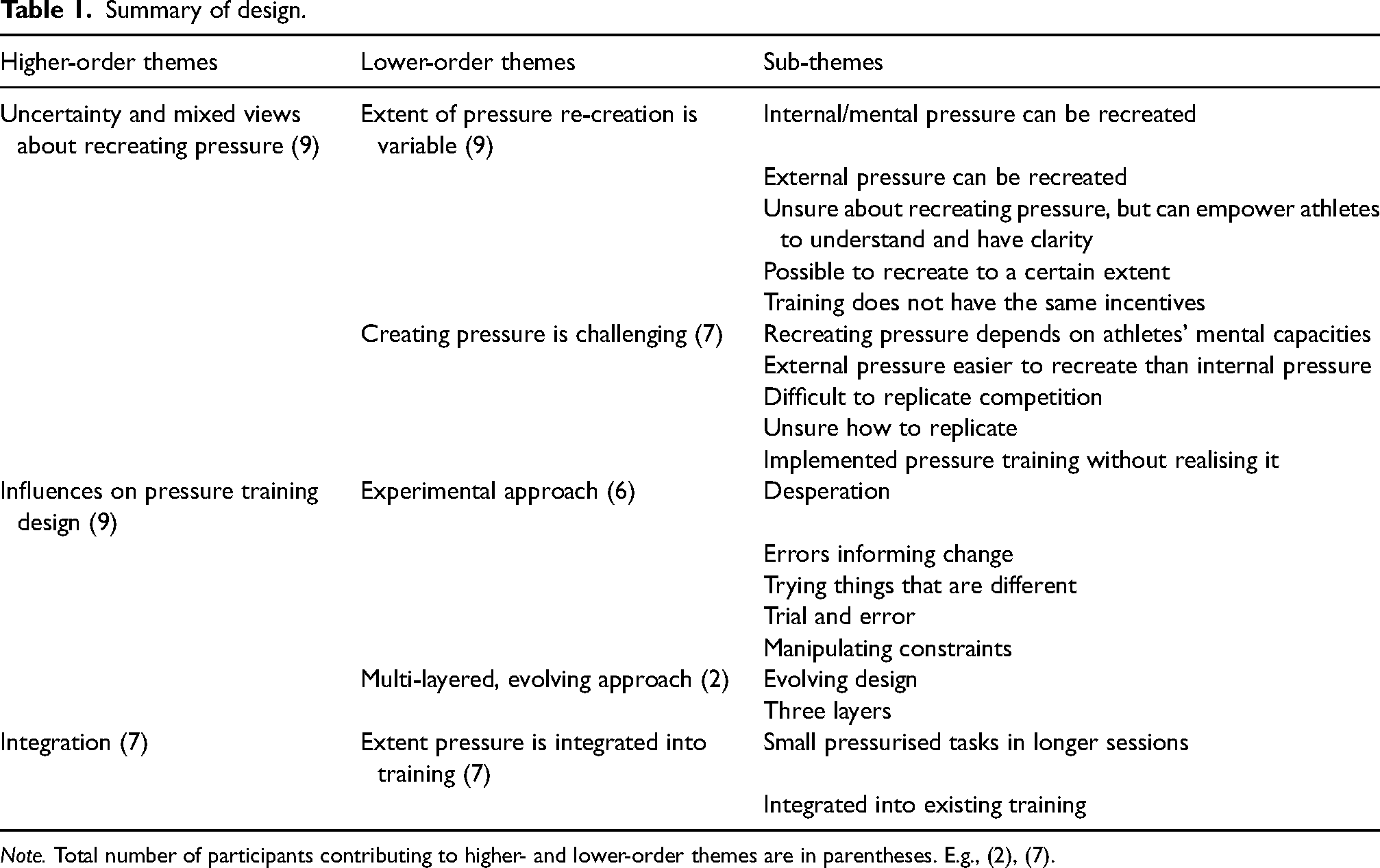
Table 1 summarises three higher-order themes of the coaches’ design processes, which represented the influences on the coaches’ strategies to designing pressurised tasks in training. In relation to the design phase of Fletcher and Arnold's framework, 5 these themes were: (i) uncertainty and mixed views about recreating pressure, (ii) influences on pressure training design, and (iii) integration.
Summary of design.
Note. Total number of participants contributing to higher- and lower-order themes are in parentheses. E.g., (2), (7).
Uncertainty and mixed views about recreating pressure
Uncertainty and mixed views about recreating pressure comprised two lower-order themes: (i) extent of pressure re-creation is variable, and (ii) creating pressure is challenging.
The coaches spoke at length about the issue of creating representative demands, which Fletcher and Arnold suggest is a key aspect in the design phase for understanding stress in the performance domain. 5 They also state that preparation for pressure training is important in the first phase. Some of the key points of this phase include establishing the aims and desired outcomes of pressure training, and educating performers and significant others about the role of pressure training. 5
For some coaches, there was a belief that certain aspects of competitive pressure can be fully recreated in a training environment. This lower-order theme referred to the possibility of being able to recreate internal (e.g., self-doubt, anxiety) and external (e.g., observation, distraction) pressures. A belief in the ability to recreate pressure that was representative of the competition setting was expressed by four participants, with one conveying certainty around this idea. “I think you can certainly create situations in training that force players to have to think like a [critical moment in competition].” [P1].
While it was deemed possible to recreate some aspects of competitive pressure (e.g., crowd noise, scoreboard pressure), all coaches questioned the extent to which the emotional intensity of this pressure could be simulated in a training context. Specifically, the coaches suggested that, while it is possible to get close to simulating the event-day pressure experience, it is not the same. Coach P5 captured the general sentiment of the study cohort. “To a certain extent, yeah. You can put things in place that’ll get you close, but I don’t think you’ll ever be able to replicate exactly what they feel in the moment.”. This coach's perspective of pressure re-creation demonstrates an alignment with a step in Fletcher and Arnold's design phase that recommends environmental manipulations when creating pressure in training. 5 However, multiple coaches expressed concern that their decisions regarding manipulations, such as noise or physical environment adjustments, were not guided by sufficient information or expertise, such as resources or advice from sport psychologists or other specialists. The coaches’ feelings of a lack of support highlights a deeper disconnect between their practical experiences and the suggested framework, which emphasises the importance of collaboration between coaches and psychologists during phase one of the preparation process to ensure an informed and effective design. 5
Several coaches identified that the goal of pressure training may not be so much about full simulation of competition pressure, but instead, helping athletes develop greater self-awareness under stress conditions for the purpose of improving their emotional self-regulation. This belief corroborates a question in current research regarding the extent that competition pressure needs to be fully recreated in a training environment for pressure training to be effective. 6 In this regard, Bell and colleagues’ study on elite cricketers found that pressure training, even without fully recreating competition conditions, effectively enhanced competitive performance by incorporating consequences, such as punishment. 24 A consideration should, therefore, be made regarding the level of pressure that must be reached in training to promote an improvement in athletes’ performances. Previous research has suggested mild levels of anxiety in training have a positive effect on performance in competition, 25 although future research should seek to further explore this area.
Though Fletcher and Arnold advocate for a re-creation of pressure in training, similar to that of a competition setting, they do not provide guidance on how closely training pressure should mirror competitive pressure for it to be considered effective. 5 Therefore, the results from the present study are important because they suggest that full replication of competitive pressure may not be necessary in training, particularly considering coaches frequently expressed the challenges of creating competition-like pressure. Seven coaches outlined the challenges they experienced when attempting to recreate competition pressure in training including not knowing the extent to which an athlete is able to manage mental processes (i.e., focus, emotional regulation) under pressure, the case of internal (e.g., fear of losing, letting down teammates) being harder to recreate than external (e.g., crowd noise, stadium lights) pressure, their lack of knowledge regarding the extent to which their current practice replicates pressure training as suggested by current research, and the fact that a competition environment itself is difficult to replicate. 5
One coach emphasised facing considerable difficulty when attempting to replicate the magnitude of pressure athletes face during competition. They attributed this difficulty to the complex diversity of difficult emotions (e.g., stress, fear, self-criticism) athletes feel in high-pressure moments of competition. “It's very difficult to replicate what athletes feel [in competition]. It's really hard, because there's so many levels of complexity as to what an individual is feeling in that moment in [competition].” [P5]. This coach expressed difficulty when attempting to mirror competition pressure in training, due to a lack of knowledge, resources, and evidence to guide them in their approach. Another coach highlighted that while external sources of pressure, such as lights and sound, can be recreated, there are certain elements of an external competition environment that cannot be realistically mirrored in training. “It's hard to [perform] in front of [a large crowd], and replicate [that] in your daily training environment.” [P6]. Overall, several coaches saw recreating competition pressure in training as a challenging feat and expressed a lack of guidance towards ways to overcome this. Despite these challenges, all coaches presented evidence of transferring pressure training ideas into practical training to re-create a competitive environment. However, data revealed a lack of formal consideration in these processes (e.g., collaborative goal setting between coach and psychologists), which the comparative framework by Fletcher and Arnold considers an important element of the design phase. 5
Influences on pressure training design
The second higher-order theme of influences on pressure training design concerned the approaches, considerations, and influences used by coaches when designing pressurised tasks. Two lower-order themes to present were: (i) experimental approach, and (ii) multi-layered, evolving approach.
Experimental approach referred to the causes and types of experimentation, regarding techniques for creating pressure by coaches, when designing pressure training tasks for athletes. These included desperation (i.e., willingness to try anything), errors informing change, trying things that are different, trial and error, and manipulating constraints (i.e., making adjustments to keep tasks novel). In this regard, several coaches revealed using approaches that were inconsistent with the guidelines suggested by Fletcher and Arnold. 5
Six participants relied on the use of trial and error when attempting to design tasks for pressure training. “Most of that was done by experimentation, trial and error, finding out this works, that doesn’t, start doing this, stop doing that.” [P2]. This coach's use of trial and error was reported as being due to a lack of exposure to appropriate knowledge or evidence guiding the practical implementation of pressure in training. Although Fletcher and Arnold emphasise using baseline measurements of psychological responses to performance stressors to inform pressure training design (e.g., recording athletes’ responses to implemented stressors before and after training), 5 no coach reported using such measurements, or identifying specific areas of athletes’ mental performances to target for enhancing competition performance outcomes. This misalignment to the framework highlights a key area of consideration currently missing in the reality of coaches’ design processes. Interview data revealed this gap may stem from limitations in coaches’ experience and knowledge. Coaches reported feeling challenged when designing pressurised tasks due to limited understanding and exposure to pressure training. For example, two coaches (P5, P9) expressed that personal experiences and knowledge were not enough to guide their creation of effective pressurised tasks. Greenwood et al., however, suggested that coaches’ experiential knowledge may be more beneficial than first realised. 26 According to Greenwood and colleagues, while experienced coaches may not be fully aware of the specific theoretical terms and principles in a given field, those coaches may nevertheless have the experiential knowledge to be able to apply that theory in their professional practice. 26
A multi-layered, evolving approach to pressure training design was reported by two participants (P2, P5), suggesting a level of sophistication in their design methods. This sub-theme referred to the evolution of the design process for pressure training, which included three layers (i.e., expectations/values, making pressure regular, targeting pressure elements). These three layers of designing pressure in training are explained in the following quote: First layer is defining the expectations and values. The second is how do I make this [the experience of pressure] a regular feature of everyday training. The third is specifically dealing with elements of pressure that appear and present within [competition] and tailoring some intervention specific to that [P2].
Integration
The third higher-order theme, integration, referred to a single theme concerning the amount of pressure coaches integrated into the design of their skill-based training practices. “It's very much integrated into the way the programs work. We might have three skill sessions a week and then we might have the pressure testing and the pressure type stuff in there as well.” [P4]. Another coach incorporated pressure into training as an overall feature within different practice tasks, unless they saw pressure needing to be trained in accordance with a specific skill (e.g., attempting to score a goal under pressure). One coach expressed that they had not given much thought to the integration of pressure training, but felt it had always “just been something that's been a part of training” [P8]. Fletcher and Arnold highlighted the integration of pressure training into existing skill-based training sessions as a key component of the design phase. 5 While this theme exemplifies this component of the framework being practically conducted by coaches (i.e., integration of pressure training into existing training practices), overall, their decisions on pressure training integration within their design processes were both varied and generally not informed by current scientific literature. Furthermore, all design processes expressed by coaches lacked the critical element highlighted in Fletcher and Arnold's first phase, when preparing pressure training design, of having coaches and psychologists work together to educate and understand training goals for both themselves and their athletes. 5
Implementation
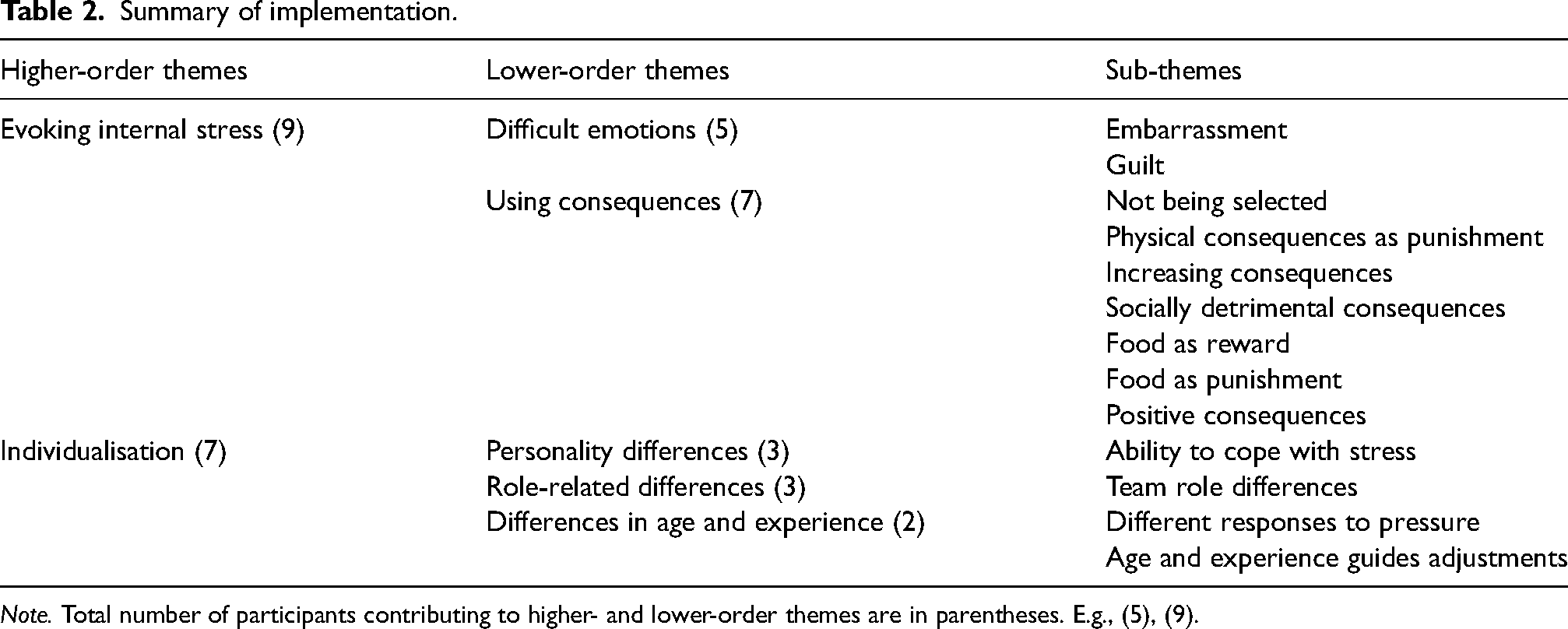
Implementation referred to the strategies and considerations made by coaches when implementing pressure training in their sport (see Table 2). The two higher-order themes presented in this section are: (i) evoking internal stress, and (ii) individualisation.
Summary of implementation.
Note. Total number of participants contributing to higher- and lower-order themes are in parentheses. E.g., (5), (9).
Evoking internal stress
Phase two of Fletcher and Arnold's framework addresses various recommended procedures which coaches and support staff should conduct, during the delivery of their pressure training interventions, to generate the most advantageous competition outcomes for athletes. 5 Consistent strategies across all coaches’ pressure training deliveries included the use of consequences (rewards and punishments) and manipulating task demands to evoke internal stress. Evoking internal stress referred to the coaches’ attempts to recreate difficult athlete emotions, and their use of consequences as ways to implement pressure in training settings. This approach mirrors Fletcher and Arnold's second phase, which emphasises the importance of manipulating the environment and modifying tasks to meet athletes at their challenge point, thereby optimising their adaptive responses to pressure. 5 The first lower-order theme presented from evoking internal stress was conjuring difficult emotions amongst athletes in training. This theme referred to evoking feelings of embarrassment and guilt, as the coaches believed these feelings were a strong enough form of punishment to generate internal pressure during training. Embarrassment was the most sought-after emotion to evoke in athletes during training. One coach found this emotion to be particularly beneficial in provoking athletes’ perceptions of high stakes in training. They believed evoking embarrassment was a more effective form of punishment for athletes than physical consequences, due to the athletes’ conditioned physical abilities not providing enough source of avoidance motivation to create pressure in training. “The physical is minor. For elite-level athletes, ten push-ups is nothing. It's just an acknowledgement that you [weren’t successful]. It's more the embarrassment of [not being successful that creates pressure].” [P1]. Two coaches (P4, P5) also reported using guilt as part of their pressure training, due to its close correlation to the emotional stakes athletes face in a team environment during competition.
These results corroborate those of Stoker and colleagues, 6 highlighting the significance of evoking internal stress in pressure training. 7 Furthermore, the coaches’ beliefs that evoking internal stress (i.e., feelings of embarrassment and guilt) was helpful, and according to one coach, was more significant for simulating pressure than physical consequences, aligns with early pressure training research that found both mental and physical punishment led to enhanced athlete performance. 11 Recent research regarding pressure training interventions highlighted the importance of generating internal stress, such as anxiety, due to its ability to acclimatise athletes to competitive moments of pressure. 10 However, earlier studies articulated the importance of creating the right level of stress. 4 Baumeister explains that ‘unpleasantness’, which is perceived by athletes as being too mild or temporary, can reduce their experience of pressure as it may result in a decrease in their perception of the stressor's importance. 4 Therefore, it is recommended that future research should illustrate what creating internal stress in training involves, and seek to provide guidelines for generating emotions that simulate competitive pressure. Importantly, though the participants in the present study demonstrated coherency with Fletcher and Arnold's recommendations of manipulation and modification to stressors in training, no coach implemented the framework's advocacy for continual support and monitoring of athletes’ responses to these stressors in training. 5 In this respect, the absence of regular athlete feedback and lack of consistent monitoring may lead to unintended negative consequences, as the pressure imposed during training might not be balanced by sufficient emotional support.5,26
It is important to note that the discovery of emotional punishment in the present study as a key component of creating pressure in training poses the question of potential ethical implications. In this regard, no coach reported any drawbacks of conducting pressure training. However, overlooking drawbacks may be due to coaches only considering potential benefits to competitive performance, without considering potentially harmful effects of pressure training for athletes (e.g., mental burnout, fatigue). 27 While coaches mentioned conducting conversations with athletes regarding their emotional responses to training, and the importance of creating a psychologically safe team environment, these strategies did not appear to include any formal processes. This finding exemplifies a need for further guidance for coaches on how to best support athletes’ psychological needs and welfare during the implementation of pressure training. Conversely, however, Bell and colleagues propose the idea that exposure to punishment-conditioned stimuli may, in some cases, be precisely what is missing from modern athlete development programs. 24 They suggested that it may be possible to be excessively concerned with over-developing self-belief via a mastery-focused environment that rewards success rather than punishing failure. It is suggested that the exclusion of punishment and over-indulgence of rewards in athletes’ training, may insufficiently prepare them for the ongoing threats of real-world elite competition. This notion puts forward an argument that presenting athletes with regular opportunities to face emotional stress (e.g., through use of stressors and consequences), similar to that of elite competition, may be a necessity for regulating their emotional responses in these inevitable scenarios. 24 Overall, the balance between supporting athlete welfare and their exposure to emotionally demanding stressors is a topic for discussion in future pressure training research. In particular, there is a need for an improved understanding of the periodisation of pressure training interventions in elite sport. This pursuit would provide greater specificity and direction to sport practitioners when conducting pressure training interventions and, in doing so, add to the initial guidelines proposed by Fletcher and Arnold. 5
Using consequences was the second lower-order theme under evoking internal stress and referred to the coaches’ generation and implementation of consequences as a result of athletes’ inabilities to execute tasks. Use of consequences included food as punishment (e.g., biting into a chilli), physical punishment (e.g., sprints), consequences impacting athletes’ public and/or social rankings (e.g., posting something undesirable on social media), positive consequences (e.g., playing for reward of a drink), discipline (e.g., athletes not getting a second chance), and manipulated amounts of consequences (i.e., increasing the amount of consequences implemented for the number of errors made). Some coaches mentioned using some of the commonly reported consequences in pressure training literature to date, such as punishments of ice baths and time trials on treadmills, or positive consequences of food rewards such as ice cream.9,28 Others mentioned more creative, modernised approaches, such as the use of social media as a platform for exposing athletes’ sub-optimal performances for public viewing, evoking the aforementioned feelings of embarrassment and guilt.
Individualisation
The final higher-order theme, individualisation, contained three lower-order themes – (i) personality differences, (ii) role-related differences, and (iii) differences in age and experience – defined by situations where consideration was made for individual athletes. Individualisation referred to the individualised approaches coaches used when considering different athletes’ varying abilities, responses to pressure, team roles, and personality differences. The component of individualising pressure training tasks for athletes is considered a key element of the implementation phase of Fletcher and Arnold's framework and was reported by all nine coaches. 5 Personality differences were commonly considered as an important factor when adjusting the implementation of pressure. In particular, when the coaches referred to differences in personality, they were referring to their athletes’ typical abilities to cope with stress and/or their sensitivities to pressure manipulation. “I can’t do that to every single athlete, it all depends on their own personality. If [athlete X] is quite strong, mentally, I can give [athlete X] more pressure. But some athletes may be too sensitive or fragile.” [P3].
Role-related differences and general progression as an athlete were also considered by the coaches. Specifically, athletes who showed greater perceptual-motor skill progression in their team role were allocated more pressure in training. When considering age and experience, coaches applied higher levels of training pressure to younger athletes and those with more experience, while reducing pressure for older athletes and those with less experience. They believed that younger and/or more experienced athletes (regardless of age) were better equipped to handle increased pressure, viewing younger athletes as more open to these methods and experienced athletes as more capable of managing higher pressure levels. In contrast, older athletes and those with less experience were perceived as having lower tolerance for pressure exposure.
Going beyond previous research that highlights a broad need for individualisation, 26 the current study provides an expansion to pressure training literature by supporting three factors that are currently considered by coaches for understanding athletes’ personal needs: athlete age and experience, team role, and personality differences. These realities of individual considerations complement contemporary literature around individual differences. 29 For example, on the topic of personality, Hardy and colleagues revealed that differences in athletes’ performances under pressure or threat were dependent upon athletes’ sensitivities to punishment. 29 Therefore, it may be beneficial for future research to explore the role of personality differences in relation to pressure training tasks. While coaches in the present study reported covering components of the implementation phase (e.g., individualisation, modification), other components (i.e., ongoing monitoring, oscillation between challenge and support) were not reported by coaches and may therefore require further consideration in future research. 5
Though identified as a key component of Fletcher and Arnold's implementation phase, lack of sources of support (i.e., other coaches, sport scientists, sport psychology support) were identified in the present study as a limitation to coaches’ abilities to implement pressure training, as they lacked access and/or assistance from these resources. 5 This misalignment between literature and practice should not be interpreted as a lack of consideration by coaches, who understand the need for athlete support when implementing pressure training. Instead, this gap suggests a need for greater collaboration between researchers and coaches, to refine the framework guidelines, ensuring they are both applicable and feasible in practice. In this regard, rather than assuming that coaches have a lack of consideration for athlete support, perhaps the framework could be expanded in future research by further investigating the practical constraints that coaches face, such as access to resources (e.g., sport specialists, time, availability).
Debrief and review
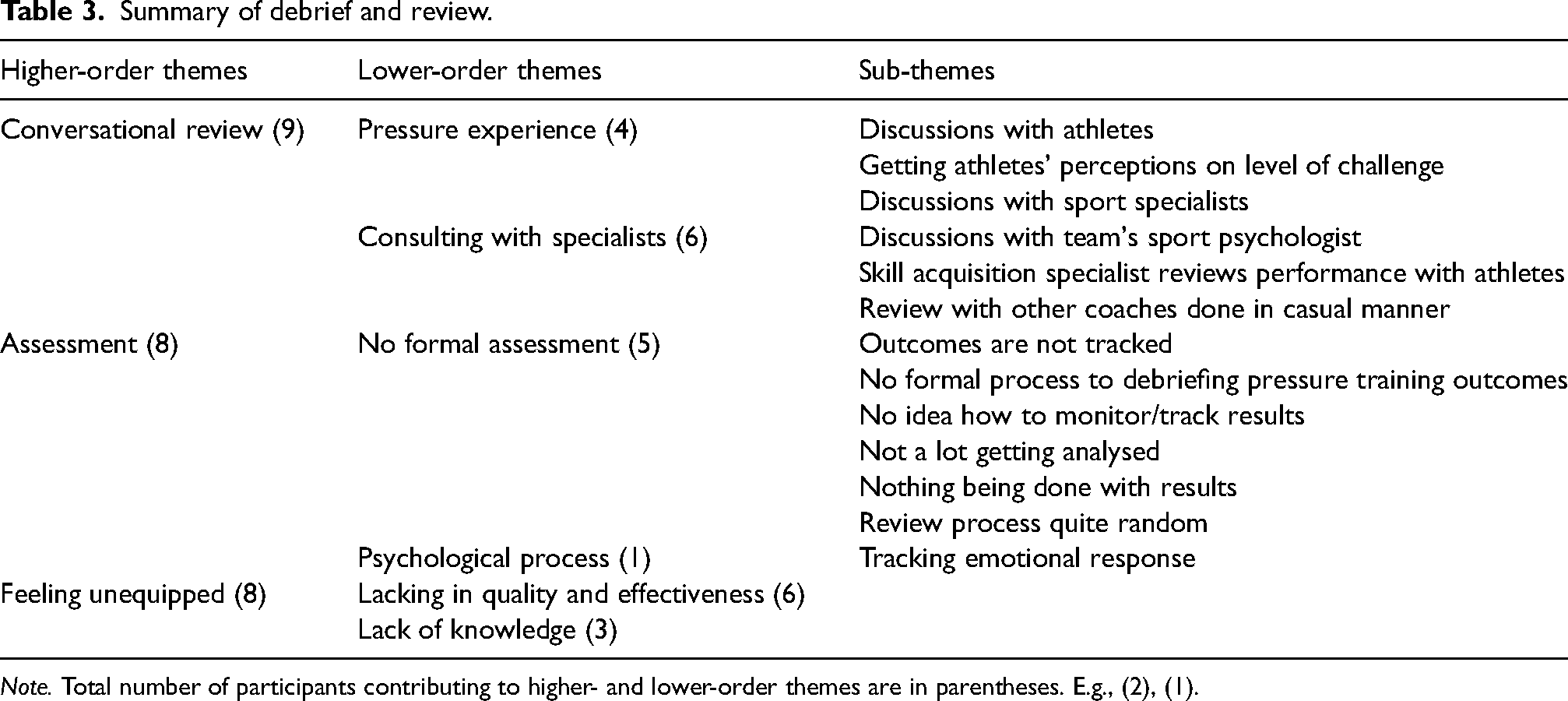
Table 3 summarises the themes from the processes followed by coaches when debriefing and reviewing their pressure training approaches. Conversational review, assessment, and feeling unequipped, formed three higher-order themes which are outlined, along with their subordinates, in the following paragraphs.
Summary of debrief and review.
Note. Total number of participants contributing to higher- and lower-order themes are in parentheses. E.g., (2), (1).
Conversational review
In the third phase of Fletcher and Arnold's framework, it is stated that evaluations should be conducted, regarding athlete performance, to establish whether the aims of pressure training were achieved. 5 The framework recommends such evaluations should be mutually carried out between coaches, psychologists, and athletes, and aim to enhance future pressure training interventions. 5
Six coaches used collaborative conversations to evaluate their pressure training interventions. This theme referred to how coaches evaluated the amount of pressure they perceived was created in training, and the reflections and consultations that took place both during and following pressure training. Pressure experience referred to the discussions the coaches had with athletes and sport specialists regarding the athletes’ specific experiences and perceptions of pressure during training. Coaches and athletes discussed the pressure training interventions to allow coaches to gauge whether the applied pressure was influential on the athletes’ training performances. While these conversations were primarily informal debriefs conducted after sessions, only one coach reported asking targeted questions about their athletes’ perceptions of managing pressure in training. “We talk a lot about how they felt. Did you get nervous? What was your preparation for the day? Can that be better?” [P9]. This coach's attention to their athletes’ psychological processes highlighted the importance of monitoring mental states in conjunction with physical performance outcomes. This process of psychological monitoring is supported by previous research that suggests combining a focus of athletes’ mental and physical responses to stress not only assists in enhancing athletes’ self-confidence, but also increases coaches’ capacities to simulate competition environments in training. 29
Consulting with specialists referred to discussions with sport psychologists, skill acquisition specialists, and other coaches, to review the effectiveness of pressure training. This lower-order theme also illustrated that coaches’ practices, in this regard, closely mirrored the framework's recommendations by emphasising the value of seeking expert input to optimise training outcomes. Similar to other themes, a noticeable trend among coaches was that conversations with specialists were often informal (i.e., over a coffee, in passing conversation) and rarely resulted in specific actionable steps for adjusting pressure training interventions. One exception to these informalities was coach P5, who utilised outside sources of support to generate actionable future steps for implementing pressure in their training (e.g., consulting with a sport psychologist to adjust and plan future pressure training sessions).
Assessment
This higher-order theme referred to how coaches tracked and used the results of their pressure training interventions. Its subordinates were as follows: (i) no formal assessment, and (ii) psychological process. In the final phase of their pressure training framework (debrief and review), Fletcher and Arnold highlighted that evaluation and interpretation processes should work to inform future pressure training practice and ultimately enhance training outcomes. 5 Five coaches expressed having no formal objective assessment of the outcomes of pressure training for their athletes. One coach reported they had never thought to link pressure training activities to identifiable performance outcomes (e.g., specific KPI's). “There's no real link to ‘we did pressure training, this worked really well’. That's definitely something we need to do.” [P9]. Another coach articulated a similar lack of consideration for their review process of pressure training and reported that it was difficult for them to do, simply due to not knowing how. Beyond the lack of assessment outlined by the coaches, each addressed a lack of guidance on how to go about conducting these assessments. This finding highlighted those coaches, who are not tracking the outcomes of pressure training, are not necessarily doing so by choice, but rather due to a lack of guidance on what this process should entail.
The second lower-order theme under assessment was psychological process. This theme emerged from coach P9, who was the only coach to measure the process of their athletes’ performances. They reported doing this step through tracking their athletes’ emotional responses to pressure during training. “Their emotions and that, we try and regulate. There's a red, an orange, and a green. Green meaning good, red meaning we’ve got an issue there, orange meaning they’re sitting in the middle somewhere.” [P9]. Though this approach was a step beyond the other eight coaches, in terms of measuring athletes’ emotional responses to pressure, this coach was unable to identify any formal baselines or parameters for these measurements (i.e., the kind of emotional response that signifies ‘good’ in one athlete or an ‘issue’ in another), nor did they specify any next steps taken based on these results.
Feeling unequipped
This theme referred to how and why coaches felt unequipped to confidently conduct thorough debriefs and reviews of their pressure training practices. Key challenges coaches faced when attempting to conduct this final phase of the framework were: (i) lacking in quality and effectiveness, and (ii) lack of knowledge.
Six coaches believed that their attempts to review their pressure training interventions were either lacking in quality and effectiveness (i.e., their debriefings were superficial, failed to engage participants in meaningful reflection, or did not systematically address areas for improvement), or were missing completely. The coaches attributed this lack of quality to insufficient amounts of prior exposure to pressure training strategies. In this regard, coaches expressed that prior exposure to pressure training, whether as coaches or athletes, fell short in equipping them to thoroughly analyse their training practices. The coaches expressed a need for greater guidance towards effective methods of reviewing their pressure training practices and how to best use these processes to inform future interventions for their athletes.
It was noted that the coaches’ lack of pressure training knowledge often resulted in ineffective debriefing and reviewing processes of their training, with no obvious strategies set in place to inform future practice. One coach (P6) believed this phase “really could have been done better”, though no clear direction was expressed regarding ideas of how this step could be achieved. Another coach described this attempt as taking “stabs in the dark at what I think will apply pressure” [P5]. For this coach, some of the methods of trial-and-error included conversations with athletes about when they felt stressed during training, and having them rate their level of stress on a scale of one (least stressed) to 10 (most stressed). This scale was informal, arbitrary, and implemented verbally, with no data recorded.
Among the coaches, there was a general consensus that they do not have adequate knowledge or practices to fulfill the key aspects of phase three of the framework to a high level. However, considering the calibre of the coaching cohort, these elite coaches are evidently employing effective strategies to generate the successful outcomes that their athletes have produced (i.e., winning championships, winning Olympic medals). Considering this point, it is possible that coaches may be undermining their current knowledge on pressure training. In this regard, although six coaches considered phase three the most difficult of the three phases to cover, interview data revealed that, in some cases, these coaches were in fact aligning more closely with the recommended guidelines of Fletcher an Arnold's third phase than they realised (e.g., coach P5 using sources of support to generate actionable future steps for pressure training, coach P9 measuring athletes’ psychological processes). 5 Ultimately, the coaches’ perceived lack of knowledge and resources regarding pressure training, and the challenges they encountered when attempting to conduct Fletcher and Arnold's third phase, 5 underscores the need for more education and advanced analysis of pressure training practices among key stakeholders, including coaches, high-performance teams, and sport scientists.
Summary and implications
The aim of this study was to evaluate the extent to which elite sport coaches conducted pressure training interventions in accordance with Fletcher and Arnold's multi-phased framework. 5 The study sought to investigate how coaches’ current interventions are applied in practice, and to identify key facilitators and barriers the coaches faced when incorporating pressure training into their programs, through the lens of this framework.
The study contributes to the literature by advancing current knowledge of pressure training design, implementation, and review, at an elite level. Recent research in pressure training has expanded the conceptualisation of methods for designing and implementing pressure. 30 However, current practical examples of pressure training methods (e.g., social observation, punishment-conditioned stimuli) often lack detailed descriptions of their application within training environments. 9 The current study offers a deeper examination of elite coaches’ realities regarding the challenges and facilitators to their pressure training practises. Furthermore, it offers a novel contribution to the literature by exploring the extent to which these realities mirror a current recommended framework for pressure training. 5
The first contribution to the literature underscores a fundamental challenge in coaches’ designs of pressure training: the complexity of recreating competition pressure in training. Coaches expressed uncertainty about the extent to which both internal and external pressures can be effectively simulated in practice. Despite their attempts to design tasks that replicated competition pressure, coaches often navigated this process without sufficient guidance or resources. This situation reportedly led to a reliance on experimentation and a lack of formal strategy, highlighting the need for better support and exposure to current recommendations, such as Fletcher and Arnold's framework, to inform their pressure training design. 5 Effective collaboration with experts, such as sport psychologists, could bridge this gap and enhance the overall design processes of coaches’ pressure training practices, ultimately leading to more robust and informed training environments. 10
Second, regarding their implementation of pressure training, coaches saw punishment (both emotional and physical) as a key component to creating pressure. Coaches commonly employed strategies of generating internal stress (e.g., embarrassment, guilt) to simulate competitive pressure during training. While these methods are consistent with current theoretical recommendations,7,10,11 the lack of specific guidance and comprehensive support systems for monitoring athletes’ responses suggest potential risks to the athletes’ psychological states of wellbeing. This point highlights the need for coaches to be provided further support to implement current guidelines, regarding methods of supporting athletes, to ensure that pressure training interventions are both effective and ethically responsible, thereby fostering performance enhancement without compromising athlete welfare. 27
Finally, the coaches’ current debrief and review processes for pressure training were informal and generally lacked structured assessment protocols. 5 Multiple coaches reported feeling ill-equipped and uncertain about how to effectively evaluate and refine their pressure training interventions. Nonetheless, some coaches appeared to align more closely with the recommended guidelines than they themselves recognised, indicating a need for clearer guidance and more collaborative approaches to help support coaches.
A notable limitation of the study is that the data collection relied solely on coaches’ self-appraisals of their experiences, without observational validation by the research team, to corroborate these self-reports. It is, therefore, possible that the coaches may have been covering more (or less) of the phases of Fletcher and Arnold's framework than reported here, but they simply did not report this information during interviewing. 5 A further limitation was the sacrifice of breadth for depth in terms of the time given to conduct participant interviews. Each interview covered questions regarding all three phases of the multi-layered approach, but focusing on just one phase may have provided a deeper understanding or greater clarity of the practices in each level of the framework. The strengths of the research include an examination of the realities of coaches’ uses of pressure training in elite sport against a currently recommended framework – a first in the research area – and exposure of the potential facilitators and barriers faced by elite coaches when conducting pressure training.
The researchers’ efforts to identify the gaps between coaches’ current pressure training practices and Fletcher and Arnold's recommended framework, 5 highlights a need for further research into what coaches are doing well in their pressure training. In this regard, elite sport coaches are experienced practitioners in their preparation of athletes for performing in moments of major competition pressure. However, the findings of the present study reveal disparity between recommended theoretical practices and coaches’ current pressure training approaches. 5 Though all participants saw pressure training as an important part of preparing athletes for competition, they also expressed facing multiple limitations regarding adequate knowledge, support, and resources when attempting to conduct pressure training interventions. It is recommended that future research should involve collaboration with coaches to develop more comprehensive and accessible resources to bridge the gap between theoretical frameworks and the practical application of pressure training. This may include providing clearer guidelines, targeted educational initiatives, and enhanced collaborative opportunities with sport scientists and psychologists. Such efforts may support coaches in refining their pressure training interventions, ensuring these practices not only align with evidence-based recommendations, but also effectively prepare athletes for the psychological demands of elite competition.
Supplemental Material
sj-pdf-2-spo-10.1177_17479541251333935 - Supplemental material for Comparing elite sport coaches’ pressure training practices to recommended guidelines
Supplemental material, sj-pdf-2-spo-10.1177_17479541251333935 for Comparing elite sport coaches’ pressure training practices to recommended guidelines by Dana J Ortez, Adam D Gorman and Tristan J Coulter in International Journal of Sports Science & Coaching
Supplemental Material
sj-docx-3-spo-10.1177_17479541251333935 - Supplemental material for Comparing elite sport coaches’ pressure training practices to recommended guidelines
Supplemental material, sj-docx-3-spo-10.1177_17479541251333935 for Comparing elite sport coaches’ pressure training practices to recommended guidelines by Dana J Ortez, Adam D Gorman and Tristan J Coulter in International Journal of Sports Science & Coaching
Footnotes
Authors’ contributions
All authors helped to design and conceive the project. DJO conducted all interviews and data collection. All authors were involved in data analysis. All authors assisted in writing and revising the manuscript. All authors read and approved the final manuscript.
Declaration of conflicting interests
The authors declared no potential conflicts of interest with respect to the research, authorship, and/or publication of this article.
Funding
The authors received no financial support for the research, authorship, and/or publication of this article.
Ethical declarations
The research was conducted with ethical clearance from the Queensland University Human Research Ethics Committee, under approval number 6909. Workplace Health and Safety approval was also granted for this study.
Participant consent
All participants provided informed consent to be involved in the study.
Data availability statement
The participants of this study did not give written consent for their data to be shared publicly, therefore, due to the sensitive nature and identifiable features of the research, and for ethical obligations, supporting data is not available.

Supplemental material
Supplemental material for this article is available online.
References
Supplementary Material
Please find the following supplemental material available below.
For Open Access articles published under a Creative Commons License, all supplemental material carries the same license as the article it is associated with.
For non-Open Access articles published, all supplemental material carries a non-exclusive license, and permission requests for re-use of supplemental material or any part of supplemental material shall be sent directly to the copyright owner as specified in the copyright notice associated with the article.
