



Abstract
Over the past 20 years, monitoring in soccer has become increasingly popular for managing training loads, preventing injuries, and optimizing performance. However, implementing sophisticated systems demands substantial investment in equipment, staff training, and athlete time. The present study aimed to evaluate player's perceptions around a comprehensive athlete monitoring programme used within a professional English men's soccer team. A mixed-methods sequential explanatory design was employed across two phases. In Phase one, 20 professional male soccer players completed a ‘Modified Athlete Attitudes and Beliefs Questionnaire’. The results from Phase 1 informed Phase 2, where a subset of participants (n = 10) engaged in semi-structured interviews to gain deeper insights into their attitudes and perceptions of athlete monitoring. Analysis revealed that GPS monitoring was the most favoured tool, while power monitoring (countermovement jump; CMJ) was the least preferred. Thematic analysis of interview data identified an overall theme of importance, broken down into four key themes: education, feedback, adjustment period, and specific monitoring tools. To enhance athlete engagement, practitioners should emphasize the relevance of each monitoring strategy to the athletes’ performance. Streamlining monitoring strategies and providing more comprehensive feedback can foster greater athlete buy-in and adherence to monitoring programmes.
Introduction
In soccer, training for physical performance has become a specialised area that requires a multidisciplinary approach,1,2 often involving sports scientists, strength and conditioning coaches, and other support staff. 3 This complex ecosystem of athlete development has led to the growing adoption of various athlete monitoring tools and strategies, including but not limited to global positioning system (GPS) tracking, force platforms, and subjective wellness assessments.4–8 Monitoring and evaluating athletes’ performance and well-being are now integral to managing training loads, preventing injuries, and optimising performance outcomes. 9 The implementation of such sophisticated monitoring systems is, however, resource-intensive, requiring significant financial investment in equipment, specialised training for staff, and time commitment from athletes. 10 Although technological advancements have made athlete monitoring more accessible, there remain significant challenges in translating the data into actionable insights for coaching staff and athletes alike. 11 This disconnect often stems from several factors, despite the increasing employment of practitioners with sport science and strength and conditioning expertise. One major issue is the sheer volume of data generated, which can overwhelm practitioners and coaches who may lack the time or capacity to analyse it effectively. 12 Additionally, the data's utility can be undermined by insufficient communication between practitioners and key stakeholders, such as coaches or athletes, resulting in a failure to integrate insights into training and performance strategies. 12 Understanding how athletes perceive these monitoring strategies is critical, as their compliance and engagement are key factors that determine the utility of the data collected.13,14 Previous research has shown that an athlete's sustained effort is significantly influenced by their perception of the usefulness of subjective wellness monitoring tools. 15 Athlete monitoring is often viewed favourably by practitioners for its ability to provide objective data that can inform training decisions and enhance performance outcomes. 14 However, the athlete's perspective is equally important but often overlooked. 11 If athletes do not understand the purpose or perceive a value in the monitoring process, they may be less inclined to engage fully, which can undermine the reliability of the data collected. 16 Research has highlighted several barriers to athlete compliance, including lack of perceived need, discomfort with equipment, and social factors such as peer influence and coaching pressure.17–19
Recent research has sought to combine quantitative and qualitative measures to offer a more holistic understanding of athlete fatigue and readiness for training. 20 This mixed-methods approach is particularly valuable as it allows for a more nuanced interpretation of data, capturing both the physiological and psychological dimensions of athlete performance and well-being. 21 For example, while quantitative data might reveal trends in physical performance or recovery, qualitative insights can help explain the underlying attitudes and perceptions that drive these trends. 22 By triangulating data from various sources, researchers can generate a richer, more detailed picture of an athlete's overall condition, potentially improving intervention strategies and training outcomes.
Despite the growth in research around athlete monitoring, the majority of studies have primarily focused on practitioner perspectives 23 or the technical efficacy of monitoring tools, 5 with limited attention given to the athlete's viewpoint. As previously stated, gaining athlete buy-in is essential for ensuring strong adherence to monitoring protocols and understanding athletes’ perceptions can help practitioners optimise this process. 24 Factors such as transparency in data usage, frequency of monitoring, and the clarity of feedback are crucial determinants of athlete engagement and can significantly shape their attitudes towards monitoring tools. 25 For instance, recent research has shown that athletes often prefer feedback that allows them to benchmark their performance against peers in similar playing positions. 25 This highlights the competitive nature of professional soccer and suggests that feedback mechanisms could be optimized by providing context-specific comparisons to enhance motivation and adherence. Furthermore, the method and timing of feedback delivery—whether it is visual, verbal, or written—can also play a pivotal role in shaping athlete perceptions. Positive reinforcement and constructive communication between practitioners and athletes can help build a culture of trust and openness, thereby enhancing athletes’ perceived value of monitoring tools 26 and optimising the process for practitioners. There is a growing need to explore how athletes’ perceptions vary based on factors such as age, experience, and position within the team. Understanding these factors will allow practitioners to understand the environment to optimise the use of monitoring tools. For example, younger athletes or those with less exposure to monitoring protocols may require a longer adjustment period to fully appreciate the benefits of these tools. 15 More experienced athletes might have different expectations and levels of engagement. 14 Practitioners should consider these factors when designing and implementing monitoring programs to ensure they are tailored to the specific needs and preferences of diverse athlete groups.
The present study aimed to address this gap by exploring the attitudes and perceptions of professional soccer players towards various athlete monitoring tools using a mixed-methods approach. By utilising both surveys and qualitative semi-structured interviews, the study sought to provide a more holistic understanding of how monitoring tools are perceived and how these perceptions may influence adherence and engagement. This research contributes to the broader discussion on optimising athlete monitoring practices in professional soccer and offers practical recommendations for enhancing athlete buy-in and the overall effectiveness of monitoring programs.
Materials and methods
Methodology
The present study adopted a pragmatist approach to explore the perceptions and attitudes of professional soccer players towards athlete monitoring. Pragmatism focuses on practical solutions and the use of varied approaches to understand complex phenomena, making it particularly effective within the context of a Championship soccer club. This approach is well-suited for integrating both quantitative and qualitative data. 22 The pragmatist approach guided the study's design, enabling the collection of broad patterns through quantitative data and deeper, contextual insights through qualitative data. This study utilised a mixed-methods sequential explanatory design (see Figure 1), consisting of two phases: an initial phase using questionnaires, followed by a qualitative phase using semi-structured interviews. 27 This approach ensures that the quantitative findings are enriched by qualitative insights, facilitating a comprehensive understanding of the complexities in athletes’ attitudes.
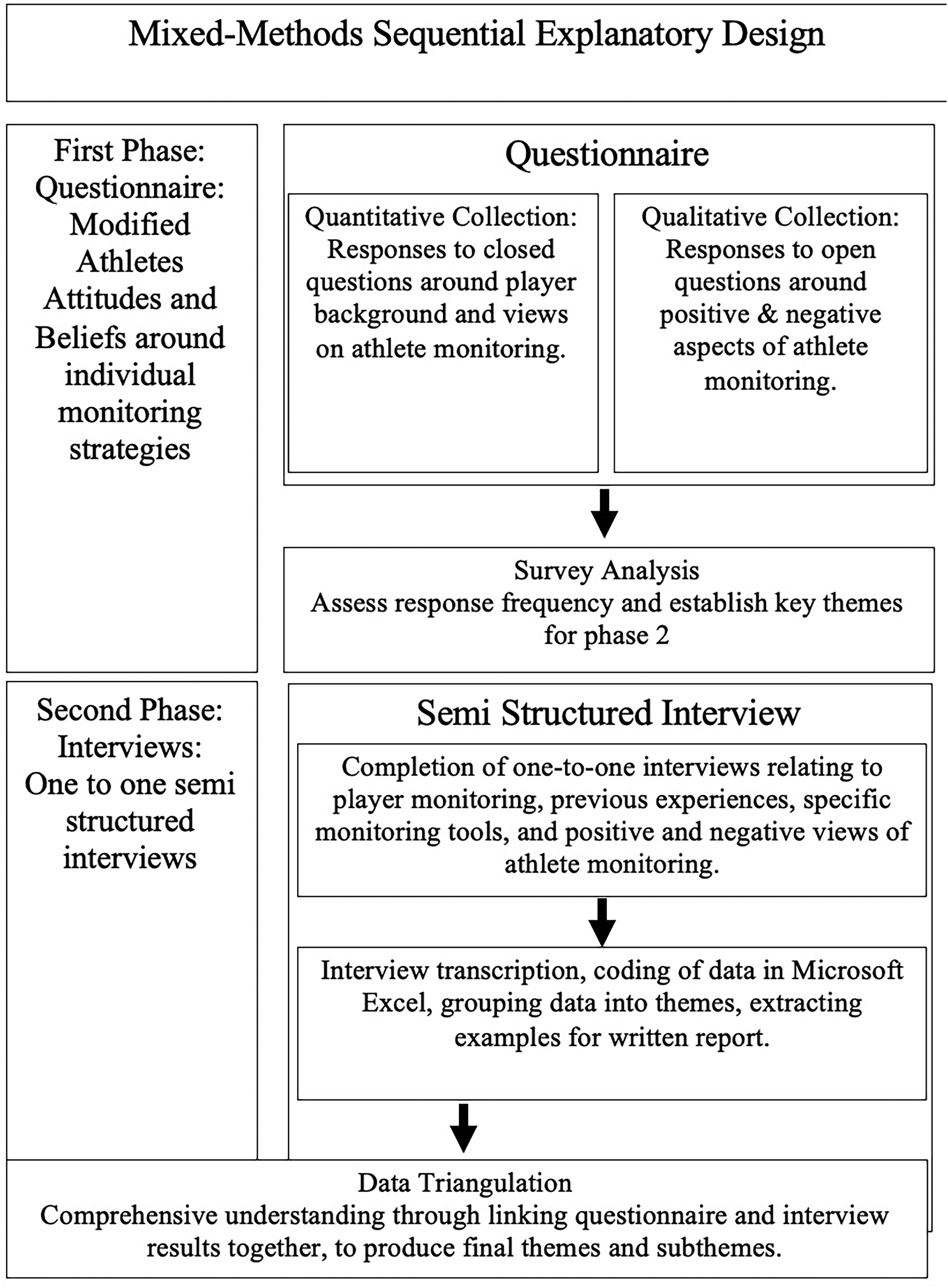
Overview of mixed-methods sequential explanatory design.
In Phase 1, athlete perceptions were gathered using a questionnaire that contained a mixture of Likert-scale responses and open-ended questions. This phase established general trends and themes in the athletes’ attitudes around monitoring tools. In Phase 2, comprehensive semi-structured interviews were conducted to allow participants to elaborate on their responses captured by the questionnaires and provide detailed explanations of their attitudes towards athlete monitoring. The combination of quantitative and qualitative methods of data collection developed the study's validity and provided a more detailed and nuanced perspective. 22 In line with the explanatory approach, thematic analysis strategies were employed to develop key themes from the qualitative data, thereby providing a holistic view of the participants’ experiences and perceptions.
Participants
Institutional ethics (ref:125255) from the host institute was granted before the start of the study. The study was conducted in accordance with the declaration of Helsinki. Twenty elite male soccer players (age = 25 ± 5 years; height = 1.83 ± 0.09 m and body mass = 84 ± 5.5 kg) from the English Championship participated in this study. The participants held a mean experience as a professional of 6 years ± 3 years. All the players had completed the same athlete monitoring processes during the 20/21 season. This number of participants was deemed appropriate as it reflects a homogeneous sample representative of elite soccer players at this competitive level. Additionally, recruiting players from a single team ensured consistent exposure to training, competition schedules, and monitoring protocols, thereby enhancing the reliability of the data collected.
First phase
Participants were given information sheets, to outline the purpose of the study. 28 The document highlighted that participants would be kept anonymous throughout. Participants (N = 20) initially completed a questionnaire at their own convenience on their mobile phone which was designed, distributed, and managed using Jisc Online Surveys 29 in April & May, at the end of the 20/21 season. Those that opted to participate accessed the survey via a secure link. The questionnaire was a modified version of the athlete attitudes and beliefs questionnaire used in previous research 30 and was shaped based on feedback from experts within the field. The goal of the first phase was to identify the athletes’ attitudes and experiences around individual monitoring strategies of GPS, subjective wellness, power, strength, and saliva testing. GPS tracking (Catapult) was utilized for every training session and match, with players wearing a compact unit embedded in a specially designed sports vest. Subjective wellness was assessed via a four-question questionnaire on the ‘Catapult AMS’ app. This included recording sleep hours and using Likert-scale responses to evaluate muscle soreness, fatigue, and sleep quality. Power monitoring involved measuring countermovement jumps using dual force plates (FDLite, Vald Performance, Newstead, Australia). Strength testing included assessments of hip adduction and abduction strength with the VALD ForceFrame (Vald Performance, Newstead, Australia), as well as isometric prone hamstring strength testing with the VALD NordBord. Saliva samples were collected using synthetic polymer-based oral swabs (Soma Bioscience, IPRO Interactive, UK) to measure immunoglobulin A (IgA) and cortisol levels. These were the predominant & most frequently tested variables within the club, chosen by the head of Physical Performance. Questions based on attitudes and experiences around the importance, frequency and benefits of athlete monitoring were asked. The core of the survey was made up of twelve seven-point Likert scale questions, ranging from extremely good/likely to extremely bad/unlikely, alongside a small number of free text questions. A list of questions can be found in the Supplementary Material in Appendix 1.
Second phase
In the second phase, a subset of players (N = 10) completed a one-to-one interview by the primary author. We purposely selected athletes with a range of age, experience, and responses to the first phase of the study, including ≥2 individuals from each age group (<21, 21–25, 26–30, 31 + years old) & experience group (1–3, 3–6, 6–9, 9 + years professional experience). These groups were selected to ensure the results represented a balanced range of ages and levels of experience. The primary author had recently left their role employed at the football club as a physical performance coach, where he had worked closely with this group of athletes for ∼3 years. The author had ∼9 years of experience working with & monitoring athletes, and held a BSc and MSc, alongside UKSCA accreditation, at the time of interview. Reflexivity was employed to minimize researcher bias, with the primary author continuously reflecting on their position as both a former practitioner in the athletes’ environment and as a researcher. 31 This reflective practice was critical in maintaining objectivity during data collection and analysis. The interviews took place between the interviewer and participant online using Zoom Cloud Meetings. 32 Due to the close nature of the relationship between the author and athletes, the high-quality rapport meant that online interviews were appropriate. The fact that the interviewer was also no longer employed by the club at the time of interview, may have helped to lead to a more open discussion. Interviews lasted between 20–55 min (mean = 32 min); a semi-structured interview was developed to allow novel ideas to develop and diverse perceptions to be expressed. 33 This flexible approach allowed for unexpected findings to emerge, with participants unrestricted by pre-set questions. The facilitator received extensive training, exceeding 30 h, in interviewing techniques and analysis and pilot data was captured. The interview started with questions around their previous experiences of player monitoring and how their experiences have changed since the start of their career. Following this, each interviewee was asked about the specific areas of monitoring (GPS, subjective wellness, strength, power and saliva testing) and was asked to explain why they picked their rating score from the original questionnaire. To gain further insight, athletes were then asked to elaborate on their questionnaire answers around the most positive and negative areas of athlete monitoring. The questions in the interview aimed to achieve the richest possible data. 34 They were open ended, 35 not leading, 34 and aimed to generate answers that were unique 36 and in depth. 37 Whilst the broad structure of the interviews were the same, the order of questions was dependent on participants responses and allowed easy movement from question to question. 38 Following the first interview, a review process was initiated, wherein the critical friend (∼12 years’ experience) viewed the recording and provided feedback to ensure the interview was conducted naturally and organically. The critical friend provided ongoing constructive criticism to the primary researcher, which contributed to enhancing the depth of the interview content and ensuring rigor in data collection. 39 The critical friend encouraged data collection to continue through interviews until data saturation was reached, and no new themes emerged. This iterative process served to refine the interview technique and ensure that the participants’ responses were not influenced by leading questions. Each interview transcript was thoroughly familiarised by the primary author to ensure immersion in the data, allowing for a more profound understanding of the athletes’ experiences. Critical junctures in data collection and analysis involved collaborative discussions with the broader research team, comprised of individuals possessing substantial qualitative expertise. These meetings focused on exploring emerging themes and subthemes from the interview transcripts, as well as comparing the anticipated findings of the interviewer with the actual trends revealed by the data and assessing the point at which data saturation had occurred. An overview of the methodology can be seen below in Figure 1. The COREQ checklist for this study can be found as Supplementary Material in Appendix 2.
Statistical analysis
Questionnaire analysis
Descriptive statistics, including means, standard deviations, and response frequencies, were calculated for each questionnaire item to summarize the general attitudes of athletes toward various monitoring tools. Likert scale responses were analysed using frequency distribution to identify trends and highlight prevalent attitudes. Key themes were established through free-text questions and comments.
Semi-structured interview analysis
The interviews were recorded and transcribed using the ‘Rev’ transcription software integrated with Zoom. Post-transcription, the primary author reviewed and amended the transcripts to ensure accuracy by cross-referencing with the live recordings. 40 Given the elite nature of the athletes involved, the transcripts are not publicly available to maintain confidentiality, as the detailed responses could lead to the identification of the participants. To preserve the integrity of the data, the anonymization process was rigorously followed. The data was analysed using an inductive thematic analysis approach.41,42 This method was selected for its flexibility and its ability to generate themes directly from the data, as opposed to being restricted by predefined theoretical frameworks. This approach is particularly useful when exploring new or under-researched areas, such as elite athletes’ perceptions of monitoring tools, as it allows themes to emerge naturally from the data. 43 The thematic analysis was conducted in six phases.41,42 Each stage of analysis was critically evaluated with the support of the critical friend to ensure consistency and reliability in the interpretation of themes. To ensure methodological rigor, additional measures such as reflexivity and the use of an audit trail were implemented. The audit trial 44 documented each step of the research process, providing transparency and enabling the replication of the study by future researchers. The combination of rigorous data analysis techniques and reflective practices ensured that the themes generated from the qualitative data were both valid and reliable, offering rich insights into athletes’ perceptions and attitudes toward monitoring tools.
Results
Questionnaire's
A total of N = 20 participants completed the questionnaire. When asked about specific monitoring tools, GPS was rated as the most popular, with 90% (N = 18) rating it as quite to extremely good. Power monitoring was rated as the least popular, with 25% (N = 5) rating it as quite to extremely bad. Table 1 highlights the individual responses to specific monitoring tools.
Individual responses to overall athlete monitoring, and specific monitoring tools (data reported as N of responses).

When asked about the quantity of athlete monitoring, 30% (N = 6), thought there was too much, whilst only 5% (N = 1), thought there was too little. 65% (N = 13) thought there was neither too much or too little. Players were asked a series of questions around athlete monitoring ranging from extremely likely, to extremely unlikely. See Table 2 (below).
Individual responses around what athlete monitoring will be used to do within their environment (data reported as N of responses).
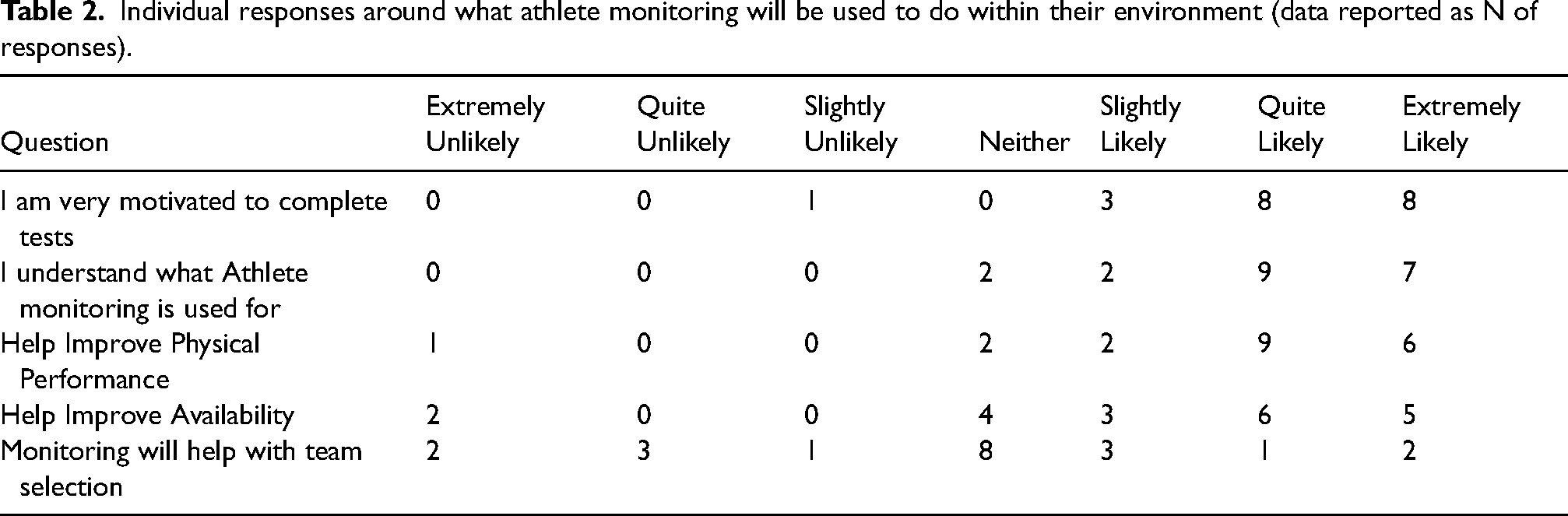
Players were also asked, using free text questions, to highlight the positive and negative aspects of athlete monitoring. Frequent positive responses (n = 4) included ‘seeing progress over time’ and ‘accurate feedback’. Frequent negative responses (n = 5) included ‘too frequent’ and ‘taking too long’. The feedback from the questionnaires informed the semi-structured interviews that followed.
Semi-structured interviews
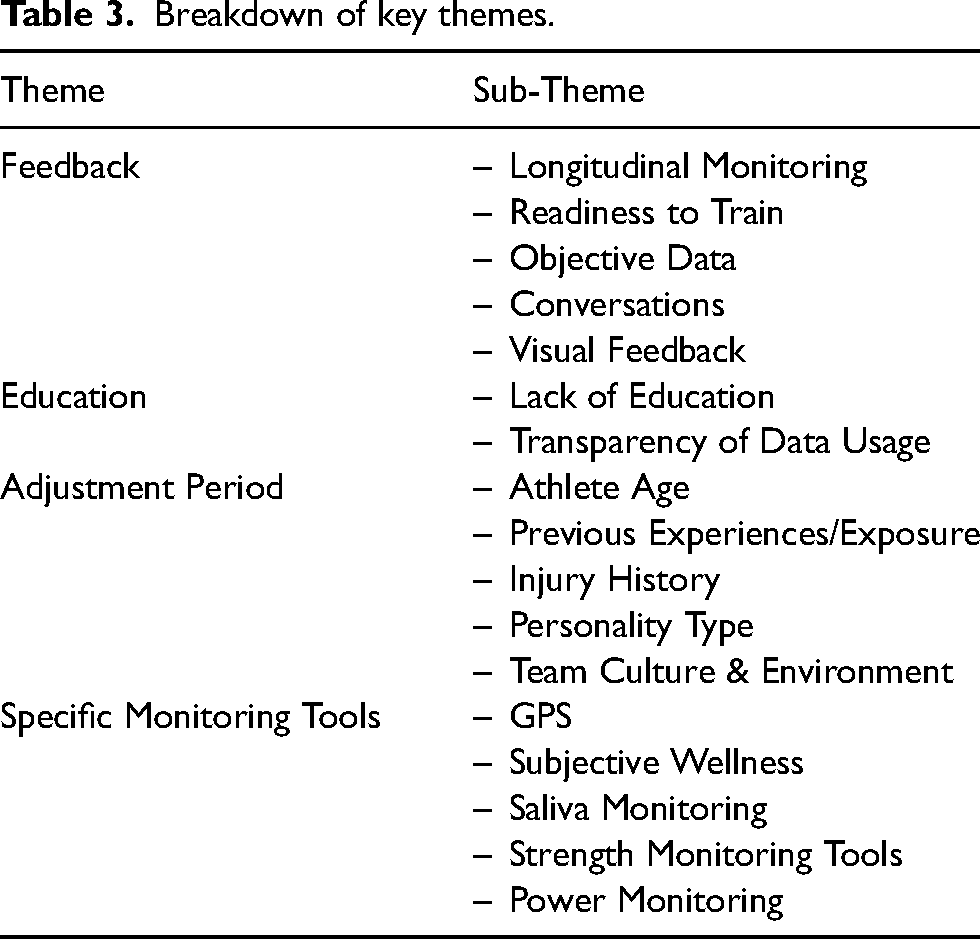
We conducted a thematic analysis of the text data from the interview transcripts. One key theme was developed, which was split up into four contextual themes. The key theme developed was importance, which was split up into four themes of: education, feedback, adjustment period, and specific monitoring tools. Each theme was broken down into further sub themes (See Table 3)
Feedback
Feedback was defined as the process of providing athletes with the results obtained from monitoring. Feedback was highlighted as an important area by all (n = 10) of the interviewees. Feedback was broken down into further sub-themes of longitudinal monitoring, readiness to train, objective data, conversations, and visual feedback. Objective data was consistently regarded as reliable and trustworthy, with one athlete commenting on the strength testing equipment: ‘It's never gonna give you false information’ Athlete 8. ‘I really like numbers and stuff, so I really liked it (the monitoring). It is something I had never seen before, with the tech(nology), and the numbers in front of you. It were the first time I ever did testing to see like your max sprint speed. And I surprised myself, because I never thought I were that quick… That's where I got interested in the numbers that came out of the testing scenarios,’ Athlete 7.
Breakdown of key themes.
Education
Education was highlighted as another key theme within the research, as mentioned by 90% (n = 9) of the interviewees. Specifically, a lack of education, was stated as a critical part of importance. Saliva testing was cited most frequently as having a lack of education (n = 6), Novel tests were highlighted as needing more education, with constant feedback being linked to improved education and understanding; ‘This was a new one (saliva testing), and I didn’t really understand what you was getting out of that. I know you’ve explained it. But I get that, if that is the next level for better recovery, then I’m all for it. Because this was introduced this season for the first time, and I didn’t see any feedback from it, not sure if I was educated enough on it. That was the one to be fair, that I could do with learning more about.’ Athlete 10 ‘That one (saliva testing) kind of threw me off when we were introduced it. Cause I’ve never even heard of it or seen it before. And I think for me, I didn’t know. I think you needed more of an understanding. I didn’t really know, well, I didn’t understand exactly what it was testing.’ Athlete 1.
Adjustment period
Within this paper, the adjustment period can be defined as the time it can take for an athlete to become accustomed to a new monitoring strategy, following their first exposure. The adjustment period allows for the athletes to understand what the process of testing is, how to perform the test and how the results would be used. Five factors were identified as influencing the length of the adjustment period: athlete age, previous experiences/exposure, injury history, personality and team culture/environment. Athlete 9 highlights how previous experiences and team culture, can affect the attitudes of athletes, reducing the adjustment period: ‘Our attitudes have definitely changed just because like anything you get used to doing things. I remember when first time any teams decided to start wearing GPS… So many players would just say, oh no, I can’t wear this in training. Oh, It's not comfortable. I don’t want to do it. I don’t want to train in that. And then it very slowly just becomes the norm and people don’t even think about it now.’ Athlete 9. ‘When I started, I would have said, you don’t need it (GPS). What do you actually need it for? But now, once you actually look at it, especially for you guys that are monitoring it. I would have never thought about player loads, or watching how much you cover in relation to injuries. I thought it was really good. Ever since I came to this club, I’ve had a few injuries, and my view has changed. I took a bit of interest. Especially when you get a bit older, with injuries and stuff, making sure you hit your markers to be where you need to throughout the season.’ Athlete 7.
Specific monitoring tools
Within this study, the specific monitoring tools were broken up into five key areas: GPS monitoring, subjective wellness, strength monitoring, saliva monitoring and power monitoring. Each monitoring tool was valued independently of each other.
Global positioning satellite (GPS) monitoring
The present study found GPS to be the most popular monitoring tool for players to use and most frequently cited monitoring tool during interviews. GPS, for outfield players, was often seen as the most useful monitoring tool, with its relevance to on pitch performance cited as a reason; ‘I think it's the most relevant to the actual football’ Athlete 3. ‘The more I understood the more I realised how important it was (GPS). Important up here (psychologically) to know that I have been hitting the numbers, so I should for being fit enough for performing.’ Athlete 4.
Subjective wellness
Subjective wellness was seen as the most polarizing measure with distinctly contrast views between athletes. The lack of objectivity, feedback and repercussions of wellness testing were cited as negative aspects of the monitoring strategy; ‘I can’t remember when I have done a wellness score in the morning, and I don’t know what's changed, whether I’ve had horrendous night's sleep or I feel awful.’ Athlete 9.
Positive comments including likelihood of reducing injuries, managing training loads and helping ‘stay fresh’. ‘I do actually fill it (Subjective Wellness Questionnaire) out now (compared to when I was younger). I see the importance of it now, when I am feeling sore, or my groin is tight, and you guys (staff) will know before I am even in the building. I previously thought when I was younger, it doesn’t matter about sleep and soreness. Positively, even if training doesn’t change, you might adapt your gym programme to help.’ Athlete 1.
Saliva monitoring
The lack of education and feedback reduces the perceived importance of saliva monitoring, as illustrated by Athlete 1's experience: ‘I didn’t really understand the feedback part of it. And what for example, if we are fatigued, what changed kind of thing after that.’ Athlete 1.
Similarly, Athlete 10 echoes this sentiment, revealing further evidence of the disconnect between the introduction of saliva testing and its perceived value: ‘This was a new one (saliva testing), and I didn’t really understand what you was getting out of that. I know you’ve explained it. But I get that, if that is the next level for better recovery, then I’m all for it. Because this was introduced this season for the first time, and I didn’t see any feedback from it, not sure if I was educated enough on it. That was the one to be fair, that I could do with learning more about.’ Athlete 10
Strength monitoring tools
Within this study, the strength monitoring tools consisted of the Vald Nordbord and Vald Forceframe (Vald Performance, QLD). The objective nature of the strength data was frequently highlighted as a positive. Clear instant visual feedback, coupled with value by highlighting how the monitoring tool might influence an athlete's physical programme were seen positively by athletes; It's hard data that's not subjective… Every single time the scores are there, you can’t argue with it. And it is what it is. The physios and, you guys, sports scientists, are using that data and trying to affect things…So I think that was really good because it was objective… And then I could see what's been done with the information,’ Athlete 5. ‘Um, for example, I’ve not been having any knee problems. Cause I did start doing things right with my knee and I didn’t, you know, think, oh, I don’t need to do that… I started taking things a bit more seriously when I saw the importance of it. Um, especially with my knee and the Nordbord and stuff like that’. Athlete 1
Power monitoring
Within this study, the power monitoring consisted of vertical counter movement jumps on the Vald ForceDecks (Vald Performance, QLD) Relevance to performance ‘on the pitch’, has been shown to be one of the areas increasing an athlete's perceived importance of a monitoring strategy. The 2 goalkeepers in the study highlighted the CMJ test as the most relevant, and most highly valued monitoring tool. ‘I wanted to get the biggest jump that I could and make them check that my power programs and my strength programs are working. I could track my progress and, and it was something that I could take outside onto the grass.’ Athlete 5. ‘It (Power Testing) didn’t really feel like it was going to have an effect on what I was doing… If my scores weren’t as high, it didn’t really feel like all that's going to stop me from playing,’ Athlete 4.
Discussion
This study assessed elite soccer players’ attitudes and perceptions toward athlete monitoring using questionnaires and semi-structured interviews. The findings offer novel insights into how soccer athletes perceive specific monitoring tests and the factors influencing the formation of their attitudes. To the best of the author's knowledge, this is the first attempt to explore athlete viewpoints on monitoring tools and discern how perceptions vary based on the monitoring method employed. This research offers a unique insight into professional male soccer players’ attitudes toward monitoring strategies, highlighting how the adjustment period, feedback, and education shape their perceptions. It enables practitioners to identify ways to optimise the effectiveness of the monitoring systems in use.
The players’ perception seemed to be influenced by the perceived importance of the implemented monitoring strategy. For example, the more the athlete could see the translation from the monitoring tool to their on-field performance, the more positively the athlete viewed the monitoring tool. Specifically, the importance of a test in relation to their matchday performance such as the countermovement jump testing for goalkeepers. Whereas the saliva test was highlighted as having a lack of link between monitoring strategy and on field performance. The athlete's perception of importance of a specific test was repeatedly highlighted throughout the study. By prioritizing monitoring tools that have a clear, visible impact on performance and ensuring athletes understand how the data translates to their development, practitioners can enhance engagement and compliance. This finding suggests that involving athletes in the feedback process, explaining the purpose of each test, and demonstrating how results drive individualized training adjustments can foster greater trust and buy-in. Previous research 25 on GPS monitoring in soccer similarly found that athletes regarded GPS as crucial, particularly for injury prevention, though less significant for player retention. The current study expands on these findings by examining a broader range of monitoring tools beyond GPS alone. Results indicate that athletes consistently associate monitoring strategies with injury prevention, reinforcing prior findings. 25 However, the study also revealed that tests perceived as less impactful were often associated with limited follow-up or lack of meaningful consequences. Athletes frequently cited that tests lacking visible results or post-test support diminished their perceived importance. This aligns with prior studies, 24 which observed that the absence of feedback or educational reinforcement lowered the perceived value of monitoring tools. Conversely, tests that were perceived to influence playing time, coach decision-making, or team selection – such as GPS – were more likely to be valued, especially when results were shared visually with both coaches and athletes. Understanding why athletes perceive certain monitoring strategies as more important, particularly when linked to performance feedback and matchday outcomes, can help practitioners optimize engagement and drive greater adherence to testing protocols. This approach ensures monitoring tools not only support injury prevention but also enhance performance outcomes, maximizing the overall effectiveness of physical assessments.
The results of this study suggest that player adherence might be connected to the test's significance, but adherence critically relied on both visual and verbal feedback. While feedback is essential, it can be delivered through verbal or visual communication. All players highlighted feedback within this study as important, with instant visual feedback frequently cited as beneficial, especially when in relation to previous performance. Research demonstrated that soccer players prefer their data to be compared with players in a similar position, thereby fostering competition with elite male soccer players to enhance motivation for a given test. 25 To maximize player engagement and adherence, practitioners should prioritize delivering immediate visual feedback alongside verbal communication, ensuring that performance metrics are contextualized against peers in similar positions. This comparative approach can enhance motivation by fostering healthy competition, ultimately driving improved performance and buy-in for monitoring strategies. This motivation, particular in relation to GPS, may have a direct relationship with match day performance or selection. Whilst direct comparisons between positions can foster motivation, understanding the context of the data is crucial. Variables such as the quality of opposition, 45 match outcome 46 formation 47 and playing position 48 can all affect physical matchday performance. The ease of access to data and information within the current study was also emphasised as important, with suggestions of apps for regular mobile visual feedback, likely to enhance their interest in the athlete monitoring process. Similar to previous research, 25 the ease of access to the data was also view important with the preferred options of the data to be shared in the changing room, where there is large exposure. All the above are in line with previous literature highlighting that feedback is important for continued athlete engagement. 26 Further recent research disclosed that 44% of practitioners working in elite sport in the UK, thought that not enough feedback was given to athletes around the athlete monitoring process. 49 This is despite practitioners placing value and importance upon feedback for athletes. 14 All of the interviewees emphasized feedback as a key area, with only 30% mentioning the lack of feedback provided for any specific test. Reasons for a lack of feedback could include limited time with athletes or an overload of information making it difficult for practitioners to decipher the important and relevant information. 50 Within the current study, feedback was limited for saliva and wellness testing, where performance was only fed back when scores deviated significantly from the norm. This lack of feedback may have contributed to the lack of importance placed on each tool by the athletes. This observation highlights where room could be made to improve and increase athlete's perceived importance through greater feedback. Regular and quick visual and verbal feedback, linked to both previous and potential on field performance can help to improve an athlete's perception of athlete monitoring tools.
Limited feedback may also be tied to a lack of education regarding a specific tool or task. Although there is limited research on the effects of education on soccer players, insufficient education about a novel monitoring tool has been linked to increased negative perceptions of the tool, ultimately resulting in limited feedback. This meant that athletes struggled to grasp the tool's importance for performance. Previous research found a 4-week nutritional educational intervention including 4 × 30 min lectures to significantly improve the athletes understanding on nutrition. 51 This research is based on youth athletes, who may respond differently to senior professional athletes. Previous research has already highlighted the logistical difficulty and willingness of players to participate in additional activities. 11 Finding the most time efficient, captivating way of educating athletes, and highlighting the importance to their career, is crucial for practitioners to increase adherence and interest. 52 Interesting research focusing on learning styles amongst elite team sport athletes, found very few athletes to have a visual learning style preference alone, with male athletes most popular form of learning kinaesthetic or a mixed model. 53 This highlights the limited effectiveness of visual lectures and presentations alone, which are often the default approach for educating team sport athletes. 51 Instead, hands-on learning that demonstrates the use, effectiveness, and importance of the equipment may be more impactful for efficient education. Practitioners providing clear, real-time feedback and education during practical equipment trials could address this issue directly. Combining this approach with insights into how the equipment influences physical performance can further enhance athletes’ engagement and receptiveness to monitoring tools.
An interesting concept that came out of this study, was the idea that each athlete will have an individual adjustment period after first being exposed to a new monitoring system. It can be affected by several areas, one of which was previous experiences/exposure. Exposure could be in the form of a role model. 54 Prior exposure seeing other athletes using a specific monitoring tool, may shorten the adjustment period. As highlighted by Athlete 1, the saliva testing is not something they had seen or heard of before, which may lead to a longer adjustment period. Previous research highlight how coaches can use observational learning theory to influence athletes. 55 By highlighting and showing elite role models using a particular tool, this may help to shorten the adjustment period and increase the athlete's interest. 56
Practitioners should adopt a blended approach, combining immediate visual and verbal feedback with hands-on, kinaesthetic learning of the monitoring tool. Simultaneously, educating athletes about the tool's purpose and benefits ensures the monitoring process is both engaging and effective.
Reflections and evaluation
This study reflects the monitoring strategies and attitudes of players specific to one soccer team, gaining in depth understanding. Further research now needs to understand the different monitoring strategies and attitudes that may be generated from other clubs and sports and their approaches. The information can then be generalised across a wider scale. Of the 2 goalkeepers interviewed in the study, both highlighted the CMJ power test as the most relevant, and most highly valued monitoring tool, in comparison to the GPS for outfielders. The importance and relevance to their on-field performance was cited as the main reason for this perception of increased relevance. Further research could focus more on the attitudes and monitoring strategies of goalkeepers in comparison to outfield athletes, to establish further the differences between these two groups. Additionally, there is a need to educate both players and staff on the complexity of the feedback provided. Specifically, regarding GPS and matchday data, does their perception of a good performance correlate with running longer distances? By educating players, their understanding of what the monitoring data represents and how it is used may shift, influencing the way they engage with this information. While the exact nature of this interaction is uncertain, it could ultimately alter their perspective on what is most important and relevant to them as players.
The current literature surrounding athlete attitudes towards monitoring processes in elite sport is limited, with this study providing unique insight into attitudes across a range of monitoring processes. The researcher of this study, previously worked as an employed member of support staff, working closely with the participants of the study. At the time of interviews, the researcher was an independent interviewer, which allowed for a unique honest perspective to be given by the athletes in the study. The current study shows the potential usefulness of data triangulation, with two parts to the study. Despite the questionnaires showing little link between age, experience and attitudes towards monitoring, the interviews highlighted that the older athletes tend to appreciate monitoring more for injury prevention to improve career longevity. The initial questionnaire analysis also found that views towards athlete monitoring were positive on the whole, whereas the interviews showed that the athletes believed it to be positive because it provides feedback.
Player perceptions of monitoring strategies implemented in elite soccer have been discussed in depth within this study. Further research may wish to focus more on the perception of the technical and lead coaching staff. These individuals will often be the key decision makers at a soccer club, therefore understanding their perceptions of monitoring, and how it affects their decision making, is crucial for sports science practitioners. The current research also highlights the vast importance of regular feedback and conversations with athletes around each monitoring strategy. Without proper guidance, feedback and education, specific monitoring tools can be viewed as meaningless and unimportant. Understanding the reason why this does not always happen is crucial, whether it is related to time availability, coach-athlete relationship, or the lack of perceived importance. Efforts of the coach team should be invested into improving the buy-in of athletes, support staff and the organisation. 24 Practitioners should decide the volume of testing based on the staff availability, to ensure thorough feedback and education can be utilised for each test.
Conclusion
This mixed methods study was conducted as a real-world applied example for other practitioners seeking to improve and gain insight into the perception of their monitoring strategies. By prioritizing monitoring tools that clearly impact performance and ensuring athletes understand how the data supports their development, practitioners can boost engagement and compliance. Providing real-time visual and verbal feedback and education throughout the monitoring process, along with insights into how the tools affect physical performance, will further enhance athlete receptiveness.
Supplemental Material
sj-pdf-1-spo-10.1177_17479541251318846 - Supplemental material for What do athlete's really think? Athlete perceptions and attitudes towards athlete monitoring in professional soccer
Supplemental material, sj-pdf-1-spo-10.1177_17479541251318846 for What do athlete's really think? Athlete perceptions and attitudes towards athlete monitoring in professional soccer by Elliott Woolmer, Rhys Morris, Mark Noon, Jason Tallis, Neil D. Clarke and Emma Eyre in International Journal of Sports Science & Coaching
Supplemental Material
sj-pdf-2-spo-10.1177_17479541251318846 - Supplemental material for What do athlete's really think? Athlete perceptions and attitudes towards athlete monitoring in professional soccer
Supplemental material, sj-pdf-2-spo-10.1177_17479541251318846 for What do athlete's really think? Athlete perceptions and attitudes towards athlete monitoring in professional soccer by Elliott Woolmer, Rhys Morris, Mark Noon, Jason Tallis, Neil D. Clarke and Emma Eyre in International Journal of Sports Science & Coaching
Footnotes
Acknowledgements
I would like to thank all the athletes who participated in this study for their time and insights. We also acknowledge the support from Birmingham City Football Club and Coventry University, which made this research possible.
Consent to participate
Written informed consent for was provided by the participants prior to participating in this study.
Consent for publication
Written informed consent for publication was provided by the participants within this study.
Data availability statement
Because of the delicate nature of the data and the potential for individuals to be identified through extensive interviews, the authors refrained from disclosing this information.
Declaration of conflicting interest
The gathered data constituted a portion of a partially funded PhD program conducted in collaboration with the Birmingham City Football Club and Coventry University.
Ethical considerations
Institutional ethics (ref:125255) from the host institute was granted before the start of the study. The study was conducted in accordance with the declaration of Helsinki.
Funding
The authors received no financial support for the research, authorship, and/or publication of this article.

Supplemental Material
The supplemental material for this article is available online.
References
Supplementary Material
Please find the following supplemental material available below.
For Open Access articles published under a Creative Commons License, all supplemental material carries the same license as the article it is associated with.
For non-Open Access articles published, all supplemental material carries a non-exclusive license, and permission requests for re-use of supplemental material or any part of supplemental material shall be sent directly to the copyright owner as specified in the copyright notice associated with the article.
