




Abstract
This study evaluated the performance outcomes of headers during the FIFA Women's World Cup France 2019™. Video analysis was used to code performance outcomes of headers (uncontested and contested) and their descriptors (e.g., playing position, match situation, field location, and the distance the ball travelled). Descriptive statistics, and odds ratios (ORs) (odds of a successful outcome) are reported for headers based on their descriptors. Less than half of all headers resulted in a successful outcome, with headers observed to result in a turnover of possession 53% of the time (uncontested: 51%, contested: 57%). Headed goal conversion rates ranged from 0–38% across countries/teams (mean: 13%), with variability in the frequency of headed shots (range n = 1–22). Headed shots were most efficient from free kicks with 24% of shots resulting in a goal. Odds of a successful heading outcome was lowest from long balls (>20 m) in all areas of the pitch. Uncontested headers had greater odds of a successful heading outcome than contested headers from corner kicks (OR: 2.33, p = 0.004) and free play (OR: 1.30, p = 0.001), but had lower odds of success from goal kicks (OR: 0.62, p = 0.017). Central defensive midfielders (OR: 1.45, p = 0.002) and centrebacks (OR: 1.25, p = <0.001) had significantly greater odds of successful heading outcomes, and strikers (uncontested) (OR: 0.82, p = 0.043) and wingers (contested) (OR: 0.72, p = 0.041) had the lowest. The findings of the current study suggest that heading commonly results in lost possession, particularly from long balls. These findings may help to guide future heading coaching frameworks.
Introduction
Performance analytics is an increasingly larger part of the professional game 1 and often focuses on variables related to goal scoring, ball possession and distribution, and set plays,1–3 whereas heading is often not considered despite being a skill unique to football. Heading as a performance metric should not be understated given that headers can determine success in football. For example, during the 2022 UEFA European Women's Championship 28% of goals were scored from a header. 4 Further, headers are commonly performed in other aspects of match play including to pass the ball, block shots on goal, and interrupt possession. 5 It has been reported that players may head the ball between 1 and 9 times per match, 6 or 2601 headers per 1000 match hours in professional women's football 7 and 2509/1000 MH in professional men's football. 8 This can equate to thousands of headers over a playing career. However, the performance of headers particularly in terms of outcome is rarely reported. This is important given that factors such as sex, playing position, game situations, 9 geographical location, 10 age, 11 and playing level, 12 can all influence the frequency with which a player will head the ball, therefore, it is likely that these factors will also influence the performance of headers as well.
Exploring heading incidence is also important given the debate that long-term exposure to repetitive head impacts, such as heading, may cause cumulative dose-dependent neurodegeneration later in life, 13 however, further contextual information on heading should also be explored. For instance, investigating which headers (and under what circumstances) are more likely to lead to a successful outcome (such as a goal, blocked shot, or retained possession) so that these ‘high-performance headers’ can be prioritised. 5 Furthermore, given that women generally demonstrate greater head impact magnitudes during heading compared with men, 14 it is possible that women may be more vulnerable to the potential long-term effects of heading on the brain, making the investigation of heading performance in the women's game an important starting point. Performance analytics at the highest level will help understand the cost/benefit of heading and can be used to better inform future coaching practices to enhance the success of the team and potentially protect the long-term brain health of players through minimising exposure to headers with a lower chance of success. Accordingly, this study aims to analyse the performance outcomes of headers during the 2019 FIFA Women's World Cup (FWWC19).
Methods
This study is part of a broader investigation into the incidence and characteristics of heading in professional women footballers. 7 Ethics approval was granted by the institution's Human Research Ethics Committee (HRE2021-0427). High-definition broadcast footage of all 52 matches from the FWWC19 in France were provided by the Fédération Internationale de Football Association (FIFA) (Zurich, Switzerland) for the purpose of this observational study. Video analysis was used to code the performance outcomes of headers identified during the complete FWWC19. 7
Coding
The performance outcomes of headers were manually coded using video footage from the complete FWWC19. Each match was viewed on a 23.8-inch gaming monitor (Acer Inc., New Taipei, Taiwan) at 1.5 speed, using QuickTime Player (Version 10.5, Apple Inc., Cupertino, CA, USA). Each header identified in our earlier research on the FWWC19 7 was reviewed in real time and frame-by-frame and coded for performance outcomes and classified as successful or unsuccessful (for operational definitions, see Table 1). Headers were classified into uncontested and contested headers (Table 1), and further coded for the following characteristics: playing position, match situation, field location, and the distance the ball travelled prior to the header (refer to Supplementary Appendix 1 for verbatim operational definitions). 7 For contested headers, only the player who made head-to-ball contact during the contested heading situation was coded. Henceforth, the term headers will refer to all headers (including both uncontested and contested headers collectively), unless otherwise specified.
Header types and performance outcome operational definitions.
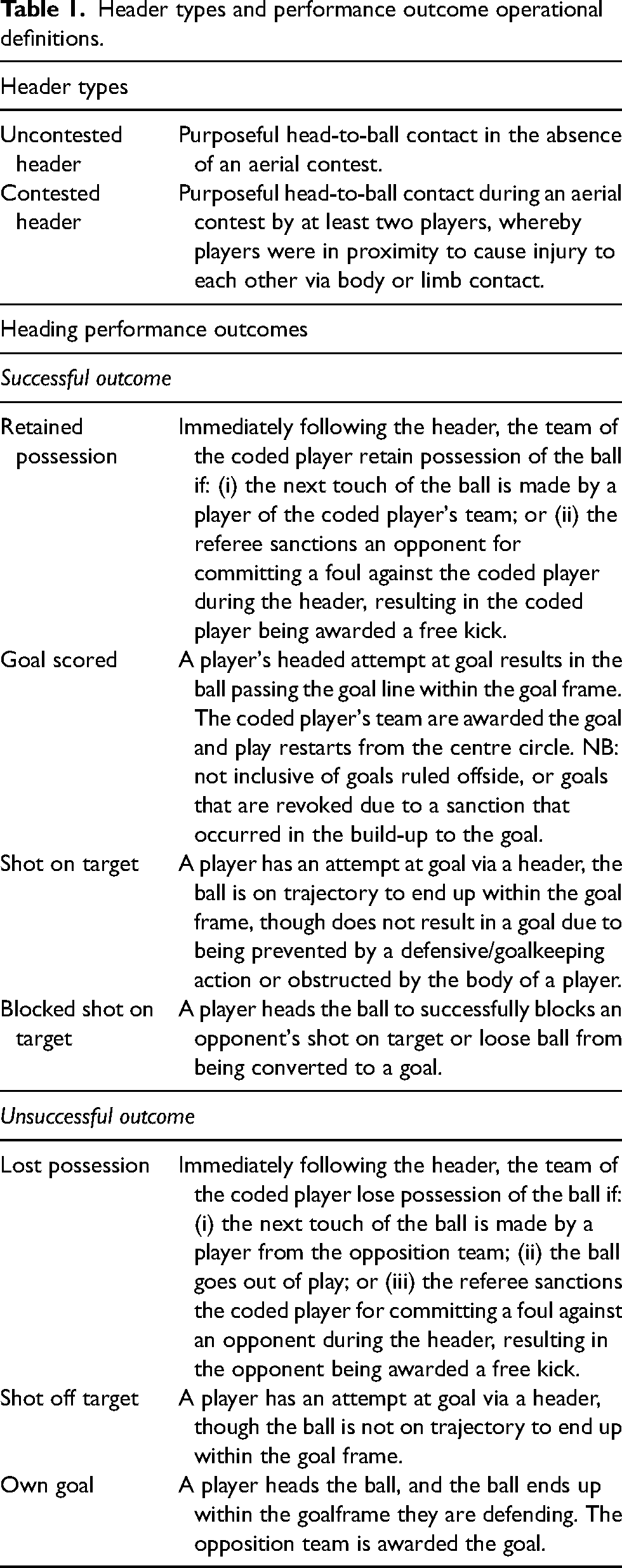
To assess inter-rater reliability of the performance outcome coding, two analysts (JG and EA) independently coded a sample of six FWWC19 matches (12%), resulting in a Cohen's Kappa = 0.87 (95% CI: −0.49–2.23) (≥0.80 = almost perfect agreement). 15 The primary analyst (JG) then independently coded all 52 matches for heading performance outcomes.
Statistical analysis
Statistical analyses were conducted using STATA version 17 (College Station, Texas), and the results, including descriptive data, are presented thematically within designated subheadings. Statistical significance was set at p < 0.05.
Heading incidence
Heading incidence was considered as a function of the following match characteristics as independent; match type, match period, time block, current result at time of header, goal margin, and FIFA ranking [top 10 teams versus bottom 10 teams based on FIFA ranking prior to the start of the tournament (29/03/2019)]. 16 The heading incidence rate per 1000 match hours (IR) [(number of headers/hour of match exposure) × 1000] was calculated. Specific match exposure (hours) was manually calculated for each independent variable by determining the total time (minutes) spent in each category (i.e., for current result: total time spent leading, trailing, and drawn in the tournament) and multiplying it by the number of players on the pitch (adjusting for suspended players) and dividing by 60. Negative binomial regression models were used to compare incident rates between categories of each match characteristic, with results expressed as Incidence Rate Ratios (IRR) as [IR of category of interest/pooled mean of all other category IRs].
Heading success
Heading success as a binary outcome (successful/unsuccessful) was considered as a function of the following independent variables; (i) heading type (uncontested versus contested); and (ii) heading characteristics (match situation, ball distance travelled, field location [three-and seven-categories], country, FIFA ranking [top 10 teams versus bottom 10 teams], and playing position). Binary logistic regression models were used to contrast the odds of success across categories of each of the independent variables, with results expressed odds ratios (OR) (odds of a successful outcome) referenced against the pooled mean of odds of success for multicategory characteristics (match situation, ball distance travelled, field location [three-and seven-categories], country, and playing position), or against the base category for binary characteristics including heading type (whereby uncontested headers were the base and contested headers were the comparison group), and FIFA ranking (whereby bottom 10 teams were the base and top 10 teams were the comparison group).
Additionally, logistic regression models incorporating an interaction term between heading type and heading characteristic were used to evaluate whether the effect of heading type (uncontested versus contested) varied across categories of each of the heading characteristics (match situation, ball distance travelled, field location, country, FIFA ranking [top 10 teams versus bottom 10 teams], and playing position) separately. Logistic regression models incorporating an interaction term between ball distance and field location were used to evaluate if the effect of ball distance varied across field locations. Goalkeepers were excluded from all position specific statistics due to performing <1% (n = 5) of headers in the FWWC19. 7
Results
Heading incidence
In total, 4959 headers occurred in the FWWC19 matches with 3240 headers during the group stage and 1719 in the knockout stage. When accounting for exposure, knockout matches had a significantly greater heading IR than group stage matches (group stage: IR: 2532, knockout stage: IR: 2742, IRR: 1.04, p = 0.007). Though, when analysed independently significant findings were only observed for uncontested headers, and not for contested headers (Supplementary Appendix 2). When further examining match periods, IRs were significantly greater during extra time than the pooled mean of all match periods for all headers (IR: 3287, IRR: 1.17, p = 0.006) and contested headers exclusively (IR: 1023, IRR: 1.24, p = 0.040) (Supplementary Appendix 2). When accounting for exposure, heading IRs were significantly greater when the score was equal (IRR: 1.06, p = 0.001) and when the team of the player performing the header was leading (IRR: 1.06, p = 0.004) at the time of the header compared to the pooled mean of all current results (Supplementary Appendix 2). Furthermore, when comparing the top 10 ranked teams with the bottom 10 ranked teams competing in the FWWC19, top teams were observed to head the ball significantly more frequently (n = 2764, IR: 2747, IRR: 1.12, p = 0.001) than the bottom ranked teams (n = 1447, IR: 2457).
Heading performance outcomes
In total, 4920 headers were coded for performance outcomes, 32 (<1%) headers were unable to be coded, and 7 (<1%) (2 goals and 5 shots) were excluded due to being ruled offside. Of the 4920 headers coded, 47% (n = 2310) had a successful performance outcome and 53% (n = 2610) had an unsuccessful outcome. Of the headers not pertaining to goal situations, 47% (n = 2205) resulted in retained possession, while 53% (n = 2508) resulted in a turnover. Furthermore, when divided into uncontested (n = 3503) and contested headers (n = 1417), 49% (n = 1703) of uncontested headers and 43% (n = 607) of contested headers were successful in performance outcomes. The odds of a successful outcome for uncontested headers was 1.26 times greater than that of contested headers (p = <0.001).
Headed shots at goal and goals scored via a header
There were a total of 200 headed shots at goal during the FWWC19, 26 (13%) resulted in goals, 73 (36.5%) were shots on target, and 101 (50.5%) were shots off target. All headed shots on goal were performed in the penalty area, with 165 (82.5%) performed in the 18-yard box, and 35 (17.5% performed in the 6-yard box (Supplementary Appendix 3). Heading goal conversion rates (header goals scored as a percentage of header shots taken) throughout the tournament ranged from 0–38% across countries/teams (Figure 1) and 0–33% across positions (Supplementary Appendix 3). Furthermore, when considering heading goal conversion rates based on match situations, 24% (n = 6) of shots from free kicks resulted in goals, with 50% of the shots on target scored (n = 6 shots on target were not converted). Comparably, 11% (n = 13) and 13% (n = 7) of all header shots from free play and corner kicks, respectively resulted in goals. No shots were attempted from throw-ins or goal kicks. Additionally, six shots on goal were successfully blocked by a header, and one own goal was scored with the head.
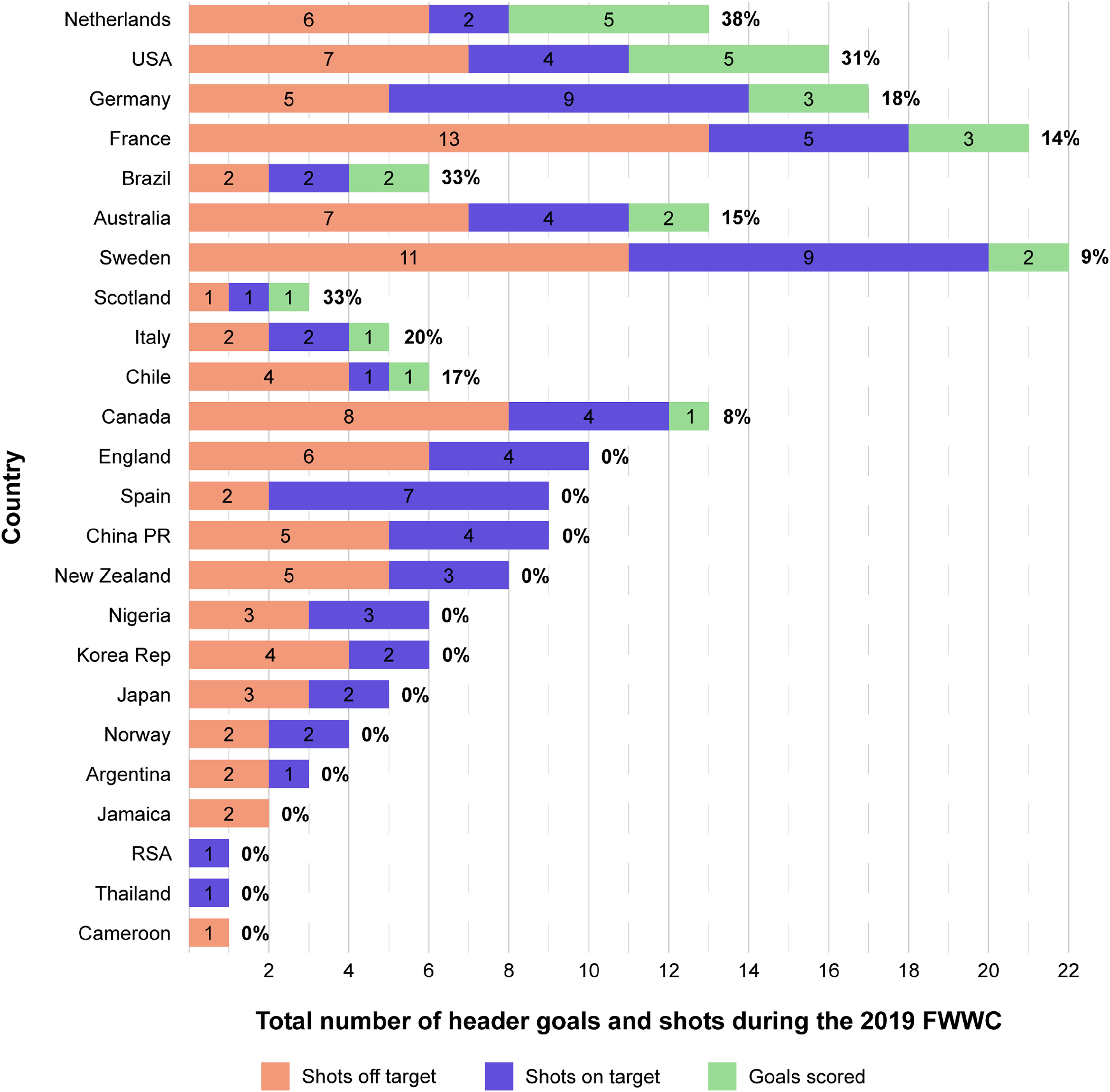
Total shots and goals scored throughout the 2019 FIFA Women's World Cup by country in descending order of goals scored, with corresponding conversion rates (%), which are presented at the end of each bar.
Sweden (n = 22; mean header shots per match: 3.1), France (n = 21; mean header shots per match: 4.2) and Germany (n = 17; mean header shots per match: 3.4) performed the most headed shots on goal during the tournament (Figure 1). The Netherlands (38%), Brazil (33%), Scotland (33%) and the USA (31%) were observed to have the greatest conversion rates when shooting with the head (Figure 1).
Effects of match situation and ball delivery distance on performance outcomes
Match situation significantly influenced the successful outcome of a header (p = <0.001) (Table 2). Furthermore, whether the header was contested or not significantly influenced heading performance outcomes based on match situation, with the odds of uncontested headers having a successful outcome being 2.33 (p = 0.004) and 1.30 (p = 0.001) times greater from corner kicks and free game play respectfully, compared with contested headers. When performed from a goal kick the odds of headers having a successful outcome was lower for uncontested headers when compared with contested headers (OR: 0.62, p = 0.017).
Heading performance outcomes and corresponding odds ratios by heading type and heading characteristics.
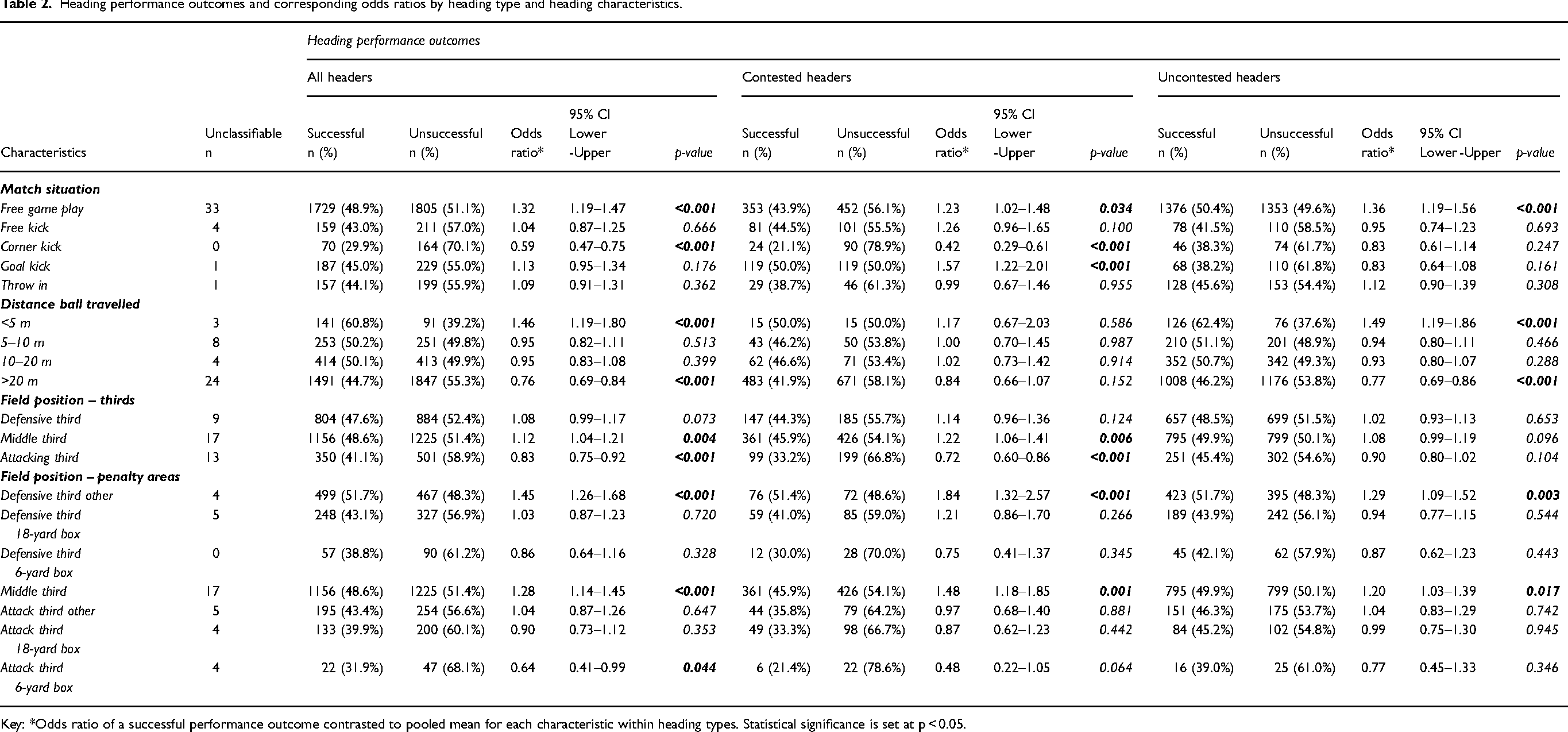
Key: *Odds ratio of a successful performance outcome contrasted to pooled mean for each characteristic within heading types. Statistical significance is set at p < 0.05.
The distance the ball travelled prior to heading significantly influenced the odds of successful heading outcomes (p = <0.001), with short balls (<5 m) observed to have the greatest odds of successful outcomes (OR: 1.46, p = <0.001), and long balls (>20 m) observed to have the lowest odds of successful outcomes for all headers (OR: 0.76, p = <0.001) (Table 2). This pattern was similar for uncontested headers whereas there were no significant differences in the odds for contested headers (Table 2). Notably, there was no evidence that the effect of ball distance was greater for uncontested headers than contested headers (p = 0.067).
Headers occurring in the defensive third outside of the penalty area and middle third had significantly greater odds of successful performance outcomes than the pooled mean (Table 2). When considering both ball distance and field location the significantly lower odds of a successful outcome when heading long balls (>20 m) reduced progressively up the field (defensive > attacking) (defensive third: 46% successful, OR: 0.80, p = 0.011; middle third: 46% successful, OR: 0.75, p = <0.001; attacking third: 38% successful; OR: 0.69, p = 0.005). Furthermore, headers from short balls (<5 m) were only observed to have significantly greater odds of successful outcomes in the defensive third (64% successful, OR: 1.65, p = 0.006).
Effect of country and FIFA ranking (top 10 v bottom 10) on performance outcomes
The country of each team significantly influenced heading performance outcomes (p = <0.001), with the percentage of successful heading outcomes ranging from 27–59% between all countries. Spain had the greatest odds of successful heading performance outcomes (with 59% of headers having successful outcomes, OR: 1.69, p = <0.001), whilst Jamaica had the lowest (27% successful, OR: 0.45, p = <0.001) (Supplementary Appendix 4).
FIFA ranking significantly influenced heading performance outcomes, with the odds of a successful outcome being 20% greater (OR: 1.20, p = 0.005) for top 10 ranked teams compared with bottom 10 ranked teams. The odds of headers having a successful outcome was significantly greater for top ranked teams when performing uncontested headers (OR: 1.32, p = <0.001), but not for contested headers (OR: 1.08, p = 0.522).
Playing position
Players in different positions had significantly (p = <0.001) different proportions of successful headers ranging from 41–56% (Figure 2). The odds of a successful heading performance outcome were greatest for central defensive midfielders (OR: 1.45, p = 0.002), and lowest for central attacking midfielders (OR: 0.79, p = 0.127), though not significantly lower than the mean, followed by strikers (OR: 0.81, p = 0.007) (Figure 2). Furthermore, wingers were observed to have the lowest odds of a successful performance outcome (OR: 0.72, p = 0.041) from contested headers.
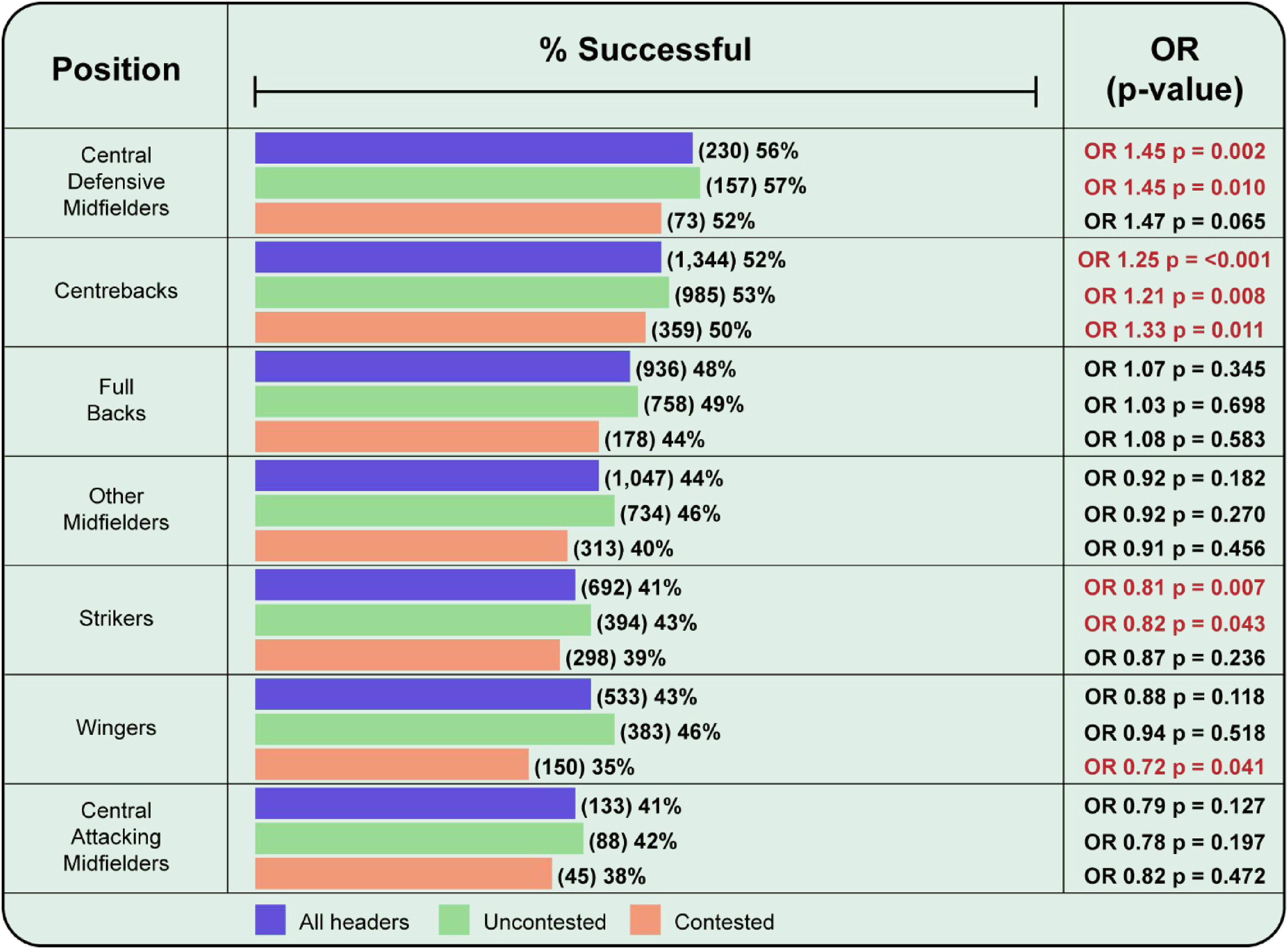
Heading success rates (%) with corresponding odds ratios (OR) (odds of successful outcome) and p-values by playing positions. Total number of headers (n) are presented next to each bar.
Discussion
This novel study detailed the performance outcomes of headers executed during the FWWC19. The results detail the game situations where headers are most and least likely to lead to a successful performance outcome. We observed five key findings: (1) heading resulted in a turnover of possession 53% of the time, with uncontested headers more likely to result in a successful outcome than contested headers; (2) heading was an effective goal scoring mechanism, being most effective from free kick deliveries; (3) headers from long balls (>20 m) had the lowest odds of successful performance outcomes; (4) uncontested heading outcomes from goal kicks were mostly unsuccessful (62%); and (5) heading performance outcomes varied significantly between positions. These key findings will be explored below including how coaching and playing styles could be adapted to increase the likelihood of successful outcomes in the context of heading.
Our overall findings in professional women, where heading was observed to result in a turnover of possession 53% of the time, are consistent with those reported in professional men (54–55%).8,17 Although we did not collect specific data related to accuracy, passing accuracy with the foot has been reported to be as high as 72% in professional women and 79% in professional men. 18 A positive relationship likely exists between retained possession and the accuracy of passes, given that an earlier study of technical performance at the FWWC19, reported that winning teams had significantly higher rates of possession (56.81% ± 10.07) and more accurate passes (79.98% ± 5.08) than losing teams, 19 consistent with findings in men. 20 Therefore, if a team's playing style is intent on retaining possession, then heading may not always present the best distribution option.
Despite the unfavourable possession retention rates from headers observed during the FWWC19, headers accounted for 18% of all goals scored during the tournament, comparable with that of the men's 2020 UEFA European Football Championship (19%), but less than that of the 2022 UEFA European Women's Football Championship (28%). 4 Our results reflect a mean heading goal conversion rate of 13% at the FWWC19, consistent with findings from professional men (ranging from 10–28%).8,17,21–23 Notably, the two finalists in the FWWC19 were amongst the most efficient when shooting with the head (Netherlands [38%] and USA [31%]). By comparison, conversion rates from shots with the feet were 11% during the FWWC19, 24 with similar findings reported in professional men (8–15%).21–23 While the overall conversion rates of headers in our study were 2% higher than the conversion rate from kicked ball deliveries reported in an earlier study, 24 there was marked variability in the frequency in which teams opted to shoot with the head (range: 1–22), potentially influenced by playing style and physical attributes of the team. If prioritising headers in training, coaches of aerially proficient teams may benefit from training heading in goal situations, as these are likely to enhance goal success.
The results highlight that the most likely match situation to lead to a goal scored via the head were free kick deliveries (conversion rate: 24%), whereby half of the shots on target resulted in a goal, followed by corner kicks (conversion rate: 13%). Similarly, Wang and Qin (2020) 24 found that 40% and 50% of all goals resulting from free kicks and corner kicks during the FWWC19 respectively, were scored with the head. Whilst there are variances in the coding of match situations between studies, these findings collectively indicate that heading balls from set play deliveries in goal scoring areas can be an effective goal scoring strategy. However, future research would benefit from using a standardised coding framework to enable better comparability between studies. 5
The results detail the type of heading least likely to result in a successful outcome (i.e., retained possession, goal scored, shot on target, or blocked shot on target). Heading long balls (>20 m) had significantly lower odds of heading success than any other ball delivery distance. This effect was apparent in all thirds of the pitch, although the odds of a successful heading outcome from long balls was lowest in the attacking third. These results are similar to a study comparing technical performance between women's and men's Swedish national teams during FIFA World Cups (women: 2003, 2007; men: 2002, 2006), with long passes (defined as >15 m) resulting in more negative outcomes compared with short passes (<15 m) for both women and men. 25 Collectively, these results suggest that long balls may be less accurate and/or more difficult to control than short balls. Although more recent data from UEFA European Football Championship tournaments (women: 2017; men: 2016) indicate that women are less successful than men from long passes (mean per player per match long passes lost: women = 1.3 ± 1.6; men = 0.5 ± 0.8), 26 research indicates that professional women perform more long passes than professional men 27 ([mean per player per match long passes performed: women = 2.2 ± 2.4; men = 1.1 ± 1.5], 26 [long passes as % of all passes: women = 39%; men = 27%] 25 ). Casal et al., (2021) 28 concluded that the use of low percentage passing has been dramatically reduced in the professional men's game, which has evolved into a more possession-based system. Consistently, the findings of our study indicate that a similar strategy could be incorporated into the women's game with heading of long balls being reserved for situations which have greater odds of a successful outcome (or no other viable option). For instance, heading long balls from set plays were more likely to result in goal scoring opportunities during the FWWC19.
During the FWWC19, uncontested headers had significantly lower odds of a successful outcome than contested headers from goal kick deliveries (OR: 0.62, p = 0.017). While the specific reason for this is not possible to extract from our data, speculatively if this relates to heading skill, then given the greater head impact magnitude associated with headers from long balls, 29 one option to improve success could include coaching players to control the ball with their chest or feet when delivered from goal kicks when the players are not under pressure. Though future research is required to support this suggestion. Alternatively, data from the Premier League (from January 2023 onwards) found that the ball was 6 times more likely to go out of play and result in a throw-in within 5 ball contact events following long goal kicks when compared with short goal kicks. 30 Their data also showed that the mean number of headers per match have reduced from approximately 76 in 2017/2018 to 66 in 2023/2024, with less headers observed in the defensive half outside of the box as more teams look to play the ball along the ground, possibly as a strategy to retain possession when progressing the ball. 30 Given the lower odds of retaining possession in our data at the FWWC19, teams may wish to consider a similar strategy to play out from the back, using short goal kicks, to potentially enhance possession retention rates.
During the FWWC19, players in central defensive positions (central defensive midfielders [OR: 1.45, p = 0.002], centrebacks [OR: 1.25, p = <0.001]) had significantly greater odds of heading success, whilst strikers had the lowest (OR: 0.81, p = 0.007). When examining contested headers exclusively, successful heading outcomes were lower across all positions, with wingers observed to have the lowest odds of success (OR: 0.72, p = 0.041). Whilst no earlier studies reporting performance outcomes of uncontested heading were identified, a study which compared professional men's leagues (Premier League and La Liga) reported data on the percentage of heading duels won. 31 When comparing their data to ours, professional men who played as wide midfielders (Premier League: 49.05%; La Liga: 46.46%) and defenders (Premier League: [central defender: 61.89%; fullback: 59.41%]; La Liga: [central defender: 59.44%; fullback: 61.48%) 31 won more heading duels than women in our study. Similar percentages of heading duels won were observed in attacking positions between our study of women and those of men. 31 It has been suggested that variances in heading duel success rates between positions is likely due to differences in demands and training for each position and competition. 31 The findings of our study suggest that coaches of professional women's teams may retain more possession from adapting their playing style to minimise heading by strikers when they are not in goal scoring areas as well as reducing contested situations on the wing. Wingers may also benefit from additional coaching in contested aerial skills. Data from the Premier League suggests that utilising direct ground passes, particularly to the wing, may have resulted in higher possession rates and a reduction in heading incidence, 30 and thus reduced the incidence of contested headers for wingers. Consequently, teams may yield greater performance outcomes and potentially improve player welfare and availability by reducing contested heading situations, which is the most common cause of concussion in women's football. 32
Women's football is becoming increasingly popular, and more professional. However, there is growing concerns of the effects of (repeated) heading on long-term brain health. 33 This has led to increasing conversations around potential pragmatic changes which can be implemented to better protect player welfare. 34 While only a few countries have adopted heading guidelines, the Football Associations in England 35 and Scotland 36 have limited players to a maximum number of headers per week, with further restriction on high-velocity headers 37 such as those from long balls. Though a proactive approach is sensible, universal heading restrictions do not account for tactical, technical proficiency or physiological differences between sexes. Evidence of a relationship between heading technique and peak head kinematics is emerging, though more research into this domain is needed.38,39 Although under-powered, a study in girl's found that standing headers which were performed with good technique had significantly reduced peak angular acceleration, 38 with similar results in a pilot study comparing different levels of football experience in men. 39 It is argued that technical factors such as back extension and shoulder/hip alignment likely to contribute to these findings. 38 While research exploring the relationship between heading proficiency and injury risk is limited, the small number of existing studies suggest that further scientific enquiry is warranted.40,41 Given that heading is a complex skill, the development of a standardised heading coaching framework, designed to guide coaches at all levels of the game to safely improve the quality of heading technique during training could be a useful addition to the literature. This need is supported by data from our study. For instance, wingers, the position with the lowest odds of contested heading success, sustained 23% of all medically assess head impacts resulting from contested headers, despite performing the least contested headers. 7 This increased potential head injury risk in wingers in our earlier published data 7 may indicate a lack of proficiency in contested heading situations, possibly leading to reduced or ineffective use of protective body positioning. Further, with our data showing that heading commonly results in unfavourable outcomes, particularly from long balls, short- and long-term head injury risk could be reduced by teams and players adapting their game style to minimise heading situations altogether, which may also lead to greater success. Encouraging teams to monitor heading outcomes (and not just heading incidence) may help coaches identify and adjust technical performance characteristics to improve not only success in terms of retained possession, goals scored, shots on target, or blocked shots on target but also potentially improve player welfare and availability.
Limitations of our study are that it solely examined the heading performance of professional women footballers competing at the FWWC19, and thus findings are not generalisable to other levels of play or other player demographics such as men or youth players. Furthermore, we acknowledge that the number of comparisons in this study may have increased the risk of Type I errors. Another limitation of this study was that it only coded finishing and possession-based performance outcomes, thereby missing the value of specific actions, such as passes and clearances, and the intent of these actions. Additionally, by analysing all heading performance outcomes dichotomously as successful or unsuccessful without context, precise details about the header may have been missed. For example, if a defender performed a header to clear the ball from an attacking threat, it would have been coded as unsuccessful if possession was lost, despite being an effective defensive action. Future research should aim to investigate heading performance outcomes across ages, playing levels and sexes as well as the influence that coaching style has on heading incidence. Furthermore, a standardised coding and reporting protocol which includes comprehensive performance outcomes (accounting for heading action/intent), including uncontested and contested header comparisons, should be utilised to enable comparisons across studies. Lastly, it would be pertinent for future research to focus on the relationship between heading proficiency and brain health outcomes which could assist in informing the development of a standardised heading coaching framework, to better equip coaches to teach safe heading technique and guide them in monitoring their individual teams’ heading outcomes to better protect long-term player welfare.
Conclusion
Overall, during the FWWC19 less than half of all headers resulted in a successful outcome (such as retained possession, goals scored, shots on target, or blocked shots on target) particularly from long ball deliveries. Uncontested headers had greater odds of successful outcomes than contested headers. Despite this, heading was as effective as using the feet in goal scoring situations during the tournament, and more so when in set play situations. Findings of our study could be used to guide coaches of women when assessing their teams’ use of headers to better facilitate successful performance outcomes as well as assisting policy makers in football when devising strategies to reduce players’ long-term heading burden.
Supplemental Material
sj-docx-1-spo-10.1177_17479541241298757 - Supplemental material for Heading performance outcomes at the FIFA Women's World Cup France 2019™
Supplemental material, sj-docx-1-spo-10.1177_17479541241298757 for Heading performance outcomes at the FIFA Women's World Cup France 2019™ by Julia Georgieva, Kerry Peek, Anne Smith, Andrew P Lavender, Andreas Serner, Eloise J Arnold, Melinda Fitzgerald, Fadi Ma’ayah, and Amity Campbell in International Journal of Sports Science & Coaching
Footnotes
Acknowledgements
The authors would like to acknowledge Clem Bailey for his support with data visualisation.
Author contributions
AC: Conceptualisation, methodology, writing- review and editing, supervision. AL: Conceptualisation, Writing – Review & Editing, Project administration, Funding acquisition. AS: Data curation, formal analysis, visualisation, Writing – Review & Editing. AS: Resources, Writing – Review & Editing. EA: Methodology, validation, investigation, data curation. FM: Conceptualization, methodology, Writing – Review & Editing. JG: Conceptualization, methodology, validation, investigation, data curation, formal analysis, visualisation, writing – Original draft. KP: Conceptualisation, methodology, writing- review and editing, supervision. MF: Conceptualisation, methodology, writing- review and editing, supervision.
Data availability statement
The data that support the findings of this study are available from the corresponding author, [JG], upon reasonable request.
Declaration of conflicting interests
The authors declared the following potential conflicts of interest with respect to the research, authorship, and/or publication of this article: JG and KP have been contracted by FIFA as injury spotters for FIFA organised tournaments. KP is Lead of FIFA’s Heading Expert Group. AS declare fulltime employment by FIFA.
Funding
The authors disclosed receipt of the following financial support for the research, authorship, and/or publication of this article: JG is supported by an Australian Government Research Training Program (RTP) Scholarship.

Supplemental material
Supplemental material for this article is available online.
References
Supplementary Material
Please find the following supplemental material available below.
For Open Access articles published under a Creative Commons License, all supplemental material carries the same license as the article it is associated with.
For non-Open Access articles published, all supplemental material carries a non-exclusive license, and permission requests for re-use of supplemental material or any part of supplemental material shall be sent directly to the copyright owner as specified in the copyright notice associated with the article.
