




Abstract
Punching is a crucial element of mixed martial arts (MMA), often leading to knockouts (KO) or technical knockouts (TKOs). This study explored the relative foot positions of athletes, their stances, punch type executed, and the reliability of these variables to provide insights into effective punch application in MMA. We retrospectively examined MMA contests from the Ultimate Fighting Championship that ended via KO/TKO (2020 to 2022). Data were sourced from publicly available videos on the internet. Three analysts, each with at least three years of experience in striking combat sports and competitive MMA, conducted observations independently. Only critical strikes where all analysts agreed on the time and type of punch were included. Inter-rater reliability was assessed using the Cohen's kappa coefficient statistic (K). The k-means cluster analyses were used to identify the most frequently occurring front foot positions (FFP) and punch types (PT). All variables, except for the back foot position, demonstrated substantial or greater reliability (K = 0.64–0.92). Out of 271 contests, the most common fight-ending punches were the rear straight (n = 77, 29.2%), front hook (n = 71, 26.9%), and rear hook (n = 63, 23.9%). According to the cluster analysis, overall, the most common PT for athletes of the same stance was an outside FFP with a rear straight punch (n = 35, 14.4%). For competitors in opposite stances, the most common FFP was outside, with a rear hook punch (n = 16, 22.8%). Identifying common PTs, FFPs, and stances offers valuable insights for technical coaching and talent identification, aiding in refining training methods and improving MMA performance.
Introduction
Mixed Martial Arts (MMA) is a combat sport where two athletes engage in hand-to-hand combat under a unified ruleset. 1 As a hybrid sport, MMA incorporates striking techniques (such as punches, elbows, kicks, and knees), and grappling techniques (including takedowns, joint locks, and chokes). Professional MMA bouts consist of three or five, five-minute rounds, while amateur bouts feature three-minute rounds. 2 Fights can be resolved at the end of the final scheduled round by a judge's decision or earlier by submission, or knockout/technical knockout (KO/TKO). 3 Approximately 46.2% of fights are concluded via KO/TKOs. 4 Winning via KO/TKO is related to having a more successful career overall compared with winning by judge's decision, highlighting the importance of KO/TKOs in combat sports. 5 Despite the technical complexity of MMA, punching remains a fundamental component, often leading to KO/TKOs. A punch, defined as a strike delivered with the knuckles of a closed fist, commonly appears in one of three forms. Straight punches are delivered along the sagittal plane, hook punches along the transverse axis in a sideward sweeping motion, and uppercut punches are delivered along the sagittal plane and longitudinal axis in an upward direction. 6 Given the critical role of punches in achieving KO/TKOs, it is important to understand the specific contexts in which they are successfully applied.
The biomechanics of punches have been extensively explored, with research examining how different techniques can optimise delivery.7,8 For example, there is research examining punch speed, 8 the different phases/kinematics of various punches,9,10 differences between different fight styles, 11 and stance stability during punching, 12 among other areas. However, most of this research investigating punching has been conducted in laboratory settings, where participants strike bags or similar equipment, which may not accurately represent live combat conditions. 13 It is well established that foot position is important for generating punching power, 14 with the legs contributing more substantially to punching power in elite athletes compared to novices.14,15 Foot position is highly impactful on the delivery of punches with distribution of weight and positioning relative to the target influencing the biomechanics. 16 However, despite this, there is a paucity of data on foot position in live combat and the landing of successful punches. Given foot position may potentially impact the effectiveness of a punch in combat sports competition, addressing this research gap may provide new technical insights for practitioners and researchers alike.
The existing research on foot position in competitive matches predominantly focuses on fighter stances, indicating that orthodox fighters (left foot forward) may be more vulnerable compared to southpaw fighters (right foot forward). 17 However, this finding is far from conclusive across the body of research,17,18 possibly due to methodological limitations in foot position analysis. Given that different stances can impact the likelihood of winning, it is important to investigate if foot positioning during critical fight-winning moments are also influential. Though surprising, there is a paucity of research in this area. Therefore, the purpose of this study was to examine the types of punches that result in KO/TKOs in MMA and the associated foot position of athletes during fight-finishing sequences. Such positions will be examined relative to the foot position of both athletes (i.e., contest winner and loser) and the type of punch. Additionally, we examined the inter-rater reliability of punch types, fighter stances, foot positions, and critical strike time. The findings of this study may help improve technical coaching within striking combat sports and talent identification strategies.
Methods
Procedures
MMA athletes competing in the Ultimate Fighting Championship (UFC) who won or lost via KO/TKO between the years of 2020–2022 were included in the study. The data was publicly available as videos on the UFC's streaming service (www.ufcfightpass.com), YouTube channel (www.youtube.com/ufc), and the Tapology website (www.Tapology.com). Anthropometric data, competitive history, and several key performance markers during competition were collected. These markers include the time of critical punches, foot position, fighter stance, and type of punch, the associated definitions are provided in Table 1. The project received ethical approval from Edith Cowan University's human research ethics committee (2023-04124-BARLEY).
Operational definitions for performance analysis.
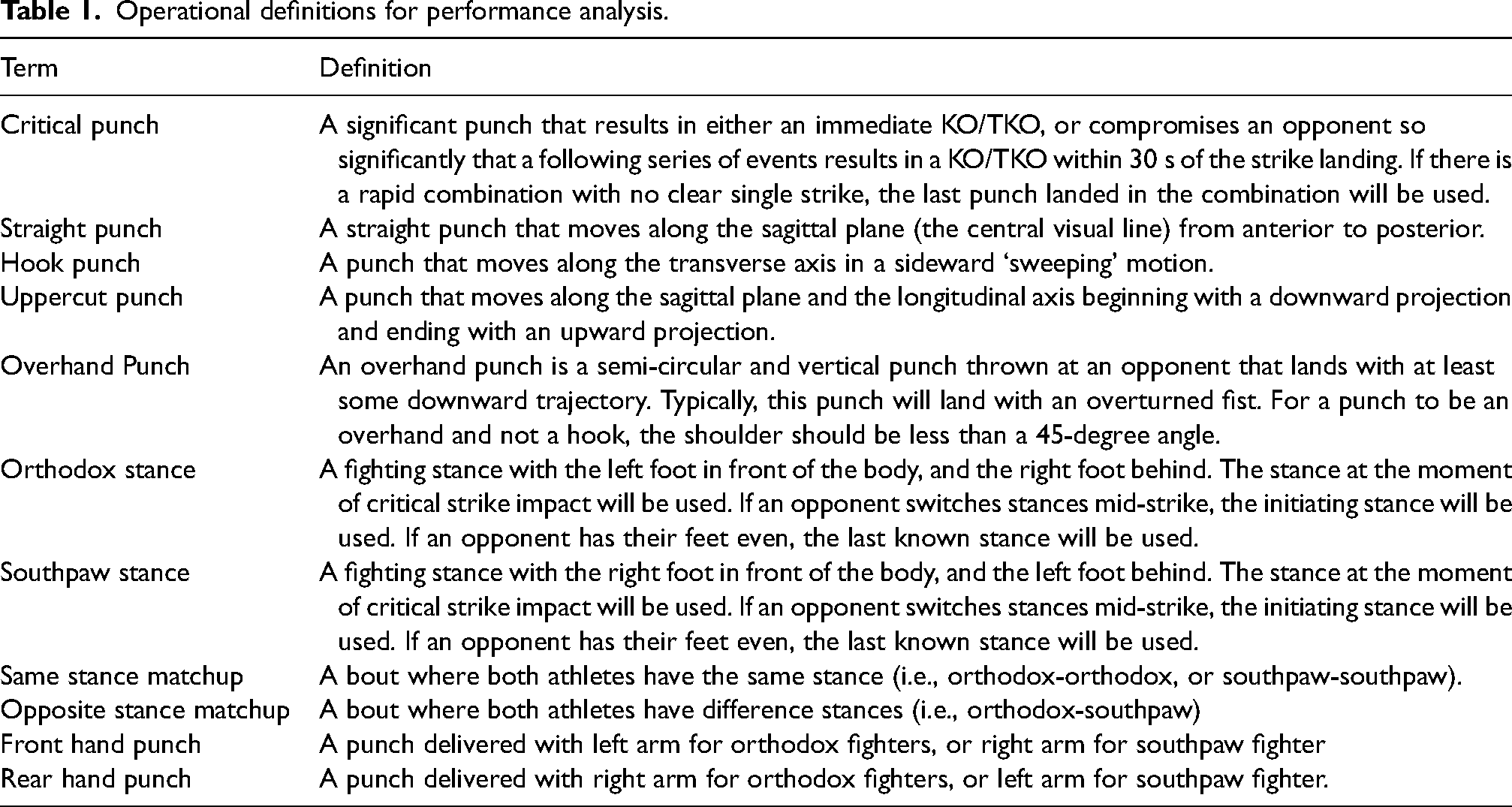
The study focused on the frequency of critical punches, which were defined as “a significant punch that results in either an immediate KO/TKO or impairs an opponent so severely that a KO/TKO occurs within 30 s of the initial strike landing”. Foot positions were classified as either outside (winner's opposing foot [anatomically contralateral to their opponent] placed clearly outside the stance of the loser), inline (any part of the winner's foot is placed parallel to the opposing foot of the loser) or inside (winner's opposing foot is clearly placed inside the stance of the loser). When determining foot positions, they were assessed relative to where the fighter's stance was directed. If one of the athletes was kicking, then the foot position for that leg was categorised as “kicking” as opposed to outside, in line, or inside. Critical strikes where analysts could not confidently determine the foot position were excluded from the analysis. Fighter stance was also determined at the point of critical punch as either orthodox or southpaw based on the operational definitions provided in Table 1. Additionally, the punch type was determined using the operational definitions in Table 1, with our definitions being adapted from previous research. 6 Performance analysis on critical punches was completed by three analysts with at least 3 years experience in a striking combat sport and competitive experience in MMA. Each analyst was able to view the footage as many times as needed to record the information, as well as making use of 0.75, 0.5, and 0.25 video playback speeds. The first two analysts conducted concurrent and collaborative analyses of all critical strikes. Throughout this process both analysts examined all punches independently, then met 14 days later to discuss all inconsistencies and come to a consensus on each one. Additionally, they created a “gold-standard” datasheet and refined the operational definitions before a third analyst was then utilised for inter-rater reliability. The third analyst was provided with the final operational definitions (Table 1), and randomly assigned ∼30% of the sample to be independently analysed to assess inter-rater reliability.
Collected data was categorised as either critical strike information or fighter information and compiled in an Excel spreadsheet (Microsoft Office 365, Microsoft, Washington, USA). Critical strike information, in addition to the above-described variables, also included the round number in which the strike took place. Variables that were not collected during the performance analysis of the fights, were obtained through the Tapology website.
Reliability and data analysis
To assess inter-rater reliability, an additional analyst, with comparable experience to the two primary analysts, independently reviewed a sample of the collected data, focusing on variables such as foot position, fighter stance, critical strike, time of the critical strike, and round the contest concluded. The Cohen's kappa coefficient statistic was used to assess inter-rater reliability, with a threshold of 0.6 or higher (substantial reliability) considered acceptable for consistent determination replication.19,20 Variables failing to meet this criterion were excluded from further analysis.
Data analysis included assessing the normality and homogeneity of variances for fighter age and round finish using the Shapiro-Wilk and Levene's tests, respectively. The frequency and proportions of the most common critical strikes, and critical strikes by fighter stances and front foot positions (FFP) were calculated. K-means clustering was used to identify prevalent combinations of critical punch types (hook, straight, and uppercut), FFP (inside, inline, outside), and fighter stances (overall, same stance, and opposite stance). This approach operates by iteratively positioning k centroids until equilibrium is reached, minimising the within-cluster sum of squares. The elbow method, which involves visual inspection of the sum of squared errors as a function of k, was used to determine the optimal k-value of 8 (Figure 3A: irrespective of stance matchup), 7 (Figure 3B: same stance matchup), and 9 (Figure 3C: opposite stance matchup). Statistical significance was set a-priori for all tests at p < 0.05. All statistical analyses and visualisations were conducted using the R Statistical language (version 4.2.2; R Core Team, 2022) programme and Python (ww.python.org).
Results
We analysed a dataset comprising 271 UFC contests from 2020 to 2022 that concluded with a KO or TKO resulting from punches. Seven observations were excluded due to missing data on stance, foot position, and punch type, leaving a total of 264 fights for analysis. Table 1 shows the definitions associated with the terms used in this study. Figure 1 presents the frequency and proportion of the different punch types. Table 2 presents the age, what round the contest finished, foot position, and punch type, by fighter stance. Orthodox versus orthodox matchups constituted 56.4% of the contests analysed.
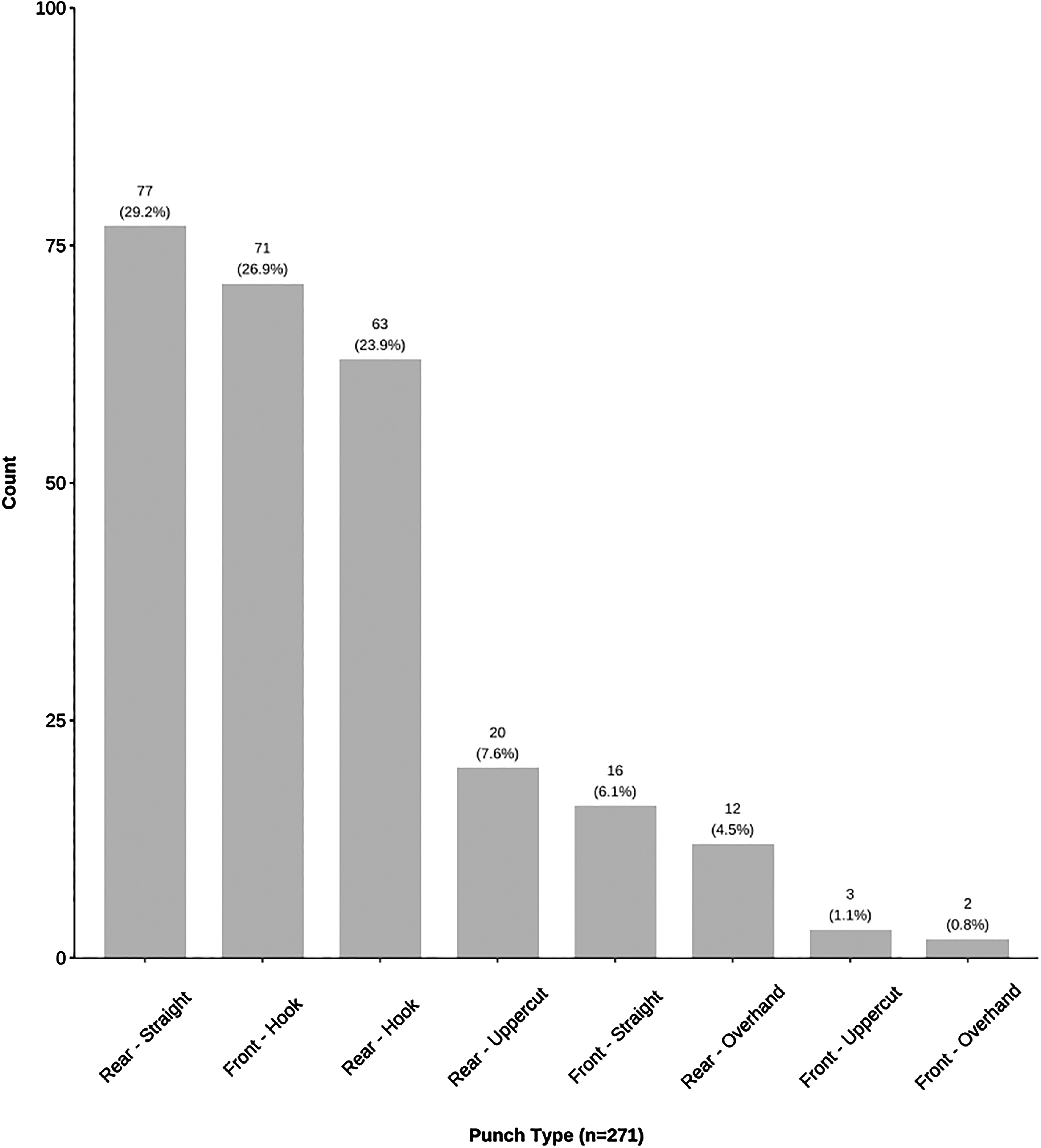
Frequency and proportion of rear and front critical strikes.
Overview of age, round the contest concluded, foot position, and punch type by fighter stance. Data are presented as median (interquartile range) and frequency and proportion (%).
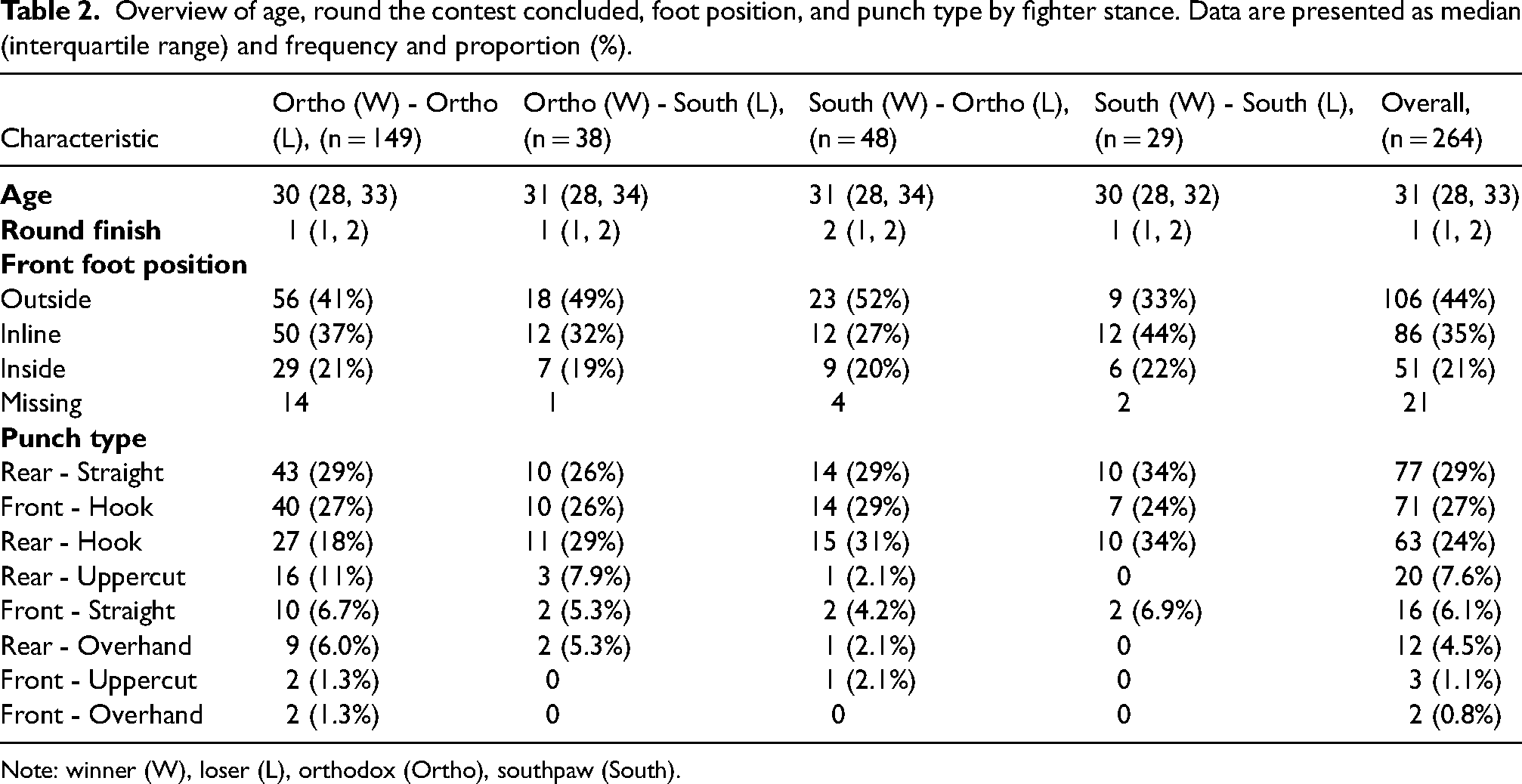
Note: winner (W), loser (L), orthodox (Ortho), southpaw (South).
Reliability
All variables displayed substantial to almost perfect reliability, except for the back foot position (fair). All Cohens kappa scores and classifications are shown in Table 3.
Reliability statistic and classifications.
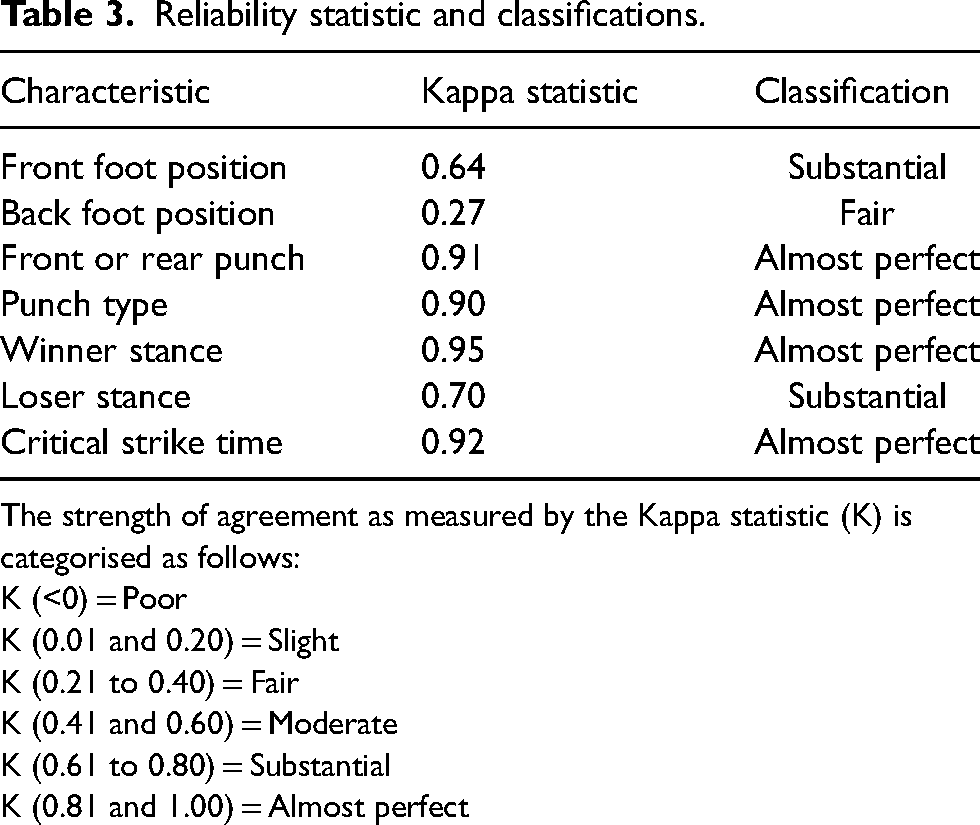
The strength of agreement as measured by the Kappa statistic (K) is categorised as follows:
K (<0) = Poor
K (0.01 and 0.20) = Slight
K (0.21 to 0.40) = Fair
K (0.41 and 0.60) = Moderate
K (0.61 to 0.80) = Substantial
K (0.81 and 1.00) = Almost perfect
Punch type
Out of 264 contests, the most common punches (Figure 1) were the rear straight (n = 77, 29.2%), front hook (n = 71, 26.9%), and rear hook (n = 63, 23.9%).
Stance and foot position
Among the data analysed, 21 observations were missing for FFP, leaving 243 observations for description of fighter stance, FFP, and punch type (Figure 2). Across various stance matchups, outside foot position was predominant for orthodox vs. orthodox (56/135, 41%), as well as for orthodox vs. southpaw (18/37, 49%) and southpaw vs. orthodox (23/44, 52%). Conversely, for southpaw vs. southpaw matchups, inline FFP was most prevalent (12/27, 44%). Notably, the inside foot position exhibited the lowest proportion across all stance matchups.
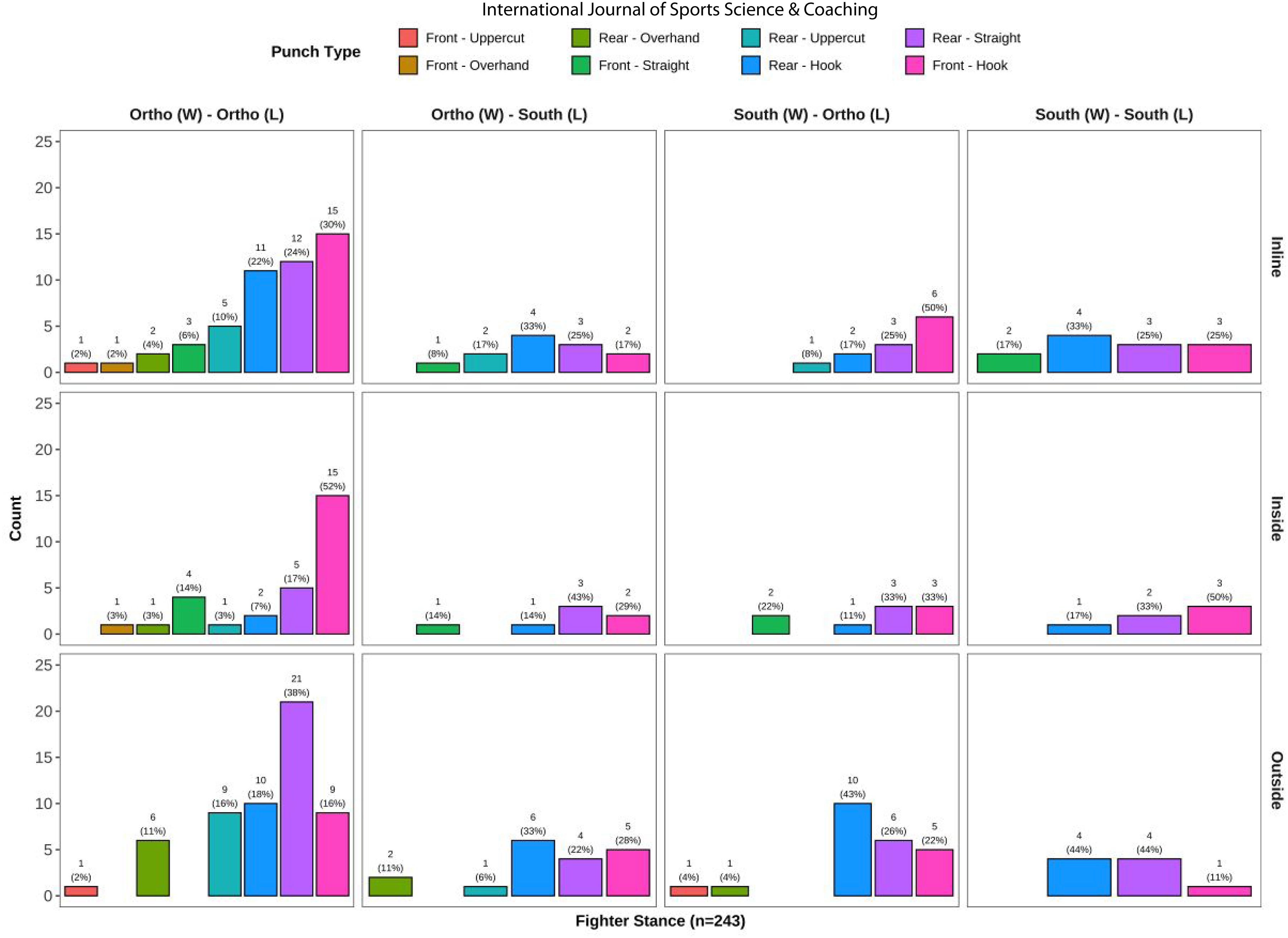
Frequency and proportion of critical strike by fighter stance and front foot position. Note: winner (W), loser (L), orthodox (Ortho), southpaw (South).
Cluster analysis
Figure 3 (A-C) visually represents the clusters with the highest proportions of specific combinations for FFP, punch type, and stance. To determine if there were specific foot position and punch type combinations that were more prevalent relative to stance matchup, the k-means cluster analyses were separated into three categories: “irrespective of stance matchup”, “same stance matchup”, and “opposite stance matchup”. The analyses identified 8 clusters (Figure 3A - irrespective of stance matchup), 7 clusters (Figure 3B - same stance), and 9 clusters (Figure 3C - opposite stance), capturing 189, 115, and 70 contests, respectively.In Figure 3B, the rear straight was the most prevalent critical strike for same stance matchups. For opposite stance matchups, Figure 3C shows that the rear hook was the most common critical strike leading to a KO/TKO.
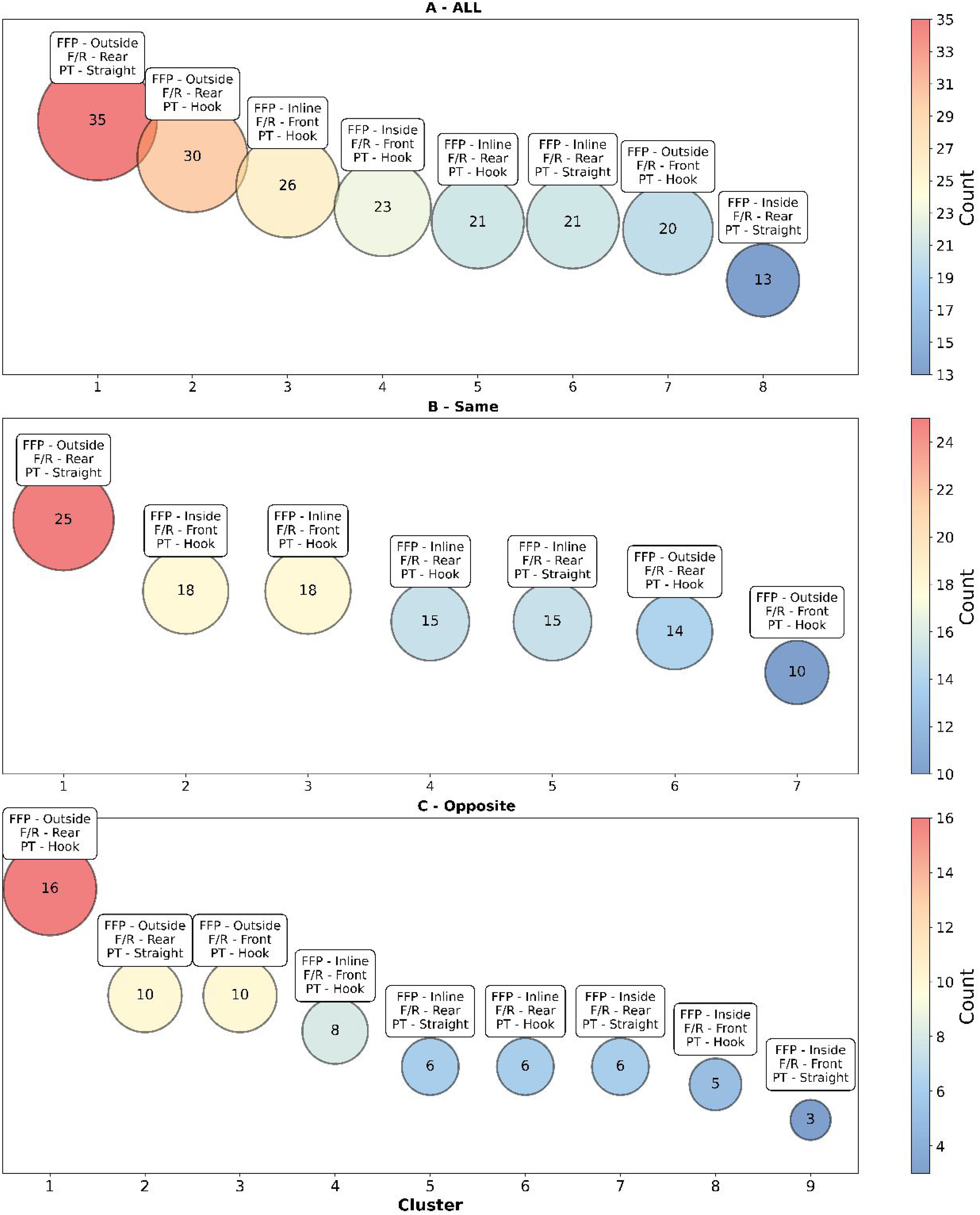
Cluster analyses for the (A) full dataset, (B) fighters in opposite stances and (C) the same stance. Note: front foot position (FFP), front/rear (F/R), and punch type (PT).
Discussion
This study sought to explore the characteristics of fight ending punches within elite level MMA. While some research has focused on performance analysis in MMA, this is the first study to examine the technical and tactical specifics of landing critical punches in the sport. The main observations of this study included (a) reliability of all the performance analysis measures except for back foot position was found to be substantial or greater, (b) cluster analyses revealed that rear straight and both hook punches were the most prevalent for leading to a KO/TKO, though within same stance match ups the rear straight was the leading critical strike, and within opposite stance matchups it was the rear hook, and (c) the rear hook and straight punches were most prevalent from the outside FFP, and the front hook being most prevalent from the inline foot position. The current study outlines that rear straights and all hook types were particularly effective at leading to KO/TKOs, and that the FFP has an impact on the ability to land critical strikes. These results can inform both athletes and coaches when developing both offensive and defensive strategies.
This study coined the term “critical strike” and the associated operational definition. Such a term is useful as it allows for the identification of the most impactful strike within a contest as opposed to the final strike, which may occur once the bout is already effectively over. All variables that were used to identify a critical strike (critical strike time, front or rear, and punch type) achieved an almost perfect kappa statistic between independent analysers (Table 3), indicating the strength and usability of such a definition. Such reliability outlines that despite the subjective nature of identifying which specific punch started a fight-ending sequence, it can be reliably identified by performance analysts with experience in the sport. Additionally, the present study was also the first to examine specific foot positions during MMA fights, focusing on both front and rear foot positions between athletes. Interestingly, we observed the FFP to have substantial reliability while the rear foot position demonstrated only fair reliability (Table 3). The difference between these two variables most likely comes down to the level of occlusion, while the UFC broadcast has access to multiple cameras, only one camera angle which presents the best view of the combative actions is on the screen at any one time. Previous research has noted that single-camera views increased the risk of occlusion blocking certain views. 21 Our findings may suggest that UFC broadcasts may provide clearer views of athletes’ front feet compared to their rear ones. Regardless, it is clear that the legs and foot position significantly contribute to the ability to land a punch,14,15 thus the combination of the critical strike and FFP methodology presented will be useful in the field and future research for combat sports performance analysis.
The present study observed some clear patterns around what punches were most prevalent in delivering critical strikes within the sport of MMA. Rear straights were the most frequently occurring critical strike, representing 29.2% of all critical strikes, closely followed by front hook (26.9%) and rear hook (23.9%) (Figure 1). The frequency largely dropped off after the rear hook, with the rear uppercut being next representing only 7.6% of critical strikes. The reasoning for these patterns is unclear, previous research has shown the force generated to be similar between rear hooks, straights, and uppercuts, though the velocity of hooks was found to be greater. 16 It is plausible the dominance of hooks and rear straights is more about the placement of the punches, for example, hooks will create twisting and rotation of the head which likely increases the concussive damage and thus likelihood of concussion relative to straight punches. 22 The lower frequency of the front straight relative to the rear straight likely comes down to the rear straight generating considerably greater force, thus making the front straight less likely to significantly impair an opponent with any individual landed punch. 23 The lower prevalence of the uppercut is less clear, though could plausibly be due to the uppercut being more situational in nature as it requires the attacker to be closer to their opponent, as well as dropping their hand and exposing themselves to a potential counterattack. The findings of this study outline that when preparing for MMA bouts, athletes should emphasise practicing setting up rear straight and hook punches when trying to initiate a KO/TKO, and defending such punches to protect themselves and maximise their performance and safety during competition.
The consideration of the FFP provided important context on critical strikes in MMA. Cluster analysis highlighted that rear straights were predominantly identified with the outside and inline foot positions, suggesting that the inside foot position may hinder the effective delivery of this punch. It is possible that from the inside foot position the rear hand is less likely to have a clear path to the opponent, and thus is less effective. Similarly, rear hooks showed a preference for the outside and inline foot positions within identified clusters. In contrast, the front hook was far more versatile across all three foot positions (Figure 3). Overall it does appear that foot position will influence the ability to land certain punches, it is unclear if that is due to technical issues with defending different punches from different angles or the greater leg drive that can be generated from different positions, as noted in prior research.9,10 It is noteworthy that our analysis did not extend to punches influencing wins by judge's decision, which appears to be largely related to the volume of strikes landed.24,25 Additionally, the present study was also unable to account for the types of punches that may be involved in the set-up of a critical strike, as strikes are often thrown in combinations. 26 Despite these limitations, the results of this study allow for the identification of potential advantageous FFPs and what punches should be focused on from both an offensive and defensive perspective. This information can inform training strategies aimed at optimising punch effectiveness in MMA competitions.
The most common matchup that ended via critical strike was orthodox vs orthodox, aligning with the predominance of the orthodox stance in boxing and MMA matchups (∼75–82%).17,18 Within the present study, 115 (44%) of the critical strike incidences involved a southpaw athlete, indicating that this stance is highly prevalent at the highest level of MMA. Interestingly, the cluster analyses indicated similar patterns across stance matchups, suggesting that punch selection and foot position may outweigh the importance of stance itself (Figures 3B and 3C). Nevertheless, notable differences emerged between the stance matchups. In both cluster analyses, the largest cluster was noticeably larger than the others but represented different punch types. For same stance matchups (orthodox-orthodox and southpaw-southpaw), the outside rear straight was present in the largest cluster, while for opposite stance matchups (orthodox-southpaw and southpaw-orthodox), the outside rear hook was present in the largest cluster. The cause of this difference is unclear, but it may provide insight into previous research indicating differences in competitive success between stances. 17 Front hooks were prevalent in both cluster analyses, with all three FFPs present in opposite stance matchups with the inside FFP present in the smallest cluster. In contrast, only the inside and inline FFPs were identified in the same stance matchups (Figures 3B and 3C). These trends suggest potential technical strengths and weaknesses associated with different positions, warranting further investigation into the specific technical components of successful punch delivery across various stance matchups. Given the high prevalence of southpaw athletes and various stance matchups in high-level MMA, athletes and coaches should consider these factors to ensure adequate preparation for competition. Future research should investigate the technical aspects influencing punch efficacy across different stance configurations to address current gaps in the literature.
While this study offered valuable insights, some limitations should be acknowledged. Firstly, it focused solely on the punch that directly led to the finishing sequence without considering the preceding actions that facilitated the critical strike. Future research could benefit from exploring the broader context surrounding critical strikes to gain a more comprehensive understanding, such as the strikes leading up to a critical strike or the defensive positions of the person receiving the critical strike. The present study also only included bouts with critical strikes and did not include other bouts or exchanges for comparison, this methodology was chosen due to the lack of feasibility for analysing tens of thousands of punches to compare to the few incidences where a critical strike occurred. However, advancements in sports analytics, particularly in computer vision, 27 may enable future studies to leverage artificial intelligence for comprehensive analyses across larger datasets in combat sports.
Conclusion
Based on the findings presented in this study, it is evident that different punch types vary significantly in their effectiveness for achieving KO/TKOs in MMA. Rear straight punches and both hook punches emerged as the leading punch types in initiating fight-ending sequences, highlighting their strategic importance in combat sports. The influence of FFP on punch efficacy was also notable, with outside and inline positions facilitating more successful punches compared to the inside position. The study's methodology, including the development of operational definitions for punch types and critical strikes, demonstrated robust reliability, offering a solid framework for future research in MMA performance analysis. These findings provide valuable insights for athletes and coaches seeking to optimise training strategies and enhance competitive outcomes. In conclusion, this research contributes to the evolving understanding of punch effectiveness and FFPs in MMA, offering practical implications for both training methodologies and competitive strategies in high-level competition.
Footnotes
Author contributions
OB, CD, MS, and SV conceived of and designed the study. OB, MP, and JG completed the performance analysis. OB, MP, LT, and CW collected and processed all other data. CD and SV completed the data analysis. OB, CD, MS, and SV drafted the manuscript. All authors edited and revised the manuscript before approving the final version.
Data availability
Data are available on reasonable request to the corresponding author.
Declaration of conflicting interests
The authors declared no potential conflicts of interest with respect to the research, authorship, and/or publication of this article.
Funding
The authors received no financial support for the research, authorship, and/or publication of this article.
