




Abstract
A growing body of literature addresses the public and scientific interest in barefoot locomotion as an alternative to footwear for running and enhancing physical performance. Little is known about the effects of barefoot training in youth team sport athletes. This randomized controlled trial assessed the efficacy of a nine-week neuromuscular warm-up program (20 minutes twice per week) on balance, functional jumping, speed, acceleration, and agility, in female youth field hockey players. Players (16.2 ± 1.2 years) from three teams from a high school volunteered, consented to participation and were randomly assigned to either a barefoot or shod intervention group. Mixed model ANOVAs were conducted with the full data set of 34 participants as random effects (to account for repeated measurements), and intervention, time, limb side as fixed effects. No statistically significant differences (p > 0.05) were found between the two groups on performance outcomes with small (ES ≥ 0.2) to medium (ES ≥ 0.4) effect sizes. Both groups significantly improved (p < 0.05) their performance pre- to post-intervention in all tests. Performing the warm-up program barefoot or shod appeared to be equally effective to improve physical performance in habitually barefoot youth athletes.
Background
Growing public and scientific interest has spurred exploration of the differences between barefoot and shod running and physical exercise, garnering support from both sides of the debate.1–6 Most studies on barefoot running involve participants from distance running populations and delve into various effects on performance, biomechanics, physiology, and injury-related factors.3,7–9 For instance, comparisons between acute kinematics of a barbell back squat performed barefoot versus shod revealed both advantages and disadvantages from a biomechanical movement efficiency standpoint. 10 Wolf et al. 11 suggested that prolonged shod walking might inhibit the windlass mechanism due to a significant reduction in medial longitudinal arch length. It is widely acknowledged that engaging in barefoot activity can strengthen foot muscles, enhance plantar cutaneous mechanoreceptor activity, and lead to sensory improvements in balance and postural stability.10,12,13 These benefits should be acknowledged and leveraged in both fitness training and rehabilitative practices. However, the long-term effects of habitual barefoot running remain uncertain due to limited evidence and a lack of prospective research.14,15 Studies in habitually barefoot adolescents indicate the likelihood of individual adaptations, as demonstrated by variations in inherent footstrike mechanics such as the degree of ankle dorsiflexion, which appear to be influenced by long-term footwear habits and age.16,17
Our understanding of the impacts of barefoot training on physical performance among team field-sport athletes remains limited. A study involving twenty female university netball players revealed noteworthy enhancements in agility (as assessed by the 505 agility test) and ankle stability (measured through single leg balance on Biodex) after an eight-week barefoot training regimen, with no changes in sprinting times. 18 During the intervention, players engaged in netball-specific drills two to three times weekly, either wearing netball shoes or training barefoot. These results suggest promising advantages of barefoot training for activities requiring multidirectional movements inherent in sports, potentially contributing to a reduced injury risk through improved ankle stability. 19 Similarly, a study focusing on netball found no significant differences in the finish times of the 30 m sprint among habitually shod adolescents aged 10 to 13, irrespective of whether they wore running shoes, spikes, or were barefoot. 15 These findings underscore the need for further investigation across diverse team and field sport populations, examining various aspects of physical performance such as agility and balance.20–22 Such research is vital to ascertain the potential efficacy of barefoot training within strength and conditioning programs aimed at optimizing sports performance.
Strength and conditioning programs are designed to cultivate various physical performance attributes, including muscular strength and power, dynamic stability, and change-of-direction speed, thereby improving athletes’ ability to meet the demands of fast-paced competition. 20 Integrative neuromuscular training (INMT) is widely acknowledged for its effectiveness in developing these physical capabilities in athletes across different age groups, with particular emphasis on adolescents to promote long-term athletic growth.21–26 INMT encompasses a blend of fundamental and sport-specific strength and conditioning exercises, such as dynamic stability drills, plyometrics, and agility training, aimed at enhancing sport-specific skills.20,27–29 Several warm-up protocols, including the FIFA 11+,30,31 HarmoKnee, 24 and KIPP, 23 have been devised based on INMT principles to elicit performance enhancements. Additionally, these programs serve to alleviate the expenses associated with accessing training facilities, employing physical trainers, and dedicating time to comprehensive conditioning regimens. It is recommended that neuromuscular warm-up routines be implemented before matches or team practices at least twice weekly, over a minimum duration of four weeks, with each session lasting between 15 to 20 min and ensuring high adherence. 22
While existing literature supports the efficacy of the FIFA 11 + neuromuscular warm-up program in enhancing performance metrics and reducing injury rates among youth participating in team sports,23,24,26,31–35 most studies have focused on male and female football players in club settings. There is limited research on youth team sport athletes in school sports environments and in sports other than football. This study seeks to investigate whether implementing a nine-week neuromuscular warm-up program among female youth field hockey athletes results in varying adaptations to selected physical performance measures when performed barefoot versus shod. Our hypothesis posits that the barefoot group will demonstrate statistically significantly superior performance compared to the shod group across measures such as balance, functional jump performance, lower-limb power, acceleration, speed, and agility.
Methods
Study design
This study utilized a randomized controlled trial with two intervention groups (barefoot and shod). Physical performance was assessed pre- and post a nine-week neuromuscular warm-up. Reporting of this study adhered to the CONSORT guidelines (Consolidated Standards of Reporting Trials). 34 The study was approved by the Health Research Ethics Committee of Stellenbosch University (21/07/132).
Participants and setting
A convenience sample of three teams (n = 45) was recruited from a high school, comprising of the first team (under-19A), under-19B, and under-16A teams, which were the highest-performing teams in the school. A total of 40 players aged 14 to 18 volunteered to participate. Before the study commenced, participants provided written assent along with parental consent. They were informed about the voluntary nature of participation and their right to withdraw at any time without repercussions. Five players from the under-19B and under-16A teams were unable to participate due to simultaneous involvement in other school sports during field hockey practice times. During pre-testing, players had completed their pre-season conditioning programs, undergone trials, and were selected for their respective teams, ensuring they possessed the necessary fitness levels for competitive matches. None of the players had prior familiarity with the ‘FIFA 11+’ program before the intervention. The high school is a female-only school and is ranked in the top 15 for field hockey in the country (SuperSport School ranking, 2021 and 2022 season). Participants were verbally instructed to abstain from physical activity for 24 h before both pre- and post-testing to ensure equal physical readiness.
Players were excluded if they suffered a head- or lower-limb injury within three months prior to the intervention or indicated a current injury during the time of testing and intervention that prevented full participation in all organized field hockey practices. Barefoot habits were determined with a habitual barefoot questionnaire15,19 (Appendix 1). Previous research suggested that footwear habits could impact motor skills development 20 and should be considered in conducting intervention studies in populations that are classified as either habitually barefoot or shod.
Intervention program
For this study, the established FIFA 11 + warm-up program (hereafter referred to as 11+) was selected (Appendix 2). The 11 + is a 20-min football-specific warm-up program, developed and endorsed by the Medical Assessment Centre of the Federation Internationale de Football Association (FIFA). 31 Recent systematic reviews, meta-analysis, and randomized controlled trials encompassing various age groups, males and females, and performance levels, indicated that the 11 + warm-up may enhance several physical performance metrics22,25,26,33,36 and reduce lower limb injuries between 29% to 39%.37–40 Given the extensive body of literature supporting its efficacy and the similar physiological demands shared by football and field hockey, 41 the 11 + program was deemed suitable for this study. Additionally, the availability of a comprehensive coaching manual (https://www.yrsa.ca/fifa-11.html) renders the program user-friendly for coaches at all educational levels.
Players were instructed to continue with their typical hockey practices, matches and aerobic running but to refrain from additional fitness activities involving balance, jumping, and plyometric exercises. Prior to commencing the intervention, the two conditioning coaches responsible for implementing the sessions attended a workshop led by the principal investigator, where they were briefed on the program and testing protocol. The coaches conducted the warm-up program twice weekly with their respective teams, either during school hockey practice or before matches on the warm-up grass area adjacent to the school's field hockey field. To ensure equitable session spacing, no intervention sessions were scheduled on consecutive days. Across the nine-week period, a total of 18 warm-up sessions were administered (see Figure 1). Participant data were included in the statistical analysis if players achieved an attendance rate of ≥80% for the intervention sessions. 22
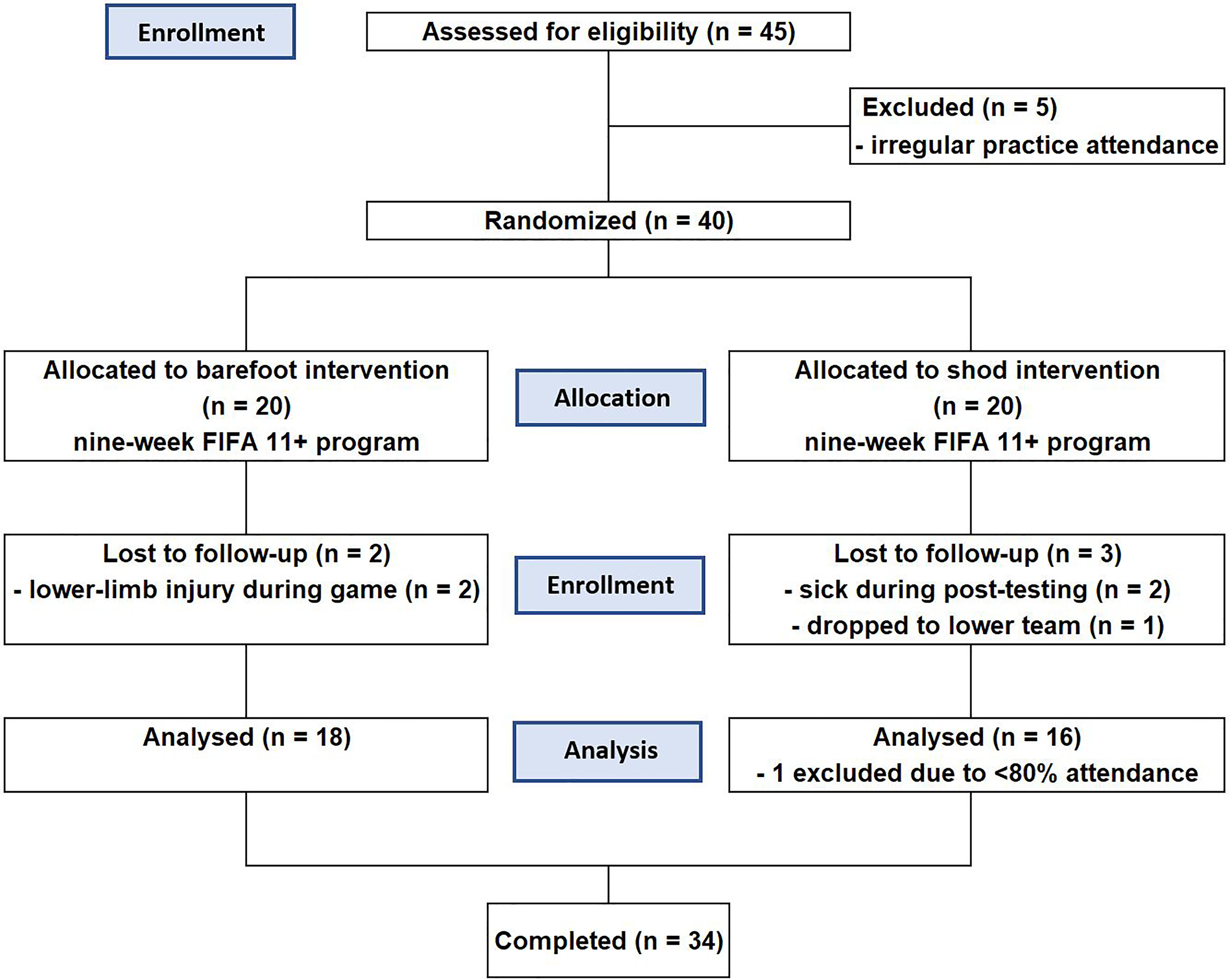
Participant flow diagram.
Outcomes
The primary outcome of the study was improvements in physical performance following a nine-week intervention performed in barefoot- and shod conditions with a field-based testing battery one week prior to the start- and one week immediately after intervention. Testing occurred one week before and one week immediately after the intervention period. The testing protocol comprised five stations and could be completed by each team within approximately 60 min. All tests were conducted on the school's artificial field hockey turf, with participants wearing their regular field hockey training shoes to replicate the natural surface and conditions of competition accurately.
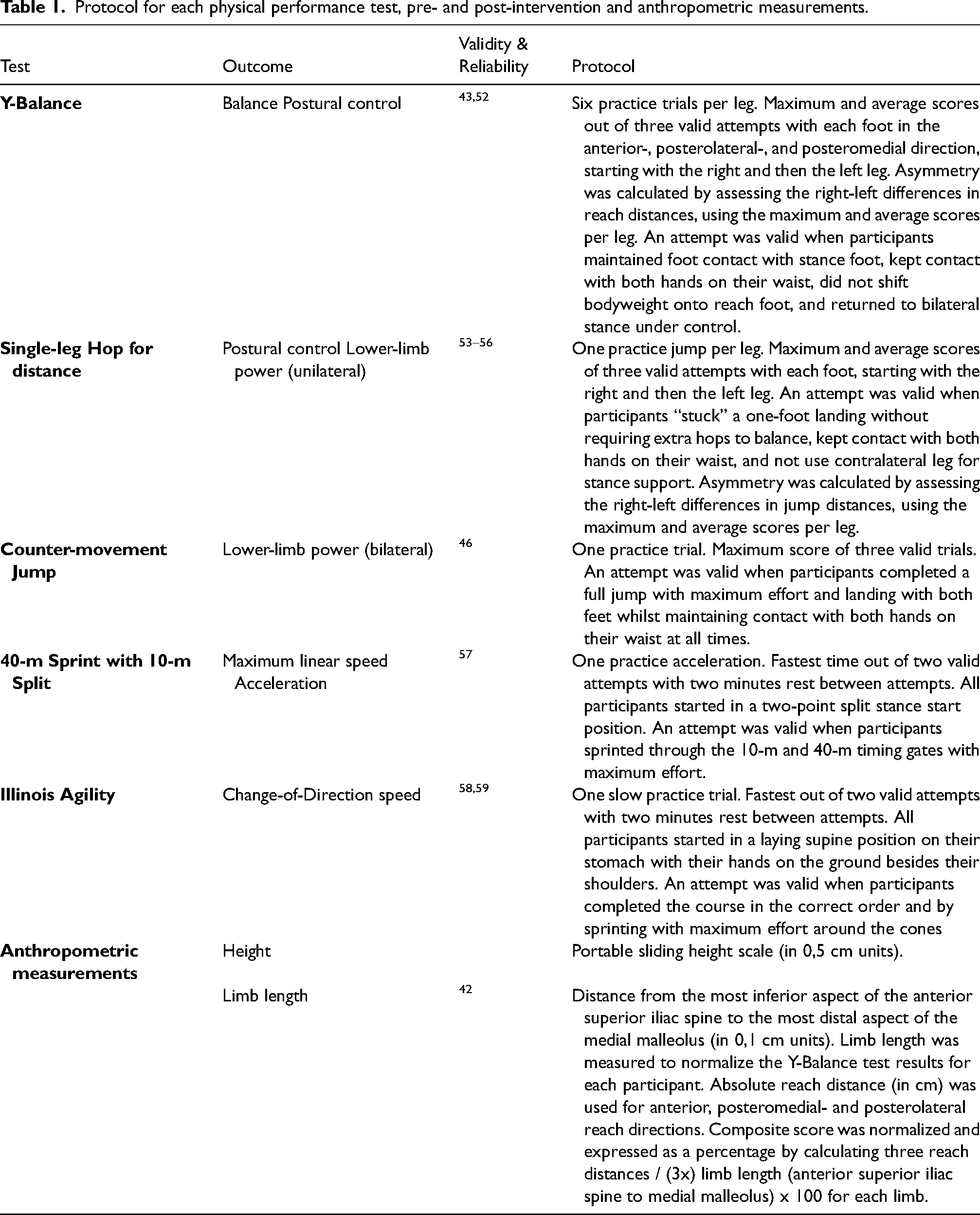
The conducted tests were 1) Y-Balance test (cm) (YBT),42,43 2) Single-leg Hop test (cm),44,45 3) Counter-movement Jump (cm) (CMJ), 46 4) 40-m sprint with 10-m split (sec), 47 and 5) Illinois Agility (sec).48–50 The order of testing was determined to progress from least to most fatiguing to prevent any potential impact on results due to premature fatigue from preceding tests. 51 The participants received a document with the detailed testing procedure and station layout to facilitate efficient progression during their designated testing days (Appendix 3). The study's purpose was communicated to the coaches and players in accordance with the school requirements. Pre- and post-testing were conducted by the coaches and the principal investigator at the same stations, with verbal instructions and visual demonstrations provided for each test. Each participant completed a standardized six-minute warm-up supervised by the researcher, consisting of jogging, sprinting, hops, and dynamic stretches. The protocol for each test is outlined in Table 1. In the week preceding pre-testing, all participants completed practice trials for each performance test to minimize the potential for performance improvement in post-testing due to practice effects.
Protocol for each physical performance test, pre- and post-intervention and anthropometric measurements.
Sample size and randomization
The minimum sample size (n = 34) was determined using a power analysis (alpha = 0.05, power = 0.80), considering previous studies with comparable measurement outcomes in male football players.45,60,61 Following pre-testing, participants were randomly assigned to either the barefoot or shod group using a randomization schedule generated by a statistician at the institution using R software. 62
Statistical methods
Mixed model ANOVA's were conducted with the participants as random effect (to account for repeated measurements), and intervention, time, limb side as fixed effects. Table 2 gives the results of the three-way ANOVA. Normal probability plots were inspected to check normality of the residuals, and in all cases found to be acceptable. Post hoc testing was done using Fisher Least Significant Difference (LSD), to reduce the likelihood of type II errors. Cohen's d and Hedges g effect sizes were calculated and represented as follows: small (d ≥ 0.2), medium (d ≥ 0.4), and large (d ≥ 0.8). 63
Three-way ANOVA results for Y-Balance test, Single-leg Hop test, Counter-movement Jump, Sprint, and Agility.
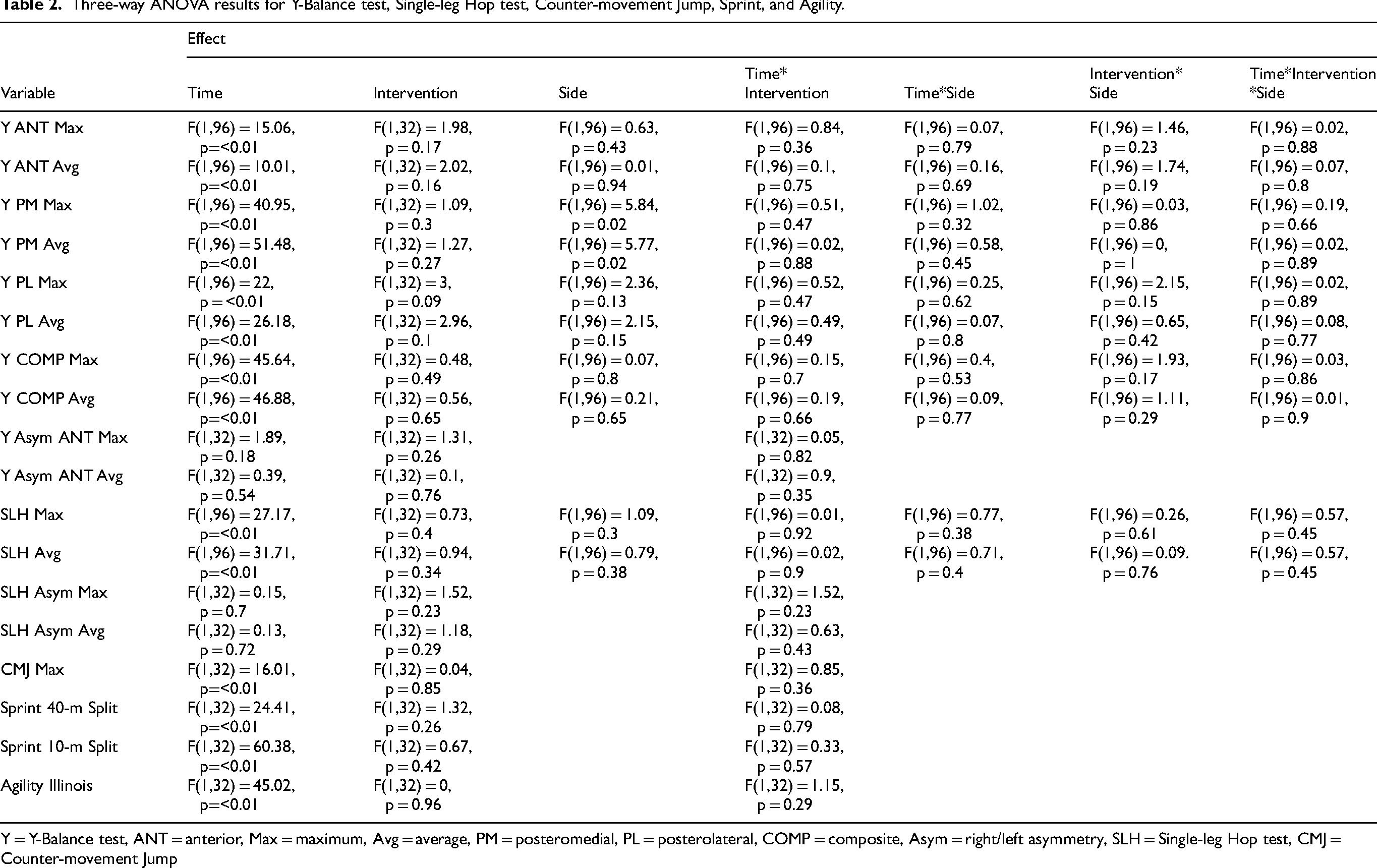
Y = Y-Balance test, ANT = anterior, Max = maximum, Avg = average, PM = posteromedial, PL = posterolateral, COMP = composite, Asym = right/left asymmetry, SLH = Single-leg Hop test, CMJ = Counter-movement Jump
Results
Participants
Following the recruitment process, players were given two weeks to respond to the invitation to participate. Pre-intervention testing was conducted over two days with a total of 40 participants that fulfilled the inclusion criteria. The randomization schedule allocated 20 participants to the barefoot group and 20 participants to the shod group for the nine-week intervention period. Post-testing was conducted over two days following the same order and time of day as pre-intervention testing. The complete dataset of 34 participants (mean age 16.12 ± 1.23 SD, mean height 164.8 ± 6.8 SD, barefoot n = 18, shod n = 16) was considered for the final statistical analysis (see Figure 1). Groups did not differ in age (p = 0.73) and body height (p = 0.08). The compliance rate for the nine-week study period was 95,6%. Out of the 34 final participants, 31 were classified as habitually barefoot based on the results of a footwear habits questionnaire 18 (Appendix 1).
Outcomes
The outcomes and comparison for each physical performance test for the barefoot- and shod intervention groups are presented in Table 3, 4, and 5 and listed below. There were no statistically significant differences at pre-testing between the two footwear groups in any of the tests.
Balance test
Table 3 shows the results for the pre- and post-intervention assessments for the barefoot and shod intervention groups for the Y-Balance test (YBT). Significant improvements in YBT were observed for most reach directions for both maximum (furthest reach of three trials) and average values (average reach of three trials) in the barefoot group (P = ≤0.01–0.04, ES = 0.38–0.83) and shod group (P = ≤0.01–0.04, ES = 0.37–0.7) (see Table 3). YBT performance improved in most of the three reach directions (anterior, posteromedial, posterolateral) and composite scores in both legs by 2.6% - 6.7% in the barefoot group and by 2.5% - 7.2% in the shod group. There were no statistically significant differences in improvements between the barefoot and shod intervention groups in any reach direction (P = 0.08–0.86, ES = 0.08–0.54). Asymmetries between limbs in the anterior reach direction in the YBT (barefoot: P = 0.26–0.41, ES = 0.14–0.24; shod: P = 0.28–0.82, ES = 0.09–0.41) did not decrease significantly in either group.
Results of the Y-Balance test for pre- and post-testing of the barefoot and shod groups and post-test comparisons between groups.
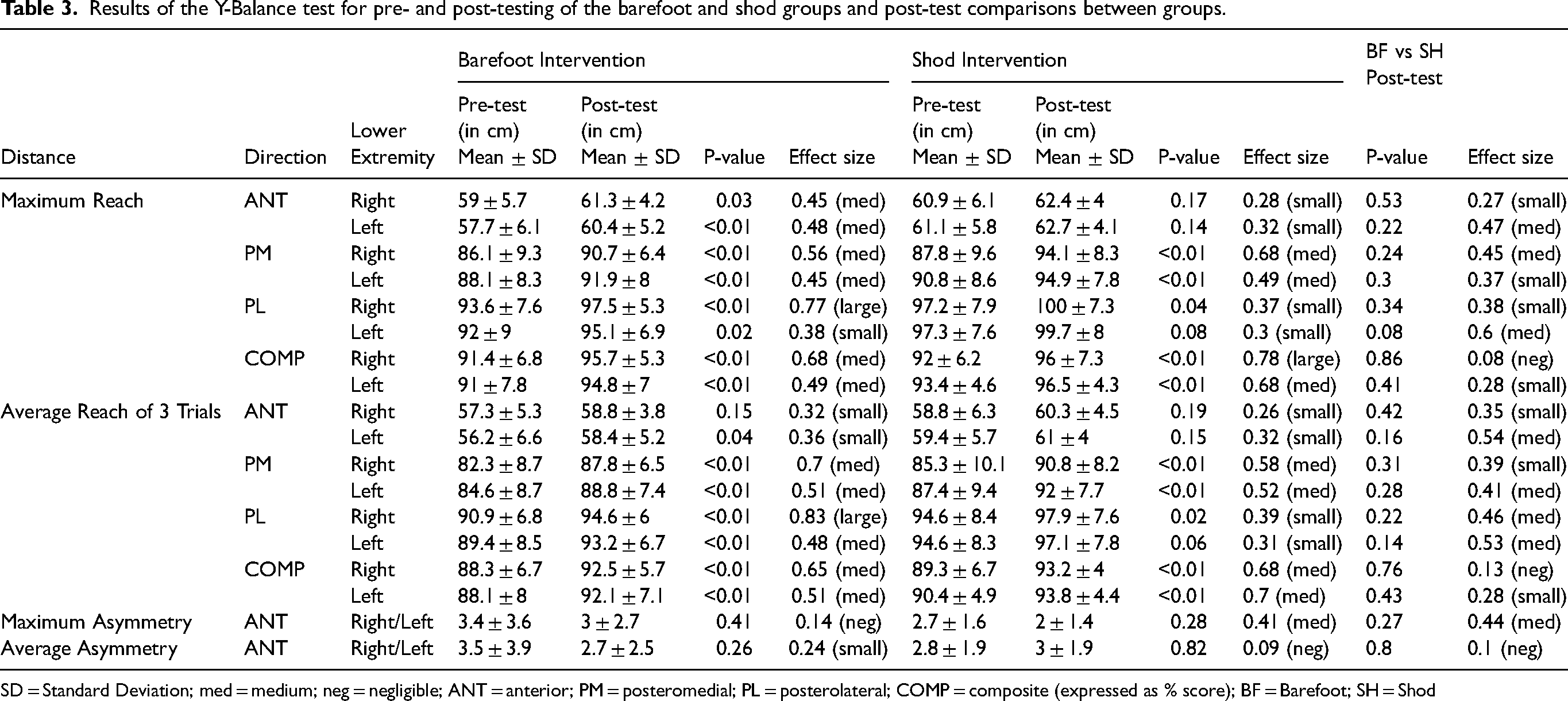
SD = Standard Deviation; med = medium; neg = negligible; ANT = anterior; PM = posteromedial; PL = posterolateral; COMP = composite (expressed as % score); BF = Barefoot; SH = Shod
Jump tests
Tables 4 and 5 show the results for the pre- and post-intervention assessments for the barefoot and shod intervention groups for the Single-leg hop test for distance (SLH) and CMJ. Significant improvements were observed in the SLH for both maximum (furthest of three trials) and average values (average of three trials) in the barefoot group (P = ≤0.01–0.03, ES 0.39–0.45) and shod group (P = ≤0.01–0.01, ES 0.46–0.56) (see Table 4). The only exception was the maximum value of the right leg in the barefoot group (P = 0.08). SLH distance improved in both legs by 4.4% - 9.6% in the barefoot and by 6.4% - 6.9% in the shod group. There were no statistically significant differences in improvements between the barefoot and intervention groups (P = 0.34–0.81, ES = 0.23–0.36). Asymmetries in the SLH distance (barefoot: P = 0.54–0.75, ES = 0.04–0.09; shod: 0.27–0.43, ES = 0.21–0.4) did not decrease significantly in neither barefoot nor shod group. Significant improvements were recorded for the CMJ (barefoot: P = 0.03, ES = 0.31; shod: P = ≤0.01, ES = 0.74) with a 4.4% increase in the barefoot and a 7.3% in the shod group (Table 5). There were no statistically significant differences between the barefoot and shod group (P = 0.62, ES = 0.16).
Single-leg Hop test for distance results pre- and post-testing for intervention barefoot- and intervention shod group and post-testing comparison between groups.
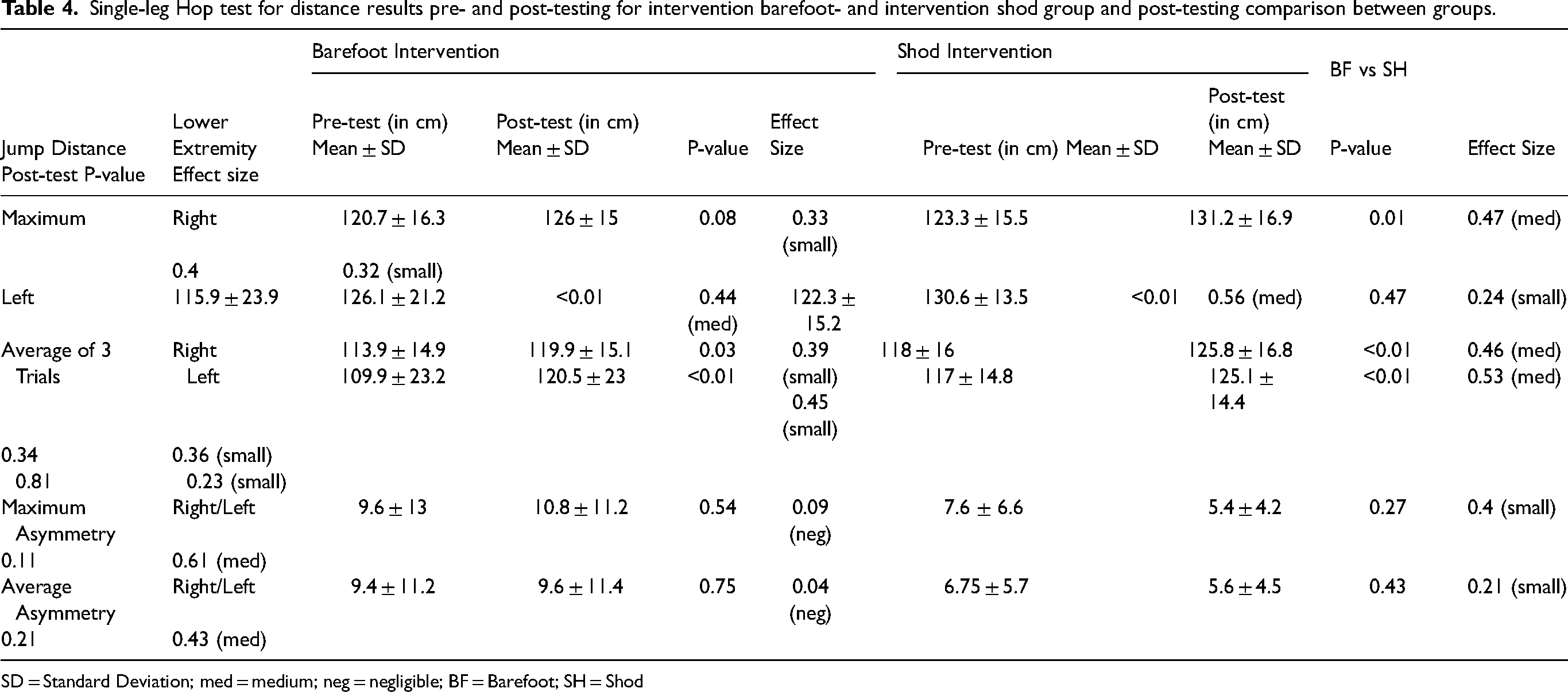
SD = Standard Deviation; med = medium; neg = negligible; BF = Barefoot; SH = Shod
Counter-movement Jump, Sprint, and Agility test results pre- and post-testing for intervention barefoot- and intervention shod group and post-testing comparison between the groups.
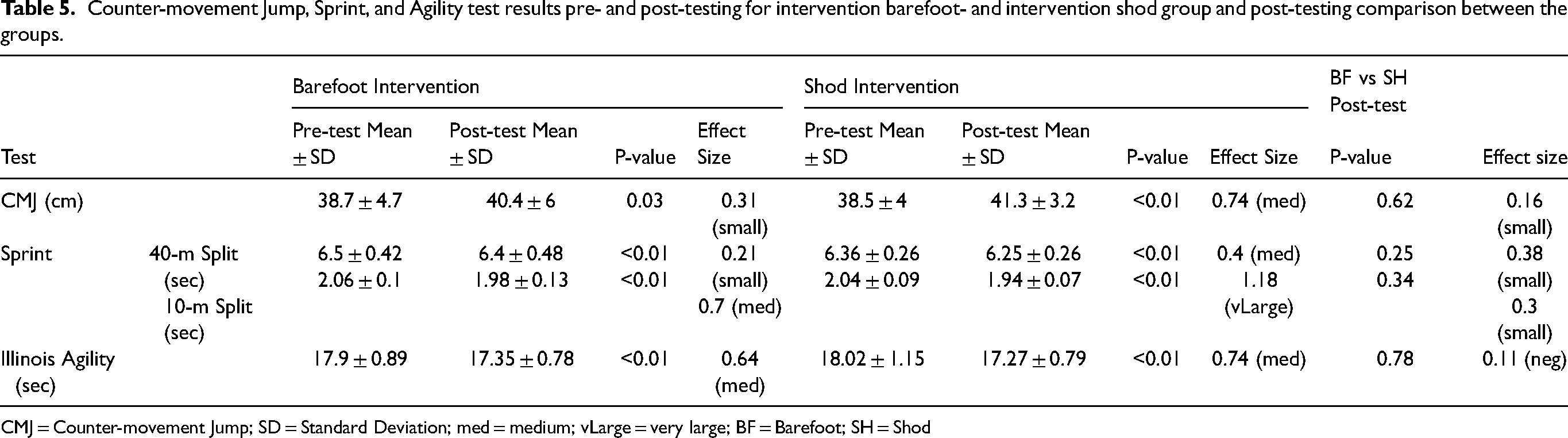
CMJ = Counter-movement Jump; SD = Standard Deviation; med = medium; vLarge = very large; BF = Barefoot; SH = Shod
Sprint test
Table 5 shows the results for the pre- and post-intervention assessments for barefoot and shod intervention groups for 40-m Sprint with 10-m split. There was an increase in 40-m Sprint (barefoot: P = ≤0.01, ES = 0.21; shod: P = ≤0.01, ES = 0.4) and 10-m split (barefoot: P = ≤0.01, ES = 0.7; shod: P = ≤0.01, ES = 1.18) performance. Sprint time over 40 m decreased by 1.6% in the barefoot and 1.8% in the shod group, and 10-m split time by 4% in the barefoot and by 5.2% in the shod group. There were no statistically significant differences in 40-m sprint performance (P = 0.25, ES = 0.38) and 10-m split times (P = 0.34, ES = 0.3) between the barefoot and shod intervention group.
Agility test
Table 5 shows the results for the pre- and post-intervention assessments for barefoot and shod intervention groups for the Illinois Agility test. There was an increase in agility performance in both intervention groups (barefoot: P = ≤0.01, ES = 0.64; shod: P = ≤0.01, ES = 0.74). Illinois Agility time decreased by 3.2% in the barefoot and 4.3% in the shod group. There were no significant differences in improvements between the intervention groups (P = 0.78, ES = 0.11).
Harms
No harms or unintended effects (injuries, or other) were reported throughout the study.
Discussion
To the authors’ knowledge, this is the first study to assess physical performance following a barefoot neuromuscular warm-up program in a youth team sports population classified as habitually barefoot. Contrary to expectations, this randomized controlled trial revealed that a neuromuscular warm-up yielded comparable positive outcomes across five physical performance assessments, regardless of whether conducted barefoot or with footwear, within a nearly exclusively habitually barefoot cohort of female adolescent field hockey players. Previous research by Hollander and colleagues64,65 highlighted the significant influence of growing up habitually barefoot on foot morphology, including heightened foot arch angles, as well as motor performance. Additionally, Zech et al. 35 observed that children who grow up habitually barefoot compared to shod show superior balance and jumping performance during childhood, with greater jump distances persisting during adolescence. It is possible that a barefoot lifestyle leads to stronger foot muscles and more pliable feet, facilitating enhanced propulsion phases and larger support surfaces, thereby promoting better static standing balance. 9
This study employed testing measures of balance, dynamic stability, and agility (YBT, SLH, and Illinois Agility), akin to the approach by de Villiers and Venter's 18 in their investigation involving female university netball players. De Villiers and Venter 18 observed a greater increase in agility and ankle stability in the barefoot group compared to the shod group. The current study showed similar outcomes in the barefoot- and shod groups. It should be noted that the footwear habits of the adult netball players were not reported, compared to the youth field hockey players in the current study (Appendix 1), which makes direct comparison difficult. Disparities in outcomes between the two studies may also be partially attributed to differences in intervention session durations and exercise selections within the respective protocols. The netball study incorporated netball-specific agility drills, gradually increasing barefoot exposure over an eight-week intervention until the participants engaged in 30–45 min of barefoot training in the final week for all exercises. 18 In contrast, all 18 sessions in the neuromuscular warm-up utilized in this study lasted 20 min each. Furthermore, unlike the netball study, our warm-up intervention included only a limited number of exercises targeting dynamic running, change of direction, and progressively challenging balance. The remaining exercises comprising the 11 + program, are aimed at increasing strength, lower-limb power, and core stability. Hence, caution is warranted when drawing comparisons between these two studies with differing intervention protocols. Nonetheless, such a comparison can offer valuable insights into the potential advantages of barefoot training in team sports, given the scarcity of barefoot studies conducted in team sport settings overall.
It has been proposed that the enhanced balance observed in the barefoot group of netball players could stem from heightened proprioceptive abilities resulting from the strengthening of the smaller intrinsic musculature of the feet in those individuals. 18 Barefoot training is thought to engage a broader array of lower limb muscles during physical activities, thereby altering the mechanical characteristics of both small and large muscles surrounding the ankle joint and foot. 18 The smaller intrinsic muscles within the foot play a pivotal role in stabilizing the ankle during dynamic movements.4,5 Moreover, these intrinsic muscles may undergo strengthening through an increase in proprioception, as the sensory feedback between the plantar surface of the foot and the ground prompts the central nervous system to fortify stability and prevent injury by enhancing muscle activation. 66 A neuromuscular warm-up, such as the 11+, may be a suitable program due to its detailed progression protocol, to gradually expose athletes to barefoot balance- and dynamic stability exercises, thereby facilitating the aforementioned benefits and adaptations.
Safety considerations are paramount when introducing new modalities such as barefoot training, particularly in youth sports settings. Existing research offers caution against the abrupt adoption of barefoot training among individuals accustomed to training with footwear.67,68 Some evidence suggests a potential decline in dynamic stability when transitioning directly from shod to barefoot running on a treadmill. 67 However, this study was merely descriptive and focused solely on individuals undergoing an immediate shift from shod to barefoot conditions. Moreover, it lacked an intervention component to assess possible long-term effects on dynamic stability, nor did it incorporate a gradual exposure approach. Another recent eight-week randomized controlled trial indicated that compared to shod running, running barefoot may lead to a reduction in local dynamic running stability following weekly 15-minute treadmill sessions. 68 While this study may shed light on longer-term implications for measurement outcomes such as running stability, it exclusively utilized treadmill running at a frequency of one session per week for 15 min. In contrast, the field hockey players in the current study engaged in diverse running, multi-directional, strength, and balance exercises on a grass surface within their school sports environment, resulting in improved balance and postural control. De Villiers and Venter 18 reported that none of their participants had to discontinue participation due to injuries or discomfort during the eight-week barefoot netball-specific exercises, a finding consistent with this study. Hence, it is reasonable to infer that a gradual increase in exposure to barefoot conditions in sport-specific drills may not heighten the risk of injury.
In the present study, there was a tendency, albeit not statistically significant, toward greater improvements in the YBT among the barefoot group. This was achieved despite significantly shorter session durations compared to the netball study (20 minutes vs. 30–45 minutes) over a similar time frame (eight weeks vs. nine weeks). This suggests that overall balance, in both groups and particularly in barefoot conditions, can be enhanced with the inclusion of a few specific balance exercises, as outlined in the 11 + program. This finding holds significance, especially considering previous research indicating that children who grow up habitually barefoot exhibit superior balance and jumping ability. 35 The results indicate that additional training under barefoot conditions may offer further benefits in improving balance ability compared to shod conditions, despite individuals already benefiting from growing up habitually barefoot and possessing greater balance ability. This notion is supported by electromyography (EMG) research, which suggests significantly higher muscle activation in the lateral gastrocnemius, vastus medialis, and rectus femoris during one-leg barefoot standing, likely due to increased sensory input across the plantar foot. 69 Such considerations are important for designing strength and conditioning- and injury prevention programs, as impaired balance is generally correlated with an increased risk of lower limb injury, particularly ankle and knee sprains. 42 Additionally, a recent study demonstrated that targeted foot exercise protocols can increase intrinsic foot muscle volume and propulsion forces in recreational runners. 70 Similarly, a four-week barefoot exercise intervention in injured recreational runners led to improvements in balance, likely mediated by enhanced plantar cutaneous mechanoreceptor activity, thereby indicating clinical significance during rehabilitation. 12 Therefore, it is reasonable to assume that including some barefoot balance and dynamic stability exercises in a team's warm-up routine may have protective effects against injuries and further advocates for the utilization of structured neuromuscular warm-up programs.
The improvements in agility were accompanied by improvements in CMJ height and sprint performance (40-m and 10-m split) in both barefoot and shod groups in this sample of field hockey players with no significant difference between the two groups. Field hockey entails repeated bouts of high-intensity play, and is characterized by walking, jogging, sprinting, and rapid change-of-direction efforts, necessitating lower-limb power and speed. 41 Vertical jump height, linear sprinting and agility tests are strongly correlated with match performance but are typically regarded as independent locomotor skills that warrant separate assessment.46,71,72 Previous studies that employed neuromuscular warm-up programs have reported enhancements in variations of vertical jump tests, linear sprinting, and agility.25,26,36,73 The significant improvements in the CMJ, sprint, and Illinois Agility tests underscore an overall improvement in physical performance across both intervention groups. The lack of discernible differences in improvements between the groups may, once again, be partly attributed to the shared characteristic of growing up habitual barefoot in both groups and the relatively short session durations of 20 min per session. A longer intervention program (both in terms of overall duration and time per session) might unveil potential different adaptations within the barefoot group.
The collective improvements observed in both groups are encouraging and highlight the efficacy of targeted neuromuscular warm-up sessions twice a week in enhancing physical performance, without the need for additional, lengthier strength and conditioning programs. Moreover, conducting the program on grass seems to have had no adverse impact on performance metrics. This finding aligns with prior research demonstrating that plyometric training effectively enhances squat jump and CMJ performance in volleyball players on both grass and concrete surfaces. 74 The findings of this study offer valuable insights suggesting that barefoot training may elicit similar adaptations in physical performance among habitually barefoot youth sports populations. This insight may empower coaches to provide athletes with the option to train barefoot, where feasible, in accordance with the athletes’ customary barefoot practices, without compromising desired performance improvements, such as speed and agility. Incorporating neuromuscular training as part of a warm-up routine, both with and without shoes, can offer a diverse range of stimuli and facilitate neuromuscular adaptations for individuals.
Limitations
The first limitation lies in the predominantly habitually barefoot classification of the sample, with 31 out of 34 participants falling into this category. Future studies should aim to include participants classified as habitually shod as well, allowing for a more comprehensive comparison across the broader spectrum of youth team sport environments and barefoot habits. Additionally, incorporating foot morphology measurements may be beneficial to further delineate and classify habitually barefoot individuals. Secondarily, the reliance on a convenience sample comprised solely of youth athletes from a single high school limits the generalizability of the research findings to broader populations. Thirdly, this study did not assess any index of maturity, which could have provided additional context for interpreting the results. Lastly, the intervention was implemented as a 20-minutes warm-up program, as per the 11 + protocol, conducted twice a week over a nine-week period. Future studies might consider employing programs with longer session durations to elucidate potential divergent long-term adaptations to barefoot conditions within a strength and conditioning regimen.
Practical implications & perspective
The study contributes to the expanding body of literature to support the efficacy of structured neuromuscular warm-up programs, like the 11+, to enhance physical performance in team sport athletes, regardless of footwear conditions.22,25,26,33,36 Coaches and trainers can afford their athletes the flexibility to choose their preferred footwear condition for completing the team's warm-up program, without compromising desired performance adaptations. Youth athletes accustomed to habitual barefoot exercise may opt to train barefoot and should be encouraged to do so under their preferred conditions. Furthermore, this study, utilizing the “football-specific” FIFA 11 + program, is the first to include field hockey players as participants, offering evidence for its applicability across various team-based field sports. Consequently, it may prompt a re-evaluation of the term “sport-specificity,” given the substantial overlap observed between programs tailored for specific sports, like the 11 + for football, and their potential crossover effects on performance in different team sports, such as field hockey. Elaborate program designs geared toward specific sports, particularly at the youth level, could unnecessarily complicate real-world application, particularly for coaches with limited educational backgrounds. This study effectively suggests that the 11 + program could serve as a valuable tool for enhancing performance across a range of team-based field sports.
Conclusion
The current study indicates that a nine-week neuromuscular warm-up program yields comparable adaptations whether performed barefoot or shod within a habitually barefoot sample. Both barefoot and shod groups exhibited similar enhancements across all physical performance tests assessing balance, postural control, lower-limb power, linear speed and acceleration, and agility. These findings contribute a novel perspective to the expanding academic discourse on barefoot research by incorporating a youth population from a field-based team sport (field hockey). Additionally, these findings further support the applicability of the 11 + program in various team-based field sports beyond football.
Footnotes
Availability of data
The datasets used and/or analysed during the current study are not publicly available. The data are available from the corresponding author on reasonable request.
Declaration of conflicting interests
The authors declared no potential conflicts of interest with respect to the research, authorship, and/or publication of this article.
Ethics approval statement
The study was approved by the Health Research Ethics Committee of Stellenbosch University (21/07/132).
Funding
The authors received no financial support for the research, authorship, and/or publication of this article.

Participant consent statement
All participants volunteered to participate in the study. Prior to the start of the study the participants provided written assent and parental consent.