




Abstract
Sports coaching involves navigating ambiguity and uncertainty in stakeholders’ perspectives and managing a dynamic micro-political environment. This study explores the relationship between coaching efficacy and effectiveness in South African Women's Rugby. It examines how a coach's belief in their ability to influence athlete learning and performance (coaching efficacy) correlates with the actual impact on athletes (coaching effectiveness). By aligning coaches’ perceived competence with tangible athlete outcomes, the study provides insights into factors influencing coaching practices and athlete development. The study involved 28 women players (mean age: 24.8 ± 4.0 years) and 8 coaches (mean age: 41 ± 3.8 years) who participated in semi-structured online interviews. The interview script, derived from the Coaching Effectiveness Survey (CES) tool, was analysed using Braun and Clarke's 6-step process of thematic content analysis. Under the four efficacy dimensions, sub-themes emerged as follow: 1) motivation (climate created by the coach and a motivational climate experienced by the players), 2) technique (coaching physical, technical, and tactical aspects of rugby), 3) game strategy (guiding players to successful outcomes), and 4) character-building efficacy (cultivating a positive environment for sportswomanship and holistic development). The findings incorporate feedback from players and coaches, highlighting firsthand experiences of coaching effectiveness. This approach enables experts to identify effective coaching strategies and those needing refinement within Women's Rugby. The study's findings promise to inform future coach development frameworks and foster a comprehensive understanding of coaching effectiveness in the dynamic landscape of Women's Rugby worldwide.
Background
Contemporary coaches are not only expected to assume responsibility for players within the training and competition environments, but also to be increasingly aware of their overall social and psychological development, thereby extending the coaching environment.1,2 Resultantly, coaches are often thrown into the deep end with the expectation to take on a myriad of tasks that foster a flourishing working environment for both the athlete and the coach without necessarily developing the skills prior.3,4 Coaching effectiveness then, is a multifaced concept that significantly shapes players’ success and growth.5,6 It acts as a cornerstone for player development, fosters a positive team environment, boosts player retention, and promotes increased participation in sports. 7 This connection is exemplified in a study by Mills and Clements, 6 whereby they found that coaches assume pivotal roles in the lives of those they mentor, particularly in youth sports. 6
Women's Rugby in South Africa, both at grassroots and high-performance level, is still in its early stages of development, distinguishing it from more established nations like England, New Zealand, and France, 8 which currently hold the top three positions in the World Rugby Women's Ranking for 2023. Unlike these counterparts, South Africa is in the process of defining its developmental pathways, ranging from non-existent to limited structures at the junior level, and culminating in a semi-professional structure that integrates development and high performance at the senior level. 9 Additionally, women players often come from diverse sporting backgrounds and typically join rugby later in life, often during high school or university. The history of Women's Rugby in South Africa mirrors the broader socio-cultural challenges faced by women athletes. 10 Initially overshadowed by male-dominated sports like rugby, Women's Rugby struggled for recognition. Despite efforts to address racial inequality in sport post-1994, gender disparities persisted. While progress has been made, with the first national tournament in 2000 and international debut in 2003, Women's Rugby in South Africa has lagged due to historical inequalities and the perception of rugby as a men's sport. 10 Limited resources (ie., investment) and structural barriers (ie., historical and socioeconomic context) have hindered its growth compared to top-tier rugby-playing nations like England and New Zealand, compounded by experiences of sexism and gender discrimination. 11
Within the South African setting, predominantly male coaches are responsible for managing a diverse group of players with varying skill levels. Coaches saim to simultaneously cultivate players' rugby skills and prepare them for high-performance competition against nations with more developed Women's Rugby programmes. Consequently, coaches commence their coaching endeavours at a disadvantage even before implementing specific coaching methodologies. Negotiating this challenging coaching environment and aligning with training and competition objectives becomes an intricate task for South African Women's Rugby coaches, an area that has not been researched. Therefore, a closer examination of the key attributes that characterise an “effective coach”, emerges as a crucial factor in fostering player development and the focus of the research reported in this article.
The insights into coaching efficacy translating into coaching effectiveness have the potential to shape future coaching development frameworks. By offering an understanding of the diverse attributes and dimensions of coaching effectiveness, these findings serve as a valuable guide for improving the quality and impact of coaching, thereby fostering players’ development, and enhancing their sporting experiences. 12 The following sections offer a review of literature about (a) effective coaching, (b) long term athlete development and (c) the current coach development frameworks within South Africa. Subsequently, the procedures for data collection and analysis are outlined.
Effective coaching
General coaching practices have been examined at varying levels of sport. 13 While, effective coaching may change depending on the context, (e.g., gender, age, level of participation, team versus individual sports) there is a consensus from coaches across several sports 13 that effective coaching requires four key themes to be addressed. These themes are (a) a long-term approach, (b) an authentic coaching environment (c) creating a learning environment, and (d) quality versus quantity of training sessions.
In this study, 13 coaches were identified as high-performance, elite coaches who met the established criteria of expertise. Consequently, the success of their athletes was paramount, necessitating extensive planning and preparation lasting anywhere from 1 to 4 years leading up to a national or international sporting event. First, in terms of a long-term approach, a male skiing coach's emphasis was reported to focus on individualised, periodised programmes. 13 He referred to “certain things need to be done at this time of the year” both in the gym, the ski-slopes (sport specific) and what the athlete needs, to develop. He further explains that there are “currently 3 distinct development phases, and part of that is as much their different sizes and different strengths – some can do certain work and some others can't and that's how it's (the individualised periodisation plan) based”. Other studies report similar support for individualised approaches among women athletes, 14 young athletes,15,16 and in specific sports and age groups like soccer. 17 This style of programme planning embodies both a long-term perspective and a strong emphasis on individual attention. It showcases how coaches adeptly integrate training sessions into the broader long-term plan, leveraging them to track progress toward short-term objectives. Furthermore, this approach to programming showcases coaches’ extensive expertise, encompassing not only sport specific techniques and strategies essential for elite performance in the sport, but also their ability to tailor all elements to meet the unique requirements of each athlete.
Second, an authentic coaching environment was valued. The authenticity arises from incorporating elements of competition into training sessions, aiming to replicate competitive conditions during practice. 13 For instance, a football coach stressed the need for high-intensity training, reflecting the coaches’ expectation that athletes contribute actively to their learning at a high-performance level. 13 The study indicated that coaches act as facilitators, fostering an environment for guided discovery and player input.
Third, an atmosphere of openness was fostered by the kayaking coach, permitting paddlers to engage in experimentation within a safe learning space. 12 This methodology encompassed guided discovery and solicited player input; a practice echoed by a football coach. The perspectives shared by these coaches underscore the expectation at this tier that athletes, including those performing at high levels, actively contribute to their learning. In this context, coaches are positioned as facilitators of this collaborative learning process.14,15
The fourth theme of quality versus quantity 13 of training sessions highlights elite coaches’ aim to create high-intensity training environments. Coaches stressed intensity for various reasons, emphasising athletes’ focus on producing quality performances in specific programme areas. This theme highlights the complexity of planning and executing training sessions for high-performance coaches, requiring expertise in coordinating variables for specific situations. As varying degrees of expertise among participating coaches were reported, further research on the development and application of coaching knowledge in practice is needed.14,15
Given the complexities, particularly the demands for individualised approaches, authentic coaching environments, and the delicate balance between quality and quantity in training, it is evident that coaches need robust development to navigate these challenges effectively. This need is underscored by the most recent literature which specifically delves into development of the physical and physiological aspects of women players.9,18–20 The intention is to underscore the necessity for coaching that aligns with the distinct needs and demands of female player development for women. Thus, transitioning to existing coach development frameworks and programmes, these initiatives are explored by highlighting the importance of coach development to address the needs of female athlete development for women. Globally, women's sports have experienced a notable increase in participation and professionalism, indicating a positive trend. 21 However, despite this growth, many women's sports lag their male counterparts in terms of infrastructure and sport science provisions for physical, physiological, technical, and tactical development.19,22–24 The following paragraph outlines the aspects of rugby that coaches need to address and the skills that players are required to possess.
Long-term athlete development: physical, technical, and tactical
Research specifically on rugby, encompassing league, union, and sevens codes, highlights its physically demanding nature with intense periods of sprinting and tackling, interspersed with lower-to-moderate activities like jogging. Examining the development and performance of women's athletes in this sport reveals gender-based differences in physical performance,24,25 physiological attributes, anthropometrics24,26 and movement demands. 24 Physical preparation in rugby involves considering factors such as sport, sex, and playing position, as they impact injury risk and performance.27,28 Elements like physical strength, speed, and cardiovascular fitness are crucial for successful performance given rugby's intermittent nature and match-play demands. 29
Technical and tactical development is an important aspect to consider in Women's Rugby. The technical 23 aspect of rugby involves players executing specific offensive and defensive skills for scoring or preventing the opponent from scoring. 26 Technical development encompasses key areas like passing, tackling, scrummaging, line-out throwing, and kicking. 27 Both men's and women's rugby, spanning codes like 7's and 15's, share similar technical skills with minor differences. 28 Analysing rugby game variables, Barkell et al. 29 identified distinctions between winning and losing teams, emphasising commonalities and gender-specific nuances. The study highlighted the significance of disruptions (perturbations) in successful teams, showcasing their crucial role for both men and women, especially near the attacking try line.
Additionally, tactical development proves vital for success in Women's Rugby, involving strategies for attack, defence, and on-field decision-making. 30 Game awareness and decision-making skills are crucial for executing effective game plans. 31 The significance of mental toughness in professional sports cannot be overstated. Developing psychological preparedness is crucial, and it is a skill that requires cultivation alongside physical, technical, and tactical training. A study investigating mentally tough teams in professional rugby union emphasises that mental toughness involves player-specific, coaching, and group processes. 32 The findings underscore the coach's essential role in setting high group standards and promoting unity and respect within the team. Additionally, the study identifies strategies that coaches can use to develop, integrate, and harness mentally tough leaders, align formal leaders, and effectively communicate mentally tough messages to players, including through media channels. Therefore, the comprehensive development needed in Women's Rugby must address not only the physical, 33 technical, and tactical aspects but also the critical mental component. Thus, coaches play a crucial role by offering targeted training programmes that focus on skill development, technical understanding, and tactical awareness, potentially incorporating both individual and team-based training along with regular match play.34,35
Examining delayed participation in the South African context where women join rugby later in life from other sports (i.e., netball, athletics), positive aspects include transferable technical skills and physical attributes like speed and agility. Fundamental athletic movements acquired in previous experiences, such as running and jumping, can be advantageous, 35 to rugby. However, challenges may arise in acquiring specific rugby skills that demand precise techniques and dedicated training. 36 Despite potential difficulties, transitioning athletes bring valuable knowledge of team dynamics and communication, although grasping rugby tactics and game plans may require specialised training and experience.37,38 It can be assumed that coaching development frameworks consider the multifaced nature of the coaching role and provide coaches with the requisite knowledge and skills to excel in their profession. 39 The various coach development initiatives in place in South Africa provide an overview of the provision to coaches in their specific sports.
Existing long-term coach development frameworks and programmes in South Africa
The Athletics South Africa (ASA) Coach Development Programme, led by McKinley (2010), equips coaches with expertise across athletic disciplines and offers courses 40 on topics like training theory, biomechanics, nutrition, and psychology. Similarly, the South African Football Association (SAFA) Coaching Programme (South African Football Association, 2023) 41 aims to enhance coaches at all football levels, covering technical and tactical aspects, coaching methodology, and communication skills. Cricket South Africa's (CSA) Coach Education Programme (Cricket South Africa, 2023) 42 provides a pathway for cricket coaches from community to professional levels, covering technical, tactical, physical, and mental aspects.
South African Rugby Union's (SARU) Coach Development Framework guides rugby coaches toward World Rugby accreditation. 43 Levels 1 to 3 focus on basic skills, and advanced concepts like game analysis, high-performance coaching, talent identification, and coaching philosophy development, respectively. These initiatives collectively contribute to coaching expertise growth in South Africa's sports landscape. However, a generic coaching framework may not suit Women's Rugby coaches due to their player's differential needs compared to those in other top-tier developed rugby-playing nations like England, New Zealand, and France. This argument is supported by a study that found male coaches desired education on the menstrual cycle's impact on women's athletes, suggesting topics for coach education. 44 Similarly, Gosai and colleagues (2021) revealed gender biases in coaching methods affecting women's participants. 45 These studies highlight the need for tailored coaching education covering tailored topics such as physiology, training, performance (i.e., consideration for lower training age amongst women rugby players), menstrual cycle monitoring, dietary considerations, and improved communication (considering the coach-athlete relationship). The presence of gender bias highlights the inadequacy of a one-size-fits-all framework for coaching women's athletes in Women's Rugby, emphasising the need to address individual needs and challenges.
Method
Theoretical framework: conceptual model of coaching efficacy
As depicted in Figure 1, Feltz and colleagues posit that the various dimensions of coaching efficacy are shaped by individual factors such as past experience and performance (e.g., coaching tenure, preparation, previous outcomes), athletes’ perceived skill levels, and the level of perceived social support (e.g., from school, community, and parents). In turn, coaching efficacy is anticipated to influence coaching behaviour, player satisfaction with the coach, athlete performance (measured by winning percentage in this study), player behaviour and attitude, and levels of player efficacy. Coaching experience, education, and past success serve as sources of efficacy information derived from personal mastery experiences.
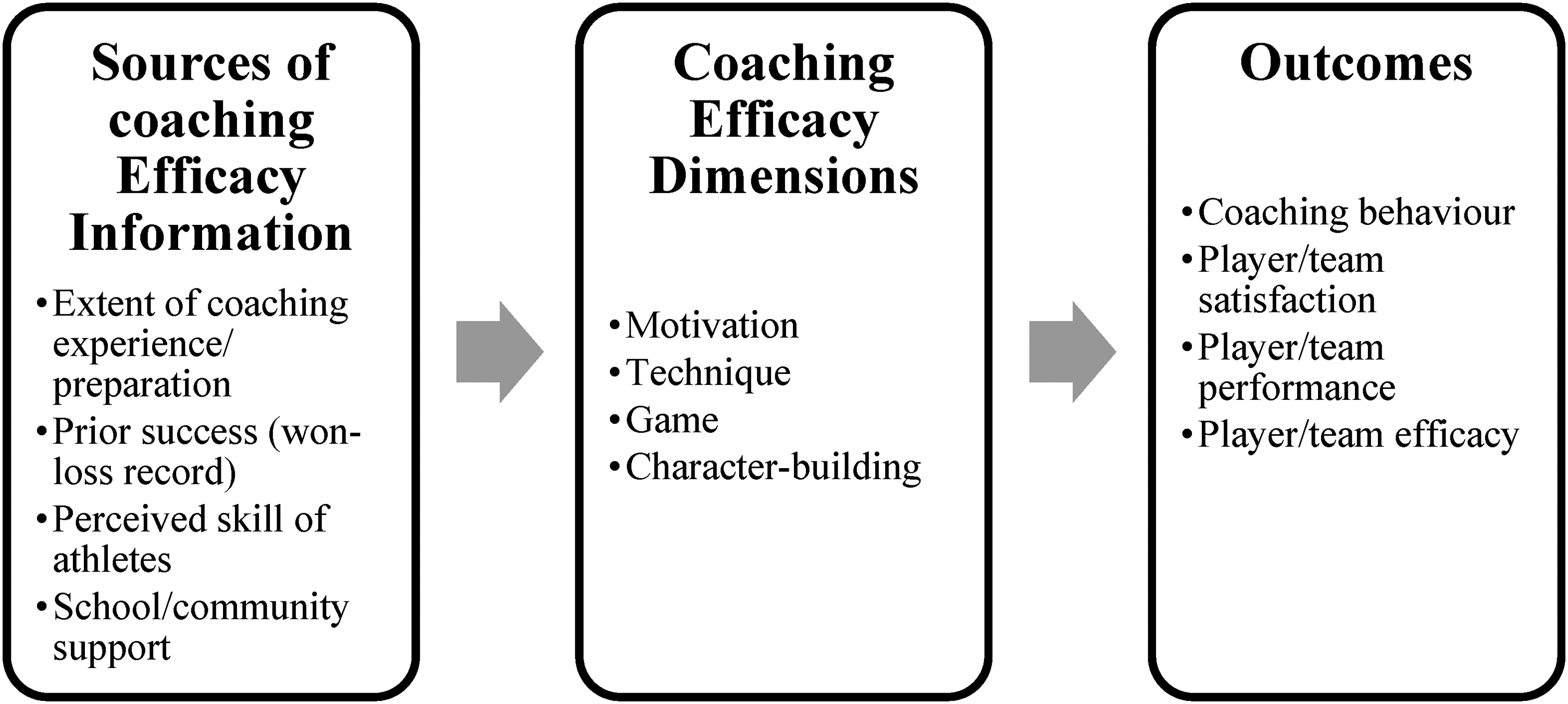
Conceptual model of coaching efficacy (Feltz et al. 1999). 46
According to Bandura (1997), 47 this category of information is deemed the most reliable for forming judgments of efficacy and is hypothesised to be the strongest predictor of coaching efficacy. Thus, this conceptual model was used to explore coaching effectiveness as perceived by South African Women's Rugby players and coaches. Ultimately, the study's findings hold promise for informing coaching effectiveness components within future coach development frameworks. They provide insights that extend beyond conventional perspectives on coaching pragmatics, fostering a more comprehensive grasp of coaching effectiveness and its relevance within the dynamic landscape of Women's Rugby.
Interpretivist research paradigm
The interpretive paradigm allows researchers to recognise and narrate the meanings associated with human experiences, 48 rather than quantifying, measuring, or predicting them about a hypothesis. Aligned with qualitative research methods, the interpretivist paradigm emphasises understanding the subjective meanings and experiences of individuals within their social context. Additionally, interpretivist research should be viewed not as a scientific endeavour in search of laws, but as an interpretive process in search of meaning. 49 In the context of this study, interpretivism suggests that players’ and coaches’ perceptions of coaching efficacy and resultant effectiveness are subjective and based on their personal experiences. The primary investigator aimed to understand coaching effectiveness from the perspectives of players and coaches by collecting data through interviews.
Study design
This study employed a qualitative research approach to delve into the perspectives of coaches and players regarding coaching effectiveness in SouthAfrican Women's Rugby. The study adheres to the reporting standards outlined in the Consolidated Criteria for Reporting Qualitative Research (COREQ) guidelines. 50 The study aimed to provide a platform wherein players and coaches can articulate their lived experiences. Ethical approval for this study was granted by Stellenbosch University's REC: Social, Behavioural and Education Research (SBER), project number: 23573.
Participants
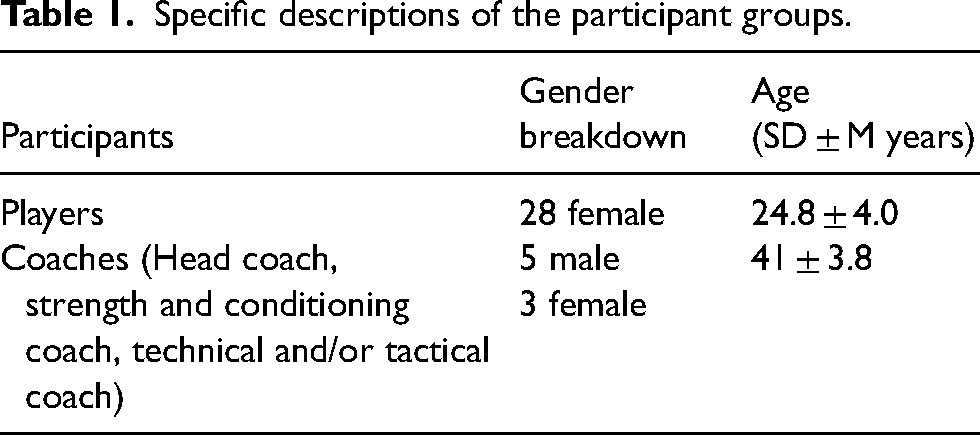
The study included 36 individual interviews with 28 Women's Rugby players and eight coaches, focusing on efficacy dimensions and outcomes of coaching effectiveness (Table 1). Participants were purposively selected from the South African Women's Rugby community. Recruitment involved poster advertisements in community spaces and on social media, as well as direct outreach through key administrative figures with extensive networks in the Women's Rugby community. This approach ensured a comprehensive and representative sample. The inclusion criteria for participant selection encompassed current and former Women's Rugby players (in both the 7's and 15's rugby codes) at the club (including university), national, and provincial levels, along with Women's Rugby coaches actively coaching at the high-performance level. Exclusion criteria included Women's Rugby players who have been playing outside of South Africa for more than three years, coaches not currently engaged in coaching at the provincial and/or national level, and support staff specifically working with men's rugby teams at present.
Specific descriptions of the participant groups.
Data collection
Researcher positioning
Regarding positionality, JS's chosen stance for the current study was aligned with the approach of Savin-Baden & Major 51 which involved three key areas: the topic, research participants, and context/process. Reflexivity guided JS's self-awareness, assessing how her views may influence the research. 52 As the qualitative approach relies on JS as the primary instrument, 48 she continuously reflected on her worldview. Keeping a methodological journal helped maintain awareness of her biases and perspectives, informing research development. 53 Despite personal experiences informing the research, objectivity was maintained to ensure research integrity.
Interview questions
The data collection process involved conducting one-on-one interviews in a semi-structured format. The interview script was derived from the Coaching Effectiveness Survey (CES) tool, 46 a widely recognised tool for assessing coaching effectiveness. This study examined how a coach's belief in their ability to influence athlete learning and performance (coaching efficacy) correlates with the actual impact on athletes (coaching effectiveness).
Interviews
Before data collection, JS (the principal investigator) conducted three pilot interviews with participants and consulted with SB, RG, and WK for feedback. The interviews spanned from October 2021 to February 2023. Participants provided informed consent, were assigned pseudonyms, and turned off their cameras during discussions. Interviews, lasting on average 30 to 60 min maximum, were recorded with permission obtained from participants and supplemented with handwritten notes by JS for reference during transcription. During COVID-19 restrictions, in-person interviews were substituted with online interviews conducted on the Microsoft Teams platform by JS. The semi-structured interview consisted of 15 questions, designed around Feltz and colleagues’ The Coaching Efficacy Scale (CES). This scale is a 24-item multidimensional self-report questionnaire that assesses four dimensions of coaching efficacy. During the interviews, only JS and the participants were present. It is important to note that no interviews were repeated during data collection.
Data analysis
The analysis, conducted through a qualitative research approach, ensured rigour via two primary processes. Firstly, an audit trail was established, with field notes taken during interviews and decisions documented throughout the research journey. Secondly, content analysis, employing a deductive approach, was applied to the interview transcriptions using the CES efficacy dimensions. 46 Utilising the ATLAS.ti Software and its coding function, emergent themes were sifted through and grouped under ‘Motivation, Technique, Game Strategy, and Character-building Efficacy dimensions,’ directly addressing the research question within Coach Efficacy dimensions. 46
JS meticulously analysed these themes by pinpointing relevant segments of transcriptions, coding, and categorising them based on both coaches’ and players’ perspectives, thereby refining findings to address the research questions effectively. After the completion of data collection and analysis, the study findings were shared with the participants. In a systematic process:
Key words and phrases related to the four efficacy domains were highlighted in each transcript. Transcripts were then uploaded to ATLAS.ti The software's coding function was employed to filter through all transcripts. Subsequently, each player and coach perspective were categorised and allocated under each of the four efficacy themes.
Findings and discussion
The perceived outcome of coaching efficacy in the context of South African Women's Rugby, from both players and coaches, offers insights for potential future coaching development frameworks. The data analysis generated five sub-themes under Feltz et al.'s four efficacy dimensions, 46 as depicted in Figure 2.
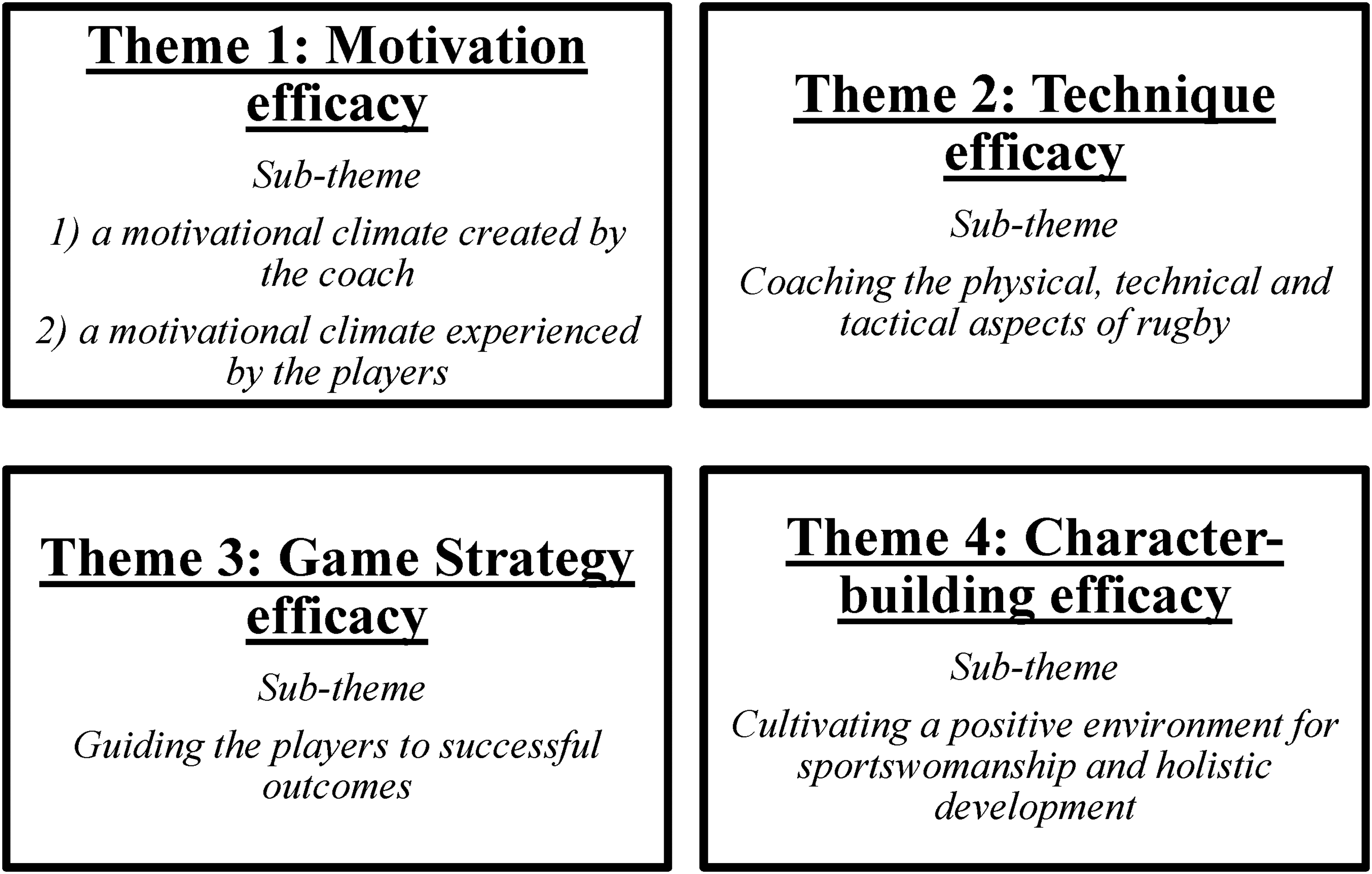
Coaching efficacy dimensions 46 and outcomes of coaching efficacy as perceived by women's rugby players and coaches.
Theme 1: motivation efficacy
Sub-theme: a motivational climate created by the coach
Motivation in sports coaching, as defined by Ntoumanis and Mallet (2014)
54
and Renshaw et al.,
55
involves mental processes driving athlete behaviour. Coaches James and Devon reported that they employ varied motivational strategies to inspire and guide their players. Coach James explains the inspirational impact of the players, stating, ‘My way to motivate this group of ladies is to always remind them that they are inspiring young ladies just like them’.
On the other hand, strength and conditioning (S&C) Coach Devon adopts a more quantitative approach, asserting, ‘You have to show them this is where you are (with numbers) and this is where you need to be’, ‘We get so caught up with using winning as our motivation, and that's not always productive’.
The theme of “Motivation Efficacy - A Motivational Climate Created by the Coach” highlights the critical role of motivational strategies in sports coaching but also demonstrates a focus on the sustainability of motivation.54,55 Coaches James and Devon demonstrate varied approaches to inspiring their players, reflecting the diverse methods (some more sustainable than others) needed to address different motivational needs. Coach James emphasises the inspirational aspect, reminding players of their role in inspiring others, which enhances player satisfaction and fosters a supportive team environment. This approach can positively impact player and team efficacy by boosting self-esteem and reinforcing the collective identity in the long term. 56 Conversely, S&C Coach Devon adopts a quantitative approach, using data to highlight real-time progress and set future goals, thereby driving long-term motivation through short-term measurable performance metrics. This method aligns with the concept of motivation efficacy by building players’ confidence in their ability to achieve specific performance targets.
Head Coach Lee adds a crucial dimension by cautioning against an over-reliance on winning as the sole motivator, recognising the potential for burnout and decreased satisfaction if the focus is too narrow. This perspective suggests that an exclusive focus on winning may not yield optimal results. Lee's balanced approach promotes long-term player and team satisfaction and performance by ensuring motivation is sustained through various intrinsic and extrinsic factors. The study's findings align with Orbach et al., 57 who emphasise the importance of intrinsic motivation in women's sports participation. Players attest to the effectiveness of these diverse motivational methods, expressing gratitude for the incorporation of data, video analysis, and personal encouragement by their coaches. They reported that these multifaceted approaches contribute to a comprehensive motivational environment within the team. Recognising both intrinsic and extrinsic motivation, coaches, therefore, need a balanced approach to sustainable goals in sports coaching. 58 Together, these strategies illustrate how a motivational climate created by the coach can significantly influence coaching behaviour, player satisfaction, performance, and overall team efficacy.
Sub-theme: a motivational climate experienced by the players
The second subtheme of motivation efficacy, is enriched by the following insights, demonstrating how coaching behaviours and strategies impact player satisfaction, performance, and overall team efficacy.
Senior rugby player Sarah highlights the sense of collective responsibility and motivation, stating, “You are literally leaving nothing behind. And you're not doing it just for yourself, but you're doing it for the team as well.” “Well, from the women coaches that I have experienced, they know how to deal with people and they take great patience in developing us from the basics, watching us grow, and ensuring a sisterhood within the team.” “They literally see where you are lacking, and they (coaches) want to help you reach that standard.”
From a coaching perspective, Maya (a Women's Rugby Head Coach) discusses the significant role of players as role models, noting, “To have that responsibility as players, it's huge because our players are coming from an area or from an environment where they haven't been taught at home what it is to be a role model.” “Their love and knowledge of the game are the key ingredients along with the desire they need to share with their players.”
Theme 2: technique efficacy
Sub-theme: coaching the physical, technical, and tactical aspects of rugby
The second emerging theme focuses on the coach's confidence in coaching the game and assessing rugby skills, particularly technique efficacy. It was found that coaches’ ability to effectively coach and evaluate technical elements of the game is crucial. 59 The confidence expressed by coaches in their ability to teach the intricacies of Women's Rugby in South Africa is accompanied by a candid acknowledgement of the challenges they face.
Head Coach Derrick sheds light on the intricacies of coaching players with diverse experiences and backgrounds, emphasising the need for adaptability, especially in sessions where multiple skill versions must be addressed. Derrick reflects, ‘It is at times difficult to get all the technical aspects down…the girls come from all different experience levels, even different sports, you see…I always start with the basics at the beginning of the season and then go into tactical things throughout the season’. ‘some skills are quicker to learn than others…for example, I can teach anyone to pass within two sessions…but when it comes to tackling, scrumming, and all of those more technical things, it takes years of experience…’. ‘for me, whether I am effective or not as a coach depends on whether the player can execute the skill…it requires a different approach from us as men who coach females…you have to take it step by step with them and explain the bigger picture’. ‘there is a lot to learn…in a short time. And I think we as juniors play catch-up especially if we haven’t experienced rugby before. Because everything is new’. (Lauren: Junior Rugby Player) ‘Coaches will bring hand and eye coordination exercises from other sports, or even introduce things like tennis balls and catching during the warm-up so we can focus and learn to catch properly’.
The analysis of technique efficacy in coaching Women's Rugby in South Africa reveals the multifaceted challenges coaches face in effectively teaching and assessing the physical, technical, and tactical aspects of the game. Coaches like Derrick and James underscore the importance of adaptability, considering the diverse backgrounds and experience levels of players. Derrick's approach involves starting with foundational skills and gradually progressing to tactical elements throughout the season, while James emphasises the differing learning curves associated with various rugby skills. Assistant Coach Max emphasises the necessity of a patient approach in coaching women, highlighting the importance of step-by-step instruction, and contextualising each skill within the broader game strategy. Players’ perspectives provide valuable insights into the challenges and innovative methods used to enhance their learning experiences. Junior Rugby Player Lauren acknowledges the steep learning curve for newcomers, while Amy highlights the creative coaching methods employed to improve essential rugby skills. Additionally, Senior Rugby Player Zani discusses the use of small-sided games for skill development. Overall, the integration of diverse coaching strategies and player-centred approaches ensures that players not only improve their game but also build a strong foundation for future growth in the sport.
Theme 3: game strategy efficacy
Sub-theme: guiding the team toward successful outcomes
A coach's skill in leading a team to success depends on how well they plan their game strategy. 46 According to coaches of this study, this involves being confident, coaching the fundamental skills, and understanding how to handle players’ behaviour. This theme emerged as coaches and players delved into discussions about coaches’ strategies and methodologies during preparation for competitions and the intricacies of coaching individual players on technique.
Head Coach Lee set the stage, underscoring the need for tailored approaches based on players’ experience levels and diverse backgrounds. He shared ‘look, when they come into the setup, there is a lot of things you’ve got to teach them… like the basic basics of rugby… how to pass a ball and how to tackle. So, game strategy stuff I only really mention to my senior players…’. ‘I keep it simple but also explain why we do certain things…as soon as you make it complicated, you lose them’. ‘I normally use a whiteboard and mark it out for the players. We will also literally walk through what we want to achieve… step by step’. ‘with female players, I would say it takes a bit more patience to talk about game strategy and teach them the ropes… women want to understand why before doing something’. ‘coach will literally make us act out our game plan and will literally ask us to draw it, so he knows we understand’.
The theme of strategic planning emerges as a critical aspect of a coach's skill in leading a team to success, as highlighted by discussions among coaches and players regarding game strategy and individual player coaching techniques. Head Coach Lee emphasises the need for tailored approaches based on players’ experience levels, focusing on fundamental rugby skills for newer players while entrusting game strategy discussions to senior players. S&C Coach JP emphasises the importance of simplicity and clear communication, particularly with women's players, to maintain engagement and understanding. Assistant Coach Max's use of visual aids and step-by-step walkthroughs exemplifies effective coaching strategies, facilitating players’ comprehension and implementation of tactics. Assistant Coach Jo brings a unique perspective, emphasising the need for patience and understanding when teaching game strategy to women, who prefer to understand the rationale behind actions before executing them. The voices of senior players echo these sentiments, highlighting their interactive learning experiences and Coach Lee's innovative coaching methods, such as acting out game plans and visualising strategies, to ensure comprehensive understanding and execution among players. Overall, effective strategic planning and clear communication are crucial for coaches to maximise team performance and player development.
Amid these opportunities as well as challenges, a common thread emerges — the value of character-building. Despite the complexities in coaching women's players, the emphasis on fostering character and recognising the players as individuals remains a prevailing theme.
Theme 4: character-building efficacy
Sub-theme: cultivating a positive environment for holistic development and sportswomanship
The study delved into character-building efficacy, emphasising a coach's role in encouraging personal growth and fostering a positive sports attitude in athletes. 49 Recognising the lasting impact beyond training sessions, the study explored coaches’ confidence in promoting these values among players. Coaches discussed their strategies for instilling moral character in their players and instilling values which can be useful beyond the rugby field.
Head Coach Derrick focuses on creating a welcoming and supportive environment he shares: ‘I allow my (more) senior players to lead by example and remind them that the newbies look up to them…’.
S&C Coach JP commends the celebration of modest achievements in light of a positive environment: ‘We always celebrate the small things…if someone struggled in the fitness test but pushed through, we make a circle at the end of training and the players go around and we clap at the end’, ‘but I always tell them that people always have opinions…you just play your game and keep paving the way’, ‘you don’t know what the next person is struggling with…so we are gracious with each other, but we encourage each other always’. ‘You know some of us are full-time students, some are parents etcetera…coaches are aware that some come to training because it's their guarantee for a solid meal, others come because they have a goal of making it to the top’.
In summary, Head Coach Derrick's approach focused on inclusivity and pioneering, aligns well with the global importance of what Women's Rugby represents. Coach Lee highlights the importance of breaking stereotypes, while Coach JP prioritises unity in the face of obstacles. The strategies employed by the coaches and the perspectives of the players collectively illustrate how a positive environment conducive to holistic development and sportswomanship is cultivated. The emphasis on role models, celebration of achievements, breaking stereotypes, sisterhood, and inclusivity all contribute to character-building efficacy. This approach ensures that players not only develop as athletes but also grow as individuals with strong moral character and resilience, both on and off the field.
The findings of the study align with existing literature on coaches playing a vital role in instilling moral character and fair play in athletes. Mills 60 suggests a Values-Based Coaching (VBC) framework emphasising ethicality, excellence, and empowerment. While the South African Women's Rugby coaches and players did not explicitly mention these three E's, their insights resonate with VBC principles. Beyond character-building, effective coaching requires skills like leadership, problem-solving, decision-making, planning, and instructional abilities. 61 Coaches possessing these skills guide players to success. Moreover, consistency between a coach's words and actions is crucial for the coach-athlete relationship. 62 Feedback from coaches and players indicates that coaches’ actions align with their words. For example, S&C Coach JP's emphasis on family aligns with Monique's mention of promoting sisterhood, reflecting the coach's focus on strong team relationships. The study emphasises an athlete-centred approach, as seen in how coaches delegate leadership to senior players who decide on team values. This approach has parallels in youth soccer. 62
Drawing on the soccer Sport Education Model, 62 an athlete-centered approach 63 represents a fundamental shift in coaching. The same study of youth soccer found coaches’ and players’ experiences influence perceptions of athlete-centered coaching, challenging the balance with team-centered approaches. Coaching's complex nature makes executing pedagogical methods challenging, with coaches adopting various styles, including maintaining distance or emphasising supportive relationships.
The study delved into the multifaceted field of coaching efficacy and its translation into coaching effectiveness within the dynamic landscape of South African Women's Rugby, a domain still in its nascent stages of development. In exploring this intricate relationship, the research examined how coaches’ beliefs in their abilities intersected with the tangible outcomes of their coaching behaviours and strategies. Against the backdrop of the inherent complexity in sports coaching, characterised by ambiguity and dynamic micro-political environments, the investigation aimed to shed light on the nuanced interplay between coaching efficacy and effectiveness. By navigating through the thematic dimensions of coaching efficacy and their corresponding outcomes, the study offers insights into the intricate dynamics shaping coaching practices and their impact on player development, satisfaction, and performance.
Future studies could gather diverse stakeholder perspectives, categorise coaches based on roles, and explore how coaches’ backgrounds relate to coaching efficacy dimensions. Moreover, longitudinal research could examine the long-term impact of coaching strategies on player development and performance. Additionally, exploring gender dynamics in coaching, particularly comparing the efficacy and effectiveness of women's and male coaches, would be valuable. Further research could also assess how external support systems, like mentorship programmes and professional development, enhance coaching efficacy and effectiveness. The study's limitations encompass a few factors that warrant consideration. Firstly, the sample size of 28 women players and 8 coaches, while offering valuable insights, may not comprehensively represent the entirety of perspectives within South African Women's Rugby. Moreover, the findings’ applicability may be confined to the specific context of South African Women's Rugby, necessitating caution in extrapolating them to other regions or sports contexts without further validation. Additionally, the choice of conducting semi-structured online interviews could have impacted the depth of interaction compared to face-to-face interviews, potentially influencing the richness of the collected data. Finally, the absence of perspectives from team managers and performance analysts also warrants as a limitation.
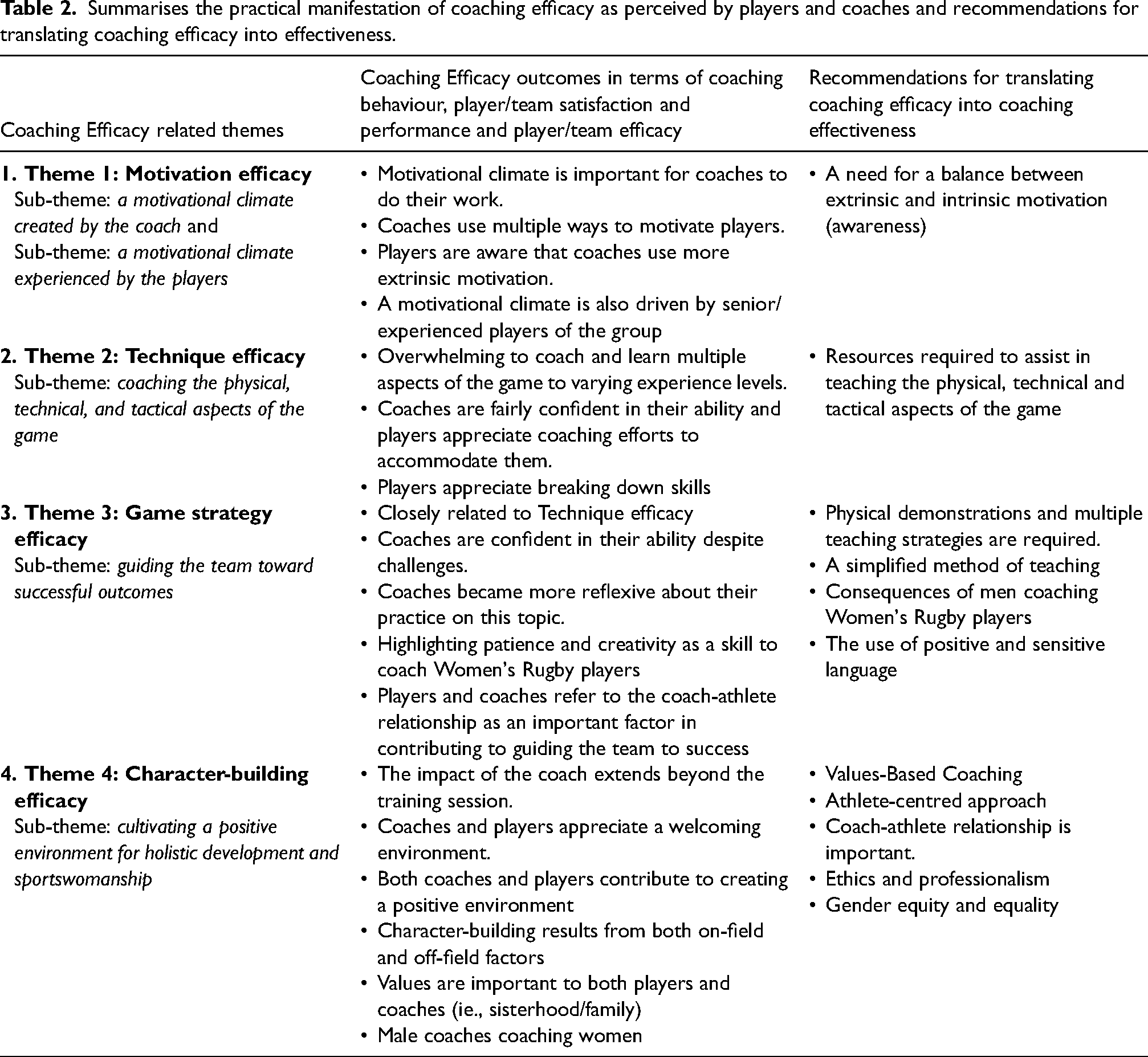
Based on the findings of our study, Table 2 provides a summary of how coaching efficacy is practically established, as perceived by both players and coaches. Organised into three main sections, the table offers valuable insights into different aspects of coaching efficacy. The first section details the key dimensions and related themes of coaching efficacy. The second section categorises tangible outcomes into coaching behaviour, player/team satisfaction, and performance and player/team efficacy. Coaching behaviour includes actions like feedback methods and training session structuring. Player/team satisfaction measures contentment and fulfilment, while performance and player/team efficacy capture the impact on performance and collective belief in abilities. The final section, recommendations for translating coaching efficacy into coaching effectiveness, offers practical strategies for coaches, such as professional development opportunities, specific coaching practices, fostering a positive team culture, and seeking player feedback. These findings highlight the importance of a multifaceted coaching approach, enabling coaches to assess and improve their effectiveness, and helping teams design programmes to enhance coaching quality and player satisfaction.
Summarises the practical manifestation of coaching efficacy as perceived by players and coaches and recommendations for translating coaching efficacy into effectiveness.
Conclusion
This study aimed to provide valuable insights into coaching effectiveness by examining the correlation between coaches’ belief in their ability to influence athlete learning and performance (coaching efficacy) and the actual impact of their coaching behaviours and strategies on athletes. It explored whether coaches’ perceived competence in various coaching efficacy domains aligns with tangible results such as athlete performance, satisfaction, skill development, and overall positive outcomes.
The findings align with the holistic nature of effective coaching as outlined by Feltz et al., 46 emphasising not only technical and tactical proficiency but also interpersonal skills, motivational strategies, and character development in coaching. A notable observation lies in the apparent congruence between Feltz's efficacy domains and those proposed by Nash and colleagues, alongside the commonly perceived efficacy by players and coaches in this study. Feltz delineates four dimensions: Motivation, Game Strategy, Technique, and Character-Building Efficacy, while Nash et al. articulate these as a long-term approach, an authentic coaching environment, quality versus quantity in training, and a learning environment, respectively. Across the four dimensions of coaching efficacy, important findings emerge, each with implications for enhancing coaching practices and player development. In terms of motivation efficacy, coaches play a crucial role in fostering a motivational climate, with a tendency towards extrinsic motivation. However, there is a call from players for a balance between extrinsic and intrinsic motivation to sustain players’ motivation effectively. Technique efficacy presents challenges in teaching diverse skill levels within the team, but coaches exhibit confidence and adaptability, while players value efforts to tailor skills to their needs. Game strategy efficacy highlights the resilience of coaches in guiding teams towards success despite challenges, emphasising reflectiveness, patience, and creativity, alongside nurturing the coach-athlete relationship. Character-building efficacy highlights the holistic impact of coaches on players, extending beyond training sessions. Coaches and players contribute to fostering a positive environment, emphasising core values such as sisterhood and inclusivity. The study builds on existing literature on coaching women players while also providing new insights for coaches in the specific South African context. Recommendations include fostering a balanced motivational climate, providing resources for technical teaching, nurturing relationships, and promoting VBC and gender equity. Incorporating these insights into future coaching development frameworks can lead to transformative impacts on coaching practices, ensuring a supportive and effective environment for the holistic development of women's rugby players in South Africa.
Supplemental Material
sj-docx-1-spo-10.1177_17479541241283625 - Supplemental material for Insights into coaching effectiveness: Perspectives from coaches and players in South African Women's Rugby
Supplemental material, sj-docx-1-spo-10.1177_17479541241283625 for Insights into coaching effectiveness: Perspectives from coaches and players in South African Women's Rugby by Jocelyn Solomons, Sheree Bekker, Ryan Groom and Wilbur Kraak in International Journal of Sports Science & Coaching
Footnotes
Acknowledgements
The authors wish to thank all the participants who volunteered to participate in the study. This work was supported by the National Research Foundation (NRF) under Grant: 117465.
Declaration of conflicting interests
The authors declared no potential conflicts of interest with respect to the research, authorship, and/or publication of this article.
Funding
The authors disclosed receipt of the following financial support for the research, authorship, and/or publication of this article: This work was supported by the National Research Foundation, (grant number 117465).

Supplemental material
Supplemental material for this article is available online.
References
Supplementary Material
Please find the following supplemental material available below.
For Open Access articles published under a Creative Commons License, all supplemental material carries the same license as the article it is associated with.
For non-Open Access articles published, all supplemental material carries a non-exclusive license, and permission requests for re-use of supplemental material or any part of supplemental material shall be sent directly to the copyright owner as specified in the copyright notice associated with the article.
