




Abstract
Despite increased attention on the menstrual cycle in sport, research has focused largely on physiological changes, with relatively little consideration for fluctuations in psychological responses and coping strategies used in training and competition. This study's primary focus was to explore athlete's coping strategies throughout the menstrual cycle. Participants (n = 12) took part in a focus group or interview, facilitated by reflections from a diary and mapping exercise. Reflexive thematic analysis was used to analyse the data, generating three themes: Impact of symptoms, coping strategies, and contextual constraints. Participants had increased awareness of physiological over psychological fluctuations, and associated symptoms were considered to impact practicalities of sport and performance. Participants used avoidance, acceptance, and planning to cope with the impact of menstrual symptoms. Coping options were influenced by contextual constraints, including the level of competition and type of sport. The findings showed that some participants lacked menstrual health literacy, especially in relation to psychological fluctuations. Continued efforts to raise awareness around the psychological symptoms of the menstrual cycle and its impact on performance and well-being are needed, not only for the athlete but importantly for the coaching population too. Specifically, consideration of the sporting culture and the space in which athletes feel they can communicate their coping strategies could be pivotal in moving forwards to help develop ‘period pro’ athletes.
Menstrual cycle symptoms such as fatigue, bloating, stomach cramps, disrupted sleep, poor concentration, and mood changes are a common occurrence for females who partake in sport. 1 For some, these symptoms are so significant that it prevents them from participating in sport or having to adapt their activities, whereas for others the symptoms experienced are minor, with athletes winning medals across their menstrual cycle. 2 Women who experience significant menstrual symptoms often feel they cannot talk about it3–5 or lack knowledge in how to manage the symptoms effectively.5,6 Encouragingly, the tide seems to be turning. Conversation regarding the menstrual cycle is opening up, with coaches demonstrating a desire to improve their understanding of the cycle and its influence on performance, how to better manage training loads, and how to enhance communication about these influences with their athletes. 7
Despite an increase in research focusing on the impact and experience of the menstrual cycle on sport performance,3,8 research tends to focus on the ‘negative’ or dysfunctional aspects of the menstrual cycle. Furthermore, this research has not always considered changes that occur throughout the entirety of the menstrual cycle and its potential impact on training and performance.9–12 Yet, focusing on the entire menstrual cycle can be beneficial, especially at an individual level considering that symptoms an athlete may experience can vary significantly from person to person. 13 Moreover, physiological changes that happen during the menstrual cycle can have an impact on psychological factors such as changes in mood, pain and effort perceptions, confidence, and motivation, as well as behavioural changes, including avoiding activities, putting in less effort, and reduced decision-making.5,14,15 For example, changes in breathing and body temperature can make exercise feel harder, influencing perceived effort.16,17 Hormone fluctuations can also impact mood. Negative mood including frustration, irritability, fatigue, tension, and anxiety are linked to premenstrual syndrome, 18 whereas positive mood is more evident mid-cycle. 19
Typically, research seems to agree that psychological experiences that are deemed negative, such as irritability, fatigue, and reduced effort, are more pronounced in the luteal phase (LP), 20 yet little effort has been made to understand how these ‘negative, or unhelpful’ psychological experiences can be managed in a sporting environment, nor how athletes could embrace positive mood states. This is perhaps not surprising because despite coaches wanting to know more about the menstrual cycle, 7 researchers have highlighted the discomfort expressed by athletes when it comes to discussing this with their coaches.15,21–23 Moreover, menstruating females may find it difficult to connect hormone fluctuations to psychological factors. 18 As a result, not only are athletes potentially uncomfortable with discussing their menstrual cycle with coaches, but it is plausible to suggest they have limited awareness to be able to fully recognise their own coping strategies. Coping involves cognitive and behavioural efforts to manage external and/or internal demands and psychological stress. 24 Examples of demands linked to the menstrual cycle include changes in mood, exercise feeling harder, fluctuations in confidence, clothing choice, and pain perceptions. Research focussed on the menstrual cycle has identified strategies as a combination of emotion-focused (addressing relational meaning, regulating emotions related to the situation 25 ) and problem-focussed (addressing the person-environment relationship 25 ) coping, which includes perceived social support from teammates, as well as acceptance and finding ways to adapt.15,22
Understanding and facilitating athletes’ coping strategies can help the sporting experience of not just female athletes to more effectively manage fluctuations that may occur across the cycle, but also through raising coach awareness. Research that has looked at psychological strategies to cope with menstrual symptoms in sport has been limited and mostly focused on when menstruation commences.15,22 Although an encouraging start, it offers a narrow focus and fails to recognise the entire menstrual cycle and how athletes could optimise and manage performance. Considering that coping tends to be a process, 25 with athletes’ coping strategies fluctuating over time and in relation to demands changing, 26 coaches can play an important role in offering a supportive environment to accommodate for these demands alongside any additional sporting, organisational, and personal stressors that athletes may experience.
The present study
The menstrual cycle is a complex process, accompanied by physiological, psychological, and behavioural fluctuations, which can impact sport performance and well-being.8,11 This is not only prevalent at the elite level but also impacts participation and engagement at all levels of sport and exercise. Although there is some awareness of psychological symptoms related to the menstrual cycle, the majority of qualitative studies focus on how athletes manage this during menses, 22 and as a result there is little known on female athletes’ coping processes throughout their menstrual cycle. Therefore, the aim of this study is to explore female athletes’ experiences and use of coping strategies throughout the menstrual cycle. The research questions were (a) What are the athletes’ experiences of psychological symptoms and their impact across the menstrual cycle, and (b) If and how do athletes draw on coping strategies during the menstrual cycle to manage their symptoms.
Method
Philosophical underpinning and sampling
Underpinning this study is the philosophical paradigm of interpretivism, founded on ontological relativism (i.e., recognition of multiple realities), and epistemological constructionism (i.e., knowledge is subjective and its meaning is co-constructed27,28). The menstrual cycle is considered a highly personalised experience that is influenced by society and culture. This can be particularly relevant regarding sport culture and how the menstrual cycle is perceived. To align with this, focus groups were used as the primary means of data collection to reflect an appropriate method of collating multiple realities and to recognise the co-construction of experiences.
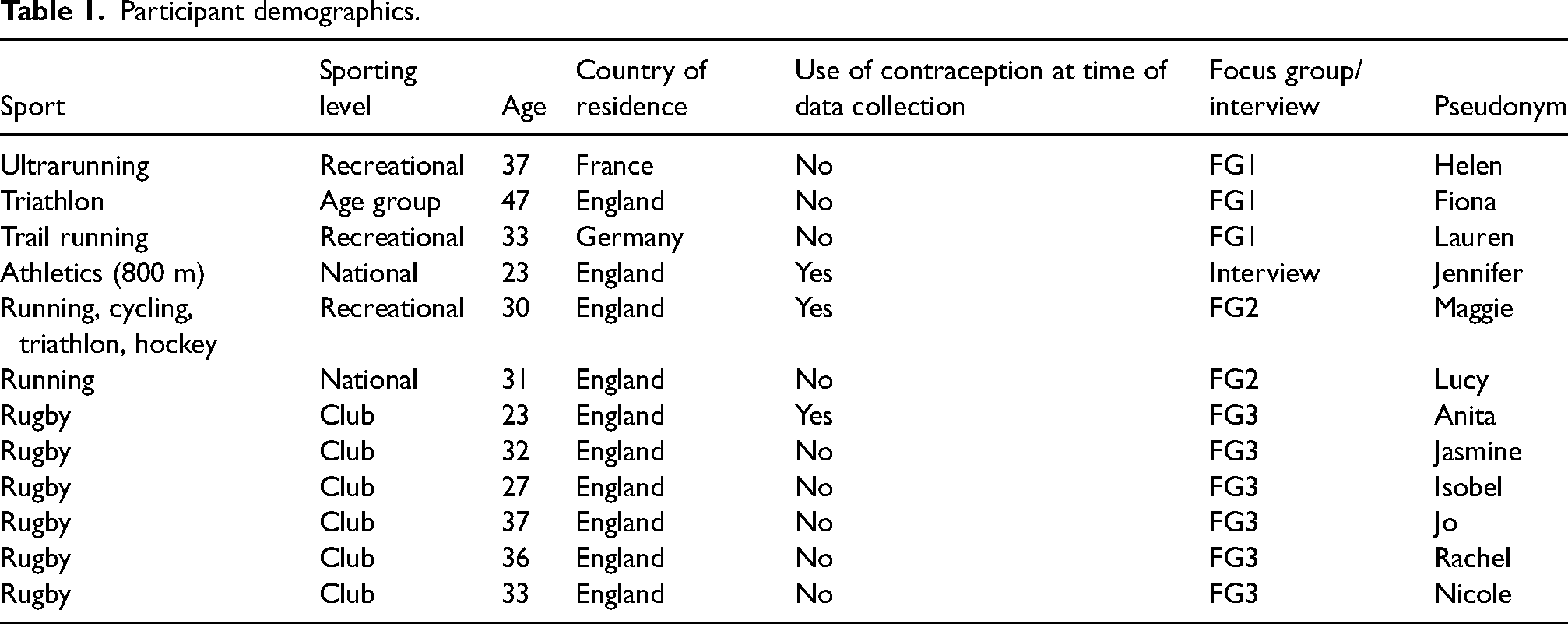
Following institutional ethical approval and informed consent, participants were recruited through criterion-based purposeful sampling 29 via social media outlets (X, LinkedIn and Instagram). This enabled far-reaching opportunities to include participants from varied backgrounds to meet the criterion of identifying as a menstruating female (either natural or artificial), aged 18 years or older, being fluent in English, and actively partaking in regular sporting activity (defined as exercising at least two times a week and being involved in sport for at least 3 years). Twelve participants were recruited (Mage = 32.4 years, SD = 6.3 years) which created three focus groups and one interview. At the time of data collection participants were based in England, Germany, and France. The reported menstrual cycle length varied from 23 to 33 days. Eliciting small numbers for each focus group was purposeful to align with the recommendation that fewer participants can result in enhanced contribution and development of cognition from its members (Table 1). 30
Participant demographics.
Data collection and procedure
Prior to partaking in a focus group, participants were asked to complete a weekly diary to track the fluctuations and presence of both physical and psychological symptoms related to their menstrual cycle. Participants were asked to keep this diary across the entirety of their cycle. Existing research associated with the menstrual cycle, 1 alongside validated measures, such as the Brunel Mood Scale 31 and BRIEF Cope, 32 as well as three meetings with experts (from the university's female health research group who have published extensively on the physiology of the menstrual cycle), aided the development of a list of symptoms which participants monitored over the duration of their cycle. The weekly diary captured three areas: (a) menstrual cycle symptoms (i.e., temperature fluctuations, stomach cramps); (b) mood state (i.e., fatigue, anger); and (c) coping strategies (i.e., planning, positive reframing). The weekly diaries were intended as an awareness exercise to help participants prepare for the focus groups, and as such the data from the diaries were not analysed. Moreover, physiological measures such as hormonal changes were not tracked as the weekly diary was used as an awareness exercise to help stimulate conversation during the data collection. Following the weekly diaries, participants were invited to take part in either a focus group or an interview to explore athletes’ experiences and use of coping strategies to manage fluctuations throughout the menstrual cycle. It is recognised that for some, discussion of the menstrual cycle can be an uncomfortable or awkward conversation, therefore participants were given the choice of partaking in a focus group or interview. 21 Consequently, three focus groups (one online and two face-to-face) and one interview (online) were conducted (total time: 262 min).
Focus groups followed a semi-structured question guide, with the research team acting as facilitators of discussion, to encourage conversation among group members and to place emphasis on the importance of the participant voice. 30 Two stimulus activities were included to aid the flow of conversation and to generate opportunity for contribution from all members of the group.30,33 Activity one was a word association game to elicit quick opinion and to ‘normalise’ openness around the menstrual cycle. Activity two was a mapping exercise in which a weekly diary was used to map menstrual symptoms and emotions onto a diagram of the menstrual cycle. The weekly diary was key in raising participant awareness of their symptoms throughout their cycle, rather than solely the pre-menstrual and menses phases. Importantly, because we were unable to identify exactly which phase participants would be in, this mapping exercise was intended for the participants to reflect on whether they would notice changes in their symptoms and emotions throughout their cycle. From the mapping exercise, participants were better able to discuss their experiences and to engage in shared dialogue.29,34 Three questions facilitated the main focus of conversation: “how do you feel sport and exercise is influenced by your period?”, “how do you manage the symptoms related to your menstrual cycle?”, and “do you feel there is a fluctuation in the types of strategies you use throughout your cycle to deal with various symptoms?”.
Data analysis
All data were recorded and transcribed verbatim. Reflexive thematic analysis was used to facilitate the analysis of data in which both researchers engaged in a collaborative approach to understanding the findings. 35 Transcripts were read and re-read to aid familiarisation of its content, and with each reading annotations were made by both researchers. Following annotation of the data, codes were assigned, and initial themes were considered. 36 Themes were developed where there was a pattern of shared meaning across participants. At this stage of the analysis, it was important to acknowledge the position of the research team as menstruating females who regularly partake in organised team sport and exercise. Active engagement with a critical friend aided the recognition of how one's own experiences may have impacted assumptions of the data. 37 This acted as a sounding board for shared reflexive discussion to review and refine the generated themes.35,37 Discussions primarily centred on assumptions regarding prevalence of mood states, awareness of how symptoms differentially impact performance across the cycle, and how these are consequently managed. For example, both researchers had originally considered avoidance coping as a less effective form of coping which was informed by research findings 38 and experiential experiences as applied practitioners. Through reflexive discussion and critically challenging assumptions, there was space to more effectively engage with the data and understand that avoidance coping can be a meaningful way in which some participants would cope. These discussions occurred across several meetings and enabled both researchers to reflect on and question their own and each other's assumptions, towards the generation of themes. 39
Results
Participants mapped their mood states and symptoms across their menstrual cycle four weeks prior to partaking in either a focus group or interview. It is important to note there was high variance in the levels of self-awareness amongst participants regarding their symptoms and coping strategies, and how these changed across their cycle. Three general themes were developed from the data (see Figure 1), where impact of symptoms and coping strategies are dependent on the contextual constraints defined by each participant.
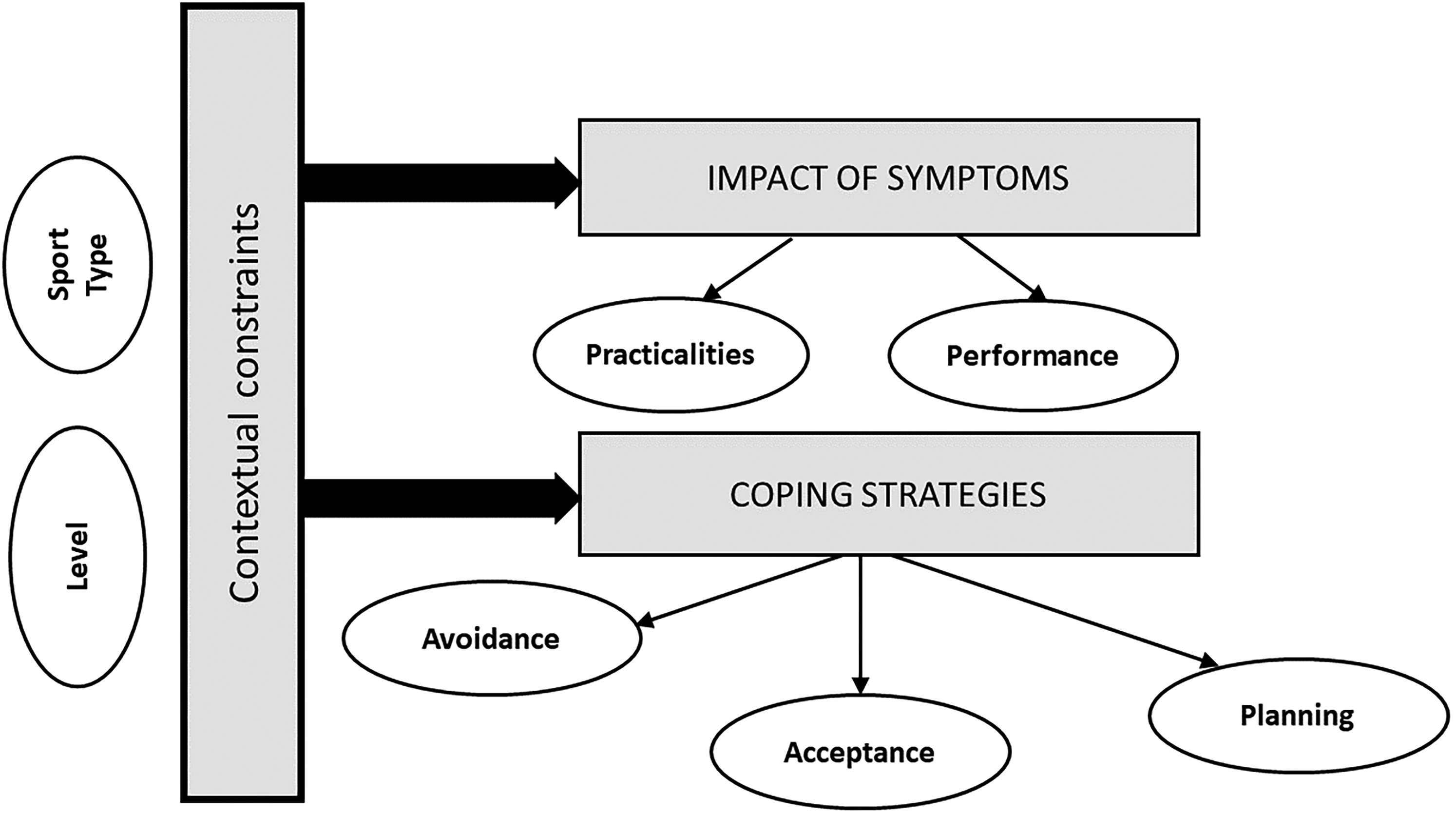
Overview of themes.
Impact of symptoms
Physical and psychological symptoms throughout the menstrual cycle were considered to have changeable impact on the daily activities of participants. Two subthemes represent these data: practicalities and performance.
Practicalities
Participants indicated that menses produces the largest amount of angst regarding practicalities when on their period. Clothing was noted as a source of worry, in particular the colour and fit of clothing. In addition, the intensity of symptoms influences the perceived feasibility of being able to train or compete, as evidenced by Fiona (FG1): “I don't go to the swimming pool when I'm on my period just because it is so heavy and everything I use, it just doesn't accommodate the flow effectively enough.” In this instance, Fiona identifies a strong impact on her ability to train due to the heavy symptoms experienced. For others, it was highlighted they were able to continue to train or compete but the logistics of the event or the facilities available, caused an additional layer of concern on top of any usual pre-competition worries. Maggie (FG3) highlights her experience of running a marathon: …with a tampon just the vigour from doing an exercise that the physical movement sometimes can like shift it out…now I just have to grin and bear it. But it's really uncomfortable because I can feel where it is…And then you start worrying about what if it's going to come out completely. Like, I know I'm light, but am I now going to leak…
Performance
Participants recognised that performance was impacted at different stages of their menstrual cycle. A quote from Lauren (FG1) summarises this variability: …the week previous to my period…sometimes I get these emotional meltdowns that I may cry with almost anything that…I wouldn't usually care about. I also feel very anxious and uncertain. And definitely, very near my ovulation, I feel like I'm the master of the world and that I could go out and run so fast. I like exercise when it's a solo exercise and I’m not going to let anyone down…But hate it for stuff like rugby because I’m not feeling my best and then I get in my head and then I won’t be playing my best, and then I get way more anxious about things I do wrong, and I’ll spend the game being like oh I f****d up like 45minutes ago.
Coping strategies
Participants drew on coping strategies in efforts to manage menstrual symptoms and subsequent stressors that occurred during or immediately before menses. Some consideration was given to other stages of the menstrual cycle, especially when it came to planning as a coping strategy, yet participants were mostly aware of how they coped with symptoms occurring immediately pre and during menses. This theme comprised three sub-themes: avoidance, acceptance, and planning.
Avoidance
Avoidance as a coping strategy was mentioned by participants across all sports and included ignoring and putting up a front. Some participants stated avoidance as an unconscious means to ignore any symptoms experienced however, for others it was a deliberate choice to use avoidance as a coping strategy, as they felt tuning into their symptoms would make it feel worse. To illustrate, Rachel (FG4) explained how she used avoidance as a strategy on game days: I think my way of coping on game day is by making sure no one knows that I’m on. So, I’m hiding it, because no one else knows then I can just get on with it and then it kind of makes me forget about it. I think if I wallowed in it I’d feel the pain more.
Acceptance
Acceptance as a coping strategy was used to acknowledge that menstrual symptoms existed rather than fighting or ignoring them. For some participants, this meant acknowledging, not suppressing symptoms such as pain. Lucy (FG3) illustrated how she used self-talk to help her to accept the pain as something that was temporal: “…I just always say to myself ‘the pain will pass, the pain will pass’. Particularly when the cramps are quite bad and I know I have to get out and do it…” This implies that using self-talk was helpful to facilitate acceptance. Acknowledging and therefore accepting symptoms, such as feeling more anxious, less able to concentrate, and feeling tired, was a common observation amongst participants.
Acceptance was also achieved by taking the pressure off oneself to push through training as normal, by changing the intensity and expectation of what is to be achieved. Participants also acknowledged there are elements to the menstrual cycle that were not within their control (i.e., day one of menses). Helen (FG1) acknowledged that not knowing when day one of her menses would be in the longer term could catch up with her, yet accepted this as part of her sport: When you're running 100 hundred miles or 50 miles, there's only one specific time in the calendar when that race is happening. So you sign up for it a year in advance. I'm just going to roll the dice and hope for the best. I'm sure one day it will catch up with me and it will be that very first uncomfortable day. But so far I've got away with it.
Planning
Being aware of and understanding personal symptoms can enable participants to anticipate and plan for their impact. This can include forward planning, goal adaptation, and simplification of activities. Fiona (FG1) explained how this awareness informed planning her activities in line with the symptoms she typically experienced at various stages of her cycle, with her working harder during the follicular phase and focusing on good sleep hygiene during the luteal phase. Similarly, Jennifer explained how planning helped her to cope with managing physical changes such as muscle tension. Having incurred a previous injury during her period due to increased muscle tension, Jennifer noted she now plans for this by ensuring that she is more stringent with her stretching programme during menses.
Numerous participants referred to being flexible in their training expectations to help shift their focus away from symptoms being experienced. Lucy (FG3) explained how this worked for her: I do remember times when I felt really bloated on the track and just being like, okay, maybe I won't take as many reps today and maybe let the other girls do the work and try to just hitch on to them and follow them. I remember last year I was having this race and since I woke up I knew that I was almost near my period because my heart rate also goes up a little bit. So I had like these goals and I had to change it through the race because my heart rate was going way too high. I just had to slow down and throw my time goal and just finish the race.
For some participants, planning involved using external aids, such as the contraceptive pill to help alleviate symptoms related to the menstrual cycle: “…for those two periods, …I didn’t train, I did not exercise and I definitely felt a heavy impact. I went back on oral contraception. Now I’d say it’s a breeze” (Maggie, FG3). This illustrates the perception of control that hormonal contraceptives can offer in training and performance.
Contextual constraints
An underlying factor that affected how participants coped with their menstrual cycle was context. Perceived coping options were influenced by circumstance, such as the level of sport participants competed at (i.e., recreational versus club) and sport type (team or individual). Such contexts, determined the choice of coping strategy that participants felt they could use: …with triathlon age group you have three races that you can choose. So based on my period cycle, I will never do a race when I'm actually having my period because I don't want that kind of aspect of the heavy blood loss being a factor when I take off my wet suit… (Fiona, FG1) …it's a difficult one, because with competition, you can't really…change when you compete. So, I think that's a managing thing, which is why I'm always like, no, you train through it, because if you have to compete, then you're going to have to do it. So, I try and keep it very harsh in the respect of, don't let that stop you doing whatever you want to do.
Supporting the concept of choice and flexibility of coping strategies when managing a training schedule is an extract from Lucy (FG3). Here she refers to the difference between training within a system or group, versus training individually: …that's where the element of choice has gone because you couldn't say I feel bad today I just want to take it slow, that would definitely be perceived as being quite weak in that environment and I think you would have felt quite defeated by it, and you wouldn't have wanted to do that. Whereas now I don't have to answer to anybody…So that's where the choice comes in…I can plan because I'm not part of a system or a group. …if you start being that person that's now regularly once a month saying you’re struggling to train and that when it comes to selection for teams…I've certainly been in teams where players have not been selected because they are injury prone and I think you might start getting recognised as a player that's period prone that's like, well what if your period falls over this tournament and we need this striker…is this other player just as good as a striker? And she doesn't complain about her period, so they [coaches] rather take her.
The following quote moves beyond how the individual felt they could manage their own symptoms, and considers the challenges for a coach working with a female team: “I guess the thing is, if he's [coach] got 15 people and they're all in and around week one or week four, how is he going to manage that?” (Rachel, FG4). This poses a challenge regarding how individuals in a place of leadership are positioned to facilitate individual needs within a collective group.
Discussion
The aim of the study was to explore the experiences of how female athletes use coping strategies to manage fluctuations of symptoms throughout the menstrual cycle. Participants shared how their menstrual symptoms influenced practical considerations in their sport and impacted their performance. Although participants seemed to have some awareness that symptoms fluctuated across the menstrual cycle, they indicated difficulty in identifying psychological and mood changes, and whether these changes were exacerbated by their menstrual cycle. To help manage the impact of symptoms, the coping strategies that participants used were avoidance, acceptance, and planning. Notably, the perceived use of coping strategies appeared influenced by contextual constraints, namely the level of sport they competed at, being part of an organised system, or the type of sport engaged with. The element of choice was considered to affect the coping strategy participants felt they could draw on.
Concerns around clothing have been well reported in recent research, 40 with the present study also highlighting how menstrual cycle symptoms, especially during menses, affected participants across a wide range of sports when it came to accessing suitable toilet facilities and subsequent worries and concerns. Moving beyond the logistical challenges that remain influential in how participants navigate their daily activities when on their period (i.e., clothing choice, use of facilities), is the importance of recognising how not just menses may have an impact on performance. It is reasonable to suggest that symptoms such as leakage, bloating, and stomach cramps are overt and easily recognised as consequences of the menstrual cycle. However, the psychological consequences of changes that occurred throughout the menstrual cycle were not as readily associated with menstruation, and subsequently could be named the ‘secret’ assassins of performance. Overthinking, catastrophising, heightened emotional responses, reduced co-ordination, euphoria, and hampered spatial awareness are all examples highlighted by participants as ways that performance had been impacted throughout the cycle. The link between mood changes and hormonal fluctuations is well-documented, 18 but what our findings seem to imply is that there appears to be a lack of association between psychological impacts (i.e., extended rumination on error) and performance evaluations, making it arguably more difficult to recognise how to best utilise effective coping strategies, and for athletes to communicate this to their coaches. This observation is not unique to the menstrual cycle and has also been identified as a challenge within the stress research (i.e., challenge and threat states). 41 This offers an opportunity to learn from the stress research about methods to develop greater athlete awareness of how to better integrate coping strategies to manage any change in physiological and psychological experiences when performing.
Moreover, although communicating about menstrual symptoms and their impact is often encouraged, 7 some participants in our study shared that talking about their period made them feel as though symptoms were exacerbated, so preferred not to do so. This can impact the coping strategy they would turn to, but also their willingness to share their experiences with their coach. For example, in efforts to manage pain they may prefer avoidance coping. If someone was to ask about their symptoms (i.e., a coach or a teammate), particularly pain, it could thwart the perceived effectiveness of their coping. Findings on whether avoidance coping is effective for perceived pain is mixed, although there is some evidence that avoidance strategies can be effective in the short term for reported pain.42,43 Considering that menstrual cycle related pain is typically relatively short lived, the use of avoidance coping strategies could be an effective strategy when accounting for the fluctuating impact of pain across the menstrual cycle for some athletes.
A notable finding of this study was that coping strategies appeared to be influenced by contextual constraints, such as the type of sport (individual versus team) and the level of competition (high performance versus non/less competitive). Consequently, the element of choice was an influential factor regarding an individual's perceived coping options. When choice was absent, or participants perceived they had no control over a situation, they tended to engage in avoidance coping strategies, such as ignoring menstrual symptoms. Interestingly, Adam et al. 21 reported that only 16% of the high-performance group in their study had sat out a session during menses compared to 30% of competitive athletes. An appreciation of high-performance culture may help with understanding these findings. In high performing environments, athletes may be told by their coach or teammates that skipping a session due to menstrual symptoms is considered an excuse, 21 or that limited exposure of teammates sharing their experiences become barriers to communication related to the menstrual cycle. 44 Similarly, Kolic et al. 45 reported that participants were concerned that showing signs they were on their period would be deemed a weakness and show vulnerability to the coaching team, which resulted in them trying to continue with training as normal despite potential discomfort. Our participants also made inferences towards the importance of having a strong presence in training for fear of being labelled ‘period prone’ when it comes to team selection.
In contexts where participants felt they had greater control over their training and competition schedules they engaged in problem-focused coping options such as planning and goal flexibility. This included abandoning a time-based goal in an event or adjusting the goals for a training session. Goal flexibility is an example of a self-regulatory coping strategy enabling individuals to disengage from their original goal or reengage in alternative goals.46,47 Goal flexibility is particularly helpful in a sporting context. Rather than fuelling distress through feeling guilty about abandoning a goal or not reaching it, instead goal flexibility gives the individual a sense of control which has positive implications for well-being.46,48
Implications and future research
The findings from the study help to explain why athletes may turn to avoidance coping as a way of managing menstrual related symptoms especially in relation to pain, which is often temporal and for most, relatively short-lived. Although avoidance coping is sometimes considered as having less favourable outcomes such as increased negative emotions, 38 having coping flexibility 47 can be useful to facilitate the adaptation of coping strategies to account for the demands of a stressful situation. This may be to discontinue a coping strategy that is not working and replace it with an alternative coping strategy, 49 which is suggested to have adaptive outcomes, for example when it comes to coping with menstrual pain. 50
The design of our study meant that we did not include hormone measures which is recommended for being able to assess which phase of the menstrual cycle someone is in 51 ; therefore, we were unable to ‘match’ symptoms to a specific phase of their menstrual cycle. Doing so could help with developing a better understanding of menstrual symptoms and their impact across the cycle. This is integral when it comes to considering how to cope with these demands, but also for athletes to communicate the demands they experience to their coaches without it being considered ‘an excuse’, or ‘period proneness’. Menstrual health literacy refers to understanding, acquiring, and applying knowledge specific to menstrual health.52,53 It is important that with increased research into menstrual health, there is appropriate dissemination of knowledge to both athlete and coach populations to enhance their cognitive and social skills to access, interpret, and apply accrued knowledge to develop their menstrual health literacy. 52 Not having the opportunity to reflect on whether performance is related to the menstrual cycle, or not feeling that one can share their symptoms with coaches, can have an impact on the ability to develop these cognitive and social skills. 53 It is important to note, however, that not all organisations and individuals have capacity to use advanced testing to observe where an individual is in their menstrual cycle and how this may affect their performance and well-being. Therefore, as a starting point, menstrual cycle awareness exercises where the focus is not just on understanding menstrual symptoms, but also on how individuals can manage these using effective coping strategies could be beneficial.
Developing and improving menstrual health literacy is important for both athletes and coaches, as insecurities related to the menstrual cycle and associated low confidence can affect sport participation and enjoyment.15,22 Although contextual constraints could make individuals feel that they have no perceived control over the situation, work can be done with athletes on offering choice, goal flexibility, tracking of symptoms (psychological and physiological), and offering education around coping flexibility. To give an example, avoidance coping could be a suitable strategy for pain management but can be unhelpful for managing the impact of other symptoms such as mood changes and prevent athletes to share their experiences with their coach. Consequently, it is about having access to a range of coping options and being able to adapt coping to the demands of a stressful situation.
While menstrual health literacy is considered important for athletes, it is also the responsibility of practitioners, coaches, and organising bodies to upskill their menstrual health literacy and develop greater awareness regarding the potential stressors that athletes feel when on their period, such as being labelled as weak, or ‘period prone’. The menstrual cycle is complex, and females do not experience identical hormonal fluctuations. 18 Although some participants in our study had knowledge of the menstrual cycle, they felt restricted in sharing this with their coach due to concern of how they would be perceived and feeling it would not make any difference. Thus, it is not about emphasising period proneness or ‘letting athletes off the hook’ but enabling athletes to become a ‘period pro’ by offering adaptations to create more effective training and subsequent competitive environments. This could simply be the question of ‘what can we do differently today to get the most out of the training session’. Acknowledgement and capitalisation that parts of the menstrual cycle could see advantages in performance, such as an increased sense of euphoria, decision-making, empathy, and strength can be built into these adaptions.
Conclusion
The findings demonstrate that it may not be the menstrual cycle symptoms themselves, but the perceived impact of these on practicalities, performance, and communication that needs to be considered and understood. A particular strength of this research is the identification that contextual constraints and the concept of choice are factors that can strongly influence coping flexibility and is a finding that coaches should pay attention to. Consideration of the sporting culture and the space in which athletes feel they can communicate their coping strategies with coaches could be pivotal in moving forwards in this area to help create period pro athletes.
Footnotes
Data availability statement
The data that support the findings of this study are available from the authors, upon reasonable request.
Declaration of conflicting interests
The authors declared no potential conflicts of interest with respect to the research, authorship and/or publication of this article.
Funding
The authors received no financial support for the research, authorship and/or publication of this article.
