



Abstract
This study aimed to compare the perceptions of boys and girls regarding their gender-specific talent development environments (TDEs) in state-level youth soccer. Seventy-one players (girls, n = 35; boys, n = 36) aged 11–18 years completed the Talent Development Environment Questionnaire (TDEQ-5), Sports Motivation Scale (SMS-6), Coach-Athlete Relationship Questionnaire (CART-Q), and Self-Efficacy and Outcome Expectancies (SEOE) of strength training questionnaire. Mann–Whitney U tests and Hedges’s g effect sizes were used to identify group differences. Boys scored higher for TDEQ-5 subdimensions: long-term development focus, alignment of expectations, and holistic quality preparation. For the CART-Q, boys perceived greater coach commitment, whilst girls perceived greater coach complementarity. The SMS-6 results suggested higher amotivation among girls and higher external regulation and introjected regulation among boys. Finally, boys reported greater self-efficacy and outcome expectancies related to strength training. Overall, the findings reveal significant disparities in boys’ and girls’ perceptions of their TDEs. Whilst these findings provide a more nuanced understanding of youth soccer TDEs, further research is necessary to identify the critical factors for effective athlete development regardless of gender, or with more informed considerations of gender. Stakeholders should consider the unique constraints and resources specific to their TDE to determine which strategies may best impact their functionality.
Introduction
Soccer is one of the most popular organised sports in Australia, boasting almost 1.5 million total participants. 1 The number of registered participants is disproportionately higher for men and boys than women and girls (76% vs 24% at youth and 79% vs 21% at senior). 1 However, the participation of women and girls is growing rapidly, as evidenced by a 21% increase across senior and junior competitions in 2021. 1 Moreover, as Australia is a host nation for the 2023 FIFA Women's World Cup, the largest women's sporting event in the world, a broad-scaled surge in participation rates, popularity, and professionalism of women's soccer in Australia is imminent. 2 Yet, despite recent advancements in the women's game, soccer has traditionally been seen as a man's sport, with corresponding research corroborating this imbalance between genders.2,3 As such, our understanding of the talent development processes pertaining to women and girls is limited, resulting in a diminution of available support and opportunities for these athletes, particularly in Australia. 4
Talent development is acknowledged as a multifaceted and complex endeavour.5,6 In the sporting context, the development of expertise is a dynamic and non-linear process, influenced by the interaction of various internal and external factors. In addition to an athlete's individual characteristics (e.g. innate abilities, psychological and behavioural factors), external environmental factors, such as geographical location, cultural influences, exposure to incidental play, and familial support, contribute significantly to the overall development process. 7 Further, the characteristics of the immediate environment (e.g. organisational support, access to facilities and equipment, team culture) in which athletes are embedded play a crucial role in the developmental trajectories of young athletes.5,6,8 This is known as the talent development environment (TDE). In soccer, appropriately designed TDEs contribute to a range of positive outcomes, such as increased motivation, mental toughness, and improved psychological and social well-being.6,8,9 Accordingly, there has been a recent call for researchers to shift the investigatory focus of TDEs away from exploring intrapersonal factors (e.g. motivation, attitude) in isolation, to examine how these factors interact within the broader context of the development environment.6,10
By directly contrasting and comparing the perceptions of athletes embedded within unique TDEs across various age groups, researchers can provide a more nuanced understanding of how TDEs are anchored in different sports systems, cultures, and frameworks. 11 Failing to acknowledge the athlete's voice when examining TDEs undoubtedly limits our overall understanding, leading to pertinent factors being overlooked and a subsequent reduction in the specificity and accuracy of long-term athlete development (LTAD) strategies.6,12,13 This is particularly important in the context of under-researched populations such as in women's soccer, as the contribution of factors such as historical stereotypes, sports motivation, self-efficacy, and outcome expectancies related to different types of training, coach–athlete relationships, and holistic support are poorly understood.13,14 Consequently, soccer talent development systems created for women are often based on research data from studies in men, leading to inaccurate strategies, as well as suboptimal experiences and outcomes for the athletes. 4 Further, the idea that the current system designed for men and boys is the ‘gold standard’ lacks evidence and may be further compounding these inefficiencies. With this, when assessing gender-based differences in an athletic development context, it is important to explore beyond surface-level discrepancies by examining the contributions of internal and external factors jointly. 15 For example, exploring gender disparities in self-efficacy (an individual's belief in their ability to learn or perform a task) and outcome expectancies (an individual's beliefs about the possible outcomes of their behaviour) could provide deeper insights into the existing discrepancies currently attributed to external factors alone.16,17 In this regard, it is also necessary to elicit the views of those within the TDEs to provide valuable and authentic insights into the athlete–environment interactions.5,13
Several studies have examined the perceptions of young soccer athletes regarding the quality of their TDEs, with evidence suggesting that well-integrated systems, effective communication, positive relationships with other athletes and coaches, and an encouraging psychosocial environment are important contributors to the perceived quality of these TDEs.8,18,19 For example, a comparison of the top- and bottom-ranked clubs in Norway found that athletes from the highest-ranked clubs had more positive perceptions of their TDEs than the lower-ranked clubs, with an indication that these clubs were better organised, and were able to incorporate athletes into their own development process more effectively through clear communication of necessary expectations. 18 However, Hauser et al. 20 suggest that whilst these environmental characteristics may facilitate or hinder the athlete's holistic development, there is no one-size-fits-all approach to formulating effective TDEs. Thus, consideration of the specific constraints and resources present in each setting relative to the specific demographic group is needed to create and maintain an optimal TDE. 20
The Australian High Performance Sport Strategy Report 2032 + emphasises the significance of athlete performance pathways in attaining competitive success. 21 Therefore, it is essential to assess any discrepancies or opportunities for improvement in soccer TDEs for boys and girls in Australia to facilitate the ongoing growth and success of the sport. 8 Previous research on TDEs has largely been retrospective and limited in scope, often using single questionnaires, and reflecting on past athletic experiences. 8 To address these gaps, our study aims to utilise a more contemporary approach to investigate the differences between soccer TDEs developed for state-level boys versus state-level girls from the same region, as perceived by the athletes themselves. The findings of this study will provide demographic-specific information to aid organisations, coaches, and other stakeholders in designing more efficacious practices, interventions, and structures, as well as in addressing the needs of the individual athletes. 22 This research may also serve as a foundation for future studies to arrive at more informed conclusions about the underlying factors contributing to gender differences which have previously been attributed to surface-level discrepancies and limited contextualisation.
Methods
Participants
A total of 71 participants (35 girls: aged 13.9 ± 1.8 years [range 12–18 years], and 36 boys: aged 13.4 ± 1.6 years [range 11–16 years]) were recruited via purposive sampling from the Football West National Training Centre (NTC) U13's (n = 10), U14's (n = 10), U15's (n = 7) and U19's (n = 8) teams, and the Perth Glory Academy (PGA) U13's (n = 11), U14's (n = 9), U15's (n = 9) and U16's (n = 7) teams. The NTC (girls) and PGA (boys) programmes are the respective talent development pathways for state-level soccer athletes in Western Australia. State-level in Australia refers to the second-tier representative level, one tier below National representation for both boys and girls. Prior to data collection, the participants (and legal guardians if under 18 years) provided informed consent and were reminded of their right to withdraw from the study at any point without reason or bias. Institutional Ethics Approval for this study was granted by the University of Notre Dame Australia Human Research Ethics Committee (2021-091F).
Measures
Demographic information
Demographic information, including date of birth, gender, and current team (pathway and age cohort), was collected from the participants to facilitate accurate group identification for data analysis purposes.
Talent Development Environment Questionnaire
The Talent Development Environment Questionnaire (TDEQ-5) 7 was used to assess the level of coherence of each TDE in promoting effective practice and positive outcomes, from the perspective of the athletes.9,18 The TDEQ-5 is a valid and reliable scale, which has been used across differing sporting contexts in varying demographic groups with good effect. 23 The scale consists of 25 items organised across five subscales, including (a) Long-Term Development Focus, which refers to the extent to which athletes’ TDEs are designed to promote their long-term success; (b) Alignment of Expectations, which relates to the alignment of goals for sports development; (c) Communication, which includes the effectiveness of communication between coaches and athletes; (d) Holistic Quality Preparation, which incorporates how well intervention programmes are prepared both inside and outside of sports settings; and (e) Support Network, which relates to the availability of a coherent, approachable support network for all athletes. 18 In line with previous studies,6,8 TDEQ-5 items were recorded and scored on a 6-point Likert scale ranging from 1 (strongly disagree) to 6 (strongly agree).
Coach–Athlete Relationship Questionnaire
The Coach–Athlete Relationship Questionnaire (CART-Q) 24 is a valid and reliable tool that was employed to measure athletes’ perceived quality of connection with their respective head coaches. The CART-Q is composed of 11 items across three interpersonal constructs, forming the following subscales: (a) Commitment, which represents shared perspectives as a result of open communication (e.g. ‘I am committed to my coach’), (b) Closeness, which refers to the feeling of emotional closeness with one another (e.g. ‘I like my coach’), and (c) Complementarity, which reflects the cooperative interactions of coaches and athletes (e.g. ‘When I am coached by my coach, I am ready to do my best’).25,26 The responses are based on a 7-point Likert scale ranging from 1 (strongly disagree) to 7 (strongly agree). 26
Sports Motivation Scale
The Sports Motivation Scale (SMS-6) 27 was used in this study to measure athletes’ motivation levels specific to their participation in soccer. The SMS-6 is a validated scale that includes 18 items across six subscales: (a) Amotivation; (b) External Regulation; (c) Introjected Regulation; (d) Identified Regulation; (e) Integrated Regulation; and (f) Intrinsic Motivation. The different types of extrinsic motivation (i.e. Integrated Regulation, Identified Regulation, Introjected Regulation, and External Regulation) are said to occupy the continuum between Amotivation and Intrinsic Motivation. 15 The responses are scored on a 7-point Likert scale ranging from 1 (does not correspond at all) to 7 (corresponds exactly).
Self-efficacy and outcome expectancies of strength training
The decision to incorporate strength training perceptions as a pivotal measure in this study was based on its inherent contribution to physical development and subsequent foundational importance within the LTAD framework. Defined by the National Strength and Conditioning Association, 28 LTAD is the consistent cultivation of athleticism over time to enhance health, fitness, physical performance, competence, and confidence in youth. As such, whilst acknowledging that strength training is not the sole factor shaping soccer talent, its significant contribution to LTAD solidifies its position as a foundational aspect in the context of youth soccer development, providing justification for its inclusion in this study.
To assess athletes’ Self-Efficacy (SE) and Outcome Expectancies (OE) of strength training, a previously validated questionnaire was employed, comprising nine items across two subscales: (a) strength training SE and (b) strength training OE. 29 The strength training SE subscale contains four items, with the common stem ‘I can/I have…’ (e.g. ‘I can complete strength training exercises without the help of someone else’). The strength training OE subscale contains five items, with the common stem ‘Strength training will…’ (e.g. ‘Strength training will improve my performance in sports and other physical activities’). Item responses are scored on a 5-point Likert scale, ranging from 1 (strongly disagree) to 5 (strongly agree).16,29
Procedure
This study followed a quantitative, comparative design and was cross-sectional in nature. To simplify the data collection process, individual scales (TDEQ-5, SMS-6, CART-Q, and SEOE) were collated to form one aggregated questionnaire. The participants completed hard-copy (printed) versions of the collated questionnaire in person within the final few weeks of their respective seasons, at a time conveniently scheduled and aligned with a team training session. Prior to questionnaire distribution, the participants were reminded of the anonymous nature of their responses and asked to provide answers as related to their current environment. The lead researcher was present during all collection sessions, and the participants were encouraged to ask questions and/or seek clarification when required. Following completion, individual questionnaires were returned directly to the lead researcher, who checked for errors (e.g. selecting two scale responses for one item) and/or missing data (e.g. incomplete responses) before final acceptance. The questionnaire took approximately 8–12 minutes to complete.
Data analysis
Following questionnaire collation, data were manually entered into a Microsoft Excel (v16.49) spreadsheet by both the lead researcher and research assistant, before being cross-checked for differences (i.e. errors in data entry). For ease of interpretation and in line with previous research, 7 following initial data entry, the responses to negatively worded items were reverse coded so that lower numerical values were consistent with more negative perceptions, and higher numerical values were consistent with more positive perceptions.
Subscale scores were calculated by averaging the response values of the individual items within each subscale (i.e. for the CART-Q subscale ‘Commitment’, the responses to items ‘I feel close to my coach’, ‘I feel committed to my coach’, and ‘I feel that my sport career is promising with my coach’ were combined and averaged). Each subscale was then entered as a new variable and used for further analyses.
Statistical analysis
The latest available version of IBM SPSS (v28.0) was used for all statistical analyses. To examine athletes’ perceptions of their TDEs, data for subscale scores were presented as means ± standard deviations (M ± SD) by gender. As data were not normally distributed, Mann–Whitney U tests were conducted to determine whether differences were present between boys and girls for each subscale. The significance level was set to p < .05. Due to the ordinal nature of dependent variables in this study, the exact p-values indicated by the Mann–Whitney U tests may have been inflated due to uncorrected ties in the data. 30 To account for this, we have reported the asymptomatic significance levels instead. Further, to verify the magnitude of potential differences, Hedges’s g effect sizes were calculated and interpreted according to the following criteria: trivial (<0.2), small (0.2), moderate (0.5), and large (0.8). 31 To assess internal consistency reliability, Cronbach's alpha values were calculated for the subscales of each survey instrument. To visualise a comparison of responses between boys and girls, raincloud plots that include a density plot, box plot, and violin plot were created using the ggplot2 R package (v3.3.3) 32 for each subscale (Figures 1–4).
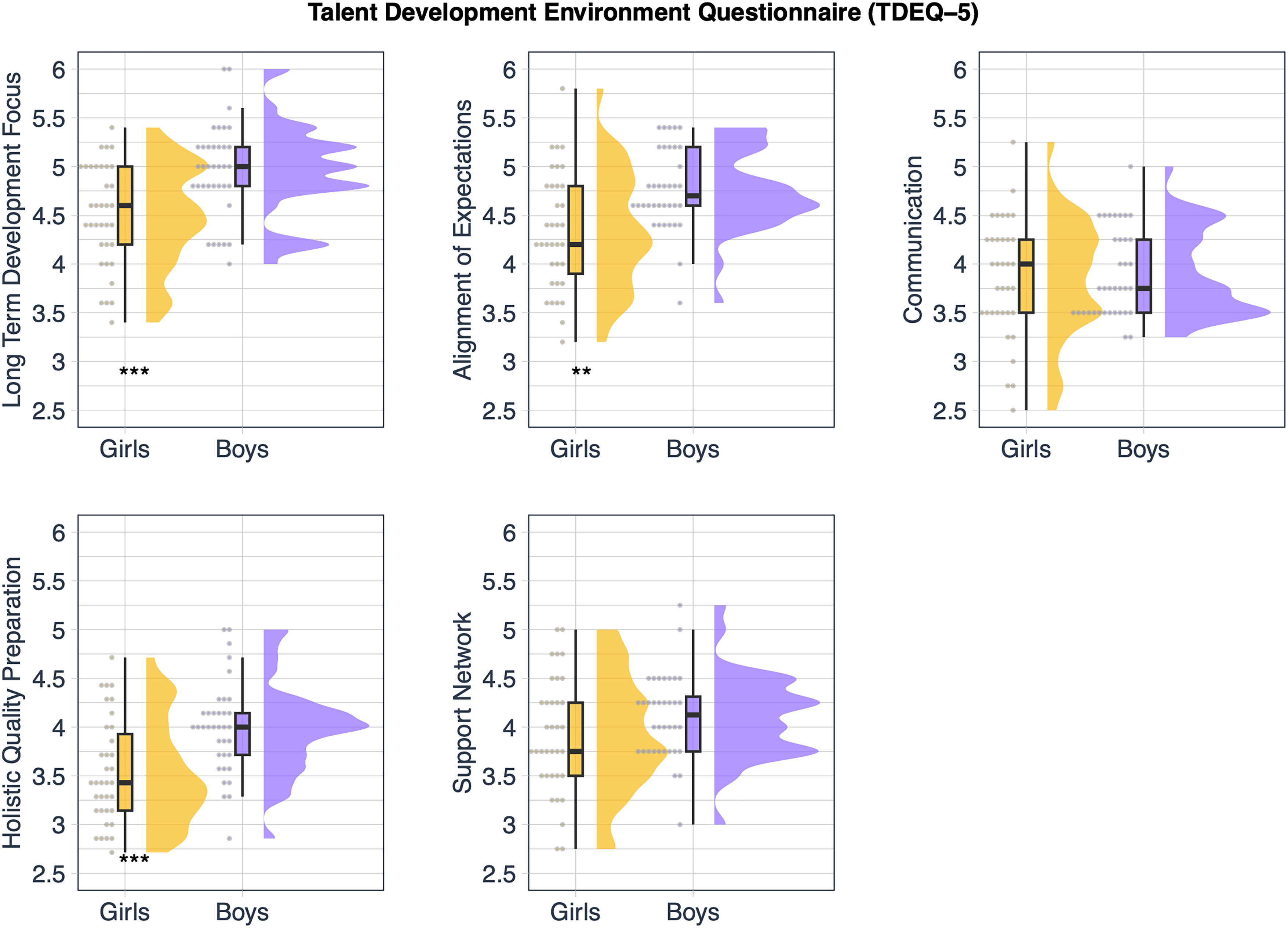
Raincloud plot: TDEQ-5 scores by gender.
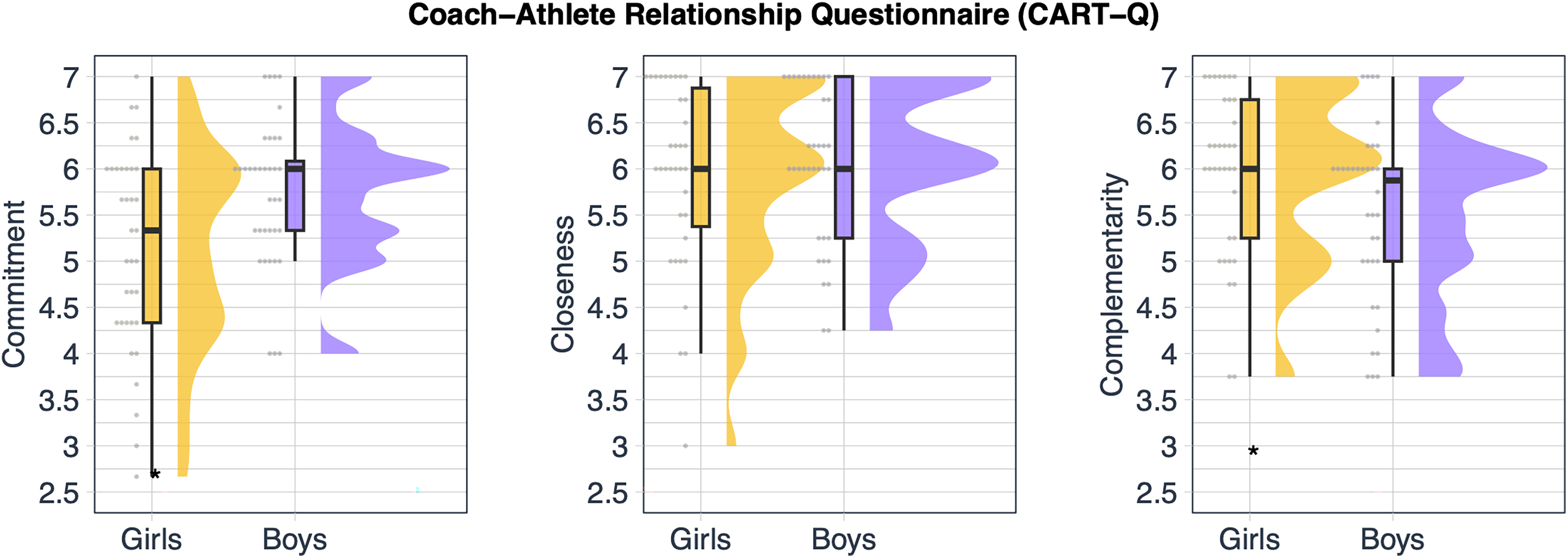
Raincloud plot: CART-Q scores by gender.
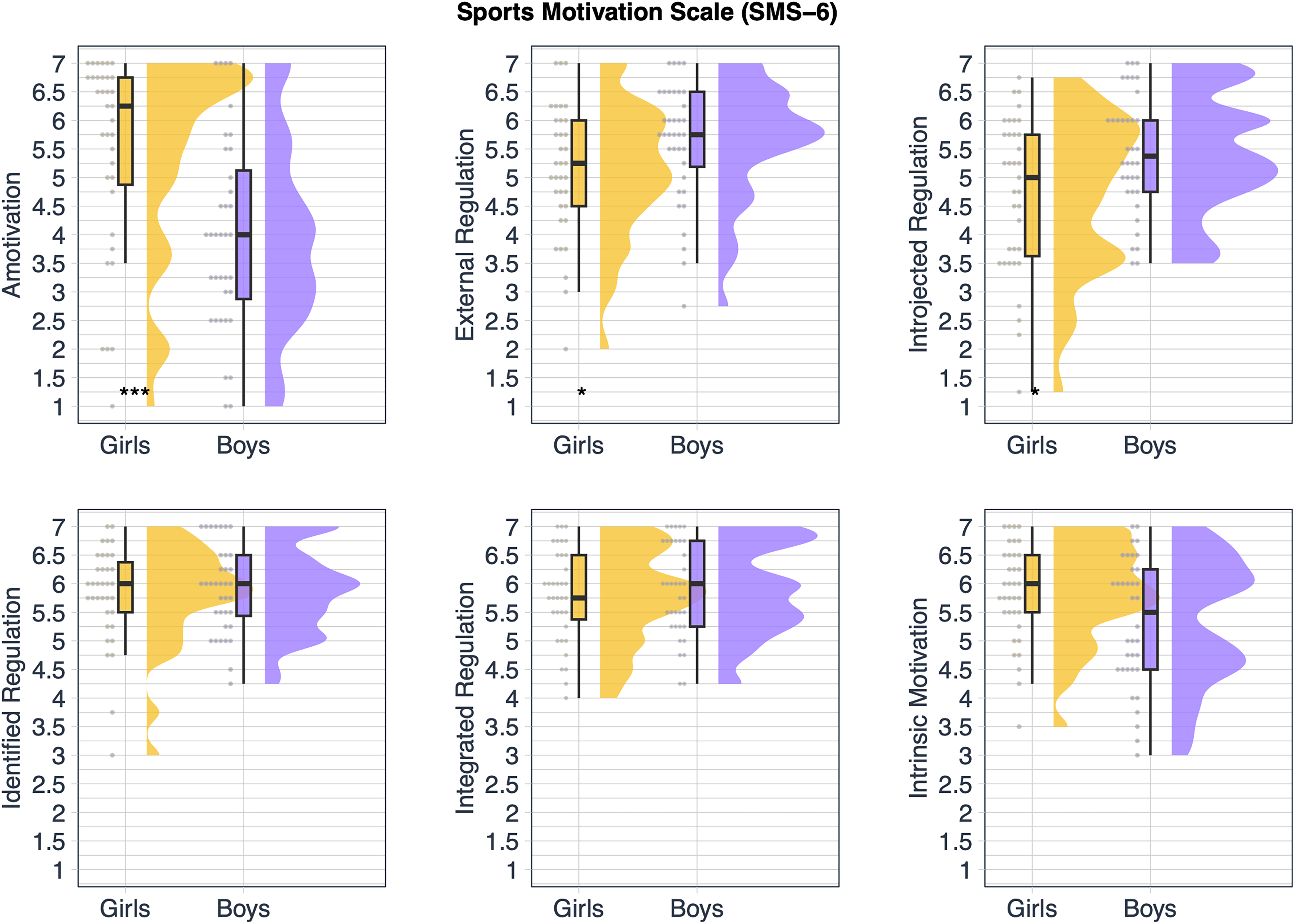
Raincloud plot: SMS-6 scores by gender.
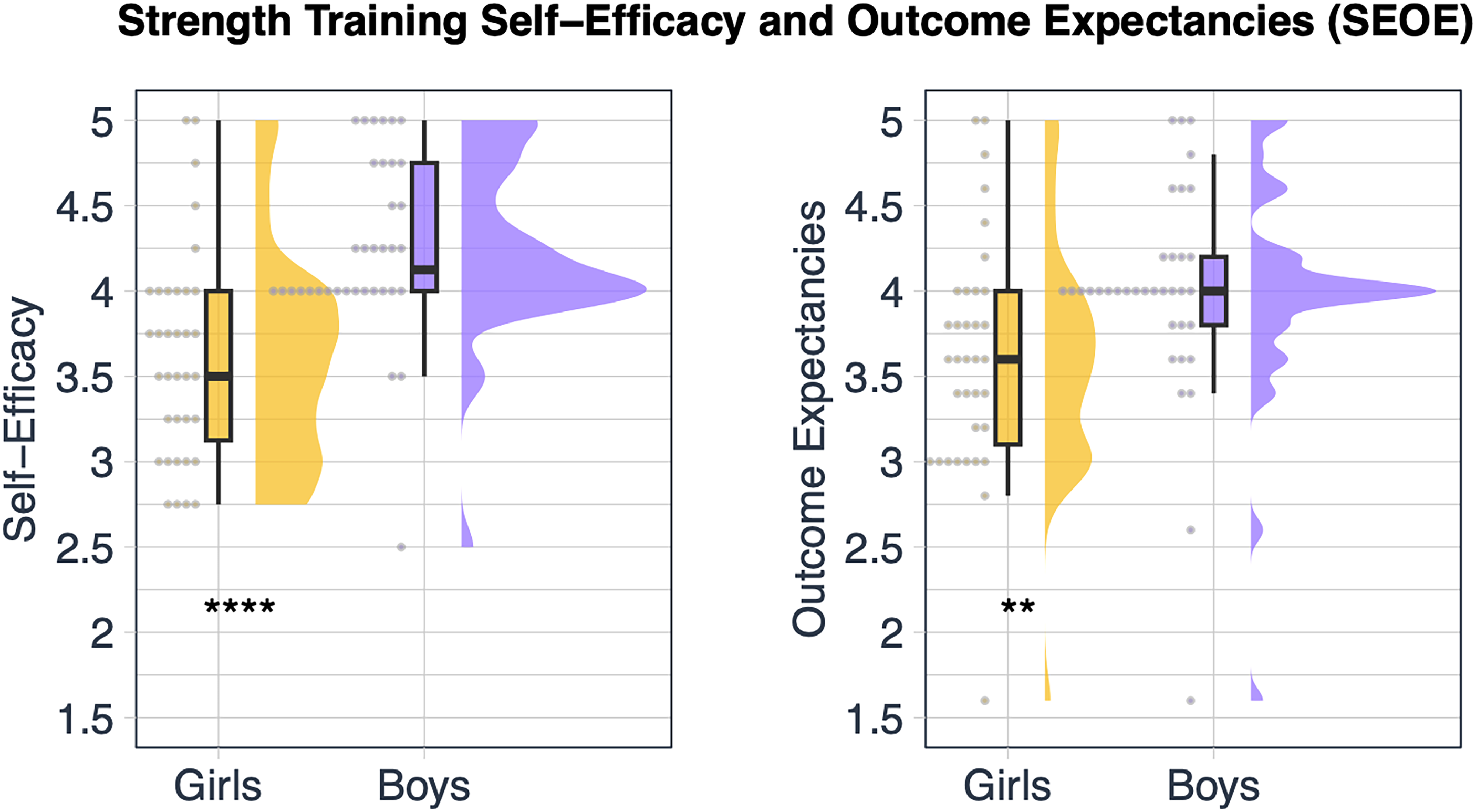
Raincloud plot: SEOE scores by gender.
Results
Data (M ± SD) for boys and girls are presented in Table 1. The Mann–Whitney U analysis indicated differences between groups, supported by large effect sizes, for TDEQ-5 subscales: ‘Long-Term Development Focus’ (z = 3.37, p < .001), ‘Alignment of Expectations’ (z = 3.23, p = .001), and ‘Holistic Quality Preparation’ (z = 3.40, p < .001) with boys reporting significantly more positive perceptions. No marked differences were observed between boys’ and girls’ perceptions of ‘Communication’ or ‘Support Network’ within their TDEs, with these findings supported by trivial and small effect sizes, respectively.
Results (M ± SD) for the talent development environment questionnaire (TDEQ-5), Coach-Athlete Relationship Questionnaire (CART-Q), Sports Motivation Scale (SMS-6), and Self-efficacy and Outcome Expectancies Questionnaire (SEOE) by gender.
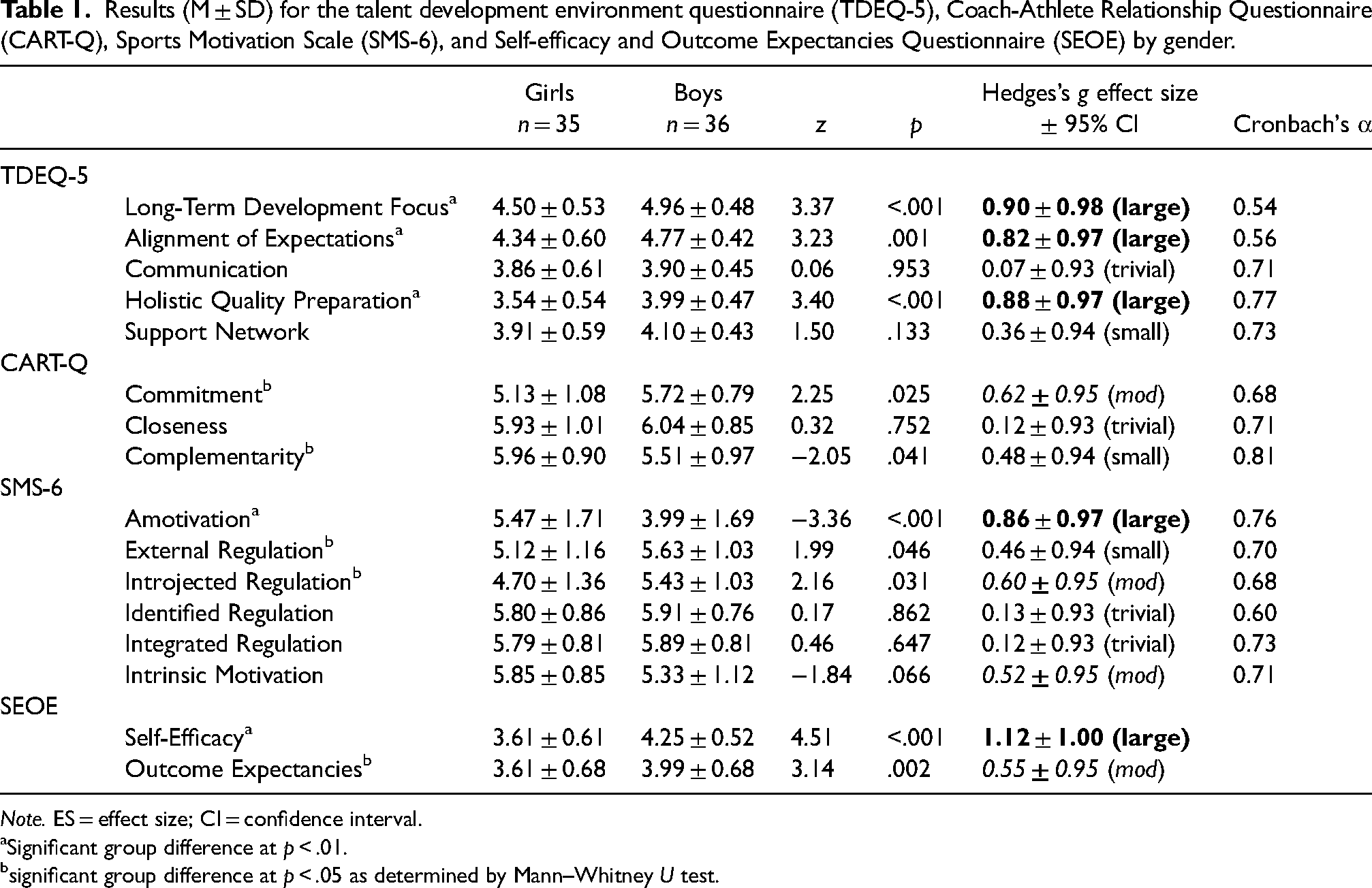
Note. ES = effect size; CI = confidence interval.
Significant group difference at p < .01.
significant group difference at p < .05 as determined by Mann–Whitney U test.
For the CART-Q, the subscale analysis revealed similar perceptions between boys and girls for coach ‘Closeness’. However, boys reported greater levels of perceived ‘Commitment’ from their coaches (z = 2.25, p = .025), whilst girls reported significantly higher levels of perceived ‘Complementarity’ from their coaches (z = −2.05, p = .041). A moderate effect size was revealed for ‘Commitment’, whilst the effect sizes for ‘Closeness’ and ‘Complementarity’ were trivial and small, respectively.
Notable between-group differences were identified for SMS-6 subscales: ‘Amotivation’ (z = −3.36, p < .001), ‘External Regulation’ (z = 1.99, p = .046), and ‘Introjected Regulation’ (z = 2.16, p = .031). On average, girls reported higher levels of ‘Amotivation’, whilst boys reported higher levels of ‘External Regulation’ and ‘Introjected Regulation’. ‘Amotivation’ was the only subscale with differences supported by a large effect size. Scores for the remaining SMS-6 subscales were similar between groups; however, a moderate effect size was revealed for ‘Intrinsic Motivation’.
In the SEOE questionnaire, boys reported significantly greater levels of both ‘Self-Efficacy’ (z = 4.51, p < .001) and ‘Outcome Expectancies’ (z = 3.14, p = .002) related to strength training, when compared to girls, with large and moderate effect sizes to support.
Cronbach's alpha results are presented in Table 1. As per interpretations from George and Mallery (2003), 33 acceptable levels of internal consistency were shown for all subscales except ‘Long-Term Development Focus’ and ‘Alignment of Expectations’ within the TDEQ-5 survey instrument.
Discussion
The purpose of this study was to examine the perceptions of state-level youth soccer athletes regarding their TDEs and to compare the perceptions of boys in TDEs constructed for boys with the perceptions of girls in TDEs constructed for girls. Given the inherent complexities, variety, and heterogeneity among different TDEs in soccer, 11 our study employed a holistic approach via four separate questionnaires to investigate athletes’ perceptions of their TDEs, their perceived relationship with their coach, individual motivations for playing, and self-efficacy and outcome expectancies related to strength training. This approach was used to address the decontextualising dominance of research on talent development in soccer, and further our understanding of the individual–environment interactions and experiences of youth soccer athletes embedded within gender-based TDEs. Although ‘gender comparisons’ (i.e. boys vs girls) will be referred to in isolation for ease of interpretation, it should be noted that we are referring to the gender–environment interaction as the sole comparative variable in this study and acknowledge the inseparable nature of an individual's gender and gendered-environment components when forming such comparisons.
Our findings demonstrate vast differences between the boys’ and girls’ perceptions of and experiences within their respective soccer talent pathway programmes. Specifically, boys expressed greater confidence in their TDEs’ ability to deliver in the subdimensions of long-term development focus, alignment of expectations, and holistic quality preparation. The boys also indicated greater levels of perceived commitment from their coach, whilst the girls indicated greater feelings of coach complementarity. The findings also revealed differences in motivation types between boys and girls, with girls revealing greater levels of amotivation and boys indicating greater levels of both external regulation and introjected regulation. Regarding the athletes’ perceptions of strength training, boys reported significantly higher levels of both self-efficacy and outcome expectancies. Importantly, Cronbach's alpha results displayed low levels of internal consistency for TDEQ-5 subdimensions: long-term development focus and alignment of expectations, prompting a nuanced interpretation of results related to these subdimensions (Table 1). Finally, based on visual inspection of the subscale raincloud plots, overall, girls showed greater variation and more widespread distribution of their perceptions comparatively (Figures 1–4).
This study used the TDEQ-5 to examine athletes’ general perceptions of their TDEs and identify factors influencing the perceived effectiveness of these environments. As shown in Table 1, there were significant differences between the boys’ perceptions and girls’ perceptions of their respective TDEs in the subdimensions of long-term development focus, alignment of expectations, and holistic quality preparation. The boys scored higher across all three subdimensions, indicating more positive perceptions of their TDE ability to deliver in these aspects. However, as seen in Figure 1, the girls appear to have a more diverse range of experiences than the boys within their TDEs, highlighting the importance of considering both between-group and within-group variations in this context.
Firstly, the findings suggest that boys may perceive their TDE as having a stronger focus on their LTAD, potentially due to a greater number of opportunities provided for growth and autonomy compared to the girls. 18 This is in line with previous research suggesting that a common feature of successful TDEs in men's sporting populations is the ability for the TDE to generate a focus on future development over immediate success. 23 However, the same has not been identified in TDEs created for women and girls. The alignment of expectations subscale refers to the level of coherence and collaboration amongst relevant stakeholders to reflect systematic developments, strategy, and decision-making that is specific to the athletes embedded within the TDE. 23 The present results indicate that boys perceive their TDE to be more positive in this regard, undoubtedly leading to greater levels of perceived effectiveness. Gangso et al. 18 emphasises the significance of this, with the findings of their study illustrating a greater capacity for higher-ranked academies to incorporate athletes into their own personal development processes due to a more congruent alignment of expectations when compared to lower-ranked academies. The boys in this study scored higher in the subdimension, of holistic quality preparation, suggesting that their TDE is perceived as more organised than the girls’ TDE in relation to both preparation and life balance. 18 This is not unexpected, as alignment of expectations and the corresponding perceptions of preparation quality are closely associated. 24 Therefore, similar TDEs designed for girls may benefit from increasing the coherence and collaboration between athletes, coaches, and other stakeholders as a priority, whilst also making a conscious effort to shift the perceptions of TDE effectiveness from immediate success to LTAD success. Indeed, the recent rise in popularity and professionalism of women's football in Australia is likely to contribute to this perceptual shift.
In soccer, the coach–athlete relationship plays a central role in the development of athletes’ physical and psychological characteristics, with the unique nature of TDEs likely shaping the contextual nuance of these connections. 25 In this study, boys perceived their coaches to possess greater levels of commitment, whilst girls indicated higher levels of complementarity from their coaches. Importantly, the between-group difference identified for coach commitment was supported by a moderate effect size for this subscale. In contrast, the group difference revealed for coach complementarity was accompanied by a small effect size and thus, may lack practical significance. Response distributions were similar between groups for both subscales; however, the level of heterogeneity was visibly greater for the girls’ perceptions of coach commitment, as depicted in Figure 2.
The differences in the athletes’ perceptions of coach commitment may be reflective of the known discrepancies between those employed to coach within TDEs designed for boys versus girls. 27 Historically, soccer has been viewed as a sport for men and boys, with participation dominance and consequent levels of funding and support reflecting this. 17 As such, current TDEs designed for boys are more likely to attract highly qualified and experienced coaching personnel comparatively, with well-funded support programmes in place to provide continual education and additional coach development. 17 Therefore, the group differences identified for perceived commitment levels in this study may be due to the discrepancies at a macroscopic level more so than the individual traits of the coaching staff. Even so, further research is required to gain a better understanding of the ‘why’ behind the ‘what’, so that population-specific strategies can be identified and implemented with greater accuracy. Moreover, whether deliberate or inadvertent, the practice of utilising women's and girls’ teams to advance coaching careers in men's and boys’ teams may be particularly salient to girls. 34 However, the efficacy of this ‘stepping-stone commitment influence’ hypothesis requires further exploration.
Coach complementarity refers to the idea that different coaching styles work together to enhance the overall effectiveness of a team or organisation.24,25 Previous research has shown that coach complementarity can be particularly advantageous in team sports, as coaches who possess a complementary style often provide different perspectives and approaches to problem-solving, leading to more creative and effective team-based solutions. 35 Our girls perceived their coaches to possess higher levels of complementarity, suggesting those coaching in TDEs designed for girls may be more synergistic in their approach to balancing team member responsibilities. Boys, on the other hand, reported less complementarity, which may relate to a lack of alignment between the coach's expectations and the individual needs of the athletes. However, it is important to note that the effect size identified for coach complementarity was small, and therefore, group-based generalisations should be interpreted with caution.
Acknowledging that athletes ascribe different meanings and importance to their coach–athlete interactions, 25 the results of the CART-Q indicate potential areas for improvement at the group level. For girls, emphasis should be initially placed on increasing the relevant resources and support available to coaches within these environments. Comparatively, based on the boys’ perceptions of their coach–athlete relationships, a greater emphasis should be placed on balancing personality styles and coaching styles to ensure complementarity between team members. Notwithstanding, the potential over-emphasis on perceived gender differences in coaching approaches raises the possibility that these are often overstated or misinterpreted. 36 It is plausible that these ‘standard’ approaches are accepted based on their frequency of usage, rather than empirical evidence of effectiveness. 36 As such, it is necessary to critically re-evaluate coaching approaches and prioritise evidence-based strategies that promote optimal LTAD for all athletes, irrespective of gender. Importantly, when athletes feel as though everyone is ‘on the same team’, they are more likely to trust the development process, which is an integral component of both individual and team success. 37
Sports motivation results showed that girls scored significantly higher in amotivation, whilst the boys scored higher in introjected regulation and external regulation. The large and moderate effect sizes identified for amotivation and introjected regulation, respectively, suggest that these between-group differences are substantial. In contrast, the small effect size for external regulation indicates a lack of practical significance for this subscale, and therefore, group differences should be interpreted with caution. Moreover, girls had larger variations in scores across all motivation types, as illustrated in Figure 3. Whilst further investigations are required to examine causality, many factors examined in the current study point to the idea that the girls’ TDE is insufficient and ineffective, as perceived by the athletes, and hence their lack of intention to engage (i.e. amotivation) may be expected. 38 This observation underscores the need for a deeper inquiry into amotivation within the context of youth soccer TDE's. The substantial effect size and its association with reduced satisfaction within the TDE suggest that amotivation may serve as an antithetical marker of engagement, potentially indicating a pathway to burnout or dropout among young players. However, supporting evidence is limited, necessitating future research endeavours that centre on identifying these antecedents, and uncovering the factors that contribute to disengagement within this particular demographic.
Boys scoring higher for external regulation and introjected regulation suggests that they may be more motivated to play soccer for external rewards such as praise and recognition and may perceive external pressure as a key motivator. 15 Despite a small effect size revealed for external regulation, these results are supported by previous findings, with similar trends identified between genders across multiple sports and settings.15,39 Specific to this study, results may be reflective of the identified discrepancies in LTAD focus, alignment of expectations, and holistic quality preparation within TDEs designed for girls, and therefore, strategies should be implemented to target these TDE characteristics in conjunction with individual development strategies to positively influence athletes’ motivation levels. 23
The current findings revealed that boys had higher levels of both self-efficacy and outcome expectancies related to strength training compared to girls. Self-efficacy refers to an individual's belief in their ability to learn or perform a task and is influenced by various factors including personal accomplishments, emotional arousal, and vicarious experiences.16,17 Outcome expectancies, on the other hand, refer to an individual’s beliefs about the possible outcomes of their behaviours and can take the form of physical outcomes or social reactions.16,17 As such, these findings reflect previous research linking masculine gender identity with higher self-esteem related to strength training and feminine gender identity with lower self-efficacy in this area. 16 Importantly, these factors are known to be more reflective of social stereotypes and lack of exposure to the task at hand, in this case, strength training, rather than biological or physiological reasons.14,16,40 Therefore, to target improvements in self-efficacy and outcome expectancies related to strength training among girls, exposure and support must increase. This includes earlier and more frequent exposure to strength training, whilst simultaneously implementing strategies to educate athletes on the benefits related to performance and overall well-being, acknowledging the potential stereotypical threats involved, and most importantly, working toward changing these perceptions at the systemic level.
Limitations
There are several limitations to consider in this study before generalising the results. First, the cross-sectional design utilised only provides a snapshot of the current situation and does not allow for the investigation of causality. Therefore, it would be beneficial to conduct longitudinal research that utilises various methods to examine the long-term effects and perceptions over time of the TDEs. Second, this study compared the perceptions of state-level athletes from two talent pathway programmes within the same region. Given the known influence of various contextual factors on TDE effectiveness, the generalisation of these findings to athletes across other competition levels, and in different regions and settings may be limited. Lastly, although this study used a dichotomous group comparison to identify differences on a larger scale, there was wide variability in the athletes’ perceptions, particularly among the girls. Consequently, the suggestions provided may not be applicable at the individual level, and we therefore recommend empowering athletes to identify and communicate their individual preferences before implementing whole-group strategies.
Conclusion
In summary, this study reveals significant disparities in boys’ and girls’ perceptions of their TDEs in youth soccer within Western Australia. Boys reported a greater focus on LTAD, alignment of expectations, and holistic quality preparation within their TDEs. They also perceived their coaches to be more committed and showed higher levels of motivation in the aspects of introjected regulation and external regulation. Finally, boys reported higher levels of self-efficacy and outcome expectancies in strength training. Conversely, girls perceived their coaches to be more complementary and indicated higher levels of amotivation.
Despite the limited available data and evidence on the perceptions and experiences of girls in youth soccer TDEs, gender biases undoubtedly exist within these contexts and can negatively impact the design of appropriate policies, systems, and cultures that support the development of women and girls.12,20 It is also important to acknowledge the large variety in the age of players in this study, as well as the scores among the girls’ perceptions of their TDEs in this study, which supports the known complexities in our understanding of talent development processes in sport and the importance of recognising that there is no one-size-fits-all approach to effective athlete development.5,12,20 Further, while beyond the scope of the current paper, the dispersion of girls’ perceptions suggests that a broader range of external environmental factors might interact with the TDE, either positively or negatively. Interacting with external environmental factors warrants further exploration in future research.
Whilst our findings provide a greater understanding of the differences in TDEs for boys and girls in youth soccer, future research is necessary to identify the critical factors for effective athlete development regardless of gender or with more informed considerations of gender. We suggest that stakeholders frequently consider the unique constraints and resources of their specific settings to determine which strategies may best impact their functionality.11,20 Bridging the gap between research and practice remains crucial to developing effective TDEs that support the development of athletes within different contexts. 8
Footnotes
Acknowledgements
We would like to thank the staff and players from Football West and Perth Glory for their involvement and support and acknowledge the contribution of the Australian Government Research Training Program Scholarship.
Declaration of conflicting interests
The author(s) declared no potential conflicts of interest with respect to the research, authorship, and/or publication of this article.
Funding
The author(s) received no financial support for the research, authorship, and/or publication of this article.
