



Abstract
Sixty-two percent of Finnish children and adolescents aged 9–15 participate in sports club activities, yet only one-third of sports participants reach the recommended 60 min of daily moderate-to-vigorous physical activity. The inadequate physical activity of participants underlines the need for physical education among those participating in sports club activities. Sports coaches have significant potential in promoting participants’ weekly overall physical activity beyond sports training, given their role of authority. However, coaches in Finland mainly work on a voluntary basis, with varying knowledge and capabilities. The aim of the study was to investigate the physical education orientation and activity of sports coaches, and the associations of these with the moderate-to-vigorous physical activity of young sports participants. Questionnaire data from coaches (n = 26) and young sports participants aged 6–18 (n = 201), and accelerometer data from young sports participants (n = 293) were included in the analysis. The results indicated that even though sports coaches recognized the importance of physical education, they have not fully embraced their role as physical educators and promoters of weekly overall physical activity among young sports participants. The role of families was considered most significant in physical education. Coaches perceived their possibilities to influence the physical activity behavior of the participants as limited. Coaching education and experience had a positive relationship with the coaches’ activity in implementing physical education, highlighting the importance of coaching education. The findings suggest that there is a need to increase collaboration with coaches and families to ensure an adequate amount of weekly overall physical activity of children and adolescents.
Introduction
Physical education (PE) as a school subject means both education aimed at physical activity (PA) (teaching knowledge, skills, and attitudes) and education through the use of PA (creating environments and situations that promote PA motivation). 1 PE research has focused on the school environment, even though PE also takes place in other settings, including sports clubs. Currently, 62% of children in Finland aged 9–15 participate in sports club activities. 2 Sports club activities for children and adolescents are still strongly driven by competitiveness and sports specialization. Nevertheless, sports clubs have an important role in promoting the weekly overall PA of children and adolescents. 3 The weekly overall PA of young sports participants consists of sports practice led by the coach, independent practice, and daily activities such as active transport, PE at school, active play, and other hobbies. 4 Training volume and the overall PA have been shown to play a significant role in development as an athlete. 5
Nowadays, participation in sports club activities in Finland begins at the age of six on average. The number of participants has increased, and participants have come forward from more diverse PA backgrounds.2,3 In practice, this means that there is great variation in the levels of PA among sports club participants. Sports training in childhood is rarely sufficient to meet PA recommendations,6–8 and less than one-third of sports club participants meet the recommendations.9,10 The importance of PE in sports clubs is underlined by the insufficient levels of PA among the participants, giving sports clubs the opportunity to justify PE with the importance of diverse overall PA in participants’ development in sports and disciplines. 3 PE in sports coaching includes teaching PA-related knowledge, skills and attitudes, developing PA and discipline-related skills, and the promotion of PA motivation and weekly overall PA beyond the training event.
In Finland, coaches in youth sports clubs work mainly on a voluntary basis without formal training. 11 Nonetheless, sports coaches have significant potential in promoting PA beyond sports training, given that sports clubs reach many children and adolescents, and participation is voluntary, making its educational nature informal.11–13 Due to the voluntary nature of participation, sports club activities represent educationally both non-formal and informal education. 14 Non-formal education refers to activities that deliberately pay attention to education, while informal education takes place without any targeted educational approach.15,16 The present study examined non-formal PE provided by a sports coach; note also that henceforth the term physical education will refer to this type of PE.
In the Health Promoting Sports Club (HPSC) model, the micro level comprises both the health promotion activity of the coaches and the daily implementation of health promotion.14,17 The attitudes, knowledge, and skills of coaches are important for implementing successful actions.14,18 The model was used as a framework in this study. Applying Kokko's 14 HPSC model to the promotion of overall PA in a sports club setting, the present study focused on the PE orientation and PE activity of sports coaches and their daily implementation of overall PA promotion.
In this study, the PE orientation refers to the extent to which coaches perceive that PE is part of the club’s / coaches’ responsibilities, and further, the extent to which they see overall PA as important for athlete development. PE activity, for its part, refers to how actively a coach seeks to promote PA through his or her actions. According to Kokko et al., 19 from the point of view of health promotion activity, sports coaches rate their activity more highly than do athletes, which may be due to infrequent or ineffective actions. Previous studies14,19 on sports indicate that coaches have not integrated a comprehensive understanding of athlete development into their daily coaching practices.
Coaches play an important role in athletes’ development, 20 and their role as figures of authority increases the educational opportunities. 3 Previously it has been indicated that majority of sports coaches consider themselves influential on PA among young sports participants. 21 However, to our knowledge, the PE of sports coaches has not been studied previously. In Finland, sports club activities are mainly run by volunteer coaches, 19 who may not have any formal coaching education. Their capabilities to promote PA vary, and coaching can be largely based on the personal values of the individual coach. 11 Given the lack of previous research, there appears to be a need to investigate coaches’ perceived ways of influencing the PA behavior of young sports participants, and the situations in which coaches implement PE. In this way, one can gain an understanding of the coaches’ comprehensive PE orientation and activity.
In the research encompassing the present study, the COM-B model (at the core of the Behavior Change Wheel) was used to examine the sources of PA behavior (capabilities, opportunities, motivation) of young sports participants. 22 PA behavior will be described in a future article, but the study reported here examined the ways in which coaches perceive that they can influence the overall PA behavior of young sports participants. Coaches’ health promotion activities have been found to have a positive connection with sport experience and with perceived health among young people. 23 Studies have shown that in terms of health promotion, interventions should focus on the lack of resources and expertise among coaches to enhance health promotion orientation, and to achieve positive health outcomes through sports participation for young sports participants.24,25 Previous studies have also investigated whether coaching education promotes active practice time and thereby the moderate-to-vigorous physical activity (MVPA) of children participating in sports club activities; however, no connection between coaching education and active practice time has so far been observed.7,26
The purpose of the present study was to investigate (i) the PE orientation and (ii) the PE activity of sports coaches. Additionally, the aim was to examine (iii) coaches’ self-perceived ways of influencing the PA behavior of young sports participants, the situations in which coaches implement PE, and (iv) the association between the PE orientation and activity of a coach and the measured MVPA of young sports participants.
Methods
The sample and data collection
The current study forms part of the Healthy Lifestyles to Boost Sustainable Growth (STYLE) project. The multidisciplinary research team for the project consists of the Faculty of Sport and Health Sciences of the University of Jyväskylä, the UKK institute, VTT Technical Research Centre of Finland, Futures Research Centre of the University of Turku, Turku School of Economics, and the Finnish Environment Institute (SYKE).
The data consisted of young sports participants aged 6–18 and their coaches from the Ice Hockey Club JYP Juniorit ry, located in Jyväskylä, Central Finland. The data were collected through a questionnaire for sports coaches (May 2020), accelerometer measurements (August–September 2020) for young sports participants, and a questionnaire for young sports participants (November 2020). The link to the electronic questionnaire for coaches was sent by the club's sports manager, and the link to the questionnaire for young sports participants was sent by the club to all participating players and their guardians. The study was conducted entirely in Finnish.
JYP Juniorit ry has about 600 participants and 200 volunteers including coaches, instructors, and other team officials. The club offers activities for children and adolescents aged 3–18. Those aged 3–6 participate in a hockey school. Thereafter, a child aged 6–13 can switch to junior hockey activities (teams U8–U14), or to Easy hockey. Those aged 13–18 can move to competitive hockey (teams U15–U18). Hockey school and Easy hockey participants practice about once a week. U8–U11 teams have an average of three hockey-related events (practice and games) per week, while U12–U14 teams have an average of five such events, and U15–U18 teams an average of six such events per week.
In total, all 75 coaches from the JYP Juniorit ry were invited to complete an internet-based questionnaire, and 26 (35%) responded after duplicates (n = 3) were removed. In total, 521 young sports participants aged 3–18 were invited to complete an internet-based questionnaire and to participate in accelerometer measurements (Figure 1). Participants under the age of nine were asked to respond to the questionnaire together with a parent. In all, 231 (44.3%) young sports participants responded to the questionnaire, and 392 (75.2%) participated in the accelerometer measurements. Due to the different nature of the training, Hockey school and Easy hockey participants (n = 54) were excluded from the analysis of this study, as were those who did not give written consent to participate in the study (n = 36). Nine participants were excluded on the basis of the exclusion criteria (see the ‘Measurements’ section). Overall, the analysis included the accelerometer measurements from 293 young sports participants aged 6–18 (measured MVPA levels), with questionnaire data also from 201 young sports participants (subjective assessment of coaches’ PE activity and PE situations in coaching); see also the Measurements section where the questions are set out in detail.
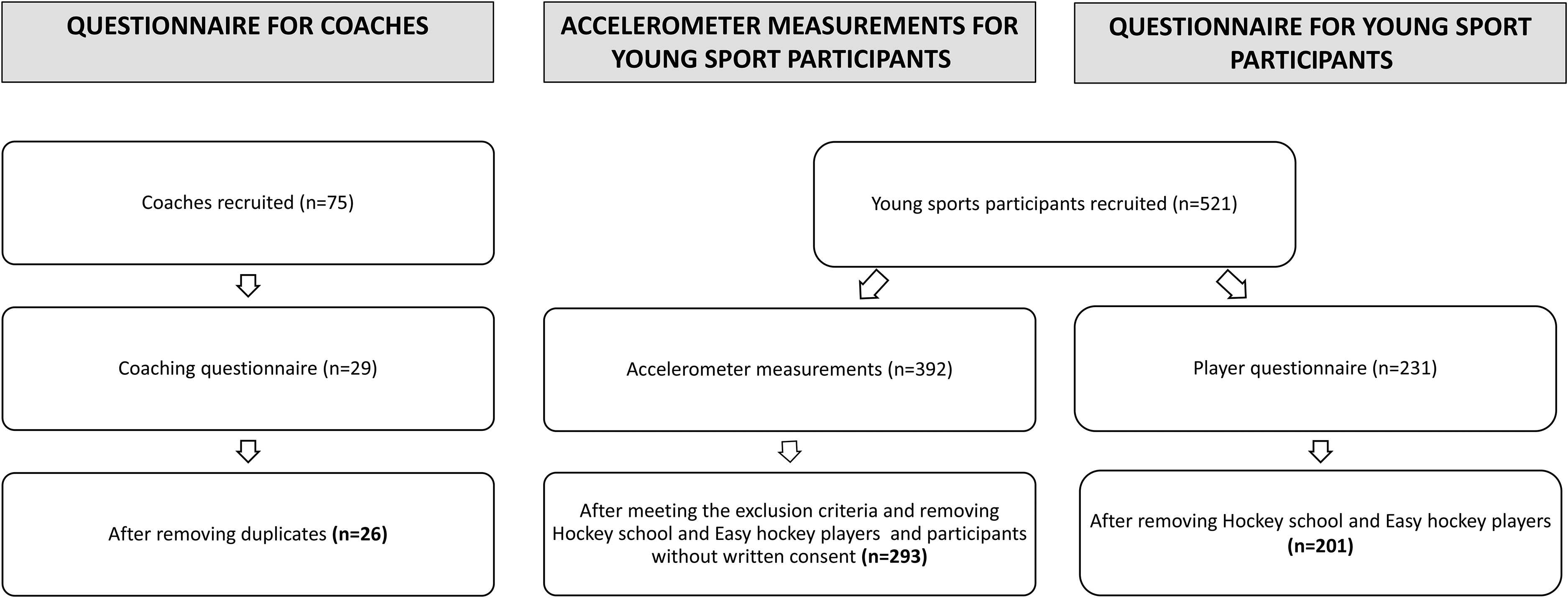
Inclusion criteria for the study.
Measurements
The questionnaire data
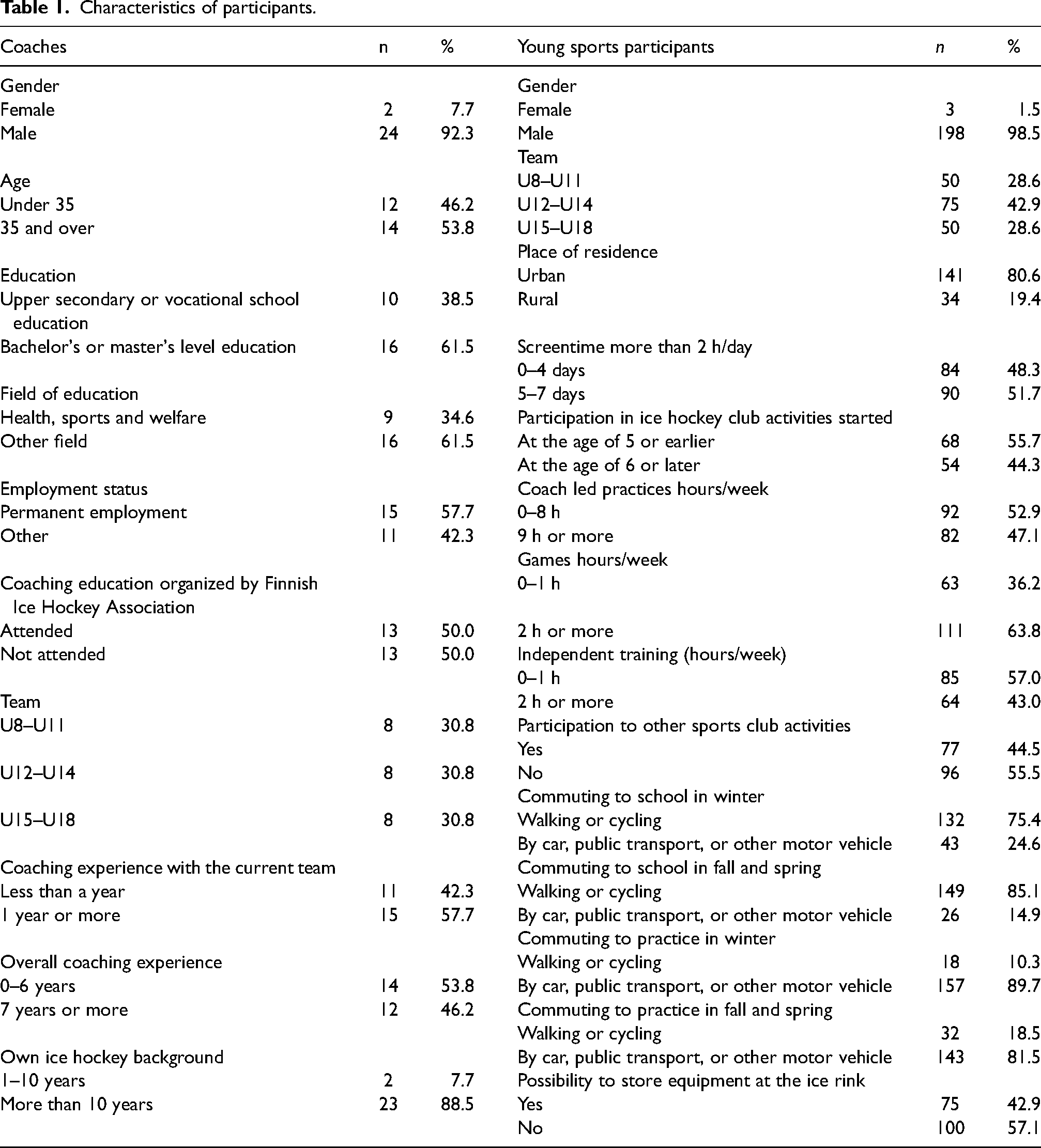
For the participants’ characteristics, see Table 1.
Characteristics of participants.
PE Orientation and PE Activity. In developing the questionnaires on the PE Orientation and the PE Activity, background information was obtained on a co-creation process with the target group, and from dialogue and interviews with the target club's officials, the coaches, and the parents. The Health Promotion Orientation and the Health Promotion Activity questionnaires developed by Kokko 14 were also applied in the development process. The researchers developed the questionnaire batteries in collaboration with officials from JYP Juniorit ry.
The PE orientation questionnaire battery for coaches consisted of nine statements. The original instruction was: “Read the statements below and respond by marking the option that best describes your opinion” (strongly disagree, somewhat disagree, neither agree nor disagree, somewhat agree, strongly agree). The PE orientation statements were:
Daily activities have an impact on development as an athlete. Independent training has an impact on development as an athlete. Only discipline-related training has an impact on development as an athlete. Education for a physically active lifestyle is the task of the sports club. The coach plays an important role in promoting a physically active lifestyle among players. In coaching, players should be further instructed to engage in PA adequately and diversely. The players in my team engage in enough PA for their health. The players in my team engage in enough PA to develop as hockey players. My own behavior influences the behavior of the players. I instruct/My coach instructs players to engage in PA adequately and diversely. I encourage/My coach encourages players to walk or cycle. I set/My coach sets a good example for the players with my actions. In coaching, I strive/my coach strives to make the training sensible and fun. I interact/My coach interacts with players during practice / competitions. In training I take/my coach takes into account the individual skill level of the players. In training I take/my coach takes into account the level of mental development of the players. I try/My coach tries to ensure that the weekly physical exertion of the players is in balance with rest. I try/My coach tries to ensure that the weekly physical exertion of the players is in balance with the exertion caused by the school and other non-sports-related issues. I talk/My coach talks about health and PA with parents / families. I discuss/My coach discusses with players the connection between overall PA and health, training, and growth as an athlete. I organize lectures and share information about overall PA.
The PE activity questionnaire battery for coaches and young sports participants consisted of twelve statements. The original instruction was: ‘Read the statements below and evaluate how often the following things happen via your own actions’ (almost never, rarely, every now and then, quite often, almost always). The statements were formulated according to the target group. The PE activity statements were:
PE actors. The coaches’ assessment of PE actors was examined by asking coaches to register their agreement with the following statement: ‘The following actors have an important role in educating children and adolescents for a physically active lifestyle’. The actors listed were: the sports club, the club management, coaches, families, schools, other actor (who?). The choices for the responses were: strongly disagree, somewhat disagree, neither agree nor disagree, somewhat agree, strongly agree.
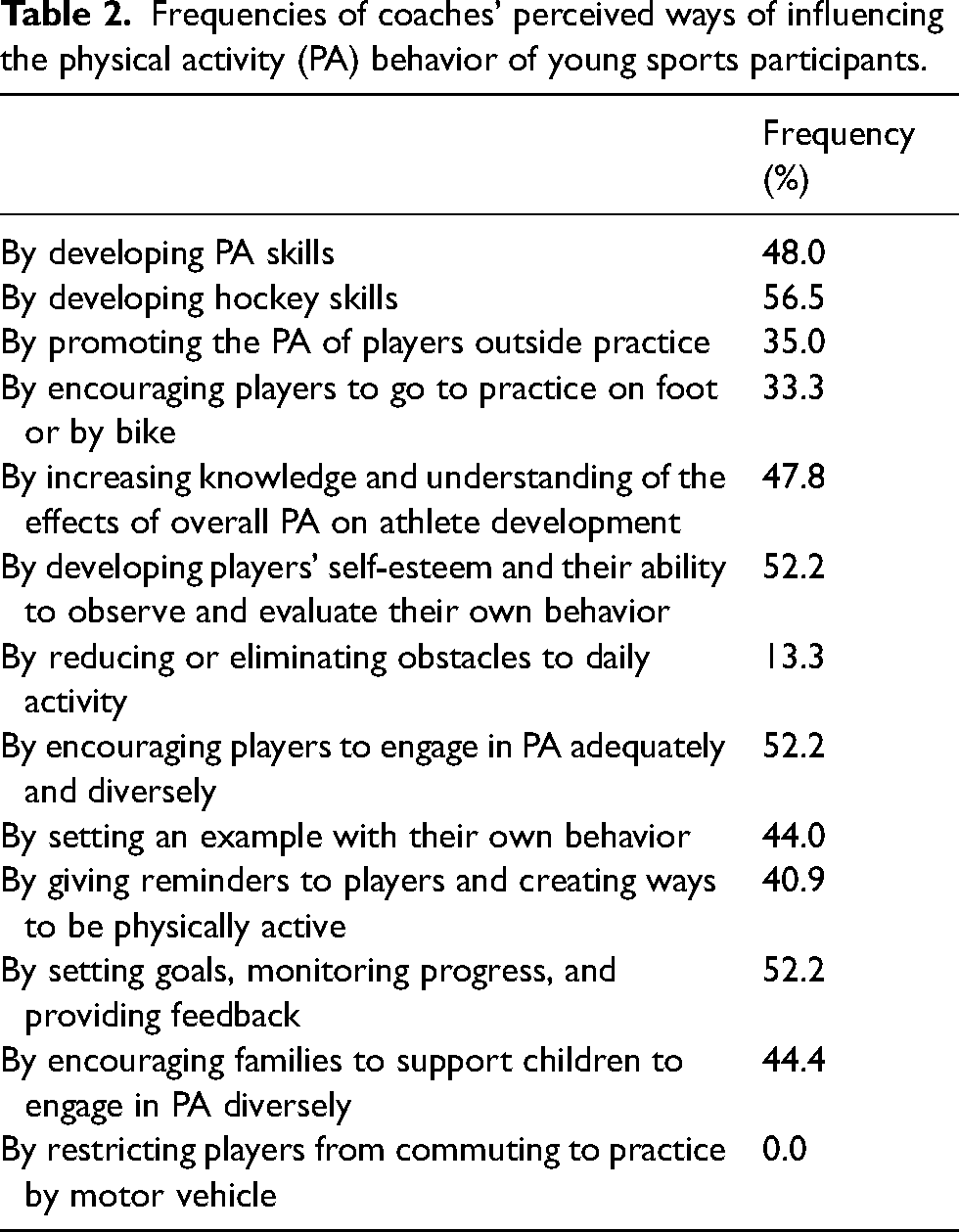
Coaches’ perceived ways of influencing the PA behavior of young sports participants. Coaches’ perceived ways of influencing the PA behavior of young sports participants were examined by asking coaches: ‘In what ways can you influence players’ PA behavior as a coach?’. The ways of influencing listed were: by developing PA skills, by developing hockey skills, by promoting the PA of players outside practice, by encouraging players to go to practice on foot or by bike, by increasing knowledge and understanding of the effects of overall PA on athlete development, by developing players' self-esteem and their ability to observe and evaluate their own behavior, by reducing or eliminating obstacles to daily activity, by encouraging players to engage in PA adequately and diversely, by setting an example with their own behavior, by giving reminders to players and creating ways to be physically active, by setting goals, monitoring progress, and providing feedback, by encouraging families to support children to engage in PA diversely, by restricting players from commuting to practice by motor vehicle. The choices for the responses were: Strongly disagree, somewhat disagree, neither agree nor disagree, somewhat agree, strongly agree.
Frequencies of coaches’ perceived ways of influencing the physical activity (PA) behavior of young sports participants.
PE situations in coaching. PE situations in coaching were investigated by asking coaches and young sports participants: ‘How often in the following situations has the coach instructed the players on your team to engage in PA adequately and diversely?’ The situations listed were: in daily coaching, in coach–player discussions, during auxiliary training, during warm-up, during cool-down, in games and tournaments, in the team's WhatsApp, in separate education sessions. The choices for the responses were: almost never, rarely, every now and then, quite often, almost always.
The accelerometer data
PA was measured using tri-axial hip-worn accelerometers (UKK RM42; UKK Terveyspalvelut OY, Tampere, Finland). The researcher or research assistants delivered the devices to young sports participants during practice and gave both oral and written information on how to use the device. The accelerometer was attached to a flexible belt on the right hip, and the participants were instructed to wear the belt for seven consecutive days (1 week) during waking hours, except during showering and other water-based activities. For the night, participants moved the accelerometer from the belt to a flexible wristband on the knuckle side of the non-dominant wrist. 27 The variables describing PA and sedentary time were calculated using mean amplitude deviation (MAD) and angle for posture estimation (APE) methods, applying a 6-s analysis period (epoch).28,29 The epoch-wise MAD values were converted to METs, and these were smoothed with a 1-min exponential moving average. Using the smoothed MET values, the overall PA was classified as light (1.5–2.9 MET), moderate (3.0–5.9 MET), or vigorous (≥6 MET) activity. 29 The exclusion criteria for participation were: Steps less than 1500 per day, measurement time at the waist less than 10 h/day, measurement time on the wrist more than 14 h/day, vertical position detection less than 10 per day, or measurement days less than 4. 30 The accelerometer does not capture skating as vigorous activity; nonetheless, it is included within moderate activity and hence the results are reported as moderate-to-vigorous PA. The analyses for the present study (except for the multi-level mixed-effect model) used the mean MVPA values from the measurement days. In reporting the MVPA amounts, all the young sports participants were divided into groups, with one-third of the participants in each group according to the lowest, middle, and highest amounts of measured MVPA.
Ethical issues
The ethical review was approved in April 2020 by the Human Sciences Ethics Committee of the University of Jyväskylä. General Data Protection Regulations were followed when personal data were processed. Informed consent was requested from the parents of minors and from all young sports participants participating in the accelerometer measurements. The young sports participants and the coaches gave their consent to participate in the study when completing the electronic questionnaire. The researchers respected the autonomy of participants and the principle of voluntary participation. All the participants were treated equally, and their level of development was taken into account.
Data analysis
Sum variables were formed from the questionnaire batteries (PE orientation and PE activity) by a mean-command, and were divided into equal thirds. The values thus obtained were used in the Chi-square test and the Mann-Whitney U test. The sum variables (PE activity and PE situations in coaching) calculated via the sum-command were used in an Independent Samples T test. The significance levels of the pairwise associations between the categorical variables were analyzed using cross-tabulation and the Chi-square Exact test. An Independent-Samples T test or the Mann-Whitney U test was used to compare the means between two groups. The MVPA averages were examined in thirds. A three-level mixed linear regression model was applied to the MVPA. This took into account the daily variation of the MVPA, and it was used to investigate the association between the MVPA of young sports participants and the following variables: PE orientation of coaches, PE activity of coaches, Gender, Year of birth, Place of residence, Screen time more than 2 h/day, Coach-led practices (hours/week), Games (hours/week), Independent training (hours/week), Other sports club activities, Commuting to school in winter, Commuting to school in fall and spring, Commuting to practice in winter, Commuting to practice in fall and spring, Possibility to store equipment at the ice rink. However, the final model consisted of only the following variables: PE orientation of coaches, PE activity of coaches, gender, year of birth, other sports club activities. The model was used to examine the variation at three different levels: Team (belonging to a certain team), young sports participants (background variables), and variance between individual measurements (daily variation). The data analysis was performed using SPSS version 26, and the mixed effect model via STATA. The significance level was set as p < 0.05 in all the statistical tests.
Results
PE orientation of coaches
All the coaches agreed or somewhat agreed that daily activities and independent training influence athlete development, while less than half (42.3%) agreed or somewhat agreed that a sports club has a role in promoting a physically active lifestyle (Supplemental Table 1).
The Chi-square test did not show a statistically significant association between the background variables and the level of coaches’ PE orientation (p > 0.05) (Supplemental Table 2). According to the Mann-Whitney U test, female coaches (n = 2) had a higher PE orientation compared to male coaches (n = 24) (p < 0.05) (Table 2).
Mean and standard deviation of the physical education (PE) orientation by background variables of the coaches, and the results of the Mann–Whitney U test (U and exact p values).
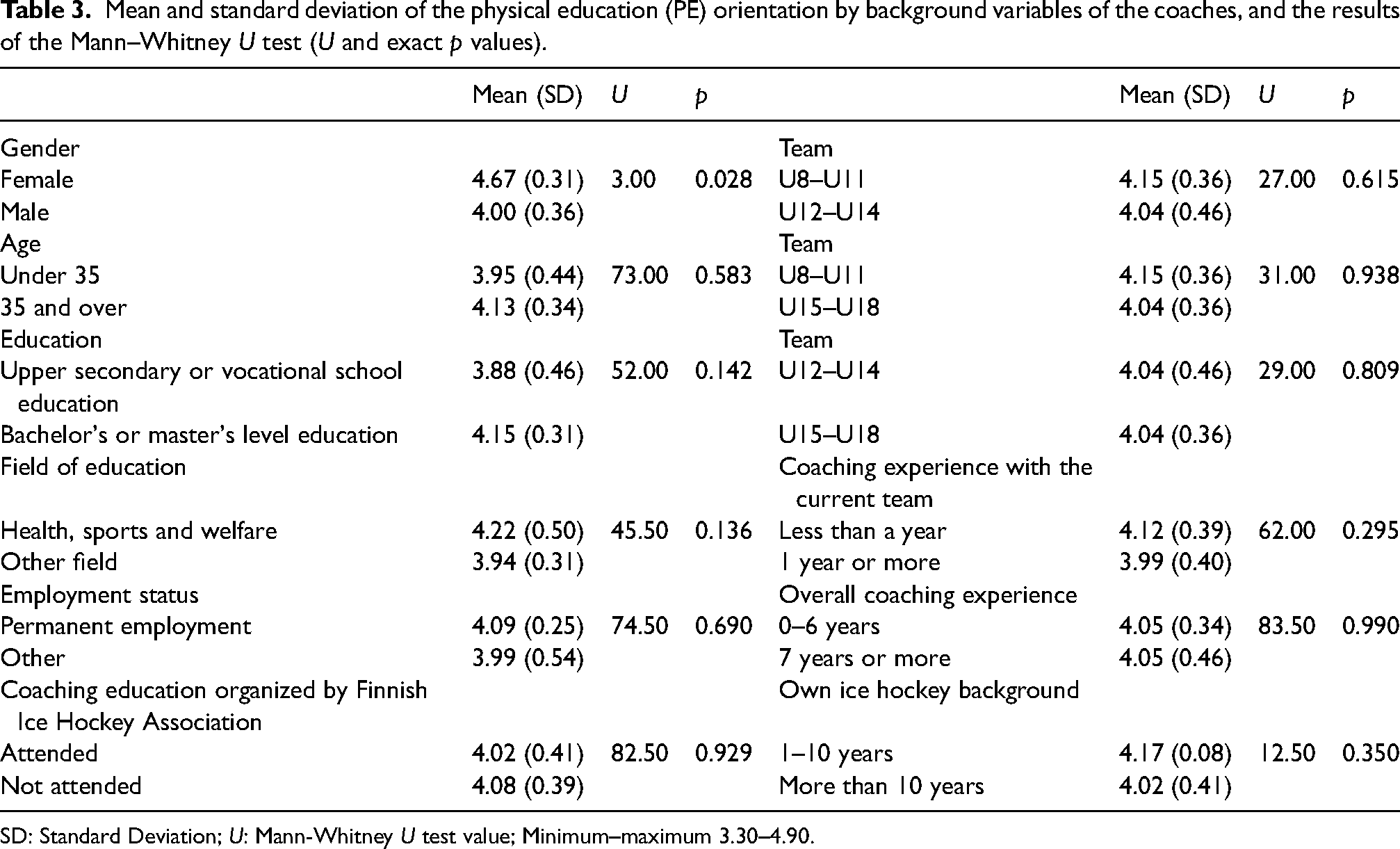
SD: Standard Deviation; U: Mann-Whitney U test value; Minimum–maximum 3.30–4.90.
Coaches’ assessment of the PE actors
Almost all the coaches (95.8%) agreed that families have a significant role in promoting a physically active lifestyle among young sports participants. The role of sports coaches (54.2%) and schools (29.2%) was less frequently perceived as significant.
PE activity of coaches
All the coaches reported that they often or almost always sought to make training sensible and fun, and that they interacted with players during hockey-related events. In addition, nearly all (92.0%) of the coaches reported that they often or almost always took into consideration players’ individual skill levels in training. By contrast, three out of four (75.0%) coaches reported that they almost never or rarely organized lectures or shared information on overall PA, and two-fifths (41.6%) almost never or rarely talked about health and overall PA levels with players’ parents or families (Supplemental Table 3).
Having attended coaching education and overall coaching experience were statistically significantly associated with coaches’ PE activity (p < 0.05) (Supplemental Table 2). According to the Mann-Whitney U test, coaches who had studied in the fields of health, sports, or welfare, coaches whose employment status was other than permanent, and those who had more than seven years of coaching experience reported higher PE activity on average (p < 0.05) (Table 4).
Mean and standard deviation of physical education (PE) activity by background variables of coaches, and the results of the Mann-Whitney U t test (U and exact p values).
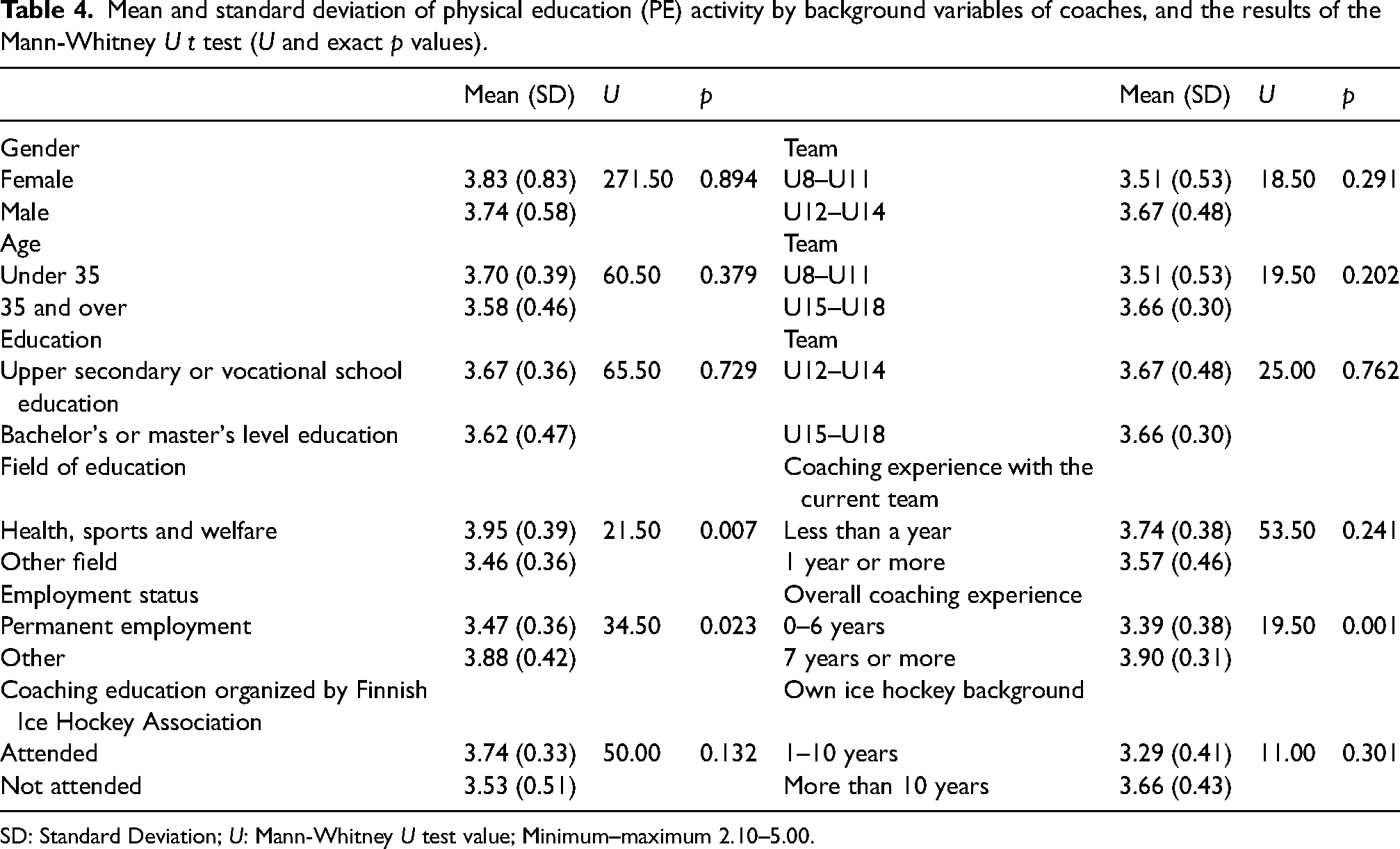
SD: Standard Deviation; U: Mann-Whitney U test value; Minimum–maximum 2.10–5.00.
The Chi-square test did not show a statistically significant association between PE orientation and PE activity, or a statistically significant difference in the coaches’ and young sports participants’ assessment of the coach's PE activity (p > 0.05).
Coaches’ perceived ways of influencing the PA behavior of young sports participants
Table 2 combines the ‘somewhat agree’ and ‘strongly agree’ responses from the coaches’ perceived ways of influencing the PA behavior of young sports participants (as asked in the questionnaire for the sports coaches). Half of the coaches felt they could influence the PA behavior of young sports participants by developing PA skills, while only a third felt they could do so by promoting PA outside training events.
PE in different coaching situations according to coaches and young sports participants
The PE that occurred often or almost always in different coaching situations, as reported by the coaches and young sports participants, is shown in Figure 2.
According to an Independent Samples T test, young sports participants rated the coaches’ PE in different coaching situations at a higher level than did the coaches themselves (Means 17.87; 12.96, p < 0.05) (Supplemental Table 4).
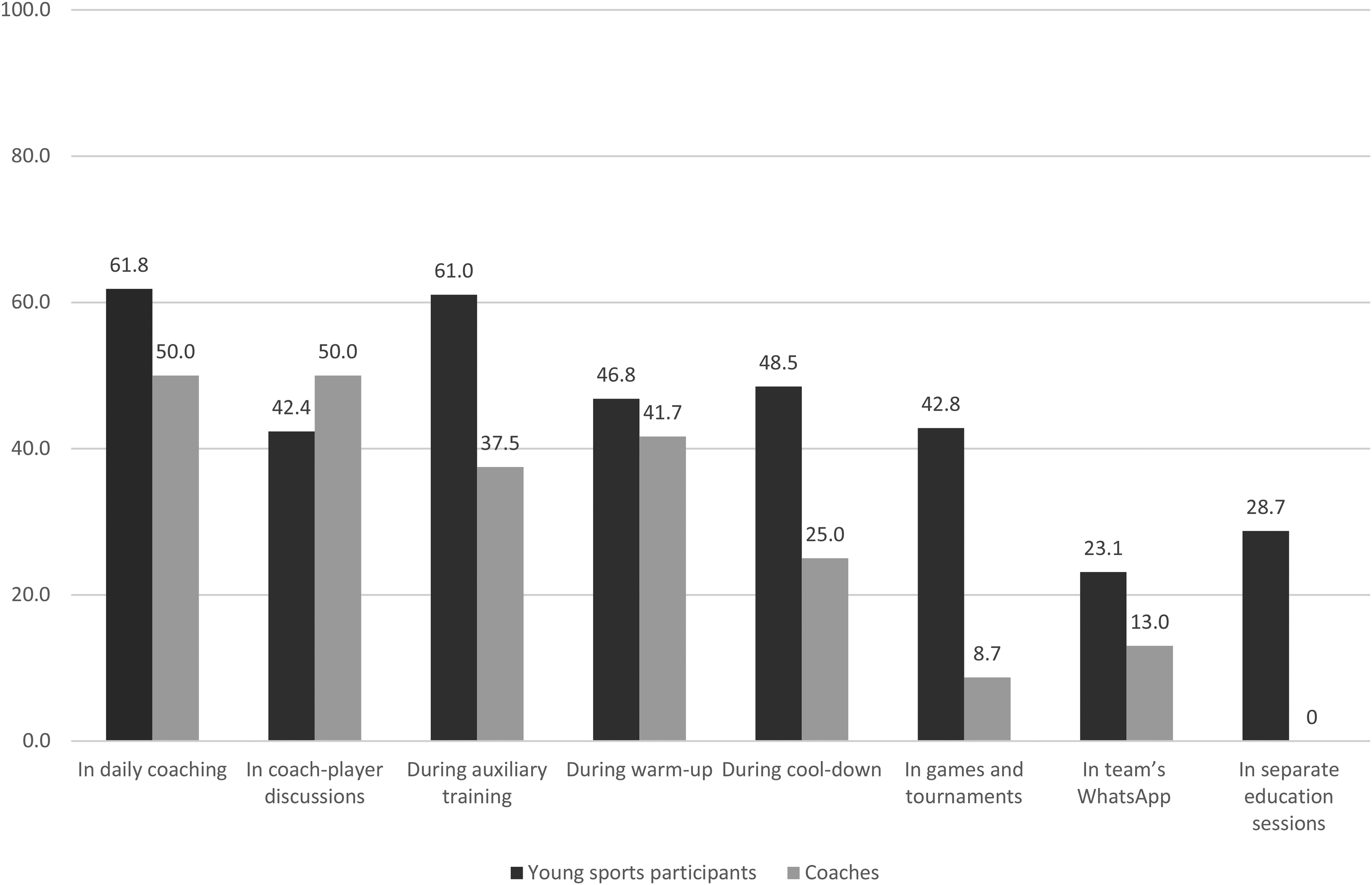
Physical education (PE) that occurred often or almost always in different coaching situations, as reported by coaches and young sports participants (%).
Coaches’ PE orientation and activity associated with the team's measured MVPA
Young sports participants engaged in MVPA at an average of 2 h 28 min per day. Out of all the young sports participants, the lowest third (in terms of MVPA) engaged in MVPA for 1 h 17 min on average, the middle third for 2 h 21 min, and the highest third for 3 h 35 min. The results of the multilevel analysis (Table 5) suggested that MVPA was higher for those young sports participants whose coach was in the lowest third of the PE orientation, those who were male, those who were in team U14 or younger, and those who attended other sports club activities (p < 0.05). The coaches’ PE activity was not associated with the participants’ MVPA (p > 0.05).
Three-level linear regression: factors associated with the MVPA of young sports participants.
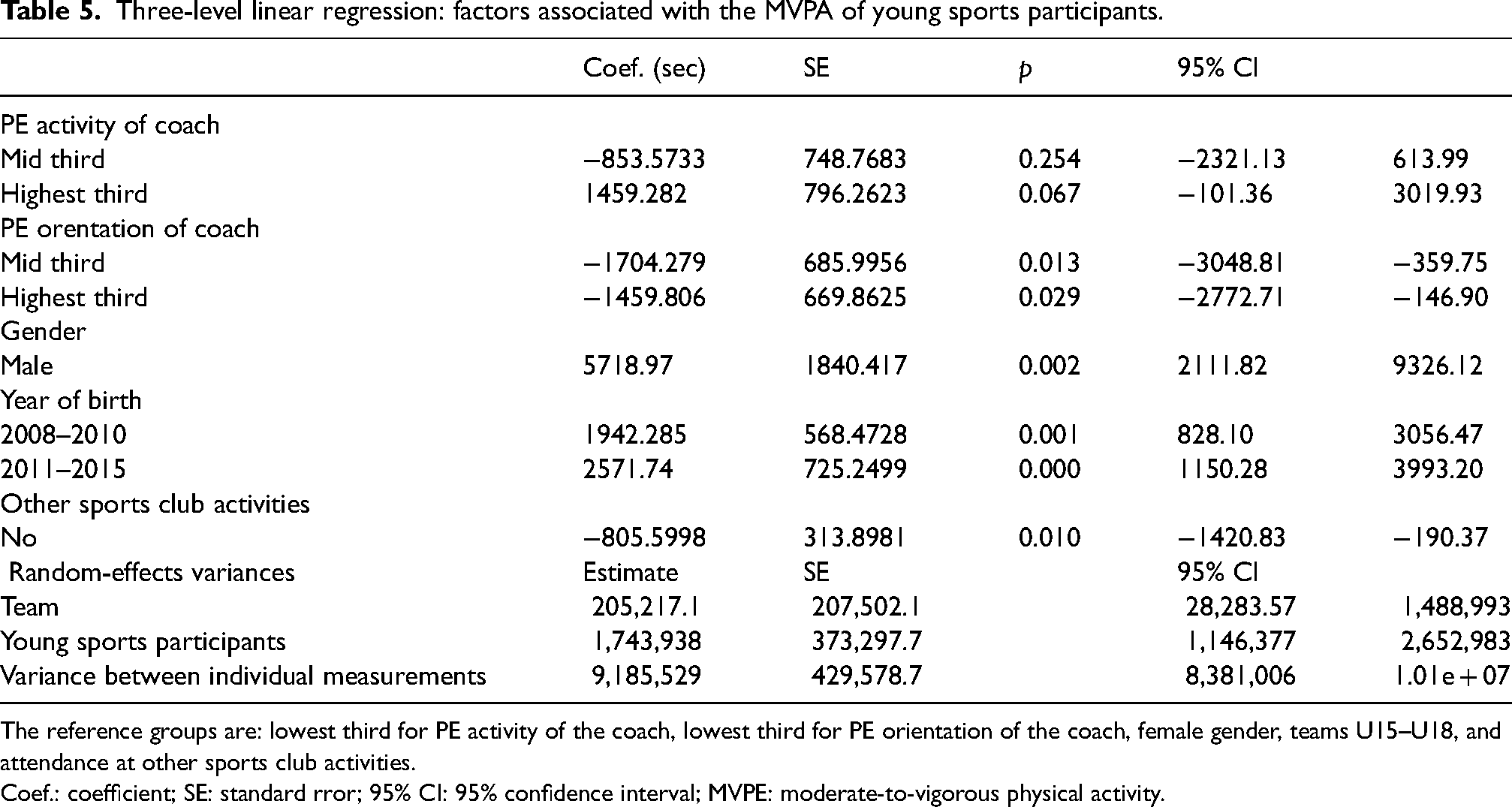
The reference groups are: lowest third for PE activity of the coach, lowest third for PE orientation of the coach, female gender, teams U15–U18, and attendance at other sports club activities.
Coef.: coefficient; SE: standard rror; 95% CI: 95% confidence interval; MVPE: moderate-to-vigorous physical activity.
Discussion
The purpose of the study was to investigate the PE orientation and the PE activity of sports coaches, coaches’ perceived ways of influencing the PA behavior of young sports participants, and the situations where coaches implement PE. Additionally, the study aimed to investigate the associations between the PE orientation and PE activity of the coach and the measured MVPA of young sports participants. The main finding was that the coaches widely recognized the importance of PE and the importance of weekly overall PA for young sports participants. However, the coaches underestimated their role in PE, highlighting instead the importance of families. The coaches perceived their possibilities to influence the PA behavior of young sports participants as fairly limited. The coach's lower PE orientation was associated with higher MVPA, and the PE activity of the coach did not play a role in the MVPA of young sports participants.
In terms of the PE orientation, a positive aspect was that the coaches recognized the importance of weekly overall PA for athlete development, and not merely the importance of discipline-related practice. Nevertheless, most coaches did not think that the sports club had a role in promoting overall PA among young sports participants. The role of families was seen as the most significant in conducting PE. Guagliano et al. 21 also indicated that coaches perceived that parents had a greater influence on PA outside the training events than coaches did. The results suggest that sports clubs should provide more support to coaches in recognizing their role in the comprehensive PE of young sports participants. In making recommendations on how to execute comprehensive PE as a part of sports club activities, one can suggest that PE should be integrated into the club's action plan, and carried out as part of the daily activities of each team. 3 The non-formal educational environment makes the sports club a good setting for promoting the overall PA of participants. From the point of view of PE, the sports club setting provides excellent PA situations and environments for the promotion of PA motivation among participants; nevertheless, families, too, should be encouraged to provide these situations for children and adolescents to be physically active, including outside sports club activities. The indications are that families do have a significant impact on PA behavior of children and adolescents.31,32 However, it can be assumed that the abilities of families to implement PE will vary greatly. This being so, there is a need for sports coaches to take a larger role in the PE of young sports participants, bearing in mind that coaches are important authority figures for young sports participants. 3 Coaches should consider how they could interact more with parents and families; in this way, the parties involved could better understand their responsibilities in PE and in promoting the overall PA of children and adolescents. All in all, one would hope that PE would be carried out in collaboration with families and with other persons working with children or adolescents.
Previous studies14,18 have indicated that a positive health promotion orientation has a positive effect on sports club's health promotion activities. However, in this study a higher orientation did not lead to higher activity in terms of the coaches’ PE. This is in line with previous results, according to which coaches have not integrated a comprehensive understanding of athlete development into daily practices.14,19 It underlines the point that a comprehensive understanding of the importance of weekly overall PA in athlete development should be better integrated into daily coaching practices. Integrating such an understanding within day-to-day practices will require the club to create consistent policies, and to provide coaches with adequate tools to implement PE.
As regards the PE activity of coaches, the results indicate that coaches would have the opportunity to be more active in sharing information and organizing lectures, including possibilities for using experts from outside the club (given that there are differences in the skills and education of coaches 11 ). Previous studies have not indicated that coaching experience has an effect on the MVPA of children participating in sports club activities.7,26 Nevertheless, in the present study the coaches’ field of education, their attendance in coaching education, and their coaching experience did influence their activity in implementing PE, and this would suggest that the skills acquired through education and experience could have an impact on coaches’ PE activity. It should be the responsibility of the sports club to ensure that coaches have adequate knowledge and skills 11 to implement PA and to promote the overall PA of young sports participants. This should be taken into account especially with regard to volunteer coaches who do not have formal training. It is not possible to set qualification requirements for volunteer coaches, 3 but it is nevertheless important to support the skills and expertise of coaches through coaching education.
Previous results regarding the health promotion activity of sports coaches have indicated that the coaches’ assessment of their own health promotion activity is higher than the young athletes’ assessment of their coach's activity. 19 In contrast, in this study the coaches and the young sports participants rated the PE activity of the coach similarly, which could suggest that the PE has been frequent and effective. It is also possible that the PE of the coaches has been informal rather than non-formal. In this case, there would have been no targeted educational approach to PE activities, and thus the coach would not have been aware of the educational situations that took place alongside other activities. Young sports participants also rated the coaches’ PE in different situations higher than the coaches themselves did. One can suggest that the differences in the assessments may be due to coaches’ and young sports participants’ differing perceptions of what is involved in PE.
Coaches perceived their possibilities to influence the PA behavior of young sports participants as fairly limited. In contrast to this result, Guagliano et al. 21 indicated that most coaches felt that they had the potential to influence PA among their participants. Only a third of the coaches felt they could influence the PA behavior of young sports participants by promoting PA outside practice. According to Guagliano et al., 21 only a few of the coaches felt that they had a responsibility to influence the PA of the sports club participants outside the training event. One can suggest that sports clubs should promote coaches’ perceptions of their opportunities to influence overall PA beyond sports training. Coaches’ perceptions of having only limited possibilities to influence the PA behavior of young sports participants appear likely to lead to lower PE activity. The authors will examine the PA behavior of young sports participants in more detail in future research articles.
The young sports participants in this study engaged in MVPA more than their peers on average.30,33 In this study, young sports participants aged 6–18 years engaged in MVPA for on average of 2 h 28 min per day. In the national reports on the PA behaviors of children and adolescents in Finland, children and adolescents aged 7–15 years (n = 2555) engaged in MVPA for an average of 1 h 44 min per day, 30 and adolescents aged 16–20 years (n = 936) did so for 50 min per day. 33 In terms of the amount of MVPA, even the lowest third achieved the PA recommendations of 60 min of average daily MVPA. 34 Here it should be noted that only the averages of participants were taken into account, with no consideration given to the age of the participants, the variation within the team, or attendance in a school class emphasizing PA. It is also possible that using the accelerommeters has increased the amount of PA during the measurement period. Nevertheless, it has previously been shown that participation in sports club activities increases the likelihood of achieving the PA recommendations, 35 and it should be considered that these young sports participants may have adopted a physically active lifestyle through participation in sports club activities. In addition, according to the results, participation in other sports club activities was related to higher MVPA. This implies that children and adolescents should be encouraged to participate in more than one sports club activity, rather than to specialize in one particular discipline from an early age. The association between male gender and younger age with higher MVPA was in line with the results of the report on PA behaviors of children and adolescents in Finland. 30
MVPA analysis that took into account an individual's daily variation seemed to suggest that a coach's lower PE orientation was associated with higher MVPA among young sports participants, and that the PE activity was not associated with MVPA at all. To the best of our knowledge, such examinations have not previously been conducted in any setting. However, previous results have suggested that the coach's health-related guidance was associated with greater substance use among sports participants, contrary to expectations. 36 The findings here may be due to the fact that coaching by voluntary coaches is often reactive rather than proactive, which means that matters are reacted to only when problems are detected. 3 Thus, if the participants are engaging in enough PA, the coach may not see a need to promote or take action toward increasing it. Moreover, the most physically active young sports participants could be more self-directed, with the coach's influence on them being correspondingly less significant. Overall, it would be reasonable to suppose that the PA of young sports participants may be more dependent on individual factors and on the PA habits of the family, rather than on the coach.
Even though we did not find the expected results on the PE orientation and activity of the coach in relation to the MVPA of young sports participants, PE clearly plays an important role in teaching young people knowledge, skills, and attitudes related to PA, and in developing and maintaining PA motivation. 3 In this sense, PE makes it possible for young sports participants to acquire the foundations for a physically active lifestyle beyond sports club activities.
Certain limitations to the study should be recognized. The results relate only to one specific Finnish junior ice hockey club. Hence, they are unlikely to represent all Finnish ice hockey clubs, and they also cannot readily be generalized to other disciplines, given the discipline-related characteristics of the sport in question. Moreover, participation in terms of gender was unequal since the majority of the young sports participants (98.5%) were male, in addition to the ratio between the female and male players differing from the gender ratio of ice hockey players registered in Finland (79% male players). 37 The majority of coaches (92.3%) were also male. One further limitation is that the PE orientation and PE activity were based on self-reported data. They may not tell the whole truth if one assumes that social pressure could have influenced the responses in the direction of socially acceptable answers.
To our knowledge, this was one of the first studies to investigate the PE orientation and activity of sports coaches. The strengths of this study can be considered to include the measured PA data, and the possibility to expand the study into longitudinal research using the same group of participants. Note also that the three-level mixed linear regression model made it possible to investigate the MVPA of young sports participants over three different levels: the team level, the individual level, and the level of daily variation.
In the current study, the PE activity was based on the coaches’ subjective evaluation; thus, future research should strive to objectively evaluate the PE activity of coaches through observations and videotaping. One would also strive for equal representation of genders, and of different sports disciplines. Future studies could further seek to examine the effects of coaching education on the PE implemented by coaches and on the MVPA of young sports participants. One could also seek to expand the research on PE beyond the school environment.
Conclusion
The results indicated that a comprehensive understanding of the importance of weekly overall PA in athlete development should be better integrated into daily coaching practices. The findings underline the notion that sports coaches and families should collaborate more, seeking to influence young sports participants’ PA-related knowledge, skills, and attitudes, and to create situations and environments for young people to be physically active. Through coaching education, sports clubs should ensure that the volunteer coaches have adequate knowledge and skills to promote the overall PA of participants through PE. This is one of the first studies to examine PE in a sports club context. More research is needed on the impact of coaching education on coaches’ abilities to implement PE, and on the impact of PE on sports participants’ MVPA and weekly overall PA. Research on PE outside the school environment should also be expanded.
Supplemental Material
sj-xlsx-1-spo-10.1177_17479541231225182 - Supplemental material for Physical education orientation and activity among youth ice hockey coaches
Supplemental material, sj-xlsx-1-spo-10.1177_17479541231225182 for Physical education orientation and activity among youth ice hockey coaches by Iina Raudasoja, Tommi Vasankari, Mikko Simula, Jari Villberg, Henri Vähä-Ypyä and Sami Kokko in International Journal of Sports Science & Coaching
Supplemental Material
sj-xlsx-2-spo-10.1177_17479541231225182 - Supplemental material for Physical education orientation and activity among youth ice hockey coaches
Supplemental material, sj-xlsx-2-spo-10.1177_17479541231225182 for Physical education orientation and activity among youth ice hockey coaches by Iina Raudasoja, Tommi Vasankari, Mikko Simula, Jari Villberg, Henri Vähä-Ypyä and Sami Kokko in International Journal of Sports Science & Coaching
Supplemental Material
sj-xlsx-3-spo-10.1177_17479541231225182 - Supplemental material for Physical education orientation and activity among youth ice hockey coaches
Supplemental material, sj-xlsx-3-spo-10.1177_17479541231225182 for Physical education orientation and activity among youth ice hockey coaches by Iina Raudasoja, Tommi Vasankari, Mikko Simula, Jari Villberg, Henri Vähä-Ypyä and Sami Kokko in International Journal of Sports Science & Coaching
Supplemental Material
sj-xlsx-4-spo-10.1177_17479541231225182 - Supplemental material for Physical education orientation and activity among youth ice hockey coaches
Supplemental material, sj-xlsx-4-spo-10.1177_17479541231225182 for Physical education orientation and activity among youth ice hockey coaches by Iina Raudasoja, Tommi Vasankari, Mikko Simula, Jari Villberg, Henri Vähä-Ypyä and Sami Kokko in International Journal of Sports Science & Coaching
Footnotes
Acknowledgements
The author(s) would also like to thank Jonne Silonsaari for his collaboration in the project and in data collection, and Donald Adamson for editing the English language of the manuscript.
Declaration of conflicting interests
The author(s) declared no potential conflicts of interest with respect to the research, authorship, and/or publication of this article.
Funding
The author(s) disclosed receipt of the following financial support for the research, authorship, and/or publication of this article: This research is funded by the Strategic Research Council at the Academy of Finland (Project numbers 320403 and 320400).

Supplemental material
Supplemental material for this article is available online.
References
Supplementary Material
Please find the following supplemental material available below.
For Open Access articles published under a Creative Commons License, all supplemental material carries the same license as the article it is associated with.
For non-Open Access articles published, all supplemental material carries a non-exclusive license, and permission requests for re-use of supplemental material or any part of supplemental material shall be sent directly to the copyright owner as specified in the copyright notice associated with the article.
