




Abstract
Strength and conditioning (S&C) interventions for golfers consistently demonstrate improvements in performance metrics such as clubhead speed. Golfers typically employ Professional Golfers’ Association (PGA) coaches to support technical and tactical development. These coaches need to ensure golfers balance S&C training alongside competitions and technical golf practise, although no empirical data exist that demonstrates how this integration occurs practically. This study aimed to investigate the perceptions and practises of PGA Professional golf coaches and how S&C is integrated into the golf year. Forty-three (male = 35; female = 8) PGA coaches completed a mixed-methods survey with questions on themes such as coaching approach, perceptions of S&C, annual planning and goal setting. Results show that formal planning processes are highly variable or absent. The majority (n = 29; 70.7%) of PGA coaches stated they worked with an S&C coach and see the role of the S&C coach to support golfers with their input. However, when planning the season, 63.4% (n = 26) of coaches do so without input from the S&C coach. These and other related disconnects between desire for S&C intervention and inclusion of the S&C coach in planning processes were evident throughout survey responses. There may be subsequent risks of conflict or misunderstanding between PGA coach, S&C coach and golfer. It is recommended golf coaches, golfers and S&C coaches work collaboratively as a multidisciplinary support team to ensure coordinated golfer support is obtained.
Introduction
In recent years, the evidence base for utilising strength and conditioning (S&C) training with golfers has grown substantially. Empirical data demonstrate that both acute1–3 and longitudinal4–6 S&C interventions can benefit golfers, primarily through improving clubhead speed (CHS). Along with technical components such as strike quality, orientation of the clubface at impact and club path, CHS is a major component of drive distance. 7 Drive distance (and subsequent distance remaining to the hole following the drive) is a crucial performance determinant across all levels of play from elite professional 8 to handicap amateur. 9 Concomitantly, CHS is also the most readily affected swing variable following an S&C intervention. In a review of S&C training interventions, Ehlert 10 reported typical improvements of around 4–6% in CHS, ball speed and drive distance, with comparable improvements for skilled vs less-skilled golfers or long vs short duration interventions. However, research into S&C for golf typically focuses on S&C training exclusively. Consequently, how S&C training is incorporated, by the golfer and/or their coach, into the golfer's overall schedule is currently unknown and exploratory research is required.
Many golfers hire a Professional Golfers’ Association (PGA) golf coach to support their technical and tactical development, and a recent study reported that 65.6% of golfers work with an S&C coach and 81.5% have an S&C programme. 11 However, the integration of S&C training within the annual plan will likely require input from the golf coach, the S&C coach and the golfer and currently data are lacking in this area. A survey of Australian PGA coaches showed that 53% considered physical fitness to be important for their clients. However, while 35% disagreed with this, the vast majority (84%) of the remaining coaches said they would like to know more about S&C. 12 Coach education has increased within the area of S&C for golf, and the majority (78.5%) of the Assistant PGA Professionals surveyed in a recent study believe S&C can benefit golfers. 13 It has been suggested that competitive golfers should balance the demands (time and energy) for S&C interventions with other demands (e.g. practise, travel and competition) and their coaches should plan efficient training to reduce time spent away from technical preparation and planned recovery. 10 However, despite Wells and Langdown 13 suggesting that golfers and PGA coaches should liaise with S&C coaches to facilitate a periodised training programme, there is currently no evidence available that describes how or if golf coaches do this in practise.
Understanding the planning processes of golf coaches is crucial in helping S&C coaches to integrate physical training within the golfer's overall schedule. Roy et al. 14 suggested that planning training can be a complex, time-consuming task and that sport coaches need education that is contextualised to meet their individual needs. Recent golf-specific evidence from Orr et al. 15 demonstrated that high-performance golf coaches working with elite, touring players often choose to be unstructured in their approaches, preferring to react to recent performances and placing emphasis on immediacy and short-term goals. Gambetta 16 suggested that a carefully constructed plan, with sequential development of all athletic abilities, allows the training goals and priorities to be kept in perspective, with Roy et al. 14 adding that all coaches and the athlete (where their maturity levels allow) should be involved in the planning process. In golf specifically, Hellström 17 has stated that the golf coach, S&C coach and other experts all help to improve golfers’ performances. Planning together allows everyone to have a consistent message and direction towards training for the sport while managing training load, fatigue and recovery by adapting the plan as required throughout the year.
Finally, even if a golf coach believes in the benefits of S&C training and recommends it, they may risk their reputation with the golfer if the S&C intervention is unsuccessful or results (whether through correlation or causation) in poor performance or injury. 18 Coaches may also feel like they are losing ‘control’ of the golfer's development by bringing in an S&C coach, who might offer conflicting or contradictory viewpoints to the golf coach, and as such, developing an open and transparent working relationship between golfer, PGA coach and S&C coach appears to be crucial. 18 Notwithstanding, contemporary evidence suggests that golfers are engaging in S&C training and like to follow a structured approach for their S&C work. 11 Exploring the perceptions of S&C training from qualified golf coaches will likely support successful integration of technical, tactical and physical development for golfers.
The aim of this study was to investigate the perceptions and practises of PGA Professional golf coaches, specifically their approach to coaching and interaction with the S&C coach, planning the season and how S&C is integrated into the golf year.
Materials and methods
Research design
This survey, developed using Microsoft® Forms, was employed to investigate the applied practises and perceptions of golf coaches when planning the year for their golfers. Using convenience sampling, the survey was distributed through social media (Twitter, LinkedIn and Facebook), email, correspondence with a golf national body (England Golf) and word of mouth. Short answer questions and multiple-choice questions (MCQ) with an ‘other’ option were used, allowing participants to submit an alternate response or elaborate where necessary. The approach allowed the short answers to be analysed for frequency of common responses and organised into categories through manifest content analysis. This flexible research method is appropriate for many projects, either as a standalone method or when combined with others, to move from unstructured text to answering research questions. 19 Underpinned by a postpositivist approach here, it also increases the reliability and accuracy of researcher inferences being made from participant responses aligned to the specific survey context 20 and application back to the field to support future coaching pedagogy.
Participants
Forty-four coaches participated in the survey and their descriptive statistics are presented in Table 1. To be eligible for the survey, participants were required to be ≥18 years of age at the time of completion and a PGA Professional golf coach. One responder was removed as they answered ‘on behalf’ of another person, leaving 43 participants. All participants consented to their responses being included in the research having read and confirmed understanding of a pre-survey information sheet. Ethical approval was granted by the University's Ethics Committee and was conducted in accordance with the Declaration of Helsinki (2013).
Participant characteristics.
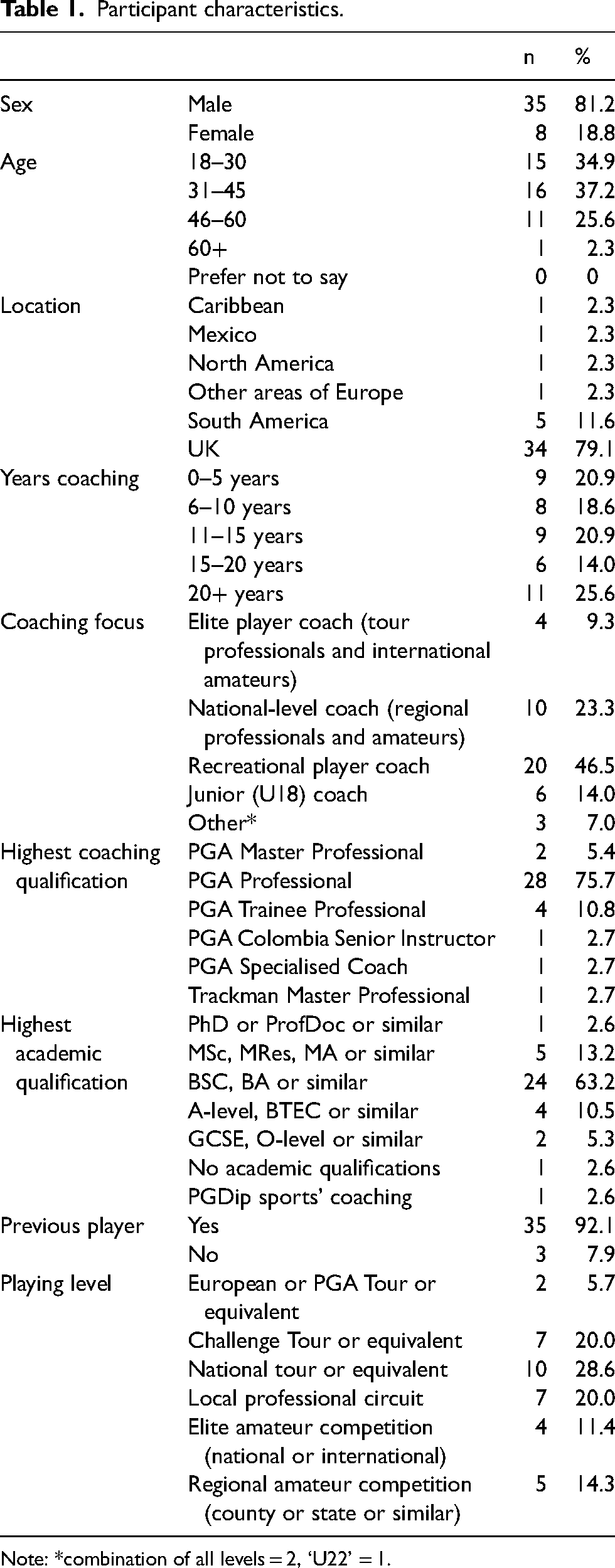
Note: *combination of all levels = 2, ‘U22’ = 1.
Procedures
An anonymised link was used to distribute the survey, which allows for remote completion for participants, an approach that can reduce bias from the experimenter and preserve participant anonymity. 21 The survey questions were separated into common themes around coaching approaches, planning, perceptions of S&C and its inclusion in the annual plan. The full question list and possible responses are provided as supplementary information (Supplementary File 1).
Statistical analysis
A minimum sample size target of 40 survey completions was established a priori based on sample sizes in similar research in golf 22 and other coach perception of S&C papers. 23 Microsoft® Forms survey responses were exported to Microsoft® Excel. A frequency analysis with percentage of responses was conducted for all MCQ, fixed response questions. Qualitative terms were attributed to the following thresholds in accordance with Shaw et al. 22 : minority, < 30%; approximately a third, ∼30%; approximately half, ∼50%; majority, 55–74%; most, ≥75%; and all, 100% of respondents.
Manifest content analysis was used to explore qualitative responses to short answer questions. The lack of research in this area meant that key units of meaning in participants’ responses were used to create codes during analysis of the open text. Open responses were initially exported into an Excel codebook and analysed using the following recommended steps: (1) authors familiarised themselves with the data and developed working definitions for each variable within the codebook, ensuring the construction of categories was unambiguous and exhaustive; (2) authors generated initial units of meaning; (3) each author independently reviewed and labelled the data with codes and categories were assigned; (4) coded material was grouped into similar categories; (5) these categories were described with a theme; and (6) content was presented and supported with examples. This approach ensures postpositivism bias was detected and mitigated, i.e. through discussion and review of co-investigator's coding, resulting in valid and reliable analyses.24,25 The intercoder reliability was calculated at 95.7%, and Cohen's κ was calculated for intercoder agreement. There was ‘almost perfect’ agreement between the coders (κ = 0.941, p < 0.001) according to descriptors provided by McHugh for Cohen's κ interpretation. 26
The resultant analysis recorded frequency of responses that presented comments on the following categories and subcategories:
Golfer dependant: contact time/finance/ability/engagement with planning Technology: user-friendly planning tool/using technology to assist Time invested: time devoted to planning Planning details: details included/data driven Education: coach education Miscellaneous: any other comments not covered by the categories/subcategories above
Results
Planning the golfer's year
The most common approach (approximately a third of responses) was for the coach to put all events in the diary and plan around those (n = 15; 35.7%). However, 28.6% (n = 12) work on monthly plans rather than an annual plan and 23.8% (n = 10) only plan around key events rather than all. A minority of coaches responded that they do not do a season plan (n = 5; 11.9%).
No coaches stick to the plan at all times. Instead, approximately half (53.1% of 32 respondents) use the plan as a guide but often change it. Other coaches make major (n = 3; 9.4%) or minor (n = 12; 37.5%) adjustments when required. Coaches were also asked to identify how they approach golf coaching, and responses are summarised in Table 2. Of the 41 coaches who responded, the majority (73.2%; n = 30) stated that they take a periodised approach to their planning for a golfer's year. Fifteen coaches (36.6%) reported working in conjunction with an S&C coach to plan the season, and of these, 14 (93.3%) reported using a periodised approach. Of 39 responders, the majority (64.1%; n = 25) of golf coaches opt to just consult their golfer when setting goals. A further 33.3% set goals with the support team's involvement rather than setting with the golfer, and only one coach (2.6%) stated that they involve the golfer and the full team. Of the 12 golf coaches who do not have an S&C coach supporting their golfers, 50% periodise their plan.
Approach to golf coaching.
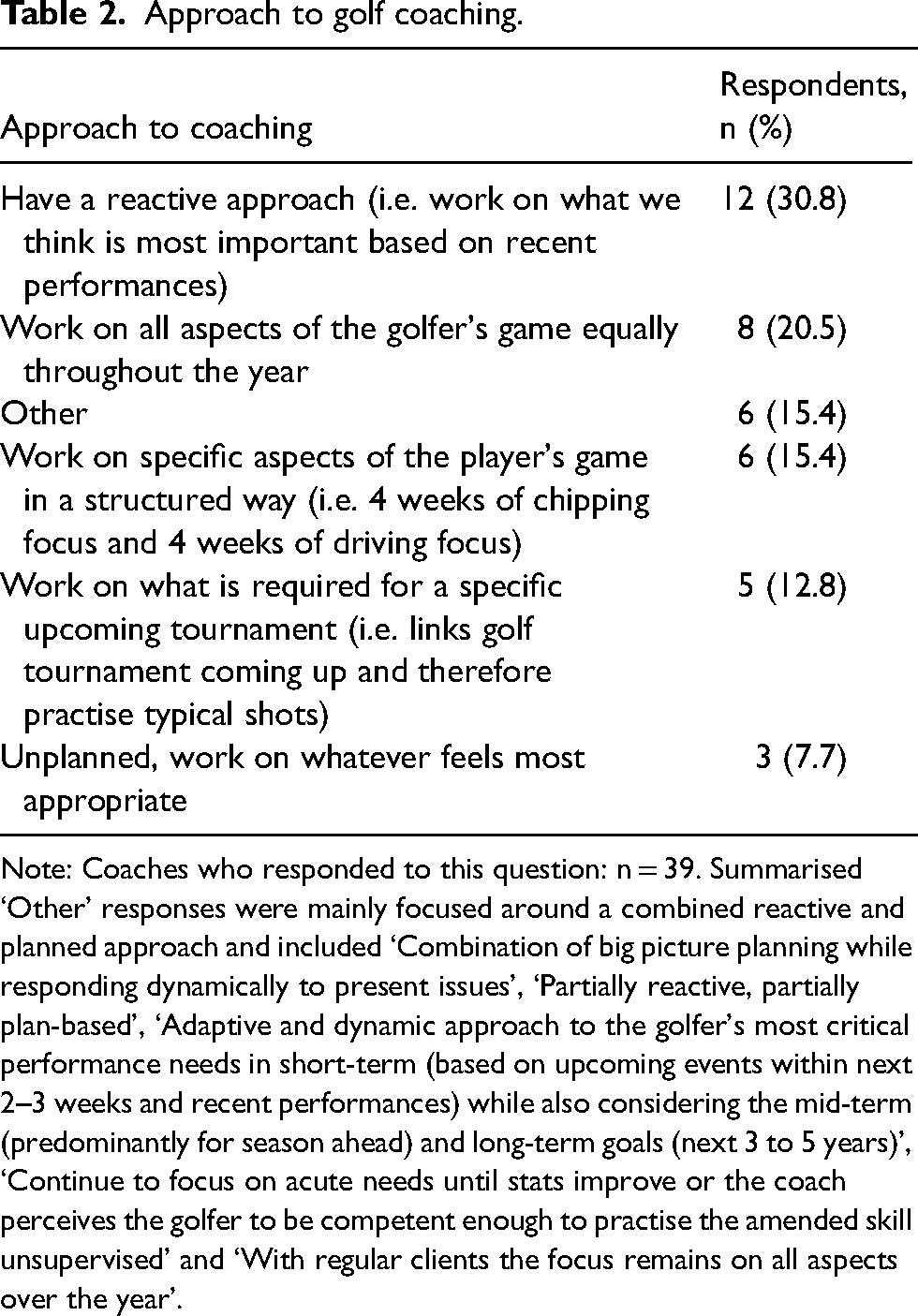
Note: Coaches who responded to this question: n = 39. Summarised ‘Other’ responses were mainly focused around a combined reactive and planned approach and included ‘Combination of big picture planning while responding dynamically to present issues’, ‘Partially reactive, partially plan-based’, ‘Adaptive and dynamic approach to the golfer's most critical performance needs in short-term (based on upcoming events within next 2–3 weeks and recent performances) while also considering the mid-term (predominantly for season ahead) and long-term goals (next 3 to 5 years)’, ‘Continue to focus on acute needs until stats improve or the coach perceives the golfer to be competent enough to practise the amended skill unsupervised’ and ‘With regular clients the focus remains on all aspects over the year’.
Golf coaches were asked to identify whether they used some form of technology to assist with their planning. The majority of coaches (69.0%; n = 21 of 29 responders) utilised a variety of coaching apps (e.g. video analysis or coach–golfer team communication apps), golf statistics apps/websites, administration apps (e.g. for notes, calendar or diary use) and office apps such as Microsoft® Excel and Word. A minority (23.4%) suggested that they would welcome new technology that supported effective and efficient planning, with one coach (3.4%) mentioning they used pen and paper together with emails (see Table 3).
Golf coaches’ open text responses to which factors could improve their planning.
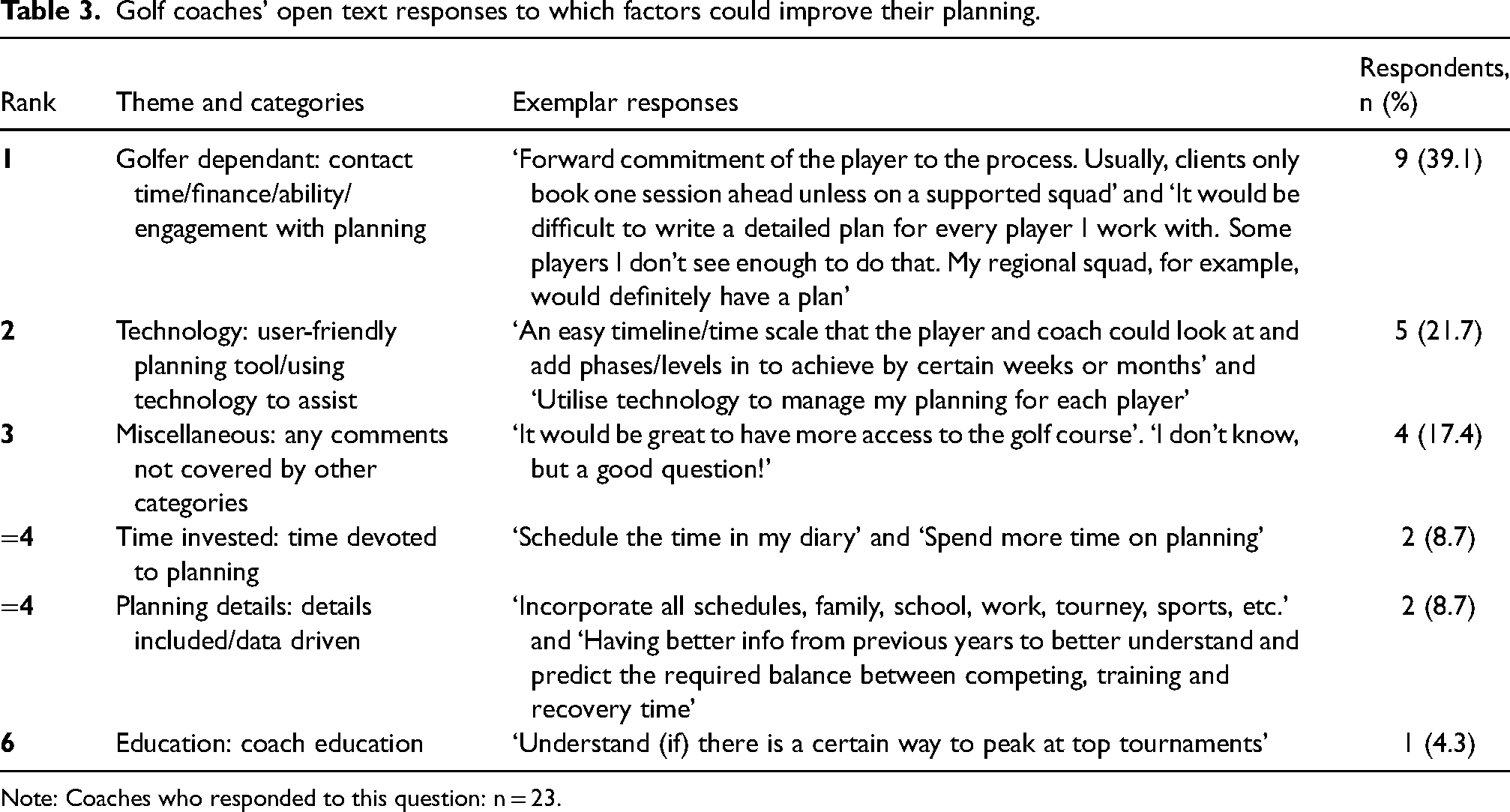
Note: Coaches who responded to this question: n = 23.
Coaches were invited to provide solutions to support improved planning with their golfers. Analysis of the open text responses is presented in Table 3.
Working with an S&C coach
Out of 41 coaches, the majority (70.7%; n = 29) stated that they worked with an S&C coach to support their golfers. The majority of coaches aged 18–30 years (66.7%; n = 10) did not have their golfers work with an S&C coach, with five coaches (33.3%) reporting they did utilise an S&C coach. For coaches aged 31–45, most (81.3%; n = 13) had their players working with S&C coaches, and all (100%; n = 11) coaches ≥46 years who responded reported having an S&C coach working with their golfers.
Results from 28 respondents indicate that they see the role of the S&C coach as to provide support to golfers with input from them as the golf coach (78.6%). A further 17.9% of coaches believed that the S&C coach should support the golfer independently, with either no or little input from the golf coach. A single response (3.6%) stated that it depends on the golfer's intentions. Despite this, when planning the season, the majority (63.4%; n = 26) of the coaches opt to plan without the S&C coach's input. Coaches were also asked about their approach to speed training with their golfers, and responses are shown in Figure 1.
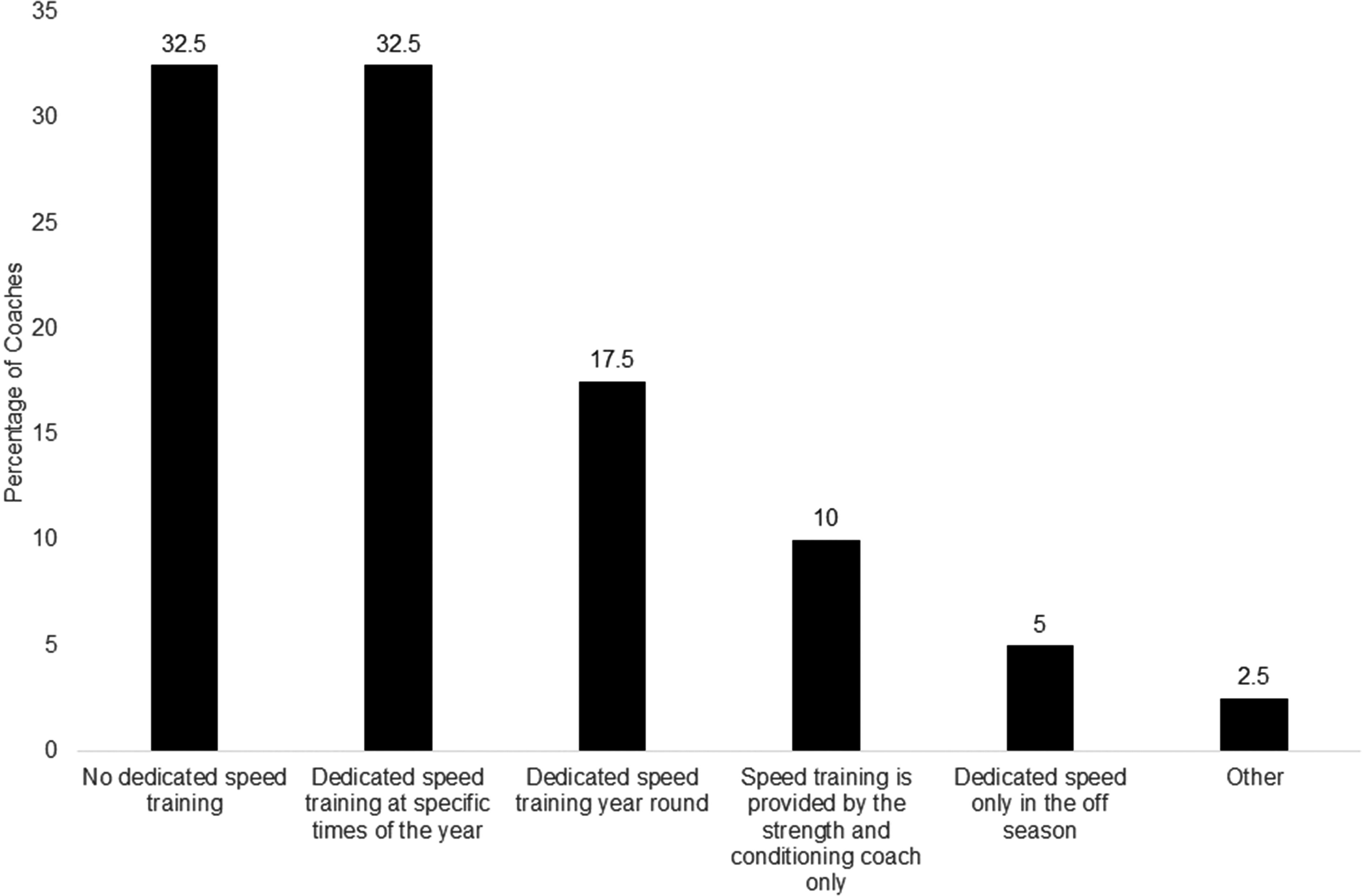
Coaches’ approach to developing speed in the golf swing. Note. *Other response: ‘Depending on schedule of events in conjunction with trainer’.
Table 4 includes the coaches’ perceived benefits an S&C coach can provide to golfers (Table 4) and which qualities they desired from an S&C coach when selecting them to work with their golfers (Table 5).
The main areas of benefits an S&C coach can provide to golfers – perceptions of golf coaches.
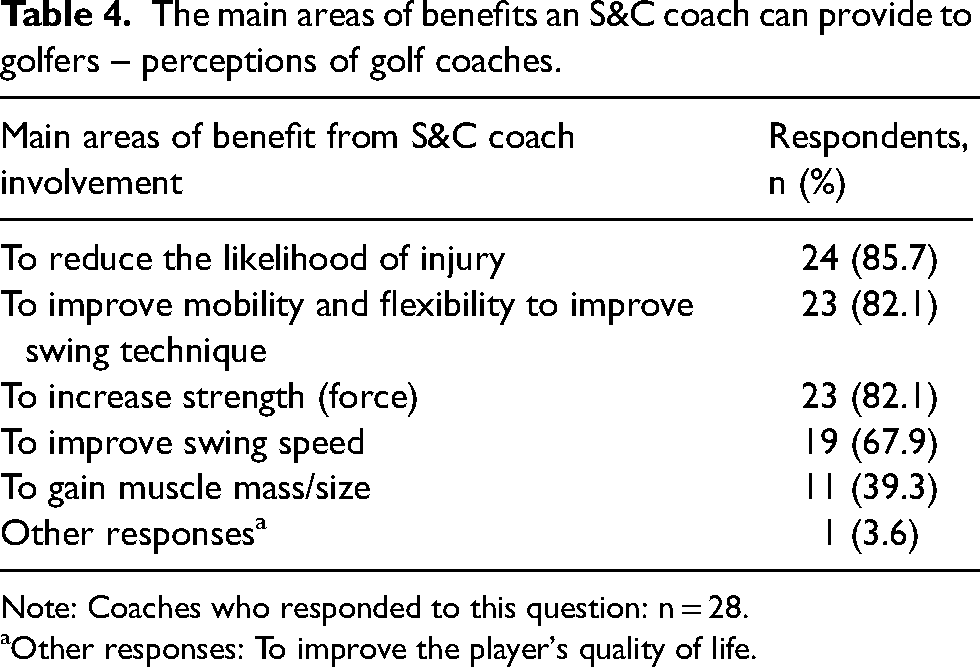
Note: Coaches who responded to this question: n = 28.
Other responses: To improve the player's quality of life.
The desirable qualities a golf coach would look for in an S&C coach to work with their golfers.
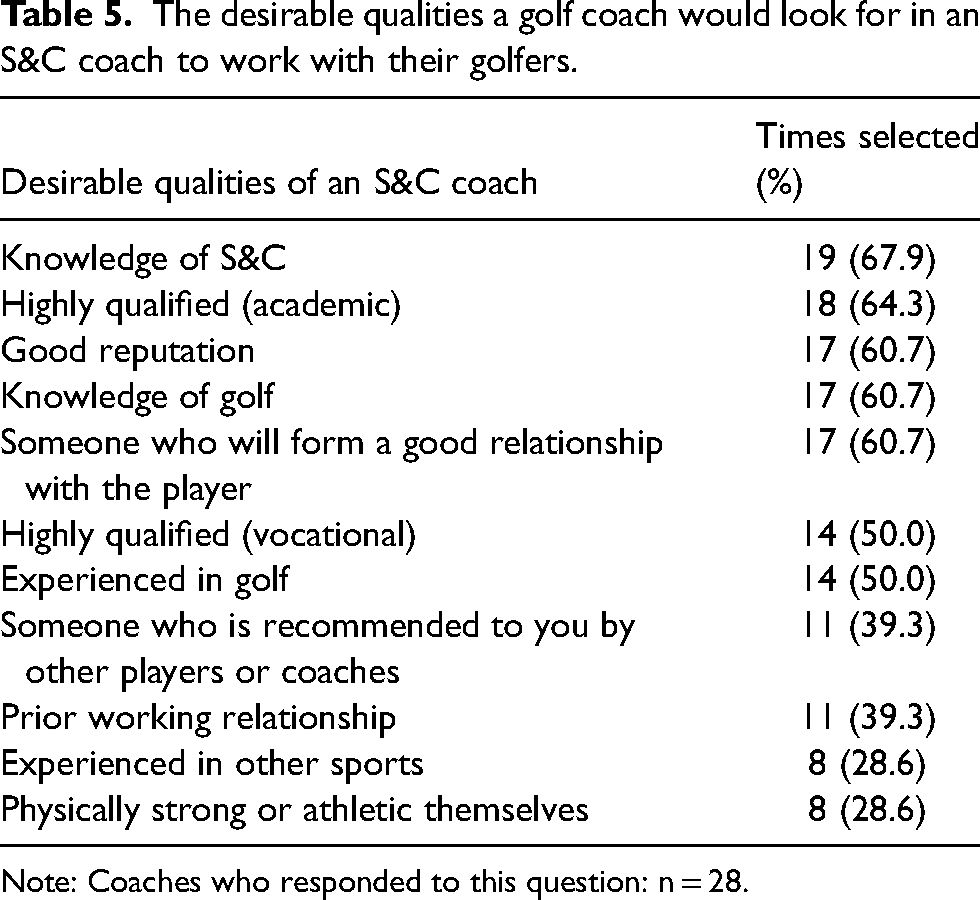
Note: Coaches who responded to this question: n = 28.
Discussion
To date, there are no empirical data that identify how golf coaches approach planning a golfer's year or how/if they integrate the S&C training a golfer may undertake. This study aimed to survey the perceptions and practises of PGA Professional golf coaches when planning golf and S&C activities for golfers.
Planning the year and setting goals
All coaches demonstrated flexibility in their approaches and will change their plans according to demand. While there were a wide variety of approaches to planning reported, most golf coaches (85.7%) in this survey provided some level of planning for their golfers. However, this also means that more than one in ten do not do any planning and are entirely reactive. The most common response (30.8%) from coaches in the present study was to have a reactive approach to their golf coaching, based on the golfer's recent performance (Table 2). These findings agree with recent work from Orr et al. 15 who highlighted that golf coaches often attempt technical refinement but without a clear systematic process, instead using an unpredictable and uncertain approach and little priority given to long-term planning. This coaching approach allows for to the acute needs of the golfer to be addressed in a reactive manner (as identified by 30.8% of coaches here). Golf coaches continued to describe that annual planning and goal setting have multifaceted benefits that extend beyond physical development, including providing focus and motivation for athletes to improve, a realistic grounding for the time-course of developmental changes and a proactive approach to addressing challenges. Of interest, the short answer content analysis (Table 3) also highlighted that a reason for the absence of a fixed plan is based on contextual dynamics of golf coaching, whereby golfers might only sign up for a single coaching session rather than show ‘forward commitment’ by booking in for a series of coached sessions. Single coaching sessions do not easily necessitate goal setting, and therefore, discrepancies may exist between the goals or objectives set by coach and golfer. If these expectations are not managed, then conflict may arise leading to further challenges and a potential breakdown in progression and relationship with any S&C coach involved in the golfer's development.
The majority (70.7%; n = 29) of golf coaches work with an S&C coach to support their golfers, with more senior coaches utilising S&C coaches when compared to coaches aged 18–30. An additional area for conflict when considering planning is that approximately half (51.7%) of the coaches surveyed choose to plan their golfer's practise without the input of the S&C coach. This seems counterintuitive and contradictory, especially when most (78.6%) golf coaches believe the S&C coach should support the golfer, alongside their input. Results from Bliss and Langdown 11 highlighted that only 32.1% of golfers reported setting goals with their golf coach, with 37.7% opting to set them alone. Although this current study reported increased numbers, still only 66.7% of golf coaches include the golfer when goal setting. Considering that ‘athlete-centred’ programmes have been identified to be a core aspect of high-quality coaching 27 and a number of national governing bodies in sport recommend this approach, 28 to have a third of golfers excluded from the goal setting process is striking.
Additionally, the success of a training plan resides in the coach's ability and willingness to become fully immersed in the planning process, a factor that does not always occur. 29 Asking the S&C coach to adhere to input from the golf coach when providing S&C training or the golfer to ‘buy-in’ to the goals set, but not including them when planning activities, may foster an environment where conflict can arise and is likely to be suboptimal for the golfer and the multidisciplinary team supporting them. It is therefore recommended that when planning or goal setting, the entire support team are included to ensure consistency of training approach. It appears from this analysis that golf coaches ≥31 years of age are more likely to employ an S&C coach than those ≤30. The survey does not allow for a clear understanding of why this is the case, and future research in the area should explore this further.
Planning processes
Golf coaches were asked to provide their perspectives on what, if anything, would help to improve planning their planning (Table 3). Tournament dates drive planning for the majority of coaches, whether this is just around the key events or the diarising of all competitions before planning begins. This is consistent with findings from a recent paper surveying golfers’ approaches to planning where 50 of 64 (78.1%) golfers reported planning their golf training around competition. 11 All coaches who complete a plan take some form of adaptive/reactive approach, making amendments (minor/major) across the year in response to various triggers (e.g. recent performances, upcoming events or weakest areas based on statistics). The majority of coaches (60.0%) plan using some form of technology. Responses here suggested that some coaches use technology to inform the amendments that are required to meet the acute needs of the golfer (e.g. performance statistics websites/apps), while others use technology to document and communicate various aspects of the plan. As identified by a minority (21.7%) of coaches, there is a need to provide a future technology solution that enables more efficient and effective planning to take place. This is especially true for those golfers who lack long-term commitment to a coaching programme. Coaches suggested that it would be difficult to plan for all their golfers in this context. Some coaches (9.1%) suggest that they would need to devote more time to the process to improve their planning. This is supported by Roy et al. 14 who contend that planning can be a time-consuming and complex task, requiring input from all members of the team and the athlete themselves (where maturations levels allow).
Peaking and tapering
The survey responses herein indicated that more than one in five coaches wish to work on all aspects of a golfer's game equally throughout the year. Bliss and Langdown 11 found that despite golfers prioritising high-profile tournaments (90% of sample) and key events (62.5%) in their schedule, only 27.9% of golfers indicated that they try to physically peak. Including the S&C coach in the planning of the year may facilitate a closure of the disconnect between tournament priority and adapting training to optimise performance. Furthermore, ensuring the S&C coach is aware of the schedule and the priority of the events in the year allows them to plan ahead and adjust training interventions to manage fatigue, monitor training loads and ensure that priming or tapering of volumes is facilitated. It is encouraging to note that of those who work alongside an S&C coach with their golfers (n = 29), most (93.3%) periodise their plan. Of the remaining 12 coaches who do not use S&C coaches, only 50% periodise their plans. Despite the survey not examining the underlying reasons behind this, it seems that the inclusion of an S&C coach may lead to more appropriate practises taking place to monitor loads and optimise performance, fatigue and recovery. This is supported by most (85.7%) coaches suggesting that a benefit of the S&C support is to reduce the risk of injuries (see Table 4). However, further education is needed to disseminate the benefits of taking a multidisciplinary approach to planning which ensures the periodisation is context specific, not based on classical models 30 or solely focussed on just the skill acquisition and technical elements of practise and training. Orr et al. 15 found that the majority of coaches shifted to a goal of immediate performance support for the next tournament rather than focussing on the previously constructed plan and goals. As Roy et al. 14 suggest, the training load and the importance of upcoming tournaments are likely to fluctuate during the playing season, based on recent results, injuries and qualifying and recovery breaks. It is therefore important that communication across the whole team (coaches, golfer and, where appropriate, parents) is maintained and acted on within appropriate time frames to adjust the focus of training or recovery and practise and preparation.
Benefits of S&C
A key finding from this survey was that perceptions of coaches as to the main benefits an S&C coach can provide (Table 4) do not necessarily agree with the empirical evidence base. For example, the most popular responses included reducing the likelihood of injury (85.7%), improving mobility and flexibility to improve swing technique (82.1%) and increasing strength (82.1%). While the benefits of strength training 10 and being able to express strength through the production of high forces 31 leading to greater CHS in golf are well established, the link between S&C interventions and improving swing technique is not.
Speed development in golfers was selected by the majority (69.7%) of coaches but represents a 15% reduction in responses compared to strength, mobility and injury reduction. The majority of the empirical evidence base consistently demonstrates that S&C programmes with a strength and power focus improve swing speed across a range of populations, both acutely and longitudinally.2,5,6,10,32 A possible reason for this study's responses may be that some golf coaches perceive swing speed development to be within their domain of expertise rather than the S&C coach's remit. Indeed, only four coaches (10.0%) stated that speed training was provided by the S&C coach, with 22 (55.0%) choosing to administer dedicated speed training at specific points during the year (Figure 1). A further 32.5% of coaches indicated that no dedicated speed training was used within their coaching. It may be that these golf coaches leave speed training to the S&C coach, have not considered it or are not aware how to develop it outside of technical swing improvement, or perceive that if they are only seeing a golfer for a single session, then working on speed development might not be justified as its development will require a longer-term approach (chronic adaptations). However, the current study cannot conclusively answer this and therefore future research might seek to address this gap in knowledge.
Lastly, utilising an S&C coach to support muscle mass development in golfers was selected less than half as frequently as other responses above. Only 39.3% of coaches perceived muscle development as a main area of benefit. Although muscle hypertrophy studies in golf are lacking, from a theoretical standpoint, if a golfer can increase their mass and maintain (or increase) acceleration during the swing, they will generate more force. If the golfer can maintain the same length swing (i.e. not lose range of motion) and apply these greater forces over the same (or longer) time period, then they will generate more impulse. In applied settings, Wells et al. 31 found that 37.9% of the variance in high-skilled golfers’ clubhead velocities could be predicted by their impulse in a countermovement jump.
There may be multiple reasons for the coaches in this study not selecting muscle mass development as a primary benefit to golfers. It is well known that S&C interventions can improve muscular hypertrophy across a broad spectrum of athletes and populations. 33 However, it may be that golf coaches are apprehensive about muscle mass development and possible interference with golf swing mechanics. In a recent survey of golfers, muscle mass development from S&C programmes was similarly low in terms of priority when compared to the development of other physical qualities or physical robustness. 11 This contrasts with another survey of 430 high-skilled golfers 13 of whom 73.3% reported using a repetition range facilitating hypertrophy within their S&C programmes. Furthermore, 20.7% of their sample somewhat strongly agreed that resistance training can reduce the flexibility of a golfer. While additional empirical evidence for the benefits of hypertrophy and flexibility training in golf is lacking, in aesthetic sports, such as dance, some coaches perceive that engagement in a strength training programme may result in unwanted ‘bulk’ or size development, which may interfere with a dancer's aesthetics, although with increased knowledge of S&C techniques, this is reducing. 34 While not an aesthetic sport in the same way as dance, the requirement to move through large ranges of motion, under control, with fluidity of movement, and exert high forces over short durations is similar in dance and golf. It appears that with increased education, the perception of S&C training improves and misconceptions are addressed, and it is recommended therefore that continued education for golf coaches as to the benefits of S&C programmes in golf is encouraged.
Golf coach/S&C coach relationship
Despite the recommendations listed above, the responses here indicate that the S&C coach and golf coach may experience conflict when it comes to managing the planning process with golfers. For example, the majority of coaches (63.4%) opt to create the plan without the S&C coach's input. Furthermore, of those who work alongside an S&C coach with their golfers, 35.9% opt to exclude them from the goal setting for the year and only 64.1% opt to include the golfer in the setting of goals. This is supported by Bliss and Langdown 11 who found that 21.6% of golfers only ‘sometimes’ or ‘never’ set goals. Furthermore, only 32.1% of their sample of golfers (sample n = 67) stated that they set goals with their golf coach, with 37.7% opting to set them alone. With golfers and coaches setting different goals and the frequent non-inclusion of the S&C coach, there is an increased risk for contradictory practise and performance expectations, which could lead to conflict and varying coaching/practise priorities. Golf coaches in this survey were from a variety of backgrounds, working with golfers of various playing abilities. These contextual factors may have influenced their answers to relationship questions. However, it is recommended that to avoid this, golf coaches should plan in conjunction with the golfer and S&C coach, although further research is needed to elucidate optimal approaches and highlight the potential benefits of a multidisciplinary approach.
By opting to include the S&C coach in the planning, the monitoring of the golfer's training load can be adequately considered around their golf practise, tournaments and travel.35,36 Adopting a multidisciplinary approach ensures that every member of the team, including the golfer, is aware of the plans and can adopt appropriate training, practise or other interventions to ensure optimisation of performance takes place through an effective process of tapering and peaking for the prioritised events in the schedule. Without this connected team approach, Roy et al. 14 suggest managing training load, fatigue and recovery becomes challenging.
Desirable qualities of an S&C coach
The majority of golf coaches who responded reported that knowledge of S&C (67.9%); highly qualified (academic) (64.3%); and good reputation, knowledge of golf and someone who will form a good relationship with the golfer (all 60.7%) are what they would look for in an S&C coach. This finding is interesting as, while most response frequencies were broadly similar, there are some notable differences when compared to a recent paper that surveyed golfer responses on the same topic. 11 The two most stark differences were that almost half (40.9%) of golfers (compared to 64.3% of golf coaches) reported that they valued an S&C coach's academic qualification status. Of similar disparity, only 31.8% of golfers reported relationship building with the S&C practitioner as an important consideration, as opposed to almost double (60.7%) the percentage of golf coaches perceiving it as important. The golfer and S&C coach relationship appears to be more important to the golfer's coach than to the golfer themselves. Indeed, golfers’ most common priorities when choosing an S&C coach to work with were knowledge of S&C (75.0%) and knowledge of golf (63.6%) with forming a good relationship being eighth on the list of priorities. 11 Previous research has demonstrated that golfers are often unwilling to commit to long-term tuition when working with a golf coach and have a desire for immediate performance changes. 15 However, in high-school sport athletes from multiple sports, building a strong relationship with the S&C coach was highlighted as an important factor, 37 perhaps due to the school-based environment both the coach and athlete were in. From the coach's perspective, building a strong relationship between golfer and S&C coach is important as, when employing an S&C coach to work as part of the multidisciplinary team, it is often the golf coach's reputation that is at risk, as they will likely recommend getting an S&C intervention to a golfer. 17 Therefore, it is likely that golfers have their own idiosyncrasies and golf itself will have sport-specific tendencies that further research will require to examine.
Conclusion
This paper is the first to describe the processes and perceptions of golf coaches as relates to planning the year for a golfer and how, or if, they choose to integrate S&C training into the overall schedule. The findings demonstrate there are a number of areas where disconnects between planning processes and perceptions might provide a foundation for conflict or misunderstandings between golfer, golf coach and S&C coach. The majority of coaches in this study said they use S&C coaches to support golfers’ development, and most coaches will have either a monthly or yearly plan that they work to with their golfers. However, the practises and processes of integrating S&C support into golfers’ overall plans were largely inconsistent and/or unconsidered. The recommendations made within this paper should stimulate discussion with PGA professionals, golfers and S&C coaches and allow for greater cohesion within the multidisciplinary team supporting the golfer.
Strengths and limitations
The survey employed herein consisted of a predetermined set of questions, as described earlier. The data obtained were comprehensive and served as a valuable source of evidence in a previously under-explored area. This wealth of information was particularly apparent when participants provided open responses. As a result, there are now opportunities for researchers to delve further into these themes and the paper's findings, either by adding more detail or by posing new questions. The main limitation of the research presented in this paper lies in the sample size, which is relatively small compared to the overall population of golf coaches internationally. It does not, for example, allow for complex subgroup analysis. However, the qualifications of the golf coaches involved in the study were generally high and might even surpass those of most golf coaches worldwide. Additionally, certain survey questions received fewer responses than others. Despite these considerations, the study's outcomes offer unique insights into golf planning, especially regarding the integration of S&C into the overall strategy. The data presented will likely be valuable to golfers and coaches seeking to incorporate S&C into their plans.
Supplemental Material
sj-docx-1-spo-10.1177_17479541231199657 - Supplemental material for Integration of golf practise and strength and conditioning in golf: Insights from professional golf coaches
Supplemental material, sj-docx-1-spo-10.1177_17479541231199657 for Integration of golf practise and strength and conditioning in golf: Insights from professional golf coaches by Alex Bliss and Ben Langdown in International Journal of Sports Science & Coaching
Footnotes
Acknowledgement
The authors would like to thank Dr Zoë Bliss of Zoë Bliss Administration Services for her assistance with creating and administrating the survey.
Declaration of conflicting interests
The authors declared no potential conflicts of interest with respect to the research, authorship, and/or publication of this article.
Funding
The authors received no financial support for the research, authorship, and/or publication of this article.

Supplemental material
Supplemental material for this article is available online.
References
Supplementary Material
Please find the following supplemental material available below.
For Open Access articles published under a Creative Commons License, all supplemental material carries the same license as the article it is associated with.
For non-Open Access articles published, all supplemental material carries a non-exclusive license, and permission requests for re-use of supplemental material or any part of supplemental material shall be sent directly to the copyright owner as specified in the copyright notice associated with the article.
