




Abstract
Purpose
To document a world-class race walking athlete's preparation for the 2019 International Association of Athletics Federations (IAAF) World Championships (Doha, Qatar), including periodized training, physiological data, cooling strategies and nutritional practices.
Methods
Physiological data (VO2max, mL·kg−1·min−1; submaximal economy, mL·kg−1·min−1; and %VO2max), training volume (km) and intensity (min·km−1) were recorded (January–May 2019). Additional training strategies and interventions (altitude training, heat acclimation/acclimatization, cooling methods and pre- and during-race nutrition) were described (February–October 2019). Performances in IAAF-sanctioned 20 km races were also reported.
Results
The athlete's highest VO2max result was 74.6 mL·kg−1·min−1, and his highest 4 mmol·L−1 walking speed was 15.7 km·h−1. The best submaximal economy measures (the lowest proportional oxygen use at 13 km·h−1) were 48.4 mL·kg−1·min−1 (65.2% VO2max). The best performance outcome was a bronze medal-winning performance at the 2019 IAAF World Championships (32°C; 77% RH). Six blocks of altitude training were performed (119 days). Five blocks of heat acclimatization training (127 days), one block of heat acclimation training (8 days) and two blocks of post-training passive heat sessions (16 days) were completed. Internal and external cooling strategies were used, and the athlete's nutritional intake focused on carbohydrate and fluid intake prior to and during races, pre-race supplementation with sodium bicarbonate using chronic and acute protocols, caffeine supplementation during races and pre-race hyperhydration.
Conclusion
The strategies used by this elite athlete included repeated heat acclimation, heat acclimatization, passive heat exposure, hypoxic training and heat mitigation strategies. Similar strategies may provide benefit to elite athletes preparing for major international competitions in hot conditions.
Keywords
Introduction
Increasingly high temperatures are forecast during major international sporting events and championships such as World Championships and Olympic Games, due to the effects of climate change. 1 Temperatures of >29°C and >75% relative humidity (RH) were recorded during race walking events and the men's marathon event at the 2019 World Athletics Championships, 2 >30°C and >62% RH at the 2021 Tokyo Olympic Games and >27°C and >35% at the 2022 World Athletics Championships.3,4 Acute exposure to such conditions is associated with increased exercising heart rate, core temperature, skin temperature, perceived exertion, thirst, water loss, dehydration and impaired performances of 3–7% for endurance events.2,5,6 Prior to competing in hot, humid conditions, the combined effect of training and heat exposure via interventions including heat acclimatization (living and training in a natural environment, similar to that expected during the competition) and heat acclimation (heat exposures within an artificial environment, induced via methods such as a heat chamber, sauna or hot water immersion) may elicit adaptations. Adaptations can include increased plasma volume, increased sweat rate, decreased blood lactate concentration, heart rate and decreased rectal temperatures at a given work rate in the heat, which can enhance fluid balance, improve thermal comfort and decrease perceived effort, and improve cardiovascular stability when exercising in hot conditions.7–10 Passive heat exposure strategies, such as hot water immersion and sauna bathing, have been investigated more recently and can also induce some of the adaptations observed with heat acclimation or acclimatization training.11–14 Heat exposure training used by elite athletes, including elite race walkers, to prepare for major international events held in hot weather conditions has been addressed within recent publications.2,14–17 There is however scope to further investigate the longer-term integration of periodized, repeated heat exposure training across a training season, particularly when combined with other heat mitigation strategies (e.g. external and internal pre-race and during-race cooling), and performance enhancement strategies (e.g. altitude training, nutritional strategies), in elite athletes who are preparing for major international championship events.
Altitude training is another strategy used by athletes prior to major international events, given the potential for improvement in performance following physiological adaptations to the stress of exposure to hypoxic conditions.18,19 Altitude training has most traditionally been implemented via the classical model (live high–train high; LHTH), where athletes travel to venues of increased elevation, to live and train for 2–4 weeks.19–21 Acute responses to the reduced oxygen availability at altitude can include increased ventilation, heart rate and perceived exertion to a given training intensity, and decreased plasma volume and haemoconcentration.20,22 Observed adaptations following the acute detrimental effects of altitude exposure include improvements in tissue oxygenation, haemoglobin mass and VO2max, exercise economy and endurance performance.23–27 Such adaptations may elicit benefits for race walkers, in that exercise economy is a key predictor of performance.28,29 Conclusive evidence of a performance benefit when both heat exposure training and altitude training are performed concurrently and the precise details of associated mechanisms have however yet to be elucidated.30–33 In previous case studies, it has been reported that elite race walkers may include both altitude training and heat training within a periodized training plan in an attempt to elicit adaptations from both environmental stressors. Additionally, there is emerging evidence that adaptation to one environmental stressor (e.g. heat or altitude exposure) may enhance adaptation to other stressors,16,17 a strategy termed cross-tolerance. 34 Further investigation, including the documentation of elite athletes’ use of these strategies across a training season, including the use of specific nutritional, hydration and cooling strategies, is however required to understand the integration of these training methods within a holistic, long-term preparation for an elite athlete.
It has been established that a periodized approach is required for the inclusion of heat and altitude training within annual training and competition plans. 34 There are challenges, however, given the need to balance acute deleterious effects of the exposure to environmental stressors with the potential for adaptations via cross-tolerance and performance benefit, 35 and the broader training requirements of elite athletes. To prepare elite endurance athletes for medal-winning performances, it is typically necessary to include high volumes of sport-specific training within the training year. 36 Repeated altitude training blocks for successful athletes have been reported, either within the same training year or across consecutive years,34,37 and increases in haemoglobin mass and increased buffering capacity have been reported in previous case studies.16,34,36–39 Similarly, repeated heat acclimation training can facilitate the maintenance of physiological adaptations to heat exposure. Therefore, for athletes experienced with heat acclimation training, improved adaptations can be observed after subsequent periods of heat acclimation, and a shorter period of heat adaptation can be implemented in preparation for competing in hot conditions.40,41 There is however limited evidence as to the practices used by elite athletes (including targeted methods such as altitude and heat training camps) and specific to the timing and integration with other considerations within a periodized programme 42 (e.g. tapering, transition phases) prior to major competitions.
Recently, nutritional and cooling strategies used on the day of major championship events performed in hot conditions have been reported, providing an indication of the acute strategies that could be used by athletes who have experienced chronic adaptations to strategies such as altitude and heat training.2,43 Potentially, there is an additional benefit to acute strategies that can limit short-term increases in core body temperature in hot, humid conditions (compared to hot, dry conditions) given the contribution of both heat and humidity to wet globe bulb temperature and the risk of heat illness. 44 Pre-cooling, which draws heat away from the body prior to exercise, can reduce core body temperature and increase the capacity for skin and core body temperature to store heat during training and competing in hot climates.45–47 External pre-cooling strategies include the application of ice vests or cold towels to the body and whole-body cold water immersion, whilst internal cooling strategies include nutritional interventions such as the ingestion of cold fluids and ice-cold slurries. 48 Such strategies can enhance performance via activation of higher brain regions after carbohydrate ingestion and/or stimulation of the transient receptor potential melastatin-8 (TRPM8) channel. 49 Similarly, mid-cooling strategies used during endurance events, including the application of cold water to the head or face, or to the body using misting showers, have been used during major championship events in athletics.2,43 Nutritional strategies that increase muscle and liver glycogen storage and improve hydration status, two potentially limiting factors to endurance performance (increased sweat rates and glycogen use, when competing in hot weather conditions), may also be used as part of an athlete's individual pre-event nutritional plan and may be combined with other supplementation practices.19,50,51 Consideration of pacing strategies is also warranted, given the requirement to modify pacing tactics in hot conditions.52–54 Further investigation of how such strategies are used by elite athletes and how such strategies may be combined with longer-term approaches to heat and altitude training is warranted.
It is currently unclear as to the optimal methods for the periodization of altitude and heat training, as components of an overall preparation, which includes both long-term planning and strategies used on the day of major championship events held in the heat. Whilst previous studies have investigated periodized training in elite and medal-winning athletes prior to major events16,17,38,39,55 and concurrent heat and altitude interventions,32,33,56–58 the combination of periodized, heat exposure and altitude training, when implemented with nutritional and heat mitigation strategies, has received limited attention in the context of major international championship events. In elite athletes, there is also limited documentation of the short-term strategies used on the day of major competition events as part of an holistic approach to performance enhancement. There are substantial challenges associated with performing experimental research to determine optimal preparation methods for major international events, and therefore, case studies on successful athletes are warranted. The aim of this investigation was therefore to document, in a world-class race walking athlete, periodized altitude training, repeated blocks of heat acclimation and acclimatization, passive heat exposure, training and physiological data, as well as nutritional practices and cooling strategies, in the context of performances in International Association of Athletics Federations (IAAF)-sanctioned 20 km races.
Materials and methods
Participant
An Olympic-level athlete (age 28.5 years; height 184.0 cm), specializing in the men's 20 km race walking event, was observed over ∼12 months (29 October 2018 to 22 October 2019). Upon commencement of the data collection period, the athlete's personal best time over the 20 km race walk was 1:19:11.
The athlete made changes to his daily training environment at the start of the data collection period, including a change of coach and training squad, and the introduction of a multi-peak periodized approach to the 2018/2019 season, in preparation for two major international championship events, the 2019 European Race Walking Teams Championships (Alytus, Lithuania) and the 2019 IAAF World Championships (Doha, Qatar). Throughout the 2018–2019 season, the athlete received support from sport scientists, who advised the athlete and his coach on the periodization of altitude training camps, heat acclimation and acclimatization strategies, pacing and cooling strategies. The athlete's sports dietitian advised the athlete and his coach on nutritional strategies to be used within the athlete's daily training environment. Comprehensive strategies, which incorporated his nutritional intake prior to and during races, pacing strategies and cooling strategies, were also developed for each IAAF-sanctioned 20 km race during the data collection period. The IAAF changed its name to World Athletics in October 2019, after the 2019 World Championships, 59 and therefore, the term IAAF will be used for dates prior to October 2019, and World Athletics will be used when referring to dates after October 2019.
The athlete and his coach provided their approval for the retrospective analysis and publication of the training records and physiological testing data. Physiological testing procedures were approved by the Australian Institute of Sport (AIS) Human Research Ethics Committee. All procedures were conducted in accordance with the Declaration of Helsinki.
Procedures
The IAAF World Championships were held in hot, humid conditions of >31°C and 75% RH during men's and women's race walking events. 2 To prepare for this event, the athlete's coach and support team planned periods of heat acclimation, heat acclimatization and post-training passive heat strategies within the annual periodized plan, upon commencement of the ∼12-month data collection period. These strategies and interventions were key components of the athlete's preparation, due to the projected environmental conditions and the likelihood of negative impacts on the athlete's health and performance in this event. Training was performed according to a coach-prescribed periodized plan. A 7-day training microcycle typically consisted of 8–10 race walking sessions (2 targeted sessions specifically programmed with a focus on lactate threshold development, 2 long-duration race walking sessions of >90 min, 6–8 additional race walking sessions (2–3 high-intensity/speed sessions and 4–5 low-intensity/recovery sessions) of 30–90 min, and 2 resistance training sessions. Cross-training sessions were programmed as required (e.g. cycling sessions), when training was modified due to injury.
The athlete measured and recorded all training data via a small power meter attached to his right shoe (Stryd, Colorado, USA), synchronized with an online data management system and paired with a watch that provided GPS data (Polar Vantage V, Kempele, Finland). The power meter has been established as a valid and reliable method (coefficient of variation = 4.02%; intraclass correlation = 0.968) for power measurements during walking60,61 and a reliable method for speed measurements across different paces (9–15 km·h−1) in outdoor conditions (coefficient of variation ≤ 4.3%; intraclass correlation = 0.989). 62 For each training session, distance (m) and mean pace (min·km−1) were recorded. Data were also entered by the coach into a customized spreadsheet that monitored, for each training phase, overall training volume (km), mean weekly volume (km) and mean walking pace (min·km−1)) for each session and across each training week. Training data were recorded for each phase of the multi-peak periodized plan (general preparation, specific preparation, competition and transition phases). The training volume (km) that was programmed at or above the 4 mmol·L−1 pace was also recorded, as distance (km) and percentage.
Physiological testing was performed on three occasions at two separate laboratories (AIS, Canberra, Australian Capital Territory, Australia, and Sports Physiology Laboratory, Bosön, Sweden) with the same testing protocol, in the general preparation period, according to methods previously described. 16 Testing was performed on only a limited number of occasions due to the frequent travel by the athlete. Briefly, the test included four submaximal stages (12, 13, 14 and 15 km·h−1), each 4 minutes in length, followed by an incremental ramp to exhaustion for the determination of VO2max after 4-minute passive rest. The testing in Australia was conducted on a custom-built, motorized treadmill (AIS, Canberra, Australia). Heart rate (Polar heart rate monitor, Polar Electro, Kempele, Finland) was measured throughout the test. Expired ventilation samples were collected continuously throughout the test, using a custom-built open-circuit indirect calorimetry system (AIS, Canberra, Australia). The typical error of measurement for conducting similar VO2max tests (in runners) in the same laboratory has been established as 2.4%. 26 The testing in Sweden was conducted on a Katana Sport XL treadmill (Lode, Groningen, The Netherlands), and expired ventilation samples were collected using a Jaeger OxyconPro metabolic cart (CareFusion, Höchberg, Germany). The typical error of measurement for this laboratory was 1.5%.
The athlete's nutritional strategies prior to each IAAF-sanctioned 20 km race were managed by an Accredited Sports Dietitian (Sports Dietitians Australia) who is formally recognized as an expert in sports nutrition. Nutritional intake was quantified for foods and fluids consumed prior to and during IAAF-sanctioned 20 km races. Intake was quantified as a description of food types, carbohydrate intake (g), and fluid volume (mL) and dose (mg or g·kg−1) of nutritional supplements. Cooling strategies used prior to IAAF-sanctioned 20 km races were also described. The athlete was able to accurately record specific variables within his nutritional intake (e.g. carbohydrate intake, g) due to detailed directions provided by his sports dietitian, coupled with regular consultations and discussions between the athlete and sports dietitian. The athlete was able to execute the directions provided due to a high level of nutritional knowledge, which could be at least partially attributed to his participation in experimental studies where his nutritional intake was provided for the entirety of the data collection period. Additionally, the athlete used pre-prepared sports nutrition products that were provided by his sponsor (Umara, Sweden), which contained specific doses of different supplements (e.g. caffeine) and macronutrients (e.g. carbohydrate).
Data analyses
Data were reported using descriptive statistics (mean ± SD). Performances for IAAF-sanctioned 20 km races between 29 October 2018 and 2 October 2019 were reported. All races were conducted at or near sea level (Table 1). The percentage change in both race time (min) and race pace (min·km−1) was calculated, compared with the athlete's pre-race personal best time, as documented within the World Athletics database. 3 Altitude exposure was quantified as kilometre-hours, calculated as (m/1000) × h, where m indicates elevation of exposure in metres and h indicates total duration of exposure in hours. 63
External and internal cooling methods used as pre-race and in-race strategies for sanctioned 20 km races (October 2018–October 2019).
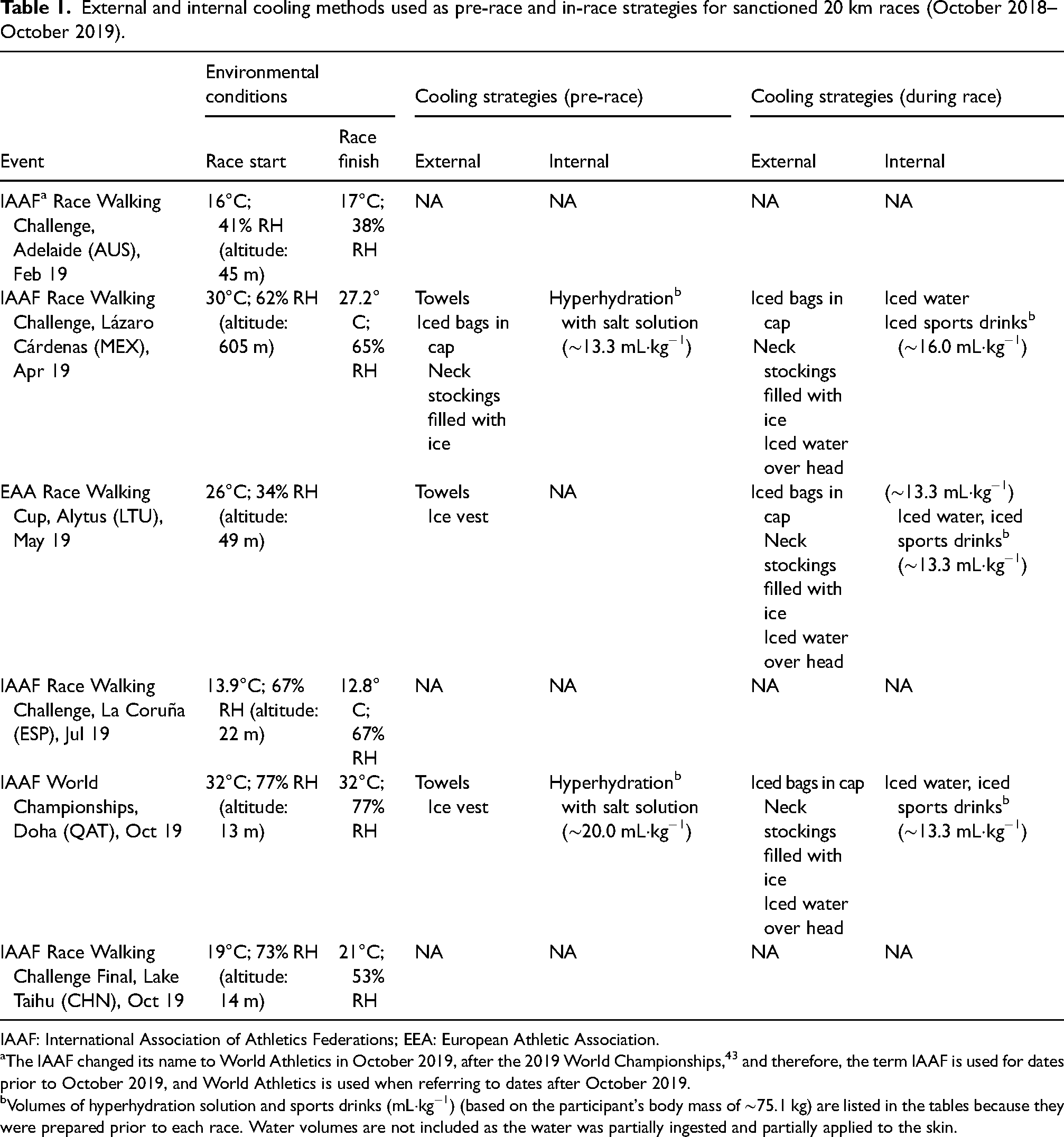
IAAF: International Association of Athletics Federations; EEA: European Athletic Association.
The IAAF changed its name to World Athletics in October 2019, after the 2019 World Championships, 43 and therefore, the term IAAF is used for dates prior to October 2019, and World Athletics is used when referring to dates after October 2019.
Volumes of hyperhydration solution and sports drinks (mL·kg−1) (based on the participant's body mass of ∼75.1 kg) are listed in the tables because they were prepared prior to each race. Water volumes are not included as the water was partially ingested and partially applied to the skin.
Results
Physiological data
The athlete's highest VO2max result during the data collection period was 74.6 mL·kg−1·min−1, recorded in January 2019. His highest walking speed at 4 mmol·L−1 was 15.7 km·h−1 (May 2019), and the best submaximal economy measures, defined as the lowest proportional oxygen use at 13 km·h−1, 64 were recorded in May 2019 (48.4 mL·kg−1·min−1; 65.2% VO2max (Table 2).
Physiological characteristics for male Olympic-level race walker (n = 1).
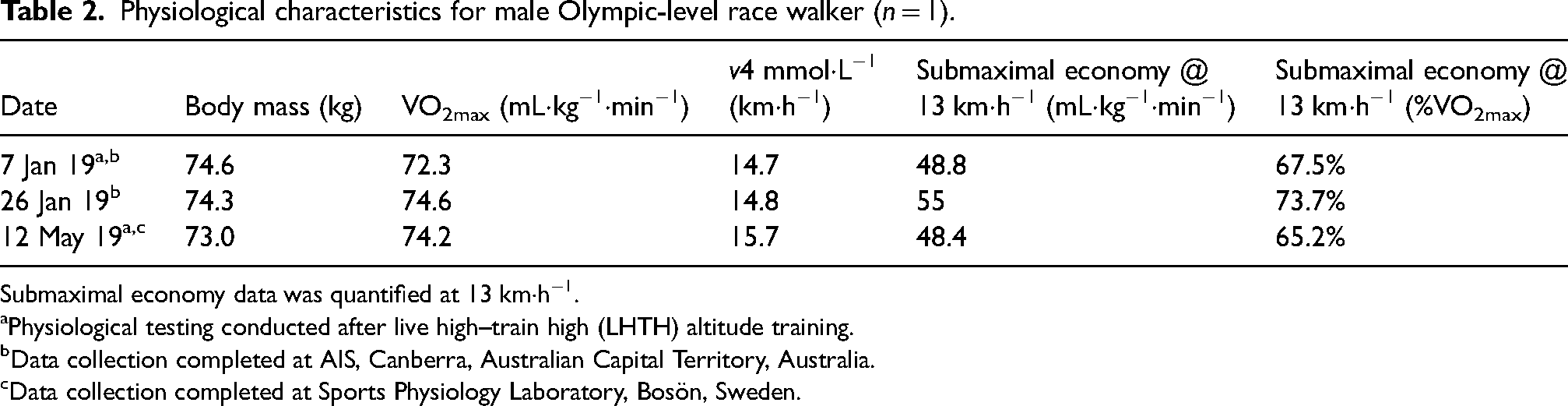
Submaximal economy data was quantified at 13 km·h−1.
Physiological testing conducted after live high–train high (LHTH) altitude training.
Data collection completed at AIS, Canberra, Australian Capital Territory, Australia.
Data collection completed at Sports Physiology Laboratory, Bosön, Sweden.
Race performance
The athlete's best 20 km performance time was 1:18:07, achieved at the IAAF Race Walking Challenge, La Coruña (Spain, July 2019; 13.9°C; 67% RH), which earned him fourth place in the race and a national record for Sweden. This was a 1.3% improvement from his pre-race personal best time (1:19:11). The athlete's best performance outcome in a major championship was at the World Athletics Championships (Doha, Qatar, October 2019), where he won a bronze medal. This race was also the athlete's slowest performance time (1:27:00), and an 11.4% performance decrement compared with the athlete's pre-race personal best time (1:18:07; Figure 1(a) to (c)). Within this race, there was also the greatest decrement in race pace across all races during the data collection period (Figure 1(d)).
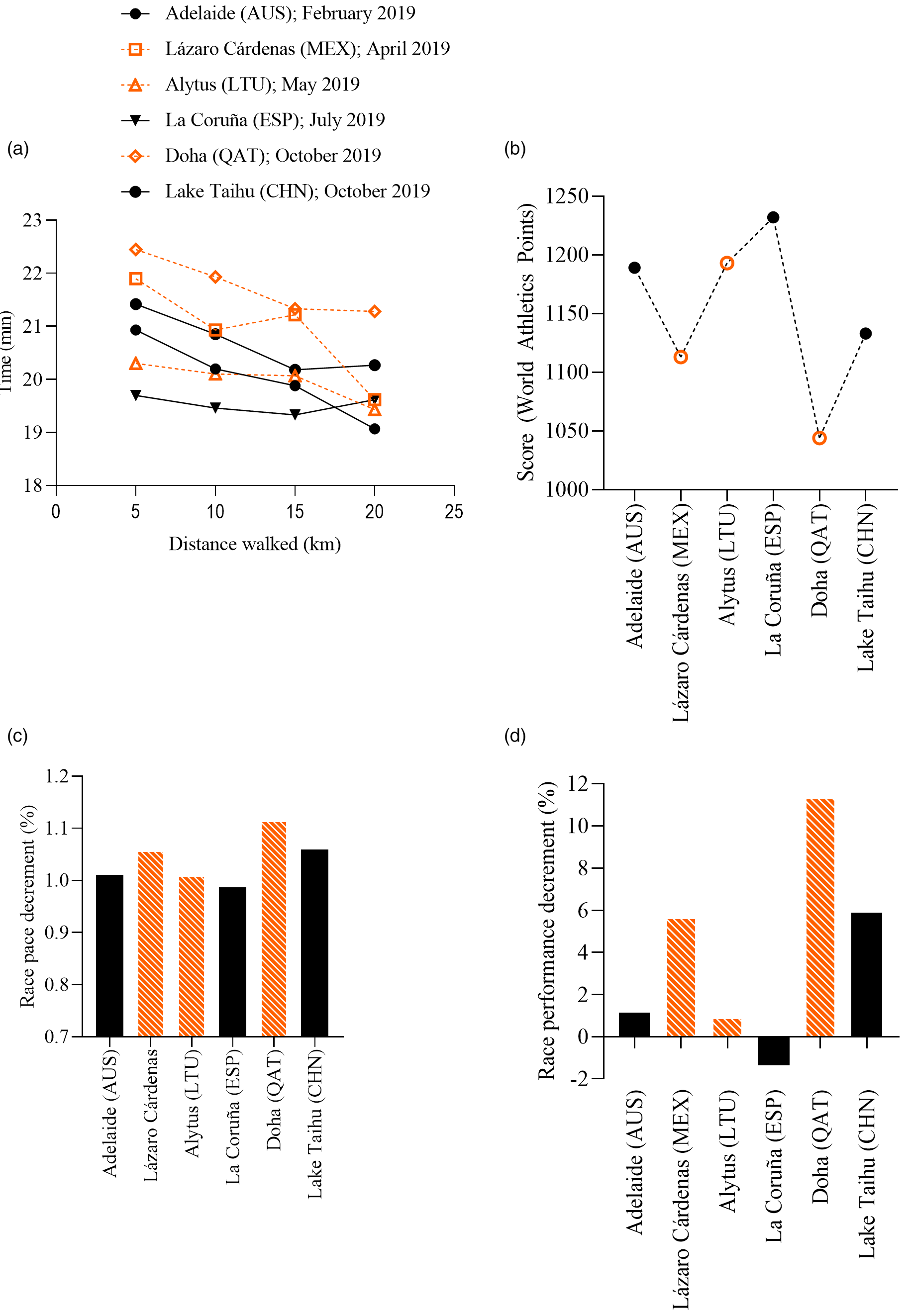
Race performance (time) (a), World Athletics points (b), race pace (min·km−1) (c), and race pace decrement (%) compared with pre-race personal best pace (min·km−1) (d). Countries are represented as AUS, Australia; MEX, Mexico; LTU, Lithuania; ESP, Spain; QAT, Qatar; CHN, China. Open symbols and patterned bars indicate hot conditions (>25°C), according to previously reported criteria. 6
Periodized training
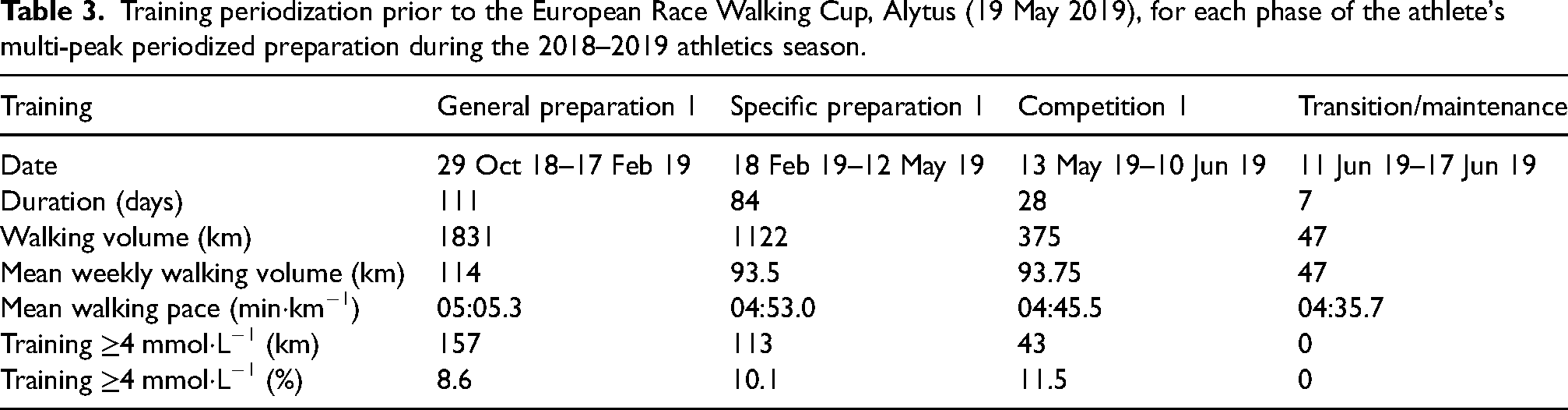
Training periodization was divided into two macrocycles, the first, prior to the European Race Walking Cup, Alytus (19 May 2019; Table 3) and the second prior to the IAAF World Championships (4 October 2019; Table 4). For each phase, the individual session with the highest volume (km) and fastest pace (min·km−1) was identified. These were documented in the first macrocycle for general preparation 1 (highest volume session: 30 km, 4:52.9 min·km−1; fastest session: 10 km, 3:42.8 min·km−1), specific preparation 1 (highest volume session: 35 km, 4:44.7 min·km−1; fastest session: 4 km, 3:36.7 min·km−1) and competition 1 (highest volume session: 25 km, 4:35.1 min·km−1; fastest session: 8 km, 3:47.7 min·km−1). No walking sessions were performed during the transition phase (only one 10,000 m track race and one 20 km road race were performed). In the second microcycle, the highest volume (km) and fastest pace (min·km−1) were documented for individual sessions within general preparation 2 (highest volume session: 32 km, 4:42.8 min·km−1; fastest session: 12.5 km, 3:55.0 min·km−1), Specific Preparation 2 (highest volume session: 30 km, 4:47.9 min·km−1; fastest session: 5 km, 3:28.0 min·km−1) and Competition 2 (highest volume session: 20 km, 4:57.8 min·km−1; fastest session: 4 km, 3:43.5 min·km−1). The highest weekly race walking specific training volume was observed during the first general preparation phase (29 October 2018–17 February 2019; 152 km), and the fastest weekly race walking specific training volume was observed during the first general preparation phase (29 October 2018–17 February 2019; 152 km), and the fastest mean weekly training pace (4:35.7 min·km−1) was recorded during the transition phase (June 2019), which is likely to be due to the athlete's completion of a 10,000 m track race and 20 km road race. Both were domestic (non-IAAF-sanctioned) races, which the athlete was required to complete for his selection for the 2019 World Championships. Across the ∼51 weeks (360 days) within the data collection period, the total training volume was 5129 km, and the mean weekly walking pace was 4:52 min·km−1. The highest monthly training volume was 534 km (July 2019) and was recorded during the general preparation 2 phase. During this phase, heat acclimatization training, passive heat exposure and LHTH altitude training were performed (with no external or internal cooling strategies). The highest monthly walking pace (4:40 min·km−1) was recorded during both June 2019, which spanned the Competition 1, Transition and general preparation 2 phases, during which heat acclimatization training, post-training passive heat exposure, ‘live high–train high’ altitude training and external and internal cooling were performed. The same monthly walking pace (4:40 min·km−1) was recorded in October 2019 (Competition 2 phase). No heat or altitude training was performed during this phase, but external and internal cooling was performed at pre- and during-race time points. Total time spent training was 558 h across the training cycle, comprising 490 h walking, 68 h resistance training and 32 h of other training (e.g. running).
Training periodization prior to the European Race Walking Cup, Alytus (19 May 2019), for each phase of the athlete's multi-peak periodized preparation during the 2018–2019 athletics season.
Training periodization prior to the International Association of Athletics Federations (IAAF) athletics championships (4 October 2019), for each phase of the athlete's multi-peak periodized preparation during the 2018–2019 athletics season.
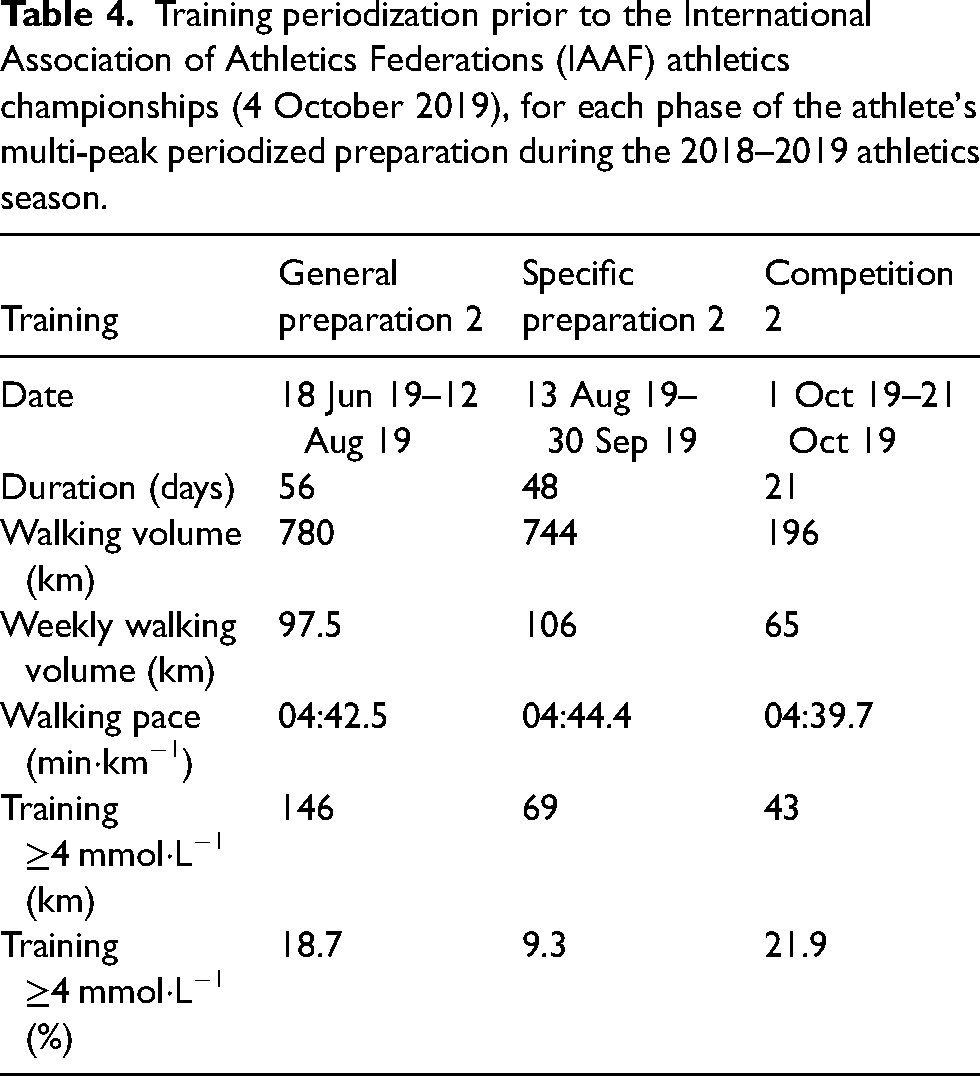
For training sessions programmed for an intensity at or above 4 mmol·L−1 pace, the athlete aimed to complete the second half of the session at a faster speed than the first half, to simulate a pacing strategy associated with successful race walking performance in races. 52 This strategy was achieved in 17 of the 22, 4 mmol·L−1 speed sessions across the data collection period. Mean (±SD) walking duration across all 22 speed sessions, for the first half of the session, was 22:52.6 minutes (±7:50.7), compared with 22:06.2 (±7:40.5) for the second half of the session. The mean (±SD) walking pace was 4:04.0 min·km−1 (±15.2 seconds) for the first half and 3:55.8 minutes (±17.9 s) for the second half. The phase with the highest volume (%) ≥ 4 mmol·L−1 intensity was the second competition phase (21.9%). Of the 360 days of the data collection period, the athlete had 47 days of modified training (13.1% of the training cycle) due to illness, injury, or other unforeseen circumstances (e.g. increased fatigue due to training, unexpected change to travel schedules). Throughout the training cycle, the athlete travelled consistently, domestically, and internationally. He completed short-duration trips (0–3 hours) on 8 occasions, medium-duration trips (3–10 hours) on 8 occasions, and long-duration trips (≥10 hours) on 10 occasions.
Altitude training (LHTH) was performed in six blocks during the data collection period, and the hypoxic dose was expressed as kilometre–hours (km·h). 63 Altitude training was completed across six phases within the periodized programme (general preparation 1, specific preparation 1, transition, general preparation 2, and specific preparation 2) and at three different moderate altitude locations, Mexico City, Mexico (2200 m, total of 67 days and 3598 km·h), Bogotá, Colombia (2500 m, total of 23 days and 1406 km·h), and Celerina/St Moritz, Switzerland (1714 m, total of 37 days and 1522 km·h). The duration of altitude training camps ranged from 16 to 36 days, and there was a total of 119 days of altitude exposure during the data collection period. All race locations were at low altitude (<610 m; Table 1). Heat acclimatization was performed in seven blocks, at six different locations, Melbourne, and Canberra (Australia), Zihuantanejo (Mexico), Madrid (Spain), Turin (Italy) and Doha (Qatar). Heat acclimation training was completed in hot conditions (29.7 ± 5.2°C); these training sessions were 63.0 ± 14.1 min in duration, completed at a temperature of 28.9 ± 0.7°C (start of session) and 30.5 ± 1.3°C (end of session) and a humidity of 49.7 ± 8.3% RH (start of session) and 73.6 ± 3.7% RH (end of session). Heat acclimation training was programmed for the existing low-intensity sessions within the relevant microcycle, rather than modifying training intensity for each heat acclimation session. Post-training passive heat exposure was performed on 16 occasions, using hot water immersion and sauna bathing. Post-training passive heat exposure was achieved via sauna for 30 min at 70–90°C, and hot water immersion for 42.8 ± 10.0 minutes at 39.0 ± 0.5°C (Figure 2).
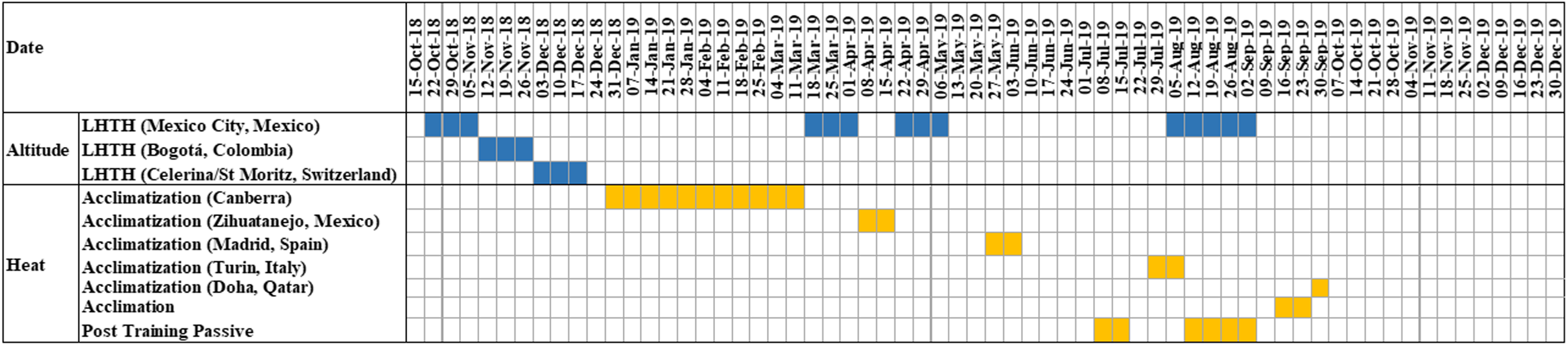
Overview of environmental periodization prior to the European Race Walking Cup, Alytus (19 May 2019), and the World Athletics Championships (4 October 2019).
Cooling strategies
A combination of internal and external cooling strategies, implemented as pre- and in-race methods, were used for selected IAAF-sanctioned 20 km races (Table 1). Combined internal cooling and hyperhydration strategies (hyperhydration with sodium chloride solution) commenced 180 minutes pre-race and concluded 120 minutes pre-race, and external cooling strategies commenced ∼60 minutes pre-race, over a ∼20–30 min period, with the exact durations and start times dictated by the call room close time for specific races (Table 5).
Nutritional intake prior to and during sanctioned 20 km races (October 2018–October 2019).
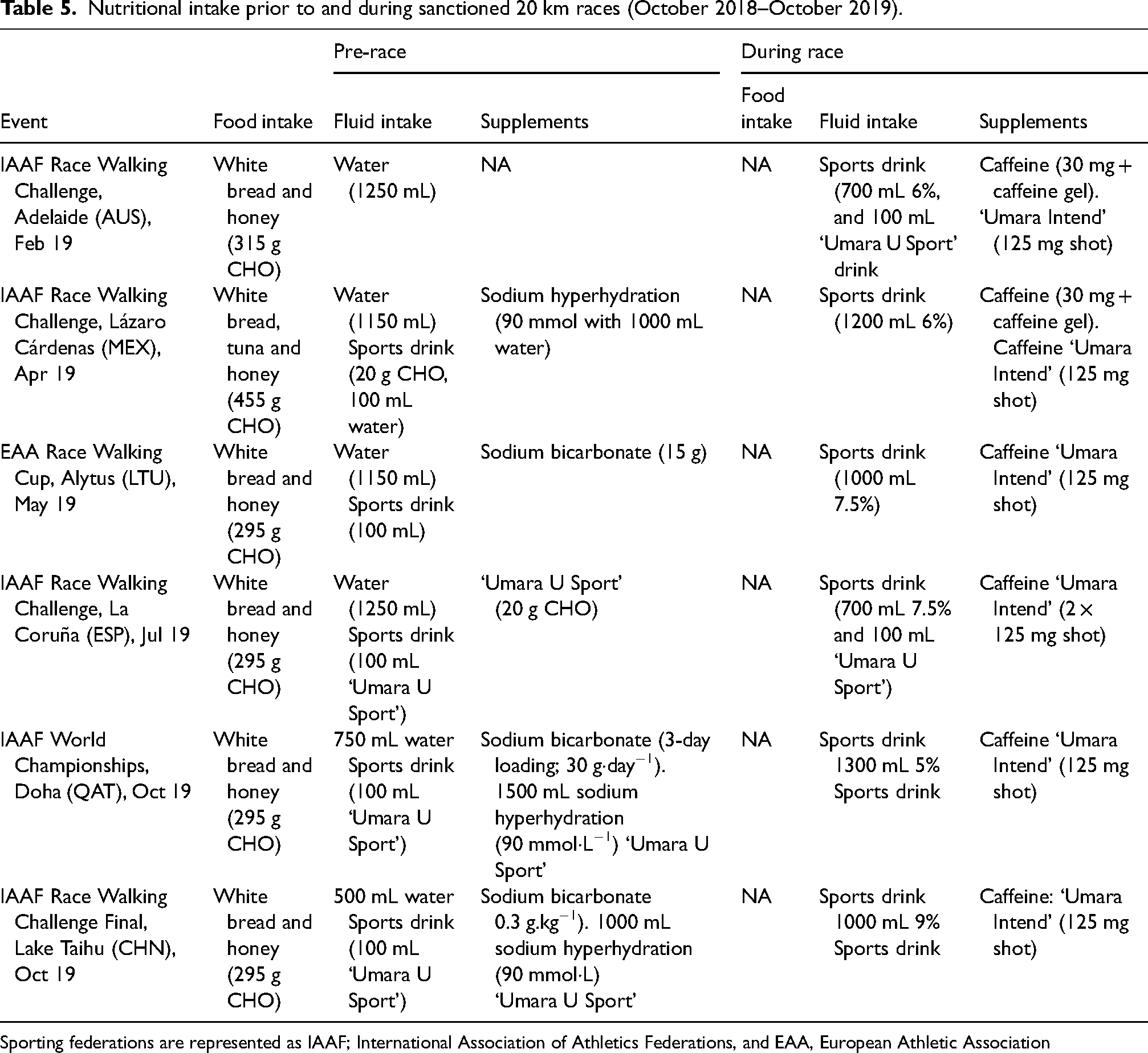
Sporting federations are represented as IAAF; International Association of Athletics Federations, and EAA, European Athletic Association
Nutritional intake
The athlete's nutritional intake focused on achieving adequate carbohydrate and fluid intake prior to and during races, pre-race supplementation with sodium bicarbonate using chronic and acute protocols, caffeine supplementation during races and pre-race hyperhydration with sodium and carbohydrate. A strategy was developed for each of the IAAF-sanctioned races, based on the current evidence-based recommendations for carbohydrate intake, hydration, hyperhydration and supplementation. Modifications were made based on regular communication between the athlete and sports dietitian and specific observations and/or responses the athlete observed during each race (Table 5).
Periodization and intervention strategies
Heat training (acclimatization training, acclimation training, passive heat exposure, and altitude training), cooling strategies (external and internal) and nutritional strategies were implemented throughout the periodized preparation prior to the 2019 European Cup (Alytus, Lithuania; Figure 3) and the 2019 IAAF World Championships in Athletics (Doha, Qatar; Figure 4).
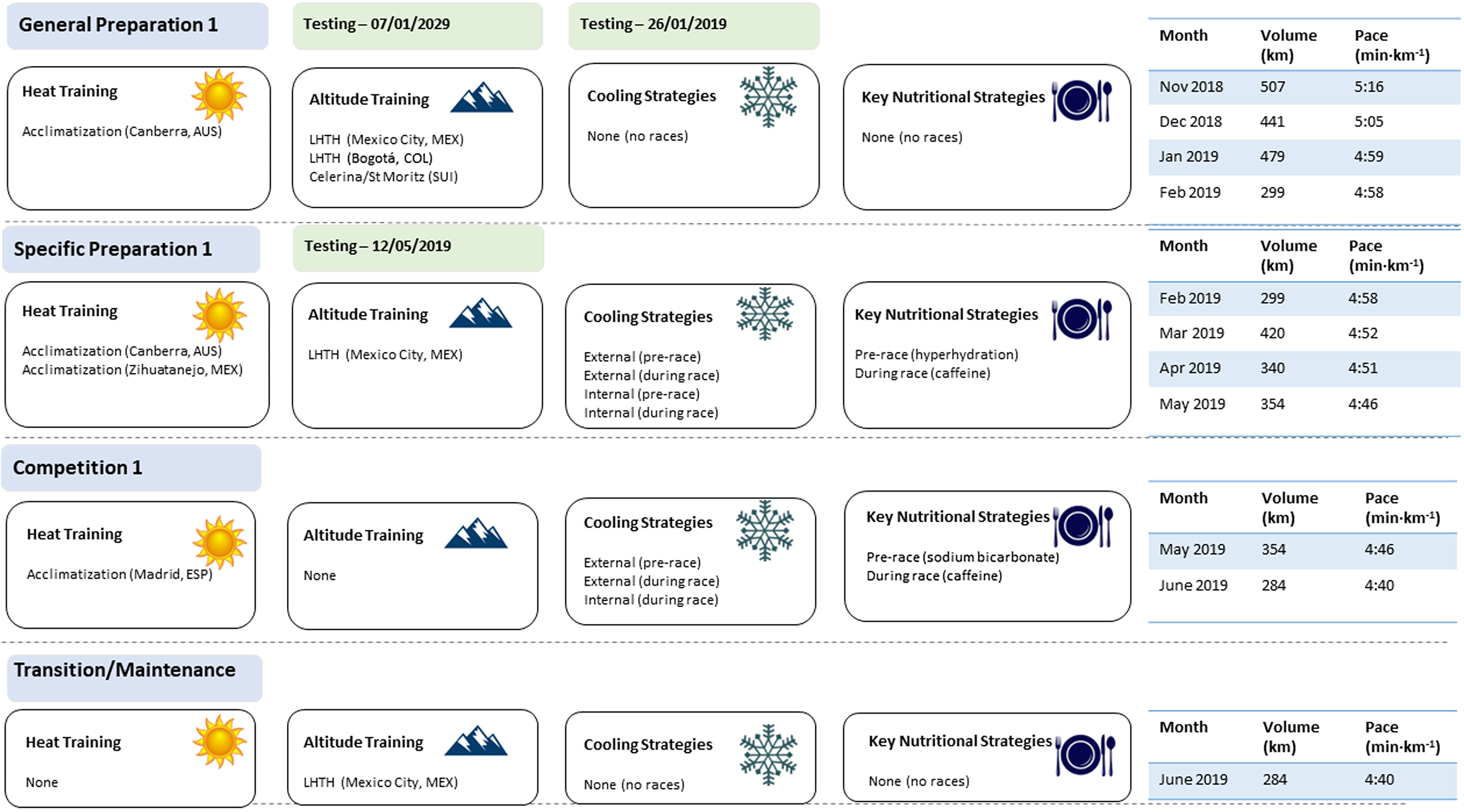
Overview of periodized training (volume (km) and intensity (min·km−1)) and implementation of heat training (acclimatization training, acclimation training, passive heat exposure), altitude training (live high–train high), cooling strategies (external and internal) and nutritional strategies prior to the European Race Walking Cup, Alytus (19 May 2019).
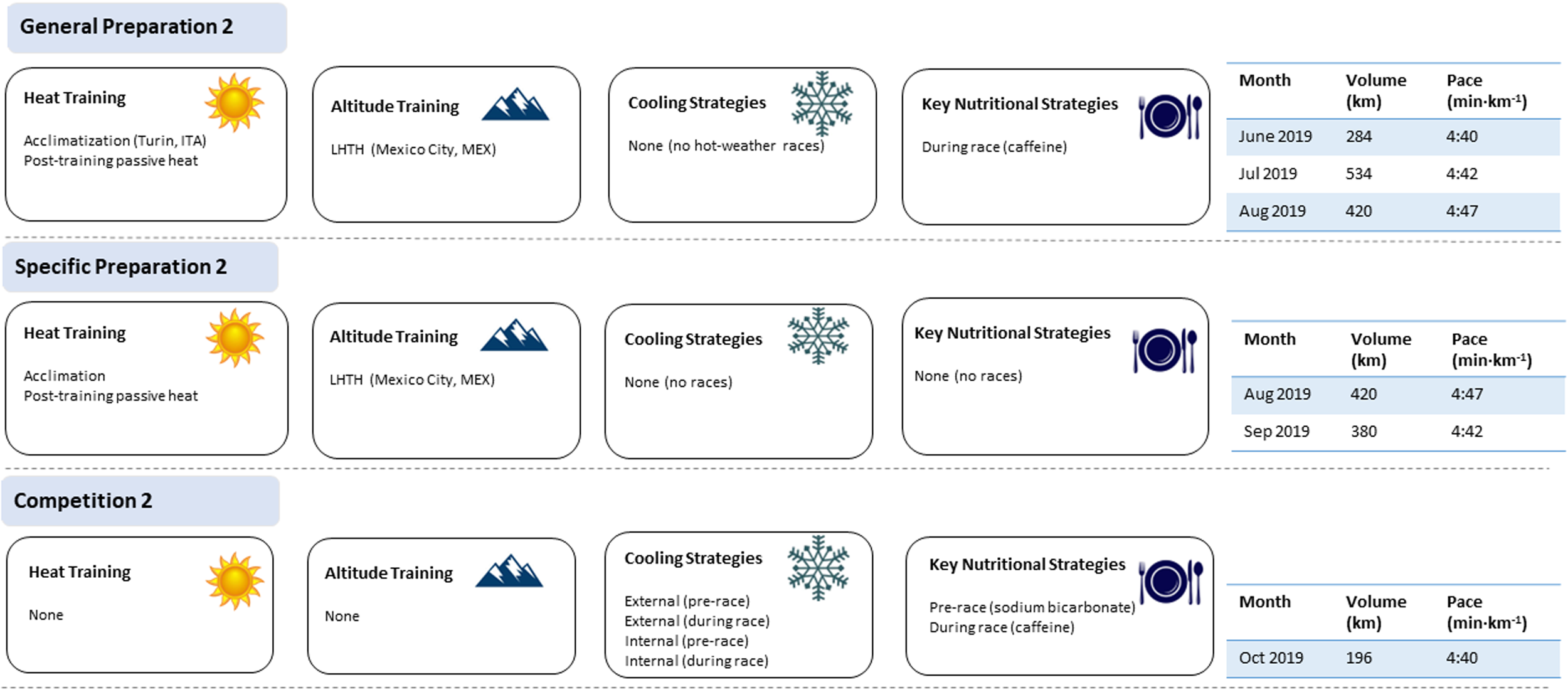
Overview of periodized training (volume (km) and intensity (min·km−1)) and implementation of heat training (acclimatization training, acclimation training, passive heat exposure), altitude training (live high–train high), cooling strategies (external and internal) and nutritional strategies prior to the World Athletics Championships (4 October 2019). LHTH: live high–train high altitude training.
Athlete reflection
The athlete reported that the most positive elements of the strategy included the high level of planning, particularly for the periodization of heat and altitude exposure. They reflected that they felt stronger after each block of altitude training and heat exposure training. The athlete's negative experiences included completing some sessions at a faster pace than originally planned. They also commented on the challenges of consistently travelling during the data collection period and not living in the same location as their coach.
Discussion
This observational case study documented the training and preparation strategies used by a 2019 IAAF World Championships in Athletics (Doha, Qatar) medallist in the ∼12 months leading to the 20 km race walking event. Key elements of the athlete's preparation were the repeated exposure to altitude training and heat acclimation and acclimatization within the context of a multi-peak periodized approach to competition preparation, with the objective of improving thermoregulation and performance during races. These preparation strategies were supported by cooling, pacing and nutritional strategies implemented on the day of IAAF-sanctioned 20 km races.
The athlete's best competition outcome was a bronze medal at the IAAF Championships in 2019, in a time of 1:27:00. This outcome was achieved in the challenging environmental conditions during the race (32°C; 77% RH), and despite his bronze medal, this was the athlete's slowest performance time and a 11.4% decrement compared with his pre-race personal best time. The adverse impact on his performance is substantially higher than previously reported performance impairments, based on an analysis of endurance events in international athletics championships held in hot conditions (3%) 6 ; however, the outcome is similar to reported performance decrements specific to endurance events in the 2019 IAAF Championships. Performance decrements (mean ± SD) of 12 ± 12.4% were observed across the top eight finishers within the men's 20 km race walking event, and there was a decrement of 17.9 ± 5.7% across the total field of 40 men's 20 km event finishers. 3 Similarly, there was a mean performance decrement of 14.7% reported in a published analysis examining the women's marathon event in Doha when compared with the previous World Championships (London, 2017; 19°C; 56% RH) as a control condition. 65 Within the current case study, the athlete completed the second 10 km of the race at a faster pace than the first 10 km, which may have been beneficial in terms of reducing carbohydrate depletion and blood lactate concentration, increasing opportunities for changes of pace in the latter race stages, where the placing in championship race walking events are typically decided.52,66 This negative pacing profile is consistent with strategies typically observed in World Championship medallists in race walking and is a similar pacing strategy to that observed in both the gold and silver medallists in the same race and the top 10 finishers in the women's marathon in the Doha Championships.52,65 Collectively, these results suggest that the athlete's dedication to the comprehensive preparation strategies used throughout his training and on the day of the race might have facilitated better tolerance of environmental conditions that typically result in substantially impaired pacing strategies and performances in elite athletes.65,67,68
An important feature of the athlete's preparation for major championship races was their repeated use of heat exposure training. The athlete completed five blocks of heat acclimatization training in naturally hot environments (total of 112 days), one block of heat acclimation training in a climate chamber (total of 8 days), and two blocks of post-training passive heat exposure (sauna and hot water immersion) sessions (total of 16 days). Heat acclimation/acclimatization has previously been linked with successful performances in the extreme environmental conditions of the 2019 Doha championships. 69 Prior to the extreme heat and humidity forecast for the Doha championships, the athlete within the current case study completed seven heat acclimation sessions within 2 weeks, in his home training environment in Sweden, prior to travelling to Doha to complete heat acclimatization training for the 9 days prior to his race. These interventions were preceded by heat acclimatization training earlier in the year (9 days in May/June and 8 days in July/August), passive heat sessions (seven sessions across 2 weeks in July) and post-training passive heat exposure (2–3 sessions per week in August/September). The athlete's completion of heat acclimation and acclimatization training blocks less than one month apart is consistent with the practical recommendation that athletes complete a ‘top-up dose’ of heat exposure training to support their preparations for hot weather events.19,70 Additionally, this approach is consistent with the theory that adaptations to heat acclimation/acclimatization may be enhanced if consecutive acclimation periods are completed within 26 days, partially due to the limited decay in specific adaptations (e.g. increased plasma volume and reduced core and temperature), especially in highly trained athletes.40,41,71,72 Longitudinal research with larger cohorts of elite athletes investigating repeated, periodic exposure to heat acclimation/acclimatization and the effects on physiological adaptations, thermoregulation and performance during international races is therefore warranted.
Cooling strategies were used by the athlete prior to and during races held in hot conditions on three occasions throughout the data collection period (IAAF Race Walking Challenge, Mexico; European Race Walking Cup, Lithuania; and IAAF World Championships, Qatar). External cooling strategies included the use of ice vests and the application of ice and towels to the skin prior to races and applying ice and iced water to the skin during races. Internal cooling strategies included the ingestion of ice-cold fluids prior to and during races. For each of the IAAF-sanctioned races where cooling strategies were used, the internal cooling strategies commenced 180 minutes pre-race and concluded 120 minutes pre-race. There was some variation between races as to the timing of the external cooling strategies, because each race had different closing times for the call room. In each case, however, the external cooling strategies commenced ∼60 minutes pre-race (within some minor variations between races) and were conducted over a ∼20–30 minute period. The use of these methods is consistent with recommendations that cooling strategies be implemented as a method to support the protective effect of heat acclimation and acclimatization on core temperature when competing in hot conditions, particularly when repeated bouts of heat acclimation/acclimatization training are implemented as the primary strategy for offsetting increases in core temperature, improving thermal comfort and improving race performance, and have been performed as part of a periodized plan across a training season.73,74 Further, combining different cooling methods may more effectively elicit the effects of internal cooling methods (creating a heat sink, facilitating lower core body temperatures and reduced thermal strain) and external techniques (lowering skin temperature and increasing the gradient between skin and core temperature.73–75 Combined cooling methods may therefore elicit a greater reduction in core and skin temperature and reductions in the temperature of muscles and organs.45,48 Importantly, the reduced thermal strain is linked with a potential performance benefit. 45 In the current case study, the athlete used cooling strategies, with the aim of eliciting a beneficial effect on thermoregulation and performance during races, to support the adaptations elicited via heat acclimation and acclimatization training, prior to and during races where he earned first place in the IAAF Race Walking Challenge (Lázaro Cárdenas, Mexico) and the European Cup (Alytus, Lithuania) events, and a bronze medal in the IAAF World Championships (Doha, Qatar). It is not possible however to isolate any specific effect of cooling strategies on the athlete's performance, given the observational nature of this case study and the numerous strategies used to prepare for specific races. There remains limited evidence of the effects of cooling strategies in elite athletes, and further investigation is required to determine physiological responses and real-world performance within this specific population.
The athlete completed six blocks of ‘live high–train high’ altitude training, in three different locations: Mexico City, Mexico (2200 m), Bogotá, Colombia (2500 m), and Celerina/St Moritz, Switzerland (1714 m). A total of 6526 km·h 63 was recorded over a total of 119 days of altitude exposure. This quantity of altitude training was greater than the annual hypoxic doses previously reported for Olympic gold medal-winning endurance athletes who used altitude training as part of a periodized approach leading into a major championship.16,39 Further, one of the athlete's altitude training blocks (54 continuous days including 7 days in Mexico City, 23 days in Bogotá, and 24 days in Mexico City; total of 3071 km·h) was consistent with isolated hypoxic doses previously associated with performance improvement. 63 Importantly, the athlete's frequent altitude training camps throughout the training year were consistent with the practical recommendation that athletes perform repeated altitude exposures, which may facilitate faster adaptation to hypoxic conditions due to a ‘hypoxic memory’ within the erythrocytes, and may be a feasible strategy for athletes preparing for competitive events. 34 Despite the athlete's frequent heat exposure training, concurrent heat and hypoxic training was avoided given the potential for compromised physiological responses and adverse effects on performance 34 with the exception of passive heat exposure completed during a natural altitude training camp in August and September 2019, which was programmed to avoid decay in heat acclimation/acclimatization adaptations.40,76–79 Additionally, an objective of the periodized training for the athlete was to provide additional heat exposure prior to the final block of heat acclimatization in Doha immediately prior to the IAAF Athletics Championships race. Whilst we acknowledge that the athlete's medal-winning performance at the championship provides only observational data, this strategy is a potential method by which concurrent heat and altitude training (i.e. within the same phase of periodized training) could potentially benefit athletes’ performance without the increased physiological stress imposed by demanding physical training in hot and hypoxic conditions.33,56,80 Further investigation of passive heat exposure performed subsequently to ‘live high–train high’ altitude training (e.g. within the same training camp) is therefore warranted.
The nutritional strategy was implemented throughout the data collection period focused on the maintenance of adequate hydration and carbohydrate ingestion, hyperhydration interventions and supplementation with sodium bicarbonate and caffeine. The nutritional strategies documented in the current case study build upon the reported heat acclimation training, cooling and pacing strategies used by endurance athletes during and in preparation for the race walking and marathon events during the Doha championship events.2,65,69 A key element of the nutritional approach was the implementation of hyperhydration strategies, which were used for the two 20 km events during the data collection period where the highest temperatures and RH were recorded (IAAF Race Walking Championships, Lázaro Cárdenas, Mexico, 30°C, 62% RH, and IAAF World Championships, Doha, Qatar, 32°C, 77% RH), to limit decrements in performance that are associated with substantial dehydration (e.g. >2%) via responses such as an increased plasma volume and increased plasma osmolality.76–79,81 The hyperhydration strategies were developed systematically via trials with individual elite athletes during training camps in hot weather conditions, as well as controlled, laboratory-based investigations conducted in Australia. 82 This process facilitated refinement of the dose and timing most suitable for race walkers completing 20 km and 50 km events. The use of sodium bicarbonate supplementation was a novel strategy, given the limited reports of its use in endurance athletes in comparison with the extensive documentation of its potential for performance benefit in high-intensity, shorter duration (e.g. 1–10 min).50,83 There have however been large volumes of research that have established the dose and timing of sodium bicarbonate supplementation that might be suitable for athletes. The athlete therefore trialled this part of his nutritional strategy in key training sessions and made modifications after discussion within his sports dietitian. There is emerging evidence that sodium bicarbonate may provide benefit in endurance exercise, potentially due to an accelerated glycolytic flux and increase in adenosine triphosphate production and a reduction in the depression of muscle force elicited by extracellular potassium ion accumulation during demanding exercise.84–87 The existing, published evidence is based primarily upon time to exhaustion testing within the context of controlled, laboratory-based testing 88 and therefore has limited applicability to real-world performance in long-distance races. The limitations of the current literature and the observations within this case study provide scope for controlled experimental studies which quantify endurance athletes’ racing performance after the ingestion of sodium bicarbonate, particularly when combined with other nutritional interventions (e.g. hyperhydration) that might support their performance in the context of the additional challenges presented by hot weather conditions.
There are some limitations within the current observational case study, which may provide direction for further research. The athlete's continuous international travel and at times limited access to laboratories during his frequent training camps prevented the collection of physiological data at regular intervals. Measurement of specific variables throughout the athlete's training year (e.g. VO2max, 4 mmol·L−1 walking speed, haemoglobin mass) would allow the quantification of physiological adaptations in response to training and specific interventions (e.g. heat acclimation, heat acclimatization, altitude training) in the context of annual changes or improvements in race performance, as has been documented for Olympic medallists in similar events.34,89 Further, the collection of more comprehensive physiological data, including core temperatures, during key training sessions, may provide some mechanistic insight into potential interactions between some of the specific combinations of interventions, such as the potential for an additive, beneficial effect on thermoregulation and race performance provided by internal and external cooling strategies, to support adaptations after a periodized approach to heat acclimation and acclimatization training.
Conclusion
The elite athlete within this case study implemented repeated exposures to hot, humid environmental conditions via training sessions dedicated to heat acclimation and heat acclimatization, as well as passive exposure to heat as important elements of a periodized preparation for endurance races held in hot environmental conditions. The addition of hypoxic training, heat mitigation strategies at pre-race and mid-race time points, multi-faceted nutritional strategies designed to facilitate cooling and adequate carbohydrate and fluid intake may have provided additional benefits. The implementation of similar strategies may support elite athletes’ preparation and performance when preparing to compete in major events held in hot weather conditions.
Footnotes
Acknowledgements
The authors would like to thank the participant for their involvement in this case study. We thank Tobias Elgh for the data collection completed at Sports Physiology Laboratory, Bosön, Sweden. We would like to acknowledge Professor Louise Burke for the management and preparation of the athlete's nutritional strategies prior to each of the IAAF-sanctioned races documented in this case study.
Authors’ contributions
A.J.C., A.P.S., M.L.R. and B.S.V. contributed to the conception of the study, data collection and data analysis. A.J.C. and B.S.V. prepared the first draft of the manuscript, and all authors provided critical reviews of the manuscript.
Declaration of conflicting interests
The authors declared no potential conflicts of interest with respect to the research, authorship and/or publication of this article.
Funding
The authors disclosed receipt of the following financial support for the research, authorship and/or publication of this article: Throughout the data collection period, the athlete received financial support from the Swedish Race Walking Federation and his native sports club. He also received unlimited products from a sports supplements company (Umara, Sweden) and a shoe and clothing company (Decathlon, United Kingdom).
